LCD23-231-BR-G-ROI - Television Technika - Free user manual and instructions
Find the device manual for free LCD23-231-BR-G-ROI Technika in PDF.


| Product Type | Full HD LCD TV with DVD & USB PVR |
| Screen Size | 23 inches (diagonal) |
| Display Resolution | 1366 x 768 pixels |
| Display Technology | LCD |
| TV Tuner | Digital (Saorview) & Analogue |
| DVD Player | Built-in, supports region 2 discs |
| USB PVR | Yes, supports recording to USB drive (FAT32) |
| Inputs | 1 x SCART, 1 x Video (RCA), 1 x Component (YPbPr), 1 x HDMI, 1 x PC (VGA), 1 x RF |
| Outputs | 1 x Coaxial Audio (SPDIF), 1 x Headphone |
| Audio Power | 2 x 3W RMS |
| Power Supply | 110-240V, 50/60Hz |
| Standby Power | < 0.5W |
| Remote Control | Included (2 x AAA batteries) |
| Accessories | RF cable, stand, user guide, quick start guide |
| Wall Mount | VESA compatible (4 screw holes on rear) |
| Software Update | Via USB |
| Menu Language | Multiple OSD languages selectable |
| Parental Control | Channel lock and program block with password |
| Sleep Timer | Yes (off, 10, 20, 30, 60, 90, 120, 180, 240 min) |
| 7-Day TV Guide | Yes (in Digital TV mode) |
| Cleaning | Wipe with soft dry cloth; use eyeglass cleaner for LCD screen |
Frequently Asked Questions - LCD23-231-BR-G-ROI Technika
User questions about LCD23-231-BR-G-ROI Technika
0 question about this device. Answer the ones you know or ask your own.
Ask a new question about this device
Download the instructions for your Television in PDF format for free! Find your manual LCD23-231-BR-G-ROI - Technika and take your electronic device back in hand. On this page are published all the documents necessary for the use of your device. LCD23-231-BR-G-ROI by Technika.
USER MANUAL LCD23-231-BR-G-ROI Technika
Full HD LCD TV with Saorview, DVD & USB PVR
User Guide
natural_image
Line drawing of a flat-screen computer monitor with a blank screen (no text or symbols)Model No
LCD23-231-BR-G-ROI
IMPORTANT SAFETY INSTRUCTIONS

Please read these instructions. All the safety and operating instructions should be read before the appliance is operated.
Warnings
- To reduce the risk of fire, electric shock or damage to the television, do not expose it to dust, rain or moisture, or place any objects filled with liquids on or near the television.
- Do not place the television in a confined space, ensure that nothing can obstruct the ventilation openings at the rear of the television.
- Dispose of this television and any components including batteries in an environmentally friendly manner. If in doubt, please contact your local authority for details of recycling.
To prevent spread of fire, keep candles or other open flames away from this product at all times

Safety
- For your safety, this appliance is fitted with a fused moulded 3 pin mains plug. Should the fuse need to be replaced, ensure that any replacement is of the same amperage and approved with the BSI mark.
- Never try and replace the mains plug unless you have adequate qualifications and are legally authorised to do so. In the event that a replacement Mains cable is required, contact the manufacturer for a suitable replacement.
- Never use the television if it is damaged in any way.
- Always place the television on a flat level surface avoiding anywhere which may be subject to strong vibration.
- Ensure the television is not placed on top of the power cable as the weight of the television may damage the cable and cause a safety hazard.
- Never place mobile phones, speakers or any other device which may cause magnetic or radio interference with the television. If interference is apparent, move the device causing the interference away from the television.
- To disconnect the apparatus from the mains, please use the all pole mains switch located on the side, underside or rear of the TV. The switch shall remain readily operable.
• Install the product keeping the specified distance from the wall. - Batteries (battery pack or batteries installed) shall not be exposed to excessive heat such as sunshine, fire or the like.
• Install the product keeping the specified distance (more than 5 cm) from the wall
Maintenance
- To clean this unit, wipe with a soft, dry cloth. If the surfaces are extremely dirty, use a soft cloth dipped in a soap and water solution or a weak detergent solution.
- Use eyeglass cleaner to remove stubborn dirt from the LCD/LED Screen.
- Never use alcohol, paint thinner or benzene to clean this unit.
- Before using a chemically treated cloth, read the instructions that came with the cloth carefully.
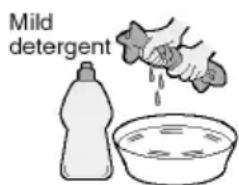
CAUTION: If water or other liquid enters the television through the display panel surface, a malfunction may occur.
Packaging
- The safest way to transport your item is in the original box/packaging - please save your packaging for this.
- You will need original box/packaging in the event of warranty/service repair or support. We are unable to carry out warranty/service if you are unable to package it correctly.
IMPORTANT SAFETY INSTRUCTIONS

Please read these instructions. All the safety and operating instructions should be read before the appliance is operated.
Important Information Regarding Use of Video Games, Computers, Captions or Other Fixed Image Displays
The extended use of fixed image program material can cause a permanent "shadow image" on the LCD panel.
This background image is viewable on normal programs in the form of a stationary fi xed image. This type of irreversible LCD/LED panel deterioration can be limited by observing the following steps:
- Reduce the brightness/contrast setting to a minimum viewing level.
- Do not display the fixed image for extended periods of time.
- Turn the power off when not in actual use.
Examples of images that you need to watch out for are as follows (this is not an exhaustive list):
- TV Channel Logos: e.g. Shopping channel logos and pricing displays-especially if they are bright and stationary. Moving or low-contrast graphics are less likely to cause ageing of the screen.
- Time Displays
- Teletext: Do not view a stationary page for long period of time
• TV/DVD Menus: e.g. Listings of DVD disk content - Pause Mode: Do not leave the TV in pause mode for long periods of time, e.g. When watching DVDs or videos.
Important - Once ‘shadow image/screen burn’ occurs, it will never disappear and is not repairable under warranty.
How do I dispose of this product?
UK: Waste electrical products should not be disposed of with household waste. Separate disposal facilities exist. For your nearest facilities, please see www.recycle-more.co.uk or in store for details.
ROI: Waste electrical products should not be disposed of with household waste. Separate disposal facilities exist. Check with your Local Authority or retailer for recycling advice.
Batteries
- Observe the correct polarity when inserting batteries.
- Do not use different types of batteries together or mix old and new batteries.
- Dispose of batteries in an environmentally friendly way.
- Certain regions may regulate the disposal of batteries.
Please consult your local authority.


Cd
CAUTION:
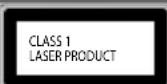
This caution label is located on the rear panel of the unit
THIS UNIT IS A CLASS 1 LASER PRODUCT. HOWEVER THIS UNIT USES A VISIBLE LASER BEAM WHICH COULD CAUSE HAZARDOUS RADIATION EXPOSURE IF DIRECTED. BE SURE TO OPERATE THE PLAYER CORRECTLY AS INSTRUCTED. WHEN THIS UNIT IS PLUGGED INTO THE WALL OUTLET, DO NOT PLACE YOUR EYES CLOSE TO THE OPENINGS TO LOOK INTO THE INSIDE OF THIS UNIT.
USE OF CONTROLS OR ADJUSTMENTS OR PERFORMANCE OF PROCEDURES OTHER THAN THOSE SPECIFIED HEREIN MAY RESULT IN HAZARDOUS RADIATION EXPOSURE.
DO NOT OPEN COVERS AND DO NOT REPAIR YOURSELF. REFER SERVICING TO QUALIFIED PERSONNEL.
CONTENTS
Manufacturers Guarantee Information....3
Important Safety Instructions....4-5
What is included in the box 8
Attaching/Detaching the stand and wall mounting....9
Getting Started - Initial Set Up....11
TV Buttons and Input Source Menu....12
Remote Control....13
Connections....14-15
TV Menu Operation 16-21
Channel Menu 16
Picture Menu 17-18
Sound Menu 19
Time Menu 20
Lock Menu 21
Option Menu 22
DVD Menu....23
PC Operation....24-25
7 Day TV Guide 26
USB Mode / Media Player 27
General Information....28-33
Frequently Asked Questions 28
Technical Specifications 29-30
Index 31
WHAT IS INCLUDED IN THE BOX
1 x User Guide
1 x Quick Start Guide
1 x RF Cable
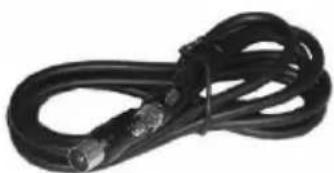
natural_image
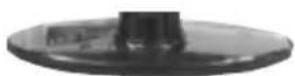
Coiled black cable with connectors, no visible text or symbols1 x Stand
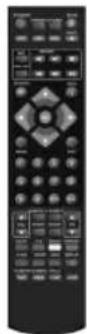
1 x Remote Control
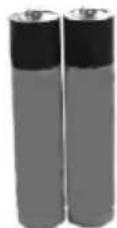
2 x AAA Batteries
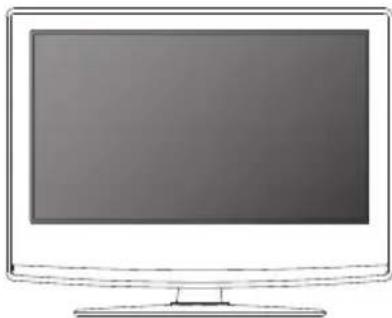
1 × TV
natural_image
Front view of a flat-screen computer monitor (no visible text or labels)Please save your packaging as you will need this in the event of warranty/service repair or support. We are unable to carry out warranty/service if you are unable to package it correctly. The safest way to package your item in the event of warranty/service repair is in its original box/packaging.
ATTACHING/DETACHING THE STAND
Attaching the Stand
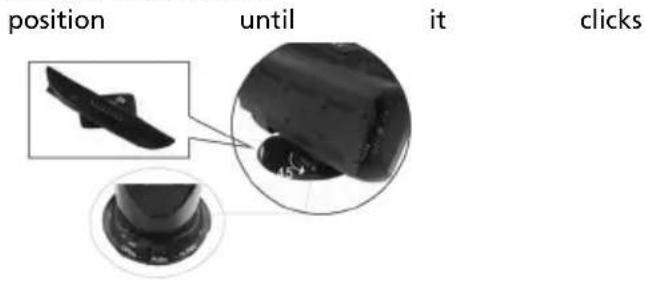
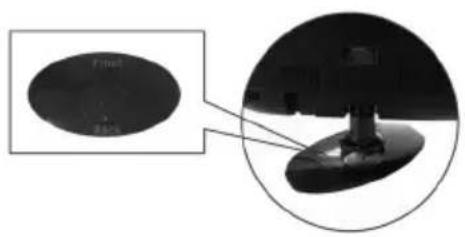
1) Insert the TV into the stand at 45 degrees
2) Twist the TV into the CLOSE
natural_image
Close-up of a computer monitor with an inset showing its screen and keyboard (no visible text or symbols)Detaching the Stand
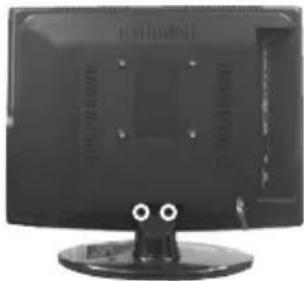
1) To remove the base, press close and rotate 45 degrees.
2) Remove the screws highlighted
natural_image
Front view of a black computer monitor with a circular base and two small circular eyes (no visible text or symbols)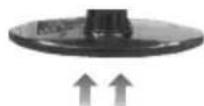
3) Remove the screw/s in the neck of the stand (where fi tted)
IMPORTANT - Before drilling any holes in the wall ensure you are not drilling where there could be any electric wires, water or gas pipes.
Wall mounting the TV
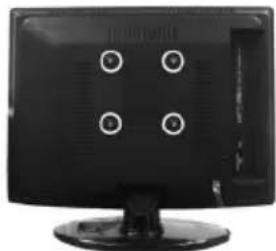
1) Remove the four screws highlighted below.
2) The wall mount can now be easily attached to the mounting holes on the rear of the TV. These holes
are indicated in the picture below.
fig 1
natural_image
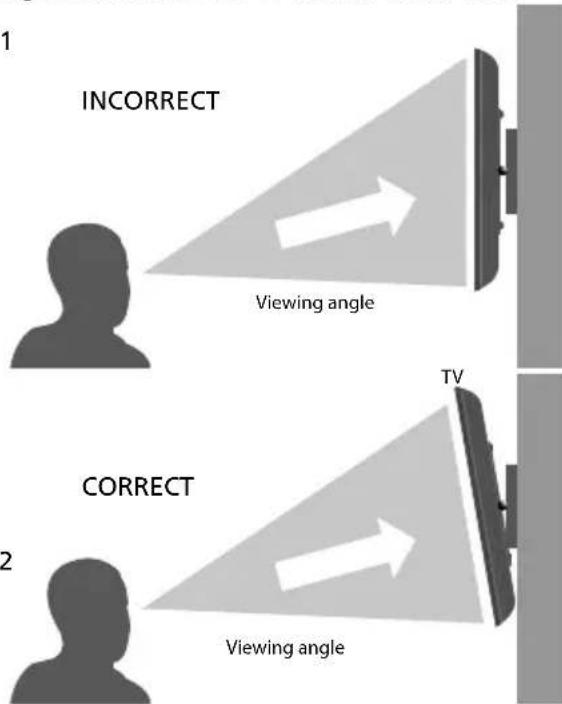
Front view of a black computer monitor with four circular buttons on the front panel (no visible text or symbols)For optimum viewing, if wall mounting the TV higher than eye level, the TV should be tilted downwards so that the TV's screen is 'face on'. See fig 1 and 2
Important – If wall mounting this TV, only use the screws already provided in the wall mounting holes. Using other screws which are longer could cause irreparable damage to internal parts.
GETTING STARTED - INITIAL SET UP
1) Using the RF cable supplied, connect the TV to the TV Aerial wall socket (Fig A)
2) Connect the power cable to the Electrical outlet (Fig B)
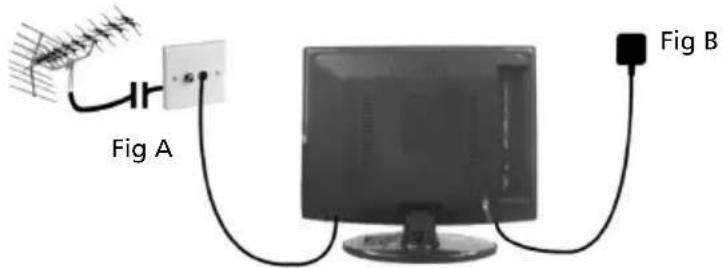
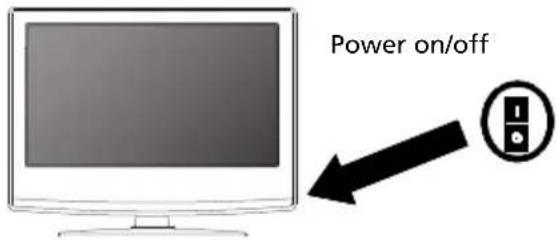
3) Switch on the television using the power on/off switch located on the side of the TV.
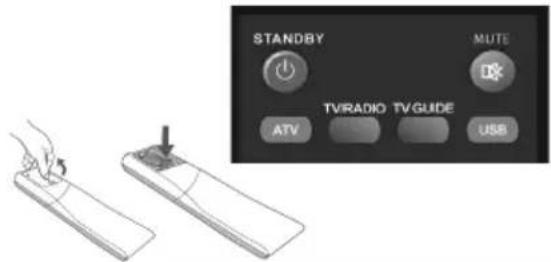
4) Insert the batteries supplied into the Remote control and press the Standby button to power on the TV
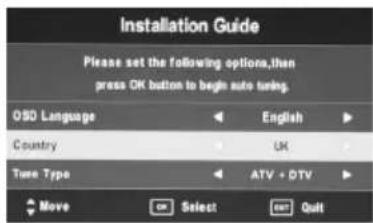
5) You will now be welcomed with the initial set-up screen.
If it does not appear, on the remote control, please press [MENU] then 8-8-8-8 and the menu will appear.
Press OK on the remote control and tuning will start.
6) After tuning the following screen will appear.
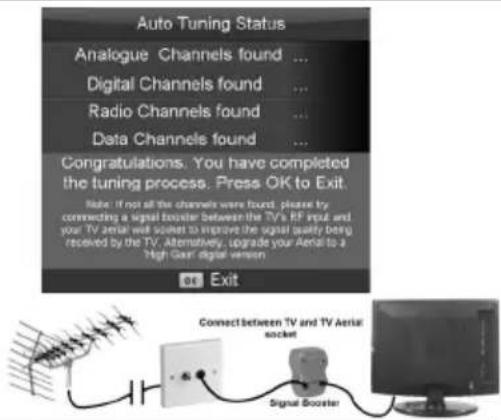
If you are missing channels, the reason for this is likely to be signal strength, you should consider connecting signal booster and re-tuning the TV.
Tip: If the TV fi nds some, but not all, of the Digital channels, the TV is functioning correctly but the signal being received is not strong enough. (The signal strength needs to be above 85% - you can see the signal strength the TV is receiving when you change channels/ programmes) you will need to increase the signal reception in order to receive all of the channels available. The most economical way to do this is by purchasing and connecting a 'signal booster' in between the TV and the TV aerial socket. If this does not solve the problem, you will need to upgrade the TV aerial to a digital hi-gain compatible aerial
TV BUTTONS & SOURCE MENU
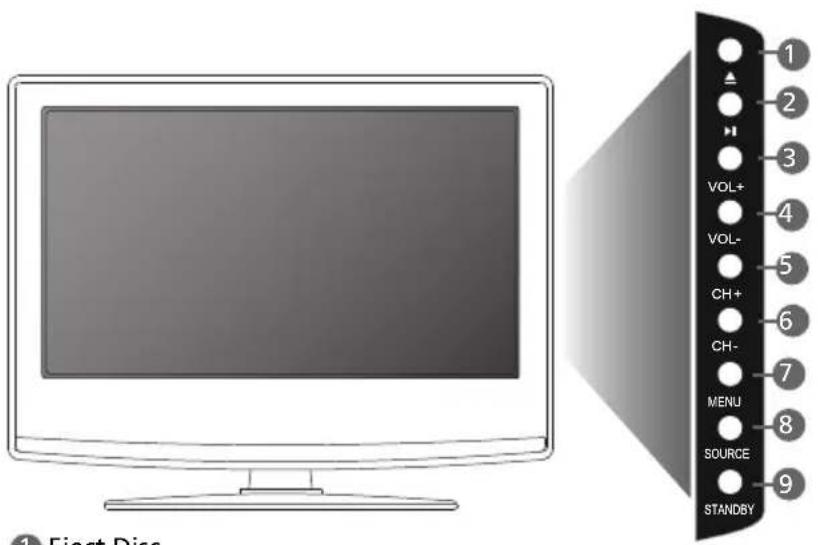
1 Eject Disc
2 Play/Pause Disc
3 Volume up and menu right
4 Volume down and menu left
5 Programme/Channel up and menu up
6 Programme/Channel down and menu down
7 Displays Menu/OSD
8 Displays the input source menu
9 Standby Power On/Off
Choosing Mode Input/Source
To switch between the different input/ connections.
A) Using the buttons on the remote control:
1) Press [SOURCE/ AV] - The source menu will appear
2) Press [V] or [A] to select the input you require.
3) Press [OK]
B) Using the buttons on the Television:
1) Press [SOURCE]
2) Scroll up / down using CH+/CH- buttons to the input/source you require
3) Press Vol+ to change input/source to the one selected.
| Input Source | ||||
| DTV | ||||
| ATV | ||||
| SCART | ||||
| YPBPR | ||||
| PC | ||||
| HDMI | ||||
| AV | ||||
| USB | ||||
| DVD | ||||
| Move | OK | Select | EXIT | Quit |
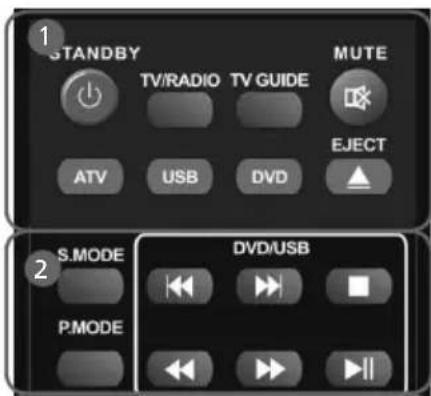
1 STANDBY - Switch on TV when in standby or vice versa
MUTE - Mute the sound or vice versa
TV/RADIO - Switch to Digital and switch between TV and radio in Digital mode
TV GUIDE - Opens the 7 Day TV Guide (Digital mode)
ATV - Switch to analogue TV source
USB - Switch to USB Source
DVD - Switch to DVD source
EJECT - Eject disc in DVD mode
S.MODE - Scrolls through sound mode options
P.MODE - Scrolls through picture mode options
- To restart the current chapter
- To advance forward to the next chapter
- To stop the playback
- To play in fast rewind mode
- To play in fast forward mode
To play/pause
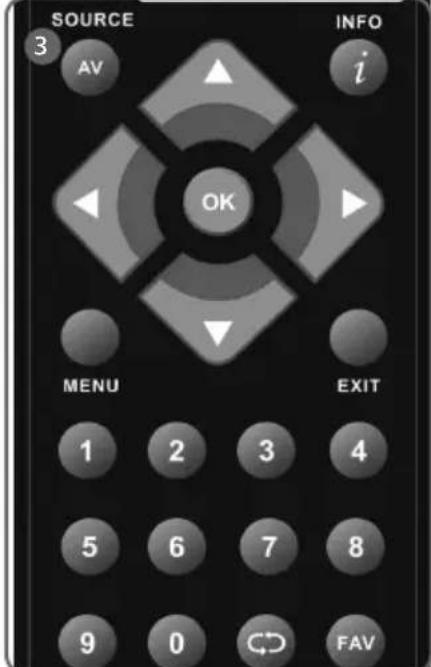
2 SOURCE/AV - To display the input/source menu
INFO - Press once for now/next channel information
Press twice for programme information about current programme
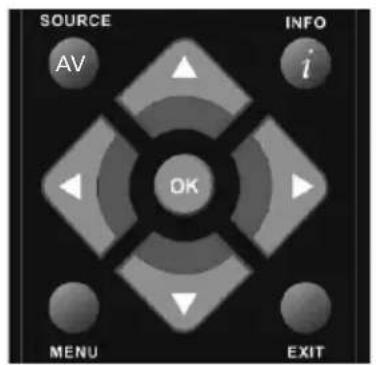
(▲/▼/◄/►/OK) - Allows you to navigate the on-screen menus and adjust the system settings to your preference
MENU - To display OSD menu
EXIT - To exit all menus
NUMBER BUTTONS - 0 - 9 to select a TV channel directly.
- To return to the previous channel viewed
FAV - To display favourites menu
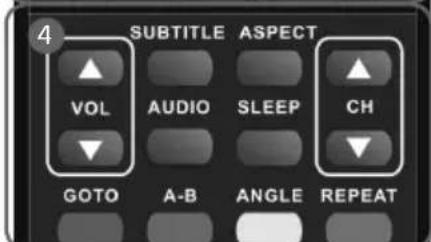
VOL ▲ To increase / decrease the sound level
SUBTITLE - To switch the dialogue at the bottom of the screen (on/off)
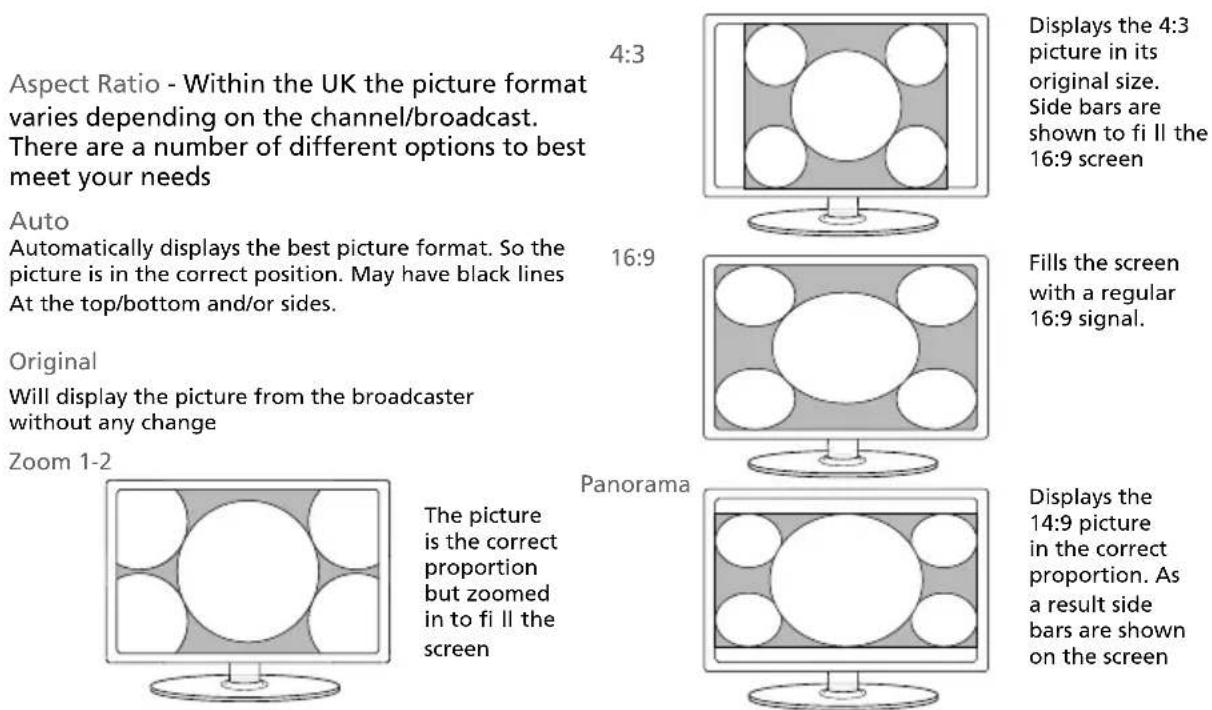
ASPECT - To switch the screen between the different picture formats
AUDIO - To change the audio language (if available)
SLEEP - Press repeatedly to cycle through the sleep options
CH ▲To increase or decrease the channel being watched
GOTO - DVD mode - To go to a specific chapter
A-B Repeat - DVD mode - Press once to set point, press a second time to return to point
ANGLE - DVD mode - Select different angle of DVD (if available)
REPEAT - DVD mode - To repeat playback
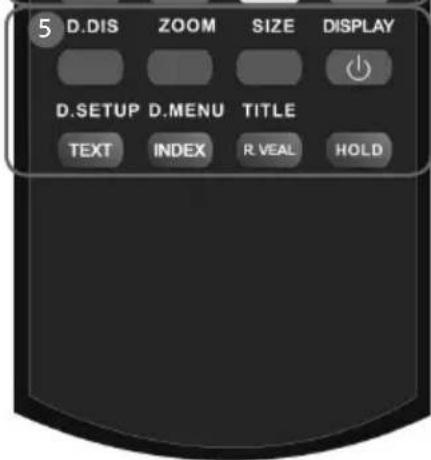
5 D.DIS - DVD mode - To display the current disc information ZOOM - DVD mode - To zoom in
**SIZE - Teletext mode - To change the display size in Teletext mode
DISPLAY - To switch off the screen when listening to radio
DVD SETUP/TEXT - DVD mode - To display the DVD setup menu
**Teletext mode - To enter Teletext
D.MENU/INDEX - DVD mode - To display the DVD disc menu
**Teletext mode - To display the index page
TITLE/REVEAL - DVD mode - To display the DVD title menu
**Teletext mode - To reveal or hide the hidden words.
HOLD - Teletext mode - Hold current page which is displayed
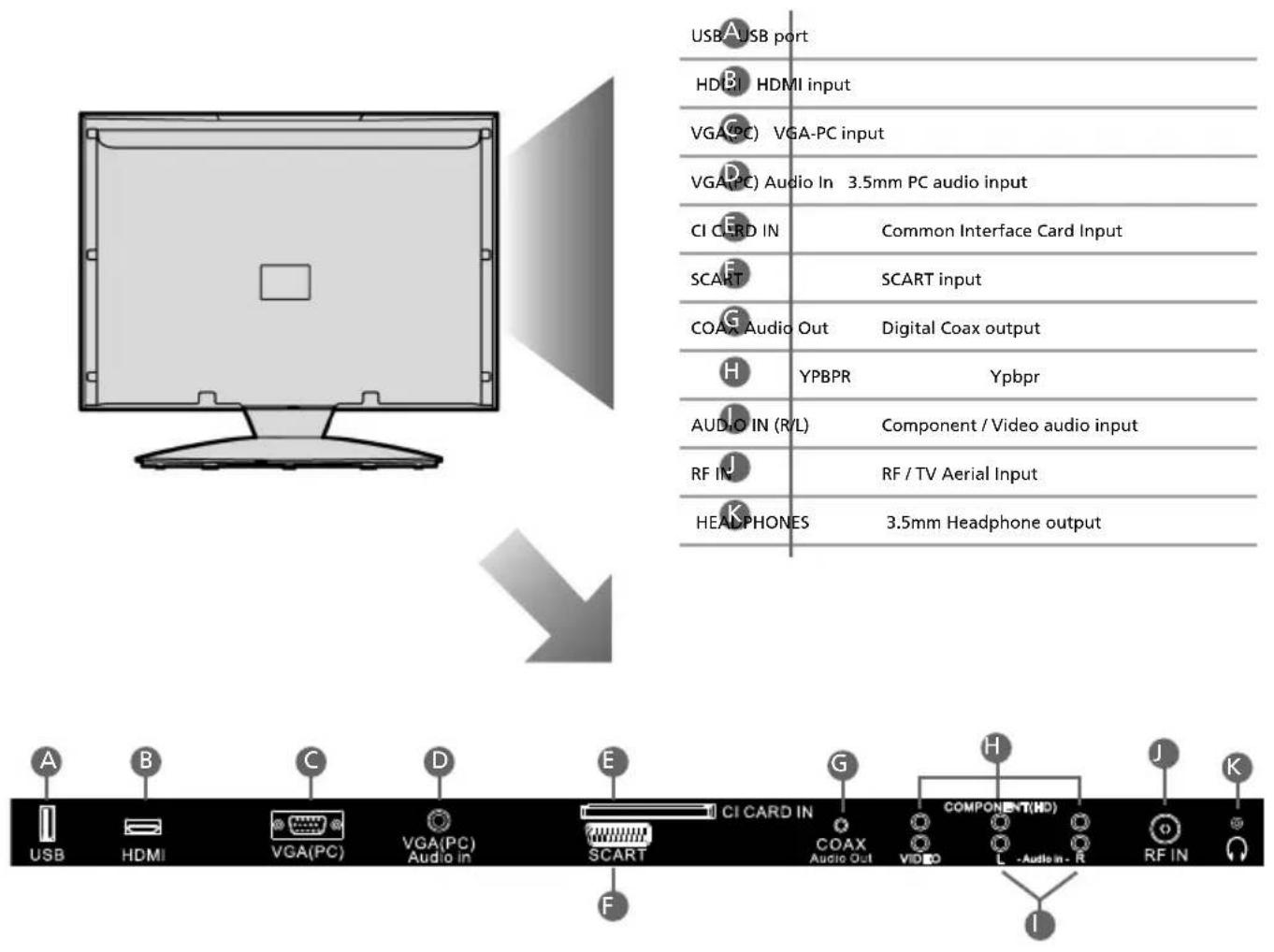
CONNECTIONS
Connecting a DVD Player/Recorder, Video Recorder or Cable/Satellite Box
TVs Input/Source should be set to SCART
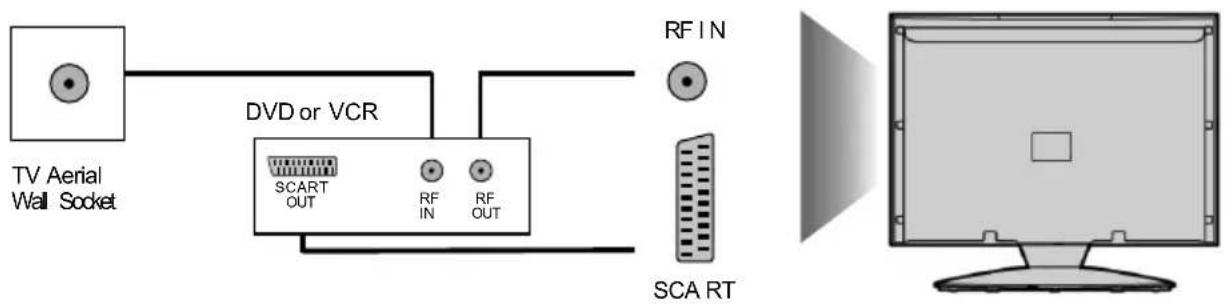
flowchart
graph LR
    A["TV Aerial Wall Socket"] --> B["DVD or VCR"]
    B --> C["SCART OUT"]
    B --> D["RF IN"]
    B --> E["RF OUT"]
    C --> F["SCA RT"]
    E --> F
    G["RFIN"] --> H["Computer"]
CONNECTIONS
Connecting a Camcorder, Camera or Games Console
Source should be set to Video
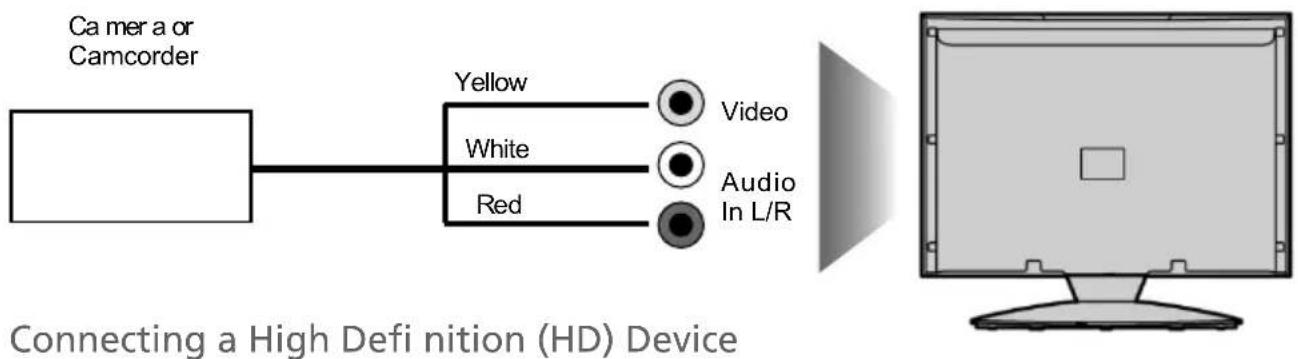
flowchart
graph LR
    A["Camera or Camcorder"] --> B["Yellow"]
    B --> C["White"]
    B --> D["Red"]
    C --> E["Video"]
    D --> F["Audio In L/R"]
    G["Connecting a High Definition (HD) Device"] --> H["Computer monitor"]
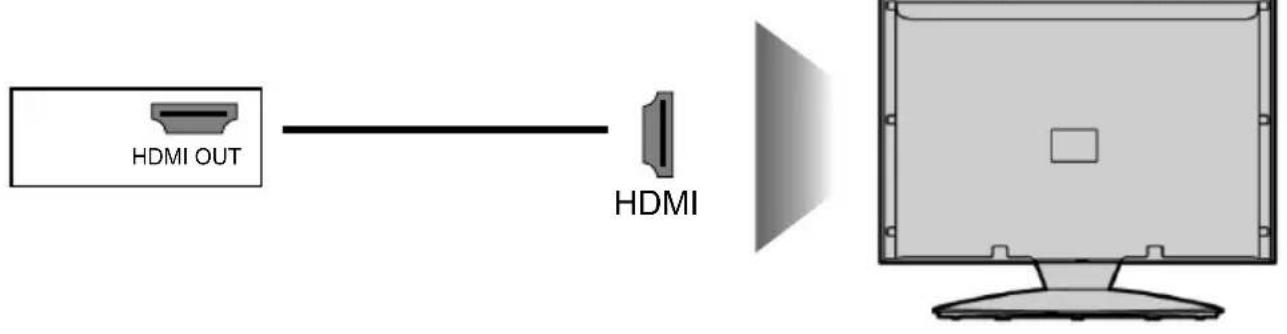
Option 1 - via HDMI to HDMI cable
A HDMI cable can output both video and audio and enables you to enjoy digital-quality video and audio with minimal loss of quality.
TVs Input/Source should be set to HDMI.
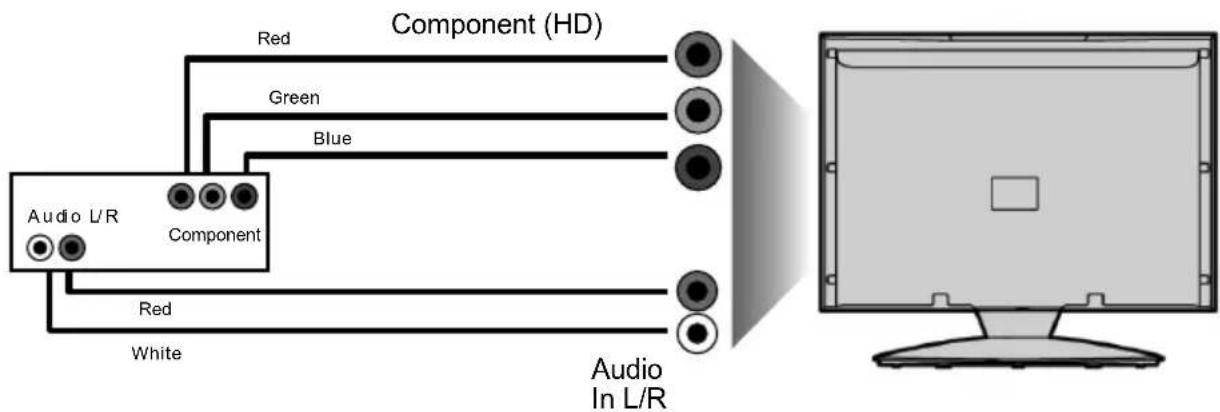
Option 2 - via Component cable
If you are supplied with a cable from the device which has RED, GREEN, BLUE, RED & WHITE connectors you must connect via Component (for picture) and by phono cable (for sound).
TV Source should be set to Component.
flowchart
graph TD
    A["Component (HD)"] --> B["Red"]
    A --> C["Green"]
    A --> D["Blue"]
    A --> E["Red"]
    A --> F["White"]
    G["Audio In L/R"] --> H["Computer"]
CHANNEL MENU
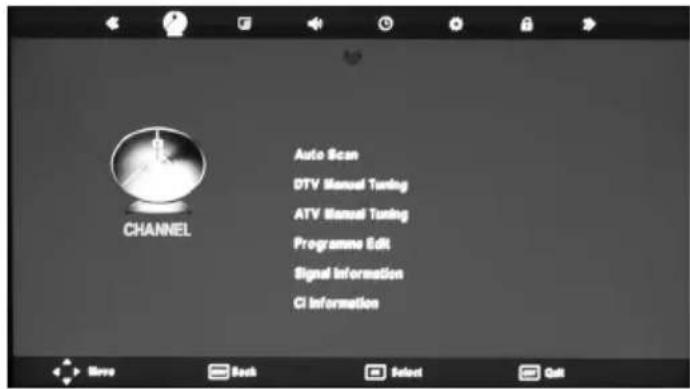
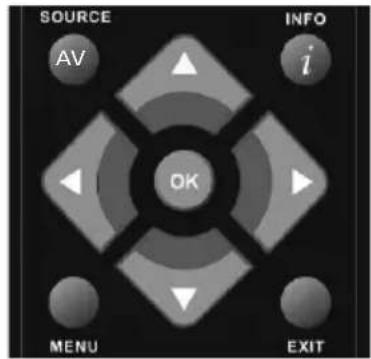
To access this menu, press [MENU] button on the remote control. To enter a menu press [OK]
If you wish to make changes to any of the default settings, use the scroll any settings press [OK] button.
To exit this menu at anytime, press [EXIT] button.
Auto Tuning - Allows you to retune the television for all digital channels, digital radio stations and analogue channels.
Digital Manual Tuning- Allows you to manually tune your digital signal
Analogue Manual Tuning - Allows you to manually tune your analogue signal
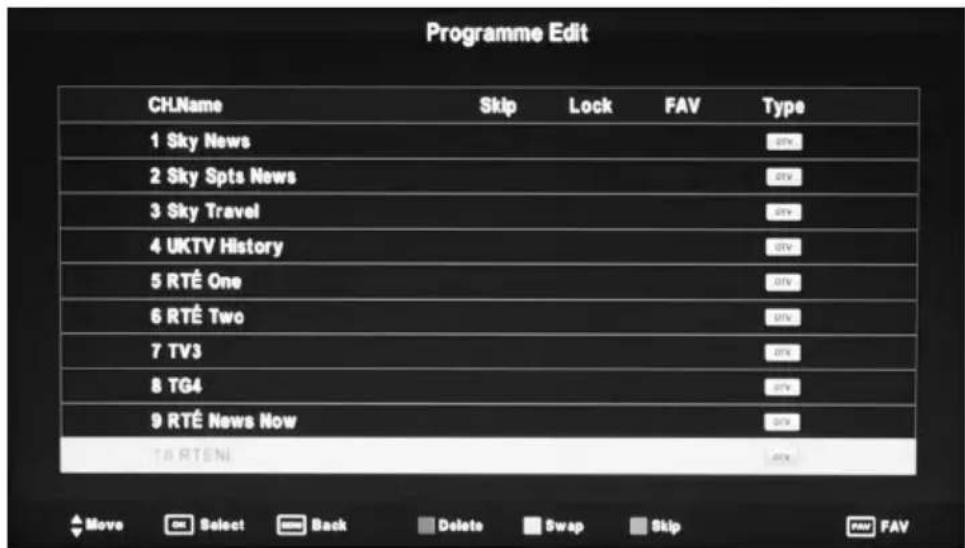
Programme Edit - Allows you to delete, skip and add favourite channels.
Signal Info -Displays signal strength and quality information.
CI Information - Pay per view services require a "smartcard" to be inserted into the TV.
If you subscribe to a pay per view service the provider will issue you with a 'CAM' and a "smartcard". The CAM can then be inserted into the COMMON INTERFACE PORT (CI Card In).
PICTURE MENU
To access this menu, press [MENU] button on the remote control. To enter a menu press [OK]
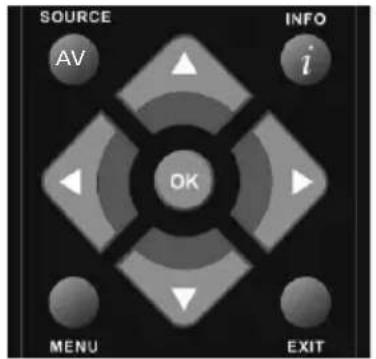
If you wish to make changes to any of the default settings, use the scroll ▲▼▶◀ buttons. To confirm any settings press [OK] button.
To exit this menu at anytime, press [EXIT] button.
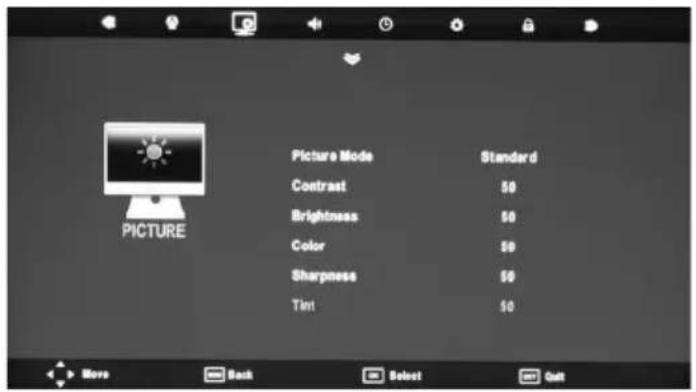
Picture Mode - Choose from the following presets
| Standard | Default | settings |
| Dynamic | Recommended settings for fast moving pictures | |
| Mild | Set to be lighter in colour and less bright | |
| User | Lets you manually alter all the settings | |
Contrast - Switch the balance between black and white
Brightness - Increase or decrease the brightness of the picture
Colour - Increases the colour from black and white
Sharpness - Increase or decrease the sharpness of the picture
Tint - Lets you increase or decrease the level of tint within the picture
Noise Reduction - Choose from the following presets
| Off Turns noise reduction off |
| Low Minor system adjustment |
| Middle Medium system adjustments |
| High Maximum system adjustments |
Tip: If you do not press any buttons for 10 seconds, the menu will automatically exit. You can change the length of time before the menu exits automatically - see 'Menu Duration' section.
PICTURE MENU
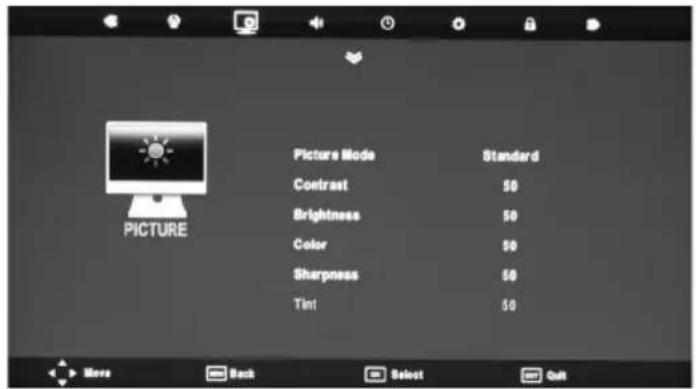
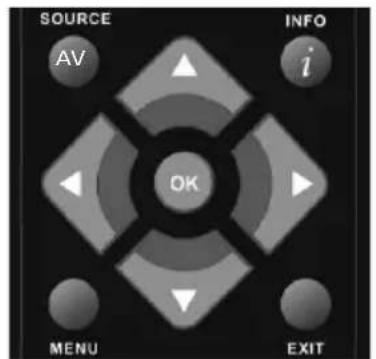
To access this menu, press [MENU] button on the remote control. To enter a menu press [OK]
If you wish to make changes to any of the default settings, use the scroll ▲▼▶◀ buttons. To confirm any settings press [OK] button.
To exit this menu at anytime, press [EXIT] button.
SOUND MENU
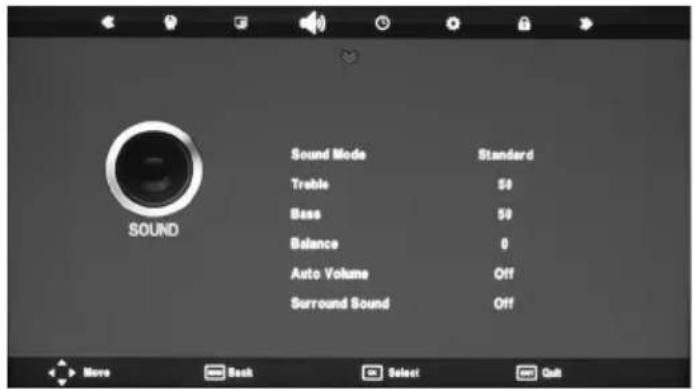
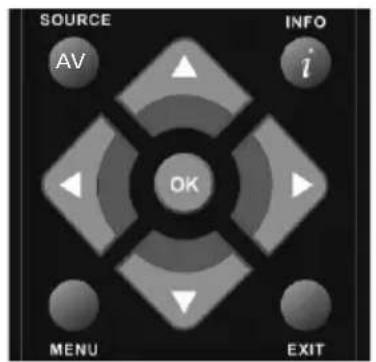
To access this menu, press [MENU] button on the remote control. To enter a menu press [OK]
If you wish to make changes to any of the default settings, use the scroll any settings press [OK] button.
To exit this menu at anytime, press [EXIT] button.
Sound Mode - Choose from the following presets
| User | Default | settings |
| Music | Emphasises music over voices | |
| Movie | Provides live and full sound for movies | |
| Personal | Selects your personal sound settings | |
| Sports | Emphasises sound for sports | |
Tip: Treble and bass levels can only be adjusted when the sound mode 'Personal' is selected.
Treble - To adjust the amount of high frequency within the sound
Bass - To adjust the amount of low frequency within the sound
Balance - To switch the sound between the left and right speakers
Auto Volume Level (AVL) - When 'on' is selected, the volume will stay at a constant level regardless of input/source
Surround Sound - Allows you to turn surround sound ON or OFF
AD Volume - Increase or decrease the Audio Description volume
Audio Delay - Allows you to sync sound and picture on Digital source.
SPDIF Mode - This is the digital COAX Audio output. Choose from the following options:
| Off | Off |
| Bitstream via coax cable (True digital signal) | Select this option if you are connecting to a Dolby Digital 5.1 surround sounds amplifier |
| PCM Select this option if you are connecting to a Stereo Hi-fi via coax cable (Pulse-code modulation (PCM) is a digital representation of an analogue signal) | |
TIME MENU
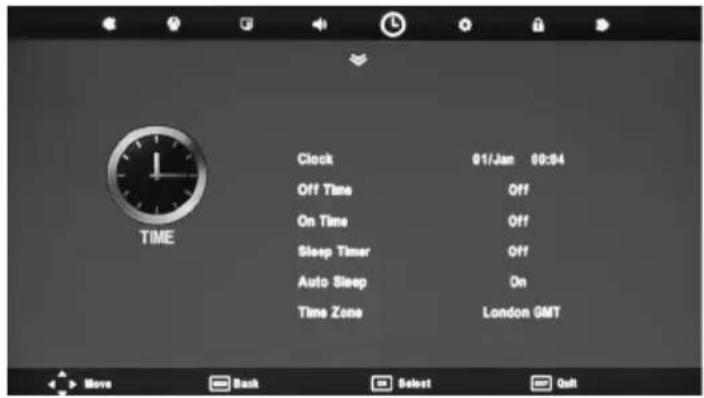
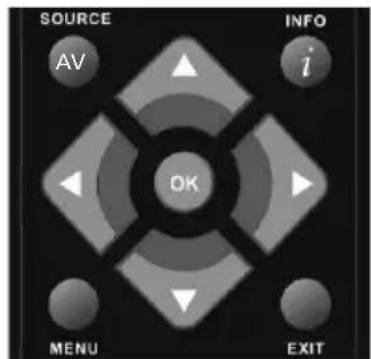
To access this menu, press [MENU] button on the remote control. To enter a menu press [OK]
If you wish to make changes to any of the default settings, use the scroll any settings press [OK] button.
To exit this menu at anytime, press [EXIT] button.
Clock - Set the date and time
Off Time - Allows you to set a specific time for your TV to turn off
On Time - Allows you to set a specific time for your TV to turn on, the channel it will then display, the source it will be on and also the volume. This function can then be toggled to repeat every day or a certain day.
Sleep Timer - Lets you set the sleep timer so the television automatically switches off after a set amount of time. Off -> 10min -> 20min -> 30min -> 60min -> 90min -> 120min -> 180min -> 240min
Auto sleep - If no signal is received after a period of time the Television will turn itself off Time Zone - Change your current time zone
LOCK MENU
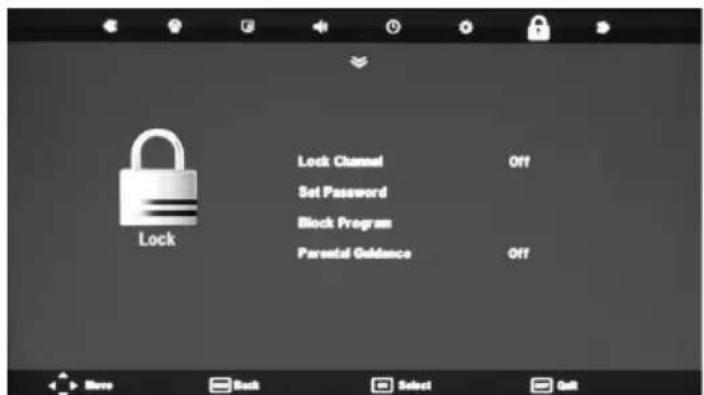
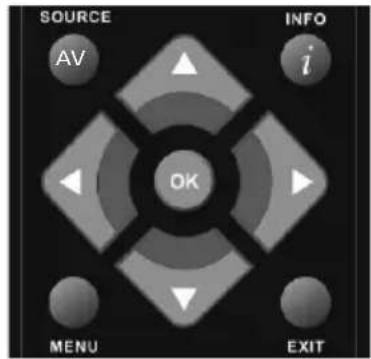
To access this menu, press [MENU] button on the remote control. To enter a menu press [OK]
If you wish to make changes to any of the default settings, use the scroll ▲▶▲ buttons. To confirm any settings press [OK] button.
To exit this menu at anytime, press [EXIT] button.
Lock Channel - Allows you to lock or unlock specifi c channels.
Set Password - You will be asked to enter a 4 digit password use the ◀ button to quit the password input.
Use the ▶ button to clear. Default password is 0000
Block Program - Allows to completely block certain channels
Parental Guidance - Turns the parental guidance function on and off
OPTION MENU
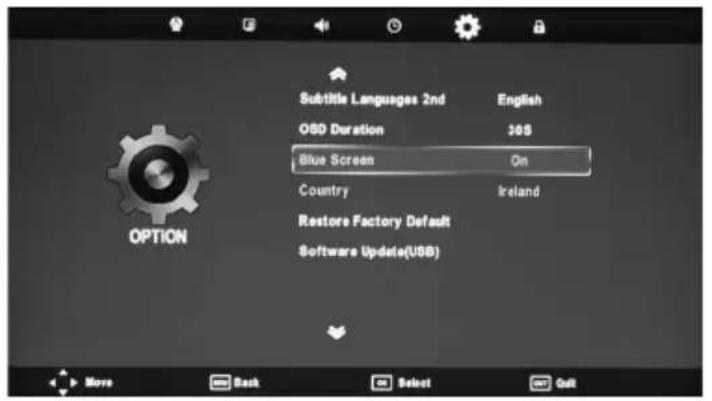
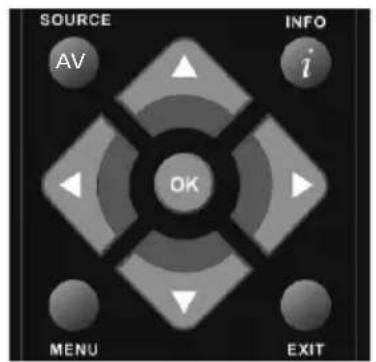
To access this menu, press [MENU] button on the remote control. To enter a menu press [OK]
If you wish to make changes to any of the default settings, use the scroll any settings press [OK] button.

buttons. To confi rm
To exit this menu at anytime, press [EXIT] button.
OSD language - Allows you to change the language of the menu
Audio Languages - In certain situations you will be given the ability to change audio language
Subtitle Languages - In certain situations you will be given the ability to change subtitle language
OSD Duration - Lets you adjust the amount of time the On Screen Menu stays on the screen before disappearing
Blue Screen - Changes the background when there is no input between clear and a blue background (Only available on some sources)
Country - Allows you the change the
Reset Factory default
Reset Menu System - This resets the menus to factory settings.
Reset Menu System - This clears all the TV channels from the television
Software Update (USB) - From time to time we may release new firmware to improve the operation of the television (available to download). This menu lets you install the new software/fi rmware onto the television. Further details of how to do this will be issued with the fi rmware. Contact the helpline or refer to the 'product support' section of the website.
DVD MENU
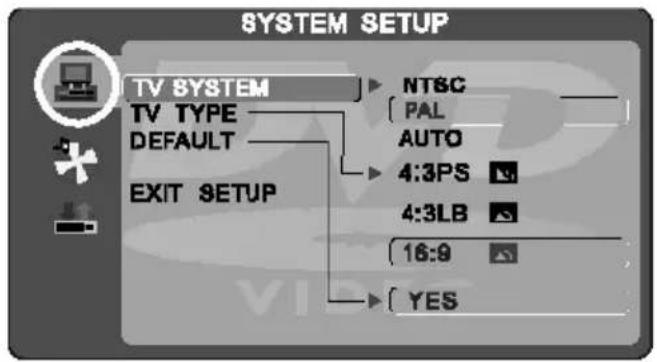
To access this menu, press [D. MENU] button on the remote control.
If you wish to make changes to any of the default settings, use the scroll any settings press [OK] button.

buttons. To confi rm
To exit this menu at anytime, press [EXIT] button.
TV System - Choose from the following options
NTSC Normally used for discs from North America, Japan etc
PAL The standard for discs from UK/Europe, most of Asia, Australia etc
Auto For both NTSC and PAL
TV Type - Choose from the following options
4:3PS Traditional picture format, often used on old fi Im
4:3 LB Traditional picture which has been adapted for widescreen
16:9 Widescreen picture format
Default - This option allows you reset all DVD settings.
Tone - Choose from the following options
+ Increases the treble (high frequency sound)
- Increases the bass (low frequency sound)
Dynamic Range - This is the difference between the quietest and loudest sounds. This setting works only with DVD discs recorded in Dolby digital.
Full Set this to listen with the range recorded on the disc
4/8 Set this to listen with a range equivalent to a normal television
2/8 Set this to listen with a smaller difference between the maximum and minimum volume
Dual Mono
| Stereo Outputs 2 channels of sound both left and right | |
| Mono L Outputs left side sound | |
| Mono R | Outputs right side sound |
| Mix Mono | Outputs a single channel of sound but mix between right and left |
USING THE TELEVISION AS A COMPUTER MONITOR
IMPORTANT – Before connecting the computer to the television you must ensure the computer settings are correct for the television. You MUST do this using your old monitor.
How to set up for Windows XP & Windows Vista (connecting via VGA cable to the TV)
1) Switch on your computer
2) When fi nished booting up right click your mouse anywhere on the screen
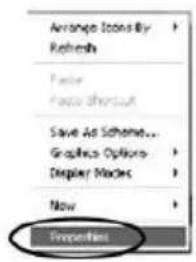
XP Screen
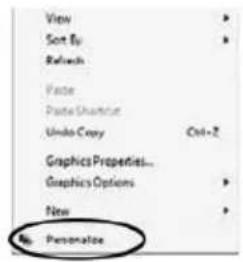
VISTA Screen
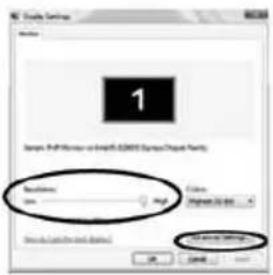
4) Left click your mouse on Setting/Display Settings. Ensure the screen resolution is set to what is shown in the technical specifications section toward the rear of this user guide. To correct the resolution to that of the television move the slider.
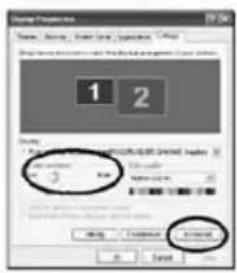
XP Screen
VISTA Screen
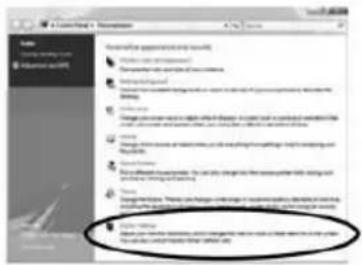
3) Left click your mouse on Properties/Personalise
![文件名(N): 文件类型(T): [ ] 选择 [ ] 取消 [ ] 帮助(H) Active Window Active Path OK Cancel](/content/2026/06/1192569/images/f24b36eb2d29d2c1ce99f7c7d0370eaf7f07c00c7d6fe372ac2ed2aa38fe060f.jpg)
XP Screen
VISTA Screen
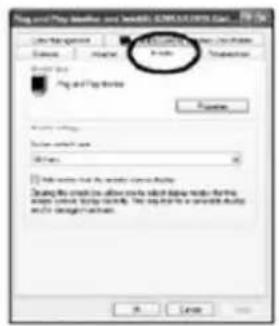
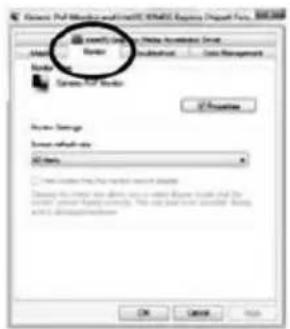
5) Left click your mouse on Advance/Advanced Settings and left click on Monitor
XP Screen
VISTA Screen
6) Left click on the drop down for Screen refresh rate and select 60 Hertz, if you experience picture noise or 'fl ickering', select 50 hertz or 70 hertz.
7) Click on Apply, then click Yes and the settings will be saved.
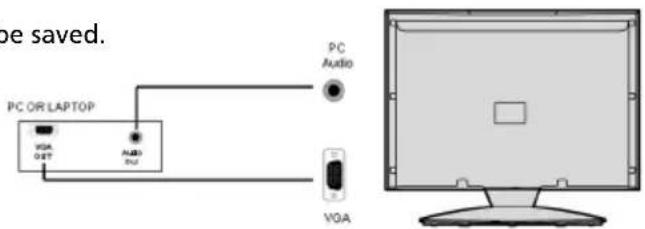
8) Now switch off your computer and connect the television (as shown)
9) Switch on the TV, select the input/source to VGA/PC and re-start your PC.
Connecting a Laptop
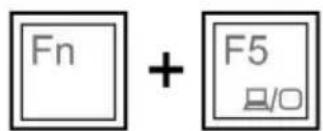
In addition to the above if you are connecting a laptop to the television you will also need to activate the VGA connection on the laptop. This can vary based on the brand of laptop you have, on many brands/models, it is as per below.
1) Connect the laptop to the television
2) On the Laptop push buttons
The screen will now switch to the television.
PC SETTINGS
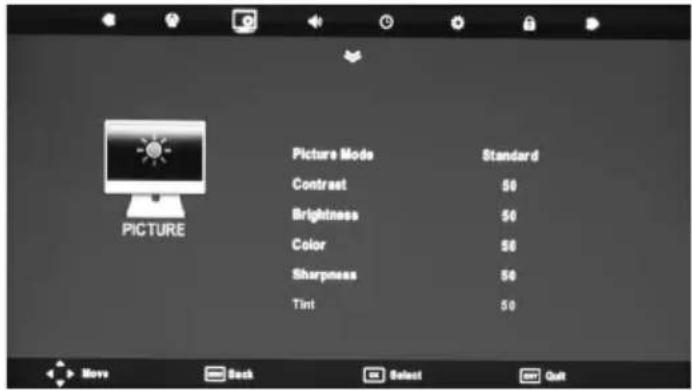
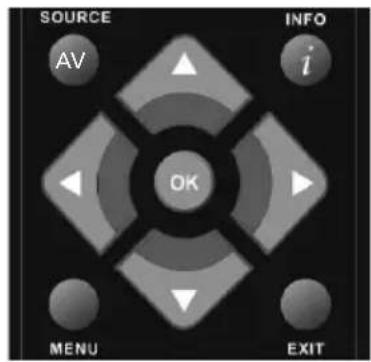
To access this menu, you need to navigate to the PICTURE menu and press [OK]. You then need to scroll down to the menu item called SCREEN and press [OK]
If you wish to make changes to any of the default settings, use the scroll ▲▼▶▲ buttons. To confirm any settings press [OK] button.
To exit this menu at anytime, press [EXIT] button.
Auto Adjust - Lets you automatically confi gure the television to be used as a computer monitor
H Offset - Changes the horizontal position of the picture
V Offset - Changes the vertical position of the picture
Size - increase picture size
Phase - To adjust delay time of phase in order to reduce the noise of picture
Tip: If the computer is left in-active for a period of time, the television will switch into a 'sleep' state (the screen will power off to save power). To switch back on press the standby button.
7 DAY TV GUIDE
TV Guide is available in Digital TV mode. It provides information about forthcoming programmes (where supported by the freeview channel). You can view the start and end time of all programmes and on all channels for the next 7 days and set reminders.
1) Press [TV GUIDE]. The following 7 Day TV Guide will appear.
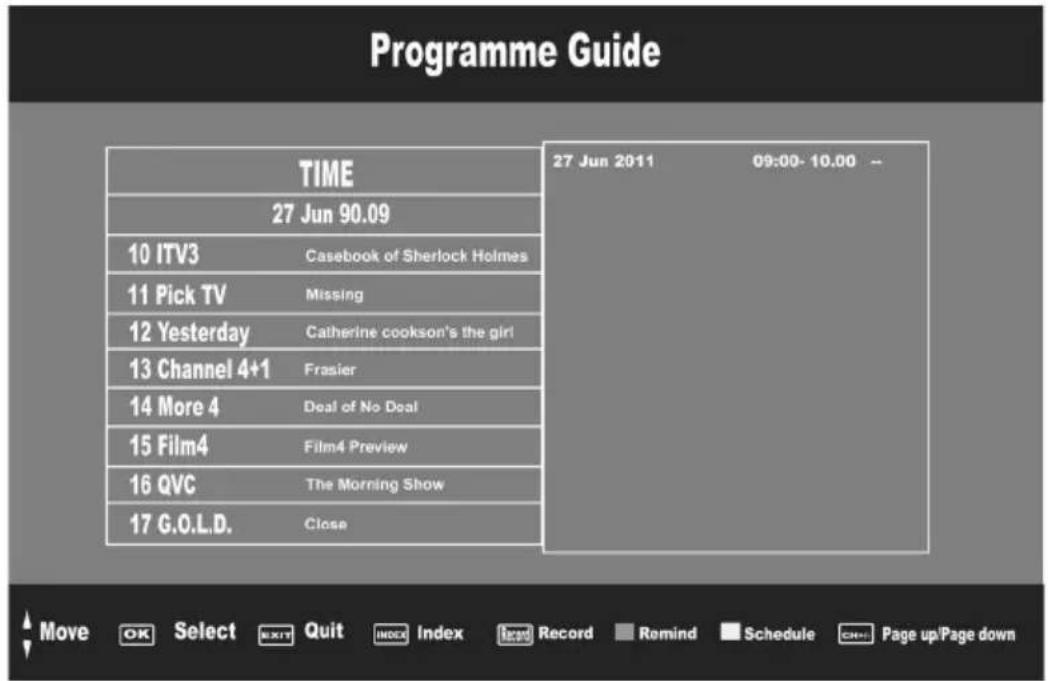
2) Navigate through the menu using ▲▼▶◀
You can now:
Set a reminder by pressing GREEN
View a previous day by pressing YELLOW
View the next day by pressing BLUE
3) Press [EXIT] to exit the 7 day TV Guide.
USB MODE / MEDIA PLAYER
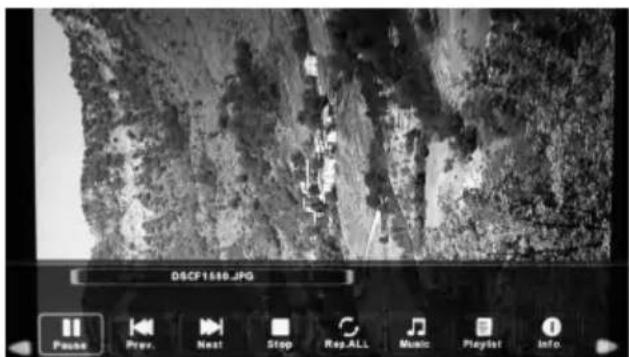
USB mode offers playback of various different types of content that you have saved on your USB Memory Stick.
On switching to USB source the above menu screen will appear. The content will be divided into Photo, Music, Movie and Text based on fi le type.
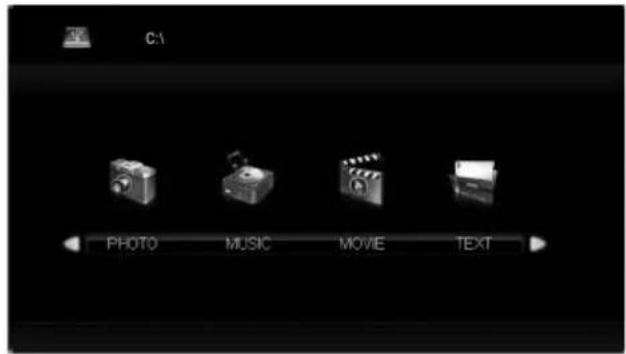
1) You can navigate through the menus using the scroll ▲▼▶◀ buttons. To confirm the item you wish to play/view press [OK] button.
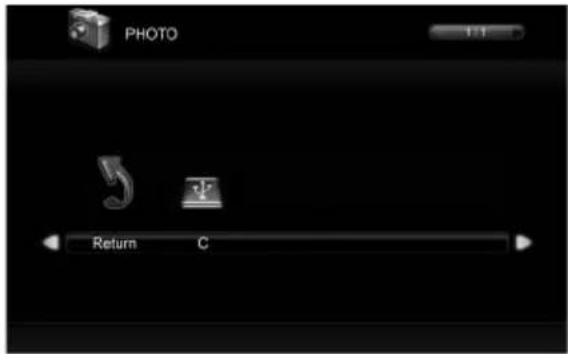
2) Select the drive you require. (If your drive only has 1 partition you will only see 1 item).
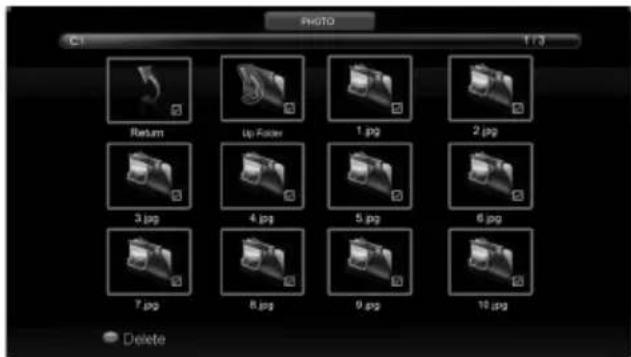
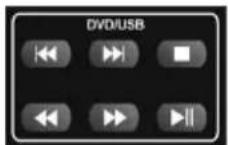
3) You can now access the item. Press OK to view. 4) While viewing you control the item using or by pressing (i) and using ▲ and (OK)
FREQUENTLY ASKED QUESTIONS
| General I would like to have louder sound by connecting additional speakers | Subject to the TV model and connections, it is possible to connect the TV to an external amplifi er or surround sound (subject to connections/inputs on the device) as follows:-1) Connect a COAX cable* from the TV's COAX output to your amplifi er/ surround systems COAX input2) Connect a 3.5mm jack to L/R phono cable* from the TV's headphone socket (where fi tted) to your amplifi er/surround sound L/R input. Please note sound to the TV's speakers will be disabled.3) On selected models, it maybe possible to connect a SCART input/ output* switch with an additional L/R Phono cable* to the TV's SCART socket and to the L/R Phono Input of your amplifi er/surround sound. Please note due to copyright laws it is not possible to output video/sound from the TV on certain sources, i.e. HDMI, DVD etc.*cables and switches mentioned are available to purchase separately from your retailer. |
| General Why are some options in the menu unavailable and greyed out | Some options are only available in certain sources, i.e. HDMI, PC/VGA. They are unavailable in the other sources where they have no affect. |
| TV I have tuned in Digital TV but I am not receiving any or all of the channels and/ or the channels I receive are breaking up | 1) Check you are in an area that can receive saorview. Visit www.saorview.ie2) Check you are using an aerial that is able to receive a good digital signal. In most cases, you will need an outdoor digital hi-gain/wideband aerial. In areas that have excellent digital coverage, you may be able to use a loft type aerial but it is highly likely that you will also need to connect a booster between the back of the TV and the TV aerial wall socket. Unfortunately, to receive a good enough digital signal, it is not possible to use a portable/indoor type aerial. This may change once the analogue signal is switched off in 2012 and the Digital signal strength is increased. |
| TV I have re-tuned my television but when I switch it off it is not storing the channels | Complete a fi rst time installation, please refer to the set-up menu section of the manual of how to do this |
| VCR/DVD Recorder | I have connected the TV to my VCR or DVD Recorder via SCART but it is not recording |
| DVD I have inserted a disc but it is not playing | 1) Ensure you have inserted put the disc in facing the correct way forward2) Ensure the disc is clean and is not scratched3) Some copied discs will not play.4) Check the DVD is a region 2 disc – to change the region of the DVD player, refer to section 'Changing Regions'. |
| Game Consoles I have connected my PS3 to the TV via HDMI, but I am not receiving any pictures or sound on my Television | 1) Ensure the TVs source is on HDMI2) Check your settings on your PS3 are as per the PS3 instruction manual |
| Game Consoles I have connected my Xbox 360 to the TV via Component Cables (Red, Green & Blue) but I am not receiving any sound | Component cables only provide HD Pictures. For the sound you will need to connect the Red & White audio cables on the Xbox to the Red & White phono inputs on the rear of the TV. Please refer to the 'Connections' pages. |
| USB Mode I have inserted a USB Memory Key, but the TV does not recognise it | Ensure the USB Memory Key is formatted to type FAT32. |
| USB Mode Using a USB portable hard drive | If you wish to use a portable hard drive larger than 32GB, please note that it must be formatted to the FAT32 fi le system in order to operate on this TV. Windows XP/Vista computers are only capable of formatting up to 32GB, therefore, you will need a software programme/utility to format larger hard drives. Please refer to the web site for more information. |
TECHNICAL SPECIFICATION
| Model LCD19-230i, LCD19-230-P2i LCD22-230i | ||
| Screen size (diagonal) 18.5"/47cm 21.6"/55cm | ||
| Resolution 1366 x 768 1366 x 768 | ||
| Contrast Ratio 1000:1 1000:1 | ||
| Brightness cd/m2 250 350 | ||
| PC RGB Yes | ||
| RF 75 ohm Antenna / PAL-SECAM | ||
| Video Inputs 1 x SCART, 1 x Video, 1 x Component (YPbPr - 1080i)1 x HDMI (upto 1080i) | ||
| Sound Inputs | 1 x 3.5mm jack for PC audio input, 1 x pair RCA shared for Video & YPbPr (component) audio input | |
| Sound Outputs | 1 x Coax Audio output, 1 x Headphone output | |
| Sound power, watts (RMS) | 2 x 3 | |
| Voltage and power consumption | 110-240v 50/60Hz 1.5A 60W(standby less than 0.5w) | 110-240v 50/60Hz 1.5A 70W(standby less than 0.5w) |
| Dimensions including stand (mm) | 467 x 325 x 166 | 535 x 370 x 166 |
| Net weight (Kgs) | 4.25 | 4.65 |
| Model | LCD19-228Gi | LCD22-228Gi LCD22-228Wi |
| Screen size (diagonal) 18.5"/47cm 21.6"/55cm | ||
| Resolution 1366 x 768 1366 x 768 | ||
| Contrast Ratio 1000:1 1000:1 | ||
| Brightness cd/m2 250 350 | ||
| PC RGB Yes | ||
| RF 75 ohm Antenna / PAL-SECAM | ||
| Video Inputs 1 x SCART, 1 x Video, 1 x Component (YPbPr - 1080i)1 x HDMI (upto 1080i) | ||
| Sound Inputs | 1 x 3.5mm jack for PC audio input, 1 x pair RCA shared for Video & YPbPr (component) audio input | |
| Sound Outputs | 1 x Coax Audio output, 1 x Headphone output | |
| Sound power, watts (RMS) | 2 x 3 | |
| Voltage and power consumption | 110-240v 50/60Hz 1.5A 60W(standby less than 0.5w) | 110-240v 50/60Hz 1.5A 70W(standby less than 0.5w) |
| Dimensions including stand (mm) | 463W x 372H x 178D | 534W x 404H x 200D |
| Net weight (Kgs) | 5 | 5.3 |
Compatible files in USB Mode
| Media File Ext. | Codec | |||
| Video Audio | ||||
| Movie .mpg Mpeg-1, Mpeg-2 | 1920x1080MP3, WMA | Max Resolution: 1920x1080Max Data rate: 40Mbps | ||
| .avi Xvid, MJPEG,MPEG-4 SP/ASP | ||||
| .ts Mpeg-2 Max Resolution: | Max Data rate: 40Mbps | |||
| .mov Mpeg-4 SP/ASP | ||||
| .mkv | ||||
| .dat Mpeg-1 | ||||
| .mp4 Mpeg-1, Mpeg-2 Max Resolution: 1024x768 | Max Data rate: 40Mbps | |||
| Music .vob Mpeg-2 | ||||
| .mp3 - MP3 Sample Rate 16K-48KHz | Bit rate: 32K - 442Kbps | |||
| .wma - WMA | ||||
| Picture | .jpg | Progressive JPEG Max Resolution: 1024x768 | ||
| .jpeg Baseline JPEG Max Resolution: 8192x8192 | ||||
| .bmp BMP | Max Resolution: 6500x6500 | |||
INDEX
Aspect Ratio 18
Auto Confi guration of screen (PC) 25
Auto Tuning 16
Auto Volume Level 19
Balance 19
Bass 19
Blue Screen 22
Brightness 17
Clock 20
Colour 17
Colour Temperature 17
Common Interface 16
Connections....14-15
Contrast 17
Detaching the base/stand 9
Digital Output 19
Dual Mono (DVD) 23
Dynamic Range (DVD) 23
First Time Installation 11
Frequently Asked Questions 28
Getting Started 11
Horizontal Position (PC) 25
Language 22
Manual Search 16
Noise Reduction 17
Phase (PC) 25
Picture Mode 17
Remote control 13
Reset to default 22
Returning to Default (DVD) 23
Sharpness 17
Sleep Timer 20
Sound Mode 19
Source Menu 12
System Lock 21
Technical Specifications 29
Tone (DVD) 23
Treble 19
TV buttons 12
TV System (DVD) 23
TV Type (DVD) 23
TV Guide 26
USB Mode / Media Player 27
Using the television as a computer monitor 24
Vertical Position (PC) 25
Wall mounting 9
What is included in the box 8
- IMPORTANT SAFETY INSTRUCTIONS
- Warnings
- Safety
- Maintenance
- Packaging
- Important Information Regarding Use of Video Games, Computers, Captions or Other Fixed Image Displays
- How do I dispose of this product?
- Batteries
- CAUTION:
- This caution label is located on the rear panel of the unit
- CONTENTS
- WHAT IS INCLUDED IN THE BOX
- ATTACHING/DETACHING THE STAND
- Attaching the Stand
- Detaching the Stand
- Wall mounting the TV
- GETTING STARTED - INITIAL SET UP
- TV BUTTONS & SOURCE MENU
- Choosing Mode Input/Source
- CONNECTIONS
- Connecting a Camcorder, Camera or Games Console
- CHANNEL MENU
- PICTURE MENU
- SOUND MENU
- TIME MENU
- LOCK MENU
- OPTION MENU
- DVD MENU
- USING THE TELEVISION AS A COMPUTER MONITOR
- Connecting a Laptop
- PC SETTINGS
- DAY TV GUIDE
- USB MODE / MEDIA PLAYER
- INDEX
Brand : Technika
Model : LCD23-231-BR-G-ROI
Category : Television