
Intel Xeon E5-2609v2 - Server FUJITSU - Free user manual and instructions
Find the device manual for free Intel Xeon E5-2609v2 FUJITSU in PDF.


| Product Type | Server Processor |
| Brand | Intel |
| Model | Intel Xeon E5-2609v2 |
| Processor Number | E5-2609v2 |
| Core Count | 4 |
| Thread Count | 4 |
| Last Level Cache (L3) | 10 MB (2.5 MB per core) |
| Thermal Design Power (TDP) | 80 W |
| Socket | LGA2011-0 (FCLGA12) |
| Package Dimensions | 52.5 x 45 mm (Package A) |
| Package Weight | 45 g |
| Process Technology | 22 nm |
| Memory Support | DDR3, up to 1866 MT/s, 4 channels, ECC support |
| PCI Express | Up to 40 lanes of PCIe 3.0 |
| Interfaces | 2x Intel QPI up to 8.0 GT/s, DMI2, PECI |
| Hyper-Threading | Not supported |
| Turbo Boost | Not supported |
| Security Technologies | Execute Disable Bit, Intel Secure Key, OS Guard |
| Virtualization | Intel VT-x, VT-d |
| Power Management | Enhanced Intel SpeedStep, C-states (CC1, CC3, CC6; PC0-PC6) |
| Thermal Management | Digital Thermal Sensor, Adaptive Thermal Monitor, PROCHOT_N, THERMTRIP_N |
| Handling Precautions | Use anti-static precautions; do not exceed 80 lbs shear, 35 lbs tensile, 35 in-lbs torque |
| Safety | Install by qualified personnel; avoid contact with Test Pad Area |
Frequently Asked Questions - Intel Xeon E5-2609v2 FUJITSU
User questions about Intel Xeon E5-2609v2 FUJITSU
0 question about this device. Answer the ones you know or ask your own.
Ask a new question about this device
Download the instructions for your Server in PDF format for free! Find your manual Intel Xeon E5-2609v2 - FUJITSU and take your electronic device back in hand. On this page are published all the documents necessary for the use of your device. Intel Xeon E5-2609v2 by FUJITSU.
USER MANUAL Intel Xeon E5-2609v2 FUJITSU
Datasheet - Volume One of Two
March 2014
INFORMATION IN THIS DOCUMENT IS PROVIDED IN CONNECTION WITH INTEL PRODUCTS. NO LICENSE, EXPRESS OR IMPLIED, BY ESTOPPEL OR OTHERWISE, TO ANY INTELLECTUAL PROPERTY RIGHTS IS GRANTED BY THIS DOCUMENT. EXCEPT AS PROVIDED IN INTEL'S TERMS AND CONDITIONS OF SALE FOR SUCH PRODUCTS, INTEL ASSUMES NO LIABILITY WHATSOEVER AND INTEL DISCLAIMS ANY EXPRESS OR IMPLIED WARRANTY, RELATING TO SALE AND/OR USE OF INTEL PRODUCTS INCLUDING LIABILITY OR WARRANTIES RELATING TO FITNESS FOR A PARTICULAR PURPOSE, MERCHANTABILITY, OR INFRINGEMENT OF ANY PATENT, COPYRIGHT OR OTHER INTELLECTUAL PROPERTY RIGHT.
UNLESS OTHERWISE AGREED IN WRITING BY INTEL, THE INTEL PRODUCTS ARE NOT DESIGNED NOR INTENDED FOR ANY APPLICATION IN WHICH THE FAILURE OF THE INTEL PRODUCT COULD CREATE A SITUATION WHERE PERSONAL INJURY OR DEATH MAY OCCUR.
Intel may make changes to specifications and product descriptions at any time, without notice. Designers must not rely on the absence or characteristics of any features or instructions marked "reserved" or "undefined." Intel reserves these for future definition and shall have no responsibility whatsoever for conflicts or incompatibilities arising from future changes to them.
The Intel ^® Xeon ^® Processor E5-1600/E5-2600/E5-4600 v2 Product Families, Intel ^® C600 Series chipset, and the Intel ^® Xeon ^® Processor E5-1600/E5-2600/E5-4600 v2 Product Families-based platform described in this document may contain design defects or errors known as errata which may cause the product to deviate from published specifications. Current characterized errata are available on request.
Contact your local Intel sales office or your distributor to obtain the latest specifications and before placing your product order.
Copies of documents which have an order number and are referenced in this document, or other Intel literature, may be obtained by calling 1-800-548-4725, or go to: http://www.intel.com/#/en_US_01
Hyper-Threading Technology requires a computer system with a processor supporting HT Technology and an HT Technology enabled chipset, BIOS and operating system. Performance will vary depending on the specific hardware and software you use. For more information including details on which processors support HT Technology, see http://www.intel.com/products/ht/hyperthreading_more.htm.
Enabling Execute Disable Bit functionality requires a PC with a processor with Execute Disable Bit capability and a supporting operating system. Check with your PC manufacturer on whether your system delivers Execute Disable Bit functionality.
Intel® Virtualization Technology requires a computer system with an enabled Intel® processor, BIOS, virtual machine monitor (VMM) and, for some uses, certain computer system software enabled for it. Functionality, performance or other benefits will vary depending on hardware and software configurations and may require a BIOS update. Software applications may not be compatible with all operating systems. Please check with your application vendor.
Intel® Turbo Boost Technology requires a PC with a processor with Intel Turbo Boost Technology capability. Intel Turbo Boost Technology performance varies depending on hardware, software and overall system configuration. Check with your PC manufacturer on whether your system delivers Intel Turbo Boost Technology. For more information, see http://www.intel.com/technology/turboboost/.
64-bit computing on Intel architecture requires a computer system with a processor, chipset, BIOS, operating system, device drivers and applications enabled for Intel® 64 architecture. Performance will vary depending on your hardware and software configurations. Consult with your system vendor for more information.
Intel processor numbers are not a measure of performance. Processor numbers differentiate features within each processor family, not across different processor families. See http://www.intel.com/products/processor%5Fnumber/ for details.
I^2C is a two-wire communications bus/protocol developed by Philips. SMBus is a subset of the I^2C bus/protocol and was developed by Intel. Implementations of the I^2C bus/protocol may require licenses from various entities, including Philips Electronics N.V. and North American Philips Corporation.
Intel, Xeon, Enhanced Intel SpeedStep Technology, and the Intel logo are trademarks of Intel Corporation in the U.S. and/or other countries.
*Other names and brands may be claimed as the property of others.
Copyright © 2009-2014, Intel Corporation. All rights reserved.
Table of Contents
1 Overview 11
1.1 Introduction ...... 11
1.1.1 Processor Feature Details 16
1.1.2 Supported Technologies 16
1.2 Interfaces 17
1.2.1 System Memory Support 17
1.2.2 PCI Express* 18
1.2.3 Direct Media Interface Gen 2 (DMI2).... 19
1.2.4 Intel ^ QuickPath Interconnect (Intel ^ QPI) 20
1.2.5 Platform Environment Control Interface (PECI).... 20
1.3 Power Management Support 21
1.3.1 Processor Package and Core States.... 21
1.3.2 System States Support 21
1.3.3 Memory Controller.... 21
1.3.4 PCI Express* 21
1.3.5 Intel ^ QPI....21
1.4 Thermal Management Support 21
1.5 Package Summary.... 22
1.6 Terminology 22
1.7 Related Documents 25
1.8 Statement of Volatility (SOV) 25
1.9 State of Data 25
2 Interfaces....27
2.1 System Memory Interface 27
2.1.1 System Memory Technology Support 27
2.1.2 System Memory Timing Support.... 27
2.2 PCI Express* Interface.... 28
2.2.1 PCI Express* Architecture 28
2.2.2 PCI Express* Configuration Mechanism 29
2.3 DMI2/PCI Express* Interface 30
2.3.1 DMI2 Error Flow.... 30
2.3.2 Processor/PCH Compatibility Assumptions.... 30
2.3.3 DMI2 Link Down.... 30
2.4 Intel ^ QuickPath Interconnect (Intel ^ QPI) 30
2.5 Platform Environment Control Interface (PECI).... 31
2.5.1 PECI Client Capabilities 32
2.5.2 Client Command Suite 33
2.5.3 Client Management....71
2.5.4 Multi-Domain Commands 76
2.5.5 Client Responses....77
2.5.6 Originator Responses....78
2.5.7 DTS Temperature Data 78
3 Technologies 81
3.1 Intel ^ Virtualization Technology (Intel ^ VT) 81
3.1.1 Intel ^ VT-x Objectives 81
3.1.2 Intel ^ VT-x Features 82
3.1.3 Intel® VT-d Objectives 82
3.1.4 Intel® Virtualization Technology Processor Extensions 83
3.2 Security Technologies 83
3.2.1 Intel® Trusted Execution Technology....83
3.2.2 Intel® Trusted Execution Technology - Server Extensions 84
intel®
3.2.3 AES Instructions....84
3.2.4 Execute Disable Bit 85
3.3 Intel ^® Secure Key....85
3.4 Intel ^ OS Guard....85
3.5 Intel® Hyper-Threading Technology....85
3.6 Intel ^® Turbo Boost Technology 86
3.6.1 Intel ^ Turbo Boost Operating Frequency....86
3.7 Enhanced Intel SpeedStep® Technology....86
3.8 Intel® Intelligent Power Technology....87
3.9 Intel® Advanced Vector Extensions (Intel® AVX) 87
3.10 Intel ^® Dynamic Power Technology 88
4 Power Management 89
4.1 ACPI States Supported 89
4.1.1 System States....89
4.1.2 Processor Package and Core States 89
4.1.3 Integrated Memory Controller States....90
4.1.4 DMI2/PCI Express* Link States....91
4.1.5 Intel® QuickPath Interconnect States....91
4.1.6 G, S, and C State Combinations....91
4.2 Processor Core/Package Power Management 92
4.2.1 Enhanced Intel SpeedStep® Technology....92
4.2.2 Low-Power Idle States....92
4.2.3 Requesting Low-Power Idle States 93
4.2.4 Core C-states 94
4.2.5 Package C-States 95
4.2.6 Package C-State Power Specifications....99
4.2.7 Processor Package Power Specifications 99
4.3 System Memory Power Management 100
4.3.1 CKE Power-Down....100
4.3.2 Self Refresh 101
4.3.3 DRAM I/O Power Management.... 101
4.4 DMI2/PCI Express* Power Management.... 102
5 Thermal Management Specifications....103
5.1 Package Thermal Specifications ....103
5.1.1 Thermal Specifications....103
5.1.2 TCASE and DTS Based Thermal Specifications....105
5.1.3 Processor Operational Thermal Specifications 106
5.1.4 Embedded Server Thermal Profiles....110
5.1.5 Thermal Metrology....113
5.2 Processor Core Thermal Features 114
5.2.1 Processor Temperature.... 114
5.2.2 Adaptive Thermal Monitor 114
5.2.3 On-Demand Mode.... 117
5.2.4 PROCHOT_N Signal 118
5.2.5 THERMTRIP_N Signal 118
5.2.6 Integrated Memory Controller (IMC) Thermal Features.... 119
6 Signal Descriptions....121
6.1 System Memory Interface Signals 121
6.2 PCI Express* Based Interface Signals 122
6.3 DMI2/PCI Express* Port 0 Signals....124
6.4 Intel® QuickPath Interconnect Signals 124
6.5 PECI Signal....125
6.6 System Reference Clock Signals 125
6.7 JTAG and TAP Signals....125
6.8 Serial VID Interface (SVID) Signals 126
6.9 Processor Asynchronous Sideband and Miscellaneous Signals 126
6.10 Processor Power and Ground Supplies 129
7 Electrical Specifications....131
7.1 Processor Signaling 131
7.1.1 System Memory Interface Signal Groups 131
7.1.2 PCI Express Signals 131
7.1.3 DMI2/PCI Express Signals 131
7.1.4 Intel ^ QuickPath Interconnect 131
7.1.5 Platform Environmental Control Interface (PECI) 132
7.1.6 System Reference Clocks (BCLK{0/1}_DP, BCLK{0/1}_DN).... 132
7.1.7 JTAG and Test Access Port (TAP) Signals 133
7.1.8 Processor Sideband Signals 133
7.1.9 Power, Ground and Sense Signals.... 133
7.1.10 Reserved or Unused Signals.... 138
7.2 Signal Group Summary 138
7.3 Power-On Configuration (POC) Options.... 142
7.4 Fault Resilient Booting (FRB)....142
7.5 Mixing Processors.... 143
7.6 Flexible Motherboard Guidelines (FMB).... 144
7.7 Absolute Maximum and Minimum Ratings 144
7.7.1 Storage Condition Specifications.... 144
7.8 DC Specifications 145
7.8.1 Voltage and Current Specifications.... 145
7.8.2 Die Voltage Validation.... 150
7.8.3 Signal DC Specifications 151
7.9 Signal Quality 158
7.9.1 DDR3 Signal Quality Specifications 158
7.9.2 I/O Signal Quality Specifications.... 158
7.9.3 Intel ^® QuickPath Interconnect Signal Quality Specifications 159
7.9.4 Input Reference Clock Signal Quality Specifications.... 159
7.9.5 Overshoot/Undershoot Tolerance.... 159
8 Processor Land Listing....163
8.1 Listing by Land Name 163
8.2 Listing by Land Number 187
9 Package Mechanical Specifications 213
9.1 Package Size and SKUs 213
9.2 Package Mechanical Drawing (PMD) 214
9.3 Processor Component Keep-Out Zones 219
9.4 Package Loading Specifications 219
9.5 Package Handling Guidelines.... 219
9.6 Package Insertion Specifications.... 219
9.7 Processor Mass Specification.... 220
9.8 Processor Materials.... 220
9.9 Processor Markings.... 220
10 Boxed Processor Specifications 221
10.1 Introduction 221
10.1.1 Available Boxed Thermal Solution Configurations 221
10.1.2 Intel Thermal Solution STS200C
(Passive/Active Combination Heat Sink Solution) 221
10.1.3 Intel Thermal Solution STS200P and STS200PNRW
(Boxed 25.5 mm Tall Passive Heat Sink Solutions).... 222
10.2 Mechanical Specifications 223
10.2.1 Boxed Processor Heat Sink Dimensions and Baseboard Keepout Zones ..... 223
10.2.2 Boxed Processor Retention Mechanism and Heat Sink Support (ILM-RS) ..... 232
10.3 Fan Power Supply [STS200C] 232
10.3.1 Boxed Processor Cooling Requirements....233
10.4 Boxed Processor Contents....236
Figures
1-1 Intel ^ Xeon ^ Processor E5-1600 v2 Product Family on the 1 Socket Platform ....14
1-2 Intel Xeon Processor E5-2600 v2 Product Family on the 2 Socket Platform ....15
1-3 Intel Xeon Processor E5-4600 v2 Product Family on the 4 Socket Platform ....15
1-4 PCI Express* Lane Partitioning and Direct Media Interface Gen 2 (DMI2)....19
2-1 PCI Express* Layering Diagram 28
2-2 Packet Flow through the Layers 29
2-3 Ping() 33
2-4 Ping() Example....33
2-5 GetDIB() 34
2-6 Device Info Field Definition 34
2-7 Revision Number Definition 35
2-8 GetTemp()....36
2-9 GetTemp() Example 36
2-10 RdPkgConfig() 37
2-11 WrPkgConfig()....39
2-12 DRAM Thermal Estimation Configuration Data....42
2-13 DRAM Rank Temperature Write Data 43
2-14 The Processor DIMM Temperature Read / Write 44
2-15 Ambient Temperature Reference Data 44
2-16 Processor DRAM Channel Temperature 45
2-17 Accumulated DRAM Energy Data....45
2-18 DRAM Power Info Read Data 46
2-19 DRAM Power Limit Data 47
2-20 DRAM Power Limit Performance Data....47
2-21 CPUID Data 51
2-22 Platform ID Data 52
2-23 PCU Device ID....52
2-24 Maximum Thread ID....52
2-25 Processor Microcode Revision 52
2-26 Machine Check Status 53
2-27 Package Power SKU Unit Data 53
2-28 Package Power SKU Data....54
2-29 Package Temperature Read Data 55
2-30 Temperature Target Read 56
2-31 Thermal Status Word 56
2-32 Thermal Averaging Constant Write / Read....57
2-33 Current Config Limit Read Data 57
2-34 Accumulated Energy Read Data 58
2-35 Power Limit Data for VCC Power Plane 59
2-36 Package Turbo Power Limit Data 60
2-37 Package Power Limit Performance Data 60
2-38 Efficient Performance Indicator Read 60
2-39 ACPI P-T Notify Data 61
2-40 Caching Agent TOR Read Data 62
2-41 DTS Thermal Margin Read 62
2-42 Processor ID Construction Example....63
2-43 RdiamSR() 64
2-44 PCI Configuration Address 66
2-45 RdPCIConfig()....67
2-46 PCI Configuration Address for local accesses 68
2-47 RdPCIConfigLocal()....68
2-48 WrPCIConfigLocal() 70
2-49 The Processor PECI Power-up Timeline() 72
2-50 Temperature Sensor Data Format.... 78
4-1 Idle Power Management Breakdown of the Processor Cores.... 93
4-2 Thread and Core C-State Entry and Exit 93
4-3 Package C-State Entry and Exit 97
5-1 TCase Temperature Thermal Profile 108
5-2 Digital Thermal Sensor DTS Thermal Profile 110
5-3 Embedded Case Temperature Thermal Profile.... 112
5-4 Embedded DTS Thermal Profile 113
5-5 Case Temperature (TCASE) Measurement Location 114
5-6 Frequency and Voltage Ordering.... 117
7-1 Input Device Hysteresis 132
7-2 VR Power-State Transitions....136
7-3 Processor VCC Static and Transient Tolerance Loadlines 149
7-4 Load Current Versus Time 150
7-5 VCC Overshoot Example Waveform.... 151
7-6 BCLK{0/1} Differential Clock Crosspoint Specification 157
7-7 BCLK{0/1} Differential Clock Measurement Point for Ringback 157
7-8 BCLK{0/1} Single Ended Clock Measurement Points for Absolute Cross Point and Swing 157
7-9 BCLK{0/1} Single Ended Clock Measurement Points for Delta Cross Point 158
7-10 Maximum Acceptable Overshoot/Undershoot Waveform.... 161
9-1 Processor Package Assembly Sketch 213
9-2 Processor PMD Package A (52.5 x 45 mm) Sheet 1 of 2.... 215
9-3 Processor PMD Package A (52.5 x 45 mm) Sheet 2 of 2.... 216
9-4 Processor PMD Package B (52.5 x 51 mm) Sheet 1 of 2.... 217
9-5 Processor PMD Package B (52.5 x 51 mm) Sheet 2 of 2.... 218
9-6 Processor Top-Side Markings 220
10-1 STS200C Passive/Active Combination Heat Sink (with Removable Fan).... 222
10-2 STS200C Passive/Active Combination Heat Sink (with Fan Removed) 222
10-3 STS200P and STS200PNRW 25.5 mm Tall Passive Heat Sinks.... 223
10-4 Boxed Processor Motherboard Keepout Zones (1 of 4)....224
10-5 Boxed Processor Motherboard Keepout Zones (2 of 4).... 225
10-6 Boxed Processor Motherboard Keepout Zones (3 of 4)....226
10-7 Boxed Processor Motherboard Keepout Zones (4 of 4)....227
10-8 Boxed Processor Heat Sink Volumetric (1 of 2) 228
10-9 Boxed Processor Heat Sink Volumetric (2 of 2) 229
10-10 4-Pin Fan Cable Connector (For Active Heat Sink)....230
10-11 4-Pin Base Baseboard Fan Header (For Active Heat Sink).... 231
10-12 Fan Cable Connector Pin Out For 4-Pin Active Thermal Solution 233
Tables
1-1 HCC, MCC, and LCC SKU Table Summary....11
1-2 Volume Structure and Scope 14
2-1 Summary of Processor-specific PECI Commands 34
2-2 Minor Revision Number Meaning 37
2-3 GetTemp() Response Definition 38
2-4 RdPkgConfig() Response Definition....40
2-5 WrPkgConfig() Response Definition 42
2-6 RdPkgConfig() & WrPkgConfig() DRAM Thermal and Power Optimization Services Summary....43
2-7 Channel & DIMM Index Decoding 45
2-8 RdPkgConfig() & WrPkgConfig() CPU Thermal and Power Optimization Services Summary....50
2-9 Power Control Register Unit Calculations 55
2-10 RdIAMSR() Response Definition 66
2-11 RdIAMSR() Services Summary12 67
2-12 RdPCIConfig() Response Definition....69
2-13 RdPCIConfigLocal() Response Definition....71
2-14 WrPCIConfigLocal() Response Definition....72
2-15 WrPCIConfigLocal() Memory Controller and IIO Device/Function Support....73
2-16 PECI Client Response During Power-Up....74
2-17 SOCKET ID Strapping....75
2-18 Power Impact of PECI Commands vs. C-states....75
2-19 Domain ID Definition....78
2-20 Multi-Domain Command Code Reference....78
2-21 Completion Code Pass/Fail Mask 79
2-22 Device Specific Completion Code (CC) Definition 79
2-23 Originator Response Guidelines....80
2-24 Error Codes and Descriptions....81
4-1 System States....91
4-2 Package C-State Support 91
4-3 Core C-State Support 92
4-4 System Memory Power States 92
4-5 DMI2/PCI Express* Link States....93
4-6 Intel® QPI States 93
4-7 G, S and C State Combinations....93
4-8 P_LVLx to MWAIT Conversion 96
4-9 Coordination of Core Power States at the Package Level....98
4-10 Package C-State Power Specifications....101
4-11 Processor Package Power Pmax 101
5-1 TCase Temperature Thermal Specifications....109
5-2 Digital Thermal Sensor (DTS) Specification Summary 110
5-3 Embedded TCase Temperature Thermal Specifications 113
5-4 Embedded DTS Thermal Specifications 115
6-1 Memory Channel DDR0, DDR1, DDR2, DDR3 123
6-2 Memory Channel Miscellaneous.... 124
6-3 PCI Express* Port 1 Signals 124
6-4 PCI Express* Port 2 Signals 124
6-5 PCI Express* Port 3 Signals ....125
6-6 PCI Express* Miscellaneous Signals.... 125
6-7 DMI2 and PCI Express Port 0 Signals.... 126
6-8 Intel QPI Port 0 and 1 Signals 126
6-9 Intel QPI Miscellaneous Signals 126
6-10 PECI Signals....127
6-11 System Reference Clock (BCLK{0/1}) Signals 127
6-12 JTAG and TAP Signals 127
6-13 SVID Signals 128
6-14 Processor Asynchronous Sideband Signals 128
6-16 Power and Ground Signals.... 131
6-15 Miscellaneous Signals 131
7-1 Power and Ground Lands.... 135
7-2 SVID Address Usage 139
7-3 VR12.0 Reference Code Voltage Identification (VID) Table 139
7-4 Signal Description Buffer Types 140
7-5 Signal Groups 141
7-6 Signals with On-Die Termination 143
7-7 Power-On Configuration Option Lands 144
7-8 Fault Resilient Booting (Output Tri-State) Signals 145
7-9 Processor Absolute Minimum and Maximum Ratings.... 146
7-10 Storage Condition Ratings 147
7-11 Voltage Specification.... 147
7-12 Processor Current Specifications.... 149
7-13 Processor VCC Static and Transient Tolerance 150
7-14 VCC Overshoot Specifications.... 153
7-15 DDR3 and DDR3L Signal DC Specifications.... 153
7-16 PECI DC Specifications 155
7-17 System Reference Clock (BCLK{0/1}) DC Specifications 155
7-18 SMBus DC Specifications 156
7-19 JTAG and TAP Signals DC Specifications 156
7-20 Serial VID Interface (SVID) DC Specifications.... 156
7-21 Processor Asynchronous Sideband DC Specifications 157
7-22 Miscellaneous Signals DC Specifications.... 158
7-23 Processor I/O Overshoot/Undershoot Specifications 161
7-24 Processor Sideband Signal Group Overshoot/Undershoot Tolerance 163
8-1 Land Name.... 165
8-2 Land Number.... 189
9-1 Processor Package Sizes.... 216
9-2 Processor Loading Specifications 221
9-3 Package Handling Guidelines.... 221
9-4 Processor Materials.... 222
10-1 PWM Fan Frequency Specifications For 4-Pin Active Thermal Solution 234
10-2 PWM Fan Characteristics for Active Thermal Solution 234
10-3 PWM Fan Connector Pin and Wire Description.... 235
10-4 Server Thermal Solution Boundary Conditions 236
| Revision Number | Description Revision Date | |
| 001 • Initial Release September 2013 | ||
| 002 | Added Intel® Xeon® Processor E5-4600 Product FamilyAdded PPIN Feature (Protected Processor Inventory Number (PPIN): Section 1.1.1 and Table 1-6SKU clarifications to these Sections and Tables— Updated Section 1.1.1— Updated Table 1-2 - HCC, MCC, and LCC SKU Table Summary— Updated Section 1.6— Updated Table 4-10 -Package C-State Power Specifications— Updated Table 5-1 - Tcase Temperature Thermal Specifications— Updated Table 5-2 - DTS Specifications Summary— Updated Table 5-3 & 5-4 - Embedded Tcase Temperature Thermal Specifications— Updated Table 9-1 - Processor Package Sizes | March 2014 |
| 003 • Added E5-1680 v2 March 2014 | ||
§
1 Overview
1.1 Introduction
The Intel ^® Xeon ^® processor E5-1600/E5-2600/E5-4600 v2 product families - Volume One provides DC electrical specifications, signal integrity, differential signaling specifications, land and signal definitions, and an overview of additional processor feature interfaces.
This document is intended to be distributed as a part of the complete document which consists of 2 volumes. The structure and scope of the 2 volumes are provided in Table 1-2.
The Intel ^® Xeon ^® processor E5-1600/E5-2600/E5-4600 v2 product families are the next generation of 64-bit, multi-core enterprise processors built on 22-nanometer process technology.
Throughout this document, the Intel ^® Xeon ^® processor E5-1600/E5-2600/E5-4600 v2 product families may be referred to as simply the processor. Where information differs between the EP and EP 4S SKUs, this document uses specific Intel ^® Xeon ^® processor E5-1600 v2 product family, Intel ^® Xeon ^® processor E5-2600 v2 product family, and Intel ^® Xeon ^® processor E5-4600 v2 product family notation.
Based on the low-power/high performance Ivy Bridge processor microarchitecture, the processor is designed for a two-chip platform as opposed to the traditional three-chip platforms (processor, MCH, and ICH). The two-chip platform consists of a processor and the Platform Controller Hub (PCH) and enables higher performance, easier validation, and improved x-y footprint.
This generation of processor introduces the High-Core count (HCC), Mid-Core count (MCC), and Low-Core count (LCC) die size terminology to the SKU models. The table below summarizes the die size associated with the processor TDP, Model Number, and Core Count.
Table 1-1. HCC, MCC, and LCC SKU Table Summary (Sheet 1 of 2)
| Die Size TDP (W) | Model Number Core Count | ||
| High-Core Count (HCC) 130W | 1U E5-2697 v2 12 | ||
| 115W 1U E5-2695 v2E5-4657L v2 | 12 | ||
| 95W 1U E5-4610 v2 8 |
Table 1-1. HCC, MCC, and LCC SKU Table Summary (Sheet 2 of 2)
| Die Size | TDP (W) | Model Number | Core Count |
| Mid-Core Count (MCC) 150W | WS E5-2687W v2 8 | ||
| 130W 1U E5-2690 v2 10 | |||
| 130W 1U E5-4627 v2 8 | |||
| 130W WS E5-1680 v2 8 | |||
| 130W 2U E5-2667 v2 8 | |||
| 130W 2U E5-2643 v2 6 | |||
| 115W 1U E5-2680 v2 | E5-2670 v2 | 10 | |
| 95W 1U | E5-2660 v2E5-4650 v2E5-4640 v2 | 10 | |
| 95W 1U E5-2650 v2 | E5-2640 v2E5-4620 v2 | 8 | |
| 70W 1U E5-2650L v2 | 10 | ||
| Low-Core Count (LCC) | 130W 2U E5-2637 v2 4 | ||
| 130W WS E5-1660 v2 | E5-1650 v2 | 6 | |
| 130W WS E5-1620 v2 4 | |||
| 95W 1U E5-4607 v2 6 | |||
| 95W 1U E5-4603 v2 4 | |||
| 80W 1U E5-2630 v2 | E5-2620 v2 | 6 | |
| 80W 1U E5-2609 v2 | E5-2603 v2 | 4 | |
| 60W 1U E5-2630L v2 | 6 | ||
| Embedded SKUs | |||
| Mid-Core Count (MCC) | LV95W EmbeddedLV70W Embedded | E5-2658 v2E5-2648L v2E5-4624L v2 | 10 |
| LV70W Embedded | E5-2628L v2 | 8 | |
| Low-Core Count (LCC) | LV50W Embedded | E5-2618L v2 6 | |
Some processor features are not available on all platforms. Refer to the Intel® Xeon® Processor E5 v2 Product Family Specification Update for details of each processor SKU. The Intel® Xeon® processor E5-1600/E5-2600/E5-4600 v2 product families support these segments.
- The Xedn® processor E5-1600 v2 product family is designed for single processor Workstation platforms only.
- The Xeon® processor E5-2600 v2 product family is designed for dual processor Workstation, Efficient Performance server and HPC platforms.
- The Intel® Xeon® processor E5-4600 v2 product family processor supports scalable server and HPC platforms of two or more processors, including "glueless" 4-way platforms.
These processors feature per socket, two Intel® QuickPath Interconnect point-to-point links capable of up to 8.0 GT/s, up to 40 lanes of PCI Express* 3.0 links capable of 8.0 GT/s, and 4 lanes of DMI2/PCI Express* 2.0 interface with a peak transfer rate of 5.0 GT/s. The processor supports up to 46 bits of physical address space and 48-bit of virtual address space.
Included in this family of processors is an integrated memory controller (IMC) and integrated I/O (IIO) (such as PCI Express* and DMI2) on a single silicon die. This single die solution is known as a monolithic processor.
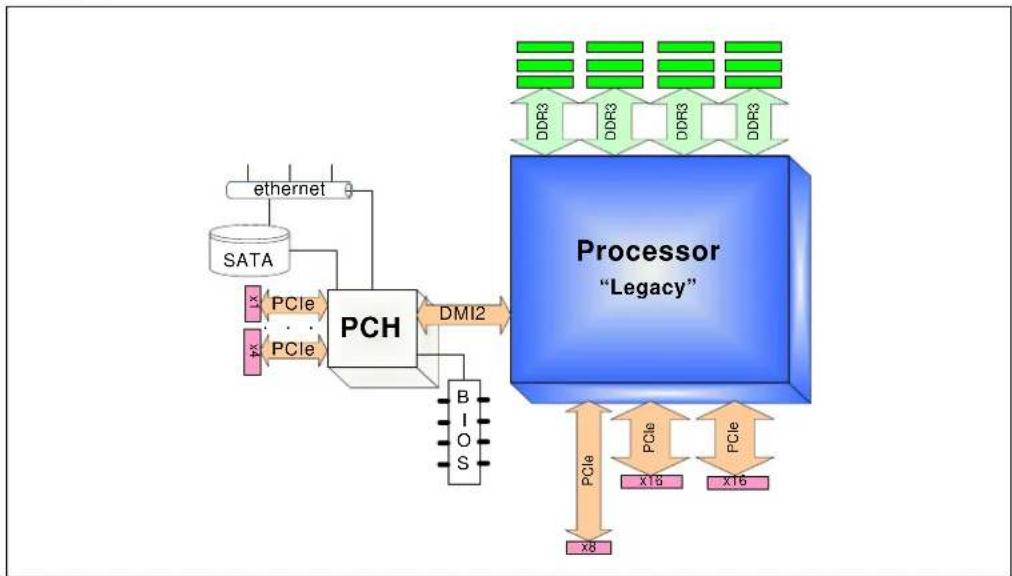
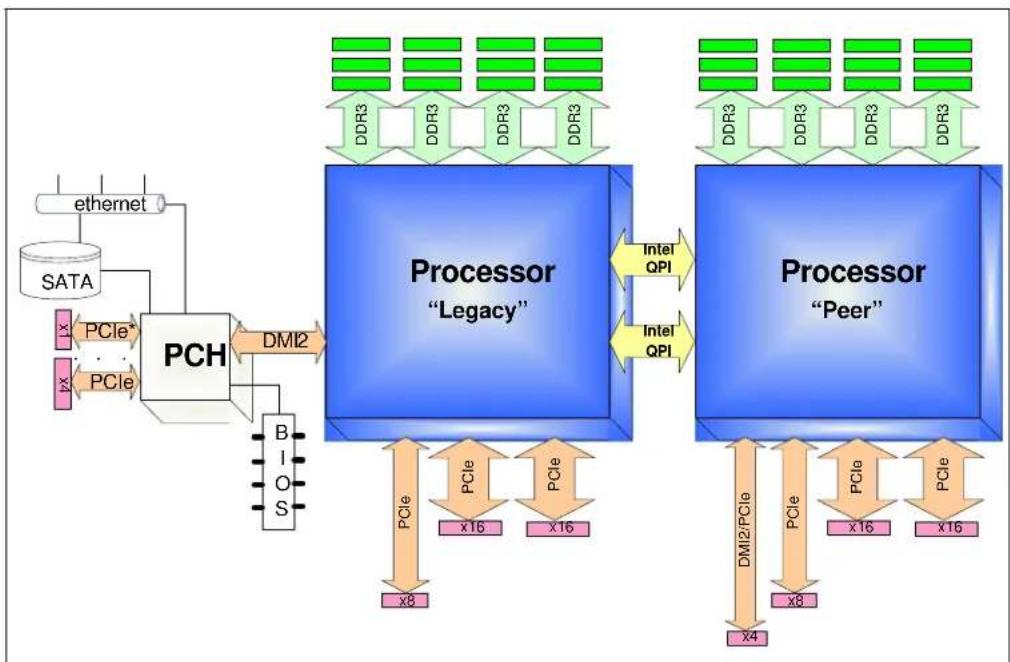
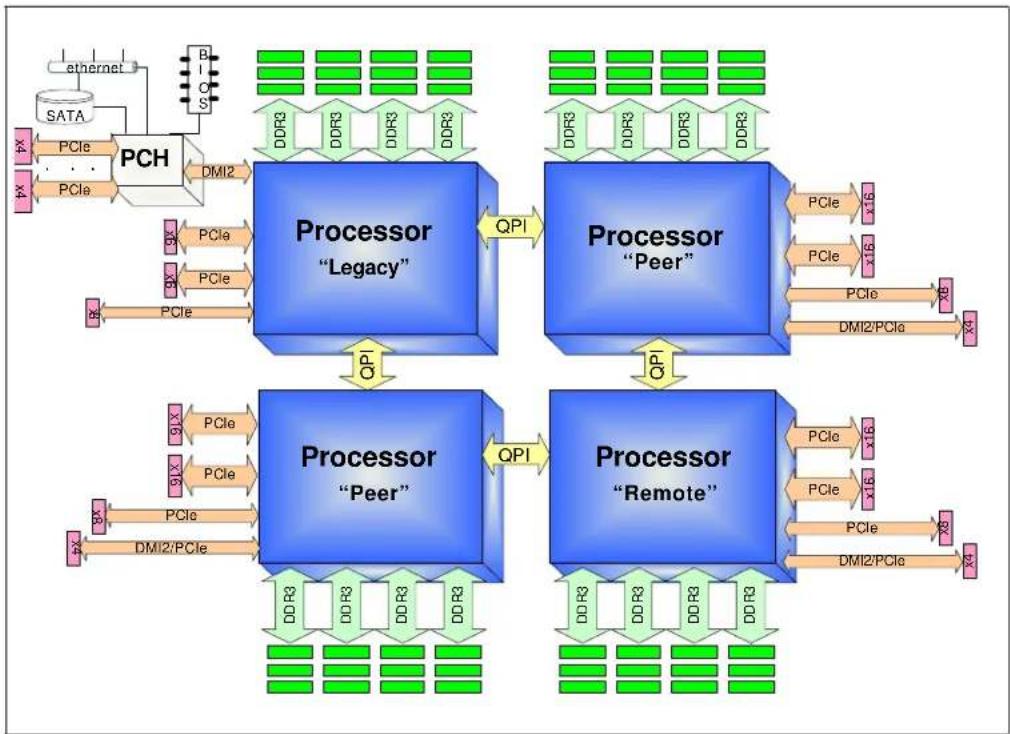
Figure 1-1 through Figure 1-3 show the processor 1-socket, 2-socket and 4-socket platform configurations. The "Legacy CPU" is the boot processor that is connected to the PCH component, this socket is set to NodeID[0]. In the 4-socket configuration, the "Remote CPU" is the processor which is not connected to the Legacy CPU.
Table 1-2. Volume Structure and Scope
| Volume 1: Electrical, Mechanical and Thermal Specification |
| • Overview |
| • Interfaces |
| • Technologies |
| • Power Management |
| • Thermal Management Specifications |
| • Signal Descriptions |
| • Electrical Specifications |
| • Processor Land Listing |
| • Package Mechanical Specifications |
| • Boxed Processor Specifications |
| Volume 2: Register Information |
| • Configuration Process and Registers |
| • Processor Integrated I/O (IIO) Configuration Registers |
| • Processor Uncore Configuration Registers |
Figure 1-1. Intel ^ Xeon ^ Processor E5-1600 v2 Product Family on the 1 Socket Platform
flowchart
graph TD
    A["ethernet"] --> B["PCH"]
    C["SATA"] --> B
    D["PCIe"] --> B
    E["x1x"] --> B
    F["PCIe"] --> B
    G["BIOS"] --> B
    H["DMI2"] --> B
    I["Processor "Legacy""] --> J["DDR3"]
    I --> K["DDR3"]
    I --> L["DDR3"]
    I --> M["DDR3"]
    I --> N["DDR3"]
    I --> O["DDR3"]
    I --> P["DDR3"]
    I --> Q["DDR3"]
    I --> R["DDR3"]
    I --> S["DDR3"]
    I --> T["DDR3"]
    I --> U["DDR3"]
    I --> V["DDR3"]
    I --> W["DDR3"]
    I --> X["DDR3"]
    I --> Y["DDR3"]
    I --> Z["DDR3"]
    I --> AA["DDR3"]
    I --> AB["DDR3"]
    I --> AC["DDR3"]
    I --> AD["DDR3"]
    I --> AE["DDR3"]
    I --> AF["DDR3"]
    I --> AG["DDR3"]
    I --> AH["DDR3"]
    I --> AI["DDR3"]
    I --> AJ["DDR3"]
    I --> AK["DDR3"]
    I --> AL["DDR3"]
    I --> AM["DDR3"]
    I --> AN["DDR3"]
    I --> AO["DDR3"]
    I --> AP["DDR3"]
    I --> AQ["DDR3"]
    I --> AR["DDR3"]
    I --> AS["DDR3"]
    I --> AT["DDR3"]
    I --> AU["DDR3"]
    I --> AV["DDR3"]
    I --> AW["DDR3"]
    I --> AX["DDR3"]
    I --> AY["DDR3"]
    I --> AZ["DDR3"]
    I --> BA["DDR3"]
    I --> BB["DDR3"]
    I --> BC["DDR3"]
    I --> BD["DDR3"]
    I --> BE["DDR3"]
    I --> BF["DDR3"]
    I --> BG["DDR3"]
    I --> BH["DDR3"]
    I --> BI["DDR3"]
    I --> BJ["DDR3"]
    I --> BK["DDR3"]
    I --> BL["DDR3"]
    I --> BM["DDR3"]
    I --> BN["DDR3"]
    I --> BO["DDR3"]
    I --> BP["DDR3"]
    I --> BQ["DDR3"]
    I --> BR["DDR3"]
    I --> BS["DDR3"]
    I --> BT["DDR3"]
    I --> BU["DDR3"]
    I --> BV["DDR3"]
    I --> BW["DDR3"]
    I --> BX["DDR3"]
    I --> BY["DDR3"]
    I --> BZ["DDR3"]
    I --> CA["DDR3"]
    I --> CB["DDR3"]
    I --> CC["DDR3"]
    I --> CD["DDR3"]
    I --> CE["DDR3"]
    I --> CF["DDR3"]
    I --> CG["DDR3"]
    I --> CH["DDR3"]
    I --> CI["DDR3"]
    I --> CJ["DDR3"]
    I --> CK["DDR3"]
    I --> CL["DDR3"]
    I --> CM["DDR3"]
    I --> CN["DDR3"]
    I --> CO["DDR3"]
    I --> CP["DDR3"]
    I --> CQ["DDR3"]
    I --> CR["DDR3"]
    I --> CS["DDR3"]
    I --> CT["DDR3"]
    I --> CU["DDR3"]
    I --> CV["DDR3"]
    I --> CW["DDR3"]
    I --> CX["DDR3"]
    I --> CY["DDR3"]
    I --> CZ["DDR3"]
    I --> DA["DDR3"]
Figure 1-2. Intel Xeon Processor E5-2600 v2 Product Family on the 2 Socket Platform
flowchart
graph TD
    A["ethernet"] --> B["PCH"]
    C["SATA"] --> B
    D["x"] --> B
    E["x"] --> B
    F["PCIe*"] --> B
    G["x"] --> B
    H["PCIe"] --> B
    I["BIOS"] --> B
    J["DDR3"] --> K["Processor "Legacy""]
    L["DDR3"] --> K
    M["DDR3"] --> K
    N["DDR3"] --> K
    O["DDR3"] --> K
    P["DDR3"] --> K
    Q["DDR3"] --> K
    R["DDR3"] --> K
    S["DDR3"] --> K
    T["DDR3"] --> K
    U["DDR3"] --> K
    V["DDR3"] --> K
    W["DDR3"] --> K
    X["DDR3"] --> K
    Y["DDR3"] --> K
    Z["DDR3"] --> K
    AA["DDR3"] --> K
    AB["DDR3"] --> K
    AC["DDR3"] --> K
    AD["DDR3"] --> K
    AE["DDR3"] --> K
    AF["DDR3"] --> K
    AG["DDR3"] --> K
    AH["DDR3"] --> K
    AI["DDR3"] --> K
    AJ["DDR3"] --> K
    AK["DDR3"] --> K
    AL["DDR3"] --> K
    AM["DDR3"] --> K
    AN["DDR3"] --> K
    AO["DDR3"] --> K
    AP["DDR3"] --> K
    AQ["DDR3"] --> K
    AR["DDR3"] --> K
    AS["DDR3"] --> K
    AT["DDR3"] --> K
    AU["DDR3"] --> K
    AV["DDR3"] --> K
    AW["DDR3"] --> K
    AX["DDR3"] --> K
    AY["PCIe"] --> Z["PCH"]
    Z --> AA["PCH"]
    AA --> AB["PCH"]
    AB --> AC["PCH"]
    AC --> AD["PCH"]
    AD --> AE["PCH"]
    AE --> AF
    AF --> AG["PCH"]
    AG --> AH["PCH"]
    AH --> AI["PCH"]
    AI --> AJ["PCH"]
    AJ --> AK["PCH"]
    AK --> AL["PCH"]
    AL --> AM
    AM --> AN
Figure 1-3. Intel Xeon Processor E5-4600 v2 Product Family on the 4 Socket Platform
flowchart
graph TD
    subgraph_PCH["Processor "Legacy""]
        A1["PCIe"] -->|X1| B1["DDR3"]
        A2["PCIe"] -->|X2| B2["DDR3"]
        A3["PCIe"] -->|X3| B3["DDR3"]
        B1 --> C1["DDR3"]
        B2 --> C2["DDR3"]
        B3 --> C3["DDR3"]
        C1 --> D1["DDR3"]
        C2 --> D2["DDR3"]
        C3 --> D3["DDR3"]
        D1 --> E1["DDR3"]
        D2 --> E2["DDR3"]
        D3 --> E3["DDR3"]
        E1 --> F1["DDR3"]
        E2 --> F2["DDR3"]
        E3 --> F3["DDR3"]
        F1 --> G1["DDR3"]
        F2 --> G2["DDR3"]
        F3 --> G3["DDR3"]
        G1 --> H1["DDR3"]
        G2 --> H2["DDR3"]
        G3 --> H3["DDR3"]
        H1 --> I1["DDR3"]
        H2 --> I2["DDR3"]
        H3 --> I3["DDR3"]
        I1 --> J1["DDR3"]
        I2 --> J2["DDR3"]
        I3 --> J3["DDR3"]
        J1 --> K1["DDR3"]
        J2 --> K2["DDR3"]
        J3 --> K3["DDR3"]
        K1 --> L1["DDR3"]
        K2 --> L2["DDR3"]
        K3 --> L3["DDR3"]
        L1 --> M1["DDR3"]
        L2 --> M2["DDR3"]
        L3 --> M3["DDR3"]
        M1 --> N1["DDR3"]
        M2 --> N2["DDR3"]
        M3 --> N3["DDR3"]
        N1 --> O1["DDR3"]
        N2 --> O2["DDR3"]
        N3 --> O3["DDR3"]
        O1 --> P1["DDR3"]
        O2 --> P2["DDR3"]
        O3 --> P3["DDR3"]
        P1 --> Q1["QPI"]
        P2 --> Q2["QPI"]
        P3 --> Q3["QPI"]
    end
    subgraph Processor "Peer"
        R1["Processor "Peer""]
        S1["Processor "Peer""]
        T1["Processor "Peer""]
    end
    subgraph Processor "Remote"
        U1["Processor "Remote""]
        V1["Processor "Remote""]
    end
    style PCH fill:#f9f,stroke:#333
    style Processor "Peer" fill:#bbf,stroke:#f66
    style Processor "Remote" fill:#bbf,stroke:#f66
1.1.1 Processor Feature Details
- Up to 12 execution cores
• Each core supports two threads (Intel ^® Hyper-Threading Technology), up to 24 threads per socket
• 46-bit physical addressing and 48-bit virtual addressing
• 1 GB large page support for server applications
• A 32-KB instruction and 32-KB data first-level cache (L1) for each core
• A 256-KB shared instruction/data mid-level (L2) cache for each core - Up at 0 MB last level cache (LLC): up to 2.5 MB per core instruction/data last level cache (LLC), shared among all cores
- The Intel® Xeon® processor E5-2600 v2 and E5-4600 v2 product families supports Directory Mode, Route Through, and Node IDs to reduce unnecessary Intel® QuickPath Interconnect traffic by tracking cache lines present in remote sockets.
- Protected Processor Inventory Number (PPIN): A solution for inventory management available on Intel® Xeon Processor E5-2600 v2 product families for use in server platforms. This feature is not supported on E5-2600 Workstation models.
1.1.2 Supported Technologies
- I n ^ Virtualization Technology (Intel ^ VT)
- I n t ^ virtualization Technology for Directed I/O (Intel ^ VT-d)
• APIC Virtualization (APICv) - In® Virtualization Technology Processor Extensions
- I n ^ Trusted Execution Technology (Intel ^ TXT)
• I n Ⓡ 64 Architecture - In ® Streaming SIMD Extensions 4.1 (Intel® SSE4.1)
- In ^ Streaming SIMD Extensions 4.2 (Intel ^ SSE4.2)
- I n ^ Advanced Vector Extensions (Intel ^ AVX)
- I n Ⓞ AVX Floating Point Bit Depth Conversion (Float 16)
• I n ^ Hyper-Threading Technology - Execute Disable Bit
• In ® Turbo Boost Technology - I n ^ Intelligent Power Technology
• Enhanced Intel SpeedStep® Technology - In Dynamic Power Technology (Memory Power Management)
- I n ^ Sedure Key, formerly known as Digital Random Number Generator (DRNG)
- I n t @SIGuard, formerly known as Supervisor Mode Execution Protection Bit (SMEP)
1.2 Interfaces
1.2.1 System Memory Support
• The processor supports 4 DDR3 channels
- Unbuffered DDR3 and registered DDR3 DIMMs
- LR DIMM (Load Reduced DIMM) for buffered memory solutions demanding higher capacity memory subsystems
- Independent channel mode or lockstep mode
- Data burst length of eight cycles for all memory organization modes
• Memory DDR3 data transfer rates of 800, 1066, 1333, 1600, and 1866 MT/s
- 64-bit wide channels plus 8-bits of ECC support for each channel
• DDR3 standard I/O Voltage of 1.5 V and DDR3 Low Voltage of 1.35 V
• 1-GB, 2-GB, and 4-GB DDR3 DRAM technologies supported for these devices:
- UDIMMs x8, x16
- RDIMMs x4, x8
- LRDIMM x4, x8 (2-Gb and 4-Gb only) LR-DIMMs are supported only on server specific processors (Intel® Xeon® processor E5-2600 v2 and E5-4600 v2 product families). LR-DIMMs are not supported in workstation specific SKUs such as the Intel® Xeon® processor E5-1600 v2 product family.
- Up to 8 ranks supported per memory channel: 1, 2 or 4 ranks per DIMM
- Open with adaptive idle page close timer or closed page policy
- Per channel memory test and initialization, engine can initialize DRAM to all logical zeros with valid ECC (with or without data scrambler) or a predefined test pattern.
- Isochronous access support is not available on any CPU model containing two home agents.
- Minimum memory configuration: independent channel support with 1 DIMM populated.
- Integrated dual SMBus master controllers
• Command launch modes of 1n/2n
• RAS Support (including and not limited to):
Note: RAS support depends on processor SKU. For example, Workstation SKUs do not support sparing or tagging, lockstep mode, mirroring mode, channel mirroring mode within a socket, error containment.
— Rank Level Sparing and Device Tagging
— Demand and Patrol Scrubbing
— DRAM Single Device Data Correction (SDDC) for any single x4 or x8 DRAM device failure. Independent channel mode supports x4 SDDC. x8 SDDC requires lockstep mode
— Lockstep mode where channels 0 & 1 and channels 2 & 3 are operated in lockstep mode
— The combination of memory channel pair lockstep and memory mirroring is not supported
— Data scrambling with address to ease detection of write errors to an incorrect address.
— Error reporting via Machine Check Architecture
— Read Retry during CRC error handling checks by iMC
— Channel mirroring within a socket
— Channel Mirroring mode is supported on memory channels 0 & 1 and channels 2 & 3
— Error Containment Recovery
- Improved Thermal Throttling with dynamic Closed Loop Thermal Throttling (CLTT)
- Memory thermal monitoring support for DIMM temperature via two memory signals, MEM_HOT_C{01/23}_N
1.2.2 PCI Express\*
- The PCI Express* port(s) are fully-compliant to the PCI Express* Base Specification, Revision 3.0 (PCIe 3.0)
• Support for PCI Express* 3.0 (8.0 GT/s), 2.0 (5.0 GT/s), and 1.0 (2.5 GT/s) - Up to 40 lanes of PCI Express* interconnect for general purpose PCI Express* devices at PCIe* 3.0 speeds that are configurable for up to 10 independent ports
- 4 lanes of PCI Express* at PCIe* 2.0 speeds when not using DMI2 port (Port 0), also can be downgraded to x2 or x1
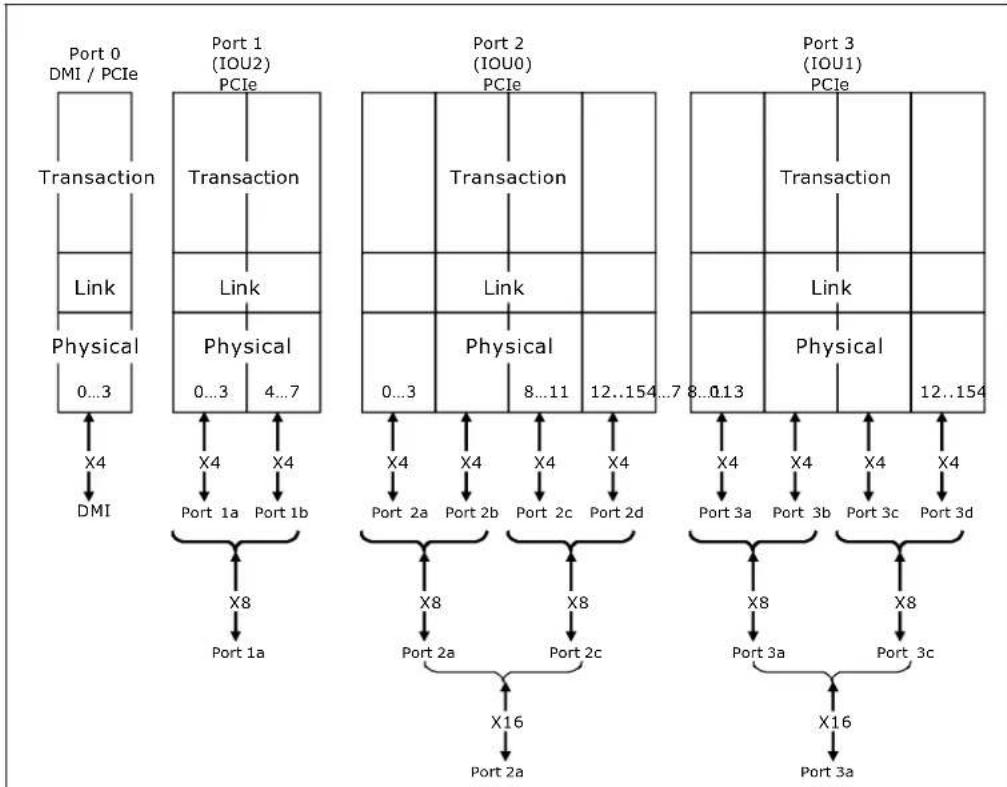
- Negotiating down to narrower widths is supported, see Figure 1-4:
— x16 port (Port 2 & Port 3) may negotiate down to x8, x4, x2, or x1.
- x8 port (Port 1) may negotiate down to x4, x2, or x1.
— x4 port (Port 0) may negotiate down to x2, or x1.
— When negotiating down to narrower widths, there are caveats as to how lane reversal is supported.
- Non-Transparent Bridge (NTB) is supported by PCIe Port3a/IOU1. For more details on NTB mode operation refer to PCI Express Base Specification - Revision 3.0:
- x4, x8 or x16 widths and at PCIe* 1.0, 2.0, 3.0 speeds
— Two usage models; NTB attached to a Root Port or NTB attached to another NTB
— Supports three 64-bit BARs
— Supports posted writes and non-posted memory read transactions across the NTB
— Supports INTx, MSI and MSI-X mechanisms for interrupts on both side of NTB in upstream direction only
- Address Translation Services (ATS) 1.0 support
- Hierarchical PCI-compliant configuration mechanism for downstream devices.
- Traditional PCI style traffic (asynchronous snooped, PCI ordering).
- PCI Express* extended configuration space. The first 256 bytes of configuration space aliases directly to the PCI compatibility configuration space. The remaining portion of the fixed 4-KB block of memory-mapped space above that (starting at 100h) is known as extended configuration space.
- PCI Express* Enhanced Access Mechanism. Accessing the device configuration space in a flat memory mapped fashion.
• Automatic discovery, negotiation, and training of link out of reset.
- Supports receiving and decoding 64 bits of address from PCI Express*.
— Memory transactions received from PCI Express* that go above the top of physical address space (when Intel VT-d is enabled, the check would be against the translated HPA (Host Physical Address) address) are reported as errors by the processor.
— Outbound access to PCI Express* will always have address bits 63 to 46 cleared.
- Re-issues Configuration cycles that have been previously completed with the Configuration Retry status.
• Power Management Event (PME) functions.
- Message Signaled Interrupt (MSI and MSI-X) messages
- Degraded Mode support and Lane Reversal support
• Static lane numbering reversal and polarity inversion support
- Support for PCIe* 3.0 atomic operation, PCIe 3.0 optional extension on atomic read-modify-write mechanism
- Additional read buffers for point-point transfers. This increases the number of outstanding transactions in point-point transfers across same processor sockets, from previous generation of 16 to 64 in this generation.
Figure 1-4. PCI Express* Lane Partitioning and Direct Media Interface Gen 2 (DMI2)
flowchart
graph TD
    A["Port 0\nDMI / PCIe"] --> B["Transaction"]
    B --> C["Link"]
    C --> D["Physical"]
    D --> E["X4"]
    E --> F["DMI"]
    G["Port 1\n(IOU2)\nPCIe"] --> H["Transaction"]
    H --> I["Link"]
    I --> J["Physical"]
    J --> K["X4"]
    K --> L["Port 1a"]
    M["Port 2\n(IOU0)\nPCIe"] --> N["Transaction"]
    N --> O["Link"]
    O --> P["Physical"]
    P --> Q["X4"]
    Q --> R["Port 2a"]
    S["Port 3\n(IOU1)\nPCIe"] --> T["Transaction"]
    T --> U["Link"]
    U --> V["Physical"]
    V --> W["X4"]
    W --> X["Port 3a"]
    Y["X8"] --> Z["Port 1a"]
    AA["X4"] --> AB["Port 1b"]
    AC["X4"] --> AD["X8"]
    AE["X4"] --> AF["Port 2b"]
    AG["X4"] --> AH["Port 2c"]
    AI["X4"] --> AJ["Port 2d"]
    AK["X8"] --> AL["Port 2a"]
    AM["X8"] --> AN["Port 2c"]
    AO["X8"] --> AP["Port 3a"]
    AQ["X8"] --> AR["Port 3c"]
    AS["X16"] --> AT["Port 2a"]
    AU["X16"] --> AV["Port 3a"]
1.2.3 Direct Media Interface Gen 2 (DMI2)
- Serves as the chip-to-chip interface to the Intel® C600 Chipset
- The DMI2 port supports x4 link width and only operates in a x4 mode when in DMI2
- Operates at PCI Express* 1.0 or 2.0 speeds
• Transparent to software - Processor and peer-to-peer writes and reads with 64-bit address support
- APIC and Message Signaled Interrupt (MSI) support. Will send Intel-defined "End of Interrupt" broadcast message when initiated by the processor.
- Downstream System Management Interrupt (SMI), SCI, and SERR error indication
• Static lane numbering reversal support
• Supports DMI2 virtual channels VC0, VC1, VCm, and VCp
1.2.4 Intel ^® QuickPath Interconnect (Intel ^® QPI)
- Compliant with Intel QuickPath Interconnect (Intel ^ QPI) v1.1 standard packet formats
- Implements two full width Intel QPI ports
• Full width port includes 20 data lanes and 1 clock lane - 64 byte cache-lines
- Isochronous access support is not available on any CPU model containing two home agents.
Note: RAS support depends on processor SKU. For example, Workstation SKUs do not support sparing or tagging, lockstep mode, mirroring mode, channel mirroring mode within a socket, error containment.
• Home snoop based coherency
• 4 - bit Node ID
• 46-bit physical addressing support
- No Intel QuickPath Interconnect bifurcation support
• Differential signaling
- Forwarded clocking
- Up to 8.0 GT/s data rate (up to 16 GB/s direction peak bandwidth per port)
— All ports run at same operational frequency
— Reference Clock is 100 MHz
— Slow boot speed initialization at 50 MT/s
- Common reference clocking (same clock generator for both sender and receiver)
- I n ^ Interconnect Built-In-Self-Test (Intel ^ IBIST) for high-speed testability
- Polarity Inversion and Lane reversal (Rx side only)
1.2.5 Platform Environment Control Interface (PECI)
The PECI is a one-wire interface that provides a communication channel between a PECI client (the processor) and a PECI master (the PCH).
• Supports operation at up to 2 Mbps data transfers
- Link layer improvements to support additional services and higher efficiency over PECI 2.0 generation
- Services include CPU thermal and estimated power information, control functions for power limiting, P-state and T-state control, and access for Machine Check Architecture registers and PCI configuration space (both within the processor package and downstream devices)
- PECI address determined by SOCKET_ID configuration
- Single domain (Domain 0) is supported
1.3 Power Management Support
1.3.1 Processor Package and Core States
- ACPI C-states as implemented by the following processor C-states:
— Package: PC0, PC1/PC1e, PC2, PC3, PC6 (Package C7 is not supported)
— Core: CC0, CC1, CC1E, CC3, CC6 (Processor Core C7 is not supported)
• Enhanced Intel SpeedStep ^® Technology
1.3.2 System States Support
- S0, S1, S3, S4, S5
1.3.3 Memory Controller
• Multiple CKE power down modes
• Multiple self-refresh modes
- Memory thermal monitoring via MEM_HOT_C01_N and MEM_HOT_C23_N Signals
1.3.4 PCI Express\*
- L0s is not supported
• L1 ASPM power management capability
1.3.5 Intel ^® QPI
- L0s is not supported
• L0p and L1 power management capabilities
1.4 Thermal Management Support
• Digital Thermal Sensor with multiple on-die temperature zones
• Adaptive Thermal Monitor
• THERMTRIP_N and PROCHOT_N signal support
- On-Demand mode clock modulation
- Open and Closed Loop Thermal Throttling (OLTT/CLTT) support for system memory in addition to Hybrid OLTT/CLTT mode
• Fan speed control with DTS
- Two integrated SMBus masters for accessing thermal data from DIMMs
- New Memory Thermal Throttling features via MEM_HOT_C{01/23}_N signals
- Running Average Power Limit (RAPL), Processor and DRAM Thermal and Power Optimization Capabilities
1.5 Package Summary
The processor socket type is 52.5 x 45 mm or 52.5 x 51 mm FCLGA12 package (LGA2011-0).
1.6 Terminology
| Term Description | |
| ASPM Active State Power Management | |
| BMC Baseboard Management Controllers | |
| Cbo | Cache and Core Box. It is a term used for internal logic providing ring interface to LLC and Core. |
| DDR3 Third generation Double Data Rate SDRAM memory technology that is the successor to DDR2 SDRAM | |
| DMA Direct Memory Access | |
| DMI Direct Media Interface | |
| DMI2 Direct Media Interface | Gen 2 |
| DTS Digital Thermal Sensor | |
| ECC Error Correction Code | |
| Enhanced Intel SpeedStep® Technology | Allows the operating system to reduce power consumption when performance is not needed. |
| Execute Disable Bit The Execute Disable bit allows memory to be marked as executable or non-executable, when combined with a supporting operating system. If code attempts to run in non-executable memory the processor raises an error to the operating system. This feature can prevent some classes of viruses or worms that exploit buffer overrun vulnerabilities and can thus help improve the overall security of the system. See the Intel® 64 and IA-32 Architectures Software Developer's Manuals for more detailed information. | |
| Flit Flow Control Unit. The Intel QPI Link layer's unit of transfer; 1 Flit = 80-bits. | |
| Functional Operation | Refers to the normal operating conditions in which all processor specifications, including DC, system bus, signal quality, mechanical, and thermal, are satisfied. |
| IMC | The Integrated Memory Controller. A Memory Controller that is integrated in the processor die. |
| IIO | The Integrated I/O Controller. An I/O controller that is integrated in the processor die. |
| Intel® ME | Intel® Management Engine (Intel® ME) |
| Intel® QuickData Technology | Intel QuickData Technology is a platform solution designed to maximize the throughput of server data traffic across a broader range of configurations and server environments to achieve faster, scalable, and more reliable I/O. |
| Intel® QuickPath Interconnect (Intel® QPI) | A cache-coherent, link-based Interconnect specification for Intel processors, chipsets, and I/O bridge components. |
| Intel® 64 Technology | 64-bit memory extensions to the IA-32 architecture. Further details on Intel 64 architecture and programming model can be found at http://developer.intel.com/technology/intel64/. |
| Term | Description |
| Intel® Turbo Boost Technology | Intel® Turbo Boost Technology is a way to automatically run the processor core faster than the marked frequency if the part is operating under power, temperature, and current specifications limits of the Thermal Design Power (TDP). This results in increased performance of both single and multi-threaded applications. |
| Intel® TXT Intel® Trusted Execution Technology | |
| Intel® Virtualization Technology (Intel® VT) | Processor virtualization which when used in conjunction with Virtual Machine Monitor software enables multiple, robust independent software environments inside a single platform. |
| Intel® VT-d Intel® Virtualization Technology (Intel® VT) for Directed I/O. Intel VT-d is a hardware assist, under system software (Virtual Machine Manager or OS) control, for enabling I/O device virtualization. Intel VT-d also brings robust security by providing protection from errant DMAs by using DMA remapping, a key feature of Intel VT-d. | |
| Intel® Xeon® processor E5-1600 v2 product family | Intel's 22-nm processor design, is the follow-on to the 3rd Generation Intel® CoreTM Processor Family design. It is the next generation processor for use in Intel® Xeon® processor E5-1600/E5-2600 v2 product families-based platforms. Intel® Xeon® processor E5-1600 v2 product family supports workstation platforms only. |
| Intel® Xeon® processor E5-2600 v2 product family | Intel's 22-nm processor design, is the follow-on to the 3rd Generation Intel® CoreTM Processor Family design. It is the next generation processor for use in Intel® Xeon® processor E5-1600/E5-2600 v2 product families-based platforms. Intel® Xeon® processor E5-2600 v2 product family supports workstation, Efficient Performance server, and HPC platforms. |
| Intel® Xeon® processor E5-4600 v2 product family | Intel's 22-nm processor design, is the follow-on to the 3rd Generation Intel® CoreTM Processor Family design. It is the next generation processor for use in Intel® Xeon® processor E5-4600 v2 product family platforms. Intel® Xeon® processor E5-4600 v2 product family supports scalable server and HPC platforms for two or more processors, including glueless four-way platforms. |
| Integrated Heat Spreader (IHS) | A component of the processor package used to enhance the thermal performance of the package. Component thermal solutions interface with the processor at the IHS surface. |
| Jitter Any timing variation of a transition edge or edges from the defined Unit Interval (UI). | |
| IOV I/O Virtualization | |
| LGA2011-0 Socket The LGA2011-0 land FCLGA12 package mates with the system board through this surface mount, LGA2011-0 contact socket. | |
| LLC Last Level Cache | |
| LRDIMM Load Reduced Dual In-line Memory Module | |
| NCTF Non-Critical to Function: NCTF locations are typically redundant ground or non-critical reserved, so the loss of the solder joint continuity at end of life conditions will not affect the overall product functionality. | |
| NEBS Network Equipment Building System. NEBS is the most common set of environmental design guidelines applied to telecommunications equipment in the United States. | |
| PCH Platform Controller Hub. The next generation chipset with centralized platform capabilities including the main I/O interfaces along with display connectivity, audio features, power management, manageability, security and storage features. | |
| PCU Power Control Unit | |
| PCI Express* 3.0 | The third generation PCI Express* specification that operates at twice the speed of PCI Express* 2.0 (8 Gb/s); however, PCI Express* 3.0 is completely backward compatible with PCI Express* 1.0 and 2.0. |
| PCI Express 3 | PCI Express* Generation 3.0 |
| PCI Express 2 | PCI Express* Generation 2.0 |
| PCI Express PCI Express* Generation 2.0/3.0 | |
| PECI | Platform Environment Control Interface |
| Phit | Physical Unit. An Intel QPI terminology defining units of transfer at the physical layer. 1 Phit is equal to 20 bits in 'full width mode' and 10 bits in 'half width mode' |
| Processor The 64-bit, single-core or multi-core component (package) | |
| Processor Core | The term "processor core" refers to silicon die itself which can contain multiple execution cores. Each execution core has an instruction cache, data cache, and 256-KB L2 cache. All execution cores share the L3 cache. All DC and signal integrity specifications are measured at the processor die (pads), unless otherwise noted. |
| Protected Processor Inventory Number (PPIN) | A solution for Inventory management available on Intel Xeon processor E5-2600 v2 product families for use in server platforms. This feature is not supported on E5-2600 Workstation models. PPIN defaults to disabled and follows an 'opt-in' model to enable it. Once PPIN is enabled, a reboot is necessary to make it available to privileged software, such as the OS or VMM and other ring 0 applications. |
| RDIMM Registered Dual In-line Module | |
| Rank | A unit of DRAM corresponding four to eight devices in parallel, ignoring ECC. These devices are usually, but not always, mounted on a single side of a DDR3 DIMM. |
| SCI System Control Interrupt. Used in ACPI protocol. | |
| SSE Intel | ^® Streaming SIMD Extensions (Intel ^® SSE) |
| SKU A processor Stock Keeping Unit (SKU) to be installed in either server or workstation platforms. Electrical, power and thermal specifications for these SKU's are based on specific use condition assumptions. Server processors may be further categorized as Efficient Performance server, workstation and HPC SKUs. For further details on use condition assumptions, please refer to the latest Product Release Qualification (PRQ) Report available via your Customer Quality Engineer (CQE) contact. | |
| SMBus System Management Bus. A two-wire interface through which simple system and power management related devices can communicate with the rest of the system. It is based on the principals of the operation of the I2C* two-wire serial bus from Philips Semiconductor. | |
| Storage Conditions | A non-operational state. The processor may be installed in a platform, in a tray, or loose. Processors may be sealed in packaging or exposed to free air. Under these conditions, processor landings should not be connected to any supply voltages, have any I/Os biased or receive any clocks. Upon exposure to "free air" (that is, unsealed packaging or a device removed from packaging material) the processor must be handled in accordance with moisture sensitivity labeling (MSL) as indicated on the packaging material. |
| TAC Thermal Averaging Constant | |
| TDP Thermal Design Power | |
| TSOD Thermal Sensor on DIMM | |
| UDIMM Unbuffered Dual In-line Module | |
| Uncore | The portion of the processor comprising the shared cache, IMC, HA, PCU, UBox, and Intel QPI link interface. |
| Unit Interval | Signaling convention that is binary and unidirectional. In this binary signaling, one bit is sent for every edge of the forwarded clock, whether it be a rising edge or a falling edge. If a number of edges are collected at instances t_1 , t_2 , t_n , ..., t_k then the UI at instance "n" is defined as: UI_n = t_n - t_n - 1 |
| V_CC | Processor core power supply |
| V_SS | Processor ground |
| V_CCD\_01 , VCCD\_23 | Variable power supply for the processor system memory interface. VCCD is the generic term for VCCD_01, VCCD_23. |
| x1 | Refers to a Link or Port with one Physical Lane |
| Term Description |
| x4 Refers to a Link or Port with four Physical Lanes |
| x8 Refers to a Link or Port with eight Physical Lanes |
| x16 Refers to a Link or Port with sixteen Physical Lanes |
1.7 Related Documents
Refer to the following documents for additional information.
1.8 Statement of Volatility (SOV)
Intel ^® Xeon ^® processor E5-1600/E5-2600/E5-4600 v2 product families do not retain any end-user data when powered down and/or the processor is physically removed from the socket.
1.9 State of Data
The data contained within in this document is the most accurate information available by the publication date of this document.
§
2 Interfaces
This chapter describes the interfaces supported by the processor. the
2.1 System Memory Interface
2.1.1 System Memory Technology Support
The Integrated Memory Controller (IMC) supports DDR3 protocols with four independent 64-bit memory channels with 8 bits of ECC for each channel (total of 72-bits) and supports 1 to 3 DIMMs per channel depending on the type of memory installed. The type of memory supported by the processor is dependent on the target platform:
- Intel® Xeon® processor E5-1600 v2/E5-2600 v2/E5-4600 v2 product families platforms support:
— ECC registered DIMMs: with a maximum of three DIMMs per channel allowing up to eight device ranks per channel.
— ECC and non-ECC unbuffered DIMMs: with a maximum of two DIMMs per channel thus allowing up to four device ranks per channel. Support for mixed non-ECC with ECC un-buffered DIMM configurations.
2.1.2 System Memory Timing Support
The IMC supports the following DDR3 Speed Bin, CAS Write Latency (CWL), and command signal mode timings on the main memory interface:
• tCL = CAS Latency
- tRCD = Activate Command to READ or WRITE Command delay
• tRP = PRECHARGE Command Period
• CWL = CAS Write Latency
- Command Signal modes = 1n indicates a new command may be issued every clock and 2n indicates a new command may be issued every 2 clocks. Command launch mode programming depends on the transfer rate and memory configuration.
2.2 PCI Express\* Interface
This section describes the PCI Express* 3.0 interface capabilities of the processor. See the PCI Express* Base Specification for details of PCI Express* 3.0.
2.2.1 PCI Express\* Architecture
Compatibility with the PCI addressing model is maintained to ensure that all existing applications and drivers operate unchanged. The PCI Express* configuration uses standard mechanisms as defined in the PCI Plug-and-Play specification.
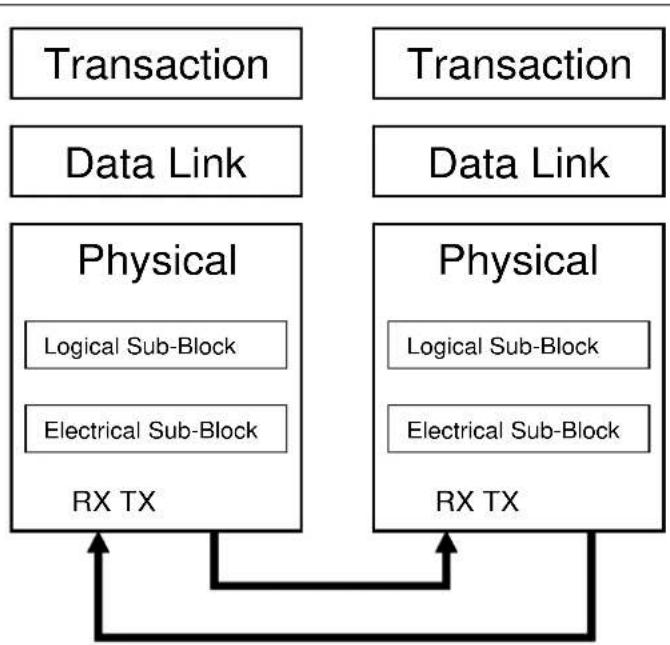
The PCI Express* architecture is specified in three layers: Transaction Layer, Data Link Layer, and Physical Layer. The partitioning in the component is not necessarily along these same boundaries. Refer to Figure 2-1 for the PCI Express* Layering Diagram.
Figure 2-1. PCI Express* Layering Diagram
flowchart
graph TD
    A["Transaction"] --> B["Data Link"]
    C["Transaction"] --> D["Data Link"]
    E["Physical"] --> F["Logical Sub-Block"]
    E --> G["Electrical Sub-Block"]
    H["Physical"] --> I["Logical Sub-Block"]
    H --> J["Electrical Sub-Block"]
    K["RX TX"] --> L["RX TX"]
    L --> M["Output"]
    style A fill:#f9f,stroke:#333
    style C fill:#f9f,stroke:#333
    style E fill:#ccf,stroke:#333
    style H fill:#ccf,stroke:#333
    style M fill:#dfd,stroke:#333
    style L fill:#dfd,stroke:#333
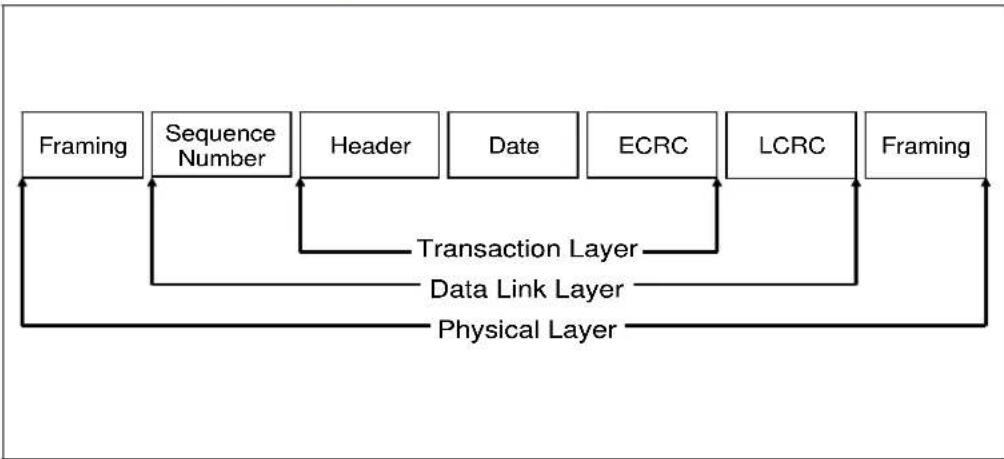
PCI Express* uses packets to communicate information between components. Packets are formed in the Transaction and Data Link Layers to carry the information from the transmitting component to the receiving component. As the transmitted packets flow through the other layers, they are extended with additional information necessary to handle packets at those layers. At the receiving side, the reverse process occurs and packets get transformed from their Physical Layer representation to the Data Link Layer representation and finally (for Transaction Layer Packets) to the form that can be processed by the Transaction Layer of the receiving device.
Figure 2-2. Packet Flow through the Layers
flowchart
graph TD
    A["Framing"] --> B["Sequence Number"]
    B --> C["Header"]
    C --> D["Date"]
    D --> E["ECRC"]
    E --> F["LCRC"]
    F --> G["Framing"]
    B --> H["Transaction Layer"]
    H --> I["Data Link Layer"]
    I --> J["Physical Layer"]
2.2.1.1 Transaction Layer
The upper layer of the PCI Express* architecture is the Transaction Layer. The Transaction Layer's primary responsibility is the assembly and disassembly of Transaction Layer Packets (TLPs). TLPs are used to communicate transactions, such as read and write, as well as certain types of events. The Transaction Layer also manages flow control of TLPs.
2.2.1.2 Data Link Layer
The middle layer in the PCI Express* stack, the Data Link Layer, serves as an intermediate stage between the Transaction Layer and the Physical Layer. Responsibilities of Data Link Layer include link management, error detection, and error correction.
The transmission side of the Data Link Layer accepts TLPs assembled by the Transaction Layer, calculates and applies data protection code and TLP sequence number, and submits them to Physical Layer for transmission across the Link. The receiving Data Link Layer is responsible for checking the integrity of received TLPs and for submitting them to the Transaction Layer for further processing. On detection of TLP error(s), this layer is responsible for requesting retransmission of TLPs until information is correctly received, or the Link is determined to have failed. The Data Link Layer also generates and consumes packets which are used for Link management functions.
2.2.1.3 Physical Layer
The Physical Layer includes all circuitry for interface operation, including driver and input buffers, parallel-to-serial and serial-to-parallel conversion, PLL(s), and impedance matching circuitry. It also includes logical functions related to interface initialization and maintenance. The Physical Layer exchanges data with the Data Link Layer in an implementation-specific format, and is responsible for converting this to an serialized format and transmitting it across the PCI Express* Link at a frequency and width compatible with the remote device.
2.2.2 PCI Express\* Configuration Mechanism
The PCI Express* link is mapped through a PCI-to-PCI bridge structure.
PCI Express* extends the configuration space to 4096 bytes per-device/function, as compared to 256 bytes allowed by the Conventional PCI Specification. PCI Express* configuration space is divided into a PCI-compatible region (which consists of the first 256 bytes of a logical device's configuration space) and an extended PCI Express* region (which consists of the remaining configuration space). The PCI-compatible region can be accessed using either the mechanisms defined in the PCI specification or using the enhanced PCI Express* configuration access mechanism described in the PCI Express* Enhanced Configuration Mechanism section.
The PCI Express* Host Bridge is required to translate the memory-mapped PCI Express* configuration space accesses from the host processor to PCI Express* configuration cycles. To maintain compatibility with PCI configuration addressing mechanisms, it is recommended that system software access the enhanced configuration space using 32-bit operations (32-bit aligned) only.
See the PCI Express* Base Specification for details of both the PCI-compatible and PCI Express* Enhanced configuration mechanisms and transaction rules.
2.3 DMI 2/ PCI Express\* Interface
Direct Media Interface 2 (DMI2) connects the processor to the Platform Controller Hub (PCH). DMI2 is similar to a four-lane PCI Express* supporting a speed of 5 GT/s per lane. This interface can be configured at power-on to serve as a x4 PCI Express* link based on the setting of the SOCKET_ID[1:0] and FRMAGENT signal for processors not connected to a PCH.
Note: Only
DMI2 x4 configuration is supported.
2.3.1 DMI2 Error Flow
DMI2 can only generate SERR in response to errors, never SCI, SMI, MSI, PCI INT, or GPE. Any DMI2 related SERR activity is associated with Device 0.
2.3.2 Processor/ PCH Compatibility Assumptions
The processor is compatible with the PCH and is not compatible with any previous MCH or ICH products.
2.3.3 DMI2 Link Down
The DMI2 link going down is a fatal, unrecoverable error. If the DMI2 data link goes to data link down, after the link was up, then the DMI2 link hangs the system by not allowing the link to retrain to prevent data corruption. This is controlled by the PCH.
Downstream transactions that had been successfully transmitted across the link prior to the link going down may be processed as normal. No completions from downstream, non-posted transactions are returned upstream over the DMI2 link after a link down event.
2.4 Intel ^® QuickPath Interconnect (Intel ^® QPI)
The Intel QuickPath Interconnect is a high speed, packetized, point-to-point interconnect used in the 3rd Generation Intel ^® Core ^™ Processor Family. The narrow high-speed links stitch together processors in distributed shared memory and integrated I/O platform architecture. It offers much higher bandwidth with low latency.
The Intel QuickPath Interconnect has an efficient architecture allowing more interconnect performance to be achieved in real systems. It has a snoop protocol optimized for low latency and high scalability, as well as packet and lane structures enabling quick completions of transactions. Reliability, availability, and serviceability features (RAS) are built into the architecture.
The physical connectivity of each interconnect link is made up of twenty differential signal pairs plus a differential forwarded clock. Each port supports a link pair consisting of two uni-directional links to complete the connection between two components. This supports traffic in both directions simultaneously. To facilitate flexibility and longevity, the interconnect is defined as having five layers: Physical, Link, Routing, Transport, and Protocol.
- The Physical layer consists of the actual wires carrying the signals, as well as circuitry and logic to support ancillary features required in the transmission and receipt of the 1s and 0s. The unit of transfer at the Physical layer is 20-bits, which is called a Phit (for Physical unit).
- The Link layer is responsible for reliable transmission and flow control. The Link layer's unit of transfer is 80-bits, which is called a Flit (for Flow control unit).
- The Routing layer provides the framework for directing packets through the fabric.
- The Transport layer is an architecturally defined layer (not implemented in the initial products) providing advanced routing capability for reliable end-to-end transmission.
- The Protocol layer is the high-level set of rules for exchanging packets of data between devices. A packet is comprised of an integral number of Flits.
The Intel® QuickPath Interconnect includes a cache coherency protocol to keep the distributed memory and caching structures coherent during system operation. It supports both low-latency source snooping and a scalable home snoop behavior. The coherency protocol provides for direct cache-to-cache transfers for optimal latency.
2.5 Platform Environment Control Interface (PECI)
The Platform Environment Control Interface (PECI) uses a single wire for self-clocking and data transfer. The bus requires no additional control lines. The physical layer is a self-clocked one-wire bus that begins each bit with a driven, rising edge from an idle level near zero volts. The duration of the signal driven high depends on whether the bit value is a logic '0' or logic '1'. PECI also includes variable data transfer rate established with every message. In this way, it is highly flexible even though underlying logic is simple.
The interface design was optimized for interfacing to Intel processor and chipset components in both single processor and multiple processor environments. The single wire interface provides low board routing overhead for the multiple load connections in the congested routing area near the processor and chipset components. Bus speed, error checking, and low protocol overhead provides adequate link bandwidth and reliability to transfer critical device operating conditions and configuration information.
The PECI bus offers:
• A wide speed range from 2 Kbps to 2 Mbps
- CRC check byte used to efficiently and atomically confirm accur ate data delivery
- Synchronization at the beginning of every message minimizes device timing accuracy requirements
Generic PECI specification details are out of the scope of this document. What follows is a processor-specific PECI client definition, and is largely an addendum to the PECI Network Layer and Design Recommendations sections for the PECI specification.
Note:
The PECI commands described in this document apply primarily to the Intel® Xeon® processor E5-1600 v2/E5-2600 v2/E5-4600 v2 product families. The processors utilize the capabilities described in this document to indicate support for four memory channels. Refer to Table 2-1 for the list of PECI commands supported by the processors.
Table 2-1. Summary of Processor-specific PECI Commands
| Command Supported on the Processor | |
| Ping() | Yes |
| GetDIB() | Yes |
| GetTemp() | Yes |
| RdPkgConfig() | Yes |
| WrPkgConfig() | Yes |
| RdIAMSR() | Yes |
| WrIAMSR() | No |
| RdPCIConfig() | Yes |
| WrPCIConfig() | No |
| RdPCIConfigLocal() | Yes |
| WrPCIConfigLocal() | Yes |
2.5.1 PECI Client Capabilities
The processor PECI client is designed to support the following sideband functions:
- Processor and DRAM thermal management
- Platform manageability functions including thermal, power, and error monitoring
— The platform 'power' management includes monitoring and control for both the processor and DRAM subsystem to assist with data center power limiting.
2.5.1.1 Thermal Management
Processor fan speed control is managed by comparing Digital Thermal Sensor (DTS) thermal readings acquired via PECI against the processor-specific fan speed control reference point, or T_CONTROL . Both T_CONTROL and DTS thermal readings are accessible via the processor PECI client. These variables are referenced to a common temperature, the TCC activation point, and are both defined as negative offsets from that reference.
PECI-based access to the processor package configuration space provides a means for Baseboard Management Controllers (BMCs) or other platform management devices to actively manage the processor and memory power and thermal features. Details on the list of available power and thermal optimization services can be found in Section 2.5.2.6.
2.5.1.2 Platform Manageability
PECI allows read access to certain error registers in the processor MSR space and status monitoring registers in the PCI configuration space within the processor and downstream devices. Details are covered in subsequent sections.
PECI permits writes to certain Memory Controller RAS-related registers in the processor PCI configuration space. Details are covered in Section 2.5.2.10.
2.5.2 Client Command Suite
PECI command requires at least one frame check sequence (FCS) byte to ensure reliable data exchange between originator and client. The PECI message protocol defines two FCS bytes that are returned by the client to the message originator. The first FCS byte covers the client address byte, the Read and Write Length bytes, and all bytes in the write data block. The second FCS byte covers the read response data returned by the PECI client. The FCS byte is the result of a cyclic redundancy check (CRC) of each data block.
2.5.2.1 Ping()
Ping() is a required message for all PECI devices. This message is used to enumerate devices or determine if a device has been removed, been powered-off, and so forth. A Ping() sent to a device address always returns a non-zero Write FCS if the device at the targeted address is able to respond.
2.5.2.1.1 Command Format
The Ping() format is as follows:
Write Length: 0x00
Read Length: 0x00
Figure 2-3. Ping()

An example Ping() command to PECI device address 0x30 is shown below.
Figure 2-4. Ping() Example

2.5.2.2 GetDIB()
The processor PECI client implementation of GetDIB() includes an 8-byte response and provides information regarding client revision number and the number of supported domains. All processor PECI clients support the GetDIB() command.
2.5.2.2.1 Command Format
The GetDIB() format is as follows:
Write Length: 0x01
Read Length: 0x08
Command: 0xf7
Figure 2-5. GetDIB()
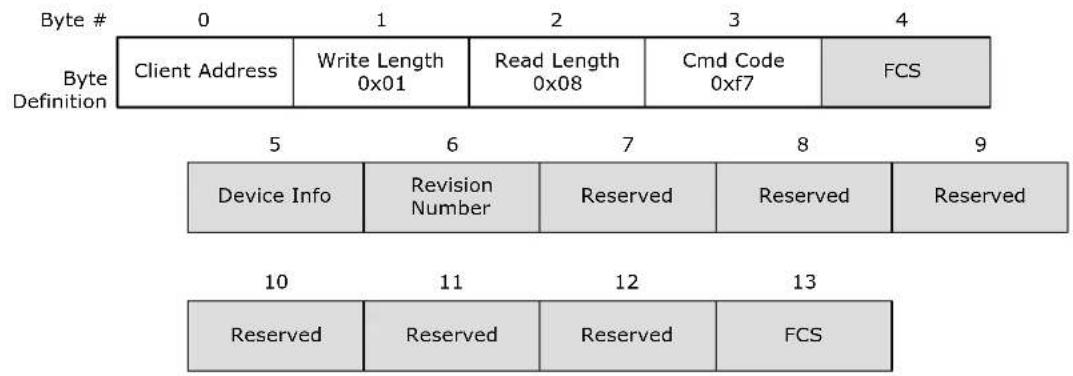
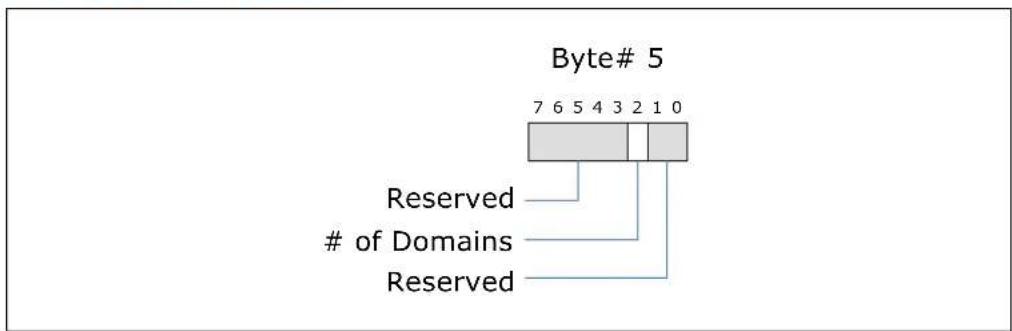
2.5.2.2.2 Device Info
The Device Info byte gives details regarding the PECI client configuration. At a minimum, all clients supporting GetDIB will return the number of domains inside the package via this field. With any client, at least one domain (Domain 0) must exist. Therefore, the Number of Domains reported is defined as the number of domains in addition to Domain 0. For example, if bit 2 of the Device Info byte returns a '1', that would indicate that the PECI client supports two domains.
Figure 2-6. Device Info Field Definition
2.5.2.2.3 Revision Number
All clients that support the GetDIB command also support Revision Number reporting. The revision number may be used by a host or originator to manage different command suites or response codes from the client. Revision Number is always reported in the second byte of the GetDIB() response. The 'Major Revision' number in Figure 2-7
always maps to the revision number of the PECI specification that the PECI client processor is designed to. The 'Minor Revision' number value depends on the exact command suite supported by the PECI client as defined in Table 2-2.
Figure 2-7. Revision Number Definition
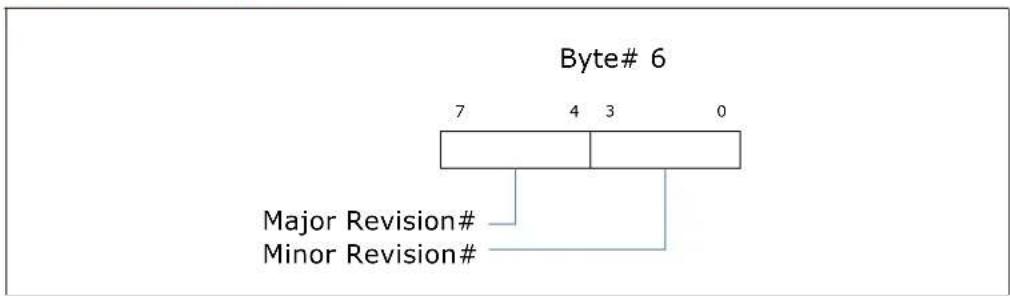
Table 2-2. Minor Revision Number Meaning
| Minor Revision Supported Command Suite | |
| 0 Ping(), GetDIB(), GetTemp() | |
| 1 Ping(), GetDIB(), GetTemp(), WrPkgConfig(), RdPkgConfig() | |
| 2 Ping(), GetDIB(), GetTemp(), WrPkgConfig(), RdPkgConfig(), RdIAMSR() | |
| 3 Ping(), GetDIB(), GetTemp(), WrPkgConfig(), RdPkgConfig(), RdIAMSR(), RdPCIConfigLocal(), WrPCIConfigLocal() | |
| 4 Ping(), GetDIB(), GetTemp(), WrPkgConfig(), RdPkgConfig(), RdIAMSR(), RdPCIConfigLocal(), WrPCIConfigLocal(), RdPCIConfig() | |
| 5 Ping(), GetDIB(), GetTemp(), WrPkgConfig(), RdPkgConfig(), RdIAMSR(), RdPCIConfigLocal(), WrPCIConfigLocal(), RdPCIConfig(), WrPCIConfig() | |
| 6 Ping(), GetDIB(), GetTemp(), WrPkgConfig(), RdPkgConfig(), RdIAMSR(), RdPCIConfigLocal(), WrPCIConfigLocal(), RdPCIConfig(), WrPCIConfig(), WrIAMSR() |
For the processor PECI client, the Revision Number it returns will be '0011 0100b'.
2.5.2.3 GetTemp()
The GetTemp() command is used to retrieve the die temperature from a target PECI address. The temperature is used by the external thermal management system to regulate the temperature on the die. The data is returned as a negative value representing the number of degrees Celsius below the processor DTS temperature ( T_Prochot ) at which PROCHOT_N asserts. The PECI temperature value of zero corresponds to T_Prochot . This also represents the minimum temperature at which the processor Thermal Control Circuit activates. The actual value that the thermal management system uses as a control set point ( T_CONTROL ) is also defined as a negative number below T_Prochot . T_CONTROL may be extracted from the processor by issuing a PECI RdPkgConfig() command as described in Section 2.5.2.4 or using a RDMSR instruction. T_CONTROL application to fan speed control management is defined in the Intel® Xeon® Processor E5-1600/2600/4600 and E5-1600 v2/E5-2600 v2 Product Families Thermal/Mechanical Design Guide.
Please refer to Section 2.5.7 for details regarding PECI temperature data formatting.
2.5.2.3.1 Command Format
The GetTemp() format is as follows:
Write Length: 0x01
Read Length: 0x02
Command: 0x01
Description: Returns the highest die temperature for addressed processor PECI client.
Figure 2-8. GetTemp()
![Byte # 0 1 2 3 Byte Definition Client Address Write Length Read Length Cmd Code 0x01 0x02 0x01 4 5 6 7 FCS Temp[7:0] Temp[15:8] FCS](/content/2026/06/1184760/images/dafd0ce0eb6258d00bb0f3415f453b0f1aa2807a2192bcac44e87b5fe96052c1.jpg)
Example bus transaction for a thermal sensor device located at address 0x30 returning a value of negative 10 counts is show in Figure 2-9.
Figure 2-9. GetTemp() Example
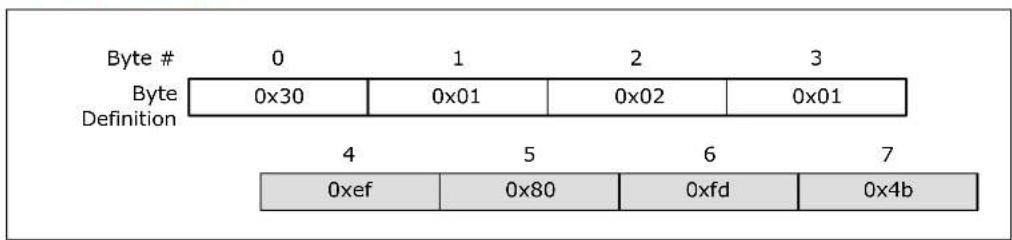
2.5.2.3.2 Supported Responses
The typical client response is a passing FCS and valid thermal data. Under some conditions, the client's response will indicate a failure. GetTemp() response definitions are listed in Table 2-3. Refer to Section 2.5.7.4 for more details on sensor errors.
Table 2-3. GetTemp() Response Definition
| Response Meaning | |
| General Sensor Error (GSE) ^1 | Thermal scan did not complete in time. Retry is . |
| Bad Write FCS Electrical error | |
| Abort FCS Illegal command formatting (mismatched RL/WL/Command Code) | |
| 0x0000 ^1 | Processor is running at its maximum temperature or is currently being reset. |
| All other data Valid temperature reading, reported as a negative offset from T Prochot. | |
Notes:
- This response will be reflected in Bytes 5 & 6 in Figure 2-9.
2.5.2.4 RdPkgConfig()
The RdPkgConfig() command provides read access to the package configuration space (PCS) within the processor, including various power and thermal management functions. Typical PCS read services supported by the processor may include access to temperature data, energy status, run time information, DIMM temperatures and so on. Refer to Section 2.5.2.6 for more details on processor-specific services supported through this command.
2.5.2.4.1 Command Format
The RdPkgConfig() format is as follows:
Write Length: 0x05
Read Length: 0x05 (dword)
Command: 0xa1
Description: Returns the data maintained in the processor package configuration space for the PCS entry as specified by the 'index' and 'parameter' fields. The 'index' field contains the encoding for the requested service and is used in conjunction with the 'parameter' field to specify the exact data being requested. The Read Length dictates the desired data return size. This command supports only dword responses on the processor PECI clients. All command responses are prepended with a completion code that contains additional pass/fail status information. Refer to Section 2.5.5.2 for details regarding completion codes.
Figure 2-10. RdPkgConfig()
![Byte Definition 0 1 2 3 Client Address.Write Length Read Length Cmd Code 0x05 0x05 0xa1 4 5 6 7 8 Host ID[7:1] & Retry[0]/Index LSB Parameter MSB FCS 9 10 11 12 13 14 Completion Code LSB Data (4 bytes) MSB FCS](/content/2026/06/1184760/images/3cb2a403e6db5e75e5c5c5fd63c573d8038129f06101db69573a2b46a589f96d.jpg)
Note: The 2-byte parameter field and 4-byte read data field defined in Figure 2-10 are sent in standard PECI ordering with LSB first and MSB last.
2.5.2.4.2 Supported Responses
The typical client response is a passing FCS, a passing Completion Code and valid data. Under some conditions, the client's response will indicate a failure.
Table 2-4. RdPkgConfig() Response Definition
| Response Meaning | |
| Bad Write FCS Electrical error | |
| Abort FCS Illegal command formatting (mismatched RL/WL/Command Code) | |
| CC: 0x40 Command passed, data is valid. | |
| CC: 0x80 Response timeout. The processor is not able to generate the required response in a timely fashion. Retry is . | |
| CC: 0x81 | Response timeout. The processor is not able to allocate resources for servicing this command at this time. Retry is . |
| CC: 0x90 Unknown/Invalid/Illegal Request | |
| CC: 0x91 | PECI control hardware, firmware or associated logic error. The processor is unable to process the request. |
| CC: 0x93 Pcode MCA - PECI access allowed, but PECI access cannot be completed. | |
| CC: 0x94 | Pcode MCA - PECI access allowed and access completes. Will respond with the data along with the response code. |
2.5.2.5 WrPkgConfig()
The WrPkgConfig() command provides write access to the package configuration space (PCS) within the processor, including various power and thermal management functions. Typical PCS write services supported by the processor may include power limiting, thermal averaging constant programming and so on. Refer to Section 2.5.2.6 for more details on processor-specific services supported through this command.
2.5.2.5.1 Command Format
The WrPkgConfig() format is as follows:
Write Length: 0x0a(dword)
Read Length: 0x01
Command: 0xa5
AW FCS Support: Yes
Description: Writes data to the processor PCS entry as specified by the 'index' and 'parameter' fields. This command supports only dword data writes on the processor PECI clients. All command responses include a completion code that provides additional pass/fail status information. Refer to Section 2.5.5.2 for details regarding completion codes.
The Assured Write FCS (AW FCS) support provides the processor client a high degree of confidence that the data it received from the host is correct. This is especially critical where the consumption of bad data might result in improper or non-recoverable operation.
Figure 2-11. WrPkgConfig()
![Byte # 0 1 2 3 Byte Definition Client Address Write Length 0x0a Read Length 0x01 Cmd Code 0xa5 4 5 6 7 Host ID[7:1] & Retry[0] Index LSB Parameter MSB 8 9 10 11 LSB Data (4 bytes) MSB 12 13 14 15 AW FCS FCS Completion Code FCS](/content/2026/06/1184760/images/d27be578fd02a5932103f239a7893a38884ff44b4b81ab8eafd7d28a51b44a92.jpg)
Note: The 2-byte parameter field and 4-byte write data field defined in Figure 2-11 are sent in standard PECI ordering with LSB first and MSB last.
2.5.2.5.2 Supported Responses
The typical client response is a passing FCS, a passing Completion Code and valid data. Under some conditions, the client's response will indicate a failure.
Table 2-5. WrPkgConfig() Response Definition
| Response Meaning |
| Bad Write FCS Electrical error or AW FCS failure |
| Abort FCS Illegal command formatting (mismatched RL/WL/Command Code) |
| CC: 0x40 Command passed, data is valid. |
| CC: 0x80 Response timeout. The processor was not able to generate the required response in a timely fashion. Retry is . |
| CC: 0x81 Response timeout. The processor is not able to allocate resources for servicing this command at this time. Retry is . |
| CC: 0x90 Unknown/Invalid/Illegal Request |
| CC: 0x91 PECI control hardware, firmware or associated logic error. The processor is unable to process the request. |
2.5.2.6 Package Configuration Capabilities
Table 2-6 combines both read and write services. Any service listed as a "read" would use the RdPkgConfig() command and a service listed as a "write" would use the WrPkgConfig() command. PECI requests for memory temperature or other data generated outside the processor package do not trigger special polling cycles on the processor memory or SMBus interfaces to procure the required information.
2.5.2.6.1 DRAM Thermal and Power Optimization Capabilities
DRAM thermal and power optimization (also known as RAPL or "Running Average Power Limit") services provide a way for platform thermal management solutions to program and access DRAM power, energy and temperature parameters. Memory temperature information is typically used to regulate fan speeds, tune refresh rates and throttle the memory subsystem as . Memory temperature data may be derived from a variety of sources including on-die or on-board DIMM sensors, DRAM activity information or a combination of the two. Though memory temperature data is a byte long, range of actual temperature values are determined by the DIMM specifications and operating range.
Note:DRAM rel
el ated PECI services described in this section apply only to the memory connected to the specific processor PECI client in question and not the overall platform memory in general. For estimating DRAM thermal information in closed loop throttling mode, a dedicated SMBus is required between the CPU and the DIMMs. The processor PCU requires access to the VR12 voltage regulator for reading average output current information through the SVID bus for initial DRAM RAPL related power tuning.
Table 2-6 provides a summary of the DRAM power and thermal optimization capabilities that can be accessed over PECI on the processor. The Index values referenced in Table 2-6 are in decimal format.
Table 2-6 also provides information on alternate inband mechanisms to access similar or equivalent information through register reads and writes where applicable. The user should consult the Intel® Xeon® Processor E5 v2 Product Family Processor Datasheet, Volume Two: Registers for exact details on MSR or CSR register content.
Table 2-6. RdPkgConfig() & WrPkgConfig() DRAM Thermal and Power Optimization Services Summary (Sheet 1 of 2)
| Service | Index Value (decimal) | Parameter Value (word) | RdPkgConfig() Data (dword) | WrPkgConfig() Data (dword) | Description | Alternate Inband MSR or CSR Access |
| DRAM Thermal Estimation Configuration Data Read/Write | 15 | 0x0000 | DRAM Thermal Estimation Configuration Data | N/A Read the Thermal Estimation configuration parameters. | The DRAM Thermal Estimation configuration parameters. | CSR: MEM_TRML_ESTIMATION_CONFIG |
| DRAM Thermal Estimation Configuration Data Read/Write | 15 | 0x0000 | N/A DRAM Thermal Estimation Configuration Data | Thermal Estimation Configuration Data | Configure the DRAM Thermal Estimation parameters. | CSR: MEM_TRML_ESTIMATION_CONFIG |
| DRAM Rank Temperature Write | 18 | Channel Index & DIMM Index | N/A Absolute temperature in Degrees Celsius for ranks 0, 1, 2 & 3 | Temperature in Degrees Celsius for ranks 0, 1, 2 & 3 | Write temperature for each rank within a single DIMM. | N/A |
| DIMM Temperature Read | 14 | Channel Index | Absolute temperature in Degrees Celsius for DIMMs 0, 1, & 2 | N/A Read | temperature of each DIMM within a channel. | CSR: DIMMTEMPSTAT_[0:2] |
| DIMM Ambient Temperature Write / Read | 19 | 0x0000 | N/A Absolute temperature in Degrees C to be used as ambient temperature reference | Temperature in Degrees C to be used as ambient temperature reference | Write ambient temperature reference for activity-based rank temperature estimation. | N/A |
| DIMM Ambient Temperature Write / Read | 19 | 0x0000 | Absolute temperature in Degrees C to be used as ambient temperature reference | N/A Read ambient temperature reference for activity-based rank temperature estimation. | Temperature reference for activity-based rank temperature estimation. | N/A |
| DRAM Channel Temperature Read | 22 | 0x0000 | Maximum of all rank temperatures for each channel in Degrees Celsius | N/A Read the maximum DRAM channel temperature. | The maximum DRAM channel temperature. | N/A |
| Accumulated DRAM Energy Read | 04 | Channel Index 0x00FF - All Channels | DRAM energy consumed by the DIMMs | N/A Read the energy consumed by all the DIMMs in all the channels or all the DIMMs within a specified channel. | The DRAM energy consumed by all the DIMMs in all the channels or all the DIMMs within a specified channel. | MSR 619h: DRAM_ENERGY_STATUS CSR: DRAM_ENERGY_STATUS CSR: DRAM_ENERGY_STATUS_CH[0:3] ^1 |
| DRAM Power Info Read | 35 | 0x0000 | Typical and minimum DRAM power settings | N/A Read DRAM power settings info to be used by power limiting entity. | Power settings info to be used by power limiting entity. | MSR 61Ch: DRAM_POWER_INFO CSR: DRAM_POWER_INFO |
| DRAM Power Info Read | 36 | 0x0000 | Maximum DRAM power settings & maximum time window | N/A Read DRAM power settings info to be used by power limiting entity. | Power settings info to be used by power limiting entity. | MSR 61Ch: DRAM_POWER_INFO CSR: DRAM_POWER_INFO |
Table 2-6. RdPkgConfig() & WrPkgConfig() DRAM Thermal and Power Optimization Services Summary (Sheet 2 of 2)
| Service | Index Value (decimal) | Parameter Value (word) | RdPkgConfig() Data (dword) | WrPkgConfig() Data (dword) | Description | Alternate Inband MSR or CSR Access |
| DRAM Power Limit Data Write / Read | 34 | 0x0000 | N/A DRAM Plane Power Limit Data | Write DRAM Power Limit Data | MSR 618h: DRAM_POWER_LIMITCSR: DRAM_PLANE_POWER_LIMIT | |
| DRAM Power Limit Data Write / Read | 34 | 0x0000 | DRAM Plane Power Limit Data | N/A Read DRAM Power Limit Data | MSR 618h: DRAM_POWER_LIMITCSR: DRAM_PLANE_POWER_LIMIT | |
| DRAM Power Limit Performance Status Read | 38 | 0x0000 | Accumulated DRAM throttle time | N/A Read sum of all time durations for which each DIMM has been throttled | CSR: DRAM_RAPL_PERF_STATUS | |
Notes:
1. Time, energy and power units should be assumed, where applicable, to be based on values returned by a read of the PACKAGE_POWER_SKU_UNIT MSR or through the Package Power SKU Unit PCS read service.
2.5.2.6.2 DRAM Thermal Estimation Configuration Data Read/Write
This feature is relevant only when activity-based DRAM temperature estimation methods are being utilized and would apply to all the DIMMs on all the memory channels. The write allows the PECI host to configure the ' and ' variables in Figure 2-12 for DRAM channel temperature filtering as per the equation below:
$$ T _ {N} = \beta * T _ {N ^ {-}} 1 + \theta * \Delta E n e r g y $$
T_N and T_N-1 are the current and previous DRAM temperature estimates respectively in degrees Celsius, 'β' is the DRAM temperature decay factor, 'ΔEnergy' is the energy difference between the current and previous memory transactions as determined by the processor power control unit and 'θ' is the DRAM energy-to-temperature translation coefficient. The default value of 'β' is 0x3FF. 'θ' is defined by the equation:
$$ \theta = (1 - \beta) * (\text { Thermal Resistance }) * (\text { Scaling Factor }) $$
The 'Thermal Resistance' serves as a multiplier for translation of DRAM energy changes to corresponding temperature changes and may be derived from actual platform characterization data. The 'Scaling Factor' is used to convert memory transaction information to energy units in Joules and can be derived from system/memory configuration information. Refer to the Intel® 64 and IA-32 Architectures Software Developer's Manual for methods to program and access 'Scaling Factor' information.
Figure 2-12. DRAM Thermal Estimation Configuration Data
| 31 | 1920 | 10 | 9 | 0 |
| RESERVED | THETA VARIABLE | BETA VARIABLE | ||
| Memory Thermal Estimation Configuration Data | ||||
2.5.2.6.3 DRAM Rank Temperature Write
This feature allows the PECI host to program into the processor, the temperature for all the ranks within a DIMM up to a maximum of four ranks as shown in Figure 2-13. The DIMM index and Channel index are specified through the parameter field as shown in Table 2-7. This write is relevant in platforms that do not have on-die or on-board DIMM thermal sensors to provide memory temperature information or if the processor does not have direct access to the DIMM thermal sensors. This temperature information is used by the processor in conjunction with the activity-based DRAM temperature estimations.
Table 2-7. Channel & DIMM Index Decoding
| Index Encoding Physical | Channel# Physical DIMM# | |
| 000 0 0 | ||
| 001 1 1 | ||
| 010 2 2 | ||
| 011 3 Reserved |
Figure 2-13. DRAM Rank Temperature Write Data
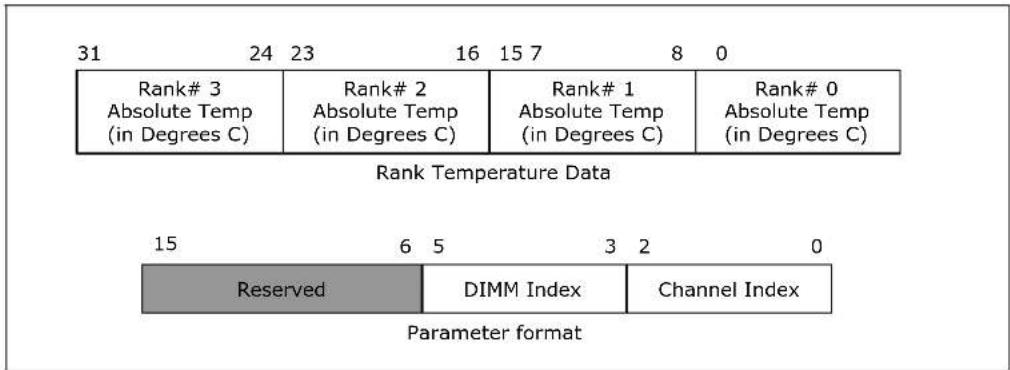
2.5.2.6.4 DIMM Temperature Read
This feature allows the PECI host to read the temperature of all the DIMMs within a channel up to a maximum of three DIMMs. This read is not limited to platforms using a particular memory temperature source or temperature estimation method. For platforms using DRAM thermal estimation, the PCU will provide the estimated temperatures. Otherwise, the data represents the latest DIMM temperature provided by the TSOD or on-board DIMM sensor and requires that CLTT (closed loop throttling mode) be enabled and OLTT (open loop throttling mode) be disabled. Refer to Table 2-7 for channel index encodings.
Figure 2-14. The Processor DIMM Temperature Read / Write
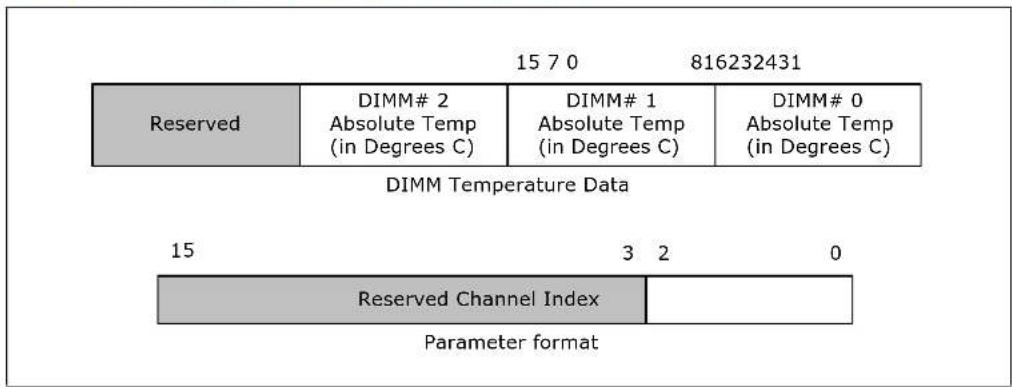
2.5.2.6.5 DIMM Ambient Temperature Write / Read
This feature allows the PECI host to provide an ambient temperature reference to be used by the processor for activity-based DRAM temperature estimation. This write is used only when no DIMM temperature information is available from on-board or on-die DIMM thermal sensors. It is also possible for the PECI host controller to read back the DIMM ambient reference temperature.
Since the ambient temperature may vary over time within a system, it is recommended that systems monitoring and updating the ambient temperature at a fast rate use the 'maximum' temperature value while those updating the ambient temperature at a slow rate use an 'average' value. The ambient temperature assumes a single value for all memory channel/DIMM locations and does not account for possible temperature variations based on DIMM location.
Figure 2-15. Ambient Temperature Reference Data
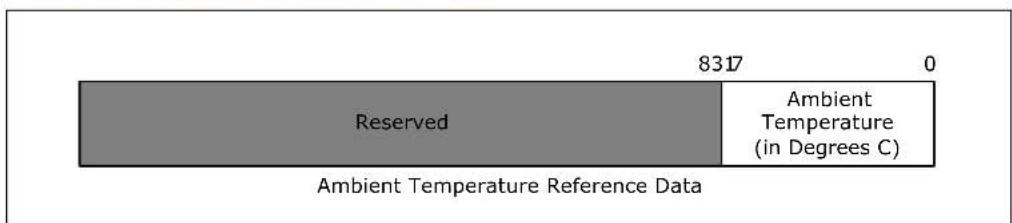
bar_stacked
| Category | Value | | -------- | ----- | | Reserved | 8317 | | Ambient Temperature (in Degrees C) | 0 |2.5.2.6.6 DRAM Channel Temperature Read
This feature enables a PECI host read of the maximum temperature of each channel. This would include all the DIMMs within the channel and all the ranks within each of the DIMMs. Channels that are not populated will return the 'ambient temperature' on systems using activity-based temperature estimations or alternatively return a 'zero' for systems using sensor-based temperatures.
Figure 2-16. Processor DRAM Channel Temperature
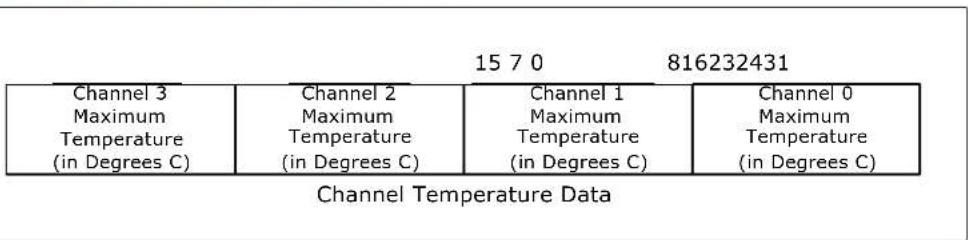
2.5.2.6.7 Accumulated DRAM Energy Read
This feature allows the PECI host to read the DRAM energy consumed by all the DIMMs within all the channels or all the DIMMs within just a specified channel. The parameter field is used to specify the channel index. Units used are defined as per the Package Power SKU Unit read described in Section 2.5.2.6.11. This information is tracked by a 32-bit counter that wraps around. The channel index in Figure 2-17 is specified as per the index encoding described in Table 2-7. A channel index of 0x00FF is used to specify the "all channels" case. While Intel requires reading the accumulated energy data at least once every 16 seconds to ensure functional correctness, a more realistic polling rate recommendation is once every 100 mS for better accuracy. This feature assumes a 200W memory capacity. In general, as the power capability decreases, so will the minimum polling rate requirement.
When determining energy changes by subtracting energy values between successive reads, Intel advocates using the 2's complement method to account for counter wrap-arounds. Alternatively, adding all 'F's ('0xFFFFFFF') to a negative result from the subtraction will accomplish the same goal.
Figure 2-17. Accumulated DRAM Energy Data
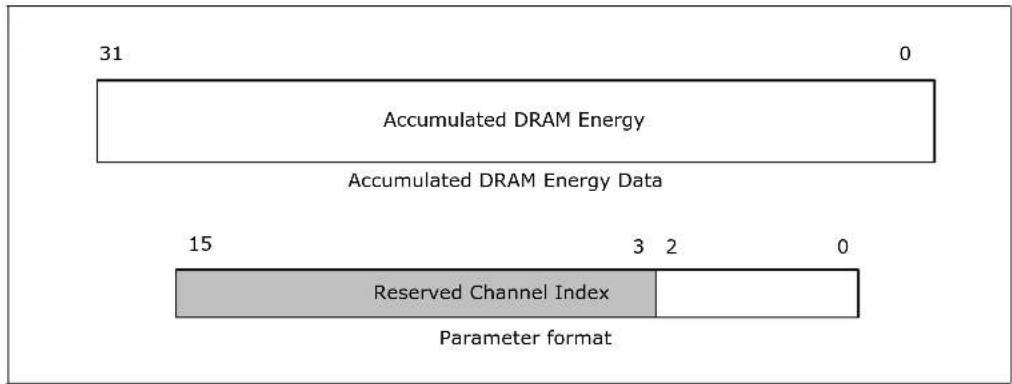
2.5.2.6.8 DRAM Power Info Read
This read returns the minimum, typical and maximum DRAM power settings and the maximum time window over which the power can be sustained for the entire DRAM domain and is inclusive of all the DIMMs within all the memory channels. Any power values specified by the power limiting entity that is outside of the range specified through these settings cannot be guaranteed. Since this data is 64 bits wide, PECI facilitates access to this register by allowing two requests to read the lower 32 bits and upper 32 bits separately as shown in Table 2-6. Power and time units for this read are defined as per the Package Power SKU Unit settings described in Section 2.5.2.6.11.
The minimum DRAM power in Figure 2-18 corresponds to a minimum bandwidth setting of the memory interface. It does 'not' correspond to a processor IDLE or memory self-refresh state. The 'time window' in Figure 2-18 is representative of the rate at which the power control unit (PCU) samples the DRAM energy consumption information and reactively takes the necessary measures to meet the imposed power limits. Programming too small a time window may not give the PCU enough time to sample energy information and enforce the limit while too large a time window runs the risk of the PCU not being able to monitor and take timely action on energy excursions. While the DRAM power setting in Figure 2-18 provides a maximum value for the 'time window' (typically a few seconds), the minimum value may be assumed to be \~100 mS.
The PCU programs the DRAM power settings described in Figure 2-18 when DRAM characterization has been completed by the memory reference code (MRC) during boot as indicated by the setting of the RST_CPL bit of the BIOS_RESET_CPL register. The DRAM power settings will be programmed during boot independent of the 'DRAM Power Limit Enable' bit setting. Please refer to the Intel® Xeon® Processor E5 v2 Product Family Processor Datasheet, Volume Two: Registers for information on memory energy estimation methods and energy tuning options used by BIOS and other utilities for determining the range specified in the DRAM power settings. In general, any tuning of the power settings is done by polling the voltage regulators supplying the DIMMs.
Figure 2-18. DRAM Power Info Read Data
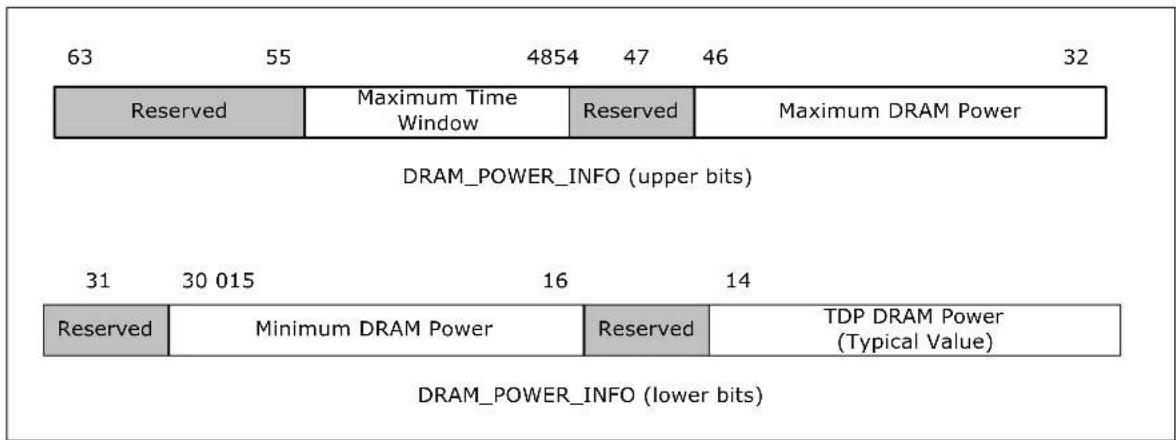
bar_stacked
| Category | Upper Bits | Lower Bits | |---|---|---| | Reserved | 63 | 55 | | Maximum Time Window | 4854 | 47 | | Reserved | 47 | 46 | | Maximum DRAM Power | 32 | 0 | DRAM_POWER_INFO (upper bits) DRAM_POWER_INFO (lower bits) Reserved Minimum DRAM Power Reserved TDP DRAM Power (Typical Value)2.5.2.6.9 DRAM Power Limit Data Write / Read
This feature allows the PECI host to program the power limit over a specified time or control window for the entire DRAM domain covering all the DIMMs within all the memory channels. Actual values are chosen based on DRAM power consumption characteristics. The units for the DRAM Power Limit and Control Time Window are determined as per the Package Power SKU Unit settings described in Section 2.5.2.6.11. The DRAM Power Limit Enable bit in Figure 2-19 should be set to activate this feature. Exact DRAM power limit values are largely determined by platform memory configuration. As such, this feature is disabled by default and there are no defaults associated with the DRAM power limit values. The PECI host may be used to enable and initialize the power limit fields for the purposes of DRAM power budgeting. Alternatively, this can also be accomplished through inband writes to the registers. Both power limit enabling and initialization of power limit values can be done in the same command cycle. All RAPL parameter values including the power limit value, control time window, and enable bit will have to be specified correctly even if the intent is to change just one parameter value when programming over PECI.
The following conversion formula should be used for encoding or programming the 'Control Time Window' in bits [23:17].
Control Time Window (in seconds) = ([1 + 0.25 * 'x'] * 2'y') * 'z' where
'x' = integer value of bits[23:22]
'y' = integer value of bits[21:17]
'z' = Package Power SKU Time Unit[19:16] (see Section 2.5.2.6.13 for details on Package Power SKU Unit)
For example, using this formula, a control time value of 0x0A will correspond to a '1-second' time window. A valid range for the value of the 'Control Time Window' in Figure 2-19 that can be programmed into bits [23:17] is 250 mS - 40 seconds.
From a DRAM power management standpoint, all post-boot DRAM power management activities (also referred to as 'DRAM RAPL' or 'DRAM Running Average Power Limit') should be managed exclusively through a single interface like PECI or alternatively an inband mechanism. If PECI is being used to manage DRAM power budgeting activities, BIOS should lock out all subsequent inband DRAM power limiting accesses by setting bit 31 of the DRAM_POWER_LIMIT MSR or DRAM_PLANE_POWER_LIMIT CSR to '1'.
Figure 2-19. DRAM Power Limit Data

2.5.2.6.10 DRAM Power Limit Performance Status Read
This service allows the PECI host to assess the performance impact of the currently active DRAM power limiting modes. The read return data contains the sum of all the time durations for which each of the DIMMs has been operating in a low power state. This information is tracked by a 32-bit counter that wraps around. The unit for time is determined as per the Package Power SKU Unit settings described in Section 2.5.2.6.11. The DRAM performance data does not account for stalls on the memory interface.
In general, for the purposes of DRAM RAPL, the DRAM power management entity should use PECI accesses to DRAM energy and performance status in conjunction with the power limiting feature to budget power between the various memory sub-systems in the server system.
Figure 2-20. DRAM Power Limit Performance Data
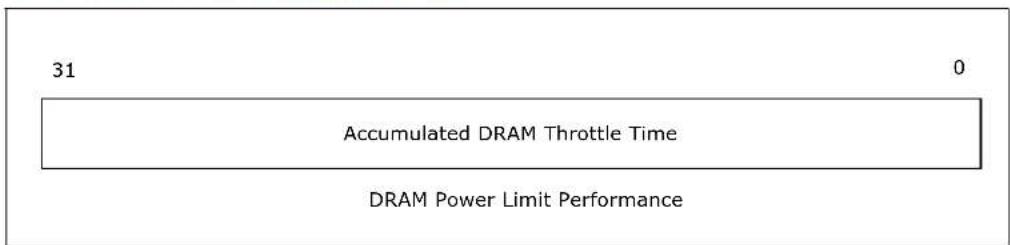
2.5.2.6.11 CPU Thermal and Power Optimization Capabilities
Table 2-8 provides a summary of the processor power and thermal optimization capabilities that can be accessed over PECI.
Note:The Index
values referenced in Table 2-8 are in decimal format.
Table 2-8 also provides information on alternate inband mechanisms to access similar or equivalent information for register reads and writes where applicable. The user should consult the Intel® Xeon® Processor E5 v2 Product Family Processor Datasheet, Volume Two: Registers for exact details on MSR or CSR register content.
Table 2-8. RdPkgConfig() & WrPkgConfig() CPU Thermal and Power Optimization Services Summary (Sheet 1 of 4)
| Service | Index Value (decimal) | Parameter Value (word) | RdPkgConfig() Data (dword) | WrPkgConfig() Data (dword) | Description | Alternate Inband MSR or CSR Access |
| Package Identifier Read | 00 0x0000 | CPUID | Information | Returns processor-specific information including CPU family, model and stepping information. | Execute CPUID instruction to get processor signature | |
| 0x0001 Platform ID Used to ensure | microcode update compatibility with processor. | MSR 17h: IA32_PLATFORM_ID | ||||
| 0x0002 PCU Device ID Returns the Device | ID Information for the processor Power Control Unit. | CSR: DID | ||||
| 0x0003 Max Thread ID Returns the maximum 'Thread ID' value supported by the processor. | MSR: RESOLVED_CORES_MASKCSR: RESOLVED_CORES_MASK | |||||
| 0x0004 CPU Microcode Update Revision | Returns processor microcode and PCU firmware revision information. | MSR 8Bh: IA32_BIOS_SIGN_ID | ||||
| 0x0005 MCA Error Source Log | Returns the MCA Error Source Log | CSR: MCA_ERR_SRC_LOG | ||||
| Package Power SKU Unit Read | 30 0x0000 | Time, Energy and Power Units | N/A Read units for power, energy and time used in power control registers. | MSR 606h: PACKAGE_POWER_SKU_UNITCSR: PACKAGE_POWER_SKU_UNIT | ||
| Package Power SKU Read | 28 | 0x0000 | Package Power SKU[31:0] | N/A | Returns Thermal Design Power and minimum package power values for the processor SKU. | MSR 614h: PACKAGE_POWER_SKU CSR: PACKAGE_POWER_SKU |
| Package Power SKU Read | 29 | 0x0000 | Package Power SKU[64:32] | N/A | Returns the maximum package power value for the processor SKU and the maximum time interval for which it can be sustained. | MSR 614h: PACKAGE_POWER_SKU CSR: PACKAGE_POWER_SKU |
| "Wake on PECI" Mode bit Write / Read | 05 | 0x0001 - Set 0x0000 - Reset | N/A | "Wake on PECI" mode bit | Enables package pop-up to C2 to service PECI PCIConfig() accesses if . | N/A |
Table 2-8. RdPkgConfig() & WrPkgConfig() CPU Thermal and Power Optimization Services Summary (Sheet 2 of 4)
| Service | Index Value (decimal) | Parameter Value (word) | RdPkgConfig() Data (dword) | WrPkgConfig () Data (dword) | Description | Alternate Inband MSR or CSR Access |
| "Wake on PECI" Mode bit Write / Read | 05 0x0000 | "Wake on | PECI" mode bit | N/A Read | status of "Wake on PECI" mode bit | N/A |
| Accumulated Run Time Read | 31 0x0000 | Total reference time | Percence | N/A Returns | the total run time. | MSR 10h: IA32_TIME_STAMP_COUNTER |
| Package Temperature Read | 02 0x00FF | Processor | package Temperature | N/A Returns | the maximum processor die temperature in PECI format. | MSR 1B1h: IA32_PACKAGE_THERM_STATUS |
| Per Core DTS Temperature Read | 09 0x0000-0x0007 (cores 0-7)0x00FF - System Agent | Per core DTS maximum temperature | N/A Read | the maximum DTS temperature of a particular core or the System Agent within the processor die in relative PECI temperature format | MSR 19Ch: IA32_THERM_STATUS | |
| Temperature Target Read | 16 0x0000 | Processor T_Prochot and T_CONTROL | N/A Returns | the PROCHOT_N assertion temperature and processor T_CONTROL . | MSR 1A2h: TEMPERATURE_TARGETCSR: TEMPERATURE_TARGET | |
| Package Thermal Status Read / Clear | 20 0x0000 | Thermal Status Register | N/A | Read the thermal status register and optionally clear any log bits. The register includes status and log bits for TCC activation,PROCHOT_N assertion and Critical Temperature. | MSR 1B1h: IA32_PACKAGE_THERM_STATUS | |
| Thermal Averaging Constant Write / Read | 21 0x0000 | Thermal Averaging Constant | N/A Reads | the Thermal Averaging Constant | N/A | |
| Thermal Averaging Constant Write / Read | 21 0x0000 | N/A | Thermal Averaging Constant | Writes the Thermal Averaging Constant | N/A | |
| Thermally Constrained Time Read | 32 0x0000 | Thermally Constrained Time | N/A | Read the time for which the processor has been operating In a lowered power state due to internal TCC activation. | N/A | |
| Current Limit Read | 17 0x0000 | Current Limit per power plane | N/A | Reads the current limit on the VCC power plane | CSR: PRIMARY_PLANE_CURRENT_CONFIG_CONTROL | |
| Accumulated Energy Status Read | 03 | 0x0000 - VCC0x00FF - CPU package | Accumulated CPU energy | N/A | Returns the value of the energy consumed by just the VCC power plane or entire CPU package. | MSR 639h: PP0_ENERGY_STATUSCSR: PP0_ENERGY_STATUSMSR 611h: PACKAGE_ENERGY_STATUSCSR: PACKAG_ENERGY_STATUS |
Table 2-8. RdPkgConfig() & WrPkgConfig() CPU Thermal and Power Optimization Services Summary (Sheet 3 of 4)
| Service | Index Value (decimal) | Parameter Value (word) | RdPkgConfig() Data (dword) | WrPkgConfig () Data (dword) | Description | Alternate Inband MSR or CSR Access |
| Power Limit for the VCC Power Plane Write / Read | 25 0x0000 | N/A Power | Limit Data Program | power limit | for VCC power plane | MSR 638h: PP0_POWER_LIMITCSR: PP0_POWER_LIMIT |
| Power Limit for the VCC Power Plane Write / Read | 25 0x0000 | Power Limit | Data | N/A Read | power limit data for VCC power plane | MSR 638h: PP0_POWER_LIMITCSR: PP0_POWER_LIMIT |
| Package Power Limits For Multiple Turbo Modes | 26 0x0000 | N/A Power | Limit 1 | Data | Write power limit data 1 in multiple turbo mode. | MSR 610h: PACKAGE_POWER_LIMITCSR: PACKAGE_POWER_LIMIT |
| Package Power Limits For Multiple Turbo Modes | 27 0x0000 | N/A Power | Limit 2 | Data | Write power limit data 2 in multiple turbo mode. | MSR 610h: PACKAGE_POWER_LIMITCSR: PACKAGE_POWER_LIMIT |
| Package Power Limits For Multiple Turbo Modes | 26 0x0000 | Power Limit 1 | Data | N/A Read | power limit 1 data in multiple turbo mode. | MSR 610h: PACKAGE_POWER_LIMITCSR: PACKAGE_POWER_LIMIT |
| Package Power Limits For Multiple Turbo Modes | 27 0x0000 | Power Limit 2 | Data | N/A Read | power limit 2 data in multiple turbo mode. | MSR 610h: PACKAGE_POWER_LIMITCSR: PACKAGE_POWER_LIMIT |
| Package Power Limit Performance Status Read | 08 0x0000 | FF - CPU package | Accumulated CPU throttle time | N/A Read | the total time for which the processor package was throttled due to power limiting. | CSR: PACKAGE_RAPL_PERF_STATUS |
| Efficient Performance Indicator Read | 06 0x0000 | Number of productive processor cycles | N/A | Read number of productive cycles for power budgeting purposes. | N/A | |
| ACPI P-T Notify Write & Read | 33 0x0000 | N/A | New p-state | equivalent of P1 used in conjunction with package power limiting | Notify the processor PCU of the new p-state that is one state below the turbo frequency as specified through the last ACPI Notify | N/A |
Table 2-8. RdPkgConfig() & WrPkgConfig() CPU Thermal and Power Optimization Services Summary (Sheet 4 of 4)
| Service | Index Value (decimal) | Parameter Value (word) | RdPkgConfig() Data (dword) | WrPkgConfig () Data (dword) | Description | Alternate Inband MSR or CSR Access |
| ACPI P-T Notify Write & Read | 33 0x0 | 000 New p-state equivalent of P1 used in conjunction with package power limiting | N/A Read | the processor PCU to determine the p-state that is one state below the turbo frequency as specified through the last ACPI Notify | N/A | |
| Caching Agent TOR Read | 39 Cbo | Index, TOR Index, Bank#; Read Mode | Caching Agent (Cbo) Table of Requests (TOR) data; Core ID & associated valid bit | N/A Read | the Cbo TOR data for all enabled cores in the event of a 3-strike timeout. Can alternatively be used to read 'Core ID' data to confirm that IERR was caused by a core timeout | N/A |
| Thermal Margin Read | 10 0x0 | 000 Thermal margin to processor thermal profile or load line | N/A Read | margin to processor thermal load line | N/A |
2.5.2.6.12 Package Identifier Read
This feature enables the PECI host to uniquely identify the PECI client processor. The parameter field encodings shown in Table 2-8 allow the PECI host to access the relevant processor information as described below.
- CPUID data: This is the equivalent of data that can be accessed through the CPUID instruction execution. It contains processor type, stepping, model and family ID information as shown in Figure 2-21.
Figure 2-21. CPUID Data
| 31 | 28 | 27 | 20 | 19 | 16 | 15 | 14 | 13 | 12 | 11 | 8 | 7 | 4 | 3 | 0 |
| RESERVED | Extended Family ID | Extended Model | RESERVED | Processor Type | Family ID | Model | Stepping ID | ||||||||
| CPU ID Data | |||||||||||||||
- Platform ID data: The Platform ID data can be used to ensure processor microcode updates are compatible with the processor. The value of the Platform ID or Processor Flag[2:0] as shown in Figure 2-22 is typically unique to the platform type and processor stepping. Refer to the Intel® 64 and IA-32 Architectures Software Developer's Manual for more information.
Figure 2-22. Platform ID Data

Platform ID Data
- PCU Device ID: This information can be used to uniquely identify the processor power control unit (PCU) device when combined with the Vendor Identification register content and remains constant across all SKUs. Refer to the register description for the exact processor PCU Device ID value.
Figure 2-23. PCU Device ID

PCU Device ID Data
- Max Thread ID: The maximum Thread ID data provides the number of supported processor threads. This value is dependent on the number of cores within the processor as determined by the processor SKU and is independent of whether certain cores or corresponding threads are enabled or disabled.
Figure 2-24. Maximum Thread ID

Maximum Thread ID Data
- CPU Microcode Update Revision: Reflects the revision number for the microcode update and power control unit firmware updates on the processor sample. The revision data is a unique 32-bit identifier that reflects a combination of specific versions of the processor microcode and PCU control firmware.
Figure 2-25. Processor Microcode Revision

CPU code patch revision
- Machine Check Status: Returns error information as logged by the MCA Error Source Log register. See Figure 2-26 for details. The power control unit will assert the relevant bit when the error condition represented by the bit occurs. For example, bit 29 will be set if the package asserted MCERR, bit 30 is set if the package asserted IERR and bit 31 is set if the package asserted CAT_ERR_N. The CAT_ERR_N may be used to signal the occurrence of a MCERR or IERR.
Figure 2-26. Machine Check Status

2.5.2.6.13 Package Power SKU Unit Read
This feature enables the PECI host to read the units of time, energy and power used in the processor and DRAM power control registers for calculating power and timing parameters. In Figure 2-27, the default value of the power unit field [3:0] is 0011b, energy unit [12:8] is 10000b and the time unit [19:16] is 1010b. Actual unit values are calculated as shown in Table 2-9.
Figure 2-27. Package Power SKU Unit Data

Table 2-9. Power Control Register Unit Calculations
| Unit Field Value Calculation Default Value | ||
| Time 1s / 2 | TIME UNIT | 1s / 2^10 = 976 s |
| Energy 1J / 2 | ENERGY UNIT | 1J / 2^16 = 15.3 J |
| Power 1W / 2 | POWER UNIT | 1W / 2^3 = 1/8 W |
2.5.2.6.14 Package Power SKU Read
This read allows the PECI host to access the minimum, Thermal Design Power and maximum power settings for the processor package SKU. It also returns the maximum time interval or window over which the power can be sustained. If the power limiting entity specifies a power limit value outside of the range specified through these settings, power regulation cannot be guaranteed. Since this data is 64 bits wide, PECI facilitates access to this register by allowing two requests to read the lower 32 bits and upper 32 bits separately as shown in Table 2-8. Power units for this read are determined as per the Package Power SKU Unit settings described in Section 2.5.2.6.13.
'Package Power SKU data' is programmed by the PCU firmware during boot time based on SKU dependent power-on default values set during manufacturing. The TDP package power specified through bits [14:0] in Figure 2-28 is the maximum value of the 'Power Limit1' field in Section 2.5.2.6.26 while the maximum package power in bits [46:32] is the maximum value of the 'Power Limit2' field.
The minimum package power in bits [30:16] is applicable to both the 'Power Limit1' & 'Power Limit2' fields and corresponds to a mode when all the cores are operational and in their lowest frequency mode. Attempts to program the power limit below the minimum power value may not be effective since BIOS/OS, and not the PCU, controls disabling of cores and core activity.
The 'maximum time window' in bits [54:48] is representative of the maximum rate at which the power control unit (PCU) can sample the package energy consumption and reactively take the necessary measures to meet the imposed power limits. Programming too large a time window runs the risk of the PCU not being able to monitor and take timely action on package energy excursions. On the other hand, programming too small a time window may not give the PCU enough time to sample energy information and enforce the limit. The minimum value of the 'time window' can be obtained by reading bits [21:15] of the PWR_LIMIT_MISC_INFO CSR using the PECI RdPCIConfigLocal() command.
Figure 2-28. Package Power SKU Data
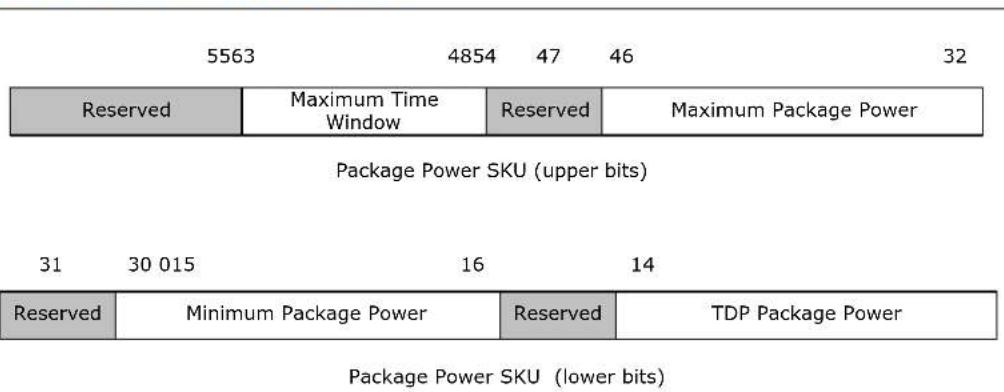
2.5.2.6.15 "Wake on PECI" Mode bit Write / Read
Setting the "Wake on PECI" mode bit enables successful completion of the WrPCIConfigLocal(), RdPCIConfigLocal(), WrPCIConfig() and RdPCIConfig() PECI commands by forcing a package 'pop-up' to the C2 state to service these commands if the processor is in a low-power state. The exact power impact of such a 'pop-up' is determined by the product SKU, the C-state from which the pop-up is initiated and the negotiated PECI bit rate. A 'reset' or 'clear' of this bit or simply not setting the "Wake on PECI" mode bit could result in a "timeout" response (completion code of 0x82) from the processor indicating that the resources required to service the command are in a low power state.
Alternatively, this mode bit can also be read to determine PECI behavior in package states C3 or deeper.
2.5.2.6.16 Accumulated Run Time Read
This read returns the total time for which the processor has been executing with a resolution of 1mS per count. This is tracked by a 32-bit counter that rolls over on reaching the maximum value. This counter activates and starts counting for the first time at RESET_N de-assertion.
2.5.2.6.17 Package Temperature Read
This read returns the maximum processor die temperature in 16-bit PECI format. The upper 16 bits of the response data are reserved. The PECI temperature data returned by this read is an exponential moving average of the maximum sensor temperature (max(core and uncore sensors)), updated once every ms. The equation for the update is:
$$ T _ {n} \quad T _ {n 1 -} \times = \left(\frac {2 5 5}{2 5 6} + \frac {t _ {n}}{2 5 6}\right) $$
Where: T_n is the current average value
T_n-1 is the last average value
t_n is the current maximum sensor temperature
Figure 2-29. Package Temperature Read Data

Note:This v
alue is not the value as returned by the PECI GetTemp() described in Section 2.5.2.3.
2.5.2.6.18 Per Core DTS Temperature Read
This feature enables the PECI host to read the maximum value of the DTS temperature for any specific core within the processor. Alternatively, this service can be used to read the System Agent temperature. Temperature is returned in the same format as the Package Temperature Read described in Section 2.5.2.6.17. Data is returned in relative PECI temperature format.
Reads to a parameter value outside the supported range will return an error as indicated by a completion code of 0x90. The supported range of parameter values can vary depending on the number of cores within the processor. The temperature data returned through this feature is the instantaneous value and not an averaged value. It is updated once every 1 mS.
2.5.2.6.19 Temperature Target Read
The Temperature Target Read allows the PECI host to obtain the target DTS temperature ( T_Prochot ) for PROCHOT_N assertion in degrees Celsius. This is the minimum temperature at which the processor thermal control circuit (TCC) activates. The actual temperature of TCC activation may vary slightly between processor units due to manufacturing process variations. The Temperature Target read also returns the processor T_CONTROL value. T_CONTROL is returned in standard PECI temperature format and represents the threshold temperature used by the thermal management system for fan speed control.
Figure 2-30. Temperature Target Read

2.5.2.6.20 Package Thermal Status Read / Clear
The Thermal Status Read provides information on package level thermal status. Data includes:
• Thermal Control Circuit (TCC) activation
- Bidirectional PROCHOT_N signal assertion
• Critical Temperature
Both status and sticky log bits are managed in this status word. All sticky log bits are set upon a rising edge of the associated status bit and the log bits are cleared only by Thermal Status reads or a processor reset. A read of the Thermal Status word always includes a log bit clear mask that allows the host to clear any or all of the log bits that it is interested in tracking.
A bit set to '0' in the log bit clear mask will result in clearing the associated log bit. If a mask bit is set to '0' and that bit is not a legal mask, a failing completion code will be returned. A bit set to '1' is ignored and results in no change to any sticky log bits. For example, to clear the TCC Activation Log bit and retain all other log bits, the Thermal Status Read should send a mask of 0xFFFFFFF.
Figure 2-31. Thermal Status Word
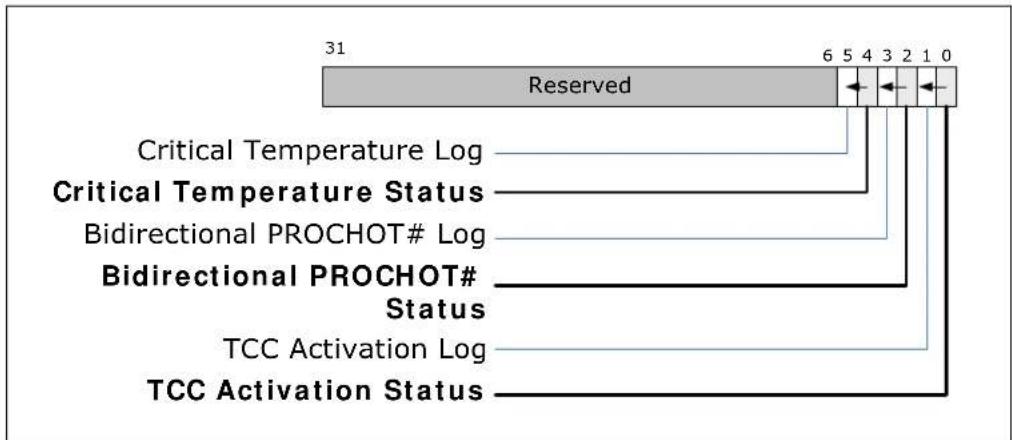
flowchart
graph TD
    A["Reserved"] --> B["Critical Temperature Log"]
    A --> C["Critical Temperature Status"]
    A --> D["Bidirectional PROCHOT# Log"]
    A --> E["Bidirectional PROCHOT# Status"]
    A --> F["TCC Activation Log"]
    A --> G["TCC Activation Status"]
    style A fill:#ccc,stroke:#333
    style B fill:#fff,stroke:#333
    style C fill:#fff,stroke:#333
    style D fill:#fff,stroke:#333
    style E fill:#fff,stroke:#333
    style F fill:#fff,stroke:#333
    style G fill:#fff,stroke:#333
2.5.2.6.21 Thermal Averaging Constant Write / Read
This feature allows the PECI host to control the window over which the estimated processor PECI temperature is filtered. The host may configure this window as a power of two. For example, programming a value of 5 results in a filtering window of 2^5 or 32 samples. The maximum programmable value is 8 or 256 samples. Programming a value of zero would disable the PECI temperature averaging feature. The default value of the thermal averaging constant is 4 which translates to an averaging window size of 2^4 or 16 samples. More details on the PECI temperature filtering function can be found in Section 2.5.7.3.
Figure 2-32. Thermal Averaging Constant Write / Read

bar_stacked
| Category | Value | | ------------------------- | ----- | | RESERVED | 4313 | | PECI Temperature Averaging Constant | 0 |2.5.2.6.22 Thermally Constrained Time Read
This features allows the PECI host to access the total time for which the processor has been operating in a lowered power state due to TCC activation. The returned data includes the time required to ramp back up to the original P-state target after TCC activation expires. This timer does not include TCC activation as a result of an external assertion of PROCHOT_N. This is tracked by a 32-bit counter with a resolution of 1mS per count that rolls over or wraps around. On the processor PECI clients, the only logic that can be thermally constrained is that supplied by VCC.
2.5.2.6.23 Current Limit Read
This read returns the current limit for the processor VCC power plane in 1/8A increments. Actual current limit data is contained only in the lower 13 bits of the response data. The default return value of 0x438 corresponds to a current limit value of 135A.
Figure 2-33. Current Config Limit Read Data
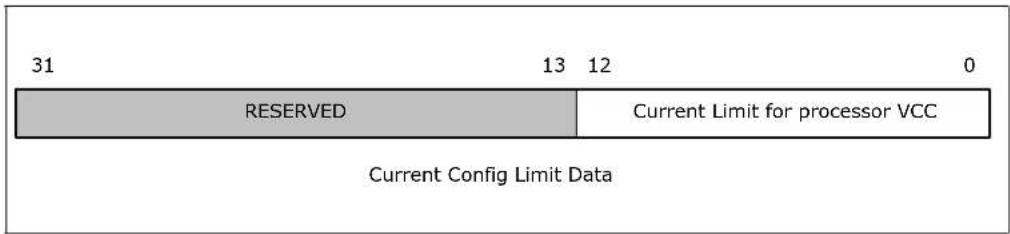
2.5.2.6.24 Accumulated Energy Status Read
This service can return the value of the total energy consumed by the entire processor package or just the logic supplied by the VCC power plane as specified through the parameter field in Table 2-8. This information is tracked by a 32-bit counter that wraps around and continues counting on reaching its limit. Energy units for this read are determined as per the Package Power SKU Unit settings described in Section 2.5.2.6.13.
While Intel requires reading the accumulated energy data at least once every 16 seconds to ensure functional correctness, a more realistic polling rate recommendation is once every 100mS for better accuracy. This feature assumes a 150W processor. In general, as the power capability decreases, so will the minimum polling rate requirement.
When determining energy changes by subtracting energy values between successive reads, Intel advocates using the 2's complement method to account for counter wrap-arounds. Alternatively, adding all 'F's ('0xFFFFFFF') to a negative result from the subtraction will accomplish the same goal.
Figure 2-34. Accumulated Energy Read Data
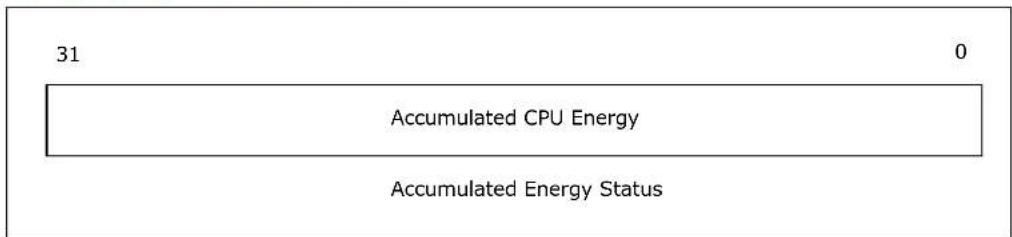
2.5.2.6.25 Power Limit for the VCC Power Plane Write / Read
This feature allows the PECI host to program the power limit over a specified time or control window for the processor logic supplied by the VCC power plane. This typically includes all the cores, home agent and last level cache. The processor does not support power limiting on a per-core basis. Actual power limit values are chosen based on the external VR (voltage regulator) capabilities. The units for the Power Limit and Control Time Window are determined as per the Package Power SKU Unit settings described in Section 2.5.2.6.13.
Since the exact VCC plane power limit value is a function of the platform VR, this feature is not enabled by default and there are no default values associated with the power limit value or the control time window. The Power Limit Enable bit in Figure 2-35 should be set to activate this feature. The Clamp Mode bit is also required to be set to allow the cores to go into power states below what the operating system originally requested. In general, this feature provides an improved mechanism for VR protection compared to the input PROCHOT_N signal assertion method. Both power limit enabling and initialization of power limit values can be done in the same command cycle. Setting a power limit for the VCC plane enables turbo modes for associated logic. External VR protection is guaranteed during boot through operation at safe voltage and frequency. All RAPL parameter values including the power limit value, control time window, clamp mode and enable bit will have to be specified correctly even if the intent is to change just one parameter value when programming over PECI.
The usefulness of the VCC power plane RAPL may be somewhat limited if the platform has a fully compliant external voltage regulator. However, platforms using lower cost voltage regulators may find this feature useful. The VCC RAPL value is generally expected to be a static value after initialization and there may not be any use cases for dynamic control of VCC plane power limit values during run time. BIOS may be ideally used to read the VR (and associated heat sink) capabilities and program the PCU with the power limit information during boot. No matter what the method is, Intel recommends exclusive use of just one entity or interface, PECI for instance, to manage VCC plane power limiting needs. If PECI is being used to manage VCC plane power limiting activities, BIOS should lock out all subsequent inband VCC plane power limiting accesses by setting bit 31 of the PP0_POWER_LIMIT MSR and CSR to '1'.
The same conversion formula used for DRAM Power Limiting (see Section 2.5.2.6.9) should be applied for encoding or programming the 'Control Time Window' in bits [23:17].
Figure 2-35. Power Limit Data for VCC Power Plane

2.5.2.6.26 Package Power Limits For Multiple Turbo Modes
This feature allows the PECI host to program two power limit values to support multiple turbo modes. The operating systems and drivers can balance the power budget using these two limits. Two separate PECI requests are available to program the lower and upper 32 bits of the power limit data shown in Figure 2-36. The units for the Power Limit and Control Time Window are determined as per the Package Power SKU Unit settings described in Section 2.5.2.6.13 while the valid range for power limit values are determined by the Package Power SKU settings described in Section 2.5.2.6.14. Setting the Clamp Mode bits is required to allow the cores to go into power states below what the operating system originally requested. The Power Limit Enable bits should be set to enable the power limiting function. Power limit values, enable and clamp mode bits can all be set in the same command cycle. All RAPL parameter values including the power limit value, control time window, clamp mode and enable bit will have to be specified correctly even if the intent is to change just one parameter value when programming over PECI.
Intel recommends exclusive use of just one entity or interface, PECI for instance, to manage all processor package power limiting and budgeting needs. If PECI is being used to manage package power limiting activities, BIOS should lock out all subsequent inband package power limiting accesses by setting bit 31 of the PACKAGE_POWER_LIMIT MSR and CSR to '1'. The 'power limit 1' is intended to limit processor power consumption to any reasonable value below TDP and defaults to TDP. 'Power Limit 1' values may be impacted by the processor heat sinks and system air flow. Processor 'power limit 2' can be used as to limit the current drawn by the processor to prevent any external power supply unit issues. The 'Power Limit 2' should always be programmed to a value (typically 20%) higher than 'Power Limit 1' and has no default value associated with it.
Though this feature is disabled by default and external programming is required to enable, initialize and control package power limit values and time windows, the processor package will still turbo to TDP if 'Power Limit 1' is not enabled or initialized. 'Control Time Window#1' (Power_Limit_1_Time also known as Tau) values may be programmed to be within a range of 250 mS-40 seconds. 'Control Time Window#2' (Power_Limit_2_Time) values should be in the range 3 mS-10 mS.
The same conversion formula used for the DRAM Power Limiting feature (see Section 2.5.2.6.9) should be applied when programming the 'Control Time Window' bits [23:17] for 'power limit 1' in Figure 2-36. The 'Control Time Window' for 'power limit 2' can be directly programmed into bits [55:49] in units of mS without the aid of any conversion formulas.
Figure 2-36. Package Turbo Power Limit Data
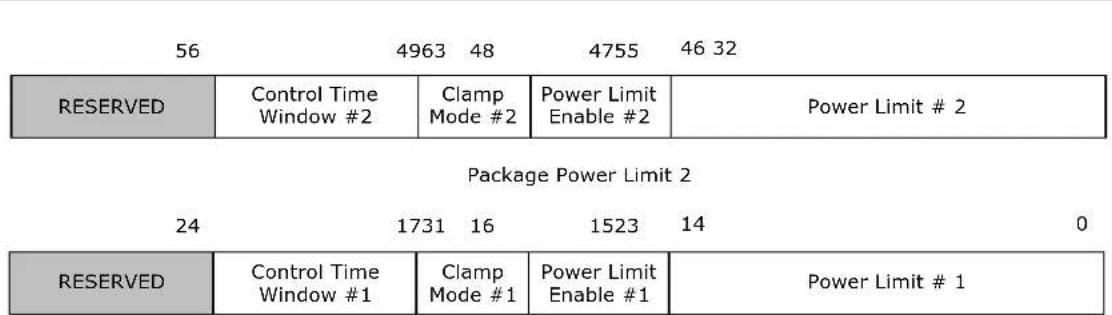
Package Power Limit 1
2.5.2.6.27 Package Power Limit Performance Status Read
This service allows the PECI host to assess the performance impact of the currently active power limiting modes. The read return data contains the total amount of time for which the entire processor package has been operating in a power state that is lower than what the operating system originally requested. This information is tracked by a 32-bit counter that wraps around. The unit for time is determined as per the Package Power SKU Unit settings described in Section 2.5.2.6.13.
Figure 2-37. Package Power Limit Performance Data

Accumulated CPU Throttle Time
2.5.2.6.28 Efficient Performance Indicator Read
The Efficient Performance Indicator (EPI) Read provides an indication of the total number of productive cycles. Specifically, these are the cycles when the processor is engaged in any activity to retire instructions and as a result, consuming energy. Any power management entity monitoring this indicator should sample it at least once every 4 seconds to enable detection of wraparounds. Refer to the Intel® 64 and IA-32 Architectures Software Developer's Manual, for details on programming the IA32_ENERGY_PERFORMANCE_BIAS register to set the 'Energy Efficiency' policy of the processor.
Figure 2-38. Efficient Performance Indicator Read

Efficient Performance Indicator Data
2.5.2.6.29 ACPI P-T Notify Write & Read
This feature enables the processor turbo capability when used in conjunction with the PECI package RAPL or power limit. When the BMC sets the package power limit to a value below TDP, it also determines a new corresponding turbo frequency and notifies the OS using the 'ACPI Notify' mechanism as supported by the _PPC or performance present capabilities object. The BMC then notifies the processor PCU using the PECI 'ACPI P-T Notify' service by programming a new state that is one p-state below the turbo frequency sent to the OS via the _PPC method.
When the OS requests a p-state higher than what is specified in bits [7:0] of the PECI ACPI P-T Notify data field, the CPU will treat it as request for P0 or turbo. The PCU will use the IA32_ENERGY_PERFORMANCE_BIAS register settings to determine the exact extent of turbo. Any OS p-state request that is equal to or below what is specified in the PECI ACPI P-T Notify will be granted as long as the RAPL power limit does not impose a lower p-state. However, turbo will not be enabled in this instance even if there is headroom between the processor energy consumption and the RAPL power limit.
This feature does not affect the Thermal Monitor behavior of the processor nor is it impacted by the setting of the power limit clamp mode bit.
Figure 2-39. ACPI P-T Notify Data
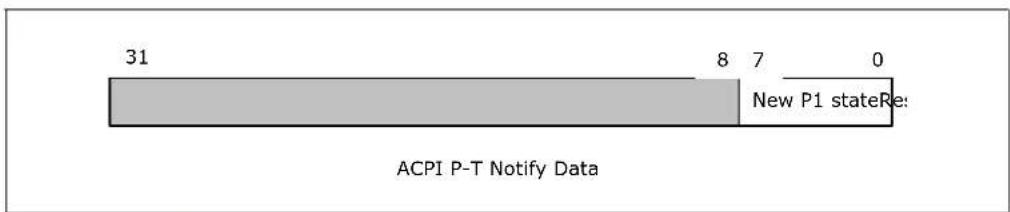
bar
| Category | Value | |---|---| | 31 | | | 8 | New P1 stateRe: | | 7 | | | 0 | |2.5.2.6.30 Caching Agent TOR Read
This feature allows the PECI host to read the Caching Agent (Cbo) Table of Requests (TOR). This information is useful for debug in the event of a 3-strike timeout that results in a processor IERR assertion. The 16-bit parameter field is used to specify the Cbo index, TOR array index and bank number according to the following bit assignments.
- Bits [1:0] - Bank Number - legal values from 0 to 2
- Bits [6:2] - TOR Array Index - legal values from 0 to 19
- Bits [10:7] - Cbo Index - legal values from 0 to 7
- Bit [11] - Read Mode - should be set to '0' for TOR reads, '1' for Core ID reads
- Bits [15:12] - Reserved
Bit[11] is the Read Mode bit and should be set to '0' for TOR reads. The Read Mode bit can alternatively be set to '1' to read the 'Core ID' (with associated valid bit as shown in Figure 2-40) that points to the first core that asserted the IERR. In this case bits [10:0] of the parameter field are ignored. The 'Core ID' read may not return valid data until at least 1 mS after the IERR assertion.
Figure 2-40. Caching Agent TOR Read Data
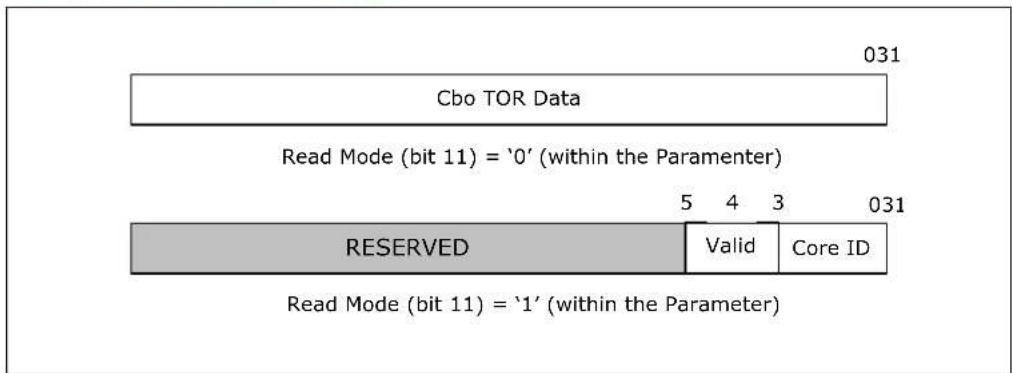
Note: Reads to caching agents that are not enabled will return all zeroes. Refer to the debug handbook for details on methods to interpret the crash dump results using the Cbo TOR data shown in Figure 2-40.
2.5.2.6.31 Thermal Margin Read
This service allows the PECI host to read the margin to the processor thermal profile or load line. Thermal margin data is returned in the format shown in Figure 2-41 with a sign bit, an integer part and a fractional part. A negative thermal margin value implies that the processor is operating in violation of its thermal load line and may be indicative of a need for more aggressive cooling mechanisms through a fan speed increase or other means. This PECI service will continue to return valid margin values even when the processor die temperature exceeds T_Prochot .
Figure 2-41. DTS Thermal Margin Read

2.5.2.7 RdI AMSR()
The RdIAMSR() PECI command provides read access to Model Specific Registers (MSRs) defined in the processor's Intel® Architecture (IA). MSR definitions may be found in the Intel® Xeon® Processor E5 v2 Product Family Processor Datasheet, Volume Two: Registers. Refer to Table 2-11 for the exact listing of processor registers accessible through this command.
2.5.2.7.1 Command Format
The RdiamSR() format is as follows:
Write Length: 0x05
Read Length: 0x09 (qword)
Command: 0xb1
Description: Returns the data maintained in the processor IA MSR space as specified by the 'Processor ID' and 'MSR Address' fields. The Read Length dictates the desired data return size. This command supports only qword responses. All command responses are prepended with a completion code that contains additional pass/fail status information. Refer to Section 2.5.5.2 for details regarding completion codes.
2.5.2.7.2 Processor ID Enumeration
The 'Processor ID' field that is used to address the IA MSR space refers to a specific logical processor within the CPU. The 'Processor ID' always refers to the same physical location in the processor regardless of configuration as shown in the example in Figure 2-42. For example, if certain logical processors are disabled by BIOS, the Processor ID mapping will not change. The total number of Processor IDs on a CPU is product-specific.
'Processor ID' enumeration involves discovering the logical processors enabled within the CPU package. This can be accomplished by reading the 'Max Thread ID' value through the RdPkgConfig() command (Index 0, Parameter 3) described in Section 2.5.2.6.12 and subsequently querying each of the supported processor threads. Unavailable processor threads will return a completion code of 0x90.
Alternatively, this information may be obtained from the RESOLVED_CORES_MASK register readable through the RdPCIConfigLocal() PECI command described in Section 2.5.2.9 or other means. Bits [7:0] and [9:8] of this register contain the 'Core Mask' and 'Thread Mask' information respectively. The 'Thread Mask' applies to all the enabled cores within the processor package as indicated by the 'Core Mask'. For the processor PECI clients, the 'Processor ID' may take on values in the range 0 through 23.
Figure 2-42. Processor ID Construction Example
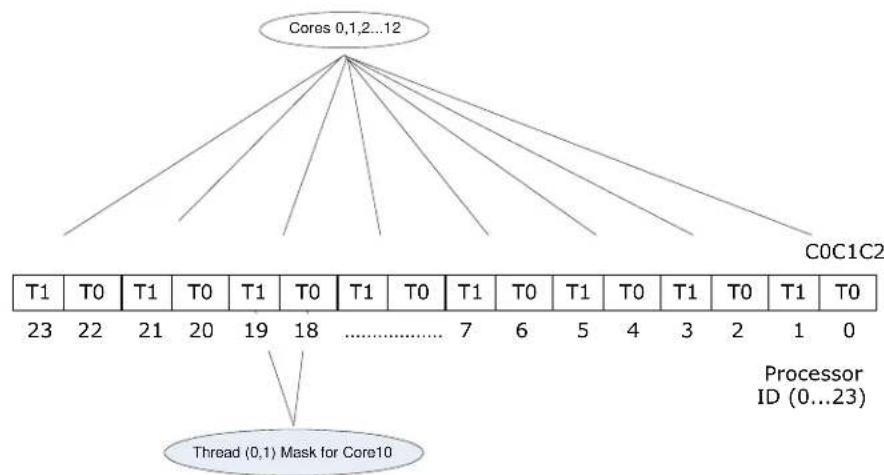
flowchart
graph TD
    A["Cores 0,1,2...12"] --> B["T1 T0 T1 T0 T1 T0 T1 T0 T1 T0 T1 T0 T1 T0 T1 T0"]
    A --> C["C0C1C2"]
    B --> D["23 22 21 20 19 18 ......... 7 6 5 4 3 2 1 0"]
    C --> E["Thread (0,1) Mask for Core10"]
    style A fill:#f9f,stroke:#333
    style B fill:#ccf,stroke:#333
    style C fill:#cfc,stroke:#333
    style D fill:#fcc,stroke:#333
    style E fill:#cff,stroke:#333
Figure 2-43. RdI AMSR()
![Byte # 0 1 2 3 Byte Definition Client Address Write Length Read Length Cmd Code 4 5 6 7 8 Host ID[7:1] & Retry[0] Processor ID LSB MSR Address MSB FCS 9 10 11 12 13 Completion Code LSB Data (8 bytes) 14 15 16 17 18 Data (8 bytes) MSB FCS](/content/2026/06/1184760/images/c67a608d554614a1e375c96ab6de0ccb1ef739e995b1b68b4baded4c14df6ecc.jpg)
Note: The 2-byte MSR Address field and read data field defined in Figure 2-43 are sent in standard PECI ordering with LSB first and MSB last.
2.5.2.7.3 Supported Responses
The typical client response is a passing FCS, a passing Completion Code and valid data. Under some conditions, the client's response will indicate a failure.
Table 2-10. RdI AMSR() Response Definition
| Response Meaning | |
| Bad FCS Electrical error | |
| Abort FCS Illegal command formatting (mismatched RL/WL/Command Code) | |
| CC: 0x40 Command passed, data is valid. | |
| CC: 0x80 | Response timeout. The processor was not able to generate the required response in a timely fashion. Retry is . |
| CC: 0x81 Response timeout. The processor is not able to allocate resources for servicing this command at this time. Retry is . | |
| CC: 0x82 The processor hardware resources required to service this command are in a low power state. Retry may be after modification of PECI wake mode behavior if . | |
| CC: 0x90 Unknown/Invalid/Illegal Request | |
| CC: 0x91 | PECI control hardware, firmware or associated logic error. The processor is unable to process the request. |
2.5.2.7.4 RdI AMSR() Capabilities
The processor PECI client allows PECI RdiamSR() access to the registers listed in Table 2-11. These registers pertain to the processor core and uncore error banks (machine check banks 0 through 19). Information on the exact number of accessible banks for the processor device may be obtained by reading the IA32_MCG_CAP[7:0] MSR (0x0179). This register may be alternatively read using a RDMSR RBIOS instruction. Please consult the Intel® Xeon® Processor E5 v2 Prodcut Family Specification Update for more information on the exact number of cores supported by a particular processor SKU. Any attempt to read processor MSRs that are not accessible over PECI or simply not implemented will result in a completion code of 0x90.
PECI access to these registers is expected only when in-band access mechanisms are not available.
Table 2-11. RdI AMSR() Services Summary ^12
| Processor ID (byte) | MSR Address (dword) | Meaning | Processor ID (byte) | MSR Address (dword) | Meaning | Processor ID (byte) | MSR Address (dword) | Meaning |
| 0x0-0xF 0x0400 IA32_MC0_CTL | 0x0-0xF | 0x041B | IA32_MC6_MISC | 0x0-0xF | 0x0436 | IA32_MC13_ADDR | ||
| 0x0-0xF 0x0280 IA32_MC0_CTL2 0x0-0xF 0x041C IA32_MC7_CTL | 0x0-0xF 0x0437 IA32_MC13_MISC | |||||||
| 0x0-0xF 0x0401 IA32_MC0_STATUS 0x0-0xF | 0x0287 IA32_MC7_CTL2 | 0x0-0xF 0x0438 IA32_MC14_CTL | ||||||
| 0x0-0xF 0x0402 IA32_MC0_ADDR 0x0-0xF 0x041D IA32_MC7_STATUS | 0x0-0xF 0x028E IA32_MC14_CTL2 | |||||||
| 0x0-0xF 0x0403 IA32_MC0_MISC1 | 0x0-0xF | 0x041E | IA32_MC7_ADDR | 0x0-0xF | 0x0439 | IA32_MC14_STATUS | ||
| 0x0-0xF 0x0404 IA32_MC1_CTL 0x0-0xF | F 0x041F | IA32_MC7_MISC | IA32_MC8_CTL | 0x0-0xF | 0x043A IA32_MC14_ADDR | |||
| 0x0-0xF 0x0281 IA32_MC1_CTL2 | 0x0-0xF | 0x0420 | IA32_MC8_CTL | 0x0-0xF | 0x043B | IA32_MC14_MISC | ||
| 0x0-0xF 0x0405 IA32_MC1_STATUS | 0x0-0xF | 0x0288 | IA32_MC8_CTL2 | 0x0-0xF | 0x043C | IA32_MC15_CTL | ||
| 0x0-0xF 0x0406 IA32_MC1_ADDR | 0x0-0xF | 0x0421 | IA32_MC8_STATUS | 0x0-0xF | 0x028F | IA32_MC15_CTL2 | ||
| 0x0-0xF 0x0407 IA32_MC1_MISC | 0x0-0xF | 0x0422 | IA32_MC8_ADDR | 0x0-0xF | 0x043D | IA32_MC15_STATUS | ||
| 0x0-0xF 0x0408 IA32_MC2_CTL2 | 0x0-0xF | 0x0423 | IA32_MC8_MISC | 0x0-0xF | 0x043E | IA32_MC15_ADDR | ||
| 0x0-0xF 0x0282 IA32_MC2_CTL2 0x0-0xF 0x0424 IA32_MC9_CTL | 0x0-0xF 0x043F IA32_MC15_MISC | |||||||
| 0x0-0xF 0x0409 IA32_MC2_STATUS 0x0-0xF | 0x0289 IA32_MC9_CTL2 | 0x0-0xF 0x0440 IA32_MC16_CTL | ||||||
| 0x0-0xF 0x040A IA32_MC2_ADDR2 | 0x0-0xF | 0x0425 | IA32_MC9_STATUS | 0x0-0xF | 0x0290 | IA32_MC16_CTL2 | ||
| 0x0-0xF 0x040B IA32_MC2_MISC2 | 0x0-0xF | 0x0426 | IA32_MC9_ADDR | 0x0-0xF | 0x0441 | IA32_MC16_STATUS | ||
| 0x0-0xF 0x040C IA32_MC3_CTL 0x0-0xF | F 0x0427 IA32_MC9_MISC | 0x0-0xF 0x0442 IA32_MC16_ADDR | ||||||
| 0x0-0xF 0x0283 IA32_MC3_CTL2 0x0-0xF 0x0428 IA32_MC10_CTL | 0x0-0xF 0x0443 IA32_MC16_MISC | |||||||
| 0x0-0xF 0x040D IA32_MC3_STATUS 0x0-0xF | 0x028A IA32_MC10_CTL2 | 0x0-0xF 0x0444 IA32_MC17_CTL | ||||||
| 0x0-0xF 0x040E IA32_MC3_ADDR 0x0-0xF 0x0429 IA32_MC10_STATUS | 0x0-0xF 0x0291 IA32_MC17_CTL2 | |||||||
| 0x0-0xF | 0x040F | IA32_MC3_MISC | 0x0-0xF | 0x042A | IA32_MC10_ADDR | 0x0-0xF | 0x0445 | IA32_MC17_STATUS |
| 0x0-0xF 0x0410 IA32_MC4_CTL 0x0-0xF | F 0x042B IA32_MC10_MISC | IESC 0x0-0xF 0x0446 IA32_MC17_ADDR | ||||||
| 0x0-0xF 0x0284 IA32_MC4_CTL2 0x0-0xF 0x042C IA32_MC11_CTL | 0x0-0xF 0x0447 IA32_MC17_MISC | |||||||
| 0x0-0xF 0x0411 IA32_MC4_STATUS 0x0-0xF | 0x028B IA32_MC11_CTL2 | 0x0-0xF 0x0448 IA32_MC18_CTL | ||||||
| 0x0-0xF 0x0412 IA32_MC4_ADDR2 | 0x0-0xF 0x042D IA32_MC11_STATUS 0x0-0xF | 0x0292 IA32_MC18_CTL2 | ||||||
| 0x0-0xF 0x0413 IA32_MC4_MISC2 | 0x0-0xF 0x042E IA32_MC11_ADDR 0x0-0xF | 0x0449 IA32_MC18_STATUS | ||||||
| 0x0-0xF | 0x0414 | IA32_MC5_CTL | 0x0-0xF | 0x042F | IA32_MC11_MISC | 0x0-0xF | 0x044A | IA32_MC18_ADDR |
| 0x0-0xF 0x0285 IA32_MC5_CTL2 0x0-0xF 0x0430 IA32_MC12_CTL | 0x0-0xF 0x044B IA32_MC18_MISC | |||||||
| 0x0-0xF 0x0415 IA32_MC5_STATUS 0x0-0xF | 0x028C IA32_MC12_CTL2 | 0x0-0xF 0x044C IA32_MC19_CTL | ||||||
| 0x0-0xF 0x0416 IA32_MC5_ADDR 0x0-0xF 0x0431 IA32_MC12_STATUS | 0x0-0xF 0x0293 IA32_MC19_CTL2 | |||||||
| 0x0-0xF | 0x0417 | IA32_MC5_MISC | 0x0-0xF | 0x0432 | IA32_MC12_ADDR | 0x0-0xF | 0x044D | IA32_MC19_STATUS |
| 0x0-0xF | 0x0418 | IA32_MC6_CTL | 0x0-0xF | 0x0433 | IA32_MC12_MISC | 0x0-0xF | 0x044E | IA32_MC19_ADDR |
| 0x0-0xF | 0x0286 | IA32_MC6_CTL2 | 0x0-0xF | 0x0434 | IA32_MC13_CTL | 0x0-0xF | 0x0179 | IA32_MCG_CAP |
| 0x0-0xF | 0x0419 | IA32_MC6_STATUS | 0x0-0xF | 0x028D | IA32_MC13_CTL2 | 0x0-0xF | 0x017A | IA32_MCG_STATUS |
| 0x0-0xF | 0x041A | IA32_MC6_ADDR | 0x0-0xF | 0x0435 | IA32_MC13_STATUS | 0x0-0xF | 0x0178 | IA32_MCG_CONTAIN |
Notes:
-
The IA32_MCO_MISC register details will be available upon implementation in a future processor stepping.
-
The MCI_ADDR and MCI_MISC registers for machine check banks 2 & 4 are not implemented on the processors. The MCI_CTL register for machine check bank 2 is also not implemented.
-
The PECI host must determine the total number of machine check banks and the validity of the MCI_ADDR and MCI_MISC register contents prior to issuing a read to the machine check bank similar to standard machine check architecture enumeration and accesses.
- The information presented in Table 2-11 is applicable to the processor only. No association between bank numbers and logical functions should be assumed for any other processor devices (past, present or future) based on the information presented in Table 2-11.
- The processor machine check banks 4 through 19 reside in the processor uncore and hence will return the same value independent of the processor ID used to access these banks.
- The IA32_MCG_STATUS, IA32_MCG_CONTAIN and IA32_MCG_CAP are located in the uncore and will return the same value independent of the processor ID used to access them.
- The processor machine check banks 0 through 3 are core-specific. Since the processor ID is thread-specific and not core-specific, machine check banks 0 through 3 will return the same value for a particular core independent of the thread referenced by the processor ID.
- PECI accesses to the machine check banks may not be possible in the event of a core hang. A warm reset of the processor may be required to read any sticky machine check banks.
- Valid processor ID values may be obtained by using the enumeration methods described in Section 2.5.2.7.2.
- Reads to a machine check bank within a core or thread that is disabled will return all zeroes with a completion code of 0x90.
- For SKUs where Intel QPI is disabled or absent, reads to the corresponding machine check banks will return all zeros with a completion code of 0x40.
- Greyed out services are reserved: MC6, MC8, MC13, MC14, MC15, MC16
2.5.2.8 RdPCI Config()
The RdPCIConfig() command provides sideband read access to the PCI configuration space maintained in downstream devices external to the processor. PECI originators may conduct a device/function/register enumeration sweep of this space by issuing reads in the same manner that the BIOS would. A response of all 1's may indicate that the device/function/register is unimplemented even with a 'passing' completion code. Alternatively, reads to unimplemented registers may return a completion code of 0x90 indicating an invalid request. Responses will follow normal PCI protocol.
PCI configuration addresses are constructed as shown in Figure 2-44. Under normal in-band procedures, the Bus number would be used to direct a read or write to the proper device. Actual PCI bus numbers for all PCI devices including the PCH are programmable by BIOS. The bus number for PCH devices may be obtained by reading the CPUBUSNO CSR. Refer to the Intel® Xeon® Processor E5 v2 Product Family Processor Datasheet, Volume Two: Registers document for details on this register.
Figure 2-44. PCI Configuration Address

PCI configuration reads may be issued in byte, word or dword granularities.
2.5.2.8.1 Command Format
The RdPCIConfig() format is as follows:
Write Length: 0x06
Read Length: 0x05 (dword)
Command: 0x61
Description: Returns the data maintained in the PCI configuration space at the requested PCI configuration address. The Read Length dictates the desired data return size. This command supports only dword responses with a completion code on the processor PECI clients. All command responses are prepended with a completion code that includes additional pass/fail status information. Refer to Section 2.5.5.2 for details regarding completion codes.
Figure 2-45. RdPCI Config()
![Byte # 0 1 2 3 Byte Definition Client Address Write Length Read Length Cmd Code 4 5 6 7 8 9 Host ID[7:1] & PCI Configuration Address MSB FCS 10 11 12 13 14 15 Completion Code LSB Data (4 bytes) MSB FCS](/content/2026/06/1184760/images/8916751a7f482e539f5c7a4725e634f1dee0f90139bc78ae03d13ef752d31278.jpg)
Note: The 4-byte PCI configuration address and read data field defined in Figure 2-45 are sent in standard PECI ordering with LSB first and MSB last.
2.5.2.8.2 Supported Responses
The typical client response is a passing FCS, a passing Completion Code and valid data. Under some conditions, the client's response will indicate a failure.
The PECI client response can also vary depending on the address and data. It will respond with a passing completion code if it successfully submits the request to the location and gets a response. Exactly what the receiving agent does with the data or how it responds is up to that agent and is outside the scope of PECI 3.0.
Table 2-12. RdPCI Config() Response Definition
| Response Meaning | |
| Bad FCS Electrical error | |
| Abort FCS Illegal command formatting (mismatched RL/WL/Command Code) | |
| CC: 0x40 Command passed, data is valid. | |
| CC: 0x80 | Response timeout. The processor was not able to generate the required response in a timely fashion. Retry Is . |
| CC: 0x81 | Response timeout. The processor is not able to allocate resources for servicing this command at this time. Retry is . |
| CC: 0x82 The | processor hardware resources required to service this command are in a low power state. Retry may be after modification of PECI wake mode behavior if . |
| CC: 0x90 Unknown/Invalid/Illegal Request | |
| CC: 0x91 PECI | control hardware, firmware or associated logic error. The processor is unable to process the request. |
2.5.2.9 RdPCI ConfigLocal()
The RdPCIConfigLocal() command provides sideband read access to the PCI configuration space that resides within the processor. This includes all processor IIO and uncore registers within the PCI configuration space as described in the Intel® Xeon® Processor E5 v2 Product Family Processor Datasheet, Volume Two: Registers document.
PECI originators may conduct a device/function enumeration sweep of this space by issuing reads in the same manner that the BIOS would. A response of all 1's may indicate that the device/function/register is unimplemented even with a 'passing'
completion code. Alternatively, reads to unimplemented or hidden registers may return a completion code of 0x90 indicating an invalid request. It is also possible that reads to function 0 of non-existent IIO devices issued prior to BIOS POST may return all '0's with a passing completion code. PECI originators can access this space even prior to BIOS enumeration of the system buses. There is no read restriction on accesses to locked registers.
PCI configuration addresses are constructed as shown in Figure 2-46. Under normal in-band procedures, the Bus number would be used to direct a read or write to the proper device. PECI reads to the processor IIO devices should specify a bus number of '0000' and reads to the rest of the processor uncore should specify a bus number of '0001' for bits [23:20] in Figure 2-46. Any request made with a bad Bus number is ignored and the client will respond with all '0's and a 'passing' completion code.
Figure 2-46. PCI Configuration Address for local accesses

2.5.2.9.1 Command Format
The RdPCIConfigLocal() format is as follows:
Write Length: 0x05
Read Length: 0x02 (byte), 0x03 (word), 0x05 (dword)
Command: 0xe1
Description: Returns the data maintained in the PCI configuration space within the processor at the requested PCI configuration address. The Read Length dictates the desired data return size. This command supports byte, word and dword responses as well as a completion code. All command responses are prepended with a completion code that includes additional pass/fail status information. Refer to Section 2.5.5.2 for details regarding completion codes.
Figure 2-47. RdPCI ConfigLocal()
![Byte # 0 1 2 : Byte Definition Client Address Write Length Read Length Cmd Code 4 5 6 7 8 Host ID[7:1] & LSB PCI Configuration Address MSB FCS 9 10 11 12 13 14 Completion Code LSB Data (1, 2 or 4 bytes) MSB FCS](/content/2026/06/1184760/images/1caa8e71221d4ce35062e70c37af309f34b44173da5677f49f1cef30923af40d.jpg)
Note: The 3-byte PCI configuration address and read data field defined in Figure 2-47 are sent in standard PECI ordering with LSB first and MSB last.
2.5.2.9.2 Supported Responses
The typical client response is a passing FCS, a passing Completion Code and valid data. Under some conditions, the client's response will indicate a failure.
The PECI client response can also vary depending on the address and data. It will respond with a passing completion code if it successfully submits the request to the location and gets a response. Exactly what the receiving agent does with the data or how it responds is up to that agent and is outside the scope of PECI 3.0.
Table 2-13. RdPCI ConfigLocal() Response Definition
| Response Meaning | |
| Bad FCS Electrical error | |
| Abort FCS Illegal command formatting (mismatched RL/WL/Command Code) | |
| CC: 0x40 Command passed, data is valid. | |
| CC: 0x80 Response timeout. The processor was not able to generate the required response in a timely fashion. Retry is . | |
| CC: 0x81 | Response timeout. The processor is not able to allocate resources for servicing this command at this time. Retry is . |
| CC: 0x82 The processor hardware resources required to service this command are in a low power state. Retry may be after modification of PECI wake mode behavior if . | |
| CC: 0x90 Unknown/Invalid/Illegal Request | |
| CC: 0x91 | PECI control hardware, firmware or associated logic error. The processor is unable to process the request. |
2.5.2.10 WrPCI ConfigLocal()
The WrPCIConfigLocal() command provides sideband write access to the PCI configuration space that resides within the processor. PECI originators can access this space even before BIOS enumeration of the system buses. The exact listing of supported devices and functions for writes using this command on the processor is defined in Table 2-19. The write accesses to registers that are locked will not take effect but will still return a completion code of 0x40. However, write accesses to registers that are hidden will return a completion code of 0x90.
Because a WrPCIConfigLocal() command results in an update to potentially critical registers inside the processor, it includes an Assured Write FCS (AW FCS) byte as part of the write data payload. In the event that the AW FCS mismatches with the client-calculated FCS, the client will abort the write and will always respond with a bad write FCS.
PCI Configuration addresses are constructed as shown in Figure 2-46. The write command is subject to the same address configuration rules as defined in Section 2.5.2.9. PCI configuration writes may be issued in byte, word or dword granularity.
2.5.2.10.1 Command Format
The WrPCIConfigLocal() format is as follows:
Write Length: 0x07 (byte), 0x08 (word), 0x0a (dword)
Read Length: 0x01
Command: 0xe5
AW FCS Support: Yes
Description: Writes the data sent to the requested register address. Write Length dictates the desired write granularity. The command always returns a completion code indicating pass/fail status. Refer to Section 2.5.5.2 for details on completion codes.
Figure 2-48. WrPCI ConfigLocal()
![Byte # 0 1 2 3 Byte Definition Client Address Write Length {0x07, 0x08, 0x0a} Read Length 0x01 Cmd Code 0xe5 4 5 6 7 Host ID[7:1] & Retry[0] LSB PCI Configuration Address MSB 8 9 10 11 LSB Data (1, 2 or 4 bytes) MSB 12 13 14 15 AW FCS FCS Completion Code FCS](/content/2026/06/1184760/images/2a4e82aac9baceb22b0b3737b090216eaf92d3a585d259973e419630daba6cce.jpg)
Note: The 3-byte PCI configuration address and write data field defined in Figure 2-48 are sent in standard PECI ordering with LSB first and MSB last.
2.5.2.10.2 Supported Responses
The typical client response is a passing FCS, a passing Completion Code and valid data. Under some conditions, the client's response will indicate a failure.
The PECI client response can also vary depending on the address and data. It will respond with a passing completion code if it successfully submits the request to the location and gets a response. Exactly what the receiving agent does with the data or how it responds is up to that agent and is outside the scope of PECI 3.0.
Table 2-14. WrPCI ConfigLocal() Response Definition (Sheet 1 of 2)
| Response Meaning | |
| Bad FCS Electrical error or AW FCS failure | |
| Abort FCS Illegal command formatting (mismatched RL/WL/Command Code) | |
| CC: 0x40 Command passed, data is valid. | |
| CC: 0x80 Response timeout. The processor was not able to generate the required response in a timely fashion. Retry is . | |
| CC: 0x81 | Response timeout. The processor is not able to allocate resources for servicing this command at this time. Retry is . |
| CC: 0x82 The processor hardware resources required to service this command are in a low power state. Retry may be after modification of PECI wake mode behavior if . | |
| CC: 0x90 Unknown/Invalid/Illegal Request | |
Table 2-14. WrPCI ConfigLocal() Response Definition (Sheet 2 of 2)
| Response Meaning |
| CC: 0x91 PECI control hardware, firmware or associated logic error. The processor is unable to process the request. |
2.5.2.10.3 WrPCI ConfigLocal() Capabilities
On the processor PECI clients, the PECI WrPCIConfigLocal() command provides a method for programming certain integrated memory controller and IIO functions as described in Table 2-15. Refer to the Intel® Xeon® Processor E5 v2 Product Family Processor Datasheet, Volume Two: Registers for more details on specific register definitions. It also enables writing to processor REUT (Robust Electrical Unified Test) registers associated with the Intel® QPI, PCIe* and DDR3 functions.
Table 2-15. WrPCI ConfigLocal() Memory Controller and IIO Device/ Function Support
| Bus Device | Function Offset Range Description | |||
| 0000 | 0-5 | 0-7 | 000-FFFh | Integrated I/O (IIO) Configuration Registers |
| 0001 | 15 | 0 | 104h-127h | Integrated Memory Controller 0 MEM_HOT_N Registers |
| 0001 | 15 | 0 | 180h-1AFh | Integrated Memory Controller 0 SMBus Registers |
| 0001 | 15 | 1 | 080h-0CFh | Integrated Memory Controller 0 RAS Registers (Scrub/Spare) |
| 0001 | 16 | 0, 1, 4, 5 | 104h-18Bh1F4h-1FFh | Integrated Memory Controller 0 Thermal Control Registers |
| 0001 | 16 | 2, 3, 6, 7 | 104h-147h | Integrated Memory Controller 0 Error Registers |
| 0001 | 29 | 0 | 104h-127h | Integrated Memory Controller 1 MEM_HOT_N Registers |
| 0001 | 29 | 0 | 180h-1AFh | Integrated Memory Controller 1 SMBus Registers |
| 0001 | 29 | 1 | 080h-0CFh | Integrated Memory Controller 1 RAS Registers (Scrub/Spare) |
| 0001 | 30 | 0, 1, 4, 5 | 104h-18Bh1F4h-1FFh | Integrated Memory Controller 1 Thermal Control Registers |
| 0001 | 30 | 2, 3, 6, 7 | 104h-147h | Integrated Memory Controller 1 Error Registers |
2.5.3 Client Management
2.5.3.1 Power-up Sequencing
The PECI client will not be available when the PWRGOOD signal is de-asserted. Any transactions on the bus during this time will be completely ignored, and the host will read the response from the client as all zeroes. PECI client initialization is completed approximately 100 μS after the PWRGOOD assertion. This is represented by the start of the PECI Client "Data Not Ready" (DNR) phase in Figure 2-49. While in this phase, the PECI client will respond normally to the Ping() and GetDIB() commands and return the highest processor die temperature of 0x0000 to the GetTemp() command. All other commands will get a 'Response Timeout' completion in the DNR phase as shown in Table 2-16. All PECI services with the exception of core MSR space accesses become available \~500 μS after RESET_N de-assertion as shown in Figure 2-49. PECI will be fully functional with all services including core accesses being available when the core comes out of reset upon completion of the RESET microcode execution.
In the event of the occurrence of a fatal or catastrophic error, all PECI services with the exception of core MSR space accesses will be available during the DNR phase to facilitate debug through configuration space accesses.
Table 2-16. PECI Client Response During Power-Up
| Command | Response During‘Data Not Ready’ | Response During‘Available Except Core Services’ |
| Ping() Fully functional | Fully functional | |
| GetDIB() Fully functional | Fully functional | |
| GetTemp() Client responds with a 'hot' reading or 0x0000 Fully functional | ||
| RdPkgConfig() Client responds with a timeout completion code of 0x81 | Fully functional | |
| WrPkgConfig() Client responds with a timeout completion code of 0x81 | Fully functional | |
| RdIAMSR() Client responds with a timeout completion code of 0x81 | Client responds with a timeout completion code of 0x81 | |
| RdPCIConfigLocal() Client responds with a timeout completion code of 0x81 | Fully functional | |
| WrPCIConfigLocal() Client responds with a timeout completion code of 0x81 | Fully functional | |
| RdPCIConfig() Client responds with a timeout completion code of 0x81 | Fully functional | |
In the event that the processor is tri-stated using power-on-configuration controls, the PECI client will also be tri-stated. Processor tri-state controls are described in Section 7.3, "Power-On Configuration (POC) Options".
Figure 2-49. The Processor PECI Power-up Timeline()
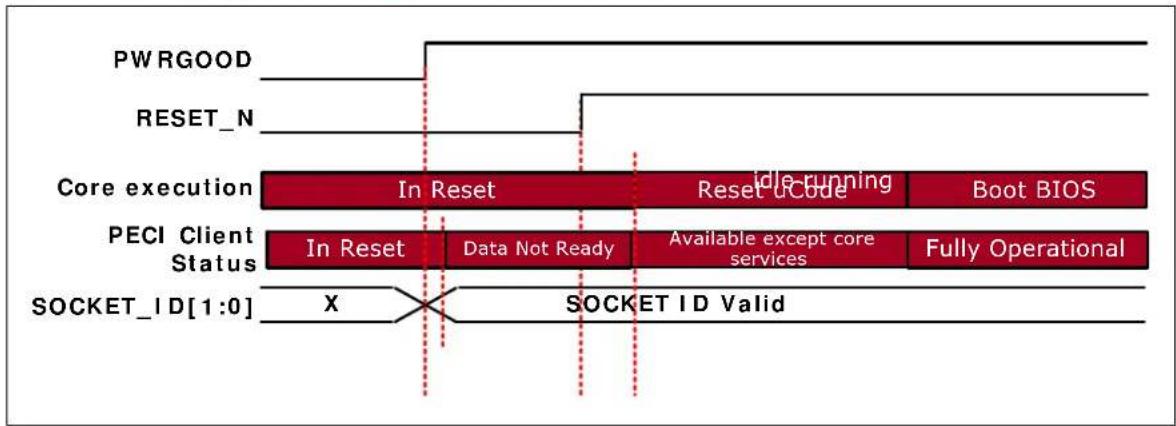
flowchart
graph TD
    A["PWRGOOD"] --> B["RESET_N"]
    B --> C["Core execution"]
    C --> D["In Reset"]
    D --> E["Reset uCode"]
    E --> F["Boot BIOS"]
    G["PECI Client Status"] --> H["In Reset"]
    H --> I["Data Not Ready"]
    I --> J["Available except core services"]
    J --> K["Fully Operational"]
    L["SOCKET_ID[1:0"]] --> M["X"]
    M --> N["SOCKET ID Valid"]
    style C fill:#f9f,stroke:#333
    style L fill:#f9f,stroke:#333
2.5.3.2 Device Discovery
The PECI client is available on all processors. The presence of a PECI enabled processor in a CPU socket can be confirmed by using the Ping() command described in Section 2.5.2.1. Positive identification of the PECI revision number can be achieved by issuing the GetDIB() command. The revision number acts as a reference to the PECI specification document applicable to the processor client definition. Please refer to Section 2.5.2.2 for details on GetDIB response formatting.
2.5.3.3 Client Addressing
The PECI client assumes a default address of 0x30. The PECI client address for the processor is configured through the settings of the SOCKET_ID[1:0] signals. Each processor socket in the system requires that the two SOCKET_ID signals be configured
to a different PECI addresses. Strapping the SOCKET_ID[1:0] pins results in the client addresses shown in Table 2-17. These package strap(s) are evaluated at the assertion of PWRGOOD (as depicted in Figure 2-49).
The client address may not be changed after PWRGOOD assertion, until the next power cycle on the processor. Removal of a processor from its socket or tri-stating a processor will have no impact to the remaining non-tri-stated PECI client addresses. Since each socket in the system should have a unique PECI address, the SOCKET_ID strapping is required to be unique for each socket.
Table 2-17. SOCKET ID Strapping
| SOCKET_ID[1] Strap SOCKET_ID[0] Strap PECI Client Address | ||
| Ground Ground | 0x30 | |
| Ground | V_TT | 0x31 |
| V_TT | Ground | 0x32 |
| V_TT | V_TT | 0x33 |
2.5.3.4 C-states
The processor PECI client may be fully functional in most core and package C-states.
- The Ping(), GetDIB(), GetTemp(), RdPkgConfig() and WrPkgConfig() commands have no measurable impact on CPU power in any of the core or package C-states.
- The RdIAMSR() command will complete normally unless the targeted core is in a C-state that is C3 or deeper. The PECI client will respond with a completion code of 0x82 (see Table 2-22 for definition) for RdIAMSR() accesses in core C-states that are C3 or deeper.
- The RdPCIConfigLocal(), WrPCIConfigLocal(), and RdPCIConfig() commands will not impact the core C-states but may have a measurable impact on the package C-state. The PECI client will successfully return data without impacting package C-state if the resources needed to service the command are not in a low power state.
- If the resources required to service the command are in a low power state, the PECI client will respond with a completion code of 0x82 (see Table 2-22 for definition). If this is the case, setting the "Wake on PECI" mode bit as described in Section 2.5.2.6 can cause a package 'pop-up' to the C2 state and enable successful completion of the command. The exact power impact of a pop-up to C2 will vary by product SKU, the C-state from which the pop-up is initiated and the negotiated PECI bit rate.
Table 2-18. Power Impact of PECI Commands vs. C-states
| Command | Power Impact |
| Ping() | Not measurable |
| GetDIB() | Not measurable |
| GetTemp() | Not measurable |
| RdPkgConfig() | Not measurable |
| WrPkgConfig() | Not measurable |
| RdIAMSR() | Not measurable. PECI client will not return valid data in core C-state that is C3 or deeper |
| RdPCIConfigLocal() | May require package 'pop-up' to C2 state |
| WrPCIConfigLocal() | May require package 'pop-up' to C2 state |
| RdPCIConfig() | May require package 'pop-up' to C2 state |
2.5.3.5 S-states
The processor PECI client is always guaranteed to be operational in the S0 sleep state.
- The Ping(), GetDIB(), GetTemp(), RdPkgConfig(), WrPkgConfig(), RdPCIConfigLocal() and WrPCIConfigLocal() will be fully operational in S0 and S1. Responses in S3 or deeper states are dependent on POWERGOOD assertion status.
- The RdPCIConfig() and RdiamSR() responses are guar anteed in S0 only. Behavior in S1 or deeper states is indeterminate.
- PECI behavior is indeterminate in the S3, S4 and S5 states and responses to PECI originator requests when the PECI client is in these states cannot be guaranteed.
2.5.3.6 Processor Reset
The processor PECI client is fully reset on all RESET_N assertions. Upon deassertion of RESET_N where power is maintained to the processor (otherwise known as a 'warm reset'), the following are true:
- The PECI client assumes a bus Idle state.
- The Thermal Filtering Constant is retained.
- PECI SOCKET_ID is retained.
- GetTemp() reading resets to 0x0000.
- Any transaction in progress is aborted by the client (as measured by the client no longer participating in the response).
- The processor client is otherwise reset to a default configuration.
PECI commands that utilize processor resources being reset will receive a 'resource unavailable' response till the reset sequence is completed.
2.5.3.7 System Service Processor (SSP) Mode Support
Sockets in SSP mode have limited PECI command support. Only the following PECI commands will be supported while in SSP mode. Other PECI commands are not guaranteed to complete in this mode.
- Ping
- RdPCIConfigLocal
- WrPCIConfigLocal (all uncore and IIO CSRs within the processor PCI configuration space will be accessible)
- RdPkgConfig (Index 0 only)
Sockets remain in SSP mode until the "Go" handshake is received. This is applicable to the following SSP modes.
2.5.3.7.1 BMC INIT Mode
The BMC INIT boot mode is used to provide a quick and efficient means to transfer responsibility for uncore configuration to a service processor like the BMC. In this mode, the socket performs a minimal amount of internal configuration and then waits for the BMC or service processor to complete the initialization.
2.5.3.7.2 Link Init Mode
In cases where the socket is not one QPI hop away from the Firmware Agent socket, or a working link to the Firmware Agent socket cannot be resolved, the socket is placed in Link Init mode. The socket performs a minimal amount of internal configuration and waits for complete configuration by BIOS.
2.5.3.8 Processor Error Handling
Availability of PECI services may be affected by the processor PECI client error status. Server manageability requirements place a strong emphasis on continued availability of PECI services to facilitate logging and debug of the error condition.
- Most processor PECI client services are available in the event of a CAT_ERR_N assertion though they cannot be guaranteed.
- The Ping(), GetDIB(), GetTemp(), RdPkgConfig() and Wr PkgConfig() commands will be serviced if the source of the CAT_ERR_N assertion is not in the processor power control unit hardware, firmware or associated register logic. Additionally, the RdPCIConfigLocal() and WrPCIConfigLocal() commands may also be serviced in this case.
- It is recommended that the PECI originator read In dex 0/Parameter 5 using the RdPkgConfig() command to debug the CAT_ERR_N assertion.
— The PECI client will return the 0x91 completion code if the CAT_ERR_N assertion is caused by the PCU hardware, firmware or associated logic errors. In such an event, only the Ping(), GetTemp() and GetDIB() PECI commands may be serviced. All other processor PECI services will be unavailable and further debug of the processor error status will not be possible.
- If the PECI client returns a passing completion code, the originator should use the response data to determine the cause of the CAT_ERR_N assertion. In such an event, it is also recommended that the PECI originator determine the exact suite of available PECI client services by issuing each of the PECI commands. The processor will issue 'timeout' responses for those services that may not be available.
- If the PECI client continues to return the 0x81 completion code in response to multiple retries of the RdPkgConfig() command, no PECI services, with the exception of the Ping(), GetTemp() and GetDIB(), will be guaranteed.
- The RdIAMSR() command may be serviced during a CAT_ERR_N assertion though it cannot be guaranteed.
2.5.3.9 Originator Retry and Timeout Policy
The PECI originator may need to retry a command if the processor PECI client responds with a 'response timeout' completion code or a bad Read FCS. In each instance, the processor PECI client may have started the operation but not completed it yet. When the 'retry' bit is set, the PECI client will ignore a new request if it exactly matches a previous valid request.
The processor PECI client will not clear the semaphore that was acquired to service the request until the originator sends the 'retry' request in a timely fashion to successfully retrieve the response data. In the absence of any automatic timeouts, this could tie up shared resources and result in artificial bandwidth conflicts.
2.5.3.10 Enumerating PECI Client Capabilities
The PECI host originator should be designed to support all optional but desirable features from all processors of interest. Each feature has a discovery method and response code that indicates availability on the destination PECI client.
The first step in the enumeration process would be for the PECI host to confirm the Revision Number through the use of the GetDIB() command. The revision number returned by the PECI client processor always maps to the revision number of the PECI specification that it is designed to The Minor Revision Number as described in Table 2-2 may be used to identify the subset of PECI commands that the processor in question supports for any major PECI revision.
The next step in the enumeration process is to utilize the desired command suite in a real execution context. If the Write FCS response is an Abort FCS or if the data returned includes an "Unknown/Invalid/Illegal Request" completion code (0x90), then the command is unsupported.
Enumerating known commands without real, execution context data, or attempting undefined commands, is dangerous because a write command could result in unexpected behavior if the data is not properly formatted. Methods for enumerating write commands using carefully constructed and innocuous data are possible, but are not guaranteed by the PECI client definition.
This enumeration procedure is not robust enough to detect differences in bit definitions or data interpretation in the message payload or client response. Instead, it is only designed to enumerate discrete features.
2.5.4 Multi-Domain Commands
The processor does not support multiple domains, but it is possible that future products will, and the following tables are included as a reference for domain-specific definitions.
Table 2-19. Domain ID Definition
| Domain ID Domain Number | |
| 0b01 0 | |
| 0b10 1 | |
Table 2-20. Multi-Domain Command Code Reference
| Command Name | Domain 0 Code | Domain 1 Code |
| GetTemp() | 0x01 | 0x02 |
| RdPkgConfig() | 0xa1 | 0xa2 |
| WrPkgConfig() | 0xa5 | 0xa6 |
| RdIAMSR() | 0xb1 | 0xb2 |
| RdPCIConfig() | 0x61 | 0x62 |
| RdPCIConfigLocal() | 0xe1 | 0xe2 |
| WrPCIConfigLocal() | 0xe5 | 0xe6 |
2.5.5 Client Responses
2.5.5.1 Abort FCS
The Client responds with an Abort FCS under the following conditions:
- The decoded command is not understood or not supported on this processor (this includes good command codes with bad Read Length or Write Length bytes).
- Assured Write FCS (AW FCS) failure. Under most circumstances, an Assured Write failure will appear as a bad FCS. However, when an originator issues a poorly formatted command with a miscalculated AW FCS, the client will intentionally abort the FCS in order to guarantee originator notification.
2.5.5.2 Completion Codes
Some PECI commands respond with a completion code byte. These codes are designed to communicate the pass/fail status of the command and may also provide more detailed information regarding the class of pass or fail. For all commands listed in Section 2.5.2 that support completion codes, the definition in the following table applies. Throughout this document, a completion code reference may be abbreviated with 'CC'.
An originator that is decoding these commands can apply a simple mask as shown in Table 2-21 to determine a pass or fail. Bit 7 is always set on a command that did not complete successfully and is cleared on a passing command.
Table 2-21. Completion Code Pass/ Fail Mask
| 0xxx xxxxb Command passed | |
| 1xxx xxxxb Command failed |
Table 2-22. Device Specific Completion Code (CC) Definition
| Completion Code | Description |
| 0x40 Command Passed | |
| CC: 0x80 | Response timeout. The processor was not able to generate the required response in a timely fashion. Retry is . |
| CC: 0x81 | Response timeout. The processor was not able to allocate resources for servicing this command. Retry is . |
| CC: 0x82 | The processor hardware resources required to service this command are in a low power state. Retry may be after modification of PECI wake mode behavior if . |
| CC: 0x83-8F | Reserved |
| CC: 0x90 | Unknown/Invalid/Illegal Request |
| CC: 0x91 | PECI control hardware, firmware or associated logic error. The processor is unable to process the request. |
| CC: 0x92-9F | Reserved |
Note:
The codes explicitly defined in Table 2-22 may be useful in PECI originator response algorithms. Reserved or undefined codes may also be generated by a PECI client device, and the originating agent must be capable of tolerating any code. The Pass/Fail mask defined in Table 2-21 applies to all codes, and general response policies may be based on this information. Refer to Section 2.5.6 for originator response policies and recommendations.
2.5.6 Originator Responses
The simplest policy that an originator may employ in response to receipt of a failing completion code is to retry the request. However, certain completion codes or FCS responses are indicative of an error in command encoding and a retry will not result in a different response from the client. Furthermore, the message originator must have a response policy in the event of successive failure responses. Refer to Table 2-22 for originator response guidelines.
Refer to the definition of each command in Section 2.5.2 for a specific definition of possible command codes or FCS responses for a given command. The following response policy definition is generic, and more advanced response policies may be employed at the discretion of the originator developer.
Table 2-23. Originator Response Guidelines
| Response After 1 Attempt After 3 Attempts | ||
| Bad FCS Retry Fail with PECI client device error. | ||
| Abort FCS Retry Fail with PECI client device error if command was not illegal or malformed. | ||
| CC: 0x8x | Retry | The PECI client has failed in its attempts to generate a response. Notify application layer. |
| CC: 0x9x | Abandon any further attempts and notify application layer | n/a |
| None (all 0's) | Force bus idle (drive low) for 1 mS and retry | Fail with PECI client device error. Client may not be alive or may be otherwise unresponsive (for example, it could be in RESET). |
| CC: 0x4x Pass n/a | ||
| Good FCS | Pass | n/a |
2.5.7 DTS Temperature Data
2.5.7.1 Format
The temperature is formatted in a 16-bit, 2's complement value representing a number of 1/64 degrees Celsius. This format allows temperatures in a range of ± 512^ to be reported to approximately a 0.016^ resolution.
Figure 2-50. Temperature Sensor Data Format
| MSBUpper nibble | MSBLower nibble | LSBUpper nibble | LSBLower nibble | ||||||||||||
| S | x | x | x | x | x | x | x | x | x | x | x | x | |||
| Sign | Integer Value (0-511) | Fractional Value (~0.016) | |||||||||||||
2.5.7.2 Interpretation
The resolution of the processor's Digital Thermal Sensor (DTS) is approximately 1°C, which can be confirmed by a RDMSR from the IA32_THERM_STATUS MSR where it is architecturally defined. The MSR read will return only bits [13:6] of the PECI temperature sensor data defined in Figure 2-50. PECI temperatures are sent through a configurable low-pass filter prior to delivery in the GetTemp() response data. The output of this filter produces temperatures at the full 1/64°C resolution even though the DTS itself is not this accurate.
Temperature readings from the processor are always negative in a 2's complement format, and imply an offset from the processor T_Prochot (PECI = 0). For example, if the processor T_Prochot is 100°C, a PECI thermal reading of -10 implies that the processor is running at approximately 10°C below T_Prochot or 90°C. PECI temperature readings are not reliable at temperatures above T_Prochot since the processor is outside its operating range and hence, PECI temperature readings are never positive.
The changes in PECI data counts are approximately linear in relation to changes in temperature in degrees Celsius. A change of '1' in the PECI count represents roughly a temperature change of 1 degree Celsius. This linearity is approximate and cannot be guaranteed over the entire range of PECI temperatures, especially as the offset from the maximum PECI temperature (zero) increases.
2.5.7.3 Temperature Filtering
The processor digital thermal sensor (DTS) provides an improved capability to monitor device hot spots, which inherently leads to more varying temperature readings over short time intervals. Coupled with the fact that typical fan speed controllers may only read temperatures at 4Hz, it is necessary for the thermal readings to reflect thermal trends and not instantaneous readings. Therefore, PECI supports a configurable low-pass temperature filtering function that is expressed by the equation:
$$ T _ {N} = (1 - \alpha) ^ {} T _ {N - 1} + \alpha^ {} T _ {\text { SAMPLE }} $$
where T_N and T_N-1 are the current and previous averaged PECI temperature values respectively, T_SAMPLE is the current PECI temperature sample value and the variable ' ' = 1/2^X , where 'X' is the 'Thermal Averaging Constant' that is programmable as described in Section 2.5.2.6.21.
2.5.7.4 Reserved Values
Several values well out of the operational range are reserved to signal temperature sensor errors. These are summarized in Table 2-24.
Table 2-24. Error Codes and Descriptions
| Error Code Description | |
| 0x8000 General Sensor Error (GSE) | |
| 0x8001 Reserved | |
| 0x8002 Sensor is operational, but has detected a temperature below its operational range (underflow) | |
| 0x8003-0x81ff Reserved | |
3 Technologies
3.1 Intel® Virtualization Technology (Intel® VT)
Intel® Virtualization Technology (Intel® VT) makes a single system appear as multiple independent systems to software. This allows multiple, independent operating systems to run simultaneously on a single system. Intel VT comprises technology components to support virtualization of platforms based on Intel architecture microprocessors and chipsets.
- Intel® Virtualization Technology (Intel® VT) for Intel® 64 and IA-32 Intel® Architecture (Intel® VT-x) adds hardware support in the processor to improve the virtualization performance and robustness. Intel VT-x specifications and functional descriptions are included in the Intel® 64 and IA-32 Architectures Software Developer's Manual, Volume 3B and is available at http://www.intel.com/products/processor/manuals/index.htm
- Intel® Virtualization Technology (Intel® VT) for Directed I/O (Intel® VT-d) adds processor and uncore implementations to support and improve I/O virtualization performance and robustness. The Intel VT-d spec and other Intel VT documents can be referenced at http://www.intel.com/technology/virtualization/index.htm
3.1.1 Intel ® VT-x Objectives
Intel VT-x provides hardware acceleration for virtualization of IA platforms. Virtual Machine Monitor (VMM) can use Intel VT-x features to provide improved reliable virtualized platform. By using Intel VT-x, a VMM is:
- Robust: VMMs no longer need to use par a-virtualization or binary translation. This means that they will be able to run off-the-shelf OS's and applications without any special steps.
- Enhanced: Intel VT enables VMMs to run 64-bit guest operating systems on IA x86 processors.
- More reliable: Due to the hardw are support, VMMs can now be smaller, less complex, and more efficient. This improves reliability and availability and reduces the potential for software conflicts.
- More secure: The use of hardw are transitions in the VMM strengthens the isolation of VMs and further prevents corruption of one VM from affecting others on the same system.
3.1.2 Intel ^® VT-x Features
The processor core supports the following Intel VT-x features:
• Extended Page Tables (EPT)
— hardware assisted page table virtualization
— eliminates VM exits from guest OS to the VMM for shadow page-table maintenance
• Virtual Processor IDs (VPID)
- Ability to assign a VM ID to tag processor core hardware structures (for example, TLBs)
— This avoids flushes on VM transitions to give a lower-cost VM transition time and an overall reduction in virtualization overhead.
• Guest Preemption Timer
— Mechanism for a VMM to preempt the execution of a guest OS after an amount of time specified by the VMM. The VMM sets a timer value before entering a guest
— The feature aids VMM developers in flexibility and Quality of Service (QoS) guarantees
- Descriptor-Table Exiting
— Descriptor-table exiting allows a VMM to protect a guest OS from internal (malicious software based) attack by preventing relocation of key system data structures like IDT (interrupt descriptor table), GDT (global descriptor table), LDT (local descriptor table), and TSS (task segment selector).
— A VMM using this feature can intercept (by a VM exit) attempts to relocate these data structures and prevent them from being tampered by malicious software.
- Pause Loop Exiting (PLE)
— PLE aims to improve virtualization performance and enhance the scaling of virtual machines with multiple virtual processors
— PLE attempts to detect lock-holder preemption in a VM and helps the VMM to make better scheduling decisions
• APIC Virtualization (APICv)
— APICv adds hardware support in the processor to reduce the overhead of virtual interrupt processing (APIC accesses and interrupt delivery). This benefits mostly interrupt intensive workloads.
— In a virtualized environment the virtual machine manager (VMM) must emulate nearly all guest OS accesses to the advanced programmable interrupt controller (APIC) registers which requires "VM exits" (time-consuming transitions to the VMM for emulation and back). These exits are a major source of overhead in a virtual environment. Intel's Advanced Programmable Interrupt Controller virtualization (APICv) reduces the number of exits by redirecting most guest OS APIC reads/writes to a virtual-APIC page to allow most reads to occur without VM exits.
3.1.3 Intel® VT-d Objectives
The key Intel VT-d objectives are domain-based isolation and hardware-based virtualization. A domain can be abstractly defined as an isolated environment in a platform to which a subset of host physical memory is allocated. Virtualization allows for the creation of one or more partitions on a single system. This could be multiple
partitions in the same operating system, or there can be multiple operating system instances running on the same system – offering benefits such as system consolidation, legacy migration, activity partitioning or security.
3.1.3.1 Intel VT-d Features Supported
The processor supports the following Intel VT-d features:
- Root entry, context entry, and default context
• Support for 4-K page sizes only - Support for register-based fault recording only (for single entry only) and support for MSI interrupts for faults
— Support for fault collapsing based on Requester ID
• Support for both leaf and non-leaf caching
- Support for boot protection of default page table
— Support for non-caching of invalid page table entries
- Support for hardware based flushing of translated but pending writes and pending reads upon IOTLB invalidation.
- Support for page-selective IOTLB invalidation.
- Support for ARI (Alternative Requester ID - a PCI SIG ECR for increasing the function number count in a PCIe device) to support IOV devices.
- Improved invalidation architecture
• End point caching support (ATS)
- Interrupt remapping
3.1.4 Intel® Virtualization Technology Processor Extensions
The processor supports the following Intel VT Processor Extensions features:
• Large Intel VT-d Pages
— Adds 2 MB and 1 GB page sizes to Intel VT-d implementations
— Matches current support for Extended Page Tables (EPT)
— Ability to share CPU's EPT page-table (with super-pages) with Intel VT-d
— Benefits:
• Less memory foot-print for I/O page-tables when using super-pages
- Potential for improved performance - Due to shorter page-walks, allows hardware optimization for IOTLB
- Transition latency reductions expected to improve virtualization performance without the need for VMM enabling. This reduces the VMM overheads further and increase virtualization performance.
3.2 Security Technologies
3.2.1 Intel® Trusted Execution Technology
Intel TXT defines platform-level enhancements that provide the building blocks for creating trusted platforms.
The Intel TXT platform helps to provide the authenticity of the controlling environment such that those wishing to rely on the platform can make an trust decision. The Intel TXT platform determines the identity of the controlling environment by accurately measuring and verifying the controlling software.
Another aspect of the trust decision is the ability of the platform to resist attempts to change the controlling environment. The Intel TXT platform will resist attempts by software processes to change the controlling environment or bypass the bounds set by the controlling environment.
Intel TXT is a set of extensions designed to provide a measured and controlled launch of system software that will then establish a protected environment for itself and any additional software that it may execute.
These extensions enhance two areas:
• The launching of the Measured Launched Environment (MLE).
• The protection of the MLE from potential corruption.
The enhanced platform provides these launch and control interfaces using Safer Mode Extensions (SMX).
The SMX interface includes the following functions:
• Measured/Verified launch of the MLE.
- Mechanisms to ensure the above measurement is protected and stored in a secure location.
- Protection mechanisms that allow the MLE to control attempts to m odify itself.
For more information refer to the Intel® Trusted Execution Technology Software Development Guide. For more information on Intel Trusted Execution Technology, see http://www.intel.com/technology/security/
3.2.2 Intel® Trusted Execution Technology – Server Extensions
- Software binary compatible with Intel® Trusted Execution Technology – Server Extensions
- Provides measurement of runtime firmware, including SMM
- Enables run-time firmware in trusted session: BIOS and SSP
• Covers support for existing and expected future Server RAS features - Only requires portions of BIOS to be trusted, for example, Option ROMs need not be trusted
• Supports S3 State without teardown: Since BIOS is part of the trust chain
3.2.3 AES Instructions
These instructions enable fast and secure data encryption and decryption, using the Advanced Encryption Standard (AES) which is defined by FIPS Publication number 197. Since AES is the dominant block cipher, and it is deployed in various protocols, the new instructions will be valuable for a wide range of applications.
The architecture consists of six instructions that offer full hardware support for AES. Four instructions support the AES encryption and decryption, and the other two instructions support the AES key expansion. Together, they offer a significant increase in performance compared to pure software implementations.
The AES instructions have the flexibility to support all three standard AES key lengths, all standard modes of operation, and even some nonstandard or future variants.
Beyond improving performance, the AES instructions provide important security benefits. Since the instructions run in data-independent time and do not use lookup tables, they help in eliminating the major timing and cache-based attacks that threaten table-based software implementations of AES. In addition, these instructions make AES simple to implement, with reduced code size. This helps reducing the risk of inadvertent introduction of security flaws, such as difficult-to-detect side channel leaks.
3.2.4 Execute Disable Bit
Intel's Execute Disable Bit functionality can help prevent certain classes of malicious buffer overflow attacks when combined with a supporting operating system.
- Allows the processor to classify areas in memory by where application code can execute and where it cannot.
- When a malicious worm attempts to insert code in the buffer, the processor disables code execution, preventing damage and worm propagation.
3.3 Intel ^® Secure Key
This was formerly known as Digital Random Number Generator (DRNG).
The processor supports an on-die digital random number generator (DRNG). This implementation is based on the ANSI X9.82 2007 draft and the NIST SP800-90 specification.
The X9.82 standard describes two components necessary to generate high quality random numbers: an Entropy Source and a Deterministic Random Bit Generator (DRBG). The Entropy Source is also referred to as a Non-Deterministic Random Bit Generator (NRBG).
3.4 Intel ^® OS Guard
This was formerly known as Supervisor Mode Execution Protection (SMEP)
Supervisor Mode Execution Protection Bit (SMEP) prevents execution and calls to the operating system by compromised application in the user mode or code pages. This also allows additional malware protection over existing Intel XD bit technology.
3.5 Intel® Hyper-Threading Technology
The processor supports Intel® Hyper-Threading Technology (Intel® HT Technology), which allows an execution core to function as two logical processors. While some execution resources such as caches, execution units, and buses are shared, each logical processor has its own architectural state with its own set of general-purpose registers and control registers. This feature must be enabled via the BIOS and requires operating system support.
For more information on Intel Hyper-Threading Technology, see http://www.intel.com/products/ht/hyperthreading_more.htm.
3.6 Intel ^® Turbo Boost Technology
Intel Turbo Boost Technology is a feature that allows the processor to opportunistically and automatically run faster than its rated operating frequency if it is operating below power, temperature, and current limits. The result is increased performance in multi-threaded and single threaded workloads. It should be enabled in the BIOS for the processor to operate with maximum performance.
3.6.1 Intel ^® Turbo Boost Operating Frequency
The processor's rated frequency assumes that all execution cores are running an application at the thermal design power (TDP). However, under typical operation, not all cores are active. Therefore most applications are consuming less than the TDP at the rated frequency. To take advantage of the available TDP headroom, the active cores can increase their operating frequency.
To determine the highest performance frequency amongst active cores, the processor takes the following into consideration:
- The number of cores operating in the C0 state.
• The estimated current consumption.
• The estimated power consumption.
• The die temperature.
Any of these factors can affect the maximum frequency for a given workload. If the power, current, or thermal limit is reached, the processor will automatically reduce the frequency to stay with its TDP limit.
Note: Intel Turbo Boost Technology is only active if the operating system is requesting the PO state. For more information on P-states and C-states refer to Section 4, "Power Management".
3.7 Enhanced Intel SpeedStep® Technology
The processor supports Enhanced Intel SpeedStep® Technology as an advanced means of enabling very high performance while also meeting the power-conservation needs of the platform.
Enhanced Intel SpeedStep Technology builds upon that architecture using design strategies that include the following:
- Separation between voltage and Frequency Changes. By stepping voltage up and down in small increments separately from frequency changes, the processor is able to reduce periods of system unavailability (which occur during frequency change). Thus, the system is able to transition between voltage and frequency states more often, providing improved power/performance balance.
- Clock Partitioning and Recovery. The bus clock continues running during state transition, even when the core clock and Phase-Locked Loop are stopped, which allows logic to remain active. The core clock is also able to restart more quickly under Enhanced Intel SpeedStep Technology.
For additional information on Enhanced Intel SpeedStep Technology see Section 4.2.1.
3.8 Intel® Intelligent Power Technology
Intel® Intelligent Power Technology conserves power while delivering advanced power-management capabilities at the rack, group, and data center level. Providing the highest system-level performance per watt with "Automated Low Power States" and "Integrated Power Gates". Improvements to this processor generation are:
• Intel Network Power Management Technology
• Intel Power Tuning Technology
For more information on Intel Intelligent Power Technology, see this link http://www.intel.com/technology/intelligentpower/.
3.9 Intel® Advanced Vector Extensions (Intel® AVX)
Intel® Advanced Vector Extensions (Intel® AVX) is a 256-bit vector SIMD extension of Intel Architecture that continues with the 3rd Generation Intel® Core™ Processor Family. Intel AVX accelerates the trend of parallel computation in general purpose applications like image, video, and audio processing, engineering applications such as 3D modeling and analysis, scientific simulation, and financial analysts.
Intel AVX is a comprehensive ISA extension of the Intel 64 Architecture. The main elements of Intel AVX are:
- Support for wider vector data (up to 256-bit) for floating-point computation.
- Efficient instruction encoding scheme that supports 3 operand syntax and headroom for future extensions.
- Flexibility in programming environment, ranging from branch handling to relaxed memory alignment requirements.
- New data manipulation and arithmetic compute primitives, including broadcast, permute, fused-multiply-add, and so forth.
- Floating point bit depth conversion (Float 16)
- A group of 4 instructions that accelerate data conversion between 16-bit floating point format to 32-bit and vice versa.
- This benefits image processing and graphical applications allowing compression of data so less memory and bandwidth is required.
The key advantages of Intel AVX are:
- Pe rformance - Intel AVX can accelerate application performance via data parallelism and scalable hardware infrastructure across existing and new application domains:
— 256-bit vector data sets can be processed up to twice the throughput of 128-bit data sets.
— Application performance can scale up with number of hardware threads and number of cores.
— Application domain can scale out with advanced platform interconnect fabrics, such as Intel QPI.
- Power Efficiency - Intel AVX is extremely power efficient. Incremental power is insignificant when the instructions are unused or scarcely used. Combined with the high performance that it can deliver, applications that lend themselves heavily to using Intel AVX can be much more energy efficient and realize a higher performance-per-watt.
- Extensibility - Intel AVX has built-in extensibility for the future vector extensions:
— OS context management for vector-widths beyond 256 bits is streamlined.
— Efficient instruction encoding allows unlimited functional enhancements:
- Vector width support beyond 256 bits
• 256-bit Vector Integer processing
• Additional computational and/or data manipulation primitives.
- Compatibility - Intel AVX is backward compatible with previous ISA extensions including Intel SSE4:
— Existing Intel® SSE applications/library can:
- Run unmodified and benefit from processor enhancements
- Recompile existing Intel® SSE intrinsic using compilers that generate Intel AVX code
• Inter-operate with library ported to Intel AVX
— Applications compiled with Intel AVX can inter-operate with existing Intel SSE libraries.
3.10 Intel® Dynamic Power Technology
Intel® Dynamic Power technology (Memory Power Management) is a platform feature with the ability to transition memory components into various low power states based on workload requirements. The processor platform supports Dynamic CKE (hardware assisted) and Memory Self Refresh (software assisted). For further details refer to the ACPI Specifications for Memory Power Management document.
4 Power Management
This chapter provides information on the following power management topics:
• A C P I States
- System States
- Processor Core/Package States
- Integrated Memory Controller (IMC) and System Memory States
- Direct Media Interface Gen 2 (DMI2)/PCI Express* Link States
• Intel QuickPath Interconnect States
4.1 ACPI States Supported
The ACPI states supported by the processor are described in this section.
4.1.1 System States
Table 4-1. System States
| State Description | |
| G0/S0 Full On | |
| G1/S3-Cold | Suspend-to-RAM (STR). Context saved to memory. |
| G1/S4 Suspend-to-Disk (STD) | All power lost (except wakeup on PCH). |
| G2/S5 | Soft off. All power lost (except wakeup on PCH). Total reboot. |
| G3 | Mechanical off. All power removed from system. |
4.1.2 Processor Package and Core States
Table 4-2 lists the package C-state support as: 1) the shallowest core C-state that allows entry into the package C-state, 2) the additional factors that will restrict the state from going any deeper, and 3) the actions taken with respect to the Ring Vcc, PLL state and LLC.
Table 4-3 lists the processor core C-states support.
Table 4-2. Package C-State Support (Sheet 1 of 2)
| Package C-State | Core States | Limiting Factors | Retention and PLL-Off | LLC Fully Flushed | Notes1 |
| PC0 - Active | CC0 | N/A | No | No | 2 |
| PC2 - Snoopable Idle | CC3-CC6 | PCIe/PCH and Remote Socket SnoopsPCIe/PCH and Remote Socket AccessesInterrupt response time requirementDMI SidebandsConfiguration Constraints | VccMinFreq = MinFreqPLL = ON | No | 2 |
Table 4-2. Package C-State Support (Sheet 2 of 2)
| Package C-State | Core States | Limiting Factors | Retention and PLL-Off | LLC Fully Flushed | Notes1 |
| PC3 - Light Retention | at least one Core in C3 | Core - stateSnoop Response TimeInterrupt Response TimeNon Snoop Response Time | Vcc = retentionPLL = OFF | No 2,3,4,5 | |
| PC6 - Deeper Retention | CC6- • LLC | ways openSnoop Response TimeNon Snoop Response TimeInterrupt Response Time | Vcc = retentionPLL = OFF | No 2,3,4,5 |
Notes:
- Processor Core and Package C7 is not supported.
- All package states are defined to be "E" states - such that they always exit back into the LFM point upon execution resume
- The mapping of actions for PC3, and PC6 are suggestions - microcode will dynamically determine which actions should be taken based on the desired exit latency parameters.
- CC3/CC6 will all use a voltage below the VccMin operational point; The exact voltage selected will be a function of the snoop and interrupt response time requirements made by the devices (PCIe* and DMI) and the operating system.
- The processor supports retention voltage during package C3 and package C6.
Table 4-3. Core C-State Support
| Core C-State | Global Clock | PLL | L1/ L2 Cache | Core VCC | Context |
| CC0 | Running | On | Coherent | Active | Maintained |
| CC1 | Stopped | On | Coherent | Active | Maintained |
| CC1E | Stopped | On | Coherent | Request LFM | Maintained |
| CC3 | Stopped | On | Flushed to LLC | Request Retention | Maintained |
| CC6 | Stopped | Off | Flushed to LLC | Power Gate | Flushed to LLC |
4.1.3 Integrated Memory Controller States
Table 4-4. System Memory Power States (Sheet 1 of 2)
| State | Description |
| Power Up/Normal Operation | CKE asserted. Active Mode, highest power consumption. |
| CKE Power Down | Opportunistic, per rank control after idle time:Active Power Down (APD) (default mode)— CKE de-asserted. Power savings in this mode, relative to active idle state is about 55% of the memory power. Exiting this mode takes 3 - 5 DCLK cycles.Pre-charge Power Down Fast Exit (PPDF)— CKE de-asserted. DLL-On. Also known as Fast CKE. Power savings in this mode, relative to active idle state is about 60% of the memory power. Exiting this mode takes 3 - 5 DCLK cycles.Pre-charge Power Down Slow Exit (PPDS)— CKE de-asserted. DLL-Off. Also known as Slow CKE. Power savings in this mode, relative to active idle state is about 87% of the memory power. Exiting this mode takes 3 - 5 DCLK cycles until the first command is allowed and 16 cycles until first data is allowed.Register CKE Power Down:— IBT-ON mode: Both CKE's are de-asserted, the Input Buffer Terminators (IBTs) are left "on".— IBT-OFF mode: Both CKE's are de-asserted, the Input Buffer Terminators (IBTs) are turned "off". |
Table 4-4. System Memory Power States (Sheet 2 of 2)
| State Description | |
| Self-Refresh CKE de-asserted. | In this mode, no transactions are executed and the system memory consumes the minimum possible power. Self refresh modes apply to all memory channels for the processor.IO-MDLL Off: Option that sets the IO master DLL off when self refresh occurs.PLL Off: Option that sets the PLL off when self refresh occurs.In addition, the register component found on registered DIMMs (RDIMMs) is complemented with the following power down states:— Clock Stopped Power Down with IBT-On— Clock Stopped Power Down with IBT-Off |
4.1.4 DMI2/ PCI Express\* Link States
Table 4-5. DMI2/ PCI Express* Link States
| State Description | |
| L0 Full on – Active transfer state. | |
| L1 Lowest Active State Power | Management (ASPM) - Longer exit latency. |
Note: L1 is only supported when the DMI2/PCI Express* port is operating as a PCI Express* port.
4.1.5 Intel® QuickPath Interconnect States
Table 4-6. Intel® QPI States
| State Description | |
| L0 Link on. This is the power on active working state, | |
| L0p A lower power state from | L0 that reduces the link from full width to half width |
| L1 A low power state with longer latency and lower power than L0s and is activated in conjunction with package C-states below C0. | |
4.1.6 G, S, and C State Combinations
Table 4-7. G, S and C State Combinations
| Global (G) State | Sleep (S) State | Processor Core (C) State | Processor State | System Clocks | Description |
| G0 | S0 | C0 | Full On | On | Full On |
| G0 | S0 | C1/C1E | Auto-Halt | On | Auto-Halt |
| G0 | S0 | C3 | Deep Sleep | On | Deep Sleep |
| G0 S0 | C6 | Deep Power Down | On | Deep Power Down | |
| G1 S3 | Power off | Off, except RTC Suspend to | RAM | ||
| G1 S4 | Power off | Off, except RTC Suspend to | Disk | ||
| G2 | S5 | Power off | Off, except RTC | Soft Off | |
| G3 N/A | Power off | Power off | Hard off | ||
4.2 Processor Core/ Package Power Management
While executing code, Enhanced Intel SpeedStep® Technology optimizes the processor's frequency and core voltage based on workload. Each frequency and voltage operating point is defined by ACPI as a P-state. When the processor is not executing code, it is idle. A low-power idle state is defined by ACPI as a C-state. In general, lower power C-states have longer entry and exit latencies.
4.2.1 Enhanced Intel SpeedStep® Technology
The following are the key features of Enhanced Intel SpeedStep® Technology:
- Multiple frequency and voltage points for optimal performance and power efficiency. These operating points are known as P-states.
- Frequency selection is software controlled by writing to processor MSRs. The voltage is optimized based on temperature, leakage, power delivery loadline and dynamic capacitance.
— If the target frequency is higher than the current frequency, V_CC is ramped up to an optimized voltage. This voltage is signaled by the SVID Bus to the voltage regulator. Once the voltage is established, the PLL locks on to the target frequency.
— If the target frequency is lower than the current frequency, the PLL locks to the target frequency, then transitions to a lower voltage by signaling the target voltage on the SVID Bus.
— All active processor cores share the same frequency and voltage. In a multi-core processor, the highest frequency P-state requested amongst all active cores is selected.
— Software-requested transitions are accepted at any time. The processor has a new capability from the previous processor generation, it can preempt the previous transition and complete the new request without waiting for this request to complete.
- The processor controls voltage ramp rates internally to ensure glitch-free transitions.
- Because there is low transition latency between P-states, a significant number of transitions per second are possible.
4.2.2 Low-Power Idle States
When the processor is idle, low-power idle states (C-states) are used to save power. More power savings actions are taken for numerically higher C-states. However, higher C-states have longer exit and entry latencies. Resolution of C-states occurs at the thread, processor core, and processor package level. Thread level C-states are available if Intel Hyper-Threading Technology is enabled. Entry and exit of the C-States at the thread and core level are shown in Figure 4-2.
Figure 4-1. Idle Power Management Breakdown of the Processor Cores
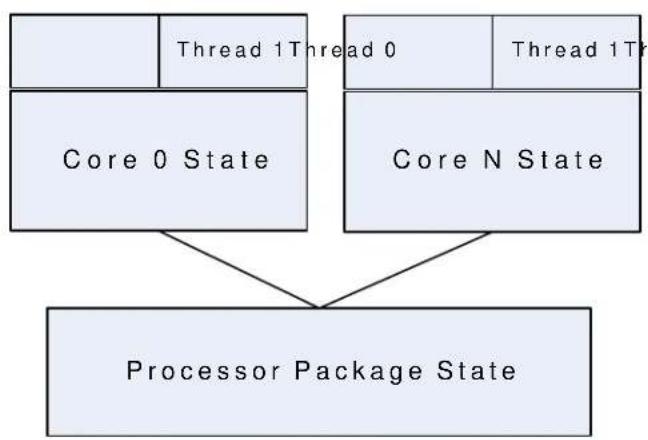
flowchart
graph TD
    A["Core 0 State"] --> C["Processor Package State"]
    B["Core N State"] --> C["Processor Package State"]
    D["Thread 1 Thread 0"] --> A["Core 0 State"]
    E["Thread 1 Thread 0"] --> B["Core N State"]
Figure 4-2. Thread and Core C-State Entry and Exit
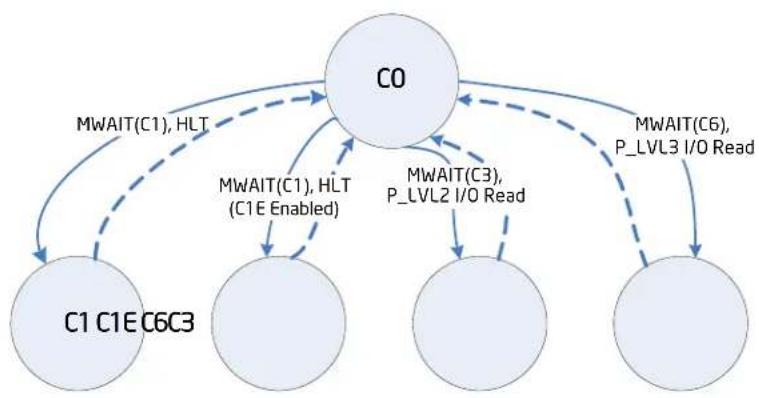
flowchart
graph TD
    CO["CO"] -->|MWAIT(C1), HLT| C1["C1 E C6 C3"]
    CO -->|MWAIT(C1), HLT (C1E Enabled)| C1
    CO -->|MWAIT(C3), P_LVL2 I/O Read| C2
    CO -->|MWAIT(C6), P_LVL3 I/O Read| C3
While individual threads can request low power C-states, power saving actions only take place once the core C-state is resolved. Core C-states are automatically resolved by the processor. For thread and core C-states, a transition to and from C0 is required before entering any other C-state.
4.2.3 Requesting Low-Power Idle States
The core C-state will be C1E if all actives cores have also resolved a core C1 state or higher.
The primary software interfaces for requesting low power idle states are through the MWAIT instruction with sub-state hints and the HLT instruction (for C1 and C1E). However, software may make C-state requests using the legacy method of I/O reads
from the ACPI-defined processor clock control registers, referred to as P_LVLx. This method of requesting C-states provides legacy support for operating systems that initiate C-state transitions via I/O reads.
For legacy operating systems, P_LVLx I/O reads are converted within the processor to the equivalent MWAIT C-state request. Therefore, P_LVLx reads do not directly result in I/O reads to the system. The feature, known as I/O MWAIT redirection, must be enabled in the BIOS.
Note: The P_LVLx I/O Monitor address needs to be set up before using the P_LVLx I/O read interface. Each P-LVLx is mapped to the supported MWAIT(Cx) instruction as follows.
Table 4-8. P_LVLx to MWAIT Conversion
| P_LVLx MW | AIT(Cx) Notes | |
| P_LVL2 | MWAIT(C3) | The P_LVL2 base address is defined in the PMG_IO_CAPTURE MSR, described in the Intel® Xeon® Processor E5 v2 Product Family Processor Datasheet, Volume Two: Registers. |
| P_LVL3 | MWAIT(C6) | C6. No sub-states allowed. |
The BIOS can write to the C-state range field of the PMG_IO_CAPTURE MSR to restrict the range of I/O addresses that are trapped and emulate MWAIT like functionality. Any P_LVLx reads outside of this range does not cause an I/O redirection to MWAIT(Cx) like request. They fall through like a normal I/O instruction.
Note: When P_LVLx I/O instructions are used, MWAIT substates cannot be defined. The MWAIT substate is always zero if I/O MWAIT redirection is used. By default, P_LVLx I/O redirections enable the MWAIT 'break on EFLAGS.IF' feature which triggers a wakeup on an interrupt even if interrupts are masked by EFLAGS.IF.
4.2.4 Core C-states
The following are general rules for all core C-states, unless specified otherwise:
- A core C-State is determined by the lowest numeric thread state (e.g., Thread 0 requests C1E while Thread 1 requests C3, resulting in a core C1E state). See Table 4-7.
• A core transitions to C0 state when:
— an interrupt occurs.
— there is an access to the monitored address if the state was entered via an MWAIT instruction.
- For core C1/C1E, and core C 3, an interrupt directed toward a single thread wakes only that thread. However, since both threads are no longer at the same core C-state, the core resolves to C0.
- An interrupt only wakes the target thread for both C3 and C6 states. Any interrupt coming into the processor package may wake any core.
4.2.4.1 Core C0 State
The normal operating state of a core where code is being executed.
4.2.4.2 Core C1/C1E State
C1/C1E is a low power state entered when all threads within a core execute a HLT or MWAIT(C1/C1E) instruction.
A System Management Interrupt (SMI) handler returns execution to either Normal state or the C1/C1E state. See the Intel® 64 and IA-32 Architecture Software Developer's Manual, Volume 3A/3B: System Programmer's Guide for more information.
While a core is in C1/C1E state, it processes bus snoops and snoops from other threads. For more information on C1E, see Section 4.2.5.2, "Package C1/C1E".
To operate within specification, BIOS must enable the C1E feature for all installed processors. Please refer to the Intel® Xeon® Processor E5 v2 Product Family Processor Datasheet, Volume Two: Registers for more details.
4.2.4.3 Core C3 State
Individual threads of a core can enter the C3 state by initiating a P_LVL2 I/O read to the P_BLK or an MWAIT(C3) instruction. A core in C3 state flushes the contents of its L1 instruction cache, L1 data cache, and L2 cache to the shared L3 cache, while maintaining its architectural state. All core clocks are stopped at this point. Because the core's caches are flushed, the processor does not wake any core that is in the C3 state when either a snoop is detected or when another core accesses cacheable memory.
4.2.4.4 Core C6 State
Individual threads of a core can enter the C6 state by initiating a P_LVL3 I/O read or an MWAIT(C6) instruction. Before entering core C6, the core will save its architectural state to a dedicated SRAM. Once complete, a core will have its voltage reduced to zero volts. In addition to flushing core caches core architecture state is saved to the uncore. Once the core state save is completed, core voltage is reduced to zero. During exit, the core is powered on and its architectural state is restored.
4.2.4.5 Delayed Deep C-States
The Delayed Deep C-states (DDCst) feature on this processor replaces the "C-state auto-demotion" scheme used in the previous processor generation. Deep C-states are defined as CC3 through CC6 (refer to Table 4-3 for supported deep c-states).
The Delayed Deep C-states are intended to allow a staged entry into deeper C-states whereby the processor enters a lighter, short exit-latency C-state (core C1) for a period of time before committing to a long exit-latency deep C-state (core C3 and core C6). This is intended to allow the processor to get past the cluster of short-duration idles, providing each of those with a very fast wake-up time, but to still get the power benefit of the deep C-states on the longer idles.
4.2.5 Package C-States
The processor supports C0, C1/C1E, C2, C3, and C6 power states. The following is a summary of the general rules for package C-state entry. These apply to all package C-states unless specified otherwise:
- A package C-state request is determined by the lowest numerical core C-state amongst all cores.
- A package C-state is automatically resolved by the processor depending on the core idle power states and the status of the platform components.
— Each core can be at a lower idle power state than the package if the platform does not grant the processor permission to enter a requested package C-state.
— The platform may allow additional power savings to be realized in the processor.
- For package C-states, the processor is not required to enter C0 before entering any other C-state.
The processor exits a package C-state when a break event is detected. Depending on the type of break event, the processor does the following:
- If a core break event is received, the target core is activated and the break event message is forwarded to the target core.
— If the break event is not masked, the target core enters the core C0 state and the processor enters package C0.
— If the break event is masked, the processor attempts to re-enter its previous package state.
- If the break event was due to a memory access or snoop request.
— But the platform did not request to keep the processor in a higher package C-state, the package returns to its previous C-state.
— And the platform requests a higher power C-state, the memory access or snoop request is serviced and the package remains in the higher power C-state.
The package C-states fall into two categories: independent and coordinated. C0/C1/C1E are independent, while C2/C3/C6 are coordinated.
Package C-states are based on exit latency requirements which are accumulated from the PCIe* devices, PCH, and software sources. The level of power savings that can be achieved is a function of the exit latency requirement from the platform. As a result, there is no fixed relationship between the coordinated C-state of a package, and the power savings that will be obtained from the state. Coordinated package C-states offer a range of power savings which is a function of the guaranteed exit latency requirement from the platform.
There is also a concept of Execution Allowed (EA), when EA status is 0, the cores in a socket are in C3 or a deeper state, a socket initiates a request to enter a coordinated package C-state. The coordination is across all sockets and the PCH.
Table 4 -9 shows an example of a dual-core processor package C-state resolution. Figure 4-3 summarizes package C-state transitions with package C2 as the interim between PC0 and PC1 prior to PC3 and PC6.
Table 4-9. Coordination of Core Power States at the Package Level
| Package C-State | Core 1 | ||||
| C0 C1 C3 C6 | |||||
| Core 0 | C0 | C0 C0 C0 C0 | |||
| C1 | C0 | C1^1 | C1^1 | C1^1 | |
| C3 | C0 | C1^1 | C3 C3 | ||
| C6 | C0 | C1^1 | C3 C6 | ||
- The package C-state will be C1E if all actives cores have resolved a core C1 state or higher.
Figure 4-3. Package C-State Entry and Exit
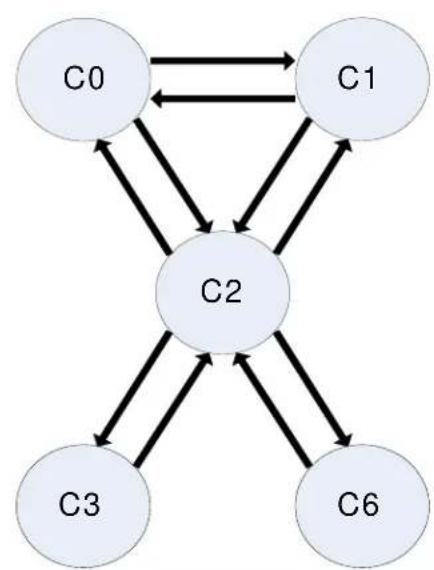
flowchart
graph TD
    C0 --> C1
    C0 --> C2
    C1 --> C2
    C2 --> C0
    C2 --> C1
    C2 --> C3
    C2 --> C6
    C3 --> C2
    C6 --> C2
4.2.5.1 Package C0
The normal operating state for the processor. The processor remains in the normal state when at least one of its cores is in the C0 or C1 state or when the platform has not granted permission to the processor to go into a low power state. Individual cores may be in lower power idle states while the package is in C0.
4.2.5.2 Package C1/C1E
No additional power reduction actions are taken in the package C1 state. However, if the C1E substate is enabled, the processor automatically transitions to the lowest supported core clock frequency, followed by a reduction in voltage. Autonomous power reduction actions which are based on idle timers, can trigger depending on the activity in the system.
The package enters the C1 low power state when:
- At least one core is in the C1 state.
- The other cores are in a C1 or lower power state.
The package enters the C1E state when:
- All cores have directly requested C1E via MWAIT(C1) with a C1E sub-state hint.
- All cores are in a power state lower that C1/C1E but the package low power state is limited to C1/C1E via the PMG_CST_CONFIG_CONTROL MSR.
- All cores have requested C1 using HLT or MWAIT(C1) and C1E auto-promotion is enabled in POWER_CTL.
No notification to the system occurs upon entry to C1/C1E.
4.2.5.3 Package C2 State
Package C2 state is an intermediate state which represents the point at which the system level coordination is in progress. The package cannot reach this state unless all cores are in at least C3.
The package will remain in C2 when:
- it is awaiting for a coordinated response
- the coordinated exit latency requirements are too stringent for the package to take any power saving actions
If the exit latency requirements are high enough the package will transition to C3 or C6 depending on the state of the cores.
4.2.5.4 Package C3 State
A processor enters the package C3 low power state when:
- At least one core is in the C3 state.
- The other cores are in a C3 or lower power state, and the processor has been granted permission by the platform.
• L3 shared cache retains context and becomes inaccessible in this state. - Additional power savings actions, as allowed by the exit latency requirements, include putting Intel QPI and PCIe* links in L1, the uncore is not available, further voltage reduction can be taken.
In package C3, the ring will be off and as a result no accesses to the LLC are possible. The content of the LLC is preserved.
4.2.5.5 Package C6 State
A processor enters the package C6 low power state when:
- At least one core is in the C6 state.
- The other cores are in a C6 or lower power state, and the processor has been granted permission by the platform.
• L3 shared cache retains context and becomes inaccessible in this state. - Additional power savings actions, as allowed by the exit latency requirements, include putting Intel QPI and PCIe* links in L1, the uncore is not available, further voltage reduction can be taken.
In package C6 state, all cores have saved their architectural state and have had their core voltages reduced to zero volts. The LLC retains context, but no accesses can be made to the LLC in this state, the cores must break out to the internal state package C2 for snoops to occur.
4.2.6 Package C-State Power Specifications
The table below lists the processor package C-state power specifications for various processor SKUs. For details on processor SKU information, see Table 1-1, "HCC, MCC, and LCC SKU Table Summary.".
Table 4-10. Package C-State Power Specifications
| TDP SKUs C1 E (W) | ^1 | C3 (W) ^2 | C6 (W) ^2 |
| 150W WS (8cores) 58 27 14 | |||
| 130W 1U (12-cores) 47 22 15 | |||
| 130W 1U (10-cores) 47 22 14 | |||
| 130W 1U and 2U (8-cores) 53 35 14 | |||
| 130W 2U (6-cores) 53 28 14 | |||
| 130W 2U (4-cores) 53 28 13 | |||
| 130W 1S WS (6/4-cores) | 53 28 13 | ||
| 130W 1S WS (8-cores) | 53 28 14 | ||
| 115W (12-cores) | 47 22 15 | ||
| 115W (10-cores) | 47 22 14 | ||
| 95W (10cores) | 47 22 14 | ||
| 95W (8cores) (E5-4610 v2) | 47 22 21 | ||
| 95W (8cores) | 48 22 14 | 18 (E5-2640 v2) | |
| 95W (6/4-cores) | 47 22 13 | ||
| 80W (6/4-cores) | 42 30 13 | 21 (E5-2620 v2)21 (E5-2603 v2) | |
| 70W (10cores) | 39 20 13 | ||
| 60W (6cores) | 38 20 12 | ||
| LV95W (10cores) | 47 22 14 | ||
| LV70W (10/8-cores) | 39 20 13 | ||
| LV50W (6cores) | 21 13 12 |
Notes:
-
Package C1E power specified at Tcase=60 °C
-
Package C3/C6 power specified at Tcase = 50 °C
4.2.7 Processor Package Power Specifications
Processor package power, P_max , is defined by the maximum instantaneous power at the socket and is reported by the PACKAGE_POWER_SKU MSR/CSR Registers. For details on processor SKU information, see Table 1-1, "HCC, MCC, and LCC SKU Table Summary.".
Table 4-11. Processor Package Power P max
| TDP SKUs | P_max (W) |
| 150W WS (8cores) | 230 |
| 130W 1U (12/10/8-cores) | 200 |
| 130W 2U (8-cores) | 200 |
| 130W 2U (6/4-cores) | 175 |
Table 4-11. Processor Package Power P_
| TDP SKUs | P_max (W) |
| 130W 1S WS (8-cores) 200 | |
| 130W 1S WS (6-cores) 190 | |
| 130W 1S WS (4-cores) 175 | |
| 115W (12/10-cores) 180 | |
| 95W (10/8-cores) | 150 |
| 95W (6/4-cores) | 130 |
| 80W (6/4-cores) | 110 |
| 70W (10-cores) | 120 |
| 60W (6-cores) | 100 |
| LV95W (10-cores) | 150 |
| LV70W (10/8-cores) | 120 |
| LV50W (6-cores) | 75 |
4.3 System Memory Power Management
The DDR3 power states can be summarized as the following:
• Normal operation (highest power consumption).
- CKE Power-Down: Opportunistic, per rank control after idle time. There may be different levels.
- Active Power - Down.
— Precharge Power-Down with Fast Exit.
— Precharge power Down with Slow Exit.
- Self Refresh: In this mode no transaction is executed. The DDR consumes the minimum possible power.
4.3.1 CKE Power-Down
The CKE input land is used to enter and exit different power-down modes. The memory controller has a configurable activity timeout for each rank. Whenever no reads are present to a given rank for the configured interval, the memory controller will transition the rank to power-down mode.
The memory controller transitions the DRAM to power-down by de-asserting CKE and driving a NOP command. The memory controller will tri-state all DDR interface lands except CKE (de-asserted) and ODT while in power-down. The memory controller will transition the DRAM out of power-down state by synchronously asserting CKE and driving a NOP command.
When CKE is off the internal DDR clock is disabled and the DDR power is significantly reduced.
The DDR defines three levels of power-down:
- Active power-down: This mode is entered if there are open pages when CKE is de-asserted. In this mode the open pages are retained. Existing this mode is 3 - 5 DCLK cycles.
- Precharge power-down fast exit: This mode is entered if all banks in DDR are precharged when de-asserting CKE. Existing this mode is 3 - 5 DCLK cycles.
Difference from the active power-down mode is that when waking up all page-buffers are empty.
- Precharge power-down slow exit: In this mode the data-in DLL's on DDR are off. Existing this mode is 3 - 5 DCLK cycles until the first command is allowed, but about 16 cycles until first data is allowed.
4.3.2 Self Refresh
The Power Control Unit (PCU) may request the memory controller to place the DRAMs in self refresh state. Self refresh per channel is supported. The BIOS can put the channel in self-refresh if software remaps memory to use a subset of all channels. Also processor channels can enter self refresh autonomously without PCU instruction when the package is in a package C0 state.
4.3.2.1 Self Refresh Entry
Self refresh entrance can be either disabled or triggered by an idle counter. Idle counter always clears with any access to the memory controller and remains clear as long as the memory controller is not drained. As soon as the memory controller is drained, the counter starts counting, and when it reaches the idle-count, the memory controller will place the DRAMs in self refresh state.
Power may be removed from the memory controller core at this point. But V_CCD supply (1.5 V or 1.35 V) to the DDR IO must be maintained.
4.3.2.2 Self Refresh Exit
Self refresh exit can be either a message from an external unit (PCU in most cases, but also possibly from any message-channel master) or as reaction for an incoming transaction.
Here are the proper actions on self refresh exit:
- CK is enabled, and four CK cycles driven.
- When proper skew between Address/Command and CK are established, assert CKE.
- Issue NOPs for tXSRD cycles.
- Issue ZQCL to each rank.
- The global scheduler will be enabled to issue commands.
4.3.2.3 DLL and PLL Shutdown
Self refresh, according to configuration, may be a trigger for master DLL shut-down and PLL shut-down. The master DLL shut-down is issued by the memory controller after the DRAMs have entered self refresh.
The PLL shut-down and wake-up is issued by the PCU. The memory controller gets a signal from PLL indicating that the memory controller can start working again.
4.3.3 DRAM I/O Power Management
Unused signals are tristated to save power. This includes all signals associated with an unused memory channel.
The I/O buffer for an unused signal should be tristated (output driver disabled), the input receiver (differential sense-amp) should be disabled. The input path must be gated to prevent spurious results due to noise on the unused signals (typically handled automatically when input receiver is disabled).
4.4 DMI2/ PCI Express\* Power Management
Active State Power Management (ASPM) support using L1 state, L0s is not supported.
5 Thermal Management Specifications
5.1 Package Thermal Specifications
The processor requires a thermal solution to maintain temperatures within operating limits. Any attempt to operate the processor outside these limits may result in permanent damage to the processor and potentially other components within the system, see section Section 7.7.1, "Storage Condition Specifications". Maintaining the proper thermal environment is key to reliable, long-term system operation.
A complete solution includes both component and system level thermal management features. Component level thermal solutions can include active or passive heatsinks attached to the processor integrated heat spreader (IHS). Typical system level thermal solutions may consist of system fans combined with ducting and venting.
This section provides data necessary for developing a complete thermal solution. For more information on designing a component level thermal solution, refer to the Intel® Xeon® Processor E5-1600/2600/4600 and E5-1600 v2/E5-2600 v2 Product Families Thermal/Mechanical Design Guide.
5.1.1 Thermal Specifications
To allow optimal operation and long-term reliability of Intel processor-based systems, the processor must remain within the minimum and maximum case temperature ( T_CASE ) specifications as defined by the applicable thermal profile. Thermal solutions not designed to provide sufficient thermal capability may affect the long-term reliability of the processor and system. For more details on thermal solution design, please refer to the Intel® Xeon® Processor E5-1600/2600/4600 and E5-1600 v2/E5-2600 v2 Product Families Thermal/Mechanical Design Guide.
The processors implement a methodology for managing processor temperatures which is intended to support acoustic noise reduction through fan speed control and to assure processor reliability. Selection of the fan speed is based on the relative temperature data reported by the processor's Platform Environment Control Interface (PECI) as described in Section 2.5, "Platform Environment Control Interface (PECI)".
If the DTS value is less than T_CONTROL , then the case temperature is permitted to exceed the Thermal Profile, but the DTS value must remain at or below TCONTROL.
For T_CASE implementations, if DTS is greater than TCONTROL, then the case temperature must meet the T_CASE based Thermal Profiles.
For DTS implementations:
- T_CASE thermal profile can be ignored during processor run time.
- If DTS is greater than Tcontrol then follow DTS thermal profile specifications for fan speed optimization.
The temperature reported over PECI is always a negative value and represents a delta below the onset of thermal control circuit (TCC) activation, as indicated by PROCHOT_N (see Section 7, "Electrical Specifications"). Systems that implement fan speed control must be designed to use this data. Systems that do not alter the fan speed need to guarantee the case temperature meets the thermal profile specifications.
The processor thermal profiles for planned SKUs are summarized in Section 5.1.3, "Processor Operational Thermal Specifications". Thermal profiles ensure adherence to Intel reliability requirements.
Thermal Profile 2U is representative of a volumetrically unconstrained thermal solution (that is, industry enabled 2U heatsink). With adherence to the thermal profile, it is expected that the Thermal Control Circuit (TCC) would be activated for very brief periods of time when running the most power intensive applications.
Thermal Profile 1U is indicative of a constrained thermal environment (that is, 1U form factor). Because of the reduced cooling capability represented by this thermal solution, the probability of TCC activation and performance loss is increased. Additionally, utilization of a thermal solution that does not meet Thermal Profile 1U will violate the thermal specifications and may result in permanent damage to the processor. Refer to the Intel® Xeon® Processor E5-1600/2600/4600 and E5-1600 v2/E5-2600 v2 Product Families Thermal/Mechanical Design Guide for details on system thermal solution design, thermal profiles and environmental considerations.
The upper point of the thermal profile consists of the Thermal Design Power (TDP) and the associated T_CASE value. It should be noted that the upper point associated with Thermal Profile 1U.
(x = TDP and y = T_CASE_MAX_B @ TDP) represents a thermal solution design point. In actuality the processor case temperature will not reach this value due to TCC activation.
For Embedded Servers, Communications and storage markets Intel has plan SKU's that support Thermal Profiles with nominal and short-term conditions for products intended for NEBS level 3 thermal excursions. For these SKU's operation at either the nominal or short-term thermal profiles should result in virtually no TCC activation. Thermal Profiles for these SKU's are found in Section 5.1.4, "Embedded Server Thermal Profiles".
Intel recommends that complete thermal solution designs target the Thermal Design Power (TDP). The Adaptive Thermal Monitor feature is intended to help protect the processor in the event that an application exceeds the TDP recommendation for a sustained time period. To ensure maximum flexibility for future requirements, systems should be designed to the Flexible Motherboard (FMB) guidelines, even if a processor with lower power dissipation is currently planned. The Adaptive Thermal Monitor feature must be enabled for the processor to remain within its specifications.
5.1.2 T CASE and DTS Based Thermal Specifications
To simplify compliance to thermal specifications at processor run time, the processor has added a Digital Thermal Sensor (DTS) based thermal specification. Digital Thermal Sensor reports a relative die temperature as an offset from TCC activation temperature. T_CASE thermal based specifications are used for heat sink sizing and DTS based specs are used for acoustic and fan speed optimizations. For the processor family, firmware (for example, BMC or other platform management devices) will have DTS based specifications for all SKUs programmed by the customer. Some SKUs at a sharing the same TDP may share a common T_CASE thermal profile but they will have separate T_DTS based thermal profiles.
The processor fan speed control is managed by comparing DTS thermal readings via PECI against the processor-specific fan speed control reference point, or Tcontrol. Both Tcontrol and DTS thermal readings are accessible via the processor PECI client. At a one time readout only, the Fan Speed Control firmware will read the following:
• TEMPERATURE_TARGET MSR
• Tcontrol via PECI - RdPkgConfig()
• TDP via PECI - RdPkgConfig()
- Core Count - RdPCIConfigLocal()
DTS PECI commands will also support DTS temperature data readings. Please see Section 2.5.7, "DTS Temperature Data" for PECI command details.
Also, refer to the Intel® Xeon® Processor E5-1600/2600/4600 and E5-1600 v2/E5-2600 v2 Product Families Thermal/Mechanical Design Guide for details on DTS based thermal solution design considerations.
5.1.3 Processor Operational Thermal Specifications
Each SKU has a unique thermal profile that ensures reliable operation for the intended form factor over the processor's service life. These specifications are based on final silicon characterization.
The 130W 1S WS SKUs, which are part of the Intel® Xeon® processor E5-1600 v2 product family, are intended for single processor workstations and utilize workstation specific use conditions for reliability assumptions.
The 150W WS SKU, which is part of the Intel® Xeon® processor E5-2600 v2 product family, is intended for dual processor workstations and utilizes workstation specific use conditions for reliability assumptions.
5.1.3.1 Minimum operating case temperature
Minimum case operating temperature is specified at 5°C for every processor SKU.
5.1.3.2 Maximum operating case temperature thermal profiles
Temperature values are specified at VCC_MAX for all processor frequencies. Systems must be designed to ensure the processor is not to be subjected to any static VCC and ICC combination wherein VCC exceeds VCC_MAX at specified ICC. Please refer to the electrical loadline specifications in Chapter 7.
Thermal Design Power (TDP) should be used for processor thermal solution design targets. TDP is not the maximum power that the processor can dissipate. TDP is measured at specified maximum T_CASE .
Power specifications are defined at all VID values found in Table 7-3. The processor may be delivered under multiple VIDs for each frequency. Implementation of a specified thermal profile should result in virtually no TCC activation. Furthermore, utilization of thermal solutions that do not meet the specified thermal profile will result in increased probability of TCC activation and may incur measurable performance loss. Refer to the Intel® Xeon® Processor E5-1600/2600/4600 and E5-1600 v2/E5-2600 v2 Product Families Thermal/Mechanical Design Guide for system and environmental implementation details.
Each case temperature thermal profile is unique to each TDP and core count combination. These T_CASE profiles are fully defined by the simple linear equation:
$$ T _ {C A S E} = P S I _ {C A} * P + T _ {L A} $$
Where:
PSI_CA is the Case-to-Ambient thermal resistance of the processor thermal solution.
T_LA is the Local Ambient temperature.
P is the processor power dissipation.
Table 5-1 provides the PSICA and TLA parameters that define T_CASE thermal profile for each TDP/Core count combination. Figure 5-1 illustrates the general form of the resulting linear graph resulting from T_CASE = PSI_CA * P + T_LA .
Table 5-1. T Case Temperature Thermal Specifications
| TDP (W) Model Number | Core Count | T_LA (°C) | PSI _CA (°C/W) | Minimum T_CASE (°C) | Maximum T_CASE (°C) | |
| 150W WS E5-2687W v2 8 39.5 0.217 | 5.0 72.0 | |||||
| 130W 1U E5-2697 v2 12 56.5 0.227 5.0 86.0 | ||||||
| E5-2690 v2 10 56.5 0.242 5.0 88.0 | ||||||
| E5-4627 v2 8 56.5 0.242 5.0 88.0 | ||||||
| 130W 2U E5-2667 v2 8 49.8 0.186 5.0 74.0 | ||||||
| E5-2643 v2 6 | ||||||
| E5-2637 v2 4 50.1 0.199 5.0 76.0 | ||||||
| 130W 1S WS | E5-1680 v2 8 53.5 0.242 5.0 85.0 | |||||
| E5-1660 v2 E5-1650 v2 | 6 42.6 | 0.211 5.0 70.0 | ||||
| E5-1620 v2 4 | ||||||
| 115W 1U E5-2695 v2 E5-4657L v2 | 12 55.0 | 0.226 5.0 81.0 | ||||
| E5-2680 v2 E5-2670 v2 | 10 54.6 | 0.239 5.0 82.0 | ||||
| E5-4657L v2 12 55.0 0.226 5.0 81.0 | ||||||
| 95W 1U E5-2660 v2 10 52.0 0.242 5.0 75.0 | ||||||
| E5-2650 v2 E5-2640 v2 | 8 | |||||
| E5-4610 v2 8 51.8 0.223 5.0 73.0 | ||||||
| E5-4650 v2 E5-4640 v2 E5-4620 v2 | 10/8 | 52.0 0.242 5.0 75.0 | ||||
| E5-4607 v2 E5-4603 v2 | 6/4 | 52.6 0.257 5.0 77.0 | ||||
| 80W 1U E5-2630 v2 E5-2620 v2 | 6 50.5 | 0.257 5.0 71.0 | ||||
| E5-2609 v2 E5-2603 v2 | 4 | |||||
| 70W 1U E5-2650L v2 | 10 48.5 0.236 | 5.0 65.0 | ||||
| 60W 1U E5-2630L v2 6 47.9 0.252 5.0 63.0 | ||||||
Figure 5-1. T Case Temperature Thermal Profile
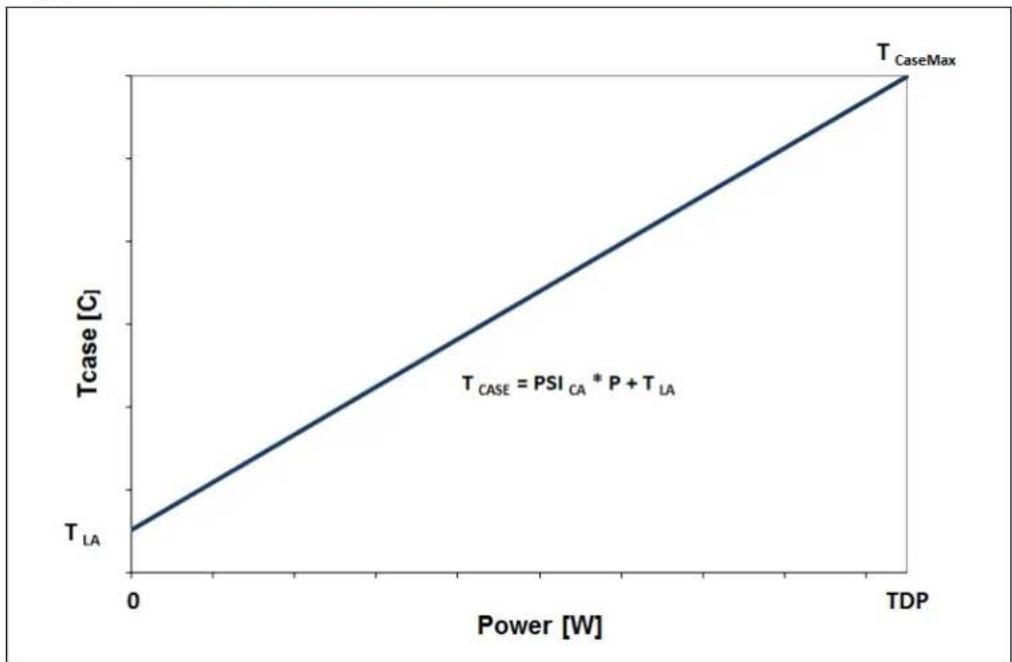
line
| Power [W] | TCase [C] | | --------- | --------- | | 0 | T_LA | | TDP | T_CaseMax |5.1.3.3 Digital Thermal Sensor (DTS) thermal profiles
Each DTS thermal profile is unique to each TDP and core count combination. These T_DTS profiles are fully defined by the simple linear equation:
$$ T _ {D T S} = P S I _ {P A} ^ {*} P + T _ {L A} $$
Where:
PSI_PA is the Processor-to-Ambient thermal resistance of the processor thermal solution.
T_LA is the Local Ambient temperature.
P is the processor power dissipation.
Table 5-2 provides the PSI_PA and T_LA parameters that define T_DTS thermal profile for each TDP/Core count combination. Figure 5-2 illustrates the general form of the resulting linear graph resulting from T_DTS = PSI_PA * P + T_LA .
5.1.3.4 Digital Thermal Sensor (STS) Specifications
Table 5-2. Digital Thermal Sensor (DTS) Specification Summary (Sheet 1 of 2)
| TDP (W) Model Number | Core Count | T_LA (°C) PSI | _PA (°C/W) | Maximum T_DTS (°C) | |
| 150W WS E5-2687W v2 8 39.5 0.353 92.4 | |||||
| 130W 1U E5-2697 v2 | 12 | 56.5 0.320 98.1 | |||
| E5-2690 v2 | 10 | 56.5 0.353 | 102.4 | ||
| E5-4627 v2 | 8 56.5 0.372 | 104.9 | |||
Table 5-2. Digital Thermal Sensor (DTS) Specification Summary (Sheet 2 of 2)
| TDP (W) Model Number | Core Count | T_LA (°C) | PSI_PA (°C/W) | Maximum T_DTS (°C) | |
| 130W 2U E5-26 | 667 v2 8 49.8 0.317 | 91.0 | |||
| E5-2643 v2 6 49.8 | 0.359 96.5 | ||||
| E5-2637 v2 4 50.1 | 0.422 105.0 | ||||
| 130W 1S WS | E5-1680 v2 | 8 53.5 0.373 | 102.0 | ||
| E5-1660 v2E5-1650 v2 | 6 42.6 0.400 | 94.6 | |||
| E5-1620 v2 4 42.6 | 0.480 105.0 | ||||
| 115W 1U | E5-2695 v2E5-4657L v2 | 12 55.0 0.317 | 91.4 | ||
| E5-2680 v2E5-2670 v2 | 10 54.6 0.345 | 94.2 | |||
| 95W 1U | E5-2660 v2E5-4650 v2E5-4640 v2 | 10 52.0 0.348 | 85.1 | ||
| E5-4610 v2 8 51.8 | 0.345 84.6 | ||||
| E5-2650 v2E5-2640 v2E5-4620 v2 | 8 | 52.0 | 0.381 | 8 | |
| E5-4607 v2 6 52.6 | 0.422 92.7 | ||||
| E5-4603 v2 4 52.6 | 0.495 99.6 | ||||
| 80W 1U | E5-2630 v2E5-2620 v2 | 6 50.5 0.416 | 83.7 | ||
| E5-2609 v2E5-2603 v2 | 4 50.5 0.474 | 88.4 | |||
| 70W 1U E5-26 | 50L v2 10 48.5 0.330 | 71.6 | |||
| 60W 1U E5-26 | 30L v2 6 47.9 0.396 | 71.6 | |||
Figure 5-2. Digital Thermal Sensor DTS Thermal Profile
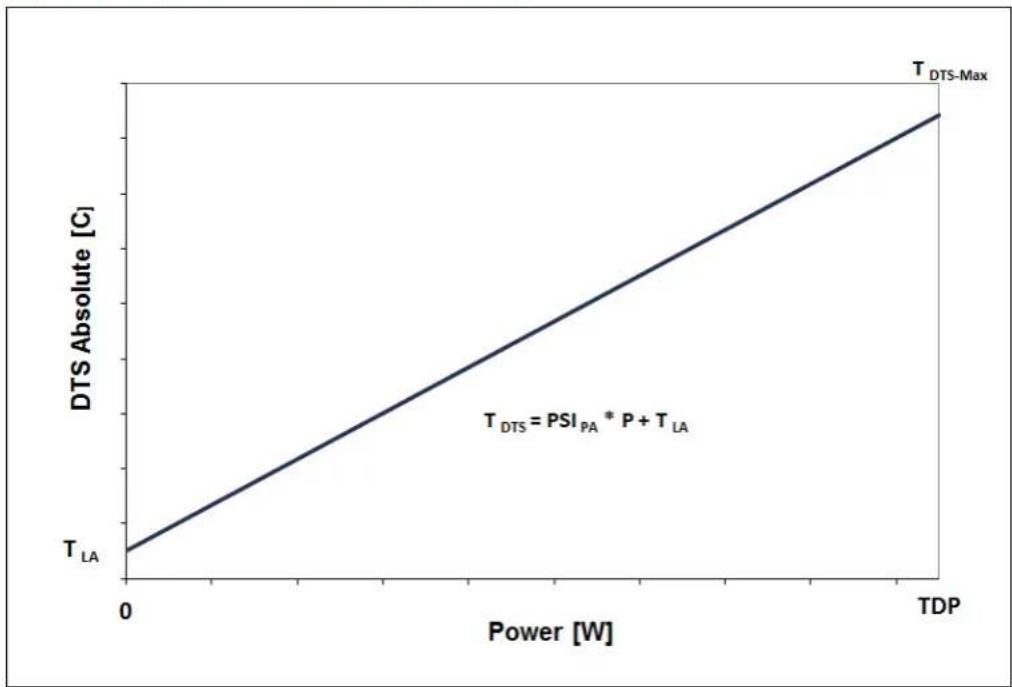
line
| Power [W] | DTS Absolute [C] | | --------- | ---------------- | | 0 | T_LA | | TDP | T_DTS-Max |5.1.4 Embedded Server Thermal Profiles
Network Equipment Building System (NEBS) is the most common set of environmental design guidelines applied to telecommunications equipment in the United States. Embedded server SKU's target operation at higher case temperatures and/or NEBS thermal profiles for embedded communications server and storage form factors. The term "Embedded" is used to refer to those segments collectively. Thermal profiles in this section pertain only to those specific Embedded SKU's.
The Nominal Thermal Profile must be used for standard operating conditions or for products that do not require NEBS Level 3 compliance.
The Short-Term Thermal Profile may only be used for short-term excursions to higher ambient operating temperatures, not to exceed 96 hours per instance, 360 hours per year, and a maximum of 15 instances per year, as intended by NEBS Level 3. Operation at the Short-Term Thermal Profile for durations exceeding 360 hours per year violate the processor thermal specifications and may result in permanent damage to the processor.
Implementation of the defined thermal profile should result in virtually no TCC activation. Refer to the Intel® Xeon® Processor E5-1600/2600/4600 and E5-1600 v2/E5-2600 v2 Product Families Thermal/Mechanical Design Guide for system and environmental implementation details.
5.1.4.1 Embedded Operating Case Temperature Thermal Profiles
Thermal Design Power (TDP) should be used for processor thermal solution design targets. TDP is not the maximum power that the processor can dissipate. TDP is measured at specified maximum T_CASE .
Power specifications are defined at all VID values found in Table 7-3. The processor may be delivered under multiple VIDs for each frequency. Implementation of a specified thermal profile should result in virtually no TCC activation. Failure to comply with the specified thermal profile will result in increased probability of TCC activation and may incur measurable performance loss. Refer to the Intel® Xeon® Processor E5-1600 v2/E5-2600 v2/E5-4600 v2 Product Families Thermal/Mechanical Design Guide for system and environmental implementation details.
Each case temperature thermal profile is unique to each TDP and core count combination. These T_CASE profiles are fully defined by the simple linear equation:
$$ T _ {C A S E} = P S I _ {C A} ^ {*} P + T _ {L A} $$
Where:
PSI_CA is the Case-to-Ambient thermal resistance of the processor thermal solution.
T_LA is the Local Ambient nominal temperature.
P is the processor power dissipation.
The Short-Term thermal profile provides for a 15^ C rise of temperature above the nominal profile due to scenarios such as fan failure or A/C failure. Short-term excursions to higher ambient operating temperatures are strictly limited 96 hours per instance, 360 hours per year, and a maximum of 15 instances per year as intended by NEBS Level 3.
T_LA-ST designates the Local Ambient temperature for Short-Term operation.
Table 5-3 provides the PSI_CA and T_LA parameters that define T_CASE thermal profile for each TDP/Core count combination. Figure 5-3 illustrates the general form of the resulting linear graph resulting from T_CASE = PSI_CA * P + T_LA .
Table 5-3. Embedded T Case Temperature Thermal Specifications
| TDP (W) | Model Number | Core Count | T_LA (°C) | T_LA-ST (°C) | PSI_CA (°C/W) | Minimum T_CASE (°C) | Nominal Maximum T_CASE (°C) | Short-Term Maximum T_CASE (°C) |
| LV95W | E5-2658 v2 | 10 | 51 | 66 | 0.235 | 5.0 | 73.3 | 88.3 |
| LV70W | E5-2648L v2E5-4624L v2 | 10 | 49 64 | 0.403 | 5.0 | 77.2 | 92.2 | |
| E5-2628L v2 | 8 | |||||||
| LV50W | E5-2618L v2 | 6 | 52 | 67 | 0.541 | 5.0 | 79.1 | 94.1 |
Figure 5-3. Embedded Case Temperature Thermal Profile
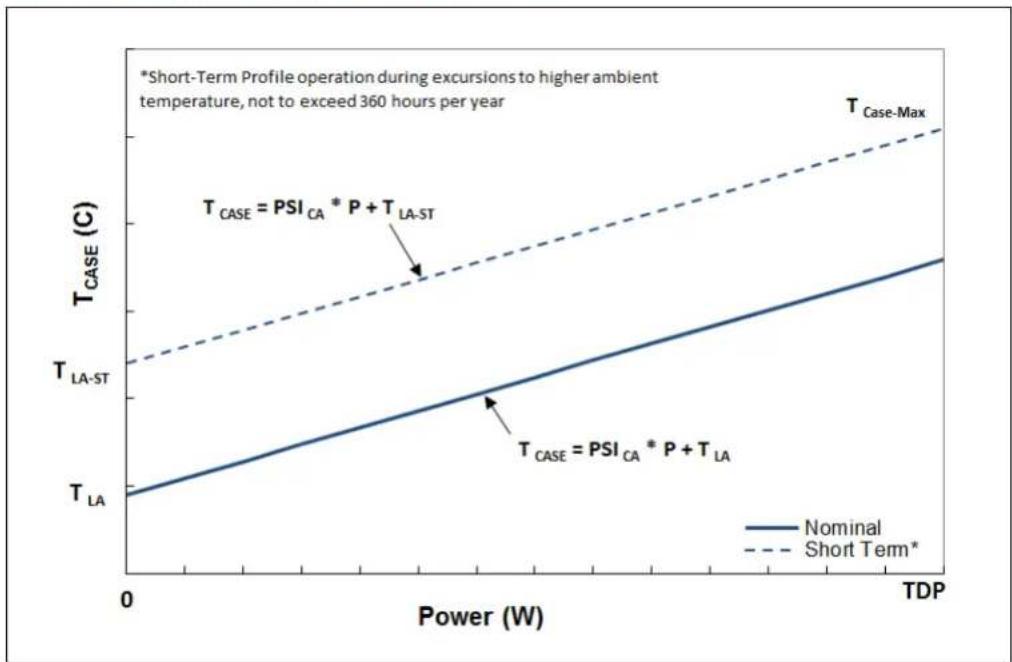
line
| Power (W) | Nominal T_CASE (C) | Short Term* T_CASE (C) | |-----------|-------------------|------------------------| | 0 | T_LA | T_LA-ST | | T_DP | T_CASE | T_Case-Max |5.1.4.2 Embedded Digital Thermal Sensor (DTS) thermal profiles
The thermal solution is expected to be developed in accordance with the Tcase thermal profile. Operational compliance monitoring of thermal specifications and fan speed modulation may be done via the DTS based thermal profile.
Each DTS thermal profile is unique to each TDP and core count combination. These T_DTS profiles are fully defined by the simple linear equation:
$$ T _ {D T S} = P S I _ {P A} ^ {*} P + T _ {L A} $$
Where:
PSI_PA is the Processor-to-Ambient thermal resistance of the processor thermal solution.
T_LA is the Local Ambient temperature for the Nominal thermal profile.
T_LA-ST designates the Local Ambient temperature for Short-Term operation.
P is the processor power dissipation.
Table 5-4 provides the PSI_PA and T_LA parameters that define T_DTS thermal profile for each TDP/Core count combination. Figure 5-4 illustrates the general form of the resulting linear graph resulting from T_DTS = PSI_PA * P + T_LA .
The slope of a DTS profile assumes full fan speed which is not required over much of the power range. Tcontrol is the temperature above which fans must be at maximum speed to meet the thermal profile requirements. Tcontrol is different for each SKU and may be slightly above or below T_DTS-Max of the DTS nominal thermal profile for a particular SKU. At many power levels on most embedded SKU's, temperatures of the nominal profile are less than Tcontrol as indicated by the blue shaded region in the DTS
profile graph of Figure 5-4. As a further simplification, operation at DTS temperatures up to Tcontrol is permitted at all power levels. Compliance to the DTS profile is required for any temperatures exceeding Tcontrol.
Table 5-4. Embedded DTS Thermal Specifications
| TDP (W) | Model Number | Core Count | T_LA (°C) T | _LA-ST (°C) | PSI_PA (°C/W) | Nominal Maximum T_DTS (°C) | Short-Term Maximum T_DTS (°C) |
| LV95W E5 | -2658 v2 10 51 | 66 0.336 82.9 | 97.9 | ||||
| LV70W | E5-2648L v2E5-4624L v2 | 10 49 | 64 0.489 83.2 | 98.2 | |||
| LV70W | E5-2628L v2 | 8 | 49 | 64 | 0.503 | 84.2 | 99.2 |
| LV50W | E5-2618L v2 | 6 | 52 | 67 | 0.644 | 84.2 | 99.2 |
Figure 5-4. Embedded DTS Thermal Profile
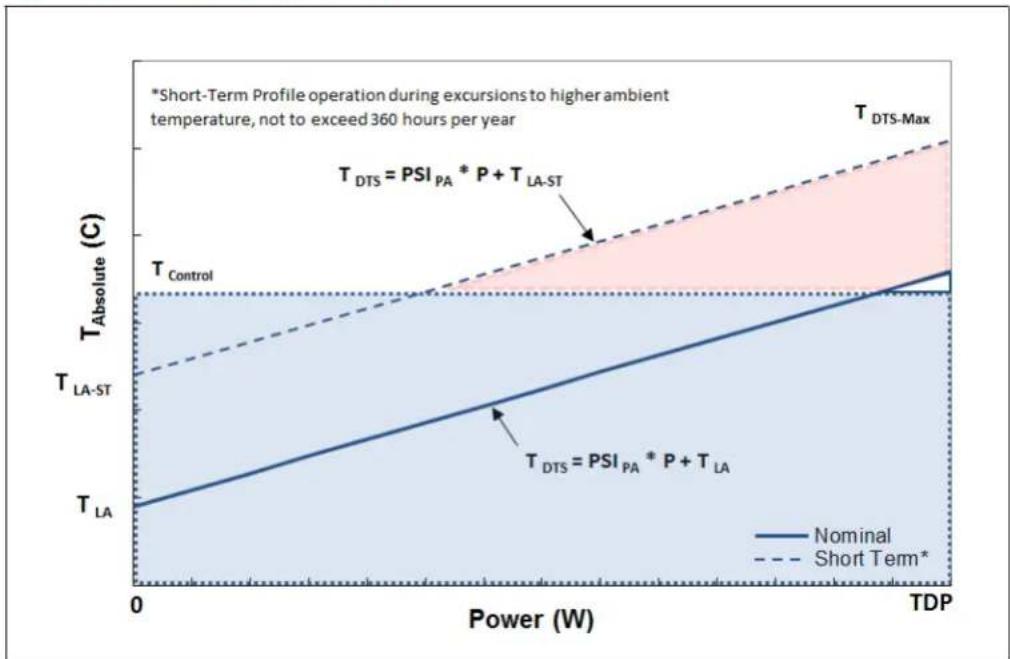
line
| Power (W) | T_Absolute (C) - Nominal | T_Absolute (C) - Short Term* | |-----------|---------------------------|-------------------------------| | 0 | T_LA | T_LA-ST | | T_DTS | T_DTS = PSI_PA * P + T_LA | T_DTS-Max |5.1.5 Thermal Metrology
The minimum and maximum case temperatures ( T_CASE ) are measured at the geometric top center of the processor integrated heat spreader (IHS). Figure 5-5 illustrates the location where T_CASE temperature measurements should be made. For detailed guidelines on temperature measurement methodology, refer to the Intel® Xeon® Processor E5-1600/2600/4600 and E5-1600 v2/E5-2600 v2 Product Families Thermal/Mechanical Design Guide.
Figure 5-5. Case Temperature (T CASE) Measurement Location
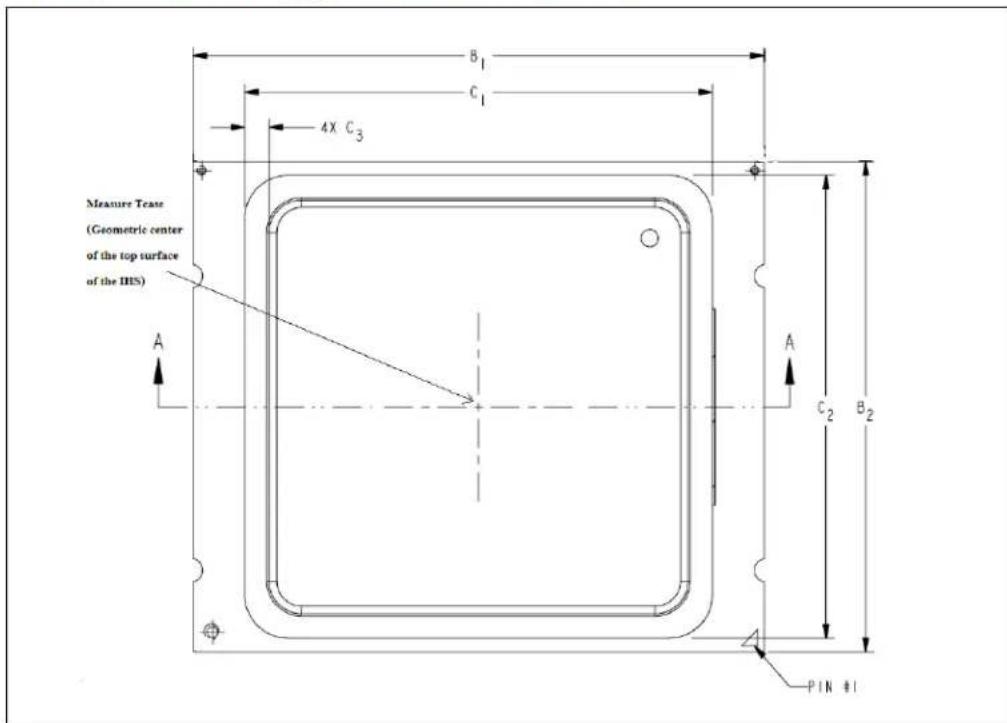
Notes:
-
Figure is not to scale and is for reference only.
-
This is an example for package size 52.5 x 45 mm.
-
B1: Max = 52.57 mm, Min = 52.43 mm.
-
B2: Max = 45.07 mm, Min = 44.93 mm.
-
C1: Max = 43.1 mm, Min = 42.9 mm.
-
C2: Max = 42.6 mm, Min = 42.4 mm.
-
C3: Max = 2.35 mm, Min = 2.15 mm.
5.2 Processor Core Thermal Features
5.2.1 Processor Temperature
A new feature in the processor is a software readable field in the TEMPERATURE_TARGET MSR register that contains the minimum temperature at which the TCC will be activated and PROCHOT_N will be asserted. The TCC activation temperature is calibrated on a part-by-part basis and normal factory variation may result in the actual TCC activation temperature being higher than the value listed in the register. TCC activation temperatures may change based on processor stepping, frequency or manufacturing efficiencies.
5.2.2 Adaptive Thermal Monitor
The Adaptive Thermal Monitor feature provides an enhanced method for controlling the processor temperature when the processor reaches its maximum operating temperature. Adaptive Thermal Monitor uses Thermal Control Circuit (TCC) activation to reduce processor power via a combination of methods. The first method (Frequency/SVID control) involves the processor adjusting its operating frequency (via the core ratio multiplier) and input voltage (via the SVID signals). This combination of
reduced frequency and voltage results in a reduction to the processor power consumption. The second method (clock modulation) reduces power consumption by modulating (starting and stopping) the internal processor core clocks. The processor intelligently selects the TCC method to use on a dynamic basis. BIOS is not required to select a specific method.
The Adaptive Thermal Monitor feature must be enabled for the processor to be operating within specifications. Snooping and interrupt processing are performed in the normal manner while the TCC is active.
With a properly designed and characterized thermal solution, it is anticipated that the TCC would be activated for very short periods of time when running the most power intensive applications. The processor performance impact due to these brief periods of TCC activation is expected to be so minor that it would be immeasurable. An under-designed thermal solution that is not able to prevent excessive activation of the TCC in the anticipated ambient environment may cause a noticeable performance loss, and in some cases may result in a T_c that exceeds the specified maximum temperature which may affect the long-term reliability of the processor. In addition, a thermal solution that is significantly under-designed may not be capable of cooling the processor even when the TCC is active continuously. Refer to the Intel® Xeon® Processor E5-1600/2600/4600 and E5-1600 v2/E5-2600 v2 Product Families Thermal/Mechanical Design Guide for information on designing a compliant thermal solution.
The duty cycle for the TCC, when activated by the Thermal Monitor, is factory configured and cannot be modified. The Thermal Monitor does not require any additional hardware, software drivers, or interrupt handling routines.
5.2.2.1 Frequency/ SVID Control
The processor uses Frequency/SVID control whereby TCC activation causes the processor to adjust its operating frequency (via the core ratio multiplier) and VCC input voltage (via the SVID signals). This combination of reduced frequency and voltage results in a reduction to the processor power consumption.
This method includes multiple operating points, each consisting of a specific operating frequency and voltage. The first operating point represents the normal operating condition for the processor. The remaining points consist of both lower operating frequencies and voltages. When the TCC is activated, the processor automatically transitions to the new lower operating frequency. This transition occurs very rapidly (on the order of microseconds).
Once the new operating frequency is engaged, the processor will transition to the new core operating voltage by issuing a new SVID code to the VCC voltage regulator. The voltage regulator must support dynamic SVID steps to support this method. During the voltage change, it will be necessary to transition through multiple SVID codes to reach the target operating voltage. Each step will be one SVID table entry (see Table 7-3, "VR12.0 Reference Code Voltage Identification (VID) Table."). The processor continues to execute instructions during the voltage transition. Operation at the lower voltages reduces the power consumption of the processor.
A small amount of hysteresis has been included to prevent rapid active/inactive transitions of the TCC when the processor temperature is near its maximum operating temperature. Once the temperature has dropped below the maximum operating temperature, and the hysteresis timer has expired, the operating frequency and voltage transition back to the normal system operating point via the intermediate SVID/frequency points. Transition of the SVID code will occur first, to insure proper operation once the processor reaches its normal operating frequency. Refer to Figure 5-6 for an illustration of this ordering.
Figure 5-6. Frequency and Voltage Ordering
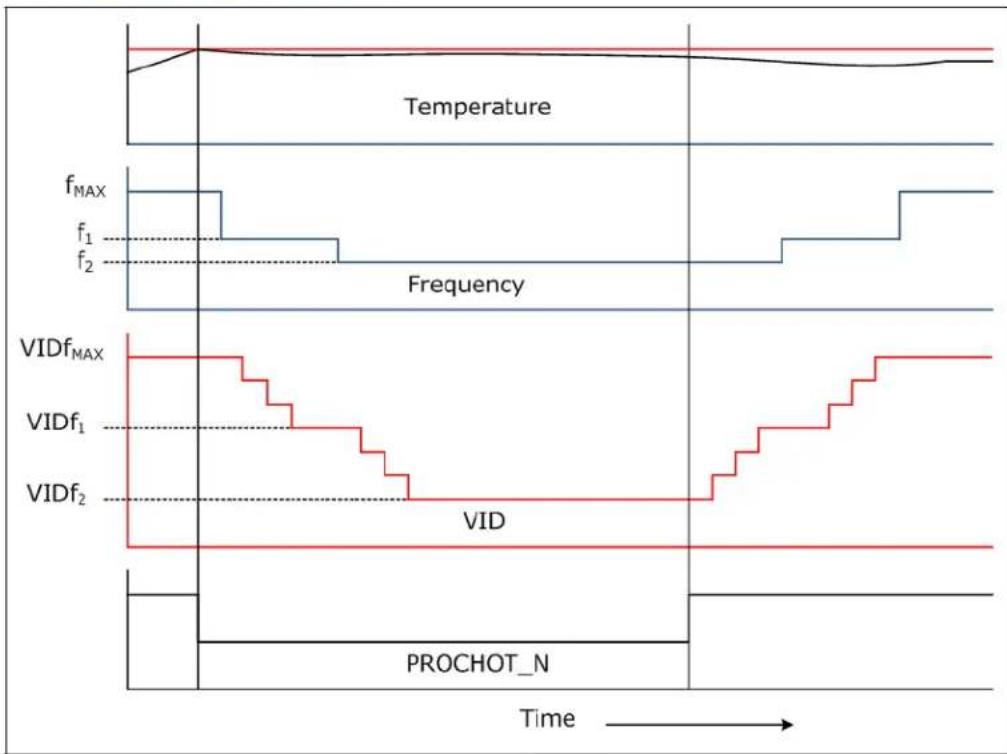
line
| Time Segment | Temperature | Frequency | VIDf_MAX | VIDf_1 | VIDf_2 | | ------------------ | ----------- | --------- | -------- | ------ | ------ | | Top Panel | ~0.8 | ~0.8 | ~0.8 | ~0.8 | ~0.8 | | Middle Panel | ~0.8 | ~0.8 | ~0.8 | ~0.8 | ~0.8 | | Bottom Panel | ~0.8 | ~0.8 | ~0.8 | ~0.8 | ~0.8 | | Final Panel | ~0.8 | ~0.8 | ~0.8 | ~0.8 | ~0.8 |5.2.2.2 Clock Modulation
Clock modulation is performed by alternately turning the clocks off and on at a duty cycle specific to the processor (factory configured to 37.5% on and 62.5% off for TM1). The period of the duty cycle is configured to 32 microseconds when the TCC is active. Cycle times are independent of processor frequency. A small amount of hysteresis has been included to prevent rapid active/inactive transitions of the TCC when the processor temperature is near its maximum operating temperature. Once the temperature has dropped below the maximum operating temperature, and the hysteresis timer has expired, the TCC goes inactive and clock modulation ceases. Clock modulation is automatically engaged as part of the TCC activation when the Frequency/SVID targets are at their minimum settings. It may also be initiated by software at a configurable duty cycle.
5.2.3 On-Demand Mode
The processor provides an auxiliary mechanism that allows system software to force the processor to reduce its power consumption. This mechanism is referred to as "On-Demand" mode and is distinct from the Adaptive Thermal Monitor feature. On-Demand mode is intended as a means to reduce system level power consumption. Systems must not rely on software usage of this mechanism to limit the processor temperature. If bit 4 of the IA32_CLOCK_MODULATION MSR is set to a '1', the processor will immediately reduce its power consumption via modulation (starting and stopping) of the internal core clock, independent of the processor temperature. When using On-Demand mode, the duty cycle of the clock modulation is programmable via bits 3:0 of the same IA32_CLOCK_MODULATION MSR. In On-Demand mode, the duty cycle can be programmed from 6.25% on / 93.75% off to 93.75% on / 6.25% off in 6.25%
increments. On-Demand mode may be used in conjunction with the Adaptive Thermal Monitor; however, if the system tries to enable On-Demand mode at the same time the TCC is engaged, the factory configured duty cycle of the TCC will override the duty cycle selected by the On-Demand mode.
5.2.4 PROCHOT\_N Signal
An external signal, PROCHOT_N (processor hot), is asserted when the processor core temperature has reached its maximum operating temperature. If Adaptive Thermal Monitor is enabled (note it must be enabled for the processor to be operating within specification), the TCC will be active when PROCHOT_N is asserted. The processor can be configured to generate an interrupt upon the assertion or de-assertion of PROCHOT_N. Refer to the Intel® Xeon® Processor E5 v2 Product Family Processor Datasheet, Volume Two: Registers for specific register and programming details.
The PROCHOT_N signal is bi-directional in that it can either signal when the processor (any core) has reached its maximum operating temperature or be driven from an external source to activate the TCC. The ability to activate the TCC via PROCHOT_N can provide a means for thermal protection of system components.
As an output, PROCHOT_N will go active when the processor temperature monitoring sensor detects that one or more cores has reached its maximum safe operating temperature. This indicates that the processor Thermal Control Circuit (TCC) has been activated, if enabled. As an input, assertion of PROCHOT_N by the system will activate the TCC, if enabled, for all cores. TCC activation due to PROCHOT_N assertion by the system will result in the processor immediately transitioning to the minimum frequency and corresponding voltage (using Freq/SVID control). Clock modulation is not activated in this case. The TCC will remain active until the system de-asserts PROCHOT_N.
PROCHOT_N can allow voltage regulator (VR) thermal designs to target maximum sustained current instead of maximum current. Systems should still provide proper cooling for the VR, and rely on PROCHOT_N as a backup in case of system cooling failure. The system thermal design should allow the power delivery circuitry to operate within its temperature specification even while the processor is operating at its Thermal Design Power.
With a properly designed and characterized thermal solution, it is anticipated that PROCHOT_N will be asserted for very short periods of time when running the most power intensive applications. An under-designed thermal solution that is not able to prevent excessive assertion of PROCHOT_N in the anticipated ambient environment may cause a noticeable performance loss.
5.2.5 THERMTRIP\_N Signal
Regardless of whether Adaptive Thermal Monitor is enabled, in the event of a catastrophic cooling failure, the processor will automatically shut down when the processor has reached an elevated temperature (refer to the THERMTRIP_N definition in Section 6, "Signal Descriptions"). At this point, the THERMTRIP_N signal will go active and stay active. THERMTRIP_N activation is independent of processor activity and does not generate any Intel® QuickPath Interconnect transactions. If THERMTRIP_N is asserted, all processor supplies (VCC, VTTA, VTTD, VSA, VCCPLL, VCCD) must be removed within the timeframe provided. The temperature at which THERMTRIP_N asserts is not user configurable and is not software visible.
5.2.6 Integrated Memory Controller (IMC) Thermal Features
5.2.6.1 DRAM Throttling Options
The Integrated Memory Controller (IMC) has two, independent mechanisms that cause system memory throttling:
- Open Loop Thermal Throttling (OLTT) and Hybrid OLTT (OLTT_Hybrid)
- Closed Loop Thermal Throttling (CLTT) and Hybrid CLTT (CLTT_Hybrid)
5.2.6.1.1 Open Loop Thermal Throttling (OLTT)
Pure energy based estimation for systems with no BMC or Intel® Management Engine (Intel® ME). No memory temperature information is provided by the platform or DIMMs. The CPU is informed of the ambient temperature estimate by the BIOS or by a device via the PECI interface. DIMM temperature estimates and bandwidth control are monitored and managed by the PCU on a per rank basis.
5.2.6.1.2 Hybrid Open Loop Thermal Throttling (OLTT\_Hybrid)
Temperature information is provided by the platform (for example, BMC or Intel ME) through PECI and the PCU interpolates gaps with energy based estimations.
5.2.6.1.3 Closed Loop Thermal Throttling (CLTT)
The processor periodically samples temperatures from the DIMM TSoD devices over a programmable interval. The PCU determines the hottest DIMM rank from TSoD data and informs the integrated memory controller for use in bandwidth throttling decisions.
5.2.6.2 Hybrid Closed Loop Thermal Throttling (CLTT\_Hybrid)
The processor periodically samples temperature from the DIMM TSoD devices over a programmable interval and interpolates gaps or the BMC/Intel ME samples a motherboard thermal sensor in the memory subsection and provides this data to the PCU via the PECI interface. This data is combined with an energy based estimations calculated by the PCU. When needed, system memory is then throttled using CAS bandwidth control. The processor supports dynamic reprogramming of the memory thermal limits based on system thermal state by the BMC or Intel ME.
5.2.6.3 MEM\_HOT\_C01\_N and MEM\_HOT\_C23\_N Signal
The processor includes a pair of new bi-directional memory thermal status signals useful for manageability schemes. Each signal presents and receives thermal status for a pair of memory channels (channels 0 & 1 and channels 2 & 3).
- Input Function: The processor can periodically sense the MEM_HOT_{C01/C23}_N signals to detect if the platform is requesting a memory throttling event.
Manageability hardware could drive this signal due to a memory voltage regulator thermal or electrical issue or because of a detected system thermal event (for example, fan is going to fail) other system devices are exceeding their thermal target. The input sense period of these signals are programmable, 100 us is the default value. The input sense assertion time recognized by the processor is programmable, 1 us is the default value. If the sense assertion time is programmed to zero, then the processor ignores all external assertions of MEM_HOT_{C01/C23}_N signals (in effect they become outputs).
- Output Function: The output behavior of the MEM_HOT_{C01/C23}_N signals supports Level mode. In this mode, MEM_HOT_{C01/C23}_N event temperatures
are programmable via TEMP_OEM_HI, TEMP_LOW, TEMP_MID, and TEMP_HI threshold settings in the iMC. In Level mode, when asserted, the signal indicates to the platform that a BIOS-configured thermal threshold has been reached by one or more DIMMs in the covered channel pair.
5.2.6.4 Integrated Dual SMBus Master Controllers for System Memory Interface
The processor includes two integrated SMBus master controllers running at 100 KHz for dedicated PCU access to the serial presence detect (SPD) devices and thermal sensors (TSoD) on the DIMMs. Each controller is responsible for a pair of memory channels and supports up to eight SMBus slave devices. Note that clock-low stretching is not supported by the processor. To avoid design complexity and minimize package C-state transitions, the SMBus interface between the processor and DIMMs must be connected.
The SMBus controllers for the system memory interface support the following SMBus protocols/commands:
- Random byte Read
- Byte Write
- I ^2 C* Write to Pointer Register
- I ^2 C Present Pointer Register Word Read
- I ^2 C Pointer Write Register Read.
Refer to the System Management Bus (SMBus) Specification, Revision 2.0 for standing timing protocols and specific command structure details.
6 Signal Descriptions
This chapter describes the processor signals. They are arranged in functional groups according to their associated interface or category.
6.1 System Memory Interface Signals
Table 6-1. Memory Channel DDR0, DDR1, DDR2, DDR3
| Signal Name Description | |
| DDR{0/1/2/3}_BA[2:0] | Bank Address. Defines the bank which is the destination for the current Activate, Read, Write, or Precharge command. |
| DDR{0/1/2/3}_CAS_N Column Address Strobe. | |
| DDR{0/1/2/3}_CKE[5:0] Clock Enable. | |
| DDR{0/1/2/3}_CLK_DN[3:0] DDR{0/1/2/3}_CLK_DP[3:0] | Differential clocks to the DIMM. All command and control signals are valid on the rising edge of clock. |
| DDR{0/1/2/3}_CS_N[9:0] | Chip Select. Each signal selects one rank as the target of the command and address. |
| DDR{0/1/2/3}_DQ[63:00] Data Bus. DDR3 Data bits. | |
| DDR{0/1/2/3}_DQS_DP[17:00] DDR{0/1/2/3}_DQS_DN[17:00] | Data strobes. Differential pair, Data/ECC Strobe. Differential strobes latch data/ECC for each DRAM. Different numbers of strobes are used depending on whether the connected DRAMs are x4,x8. Driven with edges in center of data, receive edges are aligned with data edges. |
| DDR{0/1/2/3}_ECC[7:0] | Check bits. An error correction code is driven along with data on these lines for DIMMs that support that capability |
| DDR{0/1/2/3}_MA[15:00] | Memory Address. Selects the Row address for Reads and writes, and the column address for activates. Also used to set values for DRAM configuration registers. |
| DDR{0/1/2/3}_MA_PAR Odd parity across Address and Command. | |
| DDR{0/1/2/3}_ODT[5:0] | On Die Termination. Enables DRAM on die termination during Data Write or Data Read transactions. |
| DDR{0/1/2/3}_PAR_ERR_N Parity Error detected by Registered DIMM (one for each channel). | |
| DDR{0/1/2/3}_RAS_N Row Address Strobe. | |
| DDR{0/1/2/3}_WE_N Write Enable. | |
Table 6-2. Memory Channel Miscellaneous
| Signal Name Description | |
| DDR_RESET_C01_N DDR_RESET_C23_N | System memory reset: Reset signal from processor to DRAM devices on the DIMMs. DDR_RESET_C01_N is used for memory channels 0 and 1 while DDR_RESET_C23_N is used for memory channels 2 and 3. |
| DDR_SCL_C01 DDR_SCL_C23 | SMBus clock for the dedicated interface to the serial presence detect (SPD) and thermal sensors (TSoD) on the DIMMs. DDR_SCL_C01 is used for memory channels 0 and 1 while DDR_SCL_C23 is used for memory channels 2 and 3. |
| DDR_SDA_C01 DDR_SDA_C23 | SMBus data for the dedicated interface to the serial presence detect (SPD) and thermal sensors (TSoD) on the DIMMs. DDR_SDA_C1 is used for memory channels 0 and 1 while DDR_SDA_C23 is used for memory channels 2 and 3. |
| DDR_VREFDQRX_C01 DDR_VREFDQRX_C23 | Voltage reference for system memory reads. DDR_VREFDQRX_C01 is used for memory channels 0 and 1 while DDR_VREFDQRX_C23 is used for memory channels 2 and 3. |
| DDR_VREFDQTX_C01 DDR_VREFDQTX_C23 | Voltage reference for system memory writes. DDR_VREFDQTX_C01 is used for memory channels 0 and 1 while DDR_VREFDQTX_C23 is used for memory channels 2 and 3. These signals are not connected and there is no functionality provided on these two signals. They are unused by the processor. |
| DDR{01/23}_RCOMP[2:0] | System memory impedance compensation. Impedance compensation must be terminated on the system board using a precision resistor. |
| DRAM_PWR_OK_C01 DRAM_PWR_OK_C23 | Power good input signal used to indicate that the VCCD power supply is stable for memory channels 0 & 1 and channels 2 & 3. |
6.2 PCI Express\* Based Interface Signals
Note: PCI Express* Ports 1, 2 and 3 Signals are receive and transmit differential pairs.
Table 6-3. PCI Express* Port 1 Signals
| Signal Name Description | |
| PE1A_RX_DN[3:0]PE1A_RX_DP[3:0] | PCIe Receive Data Input |
| PE1B_RX_DN[7:4]PE1B_RX_DP[7:4] | PCIe Receive Data Input |
| PE1A_TX_DN[3:0]PE1A_TX_DP[3:0] | PCIe Transmit Data Output |
| PE1B_TX_DN[7:4]PE1B_TX_DP[7:4] | PCIe Transmit Data Output |
Table 6-4. PCI Express* Port 2 Signals (Sheet 1 of 2)
| Signal Name Description | |
| PE2A_RX_DN[3:0]PE2A_RX_DP[3:0] | PCIe Receive Data Input |
| PE2B_RX_DN[7:4]PE2B_RX_DP[7:4] | PCIe Receive Data Input |
| PE2C_RX_DN[11:8]PE2C_RX_DP[11:8] | PCIe Receive Data Input |
Table 6-4. PCI Express* Port 2 Signals (Sheet 2 of 2)
| Signal Name Description | |
| PE2D_RX_DN[15:12]PE2D_RX_DP[15:12] | PCIe Receive Data Input |
| PE2A_TX_DN[3:0]PE2A_TX_DP[3:0] | PCIe Transmit Data Output |
| PE2B_TX_DN[7:4]PE2B_TX_DP[7:4] | PCIe Transmit Data Output |
| PE2C_TX_DN[11:8]PE2C_TX_DP[11:8] | PCIe Transmit Data Output |
| PE2D_TX_DN[15:12]PE2D_TX_DP[15:12] | PCIe Transmit Data Output |
Table 6-5. PCI Express* Port 3 Signals
| Signal Name Description | |
| PE3A_RX_DN[3:0]PE3A_RX_DP[3:0] | PCIe Receive Data Input |
| PE3B_RX_DN[7:4]PE3B_RX_DP[7:4] | PCIe Receive Data Input |
| PE3C_RX_DN[11:8]PE3C_RX_DP[11:8] | PCIe Receive Data Input |
| PE3D_RX_DN[15:12]PE3D_RX_DP[15:12] | PCIe Receive Data Input |
| PE3A_TX_DN[3:0]PE3A_TX_DP[3:0] | PCIe Transmit Data Output |
| PE3B_TX_DN[7:4]PE3B_TX_DP[7:4] | PCIe Transmit Data Output |
| PE3C_TX_DN[11:8]PE3C_TX_DP[11:8] | PCIe Transmit Data Output |
| PE3D_TX_DN[15:12]PE3D_TX_DP[15:12] | PCIe Transmit Data Output |
Table 6-6. PCI Express* Miscellaneous Signals (Sheet 1 of 2)
| Signal Name Description | |
| PE_RBIAS | This input is used to control PCI Express* bias currents. A 50 ohm 1% tolerance resistor must be connected from this land to VSS by the platform. PE_RBIAS is required to be connected as if the link is being used even when PCIe* is not used. |
| PE_RBIAS_SENSE | Provides dedicated bias resistor sensing to minimize the voltage drop caused by packaging and platform effects. PE_RBIAS_SENSE is required to be connected as if the link is being used even when PCIe* is not used. |
| PE_VREF_CAP | PCI Express* voltage reference used to measure the actual output voltage and comparing it to the assumed voltage. A 0.01uF capacitor must be connected from this land to VSS. |
| PEHPSCL | PCI Express* Hot-Plug SMBus Clock: Provides PCI Express* hot-plug support via a dedicated SMBus interface. Requires an external general purpose input/output (GPIO) expansion device on the platform. |
Table 6-6. PCI Express* Miscellaneous Signals (Sheet 2 of 2)
| Signal Name Description | |
| PEHPSDA | PCI Express* Hot-Plug SMBus Data: Provides PCI Express* hot-plug support via a dedicated SMBus Interface. Requires an external general purpose input/output (GPIO) expansion device on the platform. |
6.3 DMI2/PCI Express\* Port 0 Signals
Table 6-7. DMI2 and PCI Express Port 0 Signals
| Signal Name Description | |
| DMI_RX_DN[3:0]DMI_RX_DP[3:0] | DMI2 Receive Data Input |
| DMI_TX_DP[3:0]DMI_TX_DN[3:0] | DMI2 Transmit Data Output |
6.4 Intel® QuickPath Interconnect Signals
Table 6-8. Intel QPI Port 0 and 1 Signals
| Signal Name Description | |
| QPI{0/1}_CLKRX_DN/DP | Reference Clock Differential Input. These pins provide the PLL reference clock differential input. The Intel QPI forward clock frequency is half the Intel QPI data rate. |
| QPI{0/1}_CLKTX_DN/DP | Reference Clock Differential Output. These pins provide the PLL reference clock differential input. The Intel QPI forward clock frequency is half the Intel QPI data rate. |
| QPI{0/1}_DRX_DN/DP[19:00] Intel QPI | Receive data input. |
| QPI{0/1}_DTX_DN/DP[19:00] Intel QPI | Transmit data output. |
Table 6-9. Intel QPI Miscellaneous Signals
| Signal Name Description | |
| QPI_RBIAS | This input is used to control Intel QPI bias currents. QPI_RBIAS is required to be connected as if the link is being used even when Intel QPI is not used. |
| QPI_RBIAS_SENSE | Provides dedicated bias resistor sensing to minimize the voltage drop caused by packaging and platform effects.QPI_RBIAS_SENSE is required to be connected as if the link is being used even when Intel QPI is not used. |
| QPI_VREF_CAP | Intel QPI voltage reference used to measure the actual output voltage and comparing it to the assumed voltage. |
6.5 PECI Signal
Table 6-10. PECI Signals
| Signal Name Description | |
| PECI PECI (Platform Environment Control | Interface) is the serial sideband interface to the processor and is used primarily for thermal, power and error management. Details regarding the PECI electrical specifications, protocols and functions can be found in the Platform Environment Control Interface Specification. |
6.6 System Reference Clock Signals
Table 6-11. System Reference Clock (BCLK{0/1}) Signals
| Signal Name Description | |
| BCLK{0/1}_D[N/P] Reference Clock Differential input. These pins provide the PLL reference clock differential input into the processor. 100 MHz typical BCLK0 is the QPI reference clock (system clock) and BCLK1 is the PCI Express* reference clock. | |
6.7 JTAG and TAP Signals
Table 6-12. JTAG and TAP Signals
| Signal Name Description | |
| BPM_N[7:0] | Breakpoint and Performance Monitor Signals: I/O signals from the processor that indicate the status of breakpoints and programmable counters used for monitoring processor performance. These are 100 MHz signals. |
| EAR_N | External Alignment of Reset, used to bring the processor up into a deterministic state. This signal is pulled up on the die, refer to Table 7-6 for details. |
| PRDY_N | Probe Mode Ready is a processor output used by debug tools to determine processor debug readiness. |
| PREQ_N | Probe Mode Request is used by debug tools to request debug operation of the processor. |
| TCK | TCK (Test Clock) provides the clock input for the processor Test Bus (also known as the Test Access Port). |
| TDI | TDI (Test Data In) transfers serial test data into the processor. TDI provides the serial input needed for JTAG specification support. |
| TDO | TDO (Test Data Out) transfers serial test data out of the processor. TDO provides the serial output needed for JTAG specification support. |
| TMS | TMS (Test Mode Select) is a JTAG specification support signal used by debug tools. |
| TRST_N | TRST_N (Test Reset) resets the Test Access Port (TAP) logic. TRST_N must be driven low during power on Reset. |
6.8 Serial VID Interface (SVID) Signals
Table 6-13. SVID Signals
| SVIDALERT_N Serial VID alert. | |
| SVIDCLK Serial VID clock. | |
| SVIDDATA Serial VID data out. |
6.9 Processor Asynchronous Sideband and Miscellaneous Signals
Table 6-14. Processor Asynchronous Sideband Signals (Sheet 1 of 3)
| Signal Name Description | |
| BIST_ENABLE | BIST Enable Strap. Input which allows the platform to enable or disable built-in self test (BIST) on the processor. This signal is pulled up on the die, refer to Table 7-6 for details. |
| BMCINIT | BMC Initialization Strap. Indicates whether Service Processor Boot Mode should be used. Used in combination with FRMAGENT and SOCKET_ID inputs.0: Service Processor Boot Mode Disabled. Example boot modes: Local PCH (this processor hosts a legacy PCH with firmware behind It), Intel QPI Link Boot (for processors one hop away from the FW agent), or Intel QPI Link Init (for processors more than one hop away from the firmware agent).1: Service Processor Boot Mode Enabled. In this mode of operation, the processor performs the absolute minimum internal configuration and then waits for the Service Processor to complete its initialization. The socket boots after receiving a "GO" handshake signal via a firmware scratchpad register.This signal is pulled down on the die, refer to Table 7-6 for details. |
| CAT_ERR_N | Indicates that the system has experienced a fatal or catastrophic error and cannot continue to operate. The processor will assert CAT_ERR_N for nonrecoverable machine check errors and other internal unrecoverable errors. It is expected that every processor in the system will wire-OR CAT_ERR_N for all processors. Since this is an I/O land, external agents are allowed to assert this land which will cause the processor to take a machine check exception. This signal is sampled after PWRGOOD assertion.On the processor, CAT_ERR_N is used for signaling the following types of errors:Legacy MCERR's, CAT_ERR_N is asserted for 16 BCLKs.Legacy IERR's, CAT_ERR_N remains asserted until warm or cold reset. |
| CPU_ONLY_RESET | Reserved, not used. |
| ERROR_N[2:0] | Error status signals for integrated I/O (IIO) unit:0 = Hardware correctable error (no operating system or firmware action necessary)1 = Non-fatal error (operating system or firmware action required to contain and recover)2 = Fatal error (system reset likely required to recover) |
| FRMAGENT | Bootable Firmware Agent Strap. This input configuration strap used in combination with SOCKET_ID to determine whether the socket is a legacy socket, bootable firmware agent is present, and DMI links are used in PCIe* mode (instead of DMI2 mode).The firmware flash ROM is located behind the local PCH attached to the processor via the DMI2 Interface.This signal is pulled down on the die, refer to Table 7-6 for details. |
Table 6-14. Processor Asynchronous Sideband Signals (Sheet 2 of 3)
| Signal Name Description | |
| MEM_HOT_C01_NMEM_HOT_C23_N | Memory throttle control. MEM_HOT_C01_N and MEM_HOT_C23_N signals have two modes of operation - input and output mode.Input mode is externally asserted and is used to detect external events such as VR_HOT# from the memory voltage regulator and causes the processor to throttle the memory channels.Output mode is asserted by the processor known as level mode. In level mode, the output indicates that a particular branch of memory subsystem is hot.MEM_HOT_C01_N is used for memory channels 0 & 1 while MEM_HOT_C23_N is used for memory channels 2 & 3. |
| PMSYNC | Power Management Sync. A sideband signal to communicate power management status from the Platform Controller Hub (PCH) to the processor. |
| PROCHOT_N | PROCHOT_N will go active when the processor temperature monitoring sensor detects that the processor has reached its maximum safe operating temperature. This indicates that the processor Thermal Control Circuit has been activated, if enabled. This signal can also be driven to the processor to activate the Thermal Control Circuit. This signal is sampled after PWRGOOD assertion.If PROCHOT_N is asserted at the deassertion of RESET_N, the processor will tristate its outputs. |
| PWRGOOD | Power Good is a processor input. The processor requires this signal to be a clean indication that BCLK, VTTA/VTTD, VSA, VCCPLL, and VCCD_01 and VCCD_23 supplies are stable and within their specifications."Clean" implies that the signal will remain low (capable of sinking leakage current), without glitches, from the time that the power supplies are turned on until they come within specification. The signal must then transition monotonically to a high state.PWRGOOD can be driven inactive at any time, but clocks and power must again be stable before a subsequent rising edge of PWRGOOD. PWRGOOD transitions from inactive to active when all supplies except VCC are stable. VCC has a VBOOT of zero volts and is not included in PWRGOOD indication in this phase. However, for the active to inactive transition, if any CPU power supply (VCC, VTTA/VTTD, VSA, VCCD, or VCCPLL) is about to fail or is out of regulation, the PWRGOOD is to be negated.The signal must be supplied to the processor; it is used to protect internal circuits against voltage sequencing issues. It should be driven high throughout boundary scan operation.Note: VCC has a Vboot setting of 0.0V and is not included in the PWRGOOD indication and VSA has a Vboot setting of 0.9V. Refer to the compatible VR12.0 PWM controller. |
| RESET_N | Asserting the RESET_N signal resets the processor to a known state and invalidates its internal caches without writing back any of their contents. Note some PLL, Intel QuickPath Interconnect and error states are not effected by reset and only PWRGOOD forces them to a known state. |
| RSVD | RESERVED. All signals that are RSVD must be left unconnected on the board. Refer to Section 7.1.10, "Reserved or Unused Signals" for details. |
| SAFE_MODE_BOOT | Safe mode boot Strap. SAFE_MODE_BOOT allows the processor to wake up safely by disabling all clock gating, this allows BIOS to load registers or patches if required. This signal is sampled after PWRGOOD assertion. The signal is pulled down on the die, refer to Table 7-6 for details. |
Table 6-14. Processor Asynchronous Sideband Signals (Sheet 3 of 3)
| Signal Name Description | |
| SOCKET_ID[1:0] | Socket ID Strap. Socket identification configuration straps for establishing the PECI address, Intel® QPI Node ID, and other settings. This signal is used in combination with FRMAGENT to determine whether the socket is a legacy socket, bootable firmware agent is present, and DMI links are used in PCIe* mode (instead of DMI2 mode). Each processor socket consumes one Node ID, and there are 128 Home Agent tracker entries. This signal is pulled down on the die, refer to Table 7-6 for details. |
| TEST[4:0] | Test[4:0] must be individually connected to an power source or ground through a resistor for proper processor operation. |
| THERMTRIP_N | Assertion of THERMTRIP_N (Thermal Trip) indicates one of two possible critical over-temperature conditions: One, the processor junction temperature has reached a level beyond which permanent processor damage may occur and Two, the system memory interface has exceeded a critical temperature limit set by BIOS. Measurement of the processor junction temperature is accomplished through multiple internal thermal sensors that are monitored by the Digital Thermal Sensor (DTS). Simultaneously, the Power Control Unit (PCU) monitors external memory temperatures via the dedicated SMBus interface to the DIMMs. If any of the DIMMs exceed the BIOS defined limits, the PCU will signal THERMTRIP_N to prevent damage to the DIMMs. Once activated, the processor will stop all execution and shut down all PLLs. To further protect the processor, its core voltage (VCC), VTTA, VTTD, VSA, VCCPLL, VCCD supplies must be removed following the assertion of THERMTRIP_N. Once activated, THERMTRIP_N remains latched until RESET_N is asserted. While the assertion of the RESET_N signal may de-assert THERMTRIP_N, if the processor's junction temperature remains at or above the trip level, THERMTRIP_N will again be asserted after RESET_N is de-asserted. This signal can also be asserted if the system memory interface has exceeded a critical temperature limit set by BIOS. This signal is sampled after PWRGOOD assertion. |
| TXT_AGENT | Intel® Trusted Execution Technology (Intel® TXT) Agent Strap.0 = Default. The socket is not the Intel® TXT Agent.1 = The socket is the Intel® TXT Agent.In non-Scalable DP platforms, the legacy socket (Identified by SOCKET_ID[1:0] = 00b) with Intel® TXT Agent should always set the TXT_AGENT to 1b.On Scalable DP platforms the Intel TXT AGENT is at the Node Controller.This signal is pulled down on the die, refer to Table 7-6 for details. |
| TXT_PLTEN | Intel® Trusted Execution Technology (Intel® TXT) Platform Enable Strap.0 = The platform is not Intel® TXT enabled. All sockets should be set to zero. Scalable DP (sDP) platforms should choose this setting if the Node Controller does not support Intel TXT.1 = Default. The platform is Intel® TXT enabled. All sockets should be set to one. In a non-Scalable DP platform this is the default. When this is set, Intel TXT functionality requires user to explicitly enable Intel TXT via BIOS setup.This signal is pulled up on the die, refer to Table 7-6 for details. |
Table 6-15. Miscellaneous Signals
| Signal Name Description | |
| IVT_ID_N This output can be used by the platform to determine if the installed processor is an Intel® Xeon® processor E5-1600/E5-2600/E5-4600 v2 product families or Intel® Xeon® processor E5-1600/E5-2600/E5-4600 product families.This is pulled to ground on the processor package. This signal is also used by the VCCPLL and VTT rails to switch their output voltage to support future processors. | |
| SKTOCC_N SKTOCC_N (Socket occupied) is used to indicate that a processor is present.This is pulled to ground on the processor package; there is no connection to the processor silicon for this signal. | |
6.10 Processor Power and Ground Supplies
Table 6-16. Power and Ground Signals (Sheet 1 of 2)
| Signal Name Description | |
| VCC | Variable power supply for the processor cores, lowest level caches (LLC), ring Interface, and home agent. It is provided by a VRM/EVRD 12.0 compliant regulator for each CPU socket. The output voltage of this supply is selected by the processor, using the serial voltage ID (SVID) bus.Note:VCC has a Vboot setting of 0.0V and is not included in the PWRGOOD indication. Refer to the compatible VR12.0 PWM controller. |
| VCC_SENSEVSS_VCC_SENSE | VCC_SENSE and VSS_VCC_SENSE provide an isolated, low impedance connection to the processor core power and ground. These signals must be connected to the voltage regulator feedback circuit, which insures the output voltage (that is, processor voltage) remains within specification. |
| VSA_SENSEVSS_VSA_SENSE | VSA_SENSE and VSS_VSA_SENSE provide an isolated, low impedance connection to the processor system agent (VSA) power plane. These signals must be connected to the voltage regulator feedback circuit, which insures the output voltage (that is, processor voltage) remains within specification. |
| VTTD_SENSEVSS_VTTD_SENSE | VTTD_SENSE and VSS_VTTD_SENSE provide an isolated, low impedance connection to the processor I/O power plane. These signals must be connected to the voltage regulator feedback circuit, which insures the output voltage (that is, processor voltage) remains within specification. . |
| VCCD_01 and VCCD_23 | Variable power supply for the processor system memory interface. Provided by two VRM/EVRD 12.0 compliant regulators per CPU socket. VCCD_01 and VCCD_23 are used for memory channels 0, 1, 2, & 3 respectively. The valid voltage of this supply (1.50V or 1.35V) is configured by BIOS after determining the operating voltages of the installed memory. VCCD_01 and VCCD_23 will also be referred to as VCCD.Note:The processor must be provided VCCD_01 and VCCD_23 for proper operation, even in configurations where no memory is populated. A VRM/EVRD 12.0 controller is recommended, but not required. |
| VCCPLL | Fixed power supply (1.7V) for the processor phased lock loop (PLL). |
Table 6-16. Power and Ground Signals (Sheet 2 of 2)
| Signal Name Description | |
| VSA | Variable power supply for the processor system agent units. These Include logic (non-I/O) for the Integrated I/O controller, the integrated memory controller (iMC), the Intel® QPI agent, and the Power Control Unit (PCU). The output voltage of this supply is selected by the processor, using the serial voltage ID (SVID) bus.Note: VSA has a Vboot setting of 0.9V. Refer to the compatible VR12.0 PWM controller. |
| VSS Processor ground node. | |
| VTTAVTTD | Combined fixed analog and digital power supply for I/O sections of the processor Intel QPI interface, Direct Media Interface Gen 2 (DMI2) interface, and PCI Express* interface. These signals will also be referred to as VTT. |
§
7 Electrical Specifications
7.1 Processor Signaling
The processor includes 2011 lands, which use various signaling technologies. Signals are grouped by electrical characteristics and buffer type into various signal groups. These include DDR3 (Reference Clock, Command, Control, and Data), PCI Express*, DMI2, Intel® QuickPath Interconnect, Platform Environmental Control Interface (PECI), System Reference Clock, SMBus, JTAG and Test Access Port (TAP), SVID Interface, Processor Asynchronous Sideband, Miscellaneous, and Power/Other signals. Refer to Table 7-5 for details.
Intel strongly recommends performing analog simulations of all interfaces. Please refer to Section 1.7, "Related Documents" for signal integrity model availability.
7.1.1 System Memory Interface Signal Groups
The system memory interface utilizes DDR3 technology, which consists of numerous signal groups. These include: Reference Clocks, Command Signals, Control Signals, and Data Signals. Each group consists of numerous signals, which may utilize various signaling technologies. Please refer to Table 7-5 for further details. Throughout this chapter the system memory interface maybe referred to as DDR3.
7.1.2 PCI Express Signals
The PCI Express Signal Group consists of PCI Express* ports 1, 2, and 3, and PCI Express miscellaneous signals. Please refer to Table 7-5 for further details.
7.1.3 DMI2/PCI Express Signals
The Direct Media Interface Gen 2 (DMI2) sends and receives packets and/or commands to the PCH. The DMI2 is an extension of the standard PCI Express Specification. The DMI2/PCI Express Signals consist of DMI2 receive and transmit input/output signals and a control signal to select DMI2 or PCIe* 2.0 operation for port 0. Please refer to Table 7-5 for further details.
7.1.4 Intel ^® QuickPath Interconnect
The processor provides two Intel QPI port for high speed serial transfer between other processors. Each port consists of two uni-directional links (for transmit and receive). A differential signaling scheme is utilized, which consists of opposite-polarity (DP, DN) signal pairs.
7.1.5 Platform Environmental Control Interface (PECI)
PECI is an Intel proprietary interface that provides a communication channel between Intel processors and chipset components to external system management logic and thermal monitoring devices. The processor contains a Digital Thermal Sensor (DTS) that reports a relative die temperature as an offset from Thermal Control Circuit (TCC) activation temperature. Temperature sensors located throughout the die are implemented as analog-to-digital converters calibrated at the factory. PECI provides an interface for external devices to read processor temperature, perform processor manageability functions, and manage processor interface tuning and diagnostics.
The PECI interface operates at a nominal voltage set by V_TTD . The set of DC electrical specifications shown in Table 7-16 is used with devices normally operating from a V_TTD interface supply.
7.1.5.1 Input Device Hysteresis
The PECI client and host input buffers must use a Schmitt-triggered input design for improved noise immunity. Please refer to Figure 7-1 and Table 7-16.
Figure 7-1. Input Device Hysteresis
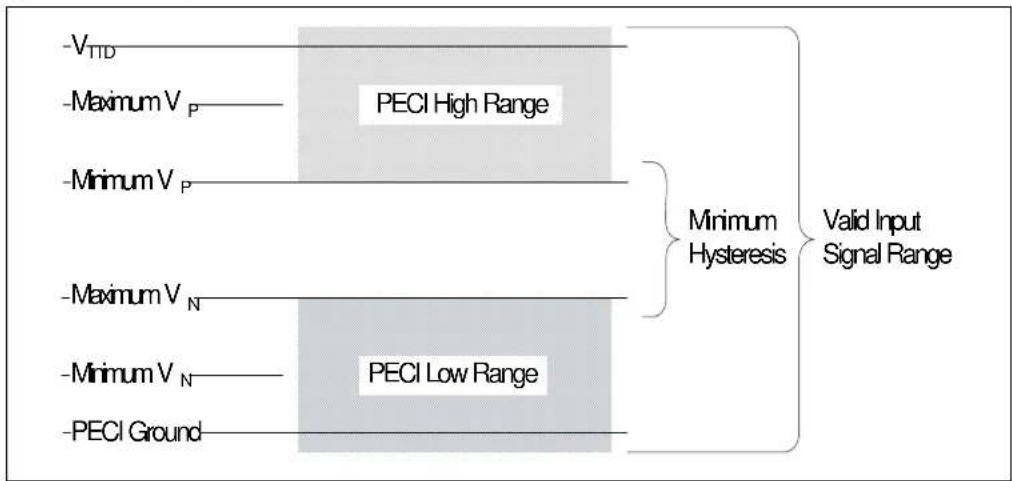
flowchart
graph LR
    A["-V_TID"] --> B["PECI High Range"]
    C["-Maximum V_P"] --> B
    D["-Minimum V_P"] --> B
    E["-Maximum V_N"] --> F["PECI Low Range"]
    G["-Minimum V_N"] --> F
    H["-PECI Ground"] --> F
    B --> I["Minimum Hysteresis"]
    F --> I
    I --> J["Valid Input Signal Range"]
7.1.6 System Reference Clocks (BCLK{0/1}\_DP, BCLK{0/1}\_DN)
The processor core, processor uncore, Intel® QuickPath Interconnect link, PCI Express* and DDR3 memory interface frequencies) are generated from BCLK{0/1}_DP and BCLK{0/1}_DN signals. There is no direct link between core frequency and Intel QuickPath Interconnect link frequency (e.g., no core frequency to Intel QuickPath Interconnect multiplier). The processor maximum core frequency, Intel QuickPath Interconnect link frequency and DDR memory frequency are set during manufacturing. It is possible to override the processor core frequency setting using software. This permits operation at lower core frequencies than the factory set maximum core frequency.
The processor core frequency is configured during reset by using values stored within the device during manufacturing. The stored value sets the lowest core multiplier at which the particular processor can operate. If higher speeds are desired, the ratio can be configured via the IA32_PERF_CTL MSR (MSR 199h); Bits [15:0].
Clock multiplying within the processor is provided by the internal phase locked loop (PLL), which requires a constant frequency BCLK{0/1}_DP, BCLK{0/1}_DN input, with exceptions for spread spectrum clocking. DC specifications for the BCLK{0/1}_DP, BCLK{0/1}_DN inputs are provided in Table 7-17. These specifications must be met while also meeting the associated signal quality specifications outlined in Section 7.9.
7.1.6.1 PLL Power Supply
An on-die PLL filter solution is implemented on the processor. Refer to Table 7-11 for DC specifications.
7.1.7 JTAG and Test Access Port (TAP) Signals
Due to the voltage levels supported by other components in the JTAG and Test Access Port (TAP) logic, Intel recommends the processor be first in the TAP chain, followed by any other components within the system. Please refer to the Intel® Xeon® Processor E5-1600 v2/E5-2600 v2 Product Families – Boundary Scan Description Language (BSDL) File for more details. A translation buffer should be used to connect to the rest of the chain unless one of the other components is capable of accepting an input of the voltage. Two copies of each signal may be required with each driving a different voltage level.
7.1.8 Processor Sideband Signals
The processor include asynchronous sideband signals that provide asynchronous input, output or I/O signals between the processor and the platform or Platform Controller Hub. Details can be found in Table 7-5.
All Processor Asynchronous Sideband input signals are required to be asserted/deasserted for a defined number of BCLKs in order for the processor to recognize the proper signal state. Refer to Section 7.9 for applicable signal integrity specifications.
7.1.9 Power, Ground and Sense Signals
Processors also include various other signals including power/ground and sense points. Details can be found in Table 7-5.
7.1.9.1 Power and Ground Lands
All V_CC , V_CCPLL , V_SA , V_CCD , V_TTA , and V_TTD lands must be connected to their respective processor power planes, while all V_SS lands must be connected to the system ground plane. For clean on-chip power distribution, processors include lands for all required voltage supplies. These are listed in Table 7-1.
Table 7-1. Power and Ground Lands
| Power and Ground Lands | Number of Lands | Comments |
| V_CC | 208 | Each V_CC land must be supplied with the voltage determined by the SVID Bus signals.Table 7-3 Defines the voltage level associated with each core SVID pattern.Table 7-11, Figure 7-2, and Figure 7-4 represent V_CC static and transient limits. VCC has a VBOOT setting of 0.0V. |
| V_CCPLL | 3 | Each V_CCPLL land is connected to a 1.70 V supply, power the Phase Lock Loop (PLL) clock generation circuitry. An on-die PLL filter solution is implemented within the processor. |
Table 7-1. Power and Ground Lands
| Power and Ground Lands | Number of Lands | Comments |
| V_CCD\_01 V_CCD\_23 | 51 | Each V_CCD land is connected to a switchable 1.50 V and 1.35 V supply, provide power to the processor DDR3 interface. These supplies also power the DDR3 memory subsystem. V_CCD is also controlled by the SVID Bus. V_CCD is the generic term for V_CCD\_01 , V_CCD\_23 . |
| V_TTA | 14 | V_TTA lands must be supplied by a fixed 1.0V supply. |
| V_TTD | 19 V | T_TD lands must be supplied by a fixed 1.0V supply. |
| V_SA | 25 | Each V_SA land must be supplied with the voltage determined by the SVID Bus signals, typically set at 0.940V. VSA has a VBOOT setting of 0.9V. |
| V_SS | 548 Ground |
7.1.9.2 Decoupling Guidelines
Due to its large number of transistors and high internal clock speeds, the processor is capable of generating large current swings between low and full power states. This may cause voltages on power planes to sag below their minimum values if bulk decoupling is not adequate. Large electrolytic bulk capacitors ( C_BULK ), help maintain the output voltage during current transients, for example coming out of an idle condition. Care must be taken in the baseboard design to ensure that the voltages provided to the processor remain within the specifications listed in Table 7-11. Failure to do so can result in timing violations or reduced lifetime of the processor.
7.1.9.3 Voltage Identification (VID)
The Voltage Identification (VID) specification for the V_CC , V_SA , V_CCD voltage are defined by the compatible VR12.0 PWM controller. The reference voltage or the VID setting is set via the SVID communication bus between the processor and the voltage regulator controller chip. The VID settings are the nominal voltages to be delivered to the processor's V_CC , V_SA , V_CCD lands. Table 7-3 specifies the reference voltage level corresponding to the VID value transmitted over serial VID. The VID codes will change due to temperature and/or current load changes in order to minimize the power and to maximize the performance of the part. The specifications are set so that a voltage regulator can operate with all supported frequencies.
Individual processor VID values may be calibrated during manufacturing such that two processor units with the same core frequency may have different default VID settings.
The processor uses voltage identification signals to support automatic selection of V_CC , V_SA , and V_CCD power supply voltages. If the processor socket is empty (SKTOCC_N high), or a "not supported" response is received from the SVID bus, then the voltage regulation circuit cannot supply the voltage that is requested, the voltage regulator must disable itself or not power on. Vout MAX register (30h) is programmed by the processor to set the maximum supported VID code and if the programmed VID code is higher than the VID supported by the VR, then VR will respond with a "not supported" acknowledgement. See the compatible VR12.0 PWM controller for further details.
7.1.9.3.1 SVID Commands
The processor provides the ability to operate while transitioning to a new VID setting and its associated processor voltage rails ( V_CC , V_SA , and V_CCD ). This is represented by a DC shift. It should be noted that a low-to-high or high-to-low voltage state change may
result in as many VID transitions as necessary to reach the target voltage. Transitions above the maximum specified VID are not supported. The processor supports the following VR commands:
- SetVID_fast (10 mV/μs for V SA/V CCD),
- Set VID _ slow (SA2V_GCD), and/μs for V
- Slew Rate Decay (downward voltage only and it's a function of the output capacitance's time constant) commands. Table 7-3 and Table 7-20 includes SVID step sizes and DC shift ranges. Minimum and maximum voltages must be maintained as shown in Table 7-11.
The VRM or EVRD utilized must be capable of regulating its output to the value defined by the new VID. The compatible VR12.0 PWM controller contains further details.
Power source characteristics must be guaranteed to be stable whenever the supply to the voltage regulator is stable.
7.1.9.3.2 SetVID Fast Command
The SetVID-fast command contains the target VID in the payload byte. The range of voltage is defined in the VID table. The VR should ramp to the new VID setting with a fast slew rate as defined in the slew rate data register. Typically 10 to 20 mV/ s depending on platform, voltage rail, and the amount of decoupling capacitance.
The SetVID-fast command is preemptive, the VR interrupts its current processes and moves to the new VID. The SetVID-fast command operates on 1 VR address at a time. This command is used in the processor for package C6 fast exit and entry.
7.1.9.3.3 SetVID Slow Command
The SetVID-slow command contains the target VID in the payload byte. The range of voltage is defined in the VID table. The VR should ramp to the new VID setting with a "slow" slew rate as defined in the slow slew rate data register. The SetVID_Slow is 1/4 slower than the SetVID_fast slew rate.
The SetVID-slow command is preemptive, the VR interrupts its current processes and moves to the new VID. This is the instruction used for normal P-state voltage change. This command is used in the processor for the Intel Enhanced SpeedStep Technology transitions.
7.1.9.3.4 SetVID Decay Command
The SetVID-Decay command is the slowest of the DVID transitions. It is only used for VID down transitions. The VR does not control the slew rate, the output voltage declines with the output load current only.
The SetVID- Decay command is preemptive, that is, the VR interrupts its current processes and moves to the new VID.
7.1.9.3.5 SVID Power State Functions: SetPS
The processor has three power state functions and these will be set seamlessly via the SVID bus using the SetPS command. Based on the power state command, the SetPS commands sends information to VR controller to configure the VR to improve efficiency, especially at light loads. For example, typical power states are:
• PS(00h): Represents full power or active mode
• PS(01h): Represents a light load 5A to 20A
• PS(02h): Represents a very light load <5A
The VR may change its configuration to meet the processor's power needs with greater efficiency. For example, it may reduce the number of active phases, transition from CCM (Continuous Conduction Mode) to DCM (Discontinuous Conduction Mode) mode, reduce the switching frequency or pulse skip, or change to asynchronous regulation. For example, typical power states are 00h = run in normal mode; a command of 01h= shed phases mode, and an 02h=pulse skip.
The VR may reduce the number of active phases from PS(00h) to PS(01h) or PS(00h) to PS(02h) for example. There are multiple VR design schemes that can be used to maintain a greater efficiency in these different power states, please work with your VR controller suppliers for optimizations.
The SetPS command sends a byte that is encoded as to what power state the VR should transition to.
If a power state is not supported by the controller, the slave should acknowledge with command rejected (11b)
Note the mapping of power states 0-n will be detailed in the compatible VR12.0 PWM controller.
If the VR is in a low power state and receives a SetVID command moving the VID up then the VR exits the low power state to normal mode (PS0) to move the voltage up as fast as possible. The processor must re-issue low power state (PS1 or PS2) command if it is in a low current condition at the new higher voltage. See Figure 7-2 for VR power state transitions.
Figure 7-2. VR Power-State Transitions
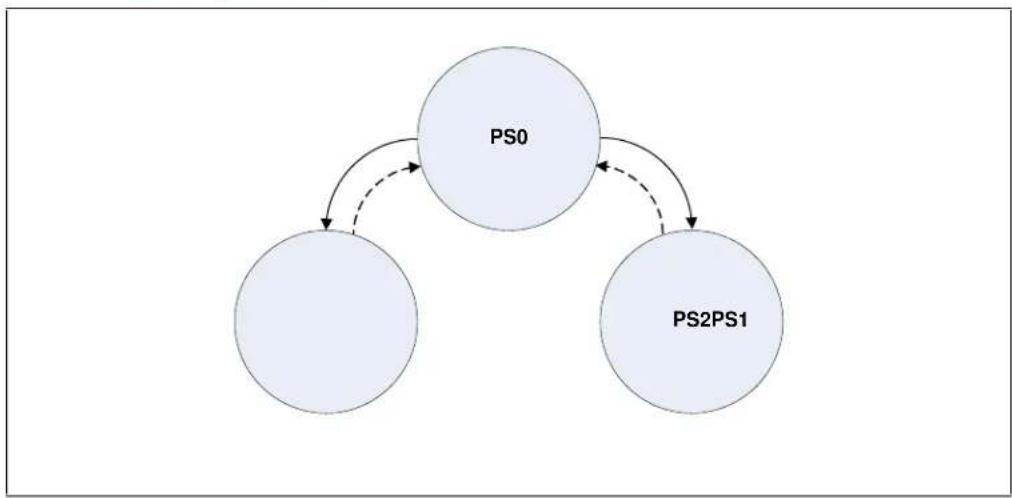
flowchart
graph TD
    A["PS0"] --> B["PS2PS1"]
    B --> A
    A -.-> A
7.1.9.3.6 SVID Voltage Rail Addressing
The processor addresses 4 different voltage rail control segments within VR12 (VCC, VCCD_01, VCCD_23, and VSA). The SVID data packet contains a 4-bit addressing code:
Table 7-2. SVID Address Usage
| PWM Address (HEX) Processor | |
| 00 | V_cc |
| 01 | V_sa |
| 02 | V_CCD\_01 |
| 03 +1 not used | |
| 04 | V_CCD\_23 |
| 05 +1 not used | |
Notes:
- Check with VR vendors for determining the physical address assignment method for their controllers.
- VR addressing is assigned on a per voltage rail basis.
- Dual VR controllers will have two addresses with the lowest order address, always being the higher phase count.
- For future platform flexibility, the VR controller should include an address offset, as shown with +1 not used.
Table 7-3. VR12.0 Reference Code Voltage Identification (VID) Table (Sheet 1 of 2)
| HEX | VCC, VSA, VCCD | HEX | VCC, VSA, VCCD | HEX | VCC, VSA, VCCD | HEX | VCC, VSA, VCCD | HEX | VCC, VSA, VCCD | HEX | VCC, VSA, VCCD |
| 00 0. | 00000 55 0.67 | 000 78 | 0.84500 9B 1. | 02000 | BE 1.19500 E1 | 1.37000 | |||||
| 33 0. | 50000 56 0.67 | 500 79 | 0.85000 9C 1. | 02500 | BF 1.20000 E2 | 1.37500 | |||||
| 34 0. | 50500 57 0.68 | 000 7A | 0.85500 9D 1. | 03000 | C0 1.20500 E3 | 1.38000 | |||||
| 35 0. | 51000 58 0.68 | 500 7B | 0.86000 9E 1. | 03500 | C1 1.21000 E4 | 1.38500 | |||||
| 36 0. | 51500 59 0.69 | 000 7C | 0.86500 9F 1. | 04000 | C2 1.21500 E5 | 1.39000 | |||||
| 37 0. | 52000 5A 0.69 | 500 7D | 0.87000 A0 1. | 04500 | C3 1.22000 E6 | 1.39500 | |||||
| 38 0. | 52500 5B 0.70 | 000 7E | 0.87500 A1 1. | 05000 | C4 1.22500 E7 | 1.40000 | |||||
| 39 0. | 53000 5C 0.70 | 500 7F | 0.88000 A2 1. | 05500 | C5 1.23000 E8 | 1.40500 | |||||
| 3A 0. | 53500 5D 0.71 | 1000 80 | 0.88500 A3 1. | 06000 | C6 1.23500 E9 | 1.41000 | |||||
| 3B 0. | 54000 5E 0.71 | 1500 81 | 0.89000 A4 1. | 06500 | C7 1.24000 EA | 1.41500 | |||||
| 3C 0. | 54500 5F 0.72 | 2000 82 | 0.89500 A5 1. | 07000 | C8 1.24500 EB | 1.42000 | |||||
| 3D 0. | 55000 60 0.72 | 2500 83 | 0.90000 A6 1. | 07500 | C9 1.25000 EC | 1.42500 | |||||
| 3E 0. | 55500 61 0.73 | 3000 84 | 0.90500 A7 1. | 08000 | CA 1.25500 ED | 1.43000 | |||||
| 3F 0. | 56000 62 0.73 | 3500 85 | 0.91000 A8 1. | 08500 | CB 1.26000 EE | 1.43500 | |||||
| 40 0. | 56500 63 0.74 | 400 86 | 0.91500 A9 1. | 09000 | CC 1.26500 EF | 1.44000 | |||||
| 41 0. | 57000 64 0.74 | 500 87 | 0.92000 AA 1. | 09500 | CD 1.27000 F0 | 1.44500 | |||||
| 42 0. | 57500 65 0.75 | 500 88 | 0.92500 AB 1. | 10000 | CE 1.27500 F1 | 1.45000 | |||||
| 43 0. | 58000 66 0.75 | 500 89 | 0.93000 AC 1. | 10500 | CF 1.28000 F2 | 1.45500 | |||||
| 44 0. | 58500 67 0.76 | 600 8A | 0.93500 AD 1. | 11000 | D0 1.28500 F3 | 1.46000 | |||||
| 45 0. | 59000 68 0.76 | 500 8B | 0.94000 AE 1. | 11500 | D1 1.29000 F4 | 1.46500 | |||||
| 46 0. | 59500 69 0.77 | 700 8C | 0.94500 AF 1. | 12000 | D2 1.29500 F5 | 1.47000 | |||||
| 47 0. | 60000 6A 0.77 | 500 8D | 0.95000 B0 1. | 12500 | D3 1.30000 F6 | 1.47500 | |||||
| 48 0. | 60500 6B 0.78 | 800 8E | 0.95500 B1 1. | 13000 | D4 1.30500 F7 | 1.48000 | |||||
| 49 0. | 61000 6C 0.78 | 850 8F | 0.96000 B2 1. | 13500 | D5 1.31000 F8 | 1.48500 | |||||
| 4A 0. | 61500 6D 0.79 | 900 90 | 0.96500 B3 1. | 14000 | D6 1.31500 F9 | 1.49000 | |||||
| 4B 0. | 62000 6E 0.79 | 500 91 | 0.97000 B4 1. | 14500 | D7 1.32000 FA | 1.49500 | |||||
| 4C 0. | 62500 6F 0.80 | 900 92 | 0.97500 B5 1. | 15000 | D8 1.32500 FB | 1.50000 |
Table 7-3. VR12.0 Reference Code Voltage Identification (VID) Table (Sheet 2 of 2)
| HEX | VCC, VSA, VCCD | HEX | VCC, VSA, VCCD | HEX | VCC, VSA, VCCD | HEX | VCC, VSA, VCCD | HEX | VCC, VSA, VCCD | HEX | VCC, VSA, VCCD |
| 4D | 0.63000 | 70 | 0.80500 | 93 | 0.98000 | B6 | 1.15500 | D9 | 1.33000 | FC | 1.50500 |
| 4E | 0.63500 | 71 | 0.81000 | 94 | 0.98500 | B7 | 1.16000 | DA | 1.33500 | FD | 1.51000 |
| 4F | 0.64000 | 72 | 0.81500 | 95 | 0.99000 | B8 | 1.16500 | DB | 1.34000 | FE | 1.51500 |
| 50 | 0.64500 | 73 | 0.82000 | 96 | 0.99500 | B9 | 1.17000 | DC | 1.34500 | FF | 1.52000 |
| 51 | 0.65000 | 74 | 0.82500 | 97 | 1.00000 | BA | 1.17500 | DD | 1.35000 | ||
| 52 | 0.65500 | 75 | 0.83000 | 98 | 1.00500 | BB | 1.18000 | DE | 1.35500 | ||
| 53 | 0.66000 | 76 | 0.83500 | 99 | 1.01000 | BC | 1.18500 | DF | 1.36000 | ||
| 54 | 0.66500 | 77 | 0.84000 | 9A | 1.01500 | BD | 1.19000 | E0 | 1.36500 | ||
Notes:
- 00h = Off State
- VID Range HEX 01-32 are not used by the processor.
- For VID Ranges supported see Tab le 7 -11 .
- VCCD is a fixed voltage of 1.35V or 1.5V.
7.1.10 Reserved or Unused Signals
All Reserved (RSVD) signals must not be connected. Connection of these signals to V_CC , V_TTA , V_TTD , V_CCD , V_CCPLL , V_SS , or to any other signal (including each other) can result in component malfunction or incompatibility with future processors. See Chapter 8, "Processor Land Listing" for a land listing of the processor and the location of all Reserved signals.
For reliable operation, always connect unused inputs or bi-directional signals to an signal level. Unused active high inputs should be connected through a resistor to ground ( V_SS ). Unused outputs maybe left unconnected; however, this may interfere with some Test Access Port (TAP) functions, complicate debug probing, and prevent boundary scan testing. A resistor must be used when tying bi-directional signals to power or ground. When tying any signal to power or ground, a resistor will also allow for system testability. Resistor values should be within ± 20% of the impedance of the baseboard trace.
7.2 Signal Group Summary
Signals are grouped by buffer type and similar characteristics as listed in Table 7-5. The buffer type indicates which signaling technology and specifications apply to the signals.
Table 7-4. Signal Description Buffer Types (Sheet 1 of 2)
| Signal | Description |
| Analog | Analog reference or output. May be used as a threshold voltage or for buffer compensation |
| Asynchronous^1 | Signal has no timing relationship with any system reference clock. |
| CMOS | CMOS buffers: 1.0 V or 1.5 V tolerant |
| DDR3 | DDR3 buffers: 1.5 V and 1.35 V tolerant |
| DMI2 | Direct Media Interface Gen 2 signals. These signals are compatible with PCI Express* 2.0 and 1.0 Signaling Environment AC Specifications. |
| Intel® QPI | Current-mode 6.4 GT/s and 8.0 GT/s forwarded-clock Intel QuickPath Interconnect signaling |
| Open Drain CMOS | Open Drain CMOS (ODCMOS) buffers: 1.0V tolerant |
Table 7-4. Signal Description Buffer Types (Sheet 2 of 2)
| Signal | Description |
| PCI Express* | PCI Express* interface signals. These signals are compatible with PCI Express 3.0 Signalling Environment AC Specifications and are AC coupled. The buffers are not 3.3-V tolerant. Refer to the PCIe specification. |
| Reference Voltage reference signal. | |
| SSTL Source Series Terminated Logic (JEDEC SSTL_15) | |
- Qualifier for a buffer type.
Table 7-5. Signal Groups (Sheet 1 of 3)
| Differential/ Single Ended | Buffer Type Signals | 1 |
| DDR3 Reference Clocks^2 | ||
| Differential SSTL Output | DDR\0/1/2/3\_CLK_D[N/P] | [3:0] |
| DDR3 Command Signals^2 | ||
| Single ended | SSTL Output | DDR\0/1/2/3\_BA[2:0] DDR\0/1/2/3\_CAS_N DDR\0/1/2/3\_MA[15:00] DDR\0/1/2/3\_MA_PAR DDR\0/1/2/3\_RAS_N DDR\0/1/2/3\_WE_N |
| CMOS1.5v Output DDR_RESET_C{01/23}_N | ||
| DDR3 Control Signals^2 | ||
| Single ended | CMOS1.5v Output | DDR\0/1/2/3\_CS_N[9:0] DDR\0/1/2/3\_ODT[5:0] DDR\0/1/2/3\_CKE[5:0] |
| Reference Output DDR_VREF | DQTX_C\01/23\ | |
| Reference Input | DDR\_VREFDQRX_C\01/23\ DDR\01/23\_RCOMP[2:0] | |
| DDR3 Data Signals^2 | ||
| Differential SSTL Input | Output DDR\0/1/2/3\_DQS_D[N/P][17:00] | |
| Single ended | SSTL Input/Output | DDR\0/1/2/3\_DQ[63:00] DDR\0/1/2/3\_ECC[7:0] |
| SSTL Input DDR\0/1/2/3\_PAR\_ERR_N | ||
| DDR3 Miscellaneous Signals^2 | ||
| Single ended | CMOS1.5v Input DRAM_PWR_OK_C{01/23} | |
| PCI Express* Port 1, 2, & 3 Signals | ||
| Differential PCI Express* Input | PE1A_RX_D[N/P][3:0]PE1B_RX_D[N/P][7:4]PE2A_RX_D[N/P][3:0]PE2B_RX_D[N/P][7:4]PE2C_RX_D[N/P][11:8]PE2D_RX_D[N/P][15:12]PE3A_RX_D[N/P][3:0]PE3B_RX_D[N/P][7:4]PE3C_RX_D[N/P][11:8]PE3D_RX_D[N/P][15:12] | |
Table 7-5. Signal Groups (Sheet 2 of 3)
| Differential/ Single Ended | Buffer Type Signals | 1 |
| Differential PCI Express* Output | PE1A_TX_D[N/P][3:0]PE1B_TX_D[N/P][7:4]PE2A_TX_D[N/P][3:0]PE2B_TX_D[N/P][7:4]PE2C_TX_D[N/P][11:8]PE2D_TX_D[N/P][15:12]PE3A_TX_D[N/P][3:0]PE3B_TX_D[N/P][7:4]PE3C_TX_D[N/P][11:8]PE3D_TX_D[N/P][15:12] | |
| PCI Express* Miscellaneous Signals | ||
| Single ended | Analog Input PE_RBIAS_SENSE | |
| Reference Input/Output | PE_RBIASPE_VREF_CAP | |
| DMI 2/ PCI Express* Signals | ||
| Differential | DMI2 Input DMI_RX_D[N/P][3:0] | |
| DMI2 Output DMI_TX_D[N/P][3:0] | ||
| Intel® QuickPath Interconnect (QPI) Signals | ||
| Differential | Intel® QPI Input | QPI{0/1}_DRX_D[N/P][19:00]QPI{0/1}_CLKRX_D[N/P] |
| Intel® QPI Output | QPI{0/1}_DTX_D[N/P][19:00]QPI{0/1}_CLKTX_D[N/P] | |
| Single ended | Analog Input QPI_RBIAS_SENSE | |
| Analog Input/Output QPI_RBIAS | ||
| Platform Environmental Control Interface (PECI) | ||
| Single ended PECI PECI | ||
| System Reference Clock (BCLK{0/1}) | ||
| Differential CMOS1.0v | Input BCLK{0/1}_D[N/P] | |
| SMBus | ||
| Single ended | Open Drain CMOSInput/Output | DDR_SCL_C{01/23}DDR_SDA_C{01/23}PEHPSCLPEHPSDA |
| JTAG & TAP Signals | ||
| Single ended | CMOS1.0v Input TCK, TDI, TMS, TRST_N | |
| CMOS1.0v Input/Output PREQ_N | ||
| CMOS1.0v Output PRDY_N | ||
| Open Drain CMOSInput/Output | BPM_N[7:0]EAR_N | |
| Open Drain CMOS Output TDO | ||
| Serial VID Interface (SVID) Signals | ||
| Single ended | CMOS1.0v Input SVIDALERT_N | |
| Open Drain CMOSInput/Output | SVIDDATA | |
| Open Drain CMOS Output SVIDCLK | ||
Table 7-5. Signal Groups (Sheet 3 of 3)
| Differential/ Single Ended | Buffer Type | Signals ^1 |
| Processor Asynchronous Sideband Signals | ||
| Single ended | CMOS1.0v Input | BIST_ENABLEBMCINITFRMAGENTPWRGOODPMSYNCRESET_NSAFE_MODE_BOOTSOCKET_ID[1:0]TXT_AGENTTXT_PLTEN |
| Open Drain CMOS Input/Output | CAT_ERR_NMEM_HOT_C{01/23}_NPROCHOT_N | |
| Open Drain CMOS Output | ERROR_N[2:0]THERMTRIP_N | |
| Miscellaneous Signals | ||
| N/A Output | IVT_ID_NSKTOCC_N | |
| Power/ Other Signals | ||
| Power / Ground V | CC, VTTA, VTTD, VCCD_01, VCCD_23,VCCPLL, VSA and VSS | |
| Sense Points | VCC_SENSEVSS_VCC_SENSEVSS_VTTD_SENSEVTTD_SENSEVSA_SENSEVSS_VSA_SENSE | |
-
Refer to Section 6, "Signal Descriptions" for signal description details.
-
DDR{0/1/2/3} refers to DDR3 Channel 0, DDR3 Channel 1, DDR3 Channel 2 and DDR3 Channel 3.
Table 7-6. Signals with On-Die Termination
| Signal Name | Pull Up / Pull Down | Rail Value | Units Notes | ||
| DDR{0/1}_PAR_ERR_N Pull Up VCCD_01 65 Ω | |||||
| DDR{2/3}_PAR_ERR_N Pull Up VCCD_23 65 Ω | |||||
| BMCINIT | Pull Down | VSS | 2K | Ω | 1 |
| FRMAGENT | Pull Down | VSS | 2K | Ω | 1 |
| TXT_AGENT | Pull Down | VSS | 2K | Ω | 1 |
| SAFE_MODE_BOOT | Pull Down | VSS | 2K | Ω | 1 |
| SOCKET_ID[1:0] | Pull Down | VSS | 2K | Ω | 1 |
| BIST_ENABLE | Pull Up | VTT | 2K | Ω | 1 |
| TXT_PLTEN | Pull Up | VTT | 2K | Ω | 1 |
| EAR_N | Pull Up | VTT | 2K | Ω | 2 |
Notes:
1. Refer to Table 7-19 for details on the R ON (Buffer on Resistance) value for this signal.
7.3 Power-On Configuration (POC) Options
Several configuration options can be configured by hardware. The processor samples its hardware configuration at reset, on the active-to-inactive transition of RESET_N, or upon assertion of PWRGOOD (inactive-to-active transition). For specifics on these options, please refer to Table 7-7.
The sampled information configures the processor for subsequent operation. These configuration options cannot be changed except by another reset transition of the latching signal (RESET_N or PWRGOOD).
Table 7-7. Power-On Configuration Option Lands
| Configuration Option Land Name Notes | ||
| Output tri state PROCHOT_N 1 | ||
| Execute BIST (Built-In Self Test) BIST_ENABLE 2 | ||
| Enable Service Processor Boot Mode | BMCINIT | 3 |
| Enable Intel® Trusted Execution Technology (Intel® TXT) Platform | TXT_PLTEN | 3 |
| Power-up Sequence Halt for ITP configuration | EAR_N | 3 |
| Enable Bootable Firmware Agent | FRMAGENT | 3 |
| Enable Intel Trusted Execution Technology (Intel TXT) Agent | TXT_AGENT | 3 |
| Enable Safe Mode Boot | SAFE_MODE_BOOT | 3 |
| Configure Socket ID | SOCKET_ID[1:0] | 3 |
Notes:
- Output tri-state option enables Fault Resilient Booting (FRB), for FRB details see Section 7.4. The signal used to latch PROCHOT_N for enabling FRB mode is RESET_N.
- BIST_ENABLE is sampled at RESET_N de-assertion (on the falling edge).
- This signal is sampled after PWRGOOD assertion.
7.4 Fault Resilient Booting (FRB)
The processor supports both socket and core level Fault Resilient Booting (FRB), which provides the ability to boot the system as long as there is one processor functional in the system. One limitation to socket level FRB is that the system cannot boot if the legacy socket that connects to an active PCH becomes unavailable since this is the path to the system BIOS. See Table 7-8 for a list of output tri-state FRB signals.
Socket level FRB will tri-state processor outputs via the PROCHOT_N signal. Assertion of the PROCHOT_N signal through RESET_N de-assertion will tri-state processor outputs. Note, that individual core disabling is also supported for those cases where disabling the entire package is not desired.
The processor extends the FRB capability to the core granularity by maintaining a register in the uncore so that BIOS or another entity can disable one or more specific processor cores.
Table 7-8. Fault Resilient Booting (Output Tri-State) Signals
| Output Tri-State Signal Groups Signals | |
| Intel QPI | QPIO_CLKTX_DN[1:0]QPIO_CLKTX_DP[1:0]QPIO_DTX_DN[19:00]QPIO_DTX_DP[19:00]QPI1_CLKTX_DN[1:0]QPI1_CLKTX_DP[1:0]QPI1_DTX_DN[19:00]QPI1_DTX_DP[19:00] |
| SMBus | DDR_SCL_C01DDR_SDA_C01DDR_SCL_C23DDR_SDA_C23PEHPSCLPEHPSDA |
| Processor Sideband | CAT_ERR_NERROR_N[2:0]BPM_N[7:0]PRDY_NTHERMTRIP_NPROCHOT_NPECI |
| SVID SVIDCLK |
7.5 Mixing Processors
Intel supports and validates two and four processor configurations only in which all processors operate with the same Intel® QuickPath Interconnect frequency, core frequency, power segment, and have the same internal cache sizes. Mixing components operating at different internal clock frequencies is not supported and will not be validated by Intel. Combining processors from different power segments is also not supported.
Note:
Processors within a system must operate at the same frequency per bits [15:8] of the FLEX_RATIO MSR (Address: 194h); however this does not apply to frequency transitions initiated due to thermal events, Extended HALT, Enhanced Intel SpeedStep Technology transitions signal. Please refer to the Intel® Xeon® Processor E5 v2 Product Family Processor Datasheet, Volume Two: Registers for details on the FLEX_RATIO MSR and setting the processor core frequency.
Not all operating systems can support dual processors with mixed frequencies. Mixing processors of different steppings but the same model (as per CPUID instruction) is supported provided there is no more than one stepping delta between the processors, for example, S and S+1.
S and S+1 is defined as mixing of two CPU steppings in the same platform where one CPU is S (stepping) = CPUID.(EAX=01h):EAX[3:0], and the other is S+1 = CPUID.(EAX=01h):EAX[3:0]+1. The stepping ID is found in EAX[3:0] after executing the CPUID instruction with Function 01h.
Details regarding the CPUID instruction are provided in the AP-485, Intel® Processor Identification and the CPUID Instruction application note, also refer to the Intel® Xeon® Processor E5 v2 Product Family Specification Update.
7.6 Flexible Motherboard Guidelines (FMB)
The Flexible Motherboard (FMB) guidelines are estimates of the maximum values the processor will have over certain time periods. The values are only estimates and actual specifications for future processors may differ. Processors may or may not have specifications equal to the FMB value in the foreseeable future. System designers should meet the FMB values to ensure their systems will be compatible with future processors.
7.7 Absolute Maximum and Minimum Ratings
Table 7-9 specifies absolute maximum and minimum ratings. At conditions outside functional operation condition limits, but within absolute maximum and minimum ratings, neither functionality nor long-term reliability can be expected. If a device is returned to conditions within functional operation limits after having been subjected to conditions outside these limits, but within the absolute maximum and minimum ratings, the device may be functional, but with its lifetime degraded depending on exposure to conditions exceeding the functional operation condition limits.
Although the processor contains protective circuitry to resist damage from Electro-Static Discharge (ESD), precautions should always be taken to avoid high static voltages or electric fields.
Table 7-9. Processor Absolute Minimum and Maximum Ratings
| Symbol Parameter Min Max Unit | ||||
| V_CC | Processor core voltage with respect to V_SS | -0.3 | 1.4 | V |
| V_CCPLL | Processor PLL voltage with respect to V_SS | -0.3 | 2.0 | V |
| V_CCD | Processor IO supply voltage for DDR3 (standard voltage) with respect to V_SS | -0.3 | 1.85 | V |
| V_CCD | Processor IO supply voltage for DDR3L (low Voltage) with respect to V_SS | -0.3 | 1.7 | V |
| V_SA | Processor SA voltage with respect to V_SS | -0.3 | 1.4 | V |
| V_TTA V_TTD | Processor analog IO voltage with respect to V_SS | -0.3 | 1.4 | V |
Notes:
1. For functional operation, all processor electrical, signal quality, mechanical, and thermal specifications must be satisfied.
2. Overshoot and undershoot voltage guidelines for input, output, and I/O signals are outlined in Section 7.9.5. Excessive overshoot or undershoot on any signal will likely result in permanent damage to the processor.
7.7.1 Storage Condition Specifications
Environmental storage condition limits define the temperature and relative humidity limits to which the device is exposed to while being stored in a Moisture Barrier Bag. The specified storage conditions are for component level prior to board attach (see notes in Table 7-10 for post board attach limits).
Table 7-10 specifies absolute maximum and minimum storage temperature limits which represent the maximum or minimum device condition beyond which damage, latent or otherwise, may occur. The table also specifies sustained storage temperature, relative humidity, and time-duration limits. These limits specify the maximum or minimum
device storage conditions for a sustained period of time. At conditions outside sustained limits, but within absolute maximum and minimum ratings, quality & reliability may be affected.
Table 7-10. Storage Condition Ratings
| Symbol Parameter Min Max Unit | ||||
| T_absolute storage | The minimum/maximum device storage temperature beyond which damage (latent or otherwise) may occur when subjected to for any length of time. | -25 125 °C | ||
| T_sustained storage | The minimum/maximum device storage temperature for a sustained period of time. | -5 | 40 | °C |
| T_short term storage | The ambient storage temperature (in shipping media) for a short period of time. | -20 | 85 | °C |
| RH_sustained storage | The maximum device storage relative humidity for a sustained period of time. | 60% @ 24 | °C | |
| Time_sustained storage | A prolonged or extended period of time; typically associated with sustained storage conditions Unopened bag, includes 6 months storage time by customer. | 0 | 30 | months |
| Time_short term storage | A short period of time (in shipping media). | 0 | 72 hours | |
Notes:
- Storage conditions are applicable to storage environments only. In this scenario, the processor must not receive a clock, and no lands can be connected to a voltage bias. Storage within these limits will not affect the long-term reliability of the device. For functional operation, please refer to the processor case temperature specifications.
- These ratings apply to the Intel component and do not include the tray or packaging.
- Failure to adhere to this specification can affect the long-term reliability of the processor.
- Non-operating storage limits post board attach: Storage condition limits for the component once attached to the application board are not specified. Intel does not conduct component level certification assessments post board attach given the multitude of attach methods, socket types and board types used by customers. Provided as general guidance only, Intel board products are specified and certified to meet the following temperature and humidity limits (Non-Operating Temperature Limit: -40C to 70C & Humidity: 50% to 90%, non condensing with a maximum wet bulb of 28C).
- Device storage temperature qualification methods follow JEDEC High and Low Temperature Storage Life Standards: JESD22-A119 (low temperature) and JESD22-A103 (high temperature).
7.8 DC Specifications
DC specifications are defined at the processor pads, unless otherwise noted. DC specifications are only valid while meeting specifications for case temperature ( T_CASE specified in Section 5), clock frequency, and input voltages. Care should be taken to read all notes associated with each specification.
7.8.1 Voltage and Current Specifications
Table 7-11. Voltage Specification (Sheet 1 of 2)
| Symbol | Parameter | Voltage Plane | Min | Typ | Max | Unit | Notes1 |
| V_CC VID | V_CC VID Range | 0.6 | 1.35 | V | 2, 3 | ||
| V_Retention VID | Retention Voltage VID in package C3 and C6 states | 0.65 | V 2, 3 | ||||
| V_CC | Core Voltage (Launch - FMB) | V_CC | See Table 7-13 and Figure 7-3 | V | 3, 4, 7, 8, 12, 14, 18 | ||
Table 7-11. Voltage Specification (Sheet 2 of 2)
| Symbol | Parameter | Voltage Plane | Min | Typ | Max | Unit | Notes ^1 |
| V_VID\_STEP (Vcc, Vsa, Vccd) | VID step size during a transition | 5.0 mV 10 | |||||
| V_CCPLL | PLL Voltage V | CCPLL | 0.955* V_CCPLL\_TYP | 1.7 1.045*V | CCPLL_TYP | V | 11, 12, 13, 17 |
| V_CCD ( V_CCD\_01 , V_CCD\_23 ) | I/O Voltage for DDR3 (Standard Voltage) | V_CCD | 0.95* V_CCD\_TYP | 1.5 | 1.05* V_CCD\_TYP | V | 11, 13, 14, 16, 17 |
| V_CCD ( V_CCD\_01 , V_CCD\_23 ) | I/O Voltage for DDR3L (Low Voltage) | V_CCD | 0.95* V_CCD\_TYP | 1.35 1.075*V | CCD_TYP | V | 11, 13, 14, 16, 17 |
| V_TT ( V_TTA , VTTD) | Uncore Voltage (Launch - FMB) | V_TT | 0.957* V_TT\_TYP | 1.00 | 1.043* V_TT\_TYP | V | 3, 5, 9, 12, 13 |
| V_SA\_VID | Vsa VID Range | V_SA | 0.6 | 0.940 | 1.25 | V 2, 3, | 14, 15 |
| V_SA | System Agent Voltage(Launch - FMB) | V_SA | V_SA\_VID - 0.057 | V_SA\_VID | V_SA\_VID + 0.057 | V | 3, 6, 12, 14, 19 |
Notes:
-
Unless otherwise noted, all specifications in this table apply to all processors. These specifications are based on final silicon characterization.
-
Individual processor VID values may be calibrated during manufacturing such that two devices at the same speed may have different settings.
-
These voltages are targets only. A variable voltage source should exist on systems in the event that a different voltage is required.
-
The V CC voltage specification requirements are measured across the remote sense pin pairs (VCC_SENSE and VSS_VCC_SENSE) on the processor package. Voltage measurement should be taken with a DC to 100 MHz bandwidth oscilloscope limit (or DC to 20 MHz for older model oscilloscopes), using a 1.5 pF maximum probe capacitance, and 1M Ω minimum impedance. The maximum length of the ground wire on the probe should be less than 5 mm to ensure external noise from the system is not coupled in the scope probe.
-
The V_TTA , and V_TTD voltage specification requirements are measured across the remote sense pin pairs (VTTD_SENSE and VSS_VTTD_SENSE) on the processor package. Voltage measurement should be taken with a DC to 100 MHz bandwidth oscilloscope limit (or DC to 20 MHz for older model oscilloscopes), using a 1.5 pF maximum probe capacitance, and 1M Ω minimum impedance. The maximum length of the ground wire on the probe should be less than 5 mm to ensure external noise from the system is not coupled in the scope probe.
-
The V _SA voltage specification requirements are measured across the remote sense pin pairs (VSA_SENSE and VSS_VSA_SENSE) on the processor package. Voltage measurement should be taken with a DC to 100 MHz bandwidth oscilloscope limit (or DC to 20 MHz for older model oscilloscopes), using a 1.5 pF maximum probe capacitance, and 1M Ω minimum impedance. The maximum length of the ground wire on the probe should be less than 5 mm to ensure external noise from the system is not coupled in the scope probe.
-
The processor should not be subjected to any static V_CC level that exceeds the V_CC_MAX associated with any particular current. Failure to adhere to this specification can shorten processor lifetime.
-
Minimum V_CC and maximum I_CC are specified at the maximum processor case temperature ( T_CASE ) shown in Section 5, "Thermal Management Specifications". I_CC_MAX is specified at the relative V_CC_MAX point on the V_CC load line. The processor is capable of drawing I_CC_MAX for up to 5 seconds. Refer to Figure 7-4 for further details on the average processor current draw over various time durations.
-
The processor should not be subjected to any static V_TTA, V_TTD level that exceeds the V_TT_MAX associated with any particular current. Failure to adhere to this specification can shorten processor lifetime.
-
This specification represents the V_CC reduction or V_CC increase due to each VID transition, see Section 7.1.9.3.
-
Baseboard bandwidth is limited to 20 MHz.
-
FMB is the flexible motherboard guidelines. See Section 7.6 for FMB details.
-
DC + AC + Ripple = Total Tolerance
-
For Power State Functions see Section 7.1.9.3.5.
-
V SA VID does not have a loadline, the output voltage is expected to be the VID value.
-
V CCD tolerance at processor pins. Tolerance for VR at remote sense is ±3.3%*V CCD .
-
The V CCPLL, VCCD01, VCCD23 voltage specification requirements are measured across vias on the platform. Choose VCCPLL, VCCD01, or VCCD23 vias close to the socket and measure with a DC to 100MHz bandwidth oscilloscope limit (or DC to 20MHz for older model oscilloscopes), using 1.5 pF maximum probe capacitance, and 1M Ω minimum impedance. The maximum length of the ground wire on the probe should be less than 5 mm to ensure external noise from the system is not coupled in the scope probe.
-
VCC has a Vboot setting of 0.0V and is not included in the PWRGOOD indication. Refer to the compatible VR12.0 PWM controller.
-
VSA has a Vboot setting of 0.9V. Refer to the compatible VR12.0 PWM controller.
Table 7-12. Processor Current Specifications
| Parameter Symbol and Definition | Processor TDP / Core Count TDC (A) Max (A) Notes | 1 | ||
| I_TT I/O Termination Supply, Processor Current on V_TTA/V_TTD | All Intel® Xeon® processor E5-1600 v2/E5-2600 v2/E5-4600 v2 product families | 20 24 | 2, 5, 6 | |
| I_SA System Agent Supply, Processor Current on V_SA | 20 24 | |||
| I_CCD\_01 DDR3 Supply, Processor Current V_CCD\_01 | 3 | 4 | ||
| I_CCD\_23 DDR3 Supply, Processor Current V_CCD\_23 | 3 | 4 | ||
| I_CCPLL PLL Supply, Processor Current on V_CCPLL | 2 | 2 | ||
| I_CCD\_S3 Total processor current on V_CCD\_01/V_CCD\_23 in System S3 Standby State | -- 0.5 7 | |||
| I_CC Core Supply, Processor Current on V_CC | 150W WS 8-core 155 185 2, 5, 6 | |||
| 130W 1U 12/10/8-core130W WS 8/6-core | 135 165 | |||
| 130W 2U 8-core (E5-2667 v2) | 135 165 | |||
| 130W 2U 6/4-core130W WS 4-core | 115 150 | |||
| 115W 12/10-core | 135 165 | |||
| 95W 10/8/6/4-core | 115 135 | |||
| 80W 6/4-core | 80 | 100 | ||
| 70W 10-core | 80 | 100 | ||
| 60W 6-core | 70 85 | |||
| LV95W-10C | 115 135 | |||
| LV70W-10CLV70W-8C | 80 | 100 | ||
| LV50W-6C | 60 80 | |||
Notes:
-
Unless otherwise noted, all specifications in this table apply to all processors. These specifications are based on final silicon characterization.
-
Launch to FMB, this is the flexible motherboard guidelines. See Section 7.6 for FMB details.
- I_CC_TDC (Thermal Design Current) is the sustained (DC equivalent) current that the processor is capable of drawing indefinitely and should be used for the voltage regulator thermal assessment. The voltage regulator is responsible for monitoring its temperature and asserting the necessary signal to inform the processor of a thermal excursion. Please refer to the compatible VR12.0 PWM controller for further details.
- Specification is at T CASE = 50°C. Characterized by design and not tested.
- I CCD_01_MAX and I CCD_23_MAX refers only to the processor's current draw and does not account for the current consumption by the memory devices. This only applies to Intel® Xeon® processor E5-1600 v2/E5-2600 v2/E5-4600 v2 product families.
- Minimum V_CC and maximum I_CC are specified at the maximum processor case temperature ( T_CASE ) shown in Section 5, "Thermal Management Specifications". I_CC_MAX is specified at the relative V_CC_MAX point on the V_CC load line. The processor is capable of drawing I_CC_MAX for up to 5 seconds. Refer to Figure 7-4 for further details on the average processor current draw over various time durations.
- Memory Standby Current is characterized by design and not tested.
- Refer to Table 1-1 for the model numbers of each processor based on TDP and core count.
- To determine which SKUS are for workstation platforms, refer to Section 5.1.3.
Table 7-13. Processor V CC Static and Transient Tolerance
| I_CC(A)V | CC\_MAX(V)V | CC\_TYP(V)V | CC\_MIN(V) Notes |
| 0 VID + 0. | 015 VID - 0.000 VID | - 0.015 1,2,3,4,5,6 | |
| 5 VID + 0. | 011 VID - 0.004 VID | - 0.019 1,2,3,4,5,6 | |
| 10 VID + 0. | 007 VID - 0.008 VID | - 0.023 1,2,3,4,5,6 | |
| 15 VID + 0. | 003 VID - 0.012 VID | - 0.027 1,2,3,4,5,6 | |
| 19 VID + 0. | 000 VID - 0.015 VID | - 0.030 1,2,3,4,5,6 | |
| 25 VID - 0. | 005 VID - 0.020 VID | - 0.035 1,2,3,4,5,6 | |
| 30 VID - 0. | 009 VID - 0.024 VID | - 0.039 1,2,3,4,5,6 | |
| 35 VID - 0. | 013 VID - 0.028 VID | - 0.043 1,2,3,4,5,6 | |
| 40 VID - 0. | 017 VID - 0.032 VID | - 0.047 1,2,3,4,5,6 | |
| 45 VID - 0. | 021 VID - 0.036 VID | - 0.051 1,2,3,4,5,6 | |
| 50 VID - 0. | 025 VID - 0.040 VID | - 0.055 1,2,3,4,5,6 | |
| 55 VID - 0. | 029 VID - 0.044 VID | - 0.059 1,2,3,4,5,6 | |
| 60 VID - 0. | 033 VID - 0.048 VID | - 0.063 1,2,3,4,5,6 | |
| 65 VID - 0. | 037 VID - 0.052 VID | - 0.067 1,2,3,4,5,6 | |
| 70 VID - 0. | 041 VID - 0.056 VID | - 0.071 1,2,3,4,5,6 | |
| 75 VID - 0. | 045 VID - 0.060 VID | - 0.075 1,2,3,4,5,6 | |
| 80 VID - 0. | 049 VID - 0.064 VID | - 0.079 1,2,3,4,5,6 | |
| 85 VID - 0. | 053 VID - 0.068 VID | - 0.083 1,2,3,4,5,6 | |
| 90 VID - 0. | 057 VID - 0.072 VID | - 0.087 1,2,3,4,5,6 | |
| 95 VID - 0. | 061 VID - 0.076 VID | - 0.091 1,2,3,4,5,6 | |
| 100 VID - 0. | 065 VID - 0.080 VID | - 0.095 1,2,3,4,5,6 | |
| 105 VID - 0. | 069 VID - 0.084 VID | - 0.099 1,2,3,4,5,6 | |
| 110 VID - 0. | 073 VID - 0.088 VID | - 0.103 1,2,3,4,5,6 | |
| 115 VID - 0. | 077 VID - 0.092 VID | - 0.107 1,2,3,4,5,6 | |
| 120 VID - 0. | 081 VID - 0.096 VID | - 0.111 1,2,3,4,5,6 | |
| 125 VID - 0. | 085 VID - 0.100 VID | - 0.115 1,2,3,4,5,6 | |
| 130 VID - 0. | 089 VID - 0.104 VID | - 0.119 1,2,3,4,5,6 | |
| 135 VID - 0. | 093 VID - 0.108 VID | - 0.123 1,2,3,4,5,6 | |
| 140 VID - 0. | 097 VID - 0.112 VID | - 0.127 1,2,3,4,5,6 | |
| 145 VID - 0. | 101 VID - 0.116 VID | - 0.131 1,2,3,4,5,6 | |
| 150 VID - 0. | 105 VID - 0.120 VID | - 0.135 1,2,3,4,5,6 | |
| 155 VID - 0. | 109 VID - 0.124 VID | - 0.139 1,2,3,4,5,6 | |
| 160 VID - 0. | 113 VID - 0.128 VID | - 0.143 1,2,3,4,5,6 | |
| 165 VID - 0. | 117 VID - 0.132 VID | - 0.147 1,2,3,4,5,6 | |
| 170 VID - 0. | 121 VID - 0.136 VID | - 0.151 1,2,3,4,5,6 | |
| 175 VID - 0. | 125 VID - 0.140 VID | - 0.155 1,2,3,4,5,6 | |
| 180 VID - 0. | 129 VID - 0.144 VID | - 0.159 1,2,3,4,5,6 | |
| 185 VID - 0. | 133 VID - 0.148 VID | - 0.163 1,2,3,4,5,6 |
Notes:
1. The loadline specification includes both static and transient limits.
2. This table is intended to aid in reading discrete points on graph in Figure 7-3.
- The loadlines specify voltage limits at the die measured at the VCC_SENSE and VSS_VCC_SENSE lands. Voltage regulation feedback for voltage regulator circuits must also be taken from processor VCC_SENSE and VSS_VCC_SENSE lands. Refer to the compatible VR12.0 PWM controller for loadline guidelines and VR implementation details.
- The Vcc_min and Vcc_max loadlines represent static and transient limits. Please see Section 6 for Vcc Overshoot specifications.
- The Adaptive Loadline Positioning slope is 0.8 mΩ.
- For Icc ranges, reference Table 7-12, "Processor Current Specifications."
Figure 7-3. Processor V CC Static and Transient Tolerance Loadlines
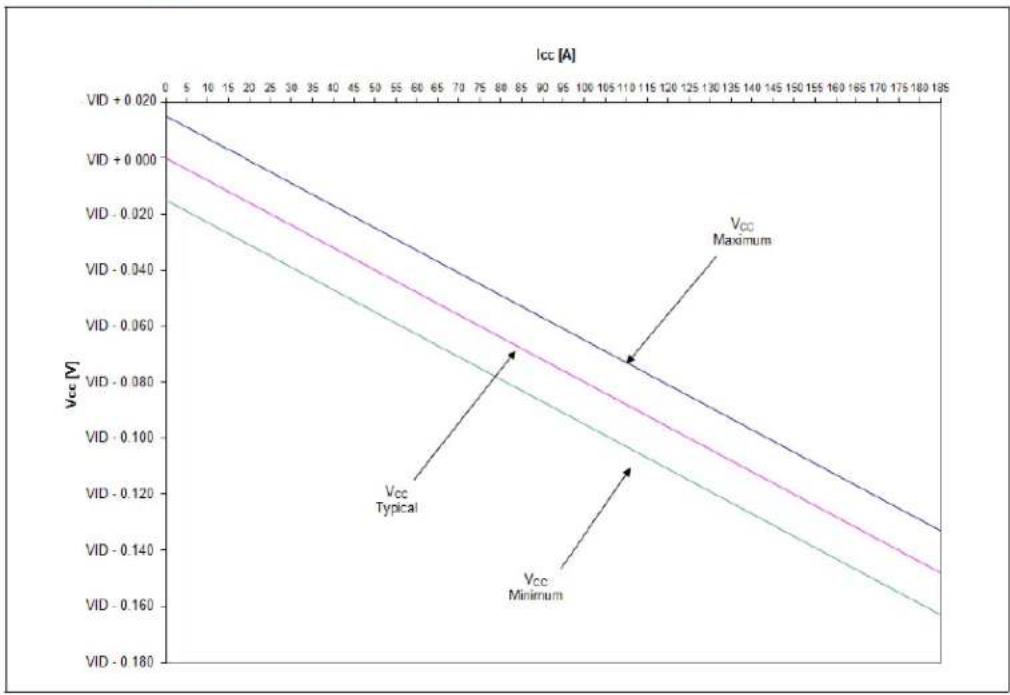
7.8.2 Die Voltage Validation
Core voltage ( V_CC ) overshoot events at the processor must meet the specifications in Table 7-14 when measured across the VCC_SENSE and VSS_VCC_SENSE lands. Overshoot events that are < 10 ns in duration may be ignored. These measurements of processor die level overshoot should be taken with a 100 MHz bandwidth limited oscilloscope.
Figure 7-4. Load Current Versus Time
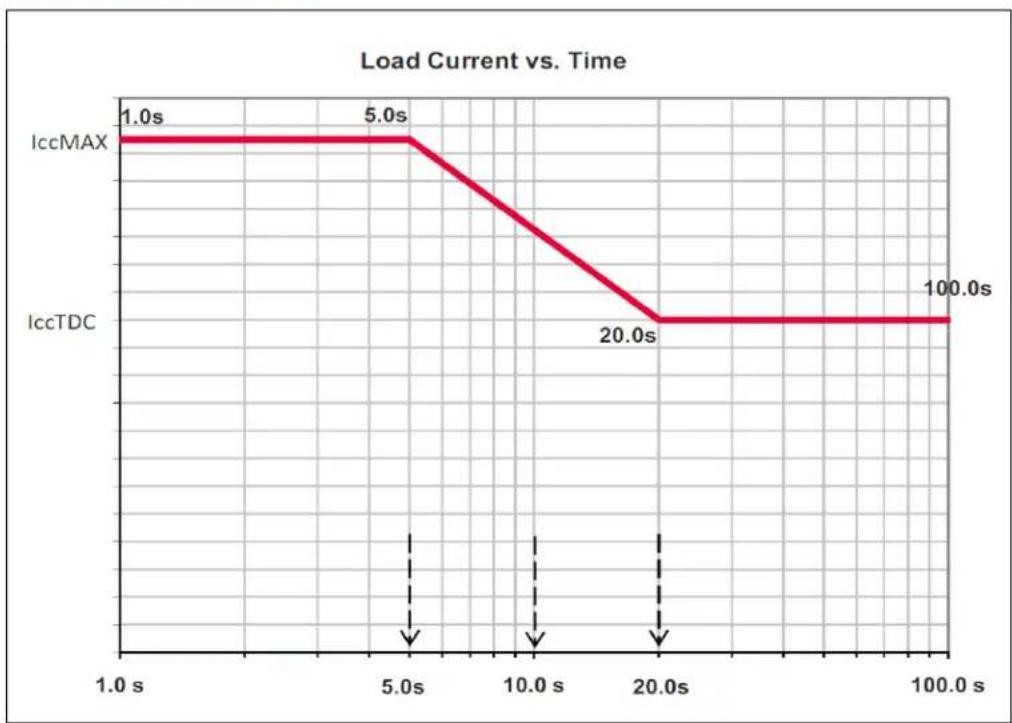
line
| Time (s) | IccMAX | IccTDC | | -------- | ------ | ------ | | 1.0 | 1.0 | - | | 5.0 | 1.0 | - | | 5.0 | 5.0 | - | | 20.0 | 20.0 | - | | 100.0 | 100.0 | - |Notes:
1. The peak current for any 5 second sample does not exceed Icc_max.
2. The average current for any 10 second sample does not exceed the Y value at 10 seconds.
3. The average current for any 20 second period or greater does not exceed Icc_tdc.
4. Turbo performance may be impacted by failing to meet durations specified in this graph. Ensure that the platform design can handle peak and average current based on the specification.
5. Processor or voltage regulator thermal protection circuitry should not trip for load currents greater than I_CC TDC .
6. Not 100% tested. Specified by design characterization.
7.8.2.1 V CC Overshoot Specifications
The processor can tolerate short transient overshoot events where V_CC exceeds the VID voltage when transitioning from a high-to-low current load condition. This overshoot cannot exceed VID + V_OS_MAX ( V_OS_MAX is the maximum allowable overshoot above VID). These specifications apply to the processor die voltage as measured across the VCC_SENSE and VSS_VCC_SENSE lands.
Table 7-14. V CC Overshoot Specifications
| Symbol Parameter Min Max Units Figure Notes | ||||||
| V_OS\_MAX | Magnitude of V_CC overshoot above VID 65 mV 7-5 | |||||
| T_OS\_MAX | Time duration of V_CC overshoot above VccMAX value at the new lighter load | 25 | μs | 7-5 | ||
Figure 7-5. Vcc Overshoot Example Waveform
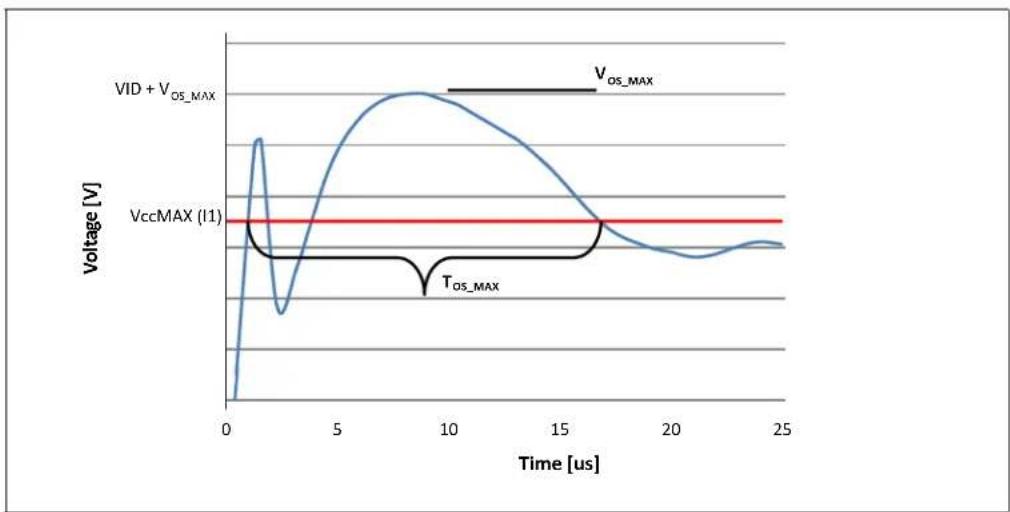
line
| Time [us] | Voltage [V] | | --------- | ----------- | | 0 | ~0 | | 2 | ~0.8 | | 4 | ~0.2 | | 6 | ~0.9 | | 8 | ~1.0 | | 10 | ~0.9 | | 12 | ~0.7 | | 14 | ~0.5 | | 16 | ~0.3 | | 18 | ~0.2 | | 20 | ~0.1 | | 22 | ~0.1 | | 24 | ~0.1 | | 25 | ~0.1 |Notes:
1. V_OS MAX is the measured overshoot voltage.
2. T_OS MAX is the measured time duration above VccMAX(I1).
3. Istep: Load Release Current Step, for example, I2 to I1, where I2 > I1.
4. VccMAX(I1) = VID - I1*RLL + 15mV
7.8.3 Signal DC Specifications
DC specifications are defined at the processor pads, unless otherwise noted. DC specifications are only valid while meeting specifications for case temperature ( T_CASE specified in Chapter 5), clock frequency, and input voltages. Care should be taken to read all notes associated with each specification.
Table 7-15. DDR3 and DDR3L Signal DC Specifications (Sheet 1 of 2)
| Symbol | Parameter | Min | Typ | Max | Units | Notes1 |
| I_IL | Input Leakage Current | -1.4 | +1.4 | mA | 10 | |
| Data Signals | ||||||
| V_IL | Input Low Voltage | 0.43*V_CCD | V | 2, 3 | ||
| V_IH | Input High Voltage | 0.57*V_CCD | V | 2, , 4 | ||
| R_ON | DDR3 Data Buffer On Resistance | 21 | 31 | Ω | 6 | |
| Data ODT | On-Die Termination for Data Signals | 4590 | 55110 | Ω | 8 | |
| PAR_ERR_N ODT On-Die Termination for Parity Error Signals | 59 | 72 | Ω | |||
Table 7-15. DDR3 and DDR3L Signal DC Specifications (Sheet 2 of 2)
| Symbol | Parameter | Min | Typ | Max | Units | Notes1 |
| Reference Clock Signals, Command, and Data Signals | ||||||
| V_OL | Output Low Voltage | (V_CCD/2)* (R_ON/(R_ON+R_VTT\_TERM) | V | 2 | ||
| V_OH | Output High Voltage | _CCD-((V_CCD/2)* (R_ON/(R_ON+R_VTT\_TERM)) | V | 2 , | ||
| Reference Clock Signal | ||||||
| R_ON | DDR3 Clock Buffer On Resistance | 21 31 Ω | 6 | |||
| Command Signals | ||||||
| R_ON | DDR3 Command Buffer On Resistance | 16 24 Ω | 6 | |||
| R_ON | DDR3 Reset Buffer On Resistance | 25 75 Ω | 6 | |||
| V_OL\_CMOS1.5V | Output Low Voltage, Signals DDR_RESET_C{01/23}_N | 0.2* V_CCD | V | 1,2 | ||
| V_OH\_CMOS1.5V | Output High Voltage, Signals DDR_RESET_C{01/23}_N | 0.9* V_CCD | V | 1,2 | ||
| I_IL\_CMOS1.5V | Input Leakage Current | -100 | +100 | μA | 1,2 | |
| Control Signals | ||||||
| R_ON | DDR3 Control Buffer On Resistance | 21 31 Ω | 6 | |||
| DDR01_RCOMP[0] | COMP Resistance | 128.7 | 130 | 131.3 | Ω | 9,12 |
| DDR01_RCOMP[1] | COMP Resistance | 25.839 | 26.1 | 26.361 | Ω | 9,12 |
| DDR01_RCOMP[2] | COMP Resistance | 198 | 200 | 202 | Ω | 9,12 |
| DDR23_RCOMP[0] | COMP Resistance | 128.7 | 130 | 131.3 | Ω | 9,12 |
| DDR23_RCOMP[1] | COMP Resistance | 25.839 | 26.1 | 26.361 | Ω | 9,12 |
| DDR23_RCOMP[2] | COMP Resistance | 198 | 200 | 202 | Ω | 9,12 |
| DDR3 Miscellaneous Signals | ||||||
| V_IL | Input Low Voltage DRAM_PWR_OK_C{01/23} | 0.55*VCCD + 0.2 | V | 2,3, 11,13 | ||
| V_IH | Input High Voltage DRAM_PWR_OK_C{01/23} | 0.55*VCCD + 0.3 | V | 2,4,5, 11,13 | ||
Notes:
1. Unless otherwise noted, all specifications in this table apply to all processor frequencies.
2. The voltage rail V CCD which will be set to 1.50 V or 1.35 V nominal depending on the voltage of all DIMMs connected to the processor.
3. V_II is the maximum voltage level at a receiving agent that will be interpreted as a logical low value.
4. V_TH is the minimum voltage level at a receiving agent that will be interpreted as a logical high value.
5. V_IH and V_OH may experience excursions above V_CCD . However, input signal drivers must comply with the signal quality specifications. Refer to Section 7.9.
6. This is the pull down driver resistance. Refer to processor signal integrity models for I/V characteristics. Reset drive does not have a termination.
7. R _VTT TERM is the termination on the DIMM and not controlled by the processor. Please refer to the applicable DIMM datasheet.
8. The minimum and maximum values for these signals are programmable by BIOS to one of the pairs.
9. COMP resistance must be provided on the system board with 1% resistors. DDR01_RCOMP[2:0] and DDR23_RCOMP[2:0] resistors are terminated to VSS.
10. Input leakage current is specified for all DDR3 signals.
- DRAM_PWR_OK_C{01/23} must have a maximum of 30 ns rise or fall time over VCCD * 0.55 +300 mV and -200 mV and the edge must be monotonic.
- The DDR01/23_RCOMP error tolerance is ±15% from the compensated value.
- DRAM_PWR_OK_C{01/23}: Data Scrambling must be enabled for production environments. Disabling Data scrambling can be used for debug and testing purposes only. Running systems with Data Scrambling off will make the configuration out of specification. For details, please reference these documents: Intel® Xeon® Processor E5 v2 Product Family Processor Datasheet, Volume Two: Registers.
Table 7-16. PECI DC Specifications
| Symbol Definition and Conditions Min Max Units Figure | Notes | 1 | ||||
| V_In | Input Voltage Range -0.150 V | TT | V | |||
| V_Hysteresis | Hysteresis | 0.100 * V_TT | V | |||
| V_N | Negative-edge threshold voltage | 0.275 * V_TT | 0.500 * V_TT | V | 7-1 | 2 |
| V_P | Positive-edge threshold voltage | 0.550 * V_TT | 0.725 * V_TT | V | 7-1 | 2 |
| I_SOURCE | High level output source V_OH = 0.75 * V_TT | -6.0 | mA | |||
| I_Leak+ | High impedance state leakage to V_TTD (V_leak = V_OL) | 50 | 200 | μA | 3 | |
| R_ON | Buffer On Resistance | 20 | 36 | Ω | ||
| C_Bus | Bus capacitance per node | N/A | 10 | pF | 4,5 | |
| V_Noise | Signal noise immunity above 300 MHz | 0.100 * V_TT | N/A | V_p-p | ||
| Output Edge Rate (50 ohm to VSS, between V_IL and V_IH ) | 1.5 | 4 | V/ns | |||
Notes:
- V_TTD supplies the PECI interface. PECI behavior does not affect V_TTD min/max specification
- It is expected that the PECI driver will take into account, the variance in the receiver input thresholds and consequently, be able to drive its output within safe limits (-0.150 V to 0.275*V TTD for the low level and 0.725*V TTD to V _TTD +0.150 V for the high level).
- The leakage specification applies to powered devices on the PECI bus.
- One node is counted for each client and one node for the system host. Extended trace lengths might appear as additional nodes.
- Excessive capacitive loading on the PECI line may slow down the signal rise/fall times and consequently limit the maximum bit rate at which the interface can operate.
Table 7-17. System Reference Clock (BCLK{0/1}) DC Specifications
| Symbol Parameter | Signal | Min | Max | Unit | Figure Notes 1 | |
| V_BCLK\_diff\_lh | Differential Input High Voltage | Differential | 0.150 | N/A | V | 7-7 |
| V_BCLK\_diff\_il | Differential Input Low Voltage | Differential | -0.150 | V | 7-7 | |
| V_cross (abs) | Absolute Crossing Point | Single Ended | 0.250 | 0.550 | V | 7-67-8 |
| V_cross (rel) | Relative Crossing Point | Single Ended | 0.250 + 0.5*( VH_avg - 0.700 ) | 0.550 + 0.5*( VH_avg - 0.700 ) | V | 7-9 |
| V_cross | Range of Crossing Points | Single Ended | N/A | 0.140 | V | |
| V_TH | Threshold Voltage | Single Ended | Vcross - 0.1 | Vcross + 0.1 | V | |
| I_IL | Input Leakage Current | N/A | 1.50 | μA | ||
| C_pad | Pad Capacitance | N/A | 0.9 | 1.2 | pF |
Notes:
- Unless otherwise noted, all specifications in this table apply to all processor frequencies. These specifications are specified at the processor pad.
- Crossing Voltage is defined as the instantaneous voltage value when the rising edge of BCLK{0/1}_DN is equal to the falling edge of BCLK{0/1}_DP.
- V_Havq is the statistical average of the VH measured by the oscilloscope.
- The crossing point must meet the absolute and relative crossing point specifications simultaneously.
- V_Havg can be measured directly using "Vtop" on Agilent* and "High" on Tektronix oscilloscopes.
- V_CROSS is defined as the total variation of all crossing voltages as defined in Note 3.
-
The rising edge of BCLK{0/1}_DN is equal to the falling edge of BCLK{0/1}_DP.
-
For Vin between 0 and Vih.
Table 7-18. SMBus DC Specifications
| Symbol Parameter Min Max Units Notes | |||||
| V_IL | Input Low Voltage 0.3*V | V | |||
| V_IH | Input High Voltage 0.7*VTT V | ||||
| V_Hysteresis | Hysteresis 0.1*VTT V | ||||
| V_OL | Output Low Voltage 0.2*V | V | |||
| R_ON | Buffer On Resistance 4 14 | ||||
| I_L | Leakage Current | 50 | 200 | A | |
| Output Edge Rate (50 ohm to V_TT , between V_IL and V_IH ) | 0.05 | 0.6 | V/ns | ||
Table 7-19. JTAG and TAP Signals DC Specifications
| Symbol | Parameter | Min | Max | Units | Notes |
| V_IL | Input Low Voltage | 0.3*V_TT | V | ||
| V_IH | Input High Voltage | 0.7*V_TT | V | ||
| V_IL | Input Low Voltage: PREQ_N | 0.4*V_TT | V | ||
| V_IH | Input High Voltage: PREQ_N | 0.8*V_TT | V | ||
| V_OL | Output Low Voltage | 0.2*V_TT | V | ||
| V_Hysteresis | Hysteresis | 0.1*V_TT | V | ||
| R_ON | Buffer On ResistanceBPM_N[7:0], PRDY_N, TDO | 4 | 14 | Ω | |
| I_IL | Input Leakage Current | 50 | 200 | μA | |
| Input Edge RateSignals: BPM_N[7:0], EAR_N, PREQ_N, TCK, TDI, TMS, TRST_N | 0.05 | V/ns | 1, 2 | ||
| Output Edge Rate (50 ohm to V_TT )Signal: BPM_N[7:0], PRDY_N, TDO | 0.2 | 1.5 | V/ns 1 |
Note:
1. These signals are measured between VIL and VIH.
2. The signal edge rate must be met or the signal must transition monotonically to the asserted state.
Table 7-20. Serial VID Interface (SVID) DC Specifications (Sheet 1 of 2)
| Symbol | Parameter | Min | Typ | Max | Units | Notes |
| V_TT | CPU I/O Voltage | VTT - 3% | 1.0 | VTT + 3% | V | |
| V_IL | Input Low VoltageSignals SVIDDATA, SVIDALERT_N | 0.4*V_TT | V | 1 | ||
| V_IH | Input High VoltageSignals SVIDDATA, SVIDALERT_N | 0.7*V_TT | V | 1 | ||
| V_OL | Output Low VoltageSignals SVIDCLK, SVIDDATA | 0.3*V_TT | V | 1 | ||
| V_Hysteresis | Hysteresis | 0.05*V_TT | V | 1 | ||
| R_ON | Buffer On ResistanceSignals SVIDCLK, SVIDDATA | 4 | 14 | Ω | 2 |
Table 7-20. Serial VID Interface (SVID) DC Specifications (Sheet 2 of 2)
| Symbol | Parameter | Min | Typ | Max | Units | Notes |
| I_IL | Input Leakage Current +/-50 +/-200 μA | 3 | 4 | |||
| Input Edge RateSignal: SVIDALERT_N | 0.05 V/ns | 5, 6 | ||||
| Output Edge Rate (50 ohm to V_TT ) | 0 | . | 2 | 0 |
Notes:
- V_TT refers to instantaneous V_TT .
- Measured at 0.31*V
- Vin between 0V and V
- These are measured between VIL and VIH.
- The signal edge rate must be met or the signal must transition monotonically to the asserted state.
Table 7-21. Processor Asynchronous Sideband DC Specifications
| Symbol | Parameter | Min | Max | Units | Notes |
| CMOS1.0v Signals | |||||
| V_IL\_CMOS1.0v | Input Low Voltage | 0.3*V_TT | V | 1,2 | |
| V_IH\_CMOS1.0v | Input High Voltage | 0.7*V_TT | V | 1,2 | |
| V_Hysteresis | Hysteresis | 0.1*V_TT | V | 1,2 | |
| I_IL\_CMOS1.0v | Input Leakage Current | 50 | 200 | μA | 1,2 |
| Open Drain CMOS (ODCMOS) Signals | |||||
| V_IL\_ODCMOS | Input Low VoltageSignals:MEM_HOT_C01/23_N,PROCHOT_N | 0.3*V_TT | V | 1,2 | |
| V_IL\_ODCMOS | Input Low VoltageSignals:CAT_ERR_N | 0.4*V_TT | V | 1,2 | |
| V_IH\_ODCMOS | Input High Voltage | 0.7*V_TT | V | 1,2 | |
| V_OL\_ODCMOS | Output Low Voltage | 0.2*V_TT | V | 1,2 | |
| V_Hysteresis | HysteresisSignals:MEM_HOT_C01/23_N,PROCHOT_N | 0.1*V_TT | V | 1,2 | |
| V_Hysteresis | HysteresisSignal:CAT_ERR_N | 0.05*V_TT | V | 1,2 | |
| I_Leak | Input Leakage Current | 50 | 200 | μA | |
| R_ON | Buffer On Resistance | 4 | 14 | Ω | 1,2 |
| Output Edge RateSignal:MEM_HOT_C{01/23}_N,ERROR_N[2:0],THERMTRIP,PROCHOT_N | 0.05 | 0.60 | V/ns | 3 | |
| Output Edge RateSignal:CAT_ERR_N | 0.2 | 1.5 | V/ns | 3 | |
Notes:
- This table applies to the processor sideband and miscellaneous signals specified in Table 7-5.
- Unless otherwise noted, all specifications in this table apply to all processor frequencies.
- These signals are measured between VIL and VIH.
Table 7-22. Miscellaneous Signals DC Specifications
| Symbol Parameter Min Typical Max Units Notes | ||||||
| IVT_ID_N Signal | ||||||
| V_O\_ABS\_MAX | Output Absolute Max Voltage 1.10 1.80 V 1 | |||||
| I_O | Output Current 0 μA | 1 | ||||
| SKTOCC_N Signal | ||||||
| V_O\_ABS\_MAX | Output Absolute Max Voltage 3.30 3.50 V 1 | |||||
| I_OMAX | Output Max Current | 1 | mA | |||
Notes:
1. IVT_ID_N land is pulled to ground on the package.
7.8.3.1 PCI Express\* DC Specifications
The processor DC specifications for the PCI Express* are available in the PCI Express Base Specification - Revision 3.0. This document will provide only the processor exceptions to the PCI Express Base Specification - Revision 3.0.
7.8.3.2 DMI 2/ PCI Express\* DC Specifications
The processor DC specifications for the DMI2/PCI Express* are available in the PCI Express Base Specification 2.0 and 1.0. This document will provide only the processor exceptions to the PCI Express Base Specification 2.0 and 1.0.
7.8.3.3 Intel® QuickPath Interconnect DC Specifications
Intel QuickPath Interconnect specifications are defined at the processor lands. In most cases, termination resistors are not required as these are integrated into the processor.
7.8.3.4 Reset and Miscellaneous Signal DC Specifications
For a power-on Reset, RESET_N must stay active for at least 3.5 millisecond after V_CC and BCLK{0/1} have reached their proper specifications. RESET_N must not be kept asserted for more than 100 ms while PWRGOOD is asserted. RESET_N must be held asserted for at least 3.5 millisecond before it is deasserted again. RESET_N must be held asserted before PWRGOOD is asserted. This signal does not have on-die termination and must be terminated on the system board.
Figure 7-6. BCLK{0/1} Differential Clock Crosspoint Specification
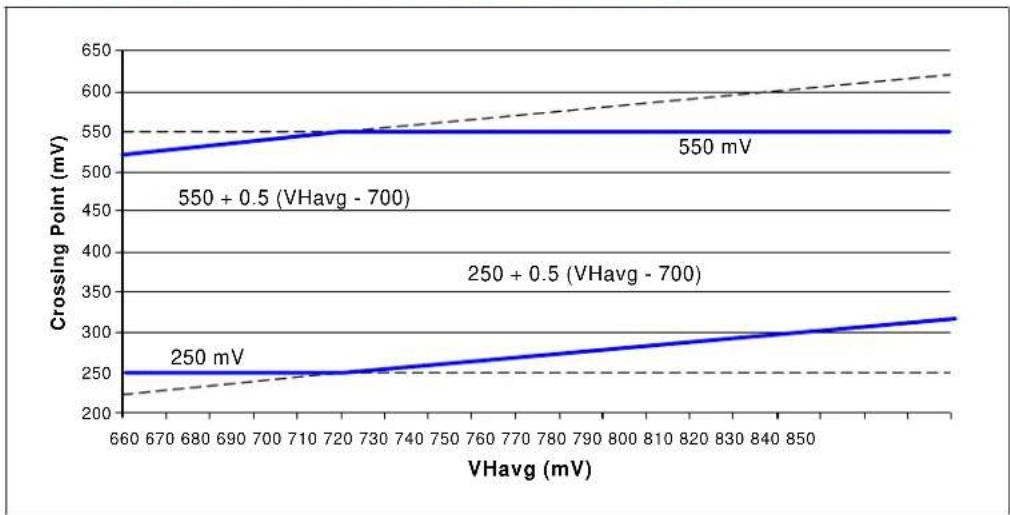
Figure 7-7. BCLK{0/1} Differential Clock Measurement Point for Ringback
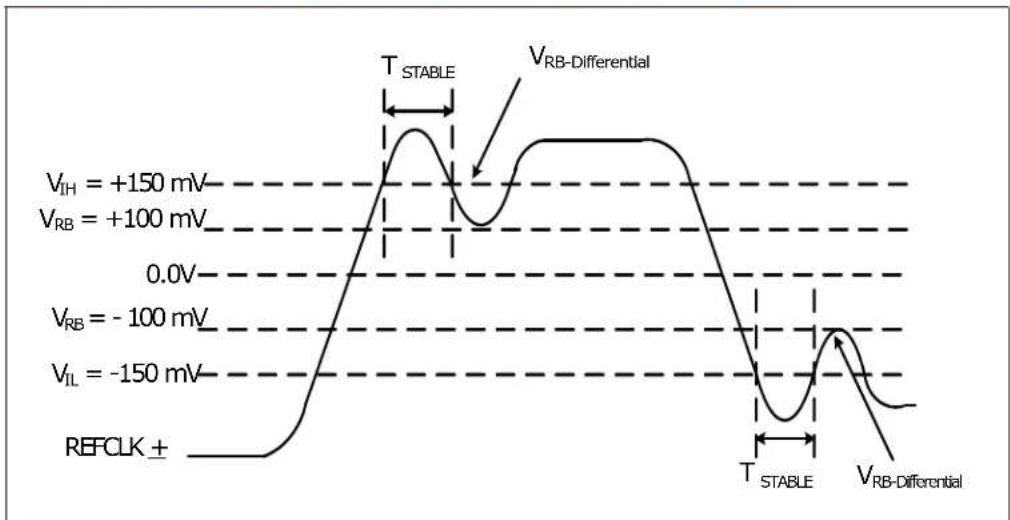
line
| Parameter | Value | | ----------------- | ------------ | | VIH | +150 mV | | VRB | +100 mV | | 0.0V | - | | VRB | -100 mV | | V_IL | -150 mV | | REFCLK ± | ± | | T_STABLE | T_STABLE | | V_RB-Differential | V_RB-Differential | | V_RB | - | | V_RB | - |Figure 7-8. BCLK{0/1} Single Ended Clock Measurement Points for Absolute Cross Point and Swing
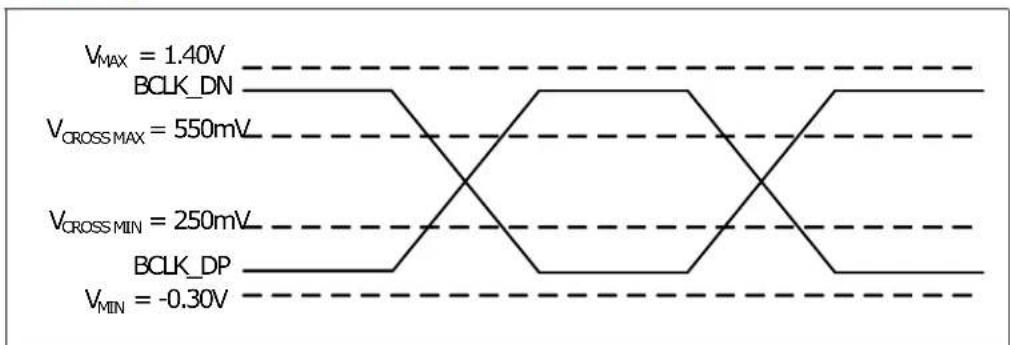
line
| Signal | Value | | ------------- | --------- | | V_MAX | 1.40V | | V_CROSS_MAX | 550mV | | V_CROSS_MIN | 250mV | | V_MIN | -0.30V |Figure 7-9. BCLK{0/1} Single Ended Clock Measurement Points for Delta Cross Point
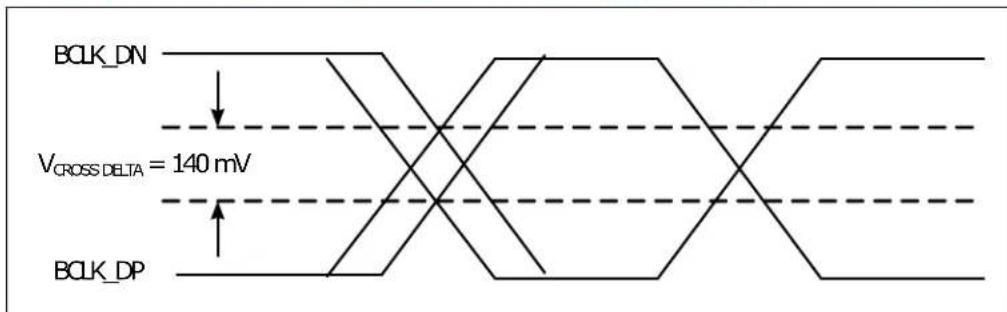
7.9 Signal Quality
Data transfer requires the clean reception of data signals and clock signals. Ringing below receiver thresholds, non-monotonic signal edges, and excessive voltage swings will adversely affect system timings. Ringback and signal non-monotonicity cannot be tolerated since these phenomena may inadvertently advance receiver state machines. Excessive signal swings (overshoot and undershoot) are detrimental to silicon gate oxide integrity, and can cause device failure if absolute voltage limits are exceeded. Overshoot and undershoot can also cause timing degradation due to the build up of inter-symbol interference (ISI) effects.
For these reasons, it is crucial that the designer work towards a solution that provides acceptable signal quality across all systematic variations encountered in volume manufacturing.
This section documents signal quality metrics used to derive topology and routing guidelines through simulation. All specifications are specified at the processor die (pad measurements).
Specifications for signal quality are for measurements at the processor core only and are only observable through simulation. Therefore, proper simulation is the only way to verify proper timing and signal quality.
7.9.1 DDR3 Signal Quality Specifications
Overshoot (or undershoot) is the absolute value of the maximum voltage above or below V_SS . The overshoot/undershoot specifications limit transitions beyond specified maximum voltages or V_SS due to the fast signal edge rates. The processor can be damaged by single and/or repeated overshoot or undershoot events on any input, output, or I/O buffer if the charge is large enough (that is, if the over/undershoot is great enough). Baseboard designs which meet signal integrity and timing requirements and which do not exceed the maximum overshoot or undershoot limits listed in Table 7 -23 will insure reliable IO performance for the lifetime of the processor.
7.9.2 I/ O Signal Quality Specifications
Signal Quality specifications for PCIe Signals are included as part of the PCIe DC specifications.
7.9.3 Intel ^® QuickPath Interconnect Signal Quality Specifications
Signal Quality specifications for Differential Intel® QuickPath Interconnect Signals are included as part of the Intel QuickPath Interconnect signal quality specifications.
7.9.4 Input Reference Clock Signal Quality Specifications
Overshoot/Undershoot and Ringback specifications for BCLK{0/1}_D[N/P] are found in Table 7-23. Overshoot/Undershoot and Ringback specifications for the DDR3 Reference Clocks are specified by the DIMM.
7.9.5 Overshoot/ Undershoot Tolerance
Overshoot (or undershoot) is the absolute value of the maximum voltage above or below V_SS , see Figure 7-10. The overshoot/undershoot specifications limit transitions beyond V_CCD or V_SS due to the fast signal edge rates. The processor can be damaged by single and/or repeated overshoot or undershoot events on any input, output, or I/O buffer if the charge is large enough (that is, if the over/undershoot is great enough). Determining the impact of an overshoot/undershoot condition requires knowledge of the magnitude, the pulse direction, and the activity factor (AF). Permanent damage to the processor is the likely result of excessive overshoot/undershoot.
Baseboard designs which meet signal integrity and timing requirements and which do not exceed the maximum overshoot or undershoot limits listed in Table 7-23 will insure reliable IO performance for the lifetime of the processor.
Table 7-23. Processor I/ O Overshoot/ Undershoot Specifications
| Signal Group | Minimum Undershoot | Maximum Overshoot | Overshoot Duration | Undershoot Duration | Notes |
| Intel QuickPath Interconnect -0.2 * VTT 1.2 * VTT 39 ps | 15 ps | 1,2 | |||
| DDR3 | -0.2 * V_CCD | 1.2 * V_CCD | 0.25* T_CH | 0.1*T _CH | 1,2,3 |
| System Reference Clock (BCLK{0/1}) | -0.3V | 1.15V | N/A | N/A | 1,2 |
| PWRGOOD Signal | -0.420V | VTT + 0.28 | N/A | N/A | 4 |
Notes:
- These specifications are measured at the processor pad.
- Refer to Figure 7-10 for description of allowable Overshoot/Undershoot magnitude and duration.
- TCH is the minimum high pulse width duration.
- For PWRGOOD DC specifications see Table 7-21.
7.9.5.1 Overshoot/ Undershoot Magnitude
Overshoot/Undershoot magnitude describes the maximum potential difference between a signal and its voltage reference level. For the processor, both overshoot and undershoot magnitude are referenced to V_SS . It is important to note that the overshoot and undershoot conditions are separate and their impact must be determined independently.
The pulse magnitude and duration, and activity factor must be used to determine if the overshoot/undershoot pulse is within specifications.
7.9.5.2 Overshoot/ Undershoot Pulse Duration
Overshoot/undershoot pulse duration describes the total amount of time that an overshoot/undershoot event exceeds the overshoot/undershoot reference voltage. The total time could encompass several oscillations above the reference voltage. Multiple overshoot/undershoot pulses within a single overshoot/undershoot event may need to be measured to determine the total pulse duration.
Note: Oscillations below the reference voltage cannot be subtracted from the total overshoot/undershoot pulse duration.
7.9.5.3 Activity Factor
Activity factor (AF) describes the frequency of overshoot (or undershoot) occurrence relative to a clock. Since the highest frequency of assertion of any common clock signal is every other clock, an AF = 0.1 indicates that the specific overshoot (or undershoot) waveform occurs every other clock cycle.
The specification provided in the table shows the maximum pulse duration allowed for a given overshoot/undershoot magnitude at a specific activity factor. Each table entry is independent of all others, meaning that the pulse duration reflects the existence of overshoot/undershoot events of that magnitude ONLY. A platform with an overshoot/undershoot that just meets the pulse duration for a specific magnitude where the AF < 0.1, means that there can be no other overshoot/undershoot events, even of lesser magnitude (note that if AF = 0.1, then the event occurs at all times and no other events can occur).
7.9.5.4 Reading Overshoot/ Undershoot Specification Tables
The overshoot/undershoot specification for the processor is not a simple single value. Instead, many factors are needed to determine the over/undershoot specification. In addition to the magnitude of the overshoot, the following parameters must also be known: the width of the overshoot and the activity factor (AF). To determine the allowed overshoot for a particular overshoot event, the following must be done:
- Determine the signal group a particular signal falls into.
- Determine the magnitude of the overshoot or the undershoot (relative to VSS).
- Determine the activity factor (How often does this overshoot occur?).
- Next, from the specification table, determine the maximum pulse duration (in nanoseconds) allowed.
- Compare the specified maximum pulse duration to the signal being measured. If the pulse duration measured is less than the pulse duration shown in the table, then the signal meets the specifications.
Undershoot events must be analyzed separately from overshoot events as they are mutually exclusive.
7.9.5.5 Determining if a System Meets the Overshoot/ Undershoot Specifications
The overshoot/undershoot specifications listed in the table specify the allowable overshoot/undershoot for a single overshoot/undershoot event. However most systems will have multiple overshoot and/or undershoot events that each have their own set of parameters (duration, AF and magnitude). While each overshoot on its own may meet
the overshoot specification, when you add the total impact of all overshoot events, the system may fail. A guideline to ensure a system passes the overshoot and undershoot specifications is shown below.
- If only one overshoot/undershoot event magnitude occurs, ensure it meets the over/undershoot specifications in the following tables, OR
- If multiple overshoots and/or multiple undershoots occur, measure the worst case pulse duration for each magnitude and compare the results against the AF = 0.1 specifications. If all of these worst case overshoot or undershoot events meet the specifications (measured time < specifications) in the table (where AF = 0.1), then the system passes.
Table 7-24. Processor Sideband Signal Group Overshoot/ Undershoot Tolerance
| Absolute Maximum Overshoot (V) | Absolute Maximum Undershoot (V) | Pulse Duration (ns) AF=0.1 | Pulse Duration (ns) AF=0.01 |
| 1.3335 V 0.2835 V | 3 ns 5 ns | ||
| 1.2600 V 0.210 V 5 | ns 5 ns |
Figure 7-10. Maximum Acceptable Overshoot/ Undershoot Waveform
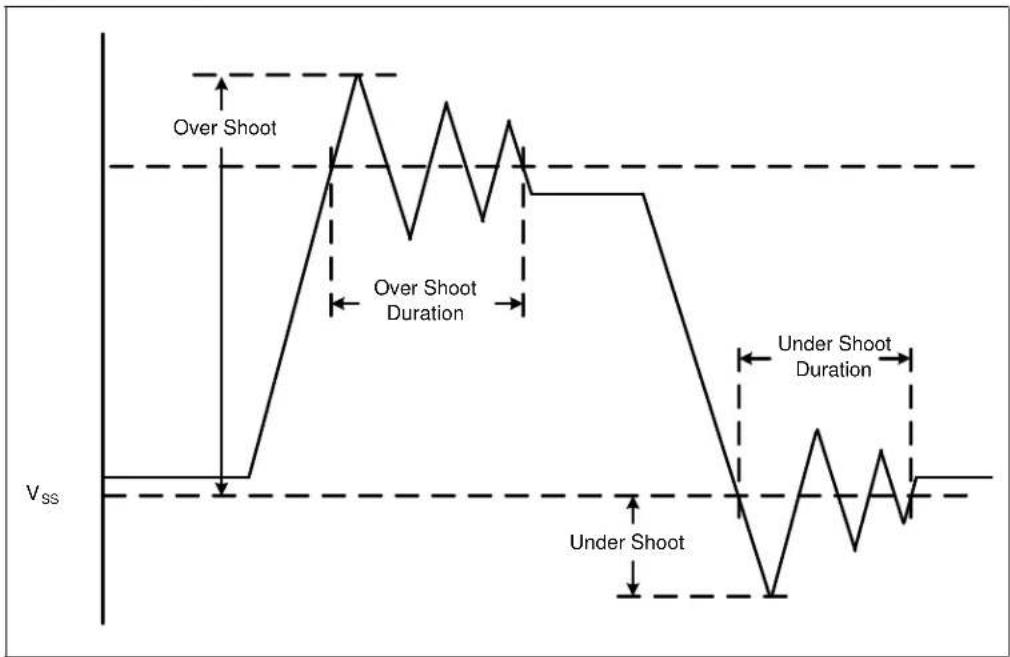
line
| Time Segment | Description | | ------------------ | ----------------------- | | Start | Vss | | Peak | Over Shoot Duration | | Mid | Under Shoot Duration | | End | Under Shoot Duration |8 Processor Land Listing
This chapter provides sorted land list in Section 8.1 and Section 8.2. Table 8-1 is a listing of all processor lands ordered alphabetically by land name. Table 8-2 is a listing of all processor lands ordered by land number.
8.1 Listing by Land Name
Table 8-1. Land Name (Sheet 1 of 50)
| Land Name | Land No. | Buffer Type | Direction |
| BCLK0_DN CM44 CMOS I | |||
| BCLK0_DP CN43 | CMOS I | ||
| BCLK1_DN | BA45 | CMOS | I |
| BCLK1_DP | AW45 CMOS I | ||
| BIST_ENABLE | AT48 | CMOS | I |
| BMCINIT | AL47 | CMOS | I |
| BPM_N[0] | AR43 | ODCMOS | I/O |
| BPM_N[1] | AT44 | ODCMOS | I/O |
| BPM_N[2] | AU43 | ODCMOS | I/O |
| BPM_N[3] | AV44 | ODCMOS | I/O |
| BPM_N[4] | BB44 | ODCMOS | I/O |
| BPM_N[5] | AW43 | ODCMOS | I/O |
| BPM_N[6] | BA43 | ODCMOS | I/O |
| BPM_N[7] | AY44 | ODCMOS | I/O |
| CAT_ERR_N | CC51 | ODCMOS | I/O |
| CPU_ONLY_RESET | AN43 | ODCMOS | I/O |
| DDR_RESET_C01_N | CB18 | CMOS1.5v | O |
| DDR_RESET_C23_N | AE27 | CMOS1.5v | O |
| DDR_SCL_C01 | CY42 | ODCMOS | I/O |
| DDR_SCL_C23 | U43 | ODCMOS | I/O |
| DDR_SDA_C01 | CW41 | ODCMOS | I/O |
| DDR_SDA_C23 | R43 | ODCMOS | I/O |
| DDR_VREFDQRX_C01 | BY16 | DC | I |
| DDR_VREFDQRX_C23 | J1 | DC | I |
| DDR_VREFDQTX_C01 | CN41 | DC | O |
| DDR_VREFDQTX_C23 | P42 | DC | O |
| DDR0_BA[0] | CM28 | SSTL | O |
| DDR0_BA[1] | CN27 | SSTL | O |
| DDR0_BA[2] | CM20 | SSTL | O |
| DDR0_CAS_N | CL29 | SSTL | O |
| DDR0_CKE[0] | CL19 | SSTL | O |
Table 8-1. Land Name (Sheet 2 of 50)
| Land Name | Land No. | Buffer Type Direction | |
| DDR0_CKE[1] | CM18 | SSTL | O |
| DDR0_CKE[2] | CH20 | SSTL | O |
| DDR0_CKE[3] | CP18 | SSTL | O |
| DDR0_CKE[4] | CF20 | SSTL | O |
| DDR0_CKE[5] | CE19 | SSTL | O |
| DDR0_CLK_DN[0] | CF24 | SSTL | O |
| DDR0_CLK_DN[1] | CE23 | SSTL | O |
| DDR0_CLK_DN[2] | CE21 | SSTL | O |
| DDR0_CLK_DN[3] | CF22 | SSTL | O |
| DDR0_CLK_DP[0] | CH24 | SSTL | O |
| DDR0_CLK_DP[1] | CG23 | SSTL | O |
| DDR0_CLK_DP[2] | CG21 | SSTL | O |
| DDR0_CLK_DP[3] | CH22 | SSTL | O |
| DDR0_CS_N[0] | CN25 | SSTL | O |
| DDR0_CS_N[1] | CH26 | SSTL | O |
| DDR0_CS_N[2] | CC23 | SSTL | O |
| DDR0_CS_N[3] | CB28 | SSTL | O |
| DDR0_CS_N[4] | CG27 | SSTL | O |
| DDR0_CS_N[5] | CF26 | SSTL | O |
| DDR0_CS_N[6] | CB26 | SSTL | O |
| DDR0_CS_N[7] | CC25 | SSTL | O |
| DDR0_CS_N[8] | CL27 | SSTL | O |
| DDR0_CS_N[9] | CK28 | SSTL | O |
| DDR0_DQ[00] | CC7 | SSTL | I/O |
| DDR0_DQ[01] | CD8 | SSTL | I/O |
| DDR0_DQ[02] | CK8 | SSTL | I/O |
| DDR0_DQ[03] | CL9 | SSTL | I/O |
| DDR0_DQ[04] | BY6 | SSTL | I/O |
| DDR0_DQ[05] | CA7 | SSTL | I/O |
| DDR0_DQ[06] | CJ7 | SSTL | I/O |
| DDR0_DQ[07] | CL7 | SSTL | I/O |
| DDR0_DQ[08] | CB2 | SSTL | I/O |
| DDR0_DQ[09] | CB4 | SSTL | I/O |
Table 8-1. Land Name (Sheet 3 of 50)
| Land Name Land | No. | Buffer | Type | Direction |
| DDR0_DQ[10] | CH4 SSTL I/O | |||
| DDR0_DQ[11] CJ5 SSTL I/O | ||||
| DDR0_DQ[12] CA1 SSTL I/O | ||||
| DDR0_DQ[13] CA3 SSTL I/O | ||||
| DDR0_DQ[14] CG3 SSTL I/O | ||||
| DDR0_DQ[15] CG5 SSTL I/O | ||||
| DDR0_DQ[16] CK12 SSTL I/O | ||||
| DDR0_DQ[17] CM12 SSTL I/O | ||||
| DDR0_DQ[18] CK16 SSTL I/O | ||||
| DDR0_DQ[19] CM16 SSTL I/O | ||||
| DDR0_DQ[20] CG13 SSTL I/O | ||||
| DDR0_DQ[21] CL11 SSTL I/O | ||||
| DDR0_DQ[22] CJ15 SSTL I/O | ||||
| DDR0_DQ[23] CL15 SSTL I/O | ||||
| DDR0_DQ[24] BY10 SSTL I/O | ||||
| DDR0_DQ[25] BY12 SSTL I/O | ||||
| DDR0_DQ[26] CB12 SSTL I/O | ||||
| DDR0_DQ[27] CD12 SSTL I/O | ||||
| DDR0_DQ[28] | BW9 | SSTL | I/O | |
| DDR0_DQ[29] CA9 SSTL I/O | ||||
| DDR0_DQ[30] CH10 SSTL I/O | ||||
| DDR0_DQ[31] CF10 SSTL I/O | ||||
| DDR0_DQ[32] CE31 SSTL I/O | ||||
| DDR0_DQ[33] CC31 SSTL I/O | ||||
| DDR0_DQ[34] CE35 SSTL I/O | ||||
| DDR0_DQ[35] CC35 SSTL I/O | ||||
| DDR0_DQ[36] CD30 SSTL I/O | ||||
| DDR0_DQ[37] CB30 SSTL I/O | ||||
| DDR0_DQ[38] CD34 SSTL I/O | ||||
| DDR0_DQ[39] CB34 SSTL I/O | ||||
| DDR0_DQ[40] CL31 SSTL I/O | ||||
| DDR0_DQ[41] CJ31 SSTL I/O | ||||
| DDR0_DQ[42] CL35 SSTL I/O | ||||
| DDR0_DQ[43] CJ35 SSTL | I/O | |||
| DDR0_DQ[44] CK30 SSTL I/O | ||||
| DDR0_DQ[45] CH30 SSTL I/O | ||||
| DDR0_DQ[46] CK34 SSTL I/O | ||||
| DDR0_DQ[47] CH34 SSTL I/O | ||||
| DDR0_DQ[48] CB38 SSTL I/O | ||||
| DDR0_DQ[49] CD38 SSTL I/O | ||||
| DDR0_DQ[50] CE41 SSTL I/O | ||||
| DDR0_DQ[51] CD42 SSTL I/O | ||||
Table 8-1. Land Name (Sheet 4 of 50)
| Land Name Land | No. | Buffer | Type | Direction |
| DDR0_DQ[52] | CC37 | SSTL | I/O | |
| DDR0_DQ[53] | CE37 | SSTL | I/O | |
| DDR0_DQ[54] | CC41 | SSTL | I/O | |
| DDR0_DQ[55] | CB42 | SSTL | I/O | |
| DDR0_DQ[56] | CH38 | SSTL | I/O | |
| DDR0_DQ[57] | CK38 | SSTL | I/O | |
| DDR0_DQ[58] | CH42 | SSTL | I/O | |
| DDR0_DQ[59] | CK42 | SSTL | I/O | |
| DDR0_DQ[60] | CJ37 | SSTL | I/O | |
| DDR0_DQ[61] | CL37 | SSTL | I/O | |
| DDR0_DQ[62] | CJ41 | SSTL | I/O | |
| DDR0_DQ[63] | CL41 | SSTL | I/O | |
| DDR0_DQS_DN[00] | CG7 | SSTL | I/O | |
| DDR0_DQS_DN[01] | CE3 | SSTL | I/O | |
| DDR0_DQS_DN[02] | CH14 | SSTL | I/O | |
| DDR0_DQS_DN[03] | CD10 | SSTL | I/O | |
| DDR0_DQS_DN[04] | CE33 | SSTL | I/O | |
| DDR0_DQS_DN[05] | CL33 | SSTL | I/O | |
| DDR0_DQS_DN[06] | CB40 | SSTL | I/O | |
| DDR0_DQS_DN[07] | CH40 | SSTL | I/O | |
| DDR0_DQS_DN[08] | CE17 | SSTL | I/O | |
| DDR0_DQS_DN[09] | CF8 | SSTL | I/O | |
| DDR0_DQS_DN[10] | CD4 | SSTL | I/O | |
| DDR0_DQS_DN[11] | CL13 | SSTL | I/O | |
| DDR0_DQS_DN[12] | CC11 | SSTL | I/O | |
| DDR0_DQS_DN[13] | CB32 | SSTL | I/O | |
| DDR0_DQS_DN[14] | CH32 | SSTL | I/O | |
| DDR0_DQS_DN[15] | CE39 | SSTL | I/O | |
| DDR0_DQS_DN[16] | CL39 | SSTL | I/O | |
| DDR0_DQS_DN[17] | CF16 | SSTL | I/O | |
| DDR0_DQS_DP[00] | CH8 | SSTL | I/O | |
| DDR0_DQS_DP[01] | CF4 | SSTL | I/O | |
| DDR0_DQS_DP[02] | CK14 | SSTL | I/O | |
| DDR0_DQS_DP[03] | CE11 | SSTL | I/O | |
| DDR0_DQS_DP[04] | CC33 | SSTL | I/O | |
| DDR0_DQS_DP[05] | CJ33 | SSTL | I/O | |
| DDR0_DQS_DP[06] | CD40 | SSTL | I/O | |
| DDR0_DQS_DP[07] | CK40 | SSTL | I/O | |
| DDR0_DQS_DP[08] | CC17 | SSTL | I/O | |
| DDR0_DQS_DP[09] | CE7 | SSTL | I/O | |
| DDR0_DQS_DP[10] | CC5 | SSTL | I/O | |
| DDR0_DQS_DP[11] | CJ13 | SSTL | I/O |
Table 8-1. Land Name (Sheet 5 of 50)
| Land Name | Land No. | Buffer Type | Direction |
| DDR0_DQS_DP[12] | CB10 SSTL I/O | ||
| DDR0_DQS_DP[13] CD32 SSTL I/O | |||
| DDR0_DQS_DP[14] CK32 SSTL I/O | |||
| DDR0_DQS_DP[15] CC39 SSTL I/O | |||
| DDR0_DQS_DP[16] CJ39 SSTL I/O | |||
| DDR0_DQS_DP[17] CD16 SSTL I/O | |||
| DDR0_ECC[0] CE15 SSTL I/O | |||
| DDR0_ECC[1] CC15 SSTL I/O | |||
| DDR0_ECC[2] CH18 SSTL I/O | |||
| DDR0_ECC[3] CF18 SSTL I/O | |||
| DDR0_ECC[4] CB14 SSTL I/O | |||
| DDR0_ECC[5] CD14 SSTL I/O | |||
| DDR0_ECC[6] CG17 SSTL I/O | |||
| DDR0_ECC[7] CK18 SSTL I/O | |||
| DDR0_MA_PAR CM26 SSTL O | |||
| DDR0_MA[00] CL25 SSTL O | |||
| DDR0_MA[01] CR25 SSTL O | |||
| DDR0_MA[02] CG25 SSTL O | |||
| DDR0_MA[03] CK24 SSTL O | |||
| DDR0_MA[04] | CM24 SSTL O | ||
| DDR0_MA[05] CL23 SSTL O | |||
| DDR0_MA[06] CN23 SSTL O | |||
| DDR0_MA[07] | CM22 SSTL O | ||
| DDR0_MA[08] CK22 SSTL O | |||
| DDR0_MA[09] CN21 SSTL O | |||
| DDR0_MA[10] CK26 SSTL O | |||
| DDR0_MA[11] CL21 SSTL O | |||
| DDR0_MA[12] CK20 SSTL O | |||
| DDR0_MA[13] | CG29 SSTL O | ||
| DDR0_MA[14] | CG19 SSTL O | ||
| DDR0_MA[15] CN19 SSTL O | |||
| DDR0_ODT[0] CE25 SSTL O | |||
| DDR0_ODT[1] CE27 SSTL O | |||
| DDR0_ODT[2] | CH28 SSTL | O | |
| DDR0_ODT[3] CF28 SSTL O | |||
| DDR0_ODT[4] CB24 SSTL O | |||
| DDR0_ODT[5] CC27 SSTL O | |||
| DDR0_PAR_ERR_N | CC21 | SSTL | I |
| DDR0_RAS_N | CE29 SSTL O | ||
| DDR0_WE_N | CN29 SSTL O | ||
| DDR01_RCOMP[0] | CA17 | Analog | I |
| DDR01_RCOMP[1] | CC19 | Analog | I |
Table 8-1. Land Name (Sheet 6 of 50)
| Land Name | Land No. | Buffer Type | Direction |
| DDR01_RCOMP[2] | CB20 | Analog | I |
| DDR1_BA[0] | DB26 SSTL O | ||
| DDR1_BA[1] | DC25 SSTL O | ||
| DDR1_BA[2] | DF18 SSTL O | ||
| DDR1_CAS_N | CY30 SSTL O | ||
| DDR1_CKE[0] CT20 SSTL O | |||
| DDR1_CKE[1] CU19 SSTL O | |||
| DDR1_CKE[2] CY18 SSTL O | |||
| DDR1_CKE[3] DA17 SSTL O | |||
| DDR1_CKE[4] CR19 SSTL O | |||
| DDR1_CKE[5] CT18 SSTL O | |||
| DDR1_CLK_DN[0] CV20 SSTL O | |||
| DDR1_CLK_DN[1] CV22 SSTL O | |||
| DDR1_CLK_DN[2] CY24 SSTL O | |||
| DDR1_CLK_DN[3] DA21 SSTL O | |||
| DDR1_CLK_DP[0] | CY20 SSTL O | ||
| DDR1_CLK_DP[1] | CY22 SSTL O | ||
| DDR1_CLK_DP[2] CV24 SSTL O | |||
| DDR1_CLK_DP[3] DC21 SSTL O | |||
| DDR1_CS_N[0] | DB24 SSTL O | ||
| DDR1_CS_N[1] | CU23 SSTL O | ||
| DDR1_CS_N[2] | CR23 SSTL O | ||
| DDR1_CS_N[3] | CR27 SSTL O | ||
| DDR1_CS_N[4] | CU25 SSTL O | ||
| DDR1_CS_N[5] | CT24 SSTL O | ||
| DDR1_CS_N[6] | DA29 SSTL O | ||
| DDR1_CS_N[7] | CT26 SSTL O | ||
| DDR1_CS_N[8] | CR21 SSTL O | ||
| DDR1_CS_N[9] | DA27 SSTL O | ||
| DDR1_DQ[00] | CP4 | SSTL | I/O |
| DDR1_DQ[01] | CP2 | SSTL | I/O |
| DDR1_DQ[02] | CV4 | SSTL | I/O |
| DDR1_DQ[03] | CY4 | SSTL | I/O |
| DDR1_DQ[04] CM4 | SSTL I/O | ||
| DDR1_DQ[05] | CL3 | SSTL | I/O |
| DDR1_DQ[06] | CV2 | SSTL | I/O |
| DDR1_DQ[07] | CW3 | SSTL | I/O |
| DDR1_DQ[08] | DA7 | SSTL | I/O |
| DDR1_DQ[09] | DC7 | SSTL | I/O |
| DDR1_DQ[10] | DC11 | SSTL | I/O |
| DDR1_DQ[11] | DE11 | SSTL | I/O |
| DDR1_DQ[12] | CY6 | SSTL | I/O |
Table 8-1. Land Name (Sheet 7 of 50)
| Land Name Land | No. | Buffer | Type | Direction |
| DDR1_DQ[13] | DB6 SSTL I/O | |||
| DDR1_DQ[14] DB10 SSTL I/O | ||||
| DDR1_DQ[15] DF10 SSTL I/O | ||||
| DDR1_DQ[16] CR7 SSTL I/O | ||||
| DDR1_DQ[17] CU7 SSTL I/O | ||||
| DDR1_DQ[18] CT10 SSTL I/O | ||||
| DDR1_DQ[19] CP10 SSTL I/O | ||||
| DDR1_DQ[20] CP6 SSTL I/O | ||||
| DDR1_DQ[21] CT6 SSTL I/O | ||||
| DDR1_DQ[22] CW9 SSTL I/O | ||||
| DDR1_DQ[23] CV10 SSTL I/O | ||||
| DDR1_DQ[24] CR13 SSTL I/O | ||||
| DDR1_DQ[25] CU13 SSTL I/O | ||||
| DDR1_DQ[26] CR17 SSTL I/O | ||||
| DDR1_DQ[27] CU17 SSTL I/O | ||||
| DDR1_DQ[28] CT12 SSTL I/O | ||||
| DDR1_DQ[29] CV12 SSTL I/O | ||||
| DDR1_DQ[30] CT16 SSTL I/O | ||||
| DDR1_DQ[31] CV16 SSTL I/O | ||||
| DDR1_DQ[32] CT30 SSTL I/O | ||||
| DDR1_DQ[33] CP30 SSTL I/O | ||||
| DDR1_DQ[34] CT34 SSTL I/O | ||||
| DDR1_DQ[35] CP34 SSTL I/O | ||||
| DDR1_DQ[36] CU29 SSTL I/O | ||||
| DDR1_DQ[37] CR29 SSTL I/O | ||||
| DDR1_DQ[38] CU33 SSTL I/O | ||||
| DDR1_DQ[39] CR33 SSTL I/O | ||||
| DDR1_DQ[40] DA33 SSTL I/O | ||||
| DDR1_DQ[41] DD32 SSTL I/O | ||||
| DDR1_DQ[42] DC35 SSTL I/O | ||||
| DDR1_DQ[43] DA35 SSTL I/O | ||||
| DDR1_DQ[44] DA31 SSTL I/O | ||||
| DDR1_DQ[45] CY32 SSTL I/O | ||||
| DDR1_DQ[46] DF34 SSTL | I/O | |||
| DDR1_DQ[47] DE35 SSTL I/O | ||||
| DDR1_DQ[48] CR37 SSTL I/O | ||||
| DDR1_DQ[49] CU37 SSTL I/O | ||||
| DDR1_DQ[50] CR41 SSTL I/O | ||||
| DDR1_DQ[51] CU41 SSTL I/O | ||||
| DDR1_DQ[52] CT36 SSTL I/O | ||||
| DDR1_DQ[53] CV36 SSTL I/O | ||||
| DDR1_DQ[54] CT40 SSTL I/O | ||||
Table 8-1. Land Name (Sheet 8 of 50)
| Land Name Land No. Buffer Type Direction | |||
| DDR1_DQ[55] CV40 SSTL I/O | |||
| DDR1_DQ[56] DE37 SSTL I/O | |||
| DDR1_DQ[57] DF38 SSTL I/O | |||
| DDR1_DQ[58] DD40 SSTL I/O | |||
| DDR1_DQ[59] DB40 SSTL I/O | |||
| DDR1_DQ[60] DA37 SSTL I/O | |||
| DDR1_DQ[61] DC37 SSTL I/O | |||
| DDR1_DQ[62] DA39 SSTL I/O | |||
| DDR1_DQ[63] DF40 SSTL I/O | |||
| DDR1_DQS_DN[00] | CT4 | SSTL | I/O |
| DDR1_DQS_DN[01] | DC9 | SSTL | I/O |
| DDR1_DQS_DN[02] | CV8 | SSTL | I/O |
| DDR1_DQS_DN[03] | CR15 | SSTL | I/O |
| DDR1_DQS_DN[04] | CT32 SSTL I/O | ||
| DDR1_DQS_DN[05] | CY34 | SSTL | I/O |
| DDR1_DQS_DN[06] | CR39 | SSTL | I/O |
| DDR1_DQS_DN[07] | DE39 | SSTL | I/O |
| DDR1_DQS_DN[08] | DE15 | SSTL | I/O |
| DDR1_DQS_DN[09] | CR1 | SSTL | I/O |
| DDR1_DQS_DN[10] | DB8 | SSTL | I/O |
| DDR1_DQS_DN[11] | CT8 | SSTL | I/O |
| DDR1_DQS_DN[12] | CP14 | SSTL | I/O |
| DDR1_DQS_DN[13] | CR31 | SSTL | I/O |
| DDR1_DQS_DN[14] | DE33 | SSTL | I/O |
| DDR1_DQS_DN[15] | CT38 SSTL I/O | ||
| DDR1_DQS_DN[16] | CY38 | SSTL | I/O |
| DDR1_DQS_DN[17] | DB14 | SSTL | I/O |
| DDR1_DQS_DP[00] | CR3 | SSTL | I/O |
| DDR1_DQS_DP[01] | DE9 | SSTL | I/O |
| DDR1_DQS_DP[02] | CU9 | SSTL | I/O |
| DDR1_DQS_DP[03] | CU15 | SSTL | I/O |
| DDR1_DQS_DP[04] | CP32 | SSTL | I/O |
| DDR1_DQS_DP[05] | DB34 | SSTL | I/O |
| DDR1_DQS_DP[06] | CU39 | SSTL | I/O |
| DDR1_DQS_DP[07] | DC39 | SSTL | I/O |
| DDR1_DQS_DP[08] | DC15 | SSTL | I/O |
| DDR1_DQS_DP[09] | CT2 | SSTL | I/O |
| DDR1_DQS_DP[10] | DD8 | SSTL | I/O |
| DDR1_DQS_DP[11] | CP8 | SSTL | I/O |
| DDR1_DQS_DP[12] | CT14 SSTL I/O | ||
| DDR1_DQS_DP[13] | CU31 | SSTL | I/O |
| DDR1_DQS_DP[14] | DC33 | SSTL | I/O |
Table 8-1. Land Name (Sheet 9 of 50)
| Land Name | Land No. | Buffer Type | Direction |
| DDR1_DQS_DP[15] | CP38 SSTL I/O | ||
| DDR1_DQS_DP[16] DB38 SSTL I/O | |||
| DDR1_DQS_DP[17] CY14 SSTL I/O | |||
| DDR1_ECC[0] DE13 SSTL I/O | |||
| DDR1_ECC[1] DF14 SSTL I/O | |||
| DDR1_ECC[2] DD16 SSTL I/O | |||
| DDR1_ECC[3] DB16 SSTL I/O | |||
| DDR1_ECC[4] DA13 SSTL I/O | |||
| DDR1_ECC[5] DC13 SSTL I/O | |||
| DDR1_ECC[6] DA15 SSTL I/O | |||
| DDR1_ECC[7] DF16 SSTL I/O | |||
| DDR1_MA_PAR DE25 SSTL O | |||
| DDR1_MA[00] DC23 SSTL O | |||
| DDR1_MA[01] DE23 SSTL O | |||
| DDR1_MA[02] DF24 SSTL O | |||
| DDR1_MA[03] DA23 SSTL O | |||
| DDR1_MA[04] DB22 SSTL O | |||
| DDR1_MA[05] DF22 SSTL O | |||
| DDR1_MA[06] DE21 SSTL O | |||
| DDR1_MA[07] DF20 SSTL O | |||
| DDR1_MA[08] DB20 SSTL O | |||
| DDR1_MA[09] DA19 SSTL O | |||
| DDR1_MA[10] DF26 SSTL O | |||
| DDR1_MA[11] DE19 SSTL O | |||
| DDR1_MA[12] DC19 SSTL O | |||
| DDR1_MA[13] DB30 SSTL O | |||
| DDR1_MA[14] DB18 SSTL O | |||
| DDR1_MA[15] DC17 SSTL O | |||
| DDR1_ODT[0] CT22 SSTL O | |||
| DDR1_ODT[1] DA25 SSTL O | |||
| DDR1_ODT[2] CY26 SSTL O | |||
| DDR1_ODT[3] CV26 SSTL O | |||
| DDR1_ODT[4] CU27 SSTL O | |||
| DDR1_ODT[5] CY28 SSTL | O | ||
| DDR1_PAR_ERR_N CU21 SSTL I | |||
| DDR1_RAS_N | DB28 SSTL O | ||
| DDR1_WE_N | CV28 SSTL O | ||
| DDR2_BA[0] | R17 | SSTL | O |
| DDR2_BA[1] | L17 SSTL O | ||
| DDR2_BA[2] | P24 | SSTL | O |
| DDR2_CAS_N | T16 SSTL O | ||
| DDR2_CKE[0] AA25 SSTL O |
Table 8-1. Land Name (Sheet 10 of 50)
| Land Name | Land No. | Buffer Type | Direction |
| DDR2_CKE[1] | T26 SSTL O | ||
| DDR2_CKE[2] | U27 | SSTL | O |
| DDR2_CKE[3] AD24 SSTL O | |||
| DDR2_CKE[4] AE25 | SSTL O | ||
| DDR2_CKE[5] AE23 | SSTL O | ||
| DDR2_CLK_DN[0] Y24 | SSTL O | ||
| DDR2_CLK_DN[1] Y22 | SSTL O | ||
| DDR2_CLK_DN[2] | W21 | SSTL | O |
| DDR2_CLK_DN[3] | W23 | SSTL | O |
| DDR2_CLK_DP[0] | AB24 SSTL O | ||
| DDR2_CLK_DP[1] | AB22 SSTL O | ||
| DDR2_CLK_DP[2] | AA21 SSTL O | ||
| DDR2_CLK_DP[3] | AA23 SSTL O | ||
| DDR2_CS_N[0] | AB20 SSTL O | ||
| DDR2_CS_N[1] | AE19 | SSTL | O |
| DDR2_CS_N[2] | AD16 SSTL O | ||
| DDR2_CS_N[3] | AA15 SSTL O | ||
| DDR2_CS_N[4] | AA19 SSTL O | ||
| DDR2_CS_N[5] | P18 SSTL O | ||
| DDR2_CS_N[6] | AB16 SSTL O | ||
| DDR2_CS_N[7] | Y16 | SSTL | O |
| DDR2_CS_N[8] | W17 | SSTL | O |
| DDR2_CS_N[9] | AA17 SSTL O | ||
| DDR2_DQ[00] | T40 | SSTL | I/O |
| DDR2_DQ[01] | V40 | SSTL | I/O |
| DDR2_DQ[02] | P36 | SSTL | I/O |
| DDR2_DQ[03] | T36 | SSTL | I/O |
| DDR2_DQ[04] | R41 | SSTL | I/O |
| DDR2_DQ[05] | U41 | SSTL | I/O |
| DDR2_DQ[06] | R37 | SSTL | I/O |
| DDR2_DQ[07] | U37 | SSTL | I/O |
| DDR2_DQ[08] | AE41 | SSTL | I/O |
| DDR2_DQ[09] | AD40 SSTL I/O | ||
| DDR2_DQ[10] AA37 | SSTL I/O | ||
| DDR2_DQ[11] | AC37 | SSTL | I/O |
| DDR2_DQ[12] | AC41 | SSTL | I/O |
| DDR2_DQ[13] AA41 SSTL I/O | |||
| DDR2_DQ[14] | AF38 | SSTL | I/O |
| DDR2_DQ[15] | AE37 | SSTL | I/O |
| DDR2_DQ[16] | U33 | SSTL | I/O |
| DDR2_DQ[17] | R33 | SSTL | I/O |
| DDR2_DQ[18] | W29 | SSTL | I/O |
Table 8-1. Land Name (Sheet 11 of 50)
| Land Name Land | No. | Buffer | Type | Direction |
| DDR2_DQ[19] | U29 SSTL I/O | |||
| DDR2_DQ[20] T34 SSTL I/O | ||||
| DDR2_DQ[21] P34 SSTL I/O | ||||
| DDR2_DQ[22] V30 SSTL I/O | ||||
| DDR2_DQ[23] T30 SSTL I/O | ||||
| DDR2_DQ[24] AC35 SSTL I/O | ||||
| DDR2_DQ[25] AE35 SSTL I/O | ||||
| DDR2_DQ[26] AE33 SSTL I/O | ||||
| DDR2_DQ[27] AF32 SSTL I/O | ||||
| DDR2_DQ[28] AA35 SSTL I/O | ||||
| DDR2_DQ[29] W35 SSTL I/O | ||||
| DDR2_DQ[30] AB32 SSTL I/O | ||||
| DDR2_DQ[31] AD32 SSTL I/O | ||||
| DDR2_DQ[32] AC13 SSTL I/O | ||||
| DDR2_DQ[33] AE13 SSTL I/O | ||||
| DDR2_DQ[34] AG11 SSTL I/O | ||||
| DDR2_DQ[35] AF10 SSTL I/O | ||||
| DDR2_DQ[36] AD14 SSTL I/O | ||||
| DDR2_DQ[37] AA13 SSTL I/O | ||||
| DDR2_DQ[38] AB10 SSTL I/O | ||||
| DDR2_DQ[39] AD10 SSTL I/O | ||||
| DDR2_DQ[40] V6 SSTL I/O | ||||
| DDR2_DQ[41] | Y6 | SSTL | I/O | |
| DDR2_DQ[42] AF8 SSTL I/O | ||||
| DDR2_DQ[43] | AG7 | SSTL | I/O | |
| DDR2_DQ[44] | U7 | SSTL | I/O | |
| DDR2_DQ[45] | W7 | SSTL | I/O | |
| DDR2_DQ[46] | AD8 | SSTL | I/O | |
| DDR2_DQ[47] AE7 SSTL I/O | ||||
| DDR2_DQ[48] | R13 | SSTL | I/O | |
| DDR2_DQ[49] | U13 | SSTL | I/O | |
| DDR2_DQ[50] T10 SSTL I/O | ||||
| DDR2_DQ[51] | V10 | SSTL | I/O | |
| DDR2_DQ[52] T14 SSTL | I/O | |||
| DDR2_DQ[53] | V14 | SSTL | I/O | |
| DDR2_DQ[54] R9 SSTL I/O | ||||
| DDR2_DQ[55] | U9 | SSTL | I/O | |
| DDR2_DQ[56] | W3 | SSTL | I/O | |
| DDR2_DQ[57] | Y4 | SSTL | I/O | |
| DDR2_DQ[58] AF4 SSTL I/O | ||||
| DDR2_DQ[59] | AE5 | SSTL | I/O | |
| DDR2_DQ[60] | U3 | SSTL | I/O | |
Table 8-1. Land Name (Sheet 12 of 50)
| Land Name Land No. Buffer Type Direction | |||
| DDR2_DQ[61] V4 SSTL I/O | |||
| DDR2_DQ[62] AF2 SSTL I/O | |||
| DDR2_DQ[63] | AE3 SSTL I/O | ||
| DDR2_DQS_DN[00] | T38 | SSTL | I/O |
| DDR2_DQS_DN[01] | AD38 | SSTL | I/O |
| DDR2_DQS_DN[02] | W31 | SSTL | I/O |
| DDR2_DQS_DN[03] | AA33 | SSTL | I/O |
| DDR2_DQS_DN[04] | AC11 | SSTL | I/O |
| DDR2_DQS_DN[05] | AB8 SSTL I/O | ||
| DDR2_DQS_DN[06] | U11 | SSTL | I/O |
| DDR2_DQS_DN[07] | AC3 | SSTL | I/O |
| DDR2_DQS_DN[08] | AB28 | SSTL | I/O |
| DDR2_DQS_DN[09] | W39 | SSTL | I/O |
| DDR2_DQS_DN[10] | AC39 | SSTL | I/O |
| DDR2_DQS_DN[11] | T32 | SSTL | I/O |
| DDR2_DQS_DN[12] | AB34 | SSTL | I/O |
| DDR2_DQS_DN[13] | AD12 | SSTL | I/O |
| DDR2_DQS_DN[14] | AA7 SSTL I/O | ||
| DDR2_DQS_DN[15] | V12 | SSTL | I/O |
| DDR2_DQS_DN[16] | AD4 | SSTL | I/O |
| DDR2_DQS_DN[17] | AD28 | SSTL | I/O |
| DDR2_DQS_DP[00] | V38 | SSTL | I/O |
| DDR2_DQS_DP[01] | AB38 | SSTL | I/O |
| DDR2_DQS_DP[02] | U31 | SSTL | I/O |
| DDR2_DQS_DP[03] | AC33 | SSTL | I/O |
| DDR2_DQS_DP[04] | AE11 | SSTL | I/O |
| DDR2_DQS_DP[05] | AC7 | SSTL | I/O |
| DDR2_DQS_DP[06] | W11 | SSTL | I/O |
| DDR2_DQS_DP[07] | AB4 SSTL I/O | ||
| DDR2_DQS_DP[08] | AC27 | SSTL | I/O |
| DDR2_DQS_DP[09] | U39 | SSTL | I/O |
| DDR2_DQS_DP[10] | AB40 | SSTL | I/O |
| DDR2_DQS_DP[11] | V32 | SSTL | I/O |
| DDR2_DQS_DP[12] | Y34 | SSTL I/O | |
| DDR2_DQS_DP[13] | AB12 | SSTL | I/O |
| DDR2_DQS_DP[14] Y8 SSTL I/O | |||
| DDR2_DQS_DP[15] | T12 | SSTL | I/O |
| DDR2_DQS_DP[16] | AC5 | SSTL | I/O |
| DDR2_DQS_DP[17] | AC29 | SSTL | I/O |
| DDR2_ECC[0] AF30 SSTL I/O | |||
| DDR2_ECC[1] AF28 SSTL I/O | |||
| DDR2_ECC[2] | Y26 | SSTL | I/O |
Table 8-1. Land Name (Sheet 13 of 50)
| Land Name Land No. Buffer Type Direction | |||
| DDR2_ECC[3] | AB26 SSTL I/O | ||
| DDR2_ECC[4] AB30 SSTL I/O | |||
| DDR2_ECC[5] AD30 SSTL I/O | |||
| DDR2_ECC[6] W27 SSTL I/O | |||
| DDR2_ECC[7] AA27 SSTL I/O | |||
| DDR2_MA_PAR M18 SSTL O | |||
| DDR2_MA[00] AB18 SSTL O | |||
| DDR2_MA[01] R19 SSTL O | |||
| DDR2_MA[02] U19 SSTL O | |||
| DDR2_MA[03] T20 SSTL O | |||
| DDR2_MA[04] P20 SSTL O | |||
| DDR2_MA[05] U21 SSTL O | |||
| DDR2_MA[06] R21 SSTL O | |||
| DDR2_MA[07] P22 SSTL O | |||
| DDR2_MA[08] T22 SSTL O | |||
| DDR2_MA[09] R23 SSTL O | |||
| DDR2_MA[10] T18 SSTL O | |||
| DDR2_MA[11] U23 SSTL O | |||
| DDR2_MA[12] T24 SSTL O | |||
| DDR2_MA[13] R15 SSTL O | |||
| DDR2_MA[14] W25 SSTL O | |||
| DDR2_MA[15] U25 SSTL O | |||
| DDR2_ODT[0] Y20 SSTL O | |||
| DDR2_ODT[1] W19 SSTL O | |||
| DDR2_ODT[2] AD18 SSTL O | |||
| DDR2_ODT[3] Y18 SSTL O | |||
| DDR2_ODT[4] AD22 SSTL O | |||
| DDR2_ODT[5] AE21 SSTL O | |||
| DDR2_PAR_ERR_N | AD20 | SSTL | I |
| DDR2_RAS_N | U17 SSTL O | ||
| DDR2_WE_N | P16 SSTL O | ||
| DDR23_RCOMP[0] | U15 | Analog | I |
| DDR23_RCOMP[1] | AC15 | Analog | I |
| DDR23_RCOMP[2] Y14 | Analog | I | |
| DDR3_BA[0] | A17 SSTL O | ||
| DDR3_BA[1] | E19 SSTL O | ||
| DDR3_BA[2] | B24 SSTL O | ||
| DDR3_CAS_N | B14 SSTL O | ||
| DDR3_CKE[0] | K24 SSTL O | ||
| DDR3_CKE[1] M24 SSTL O | |||
| DDR3_CKE[2] | J25 | SSTL | O |
| DDR3_CKE[3] | N25 SSTL O | ||
Table 8-1. Land Name (Sheet 14 of 50)
| Land Name | Land No. | Buffer Type | Direction |
| DDR3_CKE[4] | R25 | SSTL | O |
| DDR3_CKE[5] | R27 | SSTL | O |
| DDR3_CLK_DN[0] | J23 | SSTL | O |
| DDR3_CLK_DN[1] | J21 | SSTL | O |
| DDR3_CLK_DN[2] M20 | SSTL O | ||
| DDR3_CLK_DN[3] K22 | SSTL O | ||
| DDR3_CLK_DP[0] | L23 SSTL O | ||
| DDR3_CLK_DP[1] | L21 SSTL O | ||
| DDR3_CLK_DP[2] | K20 | SSTL | O |
| DDR3_CLK_DP[3] M22 | SSTL O | ||
| DDR3_CS_N[0] | G19 | SSTL | O |
| DDR3_CS_N[1] | J19 | SSTL | O |
| DDR3_CS_N[2] F14 SSTL O | |||
| DDR3_CS_N[3] | G15 | SSTL | O |
| DDR3_CS_N[4] | K18 SSTL O | ||
| DDR3_CS_N[5] | G17 | SSTL | O |
| DDR3_CS_N[6] F16 SSTL O | |||
| DDR3_CS_N[7] | E15 | SSTL | O |
| DDR3_CS_N[8] | D16 | SSTL | O |
| DDR3_CS_N[9] | K16 SSTL O | ||
| DDR3_DQ[00] | B40 | SSTL | I/O |
| DDR3_DQ[01] | A39 | SSTL | I/O |
| DDR3_DQ[02] | C37 | SSTL | I/O |
| DDR3_DQ[03] | E37 | SSTL | I/O |
| DDR3_DQ[04] | F40 | SSTL | I/O |
| DDR3_DQ[05] | D40 | SSTL | I/O |
| DDR3_DQ[06] | F38 | SSTL | I/O |
| DDR3_DQ[07] | A37 | SSTL | I/O |
| DDR3_DQ[08] | N39 | SSTL | I/O |
| DDR3_DQ[09] | L39 | SSTL | I/O |
| DDR3_DQ[10] | L35 | SSTL | I/O |
| DDR3_DQ[11] | J35 | SSTL | I/O |
| DDR3_DQ[12] M40 SSTL I/O | |||
| DDR3_DQ[13] | K40 | SSTL I/O | |
| DDR3_DQ[14] | K36 | SSTL | I/O |
| DDR3_DQ[15] | H36 | SSTL | I/O |
| DDR3_DQ[16] | A35 | SSTL | I/O |
| DDR3_DQ[17] | F34 | SSTL | I/O |
| DDR3_DQ[18] | D32 | SSTL | I/O |
| DDR3_DQ[19] | F32 | SSTL | I/O |
| DDR3_DQ[20] | E35 | SSTL | I/O |
| DDR3_DQ[21] | C35 | SSTL | I/O |
Table 8-1. Land Name (Sheet 15 of 50)
| Land Name | Land No. | Buffer Type | Direction |
| DDR3_DQ[22] | A33 SSTL I/O | ||
| DDR3_DQ[23] B32 SSTL I/O | |||
| DDR3_DQ[24] M32 SSTL I/O | |||
| DDR3_DQ[25] L31 SSTL I/O | |||
| DDR3_DQ[26] M28 SSTL I/O | |||
| DDR3_DQ[27] L27 SSTL I/O | |||
| DDR3_DQ[28] L33 SSTL I/O | |||
| DDR3_DQ[29] K32 SSTL I/O | |||
| DDR3_DQ[30] N27 SSTL I/O | |||
| DDR3_DQ[31] M26 SSTL I/O | |||
| DDR3_DQ[32] D12 SSTL I/O | |||
| DDR3_DQ[33] A11 SSTL I/O | |||
| DDR3_DQ[34] C9 SSTL I/O | |||
| DDR3_DQ[35] E9 SSTL I/O | |||
| DDR3_DQ[36] F12 SSTL I/O | |||
| DDR3_DQ[37] B12 SSTL I/O | |||
| DDR3_DQ[38] F10 SSTL I/O | |||
| DDR3_DQ[39] A9 SSTL I/O | |||
| DDR3_DQ[40] J13 SSTL I/O | |||
| DDR3_DQ[41] L13 SSTL I/O | |||
| DDR3_DQ[42] J9 SSTL I/O | |||
| DDR3_DQ[43] L9 SSTL I/O | |||
| DDR3_DQ[44] K14 SSTL I/O | |||
| DDR3_DQ[45] M14 SSTL I/O | |||
| DDR3_DQ[46] K10 SSTL I/O | |||
| DDR3_DQ[47] M10 SSTL I/O | |||
| DDR3_DQ[48] E7 SSTL I/O | |||
| DDR3_DQ[49] F6 SSTL I/O | |||
| DDR3_DQ[50] | N7 | SSTL | I/O |
| DDR3_DQ[51] P6 SSTL I/O | |||
| DDR3_DQ[52] C7 SSTL I/O | |||
| DDR3_DQ[53] | D6 | SSTL | I/O |
| DDR3_DQ[54] L7 SSTL I/O | |||
| DDR3_DQ[55] | M6 | SSTL | I/O |
| DDR3_DQ[56] | G3 | SSTL | I/O |
| DDR3_DQ[57] | H2 | SSTL | I/O |
| DDR3_DQ[58] | N3 | SSTL | I/O |
| DDR3_DQ[59] P4 SSTL I/O | |||
| DDR3_DQ[60] F4 SSTL I/O | |||
| DDR3_DQ[61] | H4 | SSTL | I/O |
| DDR3_DQ[62] L1 SSTL I/O | |||
| DDR3_DQ[63] | M2 | SSTL | I/O |
Table 8-1. Land Name (Sheet 16 of 50)
| Land Name | Land No. | Buffer Type | Direction |
| DDR3_DQS_DN[00] | B38 | SSTL | I/O |
| DDR3_DQS_DN[01] | L37 | SSTL | I/O |
| DDR3_DQS_DN[02] | G33 | SSTL | I/O |
| DDR3_DQS_DN[03] | P28 | SSTL | I/O |
| DDR3_DQS_DN[04] | B10 | SSTL | I/O |
| DDR3_DQS_DN[05] | L11 | SSTL | I/O |
| DDR3_DQS_DN[06] | J7 | SSTL | I/O |
| DDR3_DQS_DN[07] | L3 | SSTL | I/O |
| DDR3_DQS_DN[08] | G27 | SSTL | I/O |
| DDR3_DQS_DN[09] | G39 | SSTL | I/O |
| DDR3_DQS_DN[10] | K38 | SSTL | I/O |
| DDR3_DQS_DN[11] | B34 | SSTL | I/O |
| DDR3_DQS_DN[12] | M30 | SSTL | I/O |
| DDR3_DQS_DN[13] | G11 | SSTL | I/O |
| DDR3_DQS_DN[14] | M12 | SSTL | I/O |
| DDR3_DQS_DN[15] | H6 | SSTL | I/O |
| DDR3_DQS_DN[16] | K4 | SSTL | I/O |
| DDR3_DQS_DN[17] | H28 | SSTL | I/O |
| DDR3_DQS_DP[00] | D38 | SSTL | I/O |
| DDR3_DQS_DP[01] | J37 | SSTL | I/O |
| DDR3_DQS_DP[02] | E33 | SSTL | I/O |
| DDR3_DQS_DP[03] | N29 | SSTL | I/O |
| DDR3_DQS_DP[04] | D10 | SSTL | I/O |
| DDR3_DQS_DP[05] | N11 | SSTL | I/O |
| DDR3_DQS_DP[06] | K6 | SSTL | I/O |
| DDR3_DQS_DP[07] | M4 | SSTL | I/O |
| DDR3_DQS_DP[08] | E27 | SSTL | I/O |
| DDR3_DQS_DP[09] | E39 | SSTL | I/O |
| DDR3_DQS_DP[10] | M38 | SSTL | I/O |
| DDR3_DQS_DP[11] | D34 | SSTL | I/O |
| DDR3_DQS_DP[12] | N31 | SSTL | I/O |
| DDR3_DQS_DP[13] | E11 | SSTL | I/O |
| DDR3_DQS_DP[14] | K12 | SSTL | I/O |
| DDR3_DQS_DP[15] | G7 | SSTL I/O | |
| DDR3_DQS_DP[16] | J3 | SSTL | I/O |
| DDR3_DQS_DP[17] | F28 | SSTL | I/O |
| DDR3_ECC[0] G29 SSTL I/O | |||
| DDR3_ECC[1] J29 SSTL I/O | |||
| DDR3_ECC[2] | E25 | SSTL | I/O |
| DDR3_ECC[3] | C25 | SSTL | I/O |
| DDR3_ECC[4] | F30 | SSTL | I/O |
| DDR3_ECC[5] | H30 | SSTL | I/O |
Table 8-1. Land Name (Sheet 17 of 50)
| Land Name Land No. Buffer Type Direction | |||
| DDR3_ECC[6] | F26 SSTL I/O | ||
| DDR3_ECC[7] H26 SSTL I/O | |||
| DDR3_MA_PAR B18 SSTL O | |||
| DDR3_MA[00] A19 SSTL O | |||
| DDR3_MA[01] E21 SSTL O | |||
| DDR3_MA[02] F20 SSTL O | |||
| DDR3_MA[03] B20 SSTL O | |||
| DDR3_MA[04] D20 SSTL O | |||
| DDR3_MA[05] A21 SSTL O | |||
| DDR3_MA[06] F22 SSTL O | |||
| DDR3_MA[07] B22 SSTL O | |||
| DDR3_MA[08] D22 SSTL O | |||
| DDR3_MA[09] G23 SSTL O | |||
| DDR3_MA[10] D18 SSTL O | |||
| DDR3_MA[11] A23 SSTL O | |||
| DDR3_MA[12] E23 SSTL O | |||
| DDR3_MA[13] A13 SSTL O | |||
| DDR3_MA[14] D24 SSTL O | |||
| DDR3_MA[15] F24 SSTL O | |||
| DDR3_ODT[0] L19 SSTL O | |||
| DDR3_ODT[1] F18 SSTL O | |||
| DDR3_ODT[2] E17 SSTL O | |||
| DDR3_ODT[3] J17 SSTL O | |||
| DDR3_ODT[4] D14 SSTL O | |||
| DDR3_ODT[5] M16 SSTL O | |||
| DDR3_PAR_ERR_N G21 SSTL I | |||
| DDR3_RAS_N B16 SSTL O | |||
| DDR3_WE_N | A15 SSTL O | ||
| DMI_RX_DN[0] | E47 | PCIEX | I |
| DMI_RX_DN[1] | D48 | PCIEX | I |
| DMI_RX_DN[2] | E49 | PCIEX | I |
| DMI_RX_DN[3] | D50 | PCIEX | I |
| DMI_RX_DP[0] | C47 | PCIEX | I |
| DMI_RX_DP[1] | B48 | PCIEX | I |
| DMI_RX_DP[2] | C49 | PCIEX | I |
| DMI_RX_DP[3] | B50 | PCIEX | I |
| DMI_TX_DN[0] | D42 | PCIEX | O |
| DMI_TX_DN[1] | E43 | PCIEX | O |
| DMI_TX_DN[2] | D44 | PCIEX | O |
| DMI_TX_DN[3] | E45 | PCIEX | O |
| DMI_TX_DP[0] | B42 | PCIEX | O |
| DMI_TX_DP[1] | C43 | PCIEX | O |
Table 8-1. Land Name (Sheet 18 of 50)
| Land Name Land | No. Buffer | Type Direction | |
| DMI_TX_DP[2] | B44 | PCIEX | O |
| DMI_TX_DP[3] | C45 | PCIEX | O |
| TXT_PLTEN | V52 | CMOS | I |
| DRAM_PWR_OK_C01 | CW17 | CMOS1.5v | I |
| DRAM_PWR_OK_C23 | L15 | CMOS1.5v | I |
| EAR_N | CH56 | ODCMOS | I/O |
| ERROR_N[0] | BD50 | ODCMOS | O |
| ERROR_N[1] | CB54 | ODCMOS | O |
| ERROR_N[2] | BC51 | ODCMOS | O |
| FRMAGENT | AT50 | CMOS | I |
| IVT_ID_N | AH42 | O | |
| TXT_AGENT | AK52 | CMOS | I |
| MEM_HOT_C01_N | CB22 | ODCMOS | I/O |
| MEM_HOT_C23_N | E13 | ODCMOS | I/O |
| PE_RBIAS | AH52 | PCIEX3 | I/O |
| PE_RBIAS_SENSE | AF52 | PCIEX3 | I |
| PE_VREF_CAP | AJ43 | PCIEX3 | I/O |
| PE1A_RX_DN[0] | E51 | PCIEX3 | I |
| PE1A_RX_DN[1] | F52 | PCIEX3 | I |
| PE1A_RX_DN[2] | F54 | PCIEX3 | I |
| PE1A_RX_DN[3] | G55 | PCIEX3 I | |
| PE1A_RX_DP[0] | C51 | PCIEX3 | I |
| PE1A_RX_DP[1] | D52 | PCIEX3 | I |
| PE1A_RX_DP[2] | D54 | PCIEX3 | I |
| PE1A_RX_DP[3] | E55 | PCIEX3 | I |
| PE1A_TX_DN[0] | K42 | PCIEX3 | O |
| PE1A_TX_DN[1] | L43 | PCIEX3 | O |
| PE1A_TX_DN[2] | K44 | PCIEX3 | O |
| PE1A_TX_DN[3] | L45 | PCIEX3 | O |
| PE1A_TX_DP[0] | H42 | PCIEX3 | O |
| PE1A_TX_DP[1] | J43 | PCIEX3 | O |
| PE1A_TX_DP[2] | H44 | PCIEX3 | O |
| PE1A_TX_DP[3] | J45 | PCIEX3 | O |
| PE1B_RX_DN[4] | L53 | PCIEX3 | I |
| PE1B_RX_DN[5] | M54 | PCIEX3 | I |
| PE1B_RX_DN[6] | L57 | PCIEX3 | I |
| PE1B_RX_DN[7] | M56 | PCIEX3 | I |
| PE1B_RX_DP[4] | J53 | PCIEX3 | I |
| PE1B_RX_DP[5] | K54 | PCIEX3 | I |
| PE1B_RX_DP[6] | J57 | PCIEX3 | I |
| PE1B_RX_DP[7] | K56 | PCIEX3 | I |
| PE1B_TX_DN[4] | K46 | PCIEX3 | O |
Table 8-1. Land Name (Sheet 19 of 50)
| Land Name | Land No. | Buffer Type | Direction |
| PE1B_TX_DN[5] | L47 PCIEX3 O | ||
| PE1B_TX_DN[6] K48 PCIEX3 O | |||
| PE1B_TX_DN[7] L49 PCIEX3 O | |||
| PE1B_TX_DP[4] H46 PCIEX3 O | |||
| PE1B_TX_DP[5] J47 PCIEX3 O | |||
| PE1B_TX_DP[6] H48 PCIEX3 O | |||
| PE1B_TX_DP[7] J49 PCIEX3 O | |||
| PE2A_RX_DN[0] N55 PCIEX3 I | |||
| PE2A_RX_DN[1] V54 PCIEX3 I | |||
| PE2A_RX_DN[2] V56 PCIEX3 I | |||
| PE2A_RX_DN[3] W55 PCIEX3 I | |||
| PE2A_RX_DP[0] L55 PCIEX3 I | |||
| PE2A_RX_DP[1] T54 PCIEX3 I | |||
| PE2A_RX_DP[2] T56 PCIEX3 I | |||
| PE2A_RX_DP[3] U55 PCIEX3 I | |||
| PE2A_TX_DN[0] AR49 | PCIEX3 O | ||
| PE2A_TX_DN[1] | AP50 | PCIEX3 | O |
| PE2A_TX_DN[2] AR51 | PCIEX3 O | ||
| PE2A_TX_DN[3] | AP52 | PCIEX3 | O |
| PE2A_TX_DP[0] AN49 | PCIEX3 O | ||
| PE2A_TX_DP[1] | AM50 | PCIEX3 | O |
| PE2A_TX_DP[2] | AN51 | PCIEX3 | O |
| PE2A_TX_DP[3] | AM52 | PCIEX3 | O |
| PE2B_RX_DN[4] | AD54 | PCIEX3 | I |
| PE2B_RX_DN[5] | AD56 | PCIEX3 | I |
| PE2B_RX_DN[6] | AE55 | PCIEX3 | I |
| PE2B_RX_DN[7] | AF58 | PCIEX3 | I |
| PE2B_RX_DP[4] | AB54 | PCIEX3 | I |
| PE2B_RX_DP[5] | AB56 | PCIEX3 | I |
| PE2B_RX_DP[6] | AC55 | PCIEX3 | I |
| PE2B_RX_DP[7] AE57 | PCIEX3 I | ||
| PE2B_TX_DN[4] AJ53 | PCIEX3 O | ||
| PE2B_TX_DN[5] AK54 | PCIEX3 O | ||
| PE2B_TX_DN[6] AR53 | PCIEX3 | O | |
| PE2B_TX_DN[7] | AT54 | PCIEX3 | O |
| PE2B_TX_DP[4] AG53 | PCIEX3 O | ||
| PE2B_TX_DP[5] AH54 | PCIEX3 O | ||
| PE2B_TX_DP[6] AN53 | PCIEX3 O | ||
| PE2B_TX_DP[7] | AP54 | PCIEX3 | O |
| PE2C_RX_DN[10] AL57 | PCIEX3 I | ||
| PE2C_RX_DN[11] | AU57 | PCIEX3 | I |
| PE2C_RX_DN[8] | AK56 | PCIEX3 | I |
Table 8-1. Land Name (Sheet 20 of 50)
| Land Name | Land No. | Buffer Type | Direction |
| PE2C_RX_DN[9] | AM58 | PCIEX3 | I |
| PE2C_RX_DP[10] AJ57 | PCIEX3 I | ||
| PE2C_RX_DP[11] | AR57 | PCIEX3 | I |
| PE2C_RX_DP[8] | AH56 | PCIEX3 | I |
| PE2C_RX_DP[9] | AK58 | PCIEX3 | I |
| PE2C_TX_DN[10] | BB54 | PCIEX3 | O |
| PE2C_TX_DN[11] | BA51 | PCIEX3 | O |
| PE2C_TX_DN[8] | AY52 | PCIEX3 | O |
| PE2C_TX_DN[9] BA53 | PCIEX3 O | ||
| PE2C_TX_DP[10] | AY54 | PCIEX3 | O |
| PE2C_TX_DP[11] | AW51 | PCIEX3 | O |
| PE2C_TX_DP[8] | AV52 | PCIEX3 | O |
| PE2C_TX_DP[9] | AW53 | PCIEX3 | O |
| PE2D_RX_DN[12] | AV58 | PCIEX3 | I |
| PE2D_RX_DN[13] | AT56 | PCIEX3 | I |
| PE2D_RX_DN[14] | BA57 | PCIEX3 | I |
| PE2D_RX_DN[15] | BB56 | PCIEX3 | I |
| PE2D_RX_DP[12] | AT58 | PCIEX3 | I |
| PE2D_RX_DP[13] | AP56 | PCIEX3 | I |
| PE2D_RX_DP[14] | AY58 | PCIEX3 | I |
| PE2D_RX_DP[15] | AY56 | PCIEX3 | I |
| PE2D_TX_DN[12] | AY50 | PCIEX3 | O |
| PE2D_TX_DN[13] | BA49 | PCIEX3 O | |
| PE2D_TX_DN[14] | AY48 | PCIEX3 | O |
| PE2D_TX_DN[15] | BA47 | PCIEX3 O | |
| PE2D_TX_DP[12] | AV50 | PCIEX3 | O |
| PE2D_TX_DP[13] | AW49 | PCIEX3 | O |
| PE2D_TX_DP[14] | AV48 | PCIEX3 | O |
| PE2D_TX_DP[15] | AW47 | PCIEX3 | O |
| PE3A_RX_DN[0] | AH44 | PCIEX3 | I |
| PE3A_RX_DN[1] | AJ45 | PCIEX3 I | |
| PE3A_RX_DN[2] | AH46 | PCIEX3 | I |
| PE3A_RX_DN[3] | AC49 | PCIEX3 | I |
| PE3A_RX_DP[0] AF44 | PCIEX3 I | ||
| PE3A_RX_DP[1] AG45 | PCIEX3 I | ||
| PE3A_RX_DP[2] AF46 | PCIEX3 I | ||
| PE3A_RX_DP[3] | AA49 | PCIEX3 | I |
| PE3A_TX_DN[0] K50 PCIEX3 | O | ||
| PE3A_TX_DN[1] L51 PCIEX3 O | |||
| PE3A_TX_DN[2] U47 PCIEX3 O | |||
| PE3A_TX_DN[3] T48 PCIEX3 O | |||
| PE3A_TX_DP[0] H50 PCIEX3 O | |||
Table 8-1. Land Name (Sheet 21 of 50)
| Land Name | Land No. | Buffer Type | Direction |
| PE3A_TX_DP[1] | J51 PCIEX3 O | ||
| PE3A_TX_DP[2] R47 PCIEX3 O | |||
| PE3A_TX_DP[3] P48 PCIEX3 O | |||
| PE3B_RX_DN[4] AB50 | PCIEX3 I | ||
| PE3B_RX_DN[5] AB52 | PCIEX3 I | ||
| PE3B_RX_DN[6] AC53 | PCIEX3 I | ||
| PE3B_RX_DN[7] AC51 | PCIEX3 I | ||
| PE3B_RX_DP[4] Y50 PCIEX3 I | |||
| PE3B_RX_DP[5] Y52 PCIEX3 I | |||
| PE3B_RX_DP[6] AA53 | PCIEX3 I | ||
| PE3B_RX_DP[7] AA51 | PCIEX3 I | ||
| PE3B_TX_DN[4] T52 PCIEX3 O | |||
| PE3B_TX_DN[5] U51 PCIEX3 O | |||
| PE3B_TX_DN[6] T50 PCIEX3 O | |||
| PE3B_TX_DN[7] U49 PCIEX3 O | |||
| PE3B_TX_DP[4] P52 PCIEX3 O | |||
| PE3B_TX_DP[5] R51 PCIEX3 O | |||
| PE3B_TX_DP[6] P50 PCIEX3 O | |||
| PE3B_TX_DP[7] R49 PCIEX3 O | |||
| PE3C_RX_DN[10] AH50 PCIEX3 I | |||
| PE3C_RX_DN[11] | AJ49 | PCIEX3 | I |
| PE3C_RX_DN[8] | AH48 PCIEX3 I | ||
| PE3C_RX_DN[9] | AJ51 | PCIEX3 | I |
| PE3C_RX_DP[10] AF50 | PCIEX3 I | ||
| PE3C_RX_DP[11] | AG49 | PCIEX3 | I |
| PE3C_RX_DP[8] | AF48 | PCIEX3 | I |
| PE3C_RX_DP[9] | AG51 | PCIEX3 | I |
| PE3C_TX_DN[10] | U45 PCIEX3 O | ||
| PE3C_TX_DN[11] | AB46 | PCIEX3 | O |
| PE3C_TX_DN[8] T46 PCIEX3 O | |||
| PE3C_TX_DN[9] | AC47 PCIEX3 O | ||
| PE3C_TX_DP[10] | R45 PCIEX3 O | ||
| PE3C_TX_DP[11] | Y46 PCIEX3 O | ||
| PE3C_TX_DP[8] P46 PCIEX3 | O | ||
| PE3C_TX_DP[9] | AA47 | PCIEX3 | O |
| PE3D_RX_DN[12] AJ47 | PCIEX3 I | ||
| PE3D_RX_DN[13] | AR47 PCIEX3 I | ||
| PE3D_RX_DN[14] AP46 | PCIEX3 I | ||
| PE3D_RX_DN[15] | AR45 PCIEX3 I | ||
| PE3D_RX_DP[12] AG47 | PCIEX3 I | ||
| PE3D_RX_DP[13] AN47 | PCIEX3 I | ||
| PE3D_RX_DP[14] AM46 | PCIEX3 I |
Table 8-1. Land Name (Sheet 22 of 50)
| Land Name | Land No. | Buffer Type | Direction |
| PE3D_RX_DP[15] AN45 | PCIEX3 I | ||
| PE3D_TX_DN[12] AC45 | PCIEX3 O | ||
| PE3D_TX_DN[13] AB44 | PCIEX3 O | ||
| PE3D_TX_DN[14] AA43 | PCIEX3 O | ||
| PE3D_TX_DN[15] | P44 | PCIEX3 O | |
| PE3D_TX_DP[12] | AA45 | PCIEX3 O | |
| PE3D_TX_DP[13] | Y44 | PCIEX3 O | |
| PE3D_TX_DP[14] | AC43 | PCIEX3 O | |
| PE3D_TX_DP[15] | T44 | PCIEX3 O | |
| PECI | BJ47 | PECI | I/O |
| PEHPSCL | BH48 | ODCMOS | I/O |
| PEHPSDA | BF48 | ODCMOS | I/O |
| PMSYNC | K52 | CMOS | I |
| PRDY_N | R53 | CMOS | O |
| PREQ_N | U53 | CMOS | I/O |
| PROCHOT_N | BD52 | ODCMOS | I/O |
| PWRGOOD | BJ53 | CMOS | I |
| QPI_RBIAS | CE53 | Analog | I/O |
| QPI_RBIAS_SENSE | CC53 | Analog | I |
| QPI_VREF_CAP | CU51 | QPI | I/O |
| QPIO_CLKRX_DN | BM58 | QPI | I |
| QPIO_CLKRX_DP | BK58 | QPI | I |
| QPIO_CLKTX_DN | CG45 | QPI | O |
| QPIO_CLKTX_DP | CE45 | QPI | O |
| QPIO_DRX_DN[00] | BJ51 | QPI | I |
| QPIO_DRX_DN[01] | BH52 | QPI | I |
| QPIO_DRX_DN[02] | BG53 | QPI | I |
| QPIO_DRX_DN[03] | BG55 | QPI | I |
| QPIO_DRX_DN[04] | BH56 | QPI | I |
| QPIO_DRX_DN[05] | BH54 | QPI | I |
| QPIO_DRX_DN[06] | BH50 | QPI | I |
| QPIO_DRX_DN[07] | BF58 | QPI | I |
| QPIO_DRX_DN[08] | BG57 | QPI | I |
| QPIO_DRX_DN[09] | BN57 | QPI I | |
| QPIO_DRX_DN[10] | BP56 | QPI | I |
| QPIO_DRX_DN[11] | BN55 | QPI | I |
| QPIO_DRX_DN[12] | BP54 | QPI | I |
| QPIO_DRX_DN[13] | BN53 | QPI | I |
| QPIO_DRX_DN[14] | BP52 | QPI | I |
| QPIO_DRX_DN[15] | BR51 | QPI | I |
| QPIO_DRX_DN[16] | BP50 | QPI | I |
| QPIO_DRX_DN[17] | BJ49 | QPI | I |
Table 8-1. Land Name (Sheet 23 of 50)
| Land Name Land | No. | Buffer | Type | Direction |
| QPIO_DRX_DN[18] | BN49 QPI I | |||
| QPIO_DRX_DN[19] BM48 QPI I | ||||
| QPIO_DRX_DP[00] BG1 QPI I | ||||
| QPIO_DRX_DP[01] BF52 QPI I | ||||
| QPIO_DRX_DP[02] BE53 QPI I | ||||
| QPIO_DRX_DP[03] BE55 QPI I | ||||
| QPIO_DRX_DP[04] BF56 QPI I | ||||
| QPIO_DRX_DP[05] BF54 QPI I | ||||
| QPIO_DRX_DP[06] BF50 QPI I | ||||
| QPIO_DRX_DP[07] BD8 QPI I | ||||
| QPIO_DRX_DP[08] BE57 QPI I | ||||
| QPIO_DRX_DP[09] BL57 QPI I | ||||
| QPIO_DRX_DP[10] BM56 QPI I | ||||
| QPIO_DRX_DP[11] BL55 QPI I | ||||
| QPIO_DRX_DP[12] BM54 QPI I | ||||
| QPIO_DRX_DP[13] BL53 QPI I | ||||
| QPIO_DRX_DP[14] BM52 QPI I | ||||
| QPIO_DRX_DP[15] BN$1 QPI I | ||||
| QPIO_DRX_DP[16] BM50 QPI I | ||||
| QPIO_DRX_DP[17] BG49 QPI I | ||||
| QPIO_DRX_DP[18] BR49 QPI I | ||||
| QPIO_DRX_DP[19] BP48 QPI I | ||||
| QPIO_DTX_DN[00] BW49 QPI O | ||||
| QPIO_DTX_DN[01] BW51 QPI O | ||||
| QPIO_DTX_DN[02] BW53 QPI O | ||||
| QPIO_DTX_DN[03] BY54 QPI O | ||||
| QPIO_DTX_DN[04] BW55 QPI O | ||||
| QPIO_DTX_DN[05] BV58 QPI O | ||||
| QPIO_DTX_DN[06] BW47 QPI O | ||||
| QPIO_DTX_DN[07] BW57 QPI O | ||||
| QPIO_DTX_DN[08] BY56 QPI O | ||||
| QPIO_DTX_DN[09] BW45 QPI O | ||||
| QPIO_DTX_DN[10] CF46 QPI O | ||||
| QPIO_DTX_DN[11] BY52 QPI | O | |||
| QPIO_DTX_DN[12] CA47 QPI O | ||||
| QPIO_DTX_DN[13] CA49 QPI O | ||||
| QPIO_DTX_DN[14] CG47 QPI O | ||||
| QPIO_DTX_DN[15] CF48 QPI O | ||||
| QPIO_DTX_DN[16] CF50 QPI O | ||||
| QPIO_DTX_DN[17] CF52 QPI O | ||||
| QPIO_DTX_DN[18] CG51 QPI O | ||||
| QPIO_DTX_DN[19] CG49 QPI O | ||||
Table 8-1. Land Name (Sheet 24 of 50)
| Land Name Land | No. | Buffer | Type | Direction |
| QPIO_DTX_DP[00] BV50 | QPI O | |||
| QPIO_DTX_DP[01] BV52 | QPI O | |||
| QPIO_DTX_DP[02] BU53 | QPI O | |||
| QPIO_DTX_DP[03] BV54 | QPI O | |||
| QPIO_DTX_DP[04] BU55 | QPI O | |||
| QPIO_DTX_DP[05] | BT58 | QPI O | ||
| QPIO_DTX_DP[06] BV48 | QPI O | |||
| QPIO_DTX_DP[07] BU57 | QPI O | |||
| QPIO_DTX_DP[08] BV56 | QPI O | |||
| QPIO_DTX_DP[09] BV46 | QPI O | |||
| QPIO_DTX_DP[10] CD46 | QPI O | |||
| QPIO_DTX_DP[11] CA51 | QPI O | |||
| QPIO_DTX_DP[12] | BY48 | QPI O | ||
| QPIO_DTX_DP[13] | BY50 | QPI O | ||
| QPIO_DTX_DP[14] | CE47 | QPI O | ||
| QPIO_DTX_DP[15] CD48 | QPI O | |||
| QPIO_DTX_DP[16] CD50 | QPI O | |||
| QPIO_DTX_DP[17] CD52 | QPI O | |||
| QPIO_DTX_DP[18] | CE51 | QPI O | ||
| QPIO_DTX_DP[19] | CE49 | QPI O | ||
| QPI1_CLKRX_DN | CU55 | QPI I | ||
| QPI1_CLKRX_DP | CR55 | QPI I | ||
| QPI1_CLKTX_DN | CY54 | QPI | O | |
| QPI1_CLKTX_DP | DB54 | QPI O | ||
| QPI1_DRX_DN[00] CE55 | QPI I | |||
| QPI1_DRX_DN[01] CF56 | QPI I | |||
| QPI1_DRX_DN[02] CF54 | QPI I | |||
| QPI1_DRX_DN[03] CL55 | QPI I | |||
| QPI1_DRX_DN[04] CM56 | QPI | I | ||
| QPI1_DRX_DN[05] CM54 | QPI | I | ||
| QPI1_DRX_DN[06] | CT58 | QPI | I | |
| QPI1_DRX_DN[07] | CU57 | QPI | I | |
| QPI1_DRX_DN[08] | CV56 | QPI | I | |
| QPI1_DRX_DN[09] CL53 | QPI | I | ||
| QPI1_DRX_DN[10] CM52 | QPI | I | ||
| QPI1_DRX_DN[11] | CR53 | QPI | I | |
| QPI1_DRX_DN[12] | CT52 | QPI | I | |
| QPI1_DRX_DN[13] CL51 | QPI | I | ||
| QPI1_DRX_DN[14] | CK50 | QPI | I | |
| QPI1_DRX_DN[15] CL49 | QPI | I | ||
| QPI1_DRX_DN[16] CM48 | QPI | I | ||
| QPI1_DRX_DN[17] | CN47 | QPI | I |
Table 8-1. Land Name (Sheet 25 of 50)
| Land Name Land No. Buffer Type Direction | |||
| QPI1_DRX_DN[18] | CM46 QPI I | ||
| QPI1_DRX_DN[19] CN45 QPI I | |||
| QPI1_DRX_DP[00] CC55 QPI I | |||
| QPI1_DRX_DP[01] CD56 QPI I | |||
| QPI1_DRX_DP[02] CD54 QPI I | |||
| QPI1_DRX_DP[03] CJ55 QPI I | |||
| QPI1_DRX_DP[04] CK56 QPI I | |||
| QPI1_DRX_DP[05] CK54 QPI I | |||
| QPI1_DRX_DP[06] CP58 QPI I | |||
| QPI1_DRX_DP[07] CR57 QPI I | |||
| QPI1_DRX_DP[08] CT56 QPI I | |||
| QPI1_DRX_DP[09] CJ53 QPI I | |||
| QPI1_DRX_DP[10] CK52 QPI I | |||
| QPI1_DRX_DP[11] CU53 QPI I | |||
| QPI1_DRX_DP[12] CV52 QPI I | |||
| QPI1_DRX_DP[13] CN51 QPI I | |||
| QPI1_DRX_DP[14] CM50 QPI I | |||
| QPI1_DRX_DP[15] CN49 QPI I | |||
| QPI1_DRX_DP[16] CK48 QPI I | |||
| QPI1_DRX_DP[17] CL47 QPI I | |||
| QPI1_DRX_DP[18] CK46 QPI I | |||
| QPI1_DRX_DP[19] CL45 QPI I | |||
| QPI1_DTX_DN[00] CV48 QPI O | |||
| QPI1_DTX_DN[01] CV50 QPI O | |||
| QPI1_DTX_DN[02] CW49 QPI O | |||
| QPI1_DTX_DN[03] DC53 QPI O | |||
| QPI1_DTX_DN[04] DB52 QPI O | |||
| QPI1_DTX_DN[05] CW47 QPI O | |||
| QPI1_DTX_DN[06] DE51 QPI O | |||
| QPI1_DTX_DN[07] DB50 QPI O | |||
| QPI1_DTX_DN[08] CV46 QPI O | |||
| QPI1_DTX_DN[09] DE49 QPI O | |||
| QPI1_DTX_DN[10] DD48 QPI O | |||
| QPI1_DTX_DN[11] CW45 QPI | O | ||
| QPI1_DTX_DN[12] DC47 QPI O | |||
| QPI1_DTX_DN[13] DD46 QPI O | |||
| QPI1_DTX_DN[14] CV44 QPI O | |||
| QPI1_DTX_DN[15] DC45 QPI O | |||
| QPI1_DTX_DN[16] DD44 QPI O | |||
| QPI1_DTX_DN[17] CW43 QPI O | |||
| QPI1_DTX_DN[18] DC43 QPI O | |||
| QPI1_DTX_DN[19] DD42 QPI O | |||
Table 8-1. Land Name (Sheet 26 of 50)
| Land Name Land No. Buffer Type Direction | |||
| QPI1_DTX_DP[00] CT48 QPI O | |||
| QPI1_DTX_DP[01] CT50 QPI O | |||
| QPI1_DTX_DP[02] CU49 QPI O | |||
| QPI1_DTX_DP[03] DA53 QPI O | |||
| QPI1_DTX_DP[04] DD52 QPI O | |||
| QPI1_DTX_DP[05] CU47 QPI O | |||
| QPI1_DTX_DP[06] DC51 QPI O | |||
| QPI1_DTX_DP[07] DD50 QPI O | |||
| QPI1_DTX_DP[08] CT46 QPI O | |||
| QPI1_DTX_DP[09] DC49 QPI O | |||
| QPI1_DTX_DP[10] DB48 QPI O | |||
| QPI1_DTX_DP[11] CU45 QPI O | |||
| QPI1_DTX_DP[12] DE47 QPI O | |||
| QPI1_DTX_DP[13] DB46 QPI O | |||
| QPI1_DTX_DP[14] CT44 QPI O | |||
| QPI1_DTX_DP[15] DE45 QPI O | |||
| QPI1_DTX_DP[16] DB44 QPI O | |||
| QPI1_DTX_DP[17] CU43 QPI O | |||
| QPI1_DTX_DP[18] DE43 QPI O | |||
| QPI1_DTX_DP[19] DB42 QPI O | |||
| RESET_N CK44 CMOS I | |||
| RSVD A53 | |||
| RSVD AB48 | |||
| RSVD AJ55 | |||
| RSVD AL55 | |||
| RSVD AM44 | |||
| RSVD AP48 | |||
| RSVD AR55 | |||
| RSVD AU55 | |||
| RSVD AV46 | |||
| RSVD AY46 | |||
| RSVD B46 | |||
| RSVD BC47 | |||
| RSVD BD44 | |||
| RSVD BD46 | |||
| RSVD BD48 | |||
| RSVD BE43 | |||
| RSVD BE45 | |||
| RSVD BE47 | |||
| RSVD BF46 | |||
| RSVD BG43 | |||
| RSVD BG45 | |||
Table 8-1. Land Name (Sheet 27 of 50)
| Land Name Land | No. Buffer Type | Direction | |
| RSVD | BH44 | ||
| RSVD BH46 | |||
| RSVD BJ43 | |||
| RSVD BJ45 | |||
| RSVD BK44 | |||
| RSVD BL43 | |||
| RSVD BL45 | |||
| RSVD BM44 | |||
| RSVD BM46 | |||
| RSVD BN47 | |||
| RSVD BP44 | |||
| RSVD BP46 | |||
| RSVD BR43 | |||
| RSVD BR47 | |||
| RSVD BT44 | |||
| RSVD BU43 | |||
| RSVD BY46 | |||
| RSVD C53 | |||
| RSVD CA45 | |||
| RSVD CD44 | |||
| RSVD CE43 | |||
| RSVD CF44 | |||
| RSVD CG11 | |||
| RSVD CP54 | |||
| RSVD CY46 | |||
| RSVD CY48 | |||
| RSVD CY56 | |||
| RSVD CY58 | |||
| RSVD D46 | |||
| RSVD D56 | |||
| RSVD DA57 | |||
| RSVD DB56 | |||
| RSVD DC55 | |||
| RSVD DD54 | |||
| RSVD DE55 | |||
| RSVD E53 | |||
| RSVD E57 | |||
| RSVD F46 | |||
| RSVD F56 | |||
| RSVD F58 | |||
| RSVD H56 | |||
| RSVD H58 |
Table 8-1. Land Name (Sheet 28 of 50)
| Land Name Land | No. Buffer Type | Direction | |
| RSVD J15 | |||
| RSVD K58 | |||
| RSVD M48 | |||
| RSVD W15 | |||
| RSVD Y48 | |||
| SAFE_MODE_BOOT | DA55 | CMOS | I |
| SKTOCC_N | BU49 | O | |
| SOCKET_ID[0] | CY52 | CMOS | I |
| SOCKET_ID[1] | BC49 | CMOS | I |
| SVIDALERT_N | CR43 | CMOS | I |
| SVIDCLK | CB44 | ODCMOS | O |
| SVIDDATA | BR45 | ODCMOS | I/O |
| TCK | BY44 | CMOS | I |
| TDI | BW43 | CMOS | I |
| TDO | CA43 | ODCMOS | O |
| TEST0 DB4 | |||
| TEST1 | CW1 | O | |
| TEST2 F2 | |||
| TEST3 D4 | |||
| TEST4 | BA55 | I | |
| THERMTRIP_N | BL47 | ODCMOS | O |
| TMS | BV44 | CMOS | I |
| TRST_N | CT54 | CMOS | I |
| VCC | AG19 | PWR | |
| VCC | AG25 | PWR | |
| VCC | AG27 | PWR | |
| VCC | AG29 | PWR | |
| VCC | AG31 | PWR | |
| VCC | AG33 | PWR | |
| VCC | AG35 | PWR | |
| VCC | AG37 | PWR | |
| VCC | AG39 | PWR | |
| VCC | AG41 | PWR | |
| VCC | AL1 | PWR | |
| VCC | AL11 | PWR | |
| VCC | AL13 | PWR | |
| VCC | AL15 | PWR | |
| VCC | AL17 | PWR | |
| VCC | AL3 | PWR | |
| VCC | AL5 | PWR | |
| VCC | AL7 | PWR | |
| VCC | AL9 | PWR |
Table 8-1. Land Name (Sheet 29 of 50)
| Land Name Land No. Buffer Type Direction | |||
| VCC | AM10 PWR | ||
| VCC AM12 PWR | |||
| VCC AM14 PWR | |||
| VCC AM16 PWR | |||
| VCC AM2 PWR | |||
| VCC AM4 PWR | |||
| VCC AM6 PWR | |||
| VCC AM8 PWR | |||
| VCC AN1 PWR | |||
| VCC AN11 PWR | |||
| VCC AN13 PWR | |||
| VCC AN15 PWR | |||
| VCC AN17 PWR | |||
| VCC AN3 PWR | |||
| VCC AN5 PWR | |||
| VCC AN7 PWR | |||
| VCC AN9 PWR | |||
| VCC AP10 PWR | |||
| VCC AP12 PWR | |||
| VCC AP14 PWR | |||
| VCC AP16 PWR | |||
| VCC AP2 PWR | |||
| VCC AP4 PWR | |||
| VCC AP6 PWR | |||
| VCC AP8 PWR | |||
| VCC AU1 PWR | |||
| VCC AU11 PWR | |||
| VCC AU13 PWR | |||
| VCC AU15 PWR | |||
| VCC AU17 PWR | |||
| VCC AU3 PWR | |||
| VCC AU5 PWR | |||
| VCC AU7 PWR | |||
| VCC AU9 PWR | |||
| VCC AV10 PWR | |||
| VCC AV12 PWR | |||
| VCC AV14 PWR | |||
| VCC AV16 PWR | |||
| VCC AV2 PWR | |||
| VCC AV4 PWR | |||
| VCC AV6 PWR | |||
| VCC AV8 PWR | |||
Table 8-1. Land Name (Sheet 30 of 50)
| Land Name Land | No. | Buffer | Type | Direction |
| VCC | AW1 PWR | |||
| VCC | AW11 | PWR | ||
| VCC | AW13 | PWR | ||
| VCC | AW15 | PWR | ||
| VCC | AW17 | PWR | ||
| VCC | AW3 PWR | |||
| VCC | AW5 PWR | |||
| VCC | AW7 PWR | |||
| VCC | AW9 PWR | |||
| VCC AY10 | PWR | |||
| VCC AY12 | PWR | |||
| VCC AY14 | PWR | |||
| VCC AY16 | PWR | |||
| VCC AY2 | PWR | |||
| VCC AY4 | PWR | |||
| VCC AY6 | PWR | |||
| VCC AY8 | PWR | |||
| VCC BA1 PWR | ||||
| VCC BA11 PWR | ||||
| VCC BA13 PWR | ||||
| VCC BA15 PWR | ||||
| VCC BA17 PWR | ||||
| VCC BA3 PWR | ||||
| VCC BA5 PWR | ||||
| VCC BA7 PWR | ||||
| VCC BA9 PWR | ||||
| VCC BB10 PWR | ||||
| VCC BB12 PWR | ||||
| VCC BB14 PWR | ||||
| VCC BB16 PWR | ||||
| VCC BB2 PWR | ||||
| VCC BB4 PWR | ||||
| VCC BB6 PWR | ||||
| VCC BB8 PWR | ||||
| VCC BE1 PWR | ||||
| VCC BE11 PWR | ||||
| VCC BE13 PWR | ||||
| VCC BE15 PWR | ||||
| VCC BE17 PWR | ||||
| VCC BE3 PWR | ||||
| VCC BE5 PWR | ||||
| VCC BE7 PWR |
Table 8-1. Land Name (Sheet 31 of 50)
| Land Name | Land No. | Buffer Type | Direction |
| VCC | BE9 PWR | ||
| VCC BF10 PWR | |||
| VCC BF12 PWR | |||
| VCC BF14 PWR | |||
| VCC BF16 PWR | |||
| VCC BF2 PWR | |||
| VCC BF4 PWR | |||
| VCC BF6 PWR | |||
| VCC BF8 PWR | |||
| VCC BG1 PWR | |||
| VCC BG11 PWR | |||
| VCC BG13 PWR | |||
| VCC BG15 PWR | |||
| VCC BG17 PWR | |||
| VCC BG3 PWR | |||
| VCC BG5 PWR | |||
| VCC BG7 PWR | |||
| VCC BG9 PWR | |||
| VCC BH10 PWR | |||
| VCC BH12 PWR | |||
| VCC BH14 PWR | |||
| VCC BH16 PWR | |||
| VCC BH2 PWR | |||
| VCC BH4 PWR | |||
| VCC BH6 PWR | |||
| VCC BH8 PWR | |||
| VCC BJ1 PWR | |||
| VCC BJ11 PWR | |||
| VCC BJ13 PWR | |||
| VCC BJ15 PWR | |||
| VCC BJ17 PWR | |||
| VCC BJ3 PWR | |||
| VCC BJ5 PWR | |||
| VCC BJ7 PWR | |||
| VCC BJ9 PWR | |||
| VCC BK10 PWR | |||
| VCC BK12 PWR | |||
| VCC BK14 PWR | |||
| VCC BK16 PWR | |||
| VCC BK2 PWR | |||
| VCC BK4 PWR | |||
| VCC BK6 PWR |
Table 8-1. Land Name (Sheet 32 of 50)
| Land Name | Land No. | Buffer Type | Direction |
| VCC BK8 PWR | |||
| VCC BN1 PWR | |||
| VCC BN11 PWR | |||
| VCC BN13 PWR | |||
| VCC BN15 PWR | |||
| VCC BN17 PWR | |||
| VCC BN3 PWR | |||
| VCC BN5 PWR | |||
| VCC BN7 PWR | |||
| VCC BN9 PWR | |||
| VCC BP10 PWR | |||
| VCC BP12 PWR | |||
| VCC BP14 PWR | |||
| VCC BP16 PWR | |||
| VCC BP2 PWR | |||
| VCC BP4 PWR | |||
| VCC BP6 PWR | |||
| VCC BP8 PWR | |||
| VCC BR1 PWR | |||
| VCC BR11 PWR | |||
| VCC BR13 PWR | |||
| VCC BR15 PWR | |||
| VCC BR17 PWR | |||
| VCC BR3 PWR | |||
| VCC BR5 PWR | |||
| VCC BR7 PWR | |||
| VCC BR9 PWR | |||
| VCC BT10 PWR | |||
| VCC BT12 PWR | |||
| VCC BT14 PWR | |||
| VCC BT16 PWR | |||
| VCC BT2 PWR | |||
| VCC BT4 PWR | |||
| VCC BT6 PWR | |||
| VCC BT8 PWR | |||
| VCC BU1 PWR | |||
| VCC BU11 PWR | |||
| VCC BU13 PWR | |||
| VCC BU15 PWR | |||
| VCC BU17 PWR | |||
| VCC BU3 PWR | |||
| VCC BU5 PWR |
Table 8-1. Land Name (Sheet 33 of 50)
| Land Name | Land No. | Buffer Type | Direction |
| VCC | BU7 PWR | ||
| VCC BU9 PWR | |||
| VCC BV10 PWR | |||
| VCC BV12 PWR | |||
| VCC BV14 PWR | |||
| VCC BV16 PWR | |||
| VCC BV2 PWR | |||
| VCC BV4 PWR | |||
| VCC BV6 PWR | |||
| VCC BV8 PWR | |||
| VCC BY18 PWR | |||
| VCC BY26 PWR | |||
| VCC BY28 PWR | |||
| VCC BY30 PWR | |||
| VCC BY32 PWR | |||
| VCC BY34 PWR | |||
| VCC BY36 PWR | |||
| VCC BY38 PWR | |||
| VCC BY40 PWR | |||
| VCC CA25 PWR | |||
| VCC CA29 PWR | |||
| VCC_SENSE BW3 O | |||
| VCCD_01 CD20 PWR | |||
| VCCD_01 CD22 PWR | |||
| VCCD_01 CD24 PWR | |||
| VCCD_01 CD26 PWR | |||
| VCCD_01 CD28 PWR | |||
| VCCD_01 CJ19 PWR | |||
| VCCD_01 CJ21 PWR | |||
| VCCD_01 CJ23 PWR | |||
| VCCD_01 CJ25 PWR | |||
| VCCD_01 CJ27 PWR | |||
| VCCD_01 CP20 PWR | |||
| VCCD_01 CP22 PWR | |||
| VCCD_01 CP24 PWR | |||
| VCCD_01 CP26 PWR | |||
| VCCD_01 CP28 PWR | |||
| VCCD_01 CW19 PWR | |||
| VCCD_01 CW21 PWR | |||
| VCCD_01 CW23 PWR | |||
| VCCD_01 CW25 PWR | |||
| VCCD_01 CW27 PWR |
Table 8-1. Land Name (Sheet 34 of 50)
| Land Name | Land No. | Buffer Type | Direction |
| VCCD_01 DD18 PWR | |||
| VCCD_01 DD20 PWR | |||
| VCCD_01 DD22 PWR | |||
| VCCD_01 DD24 PWR | |||
| VCCD_01 DD26 PWR | |||
| VCCD_23 AC17 PWR | |||
| VCCD_23 AC19 PWR | |||
| VCCD_23 AC21 PWR | |||
| VCCD_23 AC23 PWR | |||
| VCCD_23 AC25 PWR | |||
| VCCD_23 | C15 | PWR | |
| VCCD_23 | C17 | PWR | |
| VCCD_23 | C19 | PWR | |
| VCCD_23 | C21 | PWR | |
| VCCD_23 | C23 | PWR | |
| VCCD_23 | G13 PWR | ||
| VCCD_23 | H16 PWR | ||
| VCCD_23 | H18 PWR | ||
| VCCD_23 | H20 PWR | ||
| VCCD_23 | H22 PWR | ||
| VCCD_23 | H24 PWR | ||
| VCCD_23 | N15 PWR | ||
| VCCD_23 | N17 PWR | ||
| VCCD_23 | N19 PWR | ||
| VCCD_23 | N21 PWR | ||
| VCCD_23 | N23 PWR | ||
| VCCD_23 | V16 | PWR | |
| VCCD_23 | V18 | PWR | |
| VCCD_23 | V20 | PWR | |
| VCCD_23 | V22 | PWR | |
| VCCD_23 | V24 | PWR | |
| VCCPLL | BY14 PWR | ||
| VCCPLL | CA13 PWR | ||
| VCCPLL | CA15 PWR | ||
| VSA AE15 PWR | |||
| VSA AE17 PWR | |||
| VSA | AF18 PWR | ||
| VSA | AG15 PWR | ||
| VSA | AG17 PWR | ||
| VSA | AH10 PWR | ||
| VSA | AH12 PWR | ||
| VSA | AH14 PWR |
Table 8-1. Land Name (Sheet 35 of 50)
| Land Name | Land No. | Buffer Type | Direction |
| VSA | AH16 PWR | ||
| VSA AH2 PWR | |||
| VSA AH4 PWR | |||
| VSA AH6 PWR | |||
| VSA AH8 PWR | |||
| VSA AJ1 PWR | |||
| VSA AJ11 PWR | |||
| VSA AJ13 PWR | |||
| VSA AJ3 PWR | |||
| VSA AJ5 PWR | |||
| VSA AJ7 PWR | |||
| VSA AJ9 PWR | |||
| VSA B54 PWR | |||
| VSA G43 PWR | |||
| VSA G49 PWR | |||
| VSA N45 PWR | |||
| VSA N51 PWR | |||
| VSA_SENSE AG13 O | |||
| VSS A41 GND | |||
| VSS A43 GND | |||
| VSS A45 GND | |||
| VSS A47 GND | |||
| VSS A49 GND | |||
| VSS A5 GND | |||
| VSS A51 GND | |||
| VSS A7 GND | |||
| VSS AA11 GND | |||
| VSS AA29 GND | |||
| VSS AA3 GND | |||
| VSS AA31 GND | |||
| VSS AA39 GND | |||
| VSS AA5 GND | |||
| VSS AA55 GND | |||
| VSS AA9 GND | |||
| VSS AB14 GND | |||
| VSS AB36 GND | |||
| VSS AB42 GND | |||
| VSS AB6 GND | |||
| VSS AC31 GND | |||
| VSS AC9 GND | |||
| VSS AD26 GND | |||
| VSS AD34 GND | |||
Table 8-1. Land Name (Sheet 36 of 50)
| Land Name | Land No. | Buffer Type | Direction |
| VSS AD36 GND | |||
| VSS AD42 GND | |||
| VSS AD44 GND | |||
| VSS AD46 GND | |||
| VSS AD48 GND | |||
| VSS AD50 GND | |||
| VSS AD52 GND | |||
| VSS AD6 GND | |||
| VSS AE29 GND | |||
| VSS AE31 GND | |||
| VSS AE39 GND | |||
| VSS AE43 GND | |||
| VSS AE47 GND | |||
| VSS AE49 GND | |||
| VSS AE51 GND | |||
| VSS AE9 GND | |||
| VSS | AF12 | GND | |
| VSS | AF16 | GND | |
| VSS | AF20 | GND | |
| VSS | AF26 | GND | |
| VSS | AF34 | GND | |
| VSS | AF36 | GND | |
| VSS | AF40 | GND | |
| VSS | AF42 | GND | |
| VSS | AF54 | GND | |
| VSS | AF56 | GND | |
| VSS AF6 GND | |||
| VSS AG1 GND | |||
| VSS AG3 GND | |||
| VSS AG43 GND | |||
| VSS AG5 GND | |||
| VSS AG55 GND | |||
| VSS AG57 GND | |||
| VSS AG9 GND | |||
| VSS AH58 GND | |||
| VSS AJ15 GND | |||
| VSS AJ17 GND | |||
| VSS AK10 GND | |||
| VSS AK12 GND | |||
| VSS AK14 GND | |||
| VSS AK16 GND | |||
| VSS AK2 GND |
Table 8-1. Land Name (Sheet 37 of 50)
| Land Name | Land No. | Buffer Type | Direction |
| VSS | AK4 GND | ||
| VSS AK42 GND | |||
| VSS AK44 GND | |||
| VSS AK46 GND | |||
| VSS AK48 GND | |||
| VSS AK50 GND | |||
| VSS AK6 GND | |||
| VSS AK8 GND | |||
| VSS AL43 GND | |||
| VSS AL45 GND | |||
| VSS AL49 GND | |||
| VSS AL51 GND | |||
| VSS AL53 GND | |||
| VSS AM56 GND | |||
| VSS AN55 GND | |||
| VSS AN57 GND | |||
| VSS AP42 GND | |||
| VSS AP44 GND | |||
| VSS AP58 GND | |||
| VSS AR1 GND | |||
| VSS AR11 GND | |||
| VSS AR13 GND | |||
| VSS AR15 GND | |||
| VSS AR17 GND | |||
| VSS AR3 GND | |||
| VSS AR5 GND | |||
| VSS AR7 GND | |||
| VSS AR9 GND | |||
| VSS AT10 GND | |||
| VSS AT12 GND | |||
| VSS AT14 GND | |||
| VSS AT16 GND | |||
| VSS AT2 GND | |||
| VSS AT4 GND | |||
| VSS AT46 GND | |||
| VSS AT52 GND | |||
| VSS AT6 GND | |||
| VSS AT8 GND | |||
| VSS AU45 GND | |||
| VSS AU47 GND | |||
| VSS AU49 GND | |||
| VSS AU51 GND |
Table 8-1. Land Name (Sheet 38 of 50)
| Land Name | Land No. | Buffer Type | Direction |
| VSS AV42 GND | |||
| VSS AV54 GND | |||
| VSS AV56 GND | |||
| VSS | AW55 | GND | |
| VSS | AW57 | GND | |
| VSS B36 GND | |||
| VSS B52 GND | |||
| VSS | B6 | GND | |
| VSS | B8 | GND | |
| VSS BB42 GND | |||
| VSS BB46 GND | |||
| VSS BB48 GND | |||
| VSS BB50 GND | |||
| VSS BB52 GND | |||
| VSS BB58 GND | |||
| VSS BC1 GND | |||
| VSS BC11 GND | |||
| VSS BC13 GND | |||
| VSS BC15 GND | |||
| VSS BC17 GND | |||
| VSS BC3 GND | |||
| VSS BC43 GND | |||
| VSS BC45 GND | |||
| VSS BC5 GND | |||
| VSS BC53 GND | |||
| VSS BC55 GND | |||
| VSS BC57 GND | |||
| VSS BC7 GND | |||
| VSS BC9 GND | |||
| VSS BD10 GND | |||
| VSS BD12 GND | |||
| VSS BD14 GND | |||
| VSS BD16 GND | |||
| VSS | BD2 GND | ||
| VSS | BD4 GND | ||
| VSS BD54 GND | |||
| VSS BD56 GND | |||
| VSS | BD6 GND | ||
| VSS | BD8 GND | ||
| VSS BE49 GND | |||
| VSS BE51 GND | |||
| VSS BF42 GND |
Table 8-1. Land Name (Sheet 39 of 50)
| Land Name | Land No. | Buffer Type | Direction |
| VSS | BF44 GND | ||
| VSS BG47 GND | |||
| VSS BH58 GND | |||
| VSS BJ55 GND | |||
| VSS BJ57 GND | |||
| VSS BK42 GND | |||
| VSS BK46 GND | |||
| VSS BK48 GND | |||
| VSS BK50 GND | |||
| VSS BK52 GND | |||
| VSS BK54 GND | |||
| VSS BL1 GND | |||
| VSS BL11 GND | |||
| VSS BL13 GND | |||
| VSS BL15 GND | |||
| VSS BL17 GND | |||
| VSS BL3 GND | |||
| VSS BL49 GND | |||
| VSS BL5 GND | |||
| VSS BL7 GND | |||
| VSS BL9 GND | |||
| VSS BM10 GND | |||
| VSS BM12 GND | |||
| VSS BM14 GND | |||
| VSS BM16 GND | |||
| VSS BM2 GND | |||
| VSS BM4 GND | |||
| VSS BM6 GND | |||
| VSS BM8 GND | |||
| VSS BN43 GND | |||
| VSS BN45 GND | |||
| VSS BP58 GND | |||
| VSS BR53 GND | |||
| VSS BR57 GND | |||
| VSS BT46 GND | |||
| VSS BT48 GND | |||
| VSS BT50 GND | |||
| VSS BT52 GND | |||
| VSS BT54 GND | |||
| VSS BT56 GND | |||
| VSS BU45 GND | |||
| VSS BU51 GND | |||
Table 8-1. Land Name (Sheet 40 of 50)
| Land Name | Land No. | Buffer Type | Direction |
| VSS | BW1 | GND | |
| VSS | BW11 | GND | |
| VSS | BW13 | GND | |
| VSS | BW15 | GND | |
| VSS | BW17 | GND | |
| VSS | BW5 | GND | |
| VSS | BW7 | GND | |
| VSS BY24 GND | |||
| VSS BY4 GND | |||
| VSS BY42 GND | |||
| VSS BY58 GND | |||
| VSS BY8 GND | |||
| VSS | C11 | GND | |
| VSS | C13 | GND | |
| VSS | C3 | GND | |
| VSS | C33 | GND | |
| VSS | C39 | GND | |
| VSS | C41 | GND | |
| VSS | C5 | GND | |
| VSS | C55 | GND | |
| VSS CA11 GND | |||
| VSS CA19 GND | |||
| VSS CA27 GND | |||
| VSS CA31 GND | |||
| VSS CA33 GND | |||
| VSS CA35 GND | |||
| VSS CA37 GND | |||
| VSS CA39 GND | |||
| VSS CA41 GND | |||
| VSS | CA5 | GND | |
| VSS CA55 GND | |||
| VSS CA57 GND | |||
| VSS CB16 GND | |||
| VSS CB36 GND | |||
| VSS CB46 GND | |||
| VSS CB48 GND | |||
| VSS CB50 GND | |||
| VSS CB52 GND | |||
| VSS CB56 GND | |||
| VSS | CB6 | GND | |
| VSS | CB8 | GND | |
| VSS CC13 GND |
Table 8-1. Land Name (Sheet 41 of 50)
| Land Name Land | No. Buffer Type | Direction | |
| VSS | CC29 GND | ||
| VSS CC3 GND | |||
| VSS CC43 GND | |||
| VSS CC47 GND | |||
| VSS CC49 GND | |||
| VSS CC9 GND | |||
| VSS CD18 GND | |||
| VSS CD36 GND | |||
| VSS CD6 GND | |||
| VSS CE13 GND | |||
| VSS CE5 GND | |||
| VSS CE9 GND | |||
| VSS CF12 GND | |||
| VSS CF14 GND | |||
| VSS CF30 GND | |||
| VSS CF32 GND | |||
| VSS CF34 GND | |||
| VSS CF36 GND | |||
| VSS CF38 GND | |||
| VSS CF40 GND | |||
| VSS CF42 GND | |||
| VSS CF6 GND | |||
| VSS CG15 GND | |||
| VSS CG31 GND | |||
| VSS CG33 GND | |||
| VSS CG35 GND | |||
| VSS CG37 GND | |||
| VSS CG39 GND | |||
| VSS CG41 GND | |||
| VSS CG43 GND | |||
| VSS CG53 GND | |||
| VSS CG9 GND | |||
| VSS CH12 GND | |||
| VSS CH16 GND | |||
| VSS CH36 GND | |||
| VSS CH44 GND | |||
| VSS CH46 GND | |||
| VSS CH48 GND | |||
| VSS CH50 GND | |||
| VSS CH52 GND | |||
| VSS CH54 GND | |||
| VSS CH6 GND | |||
Table 8-1. Land Name (Sheet 42 of 50)
| Land Name Land | No. Buffer Type | Direction | |
| VSS | CJ11 | GND | |
| VSS | CJ17 | GND | |
| VSS | CJ29 | GND | |
| VSS | CJ3 | GND | |
| VSS | CJ43 | GND | |
| VSS | CJ45 | GND | |
| VSS | CJ47 | GND | |
| VSS | CJ51 | GND | |
| VSS | CJ9 | GND | |
| VSS CK10 GND | |||
| VSS CK36 GND | |||
| VSS CK4 GND | |||
| VSS CK6 GND | |||
| VSS CL17 GND | |||
| VSS CL43 GND | |||
| VSS CL5 GND | |||
| VSS | CM10 GND | ||
| VSS | CM14 GND | ||
| VSS | CM30 GND | ||
| VSS | CM32 GND | ||
| VSS | CM34 GND | ||
| VSS | CM36 GND | ||
| VSS | CM38 GND | ||
| VSS | CM40 GND | ||
| VSS | CM42 GND | ||
| VSS | CM6 GND | ||
| VSS | CM8 GND | ||
| VSS | CN11 GND | ||
| VSS | CN13 GND | ||
| VSS | CN15 GND | ||
| VSS | CN17 GND | ||
| VSS | CN3 GND | ||
| VSS | CN31 GND | ||
| VSS | CN33 GND | ||
| VSS | CN35 GND | ||
| VSS | CN37 GND | ||
| VSS | CN39 GND | ||
| VSS | CN5 GND | ||
| VSS | CN53 GND | ||
| VSS | CN55 GND | ||
| VSS | CN57 GND | ||
| VSS | CN7 GND |
Table 8-1. Land Name (Sheet 43 of 50)
| Land Name Land | No. Buffer Type | Direction | |
| VSS | CN9 GND | ||
| VSS CP12 GND | |||
| VSS CP16 GND | |||
| VSS CP36 GND | |||
| VSS CP40 GND | |||
| VSS CP42 GND | |||
| VSS CP44 GND | |||
| VSS CP46 GND | |||
| VSS CP48 GND | |||
| VSS CP50 GND | |||
| VSS CP52 GND | |||
| VSS CP56 GND | |||
| VSS CR11 GND | |||
| VSS CR35 GND | |||
| VSS CR47 GND | |||
| VSS CR49 GND | |||
| VSS CR5 GND | |||
| VSS CR9 GND | |||
| VSS CT28 GND | |||
| VSS CT42 GND | |||
| VSS CU1 GND | |||
| VSS CU11 GND | |||
| VSS CU3 GND | |||
| VSS CU35 GND | |||
| VSS CU5 GND | |||
| VSS CV14 GND | |||
| VSS CV18 GND | |||
| VSS CV30 GND | |||
| VSS CV32 GND | |||
| VSS CV34 GND | |||
| VSS CV38 GND | |||
| VSS CV42 GND | |||
| VSS CV54 GND | |||
| VSS CV58 GND | |||
| VSS CV6 GND | |||
| VSS CW11 GND | |||
| VSS CW13 GND | |||
| VSS CW15 GND | |||
| VSS CW29 GND | |||
| VSS CW31 GND | |||
| VSS CW33 GND | |||
| VSS CW35 GND | |||
Table 8-1. Land Name (Sheet 44 of 50)
| Land Name Land | No. Buffer Type | Direction | |
| VSS CW37 GND | |||
| VSS CW39 GND | |||
| VSS CW5 GND | |||
| VSS CW51 GND | |||
| VSS CW53 GND | |||
| VSS CW55 GND | |||
| VSS CW57 GND | |||
| VSS CW7 GND | |||
| VSS CY10 GND | |||
| VSS CY12 GND | |||
| VSS CY16 GND | |||
| VSS CY2 GND | |||
| VSS CY36 GND | |||
| VSS CY40 GND | |||
| VSS CY44 GND | |||
| VSS CY50 GND | |||
| VSS CY8 GND | |||
| VSS | D2 | GND | |
| VSS D26 GND | |||
| VSS D36 GND | |||
| VSS | D8 | GND | |
| VSS DA11 GND | |||
| VSS DA3 GND | |||
| VSS DA41 GND | |||
| VSS DA43 GND | |||
| VSS DA45 GND | |||
| VSS DA47 GND | |||
| VSS DA5 GND | |||
| VSS DA51 GND | |||
| VSS DA9 GND | |||
| VSS DB12 GND | |||
| VSS DB2 GND | |||
| VSS DB32 GND | |||
| VSS DB36 GND | |||
| VSS DB58 GND | |||
| VSS DC3 GND | |||
| VSS DC41 GND | |||
| VSS DC5 GND | |||
| VSS | DD10 | GND | |
| VSS | DD12 | GND | |
| VSS | DD14 | GND | |
| VSS | DD34 | GND |
Table 8-1. Land Name (Sheet 45 of 50)
| Land Name | Land No. | Buffer Type | Direction |
| VSS | DD36 GND | ||
| VSS DD38 GND | |||
| VSS DD6 GND | |||
| VSS DE17 GND | |||
| VSS DE41 GND | |||
| VSS DE53 GND | |||
| VSS DE7 GND | |||
| VSS DF12 GND | |||
| VSS DF36 GND | |||
| VSS DF42 GND | |||
| VSS DF44 GND | |||
| VSS DF46 GND | |||
| VSS DF48 GND | |||
| VSS DF50 GND | |||
| VSS DF52 GND | |||
| VSS DF8 GND | |||
| VSS E1 GND | |||
| VSS E29 GND | |||
| VSS E3 GND | |||
| VSS E31 GND | |||
| VSS E41 GND | |||
| VSS E5 GND | |||
| VSS F36 GND | |||
| VSS F42 GND | |||
| VSS F44 GND | |||
| VSS F48 GND | |||
| VSS F50 GND | |||
| VSS F8 GND | |||
| VSS G1 GND | |||
| VSS G25 GND | |||
| VSS G31 GND | |||
| VSS G35 GND | |||
| VSS G37 GND | |||
| VSS G41 GND | |||
| VSS G45 GND | |||
| VSS G47 GND | |||
| VSS G5 GND | |||
| VSS G51 GND | |||
| VSS G53 GND | |||
| VSS G57 GND | |||
| VSS G9 GND | |||
| VSS H10 GND |
Table 8-1. Land Name (Sheet 46 of 50)
| Land Name | Land No. | Buffer Type | Direction |
| VSS H12 GND | |||
| VSS H14 GND | |||
| VSS H32 GND | |||
| VSS H34 GND | |||
| VSS H38 GND | |||
| VSS H40 GND | |||
| VSS H52 GND | |||
| VSS H54 GND | |||
| VSS H8 GND | |||
| VSS | J11 | GND | |
| VSS | J27 | GND | |
| VSS | J31 | GND | |
| VSS | J33 | GND | |
| VSS | J39 | GND | |
| VSS | J41 | GND | |
| VSS | J5 | GND | |
| VSS | J55 | GND | |
| VSS K2 GND | |||
| VSS K26 GND | |||
| VSS K28 GND | |||
| VSS K30 GND | |||
| VSS K34 GND | |||
| VSS K8 GND | |||
| VSS L25 GND | |||
| VSS L29 GND | |||
| VSS L41 GND | |||
| VSS L5 GND | |||
| VSS M34 GND | |||
| VSS M36 GND | |||
| VSS M42 GND | |||
| VSS M44 GND | |||
| VSS M46 GND | |||
| VSS M50 GND | |||
| VSS M52 GND | |||
| VSS | M8 | GND | |
| VSS N13 GND | |||
| VSS N33 GND | |||
| VSS N35 GND | |||
| VSS N37 GND | |||
| VSS N41 GND | |||
| VSS N43 GND | |||
| VSS N47 GND |
Table 8-1. Land Name (Sheet 47 of 50)
| Land Name Land | No. Buffer Type | Direction | |
| VSS | N49 GND | ||
| VSS N5 GND | |||
| VSS N53 GND | |||
| VSS N9 GND | |||
| VSS P10 GND | |||
| VSS P12 GND | |||
| VSS P14 GND | |||
| VSS P26 GND | |||
| VSS P30 GND | |||
| VSS P32 GND | |||
| VSS P38 GND | |||
| VSS P40 GND | |||
| VSS P54 GND | |||
| VSS P56 GND | |||
| VSS P8 GND | |||
| VSS R11 GND | |||
| VSS R29 GND | |||
| VSS R3 GND | |||
| VSS R31 GND | |||
| VSS R35 GND | |||
| VSS R39 GND | |||
| VSS R5 GND | |||
| VSS R55 GND | |||
| VSS R7 GND | |||
| VSS T28 GND | |||
| VSS T4 GND | |||
| VSS T42 GND | |||
| VSS T6 GND | |||
| VSS T8 GND | |||
| VSS U35 GND | |||
| VSS U5 GND | |||
| VSS V26 GND | |||
| VSS V28 GND | |||
| VSS V34 GND | |||
| VSS V36 GND | |||
| VSS V42 GND | |||
| VSS V44 GND | |||
| VSS V46 GND | |||
| VSS V48 GND | |||
| VSS V50 GND | |||
| VSS V8 GND | |||
| VSS W13 GND | |||
Table 8-1. Land Name (Sheet 48 of 50)
| Land Name Land | No. Buffer Type | Direction | |
| VSS W33 GND | |||
| VSS W37 GND | |||
| VSS W41 GND | |||
| VSS W43 GND | |||
| VSS W45 GND | |||
| VSS W47 GND | |||
| VSS W5 GND | |||
| VSS W51 GND | |||
| VSS W53 GND | |||
| VSS W9 GND | |||
| VSS Y10 GND | |||
| VSS Y12 GND | |||
| VSS Y28 GND | |||
| VSS Y30 GND | |||
| VSS Y32 GND | |||
| VSS Y36 GND | |||
| VSS Y38 GND | |||
| VSS Y40 GND | |||
| VSS Y42 GND | |||
| VSS Y56 GND | |||
| VSS_VCC_SENSE BY2 | O | ||
| VSS_VSA_SENSE AF14 O | |||
| VSS_VTTD_SENSE | BT42 O | ||
| VTTA | AE45 | PWR | |
| VTTA | AE53 | PWR | |
| VTTA | AM48 | PWR | |
| VTTA | AM54 | PWR | |
| VTTA | AU53 | PWR | |
| VTTA | CA53 | PWR | |
| VTTA | CC45 | PWR | |
| VTTA | CG55 | PWR | |
| VTTA | CJ49 | PWR | |
| VTTA | CR45 | PWR | |
| VTTA | CR51 | PWR | |
| VTTA | DA49 | PWR | |
| VTTA | W49 | PWR | |
| VTTA | Y54 | PWR | |
| VTTD | AF22 | PWR | |
| VTTD | AF24 | PWR | |
| VTTD | AG21 | PWR | |
| VTTD | AG23 | PWR | |
| VTTD | AM42 | PWR |
Table 8-1. Land Name (Sheet 49 of 50)
| Land Name Land | No. Buffer Type | Direction | |
| VTTD AT42 PWR | |||
| VTTD AY42 PWR | |||
| VTTD BD42 PWR | |||
| VTTD BH42 PWR | |||
| VTTD BK56 PWR | |||
| VTTD BL51 PWR | |||
| VTTD BM42 PWR | |||
| VTTD BR55 PWR |
Table 8-1. Land Name (Sheet 50 of 50)
| Land Name Land | No. Buffer Type | Direction | |
| VTTD BU47 PWR | |||
| VTTD BV42 PWR | |||
| VTTD BY20 PWR | |||
| VTTD BY22 PWR | |||
| VTTD CA21 PWR | |||
| VTTD CA23 PWR | |||
| VTTD_SENSE | BP42 | O |
8.2 Listing by Land Number
Table 8-2. Land Number (Sheet 1 of 49)
| Land No. | Land Name | Buffer Type | Direction |
| A11 | DDR3_DQ[33] | SSTL | I/O |
| A13 | DDR3_MA[13] | SSTL | O |
| A15 | DDR3_WE_N | SSTL | O |
| A17 | DDR3_BA[0] | SSTL | O |
| A19 | DDR3_MA[00] | SSTL | O |
| A21 | DDR3_MA[05] | SSTL | O |
| A23 | DDR3_MA[11] | SSTL | O |
| A33 | DDR3_DQ[22] | SSTL | I/O |
| A35 | DDR3_DQ[16] | SSTL | I/O |
| A37 | DDR3_DQ[07] | SSTL | I/O |
| A39 | DDR3_DQ[01] | SSTL | I/O |
| A41 | VSS | GND | |
| A43 | VSS | GND | |
| A45 | VSS | GND | |
| A47 | VSS | GND | |
| A49 | VSS | GND | |
| A5 | VSS | GND | |
| A51 | VSS | GND | |
| A53 | RSVD | ||
| A7 | VSS | GND | |
| A9 | DDR3_DQ[39] | SSTL | I/O |
| AA11 | VSS | GND | |
| AA13 | DDR2_DQ[37] | SSTL | I/O |
| AA15 | DDR2_CS_N[3] | SSTL | O |
| AA17 | DDR2_CS_N[9] | SSTL | O |
| AA19 | DDR2_CS_N[4] | SSTL | O |
| AA21 | DDR2_CLK_DP[2] | SSTL | O |
| AA23 | DDR2_CLK_DP[3] | SSTL | O |
Table 8-2. Land Number (Sheet 2 of 49)
| Land No. | Land Name Buffet | Type | Direction |
| AA25 | DDR2_CKE[0] | SSTL | O |
| AA27 | DDR2_ECC[7] | SSTL | I/O |
| AA29 | VSS | GND | |
| AA3 | VSS | GND | |
| AA31 | VSS | GND | |
| AA33 | DDR2_DQS_DN[03] | SSTL | I/O |
| AA35 | DDR2_DQ[28] | SSTL | I/O |
| AA37 | DDR2_DQ[10] | SSTL | I/O |
| AA39 | VSS | GND | |
| AA41 | DDR2_DQ[13] | SSTL | I/O |
| AA43 | PE3D_TX_DN[14] | PCIEX3 | O |
| AA45 | PE3D_TX_DP[12] | PCIEX3 | O |
| AA47 | PE3C_TX_DP[9] | PCIEX3 | O |
| AA49 | PE3A_RX_DP[3] | PCIEX3 | I |
| AA5 | VSS | GND | |
| AA51 | PE3B_RX_DP[7] | PCIEX3 | I |
| AA53 | PE3B_RX_DP[6] | PCIEX3 | I |
| AA55 | VSS | GND | |
| AA7 | DDR2_DQS_DN[14] | SSTL | I/O |
| AA9 | VSS | GND | |
| AB10 | DDR2_DQ[38] | SSTL | I/O |
| AB12 | DDR2_DQS_DP[13] | SSTL | I/O |
| AB14 | VSS | GND | |
| AB16 | DDR2_CS_N[6] | SSTL | O |
| AB18 | DDR2_MA[00] | SSTL | O |
| AB20 | DDR2_CS_N[0] | SSTL | O |
| AB22 | DDR2_CLK_DP[1] | SSTL | O |
| AB24 | DDR2_CLK_DP[0] | SSTL | O |
Table 8-2. Land Number (Sheet 3 of 49)
| Land No. | Land Name | Buffer Type | Direction |
| AB26 DDR2_ECC[3] SSTL I/O | |||
| AB28 DDR2_DQS_DN[08] SSTL I/O | |||
| AB30 DDR2_ECC[4] SSTL I/O | |||
| AB32 DDR2_DQ[30] SSTL I/O | |||
| AB34 DDR2_DQS_DN[12] SSTL I/O | |||
| AB36 VSS GND | |||
| AB38 DDR2_DQS_DP[01] SSTL I/O | |||
| AB4 DDR2_DQS_DP[07] SSTL I/O | |||
| AB40 DDR2_DQS_DP[10] SSTL I/O | |||
| AB42 VSS GND | |||
| AB44 PE3D_TX_DN[13] PCIEX3 O | |||
| AB46 PE3C_TX_DN[11] PCIEX3 O | |||
| AB48 RSVD | |||
| AB50 | PE3B_RX_DN[4] | PCIEX3 | I |
| AB52 | PE3B_RX_DN[5] | PCIEX3 | I |
| AB54 | PE2B_RX_DP[4] | PCIEX3 | I |
| AB56 | PE2B_RX_DP[5] | PCIEX3 | I |
| AB6 | VSS GND | ||
| AB8 | DDR2_DQS_DN[05] | SSTL | I/O |
| AC11 DDR2_DQS_DN[04] SSTL I/O | |||
| AC13 DDR2_DQ[32] SSTL I/O | |||
| AC15 DDR23_RCOMP[1] Analog | I | ||
| AC17 | VCCD_23 | PWR | |
| AC19 | VCCD_23 | PWR | |
| AC21 | VCCD_23 | PWR | |
| AC23 | VCCD_23 | PWR | |
| AC25 | VCCD_23 | PWR | |
| AC27 DDR2_DQS_DP[08] SSTL I/O | |||
| AC29 DDR2_DQS_DP[17] SSTL I/O | |||
| AC3 | DDR2_DQS_DN[07] SSTL I/O | ||
| AC31 VSS GND | |||
| AC33 DDR2_DQS_DP[03] SSTL I/O | |||
| AC35 DDR2_DQ[24] SSTL I/O | |||
| AC37 DDR2_DQ[11] SSTL I/O | |||
| AC39 DDR2_DQS_DN[10] SSTL I/O | |||
| AC41 DDR2_DQ[12] SSTL I/O | |||
| AC43 | PE3D_TX_DP[14] PCIEX3 O | ||
| AC45 PE3D_TX_DN[12] PCIEX3 O | |||
| AC47 | PE3C_TX_DN[9] | PCIEX3 | O |
| AC49 | PE3A_RX_DN[3] | PCIEX3 | I |
| AC5 DDR2_DQS_DP[16] SSTL I/O | |||
| AC51 | PE3B_RX_DN[7] | PCIEX3 | I |
Table 8-2. Land Number (Sheet 4 of 49)
| Land No. | Land Name | Buffer Type | Direction |
| AC53 | PE3B_RX_DN[6] | PCIEX3 | I |
| AC55 | PE2B_RX_DP[6] | PCIEX3 | I |
| AC7 DDR2_DQS_DP[05] SSTL I/O | |||
| AC9 | VSS GND | ||
| AD10 DDR2_DQ[39] SSTL I/O | |||
| AD12 | DDR2_DQS_DN[13] | SSTL | I/O |
| AD14 DDR2_DQ[36] SSTL I/O | |||
| AD16 | DDR2_CS_N[2] | SSTL | O |
| AD18 | DDR2_ODT[2] | SSTL | O |
| AD20 | DDR2_PAR_ERR_N | SSTL | I |
| AD22 | DDR2_ODT[4] | SSTL | O |
| AD24 | DDR2_CKE[3] | SSTL | O |
| AD26 VSS GND | |||
| AD28 | DDR2_DQS_DN[17] | SSTL | I/O |
| AD30 | DDR2_ECC[5] | SSTL | I/O |
| AD32 DDR2_DQ[31] SSTL I/O | |||
| AD34 VSS GND | |||
| AD36 VSS GND | |||
| AD38 | DDR2_DQS_DN[01] | SSTL | I/O |
| AD4 | DDR2_DQS_DN[16] | SSTL | I/O |
| AD40 DDR2_DQ[09] SSTL I/O | |||
| AD42 VSS GND | |||
| AD44 VSS GND | |||
| AD46 VSS GND | |||
| AD48 VSS GND | |||
| AD50 VSS GND | |||
| AD52 VSS GND | |||
| AD54 | PE2B_RX_DN[4] | PCIEX3 | I |
| AD56 | PE2B_RX_DN[5] | PCIEX3 | I |
| AD6 | VSS GND | ||
| AD8 | DDR2_DQ[46] | SSTL | I/O |
| AE11 | DDR2_DQS_DP[04] | SSTL | I/O |
| AE13 | DDR2_DQ[33] | SSTL | I/O |
| AE15 VSA PWR | |||
| AE17 VSA PWR | |||
| AE19 | DDR2_CS_N[1] | SSTL | O |
| AE21 DDR2_ODT[5] SSTL | O | ||
| AE23 | DDR2_CKE[5] | SSTL | O |
| AE25 | DDR2_CKE[4] | SSTL | O |
| AE27 | DDR_RESET_C23_N | CMOS1.5v | O |
| AE29 VSS GND | |||
| AE3 | DDR2_DQ[63] | SSTL | I/O |
Table 8-2. Land Number (Sheet 5 of 49)
| Land No. | Land Name | Buffer Type | Direction |
| AE31 VSS GND | |||
| AE33 DDR2_DQ[26] SSTL I/O | |||
| AE35 DDR2_DQ[25] SSTL I/O | |||
| AE37 DDR2_DQ[15] SSTL I/O | |||
| AE39 VSS GND | |||
| AE41 DDR2_DQ[08] SSTL I/O | |||
| AE43 VSS GND | |||
| AE45 VTTA PWR | |||
| AE47 VSS GND | |||
| AE49 VSS GND | |||
| AE5 DDR2_DQ[59] SSTL I/O | |||
| AE51 VSS GND | |||
| AE53 VTTA PWR | |||
| AE55 PE2B_RX_DN[6] PCIEX3 I | |||
| AE57 PE2B_RX_DP[7] PCIEX3 I | |||
| AE7 DDR2_DQ[47] SSTL I/O | |||
| AE9 VSS GND | |||
| AF10 DDR2_DQ[35] SSTL I/O | |||
| AF12 VSS GND | |||
| AF14 VSS_VSA_SENSE | O | ||
| AF16 VSS GND | |||
| AF18 VSA PWR | |||
| AF2 DDR2_DQ[62] SSTL I/O | |||
| AF20 VSS GND | |||
| AF22 | VTTD | PWR | |
| AF24 | VTTD | PWR | |
| AF26 VSS GND | |||
| AF28 | DDR2_ECC[1] | SSTL | I/O |
| AF30 | DDR2_ECC[0] | SSTL | I/O |
| AF32 DDR2_DQ[27] SSTL I/O | |||
| AF34 VSS GND | |||
| AF36 VSS GND | |||
| AF38 DDR2_DQ[14] SSTL I/O | |||
| AF4 DDR2_DQ[58] SSTL I/O | |||
| AF40 VSS GND | |||
| AF42 VSS GND | |||
| AF44 PE3A_RX_DP[0] PCIEX3 I | |||
| AF46 PE3A_RX_DP[2] PCIEX3 I | |||
| AF48 PE3C_RX_DP[8] PCIEX3 | I | ||
| AF50 PE3C_RX_DP[10] PCIEX3 I | |||
| AF52 | PE_RBIAS_SENSE | PCIEX3 | I |
| AF54 VSS GND |
Table 8-2. Land Number (Sheet 6 of 49)
| Land No. | Land Name | Buffer Type | Direction |
| AF56 VSS GND | |||
| AF58 PE2B_RX_DN[7] PCIEX3 I | |||
| AF6 VSS GND | |||
| AF8 DDR2_DQ[42] SSTL I/O | |||
| AG1 | VSS GND | ||
| AG11 | DDR2_DQ[34] | SSTL | I/O |
| AG13 | VSA_SENSE | O | |
| AG15 | VSA PWR | ||
| AG17 | VSA PWR | ||
| AG19 | VCC PWR | ||
| AG21 | VTTD | PWR | |
| AG23 | VTTD | PWR | |
| AG25 | VCC PWR | ||
| AG27 | VCC PWR | ||
| AG29 | VCC PWR | ||
| AG3 | VSS GND | ||
| AG31 | VCC PWR | ||
| AG33 | VCC PWR | ||
| AG35 | VCC PWR | ||
| AG37 | VCC PWR | ||
| AG39 | VCC PWR | ||
| AG41 | VCC PWR | ||
| AG43 | VSS GND | ||
| AG45 PE3A_RX_DP[1] PCIEX3 I | |||
| AG47 | PE3D_RX_DP[12] | PCIEX3 | I |
| AG49 | PE3C_RX_DP[11] PCIEX3 I | ||
| AG5 | VSS GND | ||
| AG51 PE3C_RX_DP[9] PCIEX3 I | |||
| AG53 | PE2B_TX_DP[4] | PCIEX3 | O |
| AG55 | VSS GND | ||
| AG57 | VSS GND | ||
| AG7 | DDR2_DQ[43] | SSTL | I/O |
| AG9 | VSS GND | ||
| AH10 | VSA PWR | ||
| AH12 | VSA PWR | ||
| AH14 | VSA PWR | ||
| AH16 | VSA PWR | ||
| AH2 | VSA | PWR | |
| AH4 | VSA | PWR | |
| AH42 | IVT_ID_N | O | |
| AH44 | PE3A_RX_DN[0] PCIEX3 I | ||
| AH46 | PE3A_RX_DN[2] PCIEX3 I | ||
Table 8-2. Land Number (Sheet 7 of 49)
| Land No. | Land Name | Buffer Type | Direction |
| AH48 PE3C_RX_DN[8] PCIEX3 I | |||
| AH50 PE3C_RX_DN[10] PCIEX3 I | |||
| AH52 PE_RBIAS PCIEX3 I/O | |||
| AH54 PE2B_TX_DP[5] PCIEX3 O | |||
| AH56 PE2C_RX_DP[8] PCIEX3 I | |||
| AH58 VSS GND | |||
| AH6 VSA PWR | |||
| AH8 VSA PWR | |||
| AJ1 | VSA PWR | ||
| AJ11 | VSA PWR | ||
| AJ13 | VSA PWR | ||
| AJ15 | VSS GND | ||
| AJ17 | VSS GND | ||
| AJ3 | VSA PWR | ||
| AJ43 | PE_VREF_CAP | PCIEX3 | I/O |
| AJ45 PE3A_RX_DN[1] PCIEX3 I | |||
| AJ47 PE3D_RX_DN[12] PCIEX3 I | |||
| AJ49 | PE3C_RX_DN[11] | PCIEX3 | I |
| AJ5 | VSA PWR | ||
| AJ51 | PE3C_RX_DN[9] | PCIEX3 | I |
| AJ53 | PE2B_TX_DN[4] | PCIEX3 | O |
| AJ55 | RSVD | ||
| AJ57 | PE2C_RX_DP[10] | PCIEX3 | I |
| AJ7 | VSA PWR | ||
| AJ9 | VSA PWR | ||
| AK10 | VSS GND | ||
| AK12 | VSS GND | ||
| AK14 | VSS GND | ||
| AK16 | VSS GND | ||
| AK2 VSS GND | |||
| AK4 VSS GND | |||
| AK42 | VSS GND | ||
| AK44 | VSS GND | ||
| AK46 | VSS GND | ||
| AK48 | VSS GND | ||
| AK50 | VSS GND | ||
| AK52 | TXT_AGENT | CMOS | I |
| AK54 | PE2B_TX_DN[5] | PCIEX3 | O |
| AK56 | PE2C_RX_DN[8] PCIEX3 I | ||
| AK58 PE2C_RX_DP[9] PCIEX3 | I | ||
| AK6 VSS GND | |||
| AK8 VSS GND |
Table 8-2. Land Number (Sheet 8 of 49)
| Land No. | Land Name | Buffer Type | Direction |
| AL1 | VCC PWR | ||
| AL11 | VCC PWR | ||
| AL13 | VCC PWR | ||
| AL15 | VCC PWR | ||
| AL17 | VCC PWR | ||
| AL3 | VCC PWR | ||
| AL43 | VSS GND | ||
| AL45 | VSS GND | ||
| AL47 | BMCINIT | CMOS | I |
| AL49 | VSS GND | ||
| AL5 | VCC PWR | ||
| AL51 | VSS GND | ||
| AL53 | VSS GND | ||
| AL55 | RSVD | ||
| AL57 | PE2C_RX_DN[10] | PCIEX3 | I |
| AL7 | VCC PWR | ||
| AL9 | VCC PWR | ||
| AM10 | VCC PWR | ||
| AM12 | VCC PWR | ||
| AM14 | VCC PWR | ||
| AM16 | VCC PWR | ||
| AM2 | VCC PWR | ||
| AM4 | VCC PWR | ||
| AM42 | VTTD | PWR | |
| AM44 | RSVD | ||
| AM46 | PE3D_RX_DP[14] | PCIEX3 | I |
| AM48 | VTTA | PWR | |
| AM50 PE2A_TX_DP[1] | PCIEX3 | O | |
| AM52 PE2A_TX_DP[3] | PCIEX3 | O | |
| AM54 | VTTA | PWR | |
| AM56 | VSS GND | ||
| AM58 PE2C_RX_DN[9] | PCIEX3 | I | |
| AM6 | VCC PWR | ||
| AM8 | VCC PWR | ||
| AN1 VCC PWR | |||
| AN11 VCC PWR | |||
| AN13 VCC PWR | |||
| AN15 VCC PWR | |||
| AN17 VCC PWR | |||
| AN3 VCC PWR | |||
| AN43 | CPU_ONLY_RESET | ODCMOS | I/O |
| AN45 | PE3D_RX_DP[15] | PCIEX3 | I |
Table 8-2. Land Number (Sheet 9 of 49)
| Land No. | Land Name | Buffer | Type | Direction |
| AN47 | PE3D_RX_DP[13] | PCIEX3 I | ||
| AN49 | PE2A_TX_DP[0] | PCIEX3 O | ||
| AN5 | VCC PWR | |||
| AN51 | PE2A_TX_DP[2] | PCIEX3 O | ||
| AN53 | PE2B_TX_DP[6] | PCIEX3 O | ||
| AN55 | VSS GND | |||
| AN57 | VSS GND | |||
| AN7 | VCC PWR | |||
| AN9 | VCC PWR | |||
| AP10 | VCC PWR | |||
| AP12 | VCC PWR | |||
| AP14 | VCC PWR | |||
| AP16 | VCC PWR | |||
| AP2 | VCC PWR | |||
| AP4 | VCC PWR | |||
| AP42 | VSS GND | |||
| AP44 | VSS GND | |||
| AP46 | PE3D_RX_DN[14] | PCIEX3 I | ||
| AP48 | RSVD | |||
| AP50 | PE2A_TX_DN[1] | PCIEX3 O | ||
| AP52 | PE2A_TX_DN[3] | PCIEX3 O | ||
| AP54 | PE2B_TX_DP[7] | PCIEX3 O | ||
| AP56 | PE2D_RX_DP[13] | PCIEX3 I | ||
| AP58 | VSS GND | |||
| AP6 | VCC PWR | |||
| AP8 | VCC PWR | |||
| AR1 | VSS GND | |||
| AR11 | VSS GND | |||
| AR13 | VSS GND | |||
| AR15 | VSS GND | |||
| AR17 | VSS GND | |||
| AR3 | VSS GND | |||
| AR43 | BPM_N[0] | ODCMOS | I/O | |
| AR45 | PE3D_RX_DN[15] | PCIEX3 | I | |
| AR47 | PE3D_RX_DN[13] | PCIEX3 | I | |
| AR49 | PE2A_TX_DN[0] | PCIEX3 O | ||
| AR5 | VSS GND | |||
| AR51 | PE2A_TX_DN[2] | PCIEX3 O | ||
| AR53 | PE2B_TX_DN[6] | PCIEX3 O | ||
| AR55 | RSVD | |||
| AR57 | PE2C_RX_DP[11] | PCIEX3 I | ||
| AR7 | VSS GND | |||
Table 8-2. Land Number (Sheet 10 of 49)
| Land No. | Land Name | Buffer | Type | Direction |
| AR9 VSS GND | ||||
| AT10 | VSS | GND | ||
| AT12 | VSS | GND | ||
| AT14 | VSS | GND | ||
| AT16 | VSS | GND | ||
| AT2 | VSS GND | |||
| AT4 | VSS GND | |||
| AT42 | VTTD | PWR | ||
| AT44 | BPM_N[1] | ODCMOS | I/O | |
| AT46 | VSS | GND | ||
| AT48 | BIST_ENABLE | CMOS | I | |
| AT50 | FRMAGENT | CMOS | I | |
| AT52 | VSS | GND | ||
| AT54 | PE2B_TX_DN[7] | PCIEX3 | O | |
| AT56 | PE2D_RX_DN[13] | PCIEX3 | I | |
| AT58 | PE2D_RX_DP[12] | PCIEX3 | I | |
| AT6 | VSS GND | |||
| AT8 | VSS GND | |||
| AU1 VCC PWR | ||||
| AU11 VCC PWR | ||||
| AU13 VCC PWR | ||||
| AU15 VCC PWR | ||||
| AU17 VCC PWR | ||||
| AU3 VCC PWR | ||||
| AU43 | BPM_N[2] | ODCMOS | I/O | |
| AU45 VSS GND | ||||
| AU47 VSS GND | ||||
| AU49 VSS GND | ||||
| AU5 VCC PWR | ||||
| AU51 VSS GND | ||||
| AU53 | VTTA | PWR | ||
| AU55 | RSVD | |||
| AU57 | PE2C_RX_DN[11] PCIEX3 I | |||
| AU7 VCC PWR | ||||
| AU9 VCC PWR | ||||
| AV10 | VCC PWR | |||
| AV12 | VCC PWR | |||
| AV14 | VCC PWR | |||
| AV16 | VCC PWR | |||
| AV2 | VCC PWR | |||
| AV4 | VCC PWR | |||
| AV42 | VSS | GND | ||
Table 8-2. Land Number (Sheet 11 of 49)
| Land No. | Land Name | Buffer | Type | Direction |
| AV44 | BPM_N[3] | ODCMOS I/O | ||
| AV46 | RSVD | |||
| AV48 | PE2D_TX_DP[14] | PCIEX3 O | ||
| AV50 | PE2D_TX_DP[12] | PCIEX3 O | ||
| AV52 | PE2C_TX_DP[8] | PCIEX3 O | ||
| AV54 | VSS GND | |||
| AV56 | VSS GND | |||
| AV58 | PE2D_RX_DN[12] | PCIEX3 I | ||
| AV6 | VCC PWR | |||
| AV8 | VCC PWR | |||
| AW1 | VCC PWR | |||
| AW11 | VCC PWR | |||
| AW13 | VCC PWR | |||
| AW15 | VCC PWR | |||
| AW17 | VCC PWR | |||
| AW3 | VCC PWR | |||
| AW43 | BPM_N[5] | ODCMOS I/O | ||
| AW45 | BCLK1_DP | CMOS | I | |
| AW47 | PE2D_TX_DP[15] | PCIEX3 O | ||
| AW49 | PE2D_TX_DP[13] | PCIEX3 O | ||
| AW5 | VCC PWR | |||
| AW51 | PE2C_TX_DP[11] | PCIEX3 | O | |
| AW53 | PE2C_TX_DP[9] | PCIEX3 O | ||
| AW55 | VSS GND | |||
| AW57 | VSS GND | |||
| AW7 | VCC PWR | |||
| AW9 | VCC PWR | |||
| AY10 | VCC PWR | |||
| AY12 | VCC PWR | |||
| AY14 | VCC PWR | |||
| AY16 | VCC PWR | |||
| AY2 | VCC PWR | |||
| AY4 | VCC PWR | |||
| AY42 | VTTD | PWR | ||
| AY44 | BPM_N[7] | ODCMOS I/O | ||
| AY46 | RSVD | |||
| AY48 | PE2D_TX_DN[14] | PCIEX3 O | ||
| AY50 | PE2D_TX_DN[12] | PCIEX3 O | ||
| AY52 | PE2C_TX_DN[8] | PCIEX3 O | ||
| AY54 | PE2C_TX_DP[10] | PCIEX3 O | ||
| AY56 | PE2D_RX_DP[15] | PCIEX3 I | ||
| AY58 | PE2D_RX_DP[14] | PCIEX3 I |
Table 8-2. Land Number (Sheet 12 of 49)
| Land No. | Land Name | Buffer Type | Direction |
| AY6 VCC PWR | |||
| AY8 VCC PWR | |||
| B10 | DDR3_DQS_DN[04] | SSTL | I/O |
| B12 | DDR3_DQ[37] | SSTL | I/O |
| B14 | DDR3_CAS_N | SSTL | O |
| B16 | DDR3_RAS_N | SSTL | O |
| B18 | DDR3_MA_PAR | SSTL | O |
| B20 | DDR3_MA[03] | SSTL | O |
| B22 | DDR3_MA[07] | SSTL | O |
| B24 | DDR3_BA[2] | SSTL | O |
| B32 | DDR3_DQ[23] | SSTL | I/O |
| B34 | DDR3_DQS_DN[11] | SSTL | I/O |
| B36 VSS GND | |||
| B38 | DDR3_DQS_DN[00] | SSTL | I/O |
| B40 | DDR3_DQ[00] | SSTL | I/O |
| B42 | DMI_TX_DP[0] | PCIEX | O |
| B44 | DMI_TX_DP[2] | PCIEX | O |
| B46 | RSVD | ||
| B48 | DMI_RX_DP[1] | PCIEX | I |
| B50 | DMI_RX_DP[3] | PCIEX | I |
| B52 VSS GND | |||
| B54 VSA PWR | |||
| B6 | VSS GND | ||
| B8 | VSS GND | ||
| BA1 | VCC PWR | ||
| BA11 | VCC PWR | ||
| BA13 | VCC PWR | ||
| BA15 | VCC PWR | ||
| BA17 | VCC PWR | ||
| BA3 | VCC PWR | ||
| BA43 | BPM_N[6] | ODCMOS | I/O |
| BA45 | BCLK1_DN | CMOS | I |
| BA47 PE2D_TX_DN[15] | PCIEX3 O | ||
| BA49 PE2D_TX_DN[13] | PCIEX3 O | ||
| BA5 | VCC PWR | ||
| BA51 PE2C_TX_DN[11] | PCIEX3 O | ||
| BA53 | PE2C_TX_DN[9] | PCIEX3 | O |
| BA55 | TEST4 | I | |
| BA57 | PE2D_RX_DN[14] | PCIEX3 | I |
| BA7 | VCC PWR | ||
| BA9 | VCC PWR | ||
| BB10 | VCC PWR | ||
Table 8-2. Land Number (Sheet 13 of 49)
| Land No. | Land Name | Buffer | Type | Direction |
| BB12 | VCC PWR | |||
| BB14 | VCC PWR | |||
| BB16 | VCC PWR | |||
| BB2 | VCC PWR | |||
| BB4 | VCC PWR | |||
| BB42 | VSS GND | |||
| BB44 | BPM_N[4] ODCMOS I/O | |||
| BB46 | VSS GND | |||
| BB48 | VSS GND | |||
| BB50 | VSS GND | |||
| BB52 | VSS GND | |||
| BB54 | PE2C_TX_DN[10] PCIEX3 O | |||
| BB56 | PE2D_RX_DN[15] PCIEX3 I | |||
| BB58 | VSS GND | |||
| BB6 | VCC PWR | |||
| BB8 | VCC PWR | |||
| BC1 | VSS GND | |||
| BC11 | VSS GND | |||
| BC13 | VSS GND | |||
| BC15 | VSS GND | |||
| BC17 | VSS GND | |||
| BC3 | VSS GND | |||
| BC43 | VSS GND | |||
| BC45 | VSS GND | |||
| BC47 | RSVD | |||
| BC49 | SOCKET_ID[1] CMOS I | |||
| BC5 | VSS GND | |||
| BC51 | ERROR_N[2] | ODCMOS O | ||
| BC53 | VSS GND | |||
| BC55 | VSS GND | |||
| BC57 | VSS GND | |||
| BC7 | VSS GND | |||
| BC9 | VSS GND | |||
| BD10 | VSS GND | |||
| BD12 | VSS GND | |||
| BD14 | VSS GND | |||
| BD16 | VSS GND | |||
| BD2 | VSS GND | |||
| BD4 | VSS GND | |||
| BD42 | VTTD | PWR | ||
| BD44 | RSVD | |||
| BD46 | RSVD | |||
Table 8-2. Land Number (Sheet 14 of 49)
| Land No. | Land Name | Buffer | Type | Direction |
| BD48 | RSVD | |||
| BD50 | ERROR_N[0] | ODCMOS | O | |
| BD52 | PROCHOT_N | ODCMOS | I/O | |
| BD54 | VSS GND | |||
| BD56 | VSS GND | |||
| BD58 | QPIO_DRX_DP[07] | QPI | I | |
| BD6 | VSS GND | |||
| BD8 | VSS GND | |||
| BE1 | VCC PWR | |||
| BE11 | VCC PWR | |||
| BE13 | VCC PWR | |||
| BE15 | VCC PWR | |||
| BE17 | VCC PWR | |||
| BE3 | VCC PWR | |||
| BE43 | RSVD | |||
| BE45 | RSVD | |||
| BE47 | RSVD | |||
| BE49 | VSS GND | |||
| BE5 | VCC PWR | |||
| BE51 | VSS GND | |||
| BE53 | QPIO_DRX_DP[02] | QPI | I | |
| BE55 | QPIO_DRX_DP[03] | QPI | I | |
| BE57 | QPIO_DRX_DP[08] | QPI | I | |
| BE7 | VCC PWR | |||
| BE9 | VCC PWR | |||
| BF10 | VCC PWR | |||
| BF12 | VCC PWR | |||
| BF14 | VCC PWR | |||
| BF16 | VCC PWR | |||
| BF2 | VCC PWR | |||
| BF4 | VCC PWR | |||
| BF42 | VSS | GND | ||
| BF44 | VSS | GND | ||
| BF46 | RSVD | |||
| BF48 | PEHPSDA | ODCMOS | I/O | |
| BF50 | QPIO_DRX_DP[06] | QPI | I | |
| BF52 | QPIO_DRX_DP[01] | QPI | I | |
| BF54 | QPIO_DRX_DP[05] | QPI | I | |
| BF56 | QPIO_DRX_DP[04] | QPI | I | |
| BF58 | QPIO_DRX_DN[07] | QPI | I | |
| BF6 | VCC PWR | |||
| BF8 | VCC PWR | |||
Table 8-2. Land Number (Sheet 15 of 49)
| Land No. | Land Name | Buffer Type | Direction |
| BG1 VCC PWR | |||
| BG11 VCC PWR | |||
| BG13 VCC PWR | |||
| BG15 VCC PWR | |||
| BG17 VCC PWR | |||
| BG3 VCC PWR | |||
| BG43 RSVD | |||
| BG45 RSVD | |||
| BG47 VSS GND | |||
| BG49 QPIO_DRX_DP[17] QPI I | |||
| BG5 VCC PWR | |||
| BG51 QPIO_DRX_DP[00] QPI I | |||
| BG53 QPIO_DRX_DN[02] QPI I | |||
| BG55 QPIO_DRX_DN[03] QPI I | |||
| BG57 QPIO_DRX_DN[08] QPI I | |||
| BG7 VCC PWR | |||
| BG9 VCC PWR | |||
| BH10 VCC PWR | |||
| BH12 VCC PWR | |||
| BH14 VCC PWR | |||
| BH16 VCC PWR | |||
| BH2 VCC PWR | |||
| BH4 VCC PWR | |||
| BH42 VTTD PWR | |||
| BH44 RSVD | |||
| BH46 RSVD | |||
| BH48 PEHPSCL ODCMOS I/O | |||
| BH50 QPIO_DRX_DN[06] QPI I | |||
| BH52 QPIO_DRX_DN[01] QPI I | |||
| BH54 QPIO_DRX_DN[05] QPI I | |||
| BH56 QPIO_DRX_DN[04] QPI I | |||
| BH58 VSS GND | |||
| BH6 VCC PWR | |||
| BH8 VCC PWR | |||
| BJ1 | VCC PWR | ||
| BJ11 | VCC PWR | ||
| BJ13 | VCC PWR | ||
| BJ15 | VCC PWR | ||
| BJ17 | VCC PWR | ||
| BJ3 | VCC PWR | ||
| BJ43 | RSVD | ||
| BJ45 | RSVD | ||
Table 8-2. Land Number (Sheet 16 of 49)
| Land No. | Land Name | Buffer Type | Direction |
| BJ47 | PECI | PECI | I/O |
| BJ49 | QPIO_DRX_DN[17] QPI I | ||
| BJ5 | VCC PWR | ||
| BJ51 | QPIO_DRX_DN[00] QPI I | ||
| BJ53 PW | RGOOD CMOS | I | |
| BJ55 | VSS GND | ||
| BJ57 | VSS GND | ||
| BJ7 | VCC PWR | ||
| BJ9 | VCC PWR | ||
| BK10 VCC PWR | |||
| BK12 VCC PWR | |||
| BK14 VCC PWR | |||
| BK16 VCC PWR | |||
| BK2 VCC PWR | |||
| BK4 VCC PWR | |||
| BK42 | VSS GND | ||
| BK44 RSVD | |||
| BK46 | VSS GND | ||
| BK48 | VSS GND | ||
| BK50 | VSS GND | ||
| BK52 | VSS GND | ||
| BK54 | VSS GND | ||
| BK56 VTTD PWR | |||
| BK58 | QPIO_CLKRX_DP | QPI | I |
| BK6 VCC PWR | |||
| BK8 VCC PWR | |||
| BL1 | VSS GND | ||
| BL11 | VSS GND | ||
| BL13 | VSS GND | ||
| BL15 | VSS GND | ||
| BL17 | VSS GND | ||
| BL3 | VSS GND | ||
| BL43 RSVD | |||
| BL45 RSVD | |||
| BL47 | THERMTRIP_N | ODCMOS | O |
| BL49 | VSS GND | ||
| BL5 | VSS GND | ||
| BL51 | VTTD PWR | ||
| BL53 | QPIO_DRX_DP[13] | QPI | I |
| BL55 | QPIO_DRX_DP[11] | QPI | I |
| BL57 | QPIO_DRX_DP[09] | QPI | I |
| BL7 | VSS GND | ||
Table 8-2. Land Number (Sheet 17 of 49)
| Land No. | Land Name | Buffer Type | Direction |
| BL9 VSS GND | |||
| BM10 VSS GND | |||
| BM12 VSS GND | |||
| BM14 VSS GND | |||
| BM16 VSS GND | |||
| BM2 VSS GND | |||
| BM4 VSS GND | |||
| BM42 VT TD PWR | |||
| BM44 RSVD | |||
| BM46 RSVD | |||
| BM48 QPIO_DRX_DN[19] QPI I | |||
| BM50 QPIO_DRX_DP[16] QPI I | |||
| BM52 QPIO_DRX_DP[14] QPI I | |||
| BM54 QPIO_DRX_DP[12] QPI I | |||
| BM56 QPIO_DRX_DP[10] QPI I | |||
| BM58 QPIO_CLKRX_DN QPI I | |||
| BM6 VSS GND | |||
| BM8 VSS GND | |||
| BN1 VCC PWR | |||
| BN11 VCC PWR | |||
| BN13 VCC PWR | |||
| BN15 VCC PWR | |||
| BN17 VCC PWR | |||
| BN3 VCC PWR | |||
| BN43 VSS GND | |||
| BN45 VSS GND | |||
| BN47 | RSVD | ||
| BN49 QPIO_DRX_DN[18] QPI I | |||
| BN5 VCC PWR | |||
| BN51 | QPIO_DRX_DP[15] QPI I | ||
| BN53 QPIO_DRX_DN[13] QPI I | |||
| BN55 QPIO_DRX_DN[11] QPI I | |||
| BN57 QPIO_DRX_DN[09] QPI I | |||
| BN7 VCC PWR | |||
| BN9 VCC PWR | |||
| BP10 | VCC PWR | ||
| BP12 | VCC PWR | ||
| BP14 | VCC PWR | ||
| BP16 | VCC PWR | ||
| BP2 VCC PWR | |||
| BP4 VCC PWR | |||
| BP42 VT TD_SENSE | O | ||
Table 8-2. Land Number (Sheet 18 of 49)
| Land No. | Land Name | Buffer Type | Direction |
| BP44 RSVD | |||
| BP46 RSVD | |||
| BP48 | QPIO_DRX_DP[19] QPI I | ||
| BP50 | QPIO_DRX_DN[16] QPI I | ||
| BP52 | QPIO_DRX_DN[14] QPI I | ||
| BP54 | QPIO_DRX_DN[12] QPI I | ||
| BP56 | QPIO_DRX_DN[10] QPI I | ||
| BP58 | VSS | GND | |
| BP6 VCC PWR | |||
| BP8 VCC PWR | |||
| BR1 | VCC PWR | ||
| BR11 VCC PWR | |||
| BR13 VCC PWR | |||
| BR15 VCC PWR | |||
| BR17 VCC PWR | |||
| BR3 | VCC PWR | ||
| BR43 | RSVD | ||
| BR45 | SVIDDATA | ODCMOS | I/O |
| BR47 | RSVD | ||
| BR49 | QPIO_DRX_DP[18] | QPI | I |
| BR5 | VCC PWR | ||
| BR51 QPIO_DRX_DN[15] QPI I | |||
| BR53 VSS GND | |||
| BR55 | VTTD PWR | ||
| BR57 VSS GND | |||
| BR7 | VCC PWR | ||
| BR9 | VCC PWR | ||
| BT10 | VCC PWR | ||
| BT12 | VCC PWR | ||
| BT14 | VCC PWR | ||
| BT16 | VCC PWR | ||
| BT2 VCC PWR | |||
| BT4 VCC PWR | |||
| BT42 | VSS_VTTD_SENSE | O | |
| BT44 | RSVD | ||
| BT46 | VSS | GND | |
| BT48 | VSS | GND | |
| BT50 | VSS | GND | |
| BT52 | VSS | GND | |
| BT54 | VSS | GND | |
| BT56 | VSS | GND | |
| BT58 | QPIO_DTX_DP[05] | QPI | O |
Table 8-2. Land Number (Sheet 19 of 49)
| Land No. | Land Name | Buffer Type | Direction |
| BT6 VCC PWR | |||
| BT8 VCC PWR | |||
| BU1 VCC PWR | |||
| BU11 VCC PWR | |||
| BU13 VCC PWR | |||
| BU15 VCC PWR | |||
| BU17 VCC PWR | |||
| BU3 VCC PWR | |||
| BU43 RSVD | |||
| BU45 VSS GND | |||
| BU47 VTTD PWR | |||
| BU49 SKTOCC_N O | |||
| BU5 VCC PWR | |||
| BU51 VSS GND | |||
| BU53 QPIO_DTX_DP[02] QPI O | |||
| BU55 QPIO_DTX_DP[04] QPI O | |||
| BU57 QPIO_DTX_DP[07] QPI O | |||
| BU7 VCC PWR | |||
| BU9 VCC PWR | |||
| BV10 VCC PWR | |||
| BV12 VCC PWR | |||
| BV14 VCC PWR | |||
| BV16 VCC PWR | |||
| BV2 VCC PWR | |||
| BV4 VCC PWR | |||
| BV42 VTTD PWR | |||
| BV44 TMS CMOS I | |||
| BV46 QPIO_DTX_DP[09] QPI O | |||
| BV48 QPIO_DTX_DP[06] QPI O | |||
| BV50 QPIO_DTX_DP[00] QPI O | |||
| BV52 QPIO_DTX_DP[01] QPI O | |||
| BV54 QPIO_DTX_DP[03] QPI O | |||
| BV56 QPIO_DTX_DP[08] QPI O | |||
| BV58 QPIO_DTX_DN[05] | QPI O | ||
| BV6 VCC PWR | |||
| BV8 VCC PWR | |||
| BW1 | VSS GND | ||
| BW11 | VSS GND | ||
| BW13 | VSS GND | ||
| BW15 | VSS GND | ||
| BW17 | VSS GND | ||
| BW3 | VCC_SENSE | O | |
Table 8-2. Land Number (Sheet 20 of 49)
| Land No. | Land Name | Buffer Type | Direction |
| BW43 | TDI | CMOS | I |
| BW45 | QPIO_DTX_DN[09] | QPI O | |
| BW47 | QPIO_DTX_DN[06] | QPI O | |
| BW49 | QPIO_DTX_DN[00] | QPI O | |
| BW5 | VSS GND | ||
| BW51 | QPIO_DTX_DN[01] | QPI O | |
| BW53 | QPIO_DTX_DN[02] | QPI O | |
| BW55 | QPIO_DTX_DN[04] | QPI O | |
| BW57 | QPIO_DTX_DN[07] | QPI O | |
| BW7 | VSS GND | ||
| BW9 | DDR0_DQ[28] | SSTL | I/O |
| BY10 | DDR0_DQ[24] | SSTL | I/O |
| BY12 | DDR0_DQ[25] | SSTL | I/O |
| BY14 | VCCPLL | PWR | |
| BY16 | DDR_VREFDQRX_C01 | DC | I |
| BY18 | VCC PWR | ||
| BY2 | VSS_VCC_SENSE | O | |
| BY20 | VTTD PWR | ||
| BY22 | VTTD PWR | ||
| BY24 | VSS GND | ||
| BY26 | VCC PWR | ||
| BY28 | VCC PWR | ||
| BY30 | VCC PWR | ||
| BY32 | VCC PWR | ||
| BY34 | VCC PWR | ||
| BY36 | VCC PWR | ||
| BY38 | VCC PWR | ||
| BY4 VSS GND | |||
| BY40 | VCC PWR | ||
| BY42 | VSS GND | ||
| BY44 | TCK | CMOS | I |
| BY46 | RSVD | ||
| BY48 | QPIO_DTX_DP[12] QPI O | ||
| BY50 | QPIO_DTX_DP[13] QPI O | ||
| BY52 | QPIO_DTX_DN[11] | QPI | O |
| BY54 | QPIO_DTX_DN[03] | QPI | O |
| BY56 | QPIO_DTX_DN[08] | QPI | O |
| BY58 | VSS GND | ||
| BY6 | DDR0_DQ[04] | SSTL | I/O |
| BY8 VSS GND | |||
| C11 VSS GND | |||
| C13 VSS GND | |||
Table 8-2. Land Number (Sheet 21 of 49)
| Land No. | Land Name Buffer | Type | Direction |
| C15 VCCD_23 PWR | |||
| C17 VCCD_23 PWR | |||
| C19 VCCD_23 PWR | |||
| C21 VCCD_23 PWR | |||
| C23 VCCD_23 PWR | |||
| C25 DDR3_ECC[3] SSTL I/O | |||
| C3 VSS GND | |||
| C33 VSS GND | |||
| C35 DDR3_DQ[21] SSTL I/O | |||
| C37 DDR3_DQ[02] SSTL I/O | |||
| C39 VSS GND | |||
| C41 VSS GND | |||
| C43 DMI_TX_DP[1] PCIEX O | |||
| C45 DMI_TX_DP[3] PCIEX O | |||
| C47 DMI_RX_DP[0] PCIEX I | |||
| C49 DMI_RX_DP[2] PCIEX I | |||
| C5 VSS GND | |||
| C51 | PE1A_RX_DP[0] | PCIEX3 | I |
| C53 | RSVD | ||
| C55 VSS GND | |||
| C7 DDR3_DQ[52] SSTL I/O | |||
| C9 DDR3_DQ[34] SSTL I/O | |||
| CA1 DDR0_DQ[12] SSTL I/O | |||
| CA11 | VSS GND | ||
| CA13 | VCCPLL | PWR | |
| CA15 | VCCPLL | PWR | |
| CA17 | DDR01_RCOMP[0] | Analog | I |
| CA19 | VSS GND | ||
| CA21 | VTTD | PWR | |
| CA23 | VTTD | PWR | |
| CA25 | VCC PWR | ||
| CA27 | VSS GND | ||
| CA29 | VCC PWR | ||
| CA3 DDR0_DQ[13] SSTL I/O | |||
| CA31 | VSS GND | ||
| CA33 | VSS GND | ||
| CA35 | VSS GND | ||
| CA37 | VSS GND | ||
| CA39 | VSS GND | ||
| CA41 | VSS GND | ||
| CA43 | TDO | ODCMOS | O |
| CA45 | RSVD | ||
Table 8-2. Land Number (Sheet 22 of 49)
| Land No. | Land Name Buffer | Type | Direction |
| CA47 | QPI0_DTX_DN[12] | QPI | O |
| CA49 | QPI0_DTX_DN[13] | QPI | O |
| CA5 | VSS GND | ||
| CA51 | QPI0_DTX_DP[11] | QPI | O |
| CA53 | VTTA | PWR | |
| CA55 | VSS | GND | |
| CA57 | VSS | GND | |
| CA7 | DDR0_DQ[05] | SSTL | I/O |
| CA9 | DDR0_DQ[29] | SSTL | I/O |
| CB10 | DDR0_DQS_DP[12] | SSTL | I/O |
| CB12 | DDR0_DQ[26] | SSTL | I/O |
| CB14 | DDR0_ECC[4] | SSTL | I/O |
| CB16 | VSS | GND | |
| CB18 | DDR_RESET_C01_N | CMOS1.5v | O |
| CB2 | DDR0_DQ[08] | SSTL | I/O |
| CB20 | DDR01_RCOMP[2] | Analog | I |
| CB22 | MEM_HOT_C01_N | ODCMOS | I/O |
| CB24 | DDR0_ODT[4] | SSTL | O |
| CB26 | DDR0_CS_N[6] | SSTL | O |
| CB28 | DDR0_CS_N[3] | SSTL | O |
| CB30 | DDR0_DQ[37] | SSTL | I/O |
| CB32 | DDR0_DQS_DN[13] | SSTL | I/O |
| CB34 | DDR0_DQ[39] | SSTL | I/O |
| CB36 | VSS | GND | |
| CB38 | DDR0_DQ[48] | SSTL | I/O |
| CB4 | DDR0_DQ[09] | SSTL | I/O |
| CB40 | DDR0_DQS_DN[06] | SSTL | I/O |
| CB42 | DDR0_DQ[55] | SSTL | I/O |
| CB44 | SVIDCLK | ODCMOS | O |
| CB46 | VSS | GND | |
| CB48 | VSS | GND | |
| CB50 | VSS | GND | |
| CB52 | VSS | GND | |
| CB54 | ERROR_N[1] | ODCMOS | O |
| CB56 | VSS | GND | |
| CB6 | VSS GND | ||
| CB8 | VSS | GND | |
| CC11 | DDR0_DQS_DN[12] | SSTL | I/O |
| CC13 | VSS GND | ||
| CC15 | DDR0_ECC[1] | SSTL | I/O |
| CC17 | DDR0_DQS_DP[08] | SSTL | I/O |
| CC19 | DDR01_RCOMP[1] | Analog | I |
Table 8-2. Land Number (Sheet 23 of 49)
| Land No. | Land Name | Buffer Type | Direction |
| CC21 DDR0_PAR_ERR_N SSTL I | |||
| CC23 DDR0_CS_N[2] SSTL O | |||
| CC25 DDR0_CS_N[7] SSTL O | |||
| CC27 DDR0_ODT[5] SSTL O | |||
| CC29 VSS GND | |||
| CC3 VSS GND | |||
| CC31 DDR0_DQ[33] SSTL I/O | |||
| CC33 DDR0_DQS_DP[04] SSTL I/O | |||
| CC35 DDR0_DQ[35] SSTL I/O | |||
| CC37 DDR0_DQ[52] SSTL I/O | |||
| CC39 DDR0_DQS_DP[15] SSTL I/O | |||
| CC41 DDR0_DQ[54] SSTL I/O | |||
| CC43 VSS GND | |||
| CC45 VTTA PWR | |||
| CC47 VSS GND | |||
| CC49 VSS GND | |||
| CC5 DDR0_DQS_DP[10] | SSTL | I/O | |
| CC51 CAT_ERR_N | ODCMOS | I/O | |
| CC53 QPI_RBIAS_SENSE | Analog | I | |
| CC55 QPI1_DRX_DP[00] | QPI | I | |
| CC7 DDR0_DQ[00] | SSTL | I/O | |
| CC9 VSS GND | |||
| CD10 DDR0_DQS_DN[03] | SSTL | I/O | |
| CD12 DDR0_DQ[27] | SSTL | I/O | |
| CD14 DDR0_ECC[5] | SSTL | I/O | |
| CD16 DDR0_DQS_DP[17] | SSTL | I/O | |
| CD18 VSS GND | |||
| CD20 VCCD_01 | PWR | ||
| CD22 VCCD_01 | PWR | ||
| CD24 VCCD_01 | PWR | ||
| CD26 VCCD_01 | PWR | ||
| CD28 VCCD_01 | PWR | ||
| CD30 DDR0_DQ[36] | SSTL | I/O | |
| CD32 DDR0_DQS_DP[13] | SSTL | I/O | |
| CD34 DDR0_DQ[38] | SSTL | I/O | |
| CD36 VSS GND | |||
| CD38 DDR0_DQ[49] | SSTL | I/O | |
| CD4 DDR0_DQS_DN[10] | SSTL | I/O | |
| CD40 DDR0_DQS_DP[06] | SSTL | I/O | |
| CD42 DDR0_DQ[51] | SSTL | I/O | |
| CD44 RSVD | |||
| CD46 QPIO_DTX_DP[10] | QPI | O |
Table 8-2. Land Number (Sheet 24 of 49)
| Land No. | Land Name | Buffer Type | Direction |
| CD48 | QPIO_DTX_DP[15] | QPI | O |
| CD50 | QPIO_DTX_DP[16] | QPI | O |
| CD52 | QPIO_DTX_DP[17] | QPI | O |
| CD54 | QPI1_DRX_DP[02] | QPI | I |
| CD56 | QPI1_DRX_DP[01] | QPI | I |
| CD6 | VSS GND | ||
| CD8 | DDR0_DQ[01] | SSTL | I/O |
| CE11 | DDR0_DQS_DP[03] | SSTL | I/O |
| CE13 VSS GND | |||
| CE15 | DDR0_ECC[0] | SSTL | I/O |
| CE17 | DDR0_DQS_DN[08] | SSTL | I/O |
| CE19 | DDR0_CKE[5] | SSTL | O |
| CE21 | DDR0_CLK_DN[2] SSTL O | ||
| CE23 | DDR0_CLK_DN[1] SSTL O | ||
| CE25 | DDR0_ODT[0] SSTL O | ||
| CE27 | DDR0_ODT[1] SSTL O | ||
| CE29 | DDR0_RAS_N | SSTL | O |
| CE3 | DDR0_DQS_DN[01] | SSTL | I/O |
| CE31 | DDR0_DQ[32] | SSTL | I/O |
| CE33 | DDR0_DQS_DN[04] | SSTL | I/O |
| CE35 | DDR0_DQ[34] | SSTL | I/O |
| CE37 | DDR0_DQ[53] | SSTL | I/O |
| CE39 | DDR0_DQS_DN[15] | SSTL | I/O |
| CE41 | DDR0_DQ[50] | SSTL | I/O |
| CE43 | RSVD | ||
| CE45 QPIO_CLKTX_DP QPI | O | ||
| CE47 | QPIO_DTX_DP[14] | QPI | O |
| CE49 | QPIO_DTX_DP[19] | QPI | O |
| CE5 VSS GND | |||
| CE51 | QPIO_DTX_DP[18] | QPI | O |
| CE53 | QPI_RBIAS | Analog | I/O |
| CE55 | QPI1_DRX_DN[00] | QPI | I |
| CE7 | DDR0_DQS_DP[09] | SSTL | I/O |
| CE9 VSS GND | |||
| CF10 | DDR0_DQ[31] | SSTL | I/O |
| CF12 VSS GND | |||
| CF14 VSS GND | |||
| CF16 | DDR0_DQS_DN[17] | SSTL | I/O |
| CF18 | DDR0_ECC[3] | SSTL | I/O |
| CF20 | DDR0_CKE[4] | SSTL | O |
| CF22 | DDR0_CLK_DN[3] SSTL O | ||
| CF24 | DDR0_CLK_DN[0] SSTL O | ||
Table 8-2. Land Number (Sheet 25 of 49)
| Land No. | Land Name | Buffer Type | Direction |
| CF26 DDR0_CS_N[5] SSTL O | |||
| CF28 DDR0_ODT[3] SSTL O | |||
| CF30 VSS GND | |||
| CF32 VSS GND | |||
| CF34 VSS GND | |||
| CF36 VSS GND | |||
| CF38 VSS GND | |||
| CF4 DDR0_DQS_DP[01] SSTL I/O | |||
| CF40 VSS GND | |||
| CF42 VSS GND | |||
| CF44 RSVD | |||
| CF46 QPIO_DTX_DN[10] QPI O | |||
| CF48 QPIO_DTX_DN[15] QPI O | |||
| CF50 QPIO_DTX_DN[16] QPI O | |||
| CF52 QPIO_DTX_DN[17] QPI O | |||
| CF54 QPI1_DRX_DN[02] QPI | I | ||
| CF56 QPI1_DRX_DN[01] QPI | I | ||
| CF6 | VSS GND | ||
| CF8 | DDR0_DQS_DN[09] | SSTL | I/O |
| CG11 | RSVD | ||
| CG13 | DDR0_DQ[20] | SSTL | I/O |
| CG15 | VSS GND | ||
| CG17 | DDR0_ECC[6] | SSTL | I/O |
| CG19 | DDR0_MA[14] | SSTL | O |
| CG21 | DDR0_CLK_DP[2] | SSTL | O |
| CG23 | DDR0_CLK_DP[1] | SSTL | O |
| CG25 | DDR0_MA[02] | SSTL | O |
| CG27 | DDR0_CS_N[4] SSTL O | ||
| CG29 | DDR0_MA[13] | SSTL | O |
| CG3 | DDR0_DQ[14] | SSTL | I/O |
| CG31 | VSS GND | ||
| CG33 | VSS GND | ||
| CG35 | VSS GND | ||
| CG37 | VSS GND | ||
| CG39 | VSS GND | ||
| CG41 | VSS GND | ||
| CG43 | VSS GND | ||
| CG45 QPIO_CLKTX_DN QPI O | |||
| CG47 QPIO_DTX_DN[14] | QPI O | ||
| CG49 QPIO_DTX_DN[19] QPI O | |||
| CG5 | DDR0_DQ[15] | SSTL | I/O |
| CG51 QPIO_DTX_DN[18] QPI O |
Table 8-2. Land Number (Sheet 26 of 49)
| Land No. | Land Name | Buffer Type | Direction |
| CG53 | VSS GND | ||
| CG55 | VTTA | PWR | |
| CG7 | DDR0_DQS_DN[00] | SSTL | I/O |
| CG9 | VSS GND | ||
| CH10 | DDR0_DQ[30] | SSTL | I/O |
| CH12 | VSS GND | ||
| CH14 | DDR0_DQS_DN[02] | SSTL | I/O |
| CH16 | VSS GND | ||
| CH18 | DDR0_ECC[2] | SSTL | I/O |
| CH20 DDR0_CKE[2] SSTLO | |||
| CH22 | DDR0_CLK_DP[3] | SSTL | O |
| CH24 | DDR0_CLK_DP[0] | SSTL | O |
| CH26 | DDR0_CS_N[1] SSTLO | ||
| CH28 | DDR0_ODT[2] SSTLO | ||
| CH30 | DDR0_DQ[45] | SSTL | I/O |
| CH32 | DDR0_DQS_DN[14] | SSTL | I/O |
| CH34 | DDR0_DQ[47] | SSTL | I/O |
| CH36 | VSS GND | ||
| CH38 | DDR0_DQ[56] | SSTL | I/O |
| CH4 | DDR0_DQ[10] | SSTL | I/O |
| CH40 | DDR0_DQS_DN[07] | SSTL | I/O |
| CH42 | DDR0_DQ[58] | SSTL | I/O |
| CH44 | VSS GND | ||
| CH46 | VSS GND | ||
| CH48 | VSS GND | ||
| CH50 | VSS GND | ||
| CH52 | VSS GND | ||
| CH54 | VSS GND | ||
| CH56 | EAR_N | ODCMOS | I/O |
| CH6 | VSS GND | ||
| CH8 | DDR0_DQS_DP[00] | SSTL | I/O |
| CJ11 | VSS GND | ||
| CJ13 | DDR0_DQS_DP[11] | SSTL | I/O |
| CJ15 | DDR0_DQ[22] | SSTL | I/O |
| CJ17 | VSS GND | ||
| CJ19 | VCCD_01 | PWR | |
| CJ21 | VCCD_01 | PWR | |
| CJ23 | VCCD_01 | PWR | |
| CJ25 | VCCD_01 | PWR | |
| CJ27 | VCCD_01 | PWR | |
| CJ29 | VSS GND | ||
| CJ3 | VSS GND | ||
Table 8-2. Land Number (Sheet 27 of 49)
| Land No. | Land Name | Buffer Type | Direction |
| CJ31 DDR0_DQ[41] SSTL I/O | |||
| CJ33 DDR0_DQS_DP[05] SSTL I/O | |||
| CJ35 DDR0_DQ[43] SSTL I/O | |||
| CJ37 DDR0_DQ[60] SSTL I/O | |||
| CJ39 DDR0_DQS_DP[16] SSTL I/O | |||
| CJ41 DDR0_DQ[62] SSTL I/O | |||
| CJ43 VSS GND | |||
| CJ45 VSS GND | |||
| CJ47 VSS GND | |||
| CJ49 VTTA PWR | |||
| CJ5 DDR0_DQ[11] SSTL I/O | |||
| CJ51 VSS GND | |||
| CJ53 QPI1_DRX_DP[09] QPI I | |||
| CJ55 QPI1_DRX_DP[03] QPI I | |||
| CJ7 DDR0_DQ[06] SSTL I/O | |||
| CJ9 VSS GND | |||
| CK10 VSS GND | |||
| CK12 | DDR0_DQ[16] | SSTL | I/O |
| CK14 | DDR0_DQS_DP[02] | SSTL | I/O |
| CK16 | DDR0_DQ[18] | SSTL | I/O |
| CK18 | DDR0_ECC[7] | SSTL | I/O |
| CK20 | DDR0_MA[12] | SSTL | O |
| CK22 | DDR0_MA[08] | SSTL | O |
| CK24 | DDR0_MA[03] | SSTL | O |
| CK26 | DDR0_MA[10] | SSTL | O |
| CK28 | DDR0_CS_N[9] | SSTL | O |
| CK30 | DDR0_DQ[44] | SSTL | I/O |
| CK32 | DDR0_DQS_DP[14] | SSTL | I/O |
| CK34 | DDR0_DQ[46] | SSTL | I/O |
| CK36 VSS GND | |||
| CK38 | DDR0_DQ[57] | SSTL | I/O |
| CK4 | VSS GND | ||
| CK40 | DDR0_DQS_DP[07] | SSTL | I/O |
| CK42 | DDR0_DQ[59] | SSTL | I/O |
| CK44 | RESET_N | CMOS | I |
| CK46 | QPI1_DRX_DP[18] QPI | I | |
| CK48 | QPI1_DRX_DP[16] QPI I | ||
| CK50 | QPI1_DRX_DN[14] | QPI | I |
| CK52 | QPI1_DRX_DP[10] QPI I | ||
| CK54 | QPI1_DRX_DP[05] QPI I | ||
| CK56 | QPI1_DRX_DP[04] QPI I | ||
| CK6 | VSS GND |
Table 8-2. Land Number (Sheet 28 of 49)
| Land No. | Land Name | Buffer Type | Direction |
| CK8 | DDR0_DQ[02] | SSTL | I/O |
| CL11 | DDR0_DQ[21] | SSTL | I/O |
| CL13 | DDR0_DQS_DN[11] | SSTL | I/O |
| CL15 | DDR0_DQ[23] | SSTL | I/O |
| CL17 | VSS GND | ||
| CL19 | DDR0_CKE[0] | SSTL | O |
| CL21 | DDR0_MA[11] | SSTL | O |
| CL23 | DDR0_MA[05] | SSTL | O |
| CL25 | DDR0_MA[00] | SSTL | O |
| CL27 | DDR0_CS_N[8] | SSTL | O |
| CL29 | DDR0_CAS_N | SSTL | O |
| CL3 | DDR1_DQ[05] | SSTL | I/O |
| CL31 | DDR0_DQ[40] | SSTL | I/O |
| CL33 | DDR0_DQS_DN[05] | SSTL | I/O |
| CL35 | DDR0_DQ[42] | SSTL | I/O |
| CL37 | DDR0_DQ[61] | SSTL | I/O |
| CL39 | DDR0_DQS_DN[16] | SSTL | I/O |
| CL41 | DDR0_DQ[63] | SSTL | I/O |
| CL43 | VSS GND | ||
| CL45 | QPI1_DRX_DP[19] QPI I | ||
| CL47 | QPI1_DRX_DP[17] QPI I | ||
| CL49 | QPI1_DRX_DN[15] | QPI | I |
| CL5 | VSS GND | ||
| CL51 | QPI1_DRX_DN[13] | QPI | I |
| CL53 | QPI1_DRX_DN[09] | QPI | I |
| CL55 | QPI1_DRX_DN[03] | QPI | I |
| CL7 | DDR0_DQ[07] | SSTL | I/O |
| CL9 | DDR0_DQ[03] | SSTL | I/O |
| CM10 VSS GND | |||
| CM12 | DDR0_DQ[17] | SSTL | I/O |
| CM14 VSS GND | |||
| CM16 | DDR0_DQ[19] | SSTL | I/O |
| CM18 | DDR0_CKE[1] | SSTL | O |
| CM20 | DDR0_BA[2] | SSTL | O |
| CM22 DDR0_MA[07] SSTL | O | ||
| CM24 | DDR0_MA[04] | SSTL | O |
| CM26 | DDR0_MA_PAR | SSTL | O |
| CM28 | DDR0_BA[0] | SSTL | O |
| CM30 VSS GND | |||
| CM32 VSS GND | |||
| CM34 VSS GND | |||
| CM36 VSS GND | |||
Table 8-2. Land Number (Sheet 29 of 49)
| Land No. | Land Name | Buffer Type | Direction |
| CM38 VSS GND | |||
| CM4 DDR1_DQ[04] SSTL I/O | |||
| CM40 VSS GND | |||
| CM42 VSS GND | |||
| CM44 BCLK0_DN CMOS I | |||
| CM46 QPI1_DRX_DN[18] QPI I | |||
| CM48 QPI1_DRX_DN[16] QPI I | |||
| CM50 QPI1_DRX_DP[14] QPI I | |||
| CM52 QPI1_DRX_DN[10] QPI I | |||
| CM54 QPI1_DRX_DN[05] QPI I | |||
| CM56 QPI1_DRX_DN[04] QPI I | |||
| CM6 VSS GND | |||
| CM8 VSS GND | |||
| CN11 VSS GND | |||
| CN13 VSS GND | |||
| CN15 VSS GND | |||
| CN17 VSS GND | |||
| CN19 | DDR0_MA[15] | SSTL | O |
| CN21 | DDR0_MA[09] | SSTL | O |
| CN23 | DDR0_MA[06] | SSTL | O |
| CN25 | DDR0_CS_N[0] | SSTL | O |
| CN27 | DDR0_BA[1] | SSTL | O |
| CN29 | DDR0_WE_N | SSTL | O |
| CN3 | VSS GND | ||
| CN31 VSS GND | |||
| CN33 VSS GND | |||
| CN35 VSS GND | |||
| CN37 VSS GND | |||
| CN39 VSS GND | |||
| CN41 | DDR_VREFDQTX_C01 | DC | O |
| CN43 | BCLK0_DP CMOS I | ||
| CN45 QPI1_DRX_DN[19] QPI I | |||
| CN47 QPI1_DRX_DN[17] QPI I | |||
| CN49 | QPI1_DRX_DP[15] QPI I | ||
| CN5 | VSS GND | ||
| CN51 | QPI1_DRX_DP[13] QPI I | ||
| CN53 VSS GND | |||
| CN55 VSS GND | |||
| CN57 VSS GND | |||
| CN7 | VSS GND | ||
| CN9 | VSS GND | ||
| CP10 | DDR1_DQ[19] | SSTL | I/O |
Table 8-2. Land Number (Sheet 30 of 49)
| Land No. | Land Name | Buffer Type | Direction |
| CP12 | VSS GND | ||
| CP14 | DDR1_DQS_DN[12] | SSTL | I/O |
| CP16 | VSS GND | ||
| CP18 | DDR0_CKE[3] | SSTL | O |
| CP2 | DDR1_DQ[01] | SSTL | I/O |
| CP20 VCCD_01 | PWR | ||
| CP22 VCCD_01 | PWR | ||
| CP24 VCCD_01 | PWR | ||
| CP26 VCCD_01 | PWR | ||
| CP28 VCCD_01 | PWR | ||
| CP30 | DDR1_DQ[33] | SSTL | I/O |
| CP32 | DDR1_DQS_DP[04] | SSTL | I/O |
| CP34 | DDR1_DQ[35] | SSTL | I/O |
| CP36 | VSS GND | ||
| CP38 | DDR1_DQS_DP[15] | SSTL | I/O |
| CP4 | DDR1_DQ[00] | SSTL | I/O |
| CP40 | VSS GND | ||
| CP42 | VSS GND | ||
| CP44 | VSS GND | ||
| CP46 | VSS GND | ||
| CP48 | VSS GND | ||
| CP50 | VSS GND | ||
| CP52 | VSS GND | ||
| CP54 | RSVD | ||
| CP56 | VSS GND | ||
| CP58 | QPI1_DRX_DP[06] QPI I | ||
| CP6 | DDR1_DQ[20] | SSTL | I/O |
| CP8 | DDR1_DQS_DP[11] | SSTL | I/O |
| CR1 | DDR1_DQS_DN[09] | SSTL | I/O |
| CR11 VSS | GND | ||
| CR13 | DDR1_DQ[24] | SSTL | I/O |
| CR15 | DDR1_DQS_DN[03] | SSTL | I/O |
| CR17 | DDR1_DQ[26] | SSTL | I/O |
| CR19 | DDR1_CKE[4] | SSTL | O |
| CR21 | DDR1_CS_N[8] | SSTL | O |
| CR23 | DDR1_CS_N[2] | SSTL | O |
| CR25 | DDR0_MA[01] | SSTL | O |
| CR27 | DDR1_CS_N[3] | SSTL | O |
| CR29 | DDR1_DQ[37] SSTL I/O | ||
| CR3 | DDR1_DQS_DP[00] | SSTL | I/O |
| CR31 | DDR1_DQS_DN[13] | SSTL | I/O |
| CR33 | DDR1_DQ[39] | SSTL | I/O |
Table 8-2. Land Number (Sheet 31 of 49)
| Land No. | Land Name | Buffer Type | Direction |
| CR35 VSS GND | |||
| CR37 DDR1_DQ[48] SSTL I/O | |||
| CR39 DDR1_DQS_DN[06] SSTL I/O | |||
| CR41 DDR1_DQ[50] SSTL I/O | |||
| CR43 SVIDALERT_N CMOS I | |||
| CR45 VTTA PWR | |||
| CR47 VSS GND | |||
| CR49 VSS GND | |||
| CR5 VSS GND | |||
| CR51 VTTA PWR | |||
| CR53 | QPI1_DRX_DN[11] | QPI | I |
| CR55 | QPI1_CLKRX_DP | QPI | I |
| CR57 | QPI1_DRX_DP[07] | QPI | I |
| CR7 | DDR1_DQ[16] | SSTL | I/O |
| CR9 VSS GND | |||
| CT10 DDR1_DQ[18] SSTL I/O | |||
| CT12 DDR1_DQ[28] SSTL I/O | |||
| CT14 | DDR1_DQS_DP[12] | SSTL | I/O |
| CT16 DDR1_DQ[30] SSTL I/O | |||
| CT18 | DDR1_CKE[5] | SSTL | O |
| CT2 | DDR1_DQS_DP[09] | SSTL | I/O |
| CT20 | DDR1_CKE[0] | SSTL | O |
| CT22 | DDR1_ODT[0] | SSTL | O |
| CT24 | DDR1_CS_N[5] | SSTL | O |
| CT26 | DDR1_CS_N[7] | SSTL | O |
| CT28 VSS GND | |||
| CT30 DDR1_DQ[32] SSTL I/O | |||
| CT32 DDR1_DQS_DN[04] SSTL I/O | |||
| CT34 DDR1_DQ[34] SSTL I/O | |||
| CT36 DDR1_DQ[52] SSTL I/O | |||
| CT38 DDR1_DQS_DN[15] SSTL I/O | |||
| CT4 | DDR1_DQS_DN[00] | SSTL | I/O |
| CT40 DDR1_DQ[54] SSTL I/O | |||
| CT42 VSS GND | |||
| CT44 | QPI1_DTX_DP[14] | QPI | O |
| CT46 | QPI1_DTX_DP[08] QPI | O | |
| CT48 | QPI1_DTX_DP[00] | QPI | O |
| CT50 | QPI1_DTX_DP[01] | QPI | O |
| CT52 | QPI1_DRX_DN[12] | QPI | I |
| CT54 | TRST_N | CMOS | I |
| CT56 | QPI1_DRX_DP[08] | QPI | I |
| CT58 | QPI1_DRX_DN[06] | QPI | I |
Table 8-2. Land Number (Sheet 32 of 49)
| Land No. | Land Name | Buffer Type | Direction |
| CT6 | DDR1_DQ[21] | SSTL | I/O |
| CT8 | DDR1_DQS_DN[11] | SSTL | I/O |
| CU1 | VSS GND | ||
| CU11 | VSS GND | ||
| CU13 | DDR1_DQ[25] | SSTL | I/O |
| CU15 | DDR1_DQS_DP[03] | SSTL | I/O |
| CU17 | DDR1_DQ[27] | SSTL | I/O |
| CU19 DDR1_CKE[1] SSTL | O | ||
| CU21 | DDR1_PAR_ERR_N | SSTL | I |
| CU23 | DDR1_CS_N[1] | SSTL | O |
| CU25 | DDR1_CS_N[4] | SSTL | O |
| CU27 | DDR1_ODT[4] | SSTL | O |
| CU29 | DDR1_DQ[36] | SSTL | I/O |
| CU3 | VSS GND | ||
| CU31 | DDR1_DQS_DP[13] | SSTL | I/O |
| CU33 | DDR1_DQ[38] | SSTL | I/O |
| CU35 | VSS GND | ||
| CU37 | DDR1_DQ[49] | SSTL | I/O |
| CU39 | DDR1_DQS_DP[06] | SSTL | I/O |
| CU41 | DDR1_DQ[51] | SSTL | I/O |
| CU43 | QPI1_DTX_DP[17] | QPI | O |
| CU45 | QPI1_DTX_DP[11] | QPI | O |
| CU47 | QPI1_DTX_DP[05] | QPI | O |
| CU49 | QPI1_DTX_DP[02] | QPI | O |
| CU5 | VSS GND | ||
| CU51 | QPI_VREF_CAP | QPI | I/O |
| CU53 | QPI1_DRX_DP[11] | QPI | I |
| CU55 | QPI1_CLKRX_DN | QPI | I |
| CU57 | QPI1_DRX_DN[07] | QPI | I |
| CU7 | DDR1_DQ[17] | SSTL | I/O |
| CU9 | DDR1_DQS_DP[02] | SSTL | I/O |
| CV10 | DDR1_DQ[23] | SSTL | I/O |
| CV12 | DDR1_DQ[29] | SSTL | I/O |
| CV14 VSS GND | |||
| CV16 | DDR1_DQ[31] | SSTL | I/O |
| CV18 VSS GND | |||
| CV2 | DDR1_DQ[06] | SSTL | I/O |
| CV20 | DDR1_CLK_DN[0] | SSTL | O |
| CV22 | DDR1_CLK_DN[1] | SSTL | O |
| CV24 | DDR1_CLK_DP[2] | SSTL | O |
| CV26 | DDR1_ODT[3] | SSTL | O |
| CV28 | DDR1_WE_N | SSTL | O |
Table 8-2. Land Number (Sheet 33 of 49)
| Land No. | Land Name | Buffer Type | Direction |
| CV30 VSS GND | |||
| CV32 VSS GND | |||
| CV34 VSS GND | |||
| CV36 DDR1_DQ[53] SSTL I/O | |||
| CV38 VSS GND | |||
| CV4 DDR1_DQ[02] SSTL I/O | |||
| CV40 DDR1_DQ[55] SSTL I/O | |||
| CV42 VSS GND | |||
| CV44 QPI1_DTX_DN[14] QPI O | |||
| CV46 QPI1_DTX_DN[08] QPI O | |||
| CV48 QPI1_DTX_DN[00] QPI O | |||
| CV50 QPI1_DTX_DN[01] QPI O | |||
| CV52 QPI1_DRX_DP[12] QPI I | |||
| CV54 VSS GND | |||
| CV56 QPI1_DRX_DN[08] QPI I | |||
| CV58 VSS GND | |||
| CV6 VSS GND | |||
| CV8 DDR1_DQS_DN[02] SSTL I/O | |||
| CW1 TEST1 | O | ||
| CW11 | VSS GND | ||
| CW13 | VSS GND | ||
| CW15 | VSS GND | ||
| CW17 | DRAM_PWR_OK_C01 | CMOS1.5v | I |
| CW19 | VCCD_01 | PWR | |
| CW21 | VCCD_01 | PWR | |
| CW23 | VCCD_01 | PWR | |
| CW25 | VCCD_01 | PWR | |
| CW27 | VCCD_01 | PWR | |
| CW29 | VSS GND | ||
| CW3 | DDR1_DQ[07] | SSTL | I/O |
| CW31 | VSS GND | ||
| CW33 | VSS GND | ||
| CW35 | VSS GND | ||
| CW37 | VSS GND | ||
| CW39 | VSS GND | ||
| CW41 | DDR_SDA_C01 | ODCMOS | I/O |
| CW43 | QPI1_DTX_DN[17] QPI O | ||
| CW45 | QPI1_DTX_DN[11] QPI O | ||
| CW47 | QPI1_DTX_DN[05] QPI O | ||
| CW49 | QPI1_DTX_DN[02] QPI O | ||
| CW5 | VSS GND | ||
| CW51 | VSS GND | ||
Table 8-2. Land Number (Sheet 34 of 49)
| Land No. | Land Name | Buffer Type | Direction |
| CW53 | VSS GND | ||
| CW55 | VSS GND | ||
| CW57 | VSS GND | ||
| CW7 | VSS GND | ||
| CW9 | DDR1_DQ[22] | SSTL | I/O |
| CY10 VSS GND | |||
| CY12 VSS GND | |||
| CY14 | DDR1_DQS_DP[17] | SSTL | I/O |
| CY16 VSS GND | |||
| CY18 | DDR1_CKE[2] | SSTL | O |
| CY2 VSS GND | |||
| CY20 | DDR1_CLK_DP[0] | SSTL | O |
| CY22 | DDR1_CLK_DP[1] | SSTL | O |
| CY24 | DDR1_CLK_DN[2] | SSTL | O |
| CY26 | DDR1_ODT[2] | SSTL | O |
| CY28 | DDR1_ODT[5] | SSTL | O |
| CY30 | DDR1_CAS_N | SSTL | O |
| CY32 DDR1_DQ[45] SSTL I/O | |||
| CY34 | DDR1_DQS_DN[05] | SSTL | I/O |
| CY36 VSS GND | |||
| CY38 | DDR1_DQS_DN[16] | SSTL | I/O |
| CY4 | DDR1_DQ[03] | SSTL | I/O |
| CY40 VSS GND | |||
| CY42 | DDR_SCL_C01 | ODCMOS | I/O |
| CY44 VSS GND | |||
| CY46 RSVD | |||
| CY48 RSVD | |||
| CY50 VSS GND | |||
| CY52 | SOCKET_ID[0] | CMOS | I |
| CY54 | QPI1_CLKTX_DN | QPI | O |
| CY56 RSVD | |||
| CY58 RSVD | |||
| CY6 | DDR1_DQ[12] | SSTL | I/O |
| CY8 VSS GND | |||
| D10 | DDR3_DQS_DP[04] | SSTL | I/O |
| D12 | DDR3_DQ[32] | SSTL | I/O |
| D14 DDR3_ODT[4] SSTL | O | ||
| D16 | DDR3_CS_N[8] | SSTL | O |
| D18 | DDR3_MA[10] | SSTL | O |
| D2 | VSS GND | ||
| D20 | DDR3_MA[04] | SSTL | O |
| D22 | DDR3_MA[08] | SSTL | O |
Table 8-2. Land Number (Sheet 35 of 49)
| Land No. | Land Name Buffer Type | Direction | |
| D24 DDR3_MA[14] SSTL O | |||
| D26 VSS GND | |||
| D32 DDR3_DQ[18] SSTL I/O | |||
| D34 DDR3_DQS_DP[11] SSTL I/O | |||
| D36 VSS GND | |||
| D38 DDR3_DQS_DP[00] SSTL I/O | |||
| D4 TEST3 O | |||
| D40 DDR3_DQ[05] SSTL I/O | |||
| D42 DMI_TX_DN[0] PCIEX O | |||
| D44 DMI_TX_DN[2] PCIEX O | |||
| D46 RSVD | |||
| D48 DMI_RX_DN[1] PCIEX | I | ||
| D50 DMI_RX_DN[3] PCIEX | I | ||
| D52 | PE1A_RX_DP[1] | PCIEX3 | I |
| D54 | PE1A_RX_DP[2] | PCIEX3 | I |
| D56 RSVD | |||
| D6 DDR3_DQ[53] SSTL I/O | |||
| D8 | VSS GND | ||
| DA11 | VSS GND | ||
| DA13 | DDR1_ECC[4] | SSTL | I/O |
| DA15 | DDR1_ECC[6] | SSTL | I/O |
| DA17 DDR1_CKE[3] SSTL O | |||
| DA19 | DDR1_MA[09] SSTL O | ||
| DA21 | DDR1_CLK_DN[3] | SSTL | O |
| DA23 | DDR1_MA[03] SSTL O | ||
| DA25 | DDR1_ODT[1] SSTL O | ||
| DA27 | DDR1_CS_N[9] | SSTL | O |
| DA29 | DDR1_CS_N[6] | SSTL | O |
| DA3 VSS GND | |||
| DA31 | DDR1_DQ[44] | SSTL | I/O |
| DA33 | DDR1_DQ[40] | SSTL | I/O |
| DA35 | DDR1_DQ[43] | SSTL | I/O |
| DA37 | DDR1_DQ[60] | SSTL | I/O |
| DA39 | DDR1_DQ[62] | SSTL | I/O |
| DA41 | VSS GND | ||
| DA43 | VSS GND | ||
| DA45 | VSS | GND | |
| DA47 | VSS GND | ||
| DA49 | VTTA | PWR | |
| DA5 VSS GND | |||
| DA51 | VSS GND | ||
| DA53 | QPI1_DTX_DP[03] | QPI | O |
Table 8-2. Land Number (Sheet 36 of 49)
| Land No. | Land Name | Buffer Type | Direction |
| DA55 | SAFE_MODE_BOOT | CMOS | I |
| DA57 | RSVD | ||
| DA7 | DDR1_DQ[08] | SSTL | I/O |
| DA9 VSS GND | |||
| DB10 | DDR1_DQ[14] | SSTL | I/O |
| DB12 | VSS GND | ||
| DB14 | DDR1_DQS_DN[17] | SSTL | I/O |
| DB16 | DDR1_ECC[3] | SSTL | I/O |
| DB18 | DDR1_MA[14] | SSTL | O |
| DB2 | VSS GND | ||
| DB20 | DDR1_MA[08] | SSTL | O |
| DB22 | DDR1_MA[04] | SSTL | O |
| DB24 | DDR1_CS_N[0] | SSTL | O |
| DB26 | DDR1_BA[0] | SSTL | O |
| DB28 | DDR1_RAS_N | SSTL | O |
| DB30 | DDR1_MA[13] | SSTL | O |
| DB32 | VSS GND | ||
| DB34 | DDR1_DQS_DP[05] | SSTL | I/O |
| DB36 | VSS GND | ||
| DB38 | DDR1_DQS_DP[16] | SSTL | I/O |
| DB4 | TESTO O | ||
| DB40 | DDR1_DQ[59] | SSTL | I/O |
| DB42 | QPI1_DTX_DP[19] | QPI | O |
| DB44 | QPI1_DTX_DP[16] | QPI | O |
| DB46 | QPI1_DTX_DP[13] | QPI | O |
| DB48 | QPI1_DTX_DP[10] | QPI | O |
| DB50 | QPI1_DTX_DN[07] | QPI | O |
| DB52 | QPI1_DTX_DN[04] | QPI | O |
| DB54 | QPI1_CLKTX_DP | QPI | O |
| DB56 | RSVD | ||
| DB58 | VSS GND | ||
| DB6 | DDR1_DQ[13] | SSTL | I/O |
| DB8 | DDR1_DQS_DN[10] | SSTL | I/O |
| DC11 | DDR1_DQ[10] | SSTL | I/O |
| DC13 | DDR1_ECC[5] | SSTL | I/O |
| DC15 | DDR1_DQS_DP[08] | SSTL | I/O |
| DC17 | DDR1_MA[15] SSTL O | ||
| DC19 | DDR1_MA[12] | SSTL | O |
| DC21 | DDR1_CLK_DP[3] | SSTL | O |
| DC23 | DDR1_MA[00] | SSTL | O |
| DC25 | DDR1_BA[1] | SSTL | O |
| DC3 | VSS GND | ||
Table 8-2. Land Number (Sheet 37 of 49)
| Land No. | Land Name Buffer | Type | Direction |
| E17 DDR3_ODT[2] SSTL O | |||
| E19 DDR3_BA[1] SSTL O | |||
| E21 DDR3_MA[01] SSTL O | |||
| E23 DDR3_MA[12] SSTL O | |||
| E25 DDR3_ECC[2] SSTL I/O | |||
| E27 DDR3_DQS_DP[08] SSTL I/O | |||
| E29 VSS GND | |||
| E3 VSS GND | |||
| E31 VSS GND | |||
| E33 DDR3_DQS_DP[02] SSTL I/O | |||
| E35 DDR3_DQ[20] SSTL I/O | |||
| E37 DDR3_DQ[03] SSTL I/O | |||
| E39 DDR3_DQS_DP[09] SSTL I/O | |||
| E41 VSS GND | |||
| E43 DMI_TX_DN[1] PCIEX O | |||
| E45 DMI_TX_DN[3] PCIEX O | |||
| E47 DMI_RX_DN[0] PCIEX I | |||
| E49 DMI_RX_DN[2] PCIEX I | |||
| E5 VSS GND | |||
| E51 PE1A_RX_DN[0] PCIEX3 I | |||
| E53 RSVD | |||
| E55 PE1A_RX_DP[3] PCIEX3 I | |||
| E57 RSVD | |||
| E7 DDR3_DQ[48] SSTL I/O | |||
| E9 DDR3_DQ[35] SSTL I/O | |||
| F10 DDR3_DQ[38] SSTL I/O | |||
| F12 DDR3_DQ[36] SSTL I/O | |||
| F14 DDR3_CS_N[2] SSTL O | |||
| F16 DDR3_CS_N[6] SSTL O | |||
| F18 DDR3_ODT[1] SSTL O | |||
| F2 TEST2 | O | ||
| F20 DDR3_MA[02] SSTL O | |||
| F22 DDR3_MA[06] SSTL O | |||
| F24 DDR3_MA[15] SSTL O | |||
| F26 DDR3_ECC[6] SSTL I/O | |||
| F28 DDR3_DQS_DP[17] SSTL I/O | |||
| F30 DDR3_ECC[4] SSTL I/O | |||
| F32 DDR3_DQ[19] SSTL I/O | |||
| F34 DDR3_DQ[17] SSTL I/O | |||
| F36 VSS GND | |||
| F38 DDR3_DQ[06] SSTL I/O | |||
| F4 DDR3_DQ[60] SSTL I/O |
Table 8-2. Land Number (Sheet 40 of 49)
| Land No. | Land Name | Buffer Type | Direction |
| F40 | DDR3_DQ[04] | SSTL | I/O |
| F42 VSS GND | |||
| F44 VSS GND | |||
| F46 | RSVD | ||
| F48 VSS GND | |||
| F50 VSS GND | |||
| F52 | PE1A_RX_DN[1] | PCIEX3 | I |
| F54 | PE1A_RX_DN[2] | PCIEX3 | I |
| F56 | RSVD | ||
| F58 | RSVD | ||
| F6 | DDR3_DQ[49] | SSTL | I/O |
| F8 VSS GND | |||
| G1 | VSS GND | ||
| G11 | DDR3_DQS_DN[13] | SSTL | I/O |
| G13 | VCCD_23 | PWR | |
| G15 | DDR3_CS_N[3] SSTL O | ||
| G17 | DDR3_CS_N[5] SSTL O | ||
| G19 | DDR3_CS_N[0] SSTL O | ||
| G21 | DDR3_PAR_ERR_N | SSTL | I |
| G23 | DDR3_MA[09] | SSTL | O |
| G25 | VSS GND | ||
| G27 | DDR3_DQS_DN[08] | SSTL | I/O |
| G29 | DDR3_ECC[0] | SSTL | I/O |
| G3 DDR3_DQ[56] SSTL I/O | |||
| G31 | VSS GND | ||
| G33 | DDR3_DQS_DN[02] | SSTL | I/O |
| G35 | VSS GND | ||
| G37 | VSS GND | ||
| G39 | DDR3_DQS_DN[09] | SSTL | I/O |
| G41 | VSS GND | ||
| G43 | VSA PWR | ||
| G45 | VSS GND | ||
| G47 | VSS GND | ||
| G49 | VSA PWR | ||
| G5 | VSS GND | ||
| G51 | VSS GND | ||
| G53 | VSS GND | ||
| G55 | PE1A_RX_DN[3] | PCIEX3 | I |
| G57 | VSS GND | ||
| G7 DDR3_DQS_DP[15] SSTL I/O | |||
| G9 | VSS GND | ||
| H10 | VSS GND | ||
Table 8-2. Land Number (Sheet 41 of 49)
| Land No. | Land Name | Buffer | Type | Direction |
| H12 | VSS GND | |||
| H14 | VSS GND | |||
| H16 | VCCD_23 PWR | |||
| H18 | VCCD_23 PWR | |||
| H2 | DDR3_DQ[57] SSTL I/O | |||
| H20 | VCCD_23 PWR | |||
| H22 | VCCD_23 PWR | |||
| H24 | VCCD_23 PWR | |||
| H26 | DDR3_ECC[7] SSTL I/O | |||
| H28 | DDR3_DQS_DN[17] SSTL I/O | |||
| H30 | DDR3_ECC[5] SSTL I/O | |||
| H32 | VSS GND | |||
| H34 | VSS GND | |||
| H36 | DDR3_DQ[15] SSTL I/O | |||
| H38 | VSS GND | |||
| H4 | DDR3_DQ[61] SSTL I/O | |||
| H40 | VSS GND | |||
| H42 | PE1A_TX_DP[0] PCIEX3 O | |||
| H44 | PE1A_TX_DP[2] PCIEX3 O | |||
| H46 | PE1B_TX_DP[4] PCIEX3 O | |||
| H48 | PE1B_TX_DP[6] PCIEX3 O | |||
| H50 | PE3A_TX_DP[0] PCIEX3 O | |||
| H52 | VSS GND | |||
| H54 | VSS GND | |||
| H56 | RSVD | |||
| H58 | RSVD | |||
| H6 | DDR3_DQS_DN[15] SSTL I/O | |||
| H8 | VSS GND | |||
| J1 | DDR_VREFDQRX_C23 | DC | I | |
| J11 | VSS GND | |||
| J13 | DDR3_DQ[40] SSTL I/O | |||
| J15 | RSVD | |||
| J17 | DDR3_ODT[3] | SSTL | O | |
| J19 | DDR3_CS_N[1] | SSTL | O | |
| J21 | DDR3_CLK_DN[1] | SSTL | O | |
| J23 | DDR3_CLK_DN[0] | SSTL | O | |
| J25 | DDR3_CKE[2] | SSTL | O | |
| J27 | VSS GND | |||
| J29 | DDR3_ECC[1] | SSTL | I/O | |
| J3 | DDR3_DQS_DP[16] | SSTL | I/O | |
| J31 | VSS GND | |||
| J33 | VSS GND |
Table 8-2. Land Number (Sheet 42 of 49)
| Land No. | Land Name | Buffer | Type | Direction |
| J35 | DDR3_DQ[11] | SSTL | I/O | |
| J37 | DDR3_DQS_DP[01] | SSTL | I/O | |
| J39 | VSS GND | |||
| J41 | VSS GND | |||
| J43 | PE1A_TX_DP[1] | PCIEX3 O | ||
| J45 | PE1A_TX_DP[3] | PCIEX3 O | ||
| J47 | PE1B_TX_DP[5] | PCIEX3 | O | |
| J49 | PE1B_TX_DP[7] | PCIEX3 | O | |
| J5 VSS | GND | |||
| J51 | PE3A_TX_DP[1] | PCIEX3 O | ||
| J53 | PE1B_RX_DP[4] | PCIEX3 | I | |
| J55 | VSS GND | |||
| J57 | PE1B_RX_DP[6] | PCIEX3 | I | |
| J7 | DDR3_DQS_DN[06] | SSTL | I/O | |
| J9 | DDR3_DQ[42] | SSTL | I/O | |
| K10 DDR3_DQ[46] SSTL I/O | ||||
| K12 | DDR3_DQS_DP[14] | SSTL | I/O | |
| K14 DDR3_DQ[44] SSTL I/O | ||||
| K16 | DDR3_CS_N[9] | SSTL | O | |
| K18 | DDR3_CS_N[4] | SSTL | O | |
| K2 | VSS GND | |||
| K20 | DDR3_CLK_DP[2] | SSTL | O | |
| K22 | DDR3_CLK_DN[3] | SSTL | O | |
| K24 DDR3_CKE[0] SSTL | O | |||
| K26 VSS | GND | |||
| K28 VSS | GND | |||
| K30 VSS | GND | |||
| K32 DDR3_DQ[29] SSTL I/O | ||||
| K34 VSS | GND | |||
| K36 DDR3_DQ[14] SSTL I/O | ||||
| K38 DDR3_DQS_DN[10] SSTL I/O | ||||
| K4 | DDR3_DQS_DN[16] | SSTL | I/O | |
| K40 DDR3_DQ[13] SSTL I/O | ||||
| K42 | PE1A_TX_DN[0] | PCIEX3 | O | |
| K44 | PE1A_TX_DN[2] | PCIEX3 | O | |
| K46 | PE1B_TX_DN[4] | PCIEX3 | O | |
| K48 | PE1B_TX_DN[6] | PCIEX3 | O | |
| K50 | PE3A_TX_DN[0] | PCIEX3 | O | |
| K52 | PMSYNC | CMOS | I | |
| K54 | PE1B_RX_DP[5] | PCIEX3 | I | |
| K56 | PE1B_RX_DP[7] | PCIEX3 | I | |
| K58 RSVD | ||||
Table 8-2. Land Number (Sheet 43 of 49)
| Land No. | Land Name | Buffer Type | Direction |
| K6 DDR3_DQS_DP[06] SSTL I/O | |||
| K8 VSS GND | |||
| L1 DDR3_DQ[62] SSTL I/O | |||
| L11 DDR3_DQS_DN[05] SSTL I/O | |||
| L13 DDR3_DQ[41] SSTL I/O | |||
| L15 DRAM_PWR_OK_C23 CMOS1.5v I | |||
| L17 DDR2_BA[1] SSTL O | |||
| L19 DDR3_ODT[0] SSTL O | |||
| L21 DDR3_CLK_DP[1] SSTL O | |||
| L23 DDR3_CLK_DP[0] SSTL O | |||
| L25 VSS GND | |||
| L27 DDR3_DQ[27] SSTL I/O | |||
| L29 VSS GND | |||
| L3 DDR3_DQS_DN[07] SSTL I/O | |||
| L31 DDR3_DQ[25] SSTL I/O | |||
| L33 DDR3_DQ[28] SSTL I/O | |||
| L35 DDR3_DQ[10] SSTL I/O | |||
| L37 DDR3_DQS_DN[01] SSTL I/O | |||
| L39 DDR3_DQ[09] SSTL I/O | |||
| L41 VSS GND | |||
| L43 PE1A_TX_DN[1] PCIEX3 O | |||
| L45 PE1A_TX_DN[3] PCIEX3 O | |||
| L47 PE1B_TX_DN[5] PCIEX3 O | |||
| L49 PE1B_TX_DN[7] PCIEX3 O | |||
| L5 VSS GND | |||
| L51 PE3A_TX_DN[1] PCIEX3 O | |||
| L53 PE1B_RX_DN[4] PCIEX3 I | |||
| L55 PE2A_RX_DP[0] PCIEX3 I | |||
| L57 PE1B_RX_DN[6] PCIEX3 I | |||
| L7 DDR3_DQ[54] SSTL I/O | |||
| L9 DDR3_DQ[43] SSTL I/O | |||
| M10 DDR3_DQ[47] SSTL I/O | |||
| M12 DDR3_DQS_DN[14] SSTL I/O | |||
| M14 DDR3_DQ[45] SSTL I/O | |||
| M16 DDR3_ODT[5] SSTL O | O | ||
| M18 DDR2_MA_PAR SSTL O | |||
| M2 DDR3_DQ[63] SSTL I/O | |||
| M20 DDR3_CLK_DN[2] SSTL O | |||
| M22 DDR3_CLK_DP[3] SSTL O | |||
| M24 DDR3_CKE[1] SSTL O | |||
| M26 DDR3_DQ[31] SSTL I/O | |||
| M28 DDR3_DQ[26] SSTL I/O | |||
Table 8-2. Land Number (Sheet 44 of 49)
| Land No. | Land Name | Buffer Type | Direction |
| M30 | DDR3_DQS_DN[12] | SSTL | I/O |
| M32 | DDR3_DQ[24] | SSTL | I/O |
| M34 | VSS GND | ||
| M36 | VSS GND | ||
| M38 | DDR3_DQS_DP[10] | SSTL | I/O |
| M4 DDR3_DQS_DP[07] SSTL I/O | |||
| M40 | DDR3_DQ[12] | SSTL | I/O |
| M42 | VSS GND | ||
| M44 | VSS GND | ||
| M46 | VSS GND | ||
| M48 | RSVD | ||
| M50 | VSS GND | ||
| M52 | VSS GND | ||
| M54 | PE1B_RX_DN[5] PCIEX3 I | ||
| M56 | PE1B_RX_DN[7] PCIEX3 I | ||
| M6 | DDR3_DQ[55] | SSTL | I/O |
| M8 | VSS GND | ||
| N11 | DDR3_DQS_DP[05] | SSTL | I/O |
| N13 | VSS GND | ||
| N15 | VCCD_23 | PWR | |
| N17 | VCCD_23 | PWR | |
| N19 | VCCD_23 | PWR | |
| N21 | VCCD_23 | PWR | |
| N23 | VCCD_23 | PWR | |
| N25 DDR3_CKE[3] SSTL O | |||
| N27 | DDR3_DQ[30] | SSTL | I/O |
| N29 | DDR3_DQS_DP[03] | SSTL | I/O |
| N3 DDR3_DQ[58] SSTL I/O | |||
| N31 | DDR3_DQS_DP[12] | SSTL | I/O |
| N33 | VSS GND | ||
| N35 | VSS GND | ||
| N37 | VSS GND | ||
| N39 | DDR3_DQ[08] | SSTL | I/O |
| N41 | VSS GND | ||
| N43 | VSS GND | ||
| N45 | VSA PWR | ||
| N47 | VSS GND | ||
| N49 | VSS GND | ||
| N5 | VSS GND | ||
| N51 | VSA PWR | ||
| N53 | VSS GND | ||
| N55 | PE2A_RX_DN[0] | PCIEX3 | I |
Table 8-2. Land Number (Sheet 45 of 49)
| Land No. | Land Name Buffer | Type | Direction |
| N7 DDR3_DQ[50] SSTL I/O | |||
| N9 VSS GND | |||
| P10 VSS GND | |||
| P12 VSS GND | |||
| P14 VSS GND | |||
| P16 DDR2_WE_N SSTL O | |||
| P18 DDR2_CS_N[5] SSTL O | |||
| P20 DDR2_MA[04] SSTL O | |||
| P22 DDR2_MA[07] SSTL O | |||
| P24 DDR2_BA[2] SSTL O | |||
| P26 VSS GND | |||
| P28 DDR3_DQS_DN[03] | SSTL | I/O | |
| P30 VSS GND | |||
| P32 VSS GND | |||
| P34 DDR2_DQ[21] SSTL I/O | |||
| P36 DDR2_DQ[02] SSTL I/O | |||
| P38 VSS GND | |||
| P4 DDR3_DQ[59] SSTL I/O | |||
| P40 VSS GND | |||
| P42 DDR_VREFDQTX_C23 | DC | O | |
| P44 PE3D_TX_DN[15] | PCIEX3 | O | |
| P46 PE3C_TX_DP[8] | PCIEX3 | O | |
| P48 PE3A_TX_DP[3] | PCIEX3 | O | |
| P50 PE3B_TX_DP[6] | PCIEX3 | O | |
| P52 PE3B_TX_DP[4] | PCIEX3 | O | |
| P54 VSS GND | |||
| P56 VSS GND | |||
| P6 DDR3_DQ[51] SSTL I/O | |||
| P8 VSS GND | |||
| R11 VSS GND | |||
| R13 DDR2_DQ[48] | SSTL | I/O | |
| R15 DDR2_MA[13] SSTL O | |||
| R17 DDR2_BA[0] SSTL O | |||
| R19 DDR2_MA[01] SSTL O | |||
| R21 DDR2_MA[06] SSTL O | |||
| R23 DDR2_MA[09] SSTL O | |||
| R25 DDR3_CKE[4] SSTL | O | ||
| R27 DDR3_CKE[5] SSTL O | |||
| R29 VSS GND | |||
| R3 VSS GND | |||
| R31 VSS GND | |||
| R33 DDR2_DQ[17] | SSTL | I/O |
Table 8-2. Land Number (Sheet 46 of 49)
| Land No. | Land Name | Buffer Type | Direction |
| R35 | VSS GND | ||
| R37 | DDR2_DQ[06] | SSTL | I/O |
| R39 | VSS GND | ||
| R41 | DDR2_DQ[04] | SSTL | I/O |
| R43 | DDR_SDA_C23 | ODCMOS | I/O |
| R45 | PE3C_TX_DP[10] | PCIEX3 | O |
| R47 | PE3A_TX_DP[2] | PCIEX3 | O |
| R49 | PE3B_TX_DP[7] | PCIEX3 | O |
| R5 VSS | GND | ||
| R51 | PE3B_TX_DP[5] | PCIEX3 | O |
| R53 | PRDY_N | CMOS | O |
| R55 | VSS GND | ||
| R7 VSS | GND | ||
| R9 DDR2_DQ[54] SSTL I/O | |||
| T10 DDR2_DQ[50] SSTL I/O | |||
| T12 | DDR2_DQS_DP[15] | SSTL | I/O |
| T14 DDR2_DQ[52] SSTL I/O | |||
| T16 | DDR2_CAS_N SSTL O | ||
| T18 DDR2_MA[10] SSTL O | |||
| T20 DDR2_MA[03] SSTL O | |||
| T22 DDR2_MA[08] SSTL O | |||
| T24 DDR2_MA[12] SSTL O | |||
| T26 | DDR2_CKE[1] | SSTL | O |
| T28 VSS GND | |||
| T30 DDR2_DQ[23] SSTL I/O | |||
| T32 | DDR2_DQS_DN[11] | SSTL | I/O |
| T34 DDR2_DQ[20] SSTL I/O | |||
| T36 DDR2_DQ[03] SSTL I/O | |||
| T38 | DDR2_DQS_DN[00] | SSTL | I/O |
| T4 | VSS GND | ||
| T40 DDR2_DQ[00] SSTL I/O | |||
| T42 VSS GND | |||
| T44 | PE3D_TX_DP[15] | PCIEX3 | O |
| T46 | PE3C_TX_DN[8] | PCIEX3 | O |
| T48 | PE3A_TX_DN[3] | PCIEX3 | O |
| T50 | PE3B_TX_DN[6] | PCIEX3 | O |
| T52 | PE3B_TX_DN[4] | PCIEX3 | O |
| T54 | PE2A_RX_DP[1] | PCIEX3 | I |
| T56 | PE2A_RX_DP[2] | PCIEX3 | I |
| T6 | VSS GND | ||
| T8 | VSS GND | ||
| U11 | DDR2_DQS_DN[06] | SSTL | I/O |
Table 8-2. Land Number (Sheet 47 of 49)
| Land No. | Land Name | Buffer | Type | Direction |
| U13 | DDR2_DQ[49] | SSTL I/O | ||
| U15 | DDR23_RCOMP[0] | Analog I | ||
| U17 | DDR2_RAS_N | SSTL O | ||
| U19 | DDR2_MA[02] | SSTL O | ||
| U21 | DDR2_MA[05] | SSTL O | ||
| U23 | DDR2_MA[11] | SSTL O | ||
| U25 | DDR2_MA[15] | SSTL O | ||
| U27 | DDR2_CKE[2] | SSTL O | ||
| U29 | DDR2_DQ[19] | SSTL I/O | ||
| U3 | DDR2_DQ[60] | SSTL I/O | ||
| U31 | DDR2_DQS_DP[02] | SSTL I/O | ||
| U33 | DDR2_DQ[16] | SSTL I/O | ||
| U35 | VSS GND | |||
| U37 | DDR2_DQ[07] | SSTL I/O | ||
| U39 | DDR2_DQS_DP[09] | SSTL I/O | ||
| U41 | DDR2_DQ[05] | SSTL I/O | ||
| U43 | DDR_SCL_C23 | ODCMOS | I/O | |
| U45 | PE3C_TX_DN[10] | PCIEX3 O | ||
| U47 | PE3A_TX_DN[2] | PCIEX3 | O | |
| U49 | PE3B_TX_DN[7] | PCIEX3 | O | |
| U5 | VSS GND | |||
| U51 | PE3B_TX_DN[5] | PCIEX3 | O | |
| U53 | PREQ_N | CMOS | I/O | |
| U55 | PE2A_RX_DP[3] | PCIEX3 | I | |
| U7 | DDR2_DQ[44] | SSTL I/O | ||
| U9 | DDR2_DQ[55] | SSTL I/O | ||
| V10 | DDR2_DQ[51] | SSTL | I/O | |
| V12 | DDR2_DQS_DN[15] | SSTL | I/O | |
| V14 | DDR2_DQ[53] | SSTL | I/O | |
| V16 | VCCD_23 | PWR | ||
| V18 | VCCD_23 | PWR | ||
| V20 | VCCD_23 | PWR | ||
| V22 | VCCD_23 | PWR | ||
| V24 | VCCD_23 | PWR | ||
| V26 | VSS GND | |||
| V28 | VSS | GND | ||
| V30 | DDR2_DQ[22] | SSTL | I/O | |
| V32 | DDR2_DQS_DP[11] | SSTL | I/O | |
| V34 | VSS GND | |||
| V36 | VSS GND | |||
| V38 | DDR2_DQS_DP[00] | SSTL | I/O | |
| V4 | DDR2_DQ[61] | SSTL I/O | ||
Table 8-2. Land Number (Sheet 48 of 49)
| Land No. | Land Name | Buffer | Type | Direction |
| V40 | DDR2_DQ[01] | SSTL | I/O | |
| V42 | VSS GND | |||
| V44 | VSS GND | |||
| V46 | VSS GND | |||
| V48 | VSS GND | |||
| V50 | VSS GND | |||
| V52 | TXT_PLTEN | CMOS | I | |
| V54 | PE2A_RX_DN[1] | PCIEX3 | I | |
| V56 | PE2A_RX_DN[2] | PCIEX3 | I | |
| V6 | DDR2_DQ[40] | SSTL | I/O | |
| V8 | VSS GND | |||
| W11 | DDR2_DQS_DP[06] | SSTL | I/O | |
| W13 | VSS GND | |||
| W15 | RSVD | |||
| W17 | DDR2_CS_N[8] | SSTL | O | |
| W19 DDR2_ODT[1] SSTL O | ||||
| W21 | DDR2_CLK_DN[2] | SSTL | O | |
| W23 | DDR2_CLK_DN[3] | SSTL | O | |
| W25 DDR2_MA[14] SSTL O | ||||
| W27 | DDR2_ECC[6] | SSTL | I/O | |
| W29 DDR2_DQ[18] SSTL I/O | ||||
| W3 | DDR2_DQ[56] | SSTL | I/O | |
| W31 | DDR2_DQS_DN[02] | SSTL | I/O | |
| W33 | VSS GND | |||
| W35 DDR2_DQ[29] SSTL I/O | ||||
| W37 | VSS GND | |||
| W39 | DDR2_DQS_DN[09] | SSTL | I/O | |
| W41 | VSS GND | |||
| W43 | VSS GND | |||
| W45 | VSS GND | |||
| W47 | VSS GND | |||
| W49 | VTTA | PWR | ||
| W5 | VSS GND | |||
| W51 | VSS GND | |||
| W53 | VSS GND | |||
| W55 | PE2A_RX_DN[3] | PCIEX3 | I | |
| W7 | DDR2_DQ[45] | SSTL | I/O | |
| W9 | VSS GND | |||
| Y10 | VSS | GND | ||
| Y12 | VSS GND | |||
| Y14 | DDR23_RCOMP[2] Analog I | |||
| Y16 | DDR2_CS_N[7] | SSTL | O | |
Table 8-2. Land Number (Sheet 49 of 49)
| Land No. | Land Name | Buffer | Type | Direction |
| Y18 | DDR2_ODT[3] SSTL O | |||
| Y20 | DDR2_ODT[0] SSTL O | |||
| Y22 | DDR2_CLK_DN[1] SSTL O | |||
| Y24 | DDR2_CLK_DN[0] SSTL O | |||
| Y26 | DDR2_ECC[2] SSTL I/O | |||
| Y28 | VSS GND | |||
| Y30 | VSS GND | |||
| Y32 | VSS GND | |||
| Y34 | DDR2_DQS_DP[12] SSTL I/O | |||
| Y36 | VSS GND | |||
| Y38 | VSS GND | |||
| Y4 | DDR2_DQ[57] SSTL I/O | |||
| Y40 | VSS GND | |||
| Y42 | VSS GND | |||
| Y44 | PE3D_TX_DP[13] PCIEX3 O | |||
| Y46 | PE3C_TX_DP[11] PCIEX3 O | |||
| Y48 | RSVD | |||
| Y50 | PE3B_RX_DP[4] PCIEX3 I | |||
| Y52 | PE3B_RX_DP[5] PCIEX3 I | |||
| Y54 | VTTA | PWR | ||
| Y56 | VSS GND | |||
| Y6 | DDR2_DQ[41] SSTL I/O | |||
| Y8 | DDR2_DQS_DP[14] | SSTL | I/O |
9 Package Mechanical Specifications
The processor is packaged in a Flip-Chip Land Grid Array (FCLGA12) package that interfaces with the baseboard via an LGA2011-0 socket. The package consists of a processor mounted on a substrate land-carrier. An integrated heat spreader (IHS) is attached to the package substrate and core and serves as the mating surface for processor component thermal solutions, such as a heatsink. Figure 9-1 shows a sketch of the processor package components and how they are assembled together. Refer to the Intel® Xeon® Processor E5-1600/2600/4600 v1 and v2 Product Families Thermal / Mechanical Design Guide for complete details on the LGA2011-0 socket.
The package components shown in Figure 9-1 include the following:
- Integrated Heat Spreader (IHS)
- Thermal Interface Material (TIM)
- Processor core (die)
- Package substrate
- Capacitors
Figure 9-1. Processor Package Assembly Sketch
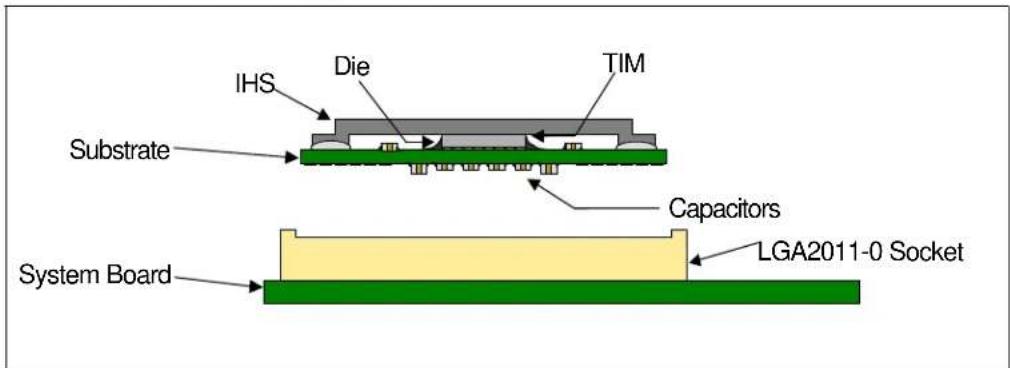
Note: 1. Socket and baseboard are included for reference and are not part of the processor package.
9.1 Package Size and SKUs
The processor is supported in two package sizes:
• Package A: 52.5 mm x 45 mm and
• Package B: 52.5 mm x 51 mm
Below is a table that shows the associated processor SKUs with the package sizes. For details on processor SKU information, see Table 1-1, "HCC, MCC, and LCC SKU Table Summary."
Table 9-1. Processor Package Sizes
| Package Size and Processor TDP SKU Notes | |
| Package A: MCC and LCC die size52.5 mm x 45 mm (Figure 9-2 and Figure 9-3) | |
| 150W (8-core) | |
| 130W 1U (10/8-core) | |
| 130W 2U (8/6/4-core) | |
| 130W 1S WS (8/6/4-core) | |
| 115W (10-core) | |
| 95W (10/8/6/4-core) | |
| 80W (6/4-core) | |
| 70W (10-core) | |
| 60W (6-core) | |
| LV95W-10C | |
| LV70W-10C and LV70W-8C | |
| LV50W-6C | |
| Package B: HCC die size52.5 mm x 51 mm (Figure 9-4 and Figure 9-5) | |
| 130W (12-core) | |
| 115W (12-core) | |
| 95W (8-core) This is E5-4610 v2 SKU | |
9.2 Package Mechanical Drawing (PMD)
The package mechanical drawings are shown as package A size 52.5 mm x 45 mm, Figure 9-2 and Figure 9-3, and package B size 52.5 mm x 51 mm Figure 9-4 and Figure 9-5. The drawings include dimensions necessary to design a thermal solution for the processor. These dimensions include:
- Package reference with tolerances (total height, length, width, and so forth)
- IHS parallelism and tilt
- Land dimensions
- Top-side and back-side component keep-out dimensions
- Reference datums
- All drawing dimensions are in mm.
- Guidelines on potential IHS flatness variation with socket load plate actuation and installation of the cooling solution is available in the Intel® Xeon® Processor E5-1600/2600/4600 v1 and v2 Product Families Thermal / Mechanical Design Guide.
Figure 9-2. Processor PMD Package A (52.5 x 45 mm) Sheet 1 of 2
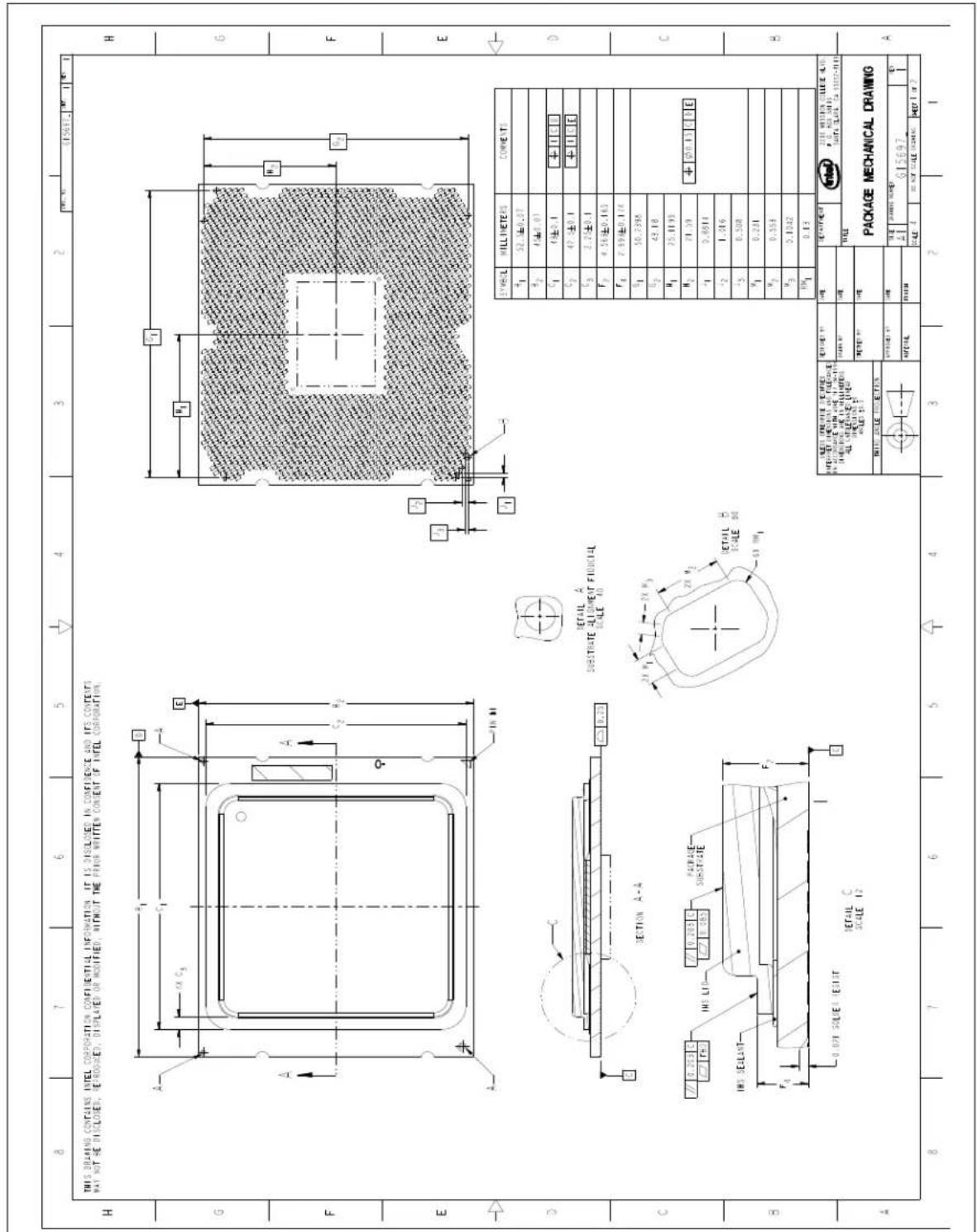
Figure 9-3. Processor PMD Package A (52.5 x 45 mm) Sheet 2 of 2
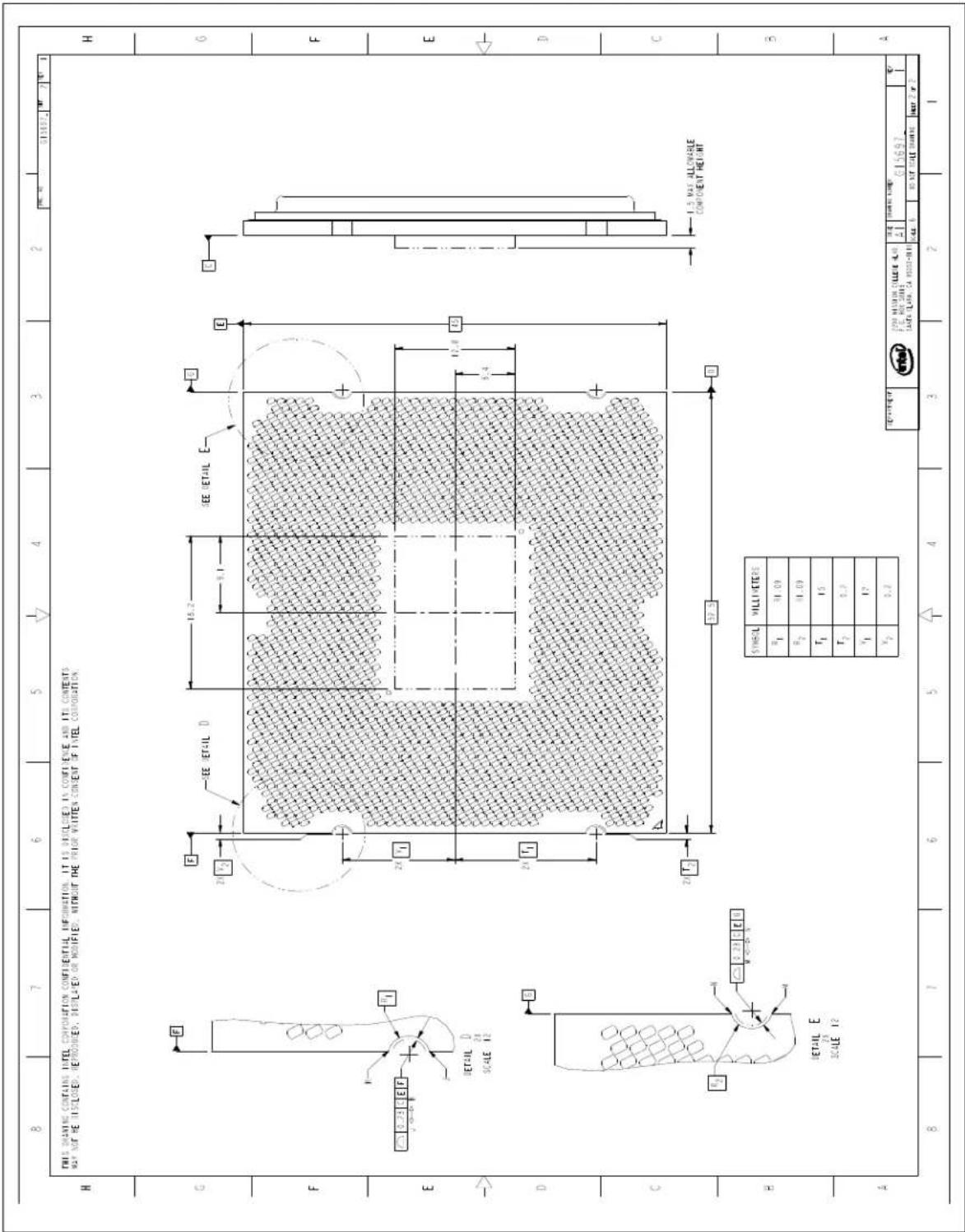
Figure 9-4. Processor PMD Package B (52.5 x 51 mm) Sheet 1 of 2
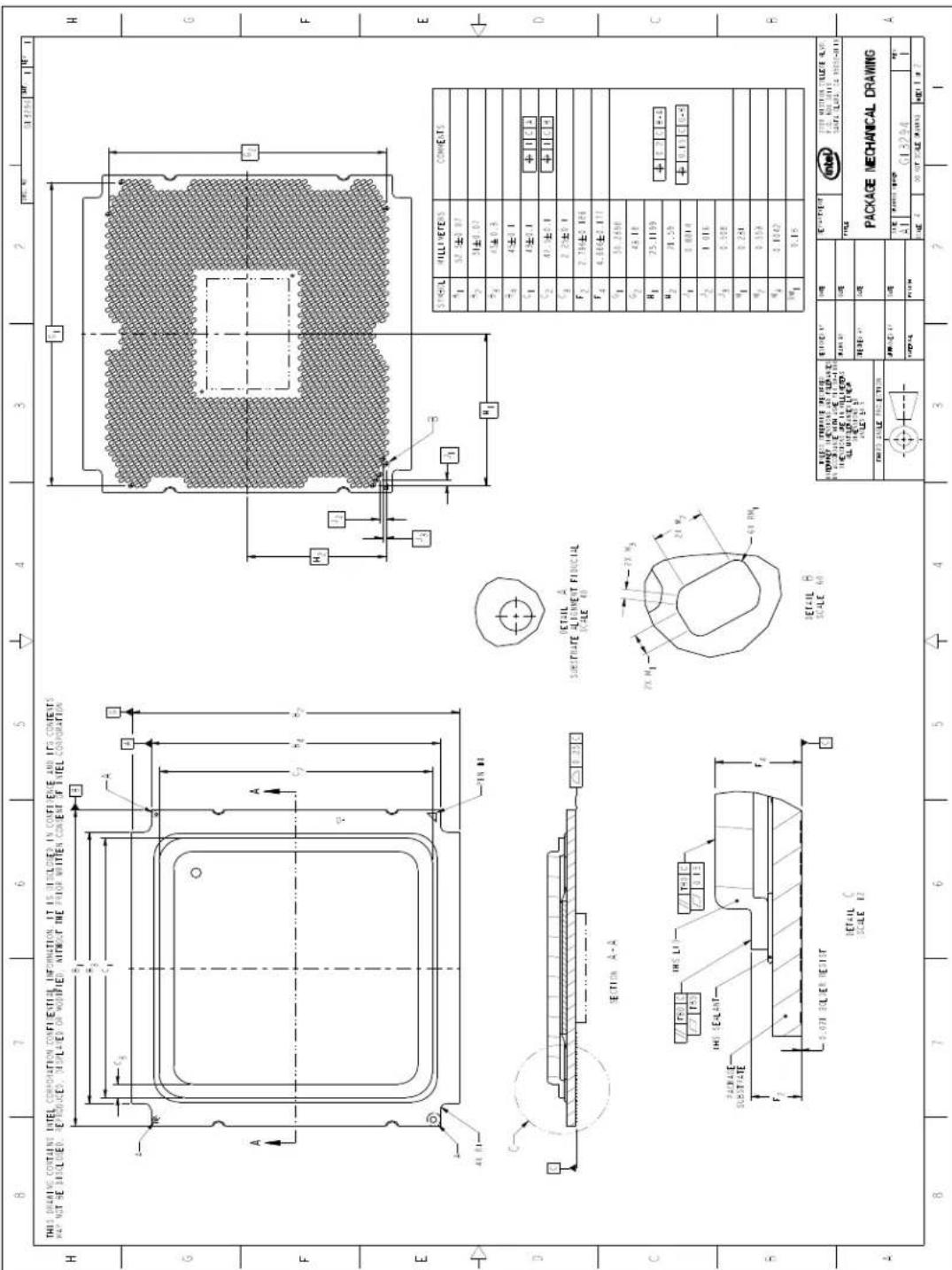
Figure 9-5. Processor PMD Package B (52.5 x 51 mm) Sheet 2 of 2
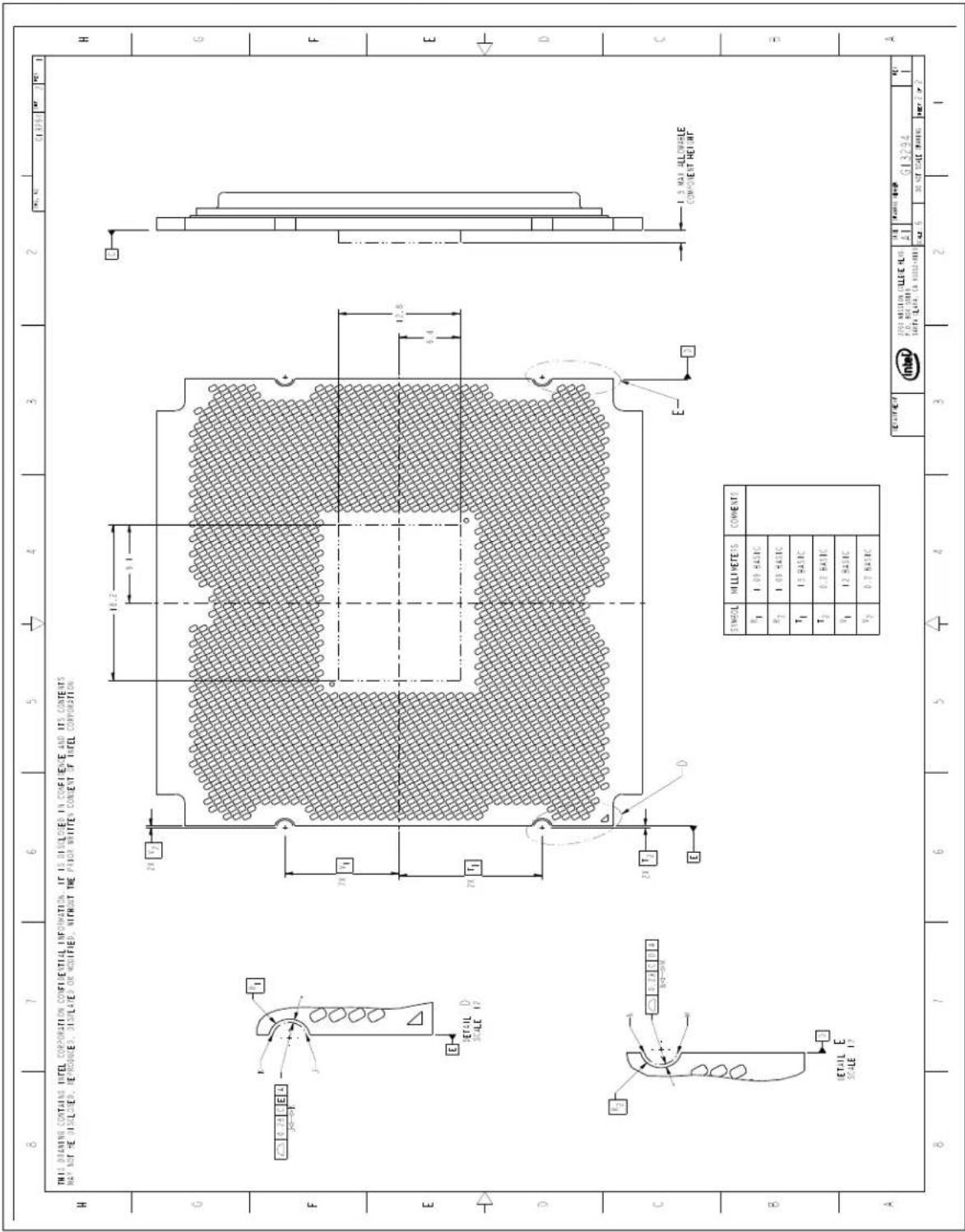
9.3 Processor Component Keep-Out Zones
The processor may contain components on the substrate that define component keep-out zone requirements. A thermal and mechanical solution design must not intrude into the required keep-out zones. Do not contact the Test Pad Area with conductive material. Decoupling capacitors are typically mounted to either the topside or land-side of the package substrate. See Figure 9-3 through Figure 9-4 for keep-out zones. The location and quantity of package capacitors may change due to manufacturing efficiencies but will remain within the component keep-in.
9.4 Package Loading Specifications
Table 9-2 provides load specifications for the processor package. These maximum limits should not be exceeded during heatsink assembly, shipping conditions, or standard use condition. Exceeding these limits during test may result in component failure. The processor substrate should not be used as a mechanical reference or load-bearing surface for thermal solutions.
Table 9-2. Processor Loading Specifications
| Parameter Maximum | Notes | |
| Static Compressive Load 890 | N [200 lbf] 1, 2, 3, 5 | |
| Dynamic Load 540 N [121 lbf] 1, 3, 4, 5 | ||
Notes:
- These specifications apply to uniform compressive loading in a direction normal to the processor IHS.
- This is the maximum static force that can be applied by the heatsink and Independent Loading Mechanism (ILM).
- These specifications are based on limited testing for design characterization. Loading limits are for the package constrained by the limits of the processor socket.
- Dynamic loading is defined as an 11 ms duration average load superimposed on the static load requirement.
- See Intel® Xeon® Processor E5-1600/2600/4600 v1 and v2 Product Families Thermal / Mechanical Design Guide for minimum socket load to engage processor within socket.
9.5 Package Handling Guidelines
Table 9-3 includes a list of guidelines on package handling in terms of recommended maximum loading on the processor IHS relative to a fixed substrate. These package handling loads may be experienced during heatsink removal.
Table 9-3. Package Handling Guidelines
| Parameter Maximum | Recommended | Notes | |
| Shear | 80 lbs (36.287 kg) | ||
| Tensile | 35 lbs (15.875 kg) | ||
| Torque | 35 in.lbs (15.875 kg-cm) | ||
9.6 Package Insertion Specifications
The processor can be inserted into and removed from an LGA2011-0 socket 15 times. The socket should meet the LGA2011-0 requirements detailed in the Intel® Xeon® Processor E5-1600/2600/4600 v1 and v2 Product Families Thermal / Mechanical Design Guide.
9.7 Processor Mass Specification
The typical mass of the processor is currently 45 grams. This mass [weight] includes all the components that are included in the package.
9.8 Processor Materials
Table 9 -4 lists some of the package components and associated materials.
Table 9-4. Processor Materials
| Component Material | |
| Integrated Heat Spreader (IHS) Nickel Plated Copper | |
| Substrate Halogen Free, Fiber Reinforced Resin | |
| Substrate Lands | Gold Plated Copper |
9.9 Processor Markings
Figure 9-6 shows the topside markings on the processor. This diagram is to aid in the identification of the processor.
Figure 9-6. Processor Top-Side Markings
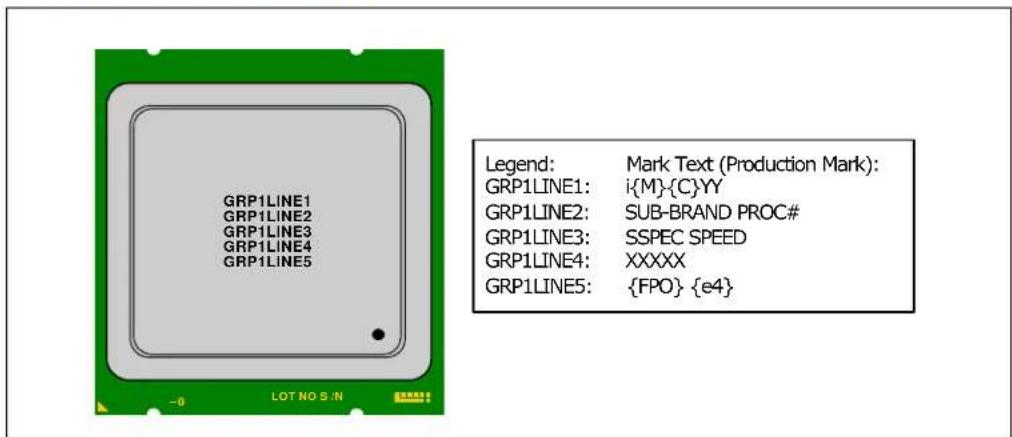
Notes:
1. XXXXX = Country of Origin
2. SPEED Format = X.XXGHz and no rounding
10 Boxed Processor Specifications
10.1 Introduction
Intel boxed processors are intended for system integrators who build systems from components available through distribution channels. The Intel® Xeon® processor E5-2600 v2 and E5-4600 v2 product families (LGA2011-0) processors will be offered as Intel boxed processors, however the thermal solutions will be sold separately.
Boxed processors will not include a thermal solution in the box. Intel will offer boxed thermal solutions separately through the same distribution channels. Please reference Section 10.1.1 - Section 10.1.3 for a description of Boxed Processor thermal solutions.
10.1.1 Available Boxed Thermal Solution Configurations
Intel will offer three different Boxed Heat Sink solutions to support LGA2011-0 Boxed Processors:
- Boxed Intel® Thermal Solution STS200C(Order Code BXSTS200C): A Passive / Active Combination Heat Sink Solution that is intended for processors with a TDP up to 150W in a pedestal or 130W in 2U+ chassis with ducting.
- Boxed Intel® Thermal Solution STS200P(Order Code BXSTS200P): A 25.5 mm Tall Passive Heat Sink Solution that is intended for processors with a TDP of 130W or lower in 1U, or 2U chassis with ducting. Check with Blade manufacturer for compatibility.
- Boxed Intel® Thermal Solution STS200PNRW (Order Code BXSTS200PNRW): A 25.5 mm Tall Passive Heat Sink Solution that is intended for processors with a TDP of 130W or lower in 1U, or 2U chassis with ducting. Compatible with the narrow processor integrated load mechanism. Check with Blade manufacturer for compatibility.
10.1.2 Intel Thermal Solution STS200C (Passive/ Active Combination Heat Sink Solution)
The STS200C, based on a 2U passive heat sink with a removable fan, is intended for use with processors with TDP's up to 150W in active configuration and 130W in passive configuration. This heat pipe-based solution is intended to be used as either a passive heat sink in a 2U or larger chassis, or as an active heat sink for pedestal chassis. Figure 10-1 and Figure 10-2 are representations of the heat sink solution. Although the active combination solution with the removable fan installed mechanically fits into a 2U keepout, its use has not been validated in that configuration.
The STS200C in the active fan configuration is primarily designed to be used in a pedestal chassis where sufficient air inlet space is present. The STS200C with the fan removed, as with any passive thermal solution, will require the use of chassis ducting and are targeted for use in rack mount or ducted pedestal servers. The retention solution used for these products is called ILM Retention System (ILM-RS).
Figure 10-1. STS200C Passive/ Active Combination Heat Sink (with Removable Fan)
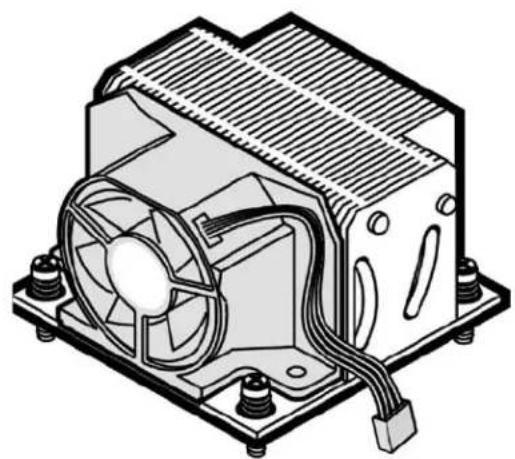
natural_image
Technical line drawing of a computer cooling unit with fan and cooling fins (no text or symbols)Figure 10-2. STS200C Passive/ Active Combination Heat Sink (with Fan Removed)
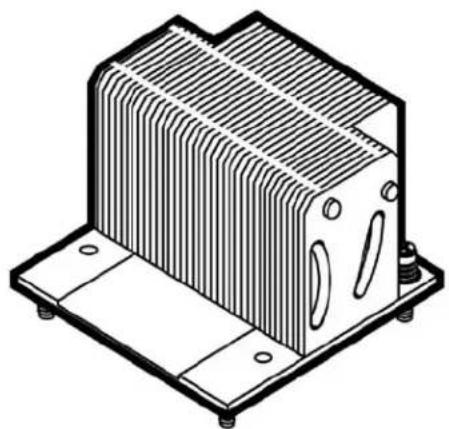
natural_image
Isometric line drawing of a heat exchanger or cooling unit with heat sinks and mounting base (no text or symbols)The STS200C utilizes a fan capable of 4-pin pulse width modulated (PWM) control. Use of a 4-pin PWM controlled active thermal solution helps customers meet acoustic targets in pedestal platforms through the baseboard's ability to directly control the RPM of the processor heat sink fan. See Section 10.3 for more details on fan speed control. Also see Section 2.5, "Platform Environment Control Interface (PECI)" for more on the PWM and PECI interface along with Digital Thermal Sensors (DTS).
10.1.3 Intel Thermal Solution STS200P and STS200PNRW (Boxed 25.5 mm Tall Passive Heat Sink Solutions)
The STS200P and STS200PNRW are available for use with boxed processors that have TDP's of 130W and lower. These 25.5 mm Tall passive solutions are designed to be used in SSI Blades, 1U, and 2U chassis where ducting is present. The use of a 25.5 mm Tall heatsink in a 2U chassis is recommended to achieve a lower heatsink T_LA and more flexibility in system design optimization. Figure 10-3 is a representation of the heat
sink solutions. The retention solution used for the STS200P Heat Sink Solution is called the ILM Retention System (ILM-RS). The retention solution used for the STS200PNRW Narrow Heat Sink Solution is called the Narrow ILM Retention System (Narrow ILM-RS).
Figure 10-3. STS200P and STS200PNRW 25.5 mm Tall Passive Heat Sinks
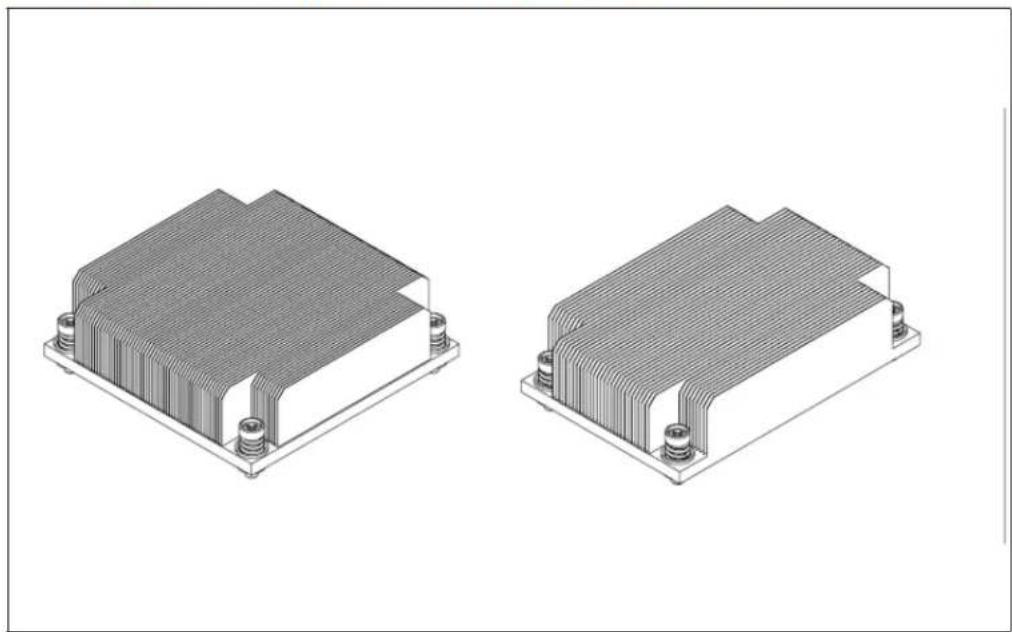
natural_image
Two isometric technical drawings of a heat sink or heat exchanger component with mounting holes (no text or symbols)10.2 Mechanical Specifications
This section documents the mechanical specifications of the boxed processor solution.
10.2.1 Boxed Processor Heat Sink Dimensions and Baseboard Keepout Zones
The boxed processor and boxed thermal solutions will be sold separately. Clearance is required around the thermal solution to ensure unimpeded airflow for proper cooling. Baseboard keepout zones are Figure 10-4 - Figure 10-7. Physical space requirements and dimensions for the boxed processor and assembled heat sink are shown in Figure 10-8 and Figure 10-9. Mechanical drawings for the 4-pin fan header and 4-pin connector used for the active fan heat sink solution are represented in Figure 10-10 and Figure 10-11.
None of the heat sink solutions exceed a mass of 550 grams. Note that this is per processor, a dual processor system will have up to 1100 grams total mass in the heat sinks. See Section 9.7 for details on the processor mass test.
Figure 10-4. Boxed Processor Motherboard Keepout Zones (1 of 4)
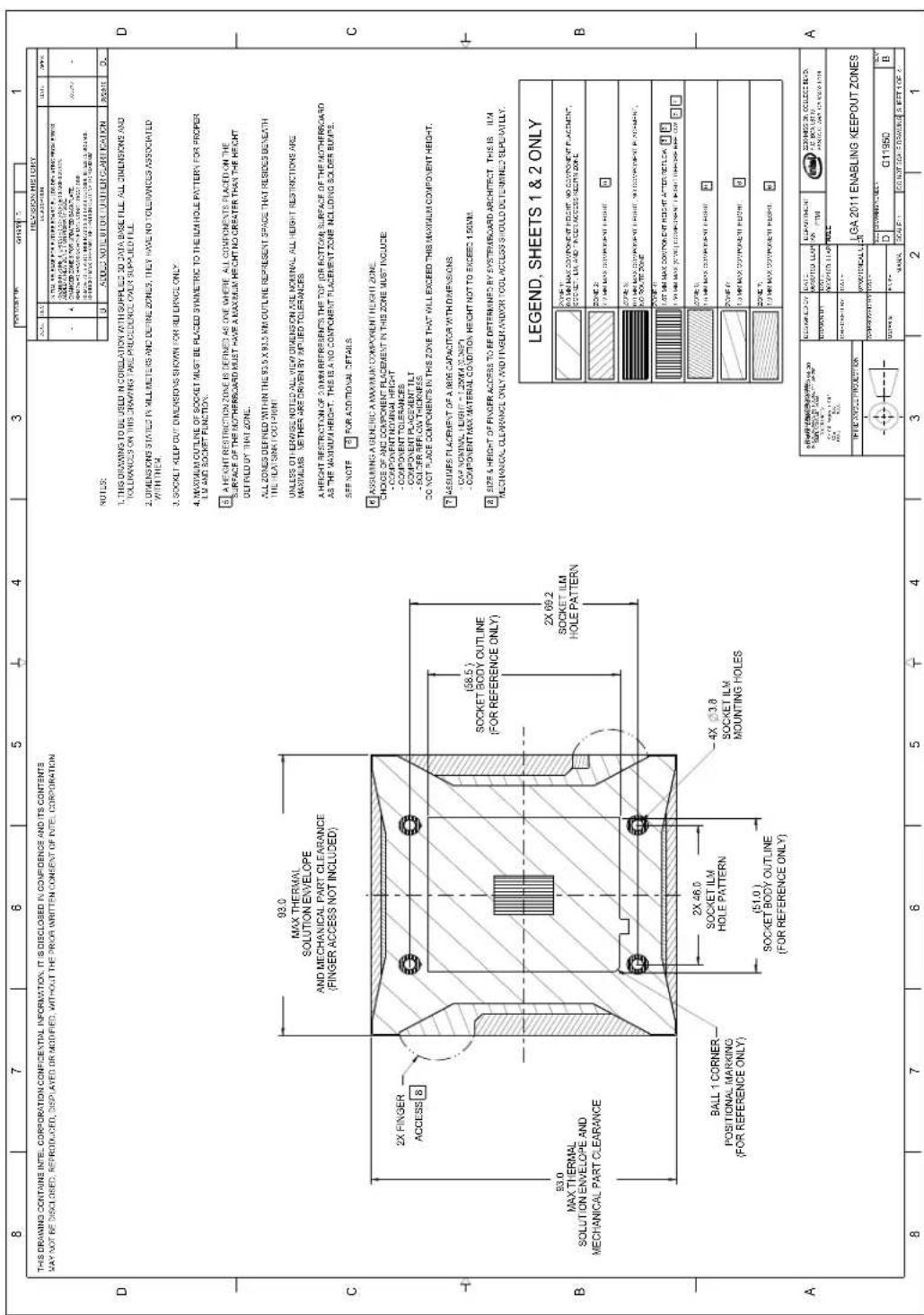
Figure 10-5. Boxed Processor Motherboard Keepout Zones (2 of 4)
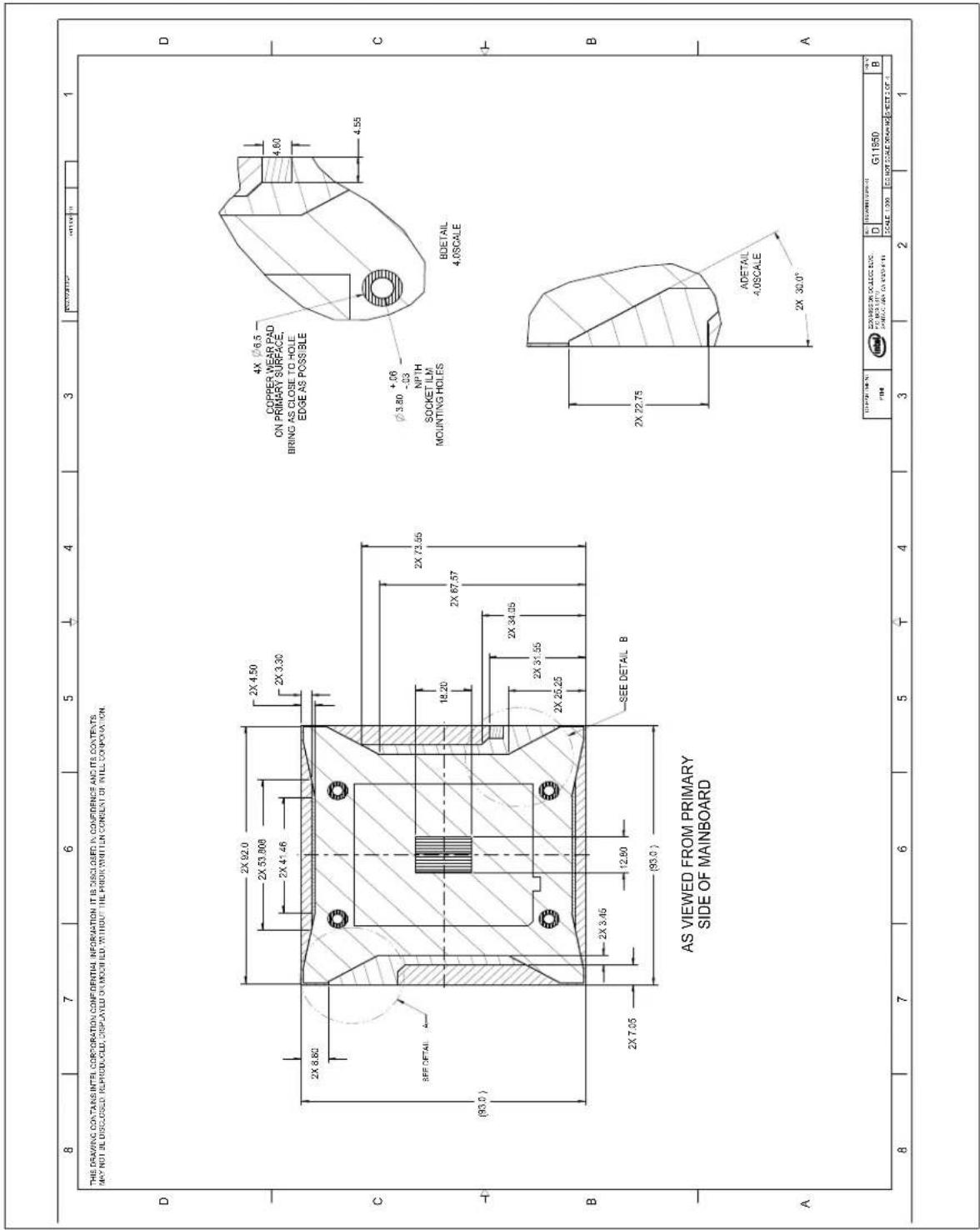
Figure 10-6. Boxed Processor Motherboard Keepout Zones (3 of 4)
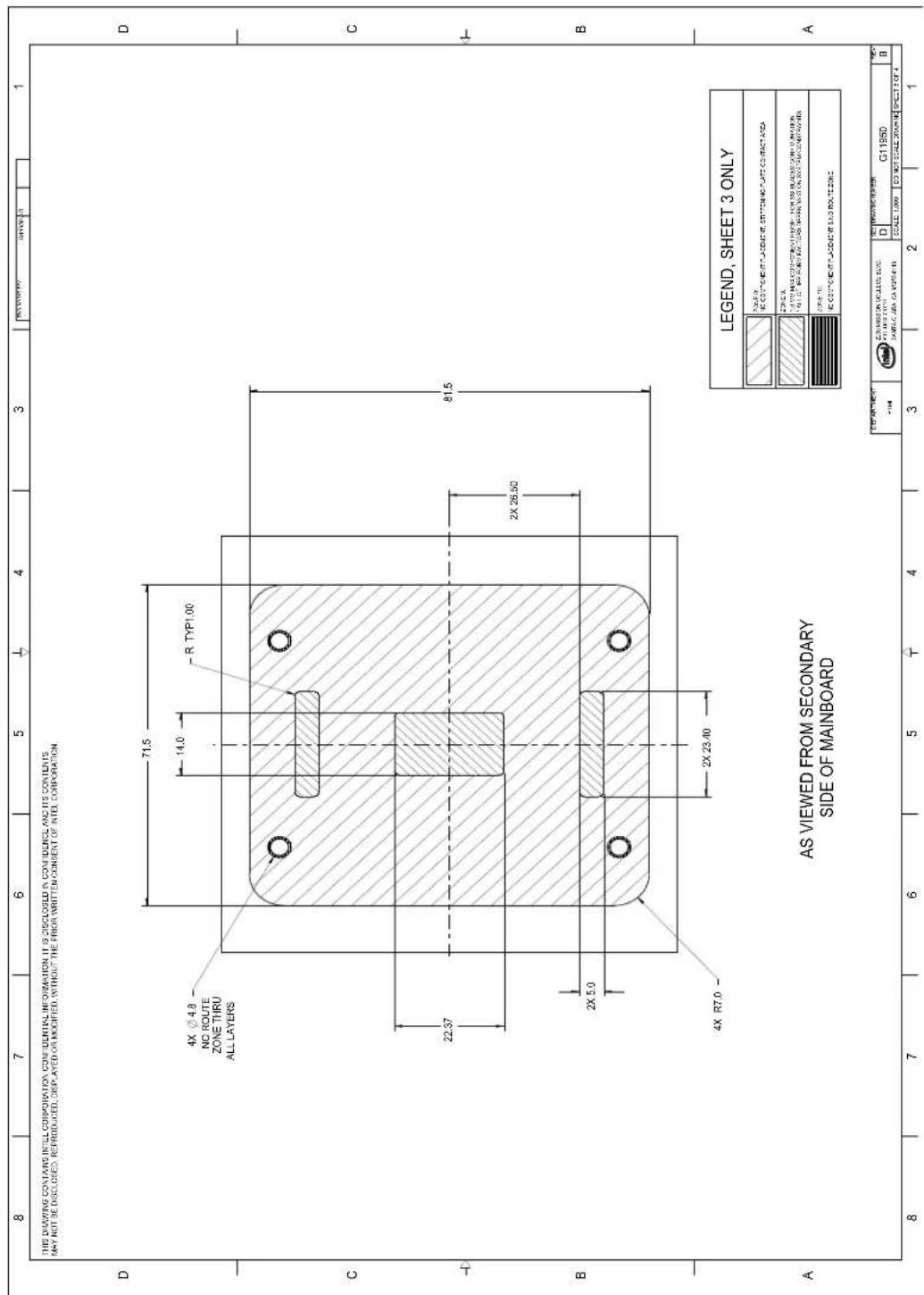
Figure 10-7. Boxed Processor Motherboard Keepout Zones (4 of 4)
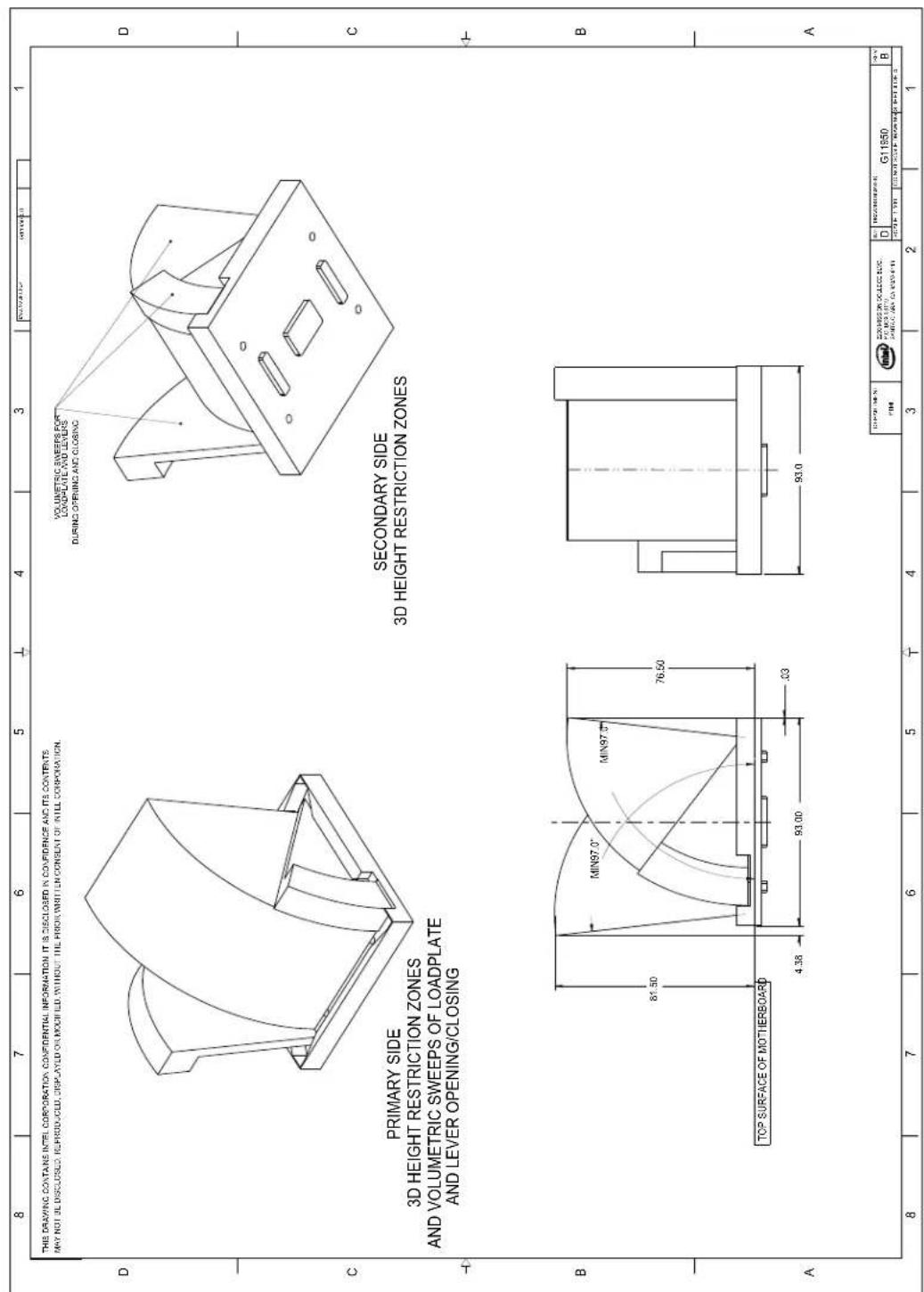
Figure 10-8. Boxed Processor Heat Sink Volumetric (1 of 2)
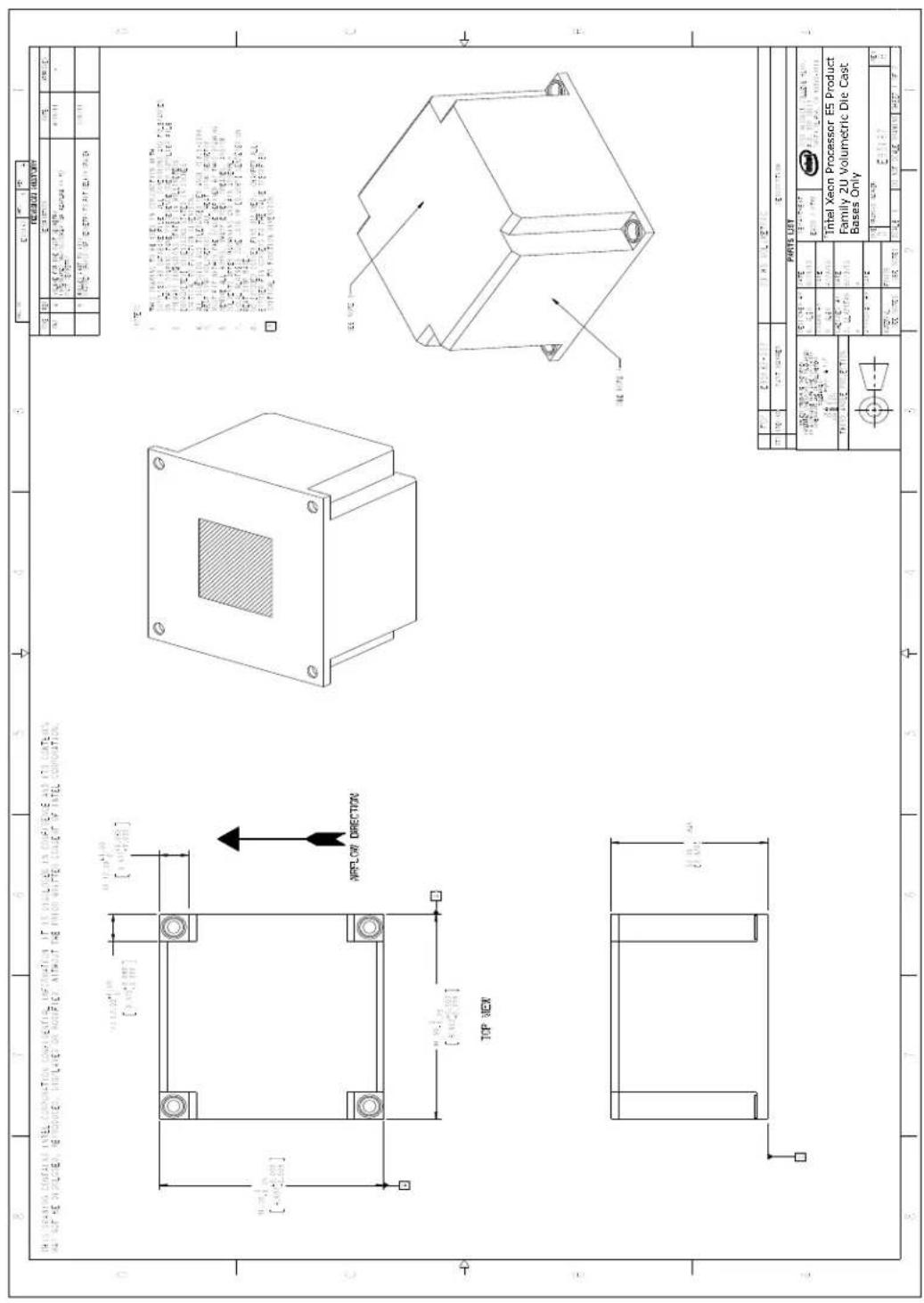
Figure 10-9. Boxed Processor Heat Sink Volumetric (2 of 2)
![TOP VIEW AIRFLOW DIRECTION 10.62 [0.47] 5.00 3.00 0.00 0.00 0.00 0.00 0.00 0.00 0.00 0.00 0.00 0.00 0.00 BOTTOM VIEW AIRFLOW DIRECTION 8 7 6 5 4 3 2 1 TMT: 1.150 1.15 1.15 1.15 1.15 C:\CAD\NTM\NTM\NTM\NTM\NTM\NTM\NTM\NTM\NTM\NTM\NTM\NTM\NTM\NTM\NTM\NTM\NTM\NTM\NTM\NTM\NTM\NTM\NTM\NTM\NTM\NTM\NTM\NTM\NTM\NTM\NTM\NTM\NTM\NTM\nTOP View\nTOP VIEW\nTOP VIEW\nTOP VIEW\nTOP VIEW\nTOP VIEW\nTOP VIEW\nTOP VIEW\nTOP VIEW\nTOP VIEW\nTOP VIEW\nTOP VIEW\nTOP VIEW\nTOP VIEW\nTOP VIEW\nTOP VIEW\nTOP VIEW\nTOP VIEW\nTOP VIEW\nTOP VIEW\nTOP VIEW\nTOP VIEW\nTOP VIEW\nTOP VIEW\nTOP VIEW\nTOP VIEW\nTOP VIEW\nTOP VIEW\nTOP VIEW\nTOP VIEW\nTOP VIEW\nTOP VIEW\nTOP VIEW\nTOP VIEW\nTOP VIEW](/content/2026/06/1184760/images/e6f09c71eb61c3208a51f95f1b9e563f565ecd897c7359f9845a05afe4985d31.jpg)
Figure 10-10.4-Pin Fan Cable Connector (For Active Heat Sink)
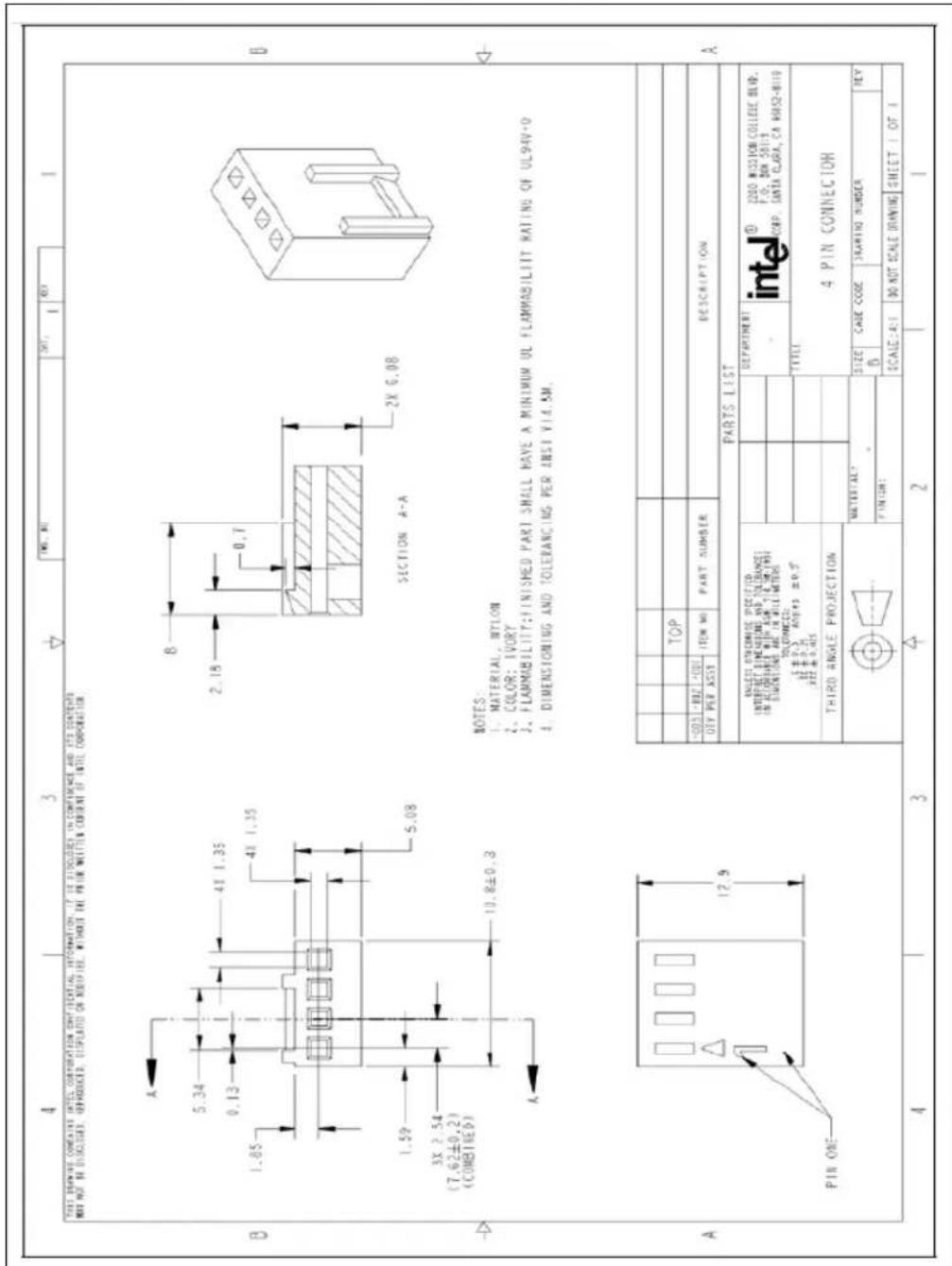
Figure 10-11.4-Pin Base Baseboard Fan Header (For Active Heat Sink)
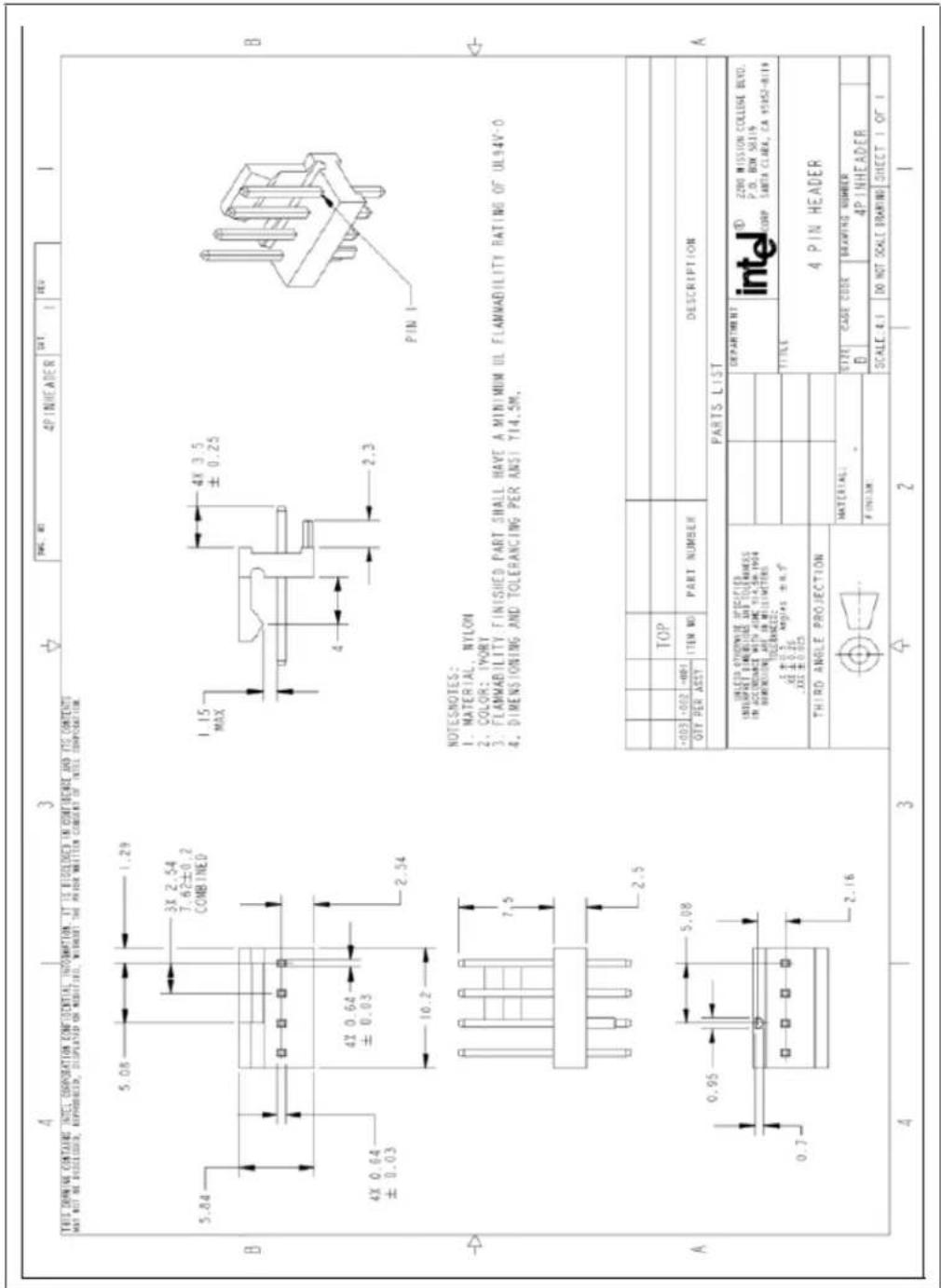
10.2.2 Boxed Processor Retention Mechanism and Heat Sink Support (ILM-RS)
Baseboards designed for use by a system integrator should include holes that are in proper alignment with each other to support the boxed processor.
The standard and narrow ILM-RSs are designed to extend air-cooling capability through the use of larger heat sinks with minimal airflow blockage and bypass. ILM-RS retention transfers load to the baseboard via the ILM Assembly. The ILM-RS spring, captive in the heatsink, provides the necessary compressive load for the thermal interface material. For specific design details on the standard and narrow ILM-RS and the Backplate please refer to the Intel® Xeon® Processor E5-1600/2600/4600 v1 and v2 Product Families Thermal / Mechanical Design Guide.
All components of the ILM-RS heat sink solution will be captive to the heat sink and will only require a Phillips screwdriver to attach to the ILM Backplate Assembly. When installing the ILM-RS the screws should be tightened until they will no longer turn easily. This should represent approximately 8 inch-pounds of torque. More than that may damage the retention mechanism components.
10.3 Fan Power Supply [STS200C]
The 4-pin PWM controlled thermal solution is being offered to help provide better control over pedestal chassis acoustics. This is achieved through more accurate measurement of processor die temperature through the processor's Digital Thermal Sensors. Fan RPM is modulated through the use of an ASIC located on the baseboard that sends out a PWM control signal to the 4th pin of the connector labeled as Control. This thermal solution requires a constant +12 V supplied to pin 2 of the active thermal solution and does not support variable voltage control or 3-pin PWM control. See Figure 10-12 and Table 10-1 for details on the 4-pin active heat sink solution connectors.
The fan power header on the baseboard must be positioned to allow the fan heat sink power cable to reach it. The fan power header identification and location must be documented in the suppliers platform documentation, or on the baseboard itself. The baseboard fan power header should be positioned within 177.8 mm [7 in.] from the center of the processor socket.
Table 10-1. PWM Fan Frequency Specifications For 4-Pin Active Thermal Solution
| Description Min Frequency | Nominal Frequency | Max Frequency | Unit | |
| PWM Control Frequency Range | 21,000 | 25,000 | 28,000 | Hz |
Table 10-2. PWM Fan Characteristics for Active Thermal Solution
| Description | Min | Typical | Max Steady | Max Startup | Unit |
| +12V: 12-Volt Supply | 10.8 | 12 | 12 | 13.2 | V |
| IC: Fan Current Draw | N/A | 1.25 | 1.5 | 2.2 | A |
| Sense Pulse Frequency | 2 | Pulses per fan revolution | |||
Figure 10-12.Fan Cable Connector Pin Out For 4-Pin Active Thermal Solution
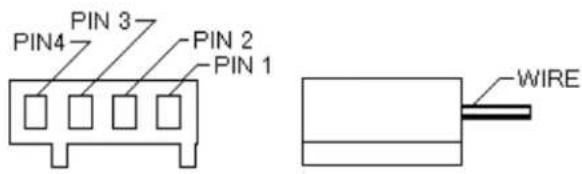
Table 10-3. PWM Fan Connector Pin and Wire Description
| Pin Number Signal Wire Color | ||
| 1 Ground Black | ||
| 2 Power (+12V) Yellow | ||
| 3 Sense: 2 pulse per revolution | Green | |
| 4 | Control: 21KHz - 28KHz | Blue |
10.3.1 Boxed Processor Cooling Requirements
As previously stated the boxed processor will have three thermal solutions available. Each configuration will require unique design considerations. Meeting the processor's temperature specifications is also the function of the thermal design of the entire system, and ultimately the responsibility of the system integrator. The processor temperature specifications are found in Chapter 5, "Thermal Management Specifications" of this document.
10.3.1.1 STS200C (Passive / Active Combination Heat Sink Solution)
The active configuration of the combination solution is designed to help pedestal chassis users to meet the thermal processor requirements without the use of processor chassis ducting. However, it is strongly recommended to implement some form of air duct to meet memory cooling and processor T_LA temperature requirements. Please reference the Intel® Xeon® Processor E5-1600 v2/E5-2400 v2/E5-2600 v2 Product Families and Intel® C600 Chipset Platform Controller Hub (PCH) in a Pedestal Server System Design Guide for an example of system ducting designed to be used with the active configuration. Use of the active configuration in a 2U rackmount chassis is not recommended.
In the passive configuration it is assumed that a chassis duct will be implemented.
For a list processor and thermal solution boundary conditions, such as Psi_ca , T_LA , airflow, flow impedance, and so forth, see Table 10-4. It is recommended that the ambient air temperature outside of the chassis be kept at or below 35 °C. Meeting the processor's temperature specification is the responsibility of the system integrator.
This thermal solution is for use with processor SKUs no higher than 150W (10 Core) or 130W (6, 8, and 10 core).
10.3.1.2 STS200P and STS200PNRW (25.5mm Tall Passive Heat Sink Solution) (Blade + 1U + 2U Rack)
These passive solutions are intended for use in SSI Blade, 1U or 2U rack configurations. It is assumed that a chassis duct will be implemented in all configurations.
For a list processor and thermal solution boundary conditions, such as Psi_ca , T_LA , airflow, flow impedance, and so forth, see Table 10-4. It is recommended that the ambient air temperature outside of the chassis be kept at or below 35 °C. Meeting the processor's temperature specification is the responsibility of the system integrator.
These thermal solutions are for use with processor SKUs no higher than 130W (8 and 10Core), or 80W (6 Core).
Note:
Please refer to the Intel® Xeon® Processor E5-1600/2600/4600 v1 and v2 Product Families Thermal / Mechanical Design Guide for detailed mechanical drawings of the STS200P and STS200PNRW.
Table 10-4. Server Thermal Solution Boundary Conditions (Sheet 1 of 2)
| TDP Thermal | Solution | CA^2 (°C/W) | T_LA^1 (°C) | Airflow3(CFM) | Delta P(Inch of H_2O ) | Heatsink Volumetric4(mm) |
| 150W - 8 Core STS200C (with fan) 0.208 40.8 | Max RPM NA | 91.5x91.5x64 | ||||
| 130W - 12 Core | STS200C (with fan) | 0.208 | 59.0 | Max RPM | NA | 91.5x91.5x64 |
| 130W - 12 Core | STS200P | 0.252 | 53.2 | 16 | 0.406 | 91.5x91.5x25.5 |
| 130W - 12 Core | STS200C (without fan) | 0.208 | 59.0 | 26 | 0.14 | 91.5x91.5x64 |
| 130W - 10/8 Core | STS200C (with fan) | 0.206 | 61.2 | Max RPM | NA | 91.5x91.5x64 |
| 130W - 10/8 Core | STS200P | 0.268 | 53.2 | 16 | 0.406 | 91.5x91.5x25.5 |
| 130W - 10/8 Core | STS200PNRW | 0.279 | 51.7 | 14 | 0.347 | 70x106x25.5 |
| 130W - 10/8 Core | STS200C (without fan) | 0.206 | 61.2 | 26 | 0.14 | 91.5x91.5x64 |
| 130W - 8 Core (2U) | STS200C (with fan) | 0.207 | 47.1 | Max RPM | NA | 91.5x91.5x64 |
| 130W - 8 Core (2U) | STS200C (without fan) | 0.207 | 47.1 | 26 | 0.14 | 91.5x91.5x64 |
| 130W - 6 Core (2U) | STS200C (with fan) | 0.206 | 47.2 | Max RPM | NA | 91.5x91.5x64 |
| 130W - 6 Core (2U) | STS200C (without fan) | 0.206 | 47.2 | 26 | 0.14 | 91.5x91.5x64 |
| 130W - 1S 4 Core | STS200C (with fan) | 0.221 | 41.3 | Max RPM | NA | 91.5x91.5x64 |
| 130W - 1S 4 Core | STS200P | 0.283 | 33.2 | 16 | 0.406 | 91.5x91.5x25.5 |
| 130W - 1S 4 Core | STS200PNRW | 0.294 | 31.8 | 14 | 0.347 | 70x106x25.5 |
| 130W - 1S 4 Core | STS200C (without fan) | 0.221 | 41.3 | 26 | 0.14 | 91.5x91.5x64 |
| 130W - 4 Core (2U) | STS200C (with fan) | 0.220 | 41.4 | Max RPM | NA | 91.5x91.5x64 |
| 130W - 4 Core (2U) | STS200C (without fan) | 0.220 | 41.4 | 26 | 0.14 | 91.5x91.5x64 |
| 115W - 12 Core | STS200C (with fan) | 0.207 | 57.2 | Max RPM | NA | 91.5x91.5x64 |
| 115W - 12 Core | STS200P | 0.188 | 59.4 | 16 | 0.406 | 91.5x91.5x25.5 |
| 115W - 12 Core | STS200C (without fan) | 0.207 | 57.2 | 26 | 0.14 | 91.5x91.5x64 |
| 115W - 10 Core | STS200C (with fan) | 0.201 | 58.9 | Max RPM | NA | 91.5x91.5x64 |
| 115W - 10 Core | STS200P | 0.263 | 51.8 | 16 | 0.406 | 91.5x91.5x25.5 |
| 115W - 10 Core | STS200PNRW | 0.274 | 50.5 | 14 | 0.347 | 70x106x25.5 |
| 115W - 10 Core | STS200C (without fan) | 0.201 | 58.9 | 26 | 0.14 | 91.5x91.5x64 |
Table 10-4. Server Thermal Solution Boundary Conditions (Sheet 2 of 2)
| TDP | Thermal Solution | CA^2 (°C/W) | T_LA^1 (°C) | Airflow3(CFM) | Delta P(inch of H_2O ) | Heatsink Volumetric4(mm) |
| 95W - 10/8 Core STS2 | 00C (with fan) 0.201 55 | 9 Max RPM NA | 91.5x91.5x64 | |||
| 95W - 10/8 Core STS2 | 00P 0.263 50.0 16 0.406 | 91.5x91.5x25.5 | ||||
| 95W - 10/8 Core STS2 | 00PNRW 0.274 | 49.0 14 0.347 | 70x106x25.5 | |||
| 95W - 10/8 Core STS2 | 00C (without fan) 0.20 | 1 55.9 26 0.14 | 91.5x91.5x64 | |||
| 95W - 6/4 Core | STS200C (with fan) | 0.223 | 55.8 | Max RPM | NA | 91.5x91.5x64 |
| 95W - 6/4 Core | STS200P 0.285 49.9 16 | 0.406 91.5x91.5x25.5 | ||||
| 95W - 6/4 Core | STS200PNRW | 0.296 48.9 14 | 0.347 70x106x25.5 | |||
| 95W - 6/4 Core | STS200C (without fan) | 0.223 | 55.8 | 26 | 0.14 | 91.5x91.5x64 |
| 80W - 6/4 Core | STS200C (with fan) | 0.223 | 53.2 | Max RPM | NA | 91.5x91.5x64 |
| 80W - 6/4 Core | STS200P 0.285 48.2 16 | 0.406 91.5x91.5x25.5 | ||||
| 80W - 6/4 Core | STS200PNRW | 0.296 47.3 14 | 0.347 70x106x25.5 | |||
| 80W - 6/4 Core | STS200C (without fan) | 0.223 | 53.2 | 26 | 0.14 | 91.5x91.5x64 |
| 70W - 10 Core | STS200C (with fan) 0.1 | 99 51.1 Max RPM NA 91.5x91.5x64 | ||||
| 70W - 10 Core | STS200P 0.261 46.7 16 | 0.406 91.5x91.5x25.5 | ||||
| 70W - 10 Core | STS200PNRW | 0.272 46.0 14 | 0.347 70x106x25.5 | |||
| 70W - 10 Core | STS200C (without fan) | 0.199 | 51.1 | 26 | 0.14 | 91.5x91.5x64 |
| 60W - 6 Core | STS200C (with fan) 0.2 | 17 50.0 Max RPM NA 91.5x91.5x64 | ||||
| 60W - 6 Core | STS200P 0.279 46.3 16 | 0.406 91.5x91.5x25.5 | ||||
| 60W - 6 Core | STS200PNRW | 0.290 45.6 14 | 0.347 70x106x25.5 | |||
| 60W - 6 Core | STS200C (without fan) | 0.217 | 50.0 | 26 | 0.14 | 91.5x91.5x64 |
| LV95W - 10 Core5 | STS200P 0.261 48.5 16 | 0.406 91.5x91.5x25.5 | ||||
| LV70W - 10 Core5 | STS200P 0.259 58.9 16 | 0.406 91.5x91.5x25.5 | ||||
| STS200P 0.262 58.9 16 | 0.406 91.5x91.5x25.5 | |||||
| LV50W - 6 Core5 | STS200P 0.276 66.7 16 | 0.406 91.5x91.5x25.5 |
Notes:
- Local ambient temperature of the air entering the heatsink or fan. System ambient and altitude are assumed 35C and sea level.
- Max target (mean + 3 sigma) for thermal characterization parameter.
- Airflow through the heatsink fins with zero bypass. Max target for pressure drop (dP) measured in inches H_2O .
- Dimensions of heatsinks do not include socket or processor.
- This is a tray product only. Alternate thermal profiles are available with higher T LA, see specific processor specifications for details.
- Refer to Table 1-1 for the model numbers of each processor based on TDP and core count.
10.4 Boxed Processor Contents
The Boxed Processor and Boxed Thermal Solution contents are outlined below.
Boxed Processor
- Intel® Xeon® processor E5-2600 v2 and E5-4600 v2 product families
• Installation and warranty manual - Intel Inside Logo
Boxed Thermal Solution
• Thermal solution assembly
• Thermal interface material (pre-applied)
• Installation and warranty manual
§
- Table of Contents
- Overview 11
- Interfaces....27
- Technologies 81
- intel®
- Power Management 89
- Thermal Management Specifications....103
- Signal Descriptions....121
- Electrical Specifications....131
- Processor Land Listing....163
- Package Mechanical Specifications 213
- Boxed Processor Specifications 221
- Figures
- Tables
- Overview
- Introduction
- Processor Feature Details
- Supported Technologies
- Interfaces
- System Memory Support
- PCI Express\*
- Direct Media Interface Gen 2 (DMI2)
- Intel ® QuickPath Interconnect (Intel ® QPI)
- Platform Environment Control Interface (PECI)
- Power Management Support
- Processor Package and Core States
- System States Support
- Memory Controller
- PCI Express\*
- Intel ® QPI
- Thermal Management Support
- Package Summary
- Terminology
- Related Documents
- Statement of Volatility (SOV)
- State of Data
- Interfaces
- System Memory Interface
- System Memory Technology Support
- System Memory Timing Support
- PCI Express\* Interface
- PCI Express\* Architecture
- Transaction Layer
- Data Link Layer
- Physical Layer
- PCI Express\* Configuration Mechanism
- DMI 2/ PCI Express\* Interface
- DMI2 Error Flow
- Processor/ PCH Compatibility Assumptions
- DMI2 Link Down
- Intel ® QuickPath Interconnect (Intel ® QPI)
- Platform Environment Control Interface (PECI)
- The PECI bus offers:
- Note:
- PECI Client Capabilities
- Thermal Management
- Platform Manageability
- Client Command Suite
- Ping()
- Command Format
- GetDIB()
- Command Format
- Device Info
- of Domains
- Revision Number
- GetTemp()
- Command Format
- Supported Responses
- Notes:
- RdPkgConfig()
- Command Format
- Supported Responses
- WrPkgConfig()
- Command Format
- Supported Responses
- Package Configuration Capabilities
- DRAM Thermal and Power Optimization Capabilities
- Note:DRAM rel
- DRAM Thermal Estimation Configuration Data Read/Write
- DRAM Rank Temperature Write
- DIMM Temperature Read
- DIMM Ambient Temperature Write / Read
- DRAM Channel Temperature Read
- Accumulated DRAM Energy Read
- DRAM Power Info Read
- DRAM Power Limit Data Write / Read
- DRAM Power Limit Performance Status Read
- CPU Thermal and Power Optimization Capabilities
- Package Identifier Read
- Package Power SKU Unit Read
- Package Power SKU Read
- "Wake on PECI" Mode bit Write / Read
- Accumulated Run Time Read
- Package Temperature Read
- Per Core DTS Temperature Read
- Temperature Target Read
- Package Thermal Status Read / Clear
- Thermal Averaging Constant Write / Read
- Thermally Constrained Time Read
- Current Limit Read
- Accumulated Energy Status Read
- Power Limit for the VCC Power Plane Write / Read
- Package Power Limits For Multiple Turbo Modes
- Package Power Limit Performance Status Read
- Efficient Performance Indicator Read
- ACPI P-T Notify Write & Read
- Caching Agent TOR Read
- Thermal Margin Read
- RdI AMSR()
- Command Format
- Processor ID Enumeration
- Supported Responses
- RdI AMSR() Capabilities
- RdPCI Config()
- Command Format
- Supported Responses
- RdPCI ConfigLocal()
- Command Format
- Supported Responses
- WrPCI ConfigLocal()
- Command Format
- AW FCS Support: Yes
- Supported Responses
- WrPCI ConfigLocal() Capabilities
- Client Management
- Power-up Sequencing
- Device Discovery
- Client Addressing
- C-states
- S-states
- Processor Reset
- System Service Processor (SSP) Mode Support
- BMC INIT Mode
- Link Init Mode
- Processor Error Handling
- Originator Retry and Timeout Policy
- Enumerating PECI Client Capabilities
- Multi-Domain Commands
- Client Responses
- Abort FCS
- Completion Codes
- Originator Responses
- DTS Temperature Data
- Format
- Interpretation
- Temperature Filtering
- Reserved Values
- Technologies
- Intel® Virtualization Technology (Intel® VT)
- Intel ® VT-x Objectives
- Intel ® VT-x Features
- Intel® VT-d Objectives
- Intel VT-d Features Supported
- Intel® Virtualization Technology Processor Extensions
- Security Technologies
- Intel® Trusted Execution Technology
- Intel® Trusted Execution Technology – Server Extensions
- AES Instructions
- Execute Disable Bit
- Intel ® Secure Key
- Intel ® OS Guard
- Intel® Hyper-Threading Technology
- Intel ® Turbo Boost Technology
- Intel ® Turbo Boost Operating Frequency
- Enhanced Intel SpeedStep® Technology
- Intel® Intelligent Power Technology
- Intel® Advanced Vector Extensions (Intel® AVX)
- Intel® Dynamic Power Technology
- Power Management
- ACPI States Supported
- System States
- Processor Package and Core States
- Integrated Memory Controller States
- DMI2/ PCI Express\* Link States
- Intel® QuickPath Interconnect States
- G, S, and C State Combinations
- Processor Core/ Package Power Management
- Enhanced Intel SpeedStep® Technology
- Low-Power Idle States
- Requesting Low-Power Idle States
- Core C-states
- Core C0 State
- Core C1/C1E State
- Core C3 State
- Core C6 State
- Delayed Deep C-States
- Package C-States
- Package C0
- Package C1/C1E
- Package C2 State
- Package C3 State
- Package C6 State
- Package C-State Power Specifications
- Processor Package Power Specifications
- System Memory Power Management
- CKE Power-Down
- Self Refresh
- Self Refresh Entry
- Self Refresh Exit
- DLL and PLL Shutdown
- DRAM I/O Power Management
- DMI2/ PCI Express\* Power Management
- Thermal Management Specifications
- Package Thermal Specifications
- Thermal Specifications
- T CASE and DTS Based Thermal Specifications
- Processor Operational Thermal Specifications
- Minimum operating case temperature
- Maximum operating case temperature thermal profiles
- Digital Thermal Sensor (DTS) thermal profiles
- Digital Thermal Sensor (STS) Specifications
- Embedded Server Thermal Profiles
- Embedded Operating Case Temperature Thermal Profiles
- Embedded Digital Thermal Sensor (DTS) thermal profiles
- Thermal Metrology
- Processor Core Thermal Features
- Processor Temperature
- Adaptive Thermal Monitor
- Frequency/ SVID Control
- Clock Modulation
- On-Demand Mode
- PROCHOT\_N Signal
- THERMTRIP\_N Signal
- Integrated Memory Controller (IMC) Thermal Features
- DRAM Throttling Options
- Open Loop Thermal Throttling (OLTT)
- Hybrid Open Loop Thermal Throttling (OLTT\_Hybrid)
- Closed Loop Thermal Throttling (CLTT)
- Hybrid Closed Loop Thermal Throttling (CLTT\_Hybrid)
- MEM\_HOT\_C01\_N and MEM\_HOT\_C23\_N Signal
- Integrated Dual SMBus Master Controllers for System Memory Interface
- Signal Descriptions
- System Memory Interface Signals
- PCI Express\* Based Interface Signals
- DMI2/PCI Express\* Port 0 Signals
- Intel® QuickPath Interconnect Signals
- PECI Signal
- System Reference Clock Signals
- JTAG and TAP Signals
- Serial VID Interface (SVID) Signals
- Processor Asynchronous Sideband and Miscellaneous Signals
- Processor Power and Ground Supplies
- Electrical Specifications
- Processor Signaling
- System Memory Interface Signal Groups
- PCI Express Signals
- DMI2/PCI Express Signals
- Intel ® QuickPath Interconnect
- Platform Environmental Control Interface (PECI)
- Input Device Hysteresis
- System Reference Clocks (BCLK{0/1}\_DP, BCLK{0/1}\_DN)
- PLL Power Supply
- JTAG and Test Access Port (TAP) Signals
- Processor Sideband Signals
- Power, Ground and Sense Signals
- Power and Ground Lands
- Decoupling Guidelines
- Voltage Identification (VID)
- SVID Commands
- SetVID Fast Command
- SetVID Slow Command
- SetVID Decay Command
- SVID Power State Functions: SetPS
- SVID Voltage Rail Addressing
- Reserved or Unused Signals
- Signal Group Summary
- Power-On Configuration (POC) Options
- Fault Resilient Booting (FRB)
- Mixing Processors
- Flexible Motherboard Guidelines (FMB)
- Absolute Maximum and Minimum Ratings
- Storage Condition Specifications
- DC Specifications
- Voltage and Current Specifications
- Die Voltage Validation
- V CC Overshoot Specifications
- Signal DC Specifications
- PCI Express\* DC Specifications
- DMI 2/ PCI Express\* DC Specifications
- Intel® QuickPath Interconnect DC Specifications
- Reset and Miscellaneous Signal DC Specifications
- Signal Quality
- DDR3 Signal Quality Specifications
- I/ O Signal Quality Specifications
- Intel ® QuickPath Interconnect Signal Quality Specifications
- Input Reference Clock Signal Quality Specifications
- Overshoot/ Undershoot Tolerance
- Overshoot/ Undershoot Magnitude
- Overshoot/ Undershoot Pulse Duration
- Activity Factor
- Reading Overshoot/ Undershoot Specification Tables
- Determining if a System Meets the Overshoot/ Undershoot Specifications
- Processor Land Listing
- Listing by Land Name
- Listing by Land Number
- Package Mechanical Specifications
- Package Size and SKUs
- Package Mechanical Drawing (PMD)
- Processor Component Keep-Out Zones
- Package Loading Specifications
- Package Handling Guidelines
- Package Insertion Specifications
- Processor Mass Specification
- Processor Materials
- Processor Markings
- Boxed Processor Specifications
- Introduction
- Available Boxed Thermal Solution Configurations
- Intel Thermal Solution STS200C (Passive/ Active Combination Heat Sink Solution)
- Intel Thermal Solution STS200P and STS200PNRW (Boxed 25.5 mm Tall Passive Heat Sink Solutions)
- Mechanical Specifications
- Boxed Processor Heat Sink Dimensions and Baseboard Keepout Zones
- Boxed Processor Retention Mechanism and Heat Sink Support (ILM-RS)
- Fan Power Supply [STS200C]
- Boxed Processor Cooling Requirements
- STS200C (Passive / Active Combination Heat Sink Solution)
- STS200P and STS200PNRW (25.5mm Tall Passive Heat Sink Solution) (Blade + 1U + 2U Rack)
- Boxed Processor Contents
- Boxed Processor
- Boxed Thermal Solution
Brand : FUJITSU
Model : Intel Xeon E5-2609v2
Category : Server