S Series S20 4M(Slider 2) - Laptop MSI - Free user manual and instructions
Find the device manual for free S Series S20 4M(Slider 2) MSI in PDF.


| Product Type | Convertible Laptop with Slider Design |
| Brand | MSI |
| Model | S Series S20 4M (Slider 2) |
| Processor | Intel Core i5 (4th Gen, estimated) |
| Display Size | 13.3 inches (estimated) |
| Display Type | Full HD Touchscreen |
| Memory | 4 GB DDR3 (replaceable, estimated) |
| Storage | 128 GB SSD (estimated) |
| Dimensions | 320 x 220 x 22 mm (estimated) |
| Weight | 1.6 kg (estimated) |
| Battery Type | Li-ion, 4-cell (estimated) |
| Power Adapter | 65W AC Adapter |
| Operating System | Windows 8.1 (estimated) |
| Connectivity | Wi-Fi 802.11 b/g/n, Bluetooth 4.0 |
| Ports | USB 2.0, USB 3.0, HDMI, Headphone/Mic Combo |
| Camera | HD Webcam (front) |
| Input Devices | Keyboard, Touchpad, Touchscreen, Stylus (optional) |
| Slider Mechanism | Sliding display for tablet mode |
| Cleaning Instructions | Use a soft dry cloth; avoid liquids on screen |
| Safety Features | Kensington Lock slot, Overcharge protection |
| Spare Parts & Repairability | Battery, RAM, and SSD replaceable; contact MSI support |
| Warranty | 1 year limited warranty (estimated) |
Frequently Asked Questions - S Series S20 4M(Slider 2) MSI
User questions about S Series S20 4M(Slider 2) MSI
0 question about this device. Answer the ones you know or ask your own.
Ask a new question about this device
Download the instructions for your Laptop in PDF format for free! Find your manual S Series S20 4M(Slider 2) - MSI and take your electronic device back in hand. On this page are published all the documents necessary for the use of your device. S Series S20 4M(Slider 2) by MSI.
USER MANUAL S Series S20 4M(Slider 2) MSI
text_image
1 Preface Notebook User's ManualPreface
Notebook
User's Manual

Contents
Chapter 1: Preface
Content....1-2
Regulations and Statements ......1-4
FCC-B Radio Frequency Interference Statement .....1-4
FCC Conditions....1-4
CE Conformity....1-4
Battery Regulations....1-5
WEEE Statement 1-5
Safety Instructions 1-6
Trademarks 1-8
Reversion History....1-8
Chapter 2: Introductions
Manual Map....2-2
Unpacking 2-2
Product Overview....2-3
Top-Open View....2-3
Right Side View 2-6
Left Side View 2-7
Rear Side View....2-8
Specification 2-9
Chapter 3: Getting Started
Begin to Use the Slidebook....3-2
Power Management 3-3
AC Power 3-3
Battery Power....3-3
Powering ON 3-4
Power Management in Windows OS ....3-5
Energy Saving Tips 3-7
Basic Operations....3-8
Safety and Comfort Tips....3-8
Knowing the Display Features....3-10
Flipping the Display.... 3-11
Knowing the Keyboard 3-12
Wireless Activation for Windows 8 ......3-15
About Hard Disk Drive....3-16
Connecting the External Devices ....3-17
Peripheral Devices 3-17
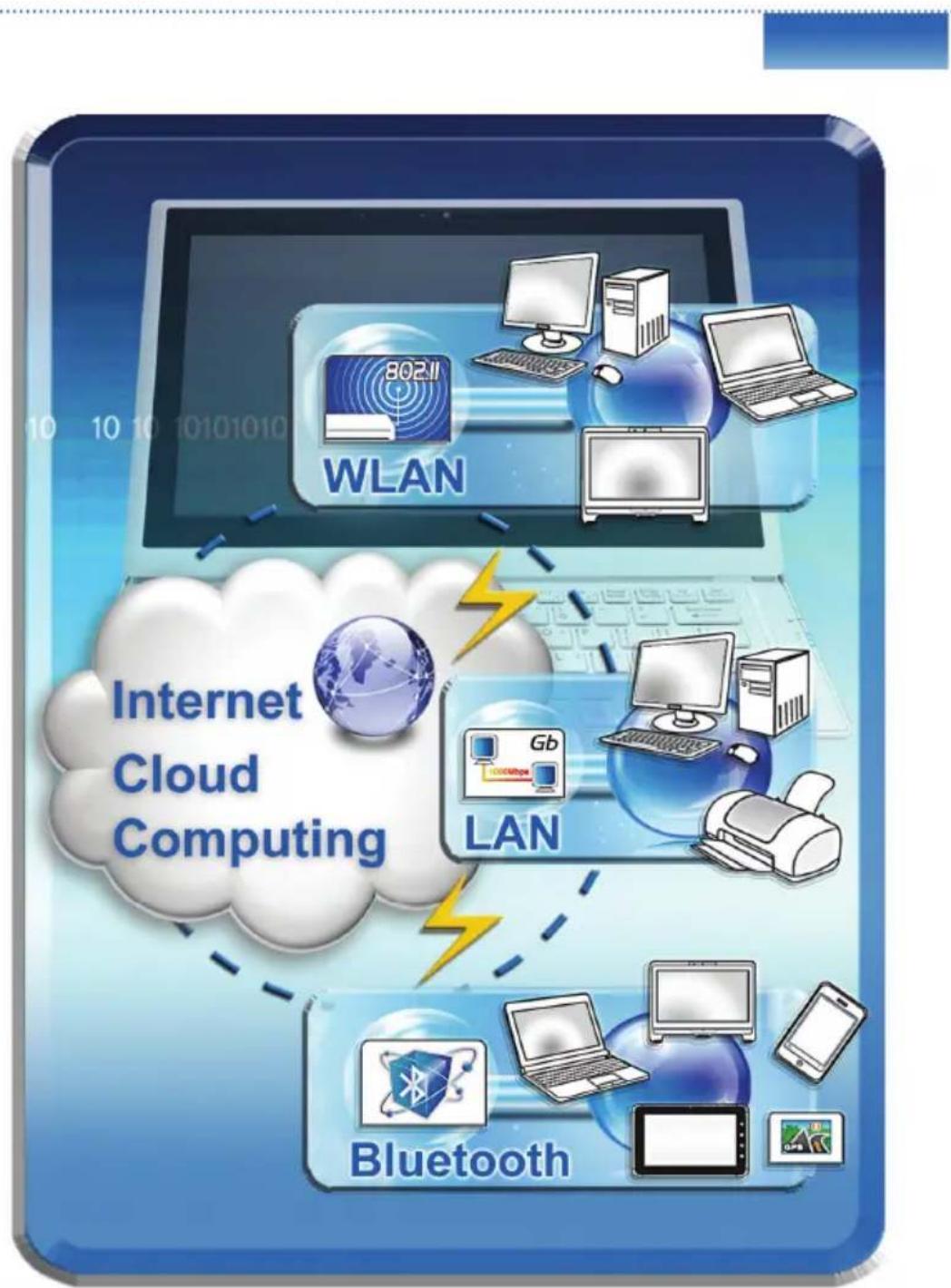
Communication Devices 3-18
◆ Regulations and Statements
FCC-B Radio Frequency Interference Statement
This equipment has been tested and found to comply with the limits for a Class B digital device, pursuant to part 15 of the FCC rules. These limits are designed to provide reasonable protection against harmful interference in a residential installation. This equipment generates, uses and radiates radio frequency energy, and, if not installed and used in accordance with the instructions, may cause harmful interference to radio communications. However, there is no guarantee that interference will not occur in a particular installation. If this equipment does cause harmful interference to radio or television reception, which can be determined by turning the equipment off and on, the user is encouraged to try to correct the interference by one or more of the following measures:
■ Reorient or relocate the receiving antenna.
■ Increase the separation between the equipment and receiver.
■ Connect the equipment into an outlet on a circuit different from that to which the receiver is connected.
■ Consult the dealer or an experienced radio TV technician for help.
NOTE
- The changes or modifications not expressly approved by the party responsible for compliance could void the user's authority to operate the equipment.
- Shield interface cables and AC power cord, if any, must be used in order to comply with the emission limits.
FCC Conditions
This device complies with part 15 of the FCC Rules. Operation is subject to the following two conditions:
■ This device may not cause harmful interference.
This device must accept any interference received, including interference that may cause undesired operation.
CE Conformity

This device is in compliance with the essential safety requirements and other relevant provisions set out in the European Directive.
Battery Regulations

European Union:
Batteries, battery packs, and accumulators should not be disposed of as unsorted household waste. Please use the public collection system to return, recycle, or treat them in compliance with the local regulations.

廢電池請回收
Taiwan:
For better environmental protection, waste batteries should be collected separately for recycling or special disposal.
California, USA: The button cell battery may contain perchlorate material and requires special handling when recycled or disposed of in California.
For further information please visit: http://www.dtsc.ca.gov/hazardouswaste/perchlorate/
Safety Guideline for Using Lithium Battery
Danger of explosion if battery is incorrectly replaced. Replace only with the same or equivalent type recommended by the equipment manufacturer. Discard used batteries according to manufacturer's instructions.
WEEE Statement
Under the European Union ("EU") Directive on Waste Electrical and Electronic Equipment, Directive 2002/96/EC, which takes effect on August 13, 2005, products of "electrical and electronic equipment" cannot be discarded as municipal waste anymore and manufacturers of covered electronic equipment will be obligated to take back such products at the end of their useful life.

◆ Safety Instructions

Read the safety instructions carefully and thoroughly. All cautions and warnings on the equipment or user's manual should be noted.

Keep this equipment away from humidity and high temperature.

Lay this equipment on a stable surface before setting it up.

The openings on the enclosure are used for air convection and to prevent the equipment from overheating. Do not cover the openings.

Do not leave the equipment in an unconditioned environment with a storage temperature above 60^ C ( 140^ F) or below 0^ C ( 32^ F), which may damage the equipment.
- This unit should be operated under maximum ambient temperature of 40^ (120°F).
Make sure the power voltage is within safety range and has been adjusted properly to the value of 100\~240V before connecting the equipment to the power outlet.
- Always unplug the AC power cord before installing any add-on card or module to the equipment.
- Always disconnect the AC power cord or uninstall the battery pack or switch off the wall socket if the equipment would be left unused for a certain time to achieve zero energy consumption.

Never pour liquid into the opening that could damage the equipment or cause an electrical shock.

Place the power cord in a way that people are unlikely to step on it. Do not place anything on top of the power cord.
 | Always keep the strong magnetic or electrical objects away from the equipment. |
 | When installing the coaxial cable to the TV Tuner, it is necessary to ensure that the metal shield is reliable connected to protective earthing system of the building.Cable distribution system should be grounded (earthed) in accordance with ANSI/NFPA 70, the National Electrical Code (NEC), in particular Section 820.93, Grounding of Outer Conductive Shield of a Coaxial Cable. |
 | To prevent explosion caused by improper battery replacement, use the same or equivalent type of battery recommended by the manufacturer only.Always keep the battery in a safe place. |
 | If any of the following situations arises, get the equipment checked by a service personnel:The power cord or plug is damaged.Liquid has penetrated into the equipment.The equipment has been exposed to moisture.The equipment has not worked well or you can not get it work according to User's Manual.The equipment was dropped and damaged.The equipment has obvious signs of breakage. |
 | Green Product FeaturesReduced energy consumption during use and stand-byLimited use of substances harmful to the environment and healthEasily dismantled and recycledReduced use of natural resources by encouraging recyclingExtended product lifetime through easy upgradesReduced solid waste production through take-back policyEnvironmental PolicyThe product has been designed to enable proper reuse of parts and recycling and should not be thrown awayUsers should contact the local authorized point of collection for recycling and disposing of their end-of-life products. |
Trademarks
- All trademarks are the properties of their respective owners.
■ SRS Premium Sound, SRS and the symbol are trademarks of SRS Labs, Inc. - THX and THX TruStudio Pro are trademarks of THX Ltd. which may be registered in some jurisdictions. All rights reserved.
■ Sound Blasters registered trademark of Creative Technology Ltd.
Revision History
Version Revision History Date
1.0 First Released 07, 2013
text_image
2 IntroductionsCongratulations on becoming an user of this product, the finely designed slidebook PC. This brand-new exquisite product will give you a delightful and professional experience in using this slidebook. We are proud to tell our users that this product is thoroughly tested and certified by our reputation for unsurpassed dependability and customer satisfaction.
Manual Map
This User's Manual provides instructions and illustrations on how to operate this slidebook. It is recommended to read this manual carefully before using it.
Chapter 1, Preface, gives users the basic safety information and caution that is interrelated to using this slidebook. It is recommended to read these information or caution when using this slidebook for the first time.
Chapter 2, Introductions, includes the descriptions of all the accessories of this slidebook.
Please check out that if you have all the accessories included when you open the packing box. If any of these accessories is damaged or missing, please contact the vendor where you purchased this product. Also, this chapter provides the specification of this slidebook, and introduces the function buttons, I/O ports, connectors, LEDs and externals of this slidebook.
Chapter 3, Getting Started, gives the basic operation instructions on setting up this slidebook, using keyboard, and so on, to help users getting familiar with this slidebook.
Unpacking
First, unpack the shipping carton and check all items carefully. If any item contained is damaged or missing, please contact your local dealer immediately. Also, keep the box and packing materials in case you need to ship the unit in the future. The package should contain the following items:
- Slidebook
- Quick Start Manual
• AC/DC adapter and AC power cord - Carry bag (optional)
- All-in-one application disk, containing the full version of user's manual, drivers, utilities, and optional recovery function, etc..

These accessories listed above may change without notice.
Product Overview
This section provides the description of basic aspects of the slidebook. It will help you to know more about the appearance of this slidebook before using it. Please be aware that the slidebook shown in this section may vary from the actual one that users purchased.
Top-open View
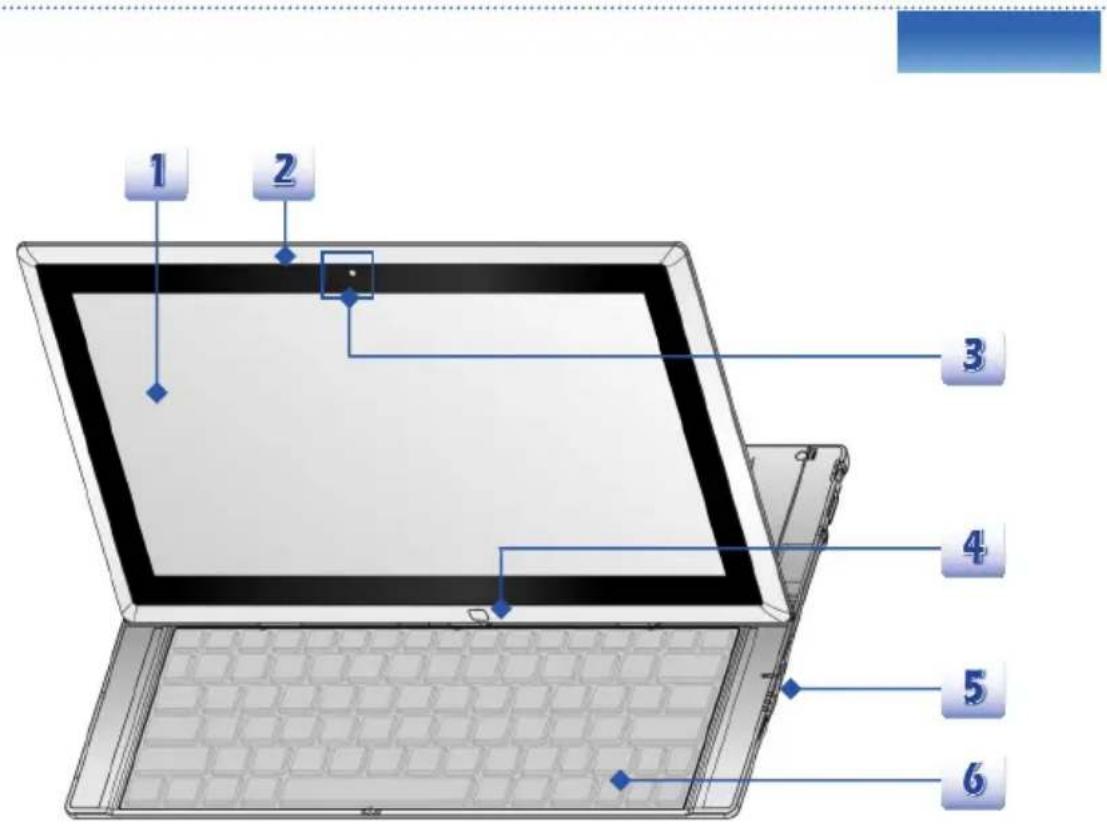
The figure of top-open view and description shown below will lead you to browse the main operating area of this slidebook.
text_image
1 2 3 4 5 6
The figures shown here are for reference only
1. Multi-Touch IPS Display
This slidebook is equipped with a ten-point touch IPS display which delivers consistent and accurate color from all viewing angles, and makes viewing more pleasure with vivid and clear picture on the screens. Users are allowed to use finger gestures to interact with multi-media content, play games, read e-books, access documents, create special effects, manipulate art and photographs, and even surf on the internet, in a truly unique and compelling way.
2. Light Sensor
With Light Sensor function turned on, this slidebook is capable to adjust the display brightness level higher or lower according to the surrounding light source. Refer to Light Sensor switch icon under [Setting/ Change PC Settings/ General/ Screen] on the desktop to check the function status.
3. Webcam/Webcam LED
This built-in Webcam can be used for picture taking, video recoding or conferencing, and any other interactive applications.
- Webcam LED indicator, next to the webcam, glows when webcam function is activated; LED goes out when this function is turned off.
4. Windows Button

- Pressing the Windows button toggles the Start menu.
5. Status LED

Battery Status
♦ Glowing blue when the battery is being charged.
- Blinking amber if the battery fails and it is recommended to replace a new battery.
- Consult the local dealer for purchasing an equivalent type of battery recommended by the manufacturer.
- Battery LED goes out when it is fully charged or when the AC/DC adapter is disconnected.

Hard Disk/ Optical Drive Device In-use
Blinking blue when the system is accessing the hard disk drive or the optical drive device.

Power LED
♦ Glowing blue when the slidebook power is turned on.
- LED goes off when the slidebook is turned off.
6. Keyboard
The built-in keyboard provides all the functions of a full-sized keyboard.
Quick Launch [Fn] Buttons
Use the [Fn] buttons on the keyboard to activate the specific applications or tools.
With the help of these quick launch buttons, users will be able to do work more efficiently.
![MSI S Series S20 4M(Slider 2) - Quick Launch [Fn] Buttons - 1](/content/2026/06/1168101/images/a5d6a797f024631935326992d7de84a849306fdeb2109c9b751ab049ba4c1180.jpg)
ECO Engine (Power Saving)
- Press and hold the Fn button, and then press the F10 button repeatedly to switch among various power saving modes provided by ECO Engine, or to turn this function off recurrently.
![MSI S Series S20 4M(Slider 2) - Quick Launch [Fn] Buttons - 2](/content/2026/06/1168101/images/b2dff4df7986f9906a3c000340b35795f15ebee4c90a9f8eda7e7273db3bb12e.jpg)
Airplane mode
- Press and hold the Fn button, and then press the F11 button repeatedly to turn Airplane mode on or off recurrently.
- For flight safety consideration, it is always recommended to turn Airplane Mode on when you are in flight.
Refer to the Airplane mode switch icon under [Start/Settings/Change PC Settings/Wireless/Airplane mode] on the desktop to check the device status. - To enable the WLAN or Bluetooth function, please refer to the instructions provided in “Wireless Activation for Windows 8.”
Right Side View
![MSI S Series S20 4M(Slider 2) - Quick Launch [Fn] Buttons - 3](/content/2026/06/1168101/images/ef29a55530b510d221389fa13771eaf9d0b946369c1004ccac80ac1baf9cf7b4.jpg)
text_image
1 2 3 3 4 51. Power Button
Press the power button to turn the slidebook ON and OFF. Press the power button to awake the slidebook from the sleep state.
2. HDMI Connector
HDMI (High Definition Multimedia Interface) is a new interface standard for PCs, displays and consumer electronics devices that supports standard, enhanced and high-definition video, plus multi-channel digital audio on a single cable.
3. USB3.0 Ports
USB 3.0, the SuperSpeed USB, delivers the higher interface speeds for connecting various devices, such as storage devices, hard drives, or video cameras, and offers more advantages over high-speed data transferring.
4. Headphone Connector
Used for speakers or headphones.
5. Power Connector
To connect the AC/DC adapter and supply power for the slidebook.
Left Side View
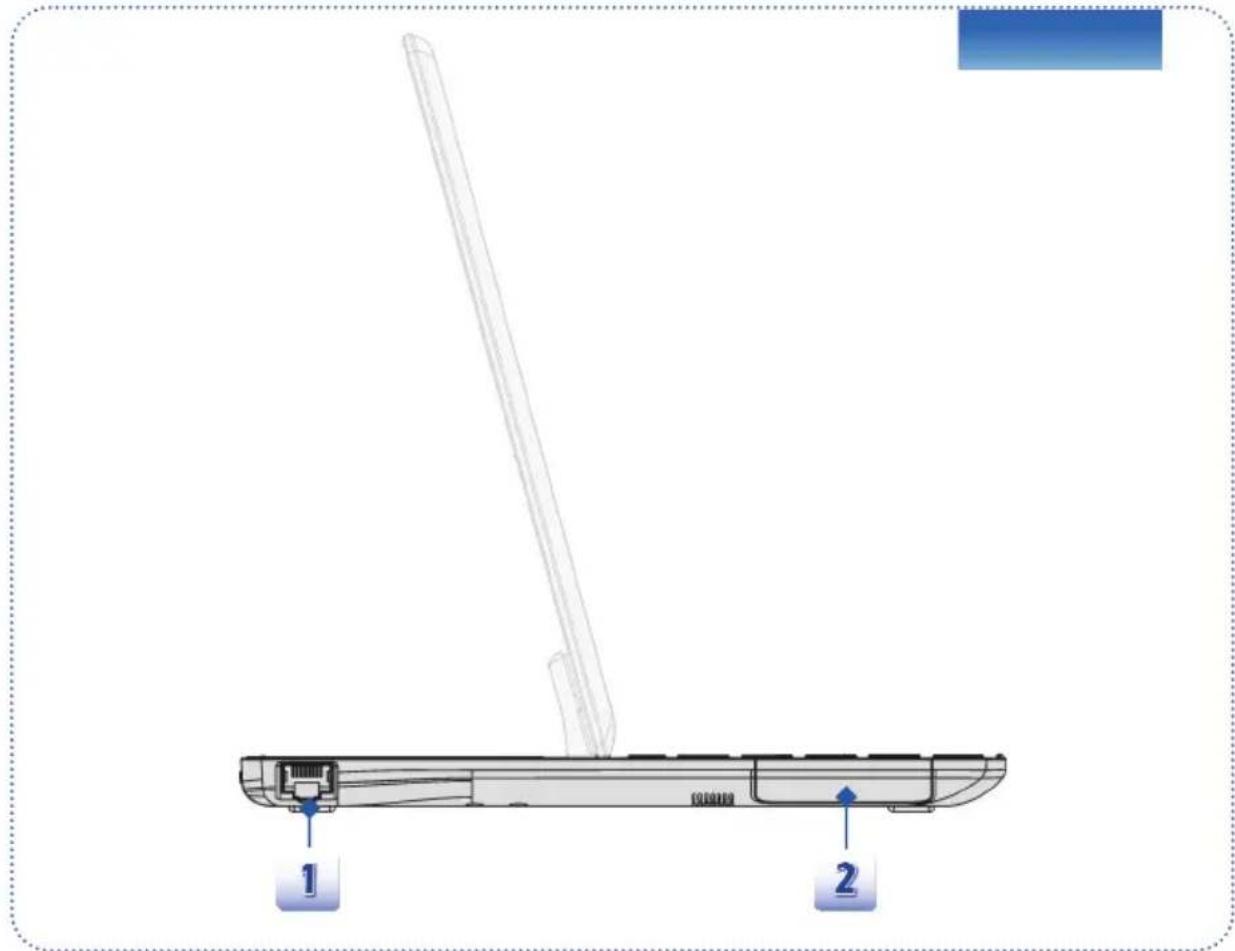
text_image
Technical diagram of a device with labeled parts, showing a vertical rod extending into a base with two numbered annotations.1. RJ-45 Connector
The 10/100/1000 Ethernet connector is used to connect a LAN cable for network connection.
2. Reserved for future usage
Please do not try to remove the cover, or it will void the warranty of the slidebook.
Rear Side View
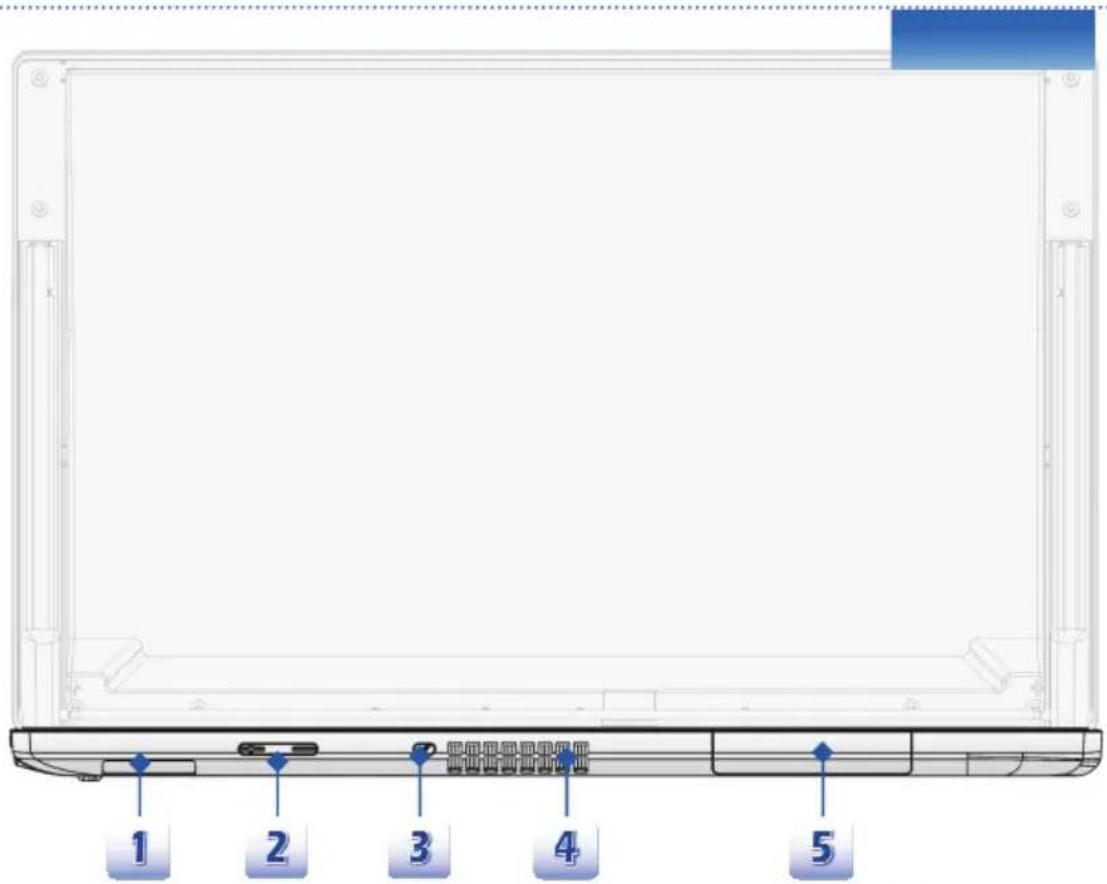
text_image
1 2 3 4 51. Card Reader
The built-in card reader supports MMC (Multi-Media Card) and SD (Secure Digital) memory card. Be noted that the supported memory cards may vary without notice.
2. Volume Up / Volume Down Buttons
Press the Volume Up or Volume Down button to increase or decrease the sound volume of the slidebook.
3. Display Lock button
With a built-in G-sensor module, this IPS display gives users a more flexible way in viewing web pages, documents, pictures, videos, etc. Whenever the display is rotated, the screen will be rotated and expanded to fit the display automatically. Press this Display Lock button to disable this function.
4. Ventilator
The ventilator is designed to cool the system. DO NOT block the ventilator for air circulation.
5. Reserved for future usage
Please do not try to remove the cover, or it will void the warranty of the slidebook.
Specification
The Specification may change without notice. The actual products sold may differ and depend on areas. Please check the detailed Specification with your local dealers.
Physical Characteristic
| Dimension | 302.6 (W) x 196.1 (D) x 19.8 (H) mm |
| Weight 1.16 kg (with SSD) |
CPU
| Processor Type Intel | ® Haswell |
| Supported Processor Intel | ® Dual-Core processor |
Memory
| Technology | DDR3L 1600/ 1333 MHz |
| Memory | DDR3L | SO-DIMM X 1 slot |
| 4G/ 8G DDR3L SDRAM |
| Maximum | up to 8 GB |
Power
| AC/DC Adapter 40W, 19V |
| Input: 100~240V, ~1.5A | 50~60Hz |
| Output: 19V =2.1A |

| Battery Type | 3-cell |
| RTC Battery Yes |
Storage (items listed here may vary without notice)
| Form factor | mSATA SSD |
I/O Port
| USB | x 2 (version 3.0) |
| Headphone-out x 1 |
| RJ45 | x 1 |
| Mini HDMI | x 1 |
| Card Reader | x 1 (SD/ MMC) |
| The supported memory cards may vary without notice. |
Communication Port
LAN 10/100/1000 Ethernet
Wireless LAN Supported
Bluetooth Supported
Display
LCD Type 11.6"
178° wide viewing angle
FHD 1920 x 1080
Brightness Controlled by K/B hot-keys
Video
Graphics UMA
HDMI output Supported
Dual View Function Supported
External display devices will be automatically detected when connected.
WebCam
HD CMOS Camera Supported
Audio
Internal Speaker 2 speakers
Sound Volume Adjusted by keyboard hot-key and switches.
Software & BIOS
USB Flash Boot USB floppy boot up DOS only
BIOS
Fast Boot Support
Others
Compatibility
WHQL

text_image
3 Getting StartedBegin to Use the Slidebook
For a new user of this slidebook, we would like to suggest you follow the illustrations below to begin to use the slidebook.
natural_image
Illustration of three laptops with keyboard and mouse, connected by a device (no text or symbols visible)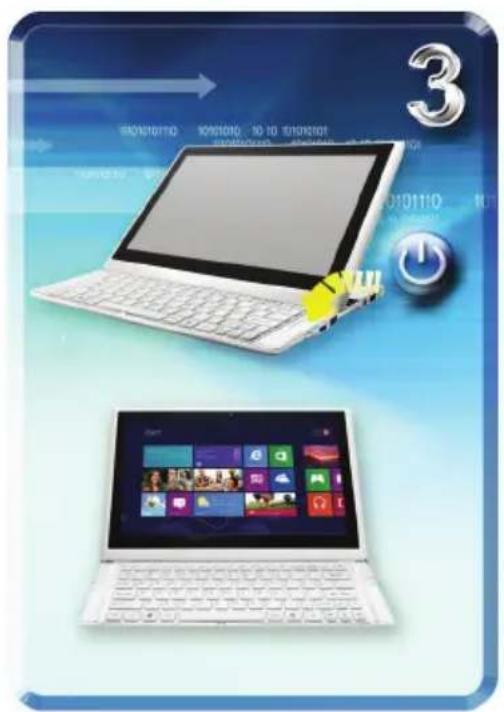
natural_image
Illustration of a laptop and a smartphone with app icons, set against a blue gradient background (no text or symbols on the devices themselves)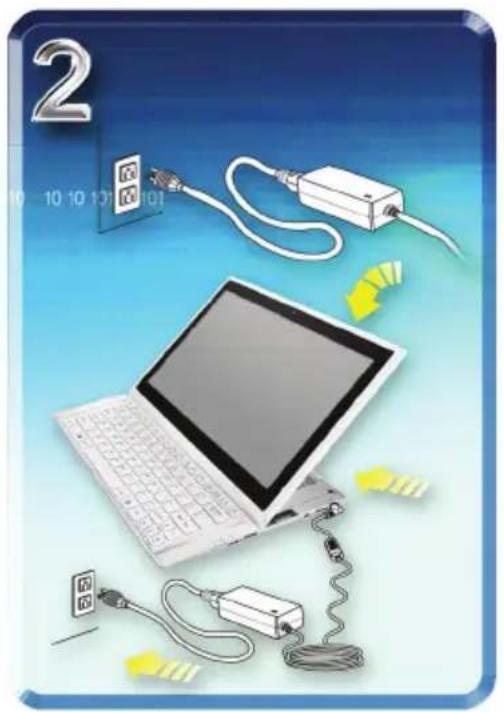
natural_image
Illustration of a laptop connected to an electronic device via cables, with no visible text or symbols.Power Management
AC Power
It is strongly recommended to connect the AC/DC adapter to the slidebook and use the AC power while using this slidebook for the first time. When the AC power is connected, recharging the battery will start immediately.
Note that the AC/DC adapter included in the package is approved for your slidebook; using other adapter model may damage either the slidebook or other devices attached to it.
Do not cover the AC/DC adapter since it may generate a certain heat while in use. Always be aware of heat coming from the AC/DC adapter in use.
Battery Power
This slidebook is equipped with a built-in high-capacity Li-ion battery pack. The rechargeable Li-ion battery pack is an internal power source of the slidebook.
Be aware that this battery pack may be damaged if users try to disassemble the battery pack on their own. Also, please note that the limited warranty of the battery pack will be voided if the battery pack is disassembled by non-authorized technicians.
Please follow your local laws and regulations to recycle the slidebook and the built-in battery pack.
Conserving Battery Power
Efficient battery power is critical to maintain a normal operation. If the battery power is not managed well, the saved data and customized settings may be lost.
To optimize battery life and avoid a sudden power loss, read the tips below:
- Suspend system operation if the system will be idle for a while or shorten the suspend timer's time period.
- Turn off the system if you won't be using it for a period of time.
- Disable unnecessary settings or remove idle peripherals.
- Connect an AC/DC adapter to the system whenever possible.
Charging the Battery Pack
The built-in battery pack can be recharged when the slidebook is connected to the AC power.
Please pay attention to the following tips before recharging the battery:
- You can use the system, suspend system operation or shut down and turn off the system without interrupting the charging process.
- The built-in battery pack uses Lithium-ion battery cells that have no “memory effect.” It is unnecessary to discharge the battery before recharging. However, to optimize the life of battery, we suggest that consuming the battery power completely once a month is necessary.
- The actual charging time will be determined by the applications in use.
Powering ON
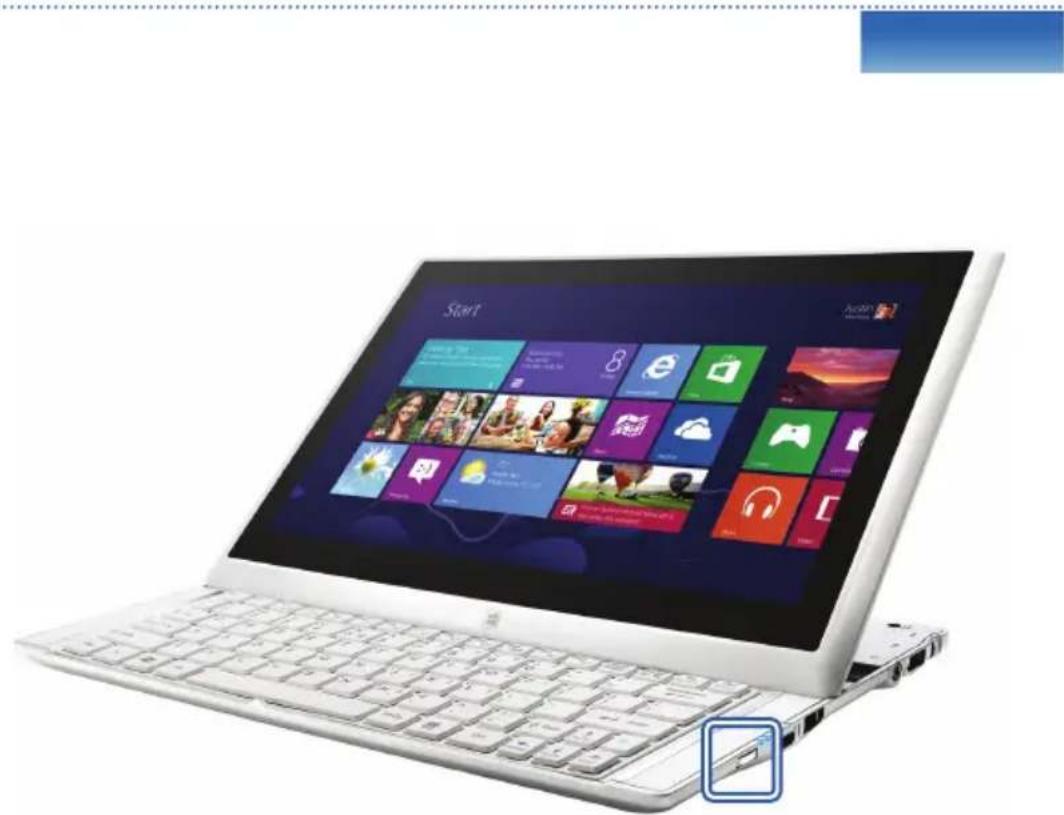
Long press the Power Button to power on the slidebook.
natural_image
White laptop with keyboard and app icons displayed on screen (no readable text or symbols)Power Management in Windows OS
Power management of personal computers (PCs) and monitors has the potential to save significant amounts of electricity as well as deliver environmental benefits. To be energy efficient, turn off your display or set your PC to standby/hibernate mode after a period of user inactivity.
Follow the instructions below to adjust the power management settings in Windows OS:

"Power Options" in Windows OS allows you to control the power management features of your display, hard drive, and battery.

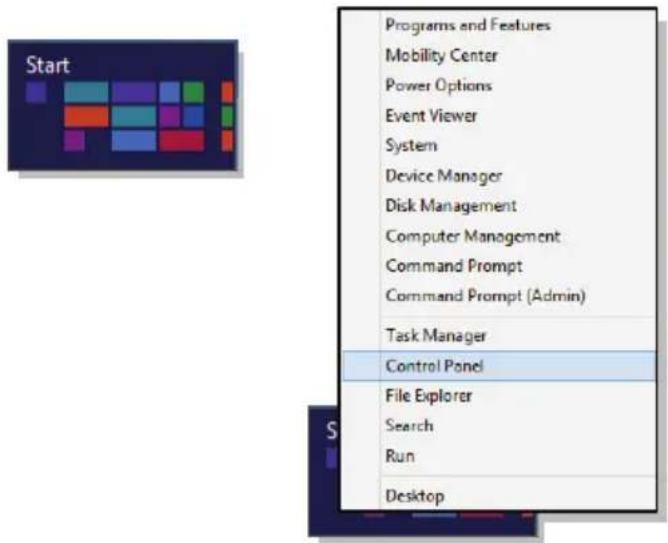
Drag the mouse cursor to the lower left corner of the screen and Start icon will show up. Right click on the icon to show the selection menu. Select Control Panel in the menu.
text_image
Start Programs and Features Mobility Center Power Options Event Viewer System Device Manager Disk Management Computer Management Command Prompt Command Prompt (Admin) Task Manager Control Panel File Explorer Search Run Desktop
Click on System and Security.

System and Security
Review your computer's status
Save backup copies of your files with File History
Find and fix problems

Click on Power Options.

Power Options
Require a password when the computer wakes
Change when the computer sleeps
Change what the power buttons do

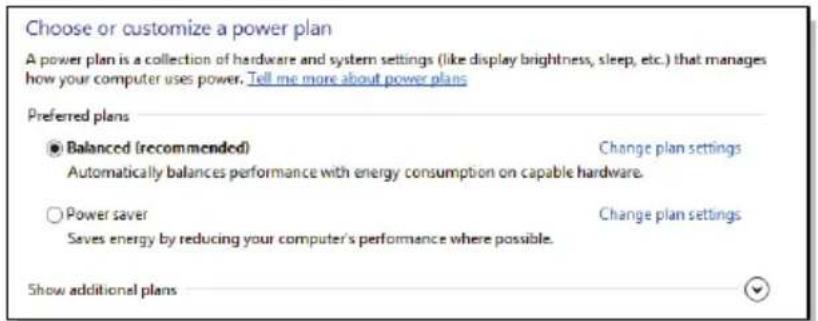
Then select a power plan that meets your personal needs.
text_image
Choose or customize a power plan A power plan is a collection of hardware and system settings (like display brightness, sleep, etc.) that manages how your computer uses power. Tell me more about power plans Preferred plans ● Balanced (recommended) Change plan settings Automatically balances performance with energy consumption on capable hardware. ○ Power saver Change plan settings Saves energy by reducing your computer's performance where possible. Show additional plans
The Power icon will present various and relative options as following:
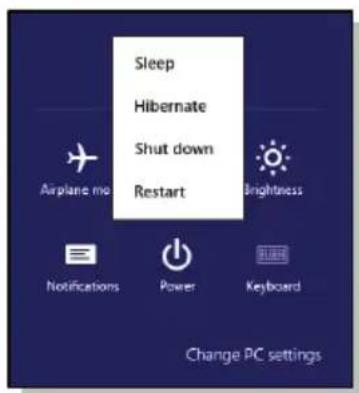
text_image
Sleep Hibernate Shut down Restart Airplane mo Brightness Notifications Power Keyboard Change PC settings
You can wake up your computer from power saving mode by pressing the power button.
Energy Saving Tips
- Activate the ECO power saving function to manage the computer's energy consumption.
- Turn off the monitor after a period of user inactivity.
◆ Utilize the Fn and F12 sleep mode keys to turn into power saving mode. - Tune the settings in Power Options under Windows OS to optimize the computer's power management.
- Always disconnect the AC power cord or uninstall the battery pack or switch off the wall socket if the computer would be left unused for a certain time to achieve zero energy consumption.
The power management feature allows the computer to initiate a lower-power or "Sleep" mode after a period of user inactivity. When used with an external ENERGY STAR qualified monitor, this feature also supports similar power management features of the monitor. To take advantage of these potential energy savings, the power management feature has been preset to behave in the following ways when the system is operating on AC power:
♦ Turn off the display after 5 minutes
♦ Initiate Sleep after 10 minutes
The computer exits Sleep when the power/Sleep button is pressed. When the Wake On LAN (WOL) feature is enabled, the computer can also exit Sleep in response to a network signal.
Basic Operations
If you are a beginner to the slidebook, please read the following instructions to assure your own safety, and make yourself comfortable during the operations.
Safety and Comfort Tips
The slidebook is a portable platform that allows you to work anywhere. However, choosing a good workspace is important if you have to work with your slidebook for a long period of time.
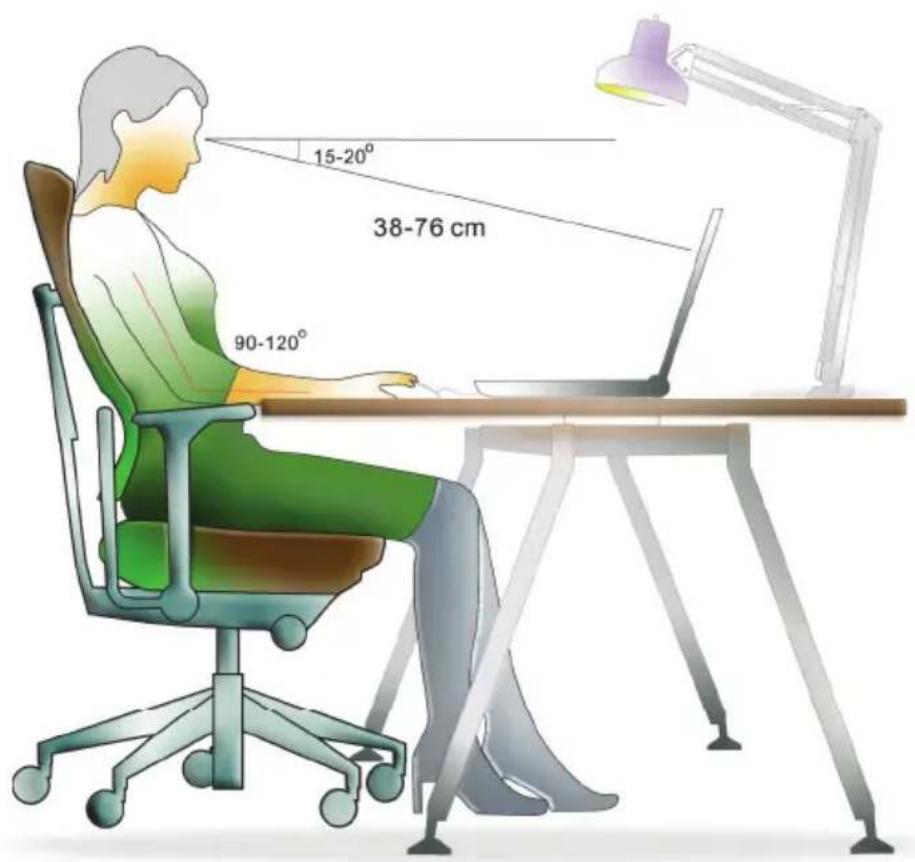
text_image
15-20° 38-76 cm 90-120°- Your work area should have enough illumination.
- Choose the proper desk and chair and adjust their height to fit your posture when operating.
- When sitting on the chair, adjust the chair's back (if available) to support your back comfortably.
- Place you feet flat and naturally on the floor, so that your knees and elbows have the proper position (about 90-degree) when operating.
- Put your hands on the desk naturally to support your wrists.
- Adjust the angle/position of the LCD panel to have an optimal view.
- Avoid using your slidebook in the space where may cause you discomforted.
- Change your posture frequently.
- Stretch and exercise you body regularly.
- Remember to take a break after working for a period of time.
Knowing the Display Features
Ten-point-touch IPS Display
This slidebook is equipped with a ten-point-touch IPS display which delivers consistent and accurate color from all viewing angles, and makes viewing more pleasure with vivid and clear picture on the screens. Users are allowed to use finger gestures to interact with multi-media content, play games, read e-books, access documents, create special effects, manipulate art and photographs, and even surf on the internet, in a truly unique and compelling way.
Light Sensor
With Light Sensor function turned on, this slidebook is capable to adjust the display brightness level higher or lower according to the surrounding light source. Refer to Light Sensor switch icon under [Settings/ Change PC Settings/ General/ Screen] on the desktop to check the function status.
Display Lock
With a built-in G-sensor module, this IPS display gives users a more flexible way in viewing web pages, documents, pictures, videos, etc. Whenever the display is rotated, the screen will be rotated and expanded to fit the display automatically. Press this Display Lock button to disable this function.
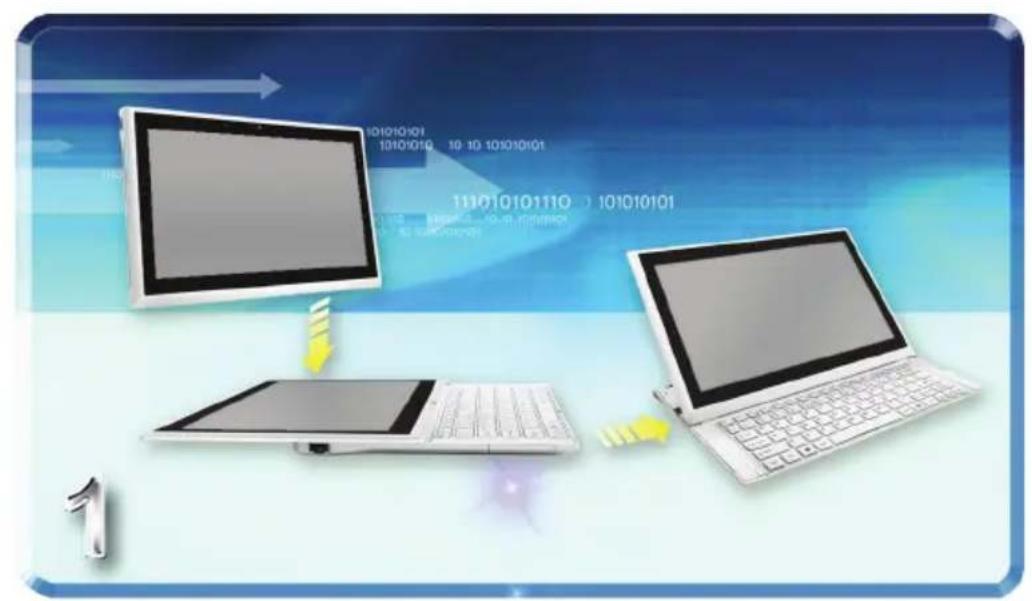
Flipping the Display
This slidebook provides a hidden keyboard which is assembled underneath the display. Slide and stand the display to find and use the keyboard.
- Place the slidebook on a flat surface, and find the Windows button first.
- Push both corner of the display where the Windows button located with your both hand until the display can move no further.
- Use both hand to hold the both side of the display, and then flip the display to a desired angle carefully.
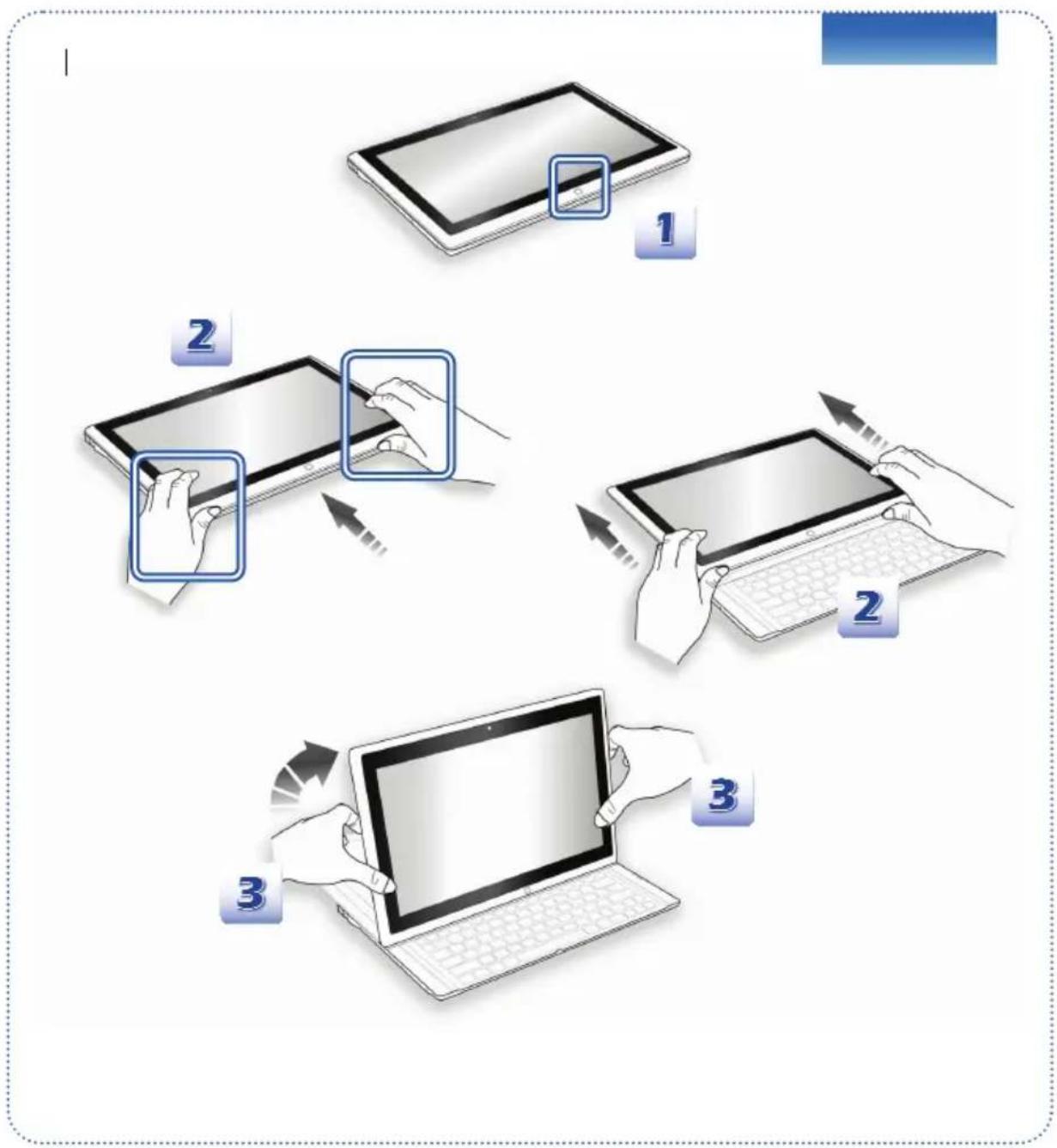
flowchart
graph TD
    A["Tablet 1"] --> B["Tablet 2"]
    B --> C["Tablet 2"]
    C --> D["Tablet 2"]
    D --> E["Laptop 3"]
    E --> F["Laptop 3"]
Knowing the Keyboard
This keyboard can be divided into four categories: Typewriter keys, Cursor keys, Numeric keys and Function keys.
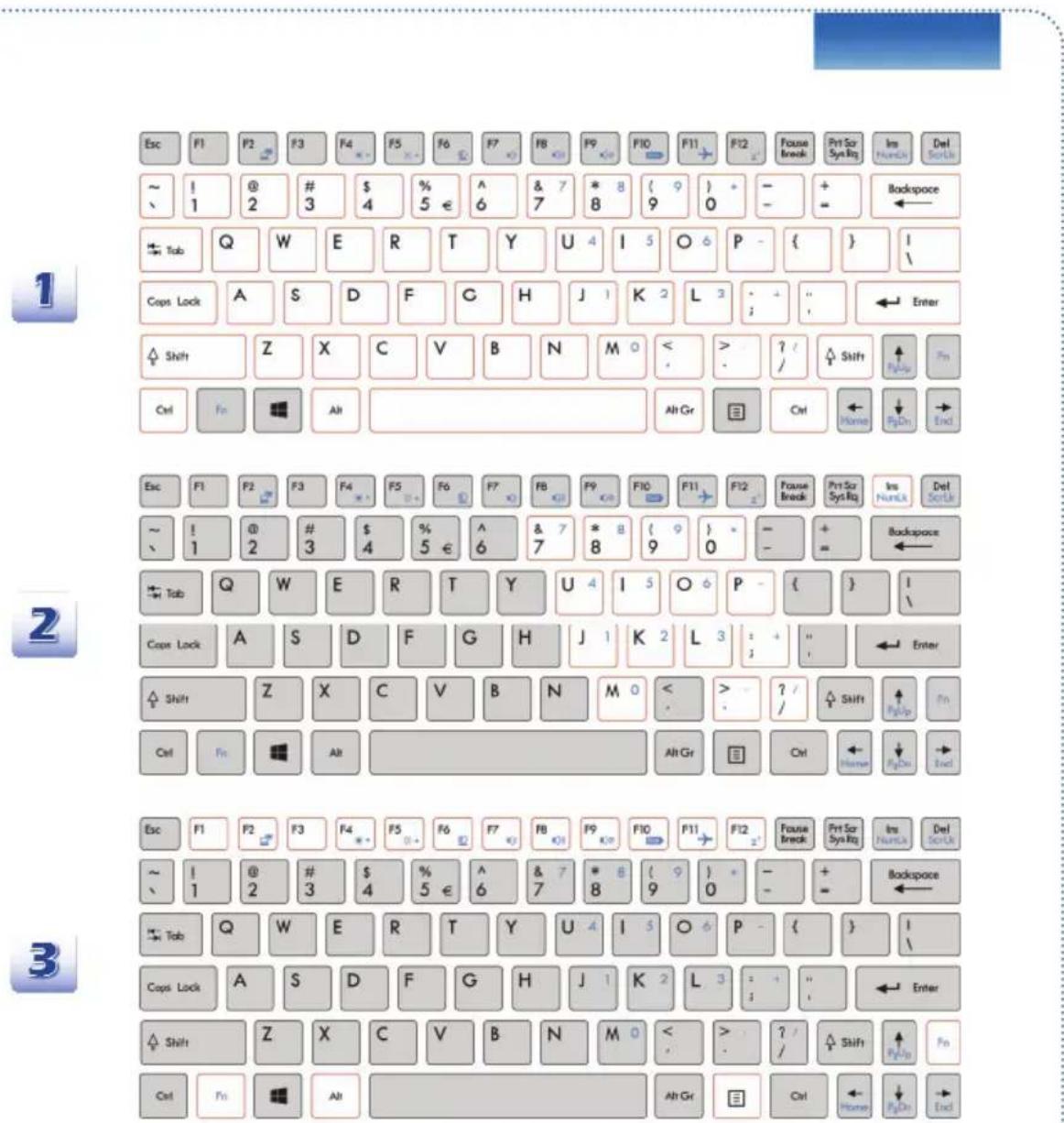
text_image
Esc F1 F2 F3 F4 F5 F6 F7 F8 F9 F10 F11 F12 Fouse Break Prt So Sys Rq Im NumLk Del SortLk ~ ! @ # $ % ^ & 7 * 8 ( 9 ) + - + Backspace ` 1 2 3 4 5 € 6 7 8 9 0 - - = ← ↑ Tab Q W E R T Y U 4 I 5 O 6 P - { } I Caps Lock A S D F C H J 1 K 2 L 3 - + " ← Enter △ Shift Z X C V B N M < > ? / ▲ Shift ↑ FyUp Fm Ctrl Fm Alt Alt Gr Ctrl Home ↓ End Esc F1 F2 F3 F4 F5 F6 F7 F8 F9 F10 F11 F12 Fouse Break Prt So Sys Rq Im NumLk Del SortLk ~ ! @ # $ % ^ & 7 * 8 ( 9 ) + - + Backspace ← ` 1 2 3 4 5 € 6 7 8 9 0 - - = ← ↑ Tab Q W E R T Y U 4 I 5 O 6 P - { } I Caps Lock A S D F G H J 1 K 2 L 3 : + " ← Enter △ Shift Z X C V B N M < > ? / ▲ Shift ↑ FyUp Ctrl Ctrl Home ↓ End Cel Fm Alt Alt Gr Ctrl Home ↓ End Esc F1 F2 F3 F4 F5 F6 F7 F8 F9 F10 F11 F12 Fouse Break Prt So Sys Rq Im NumLk Del SortLk ~ ! @ # $ % ^ & 7 * 8 ( 9 ) + - + Backspace ← ` 1 2 3 4 5 € 6 7 8 8 9 0 - - = ← ↑ Tab Q W E R T Y U 4 I 5 O 6 P - { } I Caps Lock A S D F G H J 1 K 2 L 3 : + " ← Enter △ Shift Z X C V B N M < > ? / ▲ Shift ↑ FyUp Ctrl Ctrl Home ↓ End- Typewriter keys
- Numeric keys
- Cursor keys / Function keys
Typewriter Keys
In addition to providing the major function of the keyboard, these typewriter keys also provide several keys for special purposes, such as [Ctrl,] [Alt,] and [Esc] key.
When the lock keys are pressed, the corresponding LEDs will light up to indicate their status:
- Num Lock: Press and hold the [Fn] key and press this key to toggle the Num Lock on and off. When this function is activated, you can use the numeric keys that are embedded in the typewriter keys.
- Caps Lock: Press this key to toggle the Caps Lock on and off. When this function is activated, the letters you type are kept in uppercase.
- Scroll Lock: Press and hold the [Fn] key and press this key to toggle the Scroll Lock on and off. This function is defined by individual programs, and is usually used under DOS.
Numeric Keys
Find the numeric keys among the keyboard, and activate the Num Lock function to use these numeric keys to enter numbers and calculations.
Cursor Keys
The four cursor (arrow) keys and [Home], [PgUp], [PgDn], [End] keys are used to control the cursor movement.
The [Backspace], [Ins] and [Del] keys at upper right corner are used for editing purpose.
Function Keys
■ Windows Keys
You can find the Windows Logo key ( ) and one Application Logo key () on the keyboard, which are used to perform Windows-specific functions, such as opening the Start menu and launching the shortcut menu. For more information of the two keys, please refer to your Windows manual or online help.
■ General [Fn] Keys
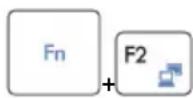
Switch the display output mode between the LCD, external monitor and both.
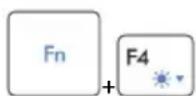
Decrease the LCD brightness.
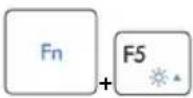
Increase the LCD brightness.
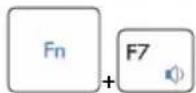
Decrease the built-in speaker's volume.
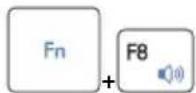
Increase the built-in speaker's volume.
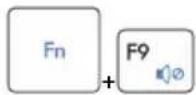
Disable the computer's audio function.
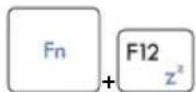
Force the computer into sleep state (depending on the system configuration).
■ Quick Launch [Fn] Keys
Use the [Fn] buttons on the keyboard to activate the specific applications or tools.
With the help of these quick launch buttons, users will be able to do work more efficiently.
![MSI S Series S20 4M(Slider 2) - ■ Quick Launch [Fn] Keys - 1](/content/2026/06/1168101/images/d5f269a224e1884451efc64835a7d3a92ee48b386a548ba1babed67f169feedb.jpg)
ECO Engine (Power Saving)
- Press and hold the Fn button, and then press the F10 button repeatedly to switch among various power saving modes provided by ECO Engine, or to turn this function off recurrently.
![MSI S Series S20 4M(Slider 2) - ■ Quick Launch [Fn] Keys - 2](/content/2026/06/1168101/images/17f1876876f4dc2143fd5906b555a8d7b2663392edb345a417c2406bf3a21871.jpg)
Airplane mode
- Press and hold the Fn button, and then press the F11 button repeatedly to turn Airplane mode on or off recurrently.
- For flight safety consideration, it is always recommended to turn Airplane Mode on when you are in flight.
Refer to the Airplane mode switch icon under [Start/Settings/Change PC Settings/Wireless/Airplane mode] on the desktop to check the device status. - To enable the WLAN or Bluetooth function, please refer to the instructions provided in "Wireless Activation for Windows 8."
Wireless Activation for Windows 8
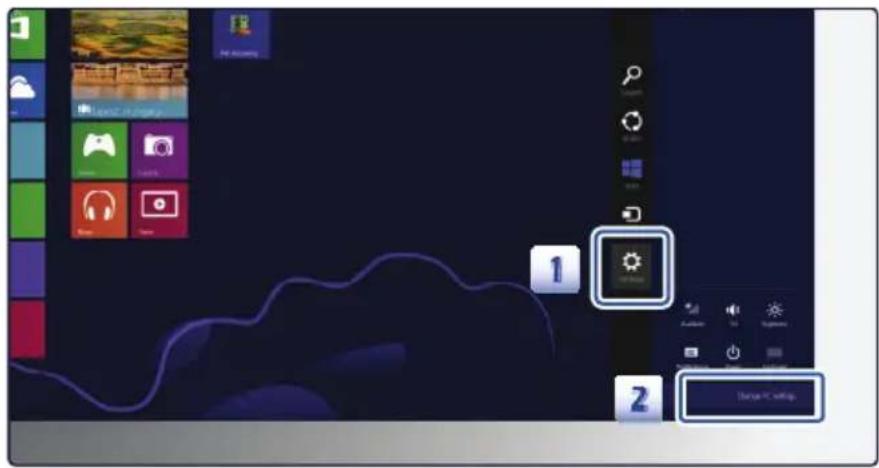
- Find the [Settings] icon on the desktop and click on it.
- Enter the [PC Settings] main page by clicking on [Change PC Settings].
- Unfold the [Wireless devices] selections under [Wireless].
- Make sure Airplane mode is set to OFF here.
- Turn the WLAN or Bluetooth function on/off by sliding the function switch bar.
Refer to the Status LED to check the device status.
text_image
Screenshot of a desktop computer interface showing app icons and status bar with numbered UI elements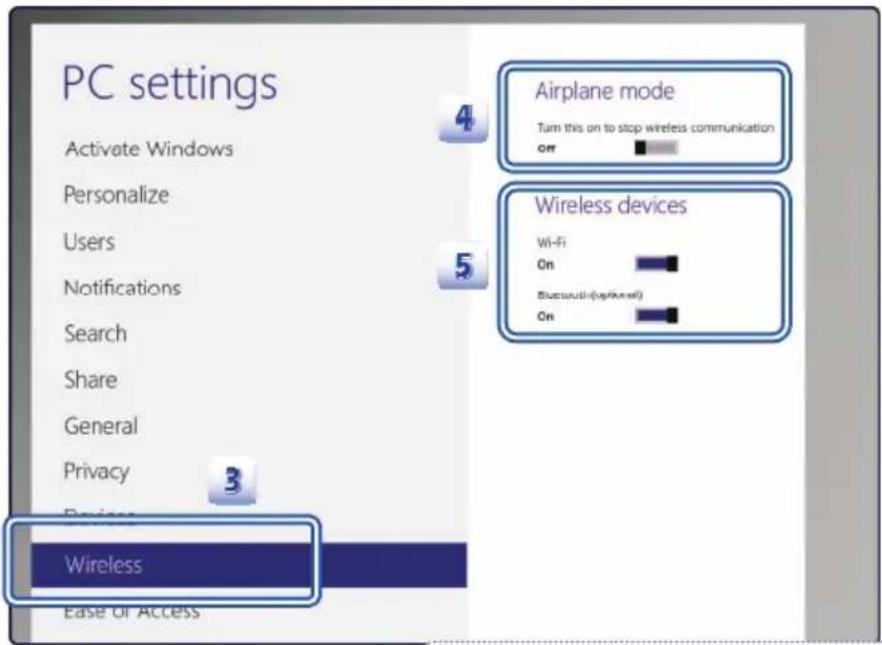
text_image
PC settings Activate Windows Personalize Users Notifications Search Share General Privacy Wireless Ease of Access Airplane mode Turn this on to stop wireless communication on Wireless devices Wi-Fi On Bluetooth(synikmnl) On
- When Airplane mode is set to ON, the WLAN and Bluetooth function will be disabled at once.
- The information provided here is for reference only, and may be vary without notice.
About Hard Disk Drive
Your slidebook is equipped with a 2.5-inch hard disk drive. The hard disk drive is a storage device with much higher speed and larger capacity than other storage devices, such as the floppy disk drive and optical storage device. Therefore, it is usually used to install the operating system and software applications.
To avoid unexpected data loss in your system, please backup your crucial files regularly.
Do not turn off the slidebook when the hard disk In-use LED is on.
Do not remove or install the hard disk drive when the slidebook is turned on. The replacement of hard disk drive should be done by an authorized retailer or service representative.
Connecting the External Devices
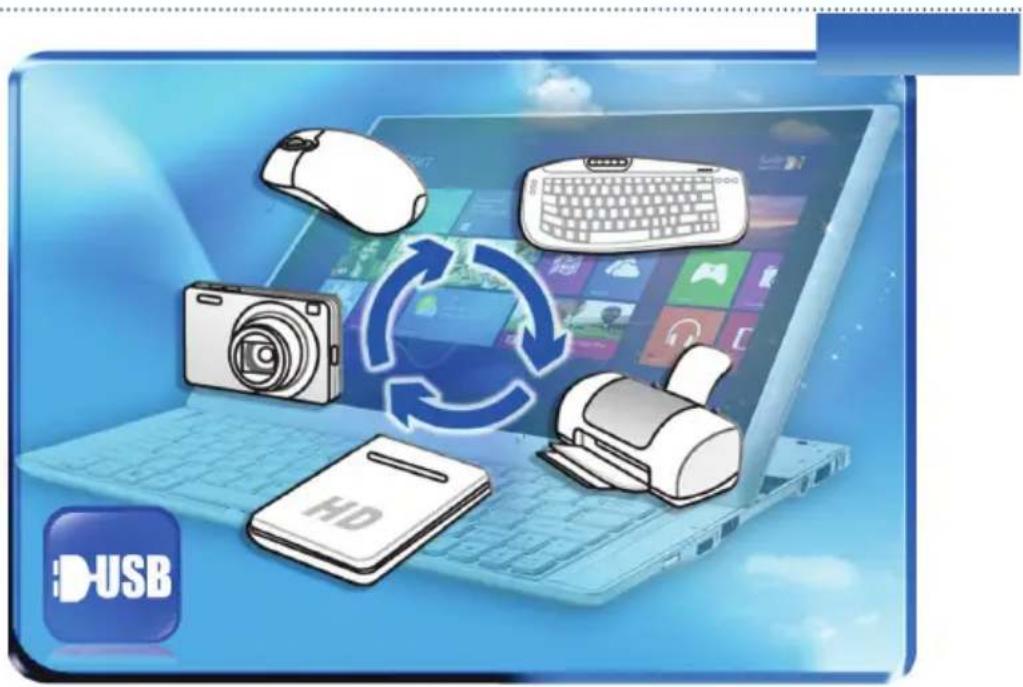
The I/O (input/output) ports on the slidebook allow you to connect peripheral devices and communication devices. All functions and devices listed here are for reference only.
Peripheral Devices
natural_image
Illustration of digital devices including a laptop, smartphone, keyboard, mouse, and printer with a blue circular arrow symbol (no text or labels)
natural_image
Illustration of a home screen with wind turbines, projector, and computer monitor displaying a landscape (no text or symbols)
text_image
SATA 010100010101 010100010101 010101010110 0010100010101 0010100010101 101500101010 01010101010 SATA 010100010101 SATACommunication Devices
flowchart
graph TD
    A["Internet Cloud Computing"] --> B["WLAN"]
    A --> C["LAN"]
    A --> D["Bluetooth"]

The functions listed here are supported optionally, depending on the model users purchased.
Contact the local dealer for detailed information.