
LITE TOUCH ZOOM 100ED-QD - Film camera NIKON - Free user manual and instructions
Find the device manual for free LITE TOUCH ZOOM 100ED-QD NIKON in PDF.


| Product Type | 24×36 autofocus film camera with built-in zoom |
| Brand / Model | Nikon Lite Touch Zoom 100ED-QD (or Lite Touch Zoom 100ED) |
| Image Format | Normal: 24 × 36 mm; Panorama (QD only): 13.3 × 36 mm |
| Lens | Nikon 38-100 mm f/5.3-9.6 zoom lens; 7 elements in 5 groups (ED lens and aspherical lenses) |
| Shutter | Programmed electronic shutter; speeds from 2 to 1/360 s |
| Viewfinder | Real-image zoom viewfinder, coverage >80%; dioptric adjustment -2 to +2 m⁻¹; anti-fog eyepiece |
| Focusing | Passive autofocus with focus lock; minimum distance: 0.75 m (38 mm) / 0.8 m (100 mm) |
| Exposure Control | Programmed AE; brightness range (ISO 100): 4 to 17 EV (38 mm) / 5.9 to 18.8 EV (100 mm) |
| Film Speed | DX auto reading from 50 to 3200 ISO; default ISO 100 for non-DX film |
| Built-in Flash | Modes: auto, forced, off, slow sync; range (ISO 100): 0.75-4.1 m (38 mm) / 0.8-2.1 m (100 mm) |
| Self-timer | Electronic, 10 s delay, cancellable |
| Remote Control (optional) | Infrared ML-L1; range approx. 5 m; 2 s delay; battery life approx. 10 years |
| Date Imprinting (QD) | Display Y/M/D, M/D/Y, D/M/Y, D/H/Min, or no imprint; setting up to 2039 |
| Power Source | 1 CR123A or DL123A 3 V lithium battery |
| Dimensions (W × H × D) | Approx. 114 × 60 × 41 mm |
| Weight | Approx. 210 g (without battery) |
| Care and Cleaning | Wipe with a soft, dry cloth; for the anti-fog eyepiece, use a lens cloth; do not expose to water; store in a cool, dry place |
| Safety | Do not disassemble, do not look at the sun through the viewfinder, keep out of reach of children, do not use flash near eyes |
| Spare Parts and Repairability | Optional accessories: ML-L1 remote control, CS-L23 case, CML-L1 remote case; contact an authorized Nikon dealer for repairs |
| General Information | Compact and lightweight construction; automatic backlight compensation; anti-fog viewfinder; automatic film loading and rewinding |
Frequently Asked Questions - LITE TOUCH ZOOM 100ED-QD NIKON
User questions about LITE TOUCH ZOOM 100ED-QD NIKON
0 question about this device. Answer the ones you know or ask your own.
Ask a new question about this device
Download the instructions for your Film camera in PDF format for free! Find your manual LITE TOUCH ZOOM 100ED-QD - NIKON and take your electronic device back in hand. On this page are published all the documents necessary for the use of your device. LITE TOUCH ZOOM 100ED-QD by NIKON.
USER MANUAL LITE TOUCH ZOOM 100ED-QD NIKON
Instruction Manual (Pages 2-49)
Thank you for purchasing the Nikon Lite Touch Zoom 100ED / Lite Touch Zoom 100ED QD camera.
Be sure to read this manual thoroughly before use, and keep it handy until you feel confident using the camera.
Some of the illustrations show the model with the date function.
Your Nikon camera features:
- Compact, light-weight construction with built-in 2.6X zoom lens from 38 to 100mm focal length range. (p. 21)
- A Nikon ED (Extra-low Dispersion) lens with low chromatic aberration (popularity used as lenses for Nikon single-lens reflex cameras), as well as two high-contrast, high-resolution aspherical lenses.
Automatic backlight compensation to automatically fire the flash when the subject is backlit. (p. 32) - A viewfinder eyepiece that will not easily become fogged up even if you breathe on it. (p. 17)
Symbols used in this manual

: Indicates items to be checked, such as requirements and restrictions.

: Indicates notes and cautions you are requested to follow.

:Indicates supplementary descriptions.

: Indicates pages for reference.
Accessories
(The following item is supplied with this camera.)
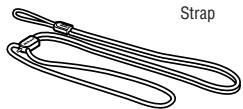
Optional accessories
- Camera case CS-L23
(Remote control unit can be stored in the pocket inside.)
Remote control unit ML-L1 (p. 39) - Remote control unit case CML-L1
Attaching the strap
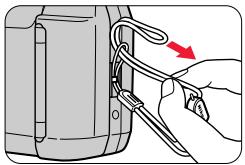
Attach the strap as shown in the illustration.
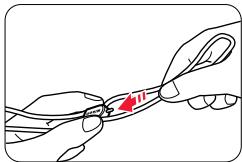
Adjust the length using the lug on the strap.
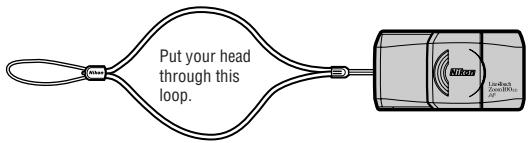
Table of Contents
To take a picture right away 6
Camera parts 8-10
Body 8-9
LCD panel 10
Indications in the viewfinder 11
1 Preparations
Installing a battery 12
Turning the camera on 13
Checking the battery power 13
Loading the film 14
2 Basic Operations
Imprinting the date/time on pictures (Lite Touch Zoom 100ED QD only) 16
Adjusting diopter 17
Holding the camera properly 18
Operating the Shutter Release button 19
Selecting Regular or Panorama mode (Lite Touch Zoom 100ED QD only) 20
Zooming 21
Shooting 22
Rewinding the film 24
Removing the film 25
3 Advanced Operations
When the main subject is not in the center of the picture 26
Difficult-to-focus subjects 28
Close-up photography 29
Flash photography 30
To automatically fire the flash 32
To cancel flash operation 33
To fire the flash intentionally 34
To photograph a person in a night view 35
To reduce the "Red-eye" effect 36
Using the self-timer 38
Using the remote control (optional) 39
Shooting a distant view or landscape through a window 40
4 Additional Information
Correcting the date and time (Lite Touch Zoom 100ED QD only) 41
Troubleshooting 42
Camera care tips 44
Specifications 46
For safe handling of the camera 48
To take a picture right away
Quick operation guide
If you wish to use this camera immediately, proceed as follows: For details see the pages indicated for reference.
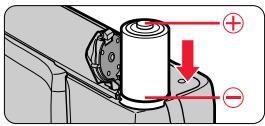
- Insert a battery. (p. 12)
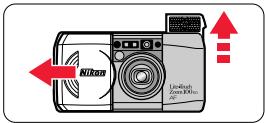
- Turn the camera on. (p. 13)
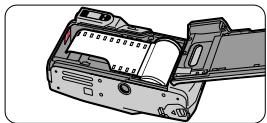
- Load film. (pp. 14, 15)
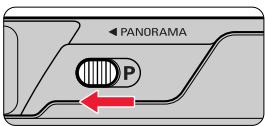
- Select Regular or Panorama mode (Lite Touch Zoom 100ED QD only). (p.20)
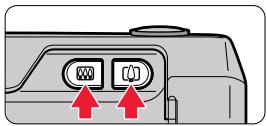
- Press the Zoom button and compose your picture. (p. 21)
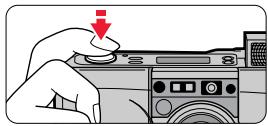
- Lightly press the Shutter Release button. (p. 19)
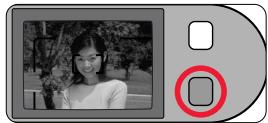
- Check the green LED, then shoot.
(p.23)
Take some trial shots
Before taking important pictures, it is strongly recommended to take a few trial shots first to familiarize yourself with the camera and all of its features.
Nikon cannot be held responsible for malfunctions caused by using the Lite Touch Zoom 100ED / Lite Touch Zoom 100ED QD in ways not specified in this manual.
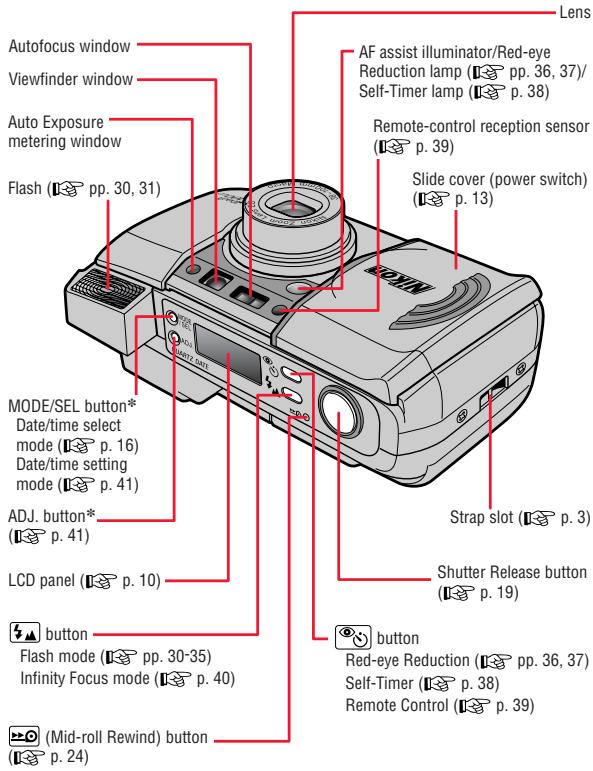
* Lite Touch Zoom 100ED QD only
LCD panel
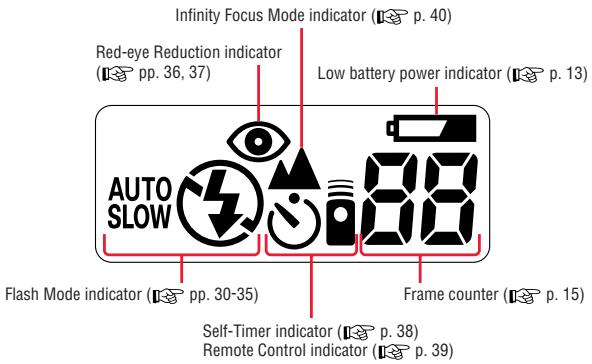
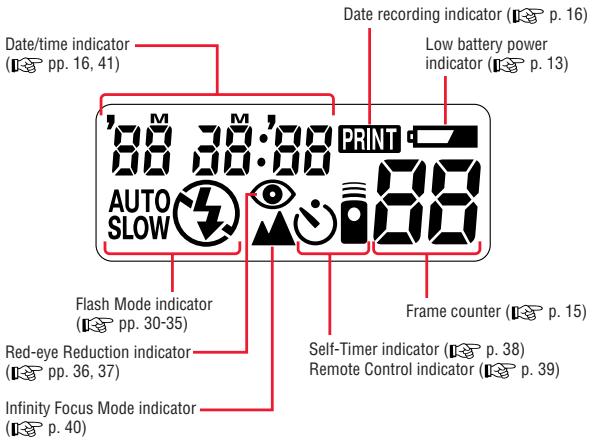
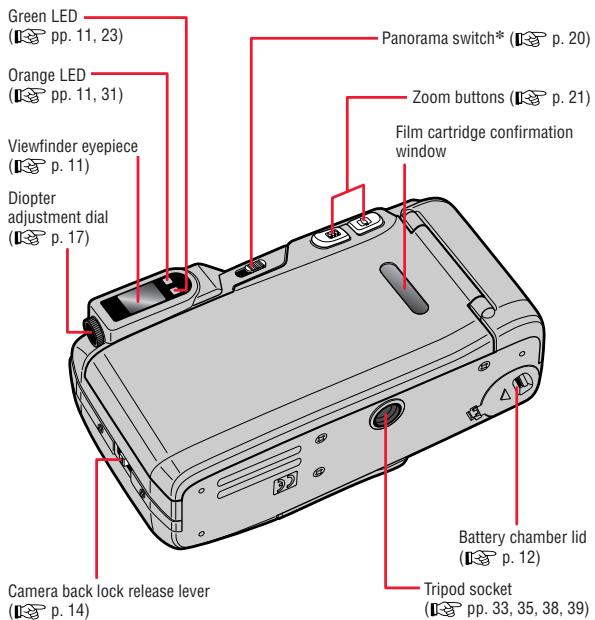
The illustrations are fully labeled for your reference.
Indications in the viewfinder
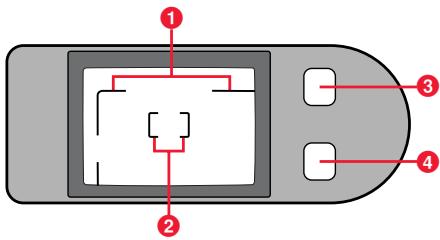

Panorama viewfinder (Lite Touch Zoom 100ED QD only)
1 Parallax compensation marks (p. 29)
For close-up shooting at a distance less than 1m
2 Autofocus frame marks (p. 22)
Center the main subject to be in focus within this frame.
Orange LED (p. 31)
Slowly blinks while the flash is being charged, and lights up when the flash is ready to fire.
If you press down on the popped-up flash unit, the LED blinks rapidly as a warning.
4 Green LED (p. 23)
Lights when focus is achieved. It blinks if correct focus cannot be achieved.
In close-up photography, the LED slowly blinks as a warning if the subject is closer than approx. 0.75m in 38mm wide-angle shooting, or approx. 0.8m in 100mm telephoto shooting.

Battery type
Use one CR123A or DL123A 3V lithium battery in this camera.
1. Open the battery chamber lid.
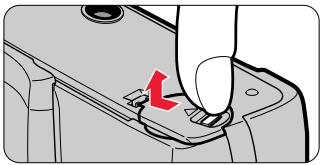
- While releasing the lock as indicated by the arrow in the illustration above, open the battery chamber lid.
2. Install a new battery.
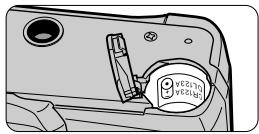
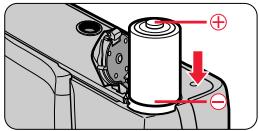
- Observe the correct polarities and insert the battery in the direction shown in the illustration above.
3. Close the battery chamber lid.
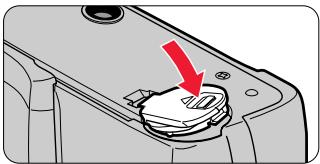
Firmly press the battery chamber lid until it clicks shut.

The built-in clock is reset when the battery is removed. Remember to set the time and date. (p. 41)
Turning the camera on
Open the slide cover.
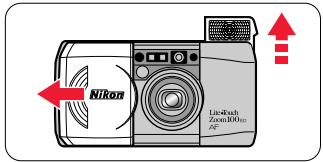
- Once you open the cover in the direction of the arrow, the camera is turned on, the built-in flash pops up, and the lens extends out to the wide-angle position.

Slide the cover until it clicks.

When closing the cover, first slide it slightly in to start lens retraction. When the lens is completely retracted, slowly close the cover.
Checking the battery power
Check the Low Battery Power indicator ( ) on the LCD panel.
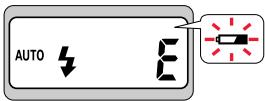
Lite Touch Zoom 100ED
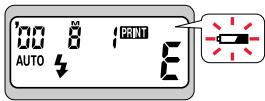
Lite Touch Zoom 100ED QD
- If " " is not indicated, battery power is sufficient.
- If "—" is blinking, or all the indicators on the LCD panel do not appear, the battery is exhausted. Replace it with a new one.
Always check the battery condition before shooting.
It is recommended to carry spare batteries with you. The batteries may be difficult to obtain in some areas.
Loading the film
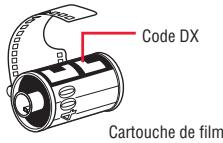
Tips on 35-mm DX-coded film
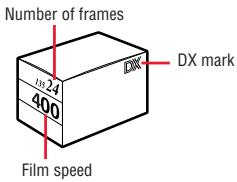
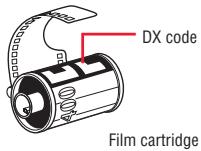
Use 35-mm DX-coded film with this camera.
- For DX-coded film, film speed is automatically set.
Film speeds valid for automatic setting are ISO50, 100, 200, 400, 800, 1600, and 3200.
- With a non-DX-coded film, the film speed is automatically set to ISO100.

When loading/unloading film, be sure not to open the camera back cover into direct sunlight.
Film recommended
It is recommended to use ISO400 film, which provides good results in flash photography, and reasonable protection against camera shake.
1. Open the camera back.
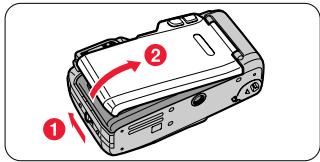
- Slide the camera back lock release lever (1), and open the camera back (2).
2. Insert a film cartridge.
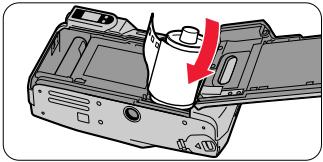
3. Pull the film leader out to the red index mark.
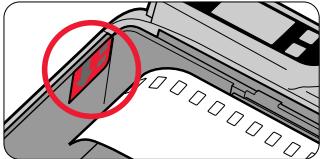
- Hold the film cartridge and ensure film is properly positioned with no slack.
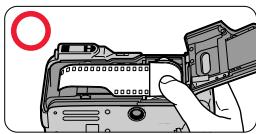
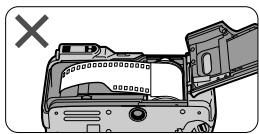
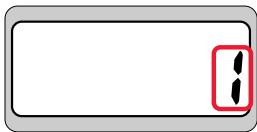
4. Close the camera back, and check that the film has been correctly loaded.
Lite Touch Zoom 100ED
Lite Touch Zoom 100ED QD
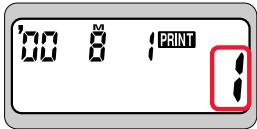
- Once the camera back is closed, the film automatically advances to the first frame. Until film loading is complete, “- - ” blinks on the LCD panel.
- When the film has been properly set, "i" is displayed on the LCD panel.

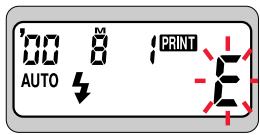
If the letter "E" blinks on the LCD panel, film is not properly installed. Open the camera back again and reload film.
Imprinting the date/time on pictures
(Lite Touch Zoom 100ED QD only)
Select the date/time indicator by pressing the MODE/SEL button.
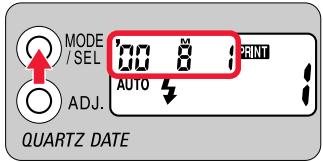
The year is indicated by the lower two digits, and the time is in the 24-hour cycle. The example in the illustration shows Aug. 1, 2000.
The letter "M" appears to label the month indication, but it is not imprinted on pictures.
Each time you press the MODE/SEL button, the indicator changes in the order shown below:
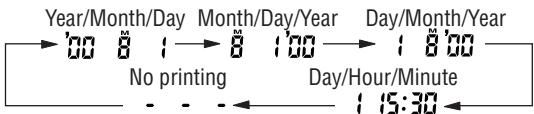
- If "PRINT" is displayed on the LCD panel, the date/time of the shot will be imprinted on the picture.
- Set to “ - - - ” (No printing) if you prefer the date/time not to be imprinted.
Imprint position of date/time
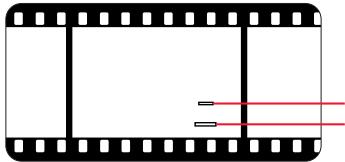
Imprint position in Panorama shooting Imprint position in Regular shooting
- The imprint positions on film are shown in the illustration.
The imprinted date/time may be difficult to recognize if the imprint position or the subject is:
- White or bright.
Orange or yellow.
Adjusting diopter
Turn the diopter adjustment dial.
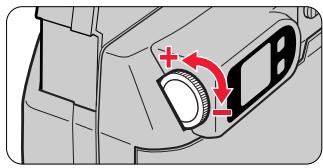
- If the image in the viewfinder is unclear, turn and adjust the diopter adjustment lever.
Caution:
As you look into the viewfinder and operate the diopter adjustment dial, make sure not to injure your eye with your finger or fingernail during adjustment.
About the Antifog Viewfinder
The viewfinder of this camera employs an eyepiece with a special surface coating which reduces fogging on the eyepiece when you breathe on it or by vapor from perspiration.

If the antifog viewfinder eyepiece is smeared, gently wipe it with a dry, soft cloth (e.g. a lens cloth). Avoid wiping with force; otherwise, the eyepiece may be damaged.
Holding the camera properly
Hold the camera firmly.
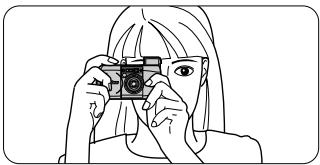
- Prop your elbows against your body and hold the camera with both hands.
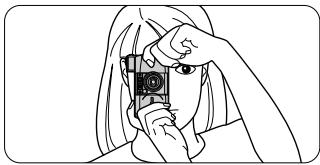
- When holding the camera vertically, make sure that the flash is on top as shown.

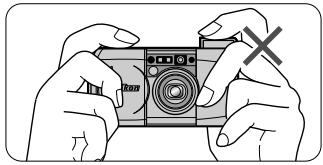
Do not block the lens, autofocus window, or flash with your fingers or hair, or the strap.

Be careful not to press down on the flash unit when it is in the popped up position.
Operating the Shutter Release button
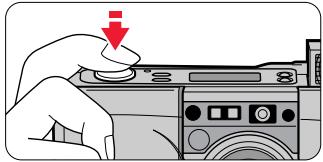
1. Lightly press the button and confirm the green LED lights up.
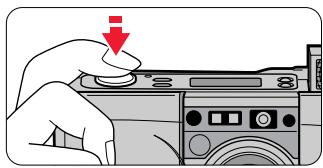
- When you press the button lightly, the focus and exposure are achieved, and the green LED lights up.
The focus is locked (Focus lock p. 26) while the Shutter Release button is depressed lightly.
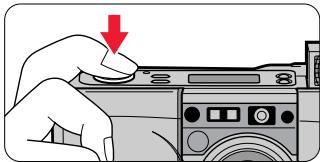
2. Fully depress the Shutter Release button to take the picture.
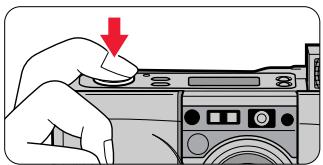
The flash automatically fires when there is not enough light or the subject is backlit.

Pressing the Shutter Release button abruptly in one stroke may result in camera shake. Be sure to slowly press the Shutter Release button.
Selecting Regular or Panorama mode
(Lite Touch Zoom 100ED QD only)

What's Panorama mode?
In panorama mode, a portion of the top and bottom part of the frame is cut exposing an area of approx. 13 × 36 mm and is usually printed in approx. 89 × 254 mm size.
Select Regular or Panorama mode.
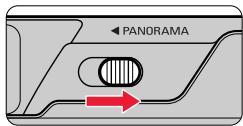
Regular mode
Set the Panorama switch to the right position.
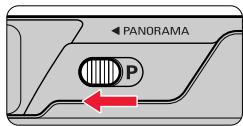
Panorama mode
Set the Panorama switch to the left position.
Regular mode
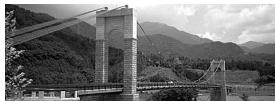
Panorama mode
The date/time can also be printed in Panorama mode. (p. 16)

When compared with regular-format pictures, extra time and cost may be required for developing/printing panorama pictures.
Caution:
To prevent possible injury to your eye, hold the camera away from your face when you operate the Panorama switch.
Press the Zoom button to compose the picture.
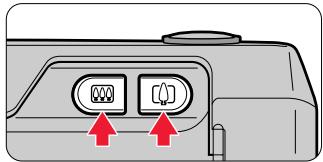
- Press the zoom button for telephoto (100 mm) photography or the zoom button for wide-angle (38 mm) photography.
- Remove your finger from the button when the desired image size is obtained.

When the camera is not operated for more than 2 minutes, the lens automatically retracts to the wide-angle position.

Example of a telephoto photograph


Example of a wide-angle photograph
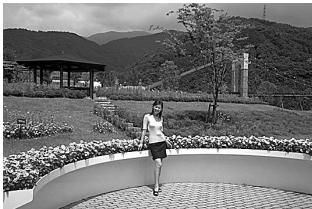
Shooting
This camera employs a highly accurate passive-type autofocus system, which enables easy focusing and sharp shooting of a distant view or a subject through a window.
1. Center the autofocus frame mark on the main subject.
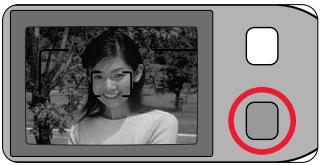

If the main subject is outside the autofocus frame:
If the main subject is outside the autofocus frame, use the focus lock to achieve focus. (p. 26)
2. Lightly press the Shutter Release button.

Lighting/blinking of the green LED
When correct focus has been achieved, the green LED lights up.
The green LED blinks either slowly or quickly when the subject is out of focus.
- Slow blinking indicates the subject is too close.
For correct focus to be achieved, keep the camera away from the subject for more than the distance shown below:
38mm wide-angle mode: approx. 0.75 m
100mm telephoto mode: approx. 0.8m
Quick blinking indicates that the subject is difficult to focus. Use the focus lock. (p. 26)
3. Slowly press the Shutter Release button all the way.
- If the subject is dark or backlit in Auto Flash mode, the flash fires automatically.

Pressing the Shutter Release button abruptly in one stroke may result in camera shake.

When not in use, close the slide cover to save battery power.
Film rewinds automatically.
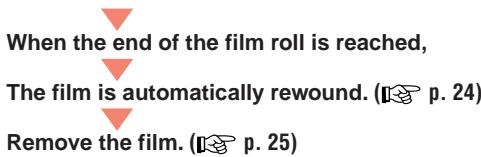
At the end of the film roll, the film rewinding starts automatically.
- While the film is rewinding, the number on the frame counter decreases one by one. When rewinding is complete, the letter “E” blinks for approx. 20 seconds, then stops blinking and remains lit.
- If rewinding stops midway through the roll because of a dead battery, it resumes automatically as soon as the battery is replaced.

Do not open the camera back until the letter "E" starts blinking.
To rewind the film at mid-roll.
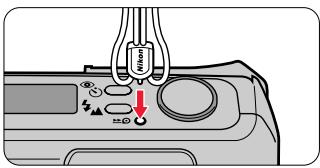
Press the =0 (mid-roll rewind) button using the stud on the strap lug or the point of ball-point pen.
- Once rewinding starts, there is no need to keep the button pressed.
Removing the film
- Make sure rewind is complete by checking the letter "E" indication.
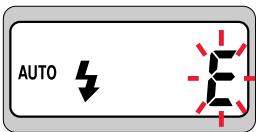
Lite Touch Zoom 100ED
Lite Touch Zoom 100ED QD
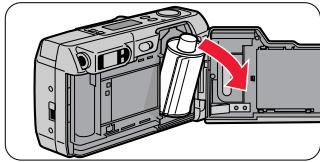
- Open the camera back and remove the film.
When the main subject is not in the center of the picture
Focus lock photography
When the subject to be focused is outside the autofocus frame in the center of the picture, use focus lock, which enables you to change the picture composition while locking the focus.
1. Compose the picture.
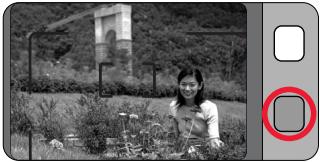
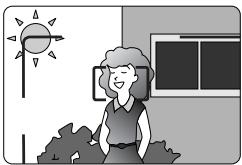
- If the shutter is released in a condition like that in the above example where the main subject is outside the autofocus frame, the background is in focus, and the main subject is out of focus. In such situations, use focus lock to change the picture composition while temporarily locking the focus on the main subject.
2. Center the autofocus frame on the main subject and lightly press the Shutter Release button.
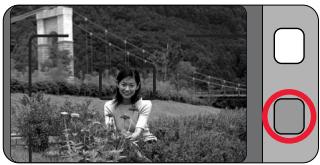
- The green LED lights up when correct focus has been achieved, and the focus is locked as long as the Shutter Release button is depressed lightly.

Do not change the camera-to-subject distance
While the green LED lights up, the focus is locked. Do not change the camera-to-subject distance.
3. While depressing the Shutter Release button lightly, recompose the picture and depress the Shutter Release button all the way.

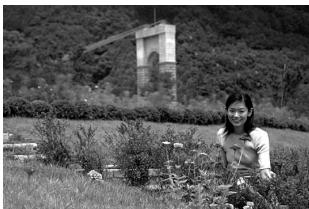
Example
Difficult-to-focus subjects
The following subjects may be difficult to focus.
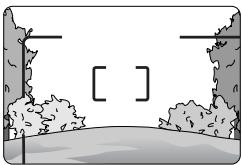
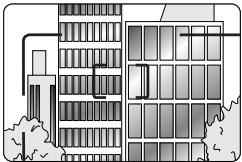
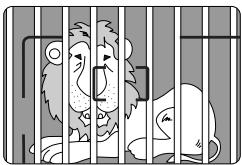
Use the focus lock (p. 26) to focus on another subject equidistant from the camera, then compose the picture to shoot.
Subjects of low contrast, such as blue sky, or shiny subjects, such as a shiny car body or water surface.
Subjects with continuous and repeated patterns.
Scenes with subjects at different distances within the autofocus frame.
Strongly back lit subjects or those having a bright shiny background.
Close-up photography

Minimum camera-to-subject distance is approx. 0.75m or approx. 0.8m in Telephoto shooting
If you wish to shoot a subject such as a flower as large as possible in a picture, you can get as close to the subject as approx. 0.75m in Wide-angle setting, or approx. 0.8m in Telephoto setting.
- By setting the Zoom button to the (telephoto) position, a larger image can be obtained.
1. Compose the picture within the parallax compensation marks.
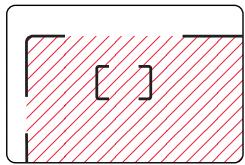
Regular
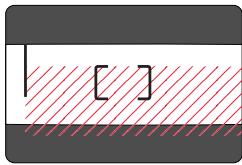
Panorama (Lite Touch Zoom 100ED QD only)
The area marked with in the illustration is included in the picture.
Use the parallax compensation marks when the camera-to-subject distance is less than 1m
2 Check that the green LED lights up, then shoot.
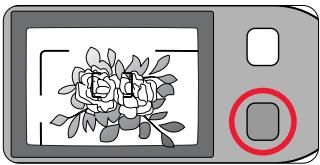
If the subject is closer than approx. 0.75m in Wide-angle setting or 0.8m in Telephoto setting, the green LED slowly blinks as a warning. Move away from the subject until the green LED lights up.
Selecting the flash mode
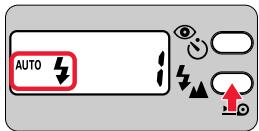
Lite Touch Zoom 100ED
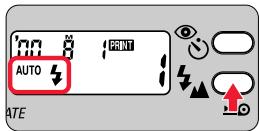
Lite Touch Zoom 100ED QD
- You can select any of five flash modes by pressing the 4 button.

AUTO
:AutoFlash(p.32)
The flash automatically fires when there is not enough light, or the subject is backlit.

: Infinity Focus (p. 40)
For shooting a distant scene or landscape more sharply.

:Flash Cancel (p.33)
To cancel flash operation in lighting conditions where normally the flash would automatically fire.

: Anytime Flash (p3 p. 34)
To fire the flash intentionally regardless of the available light.
AUTO SLOW
To brighten both the subject and the background at dusk or in night scenes.

Lighting/blinking of the orange LED
The orange LED lights up:
... Flash charging is completed. The flash is ready to fire.
The orange LED blinks slowly:
... The flash is being charged. The shutter cannot be released until the LED lights up. Once take your finger away from the Shutter Release button, and lightly press the button again. If the orange LED lights up, release the shutter.
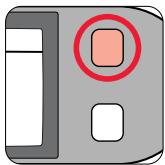
The orange LED blinks quickly:
... The popped-up flash unit is being pressed down. The flash will not fire when you release the shutter, even if in Flash mode. Do NOT touch the flash unit.

Flash shooting range
The reference distance values are shown below.
With ISO100 film speed

(wide-angle) setting: approx. 0.75 to 4.1m

(telephoto) setting: approx. 0.8 to 2.1m
With ISO400 film speed

(wide-angle) setting: approx. 0.75 to 8.2m

(telephoto) setting: approx. 0.8 to 4.3m
To automatically fire the flash
Auto Flash mode
The flash automatically fires when there is not enough light or the subject is backlit.
1. Open the slide cover.
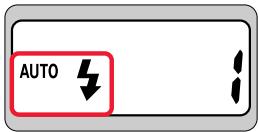
Lite Touch Zoom 100ED
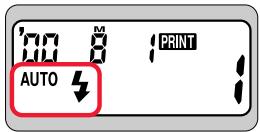
Lite Touch Zoom 100ED QD
- When you open the slide cover, the power is turned on and the built-in flash pops up. The "AUTO" mark appears on the LCD panel and Auto Flash mode is automatically selected.
Automatic flash firing for a backlit scene
When the subject is backlit, the flash is automatically fired while simultaneously compensating exposure for the main subject and the background.
2. Check that the orange and green LEDs light up, then shoot.
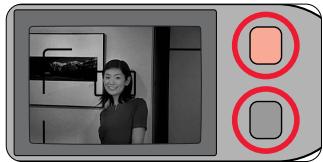

Example
If there is enough light, "AUTO" appears on the LCD panel, and the flash does not fire.
While the orange LED is blinking with the Shutter Release button pressed lightly, the flash is being charged, and the shutter cannot be released. Lightly press the Shutter Release button again, and release the shutter after the orange LED stops blinking and stays lit.
Pressing down on the popped-up flash unit will prevent the flash from firing. Do NOT touch the flash unit.
To cancel flash operation
Flash Cancel mode
Use this mode in places, such as museums, where flash photography is prohibited, or to achieve a natural lighting effect at dusk or for night scenes.
1. Use a tripod or place the camera on a stable flat surface.

Use a tripod for Flash Cancel mode
Since slow shutter speeds are usually selected in this mode, use a tripod to prevent camera shake.
2. Press the 44 button until “ 44 ” appears on the LCD panel.
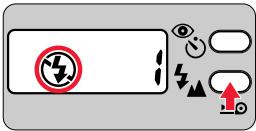
Lite Touch Zoom 100ED
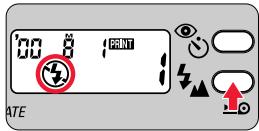
Lite Touch Zoom 100ED QD
3. Check that the green LED lights up, then shoot.
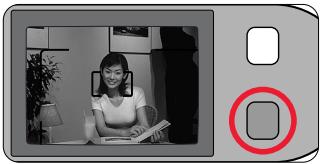

Example
To fire the flash intentionally
Anytime Flash mode
Use this mode to intentionally fire the flash without regard to light conditions.
- Press the 4 button until "4" appears on the LCD panel.
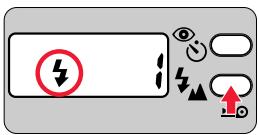
Lite Touch Zoom 100ED
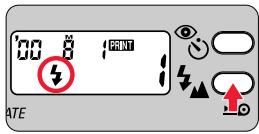
Lite Touch Zoom 100ED QD
- Check that the orange and green LEDs light up, then shoot.
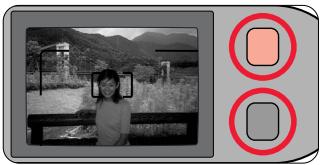
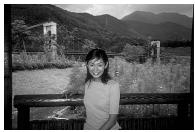
Example

While the orange LED is blinking with the Shutter Release button pressed lightly, the flash is being charged, and the shutter cannot be released. Lightly press the Shutter Release button again, and release the shutter after the orange LED stops blinking and stays lit.

Pressing down on the popped-up flash unit will prevent the flash from firing. Do NOT touch the flash unit.
To photograph a person in a night view
Slow Sync Flash mode
Use this mode to brighten both the subject and the background in a night view or at dusk.
1. Use a tripod or place the camera on a stable flat surface.

Use a tripod for Slow Sync Flash mode
Since slow shutter speeds are usually selected in this mode, use a tripod to prevent camera shake.
2. Press the button until "AUTO" appears on the LCD panel.
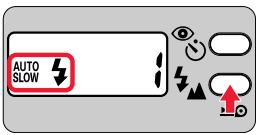
Lite Touch Zoom 100ED
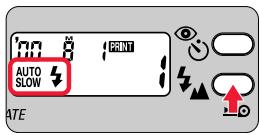
Lite Touch Zoom 100ED QD
3. Check that the orange and green LEDs light up, then shoot.
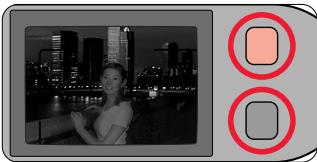

Example
- If there is enough light, AUTO appears on the LCD panel, and the flash does not fire.

While the orange LED is blinking with the Shutter Release button pressed lightly, the flash is being charged, and the shutter cannot be released. Lightly press the Shutter Release button again, and release the shutter after the orange LED stops blinking and stays lit.

Pressing down on the popped-up flash unit will prevent the flash from firing. Do NOT touch the flash unit.
To reduce the "Red-eye" effect
Red-eye Reduction mode
In flash photography, the subject's eyes may sometimes appear bright red. To reduce this "red-eye" effect, use this mode.

Both camera and subject be still
The Red-eye Reduction lamp lights up for approx. a second before the flash fires. Be careful not to move the camera or let the subject move until the flash fires.
1. Press the button until “” appears on the LCD panel.
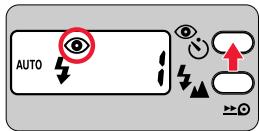
Lite Touch Zoom 100ED
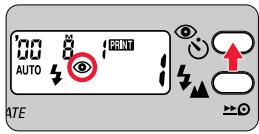
Lite Touch Zoom 100ED QD
Each time you press the button, the indicator changes in the order shown below:

No indicator: Red-eye Reduction mode canceled
To cancel Red-eye Reduction mode.

Red-eye Reduction mode
To reduce the "Red-eye" effect.

Self-Timer (p. 38)/Remote Control mode (p. 39)
For self-timer or remote control operation.
Note that Red-eye Reduction is automatically set when the self-timer is used.
2. Compose the picture, then lightly press the Shutter Release button.
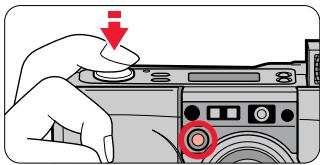
3. Check that the orange and green LEDs light up, then shoot.
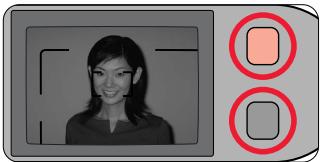

While the orange LED is blinking with the Shutter Release button pressed lightly, the flash is being charged, and the shutter cannot be released. Lightly press the Shutter Release button again, and release the shutter after the orange LED stops blinking and stays lit.

Red-eye Reduction mode is not automatically canceled by turning the power off. To cancel the Red-eye Reduction mode, press the button until " " disappears from the LCD panel.

About Red-eye Reduction mode
This mode is not recommended when shooting fast-moving subjects.
Using the self-timer
Use the self-timer when you wish to include yourself in the picture.
- Use a tripod or place the camera on a stable flat surface.
- Press the button until "appears on the LCD panel.
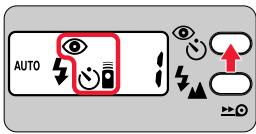
Lite Touch Zoom 100ED
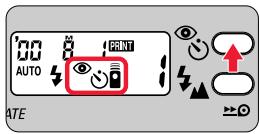
Lite Touch Zoom 100ED QD
- Compose the picture, and press the Shutter Release button.
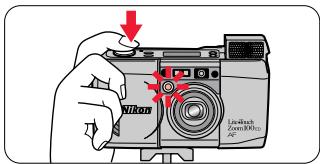
Focus and exposure are achieved by pressing the Shutter Release button lightly.
- When the Shutter Release button is pressed all the way, the Red-eye reduction/Self-timer lamp blinks for approx. 8 seconds, then lights up for 2 seconds before the shutter is released.
- After the shot, Self-Timer mode is canceled.

Self-Timer mode is automatically canceled if the camera is not operated for more than approx. 2 minutes or when the slide cover is closed.
Using the remote control (optional)
For releasing the shutter from a distance.

The shooting distance for remote control operation is within approx. 5m
The shooting distance of the remote control is within approx. 5m while facing the camera. If the camera-to-subject distance is more than 5m away, use the self-timer. (p. 38)
- Use a tripod or place the camera on a stable flat surface.
- Press the button until "appears on the LCD panel.
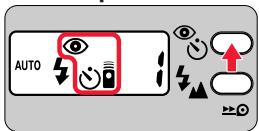
Lite Touch Zoom 100ED
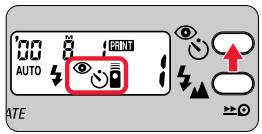
Lite Touch Zoom 100ED QD
Remote Control mode will be automatically canceled if the camera is not operated for more than approx. 2 minutes or when the slide cover is closed.
If the reception sensor on the camera is exposed to strong light, the remote control may not operate properly.
3. compose the picture, aim the remote control unit at the camera, and press the Shutter Release button on the unit.
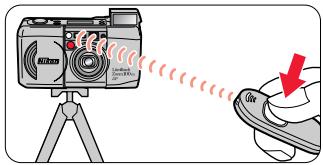
The Red-eye reduction/Self-timer lamp lights up for approx. 2 seconds before the shutter is released.
- Within 2 minutes after taking the last shot, you can still continue to shoot by remote control.

The life of the battery in the remote control unit is approx. 10 years. If the battery is exhausted, the shutter may not be released with the remote control. Visit an authorized Nikon dealer or service center to change it. (at your expense)
Shooting a distant view or landscape through a window
Infinity Focus mode
This mode is good for shooting a distant view more sharply, or a landscape through a window.
- Press the 44 button until “ 44 ” appears on the LCD panel.
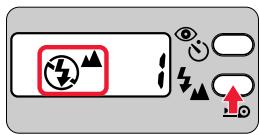
Lite Touch Zoom 100ED
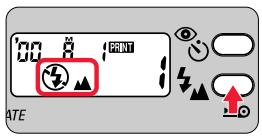
Lite Touch Zoom 100ED QD
- Check that the green LED lights up, then shoot.
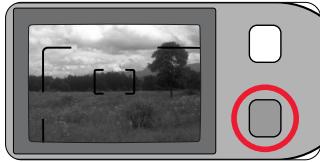

Flash is automatically canceled in this mode.
Correcting the date and time
(Lite Touch Zoom 100ED QD only)
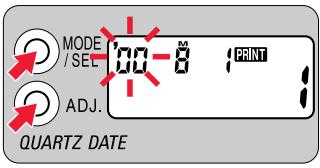
1. Press the MODE/SEL button for more than 2 seconds.
- When the date/time display format is Year/Month/Day, Month/Day/Year, or Day/Month/Year, the left most number indicator blinks first. For Day/Hour/Minute display, the center number indicator blinks first.
- The date/time correction can be performed with the camera either on or off. When the camera is on, the data will be immediately registered if the slide cover is closed, or the Mid-roll Rewind button or a Zoom button is pressed while the setting is in progress.
2. Press the ADJ. button to set the blinking digit.
Each time you press the ADJ. button, the number advances by one.
- Holding the ADJ. button pressed for more than 2 seconds advances the number quickly.
3. When the blinking indicator is correctly set, press the MODE/SEL button again so that the next indicator blinks.
Repeat steps 2 and 3 to set all the digits.

When the battery is replaced
The LCD panel shows "00 00."
The date/time is not imprinted in pictures taken while "00 00" is indicated. Set the date and time following the above procedure.
Troubleshooting
Track down the cause of trouble using the following chart. It may save you a trip to your nearest Nikon service center.
| Problem | Check points and solution | Ref. page | |
| Shutter | The shutter cannot be released. | ● The slide cover is not completely open. → Open the slide cover all the way until it clicks to turn the camera on. ● The orange LED blinks. → The flash is being charged. Once take your finger away from the Shutter Release button, lightly press the button again, and release the shutter after the orange LED stops blinking and stays lit. ● Letter “E” lights up on the LCD panel. → A rewind roll of film is inside. Replace it with a new roll. ● No indicator on the LCD panel. → The battery is exhausted. Replace it with a new one. | 13 11,31 14,15 24,25 12 |
| Flash | The flash does not fire. | ● The orange LED blinks. → The flash is being charged. Once take your finger away from the Shutter Release button, lightly press the button again, and release the shutter after the orange LED stops blinking and stays lit. ● “◎” lights up on the LCD panel. → The flash does not fire when the subject is bright enough. To fire the flash, set the camera to Anytime Flash mode. ● No indicator or the “◎” blinks on the LCD panel. → Battery power is low or the battery is exhausted. Replace the battery with a new one. ● The orange LED blinks quickly. → Check that the flash unit is not pressed down. Do not touch the flash unit. | 11,31 32,34 35 12 11,31 |
| Focus | The subject appears out of focus in the print. | ● Camera shake. → Gently press the Shutter Release button, or use a tripod or place the camera on a stable flat surface. ● Something in front or in back of the subject is in focus. → Be sure to center the autofocus frame mark on the subject before releasing the shutter. When correct focus cannot be easily achieved, use the focus lock. | 18,19 33,35 22,26 27 |
| LCD panel | No indicator appears even when the camera is turned on. | ●The battery is installed with wrong polarities. →Install it with the correct polarities. ●No battery or dead battery. →Install a new battery. | 12 12,13 |
| The numeral “?” does not appear even when film is loaded. | ●The letter “E” blinks or lights up. →Remove the film and load it again. | 14,15 | |
| Remote control (optional) | The shutter cannot be released using the remote control. | ●You are out of the remote control working range. →Operate the remote control in a range within 5 m facing the camera. ●Two or more minutes have elapsed since you set the camera to Remote Control mode. →Set the camera to Remote Control mode again. ●The remote control is operated in backlit. →Change the position of the remote control. ●The service life of the battery in the remote control has lapsed (10 years). →Visit an authorized Nikon dealer or service center to change it (at your expense). | 39 39 39 — |
A characteristic of electronic cameras
In rare cases, when strong static electricity or the like is applied to the camera, the camera may not work properly.
If this happens, remove the battery and reinstall it.
When the battery is removed, the date/time are reset. Set them after reinstall the battery. (p. 41)
Camera care tips
When the camera is not in use:
Close the slide cover to turn the camera off when not in use. This prevents accidental release of the shutter and resulting battery drain.
When the camera will not be used for a long period:
Remove the battery and store the camera in a cool, dry, clean place. It is recommended to install a battery once a month and fire the flash several times to prevent deterioration of the capacitors.
Keep the camera dry:
The Nikon Lite Touch Zoom 100ED / Lite Touch Zoom 100ED QD is not waterproof, and therefore should not be exposed to rain or saltwater.
Do not apply strong shock to the camera:
Do not drop the camera or hit it against a hard surface.
When storing the camera:
Do not leave the camera in an excessively hot and humid place, such as inside a closed car or car trunk or in front of a heater, or a place exposed to chemicals such as camphor or naphthalene. Using a desiccant during storage is recommended.
Maintenance:
Use a dry, soft cloth or commercially available blower brush or lens cleaner to remove dirt and smudges.
Lightly wipe away the dirt on the Antifog Viewfinder eyepiece with a dry soft cloth (e.g. a lens cloth).
Use the flash intermittently:
Firing the flash repeatedly makes the battery and camera hot. Allow sufficient time for them to cool off before taking pictures again.
When using the camera at low temperature:
The camera may not operate at low temperature with a nearly exhausted battery. Use a fresh battery at low temperatures, keep spare batteries warm, and use them alternately.
Battery power may be restored when the temperature returns to normal.
Specifications
Type of camera
35mm autofocus lens-shutter camera with Nikon zoom lens
Usable film
DX-coded 35mm film in film cartridge
Picture format
Normal: 24 × 36 mm
Panorama: (Lite Touch Zoom 100ED QD only): 13.3 × 36 mm
Lens
38 mm f/5.3-100 mm f/9.6, 7 elements in 5 groups (ED lens and aspheric lenses are used)
Shutter
Programmed electronic type; also serves as diaphragm blades; Shutter speed: 2 to 1/360 seconds
Viewfinder
Real-image viewfinder; frame coverage: approx. over 80% in regular-size frame; approx. 0.44× magnification at 38mm approx. 0.97× at 100mm Diopter adjustment: -2m-1 +2m-1 Antifog viewfinder
Viewfinder information
Image size frame with parallax compensation marks; Panorama-format frame marks (Lite Touch Zoom 100ED QD only); Autofocus frame marks: Green LED (in-focus indicator) - Lights up: subject focused, Blinks slowly (at 2Hz ): subject is too close to achieve correct focus, Blinks quickly (at 8Hz ): subject is difficult to focus; Orange LED (flash-ready light) - Lights up: flash ready, Blinks slowly (at 4Hz ): flash being charged, Blinks quickly (at 8Hz ): the popped-up flash unit is being pressed down
Focusing
Wide-Area passive autofocus system; Activeated by lightly pressing Shutter Release button; Distance range from approx. 0.75m to infinity at 38mm , approx. 0.8m to infinity at 100mm
Focus lock
Focus is locked as long as the Shutter Release button lightly pressed
Exposure control
Electronically controlled program AE: auto exposure range (ISO100); EV4-17 at 38mm or EV5.9-18.8 at 100mm, (ISO400); EV6-17 at 38mm, EV6-18.8 at 100mm; Flash fires automatically if the available light is low
Film speed setting
ISO50, 100, 200, 400, 800, 1600, and 3200 film automatically set
Film loading
Film automatically advances to the first frame upon completion of film loading; With a film cartridge confirmation window
Frame counter
Shown in the LCD panel; Additive type; Counts back during film rewind
Self-timer
Electronically controlled; Activated by depressing the Shutter Release button; Self-timer lamp blinks and lights up to show when ready; Timer duration 10 seconds; Cancellable
Film advance
Film automatically advances by one frame after each shot; Auto rewind at the end of film roll; Mid-roll rewind function available
Remote control (optional)
Infrared wireless remote control; 2 sec. delay shutter release; Effective range is within approx. 5m straight in front of the camera; Battery will last for approx. 10 years; Dimensions (W× H× D) : approx. 60× 27× 10mm Weight (including battery): approx. 13g
Built-in flash
Four flash modes available: Auto Flash, Flash Cancel, Anytime Flash, and Slow Sync Flash; flash automatically fires when there is not enough light or subject is backlit; Flash shooting range (ISO100): approx. 0.75–4.1 m at 38mm, approx. 0.8–2.1 m at 100mm, (ISO400): approx. 0.75–8.2 m at 38mm, approx. 0.8–4.3 m at 100mm; Shutter release button is locked during flash charging; Recycling time approx. 6 sec.
Red-eye Reduction mode
Red-eye Reduction lamp lights up for approx. 1 sec. before flash fires.
Battery life
Approx. 12 rolls of 24-exposure film when flash is used for half the exposures
LCD panel (Power is on)
Frame counter, Flash mode, Red-eye Reduction, Self-timer/Remote Control, Infinity Focus mode, Low battery power, Date recording (Lite Touch Zoom 100ED QD only), Time/Date (Lite Touch Zoom 100ED QD only)
Power source
One 3V lithium battery (CR123A type or DL123A)
Date imprint function (Lite Touch Zoom 100ED QD only)
Imprint uses 7-dot LED; Functions with panorama-format pictures; Auto film speed setting with DX codes (ISO 50-3200); Printed date include year, month, day, hour, (24-hour cycle with no AM/PM) and minute with five choices; Year/Month/ Day, Month/Day/Year, Day/Month/Year, Day/Hour/Minute, and no-imprint; Leap year adjustment until 2039; Power source same as camera body; Built-in clock with timing accuracy within ± 90 seconds a month
Dimensions (W× H× D)
Approx. 114× 60× 41mm
Weight
Approx. 210g (without battery)
- Specifications apply when a fresh battery is used at normal temperature (20°C) .
- Specifications and design are subject to change without notice.
For safe handling of the camera
WARNING (regarding the camera)
- Do NOT attempt to disassemble, repair, or modify the camera yourself. Such actions could cause electric shock and the camera to malfunction.
- If the camera is dropped and damaged, do NOT touch any exposed interior metal parts.
This may cause electric shock or injury.
Remove the battery and take the camera to authorized Nikon dealer or service center.
- If you detect smoke coming from the camera, immediately remove the battery.
Continued use in such condition may cause burns. Sufficient care must be taken when removing the battery. Remove the battery and take the camera to authorized Nikon dealer or service center.
- Do NOT submerge the camera in water or allow water or rain to splash on it.
This may cause fire or electric shock.
- Do NOT operate the camera in a place where fire or explosion may be expected.
Use in an environment containing combustible gas or dust may cause fire or explosion.
- Do NOT fire the flash at someone who is operating a vehicle. This may cause an accident.
- Do NOT fire the flash close to a person's eyes.
This may damage his/her eyesight.
For flash photography of a baby or small child, keep a distance of more than 1 meter.
- Keep the small accessories out of the reach of children.
They may swallow the batteries. If a battery is swallowed, immediately call a doctor.
- Do NOT let the strap wind around your neck. In particular, NEVER put the strap around a child's neck.
This may cause accidental strangulation.
- Do NOT look directly at the sun or other strong light source through the viewfinder.
This may cause permanent visual impairment.
CAUTION (regarding the camera)
- Do NOT operate the camera with wet hands. This may cause electric shock.
- Keep the camera out of the reach of children. If not, they may suffer injury.
- Do NOT operate the Panorama switch while looking through the viewfinder.
This may cause injury to your eye from your finger or fingernail.
- As you look through the viewfinder and adjust the diopter, make sure not to injure your eye during adjustment.
This may cause injury to your eye from yourfinger or fingernail. - When the camera is not in use, keep the slide cover closed and avoid placing it in direct sunlight.
Strong sunlight entering the lens may cause a fire. - Do NOT carry the camera while it is mounted on a tripod.
You might bump into something and injure yourself or others.
WARNING (regarding batteries)
- Do NOT throw used batteries into a fire. This may cause leakage or the batteries to catch fire or explode.
- Do NOT short-circuit or disassemble batteries. This may cause leakage or the batteries to catch fire or explode.
- Always follow the warning instructions printed on batteries. Otherwise leakage, fire, or explosion may occur.
- Never use batteries not specified in this instruction manual. Otherwise leakage, fire, or explosion may occur.
- Keep batteries out of the reach of children. They may swallow the batteries. If a battery is swallowed, immediately call a doctor.
- Do NOT submerge batteries in water or allow water or rain to splash on them.
This may cause leakage, or the batteries to catch fire or explode.
- Do NOT try to charge batteries other than rechargeable batteries.
Otherwise leakage, fire, or explosion may occur.
3 Temoin orange (p. 79)
Suggestions concerning le film 35 mm code DX
Nombre de vues
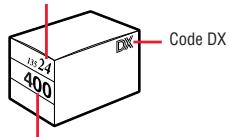
Sensibilité du film
- Your Nikon camera features
- Symbols used in this manual
- Accessories
- Optional accessories
- Attaching the strap
- Table of contents
- To take a picture right away 6
- 1 Preparations
- 2 Basic operations
- 3 Advanced operations
- 4 Additional information
- To take a picture right away
- Quick operation guide
- Take some trial shots
- Lcd panel
- Indications in the viewfinder
- Battery type
- Open the battery chamber lid
- Install a new battery
- Close the battery chamber lid
- Turning the camera on
- Open the slide cover
- Checking the battery power
- Check the low battery power indicator ( ) on the lcd panel
- Loading the film
- Tips on 35-mm dx-coded film
- Film recommended
- Open the camera back
- Insert a film cartridge
- Pull the film leader out to the red index mark
- Close the camera back, and check that the film has been correctly loaded
- Imprinting the date/time on pictures
- (Lite touch zoom 100ED qd only)
- Select the date/time indicator by pressing the mode/sel button
- Imprint position of date/time
- The imprinted date/time may be difficult to recognize if the imprint position or the subject is
- Adjusting diopter
- Turn the diopter adjustment dial
- Caution
- About the antifog viewfinder
- Holding the camera properly
- Hold the camera firmly
- Operating the shutter release button
- Lightly press the button and confirm the green led lights up
- Fully depress the shutter release button to take the picture
- Selecting regular or panorama mode
- What's panorama mode
- Select regular or panorama mode
- Press the zoom button to compose the picture
- Example of a telephoto photograph
- Example of a wide-angle photograph
- Shooting
- Center the autofocus frame mark on the main subject
- If the main subject is outside the autofocus frame
- Lightly press the shutter release button
- Lighting/blinking of the green led
- Slowly press the shutter release button all the way
- Film rewinds automatically
- To rewind the film at mid-roll
- Press the =0 (mid-roll rewind) button using the stud on the strap lug or the point of ball-point pen
- Removing the film
- When the main subject is not in the center of the picture
- Focus lock photography
- Compose the picture
- Center the autofocus frame on the main subject and lightly press the shutter release button
- Do not change the camera-to-subject distance
- While depressing the shutter release button lightly, recompose the picture and depress the shutter release button all the way
- Difficult-to-focus subjects
- Close-up photography
- Compose the picture within the parallax compensation marks
- 2 Check that the green led lights up, then shoot
- Selecting the flash mode
- Auto
- AutoFlash(p.32)
- Infinity focus (p. 40)
- Flash cancel (p.33)
- Anytime flash (p3 p. 34)
- Auto slow
- Lighting/blinking of the orange led
- Flash shooting range
- To automatically fire the flash
- Auto flash mode
- Open the slide cover
- Automatic flash firing for a backlit scene
- Check that the orange and green leds light up, then shoot
- To cancel flash operation
- Flash cancel mode
- Use a tripod or place the camera on a stable flat surface
- Use a tripod for flash cancel mode
- Press the 44 button until “ 44 ” appears on the lcd panel
- Check that the green led lights up, then shoot
- To fire the flash intentionally
- Anytime flash mode
- To photograph a person in a night view
- Slow sync flash mode
- Use a tripod for slow sync flash mode
- Press the button until "auto" appears on the lcd panel
- Check that the orange and green leds light up, then shoot
- To reduce the "red-eye" effect
- Red-eye reduction mode
- Both camera and subject be still
- Press the button until “” appears on the lcd panel
- Compose the picture, then lightly press the shutter release button
- About red-eye reduction mode
- Using the self-timer
- Using the remote control (optional)
- The shooting distance for remote control operation is within approx. 5m
- Shooting a distant view or landscape through a window
- Infinity focus mode
- Correcting the date and time
- Press the mode/sel button for more than 2 seconds
- Press the adj. button to set the blinking digit
- When the blinking indicator is correctly set, press the mode/sel button again so that the next indicator blinks
- When the battery is replaced
- Troubleshooting
- A characteristic of electronic cameras
- Camera care tips
- When the camera is not in use
- When the camera will not be used for a long period
- Keep the camera dry
- Do not apply strong shock to the camera
- When storing the camera
- Maintenance
- Use the flash intermittently
- When using the camera at low temperature
- Specifications
- Type of camera
- Usable film
- Picture format
- Lens
- Shutter
- Viewfinder
- Viewfinder information
- Focusing
- Focus lock
- Exposure control
- Film speed setting
- Film loading
- Frame counter
- Self-timer
- Film advance
- Remote control (optional)
- Built-in flash
- Battery life
- Lcd panel (power is on)
- Power source
- Date imprint function (lite touch zoom 100ED qd only)
- Dimensions (w× h× d)
- Weight
- For safe handling of the camera
- Warning (regarding the camera)
- Caution (regarding the camera)
- Warning (regarding batteries)
- 3 Temoin orange (p. 79)
- Suggestions concerning le film 35 mm code dx
Brand : NIKON
Model : LITE TOUCH ZOOM 100ED-QD
Category : Film camera