LBOH 83 M6 - Washing machine Otsein-Hoover - Free user manual and instructions
Find the device manual for free LBOH 83 M6 Otsein-Hoover in PDF.


| Product Type | Washing Machine |
| Brand | Otsein-Hoover |
| Model | LBOH 83 M6 |
| Color | White |
| Installation Type | Freestanding |
| Loading Type | Front Load |
| Capacity | 8 kg |
| Spin Speed | 1300 rpm |
| Energy Class | A+++ |
| Annual Energy Consumption | 170 kWh |
| Water Consumption per Cycle | 45 L |
| Number of Programs | 15 |
| Noise Level (Wash/Spin) | 54 dB / 76 dB |
| Dimensions (H x W x D) | 85 cm x 60 cm x 60 cm |
| Weight | 68 kg |
| Power Supply | 220-240 V, 50 Hz |
| Power Consumption (Wash/Standby) | 2000 W / 0.5 W |
| Water Inlet | Cold only |
| Drum Material | Stainless steel |
| Features | Delay start, Quick wash, Eco wash, Child lock |
| Self-Cleaning | Drum clean program |
| Spare Parts Availability | 7 years minimum |
Frequently Asked Questions - LBOH 83 M6 Otsein-Hoover
User questions about LBOH 83 M6 Otsein-Hoover
0 question about this device. Answer the ones you know or ask your own.
Ask a new question about this device
Download the instructions for your Washing machine in PDF format for free! Find your manual LBOH 83 M6 - Otsein-Hoover and take your electronic device back in hand. On this page are published all the documents necessary for the use of your device. LBOH 83 M6 by Otsein-Hoover.
USER MANUAL LBOH 83 M6 Otsein-Hoover
natural_image
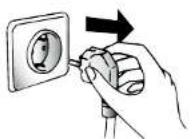
Line drawing of a front-loading washing machine with control panel and door (no text or symbols)- Remove the plug
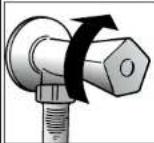
● Turn off the water inlet top.
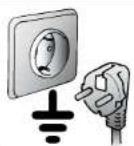
● All Hoover appliances are earthed. Ensure that the main electricity circuit is earthed. Contact a qualified electrician if this is not the case.
CE This appliance complies with Directives 89/336/EEC, 73/23/EEC and following changes.
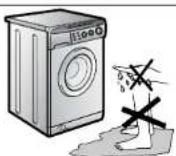
● Do not touch the appliance with wet or damp hands or feet.
- Do not use the appliance when bare-footed.
● Extreme care should be taken if extension leads are used in bathrooms or shower rooms. Avoid this where possible.
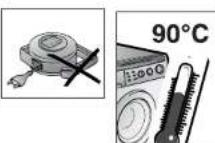
WARNING: DURING THE WASHING CYCLE, THE WATER CAN REACH A TEMPERATURE OF 90°C.
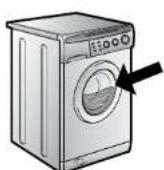
● Before opening the washing machine door, ensure that there is no water in the drum.
ES
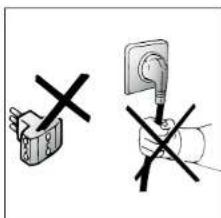
- Do not use adaptors or multiple plugs.
- Do not allow the appliance to be used by children or the incompetent without due supervision.
- Do not pull the mains lead or the appliance itself to remove the plug from the socket.
- Do not leave the appliance exposed to atmospheric agents (rain, sun etc.)
● in the case of removal, never lift the appliance by the knobs or detersive drawer.
● During transportation do not lean the door against the trolley.
Important!
When the appliance location is on carpet floors, attention must be paid so as to ensure that there is no obstruction to the bottom vents.
● Lift the appliance in pairs as illustrated in the diagram.
- In the case of failure and/or incorrect operation, turn the washing machine off, close the water inlet tap and do not tamper with the appliance. Contact a Hoover Technical Assistance Centre for any repairs and ask for original Hoover spare parts. Avoidance of these norms may compromise the safety of the appliance.
● Should the supply cord (mains cable) be demaged, this is to be replaced by a specific cable available from the after sales service centre.
natural_image
Two hand-drawn electrical symbols: a switch and a plug with a screw, both crossed with 'X' marks (no text or labels present)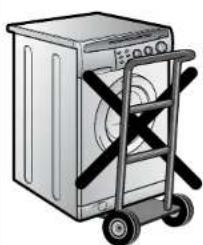
natural_image
Illustration of a washing machine with a cart handle, no text or symbols present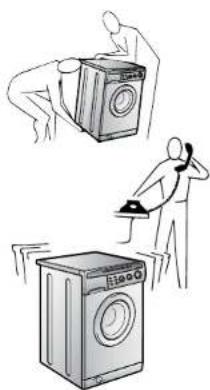
natural_image
Illustration of three household appliances: a washing machine, a refrigerator with a cloth, and a washing machine (no text or symbols present)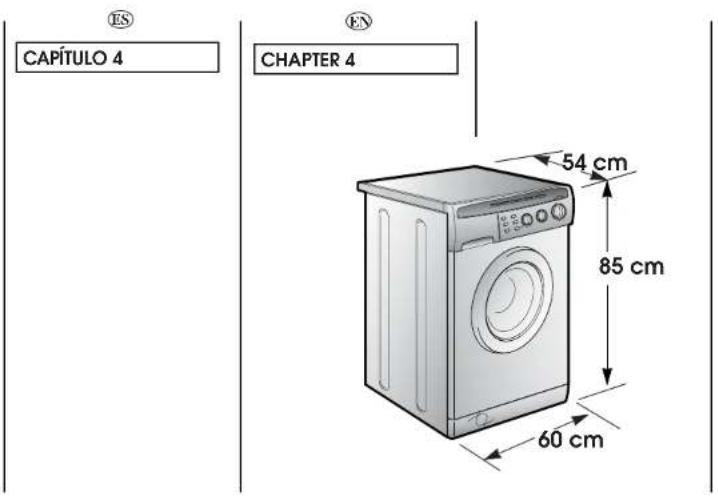
| DATOS TÉCNICOS | TECHNICAL DATA | ||
| CAPACIDAD DE ROPASECA | MAXIMUM WASHLOAD DRY | kg | 6 |
| NIVEL NORMAL DE AGUA | NORMAL WATER LEVEL | l | 8÷15 |
| POTENCIAABSORBIDA | POWER INPUT | W | 2150 |
| CONSUMO DE ENERGÍA(PROG.2) | ENERGY CONSUMPTION(PROG.2) | kWh | 1,75 |
| AMPERIOS DEL FUSIBLE DELA RED | POWER CURRENT FUSEAMP | A | 10 |
| REVOLUCIONES DECENTIRIFUGADO (Rev./min.) | SPINr.p.m. | 800giri/min | |
| PRESIÓN EN EL CIRCUITOHIDRÁULICO | WATER PRESSURE | MPa | min. 0,05max. 0,8 |
| TENSIÓN | SUPPLY VOLTAGE | V | 230 |
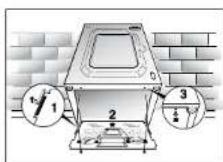
Fix the sheet of corrugated material on the bottom as shown in picture.
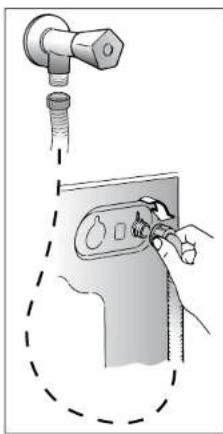
Connect the fill hose to the tap.
The appliance must be connected to the water mains using new hose-sets. The old hose-sets should not be reused.
IMPORTANT: DO NOT TURN THE TAP ON AT THIS TIME.
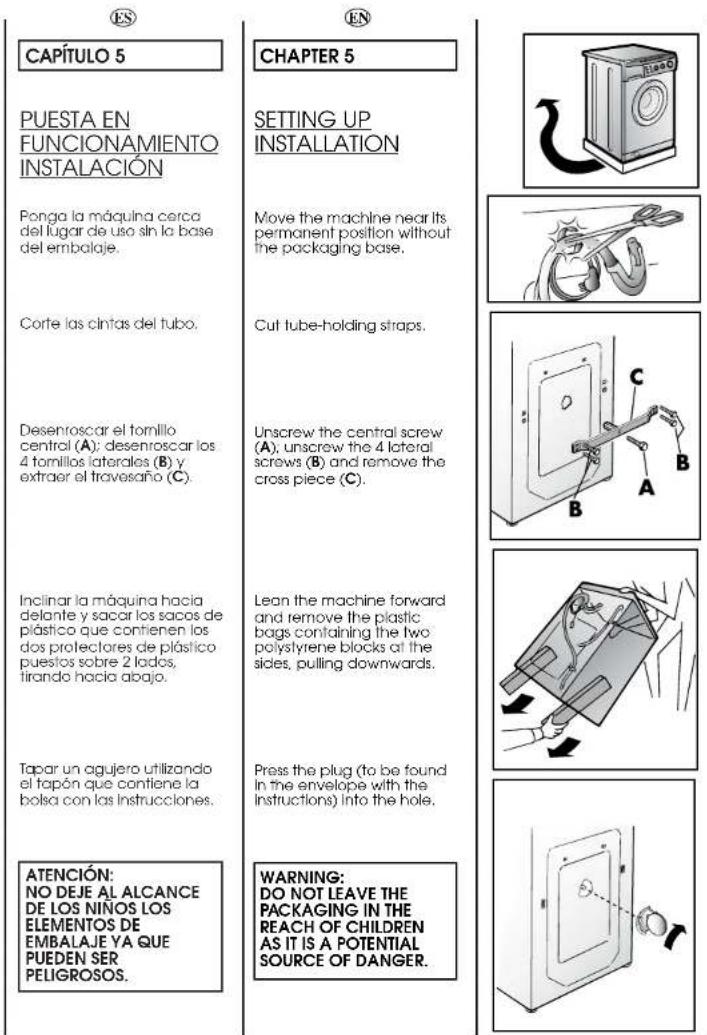
Position the washing machine next to the wall. Hook the outlet tube to the edge of the bath tub, paying attention that there are no bends or contractions along the tube.
It is better to connect the discharge hose to a fixed outlet of a diameter greater than that of the outlet tube and at a height of min. 50 cm. If is necessary to use the plastic sleeve supplied.
natural_image
Illustration of a hand using a tool to adjust or install a water level control panel (no text or symbols present)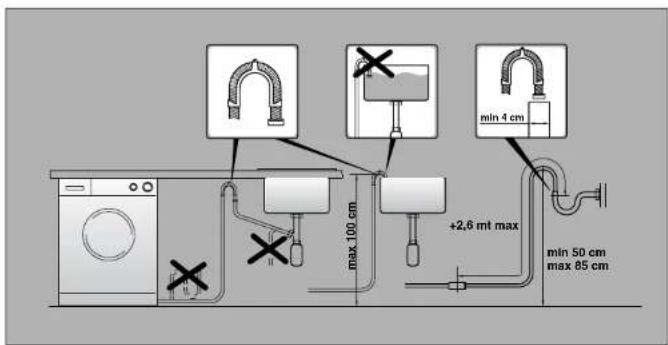
O
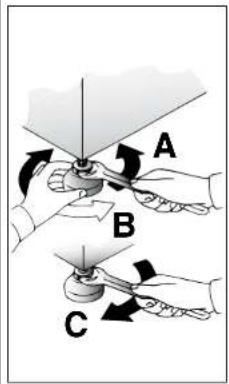
Use front feet to level the machine with the floor.
a) Turn the nut clockwise to release the screw adjuster of the foot.
b) Rotate foot to raise or lower it until it stands firmly on the ground.
c) Lock the foot in position by turning the nut anti-clockwise until it comes up against the bottom of the machine.
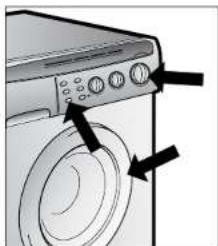
Ensure that the Off/On button (C) is not pressed.
Ensure that all the knobs are on the "0" position and that the door is closed.
Insert the plug.
After installation, the appliance must be positioned so that the plug is accessible.
natural_image
Diagram of a washing machine with control panel and fan (no text or symbols)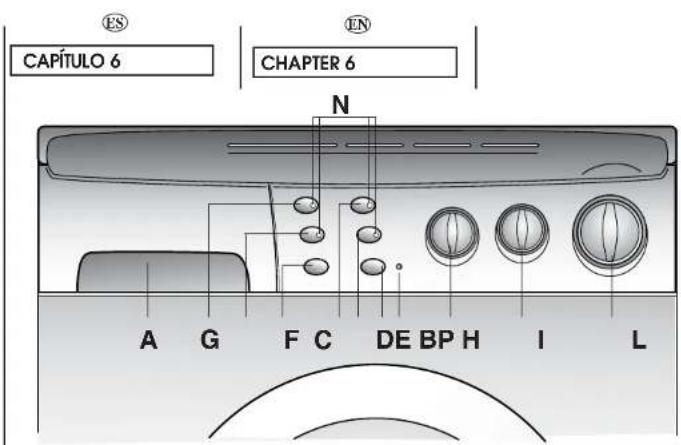
| CUADRO DE MANDOS | CONTROLS | |
| Cubeta del detergente | Detergent drawer | A |
| Tecla de apertura del ojo de buey | Door open button | B |
| Tecla "ON/OFF" | ON/OFF button | C |
| Tecla "SUPER ACLARADO" | Extra rinse button | D |
| Tecla "LAVADO RAPIDO" | Express wash button | E |
| Tecla "PLANCHADO RAPIDO" | Crease guard button | F |
| Tecla "INTENSIVO" | Intensive wash button | G |
| Regulador de velocidad | Spin speed control | H |
| Selector para regular la temperatura de lavado | Wash control temperature knob | I |
| Selector de programas de lavado | Timer knob for wash programmes | L |
| Indicadores teclas | Buttons indicator light | N |
| Indicador escotilla | Door locked indicator light | P |
For the various types of fabrics and various degrees of dirt the washing machine has 3 different programme bands according to: wash cycle, temperature and length of cycle (see table of washing cycle programmes).
1 Resistants Fabrics
The programmes have been designed for a maximum wash and the rinses, with spin intervals, ensure perfect rinsing. The final spin gives more efficient removal of water.
2 Mixed and Synthetic Fabrics
The main wash and the rinse gives best results thanks to the rotation rhythms of the drum and to the water levels. A gentle spin will mean that the fabrics become less creased.
3. Delicate fabrics, wool & hand washing
This group of programmes have been specially designed to wash the most delicate fabrics
Use the Delicate programme for delicate fabrics
Use the Woollens programme only for machine washable wool Use the HandWash programme for any machine washable handwash garments
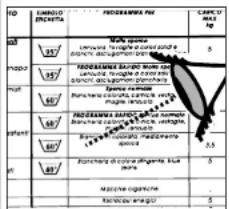
ALGODÓN

SINTÉTICOS

DELICADOS


ES
CAPÍTULO 9
EL PRODUCTO
ATENCIÓN:
When washing heavy rugs, bed spreads and other heavy articles, it is advisable not to spin.
To be machine-washed, woollen garments and other articles in wool must bear the "Machine Washable Label".
IMPORTANT
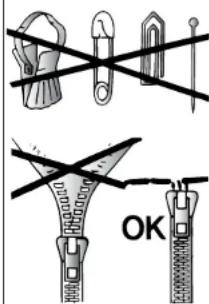
When sorting articles ensure that:
I there are no metal objects in the washing (e.g. brooches, safety pins, pins, coins etc.), cushion covers are buttoned, zips and hooks are closed, loose belts and long tapes or dressing gowns are knotted. r unners from curtains or removed. a tention is paid to garment labels. w hen sorting, any tough stains should be removed prior to washing using stain removers only recommended on label.

CAPÍTULO 10
ES
TABLA DE PROGRAMAS
| CARGA DETERGENTE | ||
| I | II | |
| ● | ● | ● |
| ● | ● | |
| ● | ● | |
| ● | ● | |
| ● | ||
| ● | ● | |
| ● | ● | |
| ● | ● | |
| ● | ||
| ● | ● | |
| ● | ● | |
| ● | ● | |
| ● | ||
| ● | ||
Notas a considerar
| FABRIC | PROGRAM FOR | WEIGHT MAX kg | SELECT PROG. | SELECT TEMP. °C |
| COTTONSCotton, linen | Whites & Prewash | 6 | 1 | Up to 90° |
| Cotton, mixed resistant | Whites normal | 6 | 2 | Up to 60° |
| Cotton, mixed | Fast coloureds | 6 | 3 | Up to 50° |
| Non fast coloureds | 3,5 | 4 | Up to 40° | |
| Cotton | Rinses | - | - | |
| Cotton, linen | Long spin | - | - | |
| SYNTHETICSMixed, resistant | Mixed fabrics | 2 | 5 | Up to 60° |
| Cotton, mixed fabrics, synthetics | Coloureds | 2 | 6 | Up to 50° |
| Synthetics (nylon, perion), mixed cotton | Acrylics | 2 | 7 | Up to 40° |
| Rinscs | 2 | - | ||
| Mixed, delicate synthetics | Short spin | - | - | |
| DELICATES | 1 | 8 | Up to 40° | |
| 1 | 9 | Up to 30° | ||
| Hand wash | 1 | 10 | Up to 30° | |
| Rinses | - | - | ||
| Mixed, delicate synthetics, wool | Short spin | - | - | |
| RAPID 29' | 2 | S | Up to 50° |
| CHARGE DETERGENT | ||
| I | II | |
| ● | ● | ● |
| ● | ● | |
| ● | ● | |
| ● | ● | |
| ● | ||
| ● | ● | |
| ● | ● | |
| ● | ● | |
| ● | ||
| ● | ● | |
| ● | ● | |
| ● | ● | |
| ● | ||
| ● | ||
Please read these notes
When washing heavily soiled laundry it is recommended the load is reduced to 3 kg maximum.
* Programmes according to CENELEC EN 60456.
The variable temperature selector allows a reduction in the wash temperature. For example, an intense cottons cycle can be washed in cold water simply by moving the dial to the tap symbol.
The spin speed may also be reduced, to match any guidelines suggested on the fabric label, or for very delicate fabrics cancel the spin completely this option is available with a spin speed selector.
■ "RAPID 29" Programme
The "RAPID 29" programme allows a complete washing cycle to be carried out in approximately 30 minutes, with up to a maximum load of 2 kg and a the temperature of up to 50°C.
The washing temperature can be reduced by using the control knob I.
When selecting the "RAPID 29" programme, please note that we recommend you use only 20% of the recommended quantities shown on the detergent pack.
The detergent must be placed in the pre-wash compartment (marked I) in the detergent dispenser.
For mixed, synthetics and very delicate fabrics that are heavily soiled a prewash cycle may be selected using the "RAPID 29" programme (the detergent must be placed in the compartment marked I) before selecting the main wash programme.
Get the best results from your new Hoover machine
To ensure you get the best results from your new Hoover machine it is important to use the right detergent in your everyday wash. There are many detergents available in the market and making a choice from the wide range available can often be confusing.
At Hoover we regularly test many different types of detergent to assess which give the best wash results in our machines. We found only one brand always lives up to our exacting standards and provides outstanding cleaning across a broad range of dirt and stains, as well as providing high levels of fabric care. That's why Hoover gave Arlet their official seal of approval.

ES
CAPÍTULO 11
A guide environmentally friendly and economic use of your appliance.
MAXIMISE THE LOAD SIZE
To prevent any possible waste of energy, water or detergent we recommend that you put a full load in your washing machine, not exceed the maximum loads shown below:
Cotton and linen 6 kg Mixed 2 kg Very delicate 1.5 kg Wool 1 kg
Save up to 50% energy by washing a full load Instead of 2 half loads.
DO YOU NEED TO PRE-WASH?
For heavily soiled laundry only! SAVE detergent, time, water and between 5 to 15% energy consumption by NOT selecting Prewash for slight to normally soiled laundry.
IS A HOT WASH REQUIRED?
Pretreat stains with stain remover or soak dried in stains in water before washing to reduce the necessity of a hot wash programme. Save up to 50% energy by using a 60°C wash programme.
ES
LAVADO
CAPACIDAD VARIABLE
This washing machine automatically adapts the level of the water to the type and quantity of washing. In this way it is also possible to obtain a "personalized" wash from an energy saving point of view. This system gives a decrease in energy consumption and a sensible reduction in washing times.
The maximum load for heavy fabrics is 6 kg, while, in the case of delicate fabrics, it is advisable not to exceed 2 kg (1 kg in the case of machine washable articles in "Machine Washable Wools") so as to avoid the formation of creases which may be difficult to iron. A net bag should be used for particularly delicate fabrics. Let us suppose that the washing consists of HEAVILY SOILED COTTON (tough stains should be removed with suitable stain removal).
It is advisable not to wash a load made up entirely of articles in towelling fabric which absorb a lot of water and become too heavy.
EXAMPLE:
The advice of Hoover is set out in the washing programme table:
● Ensure that article labels carry the indication 60°C.
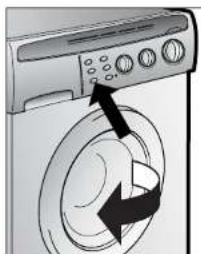
● Open the door by pressing button (B).
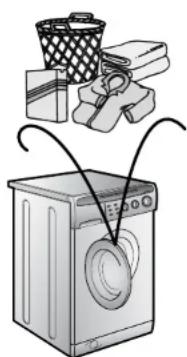
● Load the drum with a maximum of 6 kg of dry washing.
- Close the door
natural_image
Illustration of a washing machine with a basket and sweater above it, no text or symbols present.ES ES
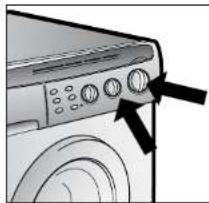
Select programme 2: Choose the programme by rotating the knob (L) in a CLOCKWISE DIRECTION and make the number of the programme coincide with the sign.
- Move the temperature knob (1) to 60°C.
● Open the detergent drawer (A).
● Put 120 g in the second III wash compartment.
● Put 50 ml of the desired additive in the additives compartment
- Close the detergent drawer (A).
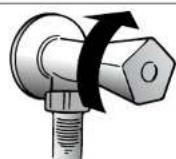
● Ensure that the water inlet tap is turned on.
● And that the discharge tube is in place.
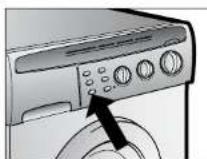
- Press the "ON" button (C). The washing machine will carry out the set programme.
● At the end of the programme, press the On/Off button (C).
- Open the door and remove the washed articles.
FOR ALL TYPES OF WASH CONSULT THE PROGRAMME TABLE AND FOLLOW THE OPERATIONS IN THE ORDER INDICATED.
natural_image
Illustration of a washing machine front panel with control knobs and buttons (no text or symbols)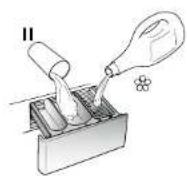
natural_image
Illustration of a washing machine with a circular dial and directional arrows indicating motion (no text or symbols)O
CAPÍTULO 12
LIMPIEZA Y MANTENIMIENTO ORDINARIO
Do not use abrasives, spirits and/or diluents on the exterior of the appliance. It is sufficient to use a damp cloth.
The washing machine requires very little maintenance:
● Cleaning of drawer compartments.
- Filter cleaning
● Removals or long periods when the machine is left standing.
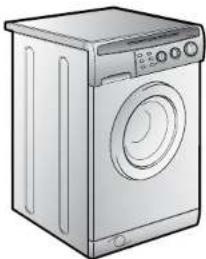
CLEANING OF DRAWER COMPARTMENTS
Although not strictly necessary, it is advisable to clean the detergent, bleach and additives compartments occasionally.
Remove the compartments by pulling gently.
Clean with water.
Put the compartments back into place
natural_image
Line drawing of a washing machine with front panel and side door (no text or symbols)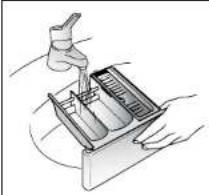
natural_image
Illustration of a hand using a tool to lift a component into a tray (no text or symbols visible)ES
LIMPIEZA FILTRO
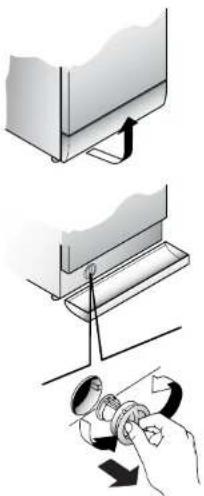
The washing machine is equipped with a special filter to retain large foreign matter which could clog up the drain, such as coins, buttons, etc. These can, therefore, easily be recovered. The procedures for cleaning the filter are as follows:
● The filter should be cleaned once a month.
● Ease off the base as shown in fig.
● Use the base as a tray to collect leftover water in filter.
● Tum the filter anticlockwise till it stops in vertical position.
- Remove and clean.
● After cleaning, replace by turning the notch on the end of the filter clockwise. Then follow all procedures described above in reverse order.
REMOVALS OR LONG PERIODS WHEN THE MACHINE IS LEFT STANDING
For eventual removals or when the machine is left standing for long periods in unheated rooms, the drain hose should be emptied of all remaining water.
The appliance must be switched off and unplugged. A bowl is needed. Detach the drainage hose from the clamp and lower it over the bowl until all the water is removed.
Repeat the same operation with the water inlet hose.
natural_image
Illustration showing three-step mechanical assembly steps: top view, side view, and bottom view with a hand holding a knob (no text or symbols)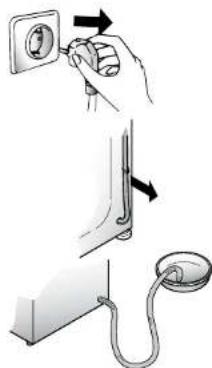
natural_image
Illustration of a hand inserting a socket into a wall, with an attached medical device and tubing (no text or symbols)ES
CAPÍTULO 13
| FAULT | CAUSE | REMEDY |
| 1. Does not function on any programme | Mains plug not plugged in | Insert plug |
| Mains switch not on | Turn on mains switch | |
| No power | Check | |
| Electric circuit fuses failure | Check | |
| Load door open | Close load door | |
| 2. Does not load water | See cause 1 | Check |
| Inlet tap turned off | Turn on water inlet tap | |
| Timer not set correctly | Set timer on correct position | |
| 3. Does not discharge water | Discharge tube bent | Straighten discharge tube |
| Odd material blocking filter | Check filter | |
| 4. Water on floor around washing machine | Leak from the washer between the tap and inlet tube | Replace washer and lighten the tube on the tap |
| 5. Does not spin | The washing machine has not discharged water | Wait a few minutes until the machine discharges water |
| “No spin” setting (some modeis only) | Turn the programme dial onto spin setting | |
| 6. Strong vibrations during spin | Washing machine not perfectly level | Adjust special foot |
| Transport bracket not removed | Remove transport bracket | |
| Washing load not evenly distributed | Distribute the washing evenly |
Please note:
It is normal for the programme selector dial to move only from one stage of washing programme to another and not show any movement in-between - so at certain periods, the dial will stay still. An electronic device is controlling the exact movement of the timer.
If the fault should persist, contact a Hoover Technical Assistance Centre. For prompt servicing, give the model of the washing machine, to be found on the label placed on the cabinet inside of the porthole or on the
guarantee
imponani
The use of environment friendly detersives without phosphates may produce the following effects:
- The discharge rinse water may result cloudier due to the presence of zeolites in suspension. This does not compromise the efficiency of the rinses.
- The presence of white powder (zeolites) on the washing at the end of the washing cycle. This does not remain incorporated in the fabric and does not alter the colour.
- The presence of foam in the last rinse water which is not necessarily a sign of inadequate rinsing.
- The non-ionic surface-active agents present in the composition of washing machine detersives are often difficult to remove from the washing itself and, even in small quantities, may produce visible signs of the formation of foam.
- C carrying out further rinses, in cases such as this, is not useful.
2 If your washing machine fails to function, carry out the above-mentioned checks before calling the Hoover Technical Assistance Service.
The manufacturer declines all responsibility in the event of any printing mistakes in this booklet. The manufacturer also reserves the right to make appropriate modifications to its products without changing the essential characteristics.

ES EN
03.09 - 41009115.A - Printed in Italy - Imprimé en Italie