
BFC1312NX - Refrigerator BRANDT - Free user manual and instructions
Find the device manual for free BFC1312NX BRANDT in PDF.
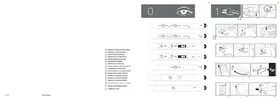



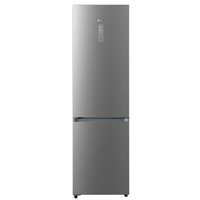
| Brand | BRANDT |
| Model | BFC1312NX |
| Product type | Refrigerator-freezer |
| Electrical supply | 220-240 V, grounded plug |
| Refrigerant | R600A (environmentally friendly) |
| Main functions | Refrigeration, freezing, quick cooling (SUPER), holiday function, winter function (depending on model) |
| Open door alarm | Yes, after 2 minutes (audible and visual) |
| High temperature alarm | Yes, for the freezer (visual and audible) |
| Door reversibility | Yes, with detailed instructions |
| Interior lighting | E14 bulb, 220-240 V, 15/25 W |
| Carbon filter | Yes, replacement recommended every 6 months |
| Interior cleaning | Sponge or damp cloth with baking soda |
| Exterior cleaning | Soft sponge, no steam cleaner |
| Rear grid cleaning | Vacuum once a year |
| Safety | Do not use electrical appliances inside, do not damage the refrigeration circuit |
| Recycling | Do not dispose of with household waste, take to a collection center |
| Reparability | Contact after-sales service for any repairs |
| Temperature adjustment | +/- controls or rotation, digital display on some models |
| Compartments | Refrigerator and freezer |
| Leveler | Yes, to prevent vibrations |
Frequently Asked Questions - BFC1312NX BRANDT
User questions about BFC1312NX BRANDT
0 question about this device. Answer the ones you know or ask your own.
Ask a new question about this device
Download the instructions for your Refrigerator in PDF format for free! Find your manual BFC1312NX - BRANDT and take your electronic device back in hand. On this page are published all the documents necessary for the use of your device. BFC1312NX by BRANDT.
USER MANUAL BFC1312NX BRANDT
Very important: Read this manual carefully before using your refrigerator.
This manual is designed with texts corresponding to drawings.

Identification

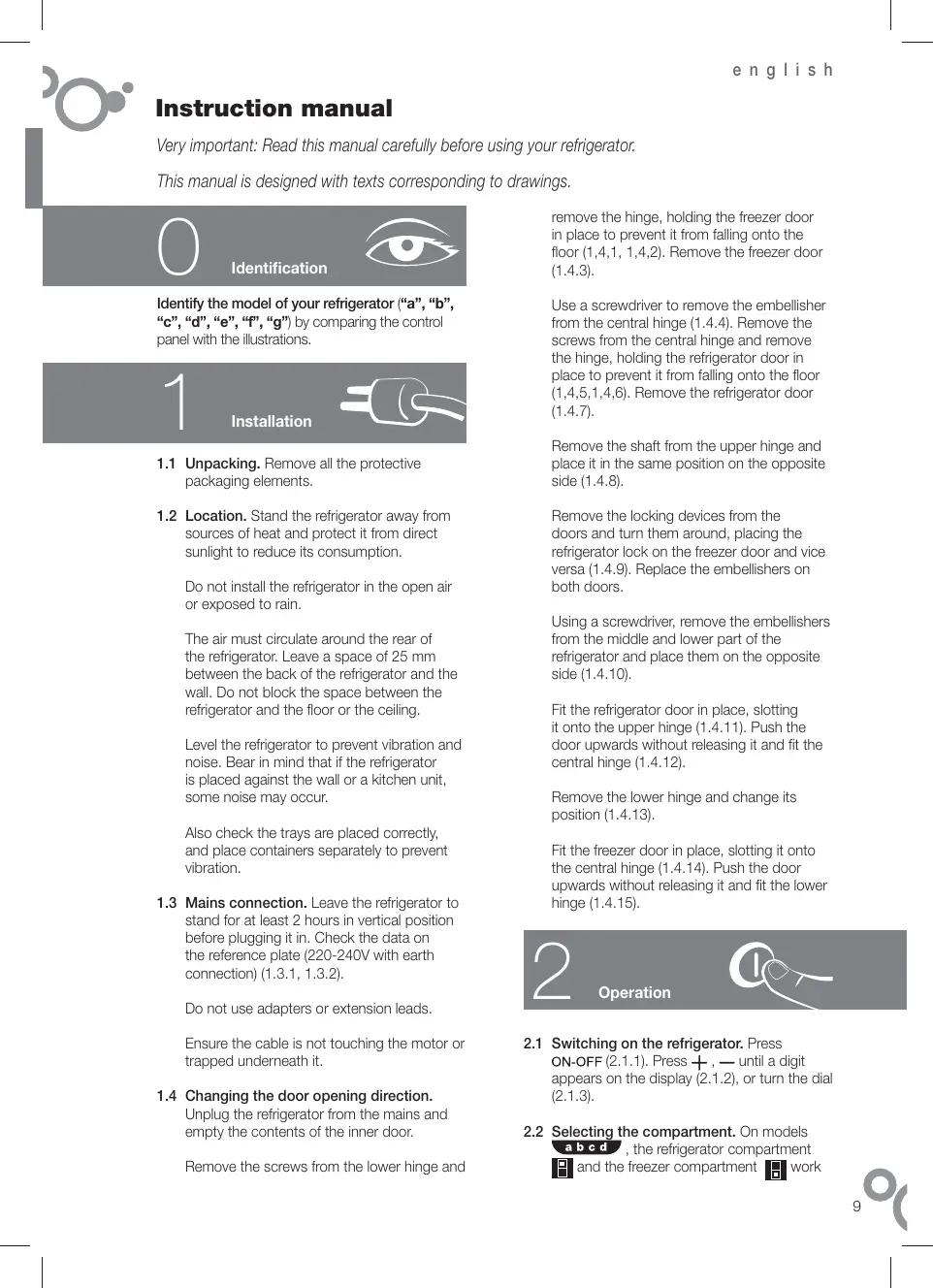
Identify the model of your refrigerator ("a", "b", "c", "d", "e", "f", "g") by comparing the control panel with the illustrations.
1
Installation

1.1 Unpacking. Remove all the protective packaging elements. 1.2 Location. Stand the refrigerator away from sources of heat and protect it from direct sunlight to reduce its consumption.
Do not install the refrigerator in the open air or exposed to rain.
The air must circulate around the rear of the refrigerator. Leave a space of 25 mm between the back of the refrigerator and the wall. Do not block the space between the refrigerator and the floor or the ceiling.
Level the refrigerator to prevent vibration and noise. Bear in mind that if the refrigerator is placed against the wall or a kitchen unit, some noise may occur.
Also check the trays are placed correctly, and place containers separately to prevent vibration.
1.3 Mains connection. Leave the refrigerator to stand for at least 2 hours in vertical position before plugging it in. Check the data on the reference plate (220-240V with earth connection) (1.3.1, 1.3.2).
Do not use adapters or extension leads.
Ensure the cable is not touching the motor or trapped underneath it.
1.4 Changing the door opening direction.
Unplug the refrigerator from the mains and empty the contents of the inner door.
Remove the screws from the lower hinge and
remove the hinge, holding the freezer door in place to prevent it from falling onto the floor (1.4.1, 1.4.2). Remove the freezer door (1.4.3).
Use a screwdriver to remove the embellisher from the central hinge (1.4.4). Remove the screws from the central hinge and remove the hinge, holding the refrigerator door in place to prevent it from falling onto the floor (1.4.5, 1.4.6). Remove the refrigerator door (1.4.7).
Remove the shaft from the upper hinge and place it in the same position on the opposite side (1.4.8).
Remove the locking devices from the doors and turn them around, placing the refrigerator lock on the freezer door and vice versa (1.4.9). Replace the embellishers on both doors.
Using a screwdriver, remove the embellishers from the middle and lower part of the refrigerator and place them on the opposite side (1.4.10).
Fit the refrigerator door in place, slotting it onto the upper hinge (1.4.11). Push the door upwards without releasing it and fit the central hinge (1.4.12).
Remove the lower hinge and change its position (1.4.13).
Fit the freezer door in place, slotting it onto the central hinge (1.4.14). Push the door upwards without releasing it and fit the lower hinge (1.4.15).
2
Operation

2.1 Switching on the refrigerator. Press ON-OFF (2.1.1). Press + , — until a digit appears on the display (2.1.2), or turn the dial (2.1.3).
2.2 Selecting the compartment. On models a b c d , the refrigerator compartment and the freezer compartment work
separately. On models e f g , the two compartments work together
2.3 Temperature selection. Turn the dial (2.3.1) or press the +, - buttons of the freezer compartment, followed by those of the refrigerator compartment (2.3.2).
When you have selected the temperature, you can find out the real temperature in the compartment by observing the indicator lights (2.3.3), or by holding down the + or - buttons of the desired compartment for 5 seconds. The temperature in the compartment will flash on the display (2.3.4).
Recommendation: The recommended temperature for the refrigerator compartment is 4°C and for the freezer compartment it is -19°C for already frozen food, and -24°C if you wish to freeze food.
Remember that the temperature inside the appliance depends on the room temperature, where the refrigerator is located and how often you open the door.
2.4 Refrigerator functions.
Quick cool function: This function activates the refrigerator at a cooler temperature for 6 hours. It is recommended to activate it when you place a large amount of food in the refrigerator.
To enable and disable this function: Press SUPER (2.4.1, 2.4.2). Models efg do not have this function.
Holiday function: The holiday function is very useful when you will not be using the refrigerator for a long period of time but you wish to keep food in the freezer. With this function, your refrigerator will consume very little power and bad smells will not be generated inside it. Models acefg do not have this function.
Warning: The refrigerator door must be kept closed when this function is in use.
To enable and disable this function: Press HOLIDAY (2.4.3), or the +, - buttons of the refrigerator compartment until H appears on the display (2.4.4). To disable the function, repeat this operation.
2.5 Freezer functions.
Quick cool function: This function activates the freezer at a cooler temperature for 52 hours. It is recommended to activate it 24 hours before placing a large amount of food in the freezer. On model , it should be deactivated 24 hours later.
To enable and disable this function: Press SUPER (2.5.1, 2.5.2, 2.5.3). Model g does not have this function.
Winter function: Models only. Use this function if you notice that the freezer is becoming warmer. Hold down the SUPER button for 5 seconds until the orange pilot light begins to flash (2.5.4). The refrigerator light will remain on at half power so that the compressor functions for longer. When the freezer has reached the right temperature, switch off the winter function by holding down the SUPER button for 5 seconds again.
Switching the freezer on and off: Press the ON-OFF button of the freezer compartment (2.5.5). Press the + or - button until no temperature appears on the display (2.5.6), or turn the dial to ON-OFF (2.5.7). When the freezer is switched off the refrigerator compartment will also switch off.
2.6 Recommendations for use.
- Do not open the doors for any longer than necessary, and do not place hot food in the refrigerator. This will ensure a more efficient use of your refrigerator and will avoid excess power consumption.
- If your refrigerator is NO FROST type, do not obstruct the ventilation grilles, and leave space between the food for the air to circulate.
- Do not place bottles of fizzy drinks or glass bottles containing liquids in the freezer, as they may burst.
- Place food in sealed containers to prevent it from drying up.
- Do not consume ice cream or food that is very cold as this can cause burns.
3
Maintenance and cleaning

3.1 Cleaning the inside of the refrigerator. Use a sponge or a dish cloth soaked in water with bicarbonate of soda to clean the inside of the refrigerator, to prevent bad smells from forming.
Never use steam cleaning machines, solvents or abrasive detergents.
3.2 Cleaning the outside of the refrigerator.
Do not use steam cleaning machines to clean the displays.
It is recommended to clean the rear grille with a vacuum cleaner once a year.
3.3 Cleaning the accessories. The accessories are not dishwasher-safe. Wash them by hand, using a sponge or a dish cloth. 3.4 Changing the light. If the light bulb blows: Unplug the refrigerator. Press the tab to remove the light cover (3.4.1, 3.4.3) and remove the blown bulb (3.4.2, 3.4.4). Replace it by another bulb with the same screw type, E14, 220-240V, 15/25W, or as indicated on the light fitting. 3.5 Changing the carbon filter. Your refrigerator may be equipped with a carbon filter to absorb the unpleasant smells generated by some foods and to retain the microorganisms (fungus and bacteria) in the circulating air.
The filter maintains its properties for a limited time of 6 months. When this time has elapsed, the filter should be changed and a new one fitted. The filter location depends on the model.
To change the filter: Press the tab and remove the cover (3.5.1, 3.5.5). Remove the used filter (3.5.2, 3.5.6).
If the filter needs activating: Remove the seals (3.5.3) and press the BIOFILTER display until you hear a slight click (3.5.4). In a few seconds the duration scale will begin to change colour. Fit the filter in its original location.
Keep used filters and spares out of reach of children; as swallowing large amounts of this substance can be dangerous.
Do not wet the filter as it will lose all its properties.
4
Diagnostics

4.1 Door open. If you leave the door open for longer than 2 minutes, an alarm will sound and the refrigerator light will switch off. The alarm will stop when you close the door.
4.2 The freezer is not cold enough
- If the freezer temperature is abnormally warm, an alarm light will come on (4.2.1, 4.2.2) and an intermittent beep will sound. Press SUPER (4.2.3, 4.2.4) to switch off the beeper manually.
- Model e only. If the winter function is activated, the alarm light will flash. To deactivate it, see (2.5.4).
- When you switch on the appliance for the first time, the alarm light will be activated, although the alarm beeper will not sound.
4.3 Electricity cuts
Open the refrigerator doors as infrequently as possible. When the electricity returns, check whether the frozen food has thawed.
4.4 Normal refrigerator noise
Your refrigerator may make some noise on functioning. Do not worry about the following noises, as they are normal.
- The refrigerant gas may cause a bubbling noise as it circulates around the refrigerator circuits.
- The compressor may make a buzzing noise or a slight tapping sound, particularly on start-up.
- Expansion and contraction of the materials used may cause tapping or crackling noises.
- The air moving the freezer fan may generate slight background noise.
Do not attempt to repair the refrigerator yourself. Call the technical assistance service.
5
Safety

- Keep the ventilation grilles free from any obstructions.
- Take care not to damage the refrigeration circuit.
- Do not use electrical appliances inside the refrigerator, unless they are of a type recommended by the manufacturer.
- Do not use mechanical devices or any other means to speed up the defrosting process, unless recommended by the manufacturer.
- This appliance is not designed for use by people (including children) whose physical, sensorial or mental capacities are impaired, or who lack sufficient experience or knowledge, unless they are supervised or have been instructed in the use of the appliance by a person responsible for their safety. Children must be supervised to ensure they do not play with the appliance.
- If the supply cable is damaged, it must be replaced by the manufacturer, the after-sales service or similar qualified staff to prevent hazard.

The environment

This refrigerator was designed with environmental conservation in mind.
The appliance operates with coolant R600A, which does not damage the environment.
Respect the environment. Use the recommended temperatures for each compartment. They will depend on the mode you need for efficient use of your refrigerator.
Disconnect the refrigerator or set it to holiday mode when you will not be using it for a prolonged period. You will reduce power consumption and save energy.
Avoid leaving the doors open more time than necessary. It causes an increase in power use.
Waste management of electrical and electronic appliances.
The symbol indicates that the appliance must not be disposed of in traditional bins for domestic waste.
Deliver your refrigerator to a special collection centre.
Recycling domestic appliances prevents negative impacts on health and the environment and helps save energy and resources.
For more information, contact your local authorities or the establishment where you purchased your refrigerator.
The use of adapters (converters) and extension cords is not allowed.
Make sure that the power cord does not touch the compressor or the back panel.
1.4. Changing the door opening direction. Disconnect the appliance from the mains and remove all accessories from the inside of the door.
Loosen the screws of the lower hinge and remove it, holding the door at the same time so that it does not fall (1.4.1, 1.4.2). Remove the door of the freezer compartment (1.4.3).
Using a screwdriver, remove the decorative cover of the central hinge (1.4.4). Loosen the screws of the central hinge and remove it, holding the door at the same time so that it does not fall (1.4.5, 1.4.6). Remove the door of the refrigerator compartment (1.4.7).
Remove the upper hinge and install it in the analogous position on the opposite side (1.4.8).
Install the decorative overlays on all doors of the refrigerator and freezer compartments, turning them so that the refrigerator compartment overlays are on the opposite side (1.4.9). Install the decorative overlays on the middle and lower parts of the refrigerator body (1.4.10).
When installing the decorative overlays, remove the central part of the middle and lower parts of the refrigerator body and install them on the opposite side (1.4.10).
Install the refrigerator compartment door by inserting it into the upper hinge (1.4.11). Without releasing the door, press it upward and install the central hinge (1.4.12).
Then install the axis of the lower hinge (1.4.13).
Install the freezer compartment door by inserting it into the central hinge (1.4.14). Without releasing the door, press it upward and install the lower hinge (1.4.15).

Operating procedure

2.1 Switching on the refrigerator. Press ON-OFF (2.1.1). Press + or −, holding the visual indication of the numeric value (2.1.2). Alternatively, turn the knob (2.1.3). 2.2 Selecting the compartment. In models abcd, the refrigerator compartment and freezer compartment operate independently. In models efg, both compartments operate in conjunction. 2.3 Setting the temperature. Turn the knob (2.3.1) or press the button −, first for the freezer compartment and then for the refrigerator compartment (2.3.2).
After setting the required temperature, you can check the actual temperature in the compartment by looking at the digital indicators (2.3.3) or by pressing and holding the + or − button of the required compartment. The temperature will be displayed (2.3.4).
Recommendation. For the refrigerator compartment, a temperature of 4°C is recommended, and for the freezer compartment -19°C (for already frozen products). If you need to freeze fresh products, it is recommended to set the temperature level to -24°C.
2.5 Operating modes of the freezer compartment.
Fast freezing mode. When this mode is activated, the freezer compartment will maintain a lower temperature for 52 hours. It is recommended to switch it on 24 hours before placing a large quantity of products in the freezer. In model 3OT, this mode should be switched off after 24 hours.
Switching on and off: Press SUPER (2.5.1, 2.5.2, 2.5.3). In model 9, this mode is not provided.
Winter mode. Available only in models 6). This mode should be used if it is noticed that the refrigerator is losing cold. Press and hold SUPER for 5 seconds until the indicator lamp lights up (2.5.4). The refrigerator will operate continuously at low power so that the compressor runs longer. When the required temperature is reached in the refrigerator, switch off the Winter mode by pressing and holding SUPER for 5 seconds again.
Switching on/off the freezer compartment. Press ON-OFF of the freezer compartment (2.5.5). Press the + or − button, holding it pressed until the temperature indication appears on the display (2.5.6), or turn the knob to the ON-OFF position (2.5.7). After switching off the freezer compartment, the refrigerator compartment also switches off.
2.6 Recommendations for operation.
He depknte DBepuI otKpbTbIMn 60JIbe Heo6XoDMIOr BVPemEni, I Ne KlaDIne B XoOoDInBHN ROPaHne PPOdyKtBu NPiUy. 5NaOrDaPAn 3ToM yOxoDInBHN 6yDeT
NcOnIb3OBAtBCa C60JIbSeE 3ΦΦeKTHBHOCTbIO, N Bb I36EJInTe NOBbIeHHO TOpTe6NeHnA 3JeKTPo3HePnM.
- EcIn BaW xOJIoNJIbHnK OChaueH cHyHKUmei NO FROST, He 3aOrpaXKBaIe TbEHTINLIOHOHbIe OTBepCTHnIOCTaJIrTe HEKOtOpoe NpOCTpaHCTBO MEXyD npOyKTAMn, daBaA B03MOxHOCTb B03dYx CIpKUYnpOBaTb MEXy D HMM. He KlaIaIte B MOpO3NlBHOe OTeJelHne 6BytblKn C Ta3UPOBaHbIMM HAnITKAMNI CTKeJIaHHbIe 6BytblKn C XmIDKOCTbIO, TAK KaK OHN MOYT B3OPBATcB. Bo n36eJahnHe BbCyIuINBaHnI npOyKToB KnaIaTe IVX B XoIoDnIbHnK B repMeTnuecknx EMKOCTx. He ynOTpe6JIrTe OueHb XoIoHoe MOpOKeHoe nCINbHO 3aMOpOKeHHBe IpoIyKtbl, TaK KaK 3TO MOKeT BbI3BaTb OXOrn pTa.
3 Ynctka n yxoid
3.1 YnCTKa BHyTpeHHnx Chacte.IIy NcCTKn BHyTpeHHnx Chacte INCIOB3yIte ry6ky IIN TpIKy, yBIAJXHeHHyO CJIa6bIM BOIDbIM paCTbOPOM cOdbI, YTObbl CYtpaHITb HENPIAHTbE 3aIaxm.
KaTeROpUHeckn 3aIpeeAaTcraPpIMHeHbIa IINCTKN pInbOpbI npAOBoi cNCTKN, paCTBOpITeJIu a6pa3INBHbIe MOIOune CpeDCTBA.
3.2Чstka hapkyhbxчacte.ЗanpeaetcnpimHeHtbpnpbOpbl npaboW chSTkn dIy ChSTKnDInCnIeB.
PeKoMeHnDyETcOINpa3BToIDYCTNtB nIbIeCOCOM 3aDnIOU peWTeKy.
3.3 YnCTKa npHnAdnEJXHoCTeN. 3aPpeaaetcnaCTNTb pInHaJIeXHoCTN B NocyDOMoEHuBXMaunHax.PekOMeHNyETc pyHnA YnCTKa nPOMoIbIO rY6KN INI TpIKN. 3.4 3aMeHa lambl. EcIn lamna nepectana CBeTnB, Heo6xOdimo BbIOnHnTb CneDyOuNte JeCTBnB. OTKJIIOuHTb XONoDMlbNk OT cETn. ChrB KpbIbKy, Hax Kab Ha «R3bUOK» (3.4.1, 3.4.3), n I3BJIeHb Hepa60taIoUy lamny (3.4.2, 3.4.4). 3aMeHnTee HOB lamnoH anOrHuO TnOpa3Mepa (E14, 220-240 B, 15/25 Bt) INN B COOTBeTcBn C yka3aHmnn POOCBeUeHNO. 3.5 3aMeHa yroIbHoro foIbItpa.BxoJIoIbIbnke
MOKET IMMeTbCryyToIbHbI qINbTp, KOToPbI INTOPOaET NOCTOPOHHE 3anaXIn, O6p3ayEmBe IHEKOTOpbIMn PnpOyKTamn, IN yNabJIbNAeT MNIKKoOoPRAn3MbI (rpnKnIK bKaBtepn) n3 UcPKyUnpyUoero BO3dyxa.
CBoiCTBaФиЛьТра coXpaHЯIOTc LInMb onpeIeJIeHNoB BpEa, OKOLO 6 MecraueB. ПО nTeChENn 3ToT O BrPemEHnФиЛьТр peKOMeHnyeTcR 3aMeHnTb. MeTocapCnoJoxeHneФиЛьТра 3aBcNt OT mOeIb.
TopoKo3aMeHbIΦnIbTpA. HaxaTb “R3bUOK” IN CHrTb KpbIuKy (3.5.1, 3.5.5). N3BLeYb M3HOWeHHbI ΦnIbTp (3.5.2, 3.5.6).
EcIIN Tpe6yETcB OBCCTaHOBLeHne ⅡnJIbTpa.
CHaTb 3aunHtBle PnEKn (3.5.3) n HaxaTb Ha Bnup BIOFILER Do nErKoro ZeIuKhA (3.5.4). Yepe3 HeckoNBo CekyHd ShkaJa dInTeBHoCTn Hauchet OkpaunBaBtCra. YctaHOBtB pInTpB HaahNaBHe NOJoxEHne.
N3HOWeHHbIe n CMeHbIe FInbTpbl Heo6XoDMIO XpaHnTB HNeOCTyNHOM dIaTei MeCTe.IOnaDaHne 3NaUHTbeHbIX KOINHeCTB MaTePnAla FInlbTa B OprAHN3M MoKET 6bITb OAnCbIM.
Do not use the refrigerator, as it may lose its properties.
4
Control functions of the refrigerator

4.1 Open the door. If the door remains open for more than 2 minutes, the refrigerator will emit an audible signal, and the refrigerator light will turn off. After closing the door, the signal will stop.
4.2 Insufficient cold in the freezer compartment
- If the temperature in the freezer compartment is abnormally high, an audible signal is emitted (4.2.1, 4.2.2) and, in turn, the audible signal is intermittent. To stop the audible signal, press the SUPER button (4.2.3, 4.2.4). This is available only in some models. If the "ALARM" mode is enabled, the signal will be intermittent. The procedure for enabling it is described in section 2.5.4. - When the appliance is first switched on, the light signal is activated, but the audible signal is not emitted.
4.3 Power failure
Open the refrigerator doors as rarely as possible and for a short time. After the power supply is restored, check that the products have not thawed.
4.4 Normal noises during refrigerator operation
During operation, the refrigerator may emit various noises that are considered normal. There is no need to worry about them.



. yj 3.1
iia aie 12 jie 1e
ailllll lal j, jlll l
Jaeelw 24 aall Jeeu wai, aeI 52 ad
0 15
24 1
bi: jill jill
(3.5.2, 2.5.2, 1.5.2) SUPER
g
:
jI bai Liac aalol oJai 8 gilb
jgl gl bai ai: jy
5 Super
: aill gill /
-+j+jjbaiol(5.5.2)doallgallON-OFFbiai
(6.5.2)
a#lll 15.2 ON-OFF
- ∴ All
Jiaaiui 6.2
a
glll lal JaauiJc Jauuui liq aiaaull aie
aBolal
NO FROST 1
e 1

C. a 1 + a 2 + a3 = 4
∴ ab + 151 = ab + 151 - 296
a. y ≤ 1 a 1y ≤ 3 a 2y ≤ 4 a3y ≤ 5
alssall 3.3
Lai, aLi, 11.
auiia juiia auiu y
4.3
:Juaalld Jbajl olaic
jglglc bicaa cllg jil, jilil
(4.4.3,2.4.3) 12.4.3 (3.4.3,1.4.3)
Jyall yll jn 120 Jbll clll
E14,220-240,15/25
. 0gai all jia gao
5.3
(5.5.3, 1.5.3) all the jiljulal
(6.5.3,2.5.3)
: jdiill ciai sllal laiie
BIOFILTER
4.5.3
A
4
4.1
1
4.2
(2.2.4, 1.2.4)
biol 1
(4.2.4, 3.2.4)
(20
(4.5.2)
J 1
.
y 3.4
2a 15i6g, jSao oJr Jd aJd Jd
1
aai 4.4


.

- IDENTIFICATION
- INSTALLATION
- OPERATION
- REFRIGERATOR FUNCTIONS
- FREEZER FUNCTIONS
- RECOMMENDATIONS FOR USE
- MAINTENANCE AND CLEANING
- DIAGNOSTICS
- SAFETY
- THE ENVIRONMENT
- THIS REFRIGERATOR WAS DESIGNED WITH ENVIRONMENTAL CONSERVATION IN MIND
- WASTE MANAGEMENT OF ELECTRICAL AND ELECTRONIC APPLIANCES
- OPERATING PROCEDURE
- YNCTKA N YXOID
- ECIIN TPE6YETCB OBCCTAHOBLEHNE ⅡNJIBTPA
- CONTROL FUNCTIONS OF THE REFRIGERATOR
- INSUFFICIENT COLD IN THE FREEZER COMPARTMENT
- POWER FAILURE
- NORMAL NOISES DURING REFRIGERATOR OPERATION
Brand : BRANDT
Model : BFC1312NX
Category : Refrigerator