
AD1079X - Lighting BRANDT - Free user manual and instructions
Find the device manual for free AD1079X BRANDT in PDF.



| Brand | BRANDT |
| Model | AD1079X |
| Category | Lighting (kitchen hood) |
| Type | Kitchen hood (filtering or extraction version) |
| Installation | Ceiling mounting |
| Minimum safety distance | 50 cm (electric hob), 65 cm (gas/mixed) |
| Power supply | Direct connection to electrical circuit with circuit breaker (voltage indicated on internal label) |
| Lighting | Halogen lamp 12 V - 20 W max, type G4 |
| Grease filter | Metal, washable (hand or dishwasher), monthly cleaning |
| Activated charcoal filter | For recirculation version, washable every 2 months, replacement every 3 years |
| Controls | Mechanical buttons: ON/OFF lighting, ON/OFF extraction, power selection (min, med, max) |
| Extraction power levels | 3 levels (min, med, max) |
| Maintenance | Monthly exterior and interior cleaning; neutral detergent, no alcohol |
| Safety | Disconnect before maintenance; do not flambé under the hood; sufficient ventilation if used with combustion appliances |
| Materials | Stainless steel (decorative cover) |
| Weight | Not specified (estimated: approx 15 kg) |
| Dimensions (L x W x H) | Not specified (estimated: 60 x 50 x 30 cm) |
| General information | Recycling according to WEEE; do not dispose with household waste |
Frequently Asked Questions - AD1079X BRANDT
User questions about AD1079X BRANDT
0 question about this device. Answer the ones you know or ask your own.
Ask a new question about this device
Download the instructions for your Lighting in PDF format for free! Find your manual AD1079X - BRANDT and take your electronic device back in hand. On this page are published all the documents necessary for the use of your device. AD1079X by BRANDT.
USER MANUAL AD1079X BRANDT
3


4
5





13





![graph TD A["Component 1 x Ø125"] --> B["Sample 24*"] B --> C["Output"] style A fill:#f9f,stroke:#333 style B fill:#ccf,stroke:#333 style C fill:#cfc,stroke:#333](/content/2019/11/107866/images/89ecebc47dbcbef0a97874b354fdcb60847a4405932cb3d11d5a0058369a1b3c.jpg)
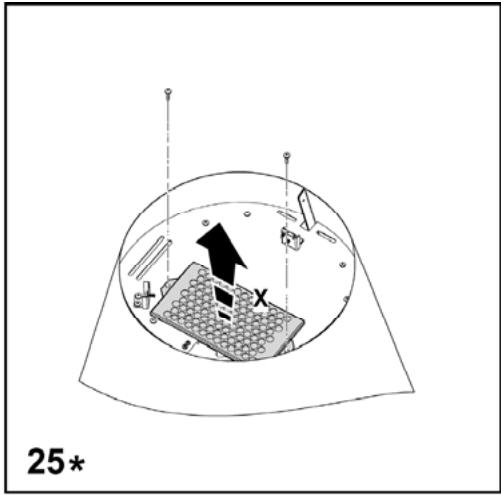

EN - Instruction on mounting and use
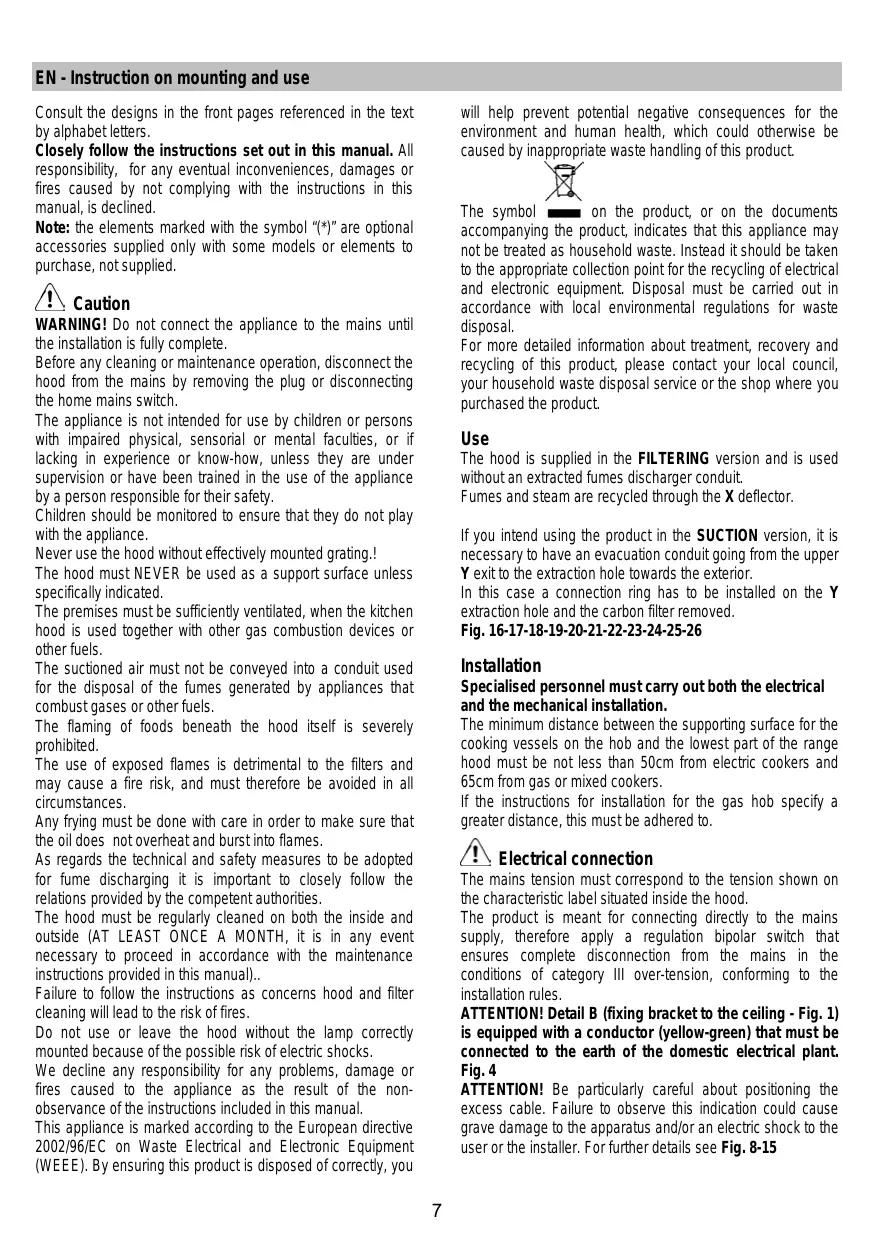
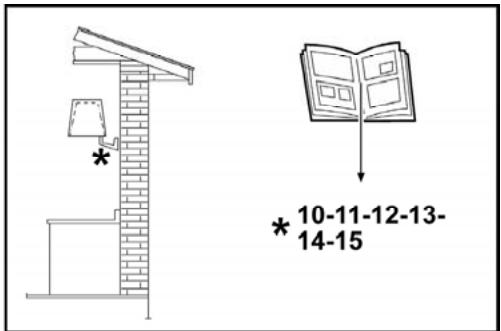
Consult the designs in the front pages referenced in the text by alphabet letters.
Closely follow the instructions set out in this manual. All responsibility, for any eventual inconveniences, damages or fires caused by not complying with the instructions in this manual, is declined.
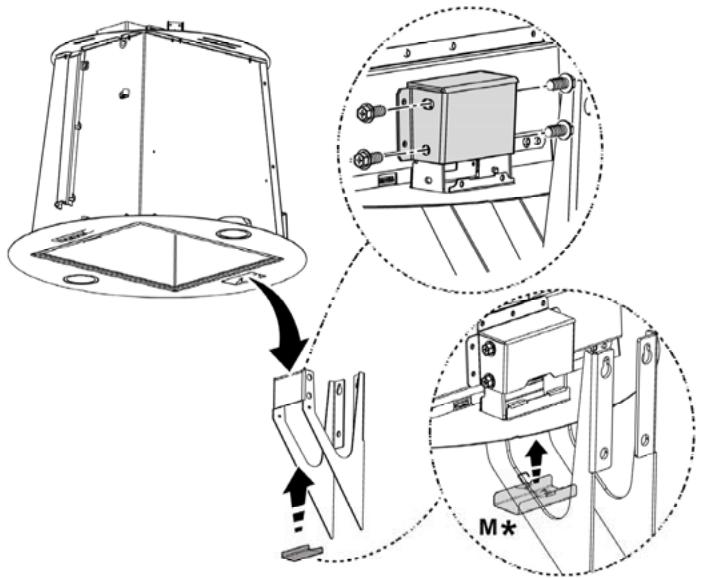
Note: the elements marked with the symbol “(*)” are optional accessories supplied only with some models or elements to purchase, not supplied.

Caution
WARNING! Do not connect the appliance to the mains until the installation is fully complete.
Before any cleaning or maintenance operation, disconnect the hood from the mains by removing the plug or disconnecting the home mains switch.
The appliance is not intended for use by children or persons with impaired physical, sensorial or mental faculties, or if lacking in experience or know-how, unless they are under supervision or have been trained in the use of the appliance by a person responsible for their safety.
Children should be monitored to ensure that they do not play with the appliance.
Never use the hood without effectively mounted grating.!
The hood must NEVER be used as a support surface unless specifically indicated.
The premises must be sufficiently ventilated, when the kitchen hood is used together with other gas combustion devices or other fuels.
The suctioned air must not be conveyed into a conduit used for the disposal of the fumes generated by appliances that combust gases or other fuels.
The flaming of foods beneath the hood itself is severely prohibited.
The use of exposed flames is detrimental to the filters and may cause a fire risk, and must therefore be avoided in all circumstances.
Any frying must be done with care in order to make sure that the oil does not overheat and burst into flames.
As regards the technical and safety measures to be adopted for fume discharging it is important to closely follow the relations provided by the competent authorities.
The hood must be regularly cleaned on both the inside and outside (AT LEAST ONCE A MONTH, it is in any event necessary to proceed in accordance with the maintenance instructions provided in this manual)..
Failure to follow the instructions as concerns hood and filter cleaning will lead to the risk of fires.
Do not use or leave the hood without the lamp correctly mounted because of the possible risk of electric shocks.
We decline any responsibility for any problems, damage or fires caused to the appliance as the result of the non-observance of the instructions included in this manual.
This appliance is marked according to the European directive 2002/96/EC on Waste Electrical and Electronic Equipment (WEEE). By ensuring this product is disposed of correctly, you will help prevent potential negative consequences for the environment and human health, which could otherwise be caused by inappropriate waste handling of this product.

The symbol ■ on the product, or on the documents accompanying the product, indicates that this appliance may not be treated as household waste. Instead it should be taken to the appropriate collection point for the recycling of electrical and electronic equipment. Disposal must be carried out in accordance with local environmental regulations for waste disposal.
For more detailed information about treatment, recovery and recycling of this product, please contact your local council, your household waste disposal service or the shop where you purchased the product.
Use
The hood is supplied in the FILTERING version and is used without an extracted fumes discharger conduit.
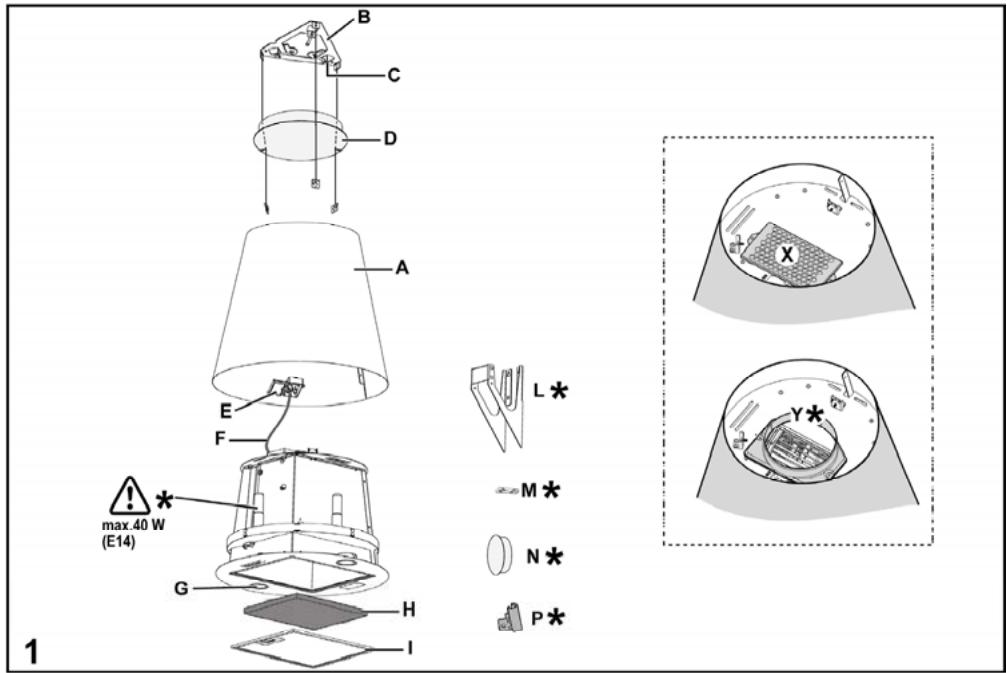
Fumes and steam are recycled through the X deflector.
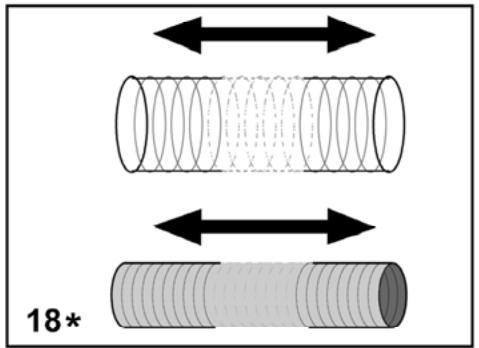
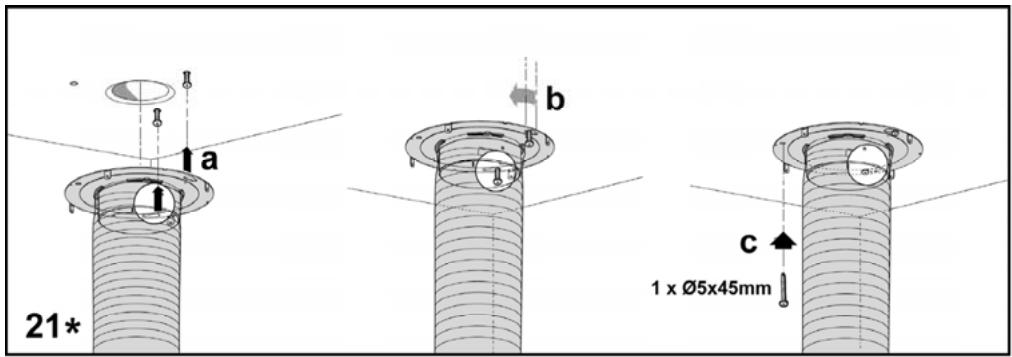
If you intend using the product in the SUCTION version, it is necessary to have an evacuation conduit going from the upper Y exit to the extraction hole towards the exterior.
In this case a connection ring has to be installed on the Y extraction hole and the carbon filter removed.
Specialised personnel must carry out both the electrical and the mechanical installation.
The minimum distance between the supporting surface for the cooking vessels on the hob and the lowest part of the range hood must be not less than 50cm from electric cookers and 65cm from gas or mixed cookers.
If the instructions for installation for the gas hob specify a greater distance, this must be adhered to.

Electrical connection
The mains tension must correspond to the tension shown on the characteristic label situated inside the hood.
The product is meant for connecting directly to the mains supply, therefore apply a regulation bipolar switch that ensures complete disconnection from the mains in the conditions of category III over-tension, conforming to the installation rules.
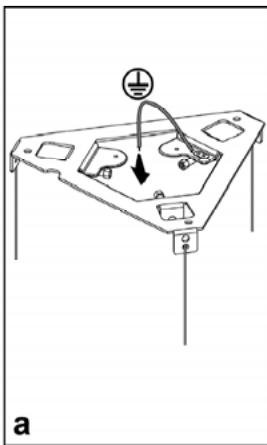
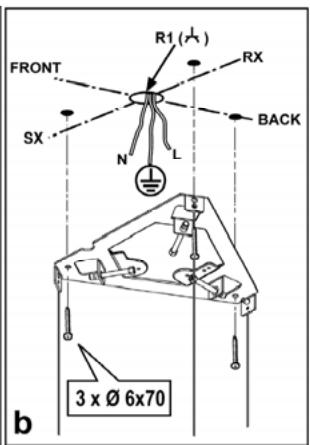
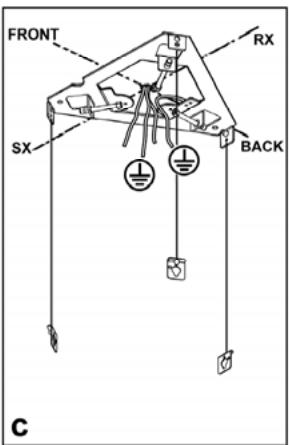
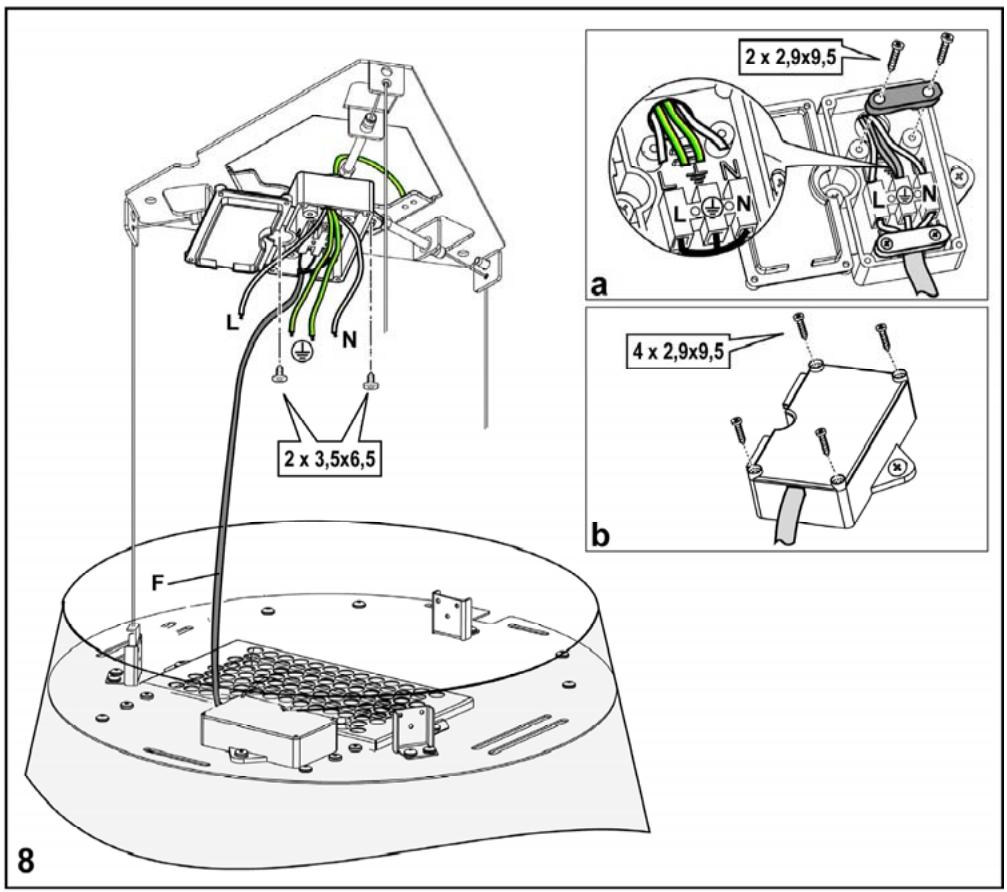
ATTENTION! Detail B (fixing bracket to the ceiling - Fig. 1) is equipped with a conductor (yellow-green) that must be connected to the earth of the domestic electrical plant.
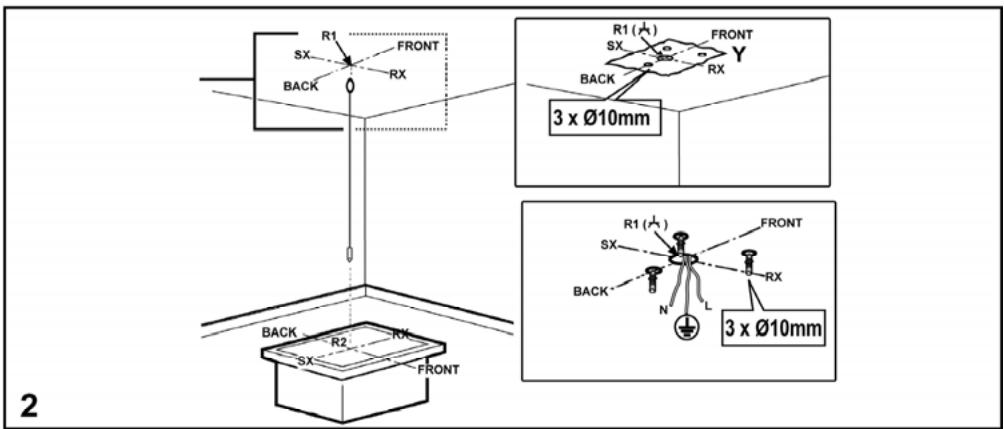
Fig. 4
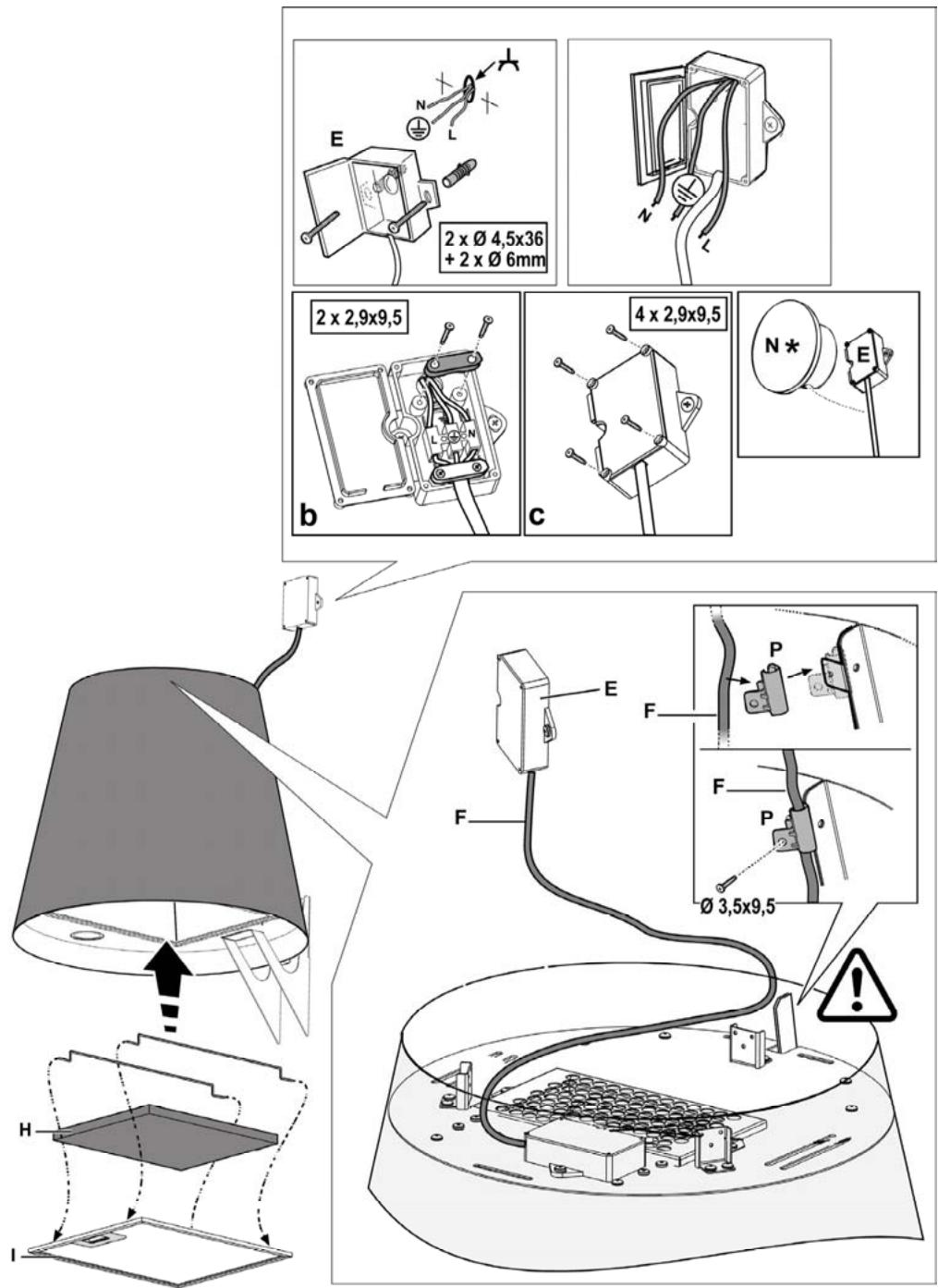
ATTENTION! Be particularly careful about positioning the excess cable. Failure to observe this indication could cause grave damage to the apparatus and/or an electric shock to the user or the installer. For further details see Fig. 8-15
Attention! Changing the interconnection cable must be carried out by the authorised technical assistance service.
Mounting
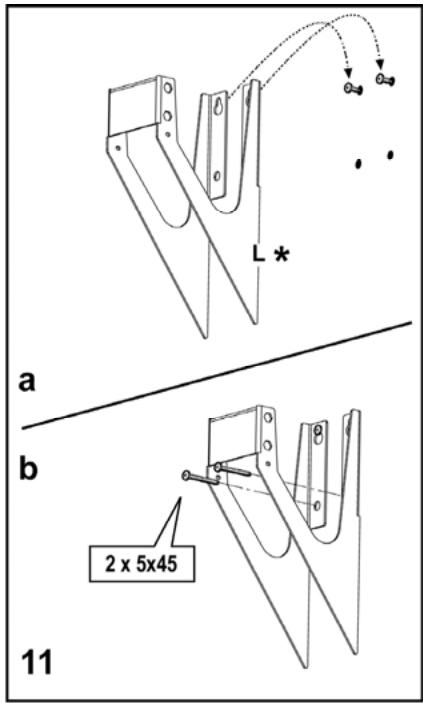
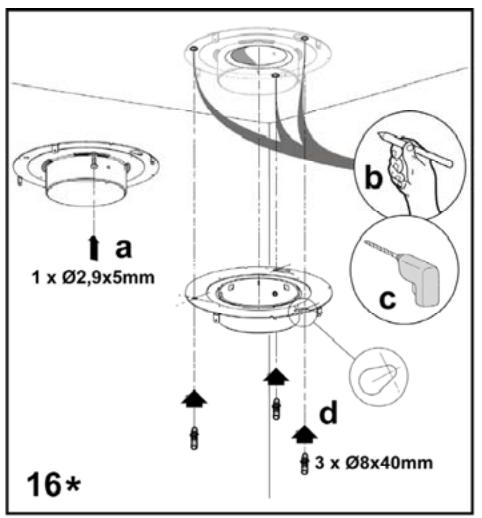
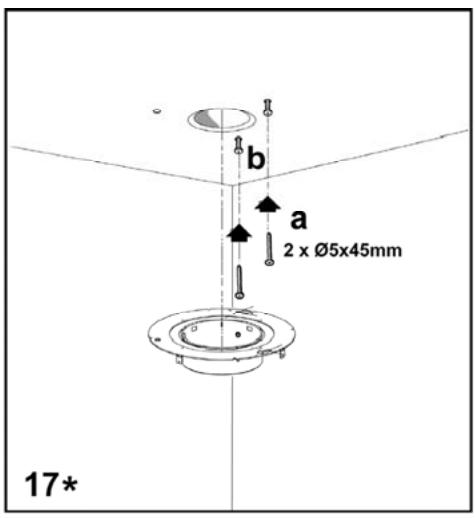
Expansion wall plugs are provided to secure the hood to most types of walls/ceilings. However, a qualified technician must verify suitability of the materials in accordance with the type of wall/ceiling. The wall/ceiling must be strong enough to take the weight of the hood. Do not tile, grout or silicone this appliance to the wall. Surface mounting only.
Description of the hood - Fig. 1
A. Cover
B. Support to the ceiling bracket
C. Regulators of the tie-rods of the hood
D. Decorative cover
E. Box for connecting to the domestic power network
F. Interconnection cable
G. Halogen bulb
H. Active carbon filter
I. Metal anti-fat filter
Operation
Use the high suction speed in cases of concentrated kitchen vapours. It is recommended that the cooker hood suction is switched on for 5 minutes prior to cooking and to leave in operation during cooking and for another 15 minutes approximately after terminating cooking.
![graph LR A["A"] --> B["B"] B --> C["C"] C --> D["D"]](/content/2019/11/107866/images/57af5991b50c6f7a4e4b56b1f73314aaf5b7c0f94a9ad445b8df946f106cbe4e.jpg)
A. on/off light switch
B. on/off aspiration switch and minimum power selection
B+C. medium power selection aspiration switch
B+D. maximum power selection aspiration switch
Maintenance
Before performing any maintenance operation, isolate the hood from the electrical supply by switching off at the connector and removing the connector fuse.
Cleaning
The cooker hood should be cleaned regularly (at least with the same frequency with which you carry out maintenance of the fat filters) internally and externally. Clean using the cloth dampened with neutral liquid detergent. Do not use abrasive products. DO NOT USE ALCOHOL!
WARNING:
Failure to carry out the basic cleaning recommendations of the cooker hood and replacement of the filters may cause fire risks.
Therefore, we recommend oserving these instructions.
The manufacturer declines all responsibility for any damage to the motor or any fire damage linked to inappropriate maintenance or failure to observe the above safety recommendations.
Grease filter
Traps cooking grease particles.
This must be cleaned once a month (or when the filter saturation indication system – if envisaged on the model in possession – indicates this necessity) using non aggressive detergents, either by hand or in the dishwasher, which must be set to a low temperature and a short cycle.
When washed in a dishwasher, the grease filter may discolour slightly, but this does not affect its filtering capacity.

Charcoal filter (filter version only)
It absorbs unpleasant odours caused by cooking.
The charcoal filter can be washed once every two months (or when the filter saturation indication system – if envisaged on the model in possession – indicates this necessity) using hot water and a suitable detergent, or in a dishwasher at 65° C (if the dishwasher is used, select the full cycle function and leave dishes out).
Eliminate excess water without damaging the filter, then put it in the oven for 10 minutes at 100° C to dry completely. Replace the mattress every 3 years and when the cloth is damaged.
- Montage
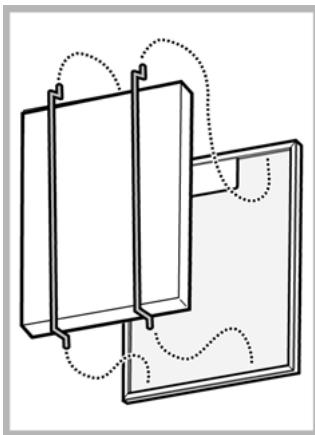
Install the carbon filter on the back of the grease filter and fix with two rods.
Attention! The rods are included in the carbon filter packing and not on the hood.
• To dismantle the filter act in the reverse manner.
Replacing lamps
Disconnect the hood from the electricity.
Warning! Prior to touching the light bulbs ensure they are cooled down.
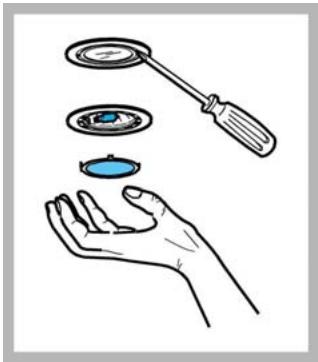
- Using a flat head screwdriver or equivalent tool, carefully pry loose the light cover.
- Remove the damaged light and replace with a new 12 Volt, 20 Watt (Maximum) halogen light made for a G-4 base SUITABLE FOR USE IN OPEN LUMINAIRES. Follow package directions and do not touch new light with bare hands.
- Reinstall the light cover. (it will snap shut).
Some models envisage lateral lamps:
Replace them with identical forms of 40W (E14) max).
Remove cover A to access the lamp housing A.
If the lights do not work, make sure that the lamps are fitted properly into their housings before you call for technical assistance.
Vervanging lampjes
Sluit de stroom af.
Замена ламп
- EN - INSTRUCTION ON MOUNTING AND USE
- CAUTION
- USE
- ELECTRICAL CONNECTION
- FIG. 4
- MOUNTING
- DESCRIPTION OF THE HOOD - FIG. 1
- OPERATION
- MAINTENANCE
- CLEANING
- WARNING
- GREASE FILTER
- TRAPS COOKING GREASE PARTICLES
- CHARCOAL FILTER (FILTER VERSION ONLY)
- IT ABSORBS UNPLEASANT ODOURS CAUSED BY COOKING
- REPLACING LAMPS
- SOME MODELS ENVISAGE LATERAL LAMPS
- VERVANGING LAMPJES
- ЗАМЕНА ЛАМП
Brand : BRANDT
Model : AD1079X
Category : Lighting