
XA-A50CL - Mp3 player JVC - Free user manual and instructions
Find the device manual for free XA-A50CL JVC in PDF.


| Product Type | Digital Audio Player (Ear-Clip Headphone) |
| Model | XA-A50CL |
| Brand | JVC |
| Memory Type | 128 MB Flash Memory |
| Playable Audio Formats | MP3, WMA, WMA-DRM (copyright-protected) |
| Driver Unit | 30 mm diameter Neodymium |
| Power Supply | 1 x AAA alkaline battery (DC 1.5 V) |
| Battery Life | Approx. 20 hours (MP3 64 kbps/22 kHz, LED off) |
| Cord Length | 0.5 m (19-11/16 inch) |
| Weight | 57 g (2.01 oz) incl. battery |
| Connectivity | USB 1.1 (Full-speed) |
| Voice Guidance | Yes, multiple language support (selectable via CD-ROM) |
| Ear-Clip Design | Yes, with adjustable ear hook |
| Supported Bit Rates | 32 - 192 kbps |
| Sampling Frequencies | 16, 22.05, 32, 44.1, 48 kHz |
| Maximum Number of Files | Up to ~30 MP3 files or ~60 WMA files |
| Playback Modes | Normal, All Repeat, Random, Random Repeat, Repeat One |
| Sound Effects | Classic, Live, Pop, Rock, SRS WOW Modes 1-3, SRS TruBass |
| Playlist Support | Yes, up to 3 playlists (.m3u format) |
| System Requirements (PC) | Windows 98SE/Me/2000/XP, Windows Media Player 8.0+, Internet Explorer 6.0+, CD-ROM drive (for driver/software) |
| Battery Type Recommended | Alkaline (AAA) |
| Cleaning Instructions | Gently wipe with a soft cloth; avoid conventional disc cleaners or spray |
| Safety Precautions | Do not expose to rain/moisture, avoid high volume to prevent hearing damage, do not disassemble |
| FCC Compliance | Class B digital device, Part 15 |
| Canadian Compliance | ICES-003 Class B |
Frequently Asked Questions - XA-A50CL JVC
User questions about XA-A50CL JVC
0 question about this device. Answer the ones you know or ask your own.
Ask a new question about this device
Download the instructions for your Mp3 player in PDF format for free! Find your manual XA-A50CL - JVC and take your electronic device back in hand. On this page are published all the documents necessary for the use of your device. XA-A50CL by JVC.
USER MANUAL XA-A50CL JVC
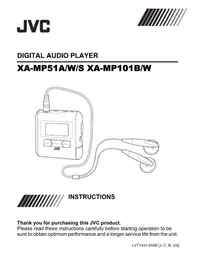
Digital Audio Player
XA-A50CL

INSTRUCTIONS
LNT0041-001A

Safety and Cautions
"SOME DO'S AND DON'TS ON THE SAFE USE OF EQUIPMENT"
This equipment has been designed and manufactured to meet international safety standards but, like any electrical equipment, care must be taken if you are to obtain the best results and safety is to be assured.
Do
read the operating instructions before you attempt to use the equipment.
Do
ensure that all electrical connections (including the mains plug, extension leads and inter-connections between pieces of equipment) are properly made and in accordance with the manufacturer's instructions. Switch off and withdraw the mains plug when making or changing connections.
Do
consult your dealer if you are ever in doubt about the installation, or operation or safety of your equipment.
Do
be careful with glass panels or doors on equipment.
DON'T
continue to operate the equipment if you are in any doubt about it working normally, or if it is damaged in any way-switch off-withdraw the mains plug and consult your dealer.
DON'T
remove any fixed cover as this may expose dangerous voltages.
DON'T
leave equipment switched on when it is unattended unless it is specifically stated that it is designed for unattended operation or has a standby mode.
Switch off using the switch on the equipment and make sure that your family know how to do this.
Special arrangements may need to be made for infirm or handicapped people.
DON'T
use equipment such as personal stereos or radios so that you are distracted from the requirements of road safety. It is illegal to watch television when driving.
DON'T
listen to Digital Audio Player at high volume as such use can permanently damage your hearing.
DON'T
obstruct the ventilation of the equipment, for example with curtains or on soft furnishings. Overheating will cause damage and shorten the life of the equipment.
DON'T
use makeshift stands and NEVER fix legs with wood screws. To ensure complete safety always fit the manufacturer's approved stand or legs with the fixing screws supplied according to the instructions.
DON'T
allow electrical equipment to be exposed to rain or moisture.
ABOVE ALL
NEVER let anyone especially children push anything into holes, slots or any other opening in the case. This could result in a fatal electrical shock.
NEVER guess or make changes with electrical equipment of any kind. It is better to be safe than sorry!

About FCC information
FCC INFORMATION

This device complies with Part 15 of the FCC Rules. Operation is subject to the following two conditions:
- This device may not cause harmful interference.
- This device must accept any interference received, including interference that may cause undesired operation.
NOTE:
This equipment has been tested and found to comply with the limits for a Class B digital device, pursuant to Part 15 of the FCC rules. These limits are designed to provide reasonable protection against harmful interference in a residential installation. This equipment generates, uses and can radiate radio frequency energy and, if not installed and used in accordance with the instructions, it may cause harmful interference to radio communications. However, there is no guarantee that interference will not occur in a particular installation. If this equipment does cause harmful interference to radio or television reception, which can be determined by turning the equipment off and on, the user is encouraged to try to correct the interference by one or more of the following measures:
- Reorient or relocate the receiving antenna.
- Increase the separation between the equipment and receiver.
- Connect the equipment into an outlet on a circuit different from that to which the receiver is connected.
- Consult the dealer or an experienced radio/TV technician for help.
CAUTION:
Changes or modifications not approved by JVC could void users authority to operate the equipment.
Contact
Address: JVC AMERICAS CORP.,
1700 Valley Road, Wayne, New Jersey 07470
Telephone: (973) 317-5000
INFORMATION (for CANADA)
This Class B digital apparatus complies with Canadian ICES-003.
RENSEIGNEMENT (Pour le CANADA)


The lightning flash with arrowhead symbol, within an equilateral triangle is intended to alert the user to the presence of uninsulated "dangerous voltage" within the product's enclosure that may be of sufficient magnitude to constitute a risk of electric shock to persons.
The exclamation point within an equilateral triangle is intended to alert the user to the presence of important operating and maintenance (servicing) instructions in the literature accompanying the appliance.
TO REDUCE THE RISK OF FIRE OR ELECTRIAL SHOCK, DO NOT EXPOSE THIS APPLIANCE TO RAIN OR MOISTURE.
Never use the Digital Audio Player when driving a car, motorcycle, or bicycle. This could result in an accident.
Pay close attention to traffic around you when using the Digital Audio Player while walking. Not doing so could result in an accident.
Be careful not to turn the sound volume up too high when using the Digital Audio Player. Your hearing can be damaged by listening to sounds at excessive volume for long periods.
Do not disassemble or modify the Digital Audio Player.
Do not allow inflammables, water or metallic objects to enter the Digital Audio Player.
2. Avoid using the Digital Audio Player
in places subject to excessive humidity or dust
in places subject to extremely high (over 40°C or 104°F) or low (under 0°C or 32°F) temperatures
3. DO NOT leave the Digital Audio Player
in direct sunlight
near a heater
4. To protect the Digital Audio Player, DO NOT
allow them to get wet. If this occur, DO NOT use the Digital Audio Player to avoid the electrical shock and damage.
drop them or shake them against hard objects.
connect any USB cable to the Digital Audio Player except the one supplied.
disconnect the USB cable when transferring the files.
About ALKALINE BATTERIES
(1) For safe use, DO NOT
attempt to charge the alkaline batteries.
reverse the polarities of the batteries.
carry or store a battery together with objects such as metal pens, necklaces, coins or hairpins. This could short-circuit the positive and negative poles of the battery.
heat or attempt to disassemble a battery.
expose the battery to water or fire.
subject a battery to strong impacts, such as hitting it with a hammer, stepping on it or dropping it.
forget to remove the batteries from the unit if the Digital Audio Player is not to be used for an extended period of time, so as to prevent leakage.
Any of these may cause the battery to split or leak, causing fire or injury.
(2) Use only the specified batteries with this Digital Audio Player. The use of other power sources may cause a fire.
(3) When discarding batteries, environmental problems must be considered and the local rules or laws governing the disposal of these batteries must be followed strictly.
HOW TO HANDLE A CD-ROM
Take care not to soil or scratch the mirror surface (opposite to the printed surface). Do not write anything or put a sticker on either the front or back surface. If the CD-ROM gets dirty, gently wipe it with a soft cloth outward from the center hole using a circular motion.
Do not use conventional disc cleaners or cleaning spray.
Do not bend the CD-ROM or touch its mirror surface.
Do not store your CD-ROM in a dusty, hot or humid environment. Keep it away from direct sunlight.

Introduction
Thank you for purchasing the JVC product. Before you begin operating this unit, please read this operating instructions carefully to be sure you get the best possible performance. If you have any questions, consult your JVC dealer.
CAUTION:
This unit is compatible with WMA-DRM. When you transfer the files other than the following files and folders into this unit, the filles (including non-copyright protect music files) and folders will be deleted on the next time you connect the unit to PC: WMA-DRM files, playlist files, MUSIC folder, VOICE folder

Accessories
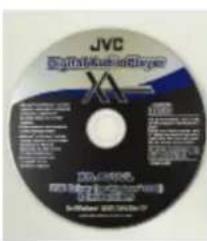
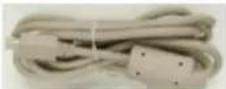
Check the supplied accessories after unpacking.
| CD-ROM | USB 1.1 cable | Cable clip |
 |  |  |

Features
What is Digital Audio Player XA-A50CL?
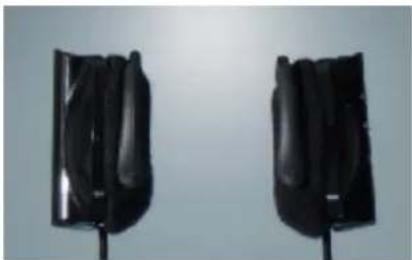
XA-A50CL is an Ear-Clip headphone type Digital Audio Player, which creates a high quality sound reproduced by the 30 mm diameter Neodymium driver unit in an innovative design shell.
You can store the music files-MP3 (up to about 30 files) or WMA / WMA-DRM (up to about 60 files)-in the built-in 128 MB memory, and enjoy playback continuously for 20 hours using a single AAA alkaline battery.
You can directly transfer the music files from your PC to Digital Audio Player over the Full-speed USB port.
Voice guidance helps you to operate and set up Digital Audio Player even if you are listening to the music.
System requirements
To access the Digital Audio Player, your PC need to satisfy the following conditions:
| Operating system | Windows 98SE/Windows Me/Windows 2000/Windows XP |
| Disk drive | CD-ROM (to see this manual and install the driver for Windows 98SE) |
| Multimedia player | Windows Media Player 8.0 or later |
| Browser | Internet Explorer 6.0 or later (to see this manual) |
Some PC may not work correctly even if they satisfy the conditions above.
Music file requirements
Bit rate and sampling frequency
Digital Audio Player supports MP3, WMA, and WMA-DRM files recorded with the following:
| Bit rate | 32 to 192 kbps |
| Sampling frequency | 16 kHz, 22.05 kHz, 32 kHz, 44.1 kHz, 48 kHz |
According to the recording application, MP3, WMA, and WMA-DRM files are not suitable for playback or cannot be played back.
NOTE:
It is recommended that record each file at a sampling frequency of 44.1 kHz and at a bit rate of 128 kbps for MP3, 96 kbps for WMA and WMA-DRM.
Extension
Digital Audio Player can only recognize and play files with one of the following extensions, which can be in any combination of upper and lower case:
| MP3 | ".MP3", ".mp3" |
| WMA and WMA-DRM | ".WMA", ".wma" |
NOTE:
Some files may not be played normally because of their characteristics or recording conditions.
Copyright protection
For copyright protection, Digital Audio Player has a limitation on importing files.
Digital Audio Player is compatible with WMA-DRM. When you transfer the files other than the following files and folders into this unit, the filles (including non-copyright protect music files) and folders will be deleted on the next time you connect the unit to PC:
WMA-DRM files, playlist files, MUSIC folder, VOICE folder
License
Microsoft®, Windows®, Windows® 98SE, Windows® Me, Windows® 2000, Windows® XP, Windows Media® are either registered trademarks or trademarks of Microsoft Corporation in the United States and/or other countries.
WOW, SRS and symbol are trademarks of SRS Labs, Inc.
WOW technology is incorporated under license from SRS Labs, Inc.

About this instruction
Configuration of this instruction
This instruction is configured with the following 4 sections:
| Introduction | Basic information about Digital Audio Player such as its outline and installation. |
| Basic Operation | Basic operations to play back the music files with Digital Audio Player. |
| Advanced Operation: | Advanced operations to play back and to change the settings. |
| Information | Troubleshooting and specification |
The screens used in this instruction are from Windows XP.
The screens and procedures explained may differ depending on your PC. Also, software images for explanation may differ from the actual look.

Parts Identification

| 1. | ▶/■ (Stop/Play/Power) button |
| 2. | Operation indicatorLights: When setting up the unitFlashes 2 times every 5 seconds: During playbackFlashes every 2 seconds: During pause |
| 3. | ◀◀/▶▶ (Skip) buttons |
| 4. | VOL +/- (Volume) buttons |
| 5. | MODE button |
| 6. | USB port cover |
| 7. | Battery cover |
| 8. | Ear hook |
| 9. | Ear pad |
About Voice Guidance
Digital Audio Player has Voice Guidance system, which informs you the operational information of the Digital Audio Player.
For example, when you press ▶▶(next) button while listening to the music, you will hear "Next" through the Digital Audio Player to confirm the operation.
You can change the voice of Voice Guidance system for your preference or other languages.
You can also turn off the Voice Guidance system except for the voice for the setting. See "Voice guide setting".

Preparation
Driver installation (For Windows 98SE user ONLY)
When using Windows 98SE, install the USB driver for accessing the Digital Audio Player.
- Connect the Digital Audio Player to your PC using the supplied USB cable.
Check "CD-ROM" for the driver selection on the dialog. - Load the supplied CD-ROM on your PC, then click "Next" on the dialog.
- Install the driver, by following the message.

Selecting the language for the Voice Guidance
You can change the language of the guide voice by selecting the guide voice files stored in the supplied CD-ROM. The initial language is set to English.
1. Load the supplied CD-ROM on your PC.
The language selection screen appears.
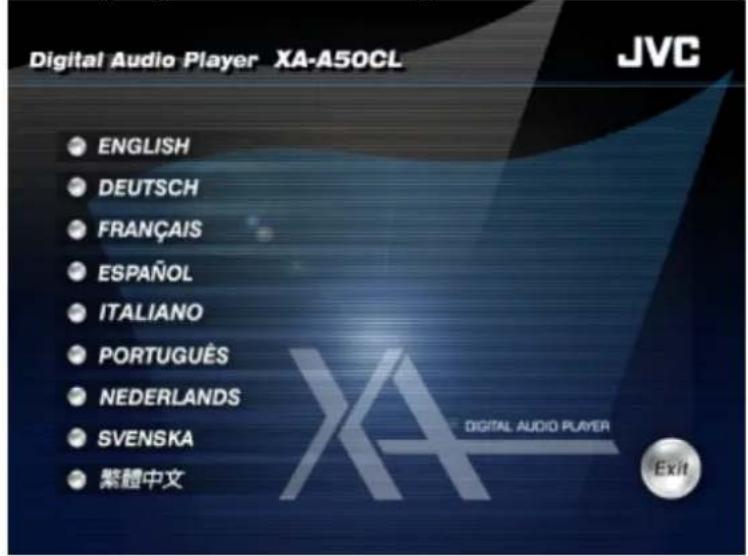
2. Click the desired language.
Ex.: When selecting "English"

3. Import the guide voice files, by following the message.
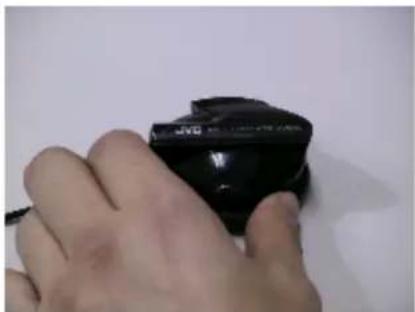
Putting the battery
-
Slide open the battery cover.
-
Insert the alkaline battery, matching the + and -.
Press in on - end first and down on + end.
- Close the battery cover.
About changing the battery
The battery should be changed when the operation indicator fades or does not turn on. Change the battery as necessary to maintain the proper performance of the Digital Audio Player or when "Please change the battery" is heard.
NOTES:
It is recommended to use an alkaline battery.
IMPORTANT:
Misuse of battery could result in leakage. This could cause a fire or explosion. To prevent this, pay special attention to the following points:
- Be sure to insert the battery with correct positive + and negative - polarities.
- Do not heat, disassemble or short-circuit batteries and never dispose of batteries by throwing them in a fire.
- Read the caution displayed on the battery when in use.

Basic Operation
Transferring the music files into the Digital Audio Player
In this instruction, the file-transferring procedure is explained using the Windows Media Player.
CAUTION:
This Digital Audio Player is compatible with WMA-DRM. When you transfer the files other than the following files and folders into this unit, the filles (including non-copyright protect music files) and folders will be deleted on the next time you connect the unit to PC:
WMA-DRM files, playlist files, MUSIC folder, VOICE folder
Notes on making WMA files
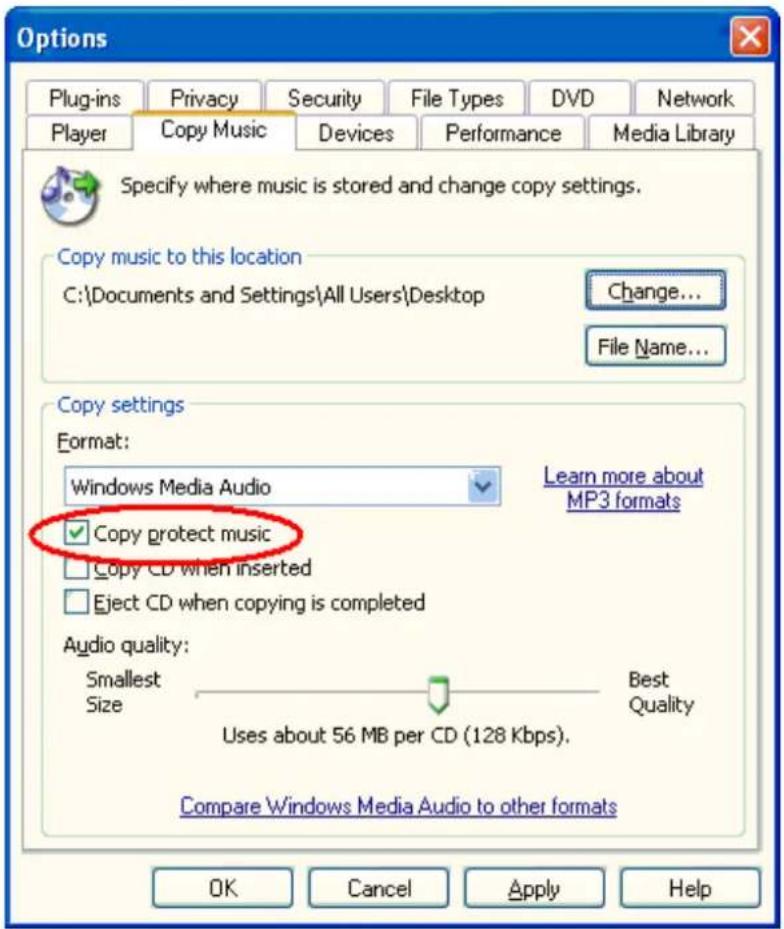
It is recommended to check "Copy protect music" of "Copy Music" tab on Options window in Windows Media Player 9 for making WMA files. Otherwise, WMA files you made will be deleted on the next time you connect the Digital Audio Player to the PC.
NOTES:
For in depth information, see the help for Windows Media player 9.
The lower the bit rate of the files you made is, the longer the life of Digital Audio Player battery is.
For Windows 98SE user ONLY: You need to install the driver before connecting the Digital Audio Player to your PC. See "Driver installation (For Windows 98SE user ONLY)".
To connect to your PC
- Open the USB port cover of the right headphone.
- Connect the Digital Audio Player to your PC using the supplied USB cable.
The operation indicator of the Digital Audio Player starts flashing.
- Press ▶/■ to permit the access to the Digital Audio Player from the PC.
When pressing the button, the non-protected files and folders are deleted. You can disconnect the USB cable before pressing the button to avoid the deletion of the files and folders.
NOTE:
We cannot bear any responsibility for any loss or alteration to the files stored in the internal memory of Digital Audio Player or the external memory.
To transfer the music files
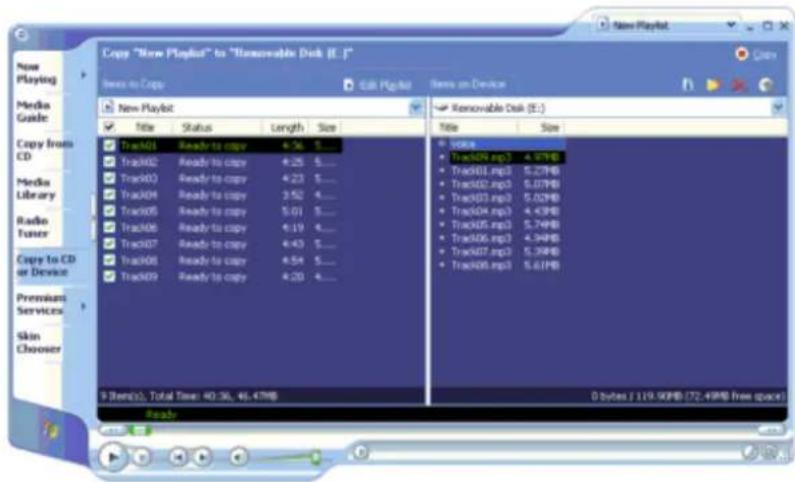
- Start Windows Media Player 9 and click "Copy to CD or Device".
-
Select the desired music files on the left column of Windows Media Player 9.
-
Select the Digital Audio Player as the device on the right column of Windows Media Player 9.
Windows Media Player 9 detects the Digital Audio Player as "JVC_XA_A".
-
Select "music" folder on the Digital Player as the transferring destination of the music files.
-
Click "Copy" to start to import the music files from your PC to the Digital Audio Player.
The operation indicator of the Digital Audio Player is flashing while the files are transferred.
NOTES:
You cannot use the playlist made with Windows Media Player 9.
You can transfer the music files to the Digital Audio Player by dragging-and-dropping the music files to the "MUSIC" folder in the Digital Audio Player.
When dragging-and-dropping the music files to the Digital Audio Player, use "Copy" command to select the files. When you do this operation using "Cut" command, the music files and folders are deleted on your PC.
To disconnect the Digital Audio Player from your PC, use "Safety Remove Hardware".

Putting on the headphones

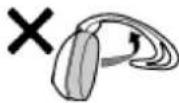
- Open the Ear Hook outward slightly.
- Put the Ear Hook on your ear and adjust the Ear Hook position to fit your ear.
- Close the Ear Hook.
NOTE:
Stretching the ear hook on the headphone too wide from its original position may result in damage to the ear hook.

Turning on the power
1. Press and hold ▶/■ from 2 to 5 seconds to turn on the Digital Audio Player.
The Operation indicator lights up and the Digital Audio Player is turned on, then the playback starts. When the playback position is memorized, playback starts from the memorized position. (See "To stop playback".)
NOTE:
The Digital Audio Player has a function to avoid to turn on the power by the unexpected touch of the objects to the Digital Audio Player.
When you press and hold ▶/■ more than 5 seconds or less than 2 seconds, the Digital Audio Player cannot turn on.
The playback order of the music files may be different from the order on the PC. To play back the music files in the desired order, see "Playing back with playlist".

Adjusting volume
1. Press VOL +/-
VOL+: Increases the volume with a high beep sound.
VOL -: Decreases the volume with a low beep sound.
When pressing and holding the button, the volume is changed continuously with a single beep sound.
NOTES:
When activating Voice Guidance system, the volume adjustment does not take effect to the guide voice.
When one of the "Various effects and setting" mode is selected, the VOL +/- buttons do not work for the volume adjustment. In this case, press MODE repeatedly until "Playback" is heard, or finish the setting ("Complete" is heard when the setting is finished).

Basic playback
To stop playback
1. Press ▶/■
The playback is stopped with the current position of the playback memorized, then the Digital Audio Player is turned off 10 seconds later.
When pressing and holding ▶/■ for 2 seconds, the Digital Audio Player turns off without the memory of the current position.
NOTES:
Keep the volume level of the Digital Audio Player to a minimum before turning off.
To skip to the desired track
1. Press |◀◀/▶▶
▶: Skips to the next tracks.
◀: Skips to the beginning of the current track or the previous tracks.
To locate a desired portion
1. Press and hold ◀◀◀/▶▶
▶: Fast-forwords the tracks.
◀: Fast-reverses the tracks.

Advanced Operation
Playing back with playlist
You can make up to three playlists to customize the playback files you want to. Using a playlist, you can edit the playback files and their order.
NOTE:
When the music file listed in the playlist does not exist on the Digital Audio Player, the step is skipped.
To make a playlist
You can make a playlist file using WordPad application.
A playlist need to be a text file with the ".m3u"extension, and the Digital Audio Player can detect a file as playlist only when the file name is "P_List1.m3u", "P_List2.m3u", or "P_List3.m3u".
1. Open WordPad.
2. Make or edit a playlist as follows:
"/MUSIC/the target file name including the extension"
Ex.:
/MUSIC/Track05.mp3
/MUSIC/Track02.mp3
/MUSIC/Track04.mp3
/MUSIC/Track01.mp3
/MUSIC/Track03.mp3
3. Save the file as Unicode format.
Select "Unicode Text Document" for "Save as type" in the "Save As" dialog of WordPad.
To import the playlist
- Connect the Digital Audio Player to your PC.
- Open "My Computer" on the "start" menu.
- Copy the playlists you made to "MUSIC" folder on the Digital Audio Player, which is detected as the Removable Disk in the "My Computer" window.
To play back with a playlist
- During playback, press and hold MODE until "Playlist 1" is heard.
NOTE:
When no playlist is imported, "No playlist" is heard.
To switch a playlist
1. During playback with a playlist, press and hold MODE until the desired playlist is selected.
To turn off the playback with a playlist, press and hold until "Playlist off" is heard.

Various effects and setting
You can add various effects to the music sound and changing the basic setting using the MODE button.
NOTE:
There is a time limit in doing the following procedures. If you do not press any button about 10 seconds, the mode setting is canceled after setting the current item and playback resumes.
Configuration of the mode setting
![graph TD A["MODE(●)"] --> B["Playback"] B --> C["Play mode setting"] C --> D["Sound setting"] D --> E["Voice guide setting"] E --> F["LED setting"] F --> G["Format setting"] H["Off"] --> I["All repeat"] I --> J["Random"] K["Repeat"] --> L["Random repeat"] M["CLASSIC"] --> N["LIVE"] O["SRS TruBass"]…](/content/2026/05/1054025/images/a910c0754cb26dce0a9c91ec23ff4716b140a05086b2a0c51f2cebf2b2d3c224.jpg)
To change the mode
1. Press MODE repeatedly to select the desired item.
Each time you press the button, the item changes as follows:
| Mode item (Guide voice) | Function |
| Play mode setting | Changes the playback mode. |
| Sound setting | Selects the sound mode. |
| Voice guide setting | Activates/deactivates the voice guidance function. |
| LED setting | Turns on/off the operation indicator. |
| Format setting | Deletes all the data and formats the built-in memory. |
| Normal playback |
2. Press VOL +/− repeatedly to select the setting.
3. Press ▶/■
Without pressing the button for 10 seconds, the setting is finished ("Complete" is heard.) and playback starts.
Play mode setting
| Setting item (Guide voice) | Function |
| All repeat Repeats all the music files. | |
| Random Plays back all the music files in random order. | |
| Random repeat Repeats all the music files in random order. | |
| Repeat Repeats the current music file. | |
| Off Cancels repeat/random mode. | |
Sound setting
| Setting item (Guide voice) | Function |
| CLASSIC | Selects the setting suitable for classical music. |
| LIVE | Selects the setting suitable for live-recording music. |
| POP Selects the setting suitable for pop music. | |
| ROCK | Selects the setting suitable for rock music. |
| WOW MODE1 | Selects for the minimum effect for SRS WOW. |
| WOW MODE2 | Selects for the medium effect for SRS WOW. |
| WOW MODE3 | Selects for the maximum effect for SRS WOW. |
| SRS TruBass | Selects for SRS TruBass mode. |
| Off Cancels sound mode. | |
Voice guide setting
| Setting item (Guide voice) | Function |
| Voice guide on | Activates the voice guidance function. |
| Voice guide off | Activates beep sound instead of the voice guidance.The voice for the mode setting can be always heard though the voice guide is set to off. "Please change the battery." and "Power off" can be also heard as the low battery warning. |
LED setting
| Setting item (Guide voice) | Function |
| LED on Turn on | the operation indicator. |
| LED off Turns off | the operation indicator. |
Format setting
After "Format setting" is heard...
- Press VOL +/- so that "Format" is heard, then press ▶/■.
"Please select `Start format' or `Cancel format'" is heard.
When you do not press VOL +/-, the format setting is canceled and playback starts.
- Press VOL +/- so that "Start format" is heard, then press ▶/■.
The format process starts.
After finishing the format process, the Digital Audio Player turns off.
When you do not press VOL +/-, the format setting is canceled and playback starts.
| Setting item (Guide voice) | Function |
| Format Enters into the format mode. | |
| Cancel format Cancels format. | |
When you select "Format" and "Please select 'Start format' or 'Cancel format'" is heard:
| Setting item (Guide voice) | Function |
| Start format Starts format. The format process starts. | |
| Cancel format Cancels format. | |
CAUTION:
Once you starts formatting all the music files including WMA-DRM are deleted.
DO NOT remove the battery until the Digital Audio Player is turned off. Otherwise, the built-in memory may be broken.
NOTE:
The following setting is not cleared by the format process:
Volume, Play mode setting, Sound setting, Voice guide setting, LED setting
The following setting is cleared:
The memory of the playback position, Playlist selection, the order of the Random play

Troubleshooting
Connection
| Symptom Cause Action | ||
| The PC cannot detect the Digital Audio Player. | Your PC may work incorrectly. | Restart your PC, then connect the Digital Audio Player again. |
| Your PC needs the access permission from the Digital Audio Player. | Press ▶ after connection. | |
| For Windows 98 users: The driver is not installed. | Installe the driver. | |
| A USB hub or a USB extension cable is used. | Connect directly using the supplied USB cable. |
Transfer
| Symptom Cause | Action | |
| Some transferred files are missing. | The Digital Audio Player deletes other than the following folder/files: VOICE folder and voice files, MUSIC folder and WMA-DRM files, and Playlist files. | Check the files and import them again. |
| The built-in memory may be full. | Check the remaining memory size, and delete the unwanted files if necessary. | |
| The PC cannot detect this Digital Audio Player. | The device name of the unit is set to other than "JVC_XA-A". | Rename the device name of the unit as "JVC_XA-A" manually. |
Playback
| Symptom Cause Action | ||
| A WMA file is not played back. | WMA-DRM files are transferred by dragging and dropping. | Transfer WMA-DRM files using Windows Media Player. |
| Operation indicator does not turn on. | The LED setting may be set to "LED off". | Change the LED setting. |
| The battery is low. Change the battery. | ||
| Guide voice cannot be heard during playback operation. | The Voice guide setting may be set to "Off". | Change the Voice guide setting. |
| The music files in the playlist cannot be played back. | The target music files do not exist on the built-in memory of the Digital Audio Player. | Change the playlist or import the music files. |
| The guide voice cannot be heard after formatting Digital Audio Player through the PC | The guide voice files are missing. | Import the guide voice files into the "voice" folder on the Digital Audio Player. |
Specification
| Memory type: | 128 MB Flash memory |
| Playable files: | MP3, WMA, WMA-DRM (copyright-protected) |
| Headphones driver unit: | 30 mm diameter Neodymium |
| Power supply: | AAA alkaline battery (DC 1.5 V) x 1 |
| Battery life: | approx. 20 hours (Playback of MP3 files created at 64 kbps/22 kHz with LED setting set to off.) |
| Cord length: | 0.5 m (19-11/16 inch) |
| Mass: | 57 g (2.01 oz) (incl. an alkaline battery) |
Design and specifications subject to change without notice.

- XA-A50CL
- INSTRUCTIONS
- SAFETY AND CAUTIONS
- SOME DO'S AND DON'TS ON THE SAFE USE OF EQUIPMENT
- DO
- DON'T
- ABOVE ALL
- ABOUT FCC INFORMATION
- FCC INFORMATION
- NOTE
- CAUTION
- CONTACT
- INFORMATION (FOR CANADA)
- RENSEIGNEMENT (POUR LE CANADA)
- AVOID USING THE DIGITAL AUDIO PLAYER
- DO NOT LEAVE THE DIGITAL AUDIO PLAYER
- TO PROTECT THE DIGITAL AUDIO PLAYER, DO NOT
- ABOUT ALKALINE BATTERIES
- FOR SAFE USE, DO NOT
- HOW TO HANDLE A CD-ROM
- INTRODUCTION
- ACCESSORIES
- FEATURES
- WHAT IS DIGITAL AUDIO PLAYER XA-A50CL
- SYSTEM REQUIREMENTS
- MUSIC FILE REQUIREMENTS
- BIT RATE AND SAMPLING FREQUENCY
- EXTENSION
- COPYRIGHT PROTECTION
- LICENSE
- ABOUT THIS INSTRUCTION
- CONFIGURATION OF THIS INSTRUCTION
- PARTS IDENTIFICATION
- ABOUT VOICE GUIDANCE
- PREPARATION
- DRIVER INSTALLATION (FOR WINDOWS 98SE USER ONLY)
- SELECTING THE LANGUAGE FOR THE VOICE GUIDANCE
- LOAD THE SUPPLIED CD-ROM ON YOUR PC
- CLICK THE DESIRED LANGUAGE
- IMPORT THE GUIDE VOICE FILES, BY FOLLOWING THE MESSAGE
- PUTTING THE BATTERY
- ABOUT CHANGING THE BATTERY
- NOTES
- IMPORTANT
- BASIC OPERATION
- TRANSFERRING THE MUSIC FILES INTO THE DIGITAL AUDIO PLAYER
- NOTES ON MAKING WMA FILES
- TO CONNECT TO YOUR PC
- TO TRANSFER THE MUSIC FILES
- PUTTING ON THE HEADPHONES
- TURNING ON THE POWER
- PRESS AND HOLD ▶/■ FROM 2 TO 5 SECONDS TO TURN ON THE DIGITAL AUDIO PLAYER
- ADJUSTING VOLUME
- PRESS VOL
- BASIC PLAYBACK
- TO STOP PLAYBACK
- PRESS
- TO SKIP TO THE DESIRED TRACK
- PRESS |◀◀
- TO LOCATE A DESIRED PORTION
- PRESS AND HOLD ◀◀◀
- ADVANCED OPERATION
- PLAYING BACK WITH PLAYLIST
- TO MAKE A PLAYLIST
- OPEN WORDPAD
- MAKE OR EDIT A PLAYLIST AS FOLLOWS
- SAVE THE FILE AS UNICODE FORMAT
- TO IMPORT THE PLAYLIST
- TO PLAY BACK WITH A PLAYLIST
- TO SWITCH A PLAYLIST
- DURING PLAYBACK WITH A PLAYLIST, PRESS AND HOLD MODE UNTIL THE DESIRED PLAYLIST IS SELECTED
- VARIOUS EFFECTS AND SETTING
- PRESS MODE REPEATEDLY TO SELECT THE DESIRED ITEM
- PRESS VOL +/− REPEATEDLY TO SELECT THE SETTING
- VOICE GUIDE SETTING
- LED SETTING
- FORMAT SETTING
- TROUBLESHOOTING
Brand : JVC
Model : XA-A50CL
Category : Mp3 player