
PL8039 - Scale LAICA - Free user manual and instructions
Find the device manual for free PL8039 LAICA in PDF.


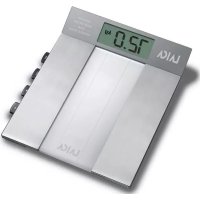
| Type | Digital Bathroom Scale |
| Brand | Laica |
| Model | PL8039 |
| Dimensions | 30 x 30 x 3 cm |
| Weight | 2 kg |
| Platform Material | Tempered Glass |
| Maximum Capacity | 180 kg / 400 lb |
| Division | 0.1 kg / 0.2 lb |
| Units | kg, lb, st |
| Display | LCD |
| Power Supply | 2 x CR2032 batteries (included) |
| Auto-On | Step-on activation |
| Auto-Off | After 10 seconds of inactivity |
| Low Battery Indicator | Yes |
| Overload Indicator | Yes |
| Non-Slip Feet | Yes |
| Cleaning Method | Wipe with a damp cloth, do not use abrasive cleaners |
| Warranty | 2 years |
Frequently Asked Questions - PL8039 LAICA
User questions about PL8039 LAICA
0 question about this device. Answer the ones you know or ask your own.
Ask a new question about this device
Download the instructions for your Scale in PDF format for free! Find your manual PL8039 - LAICA and take your electronic device back in hand. On this page are published all the documents necessary for the use of your device. PL8039 by LAICA.
USER MANUAL PL8039 LAICA
SCHELETRICA, CALCOLO
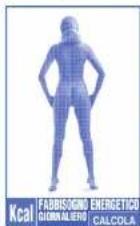
FABBISOGNO ENERGETICO
GIORNALIERO E PESO DEL
SISTEMA SCHELETRICO
natural_image
3D rendered image of a blue electronic device with ventilation slots and a control panel (no text or symbols visible)
LC41/c-03/2010
PL8039
PL8039
PESAPERSONE ELETTRONICA CON INDICATORE DI % DI GRASSO, % DI ACQUA, % DI MUSCOLATURA SCHELETRICA, CALCOLO FABBISOGNO ENERGETICO GIORNALIERO E PESO DEL SISTEMA SCHELETRICO

PESO/WEIGHT
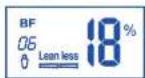
% BODYFAT

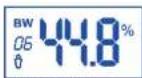
% BODYWATER


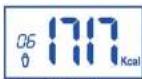
CALORIE (kcal)
% MUSCOLATURA SCHELETRICA
% OF SKELETAL MUSCULATURE
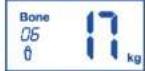
PESO SISTEMA SCHELETRICO BONE WEIGHT

natural_image
White electronic device with digital display and buttons (no visible text or symbols)






LAICA™
2
ANNI DI GARANZIA ANS DE GARANTIE YEARS GUARANTEE ANOS DE GARANTIA JAHRE GARANTIE XPONIA EΓΓΥΗΣΗ
Data - Date - Date
Fecha - Data
Timbro rivendilore
Cachet du revendeur
Retailer's stamp
Sello del revendedor
11.6kg (lossa in kg)}{22x(1.62F)}×100=20.1%
(DIR. 2002/96/CE - WEEE)
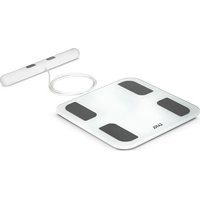
New personal electronic scale that allows calculating the daily energy requirement and the body composition (percentage of fat water, skeletal musculature, and skeletal system weight) according to the height, age and gender. The exact knowledge of the body composition (calculation of the lean mass, fat mass total body water, skeletal musculature, and skeletal system weight) and the daily energy requirement allows a correct assessment of exceeding fat and at the same time the detection of the ideal weight according to the nutritional status.
Therefore, it is possible to combine a correct feeding and physical activity as essential conditions to improve the quality of life, promote health and prevent diseases. It is equipped with a memory function up to 12 persons.
Load capacity 180 kg / 395 lb / 28 st 4 lb scale by 100 g / 0.2 lb.
Laica S.p.A. - Viale del Lavoro, 10 - Fraz. Ponte 36021. Barbarano Vicenling (VI) - ITALY - Made in China
CE 0434 (Dir. 93/42/EEC)
Warning!
- The percentage of body fat, body water, and skeletal musculature, as well as the skeletal system weight and the value of the daily energy requirement are to be considered only for information purposes. For any further information, refer to a doctor or a dietician.
- Self-measuring means control, it does not m diagnosis or treatment. Any unusual levels should always be discussed with your doctor.
Under no circumstances must you change the dose of medicines prescribed by your Doctor.
IT IS IMPORTANT TO CAREFULLY READ THE STRUCTIONS AND WARNINGS IN THIS BOOKLET BEFORE USE AND TO KEEP THE BOOKLET IN A SAFE PLACE.
BODY COMPOSITION
It is important to know the body composition of an individual in order to be able to estimate his/her health condition. Actually, it is not enough to know one's weight but it is necessary to define its quality, which means dividing the human body in its two major component masses:
- lean body mass, bones, muscles, viscera, water, organs, blood:
- fat body mass: adipose cells. Under the same conditions of weight, these two masses have different volumes. By means of electrodes placed on the platform, the scale sends a weak low intensity electric current that passes through the body mass. The electric current reacts in a different way according to the masses it passes through the lean body mass opposes a weak resistance, while the fat body mass has a greater resistance. This body resistance, called bicelectrical impedance, varies also in function of sex, age and height. For a correct control of one's healthy weight, it is important, to compare, together with the weight, also the percentage of fat calculated by the scale with the parameters given in the table. Evaluate you own percentage of body water and skeletal musculature, as well as the weight of your skeleton system and your daily energy requirement with the information given here below.
Should the measured values be outside the standard range, it is suggested to refer to your doctor. It is suggested to take note of these values for a give period of time in order to understand them better.
In order to obtain a valid comparison, you should weigh yourself always at the same time of the day and under the same conditions. The best moment to weigh yourself is in the
morning, before breakfast, without clothes. You have to wait 15 minutes after getting up, so that the water can distribute itself throughout the body
Body fat mass percentage
The percentage of fat listed in the following table, represents the total fat, calculated by summing up the essential fat (or primary fat) and the spare fat (or storage fat). The essential fat is necessary since it is needed for the metabolism. The percentage of this fat is different between the two sexes: about 4% for men and about 12% for women (percentage calculated on the total body weight). The spare fat, which is theoretically superluous, is necessary in a minimum quantity for a healthy condition, especially for those who carry out physical activities.
Even in this case, the fat percentage is different between the two sexes: 12% for men, 15% for women (percentage calculated on the total body weight). Therefore, the normal percentage of fat mass on the body weight is approximately 16% for men and 27% for women. Such percentages differ with the person's age as shown in the table here below.
| BODYFAT TABLE | ||||||
| Apr. % | Underweight | % Sun | % Fri | % Slightly Underweight | Overweight | |
| WOMAN | <2 | <1 | 1-2 | 1-2 | 24-27 | >2 |
| 10-25 | >25 | 2-15 | 1-27 | 24-29 | >26 | |
| 10-30 | <17 | 17-20 | 25-20 | 28-33 | >33 | |
| 10-30 | <20 | 20-23 | 25-32 | 28-37 | >29 | |
| >30 | <1 | 21-23 | 25-35 | 28-39 | >3 | |
| MAN | <2 | <0 | 9-11 | 11-20 | 20-24 | >24 |
| 12-15 | <1 | 7-9 | 9-18 | 19-23 | >23 | |
| 16-25 | <2 | 10-12 | 12-20 | 20-25 | >25 | |
| 40-50 | <3 | 13-15 | 15-23 | 25-29 | >25 | |
| IN- | >30 | <5 | 15-17 | 17-20 | 20-21 | >2 |
% OF WATER, % OF SKELETAL MUSCULATURE, DAILY ENERGY REQUIREMENT, % OF SKELETAL SYSTEM TABLE
| Age | % Water | % Musculature | Calories (mm) | % Skeletal | |
| WOMAN | <12 | 54.65 | 24.84 | 300(200) | 5.19 |
| 12-16 | 54.64 | 25.65 | 300(200) | 5.19 | |
| 16-20 | 54.60 | 26.88 | 300 | 5.19 | |
| 21-26 | 54.63 | 26.29 | 300 | 5.19 | |
| ≥26 | 54.65 | 26.25 | 300 | 5.19 | |
| MAN | <17 | 56.67 | 25.68 | 300(200) | 5.19 |
| 12-16 | 56.69 | 26.44 | 200(200) | 5.19 | |
| 16-20 | 56.68 | 26.24 | 200 | 5.19 | |
| 21-26 | 56.63 | 26.14 | 200 | 5.19 | |
| ≥26 | 56.60 | 26.12 | 200 | 5.19 |
% of skeletal musculature
The muscles are the motors of the skeleton and through the energy they give off during contraction, they let us move, perform and control movements of the head, body and upper and lower limbs. There are three different types of muscular tissue: smooth striated skeletal and striated cardiac. The striated cardiac muscle is the heart. It is the only organ formed of striated fibre, which involuntarily contracts. Smooth muscles are formed of smooth fibres, which are only found in the digestive tract, the respiratory tract and the genitals in the walls of the vencus and arterial blood vessels. Smooth muscular tissue is not voluntarily controlled. Striated skeletal muscular tissue, also called voluntary because it contracts according to our will, forms the skeletal and facial muscles in humans. The job of striated voluntary muscles is to move the skeleton, allowing us to move and communicate with our surroundings. This scale indicates the % of skeletal musculature and of smooth muscular tissue present in the body. On an average, the 40% of the body weight is made up of the skeletal muscles.
In general, the percentage can increase in sportspeople in case
Instructions and guarantee
PL8039
of very prolonged physical activity. If a moderate and daily physical activity is carried out, the % tends to increase but slowly. (The difference can be noticed after months of activity). With the help of the physical activity, also the fluid balance in the body is improved. The percentage of musculature starts to decrease with the increase of age (after 40). Men usually show a greater musculature than women.
Water percentage
Water is the main component of lean body mass; the water percentage over the fat body mass is 73%.
The lean body mass is obtained by subtracting from the total weight the fat body mass (for instance for a 25-year old man, with a fat body mass of 17% , lean body mass is equivalent to 83% ). About 60% of the body weight is made up by water; it therefore represents the fundamental component of every living being and it is necessary to keep us alive.
Women (having normally more adipose tissue than men), have a water percentage of about 55–58%, while men have about 60–62% of it. The water percentage is greater in childhood (at birth in varies from 70 to 77%), and it decreases with age (in old people the percentage varies from 45% to 55%) and with the increase of fat deposits. Obese people have a lower body water percentage than lean people.
Refer to this data to compare the obtained percentage.
Water accomplishes many biological functions
- it promotes the digestive processes;
- it is a thinner for substances that are important for the organism:
- it removes metabolic wastes;
- it carries oxygen, nutrients, enzymes, hormones and glucose to the cells;
- it is a source of mineral salts;
- it regulates the body temperature.
The human organism excretes every day a given quantity of water, which must be regularly replaced; a water loss of approximately 10% of the body weight, may put at risk the health condition. Body weight variations, may occur throughout short (hours), medium (days) or long (weeks) periods.
Small weight variations that take place in a few hours, are completely normal and are due to water retention, since the extra-cellular water (which includes interstitial fluid, plasma, lymph and transcellular fluid) is the only compartment subject to such rapid variations.
When a weight reduction occurs in a few days, it is very likely that it affected the total water amount (distributed by approximately 60% inside the cells - intracellular water - and by approximately 40% outside the cells - extracellular water-) and therefore, it also affected the lean body mass.
To conclude, the lat body mass is subject to variations which can be recorded in weeks.
Therefore, in order to evaluate the progression of one's body composition it is necessary to keep in mind that:
- a weight reduction by itself, accompanied by an unchanged or even increased body fat percentage, shows that the body has simply lost water (for instance after a training session, a sauna or a diet that is limited to rapid weight loss).
- a weight increase accompanied by a decreasing or unchanged body fat percentage, shows the development of precious muscular mass.
- when weight and body fat decrease at the same time, it means that the diet is effective and that we are also losing volume.
- when there is a high percentage of fat or a reduced muscular mass, the body water percentage is always too low.
Warning!
When following a diet, it is necessary to expect a reduction in the fat body mass and not in the muscular mass.
Daily energy requirement
To work normally human body needs to be nourished regularly. Drastic and unbalanced diets not including all types of foodstuffs should be absolutely avoided. One of the essential assumptions for a correct feeding is that it meets the energy requirement of the involved person. Moreover, it is important to consider the variety of foods since diets involving always the same type of food can lack of some nutrient principles. While assessing the total quantity of food to take in a day, it is useful to calculate first of all the energy requirement of the involved person.
The one exceeding the necessary amount of calories needed to meet his/her daily energy requirement is quite surely subject to overweight, above all if he/she does not carry out a proper physical activity. Should one be underweight, it is necessary to seek medical advice and perform the correct amount of physical activity supported concurrently by a varied and balanced diet.
Considering such remarks, the daily energy requirement allows monitoring the number of calories required by the body according to its physical constitution and to the life-style.
A greater muscular mass or a greater physical activity require more calories: it is essential to know such data to optimize a diet or the physical activity.
The skeletal system
The skeleton is the sturdy and flexible structure that supports our body. conveys form to it, projects inner organs, provides the anchoring for the muscles and allows our body to move. It is made up mainly of bones (206) and cartilage.
Most part of the bones of female skeleton has the same shape, although smaller size, of those of male skeleton, exception made for the pelvis. In fact, female pelvis is usually larger than the male one. This scale indicates the weight of the skeleton. The measurement of the skeletal system weight must be compared with the age, height and life-style of each single person.
Therefore, it is necessary to compare the data measured by the scale using the following mathematical formula.
% skeletal system: = (Bone) in kg22xH^2 × 100
H = height in meters
Compare the result with the data quoted in the table of % of water and skeletal musculature, as well as of daily energy requirement and skeletal system weight.
Examples of body composition
Person 1
Entered data: female, 162 cm tall, 30 years old. Data calculated by the scale: Weight 51.7 kg, Bodyfat 29%, Bodywater 52.1%. Muscles 37%. Energy Requirement kcal 2085, skeletal system weight 11.6 kg.
Analysis of body composition: According to the table the body composition is slightly overweight. Let's analyze it in details.
The percentage of lean body mass is 71% (100% - 29)
The water percentage is 52.1% (71% x 73%)
The body fat is made up as follows:
• essential fat => 61.7 kilos x 12% = 7.4 kilos
• spare fat => 61.7 kilos x 15% = 9.3 kilos
The total body lat (essential lat + spare lat) is made up of 7.4
English
ELECTRONIC PERSONAL SCALE WITH INDICATOR OF FAT %, WATER %, % OF SKELETAL MUSCULATURE, CALCULATION OF DAILY ENERGY REQUIREMENT AND SKELETAL SYSTEM WEIGHT
+ 9.3 kilos = 16.7 kilos that over the total of body weight (61.7 kilos) is equivalent to 27% (ideal percentage of fat mass for person 1). The difference between 29% (fat body mass actual percentage) and 27% (fat body mass ideal percentage) is 2%, which applied to the total weight of 51.7 kilos is equivalent to 1.23 kilos.
1.23 kilos represent the excess weight of person 1. A water percentage of 52.1% is a little low compared to the normal percentage for women but it is due to a higher fat body mass percentage and therefore to a reduced muscular mass. The percentage of the skeletal muscles and smooth muscles (37%) is within the standard range (Women usually have a less marked presence of musculature than men).
The daily energy requirement is equal to 2085 kcal. This value is slightly high due to the slight overweight and to the limited physical activity performed, however it remains within the standard values.
To establish the percentage of skeletal system, apply the above mentioned formula.
.6 kg (bones in kg) 22x (1.62) x 100 = 20.1%
The percentage of the skeletal system is slightly above the average. Person No. 1 probably has a bone structure heavier than the average of people.
TIPS FOR USE
- Place the scale on a flat, hard surface. Soft, uneven flooring (e.g., rugs, carpets, lincolum) can cause the scale to give an uneven reading of your weight.
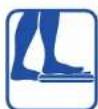
- Step onto the scale with your feel parallel and weight equally distributed (see illustrations).
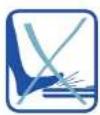
- It is important to weigh yourself with dry, bare feet, correctly positioned on the electrodes (see illustrations). Moreover, for the scale to work properly, avoid your legs in a structure.
- This scale is in no way dangerous as it runs on a 9 volt alkaline battery. However, the following people should avoid using it:
- those fitted with a pace-maker or other forms of electronic, medical equipment
- those with a temperature
- children under the age of 6
- pregnant woman
- those in dialysis, with edemas on their people with dimorphism or suffering from osteoporosis.
people on cardiovascular medication.
- Always weigh yourself on the same scale each day at the same time, preferably undressed and before breakfast. To get the best results from your scale, weigh yourself twice, and if the two weights are different from each other, your weight is between the two readings.
Vail for about 15 minutes after getting up, so that the water can distribute itself around your body.
- The surface of the scale can be slippery, if wet. - Should an error occur during the analysis of the daily energy requirement, the skeleton weight, or of the percentage of fat, water and skeletal musculature, the scale switches off automatically.
Caution! The function of measurement of the percentage of body fat, body water, skeletal musculature, as well as of the skeletal system weight and of the daily energy requirement can be used only by persons between 6 and 100 years old and going between 80 and 240 cm tall.
- The precision of the data detected by the scale can be altered in the following cases:
a) a high alcohol level
b) a high level of caffeine or drugs c) after an intense sports activity d) during an illness e) during pregnancy f) after heavy meals g) in presence of dehydration problems h) your personal data (height, age, sex) have not been input correctly i) if you have wet or dirty feet j) persons with swollen legs.
Warning!
The percentage of body fat, body water, and skeletal musculature, as well as the skeletal system weight and the value of the daily energy requirement are to be considered only for information purposes. For any further information, refer to a doctor or a dietician.
OPERATING INSTRUCTIONS
a. How to insert batteries
This scale operates with one replaceable alkaline battery. When the battery is dead the display shows "LO" or the battery symbol insert a new battery bearing in mind the polarity indicated. Remove the run down batteries by lifting the cover of the battery compartment located on the bottom of the device. Extract the batteries and dispose them as special waste at the specific collection points forecast for recycling. For more information about the disposal of run down batteries, please contact either the store where the device containing the batteries was purchased, or the Municipality, or the waste disposal local service.
Caution: For greater safety, children younger than 12 years should not remove the batteries. Remove the batteries if the scale is not used for long periods of time. b. Unit of measure key
Found at the bottom of the scale, this key allows you to choose the unit of measure for weighing. Kg/lbs/st. With the scale switched off, select the measuring unit (kg, lb or st) via the key on the bottom of the scale.
c. Use as simple scale
1) Press Oil button to turn the scale on. 2) Wait a few seconds and when "0.0" appears on the display screen, the scale is ready for use.
3) Step onto the scale and wait without moving; after a few seconds, the display screen will show your weight.
legs, not lean on anything while being weighed as this could after the reading.
4) Step off the scale, the display screen will continue to show your weight for a few seconds then it will turn itself off automatically.
d. Enter your personal data
This scale can store the data of up to 12 different persons. 1) When the scale is switched off, press the key SET. When the display shows "0.0", press the key SET again.
2) The display shows "SET" and "01" starts immediately to blink. This indicates person "01": should one wish to change the memory area (memories from 01 to 12), press the symbols ▲ or ▼. Once the memory area has been selected, confirm by pressing SET.
3) Then, the display shows the shape of a man and of a woman. Use the keys "▲" and "▼" to select and confirm by pressing on SET
4) Then, enter your height (from 80 cm to 240 cm) using the symbols ▲ or ▼ to increase or decrease the value. The display shows the value in cm or in ft. Press SET to confirm
5) Further use the symbols ▲ or ▼ to enter the age (from 6 to 100) and confirm by pressing SET. When an age lower than 16 years is entered, the display shows the icon of a "small
Instructions and guarantee
face* indicating that the scale is being used by a child. 6) Now the scale has memorized all your data; the display will show them in sequence in order for you to verify that they have been input correctly.
At this point the scale will turn off by itself.
To change the data inserted, recall the relevant memory location and repeat the whole procedure. To insert another person's data, select a free memory location and repeat the whole procedure described above.
Warning! when you are inside the function "personal data input" the scale will turn off automatically if no button is pressed within 10 seconds. It is possible to switch off the scale at any time by pressing the key O/I
e. Calculation of the weight, of % of body fat, % of body water, % of skeletal musculature, value daily energy requirement and skeletal system weight
1) Enable the scale by pressing the key O/I. 2) Wait for some second and when the display shows "0.0", press the key ▲ or ▼ until the wished memory area displayed. Previously entered data will be displayed by the display, followed by "0.0kg"
3) Get on the scale paying attention to position the feet correctly on the two electrodes. Then, the display shows the following data sequentially:
- the weight - BF: the percentage of fat present in the body - BW: the percentage of water present in the body - BM: the percentage of skeletal musculature present in the body
- kcal: the calories related to the daily energy requirement - Bone: the skeletal system weight
Compare the percentages of fat (BF), water (BW), skeletal musculature (BM), as well as the values of the daily energy requirement (kcal) and the skeletal system weight obtained with the parameters given in the table "% of water, skeletal musculature, daily energy requirement and skeletal system". Should the data not be included in the standard range, refer to your doctor.
Moreover, evaluate the percentage of water (BW) according to the paragraph " % of water", the percentage of musculature according to the paragraph " % of skeletal musculature", the value of the daily energy requirement according to the paragraph "daily energy requirement" and the skeletal system weight according to the paragraph "the skeletal system".
4) The scale will turn off automatically after about 10 seconds. Warning!
If the display is not on "0.0", it will not be possible to figure out your weight and calculate the fat and water percentage. If the "ERR" sign turns on, it means that an error has taken place during the measurement.
Start the entire procedure again from the very beginning.
TECHNICAL FEATURES
• Capacity: 180 kp / 396 lb / 28 si 4 lb
• Division: 100 q? 0.2 b
• 12-persons memory.
• One 9V alkaline battery 6L R61
- LCD display
• Maximum tolerance: +/-1% + 1 division
• Operating environmental requirements:
+10°C +40°C: RH 85%
• Storage environmental requirements:
+10°C -50°C; RH 85%
MAINTENANCE
- Handle your scale with care as it is a precision instrument. Therefore, avoid to expose it to extreme temperatures, damp,
PL8039
knocks, dust and direct sunlight.
Do not drop the scale or knock on it
- Keep the scale away from sources of heat.
- Do not jump on the scale
- Clean the scale with just a soft dry cloth.
• To clean the scale never use chemical or abrasive
products
Take care that no liquids penetrate into the scale, as it is not waterproof. Do not leave or use the scale in very damp surroundings, humidity above 85% or contact with water and other liquid parts could cause corrosion and jeopardize the precision of the scale.
■ DISPOSAL PROCEDURE(DIR. 2002/96/EC - WEEE)
The symbol on the bottom of the device indicates the separated collection of electric and electronic equipment. At the end of life of the device, do not dispose it as mixed solid municipal waste, but dispose it referring to a specific collection centre
located in your area or returning it to the distributor, when buying a new device of the same type to be used with the same functions. This procedure of separated collection of electric and electronic devices is carried out forecasting a European environmental policy aiming at safeguarding protection and improving environment quality, as well as avoiding potential effects on human health due to the presence of hazardous substances in such equipment or to an improper use of the same or part of the same.
Caution! The wrong disposal of electric and electronic equipment may involve sanctions.
WARRANTY
This equipment is covered by a 2-year warranty elapsing from the purchase date, which has to be proven by means of the stamp or signature of the dealer and by the fiscal payment receipt that shall be kept enclosed to this document. This warranty period complies with the laws in force (Italian legislative decree No. 24 dated Feb. 02, 2002 and following "Consumers Act" Italian legislative decree No. 206 dated Sep. 03, 2005) and applies only in case the consumer is a private entity. Laica products are designed for domestic use, therefore, their use in public businesses is forbidden. The warranty covers only production defects and is void, if the damage is caused by accidental events, wrong use, negligence or improper use of the product. Use the supplied accessories only, the use of other accessories may lead to warranty validity. Do not open the equipment for any reason whatsoever; in case of opening or tampering of the equipment, warranty decays definitively. Warranty does not apply to parts subject to rear and wear along the use, as well as to batteries, when they are standard supplied. Warranty decays after 2 years from the purchase date. In this case, technical service interventions will be carried out against payment. Information on technical service interventions, under warranty terms or against payment, may be requested by writing all info@laica.com. Nothing shall be owed for the repairing or replacement of products covered by the warranty terms. In case of laufs, refer to a dealer; DO NOT send anything directly to LAICA. All interventions covered by warranty (including product replacement or the replacement of any of its parts) shall not be meant to extend the duration of the original warranty period of the replaced product. The manufacturer cannot be made liable for any damages that may be caused, directly or indirectly, to people, things and pets resulting from the incaservance of the provisions contained in the suitable user manual, especially with reference to the warnings related to installation, use and maintenance of the equipment. Being constantly involved in improving its own products, Laica reserves the right to modify its product, locally or partially, with reference to any production need, without that this involves any responsibility whatsoever by Laica or its dealers.
Español
% Skeleton system = 122d x 100
H = Größe in Meter
• Reservafelt => 61.7 kg x 15% = 9.3 kg
Deutsch
ELEKTRONISCHE PERSONENWAAGE MIT ANZEIGE VOM % VON FETT. % VON WASSER. % VONSKELETT-MUSKULATUR, BERECHNUNG VOM TÄGLICHEN ENERGIEBEDARF UND VOM GEWICHT DES SKELETTSYSTEMS
11,6 kg (Knochen in kg) × 100 = 29.1%
-100°C -40°C relative Feuchra 95%
1) Everipollate in diapia potuvas to koumi Oil.


- PL8039
- LAICA™
- 2
- Warning!
- BODY COMPOSITION
- Body fat mass percentage
- % of skeletal musculature
- Instructions and guarantee
- Water percentage
- Daily energy requirement
- The skeletal system
- Examples of body composition
- Person 1
- English
- ELECTRONIC PERSONAL SCALE WITH INDICATOR OF FAT %, WATER %, % OF SKELETAL MUSCULATURE, CALCULATION OF DAILY ENERGY REQUIREMENT AND SKELETAL SYSTEM WEIGHT
- TIPS FOR USE
- OPERATING INSTRUCTIONS
- a. How to insert batteries
- d. Enter your personal data
- e. Calculation of the weight, of % of body fat, % of body water, % of skeletal musculature, value daily energy requirement and skeletal system weight
- TECHNICAL FEATURES
- MAINTENANCE
- ■ DISPOSAL PROCEDURE(DIR. 2002/96/EC - WEEE)
- WARRANTY
- Español
- Deutsch
- ELEKTRONISCHE PERSONENWAAGE MIT ANZEIGE VOM % VON FETT. % VON WASSER. % VONSKELETT-MUSKULATUR, BERECHNUNG VOM TÄGLICHEN ENERGIEBEDARF UND VOM GEWICHT DES SKELETTSYSTEMS
Brand : LAICA
Model : PL8039
Category : Scale