BL100 MN Bliss - Hearing aid Sonic - Free user manual and instructions
Find the device manual for free BL100 MN Bliss Sonic in PDF.


User questions about BL100 MN Bliss Sonic
0 question about this device. Answer the ones you know or ask your own.
Ask a new question about this device
Download the instructions for your Hearing aid in PDF format for free! Find your manual BL100 MN Bliss - Sonic and take your electronic device back in hand. On this page are published all the documents necessary for the use of your device. BL100 MN Bliss by Sonic.
USER MANUAL BL100 MN Bliss Sonic
Bliss BTE and miniBTE User Guide
Hearing Instrument Style:
□ BTE □ miniBTE
Hearing Instrument Serial Number:
Left ____ Right ____
Hearing Instrument Model:
Left Right ____ ____
Battery Size: 13A
Listening Program # Listening Environment
1
2
3
4
Right/Left Instruments Synchronized:
□ Active □ Inactive
Program Button: Program Button Mute:
□ Active □ Inactive □ Active □ Inactive
Preferred Telephone Ear:
☐ Right ☐ Left ☐ Both
Non-Telephone Ear Control
No change
☐ Softer when telephone is in use
☐ Mutes when telephone is in use
BTE Volume Control: BTE Telecoil:
□ Active □ Inactive □ Active □ Inactive
The following hearing instruments are covered in this User Guide:
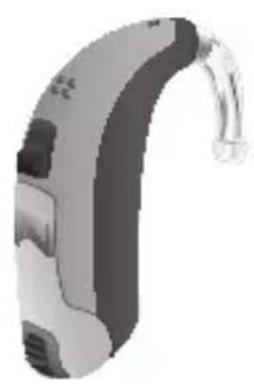
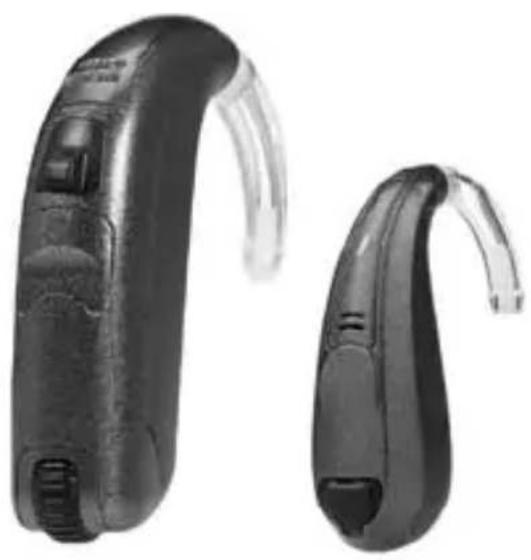
Bliss BTE Bliss miniBTE
natural_image
Illustration of a handheld electronic device with a curved handle and control buttons (no text or symbols visible)
BL100 BTE BL100 MN
BL80 BTE BL80 MN
Table of Contents
Congratulations on your purchase! 09
General Warnings and Safety Guidelines 10
Hearing Expectations 15
Your Bliss BTE Hearing Instrument – with Earhook 18
Your Bliss BTE Hearing Instrument – with Thin Tube 19
Your Bliss miniBTE Hearing Instrument – with Thin Tube 20
Your Bliss miniBTE Hearing Instrument – with Earhook and Earmold 21
Turning Your Hearing Instrument OFF and ON 22
Putting On Your Hearing Instrument - Thin Tube 24
Taking Off Your Hearing Instrument – Thin Tube 25
Putting On Your Hearing Instrument – Earhook 26
Taking Off Your Hearing Instrument – Earhook 27
Changing the Programs 28
Changing the Volume 30
Using the Telephone 32
Using the Telecoil 36
Changing the Battery 37
Audible Indicators 43
Safety Lock 44
Data Logging and Learning 46
Direct Audio Input and FM 47
Caring for Your Hearing Instruments 50
Operating Your Hearing Instrument with the RC-P Remote Control 56
Operating Your Hearing Instrument with the SoundGate Communication Device 57
Environmental Protection 58
Product Approval, Markings and Compliance 60
Cell Phone and Hearing Instrument Compatibility 62
Warranty and Repairs 64
Accessories 65
Common Problems and Solutions 66
Information for the Hearing Care Provider 70
Compliance with Requirements for Europe 72
Compliance with Radio Communications Requirements for the USA and Canada 73
Information and Explanation of Symbols 76
Service 78
natural_image
Two black medical or electronic earbuds with curved, ear-shaped extensions (no visible text or symbols)bliss™
Congratulations on your purchase!
With a little practice, you will soon be on your way to better hearing. The amplification of sound provided by your hearing instruments was adjusted by your hearing care provider to the needs of your individual hearing loss.

Please read the entire contents of this booklet before using your hearing instruments. It contains instructions and important information about the use and handling of your hearing instruments and batteries. With proper use and care, your hearing instruments will improve your connection with the world around you.
General Warnings and Safety Guidelines
Hearing instruments and batteries can be dangerous if swallowed or improperly used. Such actions can result in severe injury, permanent hearing loss or even fatality.
Familiarize yourself completely with the following general warnings and safety guidelines before using your hearing instruments.
Hazard warnings
⚠️Never allow others to wear your hearing instruments. They are adjusted for your hearing requirements and may permanently damage another person’s hearing.
Avoid wearing your hearing instrument while playing contact sports (e.g., rugby, football, etc.), since a strike to the ear could be harmful.
⚠ Hearing instruments, their parts and batteries should be kept out of reach of infants, children, and anyone who might swallow these items or otherwise cause themselves injury.
Take care when changing and discarding batteries to keep them out of reach of infants, children, persons of mental incapacity or pets.
Clean your hearing instruments and their parts on a regular basis as recommended. Micro-organisms from unclean instruments may cause skin irritations.
Be careful with leaking battery liquid, as it is a hazardous substance.
Never attempt to recharge non-rechargeable batteries.
Be aware of the possibility that your hearing instruments may stop functioning without notice. Keep this in mind while you circulate in traffic or otherwise depend on warning sounds.
Remove your instruments before applying aftershave, hairspray, oils, perfume, mosquito repellent, lotions, etc. Allow the product to dry before wearing your instruments.
Traffic or other warning sounds may be reduced in level by a directional microphone when these sounds are coming from behind you.


Warnings to hearing care provider and patient
Special care should be taken when fitting and using a hearing instrument with maximum sound pressure capability in excess of 132 dB SPL (IEC 60318-4) since there may be a risk of impairing the remaining hearing of the patient.

When the DAI is connected to AC-powered equipment, this equipment must comply with IEC-60601-1 or equivalent safety standards.
Safety information
- Hearing instruments should be used only as directed and adjusted by your trained hearing care provider. Misuse or improper adjustments can result in sudden and permanent hearing loss.
- Never put your hearing instrument or batteries in your mouth, as they could easily be swallowed
- Keep batteries away from medications, since they can easily be mistaken for pills
- In the event that a battery or hearing instrument is swallowed, see a doctor immediately
- Be aware that use of a hearing instrument may cause excess earwax to build up in the ear canal which may require removal by a trained medical professional
- Consult your physician if excessive earwax, skin irritation, or a foreign object prevents you from wearing your hearing instrument
- An Earmold is a custom-made product. If you experience discomfort or irritation of your ear, please see your hearing care provider immediately for modification of the Earmold.
-
In rare cases, a hearing instrument or Earmold may cause a discharge from the ear or allergic reaction. See a physician immediately if these conditions occur.
-
Never insert cleaning tools into the microphone inlet or deeply into the sound outlet. This could damage the hearing instruments.
- Do not expose hearing instruments to extreme heat by leaving them in the car, near a radiator, etc.
- Avoid exposing your instruments to water and moisture i.e., steambaths, showers, heavy rain, etc.
- Do not wear your hearing instrument while swimming, snorkeling or diving, as it is not designed for such activities
- Do not immerse your hearing instrument in water or other liquids
- Never attempt to dry your instruments with a hair dryer, microwave oven, etc.
- It is recommended to remove your hearing instruments before sleeping
- Protect your instruments by keeping them in the case when you are not wearing them
Hearing Expectations
Set appropriate expectations
It is important that you have the right expectations regarding your hearing instruments. Hearing instruments can help you hear and understand better, but they are not a cure for hearing loss.
People whose expectations are too high (“I thought they would make my hearing normal”) are likely to be disappointed and may give up.
Hearing instruments can:
- Help you hear and understand better in most situations
- Allow you to participate more in group situations and meetings
Hearing instruments cannot:
- Give you normal hearing
Hearing instruments may not:
- Let you hear very soft sounds
- Block ALL background noises – especially in noisy situations. Even people without hearing loss may have difficulty hearing in the presence of background noise.
Be patient
Unlike with eyeglasses which correct your vision as soon as you first put them on, with hearing instruments you will need some time to adjust.
It may take several weeks or months to completely adjust to your hearing instruments, so try to be patient. Initially, try different listening situations, such as one-on-one conversations with family and friends, and conversations with two or three people at home or in quiet settings. Also, try having conversations in noisier places like parties, restaurants, meetings, and outdoors.
Do not forget that some situations are simply too noisy in general – even for people without hearing loss. So, do not get discouraged.
Consistent use of your hearing instrument is strongly recommended. In most cases, infrequent use does not allow you to obtain the full benefit from your device.
The use of a hearing instrument is only a part of total hearing rehabilitation, and may need to be supplemented by auditory training and instruction in lipreading.
Your Bliss BTE Hearing Instrument – with Earhook
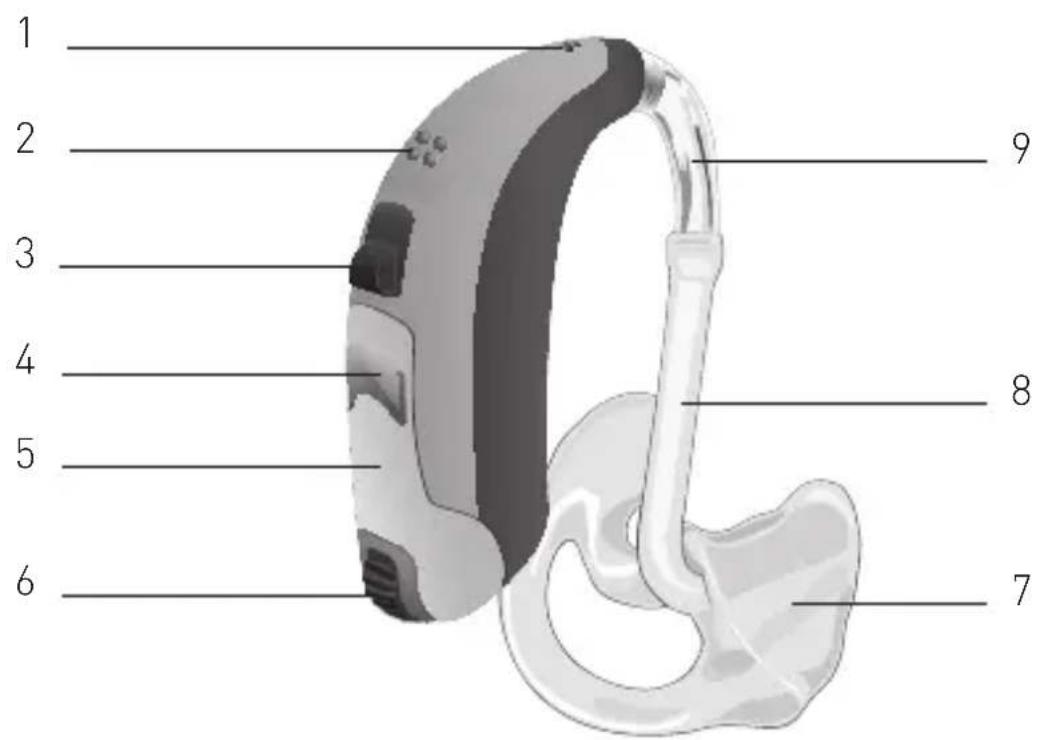
1 Front microphone
2 Rear microphone
3 Program Button
4 Battery door grip
5 Battery door
6 Volume Control
7 Earmold
8 Earmold tubing
9 Earhook
Right and left instrument markers
A color indicator can help you distinguish right and left instruments.
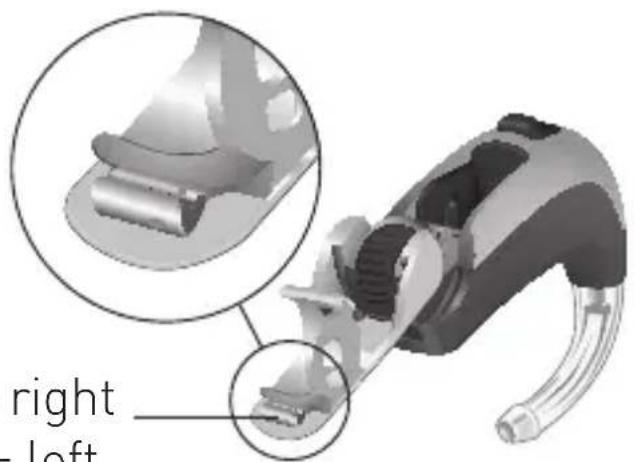
Red = right
Blue = left
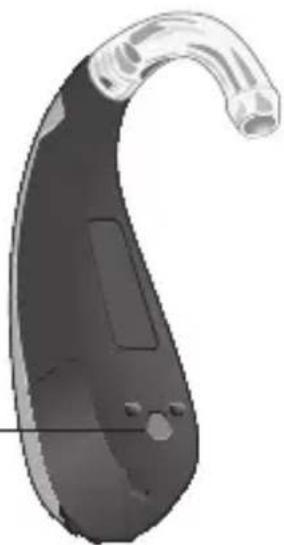
Your Bliss BTE Hearing Instrument – with Thin Tube
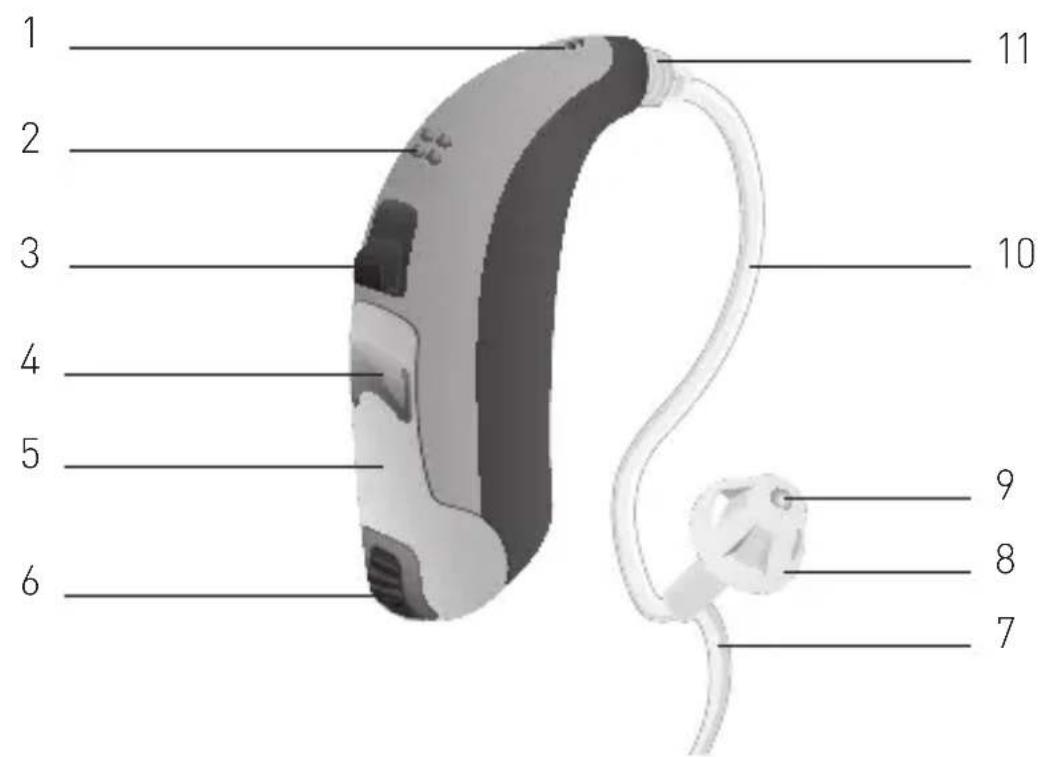
1 Front microphone
2 Rear microphone
3 Program Button
4 Battery door grip
5 Battery door
6 Volume Control
7 Retention lock
8 Dome
9 Sound outlet
10 Thin Tube
11 Thin Tube Adapter
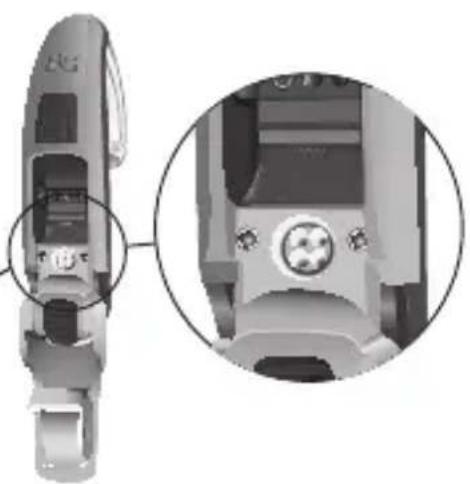
Serial number
natural_image
Technical illustration of a mechanical component with cross-sectional and top views (no text or symbols)Your Bliss miniBTE Hearing Instrument – with Thin Tube
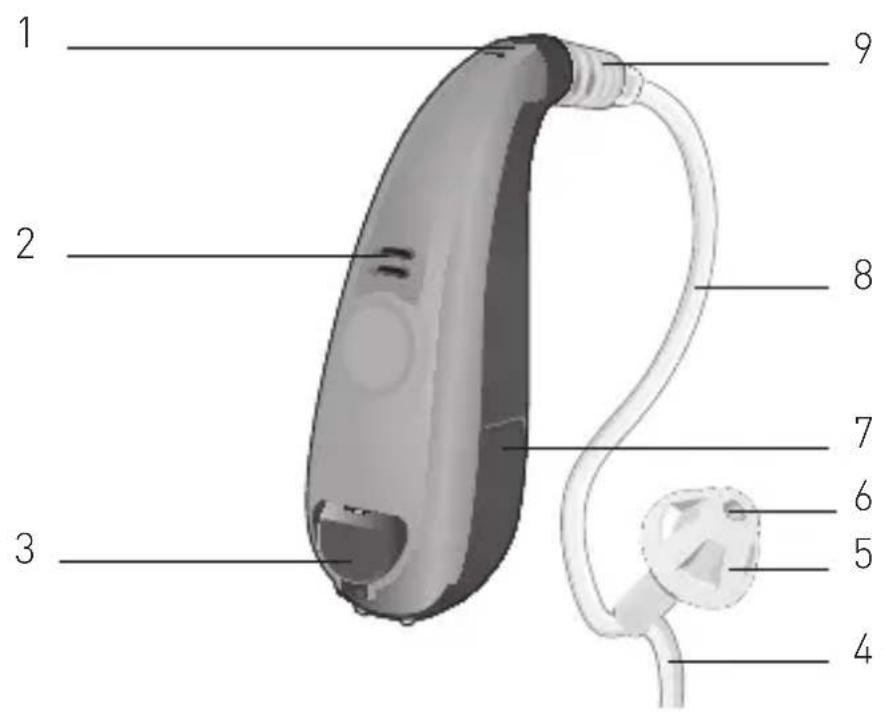
1 Front microphone
2 Rear microphone
3 Program Button
4 Retention lock
5 Dome
Right and left instrument markers
A color indicator can help you distinguish right and left instruments.
6 Sound outlet
7 Battery door
8 Thin Tube
9 Thin Tube Adapter
Red = right
Blue = left
natural_image
Illustration of a curved, segmented electronic device with a handle and control buttons (no text or symbols)Your Bliss miniBTE Hearing Instrument – with Earhook and Earmold
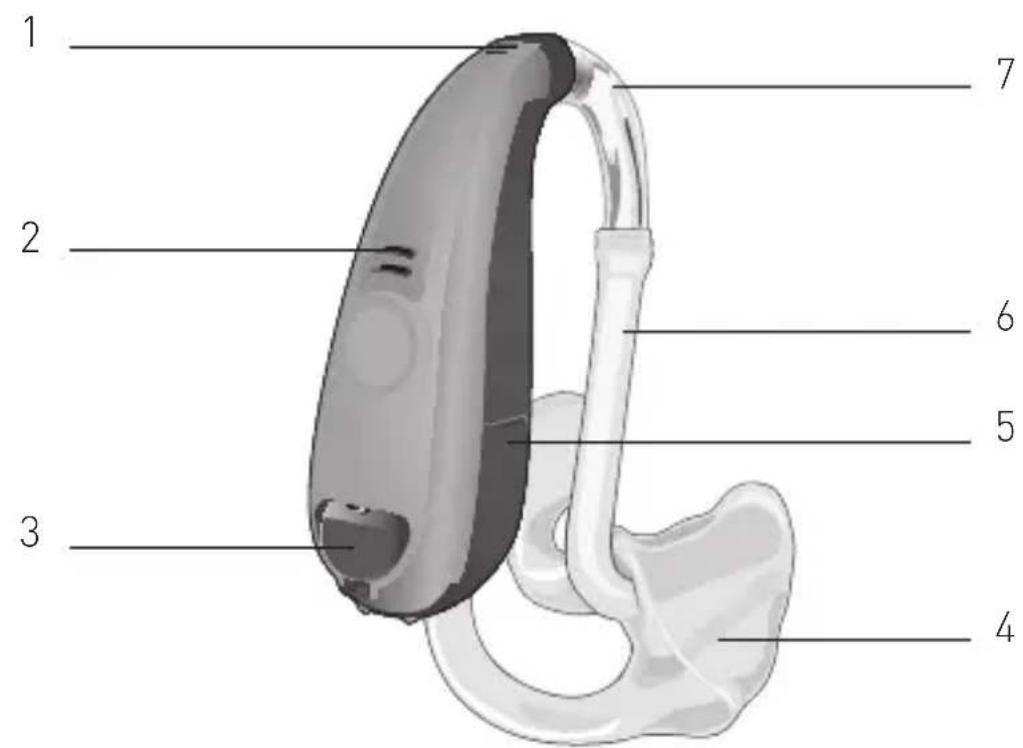
1 Front microphone
2 Rear microphone
3 Program Button
4 Earmold
5 Battery door
6 Earmold tubing
7 Earhook
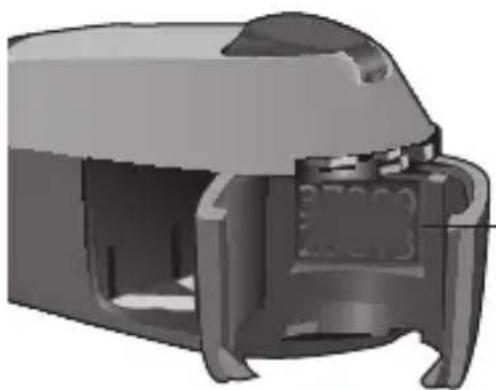
natural_image
3D rendered mechanical component with internal cavity and mounting brackets (no text or symbols)Serial number
Turning Your Hearing Instrument OFF and ON
To prolong battery life, turn off your hearing instrument when not in use. Before turning your hearing instrument off, wipe away any moisture with a soft cloth.
Bliss BTE
To turn your BTE hearing instrument off, put your fingernail into the battery door grip and open the battery door slightly until you feel a firm stopping point. Only a small portion of the battery is visible, which keeps the battery from falling out completely. To turn the hearing instrument back on, fully close the battery door.
natural_image
Three-step illustration of a hand inserting a device into a curved device, showing the process with arrows indicating movement (no text or symbols present)ON OFF
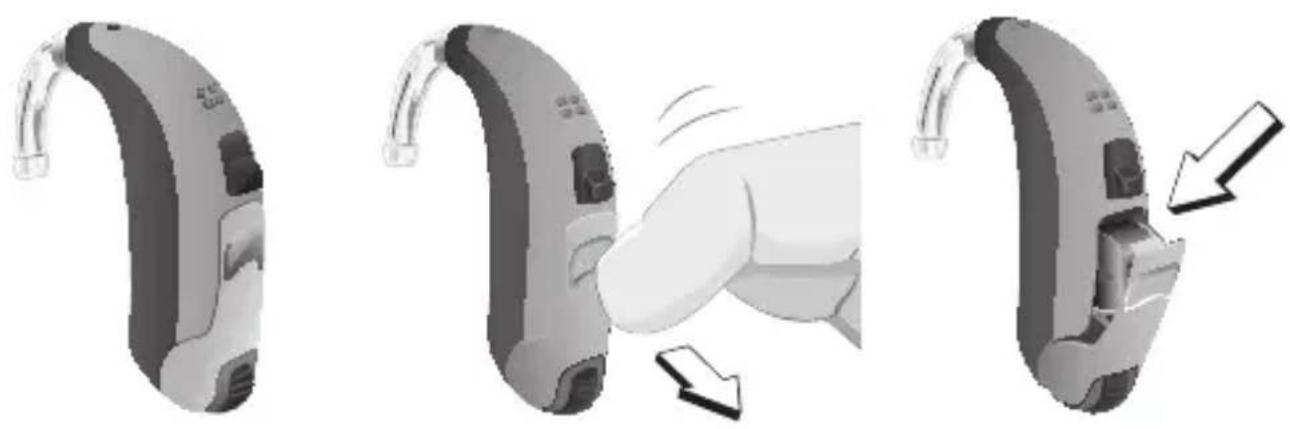
Bliss miniBTE
To turn your miniBTE hearing instrument off, open the battery door slightly by pushing on the edge of the seam. To turn it back on, fully close the battery door.
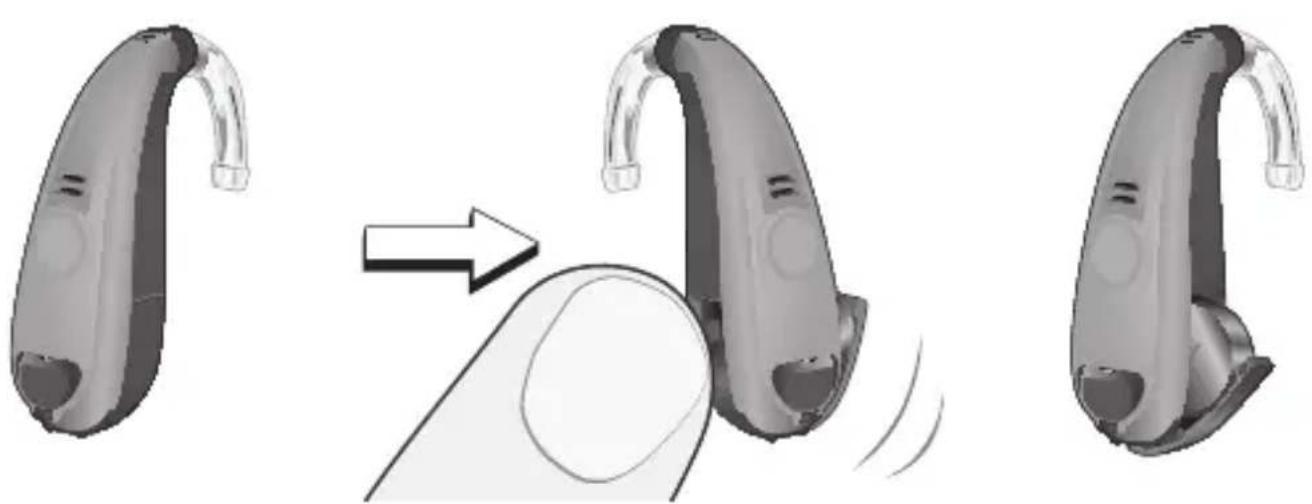
natural_image
Three-step illustration of a medical device being held, showing the process from external grip to internal body (no text or symbols)ON OFF
Your hearing instrument may be programmed to alert you with a beep when it is turned on. Your hearing care provider will tell you if this feature is enabled. Your hearing instrument may also have a “power on” delay. This allows you to insert the device before it is fully active.
Putting On Your Hearing Instrument – Thin Tube
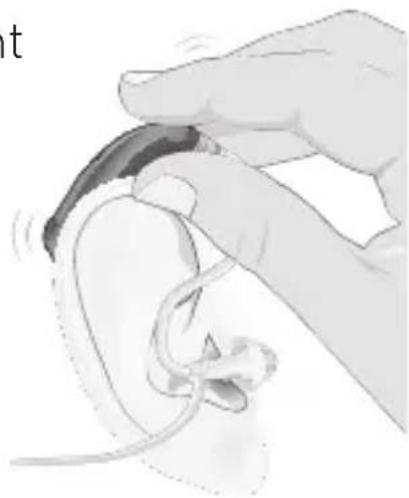
- First, position the hearing instrument over the top of your ear
- Grasp the bend of the Thin Tube and gently push the Dome into your ear canal until the tube rests against the side of your head. When the Dome is placed appropriately, you should not be able to see the Thin Tube sticking out when you look directly into a mirror. If the Thin Tube is sticking out from your ear, insert the Dome further.
- Use your finger to push the retention lock comfortably into the bowl of your ear
natural_image
Illustration of a hand holding an ear with a medical device, no text or symbols present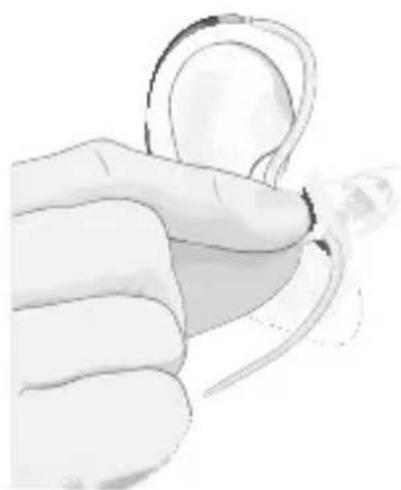
natural_image
Illustration of a hand holding an ear with a medical device attached (no text or symbols)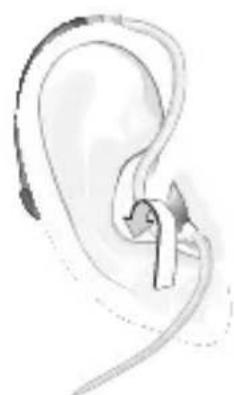
natural_image
Line drawing of a human ear with a medical device inserted (no text or symbols)Taking Off Your Hearing Instrument – Thin Tube
- To remove your hearing instrument, hold the Thin Tube and gently pull the Dome out of your ear canal
- Lift the hearing instrument case from behind your ear
- Open the battery compartment to turn off the device

Note!
Do not remove the instrument by pulling on the hearing instrument case. This might disconnect the device from the Thin Tube.
Should the Dome become separated from the Thin Tube and remain lodged in your ear canal after removal of the hearing instrument, do not attempt to remove the Dome yourself. Seek immediate care from your hearing care provider or physician.
Putting On Your Hearing Instrument – Earhook
- Start with the hearing instrument and Earmold for your right ear. Connect the Earmold to the hearing instrument by pushing the hearing instrument's Earhook into the tube on the Earmold.
- Once the two are connected, hold the Earmold with your thumb and first finger. Gently guide it into your ear canal.
- Gently pulling down on your ear lobe with your other hand may help. A slight twist may be needed to fit the Earmold in your ear.
- When the Earmold is in your ear, place the hearing instrument behind the top part of your ear. Do the same with the left hearing instrument and Earmold.
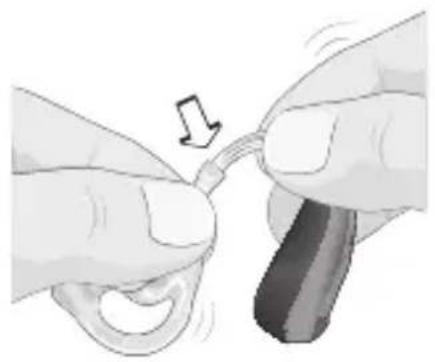
natural_image
Illustration of hands holding a tool with a curved handle and arrow indicating rotation (no text or symbols)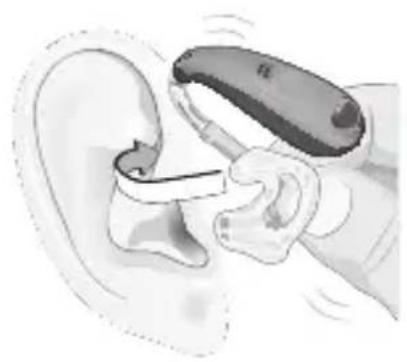
natural_image
Illustration of a hand holding a medical device with ear and ear components (no text or symbols)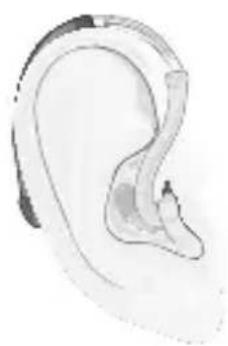
natural_image
Illustration of a human ear with a visible dental implant (no text or labels)Taking Off Your Hearing Instrument – Earhook
To take your hearing instrument off, hold the Earmold with your thumb and first finger. Gently pull it out of your ear canal.
A slight twist may be needed to remove it. Do not pull on the tube, as it may come out of the Earmold. Once the Earmold is out of your ear, remove the hearing instrument from behind your ear.

Note!
Although they look the same, hearing instruments are programmed to fit a specific ear (right or left). Make sure the correct hearing instrument is used with the correct Earmold. Refer to the right and left instrument markers on pages 18 and 20.
Changing the Programs
Your hearing instrument can be configured with multiple listening programs. Please see inside the front cover of this User Guide to find out which program(s) have been configured by your hearing care provider. You can change programs as follows:
Program Button
A short press (about 2 seconds) on the Program Button will cause the listening program to change. You will hear the same number of beeps as the program you are in each time you push the button. When you turn the hearing instrument off and then on, it will automatically return to your default listening program (program 1).
RC-P Remote Control or SoundGate
(Optional accessories)
The listening program can be changed with either of these devices. Please see pages 56 and 57 for instructions.
Program Button Mute
A longer press (about 5 seconds) on the Program Button will cause the hearing instrument to mute, no matter which program you are in. Press the button again to un-mute the device.
Bliss BTE Bliss miniBTE
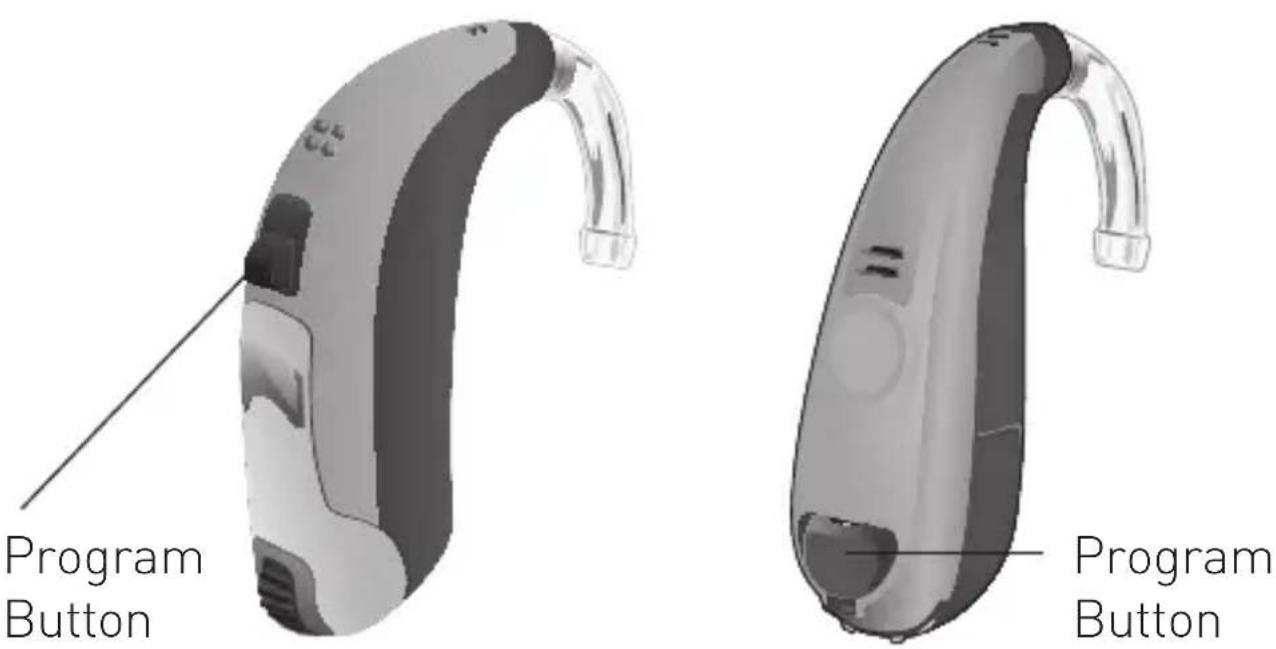

Note!
Inearing care provider can customize the behavior of the Program Button.
Please see inside the front cover to find out how your Program Button may have been configured.
Changing the Volume
Your hearing instruments are programmed to be at a comfortable volume level for your hearing loss. They are designed to automatically adjust to changes in the sound environment. You should only need to make small volume changes to get natural and comfortable sound.
If you have purchased an optional RC-P Remote Control or SoundGate accessory, you can use it to make small volume changes to get a natural and comfortable sound. Please see pages 56 and 57 for further instructions.
Note!
the default volume of your hearing instrument is too loud or soft, your hearing care provider may need to make changes to your listening program.

Note!
The hearing instruments automatically return to a pre-set loudness level when they are powered on, when the battery is low, or when the program is changed. If you find that you frequently need to turn the volume up or down, your hearing care provider may need to adjust your settings.
Bliss BTE only
Bliss BTE has a Volume Control that allows you to adjust the volume as needed. Rotate the Volume Control up to turn up the volume. If you need to lower the volume, slowly turn the Volume Control down. Your hearing instrument may play a series of beeps when you have reached the maximum or minimum volume. You may also hear soft clicks as you turn the Volume Control, indicating small changes in your instrument's volume settings.
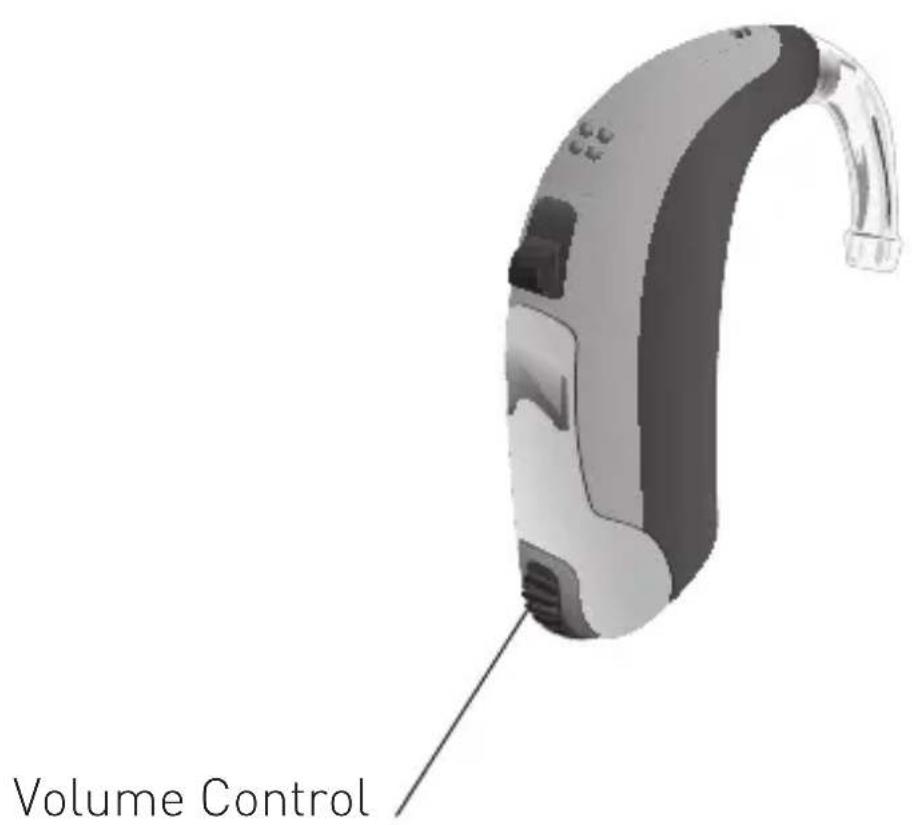
Volume Control
Using the Telephone
Your hearing instrument may be programmed with a dedicated Telephone Program. Your hearing care provider can configure your hearing instruments to allow answering the phone on both ears or on your preferred ear. Please see inside the front cover to find out if this was configured.
Auto Telephone
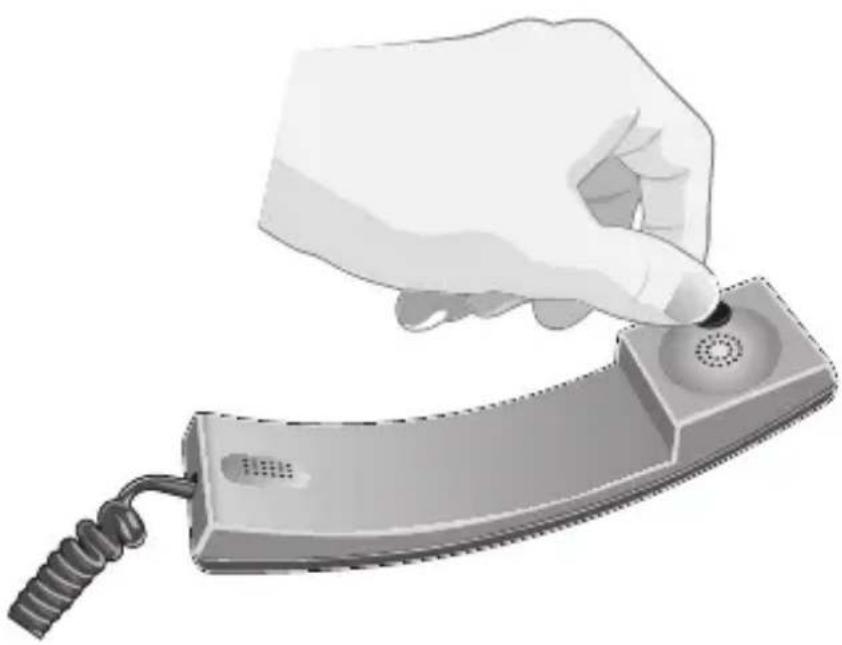
Additionally, your hearing instrument has an optional Auto Telephone feature. When the hearing instrument is close to a telephone receiver, the Auto Telephone will activate your Telephone Program. When you end your conversation, the hearing instrument will automatically return to the previous listening program.
If you have a preferred ear, the hearing instrument on the opposite side can be programmed to sound softer or mute. Ask your hearing care provider if this option has been selected for you.

Note!
The telephones may need a special magnet added to help engage the Auto Telephone feature. To mount the magnet onto your telephone, please follow the instructions included in the magnet's packaging or contact your hearing care provider.
natural_image
Illustration of a hand inserting a button into a vintage telephone handset (no text or symbols)Phone usage tips
- Hold the receiver close to the microphone opening of your hearing instrument. If this causes whistling, move the receiver away a small distance.
- Before purchasing a mobile phone, test it with your hearing instrument
- People with a greater degree of hearing loss may need a Volume Control on the telephone

Note!
Your hearing instrument has been configured without these options, select the program that is best for you when using the telephone. Then position the phone lightly against your ear as described above.
Magnet warnings
- Keep magnets out of reach of children and pets
- If a magnet is swallowed, see a doctor immediately
- Do not place the magnet in a shirt pocket and keep it 1 ft (30 cm) away from pacemakers and other active implants
- Use the magnet on the opposite side from active implantable devices
- Keep the magnet 1 ft (30 cm) away from credit cards or other magnetically sensitive items
Using the Telecoil
(Bliss BTE only)
The telecoil helps you hear better when using a telephone or in buildings where inductive loop systems are installed (places of worship, halls, theater, etc.).
When the telecoil is active, you hear directly through the telephone or inductive loop. To access the telecoil, go to the Telephone Program.
Please refer to the inside cover to see if this option has been configured for your device.
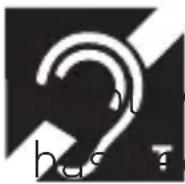
This symbol or a similar sign should be ved wherever a permanent loop en installed.

Note!
I telephones are compatible with hearing instruments.
Changing the Battery
When the battery power level is low, your hearing instrument will beep at regular intervals. You should be prepared to replace the battery. The time until the hearing instrument stops working depends on the battery type and manufacturer. Mercury-free batteries generally cause earlier warning beeps.
Change batteries regularly
When your battery needs to be changed, you will hear three beeps: a low tone, followed by a high tone and another low tone. The exact battery life you experience may vary, but you should expect approximately 200 hours of total hearing instrument use per battery.
Battery type
Stainless steel zinc-air batteries are recommended. Your hearing instrument uses a #13A battery.

Note!
force the battery door open or closed.
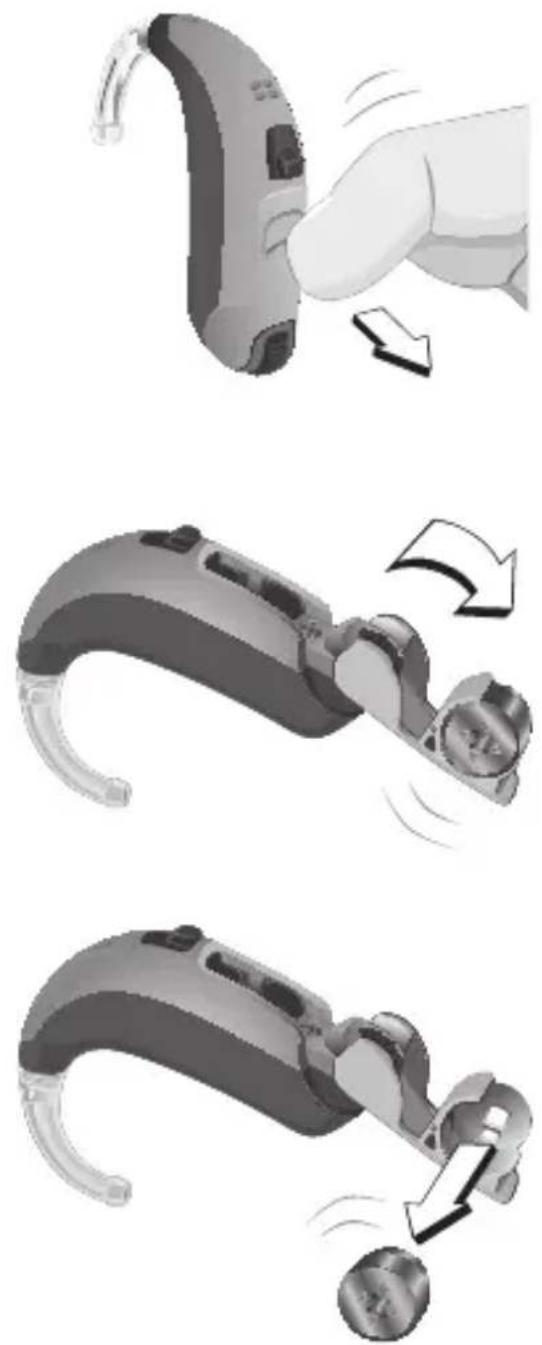
Remove the old battery from your Bliss BTE:
- Insert your fingernail into the battery door grip and pull on the battery door
- Open the battery door fully until the entire battery is visible
- Remove the battery by lifting the exposed edge of the battery out of the retaining ring
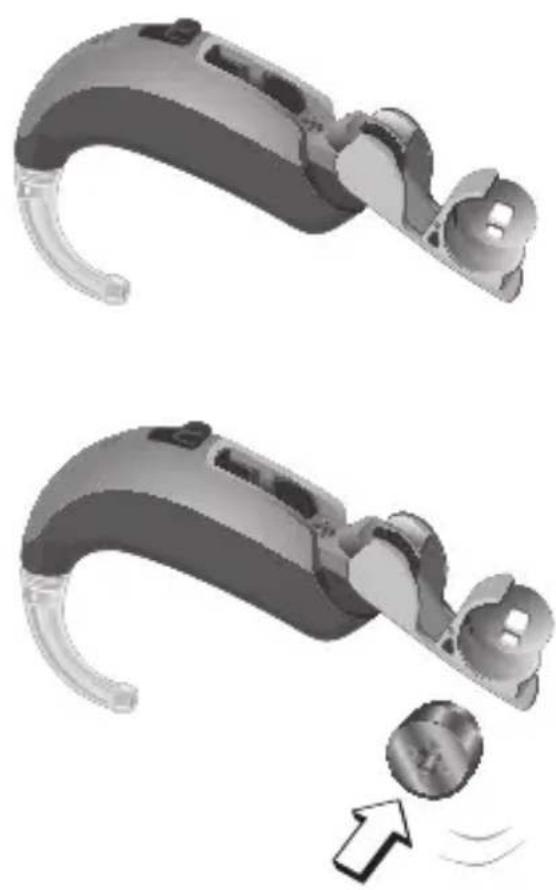
Insert a new battery into your Bliss BTE:
- Remove the colored tab from the battery before putting it in the hearing instrument
- Insert the battery so the “+” sign on the battery is flush with the opening of the battery door
- Close the battery door fully
- Cup your hand around the hearing instrument. A whistling or squealing sound means the battery is working.
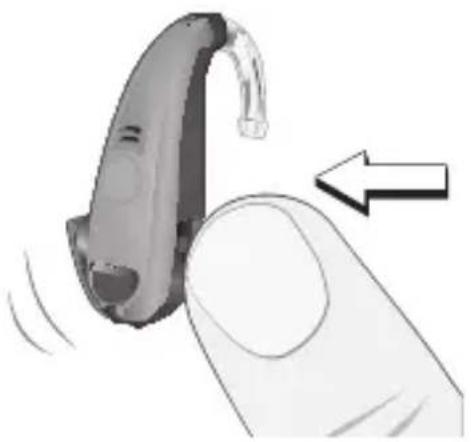
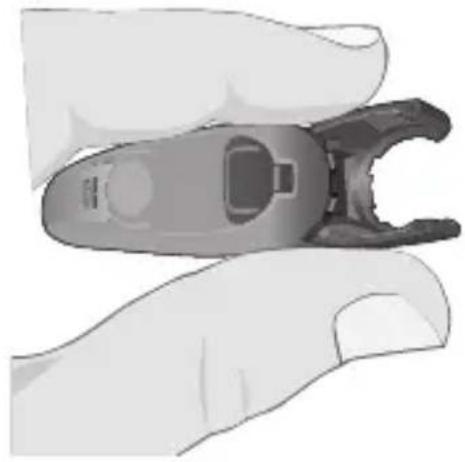
Remove the old battery from your Bliss miniBTE:
- Open the battery door by pushing either side of the compartment with your fingernail
- Rotate the compartment until the opening in the battery retaining ring points directly away from the body of the hearing instrument
- Remove the battery by lifting the exposed edge of the battery out of the retaining ring

Note!
the battery may spring out of the retaining ring.
Be careful not to lose it.
natural_image
Illustration of a hand holding a small electronic device with an arrow indicating motion (no text or symbols present)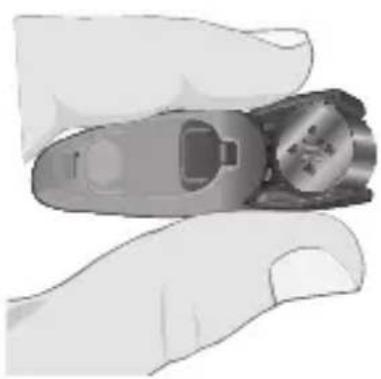
natural_image
Close-up of a hand holding a small metallic object (no visible text or symbols)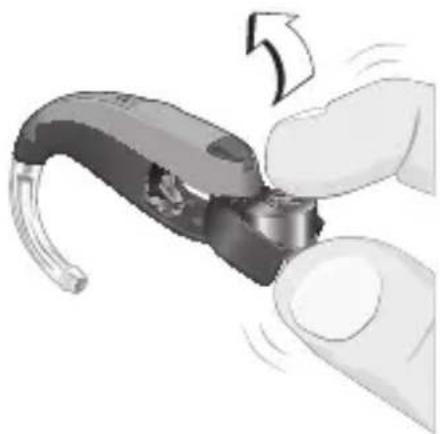
natural_image
Close-up of a hand holding a small electronic device with a curved handle, showing a press or adjustment action (no text or symbols visible)Insert a new battery into your Bliss miniBTE:
- Grasp the hearing instrument with your thumb and forefinger on either side of the open battery door to keep the compartment from moving
- Insert a new battery by pushing it securely into the opening of the retaining ring, keeping the "+" sign flush with the opening of the battery door
- Once the battery snaps firmly in the retaining ring, rotate the retaining ring back into the battery compartment
- Cup your hand around the hearing instrument. A whistling or squealing sound means the battery is working.
natural_image
Close-up of a hand holding a small electronic device (no visible text or symbols)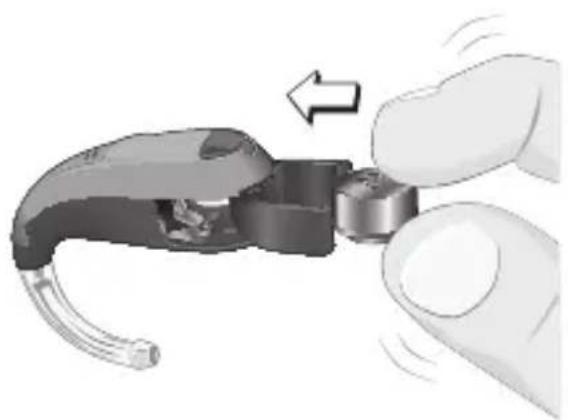
natural_image
Close-up of a hand holding a small mechanical component with an arrow indicating rotation (no text or symbols visible)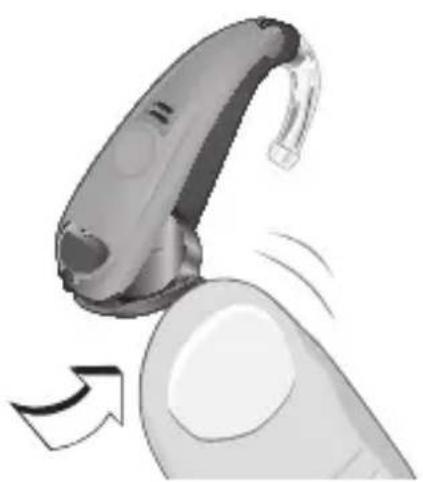
natural_image
Illustration of a hand holding an ear-shaped device with motion arrows indicating movement (no text or symbols)Important battery information
- Battery life will vary with conditions of use (for example, batteries will run down faster in noisy environments)
- Always keep spare batteries on hand
- A used battery should be replaced immediately
- If you are not going to use your hearing instruments for a few days, remove the batteries
- Any moisture found on a battery should be wiped off immediately with a soft cloth
- Always remove zinc-air batteries before drying your hearing instrument with a drying kit. Drying out zinc-air batteries shortens their lifetime.
- Used batteries should be returned to your battery supplier or hearing care provider for safe disposal
- Never dispose of batteries by burning them. They may explode and cause injury.
- Never dispose of batteries with household waste. They cause environmental pollution.
- Batteries can be harmful if swallowed. Keep batteries out of the reach of pets and small children. In case of ingestion, contact your physician immediately.
Audible Indicators
Event Tone description
| Start-up delay Configurable short, medium or long delay before amplification starts | |
| Power on A sustained beep when amplification starts | |
| Listening program change* | One to four single beeps; Number of beeps matches listening program position |
| Low battery Three warning beeps in a low-high-low pitch sequence | |
| Power down; Dying battery | A fast sequence of beeps descending in pitch |
| Audible indicators with BTE and/or optional SoundGate/RC-P | |
| Volume Control click* | Brief click to indicate volume is turning up or down |
| Volume Control limit* | Rapid double beep at both maximum and minimum levels |
| SoundGate incoming call* | Telephone ringing signal |
* Audible indicators can be heard in the opposite hearing instrument if the Binaural Volume & Program Change is activated in the fitting software. Refer to the Owner Information in the inside cover to see how your devices are configured.
Safety Lock
As an added safety feature, your battery door has been designed with a locking mechanism to deter children from accessing the battery.
Bliss BTE
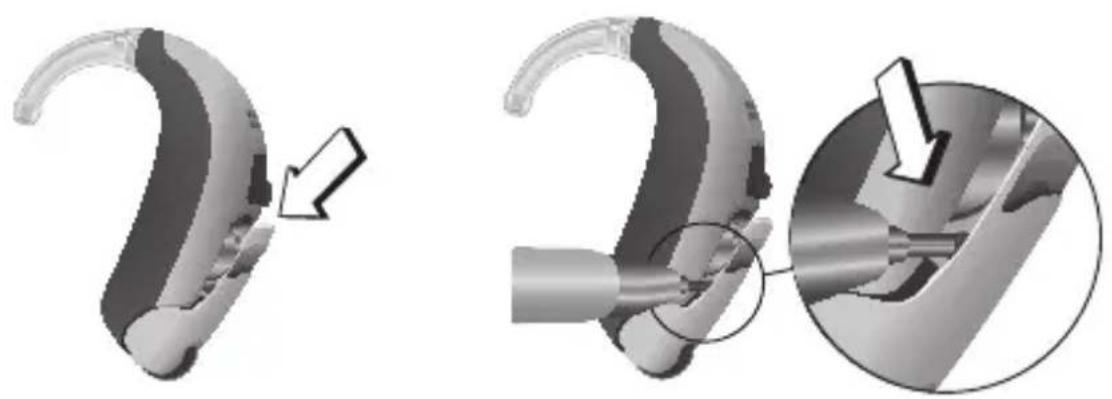
To lock the door, place your BTE on a flat surface with Earhook facing left. Partially open the battery door. Firmly press the locking bolt down with a thin, hard device such as a pair of tweezers. This will prevent the battery door from completely opening and exposing the battery.
natural_image
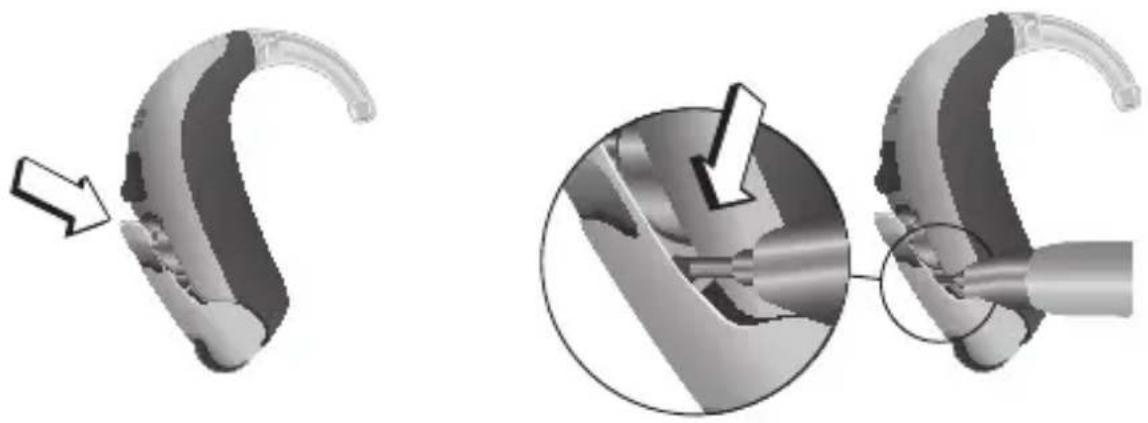
Mechanical assembly diagram showing a hook being inserted into a pipe, with no visible text or symbolsTo unlock, simply flip the hearing aid over with the Earhook facing right. Press down on the bolt, moving it back to the open position.
natural_image
Mechanical assembly diagram showing a curved pipe being inserted into a circular component (no text or symbols)Bliss miniBTE
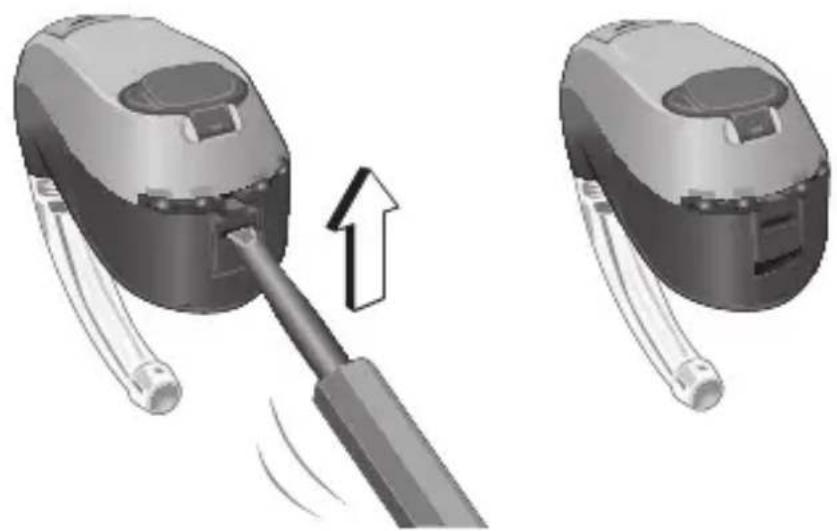
With the battery door fully closed, use a small screwdriver or similar tool to slide the lock up into the slot. This will prevent the battery door from opening until you slide it back down again.
natural_image
Two identical robotic devices with attached sensors, one being inserted and the other being inserted (no text or symbols visible)Data Logging and Learning
Data Logging
The data log automatically stores information about your use of your hearing instruments such as program changes, hours of wear, etc. This information can be used by your hearing care provider to adjust your hearing instruments. If you do not want this feature to be active, please ask your hearing care provider to turn it off.
Data Learning (Bliss 100)
If you have a Volume Control on your instrument, or have purchased a remote control or a SoundGate, your hearing care provider may have activated Data Learning. When Data Learning is operating, the hearing instrument keeps track of how often and how much you adjust the volume and “learns” your preferred setting. This new setting can be made permanent during your follow-up visit.
Direct Audio Input and FM
A Direct Audio Input (DAI) Adapter allows your hearing instrument to receive signals directly from external sources such as TV, personal stereos, etc. An FM Receiver allows your instrument to receive signals directly from an external wireless FM Transmitter.
Bliss BTE
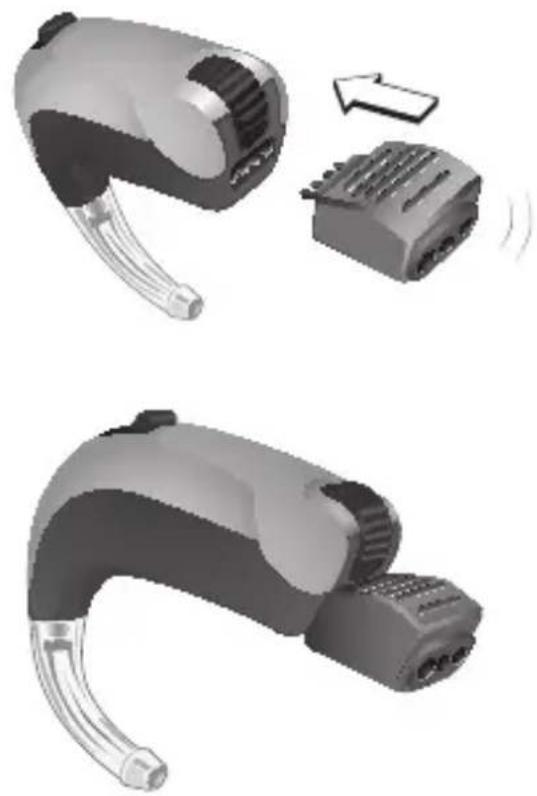
- The DAI pins are located at the bottom of the hearing instrument
- Insert the DAI boot into the bottom of the instrument as shown here
- Insert the DAI/Euro Plug or FM Receiver of the assistive listening device into the boot
Bliss miniBTE
Attaching the DAI Boot
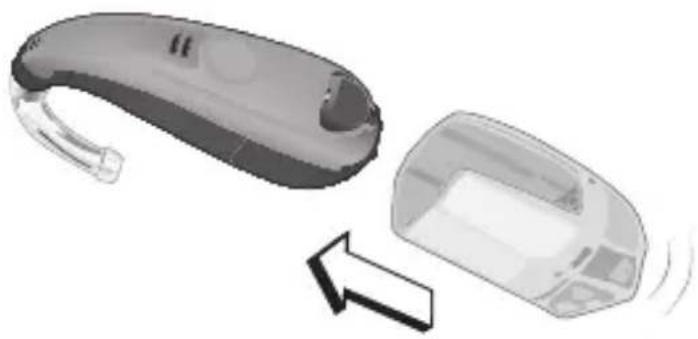
- Slip the DAI Boot over your miniBTE, as shown. When it is fully seated, you will feel it click into place.
- Insert the DAI/Euro Plug or FM Receiver of the assistive listening device into the DAI Boot
Removing the DAI Boot
- Disconnect the DAI/Euro Plug or FM Receiver of the assistive listening device from the DAI Boot
- Grasp the DAI Boot as shown. Pull the hearing instrument up and out of the boot with your other hand. A slight twisting motion will help free the DAI Boot from the miniBTE.
natural_image
Illustration of a remote control device with an arrow indicating speed (no text or symbols)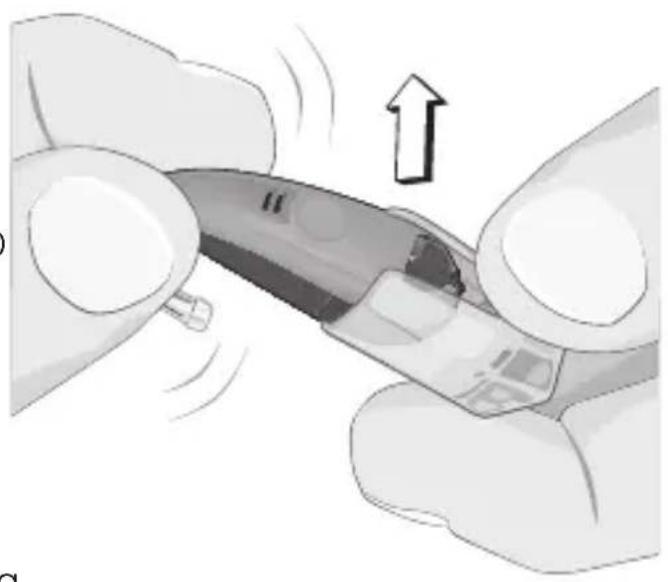
natural_image
Illustration of hands gripping a device with motion lines indicating movement (no text or symbols)Direct Audio Input/FM Program
Your hearing instrument has dedicated listening programs designed to work with a DAI Boot or FM Receiver. When either is attached, the hearing instrument will automatically switch into this dedicated set of programs. Refer to the chart below to see how the DAI/FM Programs are organized:
Program Beeps Function
| 1 1 Instrument microphone | |
| 2 2 DAI/FM + Mic* | |
| 3 3 DAI/FM only | |
*Starting program
Caring for Your Hearing Instruments
Healthy ears produce cerumen, a waxy substance that can clog your hearing instruments. Please follow these cleaning instructions to prevent wax build-up and ensure optimal performance.
Every night
- Check your hearing instruments for earwax and wipe them clean with a cloth or tissue
- Use the cleaning tool provided to remove wax that may have accumulated in the Dome, sound outlet or vent opening if you have a Custom Mold
- Open the battery door fully to allow air to circulate
- A dry-instrument pack is recommended to remove any moisture that may have accumulated in the hearing instrument
If your hearing instrument comes in contact with water
Should your hearing instrument come in contact with water and stop working, please follow these guidelines:
- Gently wipe off any water on the outside of the hearing instrument
- Open the battery door and remove the battery
- Gently wipe off any water in the battery door
- Let the hearing instrument dry with the battery door open for approximately 30 minutes
- Insert a new fresh battery (see pages 39 and 41) and close the battery door. Your hearing instrument should work normally again.

Note!
Your hearing instrument does not work properly, consult your hearing care provider.
If you have an Earmold
You should wash your Earmolds regularly. The hearing instrument itself must never be washed or allowed to get wet!
- Handle your instruments over a soft surface to avoid damage in case you drop them
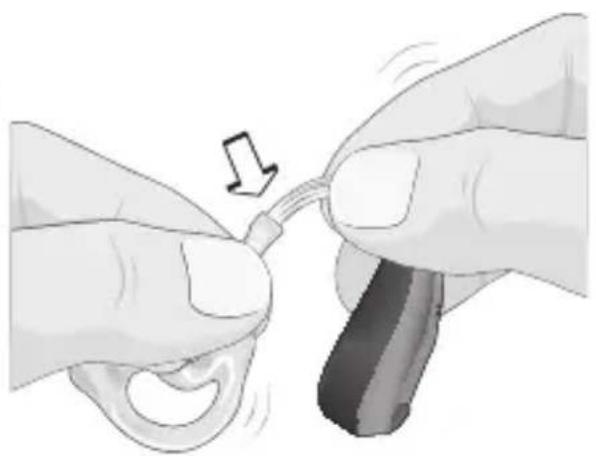
- Disconnect the Earmold from the hearing instrument by grasping the end of the Earhook firmly with one hand and grasping the tubing firmly with the other hand
- Pull the tubing away from the Earhook
- Gently clean the Earmold in warm soapy water
- Rinse the Earmold and allow it to dry completely
- Use an air puffer to remove any remaining moisture in the tubing
- When re-attaching the Earmold to the instrument, it is important to position it correctly
natural_image
Illustration of two hands tying a knot with a string, showing a hand holding the knot and a finger (no text or symbols present)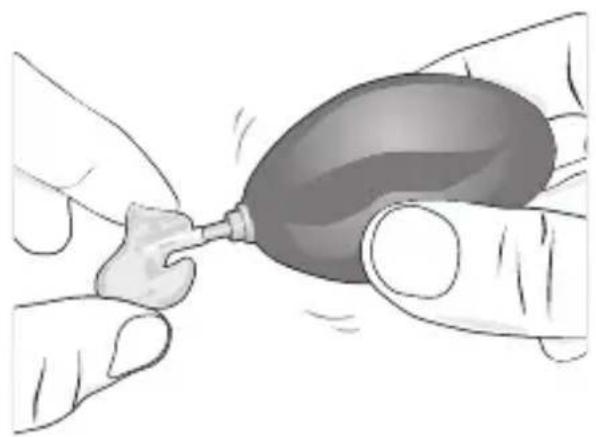
natural_image
Illustration of a hand holding a balloon with a small object inserted, no text or symbols presentCleaning the Thin Tube system
If you have the Thin Tube system, make sure that the Thin Tube and Dome are kept free of earwax at all times.
- Grasp the Thin Tube Adapter firmly and disconnect the Thin Tube from the instrument by pulling it off. Please see page 25 for further instructions.
- Use a soft dry cloth or tissue to clean the outside of the Thin Tube and Dome
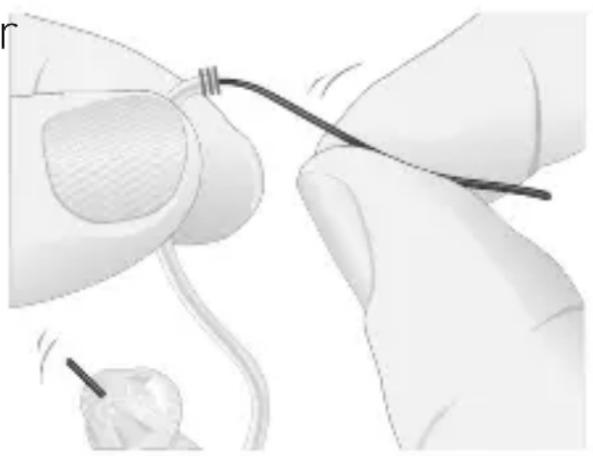
- To remove wax from the Thin Tube, insert the cleaning wire at the connector end. Push the wire all the way into the Thin Tube until it comes out through the Dome.
- Pull the cleaning wire out through the Dome and discard it
- Reattach the Thin Tube connector to the Thin Tube Adapter

Note!
Avoid blocking the Thin Tube, do not use water to clean it.
natural_image
Close-up of hands manipulating a thin wire with a medical device (no text or symbols visible)Exchanging the Dome
The Dome should be changed regularly. The frequency of Dome changes will depend on how fast earwax builds up on the Dome. Spare Domes can be obtained from your hearing care provider.
- Remove the old Dome by pulling it off the end of the Thin Tube
- With clean fingers, push a new Dome as far as possible onto the Thin Tube. When attached correctly, the Dome should touch the plastic ring around the Thin Tube.
Note!
Dome is not securely attached to the Thin Tube, it could fall off in your ear canal. If this happens, please see your medical provider.
Exchanging the Thin Tube system
If the Thin Tube becomes discolored, stiff or brittle, it should be replaced.
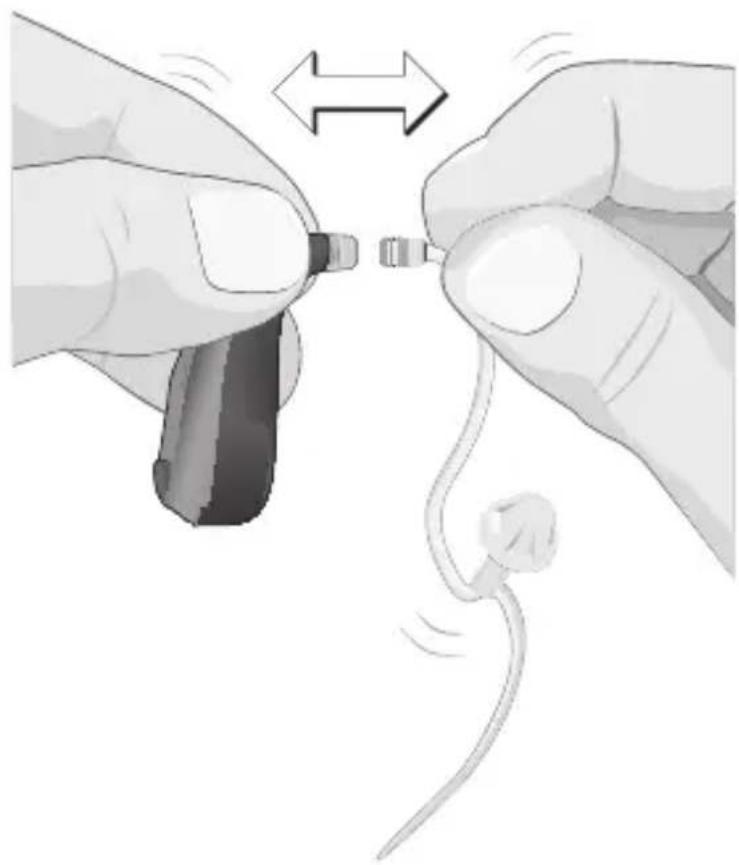
- Hold the instrument by the Thin Tube Adapter and grasp the Thin Tube close to the connector
- Pull firmly to remove the old Thin Tube
- Attach the new Thin Tube by pushing it firmly into the connector
natural_image
Illustration of hands connecting a small cable to a terminal connector, showing motion direction (no text or symbols)Operating Your Hearing Instrument with the RC-P Remote Control
Optional accessory
If you have purchased a remote control, you can use it to change listening programs, adjust the volume level up and down, or mute the hearing instruments.
For complete operating instructions, please read the separate RC-P Remote Control User Guide.
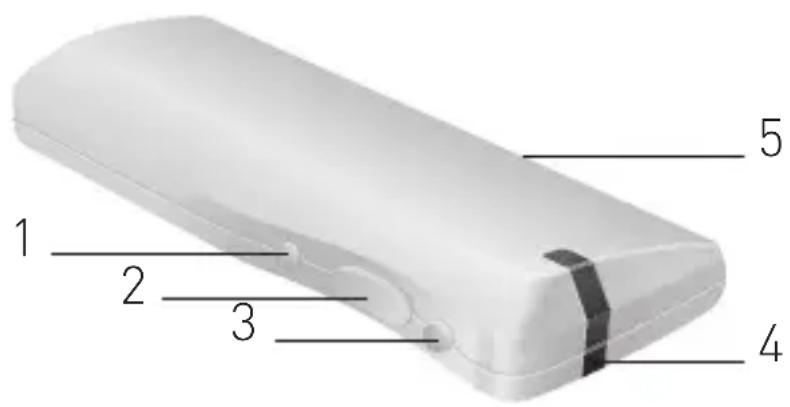
1 Program Button
2 Volume Control
3 Mute button
4 Status light
5 Key lock
Operating Your Hearing Instrument with the SoundGate Communication Device
Optional accessory
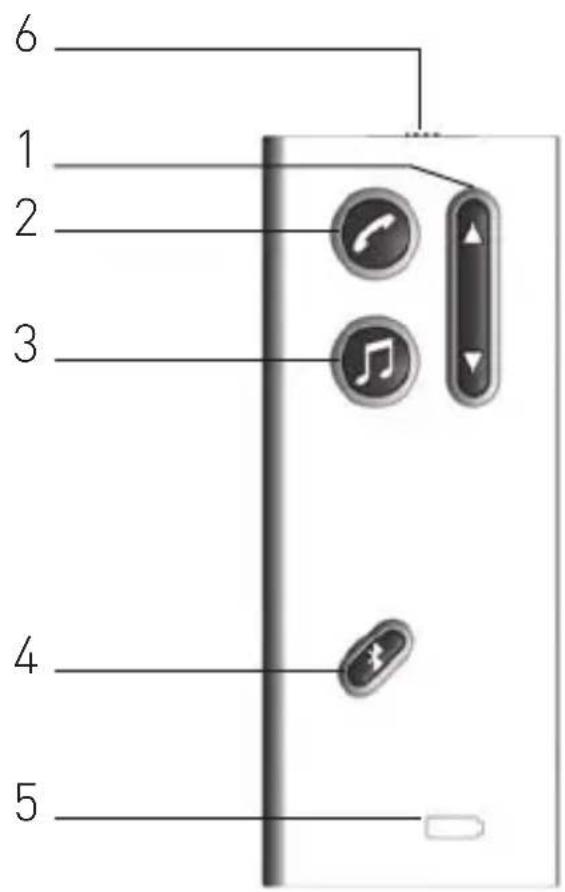
If you have purchased a SoundGate, you may use it to perform basic functions such as changing the listening programs, adjusting the volume level up and down, or muting the hearing instruments. In addition, SoundGate serves as a link between your hearing instruments and external sources such as music players, mobile phones, computers, etc. For complete operating instructions, please read the separate SoundGate User Guide.
1 Volume Control and program change
2 Phone
3 Music/Audio key (e.g. MP3)
4 Bluetooth ^® key
5 Battery indicator
6 Key lock
Environmental Protection
Your hearing instruments contain electronic components subject to the Directive 2002/96/EC on waste electrical and electronic equipment (WEEE).
Help to protect the environment by not disposing of your hearing instruments or batteries with your unsorted household waste. Please recycle your hearing instruments and batteries according to your local regulations or return them to your hearing care provider for disposal.

natural_image
Symbol of a waste bin with no text or numbers, crossed by two crossed lines and a black rectangular base (no text or symbols)Notes
Product Approval, Markings and Compliance
All Sonic hearing instruments comply with international standards concerning electromagnetic compatibility. Due to the limited space available on the hearing instruments, all relevant approval markings are found in this document.
Electromagnetic interference
Your hearing instrument has been thoroughly tested for electromagnetic interference. However, some products may emit electromagnetic energy causing unforeseen interference with hearing instruments. Examples include induction cooking appliances, shop alarm systems, mobile phones, fax machines, personal computers, X-rays, CT scans, etc.
Even though your hearing instruments are designed to comply with the most stringent international standards of electromagnetic compatibility, they may emit electromagnetic energy that can cause interference with other devices.
Your hearing instruments contain a radio transmitter using short range magnetic induction technology working at 3.84 MHz. The magnetic field strength of the transmitter is < -42 dBμA/m @ 10 m.
The electromagnetic emission from the radio system is well below international limits for human exposure. By comparison, the electromagnetic energy of the hearing instruments is lower than that generated by household items such as halogen lamps, computer monitors, dishwashers etc.
Protection against harmful ingress of water and particulate matter
The enclosures of the device fulfill the requirements of class IP57 according to EN 60529:1991/A1:2000.
Cell Phone and Hearing Instrument Compatibility
Some hearing instrument users have reported a buzzing sound in their devices when they are using cell phones, indicating that the cell phone and hearing instrument may not be compatible.
The compatibility of a particular hearing instrument and cell phone can be predicted by adding the rating for the hearing instrument immunity to the rating for the cell phone emissions (ANSI C63.19-2006 American National Standard Methods of Measurement of Compatibility between Wireless Communication Devices and Hearing Aids).
For example, the sum of a hearing instrument with a rating of 2 (M2/T2) and a telephone with a rating of 3 (M3/T3) would result in a combined rating of 5. According to the standard, any combined rating that equals at least 5 would provide “normal use”; a combined rating of 6 or greater would indicate “excellent performance.”
The immunity of your Bliss hearing instrument is at least M2 and M2/T2 for miniBTE and BTE respectively.
The equipment performance measurements, categories and system classifications are based upon the best information available but Sonic cannot guarantee that all users will be satisfied.

Note!
The performance of individual hearing instruments may vary with individual cell phones. Please try this hearing instrument with your cell phone or, if you are purchasing a new phone, be sure to try it with your hearing instrument prior to purchase. For additional guidance, please ask your cell phone provider for the booklet entitled “Hearing Aid Compatibility with Digital Wireless Cell Phones.”
Warranty and Repairs
Your hearing instruments have a limited warranty, covering defects in materials and workmanship.
This warranty covers the hearing instruments themselves, but not accessories such as batteries, tubing, Domes, Earmolds, etc.
This warranty is void if a defect is the result of misuse or mistreatment. The warranty is also void if the hearing instruments have been repaired by non-authorized service personnel.
Please review the warranty with your hearing care provider and make sure that your warranty card is completed correctly.

Note!
We are hearing care provider may charge a service fee for processing warranty repairs.
Accessories
Sonic offers a wide range of optional accessories that may be purchased to enhance your hearing system. Depending on hearing instrument type and local regulations, the following accessories are available:
- RC-P Remote Control
- SoundGate communication device (for wireless connection to mobile phones, music players, etc.)
- TV Adapter (for wireless connection to your television via the SoundGate)
- Phone Adapter (for wireless connection to your landline phone via the SoundGate)
For further information on accessories, please contact your hearing care provider.
Common Problems and Solutions
| Problem | Possible cause |
| Instrument whistles or squeals | Instrument not inserted correctly |
| Earwax accumulation in ear canal | |
| Instrument may be too loose | |
| No volume, level too soft or humming noise | Instrument may not be turned ON |
| Battery may be dead or inserted wrong way | |
| Volume level too soft | |
| Instrument may be in telecoil position | |
| Earwax accumulation in ear canal | |
| Battery contacts may be dirty or corroded | |
| Sound outlet may be blocked or corroded | |
| Microphone opening may be blocked | |
| Your hearing loss may have increased | |
| insert instrument | |
| sult your hearing care provider or physician | |
| our hearing care provider | |
| ck that the battery door is closed completely | |
| Insert a fresh battery | |
| me level with the Volume Control on the instrument, or with the RC-P or SoundGate (if available) | |
| Check to make sure you are in the intended program | |
| Consult your hearing care provider or physician | |
| Open and close the battery door several times or clean the battery contacts carefully with a dry Q-tip | |
| Check the sound outlet and change the filter if you can see that it is clogged | |
| Consult your hearing care provider, do not try to clean this yourself | |
| Consult your hearing care provider |
| Problem | Possible cause |
| Whirring noise, fading, weak or motor-boating sounds | Battery contacts may be dirty or corroded |
| Moisture in hearing instrument | |
| Low battery | |
| Instrument switches from ON to OFF periodically | Low battery |
Open and close the battery door several times or clean the battery contacts with a dry Q-tip
rearing instrument in dry-instrument pack.
Remove battery first. Consult your hearing care provider.
Information for the Hearing Care Provider
A hearing care provider should advise a prospective hearing instrument user to consult with a licensed physician (preferably an ear specialist) promptly, before dispensing a hearing instrument, if the hearing care provider determines through inquiry, actual observation or review of any other available information concerning the prospective user, that the prospective user has any of the following conditions:
- Visible congenital or traumatic deformity of the external or middle ear
- History of active drainage from the ear within the previous 90 days
- History of sudden or rapidly progressive hearing loss within the previous 90 days
- Acute or chronic dizziness or vertigo
- Unilateral hearing loss of a sudden or recent onset within the previous 90 days
- Audiometric air-bone gap equal to or greater than 15 decibels at 500 hertz (Hz), 1000 Hz, and 2000 Hz
- Visible evidence of significant cerumen accumulation or a foreign body in the ear canal
- Pain or discomfort in the ear
Warning to hearing care provider and patient
Special care should be exercised in selecting and fitting a hearing instrument whose maximum sound pressure level exceeds 132 decibels due to the fact that there may be risk of impairing the remaining hearing of the hearing instrument user.
Children with hearing loss
A child with a hearing loss should be directed to a physician for medical evaluation and to other professionals for evaluation and rehabilitation since hearing loss may cause problems with language development and the educational and social growth of a child.
Compliance with Requirements for Europe
This device is in conformance with the requirements of the Directive 93/42/EEC of the Council of the European Communities concerning medical devices, MDD. This is certified by applying this marking.
CE 0543
This device also complies with the essential requirements of the Directive 1999/5/EC of the European Parliament on radio equipment and telecommunications terminal equipment, R&TTE. It operates as an inductive application in a harmonized frequency band according to the Commission Decision 2008/432/EC and may be used in all member states of the EU and EFTA. This is certified by applying this marking.
CE 0682
Declarations of conformity are available at:
Sonic Innovations, Inc.
2501 Cottontail Lane
Somerset, NJ 08873
Compliance with Radio Communications Requirements for the USA and Canada
Sonic Innovations, Inc.
Bliss hearing instrument models BL100 BTE; BL80
BTE; BL100 MN; BL80 MN

BTE
miniBTE
ZTOBTE01 ZTOMBTE1
9799A-BTE01 9799A-MBTE1
This device complies with part 15 of the FCC Rules and RSS-210 of Industry Canada. Operation is subject to the following two conditions:
(1) This device may not cause harmful interference, and
(2) This device must accept any interference received, including interference that may cause undesired operation.
This Class B digital apparatus complies with Canadian ICES-003.

Note!
The equipment has been tested and found to comply with the limits for a Class B digital device, pursuant to part 15 of the FCC Rules.
These limits are designed to provide reasonable protection against harmful interference in a residential installation.
This equipment generates, uses, and can radiate radio frequency energy and, if not installed and used in accordance with the instructions, may cause harmful interference to radio communications. However, there is no guarantee that interference will not occur in a particular installation.
If this equipment does cause harmful interference to radio or television reception, which can be determined by turning the equipment off and on, the user is encouraged to try to correct the interference by one or more of the following measures:
- Reorient or relocate the receiving antenna
- Increase the separation between the equipment and receiver
- Connect the equipment into an outlet on a circuit different from that to which the receiver is connected
- Consult the dealer or an experienced radio/TV technician for help

Note!
Changes or modifications not expressly approved by Sonic could void the user's authority to operate the equipment
Information and Explanation of Symbols
 | The CE conformity marking indicates conformance to all applicable European Directives |
 | This symbol indicates that the products described in these instructions for use adhere to the requirements for an applied part of Type B of EN 60601-1. The surface of the hearing instrument is specified as applied part of Type B. |
 | This symbol indicates that it is important for the user to read and take into account the relevant information in these instructions for use |
 | This symbol indicates that class of protections against harmful ingress of water and particulate matter according to EN 60529. IP5X indicates dust protection. IPX7 indicates the protection against the effects of temporary immersion in water. |
 | This sign indicates important safety information that must be observed to minimize risks or to avoid hazardous situations |
 | Important information for handling and product safety |
 | The crossed-out wheeled bin indicates that the European Directive on waste of electronic equipment applies |
| Operating conditions | The product is designed such that it functions without problem or restrictions if used as intended, unless otherwise noted in these instructions for use |
| Transport and storage conditions | During transport or storage, the temperature should not exceed the limit value of -13°/140° Fahrenheit (-25°/60° Celsius) |
Service
If none of the actions listed in the previous pages correct a problem you may have with your hearing instrument, contact your authorized Sonic service representative. Do not attempt to service your hearing instruments yourself or your warranty may be voided.
Place stamp with dispenser name and address here:

World Headquarters
Sonic Innovations, Inc.
2501 Cottontail Lane
Somerset, NJ O8873 USA
+1 888 423 7834
Australia
Sonic Australia
1/10 Dorsey Street
Milton, QLD 4064, Australia
Tel: +61 7 3368 4044
Free call (Australia only)
1800 639 263
EC REP
International
Sonic AG
Morgenstrasse 131B
3018 Bern, Switzerland
+41 31 560 21 21
Canada
Sonic Innovations Canada Ltd.
2885-B le Corbusier Blvd
Laval, Québec H7L 4J5
+1 800 667 7664
IP57
06.13 | 135506 | UK
www.sonici.com

0543 0682


SONIC
Everyday Sounds Better