
RF160 - Refrigerator Khind - Free user manual and instructions
Find the device manual for free RF160 Khind in PDF.


| Product Type | Refrigerator |
| Brand | Khind |
| Model | RF160 |
| Capacity | 160 liters |
| Dimensions (H x W x D) | 85 x 55 x 55 cm |
| Weight | 35 kg |
| Power Supply | 220-240 V, 50 Hz |
| Power Consumption | 100 W |
| Energy Consumption | 200 kWh/year |
| Temperature Range | 0°C to 10°C |
| Defrost Type | Manual |
| Refrigerant | R600a |
| Noise Level | 40 dB |
| Number of Shelves | 3 |
| Door Reversibility | Yes |
| Climate Class | N/ST |
| Interior Light | Yes |
| Adjustable Thermostat | Yes |
| Egg Tray | Yes |
| Bottle Rack | Yes |
| Maintenance | Clean interior with mild detergent; defrost when ice layer exceeds 5 mm |
Frequently Asked Questions - RF160 Khind
User questions about RF160 Khind
0 question about this device. Answer the ones you know or ask your own.
Ask a new question about this device
Download the instructions for your Refrigerator in PDF format for free! Find your manual RF160 - Khind and take your electronic device back in hand. On this page are published all the documents necessary for the use of your device. RF160 by Khind.
USER MANUAL RF160 Khind
natural_image
Abstract grayscale illustration of Earth and oceans with connecting lines, no text or symbols present••• Refrigerator / 冰箱 / Peti Ais
Instruction Manual / 说明指示书/Buku Panduan
Please read this manual carefully before operating this product. Keep this manual handy for further reference.
This manual is also available online.
Safety Precaution Information
Attentions
Before using this product, please read through the instruction manual, and preserve the booklet for the later reference.
Safety & warning information
- Always operate the appliance from a power source of the same voltage, frequency and rating as indicated on the appliance's rating marking.
- This appliance is intended for household use only. Do not use outdoors. Do not use the appliance for any other purposes other than its intended use.
- This appliance is not intended for use by persons (including children) with reduced physical, sensory or mental capabilities, or lack of experience and knowledge, unless they have been given supervision or instruction concerning use of the appliance by a person responsible for their safety.
Children should be supervised to ensure that they do not play with the appliance. - WARNING! Keep ventilation openings, in the appliance enclosure or in the built-in structure, clear of obstruction.
- WARNING! Do not use mechanical devices or other means to accelerate the defrosting process, other than those recommended by the manufacturer.
- WARNING! Do not damaged the refrigerant circuit.
- WARNING! Do not use other electrical appliances (such as ice cream makers) inside of food storage compartment of the appliances, unless they are of the type recommended by the manufacturer.
- WARNING! Any electrical components (plug, power, compressor and etc.) must be replaced by a certified service agent or qualified service personnel.
- WARNING! If the supply cord is damaged, it must be replaced by the manufacturer, its service agent or similarly qualified persons in order to avoid a hazard.
- WARNING! When positioning the appliance, ensure the supply cord is not trapped or damaged.
- WARNING! Do not locate multiple portable socket outlet or portable power supplies at the rear of the appliance.
- WARNING! Risk of fire/ flammable materials
- Do not store explosive substances such as aerosol cans with a flammable propellant in this appliance.
- Do not store bottled or canned drinks (especially carbonated drinks) in the freezer compartment.
- The refrigerant isobutane (R600a) is contained within the refrigerant circuit of the appliance, a natural gas with a high level of environmental compatibility, which is nevertheless flammable.
- It is dangerous to alter the specifications or modify this product in any way. Any damage to the cord may cause a short circuit, fire and or electric shock.
- This appliance should be placed in a cool dry place where there is no vicinity of water splashing or high humidity. This appliance should not be used in the immediate vicinity of water, such as bathtub, washbowls, swimming pools etc.
- Always switch off and unplug the plug from outlet when not in use and before cleaning.
- When the appliance is operating, the condenser and compressor will be hot.
- Do not remove nor touch items from the freezer compartment if your hands are damp/wet, as this could cause skin abrasions or frost/frozen burns.
- This appliance will create frost in the freezer compartment if the environment has high humidity or the appliance door is opened frequently.
Installation
- Unpack the appliance and check if there are damages on it. Do not connect the appliance if it is damaged. Report possible damages immediately to the place you bought it. In that case retain packing.
- This appliance must be grounded and the ground wire should not be connected to any heating pipe and gas pipe.
- It is advisable to wait at least 4 hours before connecting the appliance to allow the oil to flow back in the compressor.
- During transportation and installation of the appliance, be certain that none of the components of the refrigerant circuit become damaged.
Safety Precaution Information
- Avoid open flames and sources of ignition. The appliance must not be located to radiators or cookers.
- Thoroughly ventilate the room in which the appliance is situated. Adequate air circulation should be around the appliance.
- Never put the product against the wall or other products to avoid touching or catching warm parts (compressor, condenser) to prevent possible burn. There should be at least 10 cm of free space from the back side, left/right sides, and the upper side of the product. Do not put things on top of the product. Make sure that the mains plug is accessible after installation of the appliance.
Service
Any electrical work required to do the servicing of the appliance should be carried out by a qualified electrician or competent person. This product must be serviced by an authorized service centre and only genuine spare parts must be used.
Disposal
If you are discarding the appliance, pull the plug out of the socket, cut the connection cable (as close to the appliance as you can) and remove the door to prevent playing children to suffer electric shock or to close themselves into it.
This symbol on the product or on its packaging indicates that this product may not be treated as household waste. Instead, it should be taken to the appropriate collection point for the recycling of electrical and electronic equipment. By ensuring this product is disposed of correctly, you will help prevent potential negative consequences for the environment and human health, which could otherwise be caused by inappropriate waste handling of this product. For more detailed information about recycling of this product, please contact your local council, your household waste disposal service or the shop where you purchased the product.
Cleaning & Maintenance
For hygienic reasons the appliance interior, including interior accessories, should be cleaned regularly.
1. Always switch off the appliance and disconnect the mains plug from the mains socket before maintenance or cleaning the appliance.
2. Wrap the food and keep them in cool place.
3. Do not use chemical, steel, wooden or abrasive cleaners to clean the appliance.
4. Do not clean the appliance with metal objects.
5. Do not use sharp objects to remove frost or ice from the appliance. Use a plastic scraper.
6. Ethereal oils and organic solvents can attack plastic parts, e.g., lemon juice or the juice from orange peel, butyric acid, cleanser that contain acetic acid. Do not allow such substance to come into contact the appliance parts.
7. Never clean the appliance with a steam cleaner. Moisture could accumulate in electrical components, danger of electrical shock! hot vapours can lead to the damage of plastic parts.
8. Clean the appliance and the interior accessories with a cloth and lukewarm water.
9. Use warm water to clean the oil and stains on the gasket in order to keep its elasticity.
10. After cleaning, wipe the appliance until it is completely dry. The appliance must be dry before it is placed back into service.
11. Regularly examine the drain in the refrigerator for defrosted water. If the drain is blocked, water will collect in the bottom of the appliance.
Parts Identifications
- Evaporator Door
- Drain Pan
- Tempered Glass Shelves
- Crisper Cover
- Crisper
- Defrost Controller
- Lamp Cover
- Door Gasket
- Side Backs
- Level Feet

* Pictures are for illustration purpose only.
Specifications
| Model | RF160 |
| Voltage | 220-240V~50Hz |
| Current | 0.5A |
| Total Input Power | 80W |
| Refrigerant | R600a(44g) |
| Compressor Type & Number | Hormatic/1 |
| Condenser Type | Hidden |
| Temperature Control | Mechanical |
| Net Weight | 32kg |
| Gross Weight | 35kg |
| Net Volume | 150L |
| Gross Volume | 158L |
| Product Dimension (LxWxH)mm | 520 × 520 × 1140 |
| Box Dimension (LxWxH)mm | 560 × 540 × 1190 |
* Specifications are subject to change without prior notice.
How to Use
Installation
- This appliance is heavy. Care should be taken when moving.
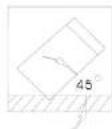
- When you transport the appliance, the angle between the compartment body and the ground should not be less than 45°.
WARNING: Never put the appliance upside down. - Once the appliance has landed properly on a flat and stable surface, remove all the packing material including any plastic packaging material in the appliance.
-
The back of the appliance should be close to a wall but leaving the required distance for ventilation.
-
Wash the inside of the appliance with lukewarm water with a little bicarbonate of soda added (5ml to 0.5 liter of water). Do not use soap, detergent or any abrasive cleaner to wash. Dry the appliance thoroughly after cleaning.
-
Open the fridge door for ventilation of internal compartments. Idle for 4 hours before connecting the electrical mains to ensure the refrigerant in the compressor has settled well.
-
Connect the electrical mains and switch on the power for 4 hours initially before adding any goods. Make sure the ground is solid and will not vibrate when the appliance is operating.
-
If these temperatures are exceeded i.e., colder or warmer, the appliance will not operate correctly. Should the ambient temperatures be exceeded for long periods, the temperature in the freezer section will rise above -18°C and food spoilage may occur.
-
This appliance has to manually defrost and frosting will occur as normal. It is advisable to manually defrost the appliance when the frosting is at 5mm thick.
Operating
- The thermostat control situated in the appliance regulates the temperature. Position "0" - OFF
Position "1-5"-1 is the warmest setting and 5 is coldest setting.
NOTE: Do not leave the appliance to run at position "5" for prolonged period as this will damage the compressor and the food inside the freezer. - Regulate the thermostat to '3' to check on the operation before switching to higher cooling level.
NOTE: The optimum cooling level is position "3" or "4" (to avoid over cooling and damaged to the compressor).
-
Check the temperature after 4 hours. If the cooling has reached to acceptable level, you may start using the appliance.
-
The temperature will be affected by:
-room temperature
how often the door is opened
how much food is stored.
-
In determining the correct temperature control setting, all the above factors have to be considered and some experimentation may be required.
-
Always store the hot food after it is completely cold. Never store hot items into the appliance.
-
Always pack the food completely before putting into the appliance to avoid taste mixing and frosting together.
-
If there is an electricity cut-off, please wait 10 minutes before operating the appliance again to avoid to the compressor.

How to Use
Defrosting
- Getting the air into the appliance may from a layer of frost inside. It will weaken the refrigeration when the frost is thick. When it is more than 5mm thick, you should defrost the appliance.
- Wrap the food and keep them in a cool place.
- Press the defrost button for an immediate cut off the cooling system. Water from the melting ice will be contained in the drain pan. When the defrosting process has completed, the cooling system will automatically restart.
- The water from defrosting process will flow into the drain pan at the rear of the appliance and will automatically evaporate overtime.
- Speed up the defrosting process by putting bowls of hot (not boiling) water in the appliance.
- The appliance should be defrosted once every one month depending on the usage.
- If the appliance door was opened frequently or using the appliance in high humidity area, we advise the user to defrost once every two weeks.
- The appliance should not be left unused for a long period. To stop using appliance, disconnect the main power. Clean the interior and dry it completely. Open the door for 2-3 days to ensure it is dry completely.
Energy Saving Tips
- Do not place warm food into the appliance. Allow warm food to cool down first.
- Do not install the appliancenear cookers, radiators, or other sources of warmth.
- High ambient temperature will cause the compressor to operate more frequent
- Make sure the side plates and back plates are with certain distance from the wall. It is strongly recommended that the back of the appliance is at least 10cm away from the wall.
- When the compressor is operating please do not open the door too often or leave the door open any longer than necessary.
- Do not set the temperature to any colder than necessary.
- Store the food logically, do not try overload or exceed the loading limit.
Replacement of Interior Lamp
Warning: Before carrying out the replacement, make sure the plug is switched off and unplugged from the electrical mains.

1. Remove the lamp cover.

2. Wearing a protective glove and remove the lamp by turning it counter clockwise.
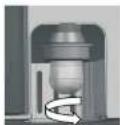
3. Replace with a new bulb by turning it clockwise
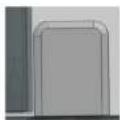
4. Reassembly and fixing the lamp cover
Troubleshooting
| Failure | Failure Reason Possible Solution | |
| Appliance does not cool | The plug is not plugged. | Plug in and turn on the power. |
| Thermostat control is set to 0. | Set the thermostat control to 3. | |
| The fuse on the plug has blown. | Change the fuse. | |
| The appliance is too warm | The thermostat is set to minimum. | Check the thermostat and regulate to normal position. |
| The door has not closed properly. | Make sure the door is closed properly. | |
| The door has opened too frequently. | Take all necessary food at once. Do not open too frequently. | |
| Loud noise | The appliance is inclining or the surface is not flat. | Make sure the appliance is positioned on a flat surface. |
| The wheel does not touch the floor well. | Adjust the wheel screw. | |
| The compressor does not stop | The food is warm or too much food stored. | Stored the food after cooling or reduce the quantity. |
| Door is opening too regular. | Reduce the frequency to open the door. | |
| Door has not closed properly. | Make sure the door is closed properly. | |
| Directly under sunlight or too close to heat resources. | Do not install the appliance under direct sunlight. | |
| The air ventilation is not good. | Keep certain space for ventilation. | |
△安全注意事项
注意事项
- 图片仅供参考。
规格


Brand : Khind
Model : RF160
Category : Refrigerator