
XL-UH1H - CD Player SHARP - Free user manual and instructions
Find the device manual for free XL-UH1H SHARP in PDF.


| Product Type | Micro Component System (CD Player, Tuner, USB, Audio In) |
| Brand | Sharp |
| Model | XL-UH1H |
| Main Unit Dimensions (W x H x D) | 190 x 115.7 x 230.4 mm (7-1/2 x 4-9/16 x 9-1/16 inches) |
| Main Unit Weight | 2.4 kg (5.31 lbs) |
| Speaker Dimensions (W x H x D) | 111 x 194 x 180 mm (4-3/8 x 7-5/8 x 7-1/16 inches) each |
| Speaker Weight | 1.3 kg (2.8 lbs) each |
| Power Supply | AC 220-240 V ~ 50/60 Hz |
| Power Consumption (On) | 21 W |
| Power Consumption (Standby) | 0.4 W |
| Amplifier Output Power | MPO: 18 W (9 W + 9 W) 10% T.H.D.; RMS: 10 W (5 W + 5 W) 10% T.H.D. |
| Speaker Impedance | 4 ohms |
| CD Player Type | Single disc, multi-play compact disc player (CD, CD-R/RW, MP3, WMA) |
| USB Playback | MP3/WMA (non-DRM), FAT 16/32, up to 999 files, 99 folders |
| Radio Bands | FM 87.5 - 108 MHz with RDS |
| Preset Stations | 40 (FM) |
| Equalizer Modes | Flat, Rock, Classic, Pops, Vocal, Jazz |
| Audio Input | AUDIO IN (3.5 mm) for portable devices |
| Headphone Output | 3.5 mm, impedance 16-50 ohms (recommended 32 ohms) |
| Remote Control Battery | CR 2025 coin lithium battery |
| Laser Class | Class 1 |
| Maintenance | Clean cabinet with soft cloth and diluted soap; clean CD lens with dry cloth |
| Safety Features | Auto power-off after 15 min inactivity; sleep timer; muting |
Frequently Asked Questions - XL-UH1H SHARP
User questions about XL-UH1H SHARP
0 question about this device. Answer the ones you know or ask your own.
Ask a new question about this device
Download the instructions for your CD Player in PDF format for free! Find your manual XL-UH1H - SHARP and take your electronic device back in hand. On this page are published all the documents necessary for the use of your device. XL-UH1H by SHARP.
USER MANUAL XL-UH1H SHARP
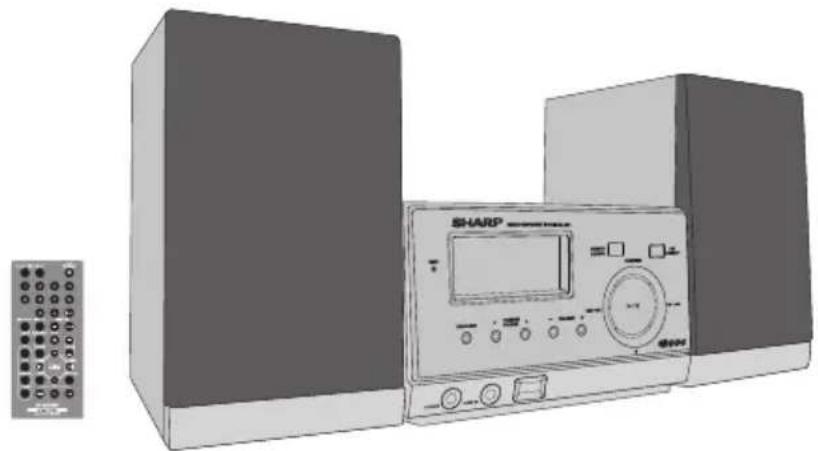
XL-UH1H Micro Component System consisting of XL-UH1H (main unit) and CP-UH1H (speaker system).
natural_image
Illustration of a Sharp audio workstation with control panel and speaker unit (no text or symbols visible)




Accessory
Please confirm that only the following accessory is included.

Remote control x 1
Special note
Supply of this product does not convey a license nor imply any right to distribute content created with this product in revenue-generating broadcast systems (terrestrial, satellite, cable and/or other distribution channels), revenue generating streaming applications (via Internet, intranets and/or other networks), other revenue-generating content distribution systems (pay-audio or audio-on-demand applications and the like) or on revenue-generating physical media (compact discs, digital versatile discs, semiconductor chips, hard drives, memory cards and the like). An independent license for such use is required. For details, please visit http://mp3licensing.com
MPEG Layer-3 audio coding technology licensed from Fraunhofer IIS and Thomson.
Special notes
WARNINGS:
- When the ON/STAND-BY button is set at STAND-BY position, mains voltage is still present inside the unit. When the ON/STAND-BY button is set at STAND-BY position, the unit may be brought into operation by remote control.
- This unit contains no user serviceable parts. Never remove covers unless qualified to do so. This unit contains dangerous voltages, always remove mains plug from the socket before any service operation and when not in use for a long period.
- To prevent fire or shock hazard, do not expose this appliance to dripping or splashing. No objects filled with liquids, such as vases, shall be placed on the apparatus.
- Do not turn the volume on to full at switch on and listen to music at moderate levels. Excessive sound pressure from earphones and headphones can cause hearing loss.
- The voltage used must be the same as that specified on this unit. Using this product with a higher voltage other than that which is specified is dangerous and may result in a fire or other type of accident causing damage. SHARP will not be held responsible for any damage resulting from use of this unit with a voltage other than that which is specified.
CAUTION:
● This product is classified as a CLASS 1 LASER product.
● This product contains a low power laser device. To ensure continued safety, do not remove any cover or attempt to gain access to the inside of the product. Refer all servicing to qualified personnel.
Note for users in Australia:
Copyright may exist in material you wish to record. Copying or broadcasting such material without permission of the relevant licensees or owners of the copyright is prohibited by law. SHARP is not in a position to authorise the copying or broadcasting of copyright materials and nothing in this OPERATION MANUAL should be implied as giving that authority.
For other countries:
Audio-visual material may consist of copyrighted works which must not be recorded without the authority of the owner of the copyright. Please refer to the relevant laws in your country.
Volume control
The sound level at a given volume setting depends on speaker efficiency, location and various other factors. It is advisable to avoid exposure to high volume levels. Do not turn the volume on to full at switch on and listen to music at moderate levels. Excessive sound pressure from earphones and headphones can cause hearing loss.
System connections
Precautions
- Please ensure that the equipment is positioned in a well ventilated area and ensure that there is at least 10 cm (4") of free space along the sides, top and back of the equipment.

- Use the unit on a firm, level surface free from vibration.
- Place the speakers at least 30 cm (12") away from any CRT TV to avoid colour variations across the TV screen. If the variations persist, move the speakers further away from the TV. LCD TV is not prone to such variation.
- Keep the unit away from direct sunlight, strong magnetic fields, excessive dust, humidity and electronic/electrical equipment (home computers, facsimiles, etc.) which generate electrical noise.
● Do not place anything on top of the unit. - Do not expose the unit to moisture, to temperatures higher than 60°C (140°F) or to extremely low temperatures.
- If your system does not work properly, disconnect the AC power lead from the wall socket. Plug the AC power lead back in, and then turn on your system.
- In case of an electrical storm, unplug the unit for safety.
- Hold the AC power plug by the head when removing it from the wall socket, as pulling the lead can damage internal wires.
● The AC power plug is used as a disconnect device and shall always remain readily operable.
- Do not remove the outer cover, as this may result in electric shock. Refer internal service to your local SHARP service facility.
● The ventilation should not be impeded by covering the ventilation openings with items, such as newspapers, tablecloths, curtains, etc.
- No naked flame sources, such as lighted candles, should be placed on the apparatus.
● Attention should be drawn to the environmental aspects of battery disposal.
● This unit should only be used within the range of 5^ C - 35^ C ( 41^ F - 95^ F).
Speaker connection
- Connect the black wire to the minus (−) terminal, and the red wire to the plus (+) terminal.
● Use speakers with an impedance of 4 ohms or more, as lower impedance speakers can damage the unit. - Do not make a mistake when connecting the right and left speakers. The right speaker is the one on the right side when you face the unit.
- Do not let the bare speaker wires touch each other.
- Do not allow any objects to fall into or to be placed in the bass refl ex ducts.
- Do not stand or sit on the speakers. You may be injured.

Incorrect
Make sure to unplug the AC power cord before making any connections.

Remote control - battery installation
Note:
Before using remote control, please remove plastic shield at battery holder.
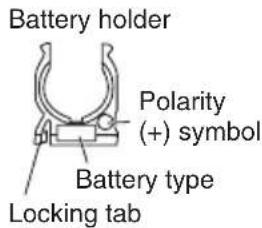
1 Whilst pushing the locking tab towards the center of the remote control, slide out the battery holder.

2 Remove the old battery from the battery holder, insert the new battery and then slide the battery holder back into the remote control.

Precautions for battery use:
Remove the battery if the unit will not be used for long periods of time. This will prevent potential damage due to battery leakage.
Caution:
- Do not use rechargeable battery (nickel-cadmium battery, etc.).
● Danger of explosion if battery is incorrectly replaced. - Replace only with the same or equivalent type.
● Batteries (battery pack or battery installed) shall not be exposed to excessive heat such as sunshine, fire or the like. - Installing the battery incorrectly may cause the unit to malfunction.
Notes concerning use:
- Replace the battery if the operating distance is reduced or if the operation becomes erratic. Purchase "CR 2025", coin lithium battery.
- Periodically clean the transmitter on the remote control and the sensor on the unit with a soft cloth.
● Exposing the sensor on the unit to strong light may interfere with operation. Change the lighting or the direction of the unit if this occurs. - Keep the remote control away from moisture, heat, shock, and vibrations.
General control

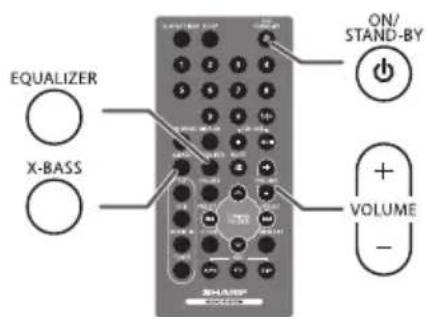
To turn the power on
| Function Main unit | Remote control | Operation | |
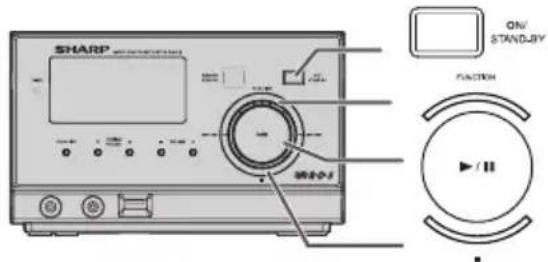
| Power on/off | Press to turn the power on or to go to stand-by mode. | ||
Volume auto set-in
- If you turn off and on the main unit with volume set to 16 or higher, the volume will start at 16.
- If you turn the unit off then on again with the volume level set to less than 16, it will turn on again at the level set.
Volume control
Press the VOLUME +/- button to increase or decrease the volume.
Extra bass control (X-BASS)
When the X-BASS button is pressed, the unit will enter the extra bass mode which emphasises the bass frequencies and "X-BASS" indicator will light up. To cancel the extra bass mode, press the X-BASS button again.
Auto power off function
The main unit will enter the stand-by mode after 15 minutes of inactivity during:
CD/USB: In the stop or pause mode.
TUNER: No reception of broadcast signal.
AUDIO IN: No detection of input signal.
Muting
The volume is muted temporarily when pressing the MUTE button on the remote control. Press again to restore the volume.
General control (continued)
Function (on main unit only)
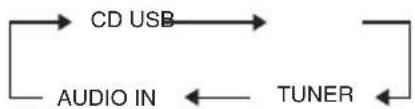
When the FUNCTION button on main unit is pressed, the current function will change to different mode. Press the FUNCTION button repeatedly to select desired function.
flowchart
graph LR
    A["CD USB"] --> B["AUDIO IN"]
    B <--> C["TUNER"]
    C --> A
Note:
The backup function will protect the memorised function mode for a few hours should there be a power failure or the AC power lead becomes disconnected.
Equalizer
When the EQUALIZER button is pressed, the current mode setting will be displayed. To change to a different mode, press the EQUALIZER button repeatedly until the desired sound mode appears.

flowchart
graph TD
    A["FLAT"] --> B["ROCK"]
    B --> C["CLASSIC"]
    C --> D["POPS"]
    D --> E["VOCAL"]
    E --> F["JAZZ"]
    style A fill:#f9f,stroke:#333
    style F fill:#f9f,stroke:#333
    note1["No equalisation."]
    note2["For rock music."]
    note3["For classical music."]
    note4["For pop music."]
    note5["Vocals are enhanced."]
    note6["For jazz."]
Listening to a CD or MP3/WMA disc
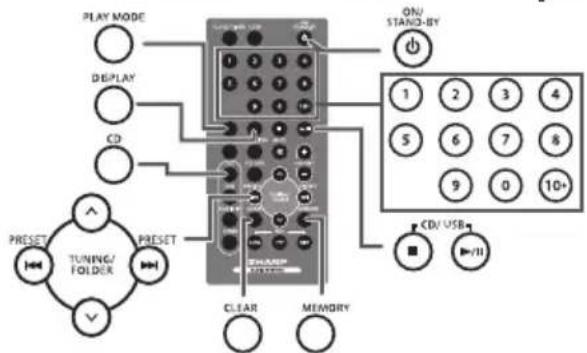
Various disc functions
| Function | Main unit | Remote control | Operation |
| Pause |  |  | Press in the playback mode. Press the ▶/|| button to resume playback from the paused point. |
| Track up/down |  |  | Press in the playback or stop mode. If you press the button in the stop mode, press the ▶/|| button to start the desired track. |
| Fast forward/reverse |  |   | Press and hold down in the playback mode. Release the button to resume playback. |
Disc playback
1 Press the ON/STAND-BY button to turn the power on.
2 Press the CD button on the remote control or FUNCTION button on the main unit repeatedly to select CD function.
3 Open the disc compartment.
4 Place the disc on the disc tray, label side up.

5 Close the disc compartment.
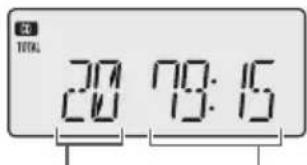
Total number of tracks on disc.
Total playing time of the disc.
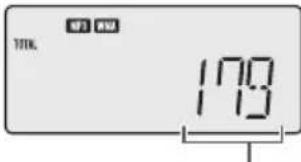
Total number of fi les (track) on the disc.
Due to the structure of the disc information, it takes longer to read an MP3/WMA disc than a normal CD (approximately 20 to 90 seconds).
6 Press the ▶ button to start playback. After the last track is played, the unit will stop automatically.
Notes for CD or MP3/WMA discs:
- When the end of the track is reached during fast forward, the CD operation will be stopped. When the beginning of the first track is reached during fast reverse, the unit will enter the playback mode.
- Rewritable multi-session discs with unfinished writing, can still be played.
Listening to a CD or MP3/WMA disc (continued)
Direct track search
By using the Direct Search buttons, the desired tracks on the current disc can be played.
Use the Direct Search buttons on the remote control to select the desired track whilst playing the selected disc.
● The Direct Search buttons allow you to select up to number 9.
- When selecting number 10 or higher, use the "10+" button.
A. For example, to choose 13
1 Press the "10+" button once.
2 Press the "1" button.
3 Press the "3" button.
B. For example, to choose 130
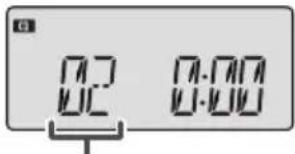
Selected track number
1 Press the "10+" button twice.
2 Press the "1" button.
3 Press the "3" button.
4 Press the "0" button.
Notes:
● A track number higher than the number of tracks on the disc cannot be selected.
● During random play, direct search is not possible.
To stop playback:
Press the ■ button on main unit or remote control.
Repeat play■
Repeat play can play one track, all tracks or a programmed sequence continuously.
To repeat one track:
Press the PLAY MODE button repeatedly until "RPT ONE" appears. Press the ▶ button.
To repeat all tracks:
Press the PLAY MODE button repeatedly until "RPT ALL" appears. Press the ▶/|| button.
To repeat all desired tracks:
Perform steps 1 - 6 in "Programmed play" section on pages 4 - 5 and then press the PLAY MODE button until "RPT ALL" appears.
To cancel repeat play:
Press the PLAY MODE button again until “◀” or “◀” → disappears.

Random play■
The tracks on the disc can be played in random order automatically.
To random play all tracks:
Press and hold down PLAY MODE button on the remote control until "RND" icon light up.
To cancel random play:
Press and hold the PLAY MODE button. "RND" icon will disappear.

Notes:
● During random playback, repeat function is not possible. Selecting the repeat function will cancel the random playback.
● Playback will stop after all the tracks is played randomly.
- If you press the ◀◀ or ▶ button during random play, you can move to the track selected next by the random operation.
- In random play, the unit will select and play tracks automatically. (You cannot select the order of the tracks.)
Programmed play■
You can choose up to 32 selections for playback in the order you like.
1 Whilst in the stop mode, press the MEMORY button on the remote control to enter the programming save mode.
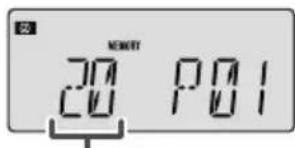
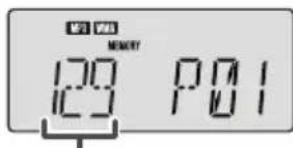
Total tracks on CD Total tracks on MP3/WMA disc
2 Press the ▶ or ▶ button on the remote control to select the desired track.

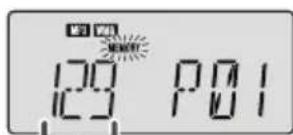
Selected track number
3 Press the MEMORY button to save the track number.
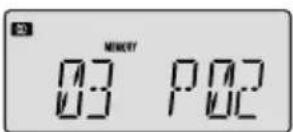

Listening to a CD or MP3/WMA disc (continued)
4 Repeat steps 2 - 3 for other tracks. Up to 32 tracks can be programmed. If you make a mistake, press the CLEAR button whilst the "MEMORY" indicator is flashing. Each time the button is pressed, one track will be cleared, beginning with last track programmed.
5 Press the ▶/|| button to start playback.
6 Press the CD ■ button. The total number in memory will appear.

To cancel the programmed play mode:
Whilst in the stop mode and the "MEMORY" indicator is lit, press the CLEAR button on the remote control. The "MEMORY" indicator will disappear and all the programmed contents will be cleared.
Adding tracks to the programme:
If a programme has been previously stored, the "MEMORY" indicator will be displayed. Follow steps 1 - 4 to add tracks. The new tracks will be stored after the last track of the previous programme.
To check which tracks are programmed:
Whilst the unit is stopped in the programmed play mode, press the ◀◀ or ▶button.
Notes:
- When a disc is ejected, the programme is automatically cancelled.
- If you press the ON/STAND-BY button to enter the stand-by mode or change the function from CD to another, the programmed selections will be cleared.
● During the programme operation, random play is not possible.
■ Procedure to play back MP3/WMA disc with folder mode on
To play back CD-R/RW.
1 Press the CD button, and load an MP3/WMA disc. After disc is loaded, disc info will be displayed.

Total number of tracks
2 Press the FOLDER button and press the FOLDER (∨ or λ button to select desired playback folder. (Folder mode on)
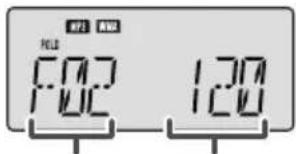
Total tracks in chosen folderFolder n
3 Select desired file to be played back by pressing the ▶ or ▶ button.
4 Press the ▶(GD) button. Playback will start.
● File name, Title, Artist and Album name are displayed if they are recorded on the disc.
- Press the FOLDER (√ or △ button, and the folder can be selected even though it is in playback mode. It will continue playback mode with the first track of the selected folder.
● Display content can be changed by pressing the DISPLAY button.
File name display Title display
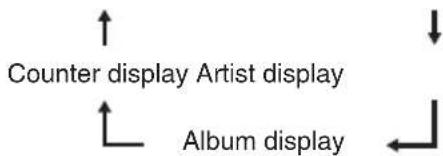
flowchart
graph TD
    A["Counter display Artist display"] --> B["Album display"]
    B --> C["↓"]
Note:
If the track of "Copyright protected WMA fi le" or "Not supported playback fi le" is selected during playback, "NO SUPPORT" is displayed on unit display and the track is skipped.
Listening to USB mass storage device/MP3 player

Note:
This USB mass storage device or MP3 player is not compatible with MTP and AAC file systems.
■ To play back USB/MP3 player with folder mode off
1 Press the USB button on the remote control or FUNCTION button on main unit repeatedly to select USB function. Connect the USB memory device that has MP3/WMA format fi les on the unit. When the USB memory is connected to the main unit, the device information will be displayed.

2 Select desired file to be played back by pressing the ◀◀ or ▶button.
3 Press the ▶(USB) button. Playback will start.
- File name, Title, Artist and Album name are displayed if they are recorded in the USB memory device.
● Display content can be changed by pressing the DISPLAY button.
Note:
To pause playback:
Press the ▶/|| (USB ▶)/button.
■ To play back USB/MP3 player with folder mode on
1 Press the USB button on the remote control or FUNCTION button on main unit repeatedly to select USB function. Connect the USB memory device that has MP3/WMA format fi les on the unit. When the USB memory is connected to the main unit, the track information will be displayed.
2 Press the FOLDER button, then press FOLDER (√ or ↗ button to select desired playback folder. To start playback, go to step 4. To change the playback folder, press the FOLDER (√or ↗ button to select another folder.
3 Select desired file to be played back by pressing the ◀◀ or ▶button.
4 Press the ▶(USB) button. Playback will start.
- File name, Title, Artist and Album name are displayed if they are recorded in the USB memory device.
● Display content can be changed by pressing the DISPLAY button.
To remove USB memory device
1 Press the ■(USB) button to stop playback.
2 Press the ■ button again and wait until "OK" is displayed.

flowchart
graph TD
    A["UNPLUG"] --> B["WAIT"]
    B --> C["OK"]
3 Disconnect the USB memory device from the USB terminal.
Notes:
● Always remove the USB memory device after "OK" appears on the display. Improper removal of the USB memory device may cause irregularities to happen.
● Should this happen, turn off the unit and then turn it on again.
● SHARP will not be held liable for the loss of data whilst the USB memory device is connected to the audio system.
- This USB memory's format supports FAT 16 or FAT 32.
● SHARP cannot guarantee that all USB memory devices will work on this audio system.
- USB cable is not recommended for use in this audio system to connect to USB memory device. Use of the USB cable will affect the performance of this audio system.
Listening to USB mass storage device/MP3 player (continued)
Notes:
● This USB memory cannot be operated via USB hub.
- The USB terminal in this unit is not intended for a PC connection but is used for music streaming with a USB memory device.
● External HDD-storage cannot be played back via USB terminal.
- If the data inside the USB memory is large, it may take longer time for the data to be read.
● The USB port is only intended for direct connection to a USB memory device without any cable.
● Playback order for MP3 fi les may differ depending on the writing software used during fi le download.
- Bitrate which is supported by MP3 is 32\~320 kbps, WMA is 64\~160 kbps.
● Playlists are not supported on this unit.
● This unit can display File Name up to 16 characters.
- Folders with non playable fi les are also counted.
● The display playback time may not be displayed correctly when playing back a variable bitrate file.
- The ID3TAG information supported are TITLE, ARTIST and ALBUM only. Title name, artist name and album name can be displayed by pressing the DISPLAY button during fi le playback or pause mode.
● WMA meta tag also supports title, artist and album name which are recorded in WMA fi les. Copyright protected WMA fi les cannot be played back.
The following functions are the same as CD operation:
Page
Direct track search ....5
Repeat play ....5
Random play ....5
Programmed play 5 - 6
Note:
If USB memory device is not connected, "NO MEDIA" will be shown on the display.
Listening to the radio
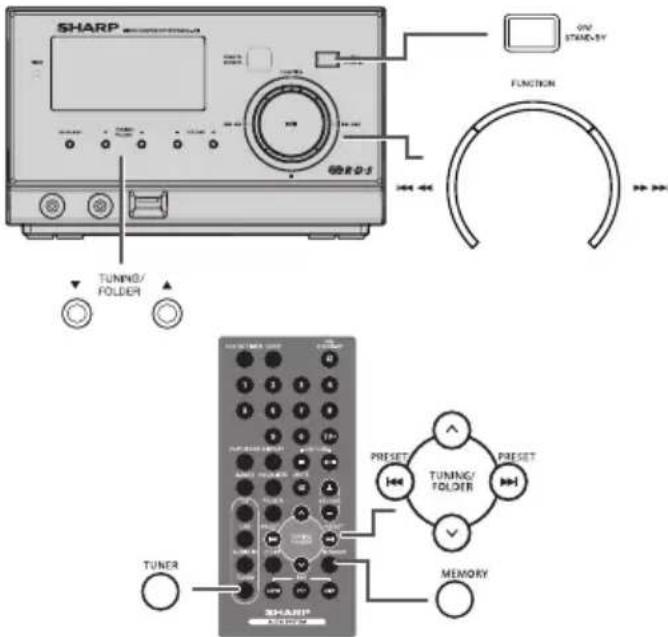
Tuning
1 Press the ON/STAND-BY button to turn the power on.
2 Press the TUNER button on the remote control or FUNCTION button on the main unit repeatedly to select tuner function.
3 Press the TUNING (√ or λ) button to tune in to the desired station.
- Manual tuning:
Press the TUNING (√ or λ) button repeatedly to tune in to the desired station.
● Auto tuning:
When the TUNING (√ or ▲) button is pressed for more than 0.5 seconds, scanning will start automatically and the tuner will stop at the first receivable broadcast station.
Notes:
- When radio interference occurs, auto scan tuning may stop automatically at that point.
● Auto scan tuning will skip weak signal stations.
To receive an FM stereo transmission:
- Press the TUNER button to select stereo mode and "ST" indicator will be displayed. "∞" will appear when an FM broadcast is in stereo.
- If the FM reception is weak, press the TUNER button to extinguish the "ST" indicator. The reception changes to monaural, and the sound becomes clearer.
Listening to the radio (continued)
To preset a station
You can store 40 FM stations in memory and recall them at the push of a button. (Preset tuning)
1 Perform steps 1 - 3 in "Tuning".
2 Press the MEMORY button.

3 Within 5 seconds, press the left button to select the preset channel number. Store the stations in memory, in order, starting with preset channel 1.
4 Press the MEMORY button to store that station in memory. If the "MEMORY" and preset number indicators disappear before the station is memorised, repeat the operation from step 2.
5 Repeat steps 1 - 4 to set other stations, or to change a preset station. When a new station is stored in the memory, the station previously memorised for that preset channel number will be erased.
Note:
The backup function protects the memorised stations for a few hours should there be a power failure or the AC power lead become disconnected.
To recall a preset station
Press the PRESET (◀or ▶button for less than 0.5 seconds to select the desired station.
To scan the preset station
The stations saved in the memory can be scanned automatically. (Preset memory scan)
1 Press the PRESET (◀◀ or ▶▶button for more than 0.5 seconds. The preset number will fl ash and the programmed stations will be tuned in sequentially, for 5 seconds each.
2 Press the PRESET (or) button again when the desired station is located.
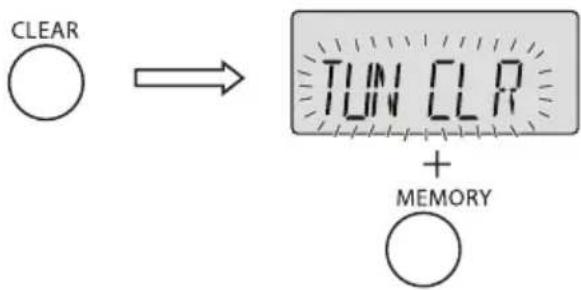
To erase entire preset memory
1 Press and hold the CLEAR button until "TUN CLR" appears then press MEMORY button.
Using the Radio Data System (RDS)
RDS is a broadcasting service which a growing number of FM stations provide. These FM stations send additional signals along with their regular programme signals. They send their station names, and information about the type of programme such as sport, music, etc.
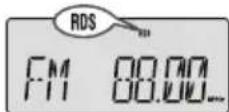
When tuned to an RDS station, "RDS" and the station name will be displayed.
"TP" (Traffi c Programme) will appear on the display when the received broadcast carries traffi c information, and "TA" (Traffi c Announcement) will appear whilst a traffi c information is on air.
"PTYI" (Dynamic PTY Indicator) will appear whilst the Dynamic PTY station is received.

You can control the RDS by using the buttons on the remote control only.
Information provided by RDS■

flowchart
graph TD
    A["PRESET"] --> B["TUNER"]
    C["ASPM"] --> D["RDS"]
    E["PTY"] --> D
    F["DISP"] --> D
    B --> G["Radio module with buttons"]
    D --> H["Radio module with buttons"]
    G --> I["Control panel with buttons"]
    H --> I
    I --> J["PRESET"]
    style A fill:#f9f,stroke:#333
    style C fill:#f9f,stroke:#333
    style E fill:#f9f,stroke:#333
    style F fill:#f9f,stroke:#333
Each time the RDS DISP button is pressed, the display will switch as follows:

flowchart
graph TD
    A["STATION NAME PS"] --> B["PROGRAMME TYPE PTY"]
    B --> C["UK WEATH"]
    D["Station Name PS"] --> E["Programme Type PTY"]
    E --> F["UK WEATH"]
Frequency Radio text (RT)
When tuning in to a station other than an RDS station or to an RDS station which sends weak signal, the display will change in the following order:
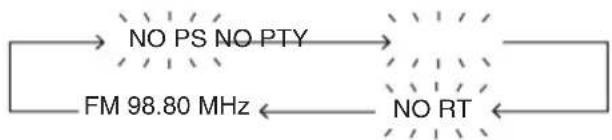
flowchart
graph LR
    A["NO PS NO PTY"] --> B["NO RT"]
    C["FM 98.80 MHz"] --> B
Using the Radio Data System (RDS) (continued)
■ Using the Auto Station Programme Memory (ASPM)
Whilst in the ASPM operation mode, the tuner will automatically search for new RDS stations. Up to 40 stations can be stored.
If you have already stored some stations in memory, the number of new stations you can store will be less.
1 Press the TUNER button on the remote control or FUNCTION button repeatedly on the main unit to select TUNER function.
2 Press and hold down the RDS ASPM button on the remote control for at least 3 seconds.
- After "ASPM" has fl ashed for about 4 seconds, scanning will start (87.50 - 108.00 MHz).
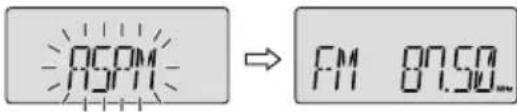
- When an RDS station is found, "RDS" will appear for a short time and the station will be stored in memory.
- After scanning, the number of stations stored in memory will be displayed for 4 seconds, and then "END" will appear for 4 seconds.
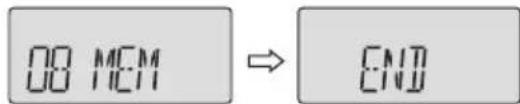
To stop the ASPM operation before it is complete:
Press the RDS ASPM button whilst it is scanning for stations. The stations which are already stored in memory will be kept there.
Notes:
- If the same station is broadcasting on different frequencies, the strongest frequency will be stored in memory.
● Any station which has the same frequency as the one stored in memory will not be stored.
- If 40 stations have already been stored in memory, the scan will be aborted. If you want to redo the ASPM operation, erase the preset memory.
- If no station have been stored in memory, "00 MEM" and "END" will appear for about 4 seconds.
- If the RDS signals are very weak, station names may not be stored in memory.
● The same station name can be stored in different channels.
- In a certain area or during certain time periods, the station names may temporarily be different.
Notes for RDS operation
If any of the following events occur, it does not mean that the unit is faulty:
● "PS", "NO PS" and a station name appear alternately, and the unit does not operate properly.
- If a particular station is not broadcasting properly or a station is conducting tests, the RDS reception function may not work properly.
- When you receive an RDS station whose signal is too weak, information like the station name may not be displayed.
- "NO PS", "NO PTY" or "NO RT" will fl ash for about 5 seconds, and then the frequency will be displayed.
Notes for radio text:
● The first 8 characters of the radio text will appear for 4 seconds and then they will scroll across the display.
- If you tune in to an RDS station which is not broadcasting any radio text, "NO RT" will be displayed when you switch to the radio text position.
- Whilst radio text data is received or when the text contents change, "RT" will be displayed.
To recall stations in memory
To specify programmed types and select stations (PTY search):
You can search a station by specifying the programme type (news, sports, traffic programme, etc.) from the stations in memory.
1 Press the TUNER button on the remote control or FUNCTION button on the main unit repeatedly to select TUNER function.
2 Press the RDS PTY button on the remote control.
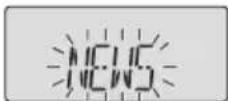
Selected PTY code (blinking) will appear for about 6 seconds.
3 Within 6 seconds, press the ◀◀ or ▶button to select the PTY code.

Each time the button is pressed, the PTY code will appear.
4 Whilst the selected PTY code is displayed (within 6 seconds), press the RDS PTY button again.

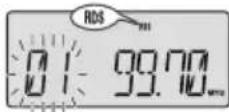
● The unit searches the all preset stations and stops when it finds a station of the selected category then tunes into the stations. The RDS indicator lights up.
- If no programme is found in the all preset stations, "NO FOUND" appear on the display and returns to the previous station.
Notes:
- If the display has stopped fl ashing, start again from step 2. If the unit fi nds a desired programme type, the corresponding channel number will lit for about 4 seconds, and then the station name will remain it.
- If you want to listen to the same programme type of another station, press the RDS PTY button and start again from step 2. The unit will look for the next station.
Setting the clock (Remote control only)

In this example, the clock is set for the 24-hour (00:00) display.
1 Press the ON/STAND-BY button to turn to stand-by mode.
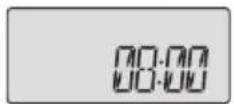
2 Press and hold the CLOCK/TIMER button until "00:00" appear.

3 Within 10 seconds, press the button to adjust the hour and then press the MEMORY button. Press the button once to advance the time by 1 hour. Hold it down to advance continuously.
4 Press the ◀◀ or ▶ button to adjust the minutes and then press the MEMORY button. Press the ◀◀ or ▶ button once to advance the time by 1 minute. Hold it down to advance continuously.
To confirm the time display:
[When the unit is in the stand-by mode]
Press the CLOCK/TIMER button. The time display will appear for about 10 seconds.
[When the power is on]
Press the CLOCK/TIMER button. The time display will appear for about 4 seconds.
Note:
The "00:00" will appear when the AC power supply is restored after a power failure or unplugging the unit. If incorrect, readjust the clock as follows.
To readjust the clock:
Perform "Setting the clock" from step 1.
Timer and sleep operation (Remote control only)
Timer playback:
The unit turns on and plays the desired source (CD, USB, TUNER or AUDIO IN) at a preset time.
Timer playback■
Before setting timer:
1 Check that the clock is set to the correct time (refer to the column on the left). If it is not set, you cannot use the timer function.
2 For timer playback, load the disc to be played back.

1 Press the ON/STAND-BY button to turn the power on.
2 Press the CLOCK/TIMER button for about 2 seconds.
3 Within 10 seconds, press the OR button to select "ONCE" or "DAILY" and then press the MEMORY button.

4 Press the button to adjust the hours for timer on and then press the MEMORY button.

5 Press the or button to adjust the minutes for timer on and then press the MEMORY button.
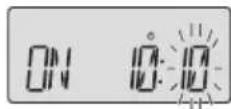
6 Press the left button to adjust the timer off (as in step 4 and 5) and then press the MEMORY button.

7 To select the timer playback source (CD, TUNER, USB or AUDIO IN), press the ▶ or button. Press the MEMORY button.
When you select TUNER, select a station by pressing the button, and then press the MEMORY button. If a station has not been programmed, "NO P-SET" will be displayed and timer setting will be canceled.

Timer and sleep operation (Remote control only) (continued)
8 Adjust the volume using the VOLUME + or VOLUME – and then press the MEMORY button. (Do not turn the volume up too high).
9 Press the ON/STAND-BY button to enter the power stand-by mode. The TIMER red indicator lights up and the unit is ready for timer playback.
10 When the preset time is reached, playback will start. The volume will increase gradually until it reaches the preset volume. The “💡” indicator will blink during timer playback. The “DAILY” indicator will blink during daily timer playback.
Checking the timer setting:
Press the CLOCK/TIMER button repeatedly to view as follows:

Cancelling the timer setting:
Press the CLOCK/TIMER button until "ONCE" or "DAILY" appears then press MEMORY button. The unit display "OFF".
Note:
After selecting the volume level and press the MEMORY button to confirm, it will change to last function.
Sleep operation
The radio, compact disc and USB can all be turned off automatically.
1 Play back the desired sound source.
2 Press the SLEEP button.
3 Within 5 seconds, press the SLEEP button repeatedly to select the time.
SLP 120 90 60→30 15→10 5→ → →
4 "SLEEP" will appear.
5 The unit will enter the power stand-by mode automatically after the preset time has elapsed.
To confirm the remaining sleep time:
Whilst "SLEEP" is indicated, press the SLEEP button. The remaining time is displayed for about 10 seconds.
To cancel the sleep operation:
Press the ON/STAND-BY button whilst "SLEEP" is indicated. To cancel the sleep operation without setting the unit to the stand-by mode, proceed as follows.
Whilst “SLEEP” is indicated, press the SLEEP button repeatedly until SLEEP indicator disappears.
To use timer and sleep operation together
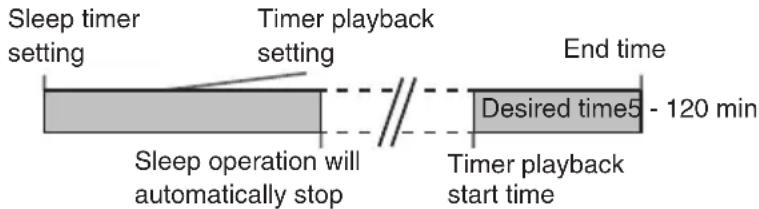
Sleep and timer playback:
For example, you can fall asleep listening to the radio and wake up to CD in the next morning.
1 Set the sleep time (refer to the column on the left, steps 1 - 5).
2 Whilst the sleep timer is set, set the timer playback (steps 2 - 8, pages 10 - 11).
flowchart
graph LR
    A["Sleep timer setting"] --> B["Timer playback setting"]
    B --> C["End time"]
    C --> D["Desired time5 - 120 min"]
    D --> E["Timer playback start time"]
    E --> F["Sleep operation will automatically stop"]
Enhancing your system
The connection cord is not included. Purchase a commercially available cord as shown below.
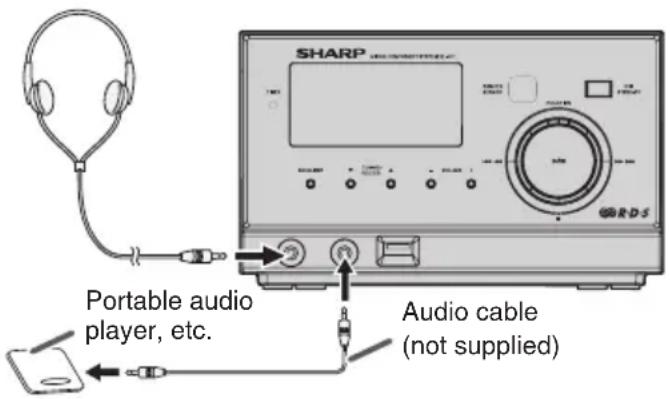
■ Listening to the playback sounds of portable audio player, etc.
1 Use a connection lead to connect the portable audio player etc. to the AUDIO IN socket.
2 Press the ON/STAND-BY button to turn the power on.
3 Press the AUDIO IN button on the remote control or FUNCTION button repeatedly on main unit to select AUDIO IN function.
4 Play the connected equipment. If volume level of the connected device is too high, sound distortion may occur. Should this happen, lower the volume of the connected device. If volume level is too low, increase the volume of the connected device.
Note:
To prevent noise interference, place the unit away from the television.
Headphones
- Do not turn the volume on to full at switch on and listen to music at moderate levels. Excessive sound pressure from earphones and headphones can cause hearing loss.
● Before plugging in or unplugging the headphones, reduce the volume. - Be sure your headphones have a 3.5 mm (1/8") diameter plug and impedance between 16 and 50 ohms. The recommended impedance is 32 ohms.
- Plugging in the headphones disconnects the speakers automatically. Adjust the volume using the VOLUME control.
Troubleshooting chart
Many potential problems can be resolved by the owner without calling a service technician. If something is wrong with this product, check the following before calling your authorized SHARP dealer or service center.
General
| Symptom Possible cause | |
| ●Dthea cockerisfailore set to the correct time. | ●ccur?Reset the clock. (Refer page 11) |
| ●Sethena unitton it he pressed, the unit does not respond. | ●power stand-by mode and then turn it back on.● If the unit still malfunctions, reset it. (Refer page 14) |
| ●Is the volume level heard. | ●set to “MIN”?● Are the headphones connected?● Are the speaker wires disconnected? |
■ CD player
| Symptom Possible cause | |
| ●Playback does not start.● Playback stops in the middle or is not performed properly. | ● Is the disc loaded upside down?● Does the disc satisfy the standards?● Is the disc distorted or scratched? |
| ●IsPlayback is located are skipped, or stopped in the middle of a track. | ●near excessive vibrations?● Is the disc very dirty?● Has condensation formed inside the unit? |
Remote control
| Symptom Possible cause | |
| ●Is there ACo powertrad does not operate. | ●Of the unit plugged in?● Is the battery polarity correct?● Is the battery dead?● Is the distance or angle incorrect?● Does the remote control sensor receive strong light? |
Tuner
| Symptom Possible cause | |
| ●Is the undiplanted unusual noises continuously. | ●the TV or computer?● Is the FM aerial placed properly?Move the aerial away from the AC power lead if it is located nearby. |
Troubleshooting chart (continued)
USB
| Symptom Possible cause | |
| ●Is Device area MP3/VDMA detected. | ●le available?●Is the device properly connected?●Is it an MTP device?●Does the device contain AAC fi le only? |
| ●Is Playback by right protected start. | ●WMA fi le?●Is it a false MP3 fi le? |
| ●Wrong time display.●Wrong fi le name display. | ●Is Variable Bitrate fi being played back?●Is the File Name written in Chinese or Japanese characters? |
Condensation
Sudden temperature changes, storage or operation in an extremely humid environment may cause condensation inside the cabinet (CD pickup, etc.) or on the transmitter on the remote control. Condensation can cause the unit to malfunction. If this happens, leave the power on with no disc in the unit until normal playback is possible (about 1 hour). Wipe off any condensation on the transmitter with a soft cloth before operating the unit.
Before transporting the unit
Remove all CDs from the unit. Make sure there is no CD in the disc tray. Then, set the unit to the power stand-by mode. Carrying the unit with discs left inside can damage the unit.
■ If problem occurs
When this product is subjected to strong external interference (mechanical shock, excessive static electricity, abnormal supply voltage due to lightning, etc.) or if it is operated incorrectly, it may malfunction.
If such a problem occurs, do the following:
1 Set the unit to the stand-by mode and turn the power on again.
2 If the unit is not restored in the previous operation, unplug and plug in the unit again, and then turn the power on.
Note:
If neither operation above restores the unit, clear all the memory by resetting it.
Factory reset, clearing all memory
1 Press the ON/STAND-BY button to enter the power stand-by mode.
2 Press down the VOLUME + button and ▶/|| button on main unit until "CLR ALL" appears.

Caution:
This operation will erase all data stored in memory including clock, timer settings, tuner preset, and CD program.
Care of compact discs■
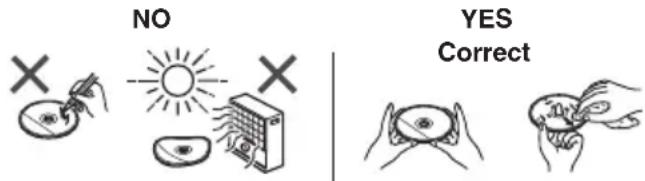
Compact discs are fairly resistant to damage, however mistracking can occur due to an accumulation of dirt on the disc surface. Follow the guidelines below for maximum enjoyment from your CD collection and player.
- Do not write on either side of the disc, particularly the non-label side from which signals are read. Do not mark this surface.
- Keep your discs away from direct sunlight, heat, and excessive moisture.
● Always hold the CDs by the edges. Fingerprints, dirt, or water on the CDs can cause noise or mistracking. If a CD is dirty or does not play properly, clean it with a soft, dry cloth, wiping straight out from the centre, along the radius.
Maintenance
Cleaning the cabinet■
Periodically wipe the cabinet with a soft cloth and a diluted soap solution, then with a dry cloth.
Caution:
- Do not use chemicals for cleaning (petrol, paint thinner, etc.). It may damage the cabinet.
- Do not apply oil to the inside of the unit. It may cause malfunctions.
Specifications
As part of our policy of continuous improvement, SHARP reserves the right to make design and specification changes for product improvement without prior notice. The performance specification figures indicated are nominal values of production units. There may be some deviations from these values in individual units.
General
| Power source | AC 220 - 240 V ~ 50/60 Hz |
| Power consumption | Power on: 21 WPower stand-by: 0.4 W (*) |
| Dimensions | Width: 190 mm (7 - 1/2")Height: 115.7 mm (4 - 9/16")Depth: 230.4 mm (9 - 1/16") |
| Weight | 2.4 kg (5.31 lbs.) |
(*) This power consumption value is obtained when the main unit is in stand-by mode.
Amplifi er
| Output power | MPO: 18 W (9 W + 9 W) (10% T.H.D.)RMS: 10 W (5 W + 5 W) (10% T.H.D.) |
| Output terminals | Speakers: 4 ohmsHeadphones: 16 - 50 ohms(recommended: 32 ohms) |
CD player
| Type | Single disc multi-play compact disc player |
| Signal readout | Non-contact, 3-beam semiconductor laser pickup |
| D/A converter | Multi bit D/A converter |
| Frequency response | 20 - 20,000 Hz |
| Dynamic range | 90 dB (1 kHz) |
USB
| USB host interface | ● Complies with USB 1.1 (Full Speed)/2.0 Mass Storage Class.● Support Bulk only and CBI protocol. |
| Support fi le | ● MPEG 1 Layer 3● WMA (Non DRM) |
| Bitrate support | ● MP3 (32 ~ 320 kbps)● WMA (64 ~ 160 kbps) |
| Other | ● Maximum total number of MP3/WMA fi les is 999.● Maximum total number of folders is 99 INCLUSIVE of root directory.● The ID3TAG information supported are TITLE, ARTIST and ALBUM only.● Supports ID3TAG version 1 and version 2. |
| File system support | ● Support USB devices with Microsoft Windows/DOS/FAT 16/FAT 32.● 2 kbyte block length for sector. |
Tuner
| Frequency range | FM: 87.5 - 108 MHz |
Speaker
| Type | 1-way type speaker system8 cm (3") Full range |
| Maximum input power | 10 W |
| Rated input power | 5 W |
| Impedance | 4 ohms |
| Dimensions | Width: 111 mm (4 - 3/8")Height: 194 mm (7 - 5/8")Depth: 180 mm (7 - 1/16") |
| Weight | 1.3 kg (2.8 lbs.)/each |
SHARP
FOR LOCATION ENQUIRIES WITHIN
AUSTRALIA
SHARP APPROVED SERVICE CENTRE
(LOCAL CALL COSTS APPLY WITHIN AUSTRALIA)
SHARP CORPORATION OF AUSTRALIA PTY LTD
SHARP
FOR LOCATION ENQUIRIES WITHIN
NEW ZEALAND
SHARP APPROVED SERVICE CENTRE
Consumer Electronic Products
Congratulations on Your Purchase!
This Sharp product is warranted against faults in materials and manufacture for a period of twelve(12) months from the date of original purchase.
If service is required during the warranty period, please contact your nearest Sharp Approved Service Centre. These repairs would be carried out at no charge to the owner, subject to the conditions specified herein.
The owner is responsible for any transportation and insurance costs if the product has to be returned for repair.
This warranty does not extend to accessories or defects or injuries caused by or resulting from causes not attributable to faulty parts or the manufacture of the product, including but not limited to, defect or injury caused by or resulting from misuse, abuse, neglect, accidental damage, improper voltage, liquid spillage, vermin infestation, software, or any alterations made to the product which are not authorised by Sharp.
Please retain your sales documentation, as this should be produced to validate a warranty claim.
This warranty is in addition to and in no way limits, varies or excludes any express and implied rights and remedies under any relevant legislation in the country of sale.
IMPORTANT DO NOT RETURN THIS DOCUMENT TO SHARP
For your reference, please enter the particulars of your purchase below and retain, with your purchase documentation.
Model No. ____
Date of Purchase
Serial No.
Retailer
SHARP SHARP CORPORATION OF NEW ZEALAND LIMITED AUSTRALIA PTY. LIMITED ABN 40 033 039 405 1 Huntingwood Drive Huntingwood NSW 2148 SHARP CORPORATION OF NEW ZEALAND LIMITED 59 Hugo-Johnsten Drive Fenrose, Auckland
IMPORTANT NOTICE: This warranty applies only to products sold in Australia & New Zealand

- Accessory
- Special note
- Special notes
- WARNINGS:
- CAUTION:
- Note for users in Australia:
- For other countries:
- Volume control
- System connections
- Precautions
- Speaker connection
- Remote control - battery installation
- Note:
- Precautions for battery use:
- Notes concerning use:
- General control
- Volume auto set-in
- Extra bass control (X-BASS)
- Auto power off function
- Muting
- General control (continued)
- Function (on main unit only)
- Equalizer
- Listening to a CD or MP3/WMA disc
- Various disc functions
- Disc playback
- Notes for CD or MP3/WMA discs:
- Listening to a CD or MP3/WMA disc (continued)
- Direct track search
- For example, to choose 13
- For example, to choose 130
- Notes:
- To stop playback:
- Repeat play■
- To repeat one track:
- To repeat all tracks:
- To repeat all desired tracks:
- To cancel repeat play:
- Random play■
- To random play all tracks:
- To cancel random play:
- Programmed play■
- To cancel the programmed play mode:
- Adding tracks to the programme:
- To check which tracks are programmed:
- ■ Procedure to play back MP3/WMA disc with folder mode on
- Listening to USB mass storage device/MP3 player
- ■ To play back USB/MP3 player with folder mode off
- ■ To play back USB/MP3 player with folder mode on
- To remove USB memory device
- Listening to USB mass storage device/MP3 player (continued)
- Listening to the radio
- Tuning
- - Manual tuning:
- ● Auto tuning:
- To receive an FM stereo transmission:
- Listening to the radio (continued)
- To preset a station
- To recall a preset station
- To scan the preset station
- To erase entire preset memory
- Using the Radio Data System (RDS)
- Information provided by RDS■
- Using the Radio Data System (RDS) (continued)
- ■ Using the Auto Station Programme Memory (ASPM)
- To stop the ASPM operation before it is complete:
- Notes for RDS operation
- If any of the following events occur, it does not mean that the unit is faulty:
- Notes for radio text:
- To recall stations in memory
- To specify programmed types and select stations (PTY search):
- Setting the clock (Remote control only)
- To confirm the time display:
- To readjust the clock:
- Timer and sleep operation (Remote control only)
- Timer playback:
- Timer playback■
- Before setting timer:
- Timer and sleep operation (Remote control only) (continued)
- Checking the timer setting:
- Cancelling the timer setting:
- Sleep operation
- To confirm the remaining sleep time:
- To cancel the sleep operation:
- To use timer and sleep operation together
- Sleep and timer playback:
- Enhancing your system
- ■ Listening to the playback sounds of portable audio player, etc.
- Headphones
- Troubleshooting chart
- Remote control
- Tuner
- Troubleshooting chart (continued)
- USB
- Condensation
- Before transporting the unit
- ■ If problem occurs
- If such a problem occurs, do the following:
- Factory reset, clearing all memory
- Care of compact discs■
- Maintenance
- Cleaning the cabinet■
- Specifications
- SHARP
- AUSTRALIA
- NEW ZEALAND
- Congratulations on Your Purchase!
- IMPORTANT DO NOT RETURN THIS DOCUMENT TO SHARP
Brand : SHARP
Model : XL-UH1H
Category : CD Player