HF-100A+ - Fridge Heinner - Free user manual and instructions
Find the device manual for free HF-100A+ Heinner in PDF.


| Product Type | Compact Refrigerator |
| Brand | Heinner |
| Model | HF-100A+ |
| Total Gross Capacity | 100 Liters |
| Energy Efficiency Class | A+ |
| Height | 85 cm |
| Width | 50 cm |
| Depth | 55 cm |
| Weight | 25 kg |
| Power Supply | 220-240 V ~ 50 Hz |
| Temperature Control | Adjustable Thermostat |
| Interior Light | Yes |
| Shelves Material | Tempered Glass |
| Adjustable Shelves | Yes |
| Door Reversibility | Yes |
| Vegetable Drawer | Yes |
| Bottle Storage | Yes (Door Racks) |
| Defrosting | Manual |
| Cleaning | Unplug, use damp cloth, avoid abrasives |
| Safety Features | Grounded outlet, keep ventilation space |
| Spare Parts Availability | Contact authorized service center |
Frequently Asked Questions - HF-100A+ Heinner
User questions about HF-100A+ Heinner
0 question about this device. Answer the ones you know or ask your own.
Ask a new question about this device
Download the instructions for your Fridge in PDF format for free! Find your manual HF-100A+ - Heinner and take your electronic device back in hand. On this page are published all the documents necessary for the use of your device. HF-100A+ by Heinner.
USER MANUAL HF-100A+ Heinner
natural_image
Simple line drawing of a rectangular container with two side handles and a base, no text or symbols present.Stimate client
Regulamente, standarde, directive 19
1 Usa compartment congelator
2 Tava cuburi de gheata
3 Compartiment congelator
4 Tava scurgere
5 Rafturi detasabile
6 Raft sticla
7 S e r t a r
8 Picioare reglabile
9 Etajere pentru sticle
10 Buton reglare temperatura
11 Maner incastrat
① Surub
② Balama inferioara
③ Picion reglabil inferior
④ Picior reglabil superior
⑤ Balama superioara
⑥ Surub cu filet
⑦ Aparatoare balama superioara
⑧ Cuzinetul axului
⑨ Capacel
Regulamente, standarde, directive
Copyright © 2013 Network One Distribution. All rights reserved. http://www.heinner.com, http://www.nod.ro
natural_image
Front view line drawing of a rectangular appliance or container with two side handles and a flat base (no text or symbols)Dear customer
Before placing your new refrigerator/freezer into operation please read these operating instructions carefully. They contain important information for safe use, for installation and for care of the appliance.
Please keep these operating instructions for future reference. Pass them on to possible new owners of the appliance.
Notes which are important for your safety or for the proper functioning of the appliance are stressed with a warning triangle and/or with signal words (Warning!, Caution!, Important!). Please observe the following carefully.
Supplementary information regarding operation and practical applications of the appliance appear after this symbol.
Tips and notes concerning economical and environmentally sound use of the appliance are marked with the cloverleaf.
The operating instructions contain instructions for the correction of possible malfunctions by the user in the section "Trouble shooting". If these instructions should not be sufficient, contact your local Service Force Center.
Contents
Name of Parts 4
Important safety instructions....5
Positioning 11
Starting up and temperature regulation....11
Interior accessories 12
Defrosting 13
Cleaning and Care 13
Energy Saving tips....14
Trouble shooting....14
Correcting Malfunctions....14
Noises during Operation 15
Reversing the door....16
Regulations, Standards, Guidelines 17
Disposal of the appliance 17
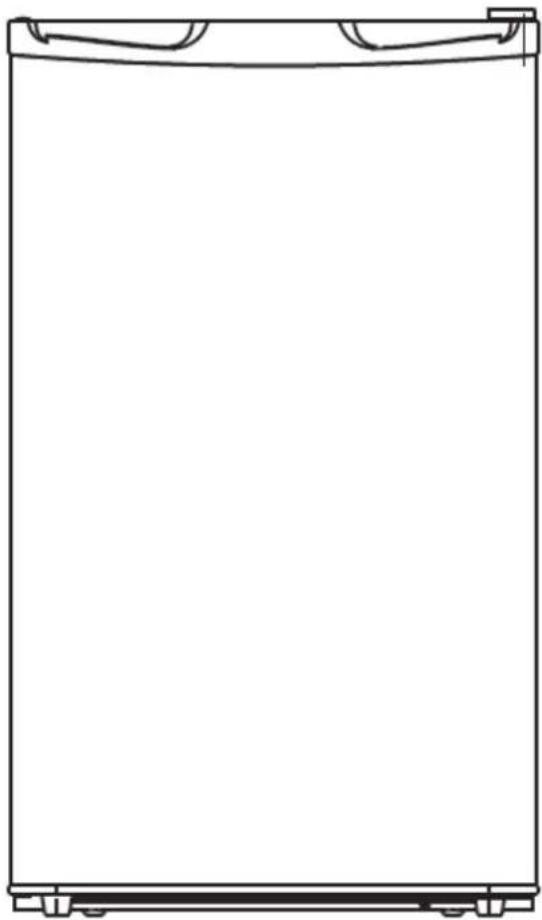
1.Name of parts
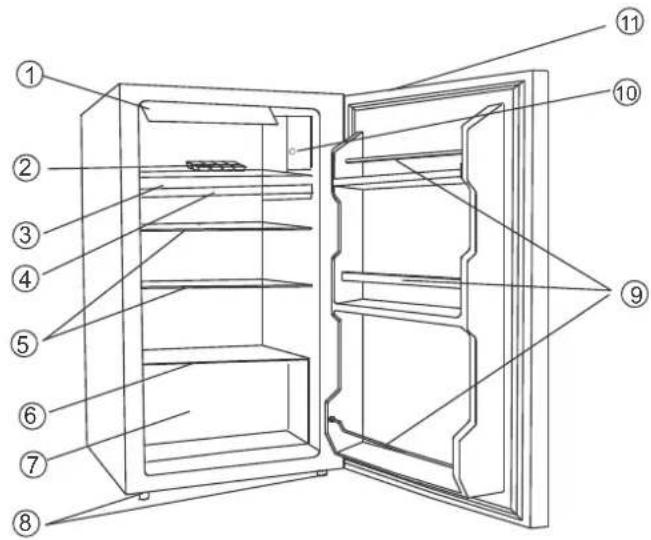
① Freezer Compartment Door
② Ice Cube Tray
③ Freezer Compartment
④ Drip Tray
⑤ Removable shelves
⑥ Glass panel
⑦ Crisper
⑧ Levelling Legs
⑨ Bottle Racks
⑩ Temperature Control Knob
⑪ Recessed Handle
NOTE: This figure is only a sketch of the refrigerator, the actual product may differ from it.

Safety and warning information
For your safety and correct usage, before installing and first using the appliance, read this user manual carefully, including its hints and warnings. To avoid unnecessary mistakes and accidents, it is important to make sure that all people using the appliance are thoroughly familiar with its operation and safety features. Save these instructions and be sure that they remain with the appliance if it is moved or sold, so that anyone using it throughout its life, will be properly informed on its usage and safety notices. For the safety of life and property, keep the precautions of these user's instructions as the manufacturer is not responsible for damages caused by omission.
Safety for children and others who are vulnerable people
- This appliance can be used by children aged from 8 years and above and persons with reduced physical, sensory or mental capabilities or lack of experience and knowledge if they have been given supervision or instruction concerning use of the appliance in a safe way and understand the hazards involved. Children shall not play with the appliance. Cleaning and user maintenance shall not be made by children without supervision.
- Keep all packaging away from children as there is risk of suffocation.
If you are discarding the appliance, pull the plug out of the socket, cut the connection cable (as close to the appliance as you can) and remove the door to prevent children playing from suffering an electric shock or from closing themselves inside it.
- If this appliance, featuring a magnetic door seals, is to replace an older appliance having a spring lock (latch) on the door or lid, be sure to make the spring lock unusable before you discard the old appliance. This will prevent it from becoming a death trap for a child
General safety
- WARNING — This appliance is intended to be used in household and similar applications such as -staff kitchen areas in shops, offices and other working environments; -farm houses and by clients in hotels, motels and other residential type environments; -bed and breakfast type environments; -catering and similar non-retail applications
- WARNING — Do not store explosive substances such as aerosol cans with a flammable propellant in this appliance.
- WARNING — If the supply cord is damaged, it must be replaced by the manufacturer, its service agent or similarly qualified persons in order to avoid a hazard.
- WARNING — Keep ventilation openings, in the appliance enclosure or in the built-in structure, clear of obstruction.
- WARNING — Do not use mechanical devices or other means to accelerate the defrosting process, other than those recommended by the manufacturer.
- WARNING — Do not damage the refrigerant circuit.
- WARNING — Do not use electrical appliances inside the food storage compartments of the appliance, unless they are of the type recommended by the manufacturer.
- WARNING — The refrigerant and insulation
blowing gas are flammable. When disposing of the appliance, do so only at an authorized waste disposal centre. Do not expose to flame.
Refrigerant
The refrigerant isobutene (R600a) is contained within the refrigerant circuit of the appliance, a natural gas with a high level of environmental compatibility, which is nevertheless flammable. During transportation and installation of the appliance, ensure that none of the components of the refrigerant circuit becomes damaged. The refrigerant (R600a) is flammable.
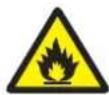
Caution:risk of fire
If the refrigerant circuit should be damaged: -Avoid opening flames and sources of ignition. -Thoroughly ventilate the room in which the appliance is situated. It is dangerous to alter the specifications or modify this product in any way. Any damage to the cord may cause a shortcircuit, fire, and/or electric shock.
Electrical safety
- The power cord must not be lengthened.
- Make sure that the power plug is not crushed or damaged. A crushed or damaged power plug may overheat and cause a fire.
- Make sure that you can access the main plug of the appliance.
- Do not pull the main cable.
- If the power plug socket is loose, do not insert the power plug. There is a risk of electric shock or fire.
- You must not operate the
appliance without the interior lighting lamp cover.
- The fridge is only applied with power supply of single phase alternating current of 220\~240V/50Hz. If fluctuation of voltage in the district of user is so large that the voltage exceeds the above scope, for safety sake, be sure to apply A.C. Automatic voltage regulator of more than 350W to the fridge. The fridge must employ a special power socket instead of common one with other electric appliances. Its plug must match the socket with ground wire.
Daily use
- Do not store flammable gass or liquids in the appliance, There is a risk of an explosion.
- Do not operate any electrical appliances in the appliance(e.g.electric ice cream makers,mixers etc.).
- When unplugging always pull the plug from the mains socket, do not pull on the cable.
- Do not place hot items near the plastic
components of this appliance.
- Store pre-packed frozen food in accordance with the frozen food manufacture's instructions.
- The appliances manufactures storage recommendations should be strictly adhered to. Refer to relrelevant instructions for storage.
- Do not place carbonated or fizzy drinks in the freeze compartment as it creates pressure on the container, which may cause it to explode, resulting in damage to the appliance.
- Frozen food can cause frost burns if consumed straight from the freezer compartment.
- Do not place the appliance in direct sunlight.
- Keep buring candles, lamps and other items with naked flames away from the appliance so that do not set the appliance on fire.
- The appliance is intended for keeping food stuff and/or beverages in normal household as explained in this instruction booklet.
• The appliance is heavy. Care should be taken when moving it.
- Do not remove nor touch items from the freezer compartment if your hands are damp/wet, as this could cause skin abrasions or frost/freezer burns.
- Never use the base, drawers, doors etc. to stand on or as supports.
- Frozen food must not be refrozen once it has been thawed out.
- Do not consume ice popsicles or ice cubes straight from the freezer as this can cause freezer burn to the mouth and lips.
- To avoid items falling and causing injury or damage to the appliance, do not overload the door racks or put too much food in the crisper drawers.
caution! Care and cleaning
- Before maintenance, switch off the appliance and disconnect the mains plug from the mains socket.
- Do not clean the appliance with metal objects, steam cleaner, ethereal oils, organic solvents or abrasive cleansers.
- Do not use sharp objects to remove frost from the appliance. Use a plastic scraper.
Installation Important!
- For electrical connection carefully, follow the instructions given in this manual.
- Unpack the appliance and check if there are damages on it. Do not connect the appliance if it is damaged. Report possible damages immediately to the place you bought it. In this case retain packing.
- It is advisable to wait at least four hours before connecting the appliance to allow the oil to flow back in the
compressor.
- Adequate air circulation should be around the appliance, lacking this leads to overheating. To achieve sufficient ventilation, follow the instructions relevant to installation.
- Wherever possible the back of the product should not be too close to a wall to avoid touching or catching warm parts (compressor, condenser) to prevent the risk of a fire, follow the instructions relevant to installation.
- The appliance must not be locate close to radiators or cookers.
- Make sure that the mains plug is accessible after the installation of the appliance. Service
- Any electrical work required to do the servicing of the appliance should be carried out by qualified electrician or competent person.
- This product must be serviced by an authorized Service Center, and only genuine spare parts must be used.
1) If the appliance is Frost Free.
2) If the appliance contains freezer compartment.
Remove transport packaging
The appliance and the Interior flittings are protected for transportation. Pull off the adhesive tape on the left and right side of the door. You can remove any remnants of adhesive using white spirit. Remove all adhesive tape and packing pieces from the Interior of the appliance.
Positioning
Position the appliance away from sources of heat such as stoves, radiators, direct sunlight etc. Maximum performance and safety are guaranteed by maintaining the correct indoor temperature for the class of unit concerned, as specified on the rating plate. This application perform well from N to ST. The Appliance may not work properly if it is left for a longer period at a temperature above or below the indicated range.
IMPORTANT! -There is a need of good ventilation around the fridge for easy dissipation of heat, high efficiency of refrigeration and low power consumption. For this purpose, sufficient clear space should be available around the fridge. It is advisable for there to be 75mm separating the back of the fridge to the wall, at least 100mm of space at its two sides, height of over 100mm from its top and a clear space upfront to allow the doors to open 160°.
| Climate classification | Ambient temperature |
| SN | 10~32 ^C |
| N | 16~32 ^C |
| ST | 16~38 ^C |
| T | 16~43 ^C |
Appliances must not be exposed to rain. Sufficient air must be allowed to circulate in the lower rear section of appliances, as poor air circulation can affect performance. Built-In appliances should be positioned away from heat sources such as heaters and direct sunlight.
Starting up and temperature regulation
- The first time you turn the unit on, set the temperature control to "8" position.
- The settings of the temperature control are "0,1,2,3,4,5,6,7,8". After 20 minutes, adjust the temperature control setting to "4". The setting of "4" should be correct for home or office use.
• To turn the refrigerator off, turn the temperature control to "0".
NOTE:
- Turning the temperature control to "0" position stops the cooling cycle, but does not shut off the power to the refrigerator.
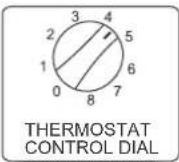
- If the unit is unplugged, power lost, or turned off, you must wait 3 to 5 minutes before restarting the unit. If you attempt to restart before this time delay, the refrigerator will not start.
- You should put your appliance in the coolest place in your room, which can save energy consumption of your appliance. If the environment temperature is too high, the temperature in the refrigerator may not get the target temperature.
Important!
Normally we advise you select setting of 2 or 3 or 4, if you want the temperature warmer or colder please turn the knob to lower or higher setting accordingly. When you turn the knob to lower which can lead to the more energy efficiency. Otherwise, it would result the energy-consuming.
Important!
High ambient temperatures (e.g. on hot summer days) and a cold setting on the temperature regulator (position 6 to 8) can cause the compressor to run continuously or even non-stop!
Reason: when the ambient temperature is high, the compressor must run continuously to maintain the low temperature in the appliance.
Interior accessories
Storage shelves/wire tray
Various glass or plastic storage shelves or wire trays are included with your appliance - different models have different combinations.
You should always slide one of the full size glass storage shelves into the lowest set of guides, above the fruit and vegetable containers, and keep it in this position. The height of the storage shelves can be adjusted:
To do this, pull the storage shelf forward until it can be swiveled upwards or downwards and removed.
Please do the same in reverse to insert the shelf at a different height.
IMPORTANT! – in order to make the most of the volume of the fresh food storage compartment and frozen-food storage compartment, the user can removed one or more shelves, drawers, out of the appliance, according to your daily use.
IMPORTANT! – In order to take full advantage of the storage volume, the user can store waterproof foodstuffs on the Drip Tray, such as packed food with heat sealing, etc. But during the process of manual defrosting, the user had better take the foodstuffs away from the drip tray.
Tips:
Food in the refrigerator should always be covered or packaged, to prevent drying and tainting of other food.
The following are suited for packaging:
Polyethylene airtight bags and wraps,
Plastic containers with lids;
Special plastic covers with elastic,
Aluminium foil.
Defrosting
Why defrosting
Water contained in food or getting into air inside the fridge be opening doors may form a layer pf frost inside. It will weaken the refrigeration when the frost is thick. While it is more than 10mm thick, you should defrost.
Defrosting in frozen-food storage compartment
Defrosting in freezer chamber is operated manually. Before defrosting, take the food out; take the ice tray and drawers out or put them into the fresh food compartment temporarily, then set the knob of the temperature regulator to position "0"(where the compressor will stop working) and leave the door of the refrigerator open until ice and frost dissolve thoroughly and accumulation at the bottom of the freezer chamber. Wipe off the water with soft cloth. In the case of speeding up the process of defrosting,
you may put a bowl of warm water (about 50°C) into the freezer chamber, and scrape away the ice and rost with a defrosting spatula. After doing so, be sure to set the knob of the temperature regulator to the original position.
It is not advisable to heat the freezer chamber directly with hot water or hair dryer while defrosting to avoid deformation of the inner case.
It is also not advisable to scrape off ice and frost or separate food from the containers which have been
congealed together with the food with sharp tools or wooden bars, so as not to damage the inner casing or the surface of the evaporator.
Warning!
Switching off the appliance.
To switch off the appliance, turn the temperature regulator to position "0".
Important!
The fridge should be defrosted at least every one month. During the using process, if the door was opened
frequently or using the appliance in the extreme humidity, we advise the user to defrost every two weeks.
Cleaning and Care
For hygienic reasons the appliance interior, including interior accessories, should be cleaned regularly.
Warning!
The appliance may not be connected to the mains during cleaning. Danger of electrical shock! Before cleaning switch the appliance off and remove the plug from the mains, or switch off or turn out the circuit breaker or fuse.
Never clean the appliance with a steam cleaner. Moisture could accumulate in electrical components, danger of electrical shock! Hot vapors can lead to the damage of plastic parts.
The appliance must be dry before it is placed back into service.
Important!
Ethereal oils and organic solvents can attack plastic parts, e.g. lemon juice or the juice from orange peel, butyric acid, cleanser that contain acetic acid.
Do not allow such substances to come into contact with appliance parts.
Do not use any abrasive cleansers.
Remove the food from the refrigerator. Store it in a cool place, well covered.
Switch the appliance off and remove the plug from the mains, or switch off or turn out the circuit breaker or fuse.
Clean the appliance and the interior accessories with a cloth and lukewarm water.
Commercially available dish washing detergents may also be used.
After cleaning wipe with fresh water and rub dry.
Accumulation of dust at the condenser increases energy consumption.
For this reason carefully clean the condenser at the back of the appliance once a year with a soft brush or a vacuum cleaner.
Check the water drain hole on the rear wall of the refrigerator compartment.
Clear a blocked drain hole with the aid of something like soft green peg, be careful not to make any damage to the cabinet by sharp things.
After everything is dry place appliance back into service.
Energy Saving tips
- Do not place warm foods into the appliance. Allow warm foods to cool first. Do not install the appliance near cookers, radiators or other sources of warmth. High ambient temperatures cause longer, more frequent operation of the compressor
- In order to make the cooling system work efficiently, please make sure the side plates and back plate of the product are with some distance from the wall. It is strongly recommended that its back is 75mm away from the wall, its sides at least have a space of 100mm separately and the height from over its top is not less than 100mm.
- When the product works, please do not open the door too often or leave the door open any longer than necessary.
- Do not set temperature any colder than necessary.
- The direct cooling refrigerator (with a freezer) needs to be defrosted when necessary. This will improve the cold transfer and reduce energy consumption.
- Store food logically. Do not exceed the storage period specified.
Trouble shooting
Correcting Malfunctions
Spare parts
The following spare parts can be ordered from your local Service Force Center. You can fit these yourself without any special skill or training, e.g.:
butter/cheese compartment,
egg holders,
door racks,
fruit and vegetable drawers,
storage racks.
A malfunction may be caused by only a minor fault that you can rectify yourself using the following instructions. Do not perform any other work on the appliance if the following information does not provide assistance in your specific case.
Important!
Repairs to refrigerators/freezers may only be performed by competent service engineers. Improper repairs can give rise to significant hazards for the user. If your appliance needs repairing, please contact your specialist dealer or your local Service Force Center.
| Symptom | Possible Cause | Remedy |
| Appliance does not work. | Appliance is not switched on. | Switch on the appliance. |
| Mains plug is not plugged in or is loose. | Insert malns plug. | |
| Fuse has blown or is defective. | Check fuse, replace if necessary. | |
| Socket is defective. | Mains malfunctions are to be corrected by an electrician. | |
| Appliance cools too much. | Temperature is set too cold. | Turn the temperature regulator to a warmer setting temporarily. |
| The food is too warm. | Temperature is not properly adjusted. | Please look in the “initial Start Up” section. |
| Door was open for an extended period. | Open the door only as short as necessary. | |
| A large quantity of warm food was placed in the appliance within the last 24 hours. | Turn the temperature regulation to a colder settling temporarily. | |
| The appliance is near a heat source. | Please look in the “installation location” section. | |
| Interlor lighting does not work. | Light bulb is defective. | Please look in the “changing the Light Bulb “section. |
| Heavy build-up of frost, possibly also on the door seal. | Door seal is not air-tight(possibly after reversing the door). | Carefully warm the leaking sections of the door seal with a hair dryer(on a cool setting). At the same time shape the warmed door seal by hand such that it sits correctly. |
| Unusual noises. | Appliance is not level. | Readjust the feet. |
| The appliance is touching the wall or other objects. | Move the appliance slightly. | |
| A component, e.g. a pipe, on the rear of the appliance is touching another part of the appliance or the wall. | If necessary, carefully bend the component out of the way. | |
| The compressor does not start immediately after changing the temperature setting. | This is normal, no error has occurred. | The compressor starts after a period of time. |
Noises during Operation
The following noises are characteristic of refrigeration appliances:
Clicks
Whenever the compressor switches on or off, a click can be heard.
Humming
As soon as the compressor is in operation, you can hear it humming.
Bubbling
When refrigerant flows into thin tubes, you can hear bubbling or splashing noises. Even after the compressor has been switched off, this noise can be heard for a short time.
Reversing the door
Warning! When changing the side at which the door opens, the appliance must not be connected to the mains. Remove plug from the mains beforehand.
The side at which the door opens can be changed from the right side (as supplied) to the left side, if the Installation site requires.
Before you start lay the refrigerator on it's back in order to gain access to the base, you should rest it on soft foam packaging or similar material to avoid damaging the cooling pipes at the rear of the refrigerator.
- Remove the upper hinge cap (7).
-
Remove the two screws blot (6) that connect the upper hinge (5) on the right side of the cabinet top.
-
Carefully lift the door and place it on a padded surface to prevent scratching.
-
Remove the plug (9) and transfer it to the uncovered hole on the right side of the unit. Be sure to press the button firmly into the hole.
-
Remove the two screws(7) that hold the lower hinge (2) on the right side of the unit.
-
Remove the screw-type leveling front leg (4) and transfer it to the right side as shown in the adjacent figure.
-
Set the door into it's new place making sure the pin enters the bushing at the lower frame section (hole).
-
Secure the upper hinge (5) previously removed in step 3 on the left side of the unit. Make sure the pin enters the bushing on the upper frame section (hole).
-
Loosely secure the lower left hinge (2) and do not tighten the bolts until the door is in the closed position and leveled.
-
Insert the plug (9) on the uncovered holes (right side).
-
Replace the upper hinge cap (7).
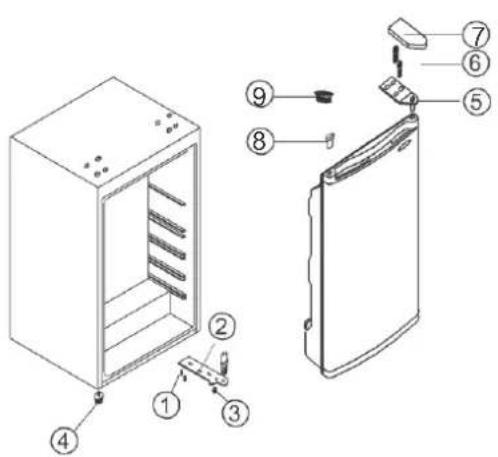
① Screw
② Low Hinge
③ Adjustable Low Foot
④ Adjustable High Foot
⑤ Upper Hinge
⑥ Screw Bolt
⑦ Upper Hinge C p
⑧ Shaft Sleeve
⑨ plug
Regulations, Standards, Guidelines
This appliance is in accordance with the following EU guidelines:
-73/23/EEC low voltage guidelines.
-89/336/EEC EMC Directive
-2009/125/EC framework for the settling of ecodesign requirements for energy-using -EC.643/2009. requirements for household refrigerating appliances.
Disposal of the appliance
It is prohibited to dispose of this appliance in domestic household waste.
For disposal there are several possibilities:
a) The municipality has established collection systems, where electronic waste can be disposed of at least free of charge to the user.
b) The manufacturer will take back the old appliance for disposal at least free of charge to the user.
c) As old products contain valuable resources, they can be sold to scrap metal dealers.
Wild disposal of waste in forests and landscapes endangers your health when hazardous substances leak into the ground-water and fin their way into the food chain.
| Correct Disposal of this product | |
| This marking indicates that this product should not be disposed with other household wastes throughout the EU. To prevent possible harm to the environment or human health from uncontrolled waste disposal, recycle it responsibly to promote the sustainable reuse of material resources. To return your used device, please use the return and collection systems or contact the retailer where the product was purchased. They can take this product for environmental safe recycling. |
HEINNER is a registered trademark of Network One Distribution SRL. Other brands and product names are trademarks or registered trademarks of their respective holders.
No part of the specifications may be reproduced in any form or by any means or used to make any derivative such as translation, transformation, or adaptation without permission from NETWORK ONE DISTRIBUTION.
Copyright © 2013 Network One Distribution. All rights reserved.
www.heinner.com, http://www.nod.ro
http://www.heinner.com, http://www.nod.ro
This product is in conformity with norms and standards of European Community
HEINNER
Хладилник
Модел: HF-100A+
natural_image
Line drawing of a rectangular container with two side handles and a flat base (no text or symbols)Уважаеми клиент
① ② ③ ④ ⑤ ⑥ ⑦ ⑧ ⑨
Винт
Долна панта
natural_image
Front view line drawing of a rectangular appliance or container with two side handles and a base (no text or symbols)Csavar
Alsó sarok
Copyright © 2013 Network One Distribution. All rights reserved. http://www.heinner.com. http://www.nod.ro
natural_image
Simple line drawing of a rectangular container or enclosure with two side handles and a base (no text or symbols)Copyright © 2013 Network One Distribution. All rights reserved.
www.heinner.com, http://www.nod.ro

- Stimate client
- Regulamente, standarde, directive
- Dear customer
- Contents
- 1.Name of parts
- Safety and warning information
- General safety
- Refrigerant
- Caution:risk of fire
- Electrical safety
- Daily use
- caution! Care and cleaning
- Installation Important!
- Remove transport packaging
- Positioning
- Starting up and temperature regulation
- NOTE:
- Important!
- Interior accessories
- Storage shelves/wire tray
- Tips:
- Defrosting
- Why defrosting
- Defrosting in frozen-food storage compartment
- Warning!
- Cleaning and Care
- Energy Saving tips
- Trouble shooting
- Correcting Malfunctions
- Spare parts
- Noises during Operation
- Clicks
- Humming
- Bubbling
- Reversing the door
- Regulations, Standards, Guidelines
- Disposal of the appliance
- HEINNER
- Уважаеми клиент
Brand : Heinner
Model : HF-100A+
Category : Fridge