
R-190ET9 - Kühlschrank HITACHI - Kostenlose Bedienungsanleitung
Finden Sie kostenlos die Bedienungsanleitung des Geräts R-190ET9 HITACHI als PDF.


| Produkttyp | Kühlschrank für den Haushalt |
| Modell | R-190ET9 |
| Marke | Hitachi |
| Farbe | Schwarz/Silber (Edelstahl-Optik) |
| Kühlmittel | R-600a (brennbar) |
| Isolierung | Cyclopentan (Treibmittel) |
| Temperaturregelung | Drehregler (Kalt / Normal / Kälteste) |
| Kühlfächer | Kühlabteil, Gefrierabteil, Gemüsefach, Chiller |
| Abtauung | Automatische und halbautomatische Abtauung |
| Eisbereitung | Eiswürfelschale (max. 4/5 gefüllt) |
| Eierablage | Für 8 Eier, umkehrbar |
| Reinigung | Monatlich mit weichem Tuch und lauwarmem Wasser; keine Scheuermittel, Benzin oder Alkohol |
| Sicherheit | Erdung erforderlich; Kühlmittelkreislauf nicht beschädigen; Kinder nicht einsteigen lassen |
| Reparatur | Nur durch qualifiziertes Fachpersonal; LED-Lampe nur durch Service |
| Ersatzteile | Ablaufwanne, Auffangbehälter (Receiver) – selbst reinigbar |
| Betriebstemperatur | Umgebungstemperatur 10 °C bis 43 °C |
| Installationsabstände | Oben 30 cm, hinten 10 cm, seitlich 5 cm |
| Stromversorgung | Haushaltssteckdose (230 V ~ 50 Hz, Absicherung gemäß Typenschild) |
Häufig gestellte Fragen - R-190ET9 HITACHI
Benutzerfragen zu R-190ET9 HITACHI
0 Frage zu diesem Gerät. Beantworten Sie die, die Sie kennen, oder stellen Sie Ihre eigene.
Eine neue Frage zu diesem Gerät stellen
Laden Sie die Anleitung für Ihr Kühlschrank kostenlos im PDF-Format! Finden Sie Ihr Handbuch R-190ET9 - HITACHI und nehmen Sie Ihr elektronisches Gerät wieder in die Hand. Auf dieser Seite sind alle Dokumente veröffentlicht, die für die Verwendung Ihres Geräts notwendig sind. R-190ET9 von der Marke HITACHI.
BEDIENUNGSANLEITUNG R-190ET9 HITACHI
Instruction Manual
Hitachi Refrigerator
For household use only
Model
R-190ET9
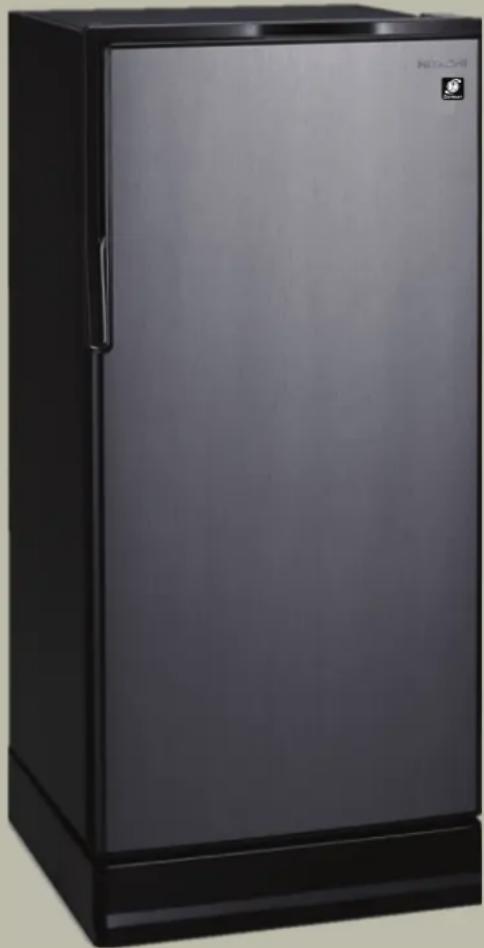
natural_image
Exterior view of a black and silver stainless steel refrigerator (no visible text or symbols)Thank you very much for purchasing the Hitachi refrigerator.
Before installation and usage, please read the users guide carefully for the correct usage.
Maintenance work must only be carried out at workshop by well-trained maintenance worker.
HITACHI
Inspire the Next
Contents
Page
Preparation for use
Warnings and caution for safety......2
Preparations before use...... 4
■ Installation...... 4
■ Before Use.... 4
■ Optimal Food Storage...... 4
Operation
Location of food storage...... 5
How to operation.... 5
■ Temperature control...... 5
■ Freezer Compartment...... 5
■ Refrigerator Compartment...... 6
■ Defrost Mode 6
Maintenance
■ Cleaning.... 7
Troubleshooting...... 8
Service Center 8
Warnings and Caution for Safety
To avoid harm to the user,
follow the warnings and cautions below and those given throughout this manual.
yTo avoid harm to the L
The following warnings and cautions are categorized by the level of possible The symbols are shown as below clearly showing the significance of directions.

Warning
This pictograph indicates "There is a high possibility of serious injury or death, if ignored".

Caution
This pictograph indicates "There is a high possibility of injury or damage to property, if ignored".
■ This refrigerator uses flammable refrigerants.
The symbol column below states the precautions on flammable refrigerants.
The symbols below are examples.

This symbol is an alert mark.

This symbol indicates "prohibited".

This symbol indicates "necessary".

This symbol denotes the precautions on flammable refrigerants.

Warning
When you install To avoid fire, electric shock, and injury

■ Do not install the refrigerator in a place where it may come in contact with water.
- Do not install the refrigerator in a place exposed to rain.
- This may impair electricity insulation and cause electric shock of fire.
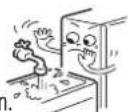

Ground this refrigerator to prevent electric shock and noise interference. Always ground this refrigerator and install earth leakage circuit breaker when using it in places with high humidity or moisture. (Please consult with a retailer or Hitachi Service Center.)
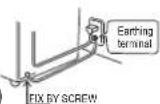
■ When positioning the appliance ensure the supply cord is not trapped or damaged.
■ Do not locate multiple portable socket-outlets or portable supplies at the rear of the appliance.
Power Cord and Power Plug To avoid fire, electric shock

■ Do not connect the wall outlet whose power capacity is less than the refrigerator's. Also, do not use power sources that are not a rated voltage.
- If a power source is shared with other appliances using double or multipoint adapters, the adapter may heat up beyond the normal level and cause fire.
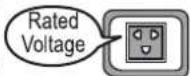
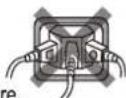


■ Do not use the damaged or loose power plug or power outlet. This may cause fire or electric shock.
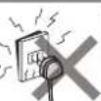

■ Connect the power plug firmly to a power outlet with the cord running down.
- Connection of the power plug with the cord running up could apply stress on the cord and cause electrical short or overheat, which could result in electrical shock or fire.
- Incomplete connection of the power plug could result in electrical shock or fire due to heat.
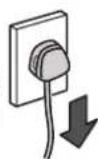

■ Be sure to unplug the power plug before maintaining the refrigerator.
- Be sure to hold the power plug to unplug.
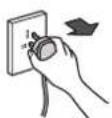

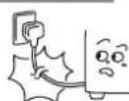
■ If the supply cord is damaged, it must be replaced by the manufacturer, its service agent or similarly qualified persons in order to avoid a hazard.
■ Clean the dust on the power plug frequently with dry cloth.
- Unplug the power plug and wipe it with dry cloth.
- An insulation failure due to moisture or when dust sticks on the power plug, may cause fire.
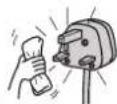

■ Do not insert or remove the power plug with wet hands.
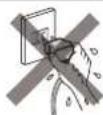
■ Do not cut, bend, fold the power cord to avoid fire and electric shock.
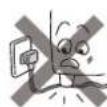
During daily use To avoid fire, electric shock

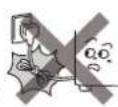
■ Do not splash water on or inside the refrigerator.
- This may impair electricity insulation causing electric shock or fire.
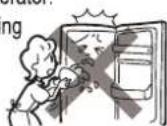

■ Do not put water containers or foreign articles on the top of the refrigerator.
- Opening and closing doors etc. may cause the articles on the top of the refrigerator
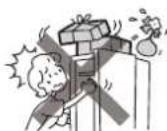

■ Do not disassemble, repair, or modify your refrigerator by yourselves.
- Please consult with a retailer if any repair is required.
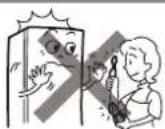

■ Do not use the refrigerator in the atmosphere of flammable gas.
- Sparks from points of electrical contacts such as door switches may ignite a fire.
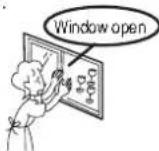
■ In the event of a flammable gas leak, do not touch the refrigerator and open the windows for ventilation.
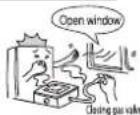
During daily use ...To avoid fire, electric shock.(Continuance)

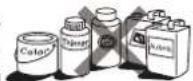
■ Ether, liquid propane gas, solvent, etc. which volatile cannot be stored in this refrigerator.
- Do not store explosive substances such as aerosol cans with a flammable propellant in this appliance.

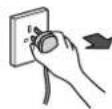
■ If you find something wrong with the refrigerator, immediately unplug and consult with the retailers.

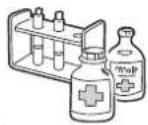
■ Medicines, chemicals, research and experimental substances should not be stored in the refrigerator.
- Substances that require precise conditions for storage cannot be stored in a domestic refrigerator.

Caution
During daily use To avoid illness and injury

■ Do not hang on the doors or step up on the various compartments.
- Injury may be caused by the refrigerator tipping over or hands getting caught in door.
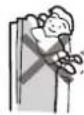

■ Do not put your hands into the bottom surface of the refrigerator cabinet.
- When cleaning, putting your hands near the bottom surface of the refrigerator may result in injury by thin metal sheets.
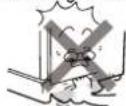

■ Do not have your feet too close when opening the door of the refrigerator.
- When opening the door, your feet may be hit, resulting in injury.
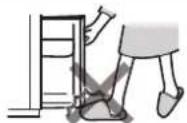

■ Do not put bottles, etc. forcibly in the door pockets
- This may cause bottles dropping down or door pockets coming off.
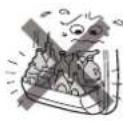

■ Do not have food items protruding over the front edge of each shelf.
- Doors may not be closed properly or the door pockets may drop down. Injury may be caused from items like bottles falling and knocking over your feet.
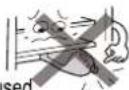

■ Do not touch a compressor behind the refrigerator.
- When refrigerator operation, a compressor will be hot. So Do not touch it be decisive.
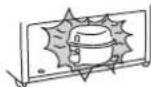

■ Do not store glass bottles in the freezer compartment.
- Bottles may break by the contents freezing and cause injury.
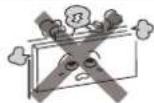

■ Do not use inflammable object near the refrigerator.
- May lead to light a fire, because Door-Switch can spark with inflammable object when using.
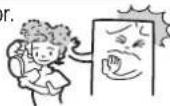

■ Do not store food which smells or food whose color is changed abnormal.
• Such an action may cause diseases.
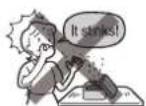

■ Do not hold the top, bottom and side of the doors when closing them.
- This may result in your fingers caught by the door edge


■ Food and containers inside the freezer compartment should not be touched with wet hands.
- This may cause frost injury. (Especially in case of metal items.)
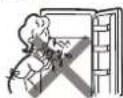

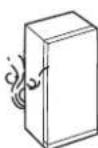
■ Do not damage the refrigerant circuit.
- If you happen to damage the refrigerant pipe, stay away from the refrigerator and avoid using fire and electrical appliances.
- And, open windows to ventilate and contact retailers or Hitachi Service Center.

■ Never use an ice pick or other sharp instrument to take front away.
- If a hole is made is the evaporator, the refrigerant leats and cooling is imparied.
- In this case, the actual expenses for repairing the refrigerating until will be charged to you.
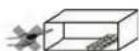
When discarding the refrigerator

■ Follow the instructions of your region when discarding.
- This refrigerator uses R-600a for the refrigerant and cyclopentane for the blowing agent of the urethane heat insulation.

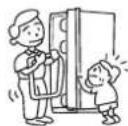
When discarding the refrigerator, remove the door gaskets. To avoid a risk of an infant or child to be entrapped inside.
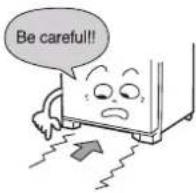
When moving or carrying ...To avoid damaging, wetting, soiling the floor, or to avoid injury.

■ Do not use door handles when carrying the refrigerator.
■ Never use the carrying handles to hang up with a chain hoist or similar machines.

- Carry the refrigerator by at least 4 persons for safety reasons.
- Carry it with the doors facing upward.
■ Before carrying the refrigerator:
- Take out all food items and ice cubes.
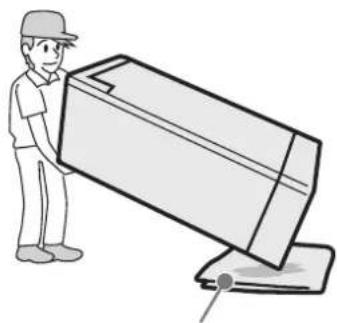
- Lay a protective sheet or cloth to protect the floor from damage and catch remaining water spilled from the refrigerator.
- With a large piece of old cloth underneath, tilt the refrigerator backward to drain water.
- Finally carry the refrigerator with the doors facing upward.
- Secure the doors well with adhesive tapes so they do not open.
- If transporting in a vehicle, do not load the refrigerator on its side. This could damage the compressor.

- For a floor that may be easily scratched, lay a protective mat, etc. .
natural_image
Illustration of a person pushing a large rectangular object with a tool, no text or symbols present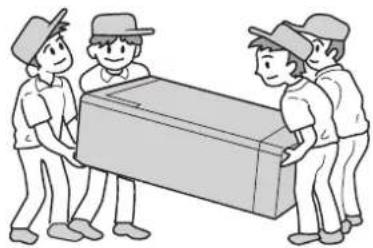
natural_image
Illustration of four people carrying a large box together (no text or symbols)Such as old cloth
When replacing lamps (LED) is required.

■ When replacing lamps (LED) is required. Please contact your dealer or Hitachi Service Center.
Preparations before Use
Installation
- Install on a rigid and level floor.
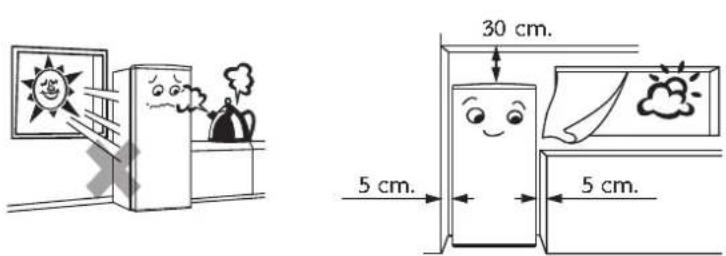
- Please use this refrigerator in a room temperature between 10°C to 43°C.
Sufficient performance may not be obtained, if the room temperature is too low or too high. - Do not install the refrigerator where it is exposed to direct sunlight or other heat source.
- Install in an atmosphere which is dry or has air ventilation.
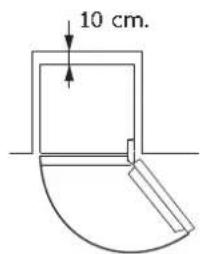
- The refrigerator requires enough air ventilation space around the cabinet to have efficient cooling performance. Space of at least 30 cm over the top, 10 cm at rear and 5 cm at both sides for proper air circulation.
- Ground the refrigerator to prevent electric shock and noise interference. Always ground this refrigerator, when using it in places with high humidity or moisture (Please consult with retailers).
- Make the refrigerator stand horizontally by adjusting the leveling legs (adjustor).
Before Use
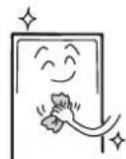
- Clean inside the refrigerator. Wipe the surface gently with soft cloth.
- Connect the refrigerator to an exclusive wall power outlet. The refrigerator can be connected to an outlet soon after it is installed. Surely use with the rated voltage and exclusive power outlet.
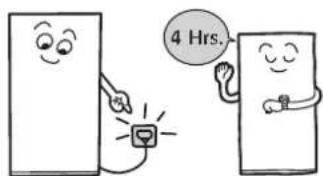
- Allow enough duration for sufficient cooling before storing food. It may take about 4 hours to fully cool down and could even take about 24 hours when the ambient temperature is high.
Optimal Food Storage
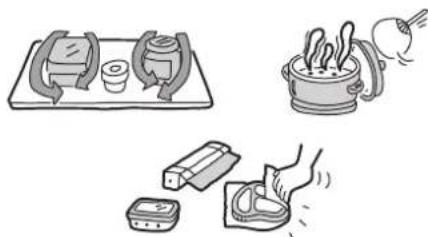
- Keep enough space between food. Several food placed too close together may obstruct the flow of cold air.
- Make food cool enough before putting it in the refrigerator. Putting warm food in the refrigerator raises the inside temperature and wastes electricity.
- Do not block the cold air vent. This will adversely affect the cold air flow and may not keep the temperature inside even. Moreover, it could result in freezing food near the vent.
- Using food wrap or sealed containers prevent the food from drying on transition of smells.
natural_image
Illustration of cooking steps: tray with food, pot with sauce, and instant noodles (no text or symbols)Location of Food Storage
Notice
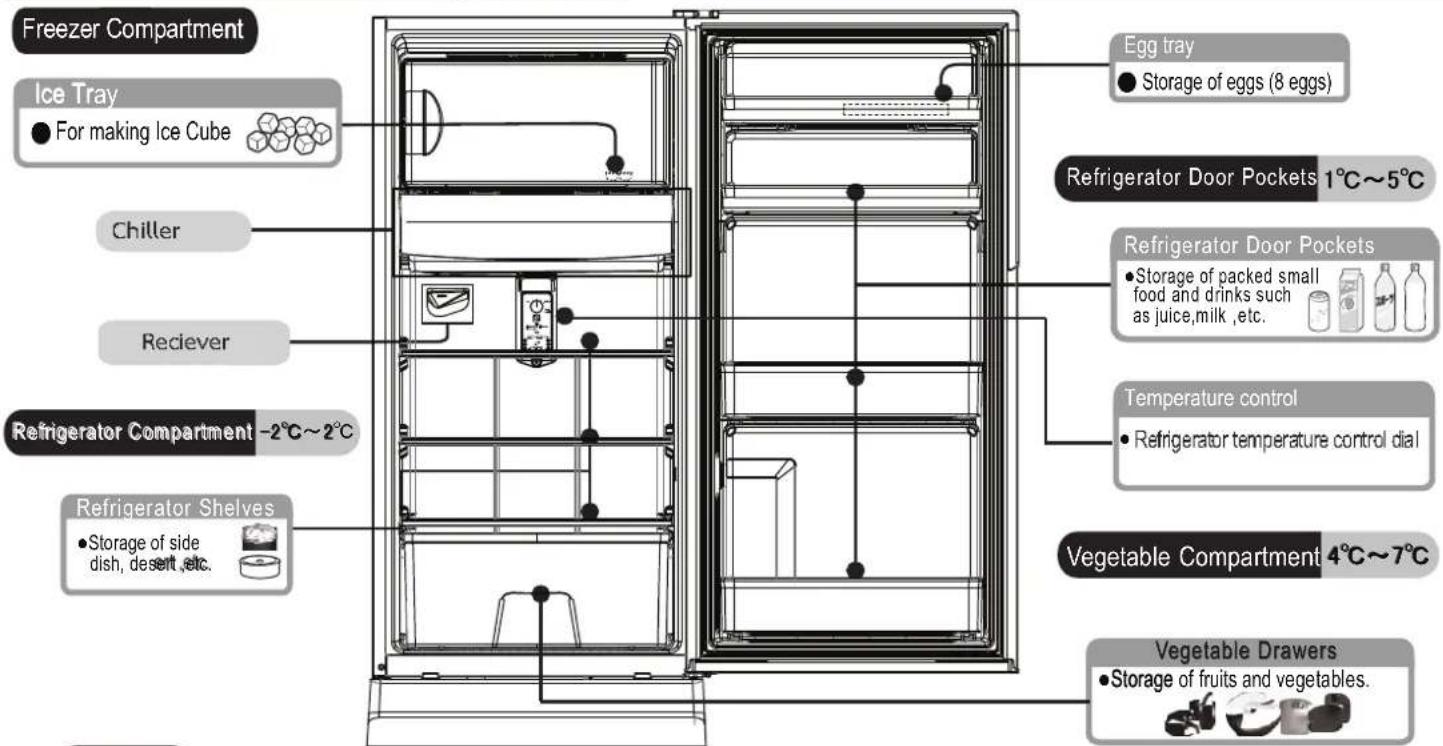
- Above temperatures are the approximate values in the conditions of outside temperature 32°C, the setting of the refrigerator compartment "Normal" while doors being closed and without food storage.
● Door pocket temperatures may be little higher than above temperatures. -The display figure is 6.4c/f model
How to operation
☐ Temperature control
This refrigerator control its temperature automatically. Please adjust a temperature control dial as follows.
| Refrigerator Compartment | When the food is too cold | For normal use. | When cooling food more coldly or quickly |
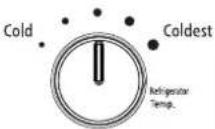 | 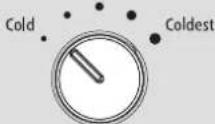 | 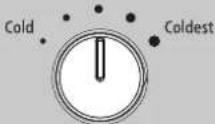 | 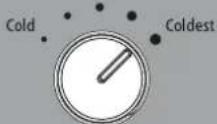 |
| Cold | Normal | Coldest |
- Please return the dial to the position of "Normal" after the "Coldest" has been set. Food may be frozen if the "Coldest" is set for a long time.
- If set the dial to the "Cold" side for a long time, the temperature of the food in freezer and refrigerator compartment may rise.
Caution about a refrigerator compartment food freeze.
- When you place the high moisture food and vegetables at the inner part of shelf nearby the cold air vent, they will be frozen. If it is possible, please do not place the high moisture food and vegetables at the inner part of the shelf nearby the cold air vent.
- When food and vegetables become frozen, you can prevent them from being frozen by wrapping or putting them in the case. If they are still frozen, please adjust the temperature by turning the temperature control dial to "Cold".
Freezer Compartment
■ Ice making
- Fill the ice tray 3/4 to 4/5 full or "WATER LEVEL to allow for expansion of water during freezing. Do not overfill."
- To remove ice cubes, twist the tray having both ends. In this case, do not bend the ice tray or it will be cracked.
- Set the temperature control dial to "Coldest" position for the rapid ice-making. Be sure to reset the dial to the original position when sufficient ice has been made.
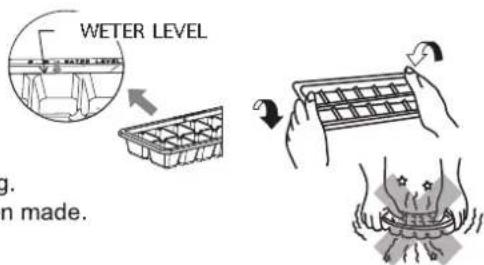
Notice
To remove ice cubes, twist the tray having both ends. In this case, do not bend the ice tray or it will be cracked. If it has a lot of ice in freezer room, please push the deforst button to clear an ice. If it has a lot of ice in Drain area, please cleaning that area. If user always open door or Refrigerator under auto defrost, Some food in freezer room may melt.
How to operation
☐ Refrigerator Compartment
■ Chiller
● Meat and fish can be kept fresh before being frozen.
Caution
- There may be water in chiller from thawed frost in freezer compartment. Thus, the following actions should be taken.
- Wrap or put your foods in boxes before keeping in chiller.
- In case of long time storing of meat or fish, please put them in freezer compartment.
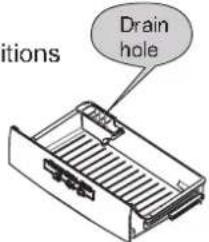
- If there is water in chiller, please clean up the drain hole in chiller.
- Please put chiller into its position firmly. Otherwise, there may be water flowing into refrigerator compartment.
- If there is water from chiller flowing into refrigerator compartment, please check the positions of the Receiver and the drain hole if there are at the same and not blocked.
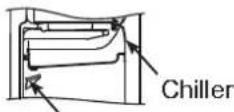
Receiver
■ Egg pocket
- It can place 8 eggs also turn the rear side to place the small pocket.
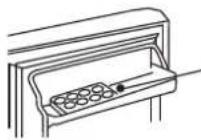
Egg case
Defrost mode
The Refrigerator has 2 mode for defrost, That are Auto defrost mode and Semi-auto defrost mode
■ Automatic defrosting mode is "ON" (Default setting)
- Normally, the refrigerator can defrost around once a day.
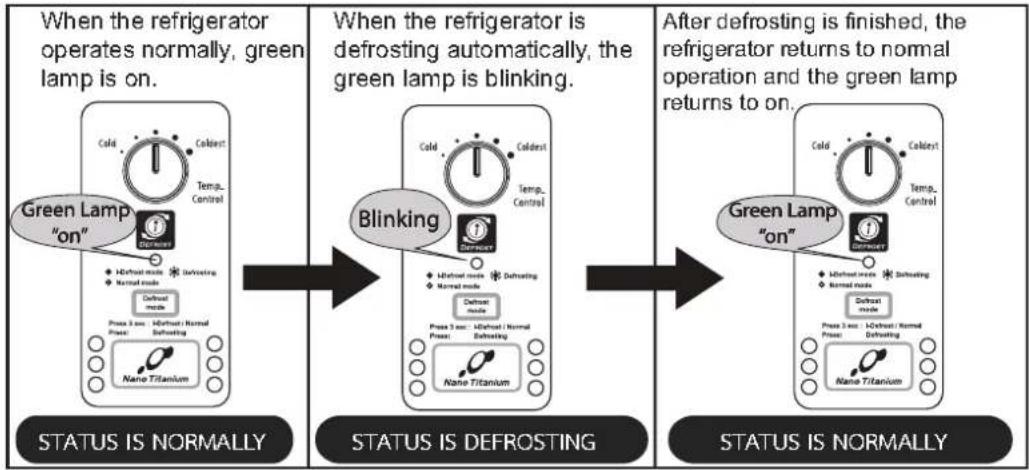
flowchart
graph LR
    A["When the refrigerator operates normally, green lamp is on."] --> B["When the refrigerator is defrosting automatically, green lamp is blinking."]
    B --> C["After defrosting is finished, the refrigerator returns to normal operation and the green lamp returns to on."]
    subgraph_Status_Normally["STATUS IS NORMALLY"]
        D["Green Lamp "on""] --> E["Blinking"]
        E --> F["Status IS DEFROSTING"]
        F --> G["After defrosting is finished, the refrigerator returns to normal operation and the green lamp returns to on."]
    end
■ Semi-auto defrosting / Automatic defrosting mode is "off" (Manual defrost)
- The frost should be defrosted when the thickness of frost about 7 mm. on the surface of evaporator. A large amount of frost on the surface of evaporator will reduce cooling efficiency. so user should be push a "Defrost mode button"
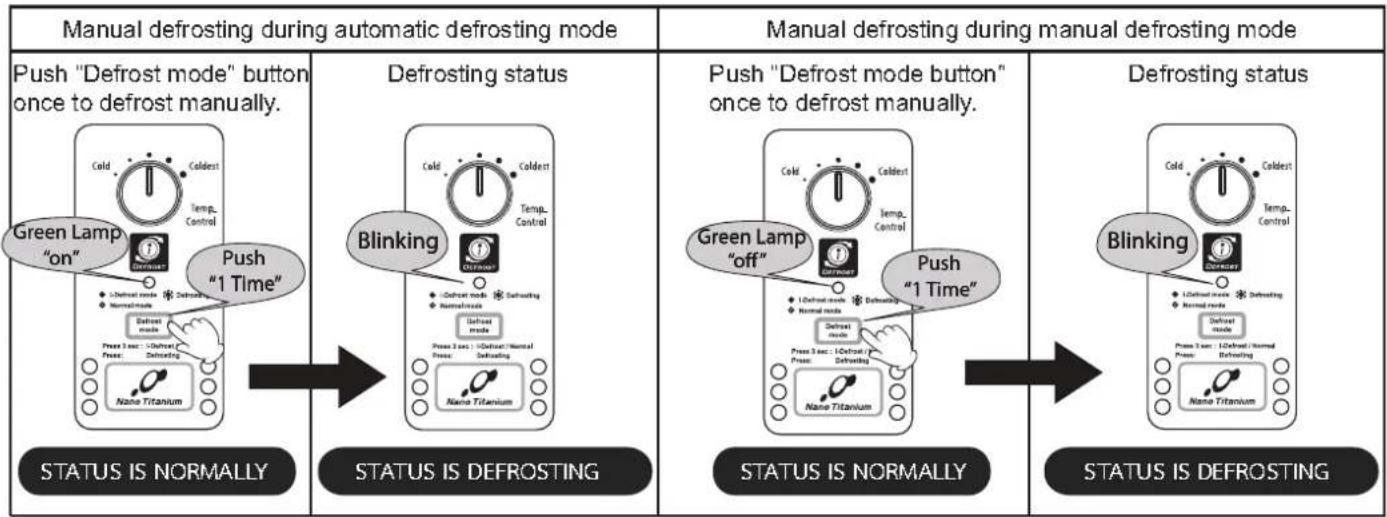
flowchart
graph LR
    A["Manual defrosting during automatic defrosting mode"] --> B["Push "Defrost mode" button once to defrost manually."]
    B --> C["Status is Normally"]
    D["Defrosting status"] --> E["Blinking"]
    E --> F["Push "Defrost mode button" once to defrost manually."]
    F --> G["Status is Normally"]
    H["Defrosting status"] --> I["Blinking"]
    I --> J["Status is DEFROSTING"]
How to operation (Continue)
DEFROST MODE (Continue)
■ How to change defrosting mode.
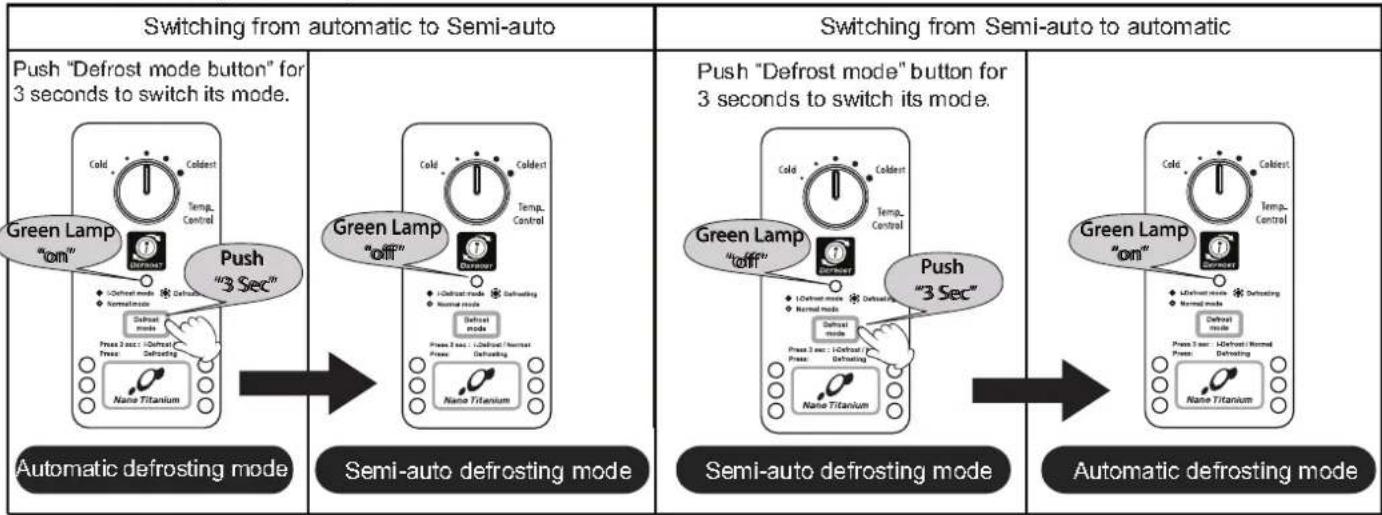
flowchart
graph LR
    A["Switching from automatic to Semi-auto"] --> B["Semi-auto defrosting mode"]
    B --> C["Switching from Semi-auto to automatic"]

    subgraph "Automatic defrosting mode"
        D["Green Lamp "on""] --> E["Push "3 Sec""]
        E --> F["Green Lamp "off""]
        F --> G["Green Lamp "off""]
        G --> H["Green Lamp "on""]
    end

    subgraph "Semi-auto defrosting mode"
        I["Green Lamp "on""] --> J["Push "3 Sec""]
        J --> K["Green Lamp "off""]
        K --> L["Green Lamp "off""]
        L --> M["Green Lamp "on""]
    end

    subgraph "Automatic defrosting mode"
        N["Green Lamp "on""] --> O["Push "3 Sec""]
        O --> P["Green Lamp "off""]
        P --> Q["Green Lamp "off""]
        Q --> R["Green Lamp "on""]
    end
Note
● Refrigerators are set to automatic defrosting before delivery.
● There may be water from defrosting flows into chiller case.
- In case of power failure or plug taked-off, the refrigerator will start with automatic defrosting mode.
- If defrost mode button is pushed while the temperature in the refrigerator is high, the lamp will be blinking simultaneously when pushed.
- Freezing to many items in the freezer room may cause ice after an automatic defrosting. Thus, push "defrost button" one time to defrost remaining ice.
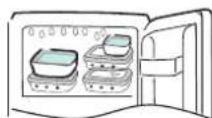
● Waterdrop in the freezer room may occur during the defrosting.
Maintenance
☐ Cleaning (Please clean the refrigerator once a month)
- Unplug the refrigerator.
- Remove all food.
- Wipe the refrigerator clean.
- It is the best if smudges are wiped off immediately. It is also recommended to clean the areas of the refrigerator not clearly in view once a year.
● Use a soft cloth moistened with lukewarm water to wipe off smudges. For difficult to remove smudges, use a diluted, neutral kitchen
● Neatly clean the door gasket because it gets dirty easily.
- If any droplets remain on the surface of the parts that have been washed, wipe them.
- Return all parts to their original locations.
- Inspect and clean the power plug, cord and outlet.
- Plug the power cord into the outlet.
Notice
- If the cooking oil smears on the refrigerator, please wipe it off. (The plastic parts might be cracked)
Caution
● The following do not use it. Parts and paint are damaged. Polishing powder, soap powder, oil, boiling water, brush, acid, benzine, thinner, alcohol and alkaline detergent, etc.
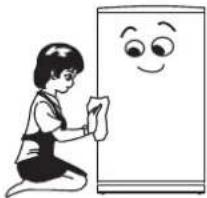
natural_image
Illustration of a girl cleaning a door with a smiling face (no text or symbols)Replace spare parts.
-
Drain pan
-
Take 2 screw out.
-
Take it off and cleaning.
-
Reciever
-
Take a screw out.
- Take it off and cleaning.
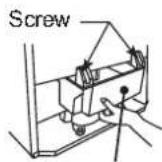
Drain-PAN
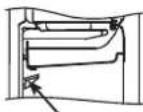
Receiver
Warning
If a cord has damage, Don't change that cord except qualified person.
If a LED lamp has damage, Don't change that cord except qualified person.
Troubleshooting
Before you call for service, please check the following items.
| The refrigerator does not get cold at all. | ● Is the refrigerator plugged in properly?● Check the fuse box for blown fuse or tripped circuit breaker. | |
| The refrigerator does not get cold enough. | ● Is the refrigerator placed in the direct sunlight? ● Is the food stored too much?● Is the refrigerator placed near heat source? ● Is the door being opened and closed too frequently?● Is the temperature control dial set to “normal” ? ● Is the door being slightly open?● Has anything hot been placed in the refrigerator? | |
| Food in the refrigerator compartment freezes. | ● Is the temperature control dial set to “Coldest” ?● Do you place the high moisture food and vegetables at the inner part of the shelf nearby the cold air vent? They will be frozen if being placed nearby the cold air vent. | |
| Dew appears. | Outside | ● When the high humidity outside and door gasket will have dew. Please wipe it up by dry cloth. |
| Inside | Please wipe it up with dry cloth and please check the details below.● Is the door closed firmly?● Is the door being opened and closed too frequently or opened for a long time?● Is it high humidity, is not it? | |
| The inside is smelling. | ● Do you store odor food without wrapping it? | |
| Sound is noisy. | ● Make sure the refrigerator is installed firmly. ● Is the refrigerator touching the wall? | |
| There are waving and/or distortions on the door surface, the side and the top surface of the refrigerator. | ● Slight waving and/or distortions are generated in the manufacturing process of the refrigerator.They may be conspicuous according to the position of the light source and/or the brightness etc., but there is no problem with the performance. | |
This is not out of order.
| The surface of the refrigerator is hot. | ● The refrigerator contains the dew prevention and heat radiation pipes.Especially the back&side may be heated when starting up or if the door is frequently opened and closed. |
| Does it have any abnormal sound? | ● The sounds like water flowing and boiling water are sound of the cooling liquid (refrigerant).● A creaking sound comes from the storage compartment. It is the sound caused by friction of the parts due to temperature change.● The sound like "Knock".It may be occur, If refrigerator under during the defrosting, may lead to some ice defrosting |
Service Center
| Service Center | TEL No. |
| ● Hitachi Australia Pty LtdLocked Bag 2052, North Ryde NSW 1670Email: custserv@hitachi.com.auWeb: www.hitachi.com.auMonday to Friday business hours 9am – 5pm (AEST) | ● 1800 Hitachi1800 4482244 |
- Telephone numbers are subject to change without notice.
- When you request repair, please check the refrigerator well according to Troubleshooting on page 8. When still abnormal, Please contact the retailer or local Hitachi Service Center.
About Non-fluorocarbon refrigerator.
- This refrigerator, including refrigerant and the heat insulator, is using hydrocarbon (non-fluorocarbon). The hydrocarbon is a material that does not rip up the ozone and have very little influence on global warming. It is the global environment concern material).
- R600a refrigerant is flammable. But the refrigerant is being sealed up by the refrigerate circuit, and never leak by usual use. In case of the refrigerate circuit being damaged by any chance, please avoid the use of fire and electric product, open the window and ventilate. Afterwards, please contact Hitachi Service Center.
Severe warning signs for Disposal
Cyclopentane is used as in the insulation. The gases in insulation material require a special disposal procedure.
Please contact your local authorities in regard to the environmentally safe disposal of this product.
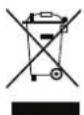
This symbol mark means that used electrical and electronic products shall not be mixed with general household waste. Do not try to dismantle the system and unit by yourself as this could have harmful effects on your health and the environment.
Refrigerators must be treated at a specialized treatment facility for recycling and recovery and shall not be disposed of in the municipal waste stream.
Please contact the installer, dealer or local authority for more information.

Warning
■ Children should be supervised to ensure that they do not play with the appliance or get in.
• Children getting inside may not be able to get out.
■ This appliance can be used by children aged from 8 years and above and persons with reduced physical, sensory or mental capabilities or lack of experience and knowledge if they have been given supervision or instruction concerning use of the appliance in a safe way and understand the hazards involved.
■ Children shall not play with the appliance.
■ Cleaning and user maintenance shall not be made by children without supervision.


- Instruction Manual
- Hitachi Refrigerator
- Model
- HITACHI
- Inspire the Next
- Contents
- Preparation for use
- Operation
- Maintenance
- Warnings and Caution for Safety
- This symbol denotes the precautions on flammable refrigerants.
- Warning
- When you install To avoid fire, electric shock, and injury
- Power Cord and Power Plug To avoid fire, electric shock
- During daily use To avoid fire, electric shock
- During daily use ...To avoid fire, electric shock.(Continuance)
- Caution
- During daily use To avoid illness and injury
- When discarding the refrigerator
- When moving or carrying ...To avoid damaging, wetting, soiling the floor, or to avoid injury.
- When replacing lamps (LED) is required.
- Preparations before Use
- Installation
- Before Use
- Optimal Food Storage
- Location of Food Storage
- Notice
- How to operation
- ☐ Temperature control
- Caution about a refrigerator compartment food freeze.
- Freezer Compartment
- ■ Ice making
- ☐ Refrigerator Compartment
- ■ Chiller
- ■ Egg pocket
- Defrost mode
- How to operation (Continue)
- Note
- Troubleshooting
- Service Center
- About Non-fluorocarbon refrigerator.
- Severe warning signs for Disposal
Marke : HITACHI
Modell : R-190ET9
Kategorie : Kühlschrank