
DCH-Z510 - Capteur de mouvement D-LINK - Notice d'utilisation et mode d'emploi gratuit
Retrouvez gratuitement la notice de l'appareil DCH-Z510 D-LINK au format PDF.


| Type de produit | Sirène Z-Wave avec détecteur de mouvement |
| Marque | D-Link |
| Modèle | DCH-Z510 |
| Alimentation | DC 5V avec batterie lithium de secours (optionnelle) |
| Fréquence radio | 868,40 MHz / 869,85 MHz (UE) ou autres selon région |
| Portée intérieure | 30 mètres minimum |
| Portée extérieure | 70 mètres en visibilité directe |
| Température de fonctionnement | -10 °C à 40 °C |
| Fonctions principales | Sirène sans fil Z-Wave Plus, détection d'effraction, alarme incendie, carillon de porte, sirène de police/ambulance, mise à jour firmware OTA |
| Protocole | Z-Wave Plus (série 500) |
| Groupes d'association | 1 groupe (max. 8 nœuds) pour rapports d'événements |
| Classe de commande supportée | Notification V4, Sensor Binary V2, Switch Binary, Association V2, Configuration, etc. |
| Installation | Ajout/Suppression via bouton anti-sabotage ou bouton circulaire |
| Réinitialisation | 4 pressions sur le bouton anti-sabotage dans 1,5 seconde |
| Nettoyage | Utiliser un chiffon sec; ne pas utiliser de produits abrasifs |
| Sécurité | Mode de sécurité Z-Wave, détection d'ouverture (anti-sabotage), conformité FCC |
| Pièces détachées | Non spécifié; batterie lithium optionnelle disponible séparément |
| Informations générales | Usage intérieur uniquement; ne pas jeter avec les déchets ménagers |
FOIRE AUX QUESTIONS - DCH-Z510 D-LINK
Questions des utilisateurs sur DCH-Z510 D-LINK
0 question sur cet appareil. Repondez a celles que vous connaissez ou posez la votre.
Poser une nouvelle question sur cet appareil
Téléchargez la notice de votre Capteur de mouvement au format PDF gratuitement ! Retrouvez votre notice DCH-Z510 - D-LINK et reprennez votre appareil électronique en main. Sur cette page sont publiés tous les documents nécessaires à l'utilisation de votre appareil DCH-Z510 de la marque D-LINK.
MODE D'EMPLOI DCH-Z510 D-LINK
DCH-Z510 Z-Wave Siren

WAVE®
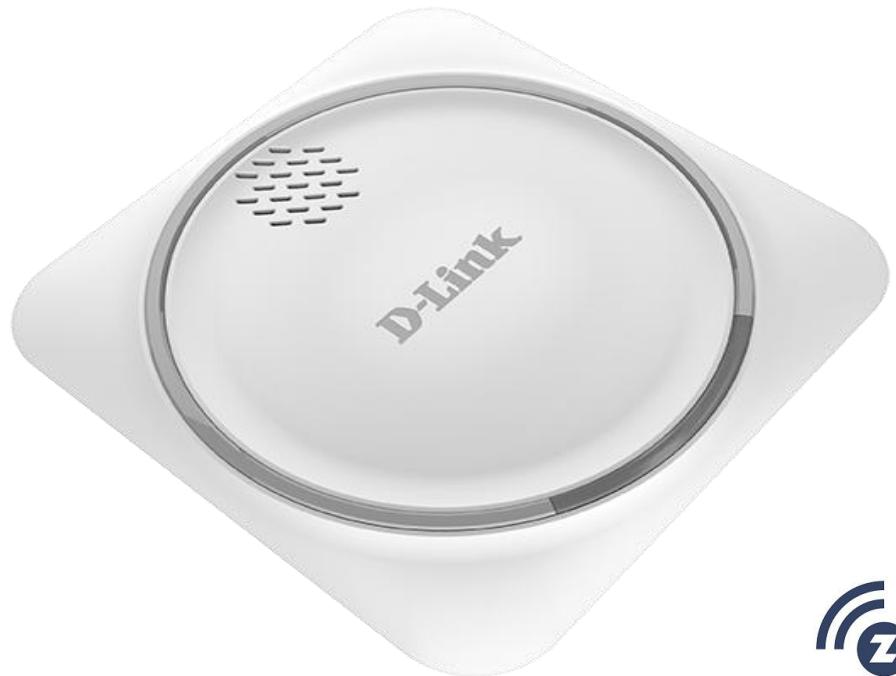
The DCH-Z510 mydlink™ Z-Wave™ Siren is a wireless siren, based on Z-Wave™ technology. It is the Z-Wave™ plus product, it supports the security, OTA... Those newest features of the Z-Wave™ technology. Z-Wave™ is a wireless communication protocol designed for home automation, specifically to remotely control applications in residential and light commercial environments. The technology uses a low-power RF radio embedded or retrofitted into home electronics devices and systems, such as lighting, home access control, entertainment systems and household appliances.
This product can be included and operated in any Z-Wave™ network with other Z-Wave™ certified devices from other manufacturers and/or other applications. All non-battery operated nodes within the network will act as repeaters regardless of vendor to increase reliability of the
network.
The device adopts the Z-Wave™ 500 series chip, when your Z-Wave™ network system is all made by Z-Wave™ 500 series devices. The network system will have the advantages as below.
- Concurrent multi-channel support reduces external interference.
- Better RF range, improve about 10 meters in indoor.
- Support 100 Kbps transmit speed, speed up communication.
Product Overview
Adding to Z-Wave™ Network
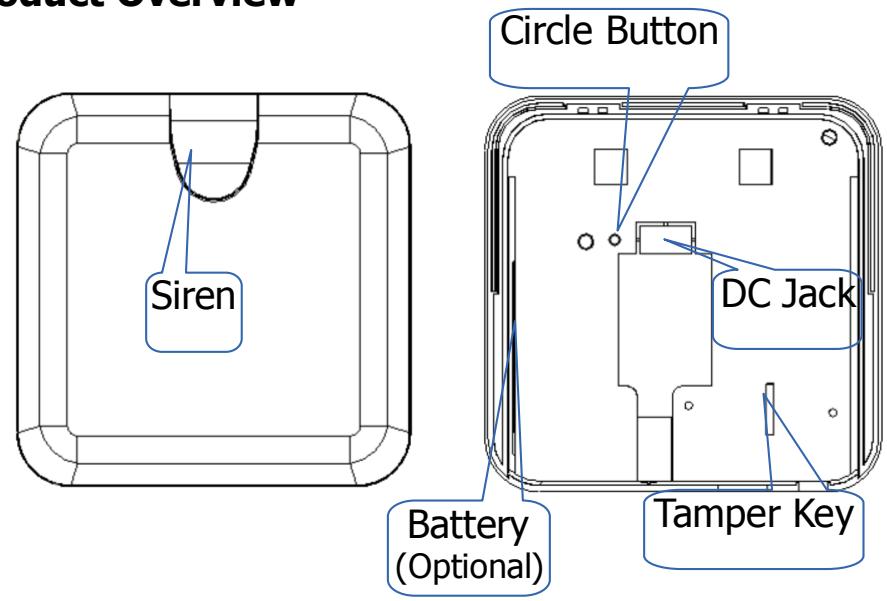
There are one tamper key and a circle button behind the device. Both of them can add, remove, reset or association from Z-Wave™ network.
In the first time, add the device into the Z-Wave™ network. First, make sure the primary controller is in the add mode. And then power
on the device. The device will auto start the NWI (Network Wide Inclusion) mode. And it should be included in 5 seconds. You will see the LED light ON one second.
Notice: Including a node ID allocated by Z-Wave™ Controller means "Add" or "Inclusion". Excluding a node ID allocated by Z-Wave™ Controller means "Remove" or "Exclusion".
| Function | Description |
| Add | 1. Have Z-Wave™ Controller entered inclusion mode. 2. Press tamper key three times within 1.5 seconds to enter the inclusion mode. 3. After add successful, the LED will light ON 1 second |
| Remove | 1. Have Z-Wave™ Controller entered exclusion mode. 2. Press tamper key three times within 1.5 seconds to enter the exclusion mode. Node ID has been excluded. |
| Reset | Notice: Use this procedure only in the event that the primary controller is lost or otherwise inoperable. 1. Press tamper key four times within 1.5 seconds and do not release the tamper key in the 4thpressed, and the LED will light ON. 2. After 3 seconds the LED will turn OFF, after that within 2 seconds, release the tamper key. If successful, the LED will light ON one second. Otherwise, the LED will flash once. 3. IDs are excluded and all settings will reset to factory default. |
| Association | 1. Have Z-Wave™ Controller entered association mode. 2. Press tamper key three times within 1.5 seconds will enter association mode. Note: The device supports 1 group. |
| The group 1 is for receiving the report message, like tamper event. And the group supports 8 nodes maximum. | |
| • Failed or success in including/excluding the node ID can be viewed from Z-Wave™ Controller. | |
Notice 1: Always RESET a Z-Wave™ device before trying to add it to a Z-Wave™ network.
Notice 2: When the device into NWI mode, the device functionality will useless. The NWI mode will timeout after 2 minutes. You can press the tamper key (or the circle button) 3 times to abort the NWI mode.
Z-Wave™ Message Report
In default the device will use Notification Report to represent the trigger event, it can be changed to Sensor Binary Report by setting the configuration NO. 7 Bit4 to 1.
* Tamper Report:
When the tamper key is pressed over 5 seconds. The device will into the alarm state. In that state, if the tamper key be released, the device will unsolicited to send the report to the nodes in the group 1.
| Notification Report (V4) |
| Notification Type: Home Security (0x07) Event: Tampering. Product covering removed (0x03) |
| Sensor Binary Report (V2) |
| Sensor Type: Tamper (0x08) Sensor Value: 0xFF |
Siren State Report
When the siren start playing or stop the alarm sounds, the device will unsolicited to send the "Sensor Binary Report" to the nodes in the group 1.
Sensor Type: General Purpose (0x01)
Sensor Value: 0xFF (Start play), or 0x00 (Stop play)
Power Up Procedure
\* NWI
When the device power on, the device will check is it already adding to the network? If doesn't, it will auto start the NWI mode. The LED will flash in every second and continue 2 minutes. Until timeout or the device successful to inclusion by controller. The use can presses the tamper key (or the circle button) 3 times to abort the NWI mode.
Play Sound
Using the SWITCH_BINARY_SET to play the siren, 0xFF will play the emergency sound, 0x00 will stop to play.
The device also supports to receive the NOTIFICATION_REPORT to play the different sound.
| Notification Type | Event | Sound |
| Smoke Alarm (0x01) | Any | Fire Alert |
| Access Control (0x06) | Window/Door Open (0x16) | Door Chime |
| Home Security (0x07) | Any | Emergency |
| Emergency Alarm (0x0A) | Contact Police (0x01) | Police Car Sound |
| Emergency Alarm (0x0A) | Contact Fire Service (0x02) | Fire Alert |
| Emergency Alarm (0x0A) | Contact Medical Service (0x03) | Ambulance Sound |
Over The Air (OTA) Firmware Update
The device supports the Z-Wave firmware update via OTA.
Before starting the procedure, please remove the back cover of the device. Otherwise the hardware check will be failed.
Let the controller into the firmware update mode, and then press the front tamper key once to start the update.
After finish the firmware download, the LED will start flash in every 0.5 second. At that time, please don't cut off the power, otherwise it will cause the firmware broken, and the device will no function.
After the LED stop flash, it is recommended that the user power up the device. Caution: After power off the device, please wait about 30 seconds, and then re-plug the power line.
Security Network
The device supports the security function. When the device included with a security controller, the device will auto switch to the security mode. In the security mode, the follow commands need using Security CC wrapped to communicate, otherwise it will not response.
COMMAND_CLASS_NOTIFICATION_V4
COMMAND_CLASS_ASSOCIATION_V2
COMMAND_CLASS_CONFIGURATION
COMMAND_CLASS_SENSOR_BINARY_V2
COMMAND_CLASS_SWITCH_BINARY
COMMAND_CLASS.Basic
Manual Battery Shutdown
When the DC power is dropped, the system will auto switch to use the battery power. If you want to really shutdown the system, please follow instructions as below.
- Press and hold the circle button.
-
Click the tamper 3 times in 1.5 seconds.
-
Release the circle button.
- If shutdown successful, the LED will flash 3 times.
After the battery shutdown, the system won't work anymore, unless the DC power recovery.
Z-Wave Configuration Settings
Notice:
- All of the configuration, the data size is 1.
- The configuration marked with star(^*) , means after the remove the setting still keep, don't reset to factory default. Unless the user execute the "RESET" procedure.
- The reserve bit or not supported bit is allowed any value, but no effect.
| NO. | Name | Def. | Valid | Description |
| 7 (*) | Customer Function | 0 | All | Customer function switch, using bit control. |
| 0 | Bit0:Reserve. | |||
| 0 | Bit1:Reserve. | |||
| 0 | Bit2:Reserve. | |||
| 0 | Bit3:Reserve. | |||
| 0 | Bit4:Notificatin Type, 0:Using Notification Report. 1:Using Sensor Binary Report. | |||
| 0 | Bit5:Reserve. | |||
| 0 | Bit6:Reserve. | |||
| 0 | Bit7:Reserve. | |||
| 29 | Disable Alarm | 0 | 0,1 | Disable the alarm function. 1:Disable Alarm, 0: Enable Alarm. Caution: After the power up,this configuration always be 0. |
| 31 | Alarm Duration | 6 | 0~12 | Play alarm sound duration,1 tick |
| 7 | is 30 second.Default is 3 minutes,maximum is 63.5 minutes 0: means never auto stop. |
Z-Wave Supported Command Class
COMMAND_CLASS_ZWAVEPLUS_INFO_V2
COMMAND_CLASS.Basic
COMMAND_CLASS_SWITCH_BINARY
COMMAND_CLASS_NOTIFICATION_V4
COMMAND_CLASS_ASSOCIATION_V2
COMMAND_CLASS_CONFIGURATION
COMMAND_CLASS_MANUFACTURER_SPECIFIC_V2
COMMAND_CLASS_VERSION_V2
COMMAND_CLASS_SENSORY_BINARY_V2
COMMAND_CLASS_ASSOCIATION_GRP_INFO
COMMAND_CLASS_POWERLEVEL
COMMAND_CLASS_DEVICE_RESETLocALLY
COMMAND_CLASS_security
COMMAND_CLASS_FIRMWARE_UPDATE_MD_V2
Specifications
Power by DC 5V, and support backup lithium battery (Optional).
Signal (Frequency):
868.40 MHz, 869.85 MHz(EU),
908.40 MHz, 916.00 MHz(US),
922~927 MHz(JP/TW),
921.40 MHz, 919.80 MHz(ANZ),
869.00 MHz(RU),
865.20 MHz(IN),
916.00 MHz(IL),
Range: Minimum 30 meters indoor, 70 meters outdoor line of sight.
Operating Temperature: -10^ 40^ For indoor use only.
Specifications subject to change without notice due to continuing product improvement.

FCC Interference Statement
This equipment has been tested and found to comply with the limits for a Class B digital device, pursuant to Part 15 of the FCC Rules. These limits are designed to provide reasonable protection against harmful interference in a residential installation. This equipment generates, uses and can radiate radio frequency energy and, if not installed and used in accordance with the instructions, may cause harmful interference to radio communications. However, there is no guarantee that interference will not occur in a particular installation. If this equipment does cause harmful interference to radio or television reception, which can be determined by turning the equipment off and on, the user is encouraged to try to correct the interference by one of the following measures:
- Reorient or relocate the receiving antenna.
- Increase the separation between the equipment and receiver.
- Connect the equipment into an outlet on a circuit different from that to which the receiver is connected.
- Consult the dealer or an experienced radio/TV technician for help.
This device complies with Part 15 of the FCC Rules. Operation is subject to the following two conditions:
(1) This device may not cause harmful interference, and
(2) This device must accept any interference received, including interference that may cause undesired operation.
FCC Caution: Any changes or modifications not expressly approved by the party responsible for compliance could void the user's authority to operate this equipment.
This transmitter must not be co-located or operating in conjunction with any other antenna or transmitter.
Warning
Do not dispose of electrical appliances as assorted municipal waste, use separate collection facilities. Contact your local government for information regarding the collection systems available. If electrical appliances are disposed of in landfills or dumps, hazardous substances can leak into the groundwater and get into the food chain, damaging your health and well-being.
When replacing old appliances with new once, the retailer is legally obligated to take back your old appliance for disposal at least for free of charge.