
60TCLW - Cuisiniere gaz BELLING - Notice d'utilisation et mode d'emploi gratuit
Retrouvez gratuitement la notice de l'appareil 60TCLW BELLING au format PDF.


| Type de produit | Cuisinière gaz posable (Freestanding Gas Cooker) |
| Marque | Belling |
| Modèle | 60TCLW |
| Largeur | 500 / 550 / 600 mm (nominal) |
| Profondeur | 600 mm (jusqu’à la porte, sans poignées) |
| Hauteur (couvercle baissé) | 900 - 915 mm |
| Hauteur (couvercle levé) | 1430 - 1445 mm |
| Poids (non emballé) | Environ 60 kg |
| Alimentation gaz | Gaz Naturel G20 (20 mbar) ou GPL G30/G31 (28-30/37 mbar) |
| Alimentation électrique | 220 - 240 V ~ 50 Hz (pour allumage et éclairage) |
| Nombre de brûleurs à gaz | 4 (dont 1 brûleur rapide et 1 brûleur wok en option) |
| Puissance des brûleurs (GN) | 1.0 kW (petit), 2.0 kW (moyen), 3.0 kW (rapide), 4.0 kW (wok optionnel) |
| Four principal | Four gaz avec thermostat, volume adapté pour plats jusqu’à 370x320 mm |
| Grill | Grill gaz avec lèche-frite et trépied réglable |
| Four supérieur (secondaire) | Présent sur certains modèles (double four) |
| Type d’allumage | Allumage électronique par batterie ou secteur (selon modèle) |
| Sécurité | Thermocouple sur brûleurs four et gazinière, coupe-gaz automatique |
| Matériau de la table | Acier inoxydable ou émail (selon finition) |
| Porte du four | Vitre trempée amovible pour nettoyage |
| Nettoyage | Plaques et grilles lavables au lave-vaisselle; brûleurs à nettoyer à la main |
| Éclairage du four | Lampe intérieure (ampoule remplaçable) |
| Minuterie | Minuteur mécanique ou électronique (selon version) |
| Accessoires inclus | Grille(s) de four, lèche-frite, trépied, support(s) pour wok (selon modèle) |
| Garantie | 12 mois constructeur |
FOIRE AUX QUESTIONS - 60TCLW BELLING
Questions des utilisateurs sur 60TCLW BELLING
0 question sur cet appareil. Repondez a celles que vous connaissez ou posez la votre.
Poser une nouvelle question sur cet appareil
Téléchargez la notice de votre Cuisiniere gaz au format PDF gratuitement ! Retrouvez votre notice 60TCLW - BELLING et reprennez votre appareil électronique en main. Sur cette page sont publiés tous les documents nécessaires à l'utilisation de votre appareil 60TCLW de la marque BELLING.
MODE D'EMPLOI 60TCLW BELLING
Users Guide & Installation Handbook

Belling
Freestanding Gas UK

CONTENTS
SAFETY
USING THE PRODUCT
- CLEANING
INSTALLATION INSTRUCTIONS
- TECHNICAL DATA
CUSTOMER CARE
INTRODUCTION
Thank you for buying this British-built appliance from us.
This guide book is designed to help you through each step of owning your new cooker, from installation to use. Please read it carefully before you start using your product, as we have endeavored to answer as many questions as possible, and provide you with as much support as we can.
If, however, you should find something missing, or not covered, please contact our Customer Care team. Their number is located on the back page of this book.
For customers outside the UK and Northern Ireland, please contact your local supplier.
When you dial this number you will hear a recorded message and be given a number of options. This indicates that your call has been accepted and is being held in a queue. Calls are answered in strict rotation as our Customer Care representatives become available.
Alternatively, general information, spares and service information is available from our website. The address is located on the back page of this book.
WARRANTY
Your new appliance comes with our 12-month guarantee, protecting you against electrical and mechanical breakdown. To register your appliance please call 0844 481 0182, complete the registration form included or register online at the web address located on the back page of this book.
For full terms & conditions of the manufacturer's guarantee, refer to the website on the back of this book.
In addition, you may wish to purchase an extended warranty. A leaflet explaining how to do this is included with your appliance.
European Directives
As a producer and a supplier of cooking appliances we are committed to the protection of the environment and are in the compliance with the WEEE directive. All our electric products are labelled accordingly with the crossed out wheeled bin symbol. This indicates, for disposal purposes at end of life, that these products must be taken to a recognised collection points, such as local authority sites/local recycling centres.
This appliance Complies with European Community Directives (CE) for household and similar electrical appliances and Gas appliances where applicable.
This appliance conforms to European Directive 2009/125/EC regarding Eco design requirements for energy-related products.
Our policy is one of constant development and improvement, therefore we cannot guarantee the strict accuracy of all of our illustrations and specifications - changes may have been made subsequent to publishing.
GAS WARNING
If you smell gas:
Do not try to light any appliance.
Do not touch any electrical switch.
Call the Gas Emergency Helpline at 0800 111999
BEFORE USING THE PRODUCT
Make sure that you have removed all packaging and wrapping. Some of the items inside this appliance may have additional wrapping.
It is advised that you turn the ovens and/ or grill on for a short while. This will burn off any residues left from manufacturing. There may be a smell which accompanies this process - but this is nothing to worry about and is harmless.
It is recommended that you wash the oven shelves, baking tray, grill pan and grill pan trivet before their first use in hot soapy water. This will remove the protective oil coating.
GENERAL
WARNING! - The appliance and its accessible parts become hot during use. Care should be taken to avoid touching heating elements. Children less than 8 years of age shall be kept away unless continuously supervised.
This appliance can be used by children aged from 8 years and above and persons with reduced physical sensory or mental capabilities or lack of experience and knowledge if they have
been given supervision or instruction concerning the use of the appliance in a safe way and understand the hazards involved. Children shall not play with the appliance. Cleaning and user maintenance shall not be made by children without supervision.
WARNING! -
Unattended cooking on a hob with fat or oil can be dangerous and may result in fire.
NEVER try to extinguish a fire with water, but switch off the appliance and then cover the flame with a lid or damp cloth.
WARNING! - Danger of fire: Do not store items on the cooking surfaces.
WARNING! - Servicing should be carried out only by authorised personnel.
WARNING! - The appliance must never be disconnected from the mains supply during use, as this will seriously affect the safety and performance, particularly in relation to surface temperatures becoming hot and gas operated parts not working efficiently. The cooling fan (if fitted) is designed to run on after the control knob has been switched off.
WARNING! -
Do not spray aerosols in the vicinity of this appliance while it is in operation.
WARNING! - Do not store or use flammable liquids or items in the vicinity of this appliance.
WARNING! -
Do not modify this appliance.
WARNING! - Do not use harsh abrasive cleaners or sharp metal scrapers to clean the oven door glass since they can scratch the surface, which may result in shattering of the glass.
WARNING! - Do not operate the appliance without the glass panel correctly fitted.
WARNING! - There is a risk of electric shock, so always make sure you have turned off and unplugged your appliance before starting. Always allow the product to cool down before you change a bulb.
WARNING! - Accessible parts may become hot when the grill is in use. children should be kept away.
WARNING! - Never place food, or dishes on the base of the main oven, the element is here and it will cause over heating.
WARNING! - Do not modify the outer panels of this appliance in any way.
WARNING! - This appliance must be earthed.
WARNING! - The top element gets extremely hot when in use, so take care to avoid touching it.
GAS WARNING! -
If you smell gas:
Do not try to light any appliance.
Do not touch any electrical switch.
Contact your local gas supplier immediately.
Caution: This appliance is for cooking purposes
only. It must not be used for other purposes, for example room heating.
WARNING! - The use of inappropriate hob guards can cause accidents.
OVEN / GRILL
Do
Always take care when removing food from the oven as the area around the cavity may be hot.
Always use oven gloves when handling any utensils that have been in the oven as they will be hot.
Always make sure that the oven shelves are resting in the correct position between two runners. Do not place the oven shelves on top of the highest runner, as this is not stable and can lead to spillage or injury.
Always use the Minute Minder (if fitted) if you are leaving the oven unattended - this reduces the risk of food burning.
Do Not
- Never place items on the door while it is open.
- Never wrap foil around the oven shelves or allow foil to block the flue.
- Never drape tea towels near the oven while it is on; this will cause a fire hazard.
- Never pull heavy items, such as turkeys or large joints of meat, out from the oven on the shelf, as they may overbalance and fall.
- Never use this appliance to heat anything other than food items and do
not use it for heating the room.
GAS HOB
Do
Always ensure that pan bases are dry and flat before using them on the hob.
- Always position pans over the centre of the heat zone, and turn the handles to a safe position so they cannot be knocked or grabbed.
Always use pans which are no smaller than 100mm(4^ ) , or larger than 250 mm (10^ ) in diameter.
- Limit the maximum flat based pan diameter to 230mm (9") above the wok burner, if two or more other hotplate burners are in use at the same time.
Always match the size of pan to the heat zone - do not use large pans on small zones or vice versa.
- Always make sure that the burner caps, rings and pan supports are correctly placed. This will prevent pans becoming unstable while in use and ensure an uninterrupted gas flow.
Important
Ensure the wok burner skirt is positioned with the feature shown in the diagram below facing the front of the cooker. Failure to do this will cause the gas to burn incorrectly with an irregular flame pattern.
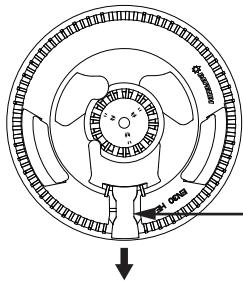
ENSURE WOK BURNER SKIRT IS POSITIONED WITH FEATURE FACING THE FRONT OF THE COOKER.
Do Not
- Never use double pans, rim-based
pans, old or misshapen pans, or any pan that is not stable on a flat surface, including round bottomed woks, directly on top of the pan supports
- Never leave cooking fat, or oil, unattended.
- Never use commercial simmering aids, or heat diffusers, as they create excessive heat and can damage the surface of the hob.
- Never use the hob for any other purpose than cooking food or raising the temperature of fluids.
- Plastic cooking utensils can melt if they come into contact with a warm hob. Never leave them close to, or on top of the hob.
- Never leave any heat zone alight without a pan covering it. This causes a fire hazard.
- Never leave an empty pan on a heating zone.
- Never leave anything lying on the hob.
- Never heat a sealed tin of food, as it might explode.
- Never use the hob surface for storage.
Fire Safety Advice
Most kitchen fires occur when people are distracted or leave things unattended. Don't let yourself be distracted while cooking. If you're called away from the cooker, either take pans off the heat, or switch off your hob.
If you do have a fire in the kitchen, don't take any risks - get everyone out of your home and call the Fire Brigade.
If a pan catches fire:
- Do not move it. It is likely to be
extremely hot.
- Turn off the heat if it is safe to do so but never lean over a pan to reach the controls.
If you have a fire blanket, put it over the pan. If you have put the fire out, leave the pan to cool completely.
Deep-fat frying presents more dangers in your kitchen.
- Never fill a chip pan (or other deep-fat fryer) more than one-third full of oil.
- Do not use a fire extinguisher on a pan of oil, the force of the extinguisher can spread the fire and create a fireball.
If you have an electrical fire in the kitchen:
Pull the plug out, or switch off the power at the fuse box. This may be enough to stop the fire immediately.
- Smother the fire with a fire blanket, or use a dry powder or carbon dioxide extinguisher.
- Remember: never use water on a cooking oil or electrical fire.
- If your hob is supplied with left and right handed pan supports, ensure that they are located over the alignment pins and are sitting flat on the hob.
- Use pans which are large enough to avoid overflows onto the hob surface.
- Wipe any spillage as soon as possible.
- Clean the hob top as regularly as possible, this will prevent any build up of grease which may be a fire hazard.
- Pans should not be allowed to come into contact with coloured trims during use as this may cause discolouration of the surface
Hob Ignition & Use
- To turn on burners other than WOK, push in and turn the control knob to the full on position (large flame symbol). If your hob has an ignition switch on the facia, press it in until your burner lights.
- Hold the control knob in for 15 seconds then release. If the burner fails to light within this time, release the control knob and wait one minute before attempting to re-ignite.
- To turn on the WOK burner (if fitted), turn the WOK burner control knob to the simmer position (small flame symbol). Push in the control knob and after a couple of seconds press the ignition switch.
-
Hold the control knob in for 15 seconds then release. If the burner fails to light within this time, release the control knob and wait one minute before attempting to re-ignite.
NOTE : After the WOK burner is lit, please allow the burner to warm up for a few minutes before placing the pan over it. -
To simmer, turn the control knob to the small flame symbol. This will ensure that the flame is just large enough to gently heat the contents of the pan.
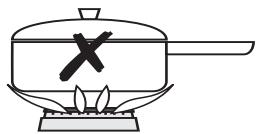
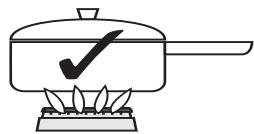
- To turn off, turn the control knob clockwise to the 'off' position.
Always make sure that your pans are placed centrally on the burners and do not allow the flame to extend over the base of the pan. - Avoid the use of pans that overhang the edges of the hotplate.
In the event of a power failure, or the ignition not working, then a lighted match or taper can be used to light the burner.
Energy Saving
- Position pans centrally over the elements.
- Only heat the amount of liquid you need.
- Once liquids have been brought to the boil, reduce the heat setting to a simmer.
- Consider using a pressure cooker if possible.
- Vegetables cut into small pieces will cook more quickly.
- Use a pan which is a close match to your burner size.
- Smaller burners are ideal for sim- mering and stewing in smaller pans, while the larger burners are ideal for frying and boiling.
FOLD DOWN LID (IF FITTED)
Caution: Glass lids may shatter when heated. Turn off all the burners before shutting the lid.
When opening and closing the lid, use the cooler outer sides of the lid glass.
The lid must be opened fully, so there is no danger of it closing while the hob is being used.
Appliances fitted with glass lids are fitted with a safety system which will automatically turn off the hot plate burners if they are inadvertently left on as the lid is closed.
The lid is not intended to be used as a work surface, as it becomes hot when any part of the cooker is in use, and the surface may be scratched if items with rough or sharp surfaces are placed on it.
WOK RING (IF SUPPLIED)
The wok ring should only be used with a wok. No other style of pan is suitable for use with this accessory.
If desired, the wok ring should be located on top of the pan supports around the centre burner.
The locating cutouts on the bottom of the wok ring engage with the four fingers of the pan supports around the centre burner location.
Ensure the wok ring is located correctly, is fully engaged with the pan support fingers and is not able to rotate or slide across the pan supports before use.
Always locate the wok ring before lighting the burner.
Caution: The wok ring will become hot in use. Ensure it has cooled fully before removing or cleaning it.
NOTE: Due to the temperatures the wok ring will operate under during use, discolouration will occur.
Caution: Accessible parts may be hot when the grill is used - young children should be kept away.
A grill pan handle can be purchased as an optional extra from our spares department quoting the numbers below.
Handle - 082283705
Handle grip - 082469100
Complete grillpan pack - 012635666
Contact details can be found on the customer care page.
If cleaning the grill pan when it is hot, use oven gloves to move it.
Food for grilling should be positioned centrally on the trivet.
Using the grill
Important: The grill door must be fully open when the grill is used.
Open the grill door. Push in and turn the control knob to the 'FULL ON' position. Hold the knob in for 15 seconds and press the ignition switch if fitted or hold a lit match or taper to the burner, until it lights. If the burner fails to light within this time, release the knob and wait for 1 minute before attempting further ignition.
Push the grill pan towards the back of the shelf, to position it under the grill.
The speed of grilling can be controlled by selecting a higher or lower shelf position. For toasting, and for grilling foods such as bacon, sausages or steaks, use a higher shelf position. For thicker foods such as chops or chicken joint pieces, use a middle to low shelf position.
The grill trivet, inside the grill pan, can be inverted to give a high or low position, or it may be removed.
Variation in grilling can be achieved by setting the control between the small and large flame symbols.
Important: Never operate the grill between the large flame and the 'OFF' position.
To switch off, turn the control knob to the off position.
Using aluminium foil
Using aluminium foil to cover the grill pan, or putting items wrapped in foil under the grill creates a fire hazard.
The cooling fan (if fitted)
When the grill is switched on, the cooling fan comes on to keep the fascia and control knobs cool during grilling. The fan may continue to operate for a period after the grill has been switched off.
During use the fan may cycle on and off, this is normal.
Caution: Accessible parts may be hot when the grill is used - young children should be kept away.
A grill pan handle can be purchased as an optional extra from our spares department quoting the numbers below.
Handle - 082283705
Handle grip - 082469100
Complete grillpan pack - 012635666
Contact details can be found on the customer care page.
If cleaning the grill pan when it is hot, use oven gloves to move it.
Food for grilling should be positioned centrally on the trivet.
Using the grill
Important: The grill door must be fully open when the grill is used.
Open the grill door. Turn the grill control knob to the grill symbol position. For best cooking results, we recommend that you preheat the grill for about 3 minutes.
Push the grill pan towards the back of the shelf, to position it under the grill.
The speed of grilling can be controlled by selecting a higher or lower shelf position. For toasting, and for grilling foods such as bacon, sausages or steaks, use a higher shelf position. For thicker foods such as chops or chicken joint pieces, use a middle to low shelf position.
The grill trivet, inside the grill pan, can be inverted to give a high or low position, or it may be removed. The HIGH trivet position is suitable for toasting bread. The LOW trivet position is suitable for grilling all types of meat & fish.
With the grill trivet removed the food is placed directly on the base of the grill pan - eg: when cooking whole fish or browning dishes such as cauliflower cheese.
To switch off, turn the control knob to the off position.
Aluminium foil
Using aluminium foil to cover the grill pan, or putting items wrapped in foil under the grill creates a fire hazard.
The cooling fan (if fitted)
When the grill is switched on, after a short delay, the cooling fan comes on to keep the fascia and control knobs cool during grilling. The fan may continue to operate for a period after the grill has been switched off.
During use the fan may cycle on and off, this is normal.
USING THE TOP OVEN
Ignition
Push in and turn the top oven control knob to the 'FULL ON' position. Hold the control knob in, and press the ignition switch (if fitted) or hold a lighted match or taper to the burner, until the burner lights. Hold the control knob in for 15 seconds. Do not hold the control knob in for longer than 15 seconds. If the burner fails to light within this time, release the control knob and wait one minute before attempting further ignition.
Turn the control knob to the required setting.
To switch off, return the control knob to the off position.
Note; Some appliance's are automatic ignition and do not have an ignition switch.
Using the top oven
The top oven can be used in the same way as the main oven, to cook the full range of dishes, but it is a SECONDARY oven and there are some differences.
Foods cooked in the top oven should be in relation to the oven size. Larger dishes, or food which may rise during cooking, should be cooked in the main oven.
Large items, wide tins and tall items such as rich fruit cakes should be cooked in the main oven to obtain optimum results.
Notes:
As part of the cooking process, hot air is expelled through a vent at the top of the oven(s). When opening the oven door, care should be taken to avoid any possible contact with potentially hot air, since this may cause discomfort to people with sensitive skin. We recommend that you hold the underneath of the oven door handle.
Preheating
Always preheat the top oven for 15 minutes. However, if the main oven is being used at the same time, then preheating may not be necessary. The cooking time may need to be shortened slightly, or the cooking temperature adjusted, to allow for heat transfer from the main oven to the top oven if both ovens are used together.
If you are not preheating the oven, the cooking times in the baking guide may need to be extended, as they are based on a preheated oven.
The oven must be preheated when reheating frozen or chilled foods, and we recommend preheating for yeast mixtures, batters, soufflés and whisked sponges.
Put the oven shelves in the position required before preheating the oven.
Zones of heat
The temperature at the centre of the oven corresponds with the selected gas mark and is slightly higher towards the top of the oven and slightly lower towards the oven base.
These zones of heat can be useful as different dishes requiring different temperatures can be cooked at the same time, when more than one shelf is used.
The temperature at the oven base is suitable for cooking baked vegetables, baked fruit, milk pudding etc, and for warming bread rolls, soup, coffee, or ovenproof plates and dishes.
If you find that over a period of time, the oven becomes hotter when used at a particular gas mark, the thermostat may need to be replaced.
OVEN FURNITURE
Baking tray and roasting tins
For best cooked results and even brown- ing, the maximum size baking trays and roasting tins that should be used are as follows;
Baking tray 350mm x 330mm
Roasting tin 370mm x 320mm
Position baking trays and roasting tins on the middle of the shelves, and leave one clear shelf position between shelves, to allow for circulation of heat.
Oven shelves
Extra shelves may be ordered from your local supplier.
The oven shelf must be positioned with the upstand at the rear of the oven and facing upwards.
The top oven shelf helps to ensure even baking in the top oven. It has a rear deflector fitted to it, and is not intended for use in the main oven.
OVEN LIGHT (IF FITTED)
Press the light button on the facia panel. If there is no light button the oven light will come on when the oven control is operated.
SLOW COOKING
Make sure that frozen foods are thoroughly thawed before cooking.
Do not slow cook joints of meat or poultry weighing more than 2 14 ~kg / 4 12 lb .
Always use the top half of the oven for slow cooking.
For roasting joints of meat or poultry, and for pot roasts preheat the oven to gas mark 6 and cook for 30 minutes, then adjust the oven control to the "S" slow setting for the remainder of the cooking time.
Slow cooking times will be about three times as long as conventional cooking times.
TOP OVEN BAKING GUIDE
| Dish | Recommended gas mark | Suggested shelf position | Approximate cooking time (preheated oven) |
| Scones Meringues | 7 “S” slow setting | top - middle bottom | 10 - 15 mins 2 - 3 hours |
| Cakes | |||
| Small cakes | 5 | middle | 15 - 25 mins |
| Whisked sponge | 5 | middle | 20 - 30 mins |
| Swiss roll | 6 | middle | 10 - 12 mins |
| Victoria sandwich | 4 | middle | 20 - 35 mins |
| (2 x 180mm / 7” per shelf) | (side by side) | ||
| Genoese Sponge | 5 | middle | 25 - 30 mins |
| (2 x 180mm / 7” per shelf) | |||
| Pastry | |||
| Rough Puff | 7 | middle | cooking time |
| Flaky / Puff | 6 | middle | depends on |
| Shortcrust | 6 | middle | recipe & type of filling |
| Flan | 6 | middle | |
| Biscuits | |||
| Shortbread fingers | 5 | middle - top | |
| Nut brownies | 5 | middle | |
| Brandy snaps | 4 | middle - top | |
| Flapjacks | 4 | middle - top | |
| Ginger nuts | 5 | middle - top |
Baking guide hints
The gas mark settings and times given in the top baking guides are based on dishes made wit block margarine. If tub margarine is used, it may be necessary to reduce the gas mark setting.
If a different gas mark setting to that shown in our guide is given in a recipe, the recipe instruction should be followed.
The cooking times given in the baking guides are based on a preheated oven. If you do not preheat the oven, cooking times should be extended.
Traditional fruit cakes
It should be remembered that ovens can vary over time, therefore cooking times can vary, making it difficult to be precise when baking fruit cakes.
It is necessary therefore, to test the cake before removal from the oven. Use a fine warmed skewer inserted into the centre of the cake. If the skewer comes out clean, then the cake is cooked.
- Do not attempt to make Christmas cakes larger than the oven can cope with, you should allow at least 25mm (1 inch) space between the oven walls and the tin.
Always follow the temperatures recommended in the recipe. - To protect a very rich fruit cake during cooking, tie 2 layers of brown paper around the tin.
We recommend that the cake tin is not stood on layers of brown paper, as this can hinder effective circulation of air. - Do not use soft tub margarine for rich fruit cakes, unless specified in the recipe.
Always use the correct size and shape of tin for the recipe quantities.
Roast turkey
Roasting turkey involves cooking two different types of meat - the delicate light breast meat, which must not be allowed to dry out, and the darker leg meat, which takes longer to cook.
The turkey must be roasted long enough for the legs to cook, so frequent bast- ing is necessary. The breast meat can be covered once browned.
Always make sure that the turkey is completely thawed and that the giblets are removed before cooking.
Turkey should be roasted at gas mark 5 for 20 minutes per lb, plus 20 minutes, unless packaging advises otherwise.
- The turkey can be open roasted, breast side down, for half of the cook time, and then turned over for the remainder of the cooking time.
- If the turkey is stuffed, add 5 minutes per lb to the cooking time.
- If roasting turkey covered with foil, add 5 minutes per 1lb to the cooking time.
To test if the turkey is cooked, push a fine skewer into the thickest part of the thigh. If the juices run clear, the turkey is cooked. If the juices are still pink, the turkey will need longer cooking.
Please note:- for all other Roasting guides refer to main oven section and see table.
Roasting guide
The times given in the roasting guide are only approximate, because the size and age of the bird will influence cooking times as will the shape of a joint and the proportion of the bone.
Frozen meat should be thoroughly thawed before cooking. For large joints it is advisable to thaw overnight.
Frozen poultry should be thoroughly thawed before cooking. The time required depends on the size of the bird - eg; a large turkey may take up to 48 hours to thaw.
Use of a trivet with a roasting tin will reduce fat splashing and will help to keep the oven interior clean. Alternatively, to help reduce fat splashing, potatoes or other vegetables can be roasted around the meat/poultry.
Notes:
- When cooking stuffed meat or poultry, calculate the cooking time from the total weight of the meat plus the stuffing.
- For joints cooked in foil or covered roasters, and for lidded casseroles, add 5 minutes per 450 ~g (1lb) to the calculated cooking time.
- Smaller joints weighing less than 1.25 ~kg (2 1 / 2 lb) may require 5 minutes per 450 ~g (1 lb) extra cooking time.
- Position the oven shelf so that the meat or poultry is in the centre of the oven.
It is recommended that the appliance is cleaned after open roasting.
| Cook in oven at Gas Mark 5 | Approximate Cooking Time (preheated oven) | |
| Beef | Rare | 20 minutes per 450g (1lb), plus 20 minutes |
| Medium | 25 minutes per 450g (1lb), plus 25 minutes | |
| Well done | 30 minutes per 450g (1lb), plus 30 minutes | |
| Lamb | Medium | 25 minutes per 450g (1lb), plus 25 minutes |
| Well Done | 30 minutes per 450g (1lb), plus 30 minutes | |
| Pork | 35 minutes per 450g (1lb), plus 35 minutes | |
| Poultry | 20 minutes per 450g (1lb), plus 20 minutes | |
USING THE MAIN OVEN
Ignition
Push in and turn the main oven control knob to the 'FULL ON' position. Hold the control knob in, and press the ignition switch (if fitted) or hold a lighted match or taper to the burner, until the burner lights. If after 15 seconds, the burner has not lit, turn off the oven and leave the compartment door open. Wait at least one minute before a further attempt to ignite the burner.
Do not hold the control knob in for more than 15 seconds.
Turn the control knob to the required setting.
Note; Some appliance's are automatic ignition and do not include neither require an ignition switch.
To turn off, return the control knob to the "off" position.
Preheat the main oven for 15 minutes. If you are not preheating the oven, the cooking times in the baking guides may need to be extended, as they are based on a preheated oven.
The oven must be preheated when reheating frozen or chilled foods, and we recommend preheating for yeast mixtures, batters, soufflés and whisked sponges. Put the oven shelves in the position required before preheating the oven.
Zones of heat
The temperature at the centre of the oven corresponds with the selected gas mark and is slightly higher towards the top of the oven and slightly lower towards the oven base. These zones of heat can be useful as different dishes requiring different temperatures can be cooked at the same time, when more than one shelf is used.
The temperature at the oven base is suitable for cooking baked vegetables, baked fruit, milk pudding etc, and for warming bread rolls, soup, coffee, or ovenproof plates and dishes.
If you find that over a period of time, the oven becomes hotter when used at a particular gas mark, the thermostat may need to be replaced.
Oven light (if fitted)
Press the light button on the facia panel. If there is no light button the oven light will come on when the oven control is operated.
OVEN FURNITURE
Baking tray and roasting tins
For best cooked results and even brown- ing, the maximum size baking trays and roasting tins that should be used are as follows;
Baking tray 350 ~mm × 330 ~mm
Roasting tin 370mm x 320mm
Position baking trays and roasting tins on the middle of the shelves, and leave one clear shelf position between shelves, to allow for circulation of heat.
Oven shelves
Extra shelves may be ordered from your local supplier.
The oven shelf must be positioned with the up-stand at the rear of the oven and facing upwards.
SLOW COOKING
Make sure that frozen foods are thoroughly thawed before cooking.
Do not slow cook joints of meat or poultry weighing more than 2 14 ~kg / 4 12 lb .
Always use the top half of the oven for slow cooking.
For roasting joints of meat or poultry, and for pot roasts preheat the oven to gas mark 6 and cook for 30 minutes, then adjust the oven control to the "S" slow setting for the remainder of the cooking time.
Slow cooking times will be about three times as long as conventional cooking times.
MAIN OVEN BAKING GUIDE
| Dish | Recommended gas mark | Suggested shelf position | Approximate cooking time (preheated oven) |
| Scones | 7 | middle - top | 8 - 15 mins |
| Meringues | “S” slow set | bottom | 2 - 3 hours |
| Cakes | |||
| Small cakes | 5 | middle - top | 15 - 25 mins |
| Whisked sponge | 5 | middle - top | 20 - 25 mins |
| Swiss roll | 6 | middle - top | 10 - 12 mins |
| Victoria sandwich | 4 | middle - top | 20 - 30 mins |
| (2 x 180mm/7”) | 4 | middle | 20 - 30 mins |
| Genoese sponge | 3 | middle | 1 - 1¼ hours |
| Madeira (180mm/7”) | 3 | middle | 1 - 1¼ hours |
| Gingerbread | 2 or 3 | middle - top | 2½ - 3 hours |
| Semi rich fruit cake | |||
| (205mm/8”) | 1 or 2 | bottom | depending on recipe |
| Christmas cake | |||
| (205mm/8”) | 3 | middle - bottom | 2 - 2½ hours |
| Dundee cake (205mm/8”) | |||
| Pastry | |||
| Rough Puff | 7 | middle - top | Cooking time |
| Flaky/Puff | 6 | middle - top | depends on recipe and type of filling |
| Shortcrust | 6 | middle - top | |
| Flan | 6 | middle - top | |
| Biscuits | |||
| Nut brownies | 5 | middle - top | 25 - 35 mins |
| Brandy snaps | 4 | middle - top | 10 - 12 mins |
| Flapjacks | 4 | middle - top | 20 - 25 mins |
| Gingernuts | 4 | middle - top | 10 - 20 mins |
Traditional fruit cakes
It should be remembered that ovens can vary over time, therefore cooking times can vary, making it difficult to be precise when baking fruit cakes.
It is necessary therefore, to test the cake before removal from the oven. Use a fine warmed skewer inserted into the centre of the cake. If the skewer comes out clean, then the cake is cooked.
- Do not attempt to make Christmas cakes larger than the oven can cope with, you should allow at least 25mm (1 inch) space between the oven walls and the tin.
Always follow the temperatures recommended in the recipe. - To protect a very rich fruit cake during cooking, tie 2 layers of brown paper around the tin.
We recommend that the cake tin is not stood on layers of brown paper, as this can hinder effective circulation of air. - Do not use soft tub margarine for rich fruit cakes, unless specified in the recipe.
Always use the correct size and shape of tin for the recipe quantities.
Roast turkey
Roasting turkey involves cooking two different types of meat - the delicate light breast meat, which must not be allowed to dry out, and the darker leg meat, which takes longer to cook.
The turkey must be roasted long enough for the legs to cook, so frequent bast- ing is necessary. The breast meat can be covered once browned.
Always make sure that the turkey is completely thawed and that the giblets are removed before cooking.
Turkey should be roasted at gas mark 5 for 20 minutes per lb, plus 20 minutes, unless packaging advises otherwise.
- The turkey can be open roasted, breast side down, for half of the cook time, and then turned over for the remainder of the cooking time.
- If the turkey is stuffed, add 5 minutes per lb to the cooking time.
- If roasting turkey covered with foil, add 5 minutes per 1lb to the cooking time.
To test if the turkey is cooked, push a fine skewer into the thickest part of the thigh. If the juices run clear, the turkey is cooked. If the juices are still pink, the turkey will need longer cooking.
Roasting guide
The times given in the roasting guide are only approximate, because the size and age of the bird will influence cooking times as will the shape of a joint and the proportion of the bone.
Frozen meat should be thoroughly thawed before cooking. For large joints it is advisable to thaw over night.
Frozen poultry should be thoroughly thawed before cooking. The time required depends on the size of the bird - eg; a large turkey may take up to 48 hours to thaw.
Use of a trivet with a roasting tin will reduce fat splashing and will help to keep the oven interior clean. Alternatively, to help reduce fat splashing, potatoes or other vegetables can be roasted around the meat/poultry.
Notes:
- When cooking stuffed meat or poultry calculate the cooking time from the total weight of the meat plus the stuffing.
- For joints cooked in foil or covered roasters, and for lidded casseroles, add 5 minutes per 450 ~g (1lb) to the calculated cooking time.
- Smaller joints weighing less than 1.25 ~kg (2 1 / 2 lb) may require 5 minutes per 450 ~g (1 lb) extra cooking time.
- Position the oven shelf so that the meat or poultry is in the centre of the oven.
- It is recommended that the appliance is cleaned after open roasting.
| Cook in oven at Gas Mark 5 | Approximate Cooking Time (pre-heated oven) | |
| Beef | Rare | 20 minutes per 450g (1lb), plus 20 minutes |
| Medium | 25 minutes per 450g (1lb), plus 25 minutes | |
| Well done | 30 minutes per 450g (1lb), plus 30 minutes | |
| Lamb | Medium | 25 minutes per 450g (1lb), plus 25 minutes |
| Well Done | 30 minutes per 450g (1lb), plus 30 minutes | |
| Pork | 35 minutes per 450g (1lb), plus 35 minutes | |
| Poultry | 20 minutes per 450g (1lb), plus 20 minutes | |

minus plus
Function
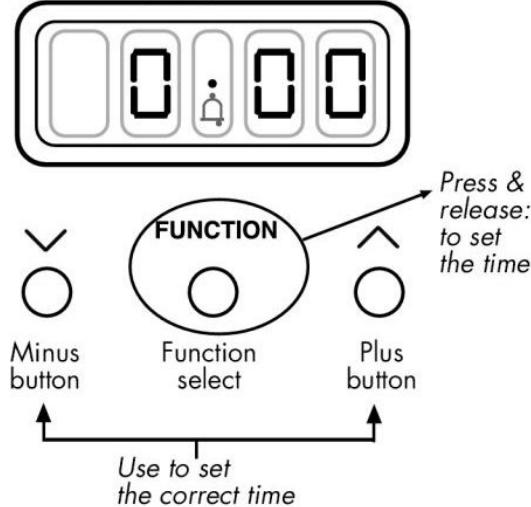
The 'function' button in the centre is used for setting the minute minder and setting up the automatic cooking. See below for details.
To set the time of day
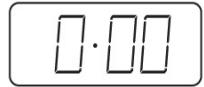

Function

When the power is turned on to the appliance, the time of day starts from 0.00.
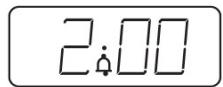
Press and release the (minus) and (plus) buttons simultaneously. Set the time of day, eg 2.00 with the and buttons while the 'dot' between the hours and minutes is flashing.
To select an alarm tone

Function

Press and hold the (minus) button to listen to the first tone. Release the button and press it again to listen to the second tone, etc. Releasing the button after the tone has sounded will automatically select that tone.
Setting the minute minder

Function

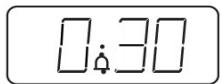
Press and release the function button. The minute minder bell symbol will appear and flash on the display. Use the plus and minus buttons to set the required alarm time. After setting, the display will revert to show
the time of day and the bell symbol will stop flashing. Pressing the function button will display the minutes remaining. If the time has counted down to the last minute, the remaining seconds are shown. The tone will sound at the end of the time set. To cancel the tone, press the function button.
Semi-automatic cooking
This clock function can be used when you have started cooking a meal or a dish in the oven and want to set the time for the oven to switch off.
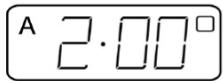
Press and release the function button twice. The display will show the oven symbol flashing and also the A (auto) symbol is shown. Use the plus and minus buttons to set the display to show the length of cooking time required (eg, 2 hours *). After setting, the display will revert to show the time of day and the oven and auto symbols will be shown in the display.
The function button can be pressed and released twice to show how much cooking time remains on the clock. At the end of the cooking time, the alarm will sound and the oven will automatically switch off. To switch off the alarm, press the function button. If you wish to cancel the remaining cooking time on the clock before the alarm sounds, press the minus button until the display returns to 0.00.
NOTE - the minute minder function can be used independently from other timer functions. Eg. it is still possible to use the minute minder facility during a semi automatic cooking function. When both programs are running simultaneously, both the semi automatic indicator A, and oven symbol will be displayed alongside the minute minder bell indicator in the time of day display.

Function

- As shown
Initial display
ELECTRONIC MINUTE MINDER
The digital timer enables you to set the time of day (24 hour clock) and the minute minder alarm.
Setting the "Time of Day"
- Switch on the electricity supply to the appliance.
The display will flash. - Press and release the time of day button.
- Set the time of day with the plus and minus buttons.
- The time will be set 7 seconds after the last plus or minus operation.
Alarm tones
After setting the time of day, you can select one of three alarm tones.
Press the minus button to listen to the first tone, then release the minus button and press it again to listen to the second tone, etc.
Releasing the minus button after a tone has sounded will automatically select that tone.
Setting the minute minder
- Press and release the plus button to change the display from clock to minute minder - the bell symbol will light.
- Use the plus and minus buttons to set the length of time before the alarm tone will sound. The display will increase/decrease in units of 10 seconds up to 99 minutes 50 seconds, and in units of 1 minute from 1 hour 40 minutes upwards. The maximum period which may be set is 10 hours.
The display format will change after 99 minutes and 50 seconds to 1 hour and 40 minutes.
During countdown, the minute minder has priority on the display, which will show (in minutes : seconds, or hours : minutes) the time remaining.
When countdown is complete, the tone will sound for 7 minutes, or it can be reset with one touch of any button.
To cancel the minute minder at any other time, run down the set time with the minus button.
The display will revert to show the time of day.
MECHANICAL MINUTE MINDER
Turn the minute minder control knob fully to the maximum setting, then turn back to the desired setting.
When countdown is complete, the timer will give a audible signal for a few seconds before it stops.
General
It is important to clean the product regularly as a build up of fat can affect its performance or damage it and may invalidate your guarantee.
Always switch off your appliance and allow it to cool down before you clean any part of it.
- Do not use undiluted bleaches, products containing chlorides, wire wool or abrasive cleaners on aluminium, stainless steel, or plastic/painted parts as they can damage the appliance. Nylon pads can also be unsuitable.
Take extra care when cleaning over symbols on fascia panels. Excessive cleaning can lead to the symbols fading.
If your product is fitted with stainless steel cladding strips. You may notice a small white residue on the outer edges, this can be removed with a non abrasive wipe.
- Some foods are corrosive eg; vinegar, fruit juices and especially salt - they can mark or damage the metal or paint work, if they are left on the surface.
- Only use a clean cloth wrung out in hot soapy water, and dry with a soft cloth.
Stainless steel & Aluminium surfaces
- Stubborn marks can be removed using a stainless steel cleaner. Supplies can be purchased from the Customer Care Centre.
- Sharp objects can mark the surface of stainless steel, but will become less noticeable with time.
- Baby oil can be used to restore stainless steel finishes - but only use a few drops. Don't use cooking oils
as they can contain salts, which will damage the metal.
Enamel surfaces & parts
- If larger splashes of fat do not readily disappear, you can use a mild cream cleaner to remove them.
Glass parts
WARNING: - Do not use harsh abrasive cleaners or sharp metal scrapers to clean the oven door glass since they can scratch the surface, which may result in shattering of the glass.
Chrome plated parts
- Use a moist soap filled pad, or place in a dishwasher
REMOVING OVEN PARTS FOR CLEANING
Inner Door Glass (glass doors only)
- The inner door glass panel can be removed for cleaning but it must be replaced the right way up. If there is any writing on the glass, you must be able to read it clearly when the cavity doors are open.
Always make sure that the glass is pushed fully into the Stop position. - To remove the glass panel, open the door wide, hold the top and bottom edges and slide out.
- Warning: Do not operate the appliance without the glass panel correctly fitted.
- For your safety, glass door panels are made of toughened glass. This ensures that, in the unlikely event that a panel breaks, it does so into small fragments to minimise the risk of injury. Please take care when handling, using or cleaning all glass panels, as any damage to the surfaces or edges may result in the glass breaking without warning or apparent cause at a later date. Should any glass panel be damaged, we strongly recommend
that it is replaced immediately.
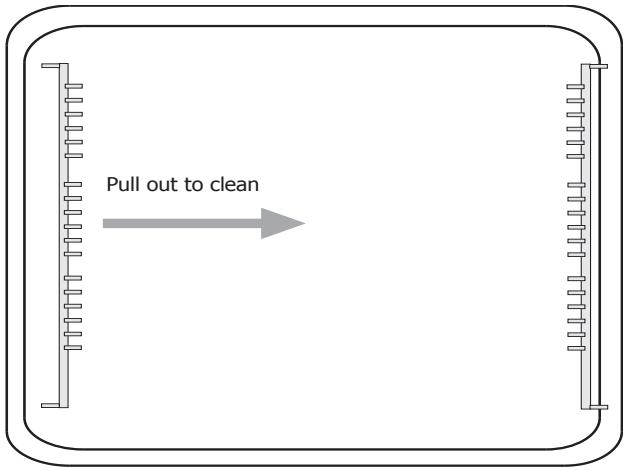
Shelf Runners
Shelf runners can be removed to enable you to clean them thoroughly. Make sure they are cool to touch and then grasp the runners and slide out of their hanging holes.
GAS HOB
Burner caps and heads
- The slots in the burner head where the flames burn should be cleared of deposits.
- Clean with a nylon brush, rinse and then dry thoroughly. There may be brown coloured markings on your burners; these are carbon deposits or fat stains and can be removed using a soap filled pad.
- Do not put burners in the dishwasher or soak them. Using dishwasher powders, washing up liquids and caustic pastes can damage the burners.
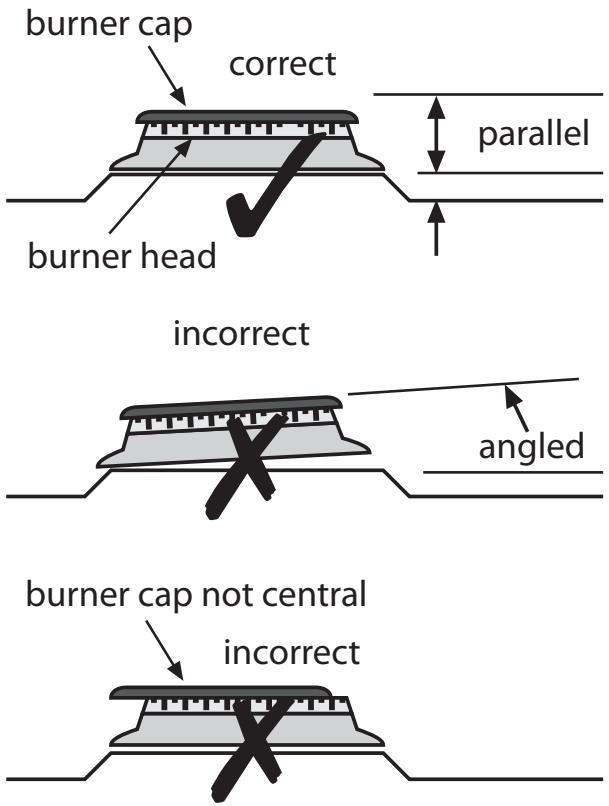
- Burner caps and heads must be repositioned correctly so that they sit squarely on to the hob as shown. This is particularly important with stainless steel models as failure to reposition the caps correctly may result in discolouration of the stainless steel around the burners.
Cast iron griddle or pan supports (if fitted)
- Ensure the griddle has fully cooled and scrape off any stubborn marks and bits of food with a plastic or wooden cooking implement. Rinse in warm soapy water and dry with a tea towel.
- Do not clean in a dishwasher.
- If you notice any rusting on your griddle, or pan-supports, simply clean in warm soapy water, then re-season.
- To season: Heat the griddle for 30 seconds at a medium setting then switch off. Use a minimum amount of unsalted vegetable oil, on a dry cloth or paper towel, and apply a thin coat of oil to the element surface. Wipe off the excess and re-heat the griddle for one minute.
Before you start: Please read the instructions. Planning your installation will save you time and effort.
Prior to installation, ensure that the local distribution conditions (nature of the gas and gas pressure) and the adjustment of the appliance are compatible. The adjustment conditions are stated on the data badge.
This appliance is not connected to a combustion evacuation device. It shall be installed and connected in accordance with current installation regulation. Particular attention shall be given to the relevant requirements regarding ventilation.
In your own interest and that of safety, it is the law that all gas appliances be installed and serviced by competent persons. GAS SAFE registered installers undertake to work to satisfactory standards.
Where regulations or standards have been revised since this handbook was printed, always use the latest edition.
In the UK the regulations and standards are as follows:
- Gas Safety Regulations 1996 (Installation and Use).
- Building Regulations - Issued by the Department of the Environment.
- Building Standards (Scotland) (Consolidated) - Issued by the Scottish Development Department.
- The current I.E.E. Wiring Regulations.
- Electricity at Work Regulations 1989.
- BS 6172 Installation of Domestic Gas cooking Appliances.
- Installation & Servicing Instructions for this appliance.
For installation in countries other than the UK, the appliance must be connected in accordance with all local gas and electrical regulations. In the Republic of Ireland, Installers should refer to IS813 Domestic Gas Appliances.
Ventilation requirements
The use of a gas cooking appliance results in the production of heat and moisture in the room in which it is installed. Ensure that the kitchen is well ventilated: keep natural ventilation holes open or install a mechanical ventilation device (mechanical extractor hood). Prolonged intensive use of the appliance may call for additional ventilation, for example, opening of a window, or more effective ventilation, for example increasing the level of mechanical ventilation where present.
The room containing the appliance should have an air supply in accordance with BS 5440: Part 2: 1989:
All rooms require an openable window, or equivalent, and some rooms will require a permanent vent as well.
For room volumes up to 5m^3 an air vent of 100cm^2 is required.
If the room has a door that opens directly to the outside, or the room exceeds 10m^3 , NO AIR VENT is required.
For room volumes between 5m^3 and 10m^3 an air vent of 50cm^2 is required.
If there are other fuel burning appliances in the same room, BS 5440: Part 2: 1989 should be consulted to determine the air vent requirements.
This appliance must not be installed in a bed sitting room of less than 20m^3 or in a bathroom or shower room.
Windows and permanent vents should therefore not be blocked or removed without first consulting a GAS SAFE gas installer.
In the Republic of Ireland, refer to relevant Irish Standards for correct ventilation requirements.
Failure to install appliances correctly is dangerous and could lead to prosecution.
Whilst every care is taken to eliminate burrs and raw edges from this product, please take care when handling - we recommend the use of protective gloves during installation.
Moving the cooker
Please note that the weight of this appliance is approximately 60kg (unpacked). Take care if the appliance needs to be lifted during installation - always use an appropriate method of lifting.
Do not attempt to move the cooker by pulling on the doors or handles. Open the door and grasp the frame of the cooker, taking care that the door does not shut on your fingers. Take care to avoid damage to soft or uneven floor coverings when moving the appliance. Some cushioned vinyl floor coverings may not be designed to withstand sliding appliances without marking or damage.
CLEARANCES & DIMENSIONS
Appliance dimensions
All sizes are nominal - some variation is to be expected. The 'depth' of the cooker, as given below, is to the front of the door & excluding knobs & handles.
depth: 600mm
width: 500/550/600mm
height - lid down: 900 - 915mm
height - lid raised:1430 - 1445mm
Clearances
No shelf or overhang or cooker hood should be closer than a minimum of 650mm , but check with cooker hood manufacturer's recommendations.
The cooker must have a side clearance above hob level of 90mm up to a height of 400mm.
This cooker may be fitted flush to base units. However, for models with side opening doors, we recommend a side clearance of 60mm between the cooker and any side wall.

LEVELLING YOUR COOKER
Place a spirit level on a baking sheet onto an oven shelf.
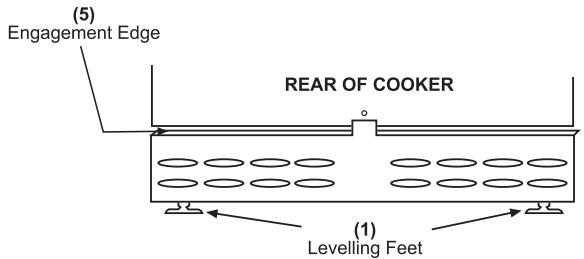
The cooker is fitted with LEVELLING
FEET. Level your cooker to your desired height using the levelling feet at the front and rear of the cooker.
Stability bracket
If the cooker is fitted with a flexible connection, a stability bracket should be fitted to engage in the back of the cooker. A stability bracket can be bought from your local supplier.
A stability bracket can be fitted as follows:
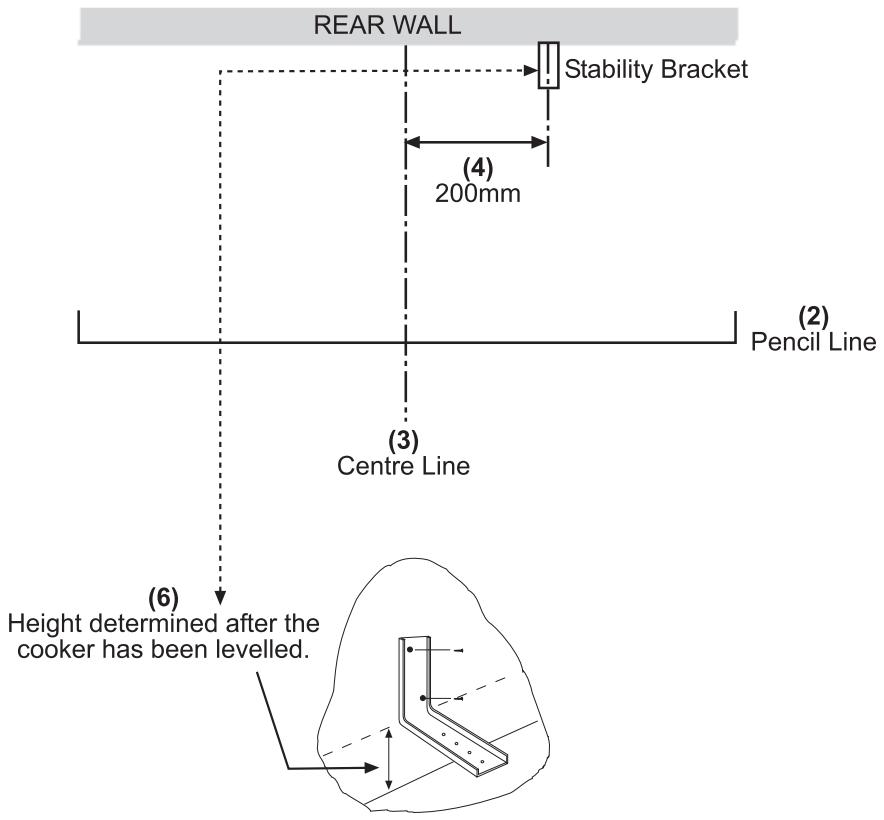
Place the cooker in position and draw a PENCIL LINE level with the front edge (2).
Mark the centre of the cooker to give a CENTRE LINE (3).
Remove the cooker and mark off 200mm to the right of the centre line (4) on the rear wall.
Measure from FLOOR LEVEL to the ENGAGEMENT EDGE where the stability bracket will rest and add 2mm (5).
Transfer this dimension to the rear wall and secure the bracket to the wall at this height (6) using the two off centre holes in the single bracket.
CONNECT TO THE ELECTRICITY SUPPLY
(mains ignition models only)
Warning: This appliance must be earthed.
The flexible mains lead is supplied connected to a BS 1363 fused plug, the plug is fitted with the correct fuse.
Replace only with a fuse of the same rating and type.
The wires in the mains lead are coloured in accordance with the following code:
Green and yellow = Earth,
Blue Neutral,
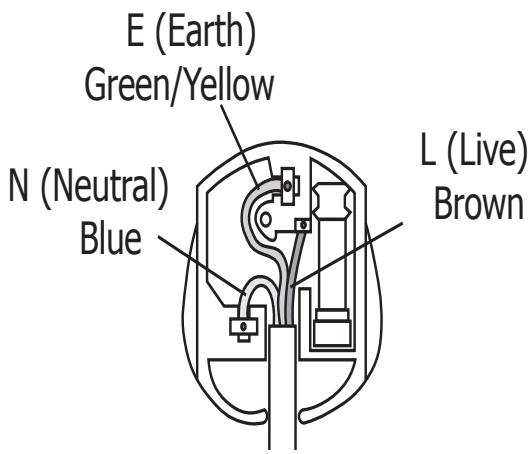
Brown = Live.
As the colours of the wires in the mains lead for the appliance may not correspond with the coloured markings identifying the terminals in your plug, proceed as follows:
- The wire 12 ich is coloured green and yellow must be connected to the terminal marked E (Earth) or coloured Green.
- The wire which is coloured blue must be connected to the terminal marked N (Neutral), or coloured Black.
- The wire which is coloured brown must be connected to the terminal marked L
(Live), or coloured Red.
The plug and socket must be accessible after installation. Should the mains lead of the appliance ever require replacing, this must be carried out by a qualified electrician who will replace it with a lead of the same size and temperature rating.
Important: - ensure that you route all mains and electrical cables and flexible tubing well clear of any adjacent heat source.
Under no circumstances should the mains electric cable be allowed to come into contact with the vertical oven flue tubes on the rear of the appliance.
PRODUCTS WITH CAST IRON LID (WHERE FITTED)
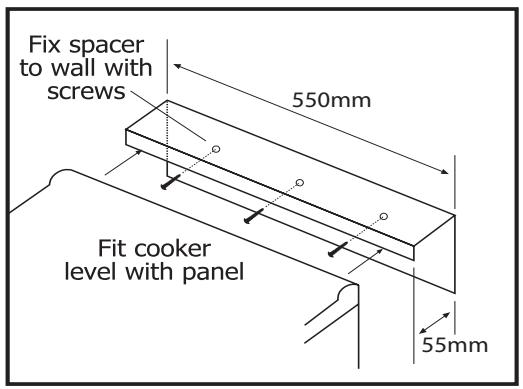
A 55mm clearance is required from the back of the hotplate to the rear wall, to allow the lid to be opened fully. To ensure this clearance is maintained, the infill piece (supplied) should be fitted using the instructions below.
Fitting the infill piece between the rear of the hob and the wall
Fix the infill piece to the wall - using suitable screws and wall fixings (not supplied) - and ensure it is level with the hotplate as shown.
Note: The 55mm clearance dimension should not be reduced.
CONNECT TO THE GAS SUPPLY
The inlet to the cooker is 12 BSP internal situated at the rear right corner. Fit the bayonet connection. This should be located so as to ensure that the flexible connector hose does not kink.
Under no circumstances should the flexible connector be allowed to come into contact with the vertical oven flue tubes on the rear of the appliance.
Use a 900mm - 1125mm length of flexible connector.
Ensure that all pipework is of the correct rating for both size and temperature.
Natural Gas - Flexible connections should comply with BS 669. Parts of the appliance likely to come into contact with a flexible connector have a temperature rise of less than 70^ .
After installation, make sure all connections are gas sound.
COMMISSIONING
Burner aeration
All burners have fixed aeration and no adjustment is possible.
Pressure setting
G20 Natural Gas @ 20 mbar
Pressure test point
Use the oven injector.
Grill
Open the top oven / grill door. Push in and turn the top oven / grill control knob clockwise to the 'FULL ON' position. Hold the control knob in, and press the ignition switch (if fitted) or hold a lighted match or taper to the burner. Hold the control knob in for 15 seconds. Do not hold the control knob in for longer than 15 seconds. If the burner fails to light within
this time, release the control knob and wait one minute before attempting further ignition. until the burner lights.
Hob burner
Turn the control knob to the FULL ON position, wait a second before pressing the ignition switch or holding a lighted match or taper to the burner. Hold the control knob in for 15 seconds. Do not hold the control knob in for longer than 15 seconds. If the burner fails to light within this time, release the control knob and wait one minute before attempting further ignition.
Ovens
Open the oven door. Turn the control to the FULL ON position and press the ignition switch, or hold a lighted match or taper to the burner. Hold the control knob in for 15 seconds. Do not hold the control knob in for longer that 15 seconds. If the burner fails to light within this time, release the control knob and wait one minute before attempting further ignition.
Before leaving the installation
- Place all the loose parts of the cooker into position.
- Show the customer how to operate the cooker and give them this handbook. Thank you.
GAS PRODUCTS
Data badge - Lower part of front frame
Gas category
Natural Gas - I2H, LP GAS - I3+.
Pressure setting
G20 Natural Gas @ 20 mbar
G30 Butane @ 28-30 mbar
G31 Propane @37 mbar
Pressure test point
Use the oven injector
Aeration - Fixed
Appliance class
Class 1, Freestanding
Grill - Grill burner is surface combustion type. Spark gaps 3 - 4mm.
Hob - Burners have burner heads and caps which are removable for cleaning.
Concealed electrodes to each burner.
Oven - Oven burner is sheet steel, with pierced ports in stainless steel flame strip. Spark Gap: 3 - 4mm. Flame supervision: Thermoelectric type. Thermostat phial: Right hand side of oven.
Electrical supply (models with ignition)
220 - 240V ~ 50Hz
Warning: This cooker must be earthed.
Countries of destination
GB - Great Britain, IE - Ireland
| Data - Oven and Grill Product without wok Load (wattage): 42 - 50W | ||||
| Burner | Nominal NG Rate Qn | Nominal LPG Rate Qn | Injector Size NG | Injector Size LPG |
| Grill | 2.4kW | 2.4kW | 115 | 76 |
| Hob - LHF | 1.0kW | 1.0kW | 77 | 50 |
| Hob - LHR & RHR | 2.0kW | 2.0kW | 104 | 70 |
| Hob - RHF Rapid | 3.0kW | 3.0kW | 129 | 87 |
| Hob - RHF Wok | - | - | - | - |
| Top oven | - | - | - | - |
| Oven | 2.5kW | 2.4kW | 180 Amal | 70 Amal |
| Total heat input | 12.9kW | 12.8kW | ||
| Data - Oven and Grill Product with Wok (wattage): 42 - 50W | ||||
| Burner | Nominal NG Rate Qn | Nominal LPG Rate Qn | Injector Size NG | Injector Size LPG |
| Grill | 2.4kW | 2.4kW | 115 | 76 |
| Hob - LHF | 1.0kW | 1.0kW | 77 | 50 |
| Hob-LHR & RHR | 2.0kW | 2.0kW | 104 | 70 |
| Hob-RHF Rapid | - | - | - | - |
| Hob-RHF Wok | 4.0kW | 4.0kW | 152 | 100 |
| Top oven | - | - | - | - |
| Oven | 2.5kW | 2.4kW | 180 Amal | 70 Amal |
| Total heat input | 13.9kW | 13.8kW | ||
| Data - Double Oven Product Load (wattage): 1600-1900W | ||||
| Burner | Nominal NG Rate Qn | Nominal LPG Rate Qn | Injector Size NG | Injector Size LPG |
| Grill | - | - | - | - |
| Hob - LHF | 1.0kW | 1.0kW | 77 | 50 |
| Hob - LHR & RHR | 2.0kW | 2.0kW | 104 | 70 |
| Hob - RHF Rapid | 3.0kW | 3.0kW | 129 | 87 |
| Hob - RHF Wok | - | - | - | - |
| Top oven | 1.75kW | 1.7kW | 110 Amal | 50 Amal |
| (1.95kW) | (130 Amal) | |||
| Oven | 2.5kW | 2.4kW | 180 Amal | 70 Amal |
| Total heat input | 12.25kW | 12.1kW | ||
| (12.45kW) | ||||
(Figures in brackets for 50cm products)
| Data - Double Oven Product with Wok Load (wattage): 1600-1900W | ||||
| Burner | Nominal NG Rate Qn | Nominal LPG Rate Qn | Injector Size NG | Injector Size LPG |
| Grill | - | - | - | - |
| Hob - LHF | 1.0kW | 1.0kW | 77 | 50 |
| Hob - LHR & RHR | 2.0kW | 2.0kW | 104 | 70 |
| Hob - RHF Rapid | - | - | - | - |
| Hob - RHF Wok | 4.0kW | 4.0kW | 152 | 100 |
| Top oven | 1.75kW | 1.7W | 110 Amal | 50 Amal |
| Oven | (1.95kW) | (130 Amal) | ||
| 2.5kW | 2.4kW | 180 Amal | 70 Amal | |
| Total heat input | 13.25kW | 13.1kW | ||
| (13.45W) | ||||
FAQs
What parts of the appliance can be washed in a dishwasher?
- Any enamelled parts such as the grill pan can be cleaned in a dishwasher, as can oven shelves and shelf guides.
What parts must NOT be cleaned in a dishwasher?
- Parts such as burner skirts and caps, control knobs and any cast iron items must not be cleaned in a dishwasher, they should be cleaned with hot soapy water and a nylon brush once they are cool enough.
There's been a power failure and the product won't work.
- Switch off the electricity supply.
- When the power returns switch the electricity supply back on and re-set any programmer/clock to the correct time of day.
My oven is a single combined oven and grill - can I use both functions together?
No. You can only use one or the other.
Why is there condensation on the doors?
- Condensation is caused by hot, moist air meeting a cooler surface (i.e. the oven door). You cannot always prevent it, but you can minimise it when it happens by doing the following:
- Preheat the oven at a high temperature before putting food in the oven, and cover the food you are cooking wherever possible.
- Whenever you can, cook wet foods at higher temperatures.
- Don't leave food in the oven to cool down.
Automatic cooking will normally pro
duce condensation when the oven is cooling down with food inside.
Should the cooling fan continue to run once the appliance has been switched off?
- Yes. This is to make sure that you can always touch the control knobs to make temperature adjustments, and turn your appliance off.
Can all gas appliances be converted from Natural Gas to LP Gas?
- Not all gas appliances can be converted. If Category II is stated on the databadge, then the appliance may be converted and a conversion kit must be obtained if not already provided. If in doubt, please contact Customer Care for further advice - do not attempt to convert an appliance if it is not compatible.
Why won't the ignition work?
- Check there is a spark when the ignition button is depressed. If there is no spark, check the electricity supply is switched on at the socket. Check that the gas supply is switched on.
Call Customer Care for a Service Engineer's visit if:
- You find that the oven becomes hotter at a particular temperature - the thermostat may need replacing.
- The cooling fan fails to work.
CUSTOMER CARE WEB SHOP
Having purchased a superior cooker, hob or hood from us, you'll naturally want to keep it looking great. And who better to help you care for it than the manufacturer?
We offer an extensive range of accessories, components and cleaning products which, will instantly give your cooker a good as new look.
In addition to the list of our most popular products below, we also have an exciting
range of Bake ware and Cookware essentials including Roasting Pans, Cake Tins and Non-Stick Cooking Liners.
For all enquires, please visit our Web Shop at www.gdhaonline.co.uk or call the Spares Sales Team on 0844 815 3745. For countries outside the UK, please contact your local service agent.
| Product Description | Where used | Purpose |
| Ceramic Hob Cleaner | All Ceramic glass hobs including Induction | Enables easier cleaning of your ceramic hob. Prevents build up of mineral deposits. Best used with Ceramic Hob Scraper Kit. 300ml bottle. |
| Ceramic Hob Scraper kit | All Ceramic glass hobs including Induction | Ideal for removing cooked on marks from ceramic glass hobs Best used with Ceramic Hob Cleaner |
| Sealed Hotplate Conditioner | All sealed/solid plate hobs | Restores the sleek matt black finish to solid hotplates |
| Multipurpose Kitchen Cleaner | General kitchen cleaner | Excellent multipurpose cleaner, For use around the kitchen. 500ml bottle. |
| Oven Cleaner | All cooking appliances. | Cuts through grease & burnt on grime. 500ml bottle |
| Restor-A-Cloth | All cooking appliances. | Chemical free cleaning cloth Ideal for cleaning & polishing glass & stainless steel |
| Stainless Steel Cleaner | All stainless steel parts | Oil based cleaner. Perfect for removing stub-born & greasy marks. 300ml bottle. |
| Rectangular carbon filters | Cooker Hoods | New filters, help to maintain efficient cooker hood operation and keep your Kitchen odour free |
| Round Carbon Filters | Cooker Hoods | New filters, help to maintain efficient cooker hood operation and keep your Kitchen odour free |
CHANGING LIGHT BULBS (where fitted)
Warning: There is a risk of electric shock, so always make sure you have turned off and unplugged your appliance before starting. Always allow the product to cool down before you change a bulb.
Not all appliances have the same number and type of bulbs. Before replacing your bulb, open the oven door and see which type you have. Then use the table to help you change your bulb correctly.
Bulbs can be purchased from hardwarestores (always take the old bulb with you).
Please remember that bulbs are not covered by your warranty.
| No of Lamps | Instructions |
| 1 | Remove the oven shelves. Remove the loose oven back by unscrewing the 4 securing screws (one at each corner) and remove (Where fitted). Unscrew the lens cover by turning anticlockwise. Remove the bulb and replace. Replace the lens cover and oven back. |
Please keep this handbook for future reference, or for anyone else who may use the appliance.
Please keep this handbook for future reference, or for anyone else who may use the appliance.
Please keep this handbook for future reference, or for anyone else who may use the appliance.
To contact Belling about your appliance, please call
Warranty Registration
0844 481 0182
to register your appliance
Customer Care Helpline
0844 815 3746
in case of difficulty within the UK
Alternatively general, spares and service information is available from our website at
www.belling.co.uk
Please ensure that you have the product's model no and serial no available when you call. These can be found on the silver data label on your product which is located:
Ovens
High-level grill products
Hobs
Open the door; adjacent to the oven cavity
Inside the base compartment
On the underside of the product
Enter appliance numbers here for future reference:
Model No

Serial No

SERVICE RECORD
| Date of purchase | Installed by | Installation Date |
| Place of purchase: | ||
| Date | Part(s) replaced | Engineer's name |
For customers outside the UK and Northern Ireland, please contact your local supplier.
Glen Dimplex Home Appliances, Stoney Lane, Prescott, Merseyside, L35 2XW