MODE D'EMPLOI DPU7404XE BEKO
Asciugatrice
Manuale Utente
DPU 7440
Leggere come prima casa quello manuale dell'utente!
Gentile cliente,
grzie per aver scelto di acquistare un prodotto Beko. Speriamo che il suo prodotto, realizzato con un alto livello qualitativo technologico, le posso offrirere risultati ottimali. Le consiglio di leggere questo manuale nella sua interezza或者其他 documents allegations, prima di iniziare a utilizzato il prodotto. Consiglio inoltre di conservare la documentazione per poterla consultare in futuro. Qualora ceda il prodotto a un'altra persona, la invitiamo a consegnare andere manuale. Prestare attentione a tutti i dettagli e le avventenze indicate nel manuale dell'utente, e atteneri alle istruzioni fornite.
Consigliamo di serviri di quello manuale per il modello indicato sulla pagina della copertina.
Spiegazione dei symboli
Nel corso del presente manuale verranno utilizzati i seguenti symboli:
| i! | Informazioni importanti. Suggestimenti utili relativamente all'uso. |
| Avvertenza per situazioni di pericolò relativamente a durata di vita e proprietà. |
| Avvertenza scosse elettriche. |
| Avvertenza superfici calde. |
| Avvertenza pericolò di incendio. |
| I materiali che compongono
l'imballaggio del prodotto sono
realizzati a partire da materiali
riciclabili in conformità con le
nostre Normative Ambientali
Nazionali. |
Non smaltire i rifiuti dell'imballaggio con i normali rifiuti domestici o con altri rifiuti, smaltirli presso i punti di raccolta dedicati indicati dalle autorità locali.

Questo prodotto è stato realizzato servendosi delle ultimissime Tecnologie in condizioni rispetto dell'ambiente.
1 Istruzioni importanti per la sicurezza e l'ambiente
Questa sezione contiene istruzioni di sicurezza che vi aiuteranno a proteggere alla rischio di lesioni personali ho da mia proprietà. Il mancato rispetto di queste istruzioni invaliderà qualsiasi garanzia.
1.1 Norme di sicurezza generali
-
L'asciugatrice può essere usata da bambini di età uguali o superioreagliotto anni, e da persone le cui capacità fisiche, sensoriali o mentali non siano totalmente sviluppate, o non in possesso della giusta esperenza e delle adeguate conoscenze, a condizione che queste persone siano supervisionate o formate relativamente all'uso sicuro del prodotto e dei rischi a"This collegati. I bambini non devono gliare con l'apparecchiatura. Gli interventi di pulizia e manutenzione non vanno eseguiti dai bambini a meno che non siano supervisionati da una persona adulta
-
I bambini di età inferioreagli 3 anni vanno tenuti a distanza, a meno che non siano sotto continua supervisione.
- I piedini regolabili non dovrebbero essere rimossi. Lo spazio fra l'asciugatrice e il pavimento non va ridotto servendosi di materiali quali ad esempio tappeti, legno e nastro. Ciò potrebbe causare anomalie di funzionamento dell'asciugatrice.
- Fare eseguire sempre le procedure di installatione e riparazione dal Servizio Assistenza Autorizzato. Il produttore non verrà ritenuto responsable degli eventuali danni che potrebbero derivare da procedure eseguite da persona non autorizzate.
- Non lavare mai l'asciugatrice spruzzando o versando acqua al suo interno! C'è rischio di scossa elettrica!
1.1.1 Norme di sicurezza generali

In fase di realizazione di un collegamento elettrico, durante la procedura di INSTALLazione, è opportuno atteneri alle istruzioni per la sicurezza elettrica.
- Collegare l'asciugatrice a una presa dotata di messa a terra protetta da uno fusibile del valore indicato dall'etichetta. Fare in modo che la messa a terra venga eseguita da un elettricista qualificato. La nostra azienda non sare responsabile di eventuali danni che deriveranno dall'uso del prodotto senza messa a terra in conformità con le normative locali.
- La tensione e la protezione del fusabile consentita sono informazioni indicate sulla targhetta informativa
- La tensione individata sulla targhetta deve corrispondere alla tensione effettivamente disponibile.
- Scollegare il prodotto se non viene usato.
- Scollegare l'asciugatrice della presa di corrente durante le operazioni di installment, manutenzione, pulizia e riparazione.
- Non toccare la presa con le mani umide! Non scollegare mai tirando il cavo, estrarre sempre la presa.
- Non usare prolunghe, ciabatte o adattatori per collegare l'asciugatrice alla presa di corrente al fine di ridurre il rischio di incendio e scosse elettriche.
- Il cavo di corrente deve essere a portata dopo l'installazione.
| 4 | I cavi di alimentazione danneggiati vanno sostituite previa notificata alla Servizio Assistenza Autorizzato. |
| 4 | Qualora il prodotto abbia un difetto, non dovrebbe essere usato a meno che non venga riparato da un Agente di Servizio Autorizzato. C è rischio di scossa elettrica! |
1.1.2 Norme di sicurezza generali
| Punti da prenderere in considerazione per limitare il rischio di incendio:
I capi di seguito indicati non vanno messi in asciugatrice
dato che sussiste un rischio di incendio.
• Capi non lavati
• I capi con macchie di olio, acetone, alcol, petrollio, cherosene, smacchiatori, prodotti per la rimozione della trementina o della paraffina, vanno lavati in acqua calda con abbondante detergente prima di essere messi in asciugatrice.
Ecco perché i capi contententi le tipologie di macchie sopra indicate vanno lavati con estrema cura; a tal fine usare il detergente giusto e scegliere una temperatura di lavaggio adeguata. |
| I seguenti capi/indumenti non vanno messi in asciugatrice dato che sussiste il rischio di incendio:
• indumenti o cuscini imbottiti con schiuma di gomma (schiuma di lattice), cuffie per la doccia, tessuti resistenti all'acqua, materiali con rinsforzo in gomma e cuscinetti in schiuma di gomma.
• Indumenti puliti con sostanze chimiche industriali. Oggetti quali ad esempio ascendini, fiammiferi, monete, parti metalliche, ago, ecc. possono danneggiare il cestello o portare a problemi sul piano funzionale. Controllare sempre i capi di bucato insertiti in asciugatrice.
Non interrompere mai l'asciuagatrice prima del termine del ciclo. In quello caso, estrarre rapidamente il bucato per dissipare il calore. |
| Gli indumenti lavati in modo inadequato possono far scoppiare un incendio e perfino prendere fuoco dopo il processo di asciugatura. |
- Fornire un livello di ventilazione sufficiente per impedire che i gas fuoriescano dai dispositivi che funzionano con altri tipi di carburante, comprese fiamme libere che si accumulano nella stanza in seguito all'effetto ritorno di fiamma.
| ! | I capi di biancheria intima che contengono rinforzi in metallo non vanno passati in asciugatrice. L'asciugatrice si potrebbe danneggiare qualora i rinforzi in metallo si allentino e si rompano in fase di asciugatura. |
| i | Usare immorbidenti e altri prodotti in conformità con le istruzioni dei rispettivi produttori. |
| i | Pulire sempre il filtrlo lanugine prima o dopo agli carico. Non usare mai l'asciugatrice perché il filtrlo lanugine installato. |
- Non cercare mai di riparare da soli l'asciugatrice. Non eseguire procedure di riparazione o sostituzione sul prodotto nemmeno se si è in possesso delle nozioni e delle abilità adeguate per eseguire la procedura richiesta, a meno che ciò non sia chiaramente indicato dalle istruzioni di funzionamento o dal manuale di assistenza pubblicato. Il mancato rispetto di但这a indicazione potrebbe mettere in pericolò la propria vita e la vita di altre persone.
- Nel luogo dove verrà installata l'asciugatrice non ci devono essere porte che possono essere chiuse, porte scorrevoli o con cerniera che potrebbero bloccare l'apertura della porta di carico.
- Installare l'asciugatrice in luoghi idonei per un uso domestico. (Bagno, balcony chiuso, garage, ecc.)
-
Verificare che gli animali domestici non entrino all'interno dell'asciugatrice. Controllare l'interno dell'asciugatrice prima di metterla in funzione
-
Non appoggiarsi sulla porta di carico dell'asciugatrice quando è aperta, dato che l'apparecchiatura si potrebbe capovolgere.
- Non acconsentire l'accumulo di lanugine intorno all'asciugatrice.
1.2 Installazione sopra a una lavatrice
- Sarà necessario usare un dispositivo di fissaggio fra le due macchine, in fase di installatione dell'asciugatrice sopra alla lavatrice. Il dispositivo di fissaggio deve essere installato da un agente di servizio autorizzato.
- Il peso totale della lavatrice e dell'asciugatrice, a pieno carico, quando sono installate una sopra l'altra, raggiunge all'incirca i 180 kg. Collocare i prodotti su una superficie solida, dotata di una capacité di carico sufficiente.

Non è possibile collocare la lavatrice sull'asciugatrice. Prestare attenzione alle seguenti avvertenze in fase di installmente della lavatrice.
Tavolo di installmente per lavatrice e asciugatrice
| Profondità dell'asciugatrice | Profondità della lavatrice |
| 62 cm | 60 cm | 54 cm | 50 cm | 49 cm | 45 cm | 40 cm |
| 54 cm | Moze se postaviti | Moze se postaviti | Ne mayse se postaviti |
| 60 cm | Moze se postaviti | Ne mayse se postaviti |
- L'asciugatrice è stata pensata per un uso domestico. Non è adatta per usi commerciali e non va usata al di fuori del suo ambito di utilizzo previsto.
- Servirsi dell'asciugatrice unicamente per asciugare bucato che è possibile passare in asciugatrice.
- Il produttore non si assume responsabilità derivanti da un utilizzo sbagliato o da una modalità di trasporto non adeguata.
- La vita di servizio dell'asciugatrice acquisata è parl a 10 anni. Durante questo periodo, i pezzi di ricambio originali saranno disponibili per garantire un corretto funzionamento dell'asciugatrice.
1.4 Sicurezza bambini
- I materiali di imballaggio sono pericolosi per i bambini. Tenere i materiali di imballaggio lontani dai bambini.
- I prodotti elettrici sono pericolosi per i bambini. Tenere i bambini alla larga nella prodotto quando è in funzione. Non consentire ai bambini di giocare con l'apparecchiatura. Servirsdi dispositivi di blocco a prova di bambino per evitare che i bambini giochino o manomettano l'asciugatrice.

Il dispositivo di blocco a prova di bambino si trovava sul pannello di controllo. (Cfr. Blocco bambini)
- Tenere la porta di caricamento chiusaanche quando l'asciugatrice non è in uso.
'Questo prodotto è conforme alla direttiva WEEE dell'UE (2012/19/EU). Questo prodotto porta un symbolo di classificazione per la strumentazione elettrica ed elettronica di scarto (WEEE).
Questo prodotto è stato realizzato con componenti di alta qualità e materiali che possono essere riutilizzati e sono idonei a essere ricolati. Non smaltire il prodotto con i normali rifiuti domestici e altri rifiuti al termine del suo ciclo di vita utile.
Portare il prodotto ha un centro di raccolta per il riciclaggio della strumentazione
elettrica ed elettronica. Consigliamo di rivolgersi alle autorità locali per ulteriori informazioni su questi centri di raccolta.
Il prodotto acquistato è conforme con la Direttiva UE RoHS (2011/65/EU). Non contiene materiali dannosi e proibiti e individati nella Direttiva.
I materiali che compongono l'imballaggio del prodotto sono realizzati a partire da materiali riciclabili in conformità con le nostre Normative Ambientali Nazionali. Non smaltire i materiali dell'imballaggio conciuntamente ai rifiuti domestici o ad altri rifiuti. Portarli presso i punti di raccolta imballaggi indicati dalle autorità locali.
1.8 Specifiche tecniche
| IT |
| Altezza (minima / massima) | 84,6 cm / 86,6 cm* |
| Larghezza | 59,5 cm |
| Profondità | 59,8 cm |
| Capacità (max.) | 7 kg** |
| Peso netto (uso sportello anteriore in plastica) | 49 kg |
| Peso netto (uso sportello anteriore in vetro) | 51 kg |
| Tensione | Vedere etichetta tipo*** |
| Ingresso alimentazione nominale |
| Codice modello |
- Altezza minima: Altezza quando i piedini regolabilli sono chiusi.
Altezza massima: Altezza quando i piedini regolabili sono aperti al massimo.
** Peso del bucato asciutto prima del lavaggio.
*** L'etichetta si trovava dietro alla porta di carico.
| i | Le specifiche tecniche dell'asciugatrice sono soggette a modificifica alla preavviso, al fine di migliorare la qualità del prodotto. |
| i | I dati contenuti nel presente manuale sono schematici, che potrebbero non corrispondere alla perfezione al prodotto. |
| i | I valori indicate sulle tacche dell'asciugatrice o in另一tra documentazione pubblicata fornita con l'asciugatrice sono ottenuti in lavoratorio in conformità con gli standard pertinenti. Questi valori potrebbero variare, a seconda delle condizioni di funzionamento e ambientali dell'asciugatrice. |
2 La vostra asciugatrice
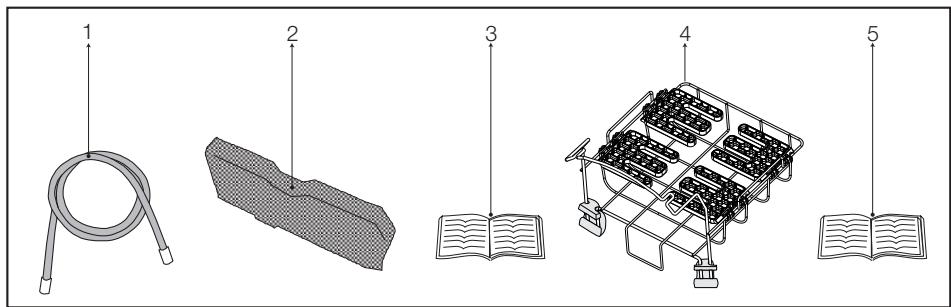
- Tubo di scarico acqua *
- Spugna di ricambio cassetto filtro*
- Manuale dell'Utente
- Cestello di asciugatura*
- Manuale dell'utente del cestello di asciugatura*
*Può essere fornito in dotazione con la macchina, a seconda del modello.
3 Installazione
Rivolgersi all'agente per l'assistenza autorizzato più vicino per l'installazione dell'apparecchio. Per rendere l'apparecchio pronto all'uso, assicurarsi che il systeme elettrico e quello di scarico dell'acqua siano appropriati prima di chiamare l'agente autorizzato per l'assistenza. Se non lo sono, chiamare un technician e un idraulico qualificati per eseguire tutte le regolazioni necessarie.
| i | La preparazione del posizionamento dell'apparecchio e le installazioni elettriche e per lo scarico dell'acqua sono responsabilità del cliente. |
| 4 | Installazione e collegamenti elettrici dell'apparecchio devono essere eseguiti dall'agente autorizzato per l'assistenza. Il produttore non deve essere considerato responsable di danni derivanti da procedure eseguite da persona non autorizzate. |
| ! | Prima della INSTALLazione, ispezionare visamente l'apparecchio per vedere se ci sono difetti. Se ci sono, non installarlo. Gli apparecchi danneggiati causano rischi alla sicurezza. |
| ! | Far passare 12 ore prima di cominciare ad usare l'asciugatrice. |
3.1 Posizione adeguata di montaggio
Installare l'apparecchio su una superficie stabile e piana.
L'asciugatrice è pesante. Non spostarla da soli.
Far funzionare l'apparecchio in un ambiente ben ventilato e privo di polvere.
Non ostruire le condotte dell'aria poste davanti e sotto l'apparecchio con materiali quali tappeti lunghi, blocchi e bande di legno.
L'elettrodomestico non deve essere installato dietro ad una porta che si può bloccare, una porta scorrevole o una porta con un gancio che può colpire l'apparecchio.
- Una volta che l'apparecchio è installato, deve restare sempre nella posizione in cui sono stati eseguiti i collegamenti. Quando si installa l'apparecchio, assicurarsi che la parte posteriori non tocchi nulla (rubinetto, presa, ecc.). Prestare attenzioneanche a selezionare una posizione di installmente che non sare necessario cancellare in seguito.
- Mettere l'apparecchio ad una distanza di almeno 1,5 cm dai bordi degli altri arredi.
La superficie posteriore dell'asciugatrice viene collocata a ridosso di una parete

Non posizionare l'apparecchio sul filo elettrico.
3.2 Rimozione del gruppo di sicurezza per il trasporto

Rimuovere il gruppo di sicurezza per il trasporto prima di usare per la primaolta l'apparecchio.
- Aprire lo sportello di carico.
- C'e una borsa di nylon all'interno del tamburo che contiene un pezzo di styrofoam. Tenerlo alla parte contrassegnata con XX XX.
- Tirare il nylon verso di se e rimuovere il gruppo di sicurezza per il trasporto.
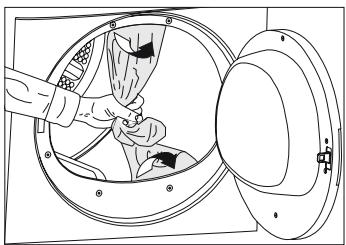

Assicurarsi che nessuna parte del gruppo di sicurezza per il trasporto resti all'interno del cestello.
3.3 Installazione sotto banco
- Questo appearecchio può essere installato moltobero se l'altezza del banco stesso è sufficiente.

Quando si usa l'asciugatrice sotto banco, non deve mai assere usata perché l' appropriata parte per installazione sotto banco.
| Profondità asciugatrice | 60 cm | 54 cm |
| Numero di seriédella parte installata sotto ilenco | 2979700100 | 2973600100 |
- Lasciare almeno 3 cm di spazio per i lati e per la parte posteriore dell'apparecchio quando lo si installa sotto banco o in un mobile.
3.4 Regolazione dei piedini
L'apparecchio deve stare su una superficie pianae e in equilibrio, perché funzioni in modo più silenzioso e sonoza vibrazioni. Mettere in equilibrio l'apparecchio regolando i piedini. Ruotare i piedini verso sinistra o destra finché l'apparecchio resta piano e stabile.
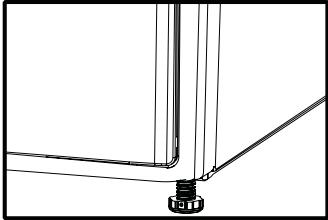

Non rimuovere i piedini regolabili dai loro alloggiamenti.
3.6 Collegamento elettrico
Per istruzioni specifiche per eseguire il collegamento elettrico in fase di installmente (cfr. 1.1.1 Norme di sicurezza generali)
3.6 Primo utilizzo
Prima di cominciare ad usare l'apparecchio, assicurarsi che tutte le preparazioni siano eseguite secondo le istruzioni dellesezioni "Istruzioni importanti per la sicurezza" e "Installazione".
3.7 Trasporto dell'apparecchio
- Scollegare l'apparecchio prima di trasportarlo.
- Rimuovere le connessioni di scarico per l'acqua (se presente) e camino.
- Svuotare completamente il serbatoio dell'acqua.

Consigliamo il trasporto dell'apparecchio in posizione verticale. Se non è possibile trasportare l'apparecchio in posizione verticale, consigliamo di trasportarlo inclinato sul lato destro, guardando alla parte anteriore. Quando l'apparecchio è spostato nella sua nuova posizione, bisogna aspettare 12 ore prima di avviarlo.
3.8 Avvertenze sui rumori

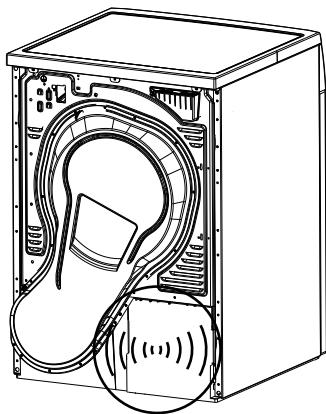
Énormale sentire un rumore metallico proveniente dal compressore a volte durante il funzionamento.
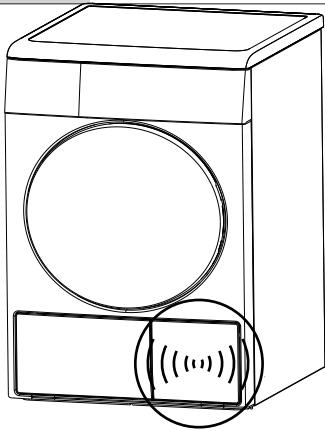

L'acqua raccolta durante il funzionamento è pompata verso il serbatoio dell'acqua. É normale sentire dei rumori di pompaggio durante quello processo.
3.9 Sostituzione della lampadina di illuminazione
Qualora nell'asciugatrice venga usata una lampadina da illumianzione Per sostituire la lampadina/LED usata per l'illuminazione dell'asciugatrice, contattare il Servizio Autorizzato.
La lampada (le lampade) usate
nell'apparecchiatura non sono adatte per la
normale illuminazione domestica. L'obiettivo
previsto di questa lampada è quello di
assistere l'utente in fase di posizionamento
del bucato nell'asciugatrice di modo che
l'operazione avvenga in modo facile e
comodo.
Le lampade usate in questa apparecchiatura devono resistere a condizioni fisiche estreme, quali ad esempio vibrazioni e temperature al di sopra dei 50^
4 Procedimento
4.1 Bucato adatto per essere什么意思 in asciugatrice
Rispettare sempre le istruzioni fornite nelle etichette degli indumenti. Asciuagare unica-mente il bucato con l'etichetta che indica che cui esere messo in asciugatrice. Verificare inoltre di aver selezionato il programma adeguato.
| SIMBOLI LAVAGGIO BUCATO | |
| Simboli
asciugatura | Adatto
all'asciugatrice | No stiro | Asciugatura
capi sensibili /
delicati | Non
asciugare con
asciugatrice | Non asciugare | Non lavare
a secco |
| | | | | | | | | | | |
| Impostazioni di
asciugatura | A tutte le
tempatura | A temperature
media | A temperature
bassa | Serza
riscaldamento | Appendere per
asciugare | Spondere per
asciugare | Lasciare asciugare
all'ombra | Appendere bagnati
per asciugare | Lasciare asciugare
all'ombra | P
Lavare a secco |
| Stirare - | | | | | | | | | |
| Asciugatura o vapore | Stirare ad alta
temperatura | Stirare a media
temperatura | Stirare a bassa
temperatura | Stirare a bassa
temperatura | Non stirare | Stirare alla
vapore | Stirare alla
vapore |
| Temperatura massima | 200 °C | 150 °C | 110 °C | 110 °C |
4.2 Bucato non adatto per essere messo in asciugatrice

Tessuti delicati ricamai, indumenti in lana, in seta, tessuti delicati e preziosi, articoli ermetici e tende in tulle; tutti questi indumenti non sono adatti per essere messi in asciugatrice.
4.3 Preparazione del bucato per essereMESSO in asciugatrice
Gli indumenti si possono attorcigliare fra di loro dopo il lavaggio. Separare il bucato prima di spostarlo nell'asciugatrice.
- Asciuagare al contrario gli indumenti con accessori in metallo, quali ad esempio cerniere.
- Serrare le cerniere, i ganci, le fibbie e i bottoni.
4.4 Cosa fare per risparmiare energia
Seguendoqueste informazioni sarasopabile usarel'asciugatriceinmode ecologico ed efficace dal punto di vista energetico.
Far girare il bucato alla velocità più alta possibile in fase di lavaggio. Il tempo di asciugatura viene quando ridotto, sono come il consumo energetico.
Ordinare il bucato a seconda del tipo e dello spessore. Asciugare insieme tipologie di indumenti simili. Ad esempio gli ascugapiatti sottili e le tovaglie si ascugano prima rispetto gli ascugamani da bagno spessi.
- Atteneri alle istruzioni nel manuale dell'utente per la selezione programmata.
Non aprire la porta di carico dell'apparecchiatura a meno che la casa non sia necessaria. Qualora si'a necessario aprire la porta di carico, non tenerla aperta a lungo.
Nonaggiungebucato bagnatoentre l'asciugatrice e in funzione
- Pulire il filtrlo lanugine prima o dopo anni ciclo di asciugatura. (Cfr 6.1 Pulizia del filtrlo lanugine / superficie interna porta di carico)
- Pulire il filtrto periodicamente quando c'è una ragcolla di aria visibile o quando si accende il symbolo, se c'è un symbolo di avventenza pulizia cassetto filtrlo « » disponibile. (Cfr 6.4 Pulizia del cassetto del filtrto)
- Aerare la stanza in cui si trovava l'asciugatrice durante l'opération di asciugatura.
4.5 Capacità di carico corretta
Attenersi alle istruzioni nella "Tabella di consumo e selezione Programma". Non caricare più dei valori di capacité indicatori nella tabella.
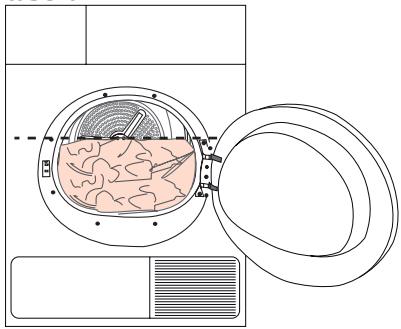

Consigliamo di non caricare il bucato或者其他 livello individato nella figura. Le performance di asciugatura diminuiscono quando la macchina è sovraccarica. Inoltre, l'asciugatrice e il bucato si possono danneggiare.
I seguenti pesi sono forniti come esempi.
| Bucato | Pesi approssimativi (g)* |
| Coperte-trapunte in cotone (doppie) | 1500 |
| Coperte-trapunte in cotone (singola) | 1000 |
| Lenzuola (doppie) | 500 |
| Lenzuola (singole) | 350 |
| Tovaglie di grande dimensioni | 700 |
| Tovaglie di piccole dimensioni | 250 |
| Tovaglioli | 100 |
| Asciugamani da bagno | 700 |
| Asciugamani | 350 |
| Camicette | 150 |
| Camicie in cotone | 300 |
| Camicie | 250 |
| Abiti in cotone | 500 |
| Abiti | 350 |
| Jeans | 700 |
| Fazzolletti (10 pezzi) | 100 |
| T-Shirt | 125 |
*Peso del bucato asciutto prima del lavaggio.
5 Scelta del programma e funzionamento dell'apparecchio
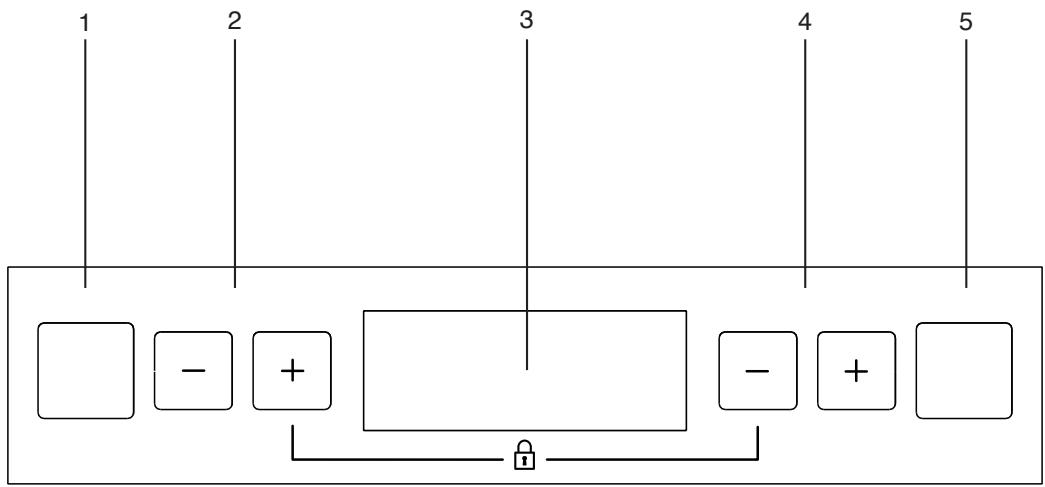
5.1 Pannello di controllo
- Pulsante On / Off
- Pulsante di selezione programmata
- Display
- Pulsante di impostazione ora di fine
- Pulsante Avvio/Pausa/Annulla
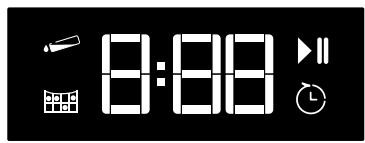
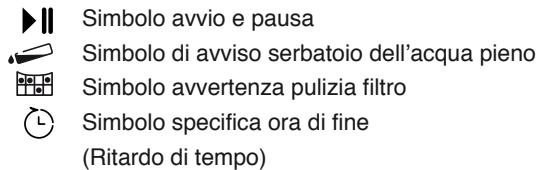

Pulsante accensione/segmentire

Programma

Biccoa prova di bambini

Tempo di ritardo

Tasto Avvio/Pausa

Cotone

Sintetici

Ventilazione

Abbigliamento da sport

Jeans

Camicie

Express

Prontda stirare

Asciugatura extra

Pronti da indossare

Prontida indossare ^+

Delicati

Quotidiano
5.2 Preparazione della macchina
- Collegare l'apparecchio.
- Mettere il bucato nell'apparecchio.
- Premere il pulsante di accensione/ specnimento per 1 secondo.

La pressione del pulsante di accensione/spegnimento non significica che il programma è avviato. Premere il pulsante Avvio/Pausa/Annulla per avviare il programma.
5.3 Sezione del programma
- Scegliere il programma adeguato alla tabella in basso, che comprende andere i livelli di asciugatura.
- Selezionare il programma desiderato con la manopola di selezione programmata.
| Asciugatura extra | Solo il bucato in cotone è asciugato a temperatura normale. Il bucato spesso e con più strati (asciugamani, lenzuola, jeans, ecc.) viene asciugato in modo tale da non richiedere la stiratura prima di essere riposto nell'armadio. |
| Pronti da indossare | Il bucato normale (tovaglie, biancheria intima, ecc.) viene asciugato in modo tale da non richiedere la stiratura prima di essere riposto in guardaroba. |
| Pronti da indossare + | La biancheria normale (es. tovaglie, biancheria intima)iene asciugata in modo tale da non richiedere la stiratura prima di essere riposti nei cassetti, ma più di quelli pronti da indossare |
Prontidastirare
La biancheria normale (camicie, abiti, ecc.) viene asciugata in modo da essere pronta per la stiratura.

Per maggiori dettagli, vedere la tabella "Selezione del programma e consumi".
5.4 Programmi principali
In base al tipo di tessuto, sono disponibili i seguenti programmi principali:
Cotone
Bucato resistente all'asciugatura con questo programma. Asciuagatura a temperatura normale. É consigliato per gli articoli in cotone (come lenzuola, coperte, biancheria intima, ecc.).
Sintetici
Bucato meno resistente all'asciugatura con questo programma. Consigliato per i capi sintetici.
5.5 Programmi aggiuntivi
Per casi speciali, con l'asciugatrice sono disponibili i programmi aggiuntivi che seguono.

I programmi aggiuntivi sono differire a seconda delle funzioni dell'asciugatrice.
Express
È possibile usare quello programma per asciugare i capi in cotone che sono centrifugati ad alte velocità nella lavatrice. Questo programma asciuga 1 kg di bucato in cotone (3 camicie / 3 magliette) entro 45 minuti.

Per otteneri migliorari risultati alla asciugatrice, il bucato devesse lavato con il programma adatto e centrifugato alla velocità raccomandata per la lavatrice.
Camicie
Questo programma asciuga le camicie in modo più delicato e con meno grinze; pertanto, aiuta a stirarle più fácilmente.

Ci potrebbe essere un po'di umidità sulle camicie alla fine del programma. Si consiglia di non lasciare le camie nell'asciugatrice.
- Jeans
Usare quello programma per asciugare i jeans che sono centrifugati ad alte velocità nella lavatrice.
- Abbigliamento da sport
Usare quello programma per asciugare insieme bucato sintetico e in cotone e bucato in tessuto misto.
Quotidiano
Questo programma è usato per asciugare i capi in cotone e sintetici tutti i giorni e dura 90 minuti.
Delicati
Si può asciugare a bassa temperatura la biancheria molto delicata (camicette di seta, lingerie, ecc.) adatta all'asciugatura oppure la biancheria che si consiglia di lavare a mano.

Si consiglia di usare un sacchetto di tela per evitare danni a certa biancheria delicata, nonché la formazione di pieghe. Estrarre i capi immediatamente dall'asciugatrice e appenderli subito dopo la fine del programma per evitare la formazione di pieghe
- Ventilazione
Per 10 minuti viene effettuata una ventilazione alla calda. Grazie a questo programma è possibile arieggiare quei capi che sono stati tenuti a lungo in ambienti chiusi ed eliminare odori sgradevoli.
- Programmi con timer
E possibile selezionare uno dei programmi a tempo, da 30 min. e 45 min., per ottenere il livello di asciugatura desiderato a bassa temperatura.

on quello programma, l'apparecchio asciuga per il tempo selezionato a prescindere dal livello di asciugatura.
5.6 Tabella Sezione del programma e consumi.
| IT |
| Programmi | Capacità(kg) | Velocità centrifugadi lavatrice (rpm) | Quantità approssimativa di umidität rimonente | Tempo di asciugatura (minuti) |
| Cotone/Colorati |
| Asciugatura extra | 7 | 1000 | % 60 | 175 |
| Pronti da indossare | 7 | 1000 | % 60 | 156 |
| Pronti da indossare + | 7 | 1000 | % 60 | 165 |
| Pronti da stirare | 7 | 1000 | % 60 | 125 |
| Camicerca | 1.5 | 1200 | % 50 | 50 |
| Jeans | 4 | 1200 | % 50 | 120 |
| Quotidiano | 4 | 1200 | % 50 | 90 |
| Abbigliamento da sport | 4 | 1000 | % 60 | 105 |
| Express | 1 | 1200 | % 50 | 45 |
| Delicati | 2 | 600 | % 40 | 55 |
| Sintetici |
| Pronti da indossare | 3.5 | 800 | % 40 | 62 |
| Pronti da stirare | 3.5 | 800 | % 40 | 50 |
| Valori consumo elettricité |
| Programmi | Capacità(kg) | Velocità centrifuga di lavatrice (rpm) | Quantità approssimativa di umidität rimonente | Valore consumo elettricité kWh |
| Cotone lino pronti da indossare* | 7 | 1000 | % 60 | 2.15 |
| Cotone pronto da stirare | 7 | 1000 | % 60 | 1.62 |
| Capi sintetici pronti da indossare | 3.5 | 800 | % 40 | 0.71 |
| Consumo di corrente della modalità OFF per il programma cotone standard a pieno carico, PO (W) | 0,5 |
| Consumo di corrente in modalità accesa per il programma cotone standard a pieno carico, PC (W) | 1,0 |
| Contiene gas a effetto serra fluorurati coperti dal Procollò di Kyoto. Sigillato ermeticamente.R134a /0,30 kg |
| “Programma asciutto da armadio cotone”, usato a carico piano e parliale è il programma di asciugatura standard al quale si riferisce lo informazioni nell'etichetta e nella schedà; questo programma è adatto per asciugare bucato di cotone; si tratta del programma più efficente sul piano energetico per quello riguarda i capi in cotone. |
*: Programma standard Etichetta Energia (EN 61121:2012) "Tutti i filtri vanno puliti prima dellaserie di test".
Tutti i valori indicatei nella tabella sono stati fissati in conformità con lo standard EN 61121:2012. Tali valori possono scostarsi dai valori della tabella a seconda del tipo di biancheria, dei giri di centrifuga, delle condizioni ambientali e delle oscillazioni di tensione.
5.7 Funzioni ausiliarie Elimina alla certa audio
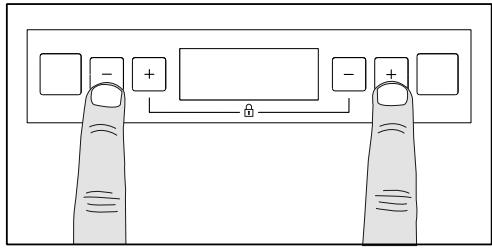
L'asciagatrice emetterà un segnale acustico.
quando il programma giunge al termine o
ogni volta che vengono premuti i pulsanti.
Per disattivare il segnale acustico, premere
contemporaneamente i pulsanti Programma
"-" e Ora di fine "+" per 3 secondi. Sul
display viene visualizzato "off-bzr-off".
L'elettrodomestico non emette un segnale
acustico alla fine del programma o quando
viene premuto un pulsante. Si può attivare
il segnale acustico premendo di nuovo gli
stessi pulsanti contemporaneamente per
3 secondi. In quello caso, sul display si
visualizza "on-bzr-on" e il segnale acustico è
attivato.

Épossible selezionare esta funzione sa prima che dopo l'avvio del programma.
5.8 Indicators di avviso

Gli indicatori di avviso sono differire in funzione del modello dell'elettrodomestico.
Pulizia filtro anti-pelucchi
Una spia di avviso si attiva per ricordare di effettuare la pulizia del filtro una volta terminato il programma.
Serbatoio dell'acqua
Alla fine del programma, o quando il serbatoio è pieno d'acqua, si accenderà un significativo. L'apparecchio smette di funzionare quando questo significativo è avventenza. Per riavviare la macchina, svuotare il serbatoio dell'acqua. Premere il pulsante "Avvio/Pausa/Annulla", per avviare il programma dopo aver svuotato il serbatoio. Il significativo è avventenza luminoso si spegne e il programma riprende il funzionamento.
5.9 Specificazione dell'ora di fine (ritardo di tempo)
Con la funzione "Partenza ridata" la fine del programma può essere posticipata sino ad un massimo di 24 ore.
- Aprire lo sportello di carico e insertire la biancheria.
- Quando il programma è stato selezionato, impostare l'ora di fine con i pulsanti "+" , -". Il simbolo dell'ora di fine lampeggia.
Premere il pulsante "Avvio/Pausa" per avviare la funzione con partenza ritardata. Il tempo di ritardo compare sul display; nelle i simboli Ora di fine e Avvio/Pausa si accendono. Il tempo sul display è il totale di tempo normale di asciugatura e tempo ritardato.
5.10 Modifica del tempo di partenza ridarata
Per cancellare il tempo durante il conto alla rovescia:
- Premere il pulsante Avvio/Pausa/ Annulla. Nel fratto, il simbolo Ora di fine si accende e il simbolo Avvio/Pausa lampeggia.
- Premere i pulsanti dell'ora di fine "+" , "per impostare il nuovo orario per la fine. Il symbolo Ora di fine e il symbolo Avvio/ Pausa lampeggiano nelle si eseguono le nuove impostazioni.
- Premere il pulsante Avvio/Pausa per completing l'impostazione del nuovo orario per la fine. Il symbolo Ora di fine e il symbolo Avvio/Pausa lampeggiano.

Quando si imposta di nuovo l'orario per la fine, il symbolo Ora di fine si spegne e il symbolo Avvio/Pausa lampeggia quando la durata reale del programma compare sul display. Il programma si avvia immediatamente perché alcun ritardo se si preme il pulsante Avvio/Pausa/Annulla.
5.11 Annullamento della partenza ridarata
Per annullare il tempo durante il conto alla rovescia e avviare il programma:
-
- Premere il pulsante "Avvio/Pausa/ Annulla" per 3 secondi per annullare il programma.
- Poi, premere il pulsante "Avvio/Pausa/ Annulla", per avviare il programma desiderato.
5.12 Cambiare le selezioni\ dopo che il programma è\ iniziato
E possibile avvalersi di questa funzione per asciugare i capi ad una temperatura superiore o inferiore dopo che l'asciugatrice ha iniziato il ciclo di asciugatura. Ad esempio:
-
Premere tenere premuto il pulsante "Avvio/Pausa/Annulla" per 3 secondi per "Annullare" il programma e per selezionare il programma "Asciugatura extra" invece del programma "Asciugatura per stiratura".
-
Selezionare il programma con il pulsante di selezione programma.
- Premere il tasto "Avvio/Pausa/Annulla" per avviare il programma.

Il blocco bambini dell'elettrodomestico non deveseessere attivo per eseguire esta operazione. Se il blocco bambini è attivo, disattivarlo prima di eseguire queste operazioni.
5.13 Aggiungere/rimuovere la biancheria in modalità standby
Per aggiungere o estrarre del bucato una volta avviato il programma:
- Premere il pulsante "Avvio/Pausa/ Annulla" per passare l'asciugatrice alla modalità "Pausa". Il processo di asciugatura si arresterà.
- Aprire lo sportello sulla posizione "Pausa" e richiuderlo dopo aver aggiunto o molto la biancheria.
- Premere il tasto "Avvio/Pausa/Annulla" per avviare il programma.

L'aggiunta di biancheria\
dopo l'avvio del processo di asciu-gatura potrebbe causare il mes-scolamento dei capi già asciutti\
con quelli bagnati e ciò potrebbe\
portare alla presenza di capi\
ancora bagnati una volta finito il\
cico di asciuatura.

Il bucato può essere aggiunto o estratto a piacimento durante il ciclo di asciugatura, ma dal momento che ciò interromperebbe l'asciugatura, la durata e del programma e il consumo di energia aumentoe rubbero. Pertanto si consiglia di aggiungere il bucato prima di aver avviato il programma di asciugatura.
5.14 Blocco bambini
Il blocco antibambino viene fornito per evitare interruzioni ai programma a causa della pressione dei tasti durante il programma. Lo sportello di carico e tutti i tasti tranne il tasto "On/Off" sul quadro di controllo sono disattativi se il blocco antibambino è Attivo.
Per attivare il blocco bambini, premere contemporaneamente i pulsanti Ora di fine "-" e Programma "+" per 3 secondi. "CL3-CL2-CL1" e "on-CL-on" compaiano sul display e la funzione è attenuata.
Per avviare un nuovo programma una volta che il precedente è terminato, o per interrompere il programma, il blocco antibambino deve essere disattivato. Premere di nuovo li stessi pulsanti per 3 secondi per disattivare il blocco bambini. "CL3-CL2-CL1" e "oFF-CL-oFF" compaiono sul display e la funzione è disattivata.

Il blocco bambini è disattivato
quando l'elettrodomestico è
riavviato premendo il pulsante di
accensione/spegnimento.
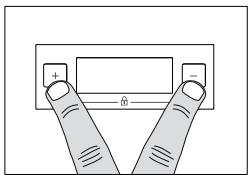

Premere i pulsanti pertinenti per 3 secondi per attivare il blocco bambini. Si sente un lungo bip e si attiva il blocco bambini. Si sente un doppio bip se si preme un pulsante qualsiasi nelle blocco bambini è attivo. Premere i pulsanti per 3 secondi per disattivare il blocco bambini. Si sente un singolo bip e il blocco bambini si disattiva.
5.15 Fine del programma attraverso l'annullamento
Per annullare il programma selezionato,
premere il pulsante "Avvio/Pausa/Annulla"
per 3 secondi.

Dal momento che l'interno della macchina può essere molto caldo quando si annulla un programma nelle macchina è in funzione, attivare il programma di ventilazione per raffreddarlo.
5.16 Fine del programma
"Fine" compare sul display e le spie di avviso "Puliziachio" e "Serbatoio acqua" si accendono quando il programma è finito. Lo sportello può essere aperto e la macchina è pronta quando per un nuovo programma. Premere il pulsante di accensione/ spegnimento per 1 sec per spegnere l'asciugatrice.

La fase finale del programma di asciugatura (fase di raffreddamento)iene eseguita perché applicazione di calore per mantenere i capi a una temperature che non li danneggi.

Se non si estrae il bucato alla fine del programma, è possible attivare un programma per evitare la formazione delle pieghe della durata di 2 ore.

Se il bucato non viene estratto immediatamente, non arrestare l'asciugatrice prima che il processo di asciugatura sia complete.

Pulire il filtro dopo agli
asciugatura (vedere Pulizia filtrato
anti-pelucchi)

Svuotareilserbatoiodell'acqua
dopopogiasciugatura(Siveda
Serbatoiodell'acqua).
6 Manutenzione e pulizia
La vita di servizio dell'apparecchio si allunga e i problemi che si incontrano di frequente diminuiscono se la pulizia avviene ad intervalli regolari.

Questo apparecchio deve essere scollegato durante le operazioni di manutenzione e pulizia (pannello di controllo, alloggiamento, ecc.).
6.1 Pulizia del filtrlo lanugine / superficie interna porta di carico
I pelucchi e le fibre rilasciati nell'aria dal bucato durante il ciclo di asciugatura vengono raccolti nel filtrto anti-pelucchi.
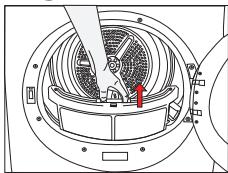
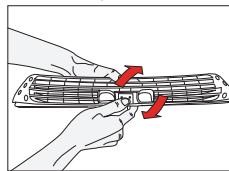
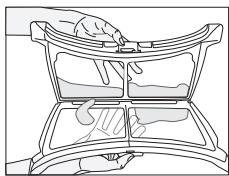
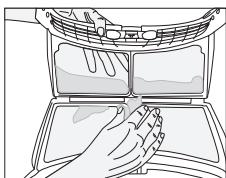

*Tali fibre e pelucchi si formano generalmente durante l'utilizzo e durante il lavaggio.

Pulire sempre il filtrto anti-pelucchi e le superfici interne dello sportello di carico dopo agliprocesso di asciugatura.

É possibile pulire l'alloggiamento del filtrro anti-pelucchi con un aspirapolvere.
Per pulire il filtro anti-pelucchi:
- Aprire lo sportello di carico.
- Rimuovere il filtro anti-pelucchi tirandolo.
verso l'alto e aprire il filtrto.
- Togliere i pelucchi, le fibre e gli sfilacci di cotone con la mano o con un panno soffice.
- Chiudere il filtro anti-pelucchi e rimetterlo aosto.

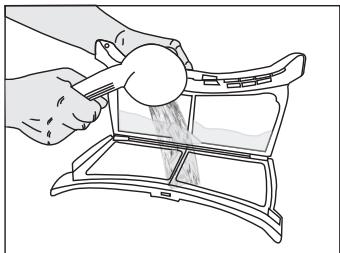
Dopo che l'apparecchio è stato usato per un po'di tempo, si cui formare uno strato sui pori del filtrro anti-pelucchi che cui provocare intasamento del filtrro stesso. Lavare il filtrro anti-pelucchi con acqua calda per rimuovere lo strato che si forma sulla superficie del filtrro anti-pelucchi. Asciuquarecompletamente il filtrro prima di reinstallarlo.

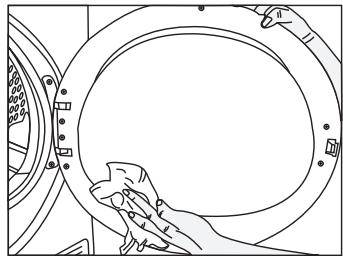
Pulire l'intera superficie interna dello sportello di carico e la guarnizione dello stesso.
6.2 Pulizia dei sensori
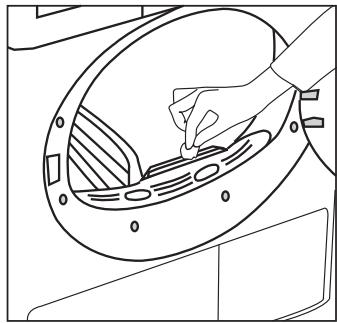
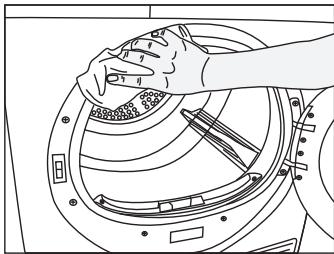
Vi sono sensori di umidità nell'apparecchio che rilevano se il bucato è asciutto o non. Per pulire i sensori:
- Aprire lo sportello per caricare l'apparecchio.
- Lasciare che l'apparecchio si raffreddi se è ancora caldo alla fine del processo di asciugatura.
- Pulire le superfici metalliche del sensore con un panno morbido imbevuto di aceto, quindi asciugarli.
| i | Pulire le superfici metalliche dei sensori 4 volte all'anno. |
| i | Non usare strumenti in metallo quando si puliscono le superfici in metallo dei sensori. |
| ! | Per la pulizia non usare mai solventi, detergenti o sostane simili a causa del rischio di incendio ed esplosione! |
6.3 Scarico del serbatoio d'acqua
L'umidità del bucato è rimossa e condensata durante il processo di asciugatura e l'acqua che ne derivesi accumulata nel serbatoio dell'acqua. Svuotare il serbatoio dell'acqua dopo agli ciclo di asciugatura.
| ! | L'accqua condensata non è potabile! |
| ! | Non rimuovere il serbatoio dell'accqua quando il programma è in funzione! |
Se ci si dimentica di svuotare il serbatoio dell'acqua, l'apparecchio si fermerà durante il seguente ciclo di asciugatura quando il serbatoio sare piano e il symbolo di avventenza Serbatoio acqua sare acceso. Se è così, svuotare il serbatoio dell'acqua e premere il pulsante Avvio/Pausa/Annulla per riprendere il ciclo di asciugatura. Per svuotare il serbatoio dell'acqua:
- Estrarre il cassetto e rimuovere con attenzione il serbatoio dell'acqua.
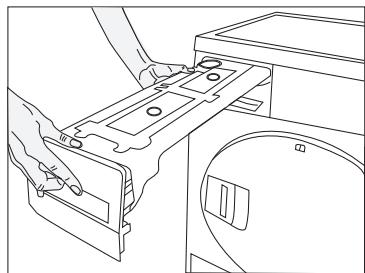
- Svuotare il serbatoio dell'acqua.
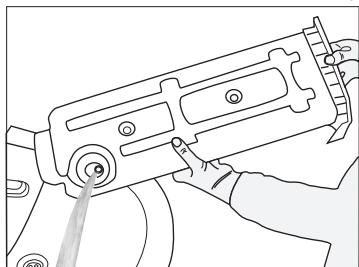
- In caso di accumulo di pelucchi nell'imbuto del serbatoio dell'acqua, pulire除去 acqua corrente.
- Rimettere aosto il serbatoio dell'acqua.
6.4 Pulizia del cassetto del filtro
Pelucchi e fibre che non sono stati catturati dal filtrto anti-pelucchi sono bloccati nel cassetto del filtrto dietro la placca paracolpi. La spia di avventenza per la pulizia del cassetto del filtrto si accende al massimo agli 5 cicli come promemoria. C'è un filtrato a due livelli nel cassetto del filtrto. Il primo livello è la spugna del cassetto del filtrto e il secondo livello è il panno del filtrto. Per pulire il cassetto del filtrto:
1. Premere il pulsante della placca paracolpi per aprirla.
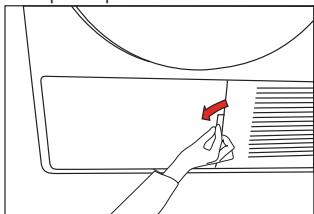
- Rimuovere la copertura del cassetto del filtrro ruotandola in direzione della freccia.
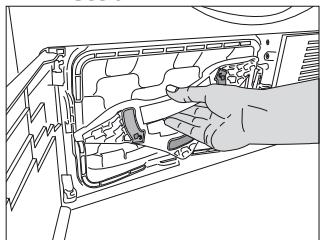
- Estrarre il cassetto del filtro.
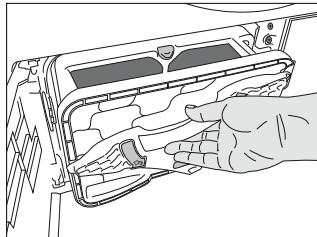
- Aprire il cassetto del filtrro premendo il pulsante rosso.
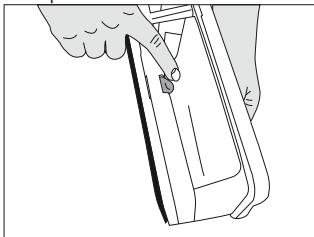
- Estrarre la spugna del cassetto del filtr.
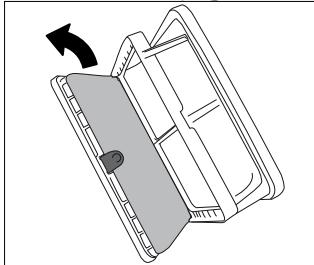
- Togliere i pelucchi, le fibre e gli sfilacci di cotone sul panno del filtrro con la mano o con un panno soffice.
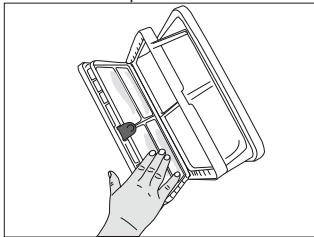

Quando si nota uno strato checouldo comportare un intasamento sul panno del filtr, pulire lo strato lavando con acqua calda. Lasciare asciugare il panno del filtroproima di installare nuovamente il cassetto del filtr.
- Lavare a mano la spugna del cassetto del filtro per rimuovere peli e pelucchi. Strizzare la spugna a mano per rimuovere l'acqua inccesso.

Non è necessario lavare la spugna se pelucchi e fibre non si accumulano in modo significativo.
- Riposizionare la spugna.
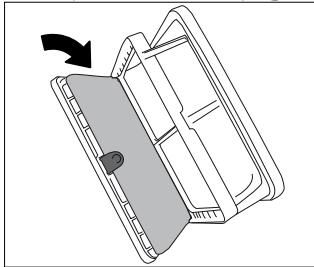
- Chiudere il cassetto del filtro per bloccare il pulsante rosso.
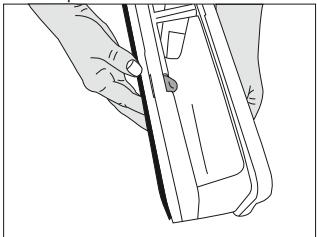
- Ripositionare il cassetto del filtrro, ruotare la copertura del cassetto del filtrro in senso orario, assicurandosi che sia chiuso in modo perfetto.
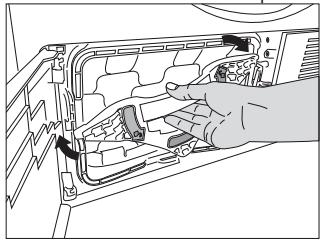
- Chiudere il coperchio della placca paracolpi.
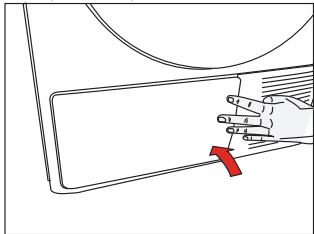
| i | L'asciugaturaenza la spugna del cassetto del filtro in posizione danneggia l'apparecchio! |
| i | Un filtro anti-pelucchi e un cassetto del filtro sporchi provocano periodi di asciugatura più lunghi e superiore consumo energetico. |

Dopo che l'apparecchio è stato usato per un po'di tempo, si cui formare uno strato sui pori del filtrro anti-pelucchi che cui provocare intasamento del filtrro stesso. Lavare il filtrro anti-pelucchi con acqua calda per rimuovere lo strato che si forma sulla superficie del filtrro anti-pelucchi. Asciuquarecompletamente il filtrro prima di uso.
6.5 Pulizia dell'evaporatore
Elimare con un aspirapolvere i pelucchi che si accumulano sulle alette dell'evaporatore che si trovata dietro al cassetto del filtr.
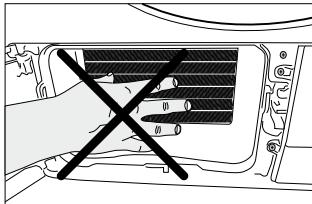
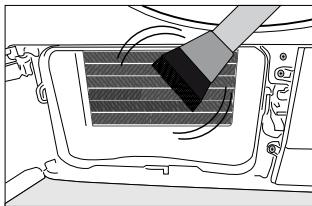

Si puòanche pulirea mano, sempre che si indossino quanti di protezione. Non cercare di pulire a mani nude.
7 Ricerca e risoluzione dei problemi
| Il processo di asciugatura richiede troppo tempo |
| • I pori del filtrto anti-pelucchi sono bloccati. >> Lavare il filtrto anti-pelucchi con acqua calda.
• Il cassetto del filtrto è intasato. >> Lavare la spugna e il panno del filtrto del cassetto del filtrto.
• Le griglie di ventilazione sulla parte anteriore dell'elettrodomestico sono bloccate. >> Rimuoverve gli oggetti (se presenti) che bloccano la ventilazione delle griglie anteriors.
• La ventilazione non è sufficiente poiché l'ambiente in cui è installato l'apparecchio è molto piccolo. >> Apire la porta e la finestra della stanza per evitare che la tempera-tura della stanza aumento troppo.
• Si è formato deposito di calcare sul sensore per l'umidità. >> Pulire il sensore per l'umidità.
•È stata caricata troppa biancheria. >> Non sovraccaricare l'asciugatrice.
• Il bucato non è centrifugato a sufficientia. >> Centrifugare il bucato ad una velocità più alta nella lavatrice. |
| Alla fine dell'asciugatura il bucato esce ancora bagnato. |
| iDopo l'asciugatura, i panni caldi sembrano più umidi del loro reale livello di umidità. |
| • è probabile che il programma selezionato non era adatto al tipo di bucato.
>>> Controllare le etichette sui capi, selezionare il programma appropriato per il tipo di bucato o usareanche i programmi con timer.
• I pori del filtrto anti-pelucchi sono bloccati. >> Lavare il filtrto anti-pelucchi con acqua calda.
• Il cassetto del filtrto è intasato. >> Lavare la spugna e il panno del filtrto del cassetto del filtrto.
•È stata caricata troppa biancheria. >> Non sovraccaricare l'asciugatrice.
• Il bucato non è centrifugato a sufficientia. >> Centrifugare il bucato ad una velocità più alta nella lavatrice. |
| L'asciugatrice non si accende o il programma non parte. L'asciugatrice non si avvia dopo l'impostazione. |
| • Non è collegata. >> Accertarsi che l'apparecchio sia collegato alla corrente.
• Lo sportello di carico è aperto. >> Verificare che lo sportello di carico sia chiuso corret-amente.
• Non è selezionato un programma o non è premuto il pulsante Avvio / Pausa / Annulla.
>> Accertarsi che il programma sia stato impostato che non sia in modalità «Pausa」.
• Il blocco bambini è attivato. >> Disattivare il blocco bambini. |
| Il programma si è interrottorawnenza alcuna causa. |
| • Lo sportello di carico è aperto. >> Verificare che lo sportello di carico sia chiuso correttamente.
• C'sata un'assenza di elettricità. >> Premere il pulsante Avvio/Pausa/Annulla per avviare il programma.
• Il serbatoio dell'acqua è pieno. >> Scarico del serbatoio d'accua |
| Il bucato si è ristretto, infeltrito o deteriorato. |
| • Non è stato usato un programma adatto al tipo di bucato. >> Controllare l'etichetta dei capi e selezionare un programma adatto al tipo di tessuto. |
| La luce del cestello non si accende (Per i modelli con lampadina). |
| · L'asciugatrice non è accesa con il pulsante di accensione/spegnimento. >> > Accertarsi che l'asciugatrice sia accesa.
· La lampadina è guasta. >> > Chiamare l'agente autorizzato per l'assistenza per far sostituire la lampadina. |
| Perdite di acqua dallo sportello di carico |
| · Si sono accumulati pelucchi sulle superfici interne dello sportello di carico e sulle superfici della guarnizione dello sportello di carico. >> > Pulire le superfici interne dello sportello di carico e le superfici della guarnizione dello sportello di carico. |
| Lo sportello di carico si aprere automaticamente. |
| · Lo sportello di carico è aperto. >> > Spingere per chiudere lo sportello di carico finché non si sente un suono di blocco. |
| · Il symbolo di avventenza Serbatoio acqua è acceso/lampeggia. |
| · Il serbatoio dell'accia è pieno. >> > Scaricare il serbatoio d'accia.
· Il flessibile di scarico dell'accia è piegato. >> > Se l'apparecchio è collegato direttamente ad uno scarico per l'accia, controllare il flessibile di scarico dell'accia. |
| Se non si riesce ad eliminare il problema nonostante si seguito le istruzioni di但这a sezione, consultare il rivenditore o l'agente autorizzato per l'assistenza. Non cercare mai di riparare l'apparecchio da soli. |
Dryer
User Manual
EN
beko
Please read this user manual first!
Dear Customer,
Thank you for preferring a Beko product. We hope that your product which has been manufactured with high quality and technology will give you the best results. We advise you to read through this manual and the other accompanying documentation carefully before using your product and keep it for future reference. If you transfer the product to someone else, give its manual as well. Pay attention to all details and warnings specified in the user manual and follow the instructions given therein.
Use this user manual for the model indicated on the cover page.
Explanation of symbols
Throughout this user manual the following symbols are used:
| i | Important information or useful hints about usage. |
| ! | Warning for hazardous situations with regard to life and property. |
| S | Warning against electric shock. |
| SSS | Warning against hot surfaces. |
| Warning against fire hazard. |
| Packaging materials of the product are manufactured from recyclable materials in accordance with our National Environment Regulations. |
Do not dispose of the packaging wastes with the domestic waste or other wastes, discard them to the dedicated collection points designated by the local authorities.

This product was manufactured using the latest technology in environmentally friendly conditions.
1 Important instructions for safety and environment
This section contains safety instructions that will help protect from risk of personal injury or property damage. Failure to follow these instructions shall void any warranty.
1.1 General safety
- The dryer can be used by children at and above 8 years old and by persons whose physical, sensory or mental capabilities were not fully developed or who lack experience and knowledge provided that they are supervised or trained on the safe usage of the product and the risks it brings out. Children should not play with the product. Cleaning and maintenance works should not be performed by children unless they are supervised by someone.
- Children of less than 3 years should be kept away unless continuously supervised.
- Adjustable feet should not be removed. The gap between the dryer and the floor should not be reduced with materials such as carpet, wood and tape. This will cause problems with the dryer.
- Always have the installation and repairing procedures carried out by the Authorized Service. Manufacturer shall not be held liable for damages that may arise from procedures carried out by unauthorized persons.
- Never wash the dryer by spraying or pouring water onto it! There is the risk of electric shock!
1.1.1 Electrical safety

Electrical safety instructions should be followed while electrical connection is made during the installation.
- Connect the dryer to a grounded outlet protected by a fuse at the value specified on the type label. Have the grounding installation performed by a qualified electrician. Our company shall not be liable for any damages that will arise when the dryer is used without grounding in accordance with the local regulations.
- The voltage and allowed fuse protection is stated on the type label plate.
- The voltage specified on the type label must be equal to your mains voltage.
- Unplug the dryer when it is not in use.
- Unplug the dryer from the mains during installation, maintenance, cleaning and repair works.
- Do not touch the plug with wet hands! Never unplug by pulling on the cable, always pull out by grabbing the plug.
- Do not use extension cords, multi-plugs or adaptors to connect the dryer to power supply in order to decrease the risk of fire and electric shock.
- Power cable plug must be easily accessible after installation.

Damaged mains cable should be changed notifying the Authorized Service.

If the dryer is faulty, it must not be operated unless it is repaired by an authorized service agent! There is the risk of electric shock!
1.1.2 Product safety

Points to be taken into consideration for fire hazard:
Below specified laundry or items must not be dried in the dryer considering fire hazard.
- Unwashed laundry items
- Items soiled with oil, acetone, alcohol, fuel oil, kerosene, stain removers, turpentine, paraffin or paraffin removers must be washed in hot water with plenty of detergent before being dried in the dryer.
For this reason especially the items containing the above specified stains must be washed very well, to do this use adequate detergent and choose a high washing temperature.

Below specified laundry or items must not be dried in the dryer due to the fire hazard:
- Garments or pillows bolstered with rubber foam (latex foam), shower bonnets, water resistant textiles, materials with rubber reinforcement and rubber foam pads.
- Clothing cleaned with industrial chemicals.
Items such as lighter, match, coins, metal parts, needle etc. may damage the drum set or may lead to functional problems. Therefore check all the laundry that you will load into your dryer.
Never stop your dryer before the programme completes. If you must do this, remove all laundry quickly and lay them out to dissipate the heat.

Clothes that are washed inadequately may ignite on their own and even may ignite after drying ends.
- You must provide enough ventilation in order to prevent gases exiting from devices operating with other types of fuels including the naked flame from accumulating in the room due to the back fire effect.
| ! | Underwear that contains metal reinforcements should not be dried in the dryer. Dryer may be damaged if metal reinforcements come loose and break off during drying. |
| i | Use softeners and similar products in accordance with the instructions of their manufacturers. |
| i | Always clean the lint filter before or after each loading. Never operate the dryer without the lint filter installed. |
- Never attempt to repair the dryer by yourself. Do not perform any repair or replacement procedures on the product even if you know or have the ability to perform the required procedure unless it is clearly suggested in the operating instructions or the published service manual. Otherwise, you will be putting your life and others' lives in danger.
- There must not be a lockable, sliding or hinged door that may block the opening of the loading door in the place where your dryer is to be installed.
Install your dryer at places suitable for home use. (Bathroom, closed balcony, garage etc.)
- Make sure that pets do not enter the dryer. Check the inside of the dryer before operating it.
- Do not lean on the loading door of your dryer when it is open, otherwise it may fall over.
- The lint must not be allowed to accumulate around the tumble dryer
1.2 Mounting over a washing machine
- A fixing device should be used between the two machines when installing the dryer above a washing machine. The fitting device must be installed by the authorized service agent.
- Total weight of the washing machine and the dryer -with full load- when they are placed on top of each other reaches to approx. 180 kilograms. Place the products on a solid floor that has sufficient load carrying capacity!

Washing machine cannot be placed on the dryer.
Pay attention to the above warnings during the installation on your washing machine.
| Installation Table for Washing Machine and Dryer |
| Dryer Depth | Washing Machine Depth |
| 62 cm | 60 cm | 54 cm | 50 cm | 49 cm | 45 cm | 40 cm |
| 54 cm | Can be installed | Can be installed | Cannot be installed |
| 60 cm | Can be installed | Cannot be installed |
1.3 Intended use
- Dryer has been designed for domestic use. It is not suitable for commercial use and it must not be used out of its intended use.
- Use the dryer only for drying laundry that are marked accordingly.
- The manufacturer waives any responsibility arisen from incorrect usage or transportation.
- The service life of the dryer that you purchased is 10 years. During this period, original spare parts will be available to operate the dryer properly.
1.4 Child safety
- Packaging materials are dangerous for the children. Keep packaging materials away from children.
- Electrical products are dangerous for the children. Keep children away from the product when it is operating. Do not let them tamper with the dryer. Use the child-proof lock in order to prevent the children to tamper with the dryer.

Child-proof lock is on the control panel. (See Child lock)
- Keep loading door closed even when the dryer is not in use.
1.5 Compliance with the WEEE regulation and disposing of the waste product
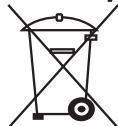
This product complies with EUW WEEE Directive (2012/19/EU). This product bears a classification symbol for waste electrical and electronic equipment (WEEE). This product has been manufactured with high quality parts and materials which can be reused and are suitable for recycling. Do not dispose of the waste product with normal domestic and other wastes at the end of its service life. Take it to the collection center for the recycling of electrical and electronic equipment. Please consult your local authorities to learn about these collection centers.
1.6 Compliance with RoHS Directive:
The product you have purchased complies with EU RoHS Directive (2011/65/EU). It does not contain harmful and prohibited materials specified in the Directive.
Packaging materials of the product are manufactured from recyclable materials in accordance with our National Environment Regulations. Do not dispose of the packaging materials together with the domestic or other wastes. Take them to the packaging material collection points designated by the local authorities.
1.8 Technical Specifications
| EN |
| Height (Min. / Max.) | 84,6 cm / 86,6 cm* |
| Width | 59,5 cm |
| Depth | 59,8 cm |
| Capacity (max.) | 7 kg** |
| Net weight (plastic front door usage) | 49 kg |
| Net weight (glass front door usage) | 51 kg |
| Voltage | See type label*** |
| Rated power input |
| Model code |
- Min. height: Height with adjustable feet are closed.
Max. height: Height with adjustable feet are opened maximum.
** Dry laundry weight before washing.
*** Type label is located behind the loading door.
| i | Technical specifications of the dryer are subject to specification without notice to improve the quality of the product. |
| i | Figures in this manual are schematic and may not match the product exactly. |
| i | Values stated on markers on the dryer or in the other published documentation accompanying with the dryer are obtained in laboratory in accordance with the relevant standards. Depending on operational and environmental conditions of the dryer, these values may vary. |
2 Your Dryer
2.1 Package Contents
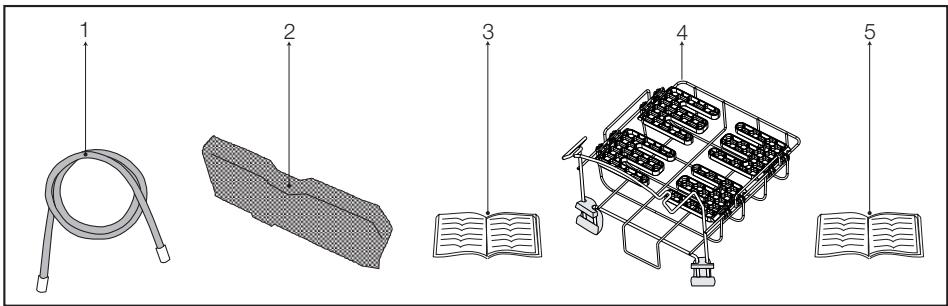
- Water drain hose *
- Filter drawer spare sponge*
- User Manual
- Drying basket*
- Drying basket user manual*
*It can be supplied with your machine depending on its model.
3 Installation
Refer to the nearest Authorized Service Agent for installation of the product. To make the product ready for use, make sure that the electricity and water drainage system are appropriate before calling the Authorized Service Agent. If they are not, call a qualified technician and plumber to have any necessary arrangements carried out.
| i | Preparation of the product's location as well as the electrical and waste water installations is under customer's responsibility. |
| 4 | Installation and electrical connections of the product must be carried out by the Authorized Service Agent. Manufacturer shall not be held liable for damages that may arise from procedures carried out by unauthorized persons. |
| ! | Prior to installation, visually check if the product has any defects on it. If so, do not have it installed. Damaged products cause risks for your safety. |
| ! | Let your dryer wait for 12 hours before starting to use it. |
3.1 Appropriate installation location
Install the product on a stable and level surface.
Dryer is heavy. Do not move it by yourself.
- Operate your product in a well ventilated, dust-free environment.
- Do not block the air ducts in front of and under the product with materials such as long pile rugs, wooden blocks and bands.
- Do not install the product behind a door with a lock, sliding door or a hinged door which can strike the product.
- Once the product is installed, it should stay at the same place where its connections have been made. When installing the product, make sure that the rear wall of it does not touch anywhere (tap, socket, etc.). Also pay attention to select an installation location which you will not be required to change afterwards.
- Place the product at least 1.5 ~cm away from the edges of other furniture.
- The rear surface of the tumble dryer shall be placed against a wall.

Do not place the product on the power cable.
3.2 Removing the transportation safety assembly

Remove the transportation safety assembly before using the product for the first time.
- Open the loading door.
- There is a nylon bag inside the drum that contains a piece of styrofoam. Hold it from its section marked with XX XX.
- Pull the nylon towards yourself and remove the transportation safety assembly.
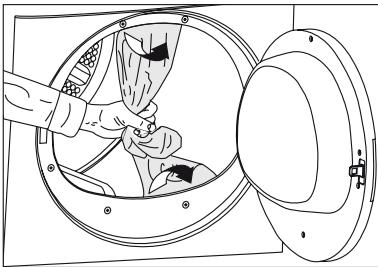

Make sure that no part of the transportation safety assembly remains inside the drum.
3.3 Under counter installation
- This product can be installed under a counter if the height of the counter is sufficient.

While using undercounter dryer, it should never be operated without undercounter installation part.
| Dryer Depth | 60 cm | 54 cm |
| Stock number of under-bench installation part | 2979700100 | 2973600100 |
- Leave at least 3cm of space around the sides and the rear wall of the product when installing it under a counter or in a cupboard.
3.4 Adjusting the feet
In order to ensure that the product operates more silently and vibration-free, it must stand level and balanced on its feet. Balance the machine by adjusting the feet. Turn the feet to left or right until the machine stands level and firmly.
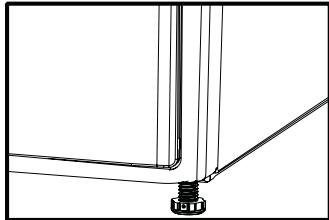

Never remove the adjustable feet from their housings.
3.5 Electrical connection
For specific instructions for electrical connection required during installation (see 1.1.1 Electrical Safety)
3.6 First use
Before starting to use the product, make sure that all preparations are made in accordance with the instructions in sections "Important safety instructions" and "Installation".
3.7 Transportation of the product
- Unplug the product before transporting it.
- Remove the water drain (if any) and chimney connections.
- Drain the water in the product completely.

We recommend carrying the product in upright position. If it is not possible to carry the machine in the upright position, we recommend carrying it by tilting towards the right side when looked from the front. After the product is moved to its new place, you should wait for 12 hours before starting it.
3.8Warnings about sounds

It is normal to hear metallic noise from the compressor sometimes during operation.
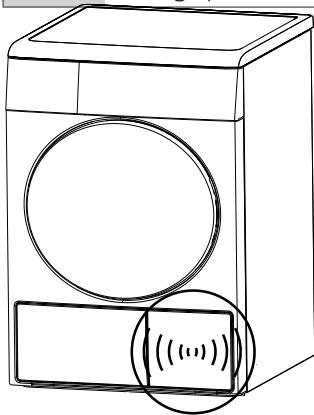

Water collected during operation is pumped to water tank. It is normal to hear pumping noise during this process.
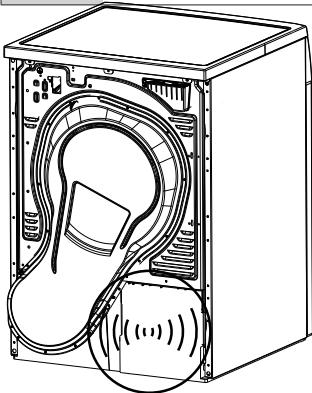
3.9 Changing the illumination lamp
In case an illumination lamp is used in your laundry dryer
To change the Bulb/LED used for illumination of your tumble dryer, call your Authorized Service. The lamp(s) used in this appliance is not suitable for household room illumination. The intended purpose of this lamp is to assist the user to place laundry in the tumble dryer in a comfortable way. "The lamps used in this appliance have to withstand extreme physical conditions such as vibrations and temperatures above 50^ ."
4 Preparation
4.1 Laundry suitable for drying in the dryer
Always obey the instructions given on the garment tags. Dry only the laundry having a label stating that they are suitable for drying in a dryer and make sure that you select the appropriate programme.
| LAUNDRY DRYING SYMBOLS |
| Drying Symbols | Suitable for dryer | No Iron | Sensitive / Delicate dry | Do not dry with dryer | Do not dry | Do not dry-clean |
| Drying Settings | At any temperature | At high temperature | At medium temperature | At low temperature | Without heating | Hang to dry | - | III | - | P |
| Lay to dry | Hang wet to dry | - | Dry-durable |
| Iron - | … | … | … | … | … |
| Dry or Steam | Iron at high temperature | Iron at medium temperature | Iron at low temperature | Do not iron | Iron without steam |
| Maximum temperature | 200 °C | 150 °C | 110 °C |
4.2 Laundry not suitable for drying in the dryer

Delicate embroidered fabrics, woollen, silk garments, delicate and valuable fabrics, airtight items and tulle curtains are not suitable for machine drying.
4.3 Preparing laundry for drying
- Laundry may be tangled with each other after washing. Separate the laundry items before placing them into the dryer.
Dry garments having metal accessories such as zippers, inside out.
- Fasten the zippers, hooks and buckles and button sheets.
4.4 Things to be done for energy saving
Following information will help you use the dryer in an ecological and energy-efficient manner.
4.5 Correct load capacity
Follow the instructions in the "Programme selection and consumption table". Do not load more than the capacity values stated in the table.
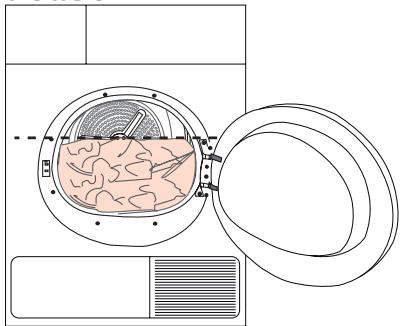

It is not recommended to load the dryer with laundry exceeding the level indicated in the figure. Drying performance will degrade when the machine is overloaded. Furthermore, dryer and the laundry can get damaged.
Following weights are given as examples.
| Laundry | Approximate weights (g)* |
| Cotton quit covers (double) | 1500 |
| Cotton quit covers (single) | 1000 |
| Bed sheets (double) | 500 |
| Bed sheets (single) | 350 |
| Large tablecloths | 700 |
| Small tablecloths | 250 |
| Tea napkins | 100 |
| Bath towels | 700 |
| Hand towels | 350 |
| Blouses | 150 |
| Cotton shirts | 300 |
| Shirts | 250 |
| Cotton dresses | 500 |
| Dresses | 350 |
| Jeans | 700 |
| Handkerchiefs (10 pieces) | 100 |
| T-Shirts | 125 |
*Dry laundry weight before washing.
5 Selecting a Programme and Operating your Appliance
5.1 Control panel
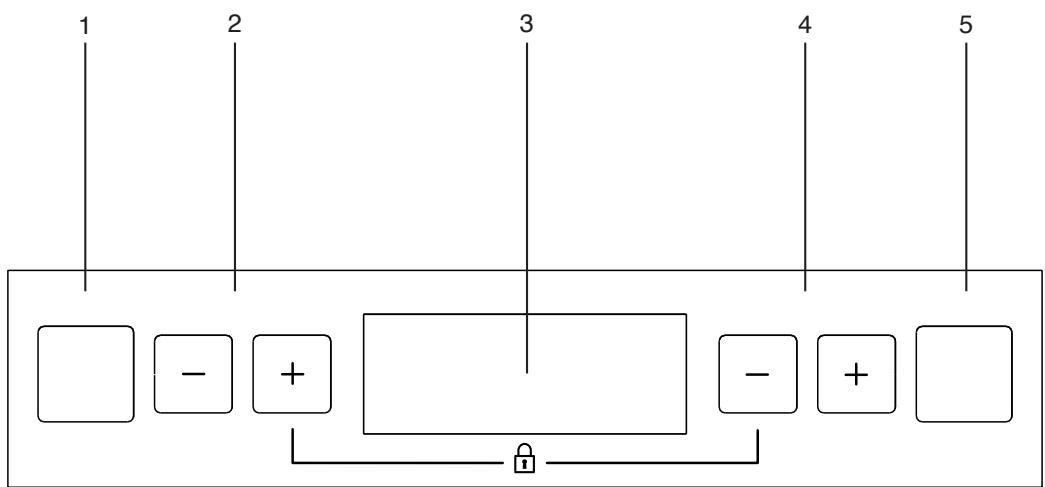
- On/Off button
- Programme selection button
- Display
- End time setting button
- Start/Pause/Cancel button
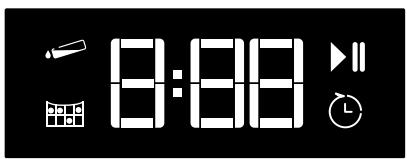
Start and pause symbol Water tank full warning symbol Filter cleaning warning symbol Symbol for specifying the end time (Time Delay)

On/Off

Programme

Child-proof lock

Ending In

Jeans

Shirt

Express

Iron dry

Start

Cottons

Synthetics

Ventilation

Sport
5.2 Preparing the machine
- Plug in the machine.
- Place the laundry in the machine.
- Press the On / Off button for 1 (long) second.

Pressing the On/Off button does not mean that the program has started. Press Start / Pause / Cancel button to start the programme.
5.3 Programme selection
- Decide the appropriate programme from the table below which includes drying levels.
- Select the desired programme with the Programme Selection knob.
| Extra Dry | Only the cotton laundry is dried at normal temperature. Thick and multi layered laundry (towels, linens, jeans and etc.) are dried in a way that they do not require ironing before being placed in the wardrobe. |
| Cupboard Dry | Normal laundry (tablecloths, underwear and etc.) are dried in a way that they do not require ironing before being placed in the wardrobe. |
| Cupboard Dry Plus | Normal laundry (E.g.: tablecloths, underwear) are dried in a way that they do not require ironing before placing in the drawers, but more than those in the ready to wearop-tion. |
Iron Dry
Normal laundry (shirts, dresses and etc.) are dried ready to be ironed.

For further programme details, see, "Programme selection and consumption table".
5.4 Main programmes
Depending on the fabric type, the following main programmes are available:
Cottons
Dry durable laundry with this programme. Dries at normal temperature. It is recommended to use for your cotton items (bed sheets, quilt covers, towels, bathrobes, etc.).
Synthetics
Dry less durable laundry with this programme. Recommended for synthetics.
5.5 Additional programmes
For special cases, following additional programmes are available in the machine.

Additional programs may differ according to the features of your machine.
Express
You can use this programme to dry your cotton laundry that you have spun at high speeds in your washing machine. This program dries 1 kg Cotton laundry (3 Shirts / 3 T-shirts) in 45 minutes.

To obtain better results from your dryer, your laundry must be washed at suitable programmes and spun at the recommended spin speeds in the washing machine.
- Shirt
This programme dries the shirts more sensitively and creases them less and thus, helps to iron them more easily.

There may be a little moisture on the shirts at the end of the programme. We recommend you not to leave the shirts in the dryer.
- Jeans
Use this programme to dry your jeans that are spun at high speeds in the washing machine.
- Sport
Use this programme to dry together the synthetic and cotton laundry items and the laundry items made of mixed fabrics.
Daily
This programme is used to dry cottons and synthetics daily, and lasts for 90 minutes.
Delicates
You can dry your highly delicate laundry (silk blouses, fine underwear, etc.) that are suitable for drying or laundry which is advised to be hand-washed at a lower temperature.

It is recommended to use a cloth bag to avoid certain delicate garments and laundry from getting creased or damaged. Take your laundry immediately out of the dryer and hang them after the programme ends in order to prevent them being creased.
- Ventilation
Only ventilation is performed for 10 minutes without blowing hot air. You can air the clothes that have been kept at closed environments for a long time and deodorize unpleasant odours thanks to this programme.
- Timer programmes
You can select one of the 30 min. and 45 min. timer programmes to achieve the desired final drying level at low temperatures.

With this programme, the machine dries for the time selected regardless of the dryness level.
5.6 Programme selection and consumption table
| EN |
| Programs | Capacity (kg) | Spin speed in washing machine (rpm) | Approximate amount of remaining humidity | Drying time (minutes) |
| Cottons / Coloreds |
| Extra dry | 7 | 1000 | % 60 | 175 |
| | | | | |
| | | | | |
| | | | | |
| | | | | |
| | | | | |
| | | | | |
| | | | | |
| | | | | |
| | | | | |
|
| | | | |
| | | | | |
|
| | | | |
| | | | |
| | | | | |
| | | | | |
| |
| |
|
|
*: Energy Label standard programme (EN 61121:2012) "All the filters must be cleaned prior to test series."
All values given in the table have been fixed according to EN 61121:2012 Standard. These values may deviate from the values in the table according to the laundry type, laundry spin speed, environmental conditions and voltage fluctuations.
5.7 Auxiliary function Cancel audio warning
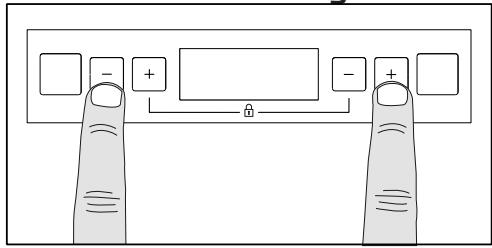
Your dryer will give an audio warning when the programme comes to an end or each time you press the buttons. If you want to disable the audio warning, press the Programme " - " and End Time "+" buttons simultaneously for 3 seconds. "off-bzr-off" appears on the display. Machine does not give an audio warning at the end of the programme or when a button is pressed. You can enable the audio warning by pressing the same buttons simultaneously again for 3 seconds. If you do so, "on-bzr-on" appears on the display and audio warning is enabled.

You can select this function either before or after the programme starts.
5.8 Warning indicators

Warning indicators may differ according to the model of your machine.
Lint filter cleaning
A warning light will turn on to remind filter cleaning after the programme finishes.
Water tank
A warning symbol will turn on at the end of the programme or when the tank is full with water. The machine stops operating when this warning symbol lights up while a programme is running. To restart the machine, please drain the water in the water tank. Press "Start/Pause/Cancel" button to start the program after you have emptied the water tank. The warning symbol goes off and the program resumes operating.
5.9 Specifying the end time (time delay)
With the "Time delay" function you can delay the ending time of the programme up to 24 hours.
- Open the loading door and put the laundry in.
- Once the programme is selected, set the end time with end time "+" , - " buttons. End time symbol flashes.
Press "Start/Pause" button to start the time delay function. Delay time appears on the display; meanwhile, the End Time symbol and Start/Pause symbol illuminates. The time on the display is the total of normal drying time and delay time.
5.10 Changing the delay time
If you want to change the time during the countdown:
- Press Start/Pause/Cancel button. Meanwhile the End Time symbol illuminates and Start/Pause symbol flashes.
- Press End Time "+" , - " buttons to set the new end time. End Time symbol and Start/Pause symbol flash while making the new settings.
- Press Start/Pause button to complete setting the new end time. End Time symbol and Start/Pause symbol flash.

When setting the end time again, End Time symbol turns off and Start/Pause symbol flashes once the actual programme duration appears on the display. Programme starts immediately without any delay if you press Start/Pause/Cancel button.
5.11 Canceling the time delay
If you want to cancel the time delay countdown and start the programme immediately:
- Press "Start/Pause/Cancel" button for 3 seconds to cancel the programme.
- Then, press "Start/Pause/Cancel" button to select the desired programme.
5.12 Changing the programme after it has started
You can use this feature to dry your clothes under higher or lower temperatures after your dryer has started.
For example;
- Press and hold the "Start/Pause/Cancel" button for about 3 seconds to "Cancel" the programme in order to select "Extra Dry" programme instead of "Iron Dry" programme.
- Select the programme with the Programme Selection button.
- Press "Start/Pause/Cancel" button to start the programme.

Child-proof lock of the machine should not be active in order to perform this operation. If the child-proof lock is active, deactivate it before performing these operations.
5.13 Adding/removing laundry in standby mode
In order to add or remove laundry after the programme starts:
- Press the "Start/Pause/Cancel" button to switch the dryer to "Pause" mode. Drying process will stop.
- Open the door at "Pause" position and close it again after adding or taking out laundry.
- Press "Start/Pause/Cancel" button to start the programme.

Any laundry added after the drying process has started may cause the dried clothes in the machine intermingle with wet clothes and the result will be wet laundry after the drying process is over.

Laundry may be added or taken out as much as desired during a drying process, but as this process will interrupt drying continuously, it will extend the programme duration and increase energy consumption. Therefore, it is recommended to add laundry before the drying programme has started.
5.14 Child-proof lock
There is a child-proof lock to prevent any programme interruption due to the pressing of button while the programme is running. The loading door and all buttons except the "On/Off" button on the control panel are deactivated when the child-proof lock is active. In order to activate the childproof lock, press End Time "-" and Programme "+" buttons simultaneously for 3 seconds. "CL3-CL2-CL1" and "on-CL-on" appears on the display and the function is activated.
To start a new programme after the programme is over or to interrupt the programme, the child-proof lock should be deactivated. Press the same buttons again for 3 sec. to deactivate the child-proof lock. "CL3-CL2-CL1" and "oFF-CL-oFF" appears on the display and the function is deactivated.

Child-proof lock is deactivated when the machine is restarted by pressing the On/Off button.
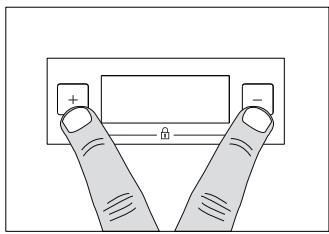

Press the relevant buttons for 3 seconds to activate the childproof lock. A long beep will be heard and the child-proof lock will be activated. A double beep will be heard if you press any button when the child-proof lock is active. Press the buttons for 3 seconds to deactivate the childproof lock. Single beep will be heard and child-proof lock will be deactivated.
5.15 Ending the programme through canceling
In order to cancel the selected program; press "Start/Pause/Cancel" button for about 3 seconds.

As the inside of the machine will be excessively hot when you cancel the programme while the machine is running, activate the ventilation programme to cool it down.
5.16 End of programme
"End" appears on the display and "Filter cleaning" and "Water tank" warning lights turn on when the programme is over. The door can be opened and the machine becomes ready for a second cycle. Press "On/Off" button for 1 sec (long) to turn off the dryer.

Final step of the drying cycle (cooling step) is performed without heat application in order to keep the items at a temperature that would not harm them.

A 2-hour anti creasing programme to prevent laundry from creasing will be activated if you do not take the laundry out after the programme has come to an end.

If you will not take the laundry out immediately, do not stop the dryer before the drying process is complete.

Clean the filter after each drying (please see, Lint filter cleaning)

Drain the water tank after each drying (please see, Water tank)
6 Maintenance and cleaning
Service life of the product extends and frequently faced problems decrease if cleaned at regular intervals.

This product must be unplugged during maintenance and cleaning works (control panel, body, etc.).
6.1 Cleaning Lint Filter / Loading Door Inner Surface
Lint and fibres released from the laundry to the air during the drying cycle are collected in the Lint Filter.
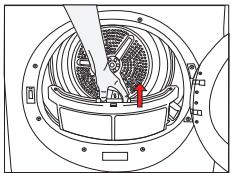
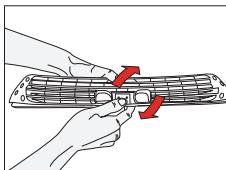
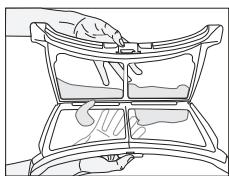
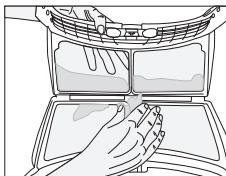

*Such fibre and lint are generally formed during wearing and washing.

Always clean the lint filter and the inner surfaces of the loading door after each drying process.

You can clean the lint filter housing with a vacuum cleaner.
To clean the lint filter:
- Open the loading door.
- Remove the lint filter by pulling it up and open the lint filter.
- Clean lint, fibre, and cotton raveling by hand or with a soft piece of cloth.
- Close the lint filter and place it back into its housing.

A layer can build up on the lint filter pores that can cause clogging of the lint filter after using the machine for a while. Wash the lint filter with warm water to remove the layer that builds up on the lint filter surface. Dry the lint filter completely before reinstalling it.
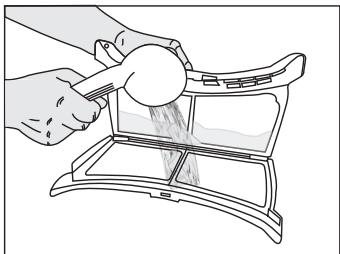

Clean the entire inner surface of the loading door and loading door gasket.
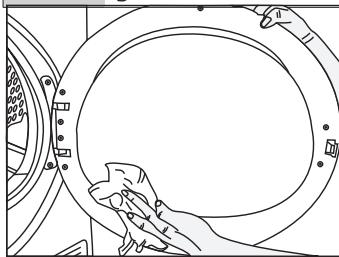
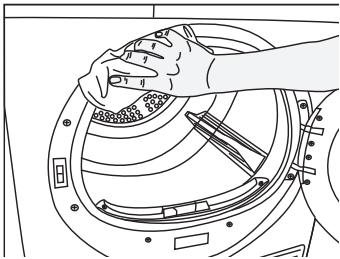
6.2 Cleaning the sensors
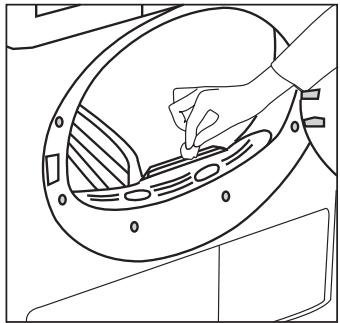
There are dampness sensors in the machine that detect whether the laundry is dry or not. To clean the sensors:
- Open the loading door of the machine.
- Allow the machine to cool down if it is still hot due to the drying process.
- Wipe the metal surfaces of the sensor with a soft cloth, dampened with vinegar and dry them.
| i | Clean metal surfaces of the sensors 4 times a year. |
| i | Do not use metal tools when cleaning metal surfaces of the sensors. |
| ! | Never use solvents, cleaning agents or similar substances for cleaning due to the risk of fire and explosion! |
6.3 Draining the water tank
Dampness of the laundry is removed and condensed during drying process and the water that arises accumulates in the water tank. Drain the water tank after each drying cycle.
| ! | Condensed water is not potable! |
| ! | Never remove the water tank when the programme is running! |
If you forget to drain the water tank, the machine will stop during the subsequent drying cycles when the water tank is full and the Water Tank warning symbol will flash. If this is the case, drain the water tank and press Start / Pause / Cancel button to resume the drying cycle.
To drain the water tank:
- Pull the drawer and remove the water tank carefully.
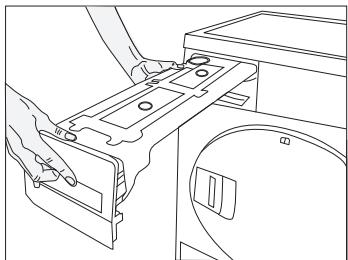
2. Drain the water in the tank.
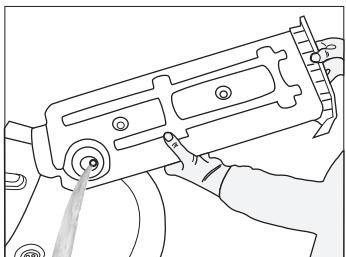
- If there is lint accumulation in the funnel of the water tank, clean it under running water.
- Place the water tank into its seat.
6.4 Cleaning the filter drawer
Lint and fibre that could not be captured by the lint filter are blocked in the filter drawer behind the kick plate. Filter Printer Cleaning warning light will light up maximum at every 5 drying cycles as a reminder.
There is a two-level filter in the filter drawer. The first level is the filter drawer sponge and the second level is the filter cloth.
To clean the filter drawer:
- Press the kick plate button to open the kick plate.
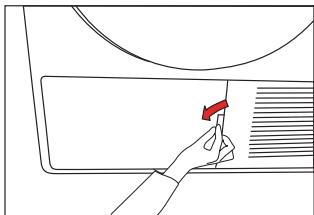
- Remove the filter drawer cover by turning it in the direction of arrow.
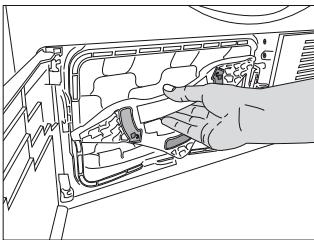
- Pull out the filter drawer.
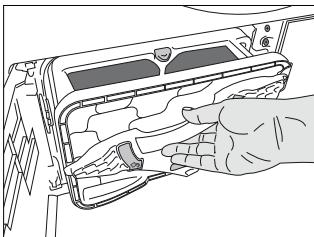
- Open the filter drawer by pressing the red button.
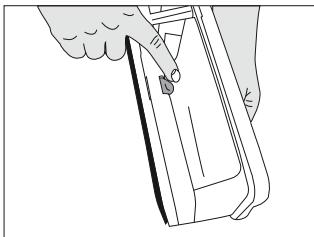
- Take out the filter drawer sponge.
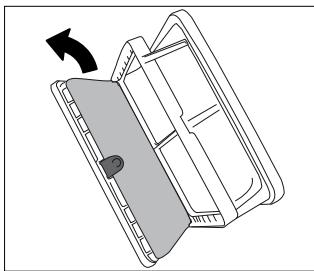
- Clean lint, fibre, and cotton raveling on the filter cloth by hand or with a soft piece of cloth.
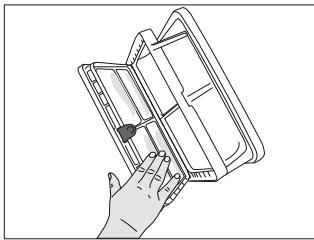
When you notice a layer that may lead clogging on filter cloth, please clean the layer by washing in warm water. Let the filter cloth dry thoroughly before installing back the filter drawer.
- Hand-wash the filter drawer's sponge to remove hair and lint on it. Squeeze the sponge by hand to remove excessive water.
i It is not necessary to clean the sponge if lint and fibre accumulation on it is not significant.
- Place the sponge back into its place.
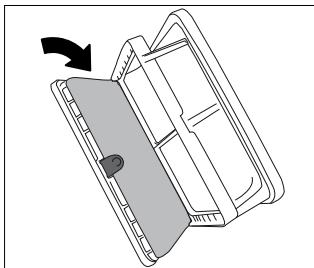
- Close the filter drawer as to lock the red button.
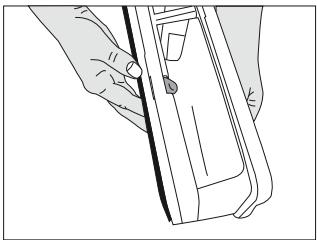
- Place the filter drawer back into its place, turn the filter drawer cower clockwise making sure that it is closed securely.
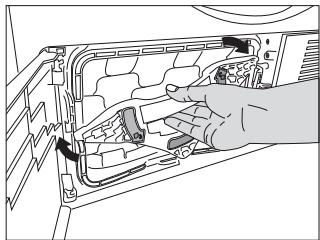
- Close the kick plate cover.
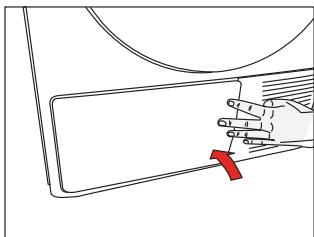
| i | Drying without the filter drawer sponge in place will damage the machine! |
| i | A dirty lint filter and filter drawer will cause longer drying periods and higher energy consumption. |
| i | A layer can build up on the lint filter pores that can cause clogging of the lint filter after using your machine for a while. Wash the lint filter with warm water to remove the layer that builds up on the lint filter surface. Dry the lint filter completely before using it. |
6.5 Cleaning the evaporator
Clean the lints accumulated on the fins of the evaporator located behind the filter drawer with a vacuum cleaner.
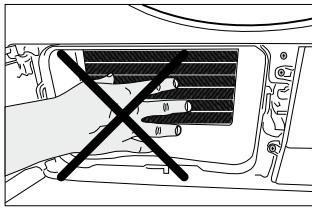
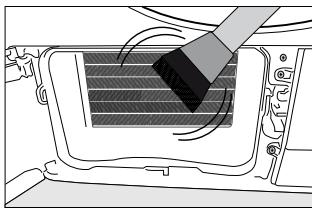

You can also clean by hand provided that you wear protective gloves. Do not attempt to clean with bare hands.
7 Troubleshooting
| Drying process takes too much time |
| • Pores of the lint filter are clogged. >> > Wash the lint filter with warm water.
• Filter drawer is clogged. >> > Clean the sponge and the filter cloth in the filter drawer.
• Ventilation grids on the front side of the machine are blocked. >> Remove the objects (if any) that block ventilation in front of the ventilation grids.
• Ventilation is not sufficient since the room where the machine is installed is very small. >> Open the door and window of the room to avoid the room temperature increase too much.
• Lime deposit has built up on the dampness sensor. >> > Clean the dampness sensor.
• Excessive laundry is loaded. >> > Do not load the dryer in excess.
• Laundry is not spun sufficiently. >> > Spin your laundry at a higher speed in your washing machine. |
| Laundry comes out wet at the end of drying. |
| i | After drying, the hot clothes feel damper than their actual dampness level. |
| • It is likely that the selected programme did not suit the laundry type. >> Check the care labels on clothes, select appropriate programme for the laundry type or use timer programmes in addition.
• Pores of the lint filter are clogged. >> > Wash the lint filter with warm water.
• Filter drawer is clogged. >> > Clean the sponge and the filter cloth in the filter drawer.
• Excessive laundry is loaded. >> > Do not load the dryer in excess.
• Laundry is not spun sufficiently. >> > Spin your laundry at a higher speed in your washing machine. |
| Dryer does not switch on or the programme does not start. Dryer does not start when it is set. |
| • It is not plugged in. >> > Make sure that the machine is plugged in.
• Loading door is ajar. >> > Make sure that the loading door is closed securely.
• Programme is not selected or the Start / Pause / Cancel button is not pressed. >> > Make sure that the programme has been set and it is not in "Pause" mode.
• Childproof Lock is activated. >> > Deactivate the Childproof Lock. |
| Programme is interrupted without any cause. |
| • Loading door is ajar. >> > Make sure that the loading door is closed securely.
• There was a power failure. >> > Press Start / Pause / Cancel button to start the programme.
• Water tank is full. >> > Draining the Water Tank |
| Laundry has shrunk, become felted or deteriorated. |
| • A programme suitable for the laundry type is not used. >> Check the garment tag and select a programme suitable for the fabric type. |
| Drum lighting does not turn on (On models with lamp). |
| • Dryer is not switched on with the On / Off button. >> > Make sure that the dryer is switched on.
• Lamp is defective. >> > Call Authorized Service Agent to have the lamp replaced. |
| Water leaks from the loading door |
| • Lint has accumulated on the inner surfaces of the loading door and on the surfaces of the loading door gasket. >> > Clean the inner surfaces of the loading door and the surfaces of the loading door gasket. |
| Loading door opens spontaneously. |
| • Loading door is ajar. > > > Push the loading door to close until you hear a locking sound. |
| • Water Tank warning symbol is on/flashing. |
| • Water tank is full. > > > Drain the water tank.
• Water draining hose is bent. > > > If the product is connected directly to a wastewater drain, check the water drain hose. |

If you cannot eliminate the problem although you follow the instructions in this section, consult your dealer or the Authorized Service Agent. Never try to repair a nonfunctional product yourself.