
3WGX1953 - Micro-ondes BALAY - Notice d'utilisation et mode d'emploi gratuit
Retrouvez gratuitement la notice de l'appareil 3WGX1953 BALAY au format PDF.


| Type d'appareil | Micro-ondes |
| Puissance | Non précisé |
| Capacité | Non précisé |
| Fonctions | Cuisson, décongélation |
| Programmation | Réglages ajustables |
| Écran | Non précisé |
| Minuterie | Oui |
| Plateau tournant | Oui |
| Sécurité enfant | Non précisé |
| Dimensions | Non précisé |
| Poids | Non précisé |
| Alimentation | Électrique |
| Matériau intérieur | Non précisé |
| Couleur | Non précisé |
| Garantie | Non précisé |
| Accessoires inclus | Non précisé |
FOIRE AUX QUESTIONS - 3WGX1953 BALAY
Questions des utilisateurs sur 3WGX1953 BALAY
0 question sur cet appareil. Repondez a celles que vous connaissez ou posez la votre.
Poser une nouvelle question sur cet appareil
Téléchargez la notice de votre Micro-ondes au format PDF gratuitement ! Retrouvez votre notice 3WGX1953 - BALAY et reprennez votre appareil électronique en main. Sur cette page sont publiés tous les documents nécessaires à l'utilisation de votre appareil 3WGX1953 de la marque BALAY.
MODE D'EMPLOI 3WGX1953 BALAY
Making cooking as much fun as eating
Please read this instruction manual. This will ensure that you make full use of all the technical benefits the microwave oven has to offer.
It will provide you with important safety information. You will be familiarised with the individual components of your new microwave. And we will show you how to make settings step by step. It is quite simple.
The tables list the adjustment values for numerous well-known dishes. All these dishes are tested in our cooking studio.
In the unlikely event of a malfunction, look here for information on how to rectify minor faults yourself.
A detailed table of contents will help you to find your way around quickly.
Enjoy your meal.
Table of contents
Before connecting your new appliance 4
Before installation 4
Installation and connection 5
Important information 5
Safety information 5
Safety information for microwave operation 8
The control panel 11
Types of heating 12
Accessories 12
Before using for the first time 13
Heating up the cooking compartment 13
The microwave 13
Ovenware 14
Microwave settings 15
Setting procedure 15
Tables and Tips 16
Notes on the tables 16
Defrosting 16
Defrosting, heating up or cooking frozen foods . . . . 18
Heating food 19
Cooking food 20
Microwave tips 21
Table of contents
Grilling 22
Setting procedure 22
Grilling table 23
Combined microwave and grill 24
Setting procedure 24
Combined grill and microwave 25
Test dishes in accordance with EN 60705 26
Care and cleaning 27
Cleaning agents 28
Troubleshooting 29
After-sales service 30
Technical data 30
Before connecting your new appliance
Important safety precautions
Please read this instruction manual carefully. Only then will you be able to operate your appliance safely and correctly.
Please keep the operating and installation instructions in a safe place ready to pass on in the event of change of ownership.
Before installation
Disposing in an environmentallyresponsible manner

Unpack oven and remove all packing material.
This appliance is labelled in accordance with the European Directive 2002/96/EC concerning used electrical and electronic appliances (waste electrical and electronic equipment - WEEE).
The guideline determines the framework for the return and recycling of used appliances as applicable.
Transport damage
Check the appliance for damage after unpacking it. Do not connect the appliance if it has been damaged in transport.
Electrical connection
If the power cable is damaged, it must be replaced by a specialist trained by the manufacturer in order to prevent hazards.
Installing and connecting your microwave oven
Please observe the special installation manual.
Installation and connection
This appliance is only intended for domestic use.
This oven is intended for built-in use only. It is not intended for counter-top use or for use inside a cupboard.
Please observe the special installation instructions.
The appliance can be installed in a 60 cm wide wall-mounted cupboard (at least 30 cm deep and 85 cm off the floor).
The appliance is fitted with a plug and must only be connected to a properly installed earthed socket. The fuse protection must be rated at 10 amperes (automatic circuit breaker with trigger characteristic L or B). The mains voltage must correspond to the voltage specified on the rating plate.
The socket must only be installed and the connecting cable must only be replaced by a qualified electrician. If the plug is no longer accessible following installation, an all-pole disconnecting device must be present on the installation side with a contact gap of at least 3 mm.
Adapters, multiway strips and extension leads must not be used. Overloading can result in a risk of fire.
Important information
Safety information
This appliance complies with the safety regulations for electrical appliances. Repairs must only be carried out by after-sales service engineers who have been trained by the manufacturer. Repairs that are carried out incorrectly may constitute a serious hazard to the user.
The appliance is intended only for domestic use. Use it only for the preparation of food.
Never connect the appliance to an external timer or separate remote control. Risk of fire.
Adults and children must not operate the appliance without supervision
- if they are physically or mentally incapable of doing so
- or if they lack the knowledge and experience required to operate the appliance correctly and safely.
Children and microwaves

Children must only be allowed to use microwave ovens if they have been properly instructed. They must be able to operate the appliance correctly and understand the risks outlined in this instruction manual.
Children must be supervised when using the appliance, to ensure that they do not play with it.
Hot surfaces

Never touch the surfaces of heating and cooking appliances. They will become hot during operation. The internal surfaces of the appliance and the heating elements get very hot. Risk of burning.
Children must be kept at a safe distance from the appliance.
Never trap cables of electrical appliances in the appliance door. The insulation could be damaged. Short circuit, risk of electric shock.
Never use the top of the appliance as a work top. Risk of fire.
Cooking compartment

Never store combustible items in the cooking compartment. They could catch fire if the appliance is switched on.
Risk of burning.
Never open the appliance door if there is smoke in the cooking compartment. Pull out the appliance plug.
Never switch on the appliance unless there is food in the cooking compartment. It could be overloaded. An exception to this rule is for short-term testing of ovenware (see the Microwave, ovenware section).
Never use the microwave oven without the turntable.
Never place food directly on the turntable. Always use a dish.
Liquid that has boiled over must not be allowed to run through the turntable drive into the interior of the appliance. Observe the procedure. Use a short cooking time and reset if necessary.
Be careful with food that is prepared with drinks with a high alcohol content (e.g. cognac, rum).
Alcohol evaporates at high temperatures.
In unfavourable circumstances, the alcohol vapours could catch fire in the appliance.
Risk of burning.
Use only small quantities of drinks with a high alcohol content and open the appliance door carefully.
Appliance door and seal

Never operate the appliance if the appliance door is damaged. Otherwise microwave energy may escape. Call the after-sales service.
The appliance door must close properly.
If the seal is very dirty, the appliance door will no longer close properly during operation. The fronts of adjacent units could be damaged. Always keep the seal clean.
Environment

There is a danger of short-circuiting.
Never expose the appliance to excessive heat or moisture.
Only use this appliance indoors.
Cleaning method

Do not use high-pressure cleaners or steam jet cleaners.
Short circuit, risk of electric shock.
Clean the appliance on a regular basis. The surface of the appliance could be destroyed and the appliance could corrode over time if it is not cleaned with sufficient care. Microwave energy could escape.
Repairs

Repairs must be carried out only by after-sales service engineers who have been trained by the manufacturer. Repairs that are carried out incorrectly may constitute a serious hazard to the user.
Never carry out repair or maintenance work which requires you to remove the cover that protects against microwave energy. Call the after-sales service.
You must not open the casing. The appliance is a high-voltage appliance.
Never switch on a defective appliance. Pull out the appliance plug. Call the after-sales service.
Never replace the cooking compartment light yourself.
Call the after-sales service.
CAUTION: Repair and maintenance work in which the cover that protects against microwave energy must be removed must only be carried out by specialist personnel, due to the risks involved.
Safety information for microwave operation
Preparing food

Use of the microwave is intended exclusively for the preparation of food. Using the microwave for other purposes may be dangerous and may result in damage, e.g. heated grain or cereal pillows could catch fire, even several hours later. Risk of fire.
Children must only be permitted to use microwave appliances if they have been properly instructed. Children must be able to use the appliance correctly and understand the dangers outlined in the instruction manual.
Microwave power and time

Do not select a microwave power or time setting that is higher than necessary. The food could catch fire. The appliance could be damaged. Risk of fire Follow the information provided in the instruction manual.
Ovenware

Only use ovenware that is suitable for use in a microwave.
Porcelain or ceramic ovenware can have small perforations in the handles or lid. These perforations conceal a cavity below. Any moisture that penetrates this cavity could cause the ovenware to crack. There is a risk of injury.
Heated food gives off heat. The ovenware can become hot. There is a risk of burning.
Always use an oven cloth or oven gloves to remove ovenware and accessories from the appliance.
Packaging

Never heat food in heat-retaining packages. Risk of fire.
Do not leave food heating unattended in containers made of plastic, paper or other combustible materials.
Airtight packaging may burst when food is heated. There is a risk of being burnt.
Follow the information provided on the packaging. Always use an oven cloth or oven gloves to remove meals.
Drinks

There is a possibility of delayed boiling when a liquid is heated. This means that the boiling temperature is reached without the usual steam bubbles rising to the surface. Even if the container only vibrates a little, the hot liquid can suddenly boil over or spatter. There is a risk of being burnt.
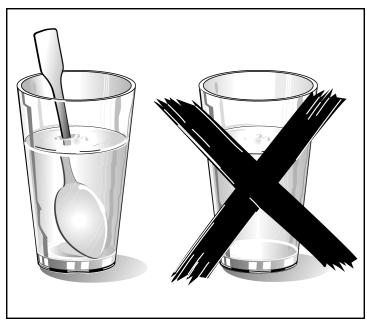
When heating liquids, always place a spoon in the container. This will prevent delayed boiling.
Never heat drinks or other food in containers that have been tightly sealed. There is a risk of explosion.
Never overheat alcoholic drinks. There is a risk of explosion.
Be careful with food that is prepared with drinks with a high alcohol content (e.g. cognac, rum).
Alcohol evaporates at high temperatures. In unfavourable circumstances, the alcohol vapours could catch fire in the oven. There is a risk of burning. Only use small quantities of drinks with a high alcohol content and open the oven door carefully.
Baby food

Never heat baby food in closed containers. Always remove the lid or teat.
Stir or shake well after the food has been heated. This is the only way to ensure even heat distribution. There is a risk of being burnt.
Check the temperature of the food before it is given to the child.
Foods with shells or skin

Never cook eggs in their shells. Never reheat hard-boiled eggs as they can explode even after microwave operation has ended. The same applies to shellfish and crustaceans. There is a risk of burning. Always prick the yolk when frying or poaching eggs.
Always prick the skin of foodstuffs with hard peel or skins, such as apples, tomatoes, potatoes and sausages, before cooking to prevent the peel or skin from bursting.
Drying food

Never use the microwave to dry food. Risk of fire.
Food with a low water content

Do not defrost or heat food at too high a power or for too long if the food has a low water content, e.g. bread. Risk of fire.
Cooking oil

Never use the microwave to heat cooking oil on its own. There is a risk of fire.
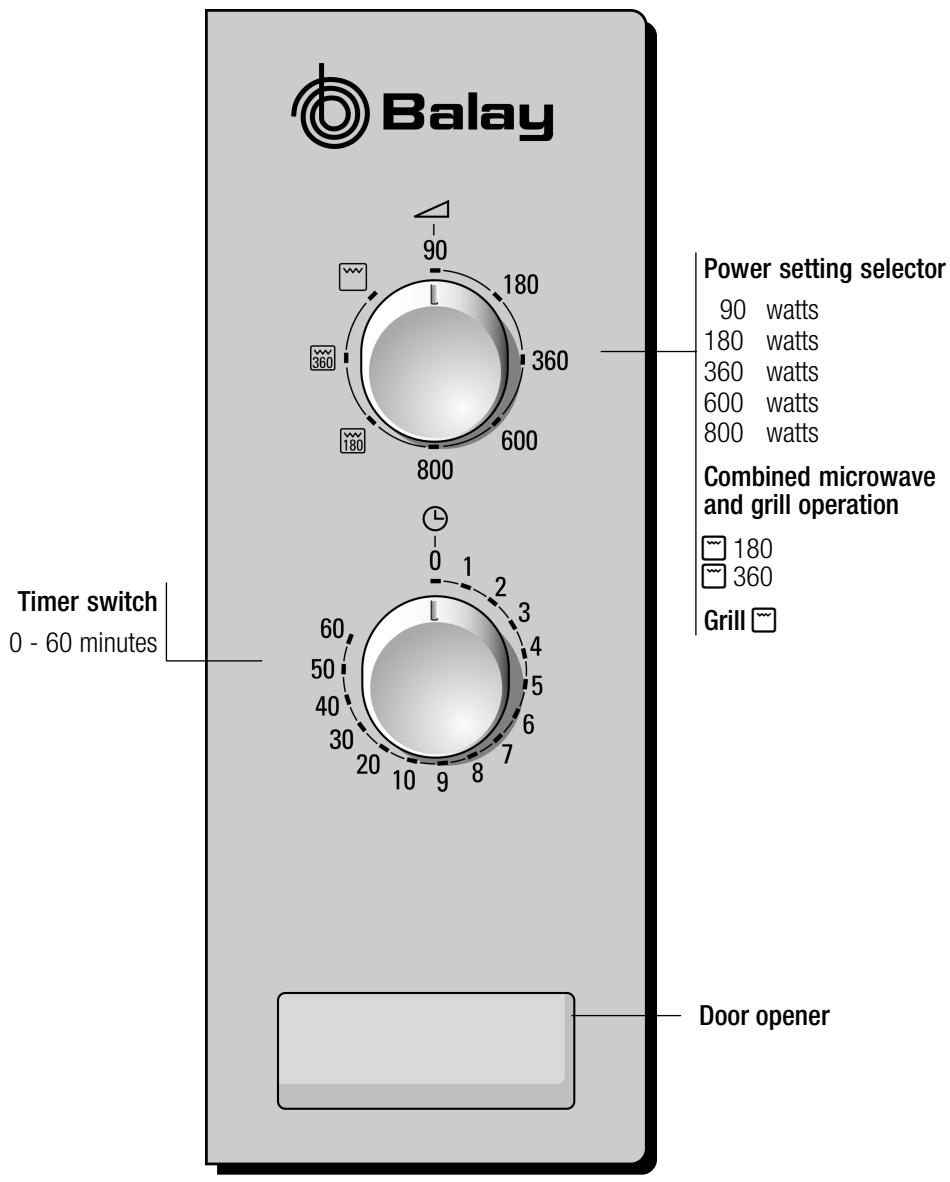
The control panel
Types of heating
Microwaves
These are converted to heat when they come into contact with food. The microwave is ideal for rapid defrosting, heating up, melting and cooking.
Microwave settings:
800 watts for heating up liquids.
600 watts for heating up and cooking food.
360 watts for cooking meat and heating up delicate foods.
180 watts for defrosting and continued cooking.
90 watts for defrosting delicate foods.
Grill
Grill combined with the microwave
You can grill steaks, sausages, fish or toast.
This involves the simultaneous operation of the grill and the microwave. The food will become crispy and brown, but will do so much quicker and using less energy.
Accessories
The turntable
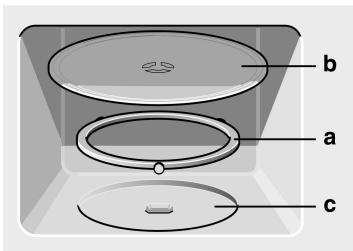
To insert the turntable:
- Place the support ring (a) in the shaft (c) in the centre of the cooking compartment base.
2 Place the turntable (b) on the support ring (a).
You should only use the appliance with the turntable in place. Ensure that the support ring is properly fitted. The turntable can turn anti-clockwise or clockwise.
Before using for the first time
Heating up the cooking compartment
Heat the empty cooking compartment with the turntable inserted and the door closed for 10 minutes to remove the new smell.
- Set the power selector to grill.
- Use the time switch to set 10 minutes.
A signal sounds once the time has elapsed. Open the appliance door.
The microwave
This section provides information on ovenware as well as an overview of how to set the microwave.
You can set the microwave to single operation i.e. on its own or in combined operation with the grill.
Microwaves are converted to heat when they come into contact with food. The microwave is ideal for rapid defrosting, heating up, melting and cooking.
Why not try out the microwave straight away? You could heat up a cup of water for your tea, for example.
Use a large cup without a decorative gold or silver rim and place a teaspoon in it.
- Set the 800 watt power setting.
- Set to 2 minute using the timer switch.
An acoustic signal sounds after 2 minute. The water for your tea is hot.
Please read the safety instructions at the front of the instruction manual once more while you are drinking your cup of tea. They are very important.
Ovenware
Suitable ovenware
Heat-resistant ovenware made of glass, glass ceramic, porcelain, ceramic or heat-resisting plastic are suitable. These materials do not block the microwaves.
You can also use serving dishes. This saves you having to transfer the food into other containers. Only use ovenware with gold or silver trim if the manufacturer guarantees they are suitable for microwaves.
Unsuitable ovenware
Metal dishes are not suitable.
Metal blocks the microwaves. Food in closed metal containers will remain cold.
Caution. Metal - e.g. a spoon a in glass - must be at least 2 cm away from the oven walls and inside of the door. Sparks may damage the door glass.
Ovenware test:
Never switch the microwave on without any food in it. The only exception to this is if you are carrying out the following dish test.
Carry out the following test if you are unsure whether your ovenware is suitable for use in the microwave: Place the empty dish in the oven for 12 to 1 minute at full power. Check the temperature during this period. The dish should still be cold or hand-hot. The dish is unsuitable if it becomes hot or sparks are generated.
Microwave settings
800 watts for heating up liquids.
600 watts for heating up and cooking food.
360 watts for cooking meat and heating up delicate foods.
180 watts for defrosting and continued cooking.
90 watts for defrosting delicate foods.
Setting procedure
Example: Microwave power 600 W, 3 minutes
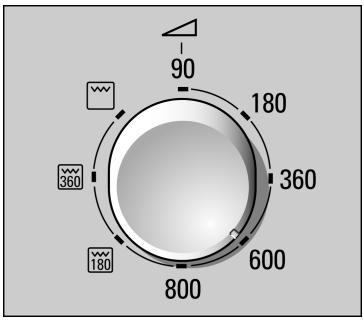
- Set the power selector to the required microwave setting.
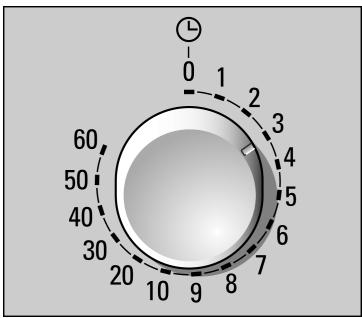
- Set the cooking time using the timer switch. For cooking times which are under two minutes, first set to a longer time and then turn the switch back to the time you require.
Correcting
Stopping early
The microwave will run through the time set. An acoustic signal sounds when the time expires.
You can change the cooking time whenever you like.
Microwave operation will stop if you set the timer switch to zero.
Notes
If you open the oven door while the microwave is in operation, the microwave will pause and the remaining time will be retained in the memory. The microwave will start again once you have closed the door.
If two microwave settings and times are shown in the tables, set the first microwave setting and time and then set the second ones after the signal has sounded.
Tables and Tips
Notes on the tables
The following tables provide you with numerous options and settings for the microwave.
The times specified in the tables are only guidelines. They may vary according to the ovenware used, the quality, temperature and consistency of the food.
Time ranges are often specified in the tables. Set the shortest time first and then extend the time if necessary.
It may be that you have different quantities from those specified in the tables.
A rule of thumb can be applied: Double the amount - almost double the time Half the amount - half the time.
Always place the ovenware on the turntable.
Defrosting
Place the frozen food in an open container on the turntable.
Delicate parts such as the legs and wings of chicken or fatty outer layers of roasts can be covered with small pieces of aluminium foil. The foil must not come into contact with the oven walls. You can remove the foil half way through the defrosting time.
Turn or stir the food once or twice during the defrosting time. Large pieces of food should be turned several times.
Leave defrosted items to stand at room temperature for a further 10 to 20 minutes so that the temperature can stabilize. With poultry, the giblets can be removed at this point. Meat can still be prepared even if it is frozen in the centre.
| Amount | Microwave setting in watts Time in minutes | Notes | |
| Whole joints of meat | 800 g | 180 W, 15 min. + 90 W, 10 - 20 min. | |
| e.g. beef, pork or veal | 1,000 g | 180 W, 20 min. + 90 W, 15 - 25 min. | |
| (with or without bones) | 1,500 g | 180 W, 30 min. + 90 W, 20 - 30 min. | |
| Diced or sliced beef, | 200 g | 180 W, 2 min. + 90 W, 4 - 6 min. | Separate the parts when turning. |
| pork and veal | 500 g | 180 W, 5 min. + 90 W, 5 - 10 min. | |
| 800 g | 180 W, 8 min. + 90 W, 10 - 15 min. | ||
| Mixed minced meat | 200 g | 90 W, 10 min. | Freeze flat if possible. Turn several times during defrosting and remove meat which has already been defrosted. |
| 500 g | 180 W, 5 min. + 90 W, 10 - 15 min. | ||
| 800 g | 180 W, 8 min. + 90 W, 10 - 20 min. | ||
| Poultry or poultry portions | 600 g | 180 W, 8 min. + 90 W, 10 - 15 min. | |
| 1,200 g | 180 W, 15 min. + 90 W, 20 - 25 min. | ||
| Fish fillet, fish steak, slices | 400 g | 180 W, 5 min. + 90 W, 10 - 15 min. | Separate defrosted items. |
| Vegetables e.g. peas | 300 g | 180 W, 10 - 15 min. | |
| Fruit | 300 g | 180 W, 7 - 10 min. | Stir carefully during defrosting and separate the defrosted parts. |
| e.g. raspberries | 500 g | 180 W, 8 min. + 90 W, 5 - 10 min. | |
| Butter | 125 g | 180 W, 1 min. + 90 W, 2 - 3 min. | Remove all the packaging. |
| 250 g | 180 W, 1 min. + 90 W, 3 - 4 min. | ||
| Whole loaf | 500 g | 180 W, 6 min. + 90 W, 5 - 10 min. | |
| 1,000 g | 180 W, 12 min. + 90 W, 10 - 20 min. | ||
| Dry cakes | 500 g | 90 W, 10 - 15 min. | Separate the pieces of cake when turning them. Only for cakes without icing, cream or crème pâtissière. |
| e.g. creaming method cakes | 750 g | 180 W, 5 min. + 90 W, 10 - 15 min. | |
| Juicy cakes | 500 g | 180 W, 5 min. + 90 W, 15 - 20 min. | Only for cakes without icing or gelatine. |
| e.g. fruit cake and quark cake | 750 g | 180 W, 7 min. + 90 W, 15 - 20 min. |
Defrosting, heating up or cooking frozen foods
Take ready-made meals out of their packaging. They will heat up more quickly and evenly if you place them in microwavable dishes. Different parts of the meal may heat up at different rates.
Food which is laid flat heats up quicker than if it is piled high. Therefore it is best to spread out the food so that it lies flat in the container. You should not place layers of food on top of each other.
Always cover the food. If you do not have a suitable lid for your dish, use a plate or special microwave foil.
You should stir or turn the food two to three times during heating.
Once you have heated up the meals, leave them to stand for another 2 to 5 minutes so that the temperature can stabilize.
The individual taste of the food is retained to a large degree. You can therefore go easy on salt and spices.
| Amount | Microwave setting in watts Time in minutes | Notes | |
| Menu, plated meal, ready-made meals in 2 to 3 parts | 300-400g | 600 W, 8 - 11 min. | |
| Soups | 400 g | 600 W, 8 - 10 min. | |
| Stews | 500 g | 600 W, 10 - 13 min. | |
| Meat in sauce e.g. goulash | 500 g | 600 W, 12 - 17 min. | Separate the pieces of meat when stirring. |
| Fish, e.g. fillets | 400 g | 600 W, 10 - 15 min. | You may add water, lemon juice or wine. |
| Bakes e.g. lasagne and cannelloni | 450 g | 600 W, 10 - 15 min. | |
| Side dishes | 250 g | 600 W, 3 - 5 min. | Add a little liquid. |
| rice and pasta | 500 g | 600 W, 8 - 10 min. | |
| Vegetables e.g. peas, broccoli and carrots | 300 g | 600 W, 8 - 10 min. | Add water to cover the base of the dish. |
| 600 g | 600 W, 14 - 17 min. | ||
| Creamed spinach | 450 g | 600 W, 11 - 16 min. | Cook without adding any water. |
Heating food
Take ready-made meals out of their packaging. They will heat up more quickly and evenly if you place them in microwavable dishes. Different parts of the meal may heat up at different rates.

When heating liquids, always place a teaspoon in the container to stop the liquid from boiling over. When boiling is delayed, the liquid comes to the boil without the customary steam bubbles. Even if the container only vibrates a little, the liquid can boil over a lot or spatter. This can cause injuries and scalding.
Always cover the food. If you do not have a suitable lid for your dish, use a plate or special microwave foil.
You should stir or turn the food several times during heating. Monitor the temperature.
Once you have heated up the meals, leave them to stand for another 2 to 5 minutes so that the temperature can stabilize.
| Amount | Microwave settings in watts Time in minutes | Notes | |
| Menu, plated meal, ready-made meals in two to three parts | 300 - 400 g | 600 W, 10 - 15 min. | |
| Drinks | 150 ml | 800 W, 1 - 2 min. | Place a spoon in the container. |
| 300 ml | 800 W, 2 - 3 min. | Do not overheat alcoholic drinks. Check during heating. | |
| 500 ml | 800 W, 3 - 4 min. | ||
| Baby food e.g. baby's bottles | 50 ml | 360 W, approx. 1/2 min. | Without the lid or teat. Always shake well after heating. You must check the temperature. |
| 100 ml | 360 W, approx. 1 min. | ||
| 200 ml | 360 W, approx. 1 1/2 - min. | ||
| Soup 1 bowl | 200 g | 600 W, 2 - 3 min. | |
| 2 bowls | 400 g | 600 W, 4 - 5 min. | |
| Meat in sauce | 500 g | 600 W, 8 - 11 min. | Separate slices of meat. |
| Stew | 400 g | 600 W, 6 - 8 min. | |
| 800 g | 600 W, 8 - 11 min. | ||
| Vegetables 1 portion | 150 g | 600 W, 2 - 3 min. | Add a little liquid. |
| 2 portions | 300 g | 600 W, 3 - 5 min. |
Cooking food
Always cook food in covered dishes. You should stir or turn the food during cooking.
The individual taste of the food is retained to a large degree. You can therefore go easy on salt and spices.
Food which is laid flat heats up quicker than if it is piled high. Therefore it is best to spread out the food so that it lies flat in the container. If possible, you should not place layers of food on top of each other.
Once you have cooked the meals, leave them to stand for another 2 to 5 minutes so that the temperature can stabilize.
Microwave tips
| Amount | Microwave settings in watts Time in minutes | Notes | |
| Fresh whole chicken without giblets | 1.2 kg | 600 W, 25 - 30 min. | Turn half way through the cooking time. |
| Fresh fish fillet | 400 g | 600 W, 5 - 10 min. | |
| Fresh vegetables | 250 g | 600 W, 5 - 10 min. | Cut vegetables into pieces of equal size. Add 1 to 2 table-spoons of water per 100 g of vegetables. |
| 500 g | 600 W, 10 - 15 min. | ||
| Side dishes e.g. potatoes | 250 g | 600 W, 8- 10 min. | Cut potatoes into pieces of equal size. Pour water into the container to a depth of about 1 cm, and stir. |
| 500 g | 600 W, 11 - 14 min. | ||
| 750 g | 600 W, 15 - 22 min. | ||
| Rice | 125 g | 600 W, 5 - 7 + 180 W 12 - 15 min. | Add double the amount of liquid. |
| 250 g | 600 W, 6 - 8 + 180 W 15 - 18 min. | ||
| Sweets e.g. pudding (instant), fruit, compote | 500 ml | 600 W, 6 - 8 min. | Stir the pudding thoroughly using an egg whisk 2 to 3 times during the cooking. |
| 500 g | 600 W, 9 - 12 min. |
| You cannot find any information about the settings for the quantity of food you have prepared. | Increase or reduce the cooking times using the following rule of thumb:Double amount = double cooking timehalf amount = half the cooking time |
| The food has become too dry. | Next time, set a shorter cooking time or select a lower microwave power setting. Cover the food and add more liquid. |
| When the time has elapsed, the food is not defrosted, hot or cooked. | Set a longer time. Large quantities and food which is piled high require longer times. |
| When the time has elapsed, the food is overheated at the edge but not done in the middle. | Stir it during the cooking time and next time, select a lower microwave power setting and a longer cooking time. |
| After defrosting, the poultry or meat is defrosted on the outside but not defrosted in the middle. | Next time, select a lower microwave power setting. If you are defrosting a large quantity, turn it several times. |
Note
Condensation may appear on the door panel, interior walls and floor. This is normal and does not affect the operation of the microwave. Please wipe away the condensation after cooking.
Grilling
A powerful grill ensures an intensive surface heat and even browning of the food.
Setting procedure
Example:
grill, 15 minutes.
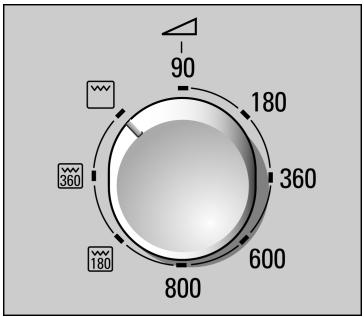
- Set the power selector to .
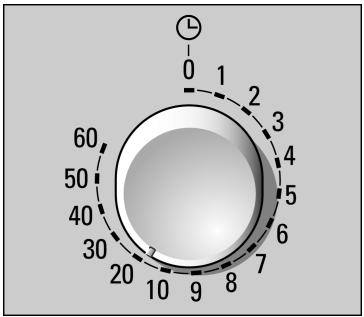
- Use the time switch to set 15 minutes.
The cooking time has elapsed
A signal sounds. The appliance switches off.
Adjustment
You may correct the set cooking time at any time.
Pausing
Open the appliance door. The set time continues once the door is closed.
Cancelling
Turn the time switch to zero. Reset.
Grilling table
Always keep the cooking compartment door closed when grilling and do not preheat.
All the values given are guidelines and can vary depending on the properties of your food.
Place the wire rack on the turntable.
| Amount | Accessories | Time in minutes | |
| Toasted bread pre-toasting | 2 - 4 slices | Wire rack | 1st side: approx. 2 - 4 minutes. 2nd side: approx. 2 - 4 minutes. |
| Toast with topping | 2 - 4 slices | Wire rack | Depending on topping: approx. 7 - 10 minutes. |
| Soups with toppings, e.g. onion soup | 2 - 4 cups | Turntable | 15 - 20 minutes. |
Combined microwave and grill
This involves simultaneous operation of the grill and the microwave.
These combinations are possible
Grill + 180 watts
Grill + 360 watts
Setting procedure
Example:
360, 15 minutes.
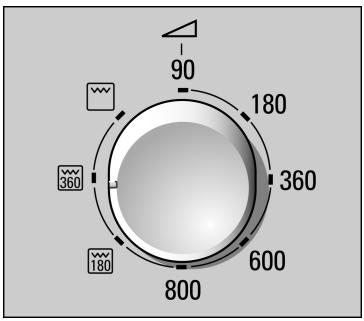
- Set 360 using the power selector.
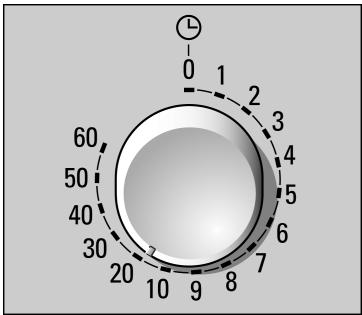
- Set the cooking time using the time switch.
A signal sounds once the time has elapsed.
Notes
If you open the appliance door during operation, microwave operation is interrupted and the set time maintained. Microwave operation continues once the door is closed.
If your meal requires more than 60 minutes, set the remaining time after the signal.
Combined grill and microwave
Always place the dish on the turntable and do not cover the food.
Use a high-sided dish for roasting. This keeps the cooking compartment cleaner.
Use large flat ovenware for bakes and gratins. Food takes longer to cook in narrow, deep containers, and browns more on top.
Check that your ovenware fits in the cooking compartment. It must not be too large, as the turntable must still be able to turn.
Always set the maximum cooking time. Check the food after the shorter time specified.
Leave the meat to rest for another 5-10 minutes before cutting it. This allows the meat juices to be distributed evenly so that they do not run out when the meat is cut.
Bakes and gratins should be left to cook in the appliance for a further 5 minutes after the appliance has been switched off.
The combined operation is particularly suitable for cooking bakes and gratins.
| Amount | Microwave setting, (watts) and duration in minutes | Accessories | Notes | |
| Roast pork, e.g. neck of pork | Approx. 750 g | 360 W + grill 40 - 50 min. | Turntable | Turn 1 to 2 times. |
| Meat loaf | Approx. 750 g | 360 W + grill 25 - 35 min. | Turntable | Maximum of 6 cm in height. |
| Small pieces of chicken, e.g. chicken thighs or wings | Approx. 800 g | 360 W + grill 30 - 40 min. | Ovenware on the wire grill | Place with the skin side up. Do not turn. |
| Frozen marinated chicken wings | Approx. 800 g | 360 W + grill 15 - 25 min. | Ovenware on the wire grill | Do not turn. |
| Pasta bake (using pre-cooked ingredients) | Approx. 1000 g | 360 W + grill 25 - 35 min. | Turntable | Sprinkle with cheese. Maximum of 5 cm in height. |
| Potato gratin (using raw potatoes) | Approx. 1000 g | 360 W + grill 30 - 40 min. | Turntable | Maximum of 4 cm in height. |
| Fish, grilling | Approx. 400 g | 360 W + grill 20 - 25 min. | Turntable | Defrost frozen fish before cooking. |
| Quark bake | Approx. 1000 g | 360 W + grill 30 - 35 min. | Turntable | Maximum of 5 cm in height. |
| Vegetable kebab | 4 - 5 servings | 180 W + grill 15 - 20 min. | Wire rack | Use wooden skewers. |
| Fish kebabs | 4 - 5 servings | 180 W + grill 10 - 15 min. | Wire rack | Use wooden skewers. |
| Bacon rashers | Approx. 8 rashers | 180 W + grill 10 - 15 min. | Wire rack |
Test dishes in accordance with EN 60705
The quality and function of microwave appliances is tested by testing institutes using the following dishes.
Microwave cooking
| Dish | Microwave setting (watts) and cooking time in minutes | Notes |
| Custard, 750 g | 360 watts, 12 - 17 mins + 90 watts, 20 - 25 mins | Place the 20 x 25 cm Pyrex dish on the turntable |
| Sponge | 600 watts, 8 - 10 mins | Place the 22 cm diameter Pyrex dish on the turntable |
| Meat loaf | 600 watts, 20 - 25 mins | Place the Pyrex dish on the turntable |
Microwave defrosting
| Dish | Microwave setting (watts) and cooking time in minutes | Notes |
| Meat | 180 watts, 5 - 7 mins + 90 watts, 10 - 15 mins | Place the 22 cm diameter Pyrex dish on the turntable |
Combined microwave cooking
| Dish | Microwave setting (watts) and cooking time in minutes | Notes |
| Potato gratin | Grill + 360 watts, 35-40 mins | Place the 22 cm diameter Pyrex dish on the turntable |
Care and cleaning
There is a risk of a short-circuit.
Do not use high-pressure cleaners or steam jets.
Risk of burning.
Do not clean the appliance immediately after switching it off. Allow the appliance to cool down.
Do not use sharp or abrasive cleaning agents. The surface could be damaged. If an abrasive substance comes into contact with the front of the appliance, wash it off immediately with water.
- Do not use metal or glass scrapers to clean the glass in the appliance door.
- Do not use metal or glass scrapers to clean the seal.
- Do not use coarse scouring pads or cleaning sponges.
Rinse out new sponge cloths thoroughly before use.
Cleaning agents
Before cleaning, unplug the appliance from the mains or switch off the circuit breaker in the fuse box. Clean the cooking compartment and the outside of the appliance with a damp cloth and mild cleaning agent. Dry with a clean cloth.
| Appliance exterior | |
| Appliances with stainless steel fronts | Always remove any flecks of limescale, grease, starch and egg white immediately. |
| Before using the appliance again, allow the surface and all parts to dry thoroughly. | |
| Special stainless steel cleaning agents can be obtained from the after-sales service or from specialist retailers. | |
| Do not use metal or glass scrapers for cleaning. | |
| Cooking compartment | |
| Cooking compartment made of stainless steel | Do not use oven spray or other aggressive oven cleaners or abrasive materials. Scouring pads, rough sponges and pan cleaners are also unsuitable. These agents scratch the surface. Allow the interior surfaces to dry thoroughly. |
| Recess in cooking compartment | Use a damp cloth, and make sure that water does not enter the appliance through the turntable drive. |
| Turntable and turntable ring | Soapy water. When replacing the turntable, make sure it slots in correctly. |
| Door panels | Glass cleaner: Clean with a dish cloth. Do not use metal or glass scrapers for cleaning. |
| Seal | Use soapy water and dry with a soft cloth. Do not use metal or glass scrapers for cleaning. |
Troubleshooting
Should a malfunction occur, it is often only due to a minor fault. Please read the following instructions before calling the after-sales service:
| Problem | Possible cause | Comments/remedy |
| The appliance does not work | Plug not inserted | Plug in the appliance. |
| Power failure | Check whether the kitchen light switches on. | |
| The microwave does not switch on | Door is not closed properly | Check whether left-over food or a foreign object is trapped in the door. |
| Timer switch was not set | Set timer switch. | |
| The food takes longer than usual to heat up | The microwave setting selected was too low | Select a higher setting. |
| A greater amount than usual was placed in the microwave | Double the amount - almost double the cooking time. | |
| The food was colder than usual | Stir or turn the food during cooking. | |
| The turntable makes a scraping or grinding noise | Dirt or foreign body is present in the turntable drive area | Clean the support and the recess. |
Repairs may only be carried out by fully trained after-sales service technicians. Improper repairs may cause serious injury to the user.
After-sales service
E number and FD number
Our after-sales service is there for you in the event that your appliance needs to be repaired. You will find the address and telephone number of your nearest after-sales service centre in the phone book. The after-sales service centres listed will also be happy to advise you of a service point in your local area.
When contacting the after-sales service, always specify the product number (E no.) and the production number (FD no.) of your appliance. You will see the rating plate containing these numbers on the right-hand side when you open the oven door. Make a note of these numbers in the space below to save time in the event of your appliance malfunctioning.
E no.
FD no.
After-sales service
Technical data
| Input voltage | AC 220-230 V, 50 Hz |
| Power consumption | 1,270 W |
| Maximum output power | 800 W |
| Grill power | 1,000 W |
| Microwave frequency | 2,450 MHz |
| Dimensions (H x W x D) | |
| - appliance | 28.0 x 45.3 x 32.0 cm |
| - cooking compartment | 19.4 x 29.0 x 30.0 cm |
| 60 cm cabinet frame | 38.2 x 59.4 x 2.0 cm |
| 50 cm cabinet frame | 38.2 x 49.4 x 2.0 cm |
| Weight | 13.5 kg |
| TÜV approved | Yes |
| CE mark | Yes |
This appliance complies with standard EN 55011 or CISPR 11.
It is a group 2, class B product.
Group 2 means that microwaves are generated for the purpose of heating food.
Class B indicates that the appliance is suitable for domestic use.