
KOR6L15 - Réfrigérateur DAEWOO - Notice d'utilisation et mode d'emploi gratuit
Retrouvez gratuitement la notice de l'appareil KOR6L15 DAEWOO au format PDF.


| Type de produit | Micro-ondes combiné (gril et convection) |
| Marque | DAEWOO |
| Modèle | KOR6L15 |
| Alimentation | 230 V, 50 Hz, monophasé avec mise à la terre |
| Consommation micro-ondes | 1200 W |
| Puissance de sortie micro-ondes | 800 W |
| Fréquence micro-ondes | 2450 MHz |
| Dimensions extérieures (L x H x P) | 465 x 287 x 347 mm |
| Dimensions de la cavité (L x H x P) | 298 x 230 x 330 mm |
| Poids net | Environ 12 kg |
| Minuterie | 30 minutes maximum |
| Niveaux de puissance | 10 niveaux (de 0% à 100%) |
| Fonctions principales | Cuisson micro-ondes, gril, convection, décongélation automatique, cuisson vapeur, cuisson automatique, réchauffage de repas, soupe/sauce, cuisson express, veilleuse |
| Accessoires inclus | Plateau en verre, guide-rouleaux, bol vapeur, grille (selon modèle) |
| Sécurité | Vérouillage enfant, arrêt automatique à l'ouverture de la porte, mise à la terre obligatoire |
| Entretien et nettoyage | Nettoyer régulièrement l'intérieur avec un chiffon humide et détergent doux. Ne pas utiliser de produits abrasifs. Nettoyer la zone d'étanchéité de la porte fréquemment. |
| Réparabilité | Les réparations doivent être effectuées par un technicien qualifié. Ne pas retirer les capots de protection. |
| Consignes de mise au rebut | Ne pas jeter avec les déchets ménagers. Déposer dans un point de collecte pour le recyclage des déchets électriques et électroniques. |
| Garantie | Consulter le service après-vente agréé |
| Informations générales | Cet appareil est destiné à un usage domestique. Respecter les instructions de sécurité pour éviter les brûlures, les chocs électriques ou les incendies. |
FOIRE AUX QUESTIONS - KOR6L15 DAEWOO
Questions des utilisateurs sur KOR6L15 DAEWOO
0 question sur cet appareil. Repondez a celles que vous connaissez ou posez la votre.
Poser une nouvelle question sur cet appareil
Téléchargez la notice de votre Réfrigérateur au format PDF gratuitement ! Retrouvez votre notice KOR6L15 - DAEWOO et reprennez votre appareil électronique en main. Sur cette page sont publiés tous les documents nécessaires à l'utilisation de votre appareil KOR6L15 de la marque DAEWOO.
MODE D'EMPLOI KOR6L15 DAEWOO
À PROPOS DE CE MANUEL
VISION CREATIVE, INC.
| -team | 장형선 personnel | ITEM | I-MANUAL | |
| F.MODEL | KOR-8A6K5SA7 | shranelde | DAEWOO | |
| B.MODEL | KOR-8A6K5SA7 | —an어 | 영어 | |
| BUYER | LOYMONBIIN | COUNTRY | ||
| SET LABEL LIST 已經 No. | ||||
| DESIGN DOCUMENT No. | ||||
| 일정 | 1shaft | |||
| 2shaft | ||||
| 3shaft | ||||
| 4shaft | ||||
| 5shaft | ||||
| 제ophilia | 한 | —in這裡 | ||
| MEMO 奸29p09.08.10-班지, 1p, 5p, 6p, 8p, 9p, 16p_신구 7p09.08.21-1p, 6p, 8p, 9p, 10p(蒯이지후가), 11p, 12p, 13p(蒯이지후가),24p, 27p_신구 10p09.08.27-1p, 25p~26p를 기재이지 사recht와고 고체_신구 3p09.09.10-14p_신구 1p09.09.17-1p_신구 1p09.09.18-1p_신구 1p09.09.24-전체신구 29p09.09.25-1p, 7p, 19p_신구 3p09.09.29-27p, 28p_신구 2p | ||||
TÉL : 730-0660 FAX : 730-3788
FOUR À MICRO-ONDES
KOR-8A6K5SA7
GUIDE DE L'UTILISATEUR
MANUEL
Avant d'utiliser ce four, veuillez lire attentivement ces instructions.
PRÉCAUTIONS POUR ÉVITER UNE EXPOSITION ÉVENTUELLE À UNE ÉNERGIE MICRO-ONDES EXCESSIVE
(a) Ne tentez pas de faire fonctionner ce four avec la porte ouverte, car un fonctionnement porte ouverte peut entraîner une exposition dangereuse à l'énergie micro-ondes. Il est important de ne pas neutraliser ni modifier les verrouillages de sécurité. (b) Ne placez aucun objet entre la face avant du four et la porte, et ne laissez pas de saleté ou de résidus de nettoyant s'accumuler sur les surfaces d'étanchéité. (c) AVERTISSEMENT : Si la porte ou les joints de porte sont endommagés, le four ne doit pas être utilisé tant qu'il n'a pas été réparé par une personne compétente : (1) porte (déformée), (2) charnières et loquets (cassés ou desserrés), (3) joints de porte et surfaces d'étanchéité. (d) AVERTISSEMENT : Il est dangereux pour toute personne autre qu'une personne compétente d'effectuer une opération de maintenance ou de réparation impliquant le retrait d'un capot qui protège contre l'exposition à l'énergie micro-ondes. (e) AVERTISSEMENT : Les liquides et autres aliments ne doivent pas être chauffés dans des récipients scellés car ils risquent d'exploser. (f) AVERTISSEMENT : Ne laissez les enfants utiliser le four sans surveillance que lorsque des instructions adéquates ont été données afin que l'enfant soit capable d'utiliser le four en toute sécurité et comprenne les dangers d'une mauvaise utilisation. (g) AVERTISSEMENT : Lorsque l'appareil fonctionne en mode combiné, les enfants ne doivent utiliser le four que sous la surveillance d'un adulte en raison des températures générées.
TABLE DES MATIÈRES
- INSTRUCTIONS D'INSTALLATION ET DE MISE À LA TERRE...2
- IMPORTANTES CONSIGNES DE SÉCURITÉ 3 QUELS USTENSILES PEUVENT ÊTRE UTILISÉS DANS LE FOUR ?...5 INSTRUCTIONS DE CUISSON 6
- PANNEAU DE COMMANDE 7 SCHÉMA DES CARACTÉRISTIQUES 8 PROCÉDURE DE FONCTIONNEMENT 9 GUIDE DU RÉCIPIENT VAPEUR 10 COMMANDES 11
RÉCIPIENT VAPEUR 11 DÉCONGÉLATION AUTOMATIQUE 12 PLAT RÉFRIGÉRÉ 13 SOUPE/SAUCE 13 PUISSANCE MICRO-ONDES 14 CUISSON EXPRESS 14 CUISSON AUTOMATIQUE 15 VEILLEUSE 16 SÉCURITÉ ENFANTS 16 COMMENT ARRÊTER LE FOUR PENDANT SON FONCTIONNEMENT 16 RÉGLAGE DU MODE D'ÉCONOMIE D'ÉNERGIE 16
ARCS ÉLECTRIQUES 17 DIRECTIVES GÉNÉRALES 18 ENTRETIEN ET NETTOYAGE 19 AVANT DE FAIRE APPEL AU SERVICE APRÈS-VENTE 20 QUESTIONS ET RÉPONSES 21 SPÉCIFICATIONS 22 - PRINCIPE DU MICRO-ONDES 22 ÉLIMINATION DES ÉQUIPEMENTS ÉLECTRIQUES ET ÉLECTRONIQUES USAGÉS 22 TECHNIQUES DE CUISSON 23 GUIDE DE DÉCONGÉLATION 24 TABLEAU DE CUISSON ET DE RÉCHAUFFAGE 25 - TABLEAU DES LÉGUMES 26 - RECETTES 27-28
INSTRUCTIONS D'INSTALLATION ET DE MISE À LA TERRE
Comment examiner votre four à micro-ondes après le déballage.
Déballez le four, retirez tout le matériau d'emballage et examinez le four pour détecter tout dommage tel que bosses, porte cassée, loquets ou fissures dans la porte. Ne retirez pas le film de l'intérieur de la porte. Avertissez immédiatement le revendeur si le four est endommagé. N'installez pas le four s'il est endommagé.
Où placer votre four à micro-ondes.
- Placez le four sur une surface plane et stable.
- Le four à micro-ondes ne doit pas être placé dans un meuble, sauf s'il s'agit d'un modèle conçu pour être encastré.
- La surface du four est protégée par un film plastique qui doit être retiré avant utilisation.
- Laissez de l'espace derrière, sur les côtés et au-dessus du four. Toutes les ouvertures de ventilation doivent être dégagées. Si toutes les ouvertures sont couvertes pendant le fonctionnement, le four peut surchauffer et éventuellement tomber en panne.
- Éloignez le four des postes de radio et de télévision. Si le four est placé près d'un téléviseur, des interférences radio peuvent se produire.
- Éloignez le four des appareils de chauffage et des robinets d'eau. Éloignez le four de l'air chaud, de la vapeur ou des éclaboussures lors du choix de son emplacement, sinon l'isolation pourrait être affectée et des pannes pourraient survenir.
- La hauteur minimale d'espace libre nécessaire au-dessus de la surface supérieure du four est de 100 mm minimum.
Avant utilisation (si votre four est équipé d'un élément de grill)
Afin de protéger votre four pendant le transport et le stockage, l'élément de grill est recouvert d'un revêtement protecteur. Pour retirer ce revêtement, l'élément de grill doit être chauffé pendant 10 minutes. Cette procédure produira de mauvaises odeurs car le revêtement protecteur disparaît.
Pour retirer le revêtement, suivez les procédures suivantes :
- Placez un bol allant au four ou au micro-ondes, contenant 200 cc d'eau ou plus, dans le four.
- Appuyez sur le bouton grill.
- Réglez le temps sur 10 minutes.
- Appuyez sur le bouton start.
- Lorsque les 10 minutes sont écoulées, un signal sonore retentit.
Remarque :
Le revêtement protecteur a maintenant été retiré et le four est prêt à l'emploi. Veuillez noter que votre four est maintenant très chaud.
- Ouvrez la porte du four et retirez le bol d'eau (utilisez des gants de cuisine pour retirer le bol).
SÉCURITÉ ENFANTS
Pour empêcher un enfant d'utiliser le four, installez la clé de sécurité enfants.
- Touchez le bouton Stop/Effacer pendant 3 secondes. Le voyant de verrouillage s'affiche et tous les boutons ne fonctionnent plus.
- Touchez à nouveau le bouton Stop/Effacer pendant 3 secondes, puis la sécurité enfants est annulée.
- AVERTISSEMENT : Ne laissez les enfants utiliser le four sans surveillance que si des instructions adéquates leur ont été données pour qu'ils puissent l'utiliser en toute sécurité et comprendre les dangers d'une mauvaise utilisation.
Raccordement électrique
AVERTISSEMENT : CET APPAREIL DOIT ÊTRE RELIÉ À LA TERRE.
RÉFÉREZ-VOUS À LA PLAQUE SIGNALÉTIQUE POUR LA TENSION ET VÉRIFIEZ QUE LA TENSION DE L'APPAREIL CORRESPOND À CELLE DE VOTRE ALIMENTATION ÉLECTRIQUE.
Le cordon d'alimentation flexible doit être correctement reconnecté, comme ci-dessous, à une prise à trois broches d'une capacité d'au moins 13 A. Vous devez utiliser une prise à 2 broches qui doit être marquée du numéro BS 1363 et elle
doit être équipée d'un fusible de 13 A marqué du numéro BS 1362. Nous recommandons l'utilisation de prises et de prises murales de bonne qualité qui peuvent être éteintes lorsque l'appareil n'est pas utilisé.
IMPORTANT : Les fils du cordon d'alimentation de cet appareil sont colorés conformément au code suivant :
VERT ET JAUNE : TERRE
BLEU : NEUTRE
MARRON : PHASE
Comme la couleur des fils du cordon d'alimentation de cet appareil peut ne pas correspondre aux marques colorées identifiant les bornes de votre prise, procédez comme suit :
Alimentation électrique
- Vérifiez votre source d'alimentation locale. Ce four nécessite un courant d'environ 6 ampères, 230 V 50 Hz.
- Le cordon d'alimentation mesure environ 1,0 mètre de long.
- La tension utilisée doit être identique à celle spécifiée sur ce four. L'utilisation d'une tension plus élevée peut provoquer un incendie ou un autre accident entraînant des dommages au four. L'utilisation d'une basse tension entraînera une cuisson lente. Nous ne sommes pas responsables des dommages résultant de l'utilisation de ce four avec une tension ou un fusible autres que ceux spécifiés.
- Si le cordon d'alimentation est endommagé, il doit être remplacé par le fabricant, son agent de service ou une personne de qualification similaire afin d'éviter tout danger.
Le fil de couleur VERT ET JAUNE doit être connecté à la borne de la fiche marquée de la lettre « E » ou du symbole de terre, ou de couleur VERT ET JAUNE, ou VERT.
Le fil de couleur BLEU doit être connecté à la borne marquée de la lettre « N » ou de couleur NOIR, ou BLEU.
Le fil de couleur MARRON doit être connecté à la borne marquée de la lettre « L » ou de couleur ROUGE, ou MARRON.
Si les bornes de la fiche ne sont pas marquées ou si vous avez un doute sur les connexions correctes, consultez un électricien qualifié.
Si vous ne faites pas les connexions électriques appropriées, vous endommagerez votre four à micro-ondes et pourriez vous blesser. Ni le fabricant ni le fournisseur ne sont responsables si cela se produit.
FICHES MOULÉES
S'il est nécessaire de retirer une fiche moulée du câble d'alimentation, elle doit être coupée et remplacée par un remplacement approprié.
La fiche moulée ne peut pas être utilisée pour un autre appareil ; par conséquent, retirez le fusible et jetez-le immédiatement et en toute sécurité pour empêcher quiconque, en particulier les enfants, de la brancher sur une prise murale, ce qui créerait un danger pour la sécurité.
Si le câble d'alimentation doit être remplacé, il est essentiel que cette opération soit effectuée par un électricien qualifié et qu'il ne soit remplacé que par un cordon flexible obtenu auprès du fabricant.
Applicable uniquement si une fiche moulée est installée.
Après le remplacement d'un fusible dans la fiche, le couvercle du fusible doit être remis en place. Si le couvercle du fusible est perdu, un couvercle de remplacement doit être obtenu. La couleur du couvercle de fusible de remplacement correct est celle de l'insert coloré dans la base de la fiche ou la couleur qui est gravée en mots dans la base du renfoncement de la fiche ou ailleurs sur la fiche. Indiquez toujours cette couleur lors de la commande d'un couvercle de fusible de remplacement.
Seuls des fusibles de remplacement de 13 ampères approuvés ASTA conformes à la norme BS 1362 doivent être installés.
CONSIGNES DE SÉCURITÉ IMPORTANTES
À LIRE ATTENTIVEMENT ET À CONSERVER POUR RÉFÉRENCE FUTURE
Lors de l'utilisation d'appareils électriques, des précautions de sécurité de base doivent être suivies, notamment les suivantes :
AVERTISSEMENT - Pour réduire les risques de brûlures, de choc électrique, d'incendie, de blessures ou d'exposition à une énergie micro-ondes excessive :
- Lire toutes les instructions avant d'utiliser l'appareil.
- Lire et suivre les "PRÉCAUTIONS À PRENDRE POUR ÉVITER UNE EXPOSITION POSSIBLE À UNE ÉNERGIE MICRO-ONDES EXCESSIVE" spécifiques, à la page 1.
- Cet appareil doit être mis à la terre. Ne le brancher que sur une prise correctement mise à la terre.
- Installer ou placer cet appareil uniquement conformément aux instructions d'installation fournies.
- Certains produits tels que les œufs entiers et les récipients scellés - par exemple, les bocaux en verre fermés - sont susceptibles d'exploser et ne doivent pas être chauffés dans ce four.
- Utiliser cet appareil uniquement pour l'usage prévu, comme décrit dans ce manuel. Ne pas utiliser de produits chimiques corrosifs ou de vapeurs dans cet appareil. Ce type de four est spécifiquement conçu pour chauffer, cuire ou sécher des aliments. Il n'est pas conçu pour un usage industriel ou de laboratoire.
- Comme pour tout appareil, une surveillance étroite est nécessaire lorsqu'il est utilisé par des enfants.
- Ne pas faire fonctionner cet appareil si le cordon ou la fiche est endommagé, s'il ne fonctionne pas correctement, ou s'il a été endommagé ou est tombé.
- Cet appareil ne doit être réparé que par un personnel qualifié.
Contacter le centre de service agréé le plus proche pour un examen, une réparation ou un réglage.
- Ne pas couvrir ni bloquer les ouvertures de l'appareil.
- Ne pas entreposer cet appareil à l'extérieur. Ne pas utiliser ce produit près de l'eau — par exemple, près d'un évier de cuisine, dans un sous-sol humide, ou près d'une piscine, ou dans des endroits similaires.
- Ne pas immerger le cordon ou la fiche dans l'eau.
- Garder le cordon éloigné des surfaces chaudes.
- Ne pas laisser le cordon pendre du bord d'une table ou d'un comptoir.
- Soit :
a) Lors du nettoyage des surfaces de la porte et du four qui se rejoignent lors de la fermeture de la porte, utiliser uniquement des savons ou détergents doux et non abrasifs appliqués avec une éponge ou un chiffon doux, ou b) Lorsque des instructions de nettoyage séparées sont fournies, voir les instructions de nettoyage de la surface de la porte.
- Pour réduire le risque d'incendie dans la cavité du four :
a) Ne pas trop cuire les aliments. Surveiller attentivement l'appareil lorsque du papier, du plastique ou d'autres matériaux combustibles sont placés à l'intérieur du four pour faciliter la cuisson. b) Retirer les attaches métalliques des sacs en papier ou en plastique avant de placer le sac dans le four.
c) Si des matériaux à l'intérieur du four s'enflamment, garder la porte du four fermée, éteindre le four et débrancher le cordon d'alimentation, ou couper l'alimentation au niveau du fusible ou du disjoncteur. d) Ne pas utiliser la cavité pour le stockage. Ne pas laisser de produits en papier, d'ustensiles de cuisine ou d'aliments dans la cavité lorsqu'elle n'est pas utilisée.
- Ne pas utiliser ce four à micro-ondes pour chauffer des produits chimiques corrosifs (par exemple, des sulfures et des chlorures). Les vapeurs de ces produits chimiques corrosifs peuvent interagir avec les contacts et les ressorts des interrupteurs de sécurité, les rendant ainsi inopérants.
- Garder le couvercle du guide d'ondes propre en tout temps. Essuyer l'intérieur du four avec un chiffon doux et humide après chaque utilisation. Si de la graisse ou de la matière grasse reste dans la cavité, elle peut surchauffer, fumer ou même prendre feu lors de la prochaine utilisation du four.
- Ne jamais chauffer de l'huile ou de la graisse pour friture, car vous ne pouvez pas contrôler la température et cela peut entraîner une surchauffe et un incendie.
- Les liquides, tels que l'eau, le café ou le thé, peuvent être surchauffés au-delà du point d'ébullition sans sembler bouillir en raison de la tension superficielle du liquide. Des bulles visibles ou une ébullition lorsque le récipient est retiré du four à micro-ondes ne sont pas toujours présentes. CELA POURRAIT ENTRAÎNER UNE ÉBULLITION SOUDAINE DE LIQUIDES TRÈS CHAUDS LORSQU'UNE CUILLÈRE OU UN AUTRE USTENSILE EST INSÉRÉ DANS LE LIQUIDE. Pour réduire le risque de blessure :
① Ne pas surchauffer le liquide. (2) Remuer le liquide avant et à mi-chemin du chauffage. ③ Ne pas utiliser de récipients à parois droites avec des goulots étroits. ④ Après le chauffage, laisser le récipient reposer dans le four à micro-ondes pendant un court moment avant de le retirer. Faire preuve d'une extrême prudence lors de l'insertion d'une cuillère ou d'un autre ustensile dans le récipient.
- Le contenu des biberons et des pots pour bébé doit être remué ou secoué et la température doit être vérifiée avant la consommation pour éviter les brûlures.
- L'appareil doit être positionné de manière à ce que la fiche soit accessible.
- Cet appareil n'est pas destiné à être utilisé par des personnes (y compris les enfants) dont les capacités physiques, sensorielles ou mentales sont réduites, ou qui manquent d'expérience et de connaissances, à moins qu'elles ne soient supervisées ou qu'elles aient reçu des instructions concernant l'utilisation de l'appareil par une personne responsable de leur sécurité.
- Les enfants doivent être surveillés pour s'assurer qu'ils ne jouent pas avec l'appareil.
CONSERVEZ CES INSTRUCTIONS
Utilisation générale
Vous trouverez ci-dessous, comme pour tous les appareils, certaines règles à suivre et précautions à prendre pour garantir des performances optimales de ce four :
- N'utilisez pas le four pour autre chose que la préparation d'aliments, comme pour sécher des vêtements, du papier ou tout autre article non alimentaire, ou à des fins de stérilisation. Ils pourraient prendre feu.
- N'utilisez pas le four vide, cela pourrait l'endommager.
- N'utilisez pas la cavité du four pour stocker quoi que ce soit, comme des papiers, des livres de cuisine, des ustensiles de cuisine, etc.
- Ne faites pas fonctionner le four sans le plateau tournant en place. Assurez-vous qu'il est correctement posé sur la base rotative.
- Soyez prudent lors du retrait du plateau tournant après la cuisson de viandes qui ont pu provoquer une accumulation de graisse sur le plateau.
- Contrairement aux fours à micro-ondes uniquement, ce four peut devenir chaud sur l'armoire et la porte du four. Utilisez toujours des gants de cuisine ou des maniques lors du retrait ou de la mise en place des aliments et/ou des accessoires dans le four. Soyez prudent lorsque vous touchez des parties autres que le panneau de commande pendant ou immédiatement après une cuisson au gril ou combinée.
- Si le four est chaud après une cuisson combinée, n'utilisez pas ensuite des ustensiles en plastique ou en polystyrène pour la cuisson au micro-ondes. Ils pourraient fondre.
- N'utilisez pas de produits en papier recyclé pour la cuisson. Ils peuvent contenir des impuretés qui pourraient provoquer des étincelles et/ou des incendies lors de la cuisson.
- Ne continuez pas à cuisiner avec des ustensiles en métal si des étincelles apparaissent. Voir la section « Accessoires » à la page 8 pour une utilisation appropriée des ustensiles de cuisine.
- Ne laissez pas le four sans surveillance pendant les courtes durées de cuisson. Une surcuisson et un incendie peuvent en résulter.
- Ne faites pas cuire d'aliments entourés d'une membrane, tels que les jaunes d'œufs, les pommes de terre, les foies de poulet, etc., sans les avoir percés plusieurs fois avec une fourchette.
- Ne faites pas éclater du pop-corn, sauf dans un appareil à pop-corn approuvé pour micro-ondes ou s'il est emballé commercialement et recommandé spécialement pour les fours à micro-ondes. Le maïs soufflé au micro-ondes donne un rendement inférieur à celui du maïs soufflé conventionnel ; il y aura un certain nombre de grains non éclatés. N'utilisez pas d'huile sauf indication contraire du fabricant.
- N'essayez pas de faire fonctionner cet appareil avec la porte ouverte.
- N'essayez pas de retirer les couvercles, panneaux, etc.
- Surveillez le four de temps en temps lorsque des aliments sont chauffés ou cuits dans des récipients jetables en plastique, en papier ou autres matériaux combustibles.
- Si de la fumée est observée, éteignez ou débranchez l'appareil et maintenez la porte fermée afin d'étouffer les flammes.
- Le chauffage des boissons au micro-ondes peut provoquer une ébullition différée et explosive ; il faut donc être prudent lors de la manipulation du récipient.
- Assurez-vous de retirer les capsules ou couvercles avant la cuisson lorsque vous faites cuire des aliments scellés dans des bouteilles.
- Ne placez pas de corps étrangers entre la surface du four et la porte. Cela pourrait entraîner une fuite excessive d'énergie micro-ondes.
- Ne faites pas éclater le pop-corn plus longtemps que ne l'indiquent les instructions du fabricant. (Le temps de cuisson est généralement inférieur à 3 minutes). Une cuisson plus longue ne donne pas plus de maïs soufflé, mais peut provoquer des brûlures et un incendie. De plus, le plateau de cuisson peut devenir trop chaud pour être manipulé ou peut se casser.
- Lorsque vous chauffez des aliments dans des récipients en plastique ou en papier, surveillez le four en raison du risque d'inflammation.
- Testez toujours la température des aliments ou des boissons chauffés au micro-ondes avant de les donner à quelqu'un, en particulier aux enfants ou aux personnes âgées. Ceci est important car les aliments chauffés au micro-ondes continuent de chauffer même après l'arrêt de la cuisson.
- Les œufs dans leur coquille et les œufs durs entiers ne doivent pas être chauffés au micro-ondes car ils peuvent exploser, même après la fin du chauffage ;
- Maintenez le couvercle du guide d'ondes propre en permanence. Essuyez l'intérieur du four avec un chiffon doux et humide après chaque utilisation. Si vous laissez de la graisse ou de l'huile dans la cavité, cela peut surchauffer, fumer ou même prendre feu lors de la prochaine utilisation du four.
- Ne chauffez jamais d'huile ou de graisse pour friture car vous ne pouvez pas contrôler la température et cela peut entraîner une surchauffe et un incendie.
- Pendant l'utilisation, l'appareil devient chaud. Veillez à ne pas toucher les éléments chauffants à l'intérieur du four.
- N'utilisez pas de nettoyeur vapeur dans le four.
POUR ÉVITER LES EXPLOSIONS ET LES ÉBULLITIONS SOUDAINES
AVERTISSEMENT
Les liquides, tels que l'eau, le café ou le thé, peuvent être surchauffés au-delà du point d'ébullition sans sembler bouillir en raison de la tension superficielle du liquide. Des bulles visibles ou une ébullition ne sont pas toujours présentes lorsque le récipient est retiré du four à micro-ondes. Cela peut entraîner une ébullition soudaine de liquides très chauds lorsqu'une cuillère ou un autre ustensile est inséré dans le liquide.
Pour réduire le risque de blessure :
a) Ne surchauffez pas le liquide. b) Remuez le liquide avant et à mi-chauffage. c) N'utilisez pas de récipients à parois droites avec des goulots étroits. d) Après chauffage, laissez reposer le récipient dans le four à micro-ondes pendant un court instant avant de le retirer. e) Soyez extrêmement prudent lors de l'insertion d'une cuillère ou d'un autre ustensile dans le récipient.
1. Œufs
Ne faites jamais cuire les œufs dans leur coquille. De la vapeur s'accumulera à l'intérieur de la coquille pendant la cuisson et l'œuf explosera.
Si vous souhaitez cuire ou réchauffer des œufs qui n'ont pas été brouillés ou mélangés, vous devez toujours percer les jaunes, sinon ils exploseront également. Vous devez couper les œufs durs écalés avant de les réchauffer au micro-ondes.
2. Perçage
Percez toujours les aliments qui ont une peau ou une membrane, par exemple les pommes de terre, les tomates, les pommes, les saucisses, etc. Si vous ne les percez pas, de la vapeur s'accumulera à l'intérieur et ils pourraient exploser.
3. Couvercles
Retirez toujours les couvercles des bocaux et des récipients, et retirez les contenants alimentaires, avant de cuire avec votre four à micro-ondes. Sinon, de la vapeur et de la pression pourraient s'accumuler à l'intérieur et provoquer une explosion, même après l'arrêt de la cuisson aux micro-ondes.
QUELS USTENSILES PEUVENT ÊTRE UTILISÉS DANS LE FOUR ?
Utilisez uniquement des ustensiles adaptés à une utilisation dans les fours à micro-ondes.
Avant utilisation, l'utilisateur doit vérifier que les ustensiles sont adaptés à une utilisation dans les fours à micro-ondes.
| Material | Grill & Convection cooking | Microwave cooking | Combined cooking |
| Glass (general) | No | Yes (1) | No |
| Glass (heat resistant) | Yes | Yes | Yes |
| Glass-ceramic and ceramic (heat resistant) | Yes | Yes (1) | Yes (1) |
| Earthenware | Yes | Yes | Yes |
| China (heat resistant) | Yes | Yes | Yes |
| Plastic (general) | No | Yes (2) | No |
| Plastic (heat resistant) | Yes (2) | Yes (2) | Yes (2) |
| Aluminium foil | Yes | Yes (3) | Yes |
| Metal baking tins | Yes (4) | No | Yes (4) |
| Metal (pots.pans, etc) | Yes | No | No |
| Paper | No | Yes | No |
- Sans pièces métalliques ni garnitures métalliques.
- Certains plastiques ne résistent à la chaleur que jusqu'à certaines températures. Vérifiez soigneusement !
- Il est possible d'utiliser du papier d'aluminium pour protéger les zones délicates des aliments (cela évite une cuisson excessive).
- Les boîtes métalliques peuvent être utilisées dans les modes combinés, mais si elles sont très profondes, elles réduiront considérablement l'efficacité, car le métal bloque l'énergie des micro-ondes vers les aliments.
Les ustensiles en porcelaine et en céramique sont excellents pour votre four à micro-ondes. La plupart des types de verre sont également très bons.
Le cristal au plomb peut se fissurer et ne doit donc pas être utilisé.
Les plastiques et le papier peuvent également être utilisés, à condition qu'ils supportent la température des aliments chauffés. Pour la cuisson, utilisez uniquement des plastiques qui supportent une température supérieure à 120 °C, par exemple le polypropylène et le polyamide. Certains matériaux plastiques, comme la mélamine, seront chauffés par les micro-ondes et endommagés. Pour savoir si un récipient convient, le test simple suivant peut être effectué :
Placez le récipient vide et un verre d'eau à l'intérieur du four à micro-ondes. L'eau est nécessaire car le four ne doit pas fonctionner à vide ou avec uniquement des récipients vides.
Laissez le four fonctionner à pleine puissance pendant une minute. Un récipient adapté ne sera que tiède.
Les récipients métalliques, comme les casseroles ou les poêles, ne doivent pas être utilisés dans les fours à micro-ondes. De même, les assiettes ou récipients décorés ne doivent pas être utilisés, car du métal, comme l'or, peut faire partie de la décoration et ces décorations seraient endommagées.
De petits morceaux de papier d'aluminium peuvent être utilisés, mais uniquement pour protéger les zones qui cuiraient trop (par exemple pour couvrir les ailes de poulet, les extrémités des pilons et les queues de poisson), mais le papier d'aluminium ne doit pas toucher les parois du four, car cela pourrait l'endommager.
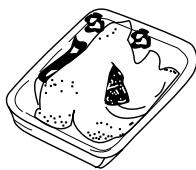
Fonction micro-ondes uniquement
Les ustensiles et récipients de cuisson utilisés dans un four à micro-ondes doivent être en un matériau qui ne fait pas barrière aux ondes micro-ondes. En général, cela signifie que vous devez cuire dans du papier, du plastique, du verre ou de la céramique. Les récipients métalliques réfléchissent les micro-ondes et empêchent la cuisson, ils ne doivent donc pas être utilisés. Outre le matériau, la forme du récipient doit également être prise en compte. Les formes rondes et ovales donnent une cuisson plus homogène. Les récipients carrés ou rectangulaires peuvent trop cuire les aliments dans les coins car plus d'énergie y est absorbée.
Les récipients peu profonds donnent des résultats de cuisson plus homogènes.
Attention :
- Il existe de nombreux accessoires sur le marché. Avant d'acheter, assurez-vous qu'ils conviennent à une utilisation au micro-ondes.
- Lorsque vous placez des aliments dans le four à micro-ondes, assurez-vous que les aliments, les supports ou les couvercles n'entrent pas en contact direct avec les parois internes ou le plafond de la cavité, car une décoloration pourrait se produire.
INSTRUCTIONS DE CUISSON
Guide des ustensiles
N'utilisez que des ustensiles adaptés aux fours à micro-ondes.
Pour cuire des aliments au micro-ondes, les micro-ondes doivent pouvoir pénétrer dans les aliments sans être réfléchies ou absorbées par le plat utilisé. Il faut donc être prudent lors du choix de l'ustensile. Si l'ustensile est marqué comme allant au micro-ondes, vous n'avez pas à vous inquiéter. Le tableau suivant répertorie plusieurs ustensiles et indique s'ils doivent être utilisés dans un four à micro-ondes et comment.
| Utensil | Safe | Comments |
| Aluminium foil | ▲ | Can be used in small quantities to protect areas against overcooking. Arcing can occur if the foil is too close to the oven wall or if too much foil is used. |
| Crust plate | ● | Do not preheat for more than 8minutes. |
| China and earthenware | ● | Porcelain, pottery, glazed earthenware and bone china are usually suitable, unless deco-rated with a metal trim. |
| Disposable polyester cardboard dishes | ● | Some frozen foods are packaged in these dishes. |
| Fast-food packaging • Polystyrene cups containers | ● | Can be used to warm food. Overheating may cause the polystyrene to melt. May catch fire. May cause arcing. |
| • Paper bags or newspaper | × | |
| • Recycled paper or metal trims | × | |
| Glassware • Oven-to-table ware | ● | Can be used, unless decorated with a metal trim. |
| • Fine glassware | ● | Can be used to warm foods or liquids. Delicate glass may break or crack if heated suddenly. Must remove the lid. Suitable for warming only. |
| • Glass jars | ● | |
| Metal • Dishes | × | May cause arcing or fire. |
| • Freezer bag twist ties | × | |
| Paper • Plates, cups, napkins and Kitchen paper | ● | For short cooking times and warming. Also to absorb excess moisture. May cause arcing. |
| • Recycled paper | × | |
| Plastic • Containers | ● | Particularly if heat-resistant thermoplastic. Some other plastics may warp or discolour at high temperatures. Do not use Melamine plastic. Can be used to retain moisture. Should not touch the food. Take care when removing the film as hot steam will escape. Only if boilable or oven-proof. Should not be airtight. Prick with a fork, if necessary. |
| • Clung film | ● | |
| • Freezer bags | ▲ | |
| Wax or grease-proof paper | ● | Can be used to retain moisture and prevent spattering. |
: Utilisation recommandée : Utilisation limitée X : Non recommandé
PANNEAU DE COMMANDE
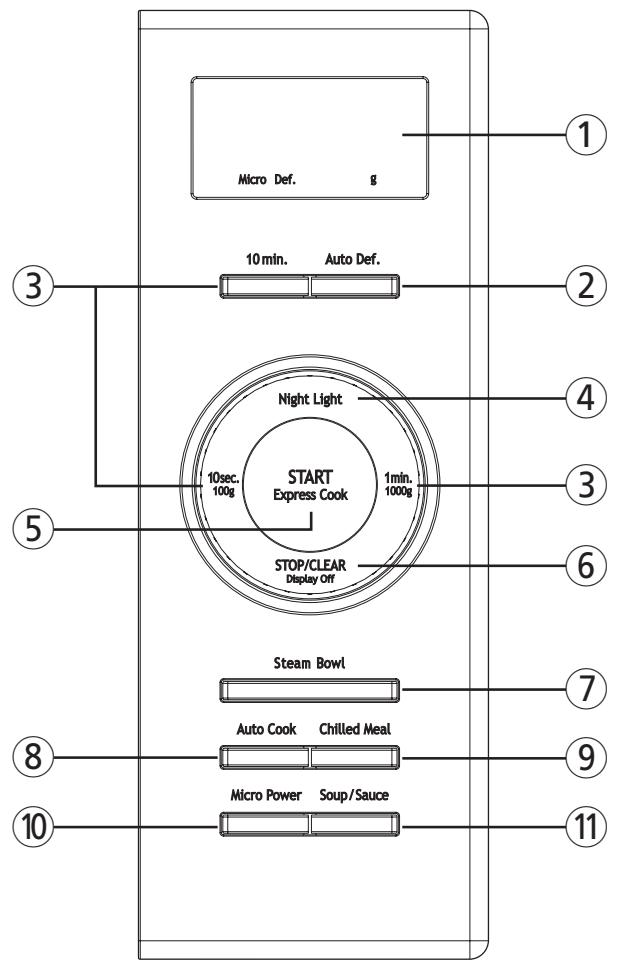
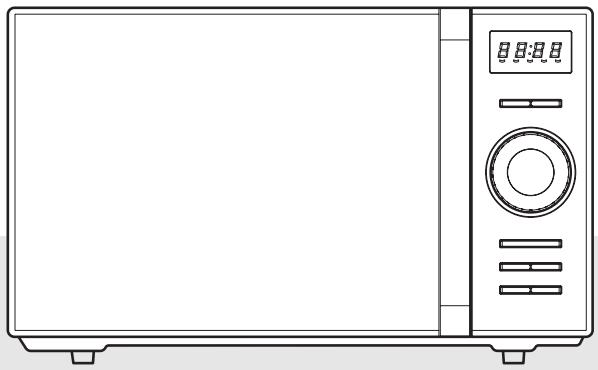
① Affichage - Le temps de cuisson, le niveau de puissance et les indicateurs sont affichés. ② Décongélation automatique - Utilisé pour décongeler les aliments (pour la décongélation par poids). ③ Touche de réglage du temps - Utilisée pour régler le temps de cuisson et le poids. ④ Veilleuse - Utilisée pour allumer/éteindre la veilleuse. ⑤ Démarrage/Cuisson express - Utilisé pour démarrer le fonctionnement du four ou pour augmenter le temps de réchauffage de 30 secondes.
⑥ Arrêt/Effacement - Utilisé pour arrêter le fonctionnement du four ou pour supprimer les données de cuisson. ⑦ Bol vapeur - Utilisé pour la cuisson au bol vapeur. ⑧ Cuisson automatique - Utilisé pour cuire ou réchauffer de nombreux aliments préférés. ⑨ Plat réfrigéré - Utilisé pour réchauffer un plat ou une assiette. ⑩ Puissance micro-ondes - Utilisé pour régler le niveau de puissance. ⑪ Soupe/Sauce - Utilisé pour réchauffer la soupe/la sauce.
SCHÉMA DES CARACTÉRISTIQUES
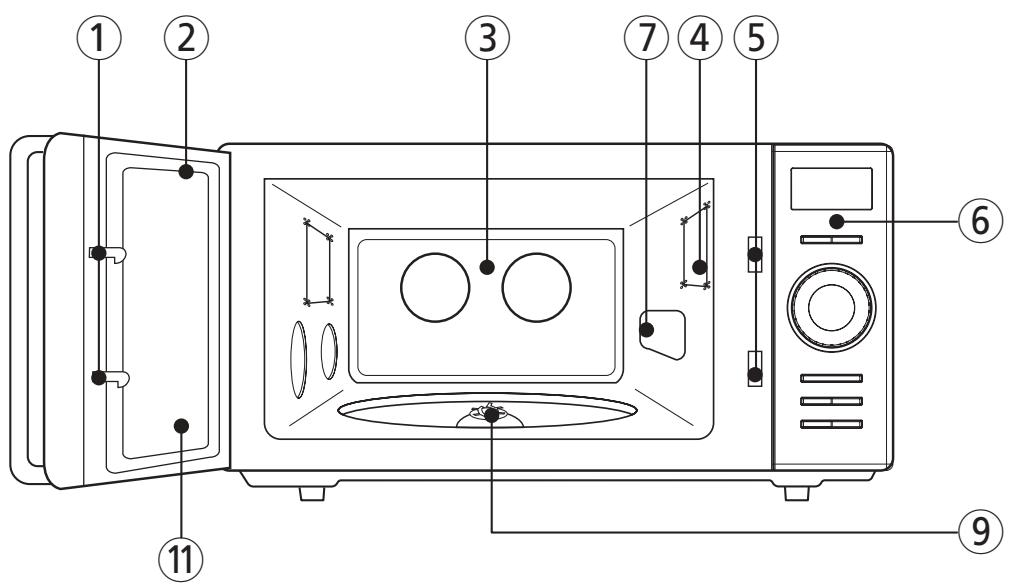
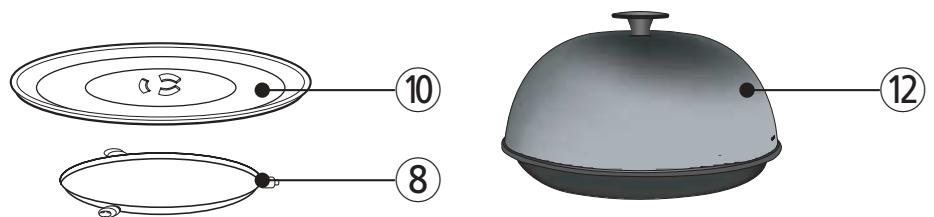
① Crochet de porte - Lorsque la porte est fermée, elle se verrouille automatiquement. Si la porte est ouverte pendant que le four fonctionne, le magnétron s'arrête immédiatement. ② Joint de porte - Le joint de porte maintient les micro-ondes dans la cavité du four et empêche les fuites de micro-ondes. ③ Cavité du four ④ Lampe du four - S'allume automatiquement pendant le fonctionnement du four. ⑤ Système de verrouillage de sécurité ⑥ Panneau de commande ⑦ Protection anti-éclaboussures - Protège la sortie des micro-ondes des éclaboussures des aliments en cours de cuisson.
⑧ Guide-rouleaux - Soutient le plateau en verre. ⑨ Accouplement - Il s'adapte sur l'arbre au centre du plancher de la cavité du four. Il doit rester dans le four pour toutes les cuissons. Plateau en verre - Fabriqué en verre spécial résistant à la chaleur. Le plateau doit toujours être en position correcte avant de faire fonctionner le four. Ne pas cuire les aliments directement sur le plateau. Écran de porte - Permet de voir les aliments. Les micro-ondes ne peuvent pas traverser les perforations de l'écran. ⑩ Bol vapeur - Utilisé pour la cuisson à la vapeur.
PROCÉDURE DE FONCTIONNEMENT
Cette section contient des informations utiles sur le fonctionnement du four.
1. Branchez le cordon d'alimentation sur une prise secteur 230 V / 50 Hz. 2. Après avoir placé les aliments dans un récipient approprié, ouvrez la porte du four et placez-le sur le plateau en verre. Le plateau en verre et le guide-rouleaux doivent toujours être en place pendant la cuisson. 3. Fermez la porte. Assurez-vous qu'elle est bien fermée. Lorsque la porte du four est fermée, la lumière s'éteint. 4. La porte du four peut être ouverte à tout moment pendant le fonctionnement en appuyant sur le bouton d'ouverture de la porte. Le four s'éteint automatiquement. Pour redémarrer le four, fermez la porte puis appuyez sur le bouton START. 5. Le four cuit automatiquement à pleine puissance, sauf si une puissance inférieure est réglée. 6. L'afficheur indique « : 0 » lorsque le four est branché.
7. L'horloge revient à l'heure actuelle lorsque le temps de cuisson est écoulé. 8. Lorsque le bouton STOP/CLEAR est enfoncé pendant le fonctionnement du four, le four arrête la cuisson et toutes les informations sont conservées. Pour effacer toutes les informations (sauf l'heure actuelle), appuyez à nouveau sur le bouton STOP/CLEAR. Si la porte du four est ouverte pendant le fonctionnement, toutes les informations sont conservées. 9. Si le bouton START est enfoncé et que le four ne fonctionne pas, vérifiez la zone entre la porte et le joint de porte pour détecter toute obstruction et assurez-vous que la porte est bien fermée. Le four ne commencera pas à cuire tant que la porte n'est pas complètement fermée ou que le programme n'a pas été réinitialisé.
Assurez-vous que le four est correctement installé et branché sur la prise électrique.
TABLEAU DE PUISSANCE DE SORTIE
- Le niveau de puissance est réglé en appuyant sur la touche POWER. Le tableau indique l'affichage, le niveau de puissance et le pourcentage de puissance.
| Touch POWER pad | Power level (Display) | Approximate Percentage of Power |
| once | P-HI | 100% |
| twice | P-90 | 90% |
| 3 times | P-80 | 80% |
| 4 times | P-70 | 70% |
| 5 times | P-60 | 60% |
| 6 times | P-50 | 50% |
| 7 times | P-40 | 40% |
| 8 times | P-30 | 30% |
| 9 times | P-20 | 20% |
| 10 times | P-10 | 10% |
| 11 times | P-00 | 0% |
GUIDE DU BOL VAPEUR
Description du bol vapeur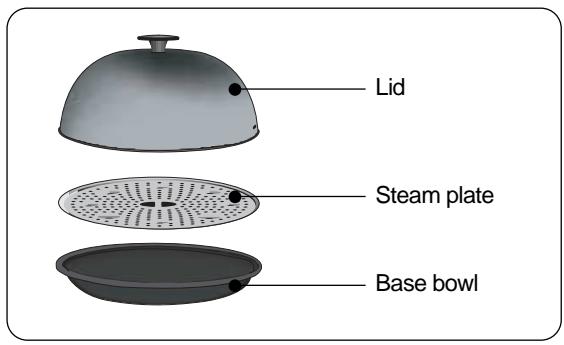
AVERTISSEMENT : Après la cuisson, la poignée et le couvercle vapeur sont chauds, vous devez donc porter des gants.
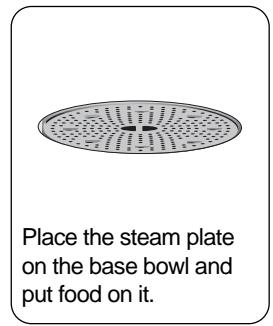
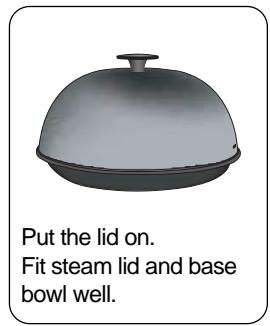
Guide de cuisson avec le bol vapeur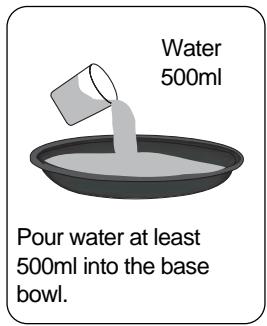
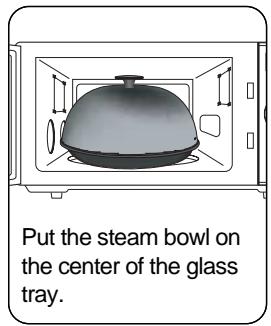
Consignes de sécurité importantes pour le bol vapeur
- Utilisez-le après avoir placé le bol vapeur au centre du plateau en verre.
- N'utilisez jamais ce bol vapeur avec un autre produit ou modèle.
- Lorsque vous utilisez le bol vapeur, versez au moins 500 ml d'eau avant utilisation. Si la quantité d'eau est inférieure à 500 ml, cela peut entraîner une cuisson incomplète, ou provoquer un incendie ou des dommages fatals au produit.
- Assurez-vous d'installer le couvercle sur le bol de base afin qu'il s'adapte à la plaque vapeur.
- Ne superposez pas les aliments sur la plaque vapeur.
- Comme la poignée du couvercle vapeur est chaude, veuillez certainement utiliser des gants après la cuisson.
- Des brûlures peuvent être causées en touchant la surface chaude de l'appareil, l'eau chaude, la vapeur ou les aliments.
Attention !
- N'essayez jamais de faire fonctionner le bol vapeur sans eau.
- Ne faites pas fonctionner le four si le bol vapeur est endommagé.
- Nettoyez l'appareil avec de l'eau savonneuse.
- Le bol vapeur est uniquement pour une utilisation au micro-ondes. Ne placez pas le bol vapeur sur ou à proximité d'un brûleur à gaz ou électrique chaud, ou dans un four chauffé.
COMMANDES
BOL VAPEUR
Bol vapeur

- Appuyez sur le bouton STEAM BOWL pour régler l'article. (Reportez-vous au tableau des bols vapeur ci-dessous)
Le témoin lumineux du bol vapeur et "5-1" s'affichent.
- Fermez la porte.
- Appuyez sur le bouton START.
- TABLEAU DES BOLS VAPEUR
| Push button | Menu | Display | Weight |
| once | Broccoli florets | 5-1 | 300g |
| twice | Carrots | 5-2 | 400g |
| 3 times | Cabbage | 5-3 | 500g |
| 4 times | Eggs | 5-4 | 8ea. |
| 5 time | Fish fillets | 5-5 | 500g |
| 6 times | Chicken breast fillets | 5-6 | 400g |
| 7 times | Meat dumplings | 5-7 | 15ea. |
| Menu | Method |
| Broccoli florets | Rinse and clean the vegetables, cut into slices or similar sized pieces. Pour 500ml water into the base bowl. Place the steam plate on the base bowl and put ingredients in. Put the lid on and center the steam bowl on the bottom of the oven. |
| Carrots | Rinse and clean carrots, cut into slices or similar sized pieces. Pour 500ml water into the base bowl. Place the steam plate on the base bowl and put ingredients in. Put the lid on and center the steam bowl on the bottom of the oven. |
| Cabbage | Rinse and clean a cabbage. And trim it. Pour 500ml water into the base bowl. Place the steam plate on the base bowl and put ingredients in. Put the lid on and center the steam bowl on the bottom of the oven. |
| Eggs | Pour 500ml water into the base bowl. Place the steam plate on the base bowl and center eggs on the steam plate. Put the lid on and center the steam bowl on the bottom of the oven. |
| Fish fillets | Rinse and clean the fish fillets. You can add salt, herbs, pepper and lemon juice. Pour 500ml water into the base bowl. Place the steam plate on the base bowl and put ingredients in. Put the lid on and center the steam bowl on the bottom of the oven. |
| Chicken breast fillets | Rinse and clean the chicken breast fillets. You can add salt, herbs and pepper. Pour 500ml water into the base bowl. Place the steam plate on the base bowl and put ingredients in. Put the lid on and center the steam bowl on the bottom of the oven. |
| Meat dumplings | Pour 500ml water into the base bowl. Place the steam plate on the base bowl and put ingredients in. Put the lid on and center the steam bowl on the bottom of the oven. |
DÉCONGÉLATION AUTOMATIQUE
La décongélation automatique vous permet de décongeler facilement les aliments en éliminant les incertitudes quant au temps de décongélation. Suivez les étapes ci-dessous pour une décongélation facile.
Décongélation auto.
- Appuyez sur le bouton AUTO DEF. pour régler l'article. (Reportez-vous au tableau de décongélation automatique ci-dessous)
Le témoin lumineux DEFROST et "1-1" s'affichent.
- Sélectionnez le poids de décongélation souhaité.
L'affichage indique ce que vous avez touché.
L'indicateur g commence à clignoter.
- Fermez la porte.
La décongélation de la viande commence.
- Appuyez sur le bouton START.
*TABLEAU DE DÉCONGÉLATION AUTOMATIQUE
| Push button | MENU | Display | Weight |
| once | Meat | 1-1 | 200g ~ 2000g |
| twice | Poultry | 1-2 | 200g ~ 2000g |
| 3 times | Fish | 1-3 | 200g ~ 2000g |
| 4 times | Bread | 1-4 | 100g ~ 500g |
Le temps de décongélation est déterminé automatiquement en fonction du poids sélectionné.
Lorsque vous appuyez sur le bouton START, l'indicateur g s'éteint, l'indicateur DEF clignote et le temps de décongélation défile dans la fenêtre d'affichage. Le four émet des bips pendant le cycle de décongélation pour signaler que les aliments doivent être retournés ou réarrangés. À la fin du temps de décongélation, vous entendrez 3 bips.
REPAS RÉFRIGÉRÉ
Repas réfrigéré
- Appuyez sur le bouton CHILLED MEAL.
L'affichage indique "3-1".
- Sélectionnez le poids de cuisson souhaité. (Reportez-vous au tableau des poids pour les repas réfrigérés.)
L'affichage montre ce que vous avez touché.
- Fermez la porte.
- Appuyez sur le bouton START.
* TABLEAU DES POIDS DES REPAS SURGELÉS
| Push button | Display | Weight |
| once | 3-1 | 300g |
| twice | 3-2 | 400g |
| 3 times | 3-3 | 500g |
Percez la surface à l'aide d'une brochette.
Placez les aliments sur le plateau tournant en verre. Après la cuisson, laissez reposer 2 à 3 minutes avant de servir.
- Aliments remuables, ex. : Spaghetti bolognaise, ragoût de bœuf
- Aliments non remuables, ex. : Lasagnes, tourte au cottage
REMARQUE :
Pour les aliments contenus dans des sachets, percez la portion de viande et les portions de riz/pâtes, etc.
- Pour les aliments remuables, remuez au signal sonore.
- Pour les aliments non remuables, il n'est pas nécessaire de remuer au signal sonore.
SOUPE/SAUCE
Soupe/Sauce
- Appuyez sur le bouton SOUPE/SAUCE.
L'affichage indique "4-1".
- Sélectionnez le poids de cuisson souhaité. (Reportez-vous au tableau des poids SOUPE/SAUCE.)
L'afficheur indiquera ce que vous avez touché.
- Fermez la porte.
- Appuyez sur la touche START.
* TABLEAU DES POIDS SOUPE/SAUCE
| Push button | Display | Weight |
| once | 4-1 | 200g |
| twice | 4-2 | 300g |
| 3 times | 4-3 | 400g |
Versez la soupe dans un bol ou une tasse allant au micro-ondes. Remuez avant de servir.
Lorsque vous appuyez sur la touche START, l'afficheur indique le temps de cuisson correspondant à la quantité et le four commence la cuisson.
RÉGLAGE DES TEMPS DE CUISSON ET DES NIVEAUX DE PUISSANCE MICRO-ONDES
Puissance micro-ondes
- Appuyez sur la touche MICRO POWER. (Sélectionnez le niveau de puissance souhaité.)
Le témoin Micro s'allume. L'afficheur indique ce que vous avez touché.
- Appuyez sur les touches de réglage du temps pour le temps de cuisson.
L'afficheur indique ce que vous avez touché.
- Fermez la porte.
- Appuyez sur le bouton START.
REMARQUE : Votre four peut être programmé pour 30 minutes 00 secondes (30:00). L'utilisation de niveaux de puissance inférieurs augmente le temps de cuisson, ce qui est recommandé pour des aliments comme le fromage, le lait et la cuisson lente des viandes.
Lorsque vous appuyez sur le bouton START, l'indicateur M/W commence à clignoter pour montrer que le four est en cours de cuisson. L'affichage décompte le temps pour montrer le temps de cuisson restant.
CUISSON EXPRESS
CUISSON EXPRESS vous permet de réchauffer pendant 30 secondes à 100 % (pleine puissance) en appuyant simplement sur le bouton CUISSON EXPRESS. En appuyant à plusieurs reprises sur le bouton CUISSON EXPRESS, vous pouvez également prolonger le temps de réchauffage jusqu'à 30 minutes par incréments de 30 secondes.
- Fermez la porte.
- Appuyez sur le bouton CUISSON EXPRESS.
Lorsque vous appuyez sur le bouton CUISSON EXPRESS, « :30 » s'affiche et le four commence à réchauffer.
CUISSON AUTOMATIQUE
CUISSON AUTOMATIQUE vous permet de cuire ou de réchauffer beaucoup de vos aliments préférés en appuyant à plusieurs reprises sur le bouton CUISSON AUTOMATIQUE et en choisissant le menu souhaité.
Cuisson automatique
- Appuyez une fois sur le bouton CUISSON AUTOMATIQUE pour les légumes frais.
- Appuyez sur les touches 10 sec./100 g pour la quantité de cuisson. (Reportez-vous au tableau de cuisson automatique ci-dessous)
Lorsque vous appuyez sur le bouton CUISSON AUTOMATIQUE, « 2-1 » s'affiche.
L'affichage est comme indiqué dans le tableau ci-dessous et si la quantité est un poids, l'indicateur g commence à clignoter.
- Fermez la porte.
- Appuyez sur le bouton START.
L'affichage changera pour indiquer le temps de cuisson en fonction de la quantité et le four commencera la cuisson.
* TABLEAU DE CUISSON AUTOMATIQUE
| Push button | Menu | Display | Weight | Remark | ||||
| Once | Fresh Vegetable | Ac - 1 | 200g ~ 400g | Trim and wash the mixed vegetables. Place them in the round dish. Add to 2 tbsp. water cover with wrap. | ||||
| Twice | Frozen Vegetable | Ac - 2 | 200g ~ 400g | Places the vegetables in the round dish. Add to 2 tbsp. water cover with wrap. | ||||
| 3 times | Jacket Potatoes | Ac - 3 | 1 ~ 3ea | Choose medium sized potatoes 200-250g. wash and pierce potatoes with a fork. Place them on the turntable. | ||||
| 4 times | Rice/Pasta | Ac - 4 | 100g ~ 300g | Wash rice, Drain water. Place rice & boiling water with 1/4 to 1 teaspoon salt in a deep and large bowl. | ||||
| Weight | 100g | 200g | 300g | |||||
| Water | Rice | 180ml | 330ml | 480ml | ||||
| Pasta | 400ml | 800ml | 1200ml | |||||
| * Rice - After cooking, stand covered for 5 minutes until water is absorbed. * Pasta - During the cooking, stir several times. After cooking, stand for 3 or 5 minutes with cover. Rinse pasta with cold water. • Use only refrigerated foods. | ||||||||
| 5times | Pizza Reheat | Ac - 5 | 1 ~ 3 pices | • Put the pizza on a microwave-safe plate with wide end of slice towards the outside edge of the plate. • Do not let slices overlap. Do not cover. • Before serving, let stand 1~2min. | ||||
VEILLEUSE
- Appuyez sur le bouton NIGHT LIGHT.
Si vous appuyez une fois sur le bouton NIGHT LIGHT, la veilleuse s'allume.
- Appuyez à nouveau sur le bouton NIGHT LIGHT.
Si vous appuyez à nouveau sur le bouton NIGHT LIGHT, la veilleuse s'éteint.
VERROU DE SÉCURITÉ ENFANT
Le verrou de sécurité empêche toute utilisation non souhaitée du four, par exemple par de jeunes enfants. Pour l'activer, maintenez enfoncé STOP/CLEAR pendant 3 secondes. Pour l'annuler, maintenez enfoncé STOP/CLEAR pendant 3 secondes.
COMMENT ARRÊTER LE FOUR PENDANT SON FONCTIONNEMENT
- Appuyez sur le bouton STOP/CLEAR.
- Vous pouvez redémarrer le four en appuyant sur le bouton START.
- Touchez STOP/CLEAR une fois de plus pour effacer toutes les instructions.
- Vous devez saisir de nouvelles instructions.
- Ouvrez la porte.
- Vous pouvez redémarrer le four en fermant la porte et en touchant START.
REMARQUE : Le four s'arrête de fonctionner lorsque la porte est ouverte.
POUR RÉGLER LE MODE D'ÉCONOMIE D'ÉNERGIE
- Appuyez sur le bouton STOP/CLEAR.
" :0" disparaît de l'affichage.
- Appuyez puis maintenez enfoncé le bouton Horloge pendant 3 secondes.
L'affichage s'éteint et un bip sonore retentit.
Pour faire fonctionner le four en mode d'économie d'énergie, touchez n'importe quelle touche.
Ensuite, ":0" ou l'horloge s'affichera et le fonctionnement de toutes les touches de fonction sera le même qu'en mode normal. Mais si aucune opération n'est effectuée dans les 10 secondes en mode clair, tout le contenu de l'affichage disparaîtra.
- Pour annuler le mode d'économie d'énergie, il suffit de répéter la procédure de réglage.
Le mode d'économie d'énergie sera annulé et un bip sonore retentira.
Le four est à nouveau disponible pour une utilisation normale.
ÉTINCELLES
Si vous voyez des étincelles, appuyez sur le bouton STOP/CLEAR et corrigez le problème.
Les étincelles sont le terme micro-ondes pour les étincelles dans le four.
Les étincelles sont causées par :
- Du métal ou du papier d'aluminium touchant les parois du four.
- Du papier d'aluminium non moulé sur les aliments (les bords relevés agissent comme des antennes).
- Du métal, comme les attaches torsadées, les épingles à volaille ou les assiettes à liseré doré, dans le micro-ondes. Des essuie-tout recyclés contenant de petits morceaux de métal utilisés dans le micro-ondes.
DIRECTIVES GÉNÉRALES
Étant donné que la cuisson aux micro-ondes diffère quelque peu de la cuisson traditionnelle, les directives générales suivantes doivent être prises en compte chaque fois que vous utilisez votre four à micro-ondes
Si les aliments sont insuffisamment cuits
Vérifiez si :
- Vous avez sélectionné le bon niveau de puissance.
- Le temps sélectionné est suffisant — les temps indiqués dans les recettes sont approximatifs. Ils dépendent de la température initiale, du poids et de la densité des aliments, etc.
- Le récipient est approprié.
Si les aliments sont trop cuits, c'est-à-dire desséchés ou brûlés
Avant de cuire à nouveau, demandez-vous si : le niveau de puissance était trop élevé. - Le temps réglé était trop long — les temps dans les recettes sont approximatifs. Ils dépendent de la température initiale, du poids et de la densité des aliments, etc.
Points à retenir lors de la décongélation
- La forme de l'emballage modifie le temps de décongélation. Les paquets rectangulaires peu profonds décongèlent plus rapidement qu'un bloc épais. Séparez les morceaux dès qu'ils commencent à décongeler ; les tranches libres décongèlent plus facilement.
- Protégez certaines zones des aliments avec de petits morceaux de papier d'aluminium si elles commencent à devenir chaudes.
- Lors de la décongélation, il est préférable de décongeler légèrement les aliments et de laisser le processus se terminer pendant le temps de repos.
La quantité d'aliments
Plus vous préparez d'aliments, plus cela prend de temps. Une règle empirique : une double quantité d'aliments nécessite presque le double de temps. Si une pomme de terre met quatre minutes à cuire, il faut environ sept minutes pour cuire deux pommes de terre.
Température initiale des aliments
Plus la température des aliments placés dans le four à micro-ondes est basse, plus le temps est long. Les aliments à température ambiante seront réchauffés plus rapidement que les aliments à température de réfrigérateur.
Composition des aliments
Les aliments riches en graisses et en sucre chauffent plus vite que les aliments contenant beaucoup d'eau. Les graisses et les sucres atteignent également une température plus élevée que l'eau pendant la cuisson.
Plus l'aliment est dense, plus il met de temps à chauffer. Les aliments « très denses » comme la viande mettent plus de temps à réchauffer que les aliments plus légers et poreux comme les génoises.
Taille et forme
Les morceaux d'aliments plus petits cuisent plus rapidement que les plus gros, et les morceaux uniformes cuisent plus uniformément que les aliments de forme irrégulière.
Avec des aliments de forme irrégulière, les parties plus fines cuisent plus vite que les zones plus épaisses. Placez les ailes et les cuisses de poulet plus fines au centre du plat.
Remuer et retourner les aliments
Remuer et retourner les aliments sont des techniques utilisées en cuisson conventionnelle et au micro-ondes pour répartir rapidement la chaleur au centre du plat et éviter une cuisson excessive sur les bords extérieurs des aliments.
Couvrir les aliments aide à :
- Réduire les éclaboussures - Raccourcir les temps de cuisson - Conserver l'humidité des aliments
Tous les couvercles qui laissent passer les micro-ondes conviennent - Voir page 5 « Quels ustensiles peuvent être utilisés dans le four ? »
Relâcher la pression dans les aliments
Plusieurs aliments sont recouverts d'une peau ou d'une membrane. Ces aliments doivent être percés avec une fourchette ou un cure-dent pour relâcher la pression et éviter qu'ils n'éclatent, car de la vapeur s'accumule à l'intérieur pendant la cuisson. Cela s'applique aux pommes de terre, aux foies de volaille, aux saucisses, aux jaunes d'œufs et à certains fruits.
Temps de repos
Laissez toujours reposer les aliments pendant un certain temps après l'utilisation du four. Le temps de repos après la décongélation, la cuisson ou le réchauffage améliore toujours le résultat, car la température est alors répartie uniformément dans les aliments.
Dans un four à micro-ondes, les aliments continuent de cuire même lorsque l'énergie micro-ondes est coupée. Ils ne cuisent plus par micro-ondes, mais continuent de cuire par conduction de la chaleur résiduelle élevée vers le centre de l'aliment.
La durée du temps de repos dépend du volume et de la densité de l'aliment. Parfois, elle peut être aussi courte que le temps nécessaire pour retirer l'aliment du four et le porter à table. Cependant, pour les aliments plus gros et plus denses, le temps de repos peut aller jusqu'à 10 minutes. Pendant le repos, la température interne de l'aliment peut augmenter de 8°C et la cuisson se termine pendant ce temps.
Disposition des aliments
Cette opération se fait de plusieurs manières en cuisson aux micro-ondes pour obtenir des résultats de cuisson plus uniformes.
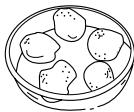
Si vous faites cuire plusieurs aliments identiques, comme des pommes de terre en robe des champs, placez-les en cercle pour une cuisson uniforme. Lorsque
vous faites cuire des aliments de formes ou d'épaisseurs inégales, placez la partie la plus petite ou la plus fine vers le centre du plat, où elle sera
Les aliments de forme irrégulière, comme le poisson, doivent être disposés dans le four avec la queue vers le centre.
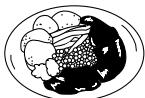
Si vous conservez un repas au réfrigérateur ou que vous dressez une assiette pour réchauffer, placez les aliments plus épais et plus denses à l'extérieur de l'assiette et les aliments plus fins ou moins denses au centre.
Placez les tranches de viande fines les unes sur les autres ou entrelacez-les. Les tranches plus épaisses, comme le pain de viande et les saucisses, doivent être placées près les unes des autres. La sauce ou le jus doivent être réchauffés dans un récipient séparé.
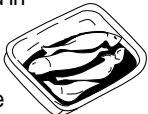
Choisissez un récipient haut et étroit plutôt qu'un récipient bas et large. Lorsque vous réchauffez de la sauce, du jus ou de la soupe, ne remplissez pas le récipient au-delà des 2/3.
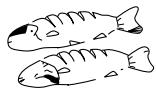
Lorsque vous faites cuire ou réchauffer un poisson entier, incisez la peau pour éviter qu'elle ne se fende.
Protégez la queue et la tête avec de petits morceaux de papier d'aluminium pour éviter une cuisson excessive, mais assurez-vous que le papier d'aluminium ne touche pas les parois du four.


ENTRETIEN ET NETTOYAGE
Bien que votre four soit équipé de dispositifs de sécurité, il est important de respecter les consignes suivantes :
Il est important de ne pas neutraliser ou modifier les verrouillages de sécurité. 2. Ne placez aucun objet entre la face avant du four et la porte, et ne laissez pas de résidus s'accumuler sur les surfaces d'étanchéité. Nettoyez fréquemment la zone d'étanchéité avec un détergent doux, rincez et séchez. N'utilisez jamais de poudres abrasives ni de tampons à récurer. 3. Lorsqu'elle est ouverte, la porte ne doit pas être soumise à des contraintes, par exemple un enfant suspendu à la porte ou toute charge pourrait faire basculer le four et provoquer des blessures et endommager la porte. Ne faites pas fonctionner le four s'il est endommagé, jusqu'à ce qu'il ait été réparé par un technicien de service compétent. Il est particulièrement important que le four se ferme correctement et qu'il n'y ait aucun dommage au :
i) Porte (déformée) ii) Charnières et crochets (cassés ou desserrés) iii) Joints de porte et surfaces d'étanchéité.
4 Le four ne doit pas être réglé ou réparé par une personne autre qu'un technicien de maintenance qualifié. 5 Le four doit être nettoyé régulièrement et tout dépôt alimentaire doit être retiré ; 6 Le non-respect de l'entretien du four dans un état de propreté peut entraîner une détérioration de la surface, ce qui pourrait nuire à la durée de vie de l'appareil et éventuellement créer une situation dangereuse.
AVANT DE FAIRE APPEL AU SERVICE APRÈS-VENTE
Vous pouvez souvent résoudre vous-même les problèmes de fonctionnement. Si votre four à micro-ondes/gril ne fonctionne pas correctement, repérez le problème dans le tableau ci-dessous et essayez les solutions indiquées pour chaque problème.
Si le four à micro-ondes/gril ne fonctionne toujours pas correctement, contactez le centre de service le plus proche.
Remarque :
Il est tout à fait normal que de la vapeur s'échappe autour de la porte pendant le cycle de cuisson. La porte n'est pas conçue pour sceller complètement la cavité du four, mais sa conception spéciale contribue à la sécurité totale de l'appareil.
Attention :
- Ne tentez pas de faire fonctionner le four vide, car cela pourrait l'endommager.
- Comme une sortie d'air est située à l'arrière du four, installez le four de manière à ne pas bloquer l'ouverture. Si le four à micro-ondes/gril ne fonctionne toujours pas correctement, contactez le centre de service le plus proche.
PROBLÈME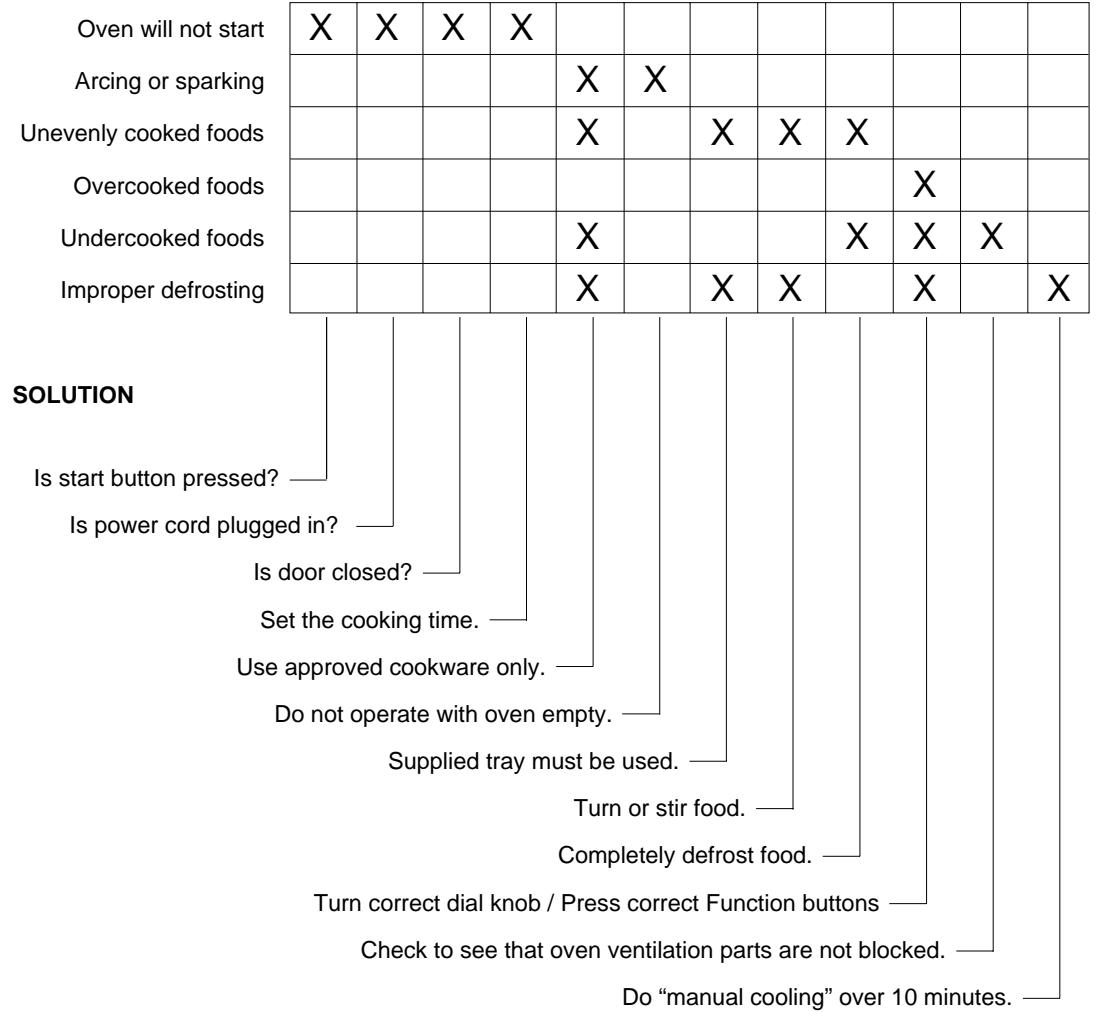
QUESTIONS ET RÉPONSES
- Q : J'ai accidentellement fait fonctionner mon four à micro-ondes sans aucun aliment à l'intérieur. Est-il endommagé ?
R : Faire fonctionner le four vide pendant une courte période ne l'endommagera pas. Cependant, cela n'est pas recommandé.
- Q : Le four peut-il être utilisé avec le plateau en verre ou le guide à rouleaux retiré ?
R : Non. Le plateau en verre et le guide à rouleaux doivent toujours être utilisés dans le four avant la cuisson.
- Q : Puis-je ouvrir la porte lorsque le four est en fonctionnement ?
R : La porte peut être ouverte à tout moment pendant la cuisson. L'énergie micro-ondes est alors immédiatement coupée et le réglage du temps est maintenu jusqu'à ce que la porte soit fermée.
- Q : Pourquoi y a-t-il de l'humidité dans mon four à micro-ondes après la cuisson ?
R : L'humidité sur les parois de votre four à micro-ondes est normale. Elle est causée par la vapeur provenant des aliments qui frappe la surface froide du four.
- Q : L'énergie micro-ondes traverse-t-elle la grille de visualisation de la porte ?
R : Non. La grille métallique renvoie l'énergie dans la cavité du four. Les trous sont faits pour laisser passer la lumière. Ils ne laissent pas passer l'énergie micro-ondes.
- Q : Pourquoi les œufs éclatent-ils parfois ?
R : Lors de la cuisson au four ou au pochage, le jaune peut éclater en raison de l'accumulation de vapeur à l'intérieur de la membrane du jaune. Pour éviter cela, percez simplement le jaune avec un cure-dent avant la cuisson. Ne faites jamais cuire des œufs sans percer leur coquille.
- Q : Pourquoi ce temps de repos est-il recommandé après la fin de la cuisson ?
R : Le temps de repos est très important. Avec la cuisson aux micro-ondes, la chaleur est dans les aliments, pas dans le four. De nombreux aliments accumulent suffisamment de chaleur interne pour continuer la cuisson, même après avoir été retirés du four. Le temps de repos pour les grosses pièces de viande, les gros légumes et les gâteaux permet à l'intérieur de cuire complètement, sans trop cuire l'extérieur.
- Q : Que signifie "temps de repos" ?
R : "Temps de repos" signifie que les aliments doivent être retirés du four et couverts pendant un temps supplémentaire pour terminer la cuisson. Cela libère le four pour d'autres cuissons.
- Q : Pourquoi mon four ne cuit-il pas toujours aussi vite que le guide de cuisson aux micro-ondes l'indique ?
R : Vérifiez à nouveau votre guide de cuisson pour vous assurer que vous avez suivi les instructions à la lettre et pour voir ce qui peut entraîner des variations du temps de cuisson. Les temps et les réglages de chaleur du guide sont des suggestions pour éviter la surcuisson... le problème le plus courant lors de l'adaptation à un four à micro-ondes. Des variations de taille, de forme, de poids et de dimensions peuvent nécessiter un temps de cuisson plus long. Utilisez votre propre jugement en plus des suggestions du guide pour vérifier si les aliments sont correctement cuits, comme vous le feriez avec une cuisinière conventionnelle.
- Q : Le four à micro-ondes sera-t-il endommagé s'il fonctionne à vide ?
R : Oui. Ne le faites jamais fonctionner à vide.
- Q : Puis-je faire fonctionner mon four à micro-ondes sans le plateau tournant ou retourner le plateau pour y placer un grand plat ?
R : Non. Si vous retirez ou retournez le plateau tournant, vous obtiendrez de mauvais résultats de cuisson. Les plats utilisés dans votre four doivent tenir sur le plateau tournant.
- Q : Est-il normal que le plateau tourne dans les deux sens ?
R : Oui. Le plateau tourne dans le sens horaire ou antihoraire, selon le sens de rotation du moteur au début du cycle de cuisson.
- Q : Puis-je faire du pop-corn dans mon four à micro-ondes ? Comment obtenir les meilleurs résultats ?
R : Oui. Faites cuire le pop-corn emballé pour micro-ondes en suivant les instructions du fabricant. N'utilisez pas de sacs en papier ordinaires. Utilisez le "test d'écoute" en arrêtant le four dès que les éclatements ralentissent à un "pop" toutes les 1 ou 2 secondes. Ne refaites pas éclater les grains non éclatés. Ne faites pas de pop-corn dans des plats en verre.
SPÉCIFICATIONS
| POWER SUPPLY | 230V 50Hz, SINGLE PHASE WITH EARTHING |
| MICROWAVE POWER CONSUMPTION | 1200 W |
| MICROWAVE ENERGY OUTPUT | 800 W |
| MICROWAVE FREQUENCY | 2450MHz |
| OUTSIDE DIMENSIONS (W X H X D) | 465 X 287 X 347 mm |
| CAVITY DIMENSIONS (W X H X D) | 298 X 230 X 330 mm |
| NET WEIGHT | APPROX. 12Kg |
| TIMER | 30 min. 00 sec. |
| POWER SELECTIONS | 10 LEVELS |
- Les spécifications sont sujettes à modification sans préavis.
PRINCIPE DU MICRO-ONDES
Le four à micro-ondes est un équipement ISM du groupe 2 dans lequel de l'énergie radiofréquence est intentionnellement générée et utilisée sous forme de rayonnement électromagnétique pour le traitement de matériaux. Ce four est un équipement de classe B adapté à une utilisation dans les établissements domestiques et dans les établissements directement connectés à un réseau d'alimentation basse tension qui alimente les bâtiments à usage domestique.
ÉLIMINATION DES ÉQUIPEMENTS ÉLECTRIQUES ET ÉLECTRONIQUES USAGÉS
La signification du symbole sur le produit, ses accessoires ou son emballage indique que ce produit ne doit pas être traité comme un déchet ménager. Veuillez déposer cet équipement à votre point de collecte applicable pour le recyclage des déchets d'équipements électriques et électroniques. Dans l'Union européenne et dans d'autres pays européens, il existe des systèmes de collecte séparés pour les produits électriques et électroniques usagés. En assurant l'élimination correcte de ce produit, vous contribuerez à prévenir les risques potentiels pour l'environnement et la santé humaine, qui pourraient autrement être causés par une manipulation inappropriée des déchets de ce produit. Le recyclage des matériaux contribuera à préserver les ressources naturelles. Ne jetez donc pas vos anciens équipements électriques et électroniques avec vos déchets ménagers. Pour plus d'informations détaillées sur le recyclage de ce produit, veuillez contacter votre mairie, votre service d'élimination des déchets ménagers ou le magasin où vous avez acheté le produit.
TECHNIQUES DE CUISSON
TEMPS DE REPOS
Les aliments denses, comme la viande, les pommes de terre en robe des champs et les gâteaux, nécessitent un temps de repos (à l'intérieur ou à l'extérieur du four) après la cuisson, pour permettre à la chaleur de continuer à se propager et de cuire le centre complètement. Enveloppez les rôtis et les pommes de terre en robe des champs dans du papier d'aluminium pendant le repos. Les rôtis ont besoin d'environ 10 à 15 minutes, les pommes de terre en robe des champs de 5 minutes. D'autres aliments comme les plats composés, les légumes, le poisson, etc. nécessitent 2 à 5 minutes de repos. Après la décongélation, un temps de repos doit également être prévu. Si l'aliment n'est pas cuit après le temps de repos, remettez-le au four et prolongez la cuisson.
TENEUR EN HUMIDITÉ
De nombreux aliments frais, comme les légumes et les fruits, ont une teneur en humidité variable selon la saison, en particulier les pommes de terre en robe des champs. Pour cette raison, les temps de cuisson peuvent devoir être ajustés. Les ingrédients secs, comme le riz, les pâtes, peuvent se dessécher pendant le stockage, donc les temps de cuisson peuvent différer.
DENSITÉ
Les aliments poreux et aérés chauffent plus rapidement que les aliments denses et lourds.
FILM PLASTIQUE
Le film plastique aide à garder les aliments humides et la vapeur emprisonnée accélère la cuisson. Percez-le avant la cuisson pour laisser échapper l'excès de vapeur. Faites toujours attention en retirant le film plastique d'un plat, car la vapeur accumulée sera très chaude.
FORME
Les formes régulières cuisent uniformément. Les aliments cuisent mieux au micro-ondes dans un récipient rond plutôt que carré.
ESPACEMENT
Les aliments cuisent plus rapidement et plus uniformément s'ils sont espacés. NE JAMAIS empiler les aliments les uns sur les autres.
TEMPERATURE DE DÉPART
Plus l'aliment est froid, plus il met de temps à chauffer. Un aliment sortant du réfrigérateur met plus de temps à réchauffer qu'un aliment à température ambiante.
LIQUIDES
Tous les liquides doivent être remués avant et pendant le chauffage. L'eau en particulier doit être remuée avant et pendant le chauffage, pour éviter les éruptions. Ne chauffez pas des liquides qui ont déjà bouilli. NE PAS SURCHAUFFER.
TOURNER ET REMUER
Certains aliments nécessitent d'être remués pendant la cuisson. La viande et la volaille doivent être retournées à mi-cuisson.
DISPOSITION
Les aliments individuels, par exemple les morceaux de poulet ou les côtelettes, doivent être placés sur un plat de manière à ce que les parties les plus épaisses soient vers l'extérieur.
QUANTITÉ
Les petites quantités cuisent plus vite que les grandes quantités ; de même, les petits repas se réchauffent plus rapidement que les grandes portions.
PERÇAGE
La peau ou la membrane de certains aliments provoque une accumulation de vapeur pendant la cuisson. Ces aliments doivent être percés ou une bande de peau doit être retirée avant la cuisson pour permettre à la vapeur de s'échapper. Les œufs, les pommes de terre, les pommes, les saucisses, etc., doivent tous être percés avant la cuisson. NE PAS TENTER DE FAIRE BOUILLIR DES ŒUFS DANS LEUR COQUILLE.
COUVRIR
Couvrez les aliments avec un film plastique micro-ondable ou un couvercle. Couvrez le poisson, les légumes, les ragoûts, les soupes. Ne couvrez pas les gâteaux, les sauces, les pommes de terre en robe des champs ou les pâtisseries.
GUIDE DE DÉCONGÉLATION
Ne décongelez pas la viande couverte. La couverture pourrait permettre la cuisson. Retirez toujours l'emballage extérieur et le plateau. Utilisez uniquement des récipients adaptés au micro-ondes. Commencez la décongélation de la volaille entière poitrine vers le bas. Commencez la décongélation des rôtis côté gras vers le bas. La forme de l'emballage modifie le temps de décongélation. Les formes rectangulaires plates décongèlent plus rapidement qu'un bloc épais. Après 1/3 du temps de décongélation écoulé, vérifiez les aliments. Vous souhaiterez peut-être retourner, séparer, réarranger ou retirer les portions décongelées des aliments. Pendant la décongélation, le four vous invitera à retourner les aliments. À ce stade, ouvrez la porte du four et vérifiez les aliments. Suivez les techniques énumérées ci-dessous pour des résultats de décongélation optimaux.
Ensuite, fermez la porte du four, appuyez sur le bouton DÉMARRAGE pour terminer la décongélation.
- Une fois décongelés, les aliments doivent être froids, mais ramollis dans toutes les zones. S'ils sont encore légèrement glacés, remettez-les au micro-ondes très brièvement, ou laissez-les reposer quelques minutes. Après décongélation, laissez reposer les aliments 5 à 60 minutes s'il reste des zones glacées.
La volaille et le poisson peuvent être placés sous de l'eau froide courante jusqu'à décongélation complète.
⇔ Retournez : rôti, côtes, volaille entière, poitrine de dinde, hot-dogs, saucisses, steaks ou côtelettes. ⇔ Réorganisez : séparez ou divisez les steaks, côtelettes, galettes de hamburger, viande hachée, morceaux de poulet ou de poisson, et les morceaux de viande comme le bœuf à ragoût. Protégez : utilisez de petites bandes de papier d'aluminium pour protéger les zones fines ou les bords des aliments de forme irrégulière, comme les ailes de poulet. Pour éviter les arcs électriques, ne laissez pas le papier d'aluminium à moins de 2,5 cm des parois ou de la porte du four. Retirez : pour éviter la cuisson, les portions décongelées doivent être retirées du four à ce stade. Cela peut raccourcir le temps de décongélation pour les aliments pesant moins de 1,35 kg.
TABLEAU DE DÉCONGÉLATION
| Item & Weight | Defrosting Time | Standing Time | Special Techniques |
| BEEF Minced beef 1 lb./450g | 11-12 min. | 15-20 min. | Break apart and remove thawed portions with fork. |
| Stew Meat 1 1/2 lbs./675g | 14-16 min. | 25-30 min. | Separate and rearrange once. |
| Patties 4(4oz./110g) | 10-12 min. | 15-20 min. | Turn over after half the time. |
| PORK Spareribs 1 lb./450g | 11-12 min. | 25-30 min. | Separate and rearrange once. |
| Chops 4(5oz./125g) | 8-10 min. | 25-30 min. | Separate and turn over once. |
| Minced pork 1 lb./450g | 10-12 min. | 15-20 min. | Break apart and remove thawed portions with fork. |
| POULTRY Whole Chicken 2 1/2 lbs./1125g | 23-25 min. | 45-90 min. | Break side down. Turn over after half the time. Shield as needed. |
| Chicken Breasts 1 lbs./450g | 11-12 min. | 15-30 min. | Separate and rearrange once. |
| Fryer Chicken(cut up) 2 lbs./900g | 19-21 min. | 25-30 min. | Separate and rearrange once. |
| Chicken Thights 1 1/2 lbs./675g | 14-16 min. | 15-30 min. | Separate and rearrange once. |
| FISH & SEAFOOD Whole Fish 1 lb./450g | 8-10 min. | 15-20 min. | Turn over after half the time. Shield as needed. |
| Fish Fillets 1 1/2 lb./675g | 13-15 min. | 15-20 min. | Separate and turn over once. |
| Shrimp 1/2 lb./225g | 4-5 min. | 15-20 min. | Separate and rearrange once. |
- Les durées sont approximatives car les températures des congélateurs varient.
TABLEAU DE CUISSON ET DE RÉCHAUFFAGE
| Item | Power Level | Cooking Time Per lb./450g | |||
| MEAT | |||||
| Beef | |||||
| Standing / rolled Rib - Rare | P-80 | 7-9 min. | |||
| - Medium | P-80 | 8-10 min. | |||
| - well done | P-80 | 10-12 min. | |||
| Ground Beef (to brown for casserole) | P-HI | 4-6 min. | |||
| Hamburgers, Fresh or defrosted | |||||
| (4oz. Each/100g) | 2 patties | P-HI | 3-5 min. | ||
| 4 patties | P-HI | 4-6 min. | |||
| Pork | |||||
| Loin, Leg | P-80 | 11-14 min. | |||
| Bacon | 4 slices | P-HI | 2-3 min. | ||
| 6 slices | P-HI | 3-4 min. | |||
| NOTE: The above times should be regarded only as a guide, Allow for difference in individual lasts and preferences. The times may vary due to the shape, cut, and composition of the meat. | |||||
| POULTRY | |||||
| Chicken | |||||
| Whole | P-HI | 6-8 min. | |||
| Breast(boned) | P-80 | 5-7 min. | |||
| portions | P-80 | 6-8 min. | |||
| Turkey | |||||
| Whole | P-HI | 10-12 min. | |||
| NOTE: The above times should be regarded only as a guide. Allow for difference in individual tastes and preferences. The times may vary due to the shape, cut, and composition of the food. | |||||
| FRESH FISH | |||||
| Item | Power Level | Cooking Time Per lb./450g | Method | Standing Time | |
| Fish Fillets | P-HI | 4-6 min. | Add 15-30 ml(1-2 Tbsp) | 2-3 min. | |
| Whole Mackerel, Cleaned and Prepared | P-HI | 4-6 min. | - | 3-4 min. | |
| Whole Trout, Cleaned and Prepared | P-HI | 5-7 min. | - | 3-4 min. | |
| Salmon Steaks | P-HI | 5-7 min. | Add 15-30 ml(1-2 Tbsp) | 3-4 min. | |
| ITEM | POWER LEVEL | Cooking Time | Standing Time | ||
| Lasagna 1 serving(10 1/2 oz./300g) | P-HI | 5-7 min. | Place lasagna on microwaveable plate. Cover with plastic wrap and vent. | ||
| Casserole 1 cup | P-HI | 1 1/2 -3 min. | Cook covered in, microwaveable dish(casserole). Stir once halfway through cooking. | ||
| 4 cups | P-HI | 5-7 min. | |||
| Mashed potatoes 1 cup | P-HI | 2-3 min. | Cook covered in, microwaveable dish(casserole). Stir once halfway through cooking. | ||
| 4 cups | P-HI | 6-8 min. | |||
| Baked beans 1 cup | P-HI | 2-3 min. | Cook covered in, microwaveable dish(casserole). Stir once halfway through cooking. | ||
| Ravioli or pasta in sauce 1 cup | P-HI | 3-4 min. | Cook covered in, microwaveable dish(casserole). Stir once halfway through cooking. | ||
| 4 cups | P-HI | 8-11 min. | |||
| Sandwich roll or bun 1 roll | P-HI | 20-30 sec. | Wrap in paper tower and place on glass microwaveable rack * Note : Do not use recycled paper towels. | ||
TABLEAU DES LÉGUMES
Utilisez un bol en Pyrex adapté avec couvercle. Ajoutez 30 à 45 ml d'eau froide (2 à 3 cuillères à soupe) pour 250 g, sauf si une autre quantité d'eau est recommandée (voir tableau). Cuire couvert pendant la durée minimale (voir tableau). Continuez la cuisson pour obtenir le résultat souhaité. Remuez une fois pendant la cuisson et une fois après. Ajoutez du sel, des herbes ou du beurre après la cuisson. Couvrez pendant un temps de repos de 3 minutes.
Astuce : coupez les légumes frais en morceaux de taille égale. Plus ils sont coupés petits, plus ils cuisent rapidement.
Tous les légumes doivent être cuits à pleine puissance micro-ondes.
Guide de cuisson pour légumes frais
| Vegetables | Weight | Time | Comments |
| Broccoli | 1/2 lb./250g | 3-4 min | Prepare even sized florets. |
| 1 lb./500g | 5-7 min | Arrange the stems to the centre. | |
| Brussels sprouts | 1/2 lb./250g | 4-5 min | Add 60-75ml(5-6tbsp.) water. |
| Carrots | 1/2 lb./250g | 3-4 min | Cut carrots into even sized slices. |
| Cauliflower | 1/2 lb./250g | 3-4 min | Prepare even sized florets. Cut big florets into halves. |
| 1 lb./500g | 5-7 min | Arrange stems to the centre. | |
| Courgettes | 1/2 lb./250g | 3-4 min | Cut courgettes into slices. Add 30ml(2tbsp.) water or a knob of butter. Cook until just tender. |
| Egg plants | 1/2 lb./250g | 3-4 min | Cut egg plants into small slices and sprinkle with 1 tablespoon lemon juice. |
| Leeks | 1/2 lb./250g | 3-4 min | Cut leeks into thick slices. |
| Mushrooms | 0.3 lb./125g | 2-3 min | Prepare small whole or sliced mushrooms. Do not add any water. Sprinkle with lemon juice. Spice with salt and pepper. Drain before serving. |
| 1/2 lb./250g | 3-5 min | ||
| Onions | 1/2 lb./250g | 3-4 min | Cut onions into slices or halves. Add only 15ml(1tbsp.) water. |
| Pepper | 1/2 lb./250g | 3-5 min | Cut pepper into small slices. |
| Potatoes | 1/2 lb./250g | 3-5 min | Weigh the peeled potatoes and cut them into similar sized halves or quarters. |
| 1 lb./500g | 8-10 min | ||
| Turnip cabbage | 1/2 lb./250g | 5-7 min | Cut turnip cabbage into small cubes. |
Guide de cuisson pour légumes surgelés
| Vegetables | Weight | Time | Instructions |
| spinach | 0.3 lb./125g | 2-3 min | Add 15ml(1tbsp.) cold water. |
| broccoli | 1/2 lb./250g | 4-5 min | Add 30ml(2 tbsp.) cold water. |
| Peas | 1/2 lb./250g | 3-4 min | Add 15ml(1 tbsp.) cold water. |
| Green beans | 1/2 lb./250g | 4-5 min | Add 30ml(2t tbsp.) cold water. |
| Mixed vegetables (carrots/peas/corn) | 1/2 lb./250g | 4-6 min | Add 15ml(1ttbsp.) cold water. |
| Mixed vegetables (Chinese style) | 1/2 lb./250g | 4-6 min | Add 15ml(1 tbsp.) cold water. |
RECETTES
SOUPE TOMATE & ORANGE
25 g de beurre
1 oignon moyen, haché ; 1 grande carotte et 1 grande pomme de terre, hachées ; 1 3/4 lb (800 g) de tomates en conserve, hachées ; jus et zeste râpé d'une petite orange ; 1 1/2 pinte (900 ml) de bouillon de légumes chaud ; sel et poivre au goût
SOUPE À L'OIGNON GRATINÉE
2 gros oignons, émincés ; 1 c. à soupe (15 ml) d'huile de maïs ; 2 oz (50 g) de farine ; 2 pintes (1,2 litre) de bouillon de viande ou de légumes chaud
sel et poivre au goût
2 c. à soupe (30 ml) de persil haché ; 4 tranches épaisses de pain français ; 2 oz (50 g) de fromage râpé
LÉGUMES SAUTÉS À LA POÊLE
1 c. à soupe (15 ml) d'huile de tournesol ; 2 c. à soupe (30 ml) de sauce soja ; 1 c. à soupe (15 ml) de sherry ; 1 pouce (2,5 cm) de racine de gingembre, pelée et finement râpée ; 2 carottes moyennes, coupées en fines lanières ; 4 oz (100 g) de champignons de Paris, hachés ; 2 oz (50 g) de pousses de soja ; 4 oz (100 g) de pois mange-tout ; 1 poivron rouge, épépiné et finement tranché ; 4 oignons verts, hachés ; 4 oz (100 g) de châtaignes d'eau en conserve, tranchées ; 1/4 de chou chinois, finement émincé
POULET AU MIEL
4 poitrines de poulet désossées ; 2 c. à soupe (30 ml) de miel clair ; 1 c. à soupe (15 ml) de moutarde à l'ancienne ; 1/2 c. à thé (2,5 ml) d'estragon séché ; 1 c. à soupe (15 ml) de concentré de tomate ; 1/4 de pinte (150 ml) de bouillon de poulet
POMMES DE TERRE FARCIES AU FROMAGE BLEU ET À LA CIBOULETTE
2 pommes de terre à cuire au four (environ 9 oz (250 g) chacune) ; 2 oz (50 g) de beurre ; 4 oz (100 g) de fromage bleu, haché ; 1 c. à soupe (15 ml) de ciboulette fraîche, hachée ; 2 oz (50 g) de champignons, tranchés ; sel et poivre au goût
- Faire fondre le beurre dans un grand bol à puissance maximale pendant 1 minute.
- Ajouter l'oignon, la carotte et la pomme de terre et cuire à puissance maximale pendant 6 minutes. Remuer à mi-cuisson.
- Ajouter les tomates, le jus d'orange, le zeste d'orange et le bouillon. Bien mélanger. Assaisonner avec du sel et du poivre au goût. Couvrir le bol et cuire à puissance maximale pendant 15 minutes. Remuer 2 à 3 fois pendant la cuisson, jusqu'à ce que les légumes soient tendres.
- Mixer et servir immédiatement.
- Mettre l'oignon et l'huile dans un bol, bien mélanger et cuire à P-HI pendant 2 minutes.
- Incorporer la farine pour faire une pâte, puis ajouter progressivement le bouillon. Assaisonner et ajouter le persil.
- Couvrir le bol et cuire à P-80 pendant 16 minutes.
- Verser la soupe dans des bols de service, y plonger le pain et saupoudrer généreusement de fromage.
- Cuire à P-80 pendant 2 minutes, jusqu'à ce que le fromage soit fondu.
- Mettre l'huile, la sauce soja, le sherry, le gingembre, l'ail et les carottes dans un grand bol, bien mélanger.
- Couvrir et cuire à P-HI pendant 4 à 5 minutes, en remuant une fois.
- Ajouter les champignons de Paris, les pousses de soja, les pois mange-tout, le poivron rouge, les oignons nouveaux, les châtaignes d'eau et les feuilles de chou chinois. Bien mélanger.
- Cuire à P-HI pendant 4 à 5 minutes, jusqu'à ce que les légumes soient tendres. Remuer 2 à 3 fois pendant la cuisson.
Les légumes sautés sont idéalement servis avec de la viande ou du poisson.
- Placer les poitrines de poulet dans un plat à rôtir.
- Mélanger tous les ingrédients restants et verser sur le poulet. Saler et poivrer selon le goût.
- Cuire à P-HI pendant 11 à 12 minutes. Remuer et enrober le poulet de sauce deux fois pendant la cuisson.
- Piquer chaque pomme de terre à plusieurs endroits. Cuire à P-HI pendant 10 à 11 minutes. Couper en deux et retirer la chair dans un bol, ajouter le beurre, le fromage, la ciboulette, les champignons, le sel et le poivre, bien mélanger.
- Remplir les peaux de pommes de terre avec le mélange et les placer dans un plat à flan, sur la grille.
- Cuire à P-80 pendant 10 minutes.
SAUCE BLANCHE
1 once (25 g) de beurre
1 once (25 g) de farine
1/2 pinte (300 ml) de lait
sel et poivre selon le goût
CONFITURE DE FRAISES
1 1/2 lb (675 g) de fraises, équeutées
3 cuillères à soupe (45 ml) de jus de citron
675 g (1 1/2 lb) de sucre en poudre
GÂTEAU SIMPLE AU MICRO-ONDES
100 g (4 oz) de margarine, 100 g (4 oz) de sucre, 1 œuf, 100 g (4 oz) de farine avec levure, tamisée, 2 à 3 cuillères à soupe (30 à 45 ml) de lait
OMELETTES
15 g (1/2 oz) de beurre, 4 œufs, 90 ml (6 cuillères à soupe) de lait, sel et poivre
ŒUFS BROUILLÉS
15 g (1/2 oz) de beurre, 2 œufs, 30 ml (2 cuillères à soupe) de lait, sel et poivre
HACHIS PARFUMÉ
1 petit oignon, émincé, 1 gousse d'ail écrasée, 5 ml (1 cuillère à café) d'huile, 200 g (7 oz) de tomates concassées en conserve, 15 ml (1 cuillère à soupe) de concentré de tomates, 5 ml (1 cuillère à café) d'herbes mélangées, 225 g (8 oz) de bœuf haché, sel et poivre
- Placez le beurre dans un bol et faites cuire à P-HI pendant 1 minute, jusqu'à ce qu'il soit fondu.
- Incorporez la farine et fouettez avec le lait. Faites cuire à P-HI pendant 3 à 4 minutes, en remuant toutes les 2 minutes, jusqu'à épaississement et lissage. Assaisonnez avec du sel et du poivre selon votre goût.
- Placez les fraises et le jus de citron dans un très grand bol, chauffez à P-HI pendant 5 minutes, ou jusqu'à ce que les fruits soient ramollis. Ajoutez le sucre et mélangez bien.
- Faites cuire à P-80 pendant 25 à 30 minutes, jusqu'à ce que le point de gélification* soit atteint, en remuant toutes les 4 à 5 minutes.
- Verser dans des bocaux chauds et propres. Couvrir, sceller et étiqueter.
- Point de prise : Pour déterminer le point de prise, déposer 1 cuillère à café (5 ml) de confiture sur une soucoupe réfrigérée. Laisser reposer 1 minute. Déplacer doucement la surface de la confiture avec le doigt ; si la surface se plisse, le point de prise est atteint.
- Tapisser le fond d'un moule à gâteau de 8 pouces (20,4 cm) avec du papier sulfurisé.
- Crémer la margarine et le sucre jusqu'à ce que le mélange soit léger et mousseux. Incorporer les œufs et ajouter la farine tamisée en alternance avec le lait.
- Verser dans le récipient préparé. Cuire à P-HI pendant 3 à 4 minutes, jusqu'à ce qu'une brochette en ressorte propre.
- Laisser reposer le gâteau 5 minutes avant de le démouler.
- Fouetter ensemble les œufs et le lait. Assaisonner.
- Placer le beurre dans un moule à tarte de 10 pouces (26 cm). Cuire à P-HI pendant 1 minute, jusqu'à ce que le beurre soit fondu. Enduire le moule de beurre fondu.
- Verser le mélange d'omelette dans le moule à tarte. Cuire à P-HI pendant 2 minutes. Fouetter le mélange et cuire à nouveau à P-HI pendant 1 minute.
- Faire fondre le beurre dans un bol à P-HI pendant 1 minute.
- Ajouter les œufs, le lait et l'assaisonnement et bien mélanger.
- Cuire à P-HI pendant 2 minutes, en remuant toutes les 30 secondes.
- Mettre l'oignon, l'ail et l'huile dans une cocotte, et cuire à P-HI pendant 2 minutes ou jusqu'à ce qu'ils soient tendres.
- Mettre tous les autres ingrédients dans la cocotte. Bien remuer.
- Couvrir et cuire à P-HI pendant 4 minutes puis à P-80 pendant 8 à 12 minutes ou jusqu'à ce que la viande soit cuite.
- À PROPOS DE CE MANUEL
- FOUR À MICRO-ONDES
- KOR-8A6K5SA
- PRÉCAUTIONS POUR ÉVITER UNE EXPOSITION ÉVENTUELLE À UNE ÉNERGIE MICRO-ONDES EXCESSIVE
- TABLE DES MATIÈRES
- INSTRUCTIONS D'INSTALLATION ET DE MISE À LA TERRE
- REMARQUE
- SÉCURITÉ ENFANTS
- RACCORDEMENT ÉLECTRIQUE
- AVERTISSEMENT : CET APPAREIL DOIT ÊTRE RELIÉ À LA TERRE
- RÉFÉREZ-VOUS À LA PLAQUE SIGNALÉTIQUE POUR LA TENSION ET VÉRIFIEZ QUE LA TENSION DE L'APPAREIL CORRESPOND À CELLE DE VOTRE ALIMENTATION ÉLECTRIQUE
- VERT ET JAUNE : TERRE
- BLEU : NEUTRE
- MARRON : PHASE
- ALIMENTATION ÉLECTRIQUE
- FICHES MOULÉES
- APPLICABLE UNIQUEMENT SI UNE FICHE MOULÉE EST INSTALLÉE
- CONSIGNES DE SÉCURITÉ IMPORTANTES
- À LIRE ATTENTIVEMENT ET À CONSERVER POUR RÉFÉRENCE FUTURE
- CONSERVEZ CES INSTRUCTIONS
- UTILISATION GÉNÉRALE
- POUR ÉVITER LES EXPLOSIONS ET LES ÉBULLITIONS SOUDAINES
- AVERTISSEMENT
- ŒUFS
- PERÇAGE
- COUVERCLES
- QUELS USTENSILES PEUVENT ÊTRE UTILISÉS DANS LE FOUR
- FONCTION MICRO-ONDES UNIQUEMENT
- ATTENTION
- INSTRUCTIONS DE CUISSON
- GUIDE DES USTENSILES
- PANNEAU DE COMMANDE
- SCHÉMA DES CARACTÉRISTIQUES
- PROCÉDURE DE FONCTIONNEMENT
- TABLEAU DE PUISSANCE DE SORTIE
- GUIDE DU BOL VAPEUR
- CONSIGNES DE SÉCURITÉ IMPORTANTES POUR LE BOL VAPEUR
- COMMANDES
- BOL VAPEUR
- DÉCONGÉLATION AUTOMATIQUE
- REPAS RÉFRIGÉRÉ
- TABLEAU DES POIDS DES REPAS SURGELÉS
- SOUPE/SAUCE
- TABLEAU DES POIDS SOUPE/SAUCE
- RÉGLAGE DES TEMPS DE CUISSON ET DES NIVEAUX DE PUISSANCE MICRO-ONDES
- PUISSANCE MICRO-ONDES
- CUISSON EXPRESS
- CUISSON AUTOMATIQUE
- VEILLEUSE
- VERROU DE SÉCURITÉ ENFANT
- COMMENT ARRÊTER LE FOUR PENDANT SON FONCTIONNEMENT
- POUR RÉGLER LE MODE D'ÉCONOMIE D'ÉNERGIE
- ÉTINCELLES
- DIRECTIVES GÉNÉRALES
- SI LES ALIMENTS SONT INSUFFISAMMENT CUITS
- SI LES ALIMENTS SONT TROP CUITS, C'EST-À-DIRE DESSÉCHÉS OU BRÛLÉS
- POINTS À RETENIR LORS DE LA DÉCONGÉLATION
- LA QUANTITÉ D'ALIMENTS
- TEMPÉRATURE INITIALE DES ALIMENTS
- COMPOSITION DES ALIMENTS
- TAILLE ET FORME
- REMUER ET RETOURNER LES ALIMENTS
- COUVRIR LES ALIMENTS AIDE À
- RELÂCHER LA PRESSION DANS LES ALIMENTS
- TEMPS DE REPOS
- DISPOSITION DES ALIMENTS
- ENTRETIEN ET NETTOYAGE
- AVANT DE FAIRE APPEL AU SERVICE APRÈS-VENTE
- QUESTIONS ET RÉPONSES
- SPÉCIFICATIONS
- PRINCIPE DU MICRO-ONDES
- ÉLIMINATION DES ÉQUIPEMENTS ÉLECTRIQUES ET ÉLECTRONIQUES USAGÉS
- TECHNIQUES DE CUISSON
- TENEUR EN HUMIDITÉ
- DENSITÉ
- FILM PLASTIQUE
- FORME
- ESPACEMENT
- TEMPERATURE DE DÉPART
- LIQUIDES
- TOURNER ET REMUER
- DISPOSITION
- QUANTITÉ
- COUVRIR
- GUIDE DE DÉCONGÉLATION
- TABLEAU DE CUISSON ET DE RÉCHAUFFAGE
- TABLEAU DES LÉGUMES
- RECETTES
- SOUPE TOMATE & ORANGE
- SOUPE À L'OIGNON GRATINÉE
- LÉGUMES SAUTÉS À LA POÊLE
- POULET AU MIEL
- POMMES DE TERRE FARCIES AU FROMAGE BLEU ET À LA CIBOULETTE
- LES LÉGUMES SAUTÉS SONT IDÉALEMENT SERVIS AVEC DE LA VIANDE OU DU POISSON
- SAUCE BLANCHE
- CONFITURE DE FRAISES
- GÂTEAU SIMPLE AU MICRO-ONDES
- OMELETTES
- ŒUFS BROUILLÉS
- HACHIS PARFUMÉ
Marque : DAEWOO
Modèle : KOR6L15
Catégorie : Réfrigérateur