
T68 - Téléphone mobile ERICSSON - Notice d'utilisation et mode d'emploi gratuit
Retrouvez gratuitement la notice de l'appareil T68 ERICSSON au format PDF.

| Type de produit | Téléphone mobile GSM |
| Marque | Ericsson |
| Modèle | T68 |
| Alimentation | Batterie Lithium-Ion rechargeable, chargeur secteur |
| Autonomie en communication | Jusqu'à 8 heures (variable selon usage et réseau) |
| Autonomie en veille | Jusqu'à 240 heures (variable selon usage et réseau) |
| Écran | Écran couleur CSTN 256 couleurs, résolution 101x80 pixels |
| Réseau | GSM 900/1800/1900 MHz |
| Fonctions principales | Appels, SMS, MMS, WAP, e-mail, Bluetooth, infrarouge, chat, jeu, agenda, calculatrice, chronomètre, alarme, composeur de mélodies |
| Mémoire | Mémoire interne partagée, extensible via carte SIM (contacts) |
| Connectivité | Bluetooth, infrarouge, prise casque |
| Sonneries | Polyphoniques, composeur intégré |
| Sécurité | Verrouillage du clavier, code PIN/PUK, verrouillage du téléphone |
| Pièces détachées et réparabilité | Batterie amovible, chargeur, kit mains-libres, écouteur Bluetooth (en option) |
| Entretien et nettoyage | Nettoyer avec un chiffon doux et sec; ne pas utiliser de produits chimiques; éviter l'humidité |
| Température de fonctionnement | +5°C à +45°C pour la charge; usage normal de -10°C à +55°C |
| Informations générales | Notice d'utilisation en 96 pages; date de première édition : octobre 2001 |
FOIRE AUX QUESTIONS - T68 ERICSSON
Questions des utilisateurs sur T68 ERICSSON
0 question sur cet appareil. Repondez a celles que vous connaissez ou posez la votre.
Poser une nouvelle question sur cet appareil
Téléchargez la notice de votre Téléphone mobile au format PDF gratuitement ! Retrouvez votre notice T68 - ERICSSON et reprennez votre appareil électronique en main. Sur cette page sont publiés tous les documents nécessaires à l'utilisation de votre appareil T68 de la marque ERICSSON.
MODE D'EMPLOI T68 ERICSSON
Contents
Getting started 3
Make and receive the first call.
Getting to know your phone 6
Key functions, quick keys, entering letters.
Personalizing your phone 15
Choose ring signal, theme and other settings.
Calling 24
Use the phone book, voice control, call options.
Setting up mobile Internet 43
Set up WAP, e-mail and Bluetooth wireless technology.
Messaging 49
Chat, e-mail, text and multimedia messages.
Using mobile Internet 57
WAP browser, bookmarks.
Transferring and exchanging information 60
Bluetooth wireless technology, synchronization.
More features 66
Calendar, alarm clock, stopwatch, timer, games.
Security 76
SIM card lock, phone lock.
Troubleshooting 77
Why doesn't the phone work the way I want?
Additional information 79
Safe and efficient use, warranty, declaration of conformity.
Icons 88
What do the icons mean?
Index 93
Ericsson T68m
First edition (October 2001)
This manual is published by Ericsson Mobile Communications AB, without any warranty. Improvements and changes to this manual necessitated by typographical errors, inaccuracies of current information, or improvements to programs and/or equipment, may be made by Ericsson Mobile Communications AB at any time and without notice. Such changes will, however, be incorporated into new editions of this manual.
All rights reserved.
©Ericsson Mobile Communications AB, 2001
Publication number: EN/LZT 108 4788 R1A INNOVATRON PATENTS
Please note:
Some of the services in this manual are not supported by all networks. This also applies to the GSM International Emergency Number 112.
Please contact your network operator or service provider if you are in doubt whether you can use a particular service or not.
Please read the Guidelines for safe and efficient use and the Limited warranty chapters before you use your mobile phone.
The BLUETOOTH trademarks are owned by their proprietor and used by Ericsson under license.
T9 ^™ Text Input is a registered trademark of Tegic Communications.
T9 ^™ Text Input is licensed under one or more of the following: U.S. Pat. Nos. 5,818,437, 5,953,541, 5,187,480, 5,945,928, and 6,011,554; Canadian Pat. No. 1,331,057, United Kingdom Pat. No. 2238414B; Hong Kong Standard Pat. No. HK0940329; Republic of Singapore Pat. No. 51383; Euro.Pat. No. 0 842 463(96927260.8) DE/DK, FI, FR, IT, NL, PT, ES, SE, GB; and additional patents are pending worldwide.
Getting started
About this user's guide
For ease of reference, the “Getting to know your phone” chapter gives a quick overview of the main functions of the phone, shortcuts and general information.
Available services
Some services and functions described in this user's guide are network- or subscription-dependent. Because of this, all menus may not be available in your phone.
This symbol indicates that a service or function is network- or subscription-dependent.

Please consult your network operator for more information about your subscription.
The SIM card
When you register as a subscriber with a network operator, you get a SIM (Subscriber Identity Module) card. The SIM card contains a computer chip that keeps track of your phone number, the services included in your subscription, and your phone book information, among other things.
Assembly
Before you can use your phone you need to:
- insert the SIM card.
- attach and charge the battery. See “SIM card and battery information” on page 4..
Note: Always turn off the phone and detach the charger before you insert or remove a SIM card.
SIM card and battery information
It may take up to 30 minutes before an icon appears in the display when charging.
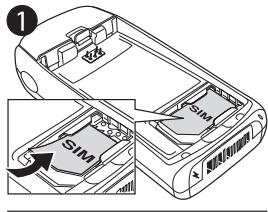
- Insert the SIM card. Make sure the SIM card is placed under the silvery holders.
- Place the battery on the back of the phone and push until you hear a click.
- Connect the charger to the phone at the flash symbol. The flash symbol on the charger plug must face upwards.
- It may take up to 30 minutes before the battery charging icon appears in the display.
- Wait approximately 4 hours or until the icon indicates that the battery is fully charged.
- Remove the charger by tilting the plug upwards
You have to insert the SIM card and charge the battery before you can use the phone.
text_image
Diagram showing a car interior with labeled sections and an arrow indicating a directional change or movement in the lower section.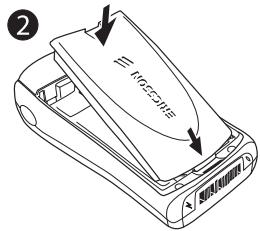
text_image
② POCCARES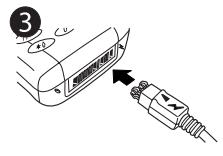
text_image
3 u 1000000000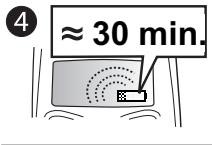
text_image
4 ≈ 30 min.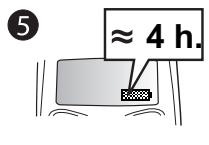
text_image
⑤ ≈ 4 h.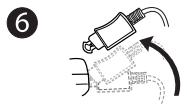
text_image
6Making and receiving calls
text_image
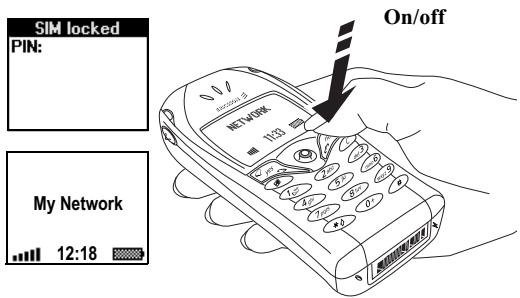
SIM locked PIN: 12:18 On/off My Network- Press and hold ⓄNO until you hear a tone.
- Enter your PIN (Personal Identity Number), if you have one for your SIM card.
Your PIN is provided by your network operator.
If you make a mistake while entering your PIN, delete the wrong number by pressing .
If you enter the wrong PIN three times in a row, the SIM card is blocked and the message PIN blocked appears. To unblock it, you need to enter your PUK (Personal Unblocking Key). Your PUK is provided by
your network operator.
- Enter the area code and phone number, and press YES to make the call.
- Press NO to end the call.
- When the phone rings, press YES to answer the call.
Getting to know your phone
Key functions
Volume key
Increase or decrease the volume of the earpiece or handsfree loudspeaker during a call. Scroll through menus, lists and text. Enter the Status menu. Slide up or down twice to reject an incoming call.

Make and answer calls. Select a menu, submenu or an option.

Press for options.
1-9,0
Enter the digits 0–9 and letters. Press and hold o to enter the international prefix +. Move through menus using shortcuts.

Enter *. Shift between lower and upper case.

text_image
ERICSSON NETWORK 11:33 NO yes no C (clear) 1 sw 2 abc del 3 4 ghi 5 jkl mno 6 7 pqs 8 tuv kxyz 9 * # 0+ #Press the joystick up, down, left or right to move through the menus, lists and texts.
Press the joystick as an alternative to YES.
Press and hold to turn the phone on or off or to go back to standby mode. Press to end or reject a call, go back one level in the menus or leave an option unchanged.
Delete numbers and letters from the display. Delete an item from a list. Press and hold to turn off the microphone during a call.
Enter #.
Quick keys
The table describes some of the most useful key combinations.
| To... | When in standby: |
| make an emergency call | enter the international emergency number and press YES |
| enter and move through the main menus | press ← or ➔ |
| move up and down in the submenus | press ↑ or ↓ |
| enter the Call list | press YES |
| voice dial | press and hold YES or say your magic word |
| call your Voice mail | press and hold 1 |
| enter the + sign to make an international phone call | press and hold 0 |
| set the phone to silent | press and hold c |
| To... | When in standby: |
| reach a contact beginning with a specific letter | press and hold any of the keys2 - 9 |
| reach a phone number at a specific position. | press the position number and # |
| speed dial | press any of the number keys 1 - 9 and YES |
| enter Call contact | press and hold ➔ |
| enter the first submenu of the My Shortcuts menu | press and hold ← |
| see which profile you are using | slide the volume key up or down |
| see today's date | slide the volume key up or down |
| change the language to Automatic | press ← 8888 ➔ |
| change the language to English | press ← 0000 ➔ |
| reject a call | quickly slide the volume key up or down twice when receiving a call or press NO |
| To... | During a call: |
| put a call on hold | press YES |
| retrieve a call | press YES again |
| turn off the microphone | press and hold |
| To... | When in the menus: |
| move through menus or lists | slide (and hold) the volume key up or down or use the joystick |
| select a menu or setting | press YES |
| enter a quick options menu | press |
| delete an item | press and hold when in lists |
| go back to standby | press and hold NO |
| To... | When entering letters using multitap text input: |
| reach the second letter or character of a key | slide the volume key up and press any of the number keys |
| reach the third letter or character of a key | slide the volume key down and press any of the number keys |
| shift between capital and lower-case letters | press * , then the letter |
| enter numbers | press and hold any of the number keys |
| enter a question mark | slide the volume key down and press 1 |
| enter the @-sign | slide the volume key down and press 0 |
| enter a space | press 1 |
| delete letters and numbers | press c |
| shift between input methods or input languages | press and hold * |
| enter a p (pause) | press and hold *△ when saving codes |
| enter a p (pause) | press *△ when composing melodies |
| To... | When entering letters using T9 Text Input: |
| view alternative words | press ○ |
| accept a word and add a space | press 1 |
| enter a full stop | press # |
| view alternative punctuation marks | press #, then ○ repeatedly |
| shift between capital and lower-case letters | press *△, then the letter |
| enter numbers | press and hold any of the number keys |
| delete letters and numbers | press C |
| To... | When entering letters using T9 Text Input: |
| shift between input methods or input languages | press and hold * |
Using shortcuts
A quicker way to move through the menus is to use shortcuts. Enter the menus by pressing or and then simply enter the number of the menu to which you want to go. To get back to standby, press and hold NO.
You can quickly and easily reach the settings you use most by placing them in the menu My Shortcuts. See “My shortcuts” on page 23.
Help Texts
To help you use the menus and functions, your phone has pop-up help texts that explain the menus.
These help texts are set to On when you buy your phone, but you can turn them off at any time.
- Select Menu Help from the Settings/Display menu and select On or Off.
Delete, edit and rename
If you add items, for example, a contact, a note, an appointment or a WAP bookmark, it can be deleted, edited or renamed.
There are two ways of deleting items:
- Select an item and press .
- Select an item, press 📄, select Delete or Delete all.
There are two ways of editing items: - Select an item, press 📄, select Edit.
- Scroll to the item you want to edit and press YES twice, select Edit.
Tip: You can rename an item in the same way.
Online services
Online services are customized services offered by network operators, independently of mobile phones and mobile phone manufacturers.
A SIM card which supports Online services works in the same way as a normal SIM card. When you have inserted your SIM card and turned on your phone, your network operator can download data to your SIM card.

After the first data download and after restarting your phone, a new menu appears in your phone as the first submenu under the Connect menu.
To enter your new menu system
- Scroll to Connect, YES, Online services, YES.
Note: This menu only appears if your SIM card supports this service. Some operators may not use the name “Online services”. Your phone may not support all of the services offered.
Menu overview
Phone book
Call contact
Find and send
Add contact
Manage contact
Pictures
Personal rings
VoiceCommands
Special numbers
Advanced
Options
WAP services
Homepage
Bookmarks
Push inbox
Enter address
Resume
Select profile
Advanced
Options
Messages
Voice mail
SMS
Chat
MMS
Area info
Organizer
Calendar
Notes
Alarms
Timer
Stopwatch
Calculator
Code memo
Call info
Missed calls
Call list
Manage calls
Time & cost
Next call
Options
Connect
Online services
Receive
Infrared port
Bluetooth
Synchronization
Networks
Data comm.
Accessories
Fun & Games
Themes
My Pictures
My sounds
Composer
Sound recorder
Games
Plug-in camera
Extern. Pictures
My shortcuts
Select profile
Ring volume
Switch to line
Sound recorder
Alarms
Bluetooth
Infrared port
My numbers
Edit shortcuts
Settings
Sounds & alerts
Profiles
Display
Language
Time and date
Locks
Voice control
Handsfree
Master Reset
Channel info
Battery
Ongoing call \*
Transfer sound
Turn off tones
Hold call
Switch calls
Release active
Retrieve call
Join calls
Transfer call
Extract part
Release all
Release part
Parties in conf.
Call info
* Only available during a call
Please note that some menus are network- and subscription-
Entering letters
You can enter letters, for example, when you add names to the phone book, write text messages or enter WAP addresses.
Apart from the way you normally enter letters in your phone, using multitap text input, you can use T9 ^™ Text Input for entering text messages and e-mail, for example, if the input language you select supports this. T9 Text Input is a predictive input method and is a quicker way to write texts. See “T9 ^™ Text Input” on page 13.
Input languages
Before you start entering letters, you need to select the input languages that you want to use when writing.
To select input languages
- Scroll to Settings, YES, Language, YES, Input, YES.
- Scroll to the language that you want to use for entering letters and press (*).
- Press YES to exit the menu.
When writing, you can switch to one of your selected input languages by pressing 📄 and then selecting Input language. See “The list of options” on page 14.
Multitap text input
When saving names in the phone book or when writing WAP addresses, you enter letters using multitap text input. You press each key as many times as needed to show the letter you want.
In the following example, we are going to write a name:
To enter letters using multitap text input
- Scroll to Phone book, YES, Add contact, YES. Press YES again.
- Press the appropriate key, 1 - 9, 0 or #, repeatedly until the character you want appears in the display.
See the table of the Latin alphabet below:
| Press... | to get... |
| 1 | Space - ? ! , . : ; " ' <= > () _ 1 |
| 2 | A B C Å Ä Å E à Ç 2 Γ |
| 3 | D E F è É 3 Δ Φ |
| 4 | G H I i 4 |
| 5 | J K L 5 Λ |
| 6 | M N O Ñ Ö ∅ ò 6 |
| 7 | P Q R S B 7 Π Σ |
| 8 | T U V Ü ù 8 |
| 9 | W X Y Z 9 |
| 0 | + & @ / ☐ % $ € £ ¥ \ § ¿ ¡ 0 Θ ≡ ΨΩ |
| # | # * ↩ |
| C | to delete letters and numbers |
| *◇ | to shift between capital and lower-case letters |
| 0 - 9 | press and hold to enter numbers |
Example:
• To enter an ‘A’, press 2 once.
• To enter a ‘B’, quickly press 2 twice.
- To shift between capital and lower-case letters, press , then enter the letter.
Tip: You can also use the volume key as a shortcut to certain letters:
To enter a 'B', slide the volume key up and press 2.
To enter a 'C', slide the volume key down and press 2.
T9 ^TM Text Input
You can use T9 Text Input when writing, for example, text messages and e-mail. The T9 Text Input method uses a built-in dictionary to recognize the most commonly used word for each sequence of key presses. This way, you press each key only once, even if the letter you want is not the first letter on the key.
The following example shows how to start writing a text message:
To enter letters using T9 Text Input
-
Scroll to Messages, YES, SMS, YES, Write new, YES.
-
For example, if you want to write the word “How”, press 4, 6, 9.
The word "How" appears.
- If the word shown is the one you want:
- press 1 to accept and add a space. (To accept a word without adding a space, press →.)
If the word shown is not the one you want:
- press repeatedly to view alternative words (candidates). Accept a word and add a space by pressing .
If you do not find the word you want by pressing 0:
- press 📄 to go to a list of options.
- Select Edit word, YES.
- Delete the entire word by pressing , or delete one letter at a time by pressing and holding the joystick to the right, and then repeatedly.
-
Write the new word using multitap text input and press YES.
The word is added to the dictionary. The next time you enter 4 , 6 , 9 , the word you just added to the dictionary will appear as one of the alternative words. -
Continue writing your message. See also “Sending text messages” on page 49.
Tip: Press Ⓞ to enter a full stop. To enter other punctuation marks, press Ⓞ and then Ⓞ repeatedly. Accept by pressing Ⓛ.
Press and hold Ⓥ to select an input method.
The list of options
If you press 📄 when writing, you enter a list of options:
- Edit word – for T9 Text Input only
Edit the suggested word by using multitap text input. - Add symbol – Symbols and punctuation marks such as ? and , are shown. Move between the symbols by using the joystick.
- Accept word – for T9 Text Input only Accept the suggested word.
- Candidates – for T9 Text Input only A list of alternative words is shown.
- Rel. caps lock/Caps lock – Switch between capital and lower-case letters.
- Input Language – Input languages that you selected earlier is shown.
- Input method – A list of input methods is shown.
- Help
Turning off the T9 Text Input
If you wish, you can turn off the T9 Text Input. This setting is valid for all input of texts – not only for the text you are currently writing.
- Select T9 Text Input from the Settings/Language menu to turn T9 Text Input on or off.
Personalizing your phone
You can adjust the phone settings to suit your own requirements.
Note: If you change a setting which is included in a profile, the active profile is also changed. See “Profiles” on page 23.
Master reset
You can reset all the settings in the phone to the way they were when you bought your phone.
To reset the phone
- Scroll to Settings, YES, Master Reset, YES.
- Enter the phone lock code (0000 or the new code if you have changed it) and press YES.
Themes
You can change the appearance of the display, for example, the colours and background picture, by using themes. Your phone comes with some pre-set themes. You cannot delete these, but you can create new themes on Ericsson Mobile Internet and download
them to your phone. For more information, visit http://www.mobileinternet.ericsson.com.
- Select Themes from the Fun & Games menu to select a theme.
To send a theme
You can exchange themes via IR, Bluetooth wireless technology, MMS or SMS, e-mail or WAP, for example, by using Ericsson Mobile Internet. For more information on sending themes in messages, see “Messaging” on page 49.
- Scroll to Fun & Games, YES, Themes, YES.
- Select a theme, press 📄.
- Select Send, YES.
- Select a transfer method, YES.
Make sure that the infrared ports are facing each other, or that the Bluetooth operation is set to Automatic or On.
To receive and save a theme
- If receiving via the infrared port: from standby, press and scroll to Receive, YES, Via IR, YES. The infrared port is on for 10 minutes.
If receiving via Bluetooth wireless technology: from standby, press 📄 and scroll to Receive, YES, Via
Bluetooth, YES. The Bluetooth function is on for three minutes.
- Save? appears. Press YES to save the theme in Themes.
Pictures
Your phone comes with a number of pictures. You can
- Have a picture as background when in standby mode.
- Assign a picture to a contact in the phone book. When that person calls, the picture appears in the display (provided your subscription supports the Calling Line Identification service).
- Enclose a picture in a text message.
All pictures are saved in My Pictures, in the Fun & Games menu.
You can also save animations in your phone. These are handled like pictures.
Handling pictures
You can add, edit, or delete pictures in My Pictures. The number of pictures that can be saved depends on the size of the pictures. File types supported are GIF, JPEG and WBMP.
The pictures are shown in thumbnail view. To get a full view, press YES. To get a list view, showing name and size, press 📄 and select View list.
To view your pictures
- Scroll to Fun & Games, YES, My Pictures, Extern. Pictures or Plug-in camera, YES.
Note: External pictures could include, for example, pictures from a camera linked via Bluetooth wireless technology or IR. To make your phone search for a camera, select Search device in Extern. Pictures.
To select a picture as background
- Scroll to Settings, YES, Display, YES, Set background, YES.
- Select My Pictures or Theme picture, YES.
- Select a picture, YES.
Tip: You can select a background by pressing the option key when viewing your pictures.
To edit and save a picture
- Scroll to Fun & Games, YES, My Pictures, YES.
-
Select a picture, YES.
-
Press ☐, select Edit. You can now start to edit the picture. See the table below.
-
Press 📄, select Save, YES. The picture is saved in My Pictures.
When editing a picture:
Press... to...
| 1 | move the cursor up and left. |
| 2 | move the cursor up. |
| 3 | move the cursor up and right. |
| 4 | move the cursor left. |
| 5 | lift up or put down the pen.Press and hold to switch between zoom and full size view. |
| 6 | move the cursor right. |
| 7 | move the cursor down and left. |
| 8 | move the cursor down. |
| 9 | move the cursor down and right. |
| 0 | switch line thickness. |
| 1 | view the Options menu. |
| YES | save and exit the picture |
Press... to...
| NO | exit the picture editor. |
| C | press and hold to clear the picture. |
| *∅ | move the cursor 1, 5 or 10 spaces. |
| # | switch between black and white pen colour. |
Exchanging pictures
You can exchange pictures via IR, Bluetooth wireless technology, MMS or SMS, e-mail or WAP, for example, by using Ericsson Mobile Internet. For more information on sending pictures in messages, see “Messaging” on page 49.
To send a picture
-
Scroll to Fun & Games, YES, My Pictures or Extern. Pictures or Plug-in camera, YES.
-
Select a picture, YES. Press 📄.
-
Select Send, YES.
-
Select a transfer method. Make sure that the infrared ports are facing each other, or that the Bluetooth operation is set to Automatic or On.
To receive and save a picture
- If receiving via the infrared port: from standby, press
and scroll to Receive, YES, Via IR, YES. The infrared port is on for 10 minutes.
If receiving via Bluetooth wireless technology: from standby, press 📄 and scroll to Receive, YES, Via Bluetooth, YES. The Bluetooth function is on for three minutes.
- Save picture? appears. Press YES to save the picture in My Pictures.
- When you receive a picture via a text message or a multimedia message, a new message appears in your Inbox. To save the picture in My Pictures, highlight the picture, press 📄 and select Save.
Screen show
The phone has a screen show, which is activated automatically when the phone has been in idle mode for a few seconds. After a short period of time the screen show changes to sleep mode, to save power.
- Select Activate from the Settings/Display/Screen show menu to turn the screen show On or Off.
To use a picture as the screen show
You can select a picture, saved in the phone, and use it as the screen show.
- Scroll to Settings, YES, Display, YES, Screen show, YES.
- Scroll to Select, YES.
- Scroll to the picture you want to use as the screen show, YES.
- Press YES to save.
Ring signals and melodies
Your phone comes with a number of ring signals and melodies. You can edit your ring signals and melodies, and send them to a friend, in a text message. It is also possible to download melodies via WAP, Bluetooth wireless technology, IR or cable.
- Select Speech calls from the Settings/Sounds & alerts/Ring signals menu and select a ring signal.
To set the ring signal volume
- Scroll to Settings, YES, Sounds & alerts, YES, Ring volume, YES.
- Press or to increase or decrease the volume.
- Press YES to save the setting.
To compose a ring signal or melody
-
Scroll to Fun & Games, YES, Composer, YES.
-
Press a key to enter a note.
- Press 8 or 9 to make the note shorter or longer. There are six different lengths of notes.
- Press to change octave.
- Press # once to raise the note one semitone.
- Press # twice to lower the note one semitone.
- Press 📄 to add a melody symbol, and to set the tempo, volume, style and duration.
- Press to remove notes.
- To listen to your melody, press YES.
- Press YES again to save and name it, or press NO to continue composing.
Note: To edit a melody, scroll to Fun & Games/My sounds, select the melody and press 📄.
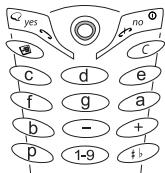
text_image
yes no c d e f g a b - + p 1-9 #bTo use the piano
- Slide the volume key up to activate the piano.
- Use the joystick to move between the keys.
- Press YES to select a note.
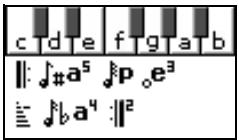
text_image
c d e f g a b ||: ♩#a⁵ ♪p 。e³ ≡ ⌘b a⁴ :||²See "Icons" on page 88.
Note: To send a ring
signal or melody in a text message, see “To insert an item in a text message” on page 49.
Receiving melodies
When you receive a sound or melody via IR, Bluetooth wireless technology or WAP, the message “Save sound?” appears. Press YES to save it in My sounds.
Make sure that the infrared ports are facing each other, or that the Bluetooth operation is set to Automatic.
- From standby, press and hold c and select Turn on silent or Turn off silent to turn the ring signal on or off. All signals except the alarm and timer signals are turned off.
Increasing ring
You can choose a ring signal that rises in steps from the lowest volume to the highest.
- Select Increasing ring from the Settings/Sounds & alerts menu to turn increasing ring On or Off.
Specific ring signals for personal calls
If you subscribe to the Two Line Service, you can set different ring signals for the two voice lines. Line 1 and Line 2 are displayed instead of Voice calls. If your SIM subscription supports fax and data calls, you can set different ring signals for voice, fax and data calls respectively.
If your subscription includes the Calling Line Identification (CLI) service, you can assign a Personal ring signal to up to ten callers.

To set a specific ring signal for a caller
- Scroll to Settings, YES, Sounds & alerts, YES, Ring signals, YES, Personal rings, YES, Add new?, YES.
- Enter the first letter of the contact name, YES.
- Select a contact, YES.
- Select a ring signal, YES.
Sounds & alerts
You can choose to be notified of an incoming call by the buzzing of the vibrating alert. You can set the phone's vibrating alert to one of the following:
- On (all the time)
- On if silent (on when the ring volume is turned off or when you have set the phone to silent)
- Off (all the time)
To set the vibrating alert
- Scroll to Settings, YES, Sounds & alerts, YES, Vibrating alert, YES.
- Select the setting you want, YES.
From the Settings/Sounds & alerts menu, you can also select Message alert, Key sound and turn on the Minute minder.
If you turn on the minute minder, you hear a beep once every minute during a call.
Menu language
Most SIM cards automatically set the menu language to the language of the country where you bought your SIM card. If this is not the case, the preset language is English.
To change the menu language
- Scroll to Settings, YES, Language, YES, Menus, YES.
- Select a language, YES.
Note: You can always choose Automatic by pressing
← 8888 → in standby.
You can always choose English by pressing 0000
→ in standby.
Delete languages that you do not intend to use to free memory in you phone. You can not undo the deletion.
- Select Delete language from the Settings/Language menu, then select the languages you want to delete, YES.
Display light
The display light can be set to automatic, off or on. In automatic mode, the display light is turned off a few seconds after you press the last key.
- Select Light from the Settings/Display menu, and then select the setting you want.
Time settings
The time is always displayed in standby mode.
- To set the time, scroll to Settings/Time and date/Local time.
You can choose a 12-hour clock or a 24-hour clock.
- Select Time format from the Settings/Time and date menu, then select the time format you want.
If you select the 12-hour clock, you can alternate between am and pm by pressing # .
Date
When the phone is in standby mode, you can slide the volume key up or down to see today's date in the Status menu. You can set the date and date format in the Settings/Time and date menu.
- Select Set date from the Settings/Time and date menu to set the date.
Advanced time settings
Under Advanced in the Settings/Time and date menu, you can set time zone and daylight saving time. Changing these, changes the time accordingly and thus also the appointments and tasks in your calendar.
When your phone changes network, and the time sent out from the operator deviates from the time in

your phone, you are asked whether you want to update the time if you have turned on Automatic time zone. If you press YES, the time is updated automatically.
Answering mode
When using a portable handsfree kit, you can choose to answer a call by pressing any key (except the NO key) or set the phone to answer the call automatically.
- To select answering mode, scroll to Settings/Handsfree/Answering mode.
User greeting
When you turn your phone on or off, the Ericsson greeting appears in the display. Your operator's own greeting may be shown instead.
If you want to interrupt the greeting, press NO.
To select a greeting
- Scroll to Settings, YES, Display, YES, User greeting, YES.
- Select a greeting, YES.
- To turn the user greeting melody on or off, select Animationsound.
My animation
You can create or download your own greetings and animations (provided you have a PC). You can do this by downloading freeware from the Internet (http://mobileinternet.ericsson.com) via a cable or IR. You can also compose or download a melody and set this as your start up melody.
- Select My Animation from the Settings/Display/User greeting menu and then select the set-up you want.
Phone number display
You can check your own phone number(s).
- Select My numbers from the Settings/Display menu. If your number is not saved on your SIM card, you can enter it yourself.
Keypad lock
You can lock the keypad to avoid dialling a number by accident.
Note: Calls to the international emergency number 112 can still be made, even when the keypad is locked.
Automatic keylock
Automatic keylock means the keypad is locked 25 seconds after you last press a key.
- Select Auto keylock from the Settings/Locks menu to turn automatic keylock On or Off.
- Press and hold c and select Turn on keylock to lock the keypad manually.
The keypad remains locked until you answer an incoming call or until you unlock the keypad manually.
- Unlock the keypad by pressing and holding c and then selecting Turn off keylock?, YES.
My shortcuts
You can place your favourite functions that you want to reach quickly and easily in the My shortcuts menu.
To add a function to my shortcuts
- Scroll to My shortcuts, YES, Edit shortcuts, YES.
- Select a function from the list by pressing
- Enter the position number you want for this function in your menu and press YES.
- Press YES to exit the list.
Profiles
Your phone has a number of pre-set profiles which are set to suit a certain environment. You can add accessories to, rename or change these profiles. For example, when you go to a meeting, you can simply choose the Meeting profile and a number of settings such as the ring signal is turned off.
- Select Select profile from the Settings/Profiles menu to select a profile.
To change a profile setting
- Scroll to Settings, YES, Profiles, YES, Edit Profile, YES.
- Select a setting, YES.
- Change the profile settings and press YES to confirm.
- Select Profile name from the Settings/Profiles menu to rename a profile.
You can reset all profile settings to the way they were set when you bought your phone.
- Select Reset profiles from the Settings/Profiles menu.
Automatic activation
Some profiles, for example In Car, are automatically activated when used with a specific accessory. When disconnected, the profile is changed back.
Calling
Before you can make or receive any calls, you must turn on the phone and be within range of a network. See “Making and receiving calls” on page 5.
Making calls
- Enter the area code and the phone number.
- Press YES to make the call.
- Press NO to end the call.
Tip: You can call numbers from the call list and the phone book. See “Call list” on page 25 and “Phone Book” on page 26. You can also use your voice to make calls. See “Voice control” on page 30.
To change the earpiece volume during a call
- Slide the volume key on the side of the phone up or down to increase or decrease the earpiece volume during a call.
To turn off the microphone during a call
- Press and hold until the display shows Muted. Press and hold again to resume the conversation.
Automatic re-dialling
If the connection of the call failed and the display shows Retry?, press YES. The phone re-dials the number (up to ten times):
• until the call is connected.
• until you press a key or receive a call.
Note: Do not hold the phone to your ear while waiting. When the call is connected, the phone gives a loud signal.
Automatic re-dialling is not available for fax and data calls.
Making international calls
- Press and hold until a + sign appears in the display.
The + replaces the international prefix number of the country from which you are calling. - Enter the country, area code (without the leading zero) and phone number, YES.
Making emergency calls
- Enter 112 (the international emergency number), YES. Your Ericsson phone supports the international emergency numbers, 112, 911 and 08. This means that
these numbers can normally be used to make an emergency call in any country, with or without a SIM card inserted, if a GSM network is within range.
Note: Some network operators may require that a SIM card is inserted, and in some cases that the PIN has been entered as well.
In some countries, other emergency numbers may also be promoted. Your operator may therefore have saved additional local emergency numbers on the SIM card.
To view your local emergency numbers
- Scroll to Phone book, YES, Special numbers, YES, SOS numbers, YES.
Receiving calls
When you receive a call, the phone rings and the display shows Answer?.
If your subscription includes the Calling Line Identification service and the caller's number is identified, the number is displayed. If you have saved the number in the phone book, the name is displayed. If you have assigned a picture to a contact, the picture is displayed. If the number is a restricted number, the display shows Withheld.
To answer a call
- Press YES.
To reject a call
- Press NO.
Tip: You can also use your voice to answer or reject calls. See “Voice control” on page 30.
Missed calls
If you have missed a call, Missed calls:1 appears in standby mode, indicating the number of missed calls.
To check your missed calls
-
Press YES to display the missed calls.
-
To call a number from the list, scroll to the number, YES.
Call list
The numbers of the last calls that you have made are saved in the call list. If your subscription includes the Calling Line Identification service and the caller's
number is identified, you will also find the numbers of answered and missed calls in the call list.
To call a number from the call list
- To enter the call list, press YES from standby.
- Scroll to the number you want to call, YES.
- To clear the Call list, scroll to Call info, YES, Options, YES, Clear call list, YES.
- To turn the call list on or off, scroll to Call info, YES, Options, YES, Call listing, YES.
Call priority service
You can request a certain priority when you make a call, if your subscription supports the call priority service.

The priority levels are defined by your operator and are normally within the range of 0 - 4, where 0 is the highest priority.
To check or change your standard priority level
- Scroll to Call info, YES, Manage calls, YES, Default priority, YES.
- The network sends available priority levels.
- Select a priority level, YES.
To change the priority for one call
- Enter the phone number you want to call.
- Scroll to Call info, YES, Next call, YES, Call priority, YES.
- Select a priority, YES. The number is called.
Phone Book
In the Phone Book you can save all the information needed to contact people. You can also set how much information you want show for each contact.
- Select Contact info from the Phone book/Options menu to set the contact information.
To add a contact
- Scroll to Phone book, YES, Add contact, YES.
- Scroll to the field you want to fill in, press YES.
- Enter the information, YES.
- Select the next field and so on.
- When you have entered the information, scroll to Save and exit?, YES.
Pictures, personal rings and voice commands You can add a picture, personal ring signal and voice command to a contact.
To add a picture to a phone book contact
- Scroll to Phone book, YES, Pictures, YES.
- Enter the first letter of the contact, YES.
- When the contact is highlighted, press YES.
-
This takes you to My Pictures. Select a picture, YES.
-
Select Personal rings to add a personal ring signal.
- Select VoiceCommands to add a voice command.
To call a contact
- From standby, press and hold one of the number keys 2-9 to find a contact beginning with the first letter on that key (or closest following).
- For example, press and hold 5 to go to the first contact beginning with “J”. To go to a contact beginning with “L” press 5 twice after you have entered the list of contacts.
-
When the contact you want to call is highlighted, press YES.
-
Select the number you want to call, YES. If only one number is linked to the contact, press and hold YES at step 2.
Tip: You can also use the Call contact option in the Phone book menu to call a contact.
Updating the phone book
When needed, you can easily update or delete any contact information.
To edit a contact
- Scroll to Phone book, YES, Manage contact, YES, Edit contact, YES.
- Enter the first letter of the contact, YES.
- When the contact is highlighted, press YES.
- Select Edit info., YES.
- Scroll to the field you want to fill in, YES.
- Enter the information, YES.
- Select the next field and so on.
- When you have entered the information, scroll down to Save and exit?, YES.
- Select Delete contact from the Phone book/Manage contact menu. Then select the contact and press YES twice.
- Select Delete all from the Phone book/Advanced menu to delete all contacts.
Note: Contacts that are saved on the SIM card are not deleted.
Default (standard) number
Each contact has a default phone number. The first phone number you link to a contact automatically becomes the default number. If you scroll to a certain contact in the phone book and then press and hold YES, the default number is dialled.
To set the default number
- Scroll to Phone book, YES, Manage contact, YES, Edit contact, YES.
- Enter the first letter of the contact, YES.
- When the contact is highlighted, press YES.
- Select Default number, YES. Select the number you want as default, YES.
Groups
You can create a group of contacts. By doing so you can send text messages to several recipients at the same time. See “Sending text messages” on page 49.
To create a group of contacts
- Scroll to Phone book, YES, Manage contact, YES, Groups, YES, Add group, YES.
- Enter a name for the group, YES.
-
Select Add member, YES.
-
Enter the first letters of the contact you want to add, press YES.
- Press YES to select the contact.
- Select a phone number, press YES.
- Repeat steps 3-5 to add more members.
Business cards
You can add your own business card to the phone book.
- Select My card from the Phone book/Manage contact menu. Then select Add to add your own business card.
Exchanging business cards
You can exchange business cards between your phone and another similar phone, a PDA or a PC, using Bluetooth wireless technology, the infrared port or a text message.
To send your business card
- Scroll to Phone book, YES, Manage contact, YES, My card, YES, Send, YES.
- Select a transfer method, YES.
Make sure that the infrared ports are facing each other, or that the Bluetooth operation is set to Automatic or On.
When you receive a business card via a text message, you accept the card by pressing YES. To be able to receive a business card using the infrared port or Bluetooth wireless technology, you need to select the Receive menu in order to activate the infrared port or to make the phone discoverable.
To receive a business card
- If receiving via the infrared port: from standby, press and scroll to Receive, YES, Via IR, YES. The infrared port is on for 10 minutes.
If receiving via Bluetooth wireless technology: from standby, press 📄 and scroll to Receive, YES, Via Bluetooth, YES. The Bluetooth function is on for three minutes. - When you receive the business card, press YES.
- Press YES again to save the card in the phone book.
- Reply with own business card? appears. Press YES if you want to reply.

To send a contact
- Scroll to Phone book, YES, Manage contact, YES, Send contact, YES,
-
Enter the first letters of the contact you want to send, YES.
-
Press YES to select the contact.
-
Select transfer method, YES.
Make sure that the infrared ports are facing each other, or that the Bluetooth operation is set to Automatic or On.
- Select Send all from the Phone book/Advanced menu and select a transfer method.
Copy contacts
You can copy the contacts between your phone's memory and the SIM card. The number of contacts that can be saved depends on the type of SIM card.
- Select Copy all to SIM from the Phone book/Advanced menu to copy contacts to the SIM card.
If you insert a SIM card with saved contacts in your phone, you can call a contact by selecting Call from SIM in the Phone book menu. If you want to edit a contact saved on the SIM card, you first need to copy the contact to the phone.
- Select Copy from SIM from the Phone book/Advanced menu to copy contacts to the phone.
Tip: When you have selected a contact on the SIM card, you can copy it to the phone by pressing and then selecting Copy from SIM.
Speed dialling
You can save the phone numbers that you want to reach easily in positions 1-9 on your SIM card.
To call any of these phone numbers from standby:
- Enter the position number and press YES.
To change position numbers
- Scroll to Phone book, YES, Advanced, YES, Position list, YES.
- Select the phone number you want to move, YES.
- Select the position to which you want to move the phone number, press YES.
- When you have finished press NO. When prompted, press YES to confirm your changes.
Checking the memory
With the Memory status function in your phone book, you can check how many positions you have left in your memory.
To check the phone book memory
- Scroll to Phone book, YES, Advanced, YES, Memory status, YES.
Voice control
With your phone, you can:
- Voice dial – call someone by saying the phone number or the name and number type.
- Answer and reject calls with your voice when using a handsfree kit.
- Change profile with your voice.
- Record or listen to sound recordings by using voice commands.
- Activate the voice control by saying a “magic word”.
You can save up to 100 voice commands. When recording voice commands, make sure you are in a quiet environment.
Before voice dialling
You must first turn on the number and name dialling functions and record your voice commands.
To turn the number dialling on and record digits and commands
- Scroll to Settings, YES, Voice control, YES, Number dialling, YES.
- Select On, YES. Now you are going to record a voice command for each digit (0-9) and command (for example “dial”) that you need.
- Instructions appear. Press YES.
- Lift the phone to your ear, wait for the tone and say the digit or command that you want to record. The voice command is played back to you.
- If the recording is OK, press YES to save the voice command. If not, press NO and repeat step 4.
- Repeat steps 4 and 5 for each voice command you need.
To turn name dialling on and record number types
- Scroll to Settings, YES, Voice control, YES, Name dialling, YES.
- Select On, YES. Now you are going to record a voice command for each number type you use with your phone book contacts, for example, “home” or “mobile”.
- Instructions appear. Press YES.
-
Select a number type, YES.
-
Follow the instructions in steps 4, 5 and 6 above.
You also need to record voice commands for each contact name, for example, “John”.
To record a voice command for a contact name
- Scroll to Settings, YES, Voice control, YES, Name dialling, YES, Edit names, YES, Add voice, YES.
- Select a contact, YES.
- Follow the instructions in the display.
An icon appears next to a contact name which has a voice command.
Caller name
You can choose whether you want to hear the recorded contact name when you receive an incoming call from that contact.
- Select Caller name from the Settings/Voice control to turn the caller name On or Off.
Voice dialling
You can voice dial by saying the name or number of the contact.
To make a call
- From standby, press and hold YES until you hear a tone.
If number dialling:
- Release YES, lift the phone to your ear and say "dial". The command is played back to you.
- Say the phone number, digit by digit, and end the phone number by saying “yes”.
The phone number is played back to you, and the call is connected.
If name dialling:
- Release YES, lift the phone to your ear and say a name, for example "John". The name is played back to you.
- If you have several numbers for that contact, after a second tone, say the number type, for example, "home".
The number type is played back to you, and the call is connected.
From standby, you can also initiate voice dialling, voice profiles and voice control of sound recordings by:
- Sliding and holding the volume key.
- Pressing the handsfree button (when using a portable handsfree or a Bluetooth headset).
- Saying the magic word. See “The magic word” on page 34.
Voice answering
You can answer or reject incoming calls by using your voice, when using a portable handsfree or a car handsfree kit.
To turn on voice answering and record voice answer commands
- Scroll to Settings, YES, Voice control, YES, Voice answer, YES.
- Select On, YES.
- Select the accessories you want to be able to use with voice answering by pressing ⓐ, YES.
- Instructions appear. Press YES.
- Lift the phone to your ear, wait for the tone and say "Answer", or another word. If the recording is OK, press YES. If not, press NO and repeat step 5.
- Say "Busy", or another word. Press YES.
To answer a call using voice commands
- When the phone rings, say “Answer”.
The call is connected.
To reject a call using voice commands
- When the phone rings, say “Busy”. The call is rejected. The caller hears a busy tone.
Changing profiles
If you record voice commands for your profiles, you can change profile with your voice.
To turn on and record profile commands
- Scroll to Settings, YES, Voice control, YES, Voice profiles, YES.
- Select On, YES.
- Instructions appear. Press YES.
- Select a profile, YES.
- Lift the phone to your ear, wait for the tone and say the profile name. Repeat steps 4 and 5 to record voice commands for the other profiles.
To change a profile using voice commands
- From standby, press and hold YES until you hear a tone.
- Release YES, lift the phone to your ear and say the profile command for the required profile. The profile
command is played back to you and the current profile is changed.
Sound recordings
Instead of using the menus, you can record voice commands to start or to listen to a recording.
To turn on and record recording commands
- Scroll to Settings, YES, Voice control, YES, Sound recorder, YES.
- Select On, YES.
- Instructions appear. Press YES.
- Lift the phone to your ear, wait for the tone and say "Record", then press YES.
- Say "Play", press YES.
To start a recording using a voice command
- From standby, press and hold YES until you hear a tone.
- Release YES, lift the phone to your ear and say "Record". The voice command is played back to you and a tone indicates that the recording has begun.
- To end the recording, press YES.
To listen to recordings using a voice command
-
From standby, press and hold YES until you hear a tone.
-
Release YES, lift the phone to your ear and say "Play". The voice command is played back to you.
-
Listen to your recordings. Press NO to stop.
The magic word
You can record a magic word and use it as a voice command to allow totally handsfree access to voice control. Instead of pressing and holding YES, you say the magic word and then one of your recorded voice commands. The magic word is especially suitable when using a car handsfree kit.
Tip: Choose a long, unusual word which can easily be distinguished from ordinary background speech.
To turn on and record the magic word
- Scroll to Settings, YES, Voice control, YES, Magic word, YES.
- Select the accessories you want to be able to use with the magic word by pressing Ⓥ, YES.
- Instructions appear. Press YES.
- Lift the phone to your ear, wait for the tone and say the magic word.
Tip: Turn off the magic word when you no longer need totally handsfree access, in order to save battery power.
Editing your voice commands
You can keep all your voice commands up to date by re-recording them or deleting the ones you do not use.
To re-record a voice command
- Scroll to Settings, YES, Voice control, YES, Voice profiles, YES, Edit commands, YES.
- Select a voice command, YES.
- Select Replace voice, YES.
To listen to a recorded voice command, select Play voice.
- Lift the phone to your ear, wait for the tone and say the command.
You can also edit the voice command for a contact name in Edit contact in the Phone book menu.
Tips when recording
If your phone cannot detect speech, one of the following might have happened:
- You spoke too softly – try speaking more loudly.
- You held the phone too far away – hold it as you do during a call.
- The voice command was too short – it should be around one second long and more than one syllable.
- You spoke too late or too soon – speak immediately after the tone.
- You did not record the voice command when the handsfree was attached – for voice control with a handsfree kit, record when the handsfree is attached.
- You used another intonation – use the same intonation as you did when recording the voice command.
Voice mail
If your subscription includes an answering service, callers can leave a voice mail message when you cannot answer a call.

Receiving a voice mail message
Depending on your network operator, you are informed that someone has left a message by a text message (SMS) or by a voice mail indication. Press YES to listen to the message.
Calling your voice mail service
You can easily call your voice mail service by pressing and holding 1, if you have saved your voice mail number in the phone. You get the number from your service provider.
- Select Voice mail no. from the Messages/Options menu and enter the number.
Call time and cost
During a call, the duration of the call is shown in the display. If you subscribe to cost information, the call cost (or the number of call units) is displayed.

You can check the duration of your last call, outgoing calls and the total time.
- Select Call info from the Time & cost/Call timers menu and select an option to check the call time. To reset the call time meter, select Reset timers.
You can check the cost of your last call and the total cost of your calls.
- Select Call info from the Time & cost/Call costs menu and select an option to check the call cost. To reset the call cost meter, select Clear total cost.
Note: If you subscribe to cost information, you must enter your PIN2 to clear the cost or time counter.
Setting the call cost
You can use the Tariff function to specify the price per call unit. If you do not specify a price per call unit, the number of call units is displayed.
To enter the price per call unit
- Scroll to Call info, YES, Time & cost, YES, Call costs, YES, Set tariff, YES.
- Enter your PIN2, YES.
- Select Change tariff, YES.
-
Enter the code for the currency you want, (for example GBP for Pounds Sterling), YES.
-
Enter the price per call unit, YES. To enter a decimal point, press (*◇).
Credit limit for calls
You can enter a total amount of money that can be used for making calls. When the amount reaches zero, no more calls can be made. Please note that the credit limit is only an estimated value.

To set a credit limit
- Scroll to Call info, YES, Time & cost, YES, Call costs, YES, Set credit, YES.
- Enter your PIN2, YES.
- Select Change credit, YES.
- Enter an amount, YES.
Diverting calls
If you cannot answer incoming voice, fax or data calls, you can divert them to another number, for example your answering service.

For voice calls, you can choose between the following divert alternatives:
- Divert always - divert all voice calls.
- When busy - divert calls if you are already on the phone.
- Not reachable - divert calls if your phone is turned off or if you are unreachable.
- No reply - divert calls that you do not answer within a specified time limit (operator-dependent).
Note: When the Restrict calls function is on, some Divert calls options cannot be activated.
To turn on a call divert
- Scroll to Call info, YES, Manage calls, YES, Divert calls, YES.
- Select a call category and then a divert alternative, YES.
- Select Activate, YES.
- Enter the phone number to which you want your calls to be diverted and press YES, or retrieve it from the phone book.
To turn off a call divert, select a divert option and select Cancel.
To check status
- Scroll to Call info, YES, Manage calls, YES, Divert calls, YES. Select a call type, YES. Scroll to the divert you want to check, YES. Select Get status, YES.
- To check the status of all call diverts, select Check all in the Divert calls menu.
More than one call
You can handle more than one call simultaneously. For example, you can put an ongoing call on hold, while you make or answer a second call, and then switch between the two calls.

Note: During a call the Ongoing call menu replaces the Call info menu.
Call waiting service
If the call waiting service is activated, you hear a beep in the earpiece if you receive a second call during an ongoing call.
- Select Call waiting from the Call info/Manage calls menu and select Activate or Cancel.
To make a second call
- Press YES to put the ongoing call on hold.
- Enter the number you want to call and press YES, or retrieve a number from the phone book.
Note: You can only put one call on hold.
You can also reach the different options described below by pressing 📄.
Receiving a second call
- Press YES to answer the second call and put the ongoing call on hold.
- Select Busy to reject the second call and continue the ongoing call.
- Select Release&answer to answer the second call and to end the ongoing call.
Handling two calls
When you have one ongoing call and one call on hold, you can do the following:
- Press YES to switch between the two calls.
- Press 📄, then select Join calls to join the two calls into a conference call.
- Press 📄, then select Transfer call, to connect the two calls. You are disconnected from both calls.
- Press NO to end the ongoing call, then press YES to retrieve the held call.
- Press NO twice to end both calls.
Note: You cannot answer a third call without ending one of the first two calls.
Conference calls
In a conference call, you can have a joint conversation with up to five other people. You can also put a conference on hold and make another call.

Creating a conference call
To create a conference call, you must first have one ongoing call and one call on hold.
To join the two calls into a conference call
- Scroll to Ongoing call, YES, Join calls, YES.
To add a new participant
- Press YES to put the conference call on hold.
- Call the next person you wish to include in the conference call.
- Press 📄, select Join calls, YES.
Repeat steps 1 to 3 to include more participants.
To release a participant
- Press ☐, select Release part, YES.
- Select the participant, YES.
To end the conference call
- Press NO.
Having a private conversation
You can have a private conversation with one of the participants and put the other participants on hold.
- Press 📄, then select Extract part to select the participant that you want to talk with.
- Select Join calls to resume the conference call, again.
Two voice lines
Your phone may have two voice lines with different phone numbers. This may be useful if, for example, you want to keep business calls and private calls on separate lines.
- Select Next call from the Call info menu and select a line.
All outgoing calls are made on this line until you change it. Incoming calls can still be received on either line.
You can change the names of the lines, and have different settings for each line, for example, different ring signals.
- To change the name of a line, scroll to Settings, YES, Display, YES, Edit line tag, YES.
Calling card calls
You can use the calling card service to redirect the cost of a call to a credit card or a calling card account, instead of your normal


account. This may be useful, for example, when making long distance calls.
You can save two separate calling card numbers. The numbers and the codes associated with them are protected by the phone lock code.
Before making a calling card call, you need to select and activate a card.
Note: You cannot use the calling card service for fax and data calls.
To turn the calling card service on or off
- Scroll to Call info, YES, Time & cost, YES, Calling cards, YES, Use callingcards, YES.
- Enter your Phone Lock code, YES.
- Select On or Off, YES.
To save a card number
- Scroll to Call info, YES, Time & cost, YES, Calling cards, YES, My cards, YES.
- Enter your phone lock code, YES.
- Select Add new?, YES.
Enter the card settings (the access number and name of the calling card server, and the verification code). You get this information from your card provider. Select
which you want to send first – the number that you want to call, or the verification code. Press YES to confirm your choice.
To select a card
- Scroll to Call info, YES, Time & cost, YES, Calling cards, YES, My cards, YES.
- Enter your phone lock code, YES.
- Select a card, YES
- Select Activate card, YES.
To make a calling card call
- Enter the phone number of the person you want to call, or retrieve the number from the phone book.
- Press and hold YES.
The access number of the calling card server is called. During the connecting phase, you are asked to send the phone number you want to call and the verification code. - Press YES when the display shows Send called number?, or wait a few seconds and the number and code are sent automatically.
Restricted dialling
You can use the restrict calls service to restrict outgoing and incoming calls. This may be useful, for example, when you are abroad. To use this service, you need a password which y from your service provider.

Note: If you divert incoming calls, you cannot activate some Restrict calls options.
The following calls can be restricted:
- All outgoing calls, All outgoing.
- All outgoing international calls, Outgoing intl.
- All outgoing international calls except to your home country, Outg intl roam.
- All incoming calls, All incoming.
- All incoming calls when you are abroad (when roaming), Inc when roam.
To turn a call restriction on or off
- Scroll to Call info, YES, Manage calls, YES, Restrict calls, YES.
- Select an option, YES.
- Select Activate or Cancel, YES.
- Enter your password, YES.
• To turn off all call restrictions, select Cancel All.
• To change the password, select Change passwd.
Fixed dialling
The fixed dialling function allows calls to be made only to certain numbers saved on the SIM card. Fixed dialling requires a SIM card that allows fixed numbers to be saved. The fixed numbers are protected by your PIN2.

Note: Calls to the international emergency number 112 can still be made, even when the fixed dialling function is on.
- Partial numbers can be saved. For example, saving 0123456 allows calls to be made to all numbers starting with 0123456.
- Numbers with question marks can be saved. For example, saving 01234567?0, allows calls to be made to numbers from 0123456700 to 0123456790.
To enter a question mark, press and hold # .
To turn fixed dialling on or off
-
Scroll to Phone book, YES, Options, YES, Fixed dialling, YES.
-
Enter your PIN2, YES.
- Select On or Off, YES.
To save a fixed number
- Scroll to Phone book, YES, Special numbers, YES, Fixed numbers, YES. Select Add new?, YES. Enter the number.
Closed user groups
The Closed User Group function is a way of lowering call costs. On some networks it is cheaper to make calls within a call group. You can save ten groups.
To add a group
- Scroll to Call info, YES, Manage calls, YES, Closed groups, YES, Edit list, YES.
- Scroll to Add new?, YES.
- Enter the name of the user group, YES.
- Enter the index number, YES. You get the index number from your operator.
To activate a group
- Scroll to Call info, YES, Manage calls, YES, Closed groups, YES, Edit list, YES.
- Select a group, YES.
- Select Activate, YES.
Calls can only be made within the selected group.
- To call outside a Closed User Group, select Open calls and then select On.
Accept calls
With the accept calls service, you can choose to receive calls only from certain numbers. Other calls are automatically rejected by a busy tone. The phone numbers of calls you have rejected are saved in the Call List.
To add numbers to the accepted callers list
- Scroll to Call info, YES, Manage calls, YES, Accept calls, YES, Accepted list, YES.
- Scroll to Add new?, YES.
This takes you to the phone book. - Select an entry, YES.
- Select Accept options from the Call info/Manage calls/Accept calls menu and select an option.
Networks
When you turn on the phone, it automatically selects your home network if this is within

range. If it is not within range, you may use another network, provided your network operator has an agreement that allows you to do so. This is called roaming.
You can select the network you want to use, or you can add a network to your list of preferred networks. You can also change the order in which networks are selected during an automatic search. For all such options, scroll to Connect, YES, Networks, YES.
Additional calling functions
Tone signals
You can use telephone banking services or control an answering machine by sending tone signals (also known as DTMF tones or touch tones) during a call.

- To send the tones, press the number keys 0-9, and # .
- To clear the display after the call is finished, press NO.
Notepad
You can use the phone to make a note of a phone number during a call. When you press the number
keys, the person you are talking to hears tone signals. To turn these tone signals off during the call, press
(1), select Turn off tones, YES. When you end the call, the number remains in the display. You can then call the number by pressing YES.
Showing or hiding your number
If your subscription supports the Calling Line Identification Restriction (CLIR) service, you can hide your phone number when making a call.

To show or hide your phone number
- Enter the phone number you want to call.
- Scroll to Call info, YES, Next call, YES.
- Select Hide my number or Show my numb. and press YES to make the call.
Setting up mobile Internet
In order to use the Internet, browse via WAP services or send and receive e-mail messages, you must have a phone subscription that supports data transmission and settings entered.

Note: Settings may already be entered when you buy your phone, or you can receive settings from your network operator or service provider. Settings are also available at http://mobileinternet.ericsson.com.
Receiving settings in a text message
Your GSM network operator or Internet service provider may be able to send the required data account, WAP and e-mail settings direct to your phone in a text message (SMS).
To request settings from Ericsson Mobile Internet 1. Use a PC to go http://mobileinternet.ericsson.com. By using the WAP and E-mail Configurator you can request that a text message be sent to your phone with the settings you need.
-
When the message arrives, New settings. Install? appears.
-
Press YES to install the new settings or
Note: If settings already exist in your phone you can either keep or replace them. See “Advanced setting information” on page 44 for more information. -
Press NO to cancel installation. A new request for settings is then required, as in step 1.
-
After installation, see "Using mobile Internet" on page 57.
Set up with the wizard
If your phone is not set up for WAP, you can ask your network operator or service provider to provide you with WAP settings information. Then you can simply use the wizard in your phone to help guide you through the relevant settings.
To use the wizard for setting up WAP
- Scroll to WAP services, YES, homepage (for example Mobile Internet), YES. The wizard now starts if no WAP settings exist.
- Enter and save settings when asked, press YES to confirm.
Advanced setting information
Mobile Internet, including WAP and e-mail, requires the following settings:
- Data account, settings for access to a server for WAP browsing and e-mail messaging.
- WAP profile, settings for WAP browsing.
• E-mail account, settings for e-mail messaging.
Data account settings
You can have several data accounts saved in your phone, with different settings for different purposes. The main setting for a data account is the Access type: (connection method).
Note: Please contact your network operator for charging details.
You can choose from GPRS and GSM or GSM only access types.
GPRS (General Packet Radio Service) allows fast and efficient access where you can always be online.


Note: You need a subscription that supports GPRS.
GPRS settings that are are available:
- APN : (Access point name address) – the address of the external data network you want to connect to, either an IP address or a text string.
- User id: – your user id to log on to the external data network.
- Password: – your password to log on to the external data network.
- Passwd request (Password request) – if this setting is on, you are asked for a password each time you log on to the external data network.
- Pref. service (Preferred service) – if you want to be able to accept incoming calls during a GPRS session, select Automatic. If not, select GPRS only.
- IP address: – the IP address that the phone uses when communicating with the network. If you do not enter an address, the network provides you with a temporary IP address.
- Advan. settings (Advanced settings) – these are optional. Consult your network operator.
GSM settings include some settings that are similar to GPRS settings and some which are GSM specific as follows:

- Phone no: – the phone number of your Internet service provider.
- Data rate – select the speed you want for the connection.
- Dial type – select analogue or ISDN connection.
Note: If you want to change access type, you have to create a new data account and select the access type you want to use.
To create a data account manually
- Scroll to Settings, YES, Data comm., YES, Data accounts, YES, Add account?, YES.
- Enter a name for the data account.
- Select an access type.
- Enter the settings that you have received from your network operator or service provider. Confirm each setting by pressing YES.
- Scroll to Save?, YES.
To edit a data account
- Scroll to Settings, YES, Data comm., YES, Data accounts, YES.
- Select a data account, YES.
-
Select Edit.
-
Select the setting you want to edit, YES. Edit the setting, YES.
- Repeat step 4 for other settings you want to edit.
Preferred service
If you have selected GPRS and GSM as the access type, the Preferred service should be set to Automatic. An icon may then appear in the display telling you that GPRS is within range. See “Icons” on page 88. If you have selected GSM data as the access type, you should select GSM only as the preferred mode. This setting is valid for all data accounts.
- Select Pref. service from the Settings/Data comm. menu and select Automatic or GSM only.
Note: To see the status of GPRS coverage and connection, slide the volume key up or down from standby to enter the Status menu and then scroll to GPRS.
WAP profile settings
The WAP settings are stored in a WAP profile. In most cases you only need to use one profile to access the Internet.
You set up and use additional WAP profiles, for example, when accessing secure Internet sites, such as a banking site or a corporate intranet. You then simply switch between profiles when you need to change the network connection.
To enter WAP profile settings manually
- Make sure you have a data account set up between your phone and the Internet server, as described in "Data account settings" on page 44.
- Scroll to WAP services, YES, Options, YES, WAP profiles, YES.
-
Select Add profile? to add a new profile or select an existing profile that you want to edit, YES.
-
When selecting Add profile? enter a name for the profile, YES, Connect using:, YES, select the data account to be used, YES and enter the IP address:, YES. A list appears in the display.
-
When selecting an existing profile, you can Edit, Rename or Delete.
-
Select Edit and press YES.
-
You can now do the following:
-
Chg homepage. Enter the address of the WAP site you want as the homepage.
-
Connect using. Select data account.
-
IP address. WAP gateway server address.
- User id. Enter your user id for the WAP gateway.
- Password. Enter your password for the WAP gateway.
• Data mode. Select a data connection mode.
• Security. See WAP security settings.
• Show pictures. View pictures while browsing. - Response timer. Set a time limit in seconds after which a download attempt will stop.
Note: An IP address consists of four groups of digits, with a maximum of three in each group. If one of your digit groups consists of only one or two digits, you have to enter a leading zero (0) for each digit that is missing. Example: If the IP address is 123.4.67.901, write 123.004.067.901.
WAP security settings
To establish secure connections when using certain WAP services, you need to have certificates saved in your phone. Your phone may already contain certificates when you buy it. You can also download certificates from certain WAP sites, or receive them from a service provider.
To turn on a secure connection
- Scroll to WAP services, YES, Options, YES, WAP profiles, YES.
- Select the profile you want to edit.
- Select Edit, YES, Security, YES.
- Select Security, YES.
To check the certificates in your phone
- Scroll to WAP services, YES, Options, YES, Common, YES, Security, YES.
- Select Trusted certif. or Client certif.
Locks (PIN codes)
PIN codes protect your subscription from unauthorized use, when accessing certain WAP sites, and to authorize transactions. Your PIN code acts as a signature when you confirm a transaction.
Note: These codes are supplied by your network operator or service provider if supported.

A Locks setting may appear in the Security submenu:
- Scroll to WAP services, YES, Options, YES, Common, YES, Security, YES, Locks, YES.
Transaction contracts
You can check which transactions you have made with your phone when browsing. A contract, which contains details about the transaction, can be saved in your phone.
- Select Contracts from the WAP services/Options/Common/Security menu to check your contracts.
E-mail account settings
An e-mail account specifies, for example, the server that is used for your e-mail messages.
To create an e-mail account
- Scroll to Messages, YES, E-mail, YES, Options, YES.
- Select Edit account, YES.
- Select Add account, YES.
- Enter a name for the account, for example Home or Office.
- Select Connect using, YES.
- A list appears with the data accounts that you have saved in your phone.
- Select the data account you want to use with this e-mail account, YES.
- Enter the rest of the settings in the list. You use the same e-mail settings in your phone as in your PC e-
mail program.
If you do not have an e-mail service, contact your operator to get all the necessary settings.
- Copy outgoing
Select Copy outg. to:, if you want e-mail messages sent from your phone also to be sent to an e-mail address of your choice. This way, your sent messages are copied and can be saved for future reference. - Check interval
Select how often you want the phone to connect to your e-mail server and check for incoming e-mail messages.
If you have both an office and a home e-mail account, you can set one of them as default:
- Select Set account from the Messages/E-mail/Options menu and select the account.
See “E-mail” on page 55 for information about how to use e-mail.
Messaging
Your phone supports various messaging services - text messages, chat messages, multimedia messages and e-mail. Please contact your service provider for details on which services you can use.

Text messages
Text messages can be sent to one person, or to a group of recipients that you have saved in the phone book (see “Groups” on page 28). Text messages can also contain pictures, animations, melodies and sounds.
Before you start
First make sure that the number of your service centre is set. The number is supplied by your service provider and is usually saved on the SIM card.
To set the service centre number
- Scroll to Messages, YES, SMS, YES, Options, YES, Service centres, YES.
If the service centre number is saved on the SIM card it appears in the display. -
If there is no number in the list, select Add new?, YES.
-
Enter the number, including the international “+” sign and country code, YES.
Sending text messages
For information about entering letters, see “Entering letters” on page 12.
To write and send a text message
- Scroll to Messages, YES, SMS, YES, Write new, YES.
- Write your message, YES.
- Enter the recipient's phone number or retrieve a number or a group from the phone book.
- Press YES to send the message.
Note: If you send a text message to a group, you are charged for each member of that group.
To insert an item in a text message
- Scroll to Messages, YES, SMS, YES, Write new, YES.
- While writing your message press 📄.
- Select Insert item, YES.
- Select Picture, Sound, Melody or Animation, YES.
- Select an item, YES. Then press YES again to confirm.
Text formatting
You can change the style, size and alignment of the text, and create new paragraphs, in a text message.
To format the text in a text message
- Scroll to Messages, YES, SMS, YES, Write new, YES.
- Write the text message. Highlight the text you want to format by sliding the volume key up while scrolling with the joystick.
- Press ☐.
- Select Text format, YES. Then select Text style, Text size, Alignment or New paragr., YES.
- Select a text format, YES.
Receiving text messages
When you receive a text message, the phone beeps and the message New message Read now? appears in the display. If you receive a text message from someone you have saved as a contact in your phone book, the name or picture associated with that contact appears in the display along with the text message. To add a picture to a phone book contact, see “To add a picture to a phone book contact” on page 27.
To read the text message
Press YES to read the text message, or NO if you want to read the message later. The message is saved in Inbox in the SMS menu. You may not receive all parts of a long message at the same time.
While reading the text message you can, for example, start a chat session with the sender or go to a WAP address found in the text message.
When you have read the text message, press YES to select one of the following options, for example, Reply, Forward or Delete the text message. Press NO to close the text message.
Saving incoming text messages
Incoming text messages are saved in the phone memory. When the phone memory is full, incoming text messages are saved on the SIM card. Messages that you have saved on the SIM card remain there until you delete them.
To save from a text message
When the e-mail address, phone number, WAP address, picture, animation or melody is highlighted, press YES. Then select to save the item and press YES.
- A picture or animation is saved in My Pictures.
• A melody is saved in My sounds. - An e-mail address or phone number is saved in Phone book.
• A WAP address is saved in Bookmarks.
Long messages
A text message can contain up to 160 characters. You can send a longer message by linking two or more messages. Please note that you are charged for the number of linked messages.
- To turn long messages on, select Long messages from the Messages/SMS/Options menu, then select On.
Templates
If you have one or more messages that you send often, you can save these as templates. Your service provider may also have saved some templates in your phone.
To create a template
- Scroll to Messages, YES, SMS, YES, Templates, YES, Add new?, YES.
- Write the message, YES.
- Press YES if you want to send the message now. Press NO to save the template.
Message options
You can set a default value for the message options below, or you can turn on the Set on send option which means that you choose the settings each time you send a message.
- Message type – The phone supports different types of messages. Your service provider may offer the facility of converting a text message into a format (e-mail or fax, for example) that suits the equipment that is going to receive the message.
- Validity Period – If your message cannot be delivered, for example, if the recipient has turned off the phone, your service centre can save the message to send it later.
- Reply Request – Include a reply request if you want the recipient of your message to reply.
- Status request – Check if a message has been delivered.
To set a default message option
- Scroll to Messages, YES, SMS, YES, Options, YES.
- Select an option, YES.
- Select Set default, YES.
- Select an option, YES.
To turn set on send on or off
- Repeat steps 1 and 2 above, then select Set on send, YES.
To request a status report
- Scroll to Messages, YES, SMS, YES, Sent items, YES.
- Select a message, press YES twice.
- Select Status request, YES.
To check the status of a sent message
- Scroll to Messages, YES, SMS, YES, Sent items, YES, select a text message, YES, View status, YES.
Mobile chat
The mobile chat function works in the same way as a chat on the Internet. You can choose a nickname that will appear in the recipient's display each time you send a chat message.
To enter a chat nickname
- Scroll to Messages, YES, Chat, YES.
- Select Nickname, YES.
- Enter your nickname (maximum of 6 characters), YES.
To start a chat session
- Scroll to Messages, YES, Chat, YES.
- Enter the recipient's phone number, or retrieve it from the phone book.
- Write your message, YES.
Receiving a chat session invitation
When you receive a chat session invitation, the phone beeps and the message Chat message Chat now? appears in the display.
• To read the chat message, press YES.
• Write your chat message reply and press YES.
• To suspend a chat session, press NO.
- To resume a chat session, scroll to Messages/Chat/Resume.
• To end a chat session, press and hold no.
If you receive a new chat message while another chat session is ongoing:
- Press YES to end the ongoing session and start the new one.
- Press NO to reject the new chat message and continue with the ongoing session. The rejected chat message is saved in Inbox in the Messages menu.
Area information
Area information is a type of text message that is sent to all subscribers in a certain network area, for example, a local traffic report. When you receive an area information message, the message automatically appears in the display. You cannot save area messages. Please consult your service provider for more information about area information codes.
- To turn area information on or off, scroll to Messages/Area info/Reception.
- To enter an area information code, scroll to Messages/Area info/Message list/Add new?.
Cell information
The cell information channel is used by some network operators to send messages to their subscribers within a certain network area.
- To turn on the channel, scroll to Messages/Area info/Cell information.
Multimedia Messages
Multimedia messages (MMS) can be sent to a mobile phone and e-mail account. A multimedia message can contain text, pictures and sounds. You can also send contacts, calendar entries, sound recordings and notes as attachments.
Before you start
Before sending a multimedia message, make sure that:
- The number to your service centre is set. See “To set the service centre number” on page 49.
- You have entered the WAP settings. See “Advanced setting information” on page 44.
Note: Your operator can automatically download all the settings you need.
To compose and send a multimedia message
- Scroll to Messages YES, MMS, YES, Write new, YES.
- Select Blank, YES.
- An icon appears, press YES to continue.
- Select from the sub menus, press YES.
- Enter the information you want to send, press YES. Press YES again to continue.
- Select Proceed, YES.
- Enter information as follows:
- To: phone number or e-mail address. These can be selected from the phone book.
- Subject: write a title, YES.
8. Select Send message, YES.
Tip: Instead of selecting Blank, you can base your message on one of the pre-defined templates.
You can edit the message before sending it:
• Text: Replace the existing text.
- Pictures: Replace an existing picture with an one from My Pictures, in the Fun & Games menu.
- Sound: Replace an existing sound with an alternative from My sounds, in the Fun & Games menu.
- Timing: Set how many seconds you want a page or an individual item to be displayed.
Send options
Before sending a multimedia message you can set different options.
- Select Options from the Messages/MMS menu and select the option that you want to edit.
Receiving multimedia messages
When you receive a multimedia message, the phone beeps and the message New message. appears in the display.
Note: Memory capacity is limited. You may have to delete old messages before you can receive new ones.
Automatic download options
From the Messages/MMS/Options/Auto download menu select one of the following:
- On. Your phone automatically downloads messages to your phone as soon as they come to your operator's server. This is default.
- Confirm. Press YES to download or NO to keep it on the server.
- Off. New messages appears in the inbox as icons. Select the message and press YES to download.
- Filter. Download messages depending on Sender, Size or Type.
To view a multimedia message
- Press YES. The message is automatically played.
- Press any key to stop.
When you have viewed a multimedia message you can use the joystick to scroll through the message again.
When a picture or sound is highlighted, press 📄 to save it in your phone.
When you have read the message, select Proceed to select one of the following options: Reply, Forward or Delete the message. Press NO to close the message.
Tip: Highlight the part and press ⓒ if you are not satisfied and want to delete a part while writing. You can also select a message from the list of messages and press ⓒ to delete the entire message.
You can use your phone to send and receive e-mail messages. Please note that you need a subscription that supports data transmission. For more information, consult your service provider.
Before you start
First make sure that you have:
- Set up a data account. See “Data account settings” on page 44.
- Set up and select an e-mail account. See “E-mail account settings” on page 48.
Sending and receiving e-mail messages
The Send & receive option offers the fastest way to send e-mail messages saved in the Outbox and check for new e-mail messages.
To write and send an e-mail message
- Scroll to Messages, YES, E-mail, YES, Compose, YES.
- Select:
- To: then add name, enter an e-mail address, or retrieve an e-mail address from the phone book. You can also retrieve a saved address from received messages in your inbox.
- Cc : If you want to send a copy of the message to someone.
• Priority: Set the message priority.
- Subject: Write a title, YES.
• Text: Write your message, YES.
-
Select one of the following:
-
Send now The e-mail message is sent.
- Send w. attach. You can attach a picture from My Pictures or from a digital camera connected via IR. Select a picture and press YES to send.
- Save to outbox: The e-mail message is saved in the Outbox.
- Send & receive in the E-mail menu. All e-mail messages in the Outbox are sent.
Messages that you write but do not send or save in the Outbox are automatically saved in the Drafts folder.
To receive and read e-mail messages
- Scroll to Messages, YES, E-mail, YES, Send & receive, YES.
- When the e-mail messages have been downloaded to the phone, go to the Inbox in the E-mail menu, to read them.
Note: The phone can save up to six complete e-mail messages. All e-mail messages are also saved on your e-mail server.
An arrow in the top or bottom left corner indicates that there are more messages on the server. To retrieve more messages, scroll to the arrow and press YES.
To reply to an e-mail message
- Open the e-mail message.
- Place the cursor in the text and press 📄.
-
Select Reply or Reply all, YES.
-
Select New message or to include the message you received, press YES.
- Write a message, YES.
To save an e-mail address or a phone number
- When the e-mail address or phone number is highlighted, press YES.
- Select Save, YES.
Archiving
You can archive an e-mail message in order to read it later, or if you want to save important information. You can archive only as much text as the display shows.
To archive an e-mail message
- Open the e-mail message.
- Make sure that the text you want to archive is visible in the display.
- Place the cursor in the text and press 📄.
- Select Copy to arch., YES. The text can be found in Archive under the E-mail menu.
Using mobile Internet

Your phone has a WAP (Wireless Application Protocol) browser and e-mail messaging which are designed to bring a modified Internet to your mobile phone. A wide range of services are available, for example, news, entertainment, timetables, reservations, banking, e-commerce, positioning and e-mail.
Before you start
First make sure that you have:
- A phone subscription that supports data transmission.
- Correct settings in your phone for mobile Internet, WAP and/or e-mail messaging. See “Setting up mobile Internet” on page 43.
Note: See “E-mail account settings” on page 48 or “E-mail” on page 55 for more information about e-mail set-up and messaging.
Using the WAP browser
To start browsing
- First select the WAP profile you want to use. Scroll to WAP services, YES, Select profile, YES.
- Press NO to go back to WAP services.
-
Then select one of the following:
-
Open your homepage (Ericsson Mobile Internet is default).
- Go to one of your bookmarks. Select Bookmarks, YES.
- Enter the address of a WAP site. Select Enter address, YES, New address? to enter a new WAP address or select one of the 10 latest entered addresses.
Tip: When you enter a WAP address, the normal http://prefix is not needed. You do however need to enter a prefix to use protocol, such as ftp:// or https://.
To exit WAP
- Press and hold no to exit and disconnect or
-
Press 📄, select Exit WAP, YES.
-
Press YES again to remain connected and go to standby, (or press NO to disconnect).
- Scroll to WAP services, YES, Resume to continue browsing again if still connected.
Options when browsing
When you have started browsing, you can reach different browsing options by pressing 📄.
The options menu is dynamic. Its content may vary depending on which WAP site you are visiting.
The options menu always contains the following:
- Go to the homepage set for the current WAP profile.
- Bookmarks. Add the site you are currently browsing to your list of bookmarks, or see the list of bookmarks for the current profile.
- Enter address. Enter the WAP address of a site you want to visit.
- Save pictures. Save a picture from the site.
- Send. Send a link to the current site to another phone via Bluetooth wireless technology or infrared.
- Send as link. Send a link to the current site in a text message.
- Reload. Refresh the contents of the WAP page.
- Exit WAP. Exit and go to standby or disconnect.
- Status. Display the current status, for example, how long you have been browsing.
- Set as homepg. Set the current site as the homepage of the WAP profile you are using.
Using bookmarks
You use bookmarks in your mobile phone just as you do with a PC Internet browser. You can have up to a maximum of 50 bookmarks.
To work with bookmarks
- Scroll to WAP services, YES.
-
Select the bookmark you want to work with, and press 📄.
-
Select one of the following options and press YES:
• Bookmarks. Go to the marked WAP site.
- Edit. Edit the name and/or the WAP address of the bookmark. See “Options when browsing” on page 58 for more information.
- Delete. Delete the bookmark.
WAP push messages
You can receive push messages via WAP Services. This means that a service provider sends WAP content to your phone without you having to do anything. You can, for example, get updated news or new WAP settings from your service provider.
There are two kinds of push messages:
- Text messages that inform you about WAP services, by sending a link. To go to the WAP service, click the link.
- Updated information from a WAP service is sent to appear in the WAP browser.
Receiving a push message
You can set your phone to either accept or reject push messages. This is valid for all your WAP profiles.
To set push message acceptance
- Scroll to WAP services, YES, Options, YES, Common, YES, Push access, YES.
- Select one of the following settings:
- On. You allow push messages.
- Prompt. You allow push messages but only when you confirm.
- Off. You do not allow push messages.
When you receive a push message, it comes to the Push inbox where you can respond to it.
To respond to a push message
- Scroll to WAP services, YES, Push inbox, YES and select one of the following:
- Postpone. Save the message, to be loaded later.
- Load. The browser starts and loads the WAP site so that you can see the push content.
- Delete. Deletes the push message.
Stored information
It is advisable to clear any sensitive information about previously visited WAP services. This is to avoid a security risk if your phone is misplaced, lost or stolen.
The following could be sensitive:
- Clear cache. Stored information which is frequently used to improve frequent memory access.
- Password list. Password information for internet server access.
- Cookies. Information deposited from internet servers to improve frequent access.
- Push inbox. Received information from services.
To clear cache, password list, cookies or push inbox
- Scroll to WAP services, YES, Advanced, YES.
- Select the information to be cleared.
- Press YES to confirm.
Transferring and exchanging information
Bluetooth™ wireless technology
Your phone has built-in Bluetooth wireless technology which makes it possible for you to connect your phone wirelessly to other Bluetooth devices such as a headset, PC or digital camera. You can, for example, have a conversation via a cordless Bluetooth headset or browse the Internet, wirelessly connected via a mobile phone. You can automatically synchronize information in your phone and your PC. You can also exchange, for example, business cards, calendar items and pictures.
Note: We recommend that your phone and the Bluetooth device you are communicating with are within a range of 10 metres. The connection may be improved if there are no solid objects in between your phone and the other Bluetooth device.
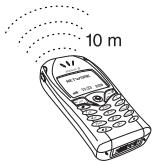
text_image
10 m 11/23 11/24Before you start
To communicate with another Bluetooth device, you first need to pair your phone with the device – you do this by adding the device to a list of paired devices in your phone. To synchronize with your PC, and to browse the Internet, you also need to install the CD software that comes with your phone. You can exchange items or play games without having to pair your phone with the other device.
Pairing
Pairing is the process of associating Bluetooth devices with each other so that they can connect when they are within range of each other. Your phone can be paired with up to 20 Bluetooth devices. After pairing, the operation mode of your phone is automatically set to On. See “Operation modes” on page 61.
To initiate pairing with a device
- Scroll to Connect, YES, Bluetooth, YES, Paired devices, YES, Add device, YES, Phone initiates, YES.
A list of device types that can be paired with your phone is shown. Scroll to a device type and press YES.
-
The phone searches for Bluetooth devices. A list of available devices of the type you selected then appears in the display. Select a device, YES.
-
Enter a passkey (up to 16 digits) for the device, both in the phone and, for example, in the PC. (If a passkey does not come with the Bluetooth device when you buy it, you need to create one yourself.)
-
When the pairing has been completed, you can edit the name tag for the device and press YES.
To accept pairing with a device
- Scroll to Connect, YES, Bluetooth, YES, Paired devices, YES, Add device, YES, Phone accepts, YES and wait for the other device.
To organize your list of paired devices
-
Scroll to Connect, YES, Bluetooth, YES, Paired devices, YES. Then:
-
To edit the name tag of a device: scroll to the device you want to edit, YES, scroll to Edit, YES. Then edit the name tag, YES.
- To delete a device from the list: scroll to the device and press , YES.
- To change the order of the devices: scroll to the device whose position you want to change, YES.
Select Edit order, YES. Then enter the position number (2 - 20) you want for the device (position 1 is always for the headset).
Phone name
You can choose a name for your phone. This name is shown in other devices when your phone is discovered, and is also used for the infrared port.
- Select Edit from the Connect/Bluetooth/Options/Phone name menu and enter a name.
Operation modes
The following operation modes are available:
- Off – the phone cannot send or receive any information.
- Automatic – the Bluetooth function is turned on automatically when you start sending information such as a business card or when you answer or make a call via the Bluetooth headset.
- On – the Bluetooth function is activated all the time (until you change the mode). The phone can send and receive information to and from a paired Bluetooth device.
- Receive – the phone can always receive information from any (paired or unpaired) Bluetooth device.
Note: In countries where the use of Bluetooth wireless technology is not allowed, you must ensure that the Bluetooth function is set to Off.
The Receive and On modes reduce the standby time and talk time.
- Select Operation mode from the Connect/Bluetooth/Options menu to change the operation mode.
In order for your phone to be detected by other Bluetooth devices, to receive information from paired or unpaired devices or to accept pairing, you must make your phone discoverable.
To make the phone discoverable
- Scroll to Connect, YES, Bluetooth, YES, Discoverable, YES. Your phone is discoverable for three minutes.
Searching for devices
You can search for Bluetooth devices and then, for example, pair the device with your phone.
- Select Discover from the Connect/Bluetooth menu to search for devices.
Sending and receiving
To send an item using Bluetooth wireless technology, you need to make sure that the devices are within 10 meters range of each other and that the operation mode is set to Automatic or On.
To send an item
- After you select Bluetooth as the transfer method, the phone searches for devices. A list of devices appears. Select the device you want to send the item to and press YES.
Tip: You can send certain items in your phone (calendar overviews, appointments and tasks, business cards, text messages) to specific Bluetooth printers. Select the relevant printer in the list of devices.
To receive an item
-
From standby, press 📄.
-
Scroll to Receive, YES, Via Bluetooth, YES. For three minutes, the phone can now receive information from any (paired or unpaired) Bluetooth device.
Light signals
- Steady blue light – the Bluetooth function is on and the phone is charging.
- Blue light flashing slowly – the Bluetooth function is on but no GSM network is within range.
- Blue light flashing rapidly – the Bluetooth function is on and you are receiving an item or a pairing request.
- Green and blue light alternating slowly – the Bluetooth function is on and a GSM network is within range.
- Green and blue light alternating rapidly – the Bluetooth function is on and you are receiving a call.
Infrared port
You can use the built-in infrared modem to establish contact between your phone and a PC or another device equipped with an infrared port.
Activate the infrared port
Before you can connect to another infrared device you have to activate the infrared port in your phone.
- Select Infrared port from the Connect menu and select an option.
To connect two devices
- Place your phone as in the picture. The infrared port on the phone must face the infrared port on the other device.
Note: If you are connecting to a PC, make sure your PC has activated infrared communication (Start/Settings/Control Panel/Infrared/Options tab/Enable infrared communication).
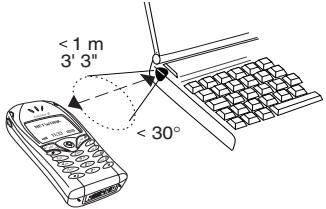
text_image
< 1 m 3' 3" < 30°- Your phone now establishes contact with the other device.
Synchronization
You can synchronize the calendar and phone book in your phone with similar programs in, for example, a
PC, PDA or mobile phone and with similar programs on the Internet.
Synchronization with nearby devices
After installing the synchronization program from the Ericsson CD that comes with your phone, you can synchronize your phone with your PC. You can start the synchronization from your phone or from the PC. A status bar shows the progress of the synchronization. If you use a cable, the synchronization starts as soon as you connect the cable.
To start the synchronization
- Scroll to Connect, YES, Synchronization, YES, Local synch, YES.
- Select a synchronization method, YES.
- IR – for infrared communication.
- Bluetooth – for communication via Bluetooth wireless technology. Select a device to synchronize with from a list of paired devices and press YES. See “Pairing” on page 60.
The next time you synchronize, the synchronization starts after you have selected Local synch, using the method you have selected earlier.
- Select Local settings from the Connect/Synchronization/Options menu and select a synchronization method.
Internet synchronization
You can synchronize your mobile phone contacts, appointments, tasks and notes with similar programs on the Internet, using WAP. Contact your network operator for more information about these programs on the Internet and to receive user id, password and addresses for the different programs. You must also have a WAP profile set in your mobile phone. See “WAP profile settings” on page 46.
- Select Synch. view from the Phone book/Options menu to select which order fist name and last name is sent when you synchronize contacts
To enter the WAP synchronization settings
- Scroll to Connect, YES, Synchronization, YES, Options, YES, Remote settings, YES.
- Scroll to Remote login, YES.
-
Select WAP profile, YES. Select the WAP profile you want to use for synchronization.
-
Select Synch server, YES.
Enter your user id, password and the Internet address for the WAP server. - Press NO. Scroll to Applications, YES.
- Select a program, for example, Phone book, YES. Enter your user id, password and the address for the program, in this case, the phone book.
- Repeat step 6 for the other programs.
To start the WAP synchronization
- Scroll to Connect, YES, Synchronization, YES, Remote synch., YES.
- Press ⓧ to select the programs you want to synchronize.
- Press YES to start the synchronization. The next time you synchronize, the synchronization starts after you have selected Remote synch., and synchronizes the programs you have selected earlier.
- Select Remote applic. from the Connect/Synchronization/Options menu and select the programs you want to synchronize.
Extra calendar
You can download an “extra calendar” from the Internet, for example, a school timetable, a common timetable for a sports club. To be able to do this you have to select a WAP profile and enter settings for Synch server and DatabaseServer.
- Select Extra calendar from the Connect/Synchronization/Options/Remote settings/Applications menu to enter these settings.
Synchronization sound
The phone can make a sound when a synchronization is completed or when a synchronization is initiated from another device.
- Select Sound from the Connect/Synchronization/Options menu and select On to turn the synchronization sound on
Fax and data calls

Send fax and data calls
To send fax and data calls you need to connect your phone to a computer, and then start the appropriate software program.
Receive fax and data calls
The procedure of receiving fax and data calls depends on your network and subscription. If you have separate
numbers for voice, fax and data calls, your phone will recognize the type of call.
To receive a fax or data call (separate numbers)
- Connect your phone to a computer.
- Answer the call from within the software program (if it does not answer automatically).
You cannot answer a fax or data call by pressing the YES key on the phone.
One number
If you have a SIM card that does not support separate fax and data numbers, the phone does not recognize the type of incoming call.
If you want to receive a fax or data call, you have to set the phone to one of these options. Once you have set your phone for a specific incoming call, it stays like this until you change it.
- Select Next incoming from the Call info/Next call menu and select the call type you want.
More features
Alarm clock
The alarm can be set to ring at a specific time within 24 hours, or recurrently at a specific time on several days. You can have both these alarms set at the same time. Even if you have set your phone to silent, the alarm and timer signals ring.
To set an alarm
- Scroll to Organizer, YES, Alarms, YES, Alarm, YES.
-
Enter the time, YES.
-
Select New time from the Organizer/Alarms/Alarm menu and enter the time that you want to change to.
- Press any key to turn the alarm signal off when it rings. If you do not want the alarm to be repeated, press YES.
- Select Cancel from the Organizer/Alarms/Alarm menu to cancel the alarm.
- Select Recurrent alarm from the Organizer/Alarms menu. Then enter the time and select the days that you want the alarm to recur by scrolling and pressing
*↑. Press YES to exit the menu.
- Select Alarm signal from the Settings/Sounds & alerts menu and select a signal.
Stopwatch
Scroll to Organizer, YES, Stopwatch, YES.
• To start, stop or re-start the stopwatch, press YES.
• To save up to nine lap times, press #.
• To check saved lap times, scroll using the joystick.
- To reset the stopwatch, press ⓒ .
Note: The stopwatch is turned off when you answer an incoming call or when you exit the stopwatch menu.
Timer
The phone has a built-in 24-hour timer.
- Select Timer from the Organizer menu and enter the time. When the signal rings, press any key to turn it off.
Calculator
The phone has a built-in calculator, which can add, subtract, divide and multiply.
- Press # to get +, -, x, /.
- Press to delete the figure.
- Press to enter a decimal point.
Code memo
Instead of having to remember all the different security codes for credit cards, for example, you can save them in the code memo in your phone. Then all you need to remember is the password to open the code memo. You can save a maximum of 10 codes in the code memo.
Checkword and security
To confirm that you have entered the correct password for the code memo and to prevent unauthorized access to your codes, you must enter a checkword. When you enter your password to open the code memo, the checkword is shown for a short time. If the password is correct, the correct codes are shown. If you enter the incorrect password, the checkword and the codes that are shown are also incorrect.
Factors strengthening the security of the Code memo function are:
- You get no feedback about whether the password is correct, except for the checkword, and only you know the checkword.
- All codes are encrypted in the mobile phone.
- When you access your codes, they are shown for a limited time only.
To open code memo for the first time
-
Scroll to Organizer, YES, Code memo, YES. A message with instructions appears.
-
Press YES.
-
Enter a four-digit password to open Code memo, YES.
-
Re-enter the new password to confirm.
-
Enter a checkword (maximum 15 characters), YES. The checkword can consist of both letters and numbers. To enter a number, press and hold the key.
To add a new code
-
Scroll to Organizer, YES, Code memo, YES.
-
Enter your password.
-
Select Add new code?, YES.
-
Enter a name associated with the code, for example, the name of the credit card company, YES.
-
Enter the code, YES.
To open code memo
-
Scroll to Organizer, YES, Code memo, YES.
-
Enter your password, YES.
Your entered checkword appears. When the decryption process has finished, your codes are shown.
To change the password
-
Open code memo as described above.
-
Scroll to Options, YES, Chg password, YES.
-
Enter your new password, YES.
-
Re-enter the new password, YES.
-
Enter a checkword, YES.
Forgot your password?
If you forget your password, just enter any password to access the Code memo function. The checkword and codes that are then shown are incorrect. You must now reset the Code memo.
To reset code memo
-
Scroll to Options, YES, Reset, YES.
-
Reset code memo? appears. Press YES.
The Code memo is reset and all entries are cleared. The next time you enter the Code memo, you must start at “To open code memo for the first time” on page 68.
Calendar
You can use the calendar to keep track of important meetings that you need to attend, phone calls that you need to make or tasks that you need to do. Your phone
has two calendars, for example, to separate your work from your private life:
- Calendar – your ordinary calendar that can be synchronized with a PC calendar or, using WAP, with a calendar on the Web.
- Extra calendar – an extra calendar where you can save appointments and tasks just as in the ordinary calendar. You can also download a calendar from the Web and use it as an extra calendar.
Appointments and tasks
You can save up to 300 appointments and 80 tasks in your calendars, depending on the size of each item. You can choose to add a new appointment or task, or to use an old appointment or task as a template by copying and editing it.
Tip: When you are in the list of appointments and tasks for a certain day, you can use 📂 to edit, delete, send, reschedule or copy. You can also call a number included in a task.
To add a new appointment
-
Scroll to Organizer, YES, Calendar, YES, Add appointm., YES.
-
Enter the appropriate information, for example, subject, location, icon and times. Confirm each entry with yes.
- If you want to set a reminder for your appointment, select a reminder, YES.
- A list of options appears.
If the appointment is recurrent:
- Select Recurrent app. and press YES.
- Select the recurrence you want and press YES.
To set the time zone for a meeting: - Select Time zone, YES.
-
Select a time zone in which the meeting is to be held, YES. Your meeting time will be adjusted automatically according to the time zone you are in.
-
Confirm with Save and close, YES.
To add a new task
- Scroll to Organizer, YES, Calendar, YES, Tasks, YES, Add task?, YES.
- Select a category, YES.
- If the category is a phone call, enter the phone number, YES.
- Enter a subject, YES.
- If you want to set a reminder for your appointment, select a reminder, YES.
Viewing your calendar
To view your calendar content, scroll to Organizer, YES, Calendar, YES and then select one of the following:
- View today. All appointments for today as well as incomplete tasks are shown.
- View week. Move within and among the days by moving the joystick. Press YES to view a certain day.
- View month. Move within and among the weeks by moving the joystick. Press YES to view a certain day. Days on which you have appointments are marked in bold.
Tip: In the monthly and weekly views, you can go to next week by pressing 3, to next month by pressing 6 and to next year by pressing 9. You can go back a week, a month or a year by pressing 1, 4, and 7 respectively. To reach the current day, press C.
Calendar settings
- Select Options from the Organizer/Calendar menu and then select one of the options:
• View. Starting day. Select a start day for the week. Week display. Select 5 days week or 7 days week.
- Use calendars. Select if you want to see your ordinary or extra calendar. You can also choose to see both. The appointments and tasks are then marked with different colours in the week view depending on which calendar they belong to.
- Calendar names. Rename your calendars.
- Start-up view. Select Calendar today to view the appointments and tasks for today when you turn on the phone.
- Profile switch. If you want the phone to remind you to switch profile when a meeting is about to start, select Manual. If you want the profile to be switched automatically, select Auto, then select a profile.
- Reminders. Select Always if you want the reminder to sound even though the phone is turned off.
Check the status
You can check when you last synchronized your calendar or how much space is left for new appointments and tasks
- Select Memory status from the Organizer/Calendar/Advanced menu.
Tip: To delete all appointments and tasks in your calendar, select Delete all in the Advanced menu.
Exchanging calendar entries
You can send and receive appointments and tasks using Bluetooth wireless technology or the infrared port.
To send an appointment or a task
- In the list of appointments and tasks for a certain day, scroll to the item you want to send and press 📄.
- Scroll to Send, YES.
- Select a transfer method, YES.
Make sure that the infrared ports are facing each other, or that the Bluetooth operation mode is set to Automatic or On.
Tip: If an appointment is recurrent, you can choose to send the entire series of appointments by selecting Send all.
To receive an appointment or a task
- If receiving via the infrared port: from standby, press and scroll to Receive YES, Via IR, YES. The infrared port is on for 10 minutes.
If receiving via Bluetooth wireless technology: from standby, press 📄 and scroll to Receive, YES, Via Bluetooth, YES. The Bluetooth function is on for three minutes.
- Read appointment? or Read? appears. Press YES to save the appointment or task in the ordinary calendar. If your calendar is full, you must remove calendar items before you can save any new ones.
Find an appointment or task
You can search for appointments and tasks that contain a specific text.
To search for appointments or tasks
- Scroll to Organizer, YES, Calendar, YES, Advanced, YES, Find, YES.
- Select if you want to search for appointments or tasks by pressing ⓐ, YES.
- Enter the text you want to search for, YES. The search is always made in both calendars. Appointments or tasks that match your search are shown. You can now view, edit or delete them by pressing 📄.
Sound recorder
With the Sound recorder function, you can record either your own memos or calls. All participants in the call are automatically recorded. The recording is terminated if any party hangs up.
The recordings are saved in your mobile phone and can be accessed even if you change your SIM card.
Note: In some countries or states it is required by law that you inform the other person before recording the call.
To start a sound recording
- Scroll to Fun & Games, YES, Sound recorder, YES, Record new, YES. Wait until you hear a tone. When the recording starts, the display shows Recording together with the time of the current recording (increasing).
To end the recording
- Press NO.
Tip: You can start recording or listening to recordings with a voice command. See “Voice control” on page 30.
The recording stops automatically if you receive an incoming call or when the call ends. You hear a tone a few seconds before the sound memory is full.
Listening to recordings
You can listen to your recordings at any time, even during a call, and both persons will hear them.
To listen to your recordings
- Scroll to Fun & Games, YES, Sound recorder, YES.
- Scroll to the recording you wish to hear, YES
-
If you want to:
-
Pause, press YES. Press YES again to play.
- Go to next or previous: move the joystick up or down, respectively.
-
Go fast forward or rewind: move and hold the joystick right or left, respectively.
-
Press no to stop playback.
To send a recording
- Scroll to Fun & Games, YES, Sound recorder, YES.
- Scroll to the recording you wish to send, YES.
- Press 📄 and select Send in MMS.
Tip: To see how many seconds you have left for recording, press 📄 and scroll to “Remaining time”, YES.
To erase or rename a sound recording
- Scroll to Fun & Games, YES, Sound recorder, YES.
- Press down to scroll to the recording you wish to erase or rename.
- Press ☐ when the recording is highlighted.
- Select Erase or Rename, YES.
To erase all recordings
- Proceed as above, but select Erase all instead of Erase.
Settings
You can choose to show the date and time or length of the recording, or both.
To set the view of your recordings
- Scroll to Fun & Games, YES, Sound recorder, YES.
- Scroll to a recording. Press 📄.
- Select Set view, YES.
- Select Date and time or Length, or both, YES.
Games
Your phone has several games. You can play some of the games with another person, both using your phone, or you can play on two phones, using Bluetooth wireless technology, IR or text messaging. Help texts are available in each game.
To start a game
- Scroll to Fun & Games, YES, Games, YES.
- Select a game, YES.
- Select New game or Resume game, YES.
- Start the game.
How to control the games:
Use the joystick to move up, down, left or right and to select an item, or use the keys as follows:
$$ \begin{array}{l} ⑤ = \mathrm{up} \ ⓞ = \text { down } \ ⑦ = \text { left } \ ⑨ = \text { right } \ ⓒ = \text { pause } \ 8 = \text { select / deselect } \ Ⓥ N O = \text { save and quit } \ Ⓥ Y E S = \text { confirm } \ ⓝ = \text { undo } \ ⓧ \triangle = \text { reset } \ \end{array} $$
Erix
The aim of Erix is to black out the display, without being hit by a ball.
Game
The aim of Game is to shoot the alien invaders before they kidnap and kill all humans on the planet. You control a fighter craft equipped with a gun and smart bombs.
Q
The aim of Q is to get all the coloured balls through their portals. The red ball goes into the red portal and so on.
Ripple
The aim of Ripple is to turn as many pieces as possible into your colour. Black always begins the game.
Solitaire
The aim of all the Solitaire games (Arizona, Four Seasons, North West Territories, Klondike) is to form four piles of cards, one per suit, running from ace to king.
1 = select card, confirm move
2 = deal from deck
3 = put card on foundation pile
4 = view current pile
6 = access deck
Tetris
The aim of Tetris is to prevent the blocks from reaching the top of the playing board. Each time you fill a line, that line disappears.
Notes
If you need to remember things, you can make a note of it in your phone. You can add, edit, delete or send a note. You can save up to 10 notes, depending on the size of each item.
To add a note
- Scroll to Extras, YES, Notes, YES, Add note, YES.
- Enter the note, YES.
To view the notes
- Scroll to Extras, YES, Notes, YES.
- A list, which shows the beginning of each note appears.
- Select the note, that you want to view, YES.
Note: A note with an icon is a posted note, see “Post note” on page 75.
To edit a note
- Scroll to Extras, YES, Notes, YES.
- Select the note that you want to edit and press ☑, Edit, YES.
- Edit the note and press YES to save.
Post note
You can display one note in the standby mode as a reminder.
To display a note in standby
- Press 📄 and scroll to Post note, YES.
- Select the note you want to display in standby or select Add note to write a new note, YES.
- If the note is long and you cannot see all of it, press 📄, Show note, YES.
- To turn off the note in standby, press 📄, Hide note, YES.
Exchanging notes
You can send and receive notes using Bluetooth wireless technology or the infrared port.
To send a note
- Select a note and press 📄 to display the list of options.
- Select Send, YES.
- Select a transfer method, YES. Make sure that the infrared ports are facing each other, or that the Bluetooth operation mode is set to Automatic or On.
To receive a note
- If receiving via the infrared port: from standby, press and scroll to Receive, YES, Via IR, YES. The infrared port is on for 10 minutes.
and scroll to Receive, YES, Via IR, YES. The infrared port is on for 10 minutes. If receiving via Bluetooth wireless technology: from standby, press and scroll to Receive, YES, Via Bluetooth, YES. The Bluetooth function is on for three minutes.
If receiving via Bluetooth wireless technology: from standby, press 📄 and scroll to Receive, YES, Via Bluetooth, YES. The Bluetooth function is on for three minutes. - Add note? appears. Press YES to save the note among your other notes.
Security
SIM card lock
The SIM card lock protects your subscription, but not your phone itself, from unauthorized use. If you change SIM cards, the phone still works with the new SIM card.
Most SIM cards are locked at the time of purchase. If the SIM card lock is on, you have to enter a “PIN” (Personal Identity Number) every time you turn on your phone.
If you enter your PIN incorrectly three times in a row, the SIM card is blocked. This is indicated by the message PIN blocked. To unblock it you need to enter your “PUK” (Personal Unblocking Key). Your PIN and PUK are supplied by your operator.
To unblock your SIM card
- PIN blocked appears in the display.
- Enter your PUK and press YES.
- Enter a new four- to eight-digit PIN and press YES.
- Re-enter the new PIN to confirm and press YES.
- Select Change PIN from the Settings/Locks/SIM lock menu to edit your PIN.
Note: If the message “Codes do not match” appears, you entered the new PIN incorrectly. If the message “Wrong PIN” appears, followed by “Old PIN:”, you entered your old PIN incorrectly.
- Select Change PIN2 from the Settings/Locks/SIM lock menu to edit your PIN2.
To turn the SIM card lock on or off
- Scroll to Settings, YES, Locks, YES, SIM lock, YES, Protection, YES.
- Select On or Off, and press YES.
- Enter your PIN and press YES.

Phone lock
The phone lock protects the phone against unauthorized use if it is stolen and the SIM card is exchanged. It is not on when you buy the phone. You can change the phone lock code (0000) to any four- to eight-digit personal code. The phone lock can be set to on, automatic or off.
Phone lock on
If the phone lock is on, the message Phone locked appears each time you turn on the phone. You have to enter your code followed by YES to use your phone.
Automatic
If the phone lock is set to automatic, you do not need to enter your phone lock code until a different SIM card is inserted in the phone.
- Select Change code from the Settings/Locks/Phone lock menu to edit your phone lock code.
Note: It is important that you remember your new code. If you should forget it, you have to hand in your phone to your local Ericsson retailer.
To set the phone lock
- Scroll to Settings, YES, Locks, YES, Phone lock, YES, Protection, YES.
- Select an alternative and press YES.
- Enter the phone lock code and press YES.
Troubleshooting
This chapter lists some problems that you might encounter while using your phone. Some problems require that you call your service provider, but most of the problems you can easily correct yourself.
The phone cannot be switched on
Hand-held phone
Recharge or replace the battery. See “SIM card and battery information” on page 4.
No indication of charging
When you start charging a battery that is empty or a battery that has not been used for a long time, it may take up to 30 minutes before the battery icon appears in the display.
Display language
If the display shows a language that you do not understand, you can always choose Automatic (determined by your SIM card) by pressing 8888 in standby. You can always choose English by pressing 0000 in standby.
Grey menu options
Grey text indicates a function that is temporarily unavailable, for example due to your subscription or due to a certain setting which has not been turned on.
Error messages
Insert SIM
There is no SIM card in the phone or you may have inserted it incorrectly. Insert a SIM card. See “SIM card and battery information” on page 4.
Insert correct SIM card
The phone is set to work only with certain SIM cards. Insert the correct SIM card.
SOS calls only
You are within range of a network, but you are not allowed to use it. However, in an emergency, some operators allow you to call the international emergency number 112. See “Making emergency calls” on page 24.

No network
There is no network within range or the received signal is too weak. You have to move to get a signal that is strong enough.
Wrong PIN/Wrong PIN2
You have entered your PIN or PIN2 incorrectly.
- Enter the correct PIN or PIN2, and press YES. See “SIM card lock” on page 76.
Codes do not match
When you want to change a security code (for example your PIN) you have to confirm the new code by entering it again. The two codes that you have entered do not match. See “SIM card lock” on page 76.
PIN blocked/PIN2 blocked
You have entered your PIN or PIN2 incorrectly three times in a row. To unblock, see “SIM card lock” on page 76.
PUK blocked – contact operator
You entered your personal unblocking key code (PUK) incorrectly 10 times in a row. Contact your network operator or service provider.
Phone locked
The phone is locked. To unlock the phone, see “Phone lock” on page 76.
Phone lock code:
Your phone comes with the phone lock code, 0000. You can change it to any four- to eight-digit code. See “Phone lock” on page 76.
Number not permitted
The Fixed Dialling function is on and the number you have dialled is not on your fixed numbers list. See “Fixed dialling” on page 41.
Charging, alien battery
The battery you are using is not an Ericsson-approved battery and is charging slowly for safety reasons.
Additional information
Ericsson Mobile Internet
The Ericsson Mobile Internet is a service supplied by Ericsson to make it easier for you to communicate and receive information quickly, wherever you are. It gives you access to various messaging services, on-line customer services, user's guides and other useful information. With the Ericsson Mobile Internet you can also download communications software to ensure you get the best out of your Ericsson products.
The Ericsson Mobile Internet address is: http://mobileinternet.ericsson.com
Guidelines for Safe and Efficient Use
Please read this information before using your mobile phone.
Your mobile phone is a highly sophisticated electronic device. To get the most out of your mobile phone, please read this text about product care, and safe and efficient use.
PRODUCT CARE
- Do not expose your product to liquid or moisture or to humidity.
- Do not expose your product to extreme high or low temperatures.
- Do not expose your product to lit candles, cigarettes, or cigars, or to open flames etc.
- Do not drop, throw or try to bend the product as rough treatment could damage it.
- Do not paint your product as the paint could obstruct the earpiece, microphone or any moveable parts and prevent normal use.
- Do not attempt to disassemble your product. The product does not contain consumer serviceable components. Only Ericsson Service Points or Certified Service Centres should perform service.
- Do not use any accessories other than Ericsson originals. Use of non-Ericsson original accessories may result in loss of performance, damage to the product, fire, electric shock or injury. The warranty does not cover
product failures which have been caused by use of non-Ericsson original accessories.
- Treat your product with care, keep it in a clean and dust-free place.
ANTENNA CARE
- To avoid impaired performance, please ensure that your mobile phone's antenna is not damaged.
- Do not remove the antenna yourself. If your mobile phone's antenna is damaged, please take it to an Ericsson Service Point or Certified Service Centre.
- Only use an Ericsson original antenna that has been specifically designed for your mobile phone. Use of unauthorised antennas, modifications, or attachments could damage the mobile phone and may violate the appropriate regulations, causing loss of performance and SAR levels above the recommended limits (see below).
EFFICIENT USE
For optimum performance with minimum power consumption please:
- Hold the mobile phone as you would any other telephone. While speaking directly into the mouthpiece, angle the antenna in a direction up and over your shoulder.
- Do not touch the antenna when the mobile phone is in use. Touching the antenna affects call quality, may cause the mobile phone to operate at a higher power level than needed and may shorten talk and standby times.
- If your mobile phone is equipped with an infrared eye, never direct the infrared ray at anyone's eye and make sure that it does not disturb any other infrared units.
RADIO FREQUENCY (RF) EXPOSURE AND SAR
Your mobile phone is a low-power radio transmitter and receiver. When it is turned on, it emits low levels of radio frequency energy (also known as radio waves or radio frequency fields).
Governments around the world have adopted comprehensive international safety guidelines, developed by scientific organizations*, e.g. ICNIRP (International Commission on Non-Ionizing Radiation Protection), through periodic and thorough evaluation of scientific studies. These guidelines establish permitted levels of radio wave exposure for the general population. All Ericsson mobile phone models are designed to operate within these stringent levels. The levels include a safety margin designed to assure the safety of all persons, regardless of age and health, and to account for any variations in measurements.
Specific Absorption Rate (SAR) is the unit of measurement for the amount of radio frequency energy absorbed by the body when using a mobile phone. The SAR value is determined at the highest certified power level in laboratory conditions, but the actual SAR level of the phone while operating can be well below this value.
This is because the phone is designed to use the minimum power required to reach the network. Therefore, the closer you are to a base station, the more likely it is that the actual SAR level will decrease.
Variations in SAR below the radio frequency exposure guidelines do not mean that there are variations in safety. While there may be differences in SAR levels among mobile phone models, all mobile phone models must be designed to meet radio frequency exposure guidelines.
More information on radio frequency exposure and SAR can be found on: www.ericsson.com/health.
* Examples of radio-frequency exposure guidelines and standards that Ericsson mobile phone models are designed to conform to:
- International Commission on Non-Ionizing Radiation Protection (ICNIRP), “Guidelines for limiting exposure to time-varying electric, magnetic, and electromagnetic fields (up to 300 GHz)”, Health Physics, vol. 74, pp 494-522, April 1998.
- 99/519/EC, “Council Recommendation of 12 July 1999 on the limitation of exposure of the general public to electromagnetic fields (0 Hz to 300 GHz)”, Official Journal of the European Communities, 1999.
- IEEE C95.1-1991, “Safety levels with respect to human exposure to radio frequency electromagnetic fields, 3 kHz to 300 GHz”, The Institute of Electrical and Electronics Engineers Inc. (IEEE).
- FCC Report and Order, ET Docket 93-62, FCC 96-326, Federal Communications Commission (FCC), August 1996.
- Radiocommunications (Electromagnetic Radiation Human Exposure) Standard 1999, Australian Communications Authority (ACA), May 1999.
DRIVING
Please check if local laws and regulations, in the country/state where you are driving, restrict the use of mobile phones while driving. Law in many countries/states requires drivers to use a Vehicle or Portable Hands Free solution. If so, it is recommended that you use Ericsson Portable Hands Free solutions only with this Ericsson mobile phone model.
Ericsson is concerned about your safety. Always give full attention to driving and pull off the road and park before making or answering a call if driving conditions so require.
RF energy may affect some electronic systems in motor vehicles such as car stereo, safety equipment etc. In addition, some vehicle manufacturers do not allow use of mobile phones in their vehicles, unless a hands free kit with an external antenna supports the installation. Check with your vehicle manufacturer's representative to be sure that your mobile phone will not affect the electronic systems in your vehicle.
Vehicles Equipped with an Air Bag
An air bag inflates with great force. Do not place objects, including either installed or portable wireless equipment, in the area over the air bag or in the air bag deployment area. If in-vehicle wireless equipment is improperly installed and the air bag inflates, serious injury could result.
ELECTRONIC DEVICES
Most modern electronic equipment, for example equipment in hospitals and cars, is shielded from RF energy. However, certain electronic equipment is not, therefore:
- Do not use your mobile phone near medical equipment without requesting permission.
Mobile phones may affect the operation of some implanted cardiac pacemakers and other medically implanted equipment. Pacemaker patients should be aware that the use of a mobile phone very close to a pacemaker might cause the device to malfunction. Avoid placing the mobile phone over the pacemaker, e.g. in your breast pocket. When using the mobile phone, place it at the ear opposite the pacemaker. If a minimum distance of 15 cm (6" inches) is kept between the mobile phone and the pacemaker, the risk of interference is limited. If you have any reason to suspect that interference is taking place, immediately turn off your
mobile phone. Contact your cardiologist for more information.
If you use any other personal medical device, consult the manufacturer of your device to determine if it is adequately shielded from external RF energy.
Turn your mobile phone off in any facility where posted notices so require.
AIRCRAFT
- Turn off your mobile phone before boarding any aircraft.
- To prevent interference with communication systems, you must not use your mobile phone while the plane is in the air.
- Do not use it on the ground without permission from the crew.
EXPLOSIVE ATMOSPHERES
Turn off your mobile phone when in any area with a potentially explosive atmosphere. It is rare, but your mobile phone or its accessories could generate sparks. Sparks in such areas could cause an explosion or fire resulting in bodily injury or even death.
Areas with a potentially explosive atmosphere are often, but not always, clearly marked. They include fuelling areas, such as petrol stations, below deck on boats, fuel or chemical transfer or storage facilities, and areas where the air contains chemicals or particles, such as grain, dust, or metal powders.
Do not transport or store flammable gas, liquid, or explosives in the same compartment of your vehicle that contains your mobile phone and accessories.
POWER SUPPLY
- Connect the AC power adapter only to designated power sources as marked on the product.
- To reduce risk of damage to the electric cord, remove it from the outlet by holding onto the AC adapter rather than the cord.
- Make sure the cord is positioned so that it will not be stepped on, tripped over or otherwise subjected to damage or stress.
- To reduce risk of electric shock, unplug the unit from any power source before attempting to clean it.
- The AC power adapter must not be used outdoors or in damp areas.
- DANGER - Never alter the AC cord or plug. If the plug will not fit into the outlet, have a proper outlet installed by a qualified electrician. Improper connection can result in risk of electric chock.
CHILDREN
DO NOT ALLOW CHILDREN TO PLAY WITH YOUR MOBILE PHONE OR ITS ACCESSORIES. THEY COULD HURT THEMSELVES OR OTHERS, OR COULD ACCIDENTALLY DAMAGE THE MOBILE PHONE OR ACCESSORY. YOUR MOBILE PHONE OR ITS ACCESSORY MAY CONTAIN SMALL PARTS THAT
COULD BE DETACHED AND CREATE A CHOKING HAZARD.
DISPOSING OF THE PRODUCT
The product should never be placed in municipal waste. Please check local regulations for disposal of electronic products.
EMERGENCY CALLS IMPORTANT!
This mobile phone, like any mobile phone, operates using radio signals, cellular and landline networks as well as user-programmed functions, which cannot guarantee connection under all conditions. Therefore you should never rely solely upon any mobile phone for essential communications (e.g. medical emergencies).
Remember, in order to make or receive calls, the mobile phone must be switched on and in a service area with adequate cellular signal strength. Emergency calls may not be possible on all cellular phone networks or when certain network services and/or mobile phone features are in use. Check with your local service provider.
BATTERY INFORMATION CHARGING THE BATTERY
The battery delivered with your phone is not fully charged. We recommend that you charge the battery for 4 hours before you use the phone for the first time.
The battery can only be charged in temperatures between +5°C (+41°F) and +45°C (+113°F).
BATTERY USE AND CARE
A rechargeable battery has a long service life if treated properly. A new battery or one that has not been used for a long time could have reduced capacity the first few times it is used.
- The talk and standby times depend on the actual transmission conditions when using the phone. If the phone is used near a base station, less power is required and talk and standby times are prolonged.
- Use only Ericsson original batteries and chargers. Using other batteries and chargers could be dangerous, and the warranty does not cover product failures which have been caused by use of non-Ericsson original batteries and chargers.
- Do not expose the battery to extreme temperatures, never above +60°C (+140°F). For maximum battery capacity, use the battery in room temperature. If the battery is used in low temperatures, the battery capacity will be reduced.
- Turn off your phone before removing the battery.
- Use the battery for the intended purpose only.
- Do not attempt to take the battery apart.
-
Do not let the metal contacts on the battery touch another metal object. This could short-circuit and damage the battery.
-
Do not expose the battery to open flames. This could cause the battery to explode.
- Do not expose the battery to liquid.
- Do not allow the battery to be put into the mouth. Battery electrolytes may be toxic if swallowed.
DISPOSING OF THE BATTERY
The battery should never be placed in municipal waste. Please check local regulations for disposal of batteries.

Limited Warranty Conditions and International Service
Thank you for purchasing this Ericsson Product. To get maximum use of your new Product, we recommend that you follow a few simple steps:
- Read the Guidelines for Safe and Efficient Use.
- Read all the terms and conditions of your Ericsson Warranty.
- Save your original receipt. You will need it for warranty repair claims. Should your Ericsson Product need warranty service, please return it to the dealer from whom it was purchased, or contact your local Ericsson Certified Call Centre or visit www.ericsson.com/consumers to get further information.
OUR WARRANTY
Ericsson Mobile Communications AB, Torshamnsgatan 27, 164 80 Stockholm, Sweden, warrants this Product to be free from defects in material and workmanship at the time of its original purchase by a consumer, and for a subsequent period of one (1) year.
Any Ericsson accessory is covered by a warranty period of one (1) year from the date of its original purchase by a consumer in accordance with the applicable terms and conditions stipulated herein.
WHAT WE WILL DO
If, during the warranty period, this Product fails to operate under normal use and service, due to improper materials or workmanship, Ericsson subsidiaries, authorised distributors, Service Points or Certified Service Centres will, at their option, either repair or replace the Product in accordance with the terms and conditions stipulated herein.
CONDITIONS
- The warranty is valid only if the original receipt issued to the original purchaser by the dealer, specifying the date of purchase and serial number, is presented with the Product to be repaired or replaced. Ericsson reserves the right to refuse warranty service if this information has been removed or changed after the original purchase of the Product from the dealer.
- If Ericsson repairs or replaces the Product, the repaired or replaced Product shall be warranted for the remaining time of the original warranty period or for ninety (90) days from the date of repair, whichever is longer. Repair or
replacement may involve the use of functionally equivalent reconditioned units. Replaced faulty parts or components will become the property of Ericsson.
- This warranty does not cover any failure of the Product due to normal wear and tear, or due to misuse, including but not limited to use in other than the normal and customary manner, in accordance with Ericsson's instructions for use and maintenance of the Product. Nor does this warranty cover any failure of the Product due to accident, modification or adjustment, acts of God, improper ventilation or damages resulting from liquid.
- This warranty does not cover Product failures due to improper repair installations, modifications or service performed by a non-Ericsson Service Point or Certified Service Centre or opening of the Product by non-Ericsson certified persons.
- The warranty does not cover Product failures which have been caused by use of non-Ericsson original accessories.
- Tampering with any of the seals on the Product will void the warranty.
- THERE ARE NO EXPRESS WARRANTIES, WHETHER WRITTEN OR ORAL, OTHER THAN THIS PRINTED LIMITED WARRANTY. ALL IMPLIED WARRANTIES, INCLUDING WITHOUT LIMITATION THE IMPLIED WARRANTIES OF MERCHANTABILITY OR FITNESS FOR A PARTICULAR PURPOSE, ARE LIMITED TO THE DURATION OF THIS LIMITED WARRANTY. IN NO EVENT SHALL ERICSSON BE LIABLE FOR
INCIDENTAL OR CONSEQUENTIAL DAMAGES OF ANY NATURE WHATSOEVER, INCLUDING BUT NOT LIMITED TO LOST PROFITS OR COMMERCIAL LOSS, TO THE FULL EXTENT THOSE DAMAGES CAN BE DISCLAIMED BY LAW.
Some countries/states do not allow the exclusion or limitation of incidental or consequential damage, or limitation of the duration of implied warranties, so the preceding limitations or exclusions may not apply to you.
The warranty provided does not affect the consumer's statutory rights under applicable national legislation in force, nor the consumer's rights against the dealer arising from their sales/ purchase contract.
INTERNATIONAL SERVICE
You can have your Ericsson Product serviced within the warranty period in any country where an identical Product is sold by an authorised Ericsson distributor. To find out if your Product is sold in the country you are in, please call the local Call-Centre. In order to be granted service, you have to present your original receipt specifying the date of purchase and serial number. Please observe that certain services may not be possible elsewhere than in the country of original purchase, for example due to the fact that your Ericsson Product may have an interior or exterior which is different from equivalent models sold in other countries. It may not be possible to repair SIM-locked Products.
Declaration of Conformity
We, Ericsson Mobile Communications AB of Torshamnsgatan 27 S-164 80 Stockholm, Sweden
declare under our sole responsibility that our product
Ericsson type 113 0201-BV
and in combination with our accessories, to which this declaration relates is in conformity with the appropriate standards 3GPP TS 51.010-1, EN 301489-7, EN 300328, EN 300826 and EN 60950, following the provisions of, Radio Equipment and Telecommunication Terminal Equipment directive 99/5/EC with requirements covering EMC directive 89/336/EEC, and Low Voltage directive 73/23/EEC.
Stockholm, October 2001
Place & date of issue

text_image
Cohen A. W. H. M.Anders Torstensson, President BU GSM
C€ 0682 Ⓙ
We fulfil the requirements of the R&TTE Directive (99/5/EC).

FCC Statement
Before a phone model is available for sale to the public, it must be tested and certified to the FCC that it does not exceed the limit established by the government-adopted requirement for safe exposure. The tests are performed in positions and locations (i.e. at the ear and worn on the body) as required by the FCC for each model. Body worn measurements are made while the phone is in use and worn on the body with an Ericsson accessory. The design and composition of an accessory can affect the body worn SAR (Specific Absorption Rate) levels for the phone. Ericsson has not measured, and makes no representation about the body worn SAR levels when the phone is used with non-Ericsson accessories.
This device complies with Part 15 of the FCC rules. Operation is subject to the following two conditions: (1) This device may not cause harmful interference, and (2) This device must accept any interference received, including interference that may cause undesired operation.
Icons
The table below shows icons which may appear in standby or in the menus.
Icon Description
| Your personal phone book. | |
| Handling of text and voice messages. | |
| Handling of call time, call cost information and ongoing calls. | |
| Handling of pictures, sounds and themes. Play games. | |
| Personal settings, profiles, divert calls, networks and voice control. | |
| Gives you access to WAP services on the Internet. | |
| Calendar, notes, alarm clock and other extras. | |
| Bluetooth function, synchronization, infrared port. | |
| A selection of your most frequently used functions. | |
| Help text. |
Icon Description
| Tells you the strength of the GSM network signal. | |
| GPRS is within range. | |
| GPRS is within range and can be used. | |
| You cannot receive any incoming calls. | |
| Tells you the status of the battery. | |
| You have missed an incoming call. | |
| All incoming calls are diverted to a defined number. | |
| No calls or only certain calls from numbers in a list are received. | |
| The ring signal is turned off. | |
| All signals are turned off, except the alarm and timer. | |
| The alarm clock has been set and is on. | |
| You have received a text message. | |
| You have received a voice message. |
Icon Description

text_image
@ @ *< *< 1 2 ! lock ( )You have received an e-mail message.
You have received a WAP push message.
The Bluetooth function is on.
The Bluetooth function is in discoverable mode.
Bluetooth communication is in progress.
The infrared port is on.
Infrared communication is in progress.
Line 1 is in use for outgoing calls.
Line 2 is in use for outgoing calls.
Ciphering is currently not being provided by the network.
The keypad is locked.
The card lock or phone lock is on.
A secure WAP connection is established.
An ongoing call.
Icon Description

text_image
国際の図図を図図に同様A missed call in the call list.
An answered call in the call list.
A dialled number in the call list.

natural_image
Vertical sequence of black-and-white icons representing document, notes, home, and computer (no text or symbols)A group of contacts in the phone book.
A text message has not been read.
A text message is saved on the SIM card.
Melody inserted in a message.
A voice message has not been checked.

natural_image
Vertical sequence of black-and-white icons representing open book, house, document, printer, and folder (no text or symbols)You can enter the phone book by pressing ←.
A home number in the phone book.
A work number in the phone book.
A mobile number in the phone book.
A fax number in the phone book.
Another number in the phone book.
Icon Description
| @ | An e-mail address in the phone book. |
| A voice command has been recorded for a contact name. | |
| You have recorded a voice memo. | |
| An e-mail message has not been read. | |
| An e-mail message has been read. | |
| Only part of an e-mail message is saved in the phone. | |
| An e-mail message, not read, has been deleted. | |
| A Bluetooth headset, not paired with your phone. | |
| A Bluetooth headset, paired with your phone. | |
| A Bluetooth phone, paired with your phone. | |
| A Bluetooth PC, paired with your phone. | |
| A Bluetooth printer, paired with your phone. | |
| A Bluetooth camera, paired with your phone. | |
| A Bluetooth PDA, paired with your phone. |
Icon Description
| OtherBluetoothdevice. | |
| The appointment is a meeting. | |
| The appointment is a date. | |
| The appointment is to travel. | |
| The appointment is a vacation. | |
| The appointment is an anniversary. | |
| A miscellaneous appointment. | |
| An all day calendar appointment. | |
| A recurrent calendar appointment. | |
| A reminder is set for a calendar appointment. | |
| A completed task in your calendar. | |
| A task of high priority. | |
| A task of low priority. | |
| The network is preferred and can be used. | |
| Icon | Description |
| The network is forbidden and cannot be used. | |
| Your network is within range and can be used. | |
| A volume between 0 and 15 has been selected. | |
| Whole note, half note, 1/4 note. | |
| 1/8 note, 1/16 note, 1/32 note. | |
| Starts and stops a melody loop. | |
| Turns backlight on and off. | |
| Turns vibrator on and off. | |
| Turns the indicator light on and off. | |
| Increases and decreases the volume one step. | |
| You have received a multimedia message. | |
| A multimedia message has been read. | |
| A multimedia message has not been read. |
| Icon | Description |
| A multimedia message has not been downloaded from the server to your phone. Message with high priority | |
| Message with normal priority | |
| Message with low priority | |
| A multimedia message is playing. | |
| A multimedia message has been stopped. | |
| A multimedia message has been paused. | |
| Picture could not be shown. | |
| A business card is attached to the message. | |
| A calendar item is attached to the message. | |
| A note is attached to the message. | |
| More than one item is attached to the message. |
Icon Description
Cursor in a multimedia message.
A multimedia message contains a sound.
A multimedia message contains a melody.
Multimedia message has been delivered.
Multimedia message has been read.
More message options.
A picture is connected to the contact.


New incoming chat message.
A chat session has been suspended.
Index
A
Alarm clock 66
Answering mode 22
Area information 53
Assembling the phone 3
B
Battery 4
Bluetooth wireless technology 60
discoverable mode 62
light signals 63
operation modes 61
pairing 60
receive an item 62
searching 62
send an item 62
Business cards 28
exchanging 28
C
Calculator 67
Calendar 68
add a task 69
add an appointment 69
exchanging entries 71
find 71
settings 70
status 70
view 70
Call costs 35
calling card 39
credit limit 36
minute minder 20
Call time 35
Calling 24
automatic re-dialling 24
call list 25
fixed dialling 41
groups 28
speed dialling 30
Calls
accept 42
answer 25
divert 36
emergency 24
international 24
missed 25
put on hold 37
reject 25
restrict 40
Cell information 53
Charging 4
Chat 52
nickname 52
start a session 52
Code memo 67
add new code 68
checkword and security 67
password 68
reset 68
Conference calls 38
add new participants 38
end 38
join two calls 38
release a participant 38
Contacts
add 26
add a picture 27
call 27
copy 29
edit 27
send 29
D
Data calls 65
Declaration of conformity 87
Display
animation 22
greeting 22
help texts 9
light 21
Display icons 88
Diverting calls 36
E
E-mail 55
archiving 56
read 56
reply 56
send 55
write 55
Emergency calls 24
Entering letters
multitap text input 12
T9 text input 13
Ericsson Mobile Internet 79
Error messages 78
F
Fax, sending and receiving 65
Fixed dialling 41
G
Games 73
Greeting 22
Groups 28
closed user groups 41
conference calls 38
H
Handsfree 22
Help texts 9
|
Icons in display 88
Infrared port 63
activating 63
connect two devices 63
International calls 24
International emergency number 24
K
Key functions 6
Key sound 20
Keypad lock 22
automatic 23
manual 23
L
Language in display 20
Light 21
Light signals 63
Locks
keypad 22
phone 76
SIM card 76
M
Magic word 34
Making calls 5, 24
Melodies, see Ring signals 18
Menu language 20
Menu overview 11
Message options 51
Missed calls 25
Mobile Internet 57
bookmarks 58
browsing 57
clear cache 59
cookies 59
options 58
push messages 58
server passwords 59
Mobile Internet settings 43
e-mail account 48
GPRS data 44
GSM data 45
locks 47
manual set up 44
preferred mode 46
receiving in a text message 43
security 47
WAP profile 46
wizard 44
Multimedia messages 53
send 53
templates 54
My shortcuts 23
N
Networks 42
Notes 74
add 74
exchanging 75
in standby 75
0
Online services 10
P
Passkey 61
Pause 9
Personal ring signal 20
Phone book 26
memory 30
Phone lock 76
activating/cancelling 77
changing the security code 77
Pictures 16
background picture 16
edit 16
exchanging 17
PIN
changing 76
PIN2
changing 76
Profiles 23
automatic activation 23
selecting 23
PUK 76
Q
Quick keys 7
R
Reset 15
Ring signal
personal 20
Ring signals 18
increasing 20
increasing ring 20
key sound 20
personal 20
turn off 19
S
Screen show 18
Settings
profiles 23
Shortcuts 7, 9, 23
Silent ring signal 19
SIM card 4, 10
copy contacts 29
unblocking 76
SIM card lock 76
activating/cancelling 76
Sound recorder 72
end 72
listen 72
settings 73
start 72
Speed dialling 30
Stopwatch 67
Synchronization 63
extra Calendar 65
Internet synchronization 64
sound 65
start 64
T
T9 Text Input 13
Text messages 49
format text 50
insert object 49
read 50
save 50
send 49
templates 51
write 49
Themes 15
Time settings 21
advanced settings 21
set date 21
set time 21
Timer 67
Turn the phone on/off
animation 5
greeting 5
networks 5
PIN 5
Two voice lines 39
V
Vibrating alert 20
Voice answering 32
Voice control 30
answering 32
before voice dialling 30
changing profiles 33
dialling 31
editing voice commands 34
magic word 34
recording voice memos 33
reject 33
tips 32, 34
Voice dialling 31
name dialling 32
number dialling 32
Voice mail 35
W
WAP, see Mobile Internet 57
Warranty 85