MODE D'EMPLOI 46 E MTD
H08 FORM NO. 770-0936N
1
2
C
D
3
A
B
C
C
D
E
4
B
C
D
E
F
G
H
1
J
K
5
6
A
B
8
A
B

9
10


English
François
Deutsch
Nederlandss
Italiano
Espanol
Svenska
Dansk
Norsk
Suomi
Português
Eλληνικά
Magyar
Polski




Table of Contents
For your safety 4
Assembling the machine 5
Operating safety 6
Tips on lawn care 7
Transporting the appliance . . . . 8
Servicing/Cleaning 8
Laying up the vehicle . 8
Warranty 8
Identifying and eliminating malfunctions 9
This information is very important for the identification of your unit when ordering replacement parts and for customer service. The rating plate can be found near the engine. Enter all the details on your appliance's rating plate in the following fields.
This and other information on the unit can be found on the separate CE Declaration of Conformity which is a component of these operating instructions.
Illustrations
Fold out the illustrated pages at the start of the operating instructions.
For your safety
Use the appliance properly
This appliance is approved solely for use
- in accordance with the descriptions and safety instructions specified in this user's guide
- to mow the lawns of domestic and leisure gardens.
Using the lawn mower for any other purpose is considered incorrect and unapproved. The user is liable for all damage caused to third parties and their property.
Unauthorized modifications made to the mower rule out any liability on the part of the manufacturer for damage resulting therefrom.
Before using the appliance for the first time, read and follow these operating instructions carefully. Keep these instructions in a safe place for future reference. Never allow children or other persons to use the lawn mower who do not know the operating instructions. If the appliance changes ownership, hand over the operating instructions.
In this section you will find general information about safety.Warnings that apply specifically to individual parts of the machine, functions or activities are shown at the corresponding point in this user's guide.
Before working with the appliance
Persons using the appliance must not be under the influence of intoxicants, e.g. alcohol, narcotics, medication, etc.
Persons younger than 16 years of age must not use this lawn mower - local regulations can determine the minimum age of the users.
Before you begin work, make that you are familiar with all attachments and operating controls as well as their functions.
Only use connection cables in the open that have been authorized for this purpose and are correspondingly marked, e.g. H07RN-F3x1.5 mm² (max. 50 m).
Connecting parts of connection cables must be splash-proof and coated with rubber.
Before using the aerator, always check that the connection cable is not damaged, cracked or tangled. To do this, switch off the unit and pull out the mains plug. Do not use a damaged connection cable.
Before using the appliance,
- whether the grass catcher works and the ejection flap closes correctly. Damaged, worn or missing parts must be replaced immediately.
- check for any wearing or damage to the cutters, fastening pins, and the whole cutter unit; All worn or damaged parts must be replaced in sets at a specialist workshop in order to rule out imbalances.
- whether the cable between the motor and switch/connection combination is damaged. Damaged cables must be replaced at a specialist workshop immediately.
Spare parts must fulfil the requirements laid down by the manufacturer. You should therefore only use original spare parts or those which have been approved by the manufacturer.
All repair work must be conducted exclusively at a specialised garage.
When working with the appliance
When working with or on the appliance you must wear protective clothing. This includes:
- safety shoes,
- trousers,
- close-fitting garments,
- protective goggles, etc.
Operate the vehicle only when it is in good technical condition as stipulated and delivered by the manufacturer.
Before all work on this appliance
Avoid injuries by observing the following before carrying out any work on the machine
- switch OFF the engine,
- wait until all moving parts have come to a complete standstill,
- remove the mains plug,
- leave the engine to cool (approx 30 min).
After working with the appliance
Before you leave the lawn mower unattended always remove the mains plug.
Safety devices
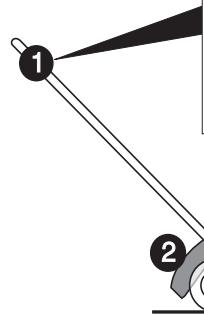
Figure 1
Danger
Never use a lawn mower if it has damaged safety devices or if there are no safety devices fitted.
Safety lever (1)
The safety lever stops the motor and cutting blades in an emergency. There must be no attempt to circumvent this function, which is crucial for your personal safety.
Ejection flap (2) or impact protection (3)
The ejection flap/impact protection protects you from being injured by the blade or by ejected solid objects. The lawn mower must always be operated with the ejection flap or impact protection.
Symbols on the appliance
On the appliance you will find various symbols on adhesive labels. They have the following specific meanings:

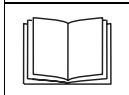
Attention! Please read the operating instructions before putting lawn mower into operation!
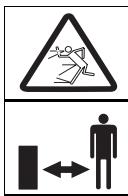
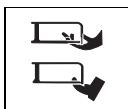
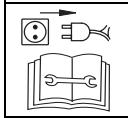
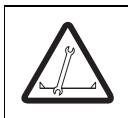
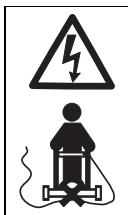
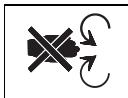
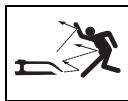
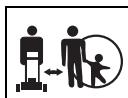
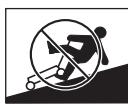
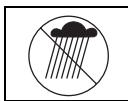
Always keep these symbols on the appliance in a legible state.
Keep third parties away from the danger area!
Always remove the mains plug before working on the cutting tools! Keep fingers and feet away from the cutting tools! Switch off the lawnmower and remove the mains plug before adjusting or cleaning it or before checking to see whether the connecting cable is tangled or damaged. Keep the connecting cable well away from the tools.
Keep the power cord away from cutting tools!
Never put your hands and/or feet in the vicinity of rotating parts.
Injury hazard due to grass or solid objects thrown out by mower.
No person, especially children, or animals should be allowed to stand within the working area.
Working on steep slopes can be dangerous.
Risk of injury by losing your footing - do not work in wet or damp conditions.
Symbols in the user's guide
Symbols are employed in the user's guide to indicate hazards or draw attention to important information. They have the following specific meanings:
Danger
Draws your attention to sources of potential danger associated with the task you are undertaking at the time which constitute a danger to persons.
Caution
This points out dangers that are connected with the described activity and that can cause injury to persons and damage to the lawn mower.
Note
This indicates important information and application tips.
Packaging remains, old appliances, etc., must be disposed of in accordance with the local rules and regulations.

Old electrical appliances are recyclable and do not belong in the household waste.
We therefore ask you to support us by contributing actively to the protection of resources and the environment and to dispose of this appliance - if possible - at an established reclamation centre.
Assembling the machine
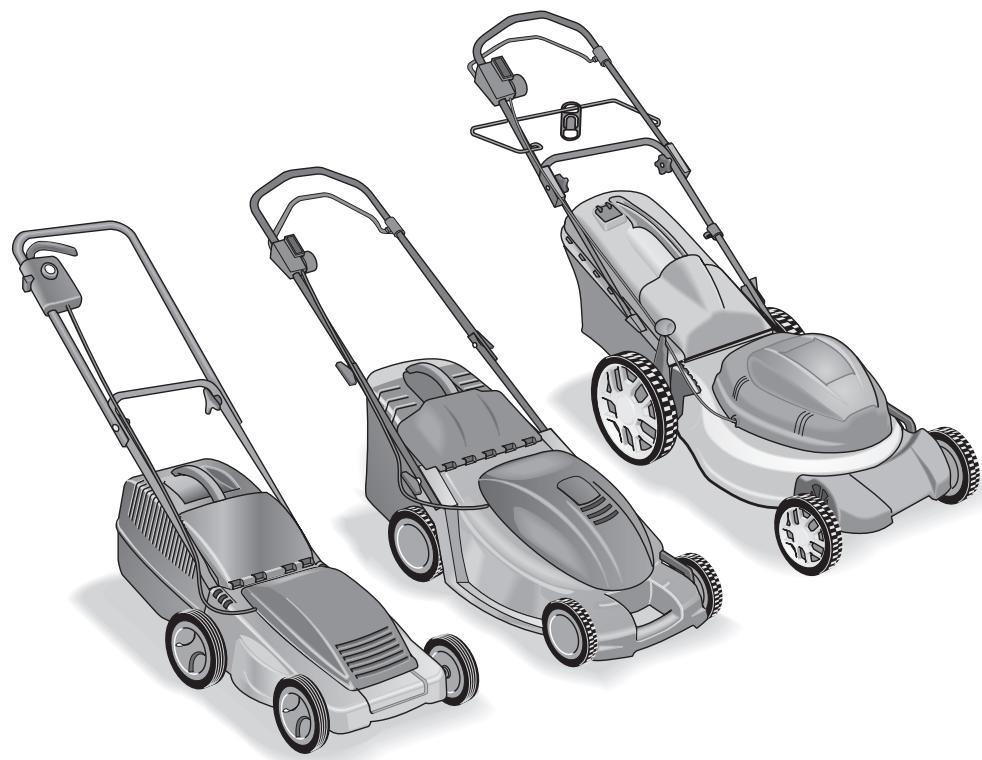
On sheet enclosed we will show you how to assemble your lawn mower and to put it into operation within a few simple steps by means of pictures.
Operating safety
Danger
Electric shock
- For safety reasons, the socket used to power the mower should be backed up by a residual-current-operated (FI) circuit-breaker which can be tripped by a max. current of 30mA .
- If you happen to cut through the cable when mowing, there is danger to life or risk of injury. Slowly step away from the machine. Unplug from the mains socket. When mowing always make sure that the connection cable never gets into the area of the blade.
Accident
- No person, especially children, and/or animals should be allowed to stand close to the mower while it is in use.
Risk of injury due to ejected stones or other objects.
Falling over
- Operate the vehicle at walking speed only.
- Be particularly careful when mowing in reverse and pulling the appliance towards you.
- When mowing on steep slopes, there is a risk of the mower tipping over and you could be injured as a result. Mow crossways to the slope, never upwards and downwards. Do not mow on inclines greater than 20% .
- Be particularly careful when changing the direction of travel and always pay attention to good footing especially on slopes.
- Mowing along perimeters involves a risk of injury. Mowing near edges, hedges, or steep inclines is dangerous. Keep a safe distance from perimeters when mowing.
- If the ground is wet the mower could slip due to reduced traction and overturn. Mow only when the grass is dry.
- Work only by daylight or in good artificial lighting.
Injury
- Always maintain a safe distance from the rotating tool by means of the steering handle.
- Never place your hands, feet, or other parts of the body near rotating parts.
- Stop the motor when the lawn mower has to be tilted and must travel over surfaces other than grass for transporting.
- Never lift or carry the appliance when the engine is running. Remove the mains plug from the socket beforehand.
- Switch off the motor and take out the mains plug when you release any jams, remove blockages in the ejection channel or before checking, cleaning, transporting, adjusting or working on the lawn mower.
- If you remove the grass catcher, you or other persons might get injured due to ejected, mowed materials or foreign bodies. Never empty the grass sack while the engine is running. To do this, switch off the lawn mower.
- Check the surface on which the appliance is to be used and remove all objects that the appliance can take up and fling out.
- If a foreign body (e.g. stone) is hit by the cutting blade or if the lawn mower starts vibrating abnormally: Stop the motor immediately and remove the mains plug. Check the appliance for damage, and have any damage repaired at a specialised garage.
- In the case of lawn mowers with rotating blades, never stand in front of the grass ejection holes.
Tripping over
While turning the machine around, you could trip over the mains cable and injure yourself. Feed the cable behind you in such a way that it stays out of the path along which you are walking while mowing, and is kept away from the cutting blades.
- Operate the vehicle at walking speed only.

Caution
Damage to the machine
- Stones, branches or other objects lying around can cause damage to the lawn mower and its operation. Remove all objects from the appliance's path before every use.
- Do not operate the machine if it is not in perfect working order. Subject the appliance to a thorough visual check before using it. In particular, check that protective equipment, electrical controls, current-carrying cables and threaded connections are not damaged and are secure. Replace damaged parts before operating the unit.

Operating times
Comply with the national/municipal regulations concerning the times when the mower may be used (if required, contact your local authority).

Directions
Details of specific locations on the machine (e.g. left, right) are always quoted as seen from the steering handle and while facing forward.
1. Attaching the grass sack
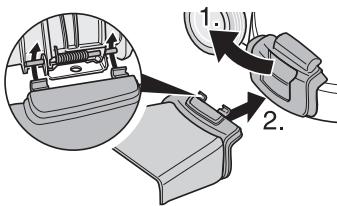
- Lift up the deflector flap and hook the grass sack onto the lawn mower.
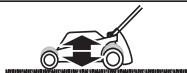
2. Set the cutting height
Set the cutting height of the grass as required.

Note
If units have individual wheel adjustment, set all wheels to the same height.
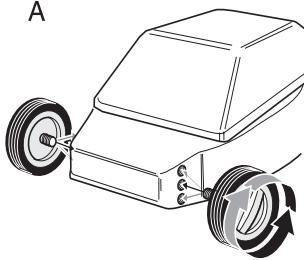
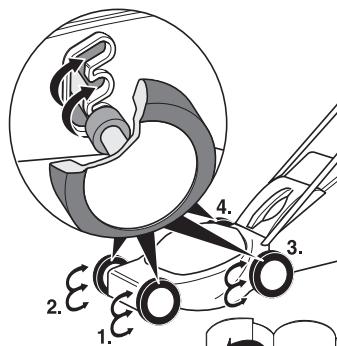
Model A:
- Unscrew the wheels and set to the correct height.
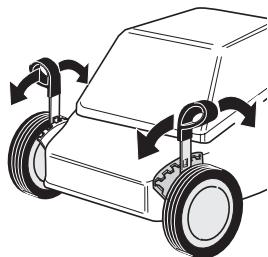
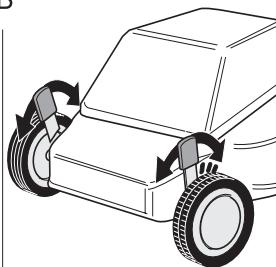
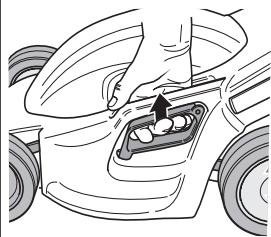
Model B:
Pull the flap and snap into place in the position required.
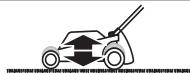
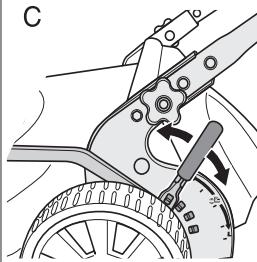
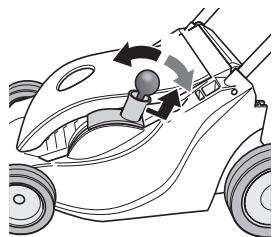
Model C:
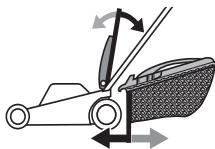
Advance or push back the lever of the central vertical adjustment and snap into place in the position required
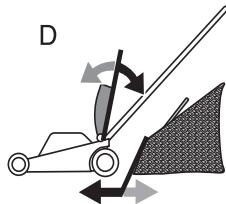
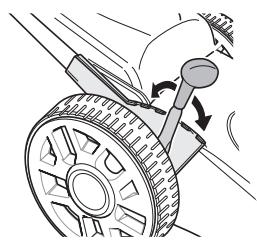
Model D:
- Confirm lock and simultaneously set the required height by either pulling or pressing on the handle/ lever. When releasing the lock, the setting selected snaps into place.
Model E:
Pull the wheel forwards and lock in the required position.
3. Connecting cable
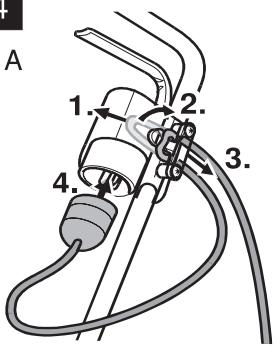
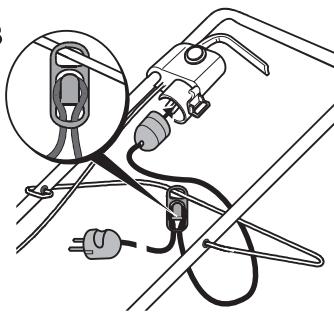
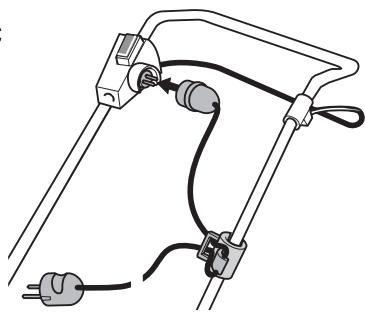
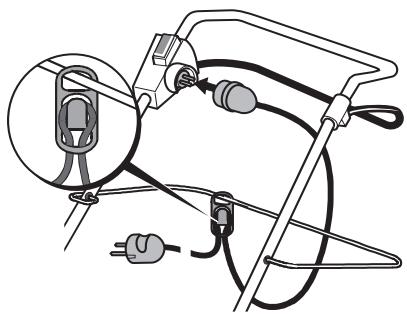
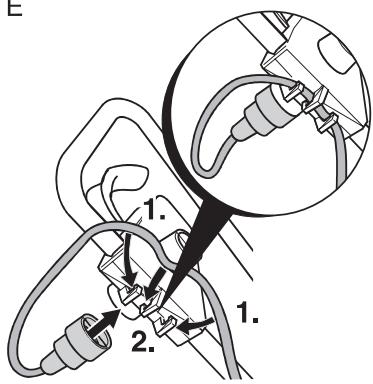
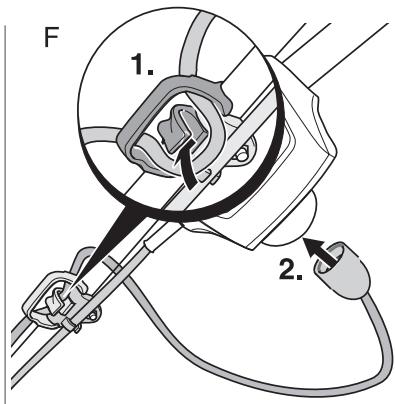
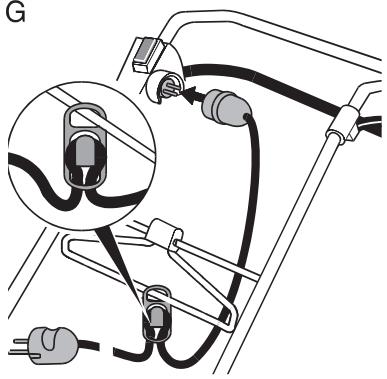
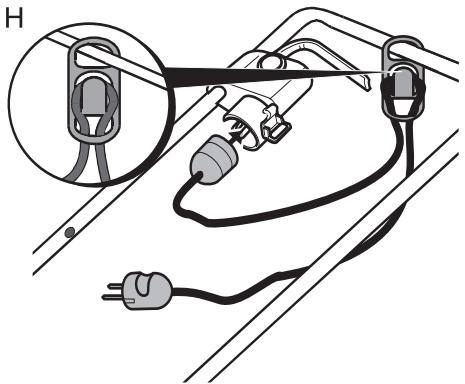
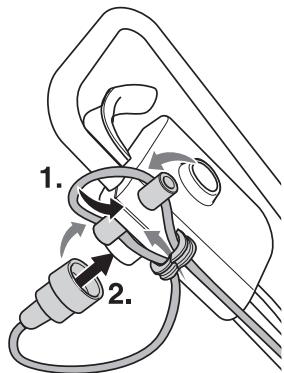
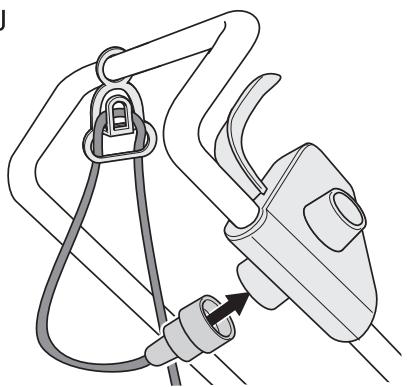
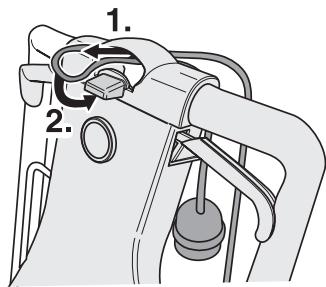
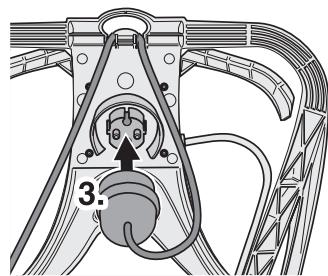
- Attach the mains cable to the strain-relief device.
- First connect the mains cable to the switch/connector combination on the machine, and then plug the cable into a 230 V socket.
4. Starting the engine
Danger
Keep hands and feet well away from the cutting blade.
Caution
- Do not tip the appliance when starting.
- If you try to start the lawn mower in long grass, the motor might overheat and become damaged.
- Keep the appliance on an even surface with little or the shortest possible grass.
Press the locking button and hold in place.
Pull the safety hoop and hold, then release the locking button.
The motor and the cutting tool start running. You can now begin work on the lawn.
5. Engaging/disengaging gear drive
(only for lawn mowers with gear drives)
Putting gear drive into gear:
Pull lever and hold.
Throwing gear drive out of gear:
Release lever.
6. Stopping the engine
Release safety hoop.
The engine and the cutting tool stop after a short time.
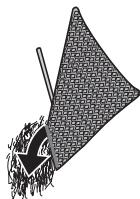
7. Detaching and emptying the grass sack
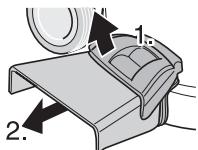
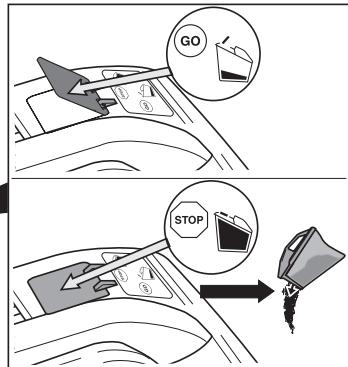
If grass clippings are left on the ground or the level display (optional, Figure 10) indicates that the basket is full:
- Release safety hoop and wait until the motor stops.
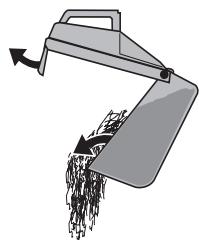
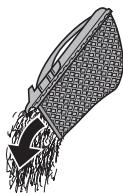
- Lift the deflector flap and unhook the grass sack.
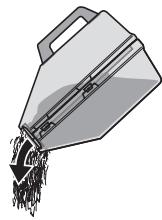
Empty out the contents.
8. Working without the grass sack
Whenever you detach the grass sack, the deflector flap drops down. When working without a grass catcher, the mowed grass is ejected directly downwards.
9. Retrofitting for mulching
(only optional for lawn mowers with a mulching accessory).
Units with rear discharge:
Raise the ejection flap.
Remove the grass catcher.
Insert mulch key (depending on model).
Lower the ejection flap.
Note
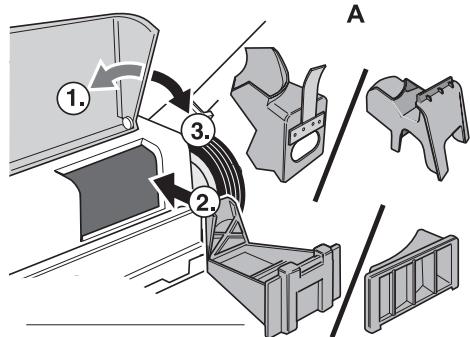
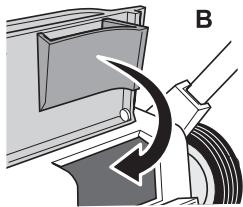
Models with integrated mulching function do not require a separate mulch key - a specially shaped rear flap assumes this function (Fig. 7B).
Units with side discharge:
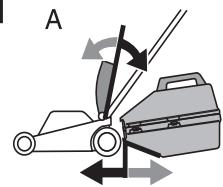
Remove side discharge - impact protection/mulch lock closes automatically (Fig. 8A).
10. Changing units over to side discharge
(dependently on model)
If fitted:
Remove grass catcher and lower the rear discharge flap.
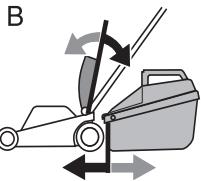
- Lift impact protection/mulch lock and attach side discharge (Fig. 8B).
11. After finishing work
Empty the grass sack.
- Unplug the connecting cable from the mains socket, and detach it from the machine.
- Allow the motor to cool down (approx. 30 minutes) before cleaning, servicing, storing or shutting down.
Tips on lawn care
Mowing
Lawns consist of various grass types. Frequent mowing promotes the growth of grass, resulting in strong roots and a firm sward.
If you seldom cut the grass, you will enhance the development of high-growing types of grass and other weeds, such as clover, daisies).
The normal height of a lawn is approx. 4 - 5cm . The grass should only be cut back by ^1/_3rd of the overall height at any one time, i.e. cut the lawn back to its normal height when it has reached 7 - 8cm
Try not to cut the grass shorter than 4 cm, otherwise the lawn will suffer during dry periods. If the grass has grown particularly high (for example, during a holiday period), cut it back to its normal height in several stages.
Mulching (using the accessories)
The grass is cut into small pieces (approx. 1 cm) and left to lie on the lawn. The lawn therefore retains a lot of nutrients. For the best possible result the grass must always be kept short, see also section "Mowing".
Observe the following when mulching:
- Do not mow wet grass.
- Never mow more than 2 cm.
- Mow slowly.
- Clean the cutters regularly.
Transporting the appliance
When transporting the machine in or on a vehicle, ensure that it does not move around unintentionally.
Remove the mains plug before lifting or carrying the lawn mower. Before manoeuvring the appliance over footpaths, access roads, or similar, stop the engine.
Caution
Ensure that the cable between the motor and the switch/connector combination does not become trapped or bent tight.
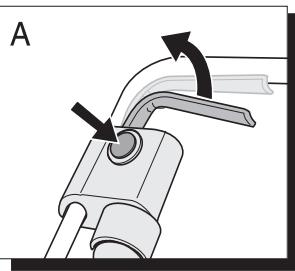
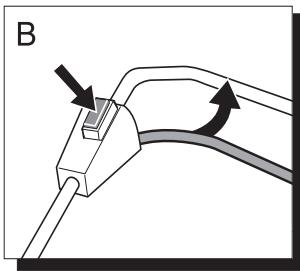
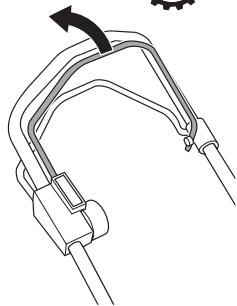
Figure 6
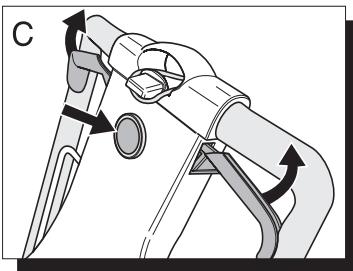
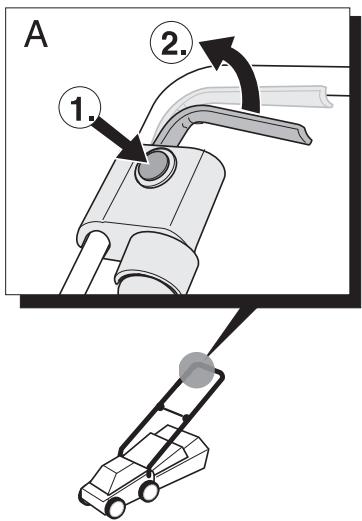
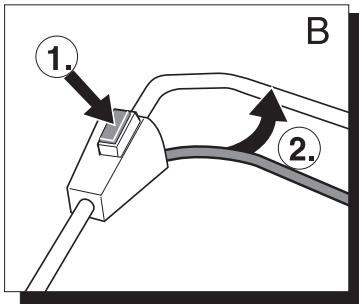
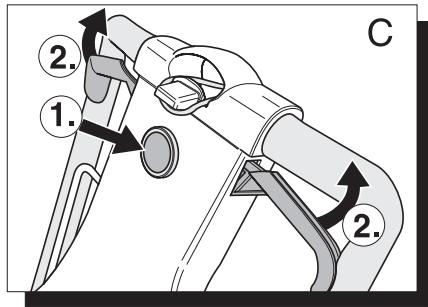
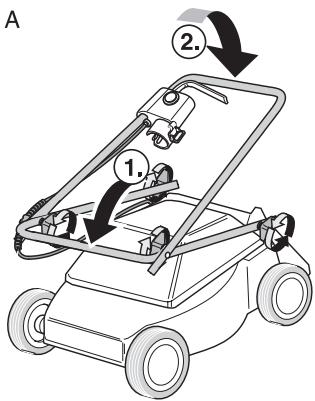
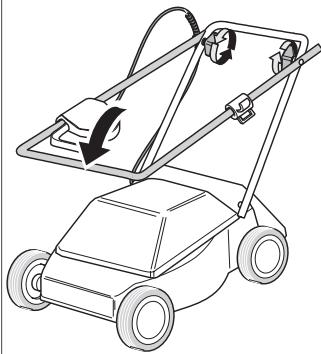
The steering handle can be folded down to facilitate storage.
Servicing/Cleaning
Danger
To protect against injury before all work on the appliance
- switch off the engine
- wait until all moving parts have come to a complete standstill.
- remove the mains plug
- leave the engine to cool (approx 30 min).
Servicing
Danger
To protect against injury from the cutters, have a specialist garage perform all work such as replacing or regrinding the cutters (special tools required).
Before each operation
(only in the case of lawn mowers with gear drives)
Check the point of contact of the clutch:
- The lawn mower should not drive forwards when the engine is running and when the gear drive is not engaged.
- The lawn mower should drive forwards when the engine is running and the gear drive is engaged.
If necessary, adjust the point of connection using the knurling tool/adjusting nut on the gear drive lever or Bowden cable.
Once a season
Lubricate the joints and twist springs on the deflector flap.
At the end of the season the appliance must be checked and serviced at a specialist garage.
Cleaning
Caution
- Do not spray the lawn mower with water, otherwise electrical components might get damaged.
- Clean the appliance after every use. Failure to clean the appliance can damage the materials and cause malfunctions.
Cleaning the grass sack
The easiest time to clean the grass catcher is immediately after mowing.
- Detach and empty the grass sack.
The grass catcher can be cleaned using a powerful water jet (garden hose).
- Allow the grass sack to dry out thoroughly before using it again.
Cleaning lawn mower
Danger
Work on the cutters can cause injury.
Wear safety gloves for your protection.
Whenever possible, always clean the appliance directly after mowing.
Tilt the lawn mower to the side,
clean the cutter chamber and the ejector cover with brush, hand broom, or cloth,
set the appliance down on its wheels, and remove all visible grass residue and other soiling.
Laying up the vehicle
Caution
Damage to mower materials.
Keep the vehicle only in clean and dry rooms when the engine is cold. Always protect the mower against rust if it is to be left for comparatively long periods, e. g. over the winter.
At the end of the season or when the vehicle will not be used for longer than a month,
Clean the machine and the grass sack.
To protect metal parts from rust, wipe them all down with an oil'd cloth (resin-free oil) or apply an oil spray.
Warranty
The warranty rules issued by our company or the importer apply to every country. As part of the warranty, we remedy malfunctions on your appliance free of charge provided that this malfunction is caused by a material or manufacturing defect. In the event of a warranty claim, please turn to your dealer or the nearest branch office.
Identifying and eliminating malfunctions
Malfunctions that occur during the operation of your lawn mower often have simple causes that you should know and be able to repair on your own. In cases of doubt your specialised garage will be pleased to assist you further.
| Problem | Possible cause(s) | Remedy |
| Motor does not start up | Mains cable not connected, or defective | Check cable, plug in, replace if required, or have it repaired by a qualified person |
| Building fuse for electricity supply has tripped | Switch on at fuse, plug into socket with higher fuse-rating if necessary, or have one installed by a qualified person |
| Defective switch/connector combination | Arrange for repair in a specialist workshop |
| Humming noise from motor, but it does not rotate | Lawn mower is standing in long grass | Place the lawn mower onto a surface with shorter grass |
| Blade is blocked | Pull out the mains plug, remove the blockage |
| Defective capacitor | Arrange for repair in a specialist workshop |
| Motor cuts out suddenly | Plug has come loose | Check cable, ensure that it is fitted into strain-relief device, and reconnect |
| Overload protection has switched off | Pull out mains plug. Remove blockage in the ejector. Wait for approx. 10 min. Switch on again. |
| Unusual noises (rattling, clanging, knocking) | Loose bolts, nuts or other securing components | Tighten parts. If the noises persist: Contact a specialist workshop |
| Excessive vibration | Damaged blade drive shaft or defective cutting blade | Switch OFF appliance immediately. Have defective parts replaced in a specialist workshop. |
| Wheel drive does not work | Drive-belt or gears are faulty | Damaged parts must be replaced at a specialist garage |
| Cut is not clean or speed of motor has dropped | Grass too long | Set larger cutting height, if necessary mow twice |
| Grass is left behind or Grass sack is not filled | Grass too damp | Let the lawn dry |
| Ejector clogged | Unplug from mains, and remove blockage |
| Cutters blunt | Cutters must be replaced or reground at a specialist garage |
| Grass sack full | Switch off engine. Unload grass catcher |
| Dirty grass sack | Switch off lawn mower. Clean air ducts in the grass catcher |


