Sequel - Enceinte audio Martin Logan - Notice d'utilisation et mode d'emploi gratuit
Retrouvez gratuitement la notice de l'appareil Sequel Martin Logan au format PDF.


| Type de produit | Enceinte électrostatique |
| Marque | Martin Logan |
| Modèle | Sequel |
| Dimensions (H x L x P) | 160 cm x 48 cm x 66 cm |
| Poids | 34 kg |
| Alimentation | Secteur (câble d'alimentation fourni) |
| Réponse en fréquence | 28 Hz - 22 kHz |
| Sensibilité | 89 dB |
| Impédance nominale | 4 ohms |
| Type de haut-parleur | Électrostatique (panneau) + woofer dynamique |
| Puissance recommandée | 20 - 200 W RMS |
| Fonctions principales | Reproduction sonore haute fidélité, panneau électrostatique, câblage bi-câblage possible |
| Entretien et nettoyage | Dépoussiérer le panneau avec un chiffon doux et sec; ne pas utiliser de produits chimiques |
| Sécurité | Débrancher avant nettoyage; ne pas exposer à l'humidité |
| Pièces détachées et réparabilité | Contactez un revendeur agréé Martin Logan |
| Informations générales | Enceinte colonne, finition noire, conception bipolaire |
FOIRE AUX QUESTIONS - Sequel Martin Logan
Questions des utilisateurs sur Sequel Martin Logan
0 question sur cet appareil. Repondez a celles que vous connaissez ou posez la votre.
Poser une nouvelle question sur cet appareil
Téléchargez la notice de votre Enceinte audio au format PDF gratuitement ! Retrouvez votre notice Sequel - Martin Logan et reprennez votre appareil électronique en main. Sur cette page sont publiés tous les documents nécessaires à l'utilisation de votre appareil Sequel de la marque Martin Logan.
MODE D'EMPLOI Sequel Martin Logan
the sequel
User's Manual
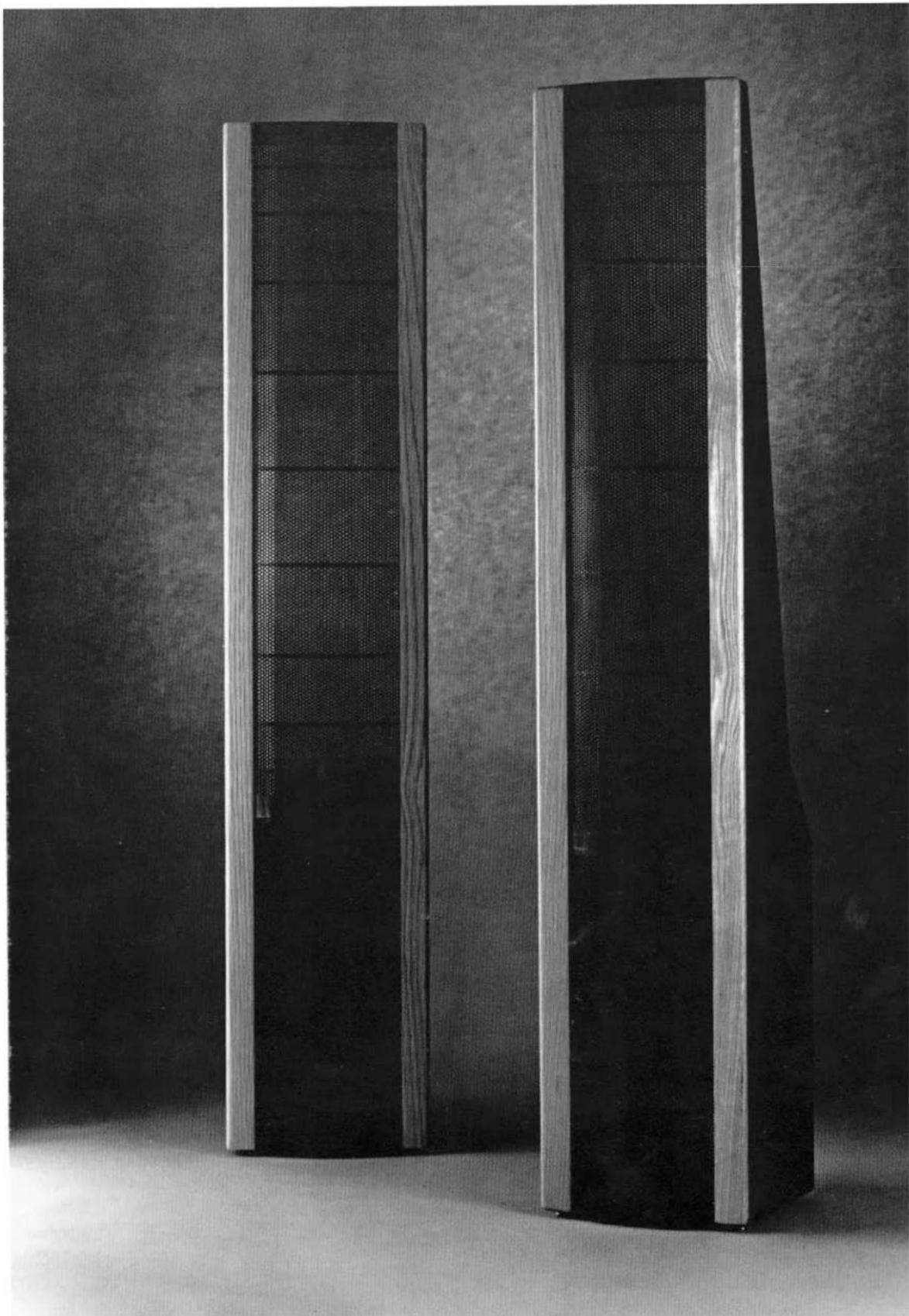
natural_image
Two wooden server racks with mesh windows, one upright and one tilted (no text or symbols visible)MARTIN·LOGAN, LTD.
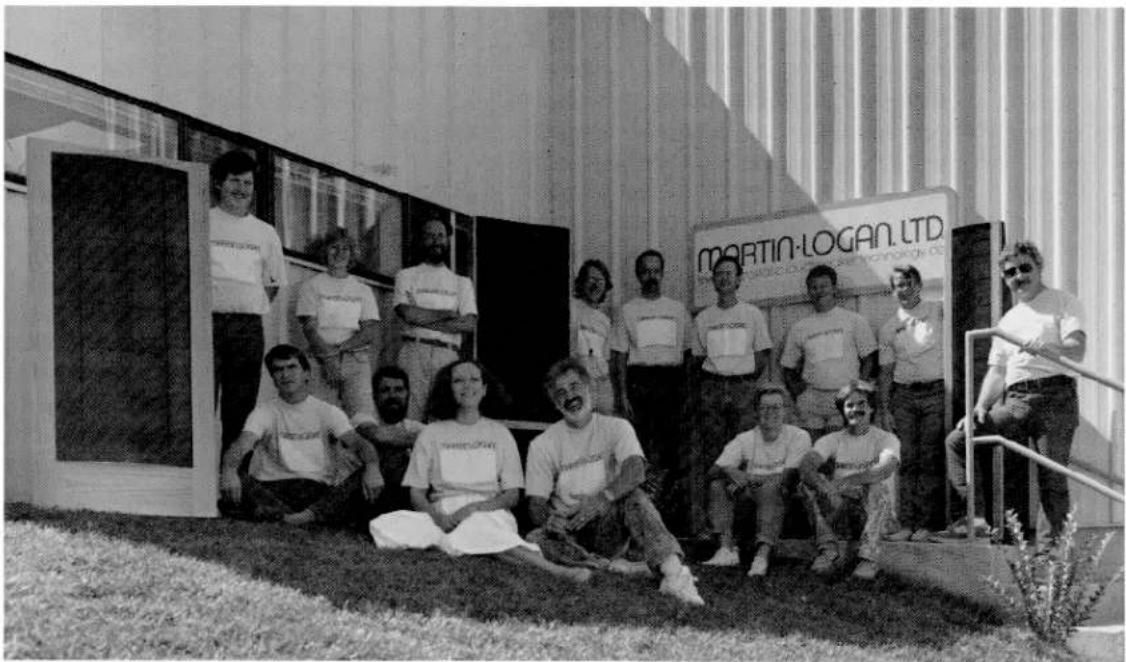
It seems as if music has always been an essential part of our lives. Outside of our engineering staff, almost half of our people have degrees in music. As you might imagine, were you to tour our facilities, you would do so to a continuous background of music of every taste. This is who we are.
But there is something else. At MARTIN•LOGAN, we believe in quality. We manufacture loudspeakers. That's our business. But we are obsessively devoted to quality. It is the raw material with which we begin. It is the value that directs our technology. And, in the end, it takes the form of the finest loudspeakers in the world. That's the way we think.
And we design our products for those who share with us this way of looking at things. . .people who don't want a hundred insignificant possessions but, instead, just those few that are clearly the very best of their kind. To you we say hello. And thank you for investing in us. You will be well rewarded.
INSTALLATION IN BRIEF
We know you are eager to hear your new MARTIN•LOGAN Sequels so let's get them up and running first and then we can go into more detail as you wish.
UNPACKING
Carefully remove your new Sequels from their packaging. Chromed foot glides are attached for easy maneuvering. Later, if the speakers are to be placed on carpet, you will want to use the coupling spikes we have included as they can significantly improve bass response and spatial imaging. But they will penetrate carpet and make the speaker more difficult to move about so, for now, use the glides.
PLACEMENT
Place each Sequel speaker at least two feet in from any wall and angle them toward your listening area as you would with conventional speakers. This is only a starting point. We will say more about this in the pages that follow.
WARNING!
TURN YOUR AMPLIFIER OFF BEFORE MAKING OR BREAKING ANY CONNECTIONS!
THE CHASSIS IS EARTH GROUNDED AND CAN PRESENT A SHORT CIRCUIT TO YOUR AMPLIFIER IF CONTACT IS MADE!
CONNECTION (SIGNAL)
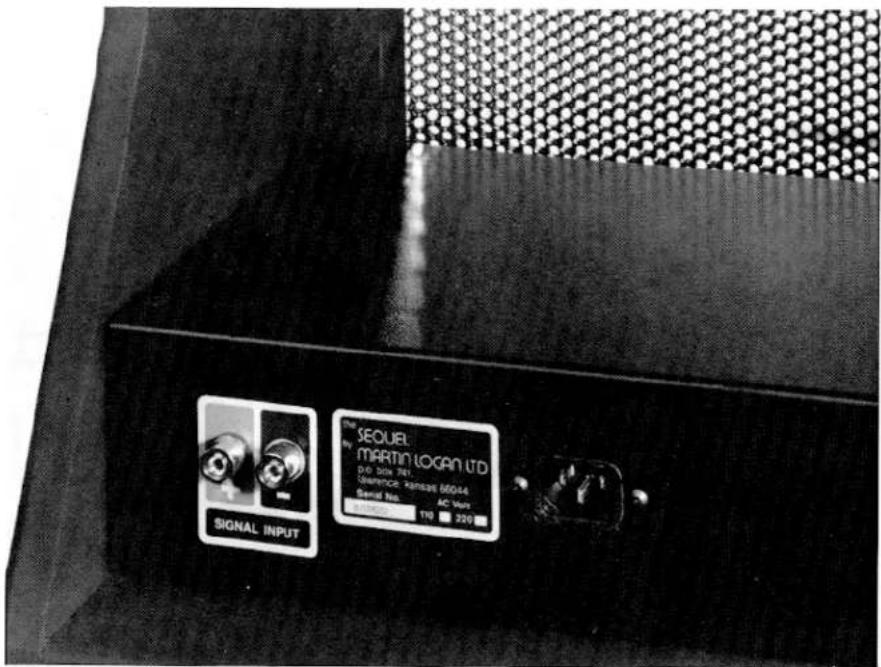
Attach high quality speaker cables to the 'signal input' receptacle on the rear panel making certain that you have matched positive to positive and negative to negative in a consistent manner. 'Spade' or 'Banana' connectors are suggested for optimum contact and ease of installation.
CONNECTION (AC)
MARTIN•LOGAN Sequels require AC power to energize their electrostatic cells. Using the AC power cords provided, plug them in, making sure that you have made a firm connection, first to the AC power receptacle on the rear panel and then to a wall outlet. Extension cords may be used, if necessary, since the power requirement is extremely small.
That's it. Go ahead and turn your system on.
HOW TO GET THE MOST OUT OF YOUR SYSTEM
First, we should tell you that your speakers will achieve their optimum performance level only after they have been played fifty to sixty hours. This is because both the materials out of which they are made and their electrical architecture take some operational time to cure or settle in. As they age they will actually improve. You will eventually obtain more extended bass energy and high end response, and, like a fine vintage, the process takes some time. But there are several things you can do now to get the most out of your new system.
As has been said before, the ideal listening experience ought to be indistinguishable from the original musical event. Of course, much of today's popular music simply never did exist at any one time in any one place. That is, these recordings are composites or amalgams created in studios and are not recordings of any singular, real event. As such, they may be quite good but still lacking. However, most classical and jazz recordings as well as theatrical performances are reproductions of real events and, therefore, do contain the sonic information necessary to restore the spatial and timing relationships of the original musical performance. This is one reason why MARTIN•LOGAN speaker systems are unequaled in their ability to recreate musical realism. They can and do accurately restore the original performance environment. One of your objectives, then, is to place your speaker systems where they can best achieve these results.
As you may know, the size and shape and texture of your listening environment, your furniture, the distance between you and your speakers, the angle of placement, their positions in relation to the surfaces of the listening room, and of course, the other pieces of equipment in your audio system, all affect your speakers' performance, and every installation is unique. But we can tell you what to listen for, what to try, what to expect, and why.
PLACEMENT
To fully realize your new system's potential you have to participate. You have to focus it. You have to properly locate your ESL's.
To begin with, always make sure that both speakers are the same distance from walls behind or beside them and that their 'toe in' or angle is the same. It is generally true that, as you move your speakers farther forward into the listening environment, you will derive more spaciousness from them. Towing them toward the middle of the listening area will enhance brightness. Damping down the wall behind your speakers will somewhat diminish their brightness. We might add that if, in your judgment, back reflection cannot be controlled to your satisfaction...if, for example, the wall behind the speakers is quite hard as would be the case if it were mostly glass or stone, or if you must place the speakers closer than two to three feet from the backwall...then you may want to try a sound absorption device. There are some excellent designs available and your dealer can suggest an effective solution in this area.
As you place and listen, place and listen, keep in mind that tight bass and clear resolution indicate proper placement and that the acoustical image is in focus. Don't hesitate to experiment but give each new combination of positions a thorough test. The time you take will be well spent.

natural_image
Diagram showing a device emitting sound waves with two boxes nearby (no text or symbols)A suggested arrangement for a wide room.

natural_image
Top-down diagram of a room layout with furniture and lighting fixtures (no text or symbols)A suggested arrangement for a long room.
DISPERSION
As you can see from the illustrations, your Sequel speaker systems project a controlled dispersion pattern. Each Sequel is a four foot line source beginning two feet above floor level. They are nominally intended for a seated audience. If you lie down on the floor in front of them or if you stand a bit taller than most, you will notice a pronounced reduction in mid to high frequency distribution. Raise up or duck down into the dispersion pattern and the full spectrum is “restored.” This vertical dispersion profile minimizes interactions with the floor and the ceiling. If you want to, you can pitch your Sequels either slightly forward or backward to lower or raise the pattern. This is accomplished by adjusting their screw in feet. But we can’t recommend doing so unless your speakers face the listening area in parallel, as in figure 2. If they are toed in at all and then also pitched, the resulting acoustical image will be unpredictably elongated or foreshortened.
You will also notice that each Sequel launches a 30^ dispersion pattern when viewed from above. This horizontal dispersion field gives you a choice of good seats for the performance while minimizing interactions with side walls.
INTERACTION
MARTIN•LOGAN Electrostatic Loudspeakers (ESL's) may properly be referred to as bipolar radiators. This means that they produce sound from both their fronts and their backs. A consequence of this design is that musical information radiated by the back of the ESL can be absorbed or reflected by the wall behind them and, if reflected, may arrive either in or out of step with the information produced by the front of the speaker. Your MARTIN•LOGAN Sequels employ a highly refined dispersion geometry designed to minimize problematical reflection but, at least in theory, there are both a number of locations within your listening room that are ideally suited for your speakers and an equal number that are poorly suited for them. Indeed, these optimum performance locations are a result of the way in which your speakers interact with your room. This effect is the product of the almost optical phase coherency of your ESL's and, far from being a disadvantage, actually demonstrates their extreme resolution.
COUPLING
Now that you have them where you want them, and assuming they are on carpet, it is time to attach the coupling spikes. At this point, you may want to mark the speakers' positions with adhesive tape. Now lay the speakers down on either side and replace the glides with the spikes. Now stand each speaker back up, carefully restoring them to their previous positions. The spikes increase the pressure per square inch exerted by the weight of the system, thereby more effectively coupling the mass of the floor to that of the speaker. This stabilizes the wave launch platform of the speaker and markedly tightens bass response.

natural_image
Line drawing of a human figure seated in a chair facing a vertical panel, with no text or symbols present.Your Sequel speaker system is a 4' line source when viewed vertically. Actual height above the floor is from two feet to six feet.

Martin-Logan ESL's deliver a 30° wave launch dispersion pattern distributed horizontally.
ASSOCIATED EQUIPMENT
Your MARTIN•LOGAN dealer was carefully selected by our company because he is knowledgeable, experienced and dedicated to musical excellence. He has the ability to help you acquire the very best in audio equipment. He is likely to choose that equipment from among a small group of manufacturers that is committed to the faithful recreation of music. Your new ESL's are quite honest in revealing the relative strengths and weaknesses of the equipment used with them. As time goes by, you may find it instructive to discuss with your dealer the merits and advantages of carefully upgrading certain pieces of associated equipment.
SIGNAL SENSING SMART CIRCUIT
Your MARTIN•LOGAN Sequels are equipped with a device we call the signal sensing smart circuit. Here's how it works.
The circuit automatically diminishes the bias voltage of the ESL cell to conserve energy and prolong the life of the system. If you like, you can think of it as an attendant who turns the lights down when you aren't using them. Your ESL's don't use much energy anyway (they may cost you about as much to operate as one 15 watt light bulb) But, if you leave them on and unattended, after five minutes of the absence of any program material, the circuit will turn them down about 70% .
APPLICATIONS QUESTIONS
Q. Is there likely to be any interaction between the ESL and a T.V. in an A/V system?
A. Actually, there is less interaction between a T.V. and an ESL cell than between a T.V. and a conventional system. We do recommend that you keep the Sequel at least a foot away from a T.V. because of the dynamic woofer it employs.
Q. Can I use conventional speaker systems and my Sequels at the same time with the same amp?
A. Yes. The Sequel is a hybrid system itself in that it uses both a capacitive ESL cell and an inductive dynamic driver.
Q. How much power should I use?
A. Thirty watts a side will sound better than it ever has before. They can handle two hundred clean watts per channel.
Q. Should I unplug my Sequels during thunderstorms?
A. Yes. Or before. It's a good idea to disconnect any sensitive electronic device during stormy weather.
Q. How strong is the electrostatic charge present on the ESL cell?
A. The answer depends a little on how much you already know about such things but one way to express it is to say that the surface voltage is about 10% or so of what it is on the dust cover of your turntable. . .very slight. For more information, please see "understanding the technology."
TROUBLE SHOOTING
Problem: No highs.
Remedy: Make sure both speakers are plugged in. The ESL cell does require an AC charge.
Problem: Too much brightness.
Remedy: Try toeing the speakers more nearly straight into the room. Also, try damping down the wall behind them.
Problem: Muddy bass.
Remedy: Try moving the speakers closer to side walls. Also, if you have not, try attaching the coupling spikes.
Problem: Poor imaging.
Remedy: Make sure both speakers are the same distance away from walls and that they are tilted and toed the same. Try moving away from the back wall and the side walls.
Problem: Funny noises. Popping or snapping sounds.
Remedy: These are electrostatic speaker systems and it is in the nature of the technology that they be sensitive to dust and lint and to changes in humidity and barometric pressure. These occasional noises are harmless and will not hurt you or your speakers. If you want, you can vacuum them or blow them off with compressed air. Do not spray any kind of cleaning agent on or very near them.
UNDERSTANDING THE TECHNOLOGY
"What is an ESL? How is it different from a more conventional speaker? Why is it better?"
All fair questions. Here goes.
A conventional, dynamic speaker uses magnetism to move a piston. An electrostatic loudspeaker (an ESL) uses electrostatic force to energize a membrane or diaphragm.
All speaker systems transform electrical information into mechanical motion by compressing and rarefying the air. These variations in air pressure have both duration and intensity. How long they last, given in a number of changes per second, is their frequency. The extent of the variation, which is perceived as loudness, is its amplitude.
The tympanic membrane in your ear responds to these pressure waves somewhat in the way that a boat rises and falls on the waves of a body of water. Then your inner ear transforms these mechanical variations into electrochemical transmitters which conduct the message to the brain. There the information is recognized, processed, and comprehended as a meaningful event.
The range of frequencies you can hear is usually given as 20 to 20,000 cycles per second (20-20 KHz). It is useful to know that a 20,000 Hz note is about 1/2 inch long, while the wave length of a 100 Hz tone is about ten feet and that of a 50 Hz wave form about twenty feet or the size of some rooms.
As you can see, a speaker system must be both rapid, to accurately reproduce a sonic event that may last only 1/40,000th of a second, and powerful, to faithfully recreate, perhaps fifty times a second, a massive variation that may be as big as your house.
In other words, a speaker system must possess both articulate speed and abundant power, working together. And this describes the Martin-Logan Sequel. It is a hybrid system that utilizes the inherent advantages of an electrostatic diaphragm and an electrodynamic driver, working together.
So far, so good. But there is much more. To fully understand the superiority of the electrostatic loudspeaker, we must know exactly how sound occurs and how we perceive it.
Most manufacturers of speaker systems use multiple driver configurations. Your ear, however, uses a single diaphragm to receive this information. The microphone that witnessed the original musical event used a single diaphragm to transform it into electrical information. The point is sound does not occur as discrete highs and mids and lows. Rather, the original performance produces a continuum of complex waveforms that, for any given moment of time, consists of a matrix of relative volumes, superimposed frequencies, and arrival time relationships.
Multiple drivers can compromise this complex and precise pattern causing problems ranging from poor imaging to poor transient response. By contrast, an ESL avoids these problems by driving a single diaphragm over virtually the entire audio spectrum. The MARTIN•LOGAN ESL diaphragm behaves as if it were a rigid piston driven uniformly over its entire surface. And the mass of this rather large radiating area is extremely small. The entire membrane in each Sequel weighs less than a cubic inch of air.
And, unlike some other electrostatic systems, the MARTIN•LOGAN ESL employs what is called a push pull arrangement. This means that the transducer diaphragm is pushed and pulled via alternating electrostatic force between two conductive, metal plates called stators. As the constantly charged membrane approaches one stator, it recedes proportionately from the other. The forces acting upon it are, therefore, on average, always the same strength and the result is linearity. The practical benefit of this design is extremely low distortion with even very large excursions.
We should also add that our special super resistive membrane surface (1,000,000,000 ohms/square inch) makes possible a high voltage field while remaining stable enough to run in free air with no shock hazard and that, hand in hand, a proprietary deposition process insulates the stator surfaces to 10,000 volts. In other words, the ESL is safe, stable, and uncompromising.
But all of that is not quite enough. And until MARTIN•LOGAN, all planar transducers suffered from the same physical limitation. When a flat diaphragm generates a signal of which the wavelength is smaller than the transducer itself, the result is beaming. You had to sit in the so called "sweet spot." Some manufacturers tried multiple flat panels but produced a "venetian blind" effect. Some have tried either mechanical or electrical "lenses" but these add their own sonic character to the sound.
MARTIN•LOGAN engineers chose an elegant solution: extremely fine tolerances within a controlled cylindrical architecture. The MARTIN•LOGAN ESL is curved in space and flat in time.
Why? Because any loudspeaker excites its environment to create a multiplicity of equivalent sources and ghost positions. Time delay distortion is not just a function of multiple driver interface problems.
It is also a kind of distortion caused by this multiplicity of delayed equivalent sources. And unless a speaker system has listener directed dispersion, its interaction with the listening room will contribute to a confusion of relative volume, arrival time, and image placement.
The answer is to present this precious sonic information with what we call controlled dispersion geometry. This 30 degree wavelaunch pattern minimizes room boundary interaction while projecting an even spectral balance to a large listening group. So, you get high efficiency, low distortion, wide frequency response, dynamic subwoofers, sophisticated crossover circuitry, optical grade sonic imagery, and phase coherent, curvilinear ESL technology. And music, music, music.
SYSTEM SPECIFICATIONS
\$2.00
| ESL Transducer | 12" W x 48" H |
| Frequency Response | 28 - 24,000 Hz + 2dB. |
| Dispersion | Horizontal: 30 degrees.Vertical: 4' line source. |
| Sensitivity | 88 dB 1 watt/meter. |
| Crossover Profile | 125 Hz centre.6 dB per octave, phase coherent, first octave.12 dB per octave, thereafter. |
| Components | 100% oxygen free copper coils,polypropylene bypass capacitors. |
| Woofer Type | 10" High excursion, super light, highrigidity cone with doublestacked magnet assembly. |
| Voice Coil Type | Electrically tapered magneticcontour, servoless. |
| Power Handling | 200 watts per channel |
| Recommended Amplifier Power | 80-160 watts per channel |
| Weight | 110 lbs. each. |
| Footprint | 14" W x 13" D |
| Height | 71.5" |
MARTIN·LOGAN, LTD.
the electrostatic loudspeaker technology co.
p.o. box 741, 2001 delaware
lawrence, kansas 66044
1-913-749-0133
telex 262817 mlesl
- the sequel
- User's Manual
- MARTIN·LOGAN, LTD.
- INSTALLATION IN BRIEF
- UNPACKING
- PLACEMENT
- WARNING!
- TURN YOUR AMPLIFIER OFF BEFORE MAKING OR BREAKING ANY CONNECTIONS!
- THE CHASSIS IS EARTH GROUNDED AND CAN PRESENT A SHORT CIRCUIT TO YOUR AMPLIFIER IF CONTACT IS MADE!
- CONNECTION (SIGNAL)
- CONNECTION (AC)
- HOW TO GET THE MOST OUT OF YOUR SYSTEM
- DISPERSION
- INTERACTION
- COUPLING
- ASSOCIATED EQUIPMENT
- SIGNAL SENSING SMART CIRCUIT
- APPLICATIONS QUESTIONS
- TROUBLE SHOOTING
- UNDERSTANDING THE TECHNOLOGY
- SYSTEM SPECIFICATIONS
Marque : Martin Logan
Modèle : Sequel
Catégorie : Enceinte audio