
Twin It! - Jeu de société Gamewright - Notice d'utilisation et mode d'emploi gratuit
Retrouvez gratuitement la notice de l'appareil Twin It! Gamewright au format PDF.


| Type de produit | Jeu de société |
| Catégorie | Jeu de rapidité et d'observation |
| Marque | Gamewright |
| Modèle | Twin It! |
| Nombre de joueurs | 2 à 6 joueurs |
| Âge recommandé | À partir de 6 ans |
| Durée de partie | Environ 15 minutes |
| Contenu de la boîte | 110 cartes illustrées |
| Dimensions de la boîte | 12 x 9 x 3 cm |
| Poids | 200 grammes |
| Alimentation | Aucune (jeu de cartes) |
| Fonction principale | Associer les paires de cartes identiques le plus rapidement possible |
| Entretien et nettoyage | Essuyer avec un chiffon sec et doux. Éviter l'humidité. |
| Sécurité | Ne convient pas aux enfants de moins de 3 ans (risque d'étouffement par petites pièces) |
| Pièces détachées et réparabilité | Non applicable (jeu complet non démontable) |
| Informations générales | Jeu de société de la marque américaine Gamewright, récompensé pour sa simplicité et son rythme effréné. |
FOIRE AUX QUESTIONS - Twin It! Gamewright
Questions des utilisateurs sur Twin It! Gamewright
0 question sur cet appareil. Repondez a celles que vous connaissez ou posez la votre.
Poser une nouvelle question sur cet appareil
Téléchargez la notice de votre Jeu de société au format PDF gratuitement ! Retrouvez votre notice Twin It! - Gamewright et reprennez votre appareil électronique en main. Sur cette page sont publiés tous les documents nécessaires à l'utilisation de votre appareil Twin It! de la marque Gamewright.
MODE D'EMPLOI Twin It! Gamewright
2 to 6 players

Ages 8+
RULES OF PLAY
Content
135 cards
1 60. second sand time
Overview
Twin It! is a game of fast visual reflexes.
The aim is to spot and collect 2 identical
pattern cards. Before playing, choose
which of 3 modes you want to play:
Competitive, Team, or Cooperative
COMPETITIVE MODE
Object
Win 5 sets of cards (a s
or 3 identical cards).
Set Up
- Shuffle the cards thoroughly and deal
them out as equally as possible between
the play
- Stack your cards in a pile in front of
you so everyone can see them
How to Play
The player wearing the most colors begins and play continues to the left. On your turn, reveal the top card from your pile (turning it towards the other players and not towards you) and place it in the center of the playing area, wherever there is space.
At any time, as soon as anyone spots 2 identical patterns, they must quickly put a hand (or finger) on each of the 2 cards to win the pair. (Use both hands!)
If you grab a match, take both cards and stack them (matching pattern side up) next to your draw pile, accessible and visible to everyone. Then reveal the top card from your draw pile and the game continues.
When looking for matches, all visible patterns are taken into account: those placed in the middle of the playing area those visible on the other players' draw piles those on the pairs which have already been won

flowchart
graph TD
    A["Player 1"] -->|Draw Pile D| B["Player 2"]
    B -->|Won Cards| C["Player 3"]
    C -->|Draw Pile| A
    C -->|Won Cards| B
Player
Take Three!
Certain patterns appear 3 times in the deck. If you spot a pattern that appears for a third time, put one hand on a previously won pair and one hand on the third card and win all 3 cards.
Note: In the very rare event that 3 identical cards appear at the same time, the player who puts his hands on 2 cards wins the pair, then the third is turned over. Otherwise the 3 cards are turned over.
Chain Reactions
When you win a pair that includes the top card from a player's draw pile, it is possible that a new pair appears when the card underneath is revealed. This can lead to a chain reaction. In this case, the last player to have won cards restarts the game by turning over the top card of their pile.
Resloving Ties
- If 2 players have their hand on the same card, the player whose hand is on the bottom takes priority.
Bullman, 1985
- If 2 players both put one hand on one of the 2 cards in a game, sent to 3 and then
the 2 cards in a pair, count to 3 and then turn the pair over at the same time.
form the pull over the same time
- If a card is on a player's pile, it is turned
over into the center of play.
- If the tie includes a previously won pair,
only turn over the card in the center of play
or the top card of the pair.
Note that
Mistakes
If you put your hands on 2 cards that do not make a pair, you lose (where possible) a pair you have already won. (Put it at the bottom of your pile and restart the game.)
Ending the Game
The game ends as soon as a player has won 5 sets of cards. Reminder: a set is made up of 2 or 3 identical card
FORBIDDEN PATTERN VARIATION
When games are played consecutively, the player who has just won takes 3 cards with different patterns and places them next to their draw pile. During the game, they must not make a pair with them. If they do, it is considered a mistake. However, other players can make pairs with them and can therefore free them from their "forbidden" patterns.
TEAM MODE
(4 to 6 players)
Form 2 teams who will go head to head. The same rules as the previous game mode apply except that instead of placing your hands on both cards, you only place your hand on one and your teammate must place a hand on the other one to win the pair. (If you put your hands on both of them, it is considered a "mistake".)
If you have uneven teams, the team with
the most players can apply the
"Forbidden Pattern" rule
(see the end of the 1st mode)
The game el
as one team bar won

COOPERATIVE MODI
(1-6 players)
Be careful - time is of the essence here! Shuffle the cards well and make a pile in the center of the playing area. Place the sand timer within easy reach.
Ready, set, go! Start the timer, spread the cards out, and all players simultaneously try to make as many pairs or triples as possible before time runs out. You can talk, mix the cards, and turn them over as many times as you like.
When the time is up, count the number of valid pairs and triples you collected: score 1 point per pair and 2 points per triple. Check the chart on the right to see how you did.
COMPETITIVE VERSION
This mode is played the same way as cooperative but the points are counted individually at the end of the minute. The winner is the player with the most points. However, you cannot steal your opponents' sets.

COOPERATIVE MODE POINTS
| No. of Players | Points | Points | Points Points | |
| 1 | >4 | 5-6 | 7-9 | 10+ |
| 2 | >9 | 10-12 | 13-17 | 18+ |
| 3 | >14 | 15-18 | 19-26 | 27+ |
| 4 | >19 | 20-24 | 25-35 | 36+ |
| 5 | >24 | 25-30 | 31-44 | 45+ |
| 6 | >29 | 30-36 | 37-53 | 54+ |
| BEGINNER: INTERMEDIATE: EXPERT: ADVANCED: | ||||
| Better luck next time... | On the right track! | Wall done, you have sharp eyes! | Congratulations on on incredible performance! | |


A Word from Gamewright
As you may already know,
we're fans of fast visual games
(see Slamwich, Wig Out, and
Imagine) but Twin It! takes this
to a whole new level!
Artist and game designer Terry (www.ewarstof.com)
Tom Vudarchex created a 10 array of colorful patterns.
(118 to be exact) that are
(119 to be exact) that are unique and yet close enough
to cause confusion. As you
play, you'll not only hone visual
acuity, but you'll also strengthen
hand-eye coordination and
even short-term memory
Gome by Nathalie Souvier, Rami Souvier
Gains by Nandore Sumber, Kinh Sumber and Tom Yuarchex
Graphic design by Tom Vuarchex
Copyright Licensed with permission from
cocktailgames.com
(二)
70 Bridge Street Newton, MA 024
Tel: 617-924-6006
Email: jester@gamewright.com
©2018 Gamewright
a division of Ceaco, Inc.
At worldwide rights reserved.
FOLLOW US!
F
m = 311
C
。
-
。
C
4
Ojana
nighthoroe
[Non-Text]
[Non-Text]
[Non-Text]
[Non-Text]
[Non-Text]
[Non-Text]
[Non-Text]
[Non-Text]
[Non-Text]
[Non-Text]
[Non-Text]
[Non-Text]
[Non-Text]
[Non-Text]
[Non-Text]
[Non-Text]
[Non-Text]
[Non-Text]
[Non-Text]
[Non-Text]
[Non-Text]
[Non-Text]
[Non-Text]
[Non-Text]
[Non-Text]
[Non-Text]
[Non-Text]
[Non-Text]
[Non-Text]
[Non-Text]
[Non-Text]
[Non-Text]
[Non-Text]
[Non-Text]
[Non-Text]
[Non-Text]
[Non-Text]
[Non-Text]
[Non-Text]
[Non-Text]
[Non-Text]
[Non-Text]
[Non-Text]
[Non-Text]
[Non-Text]
[Non-Text]
[Non-Text]
[Non-Text]
[Non-Text]
[Non-Text]
[Non-Text]
[Non-Text]
[Non-Text]
[Non-Text]
[Non-Text]
[Non-Text]
[Non-Text]
[Non-Text]
[Non-Text]
[Non-Text]
[Non-Text]
[Non-Text]
[Non-Text]
[Non-Text]
[Non-Text]
[Non-Text]
[Non-Text]
[Non-Text]
[Non-Text]
[Non-Text]
[Non-Text]
[Non-Text]
[Non-Text]
[Non-Text]
[Non-Text]
[Non-Text]
[Non-Text]
[Non-Text]
[Non-Text]
[Non-Text]
[Non-Text]
[Non-Text]
[Non-Text]
[Non-Text]
[Non-Text]
[Non-Text]
[Non-Text]
[Non-Text]
[Non-Text]
[Non-Text]
[Non-Text]
[Non-Text]
[Non-Text]
[Non-Text]
[Non-Text]
[Non-Text]
[Non-Text]
[Non-Text]
[Non-Text]
[Non-Text]
[Non-Text]
[Non-Text]
[Non-Text]
[Non-Text]
[Non-Text]
[Non-Text]
[Non-Text]
[Non-Text]
[Non-Text]
[Non-Text]
[Non-Text]
[Non-Text]
[Non-Text]
[Non-Text]
[Non-Text]
[Non-Text]
[Non-Text]
[Non-Text]
[Non-Text]
[Non-Text]
[Non-Text]
[Non-Text]
[Non-Text]
[Non-Text]
[Non-Text]
[Non-Text]
[Non-Text]
[Non-Text]
[Non-Text]
[Non-Text]
[Non-Text]
[Non-Text]
[Non-Text]
[Non-Text]
[Non-Text]
[Non-Text]
[Non-Text]
[Non-Text]
[Non-Text]
[Non-Text]
[Non-Text]
[Non-Text]
[Non-Text]
[Non-Text]
[Non-Text]
[Non-Text]
[Non-Text]
[Non-Text]
[Non-Text]
[Non-Text]
[Non-Text]
[Non-Text]
[Non-Text]
[Non-Text]
[Non-Text]
[Non-Text]
[Non-Text]
[Non-Text]
[Non-Text]
[Non-Text]
[Non-Text]
[Non-Text]
[Non-Text]
[Non-Text]
[Non-Text]
[Non-Text]
[Non-Text]
[Non-Text]
[Non-Text]
[Non-Text]
[Non-Text]
[Non-Text]
[Non-Text]
$$ \mathrm{I} _ {1} = \frac {\mathrm{I}}{\mathrm{I} _ {2}} \times \frac {\mathrm{I}}{\mathrm{I} _ {3}} $$
[Non-Text]
[Non-Text]
[Non-Text]
[Non-Text]
[Non-Text]
[Non-Text]
[Non-Text]
[Non-Text]
[Non-Text]
[Non-Text]
[Non-Text]
[Non-Text]
-
[Non-Text]
[Non-Text]
[Non-Text]
[Non-Text]
[Non-Text]
[Non-Text]


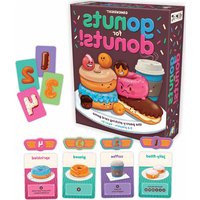
Marque : Gamewright
Modèle : Twin It!
Catégorie : Jeu de société