
34155 - Matériel médical de secours GIMA - Notice d'utilisation et mode d'emploi gratuit
Retrouvez gratuitement la notice de l'appareil 34155 GIMA au format PDF.


| Type de produit | Appareil électronique |
| Marque | GIMA |
| Modèle | 34155 |
| Dimensions | 15 x 8 x 3 cm |
| Poids | 200 g |
| Alimentation | 2 piles AAA (1.5 V) |
| Affichage | Écran LCD numérique |
| Fonctions principales | Mesure, affichage des résultats, mémorisation des données |
| Entretien et nettoyage | Nettoyer avec un chiffon doux et sec. Ne pas utiliser de solvants. |
| Sécurité | Conforme aux normes CE. Usage domestique uniquement. |
| Stockage | Température ambiante, à l'abri de l'humidité et de la lumière directe. |
| Accessoires inclus | Piles, notice d'utilisation |
| Couleur | Blanc |
| Garantie | 2 ans |
FOIRE AUX QUESTIONS - 34155 GIMA
Questions des utilisateurs sur 34155 GIMA
0 question sur cet appareil. Repondez a celles que vous connaissez ou posez la votre.
Poser une nouvelle question sur cet appareil
Téléchargez la notice de votre Matériel médical de secours au format PDF gratuitement ! Retrouvez votre notice 34155 - GIMA et reprennez votre appareil électronique en main. Sur cette page sont publiés tous les documents nécessaires à l'utilisation de votre appareil 34155 de la marque GIMA.
MODE D'EMPLOI 34155 GIMA
GUIDA RAPIDA DI PRONTO SOCCORSO PALLONE RIANIMATORE PORTATILE
PORTABLE RESUSCITATOR BAG FIRST AID BASIC GUIDE
BALLON DE RÉANIMATION PORTATIF GUIDE RAPIDE DE PREMIER SECOURS
BALÓN REANIMADOR PORTÁTIL GUÍA RÁPIDA DE URGENCIAS
BALÃO DE REANIMAÇÃO PORTÁVEL GUIA RÁPIDA DE PRONTO SOCORRO
ΦΟΡΗΤΟ ΜΠΑΛΟΝΙ ΑΝΑΖΩΟΓΟΝΗΣΗΣ Γρήγορος οδηγός πρώτων βοηθειών
كدة مطاطية منحشة سهلة النقل دبل سريع للإسجاد الأولى
GIMA Spa - Via Marconi, 1 - 20060 Gessate (MI) - Italia
ITALIA: Tel. 199 400 401 (8 linee r.a.) - Fax 199 400 403
E-mail: gima@gimaitaly.com - www.gimaitaly.com
INTERNATIONAL: Tel. ++39 02 953854209 - Fax ++39 02 95380056
E-mail: export@gimaitaly.com - www.gimaitaly.com
Portable resuscitator bag First aid basic guide

1 – Check that the patient is far from source of dangers: smoke, fire, water, gas, toxic fumes, live electric cables etc.
2 – Check that the airways are not blocked. In case water, saliva or foreign bodies are present, relieve them by means of a mouth gag, positioning it between the patients' teeth to avoid having your hands hurt.
3 – Place the patient's head backwards. To do this, push the jaws upwards to stretch the neck and open the airways.
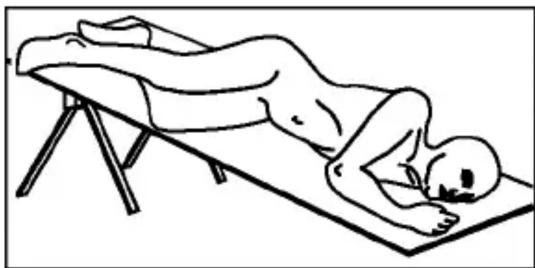
4 – Check whether he is able to breath and his colour improves. If he is able to breathe place him face down in coma-like position with his legs raised (on an inclined plane or leant against something) and his head downwards. Call for a doctor or an ambulance.
If he is not able to breathe artificial respiration is needed non-stop until the patient breathes by himself or a doctor comes.

5 - Artificial respiration with the bag Gima
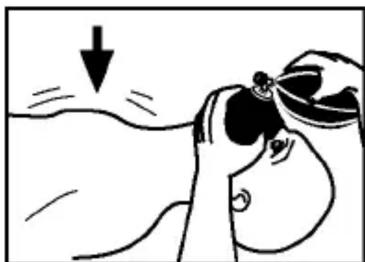
Press the mask over the patient's face, cover mouth and nose. Keep the head completely thrown back and with the same hand holding the mask, push the jaws forwards. Compress the bag thoroughly and check that the chest expands. To keep the airways open, you can make use of one of the cannulas provided with the bag and position it under the mask. Pay attention that the tongue does not block the throat. In this case make use of the apposite pliers to pull it towards the outside.
6 – Immediately release the bag pressure and wait until the chest has emptied. Repeat the operation 10-20 times a minute. If you have some oxygen at disposal, introduce it from the apposite connector in quantities not superior to 2-4 litres/minute.
Check the presence of heart beating on the patient's neck.
If heart beating is present: Keep on with artificial respiration until he breathes by himself.
If heart beating is not present: The patient's heart has stopped. Act urgently because after 4 minutes the lack of oxygen could cause brain damages.


7 – In case of cardiac arrest, it is necessary to apply external cardiac massage. Move your hands down to the chest at the heart level, press down 60-70 times a minute. During compression check for neck pulsation. WARNING: Children require a much lower pressure and use only one hand. Every 5-8 compressions carry out a blow in artificial respiration. Keep on compression until neck pulsation is well defined and at least for an hour. Even after the patient's heart resume beating it could be necessary to continue the artificial respiration for a long time.

- GUIDA RAPIDA DI PRONTO SOCCORSO PALLONE RIANIMATORE PORTATILE
- PORTABLE RESUSCITATOR BAG FIRST AID BASIC GUIDE
- BALLON DE RÉANIMATION PORTATIF GUIDE RAPIDE DE PREMIER SECOURS
- BALÓN REANIMADOR PORTÁTIL GUÍA RÁPIDA DE URGENCIAS
- BALÃO DE REANIMAÇÃO PORTÁVEL GUIA RÁPIDA DE PRONTO SOCORRO
- ΦΟΡΗΤΟ ΜΠΑΛΟΝΙ ΑΝΑΖΩΟΓΟΝΗΣΗΣ ΓΡΉΓΟΡΟΣ ΟΔΗΓΌΣ ΠΡΏΤΩΝ ΒΟΗΘΕΙΏΝ
Marque : GIMA
Modèle : 34155
Catégorie : Matériel médical de secours