
Inoxtar 10 L - Casserole Magefesa - Notice d'utilisation et mode d'emploi gratuit
Retrouvez gratuitement la notice de l'appareil Inoxtar 10 L Magefesa au format PDF.


| Type de produit | Casserole en acier inoxydable |
| Marque | Magefesa |
| Modèle | Inoxtar 10 L |
| Capacité | 10 litres |
| Diamètre | 28 cm |
| Hauteur | 16 cm |
| Poids | 1,9 kg |
| Matériau principal | Acier inoxydable 18/10 |
| Fond | Fond épais et multicouche pour une diffusion homogène de la chaleur |
| Type de poignées | Poignées latérales en acier inoxydable rivetées |
| Couvercle | Couvercle en verre avec évents vapeur |
| Compatibilité aux sources de chaleur | Adaptée à tous feux dont induction, gaz, vitrocéramique, électrique |
| Nettoyage | Passe au lave-vaisselle (recommandé lavage à la main pour préserver l'éclat) |
| Entretien | Nettoyage doux avec éponge non abrasive ; éviter les produits chlorés |
| Utilisation au four | Poignées et couvercle non adaptés au four ; corps en inox résiste jusqu'à 200 °C sans couvercle |
| Sécurité | Ne pas laisser chauffer à vide ; utiliser des maniques ; verrouillage vapeur du couvercle |
| Contenu de l'emballage | Casserole, couvercle, notice d'utilisation |
| Garantie | 2 ans (pièces et main-d'œuvre) sous réserve d'utilisation conforme |
| Réparabilité | Pièces détachées disponibles (poignées, couvercle) ; réparation possible en centre agréé |
| Pays d'origine | Fabriqué en Espagne |
FOIRE AUX QUESTIONS - Inoxtar 10 L Magefesa
Questions des utilisateurs sur Inoxtar 10 L Magefesa
0 question sur cet appareil. Repondez a celles que vous connaissez ou posez la votre.
Poser une nouvelle question sur cet appareil
Téléchargez la notice de votre Casserole au format PDF gratuitement ! Retrouvez votre notice Inoxtar 10 L - Magefesa et reprennez votre appareil électronique en main. Sur cette page sont publiés tous les documents nécessaires à l'utilisation de votre appareil Inoxtar 10 L de la marque Magefesa.
MODE D'EMPLOI Inoxtar 10 L Magefesa
Magefesa®
Instructivo y garantía
Instruction Manual & Warranty
Olla a presión rápida
Fast pressure cooker
STAR / STAR BOMBEADA INOXTAR / INOXTAR BOMBEADA


www.e-magefesa.com
CONTENIDO
IMSTARINOXTAR13\_AMEV1
PÁGINA
- INTRODUCCIÓN.
- VENTAJAS DE LA OLLA A PRESIÓN.
- SEGURIDAD AMBIENTAL Y RECICLAJE.
- IMPORTANTES MEDIDAS DE SEGURIDAD.
- DESCRIPCIÓN GENERAL DE LAS PARTES DE LA OLLA.
- COMPONENTES Y DISPOSITIVOS DE SEGURIDAD.
- INSTRUCCIONES PARA EL CORRECTO USO DE LA OLLA.
- PRIMER USO DE LA OLLA.
- NIVEL DE LLENADO DE LA OLLA A PRESIÓN
- CONTROL DE LAS VÁLVULAS.
- CIERRE DE LA OLLA A PRESIÓN.
- COCINA BAJO PRESIÓN.
- MÉTODOS DE LIBERACIÓN DE VAPOR.
- INSTRUCCIONES DE LIMPIEZA Y MANTENIMIENTO.
- SERVICIO DE ASISTENCIA Y REPARACIÓN.
- SOLUCIÓN DE PROBLEMAS DE LA OLLA.
- TABLA ORIENTATIVA DE TIEMPOS DE COCCIÓN.
- RECETAS.
- REPUESTOS.
1. INTRODUCCIÓN
Gracias por elegir nuestra olla a presión rápida Magefesa. Agradecemos la confianza que ha depositado en nuestra marca, permitiéndonos desempeñar un papel importante en las necesidades de su hogar.
Las ollas a presión Magefesa, están fabricadas bajo unos exigentes estándares de calidad y seguridad, le proporcionarán a usted y su familia comidas sanas y sabrosas durante muchos años.
2. VENTAJAS DE LA OLLA A PRESIÓN
Cocinar con una olla a presión Magefesa cambiará la forma de preparar sus comidas, permitiéndole cocinar sus platos favoritos en un menor tiempo de lo que lo hacen las ollas de cocina tradicionales.
Dado que los alimentos son cocinados en menor tiempo dentro de la olla, esto ayudará a que conserven todo su sabor y colores naturales.
Mientras que la cocina tradicional implica cocinar en una olla abierta, la cocina bajo presión permite conservar todas las vitaminas solubles en agua y minerales al quedar el vapor atrapado dentro de la olla. Asimismo, la cocina bajo presión requiere de una menor cantidad de líquido para la cocción de los alimentos, ayudándoles a retener sus jugos naturales.
Estas ollas a presión rápidas Magefesa son una de las más seguras del mercado con 3 diferentes dispositivos de seguridad. La válvula giratoria (22), la válvula de seguridad (7) y la ballesta (35) forman un sólido sistema de seguridad de la olla que no dejará lugar a preocupaciones durante su uso.
Le invitamos a realizar una preparación de sus alimentos eficiente y práctica con unos atractivos platos como resultado mediante el uso de las ollas a presión Magefesa con la comodidad de estar en su propia cocina.
3. SEGURIDAD AMBIENTAL Y RECICLAJE
Los utensilios de cocina, sus accesorios y su embalaje deben ser reciclados de una forma respetuosa con el medio ambiente. Por favor, cumpla con las normativas locales, regionales y nacionales vigentes al respecto.
4. IMPORTANTES MEDIDAS DE SEGURIDAD

ATENCIÓN: Lea las instrucciones incluidas en este manual antes de utilizar su olla a presión. Guarde los recibos de compra y los materiales de embalaje para futuras referencias.
INSTRUCCIONES DE SEGURIDAD
- Lea todas las instrucciones cuidadosamente.
- No permita que los niños se acerquen al área donde se está utilizando la olla a presión.
- No introduzca la olla a presión en un horno caliente.
- Mientras esté bajo presión, mueva la unidad con extrema precaución. No toque las superficies calientes. Utilice las asas. Si es necesario, utilice manoplas para horno.
- No utilice la olla a presión para ningún otro propósito distinto del especificado en este manual.
- Este producto cocina bajo presión; un uso incorrecto del mismo puede producir lesiones por quemaduras. Asegúrese de que la unidad esté bien cerrada antes de utilizarla.
- Nunca fuerce la tapa para abrir la olla a presión. No abra la olla hasta haberse asegurado de que la presión interna haya sido liberada completamente.
- Nunca utilice la olla sin agua, ya que esto causaría graves daños a la unidad.
- No llene la olla a presión más de dos tercios (2/3) de su capacidad. Cuando cocine alimentos que pueden expandirse durante la cocción como el arroz, las legumbres o compotas, no llene la unidad por encima de la mitad (1/2) de su capacidad.
- Use las fuentes de calor permitidas tal y como indica el manual de instrucciones.
- Tenga en cuenta que ciertos alimentos, como la compota de manzana, arándanos, cebada perlada, avena o cualquier otro cereal, sopa de guisantes, fideos, macarrones, ruibarbo o espaguetis producen espuma y pueden borbotear durante la cocción, obstruyendo los dispositivos de liberación de presión. Estos alimentos NO se deben cocinar en la olla a presión.
- Después de cocinar carne con piel (por ejemplo lengua de buey) que puede hincharse bajo los efectos de la presión, no pinche la carne mientras la piel esté hinchada; podría quemarse.
- Cuando cocine comida pastosa, agite suavemente la olla antes de abrir la tapa para evitar la eyección de la comida.
- Una vez que la presión de trabajo haya sido alcanzada, baje el fuego para evitar que todo el líquido generado en el interior se evapore. Esto evitará que la olla a presión siga funcionando en seco.
- Antes de cada uso, compruebe que los dispositivos de liberación de presión no están obstruidos.
- No utilice su olla para freir alimentos en aceite bajo presión.
- No manipule los sistemas de seguridad más allá de lo estipulado en las instrucciones de mantenimiento especificadas en este manual.
- Utilice únicamente repuestos originales para su modelo concreto de olla.
- Guarde estas instrucciones en un lugar seguro. Podrá descargar este manual en la página web de MAGEFESA en www.e-magefesa.com
5.1. DESCRIPCIÓN DE LAS PARTES DE LA OLLA STAR

PARTES DE LA OLLA A PRESIÓN
- Tapa.
- Pomo triangular.
- Válvula giratoria.
- Ballesta.
- Conjunto cono + husillo.
-
Válvula de seguridad.
-
Chimenea.
- Junta de silicona.
- Orejones.
- Asas laterales.
- Cuerpo de la olla.
- Cestillo opcional.
5.2. DESCRIPCIÓN DE LAS PARTES DE LA OLLA INOXTAR

PARTES DE LA OLLA A PRESIÓN
- Tapa.
- Pomo.
- Válvula giratoria.
- Ballesta.
- Conjunto cono + husillo.
-
Válvula de seguridad.
-
Chimenea.
- Junta de silicona.
- Orejones.
- Asas laterales.
- Cuerpo de la olla.
- Cestillo opcional.
6. COMPONENTES Y DISPOSITIVOS DE SEGURIDAD
SISTEMAS DE SEGURIDAD
Estas ollas a presión Magefesa han sido diseñadas con tres dispositivos de seguridad. Por favor, familiarícese con estos importantes sistemas de seguridad y la forma en que funcionan antes de utilizar la olla por primera vez:
- Válvula giratoria (22):
Mantiene la presión de trabajo de la olla en todo momento, permitiendo que el exceso de vapor salga a través de ella.
- Válvula de seguridad (7):
Entra en acción cuando se genera un exceso de presión dentro de la olla y/o la chimenea (23) está obstruida. Si esto ocurriera, retire la olla del fuego y limpie la chimenea con una varilla fina.
- Ballesta (35):
En el caso de que los sistemas de seguridad anteriores hubiesen dejado de funcionar, la ballesta permitirá que la tapa de la olla se abra lo suficiente para liberar el exceso de presión dentro de la olla. Si esto ocurriese, lleve la olla a su Centro de Servicio Técnico Autorizado para su revisión. No utilice la olla hasta que el problema haya sido subsanado.
CARACTERÍSTICAS ADICIONALES
- La triple base de la olla a presión está especialmente diseñada para aportar mayor resistencia y garantizar la distribución uniforme del calor.
- El espesor de la base de la olla a presión es superior al de las ollas comunes, dotándole de una capacidad de absorción del calor extra.
- La olla mantiene el vapor generado en su interior, por tanto, se utiliza una menor cantidad de agua durante la cocción. Con el aporte adecuado de calor, la olla a presión funciona por sí sola.
SU OLLA A PRESIÓN ESTÁ FABRICADA EN ACERO INOXIDABLE 18/10 DE ALTA CALIDAD Y GRAN ESPESOR CON UNA PLACA DIFUSORA TÉRMICA INCORPORADA EN LA BASE. SU OLLA ES COMPATIBLE CON TODAS LAS FUENTES DE CALOR, INCLUYENDO LAS DE INDUCCIÓN.
7. INSTRUCCIONES PARA EL CORRECTO USO DE LA OLLA
Este producto está diseñado únicamente para uso doméstico. No utilice la olla a presión para otro propósito.
Su olla a presión MAGEFESA es ideal para preparar alimentos que requieren largos tiempos de cocción como sopas, verduras, carnes (guisos y goulash), papas, algunos cereales y postres.
Dependiendo de la cantidad de alimentos que vaya a cocinar y el tamaño de la olla a presión, podrá utilizar su olla para la elaboración de conservas. Este producto se utiliza para cocinar alimentos bajo presión. Deberá, por tanto, tomar las precauciones necesarias cada vez que vaya a utilizar su olla a presión para evitar lesiones por quemaduras.
Esta olla a presión está fabricada en acero inoxidable, no obstante, el maltrato o uso indebido de la misma podría llegar a ocasionar daños en la superficie. Por favor, siga atentamente las instrucciones expuestas en este manual.
8. PRIMER USO DE LA OLLA
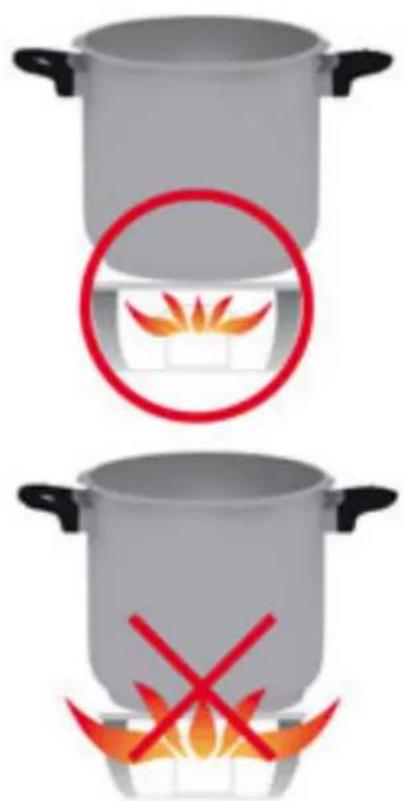
Antes de usar la olla a presión por primera vez, lave el cuerpo, la tapa y la junta con agua caliente y jabón para vajillas. Con el fin de esterilizar la olla y deshacerse de cualquier residuo o partícula de polvo recomendamos que llene la olla hasta la mitad (1/2) de su capacidad y la ponga a hervir sin la tapa. Una vez haya quedado bien lavada, recubra el interior de la olla con unas gotas de aceite de cocina y extiéndalo con una toalla de papel. Si cocina con una estufa eléctrica, el diámetro de la base de la olla debe coincidir con el del quemador. Si utiliza una estufa de gas, no permita que las llamas sobrepasen la base de la olla. Si esto ocurriese, la superficie de la olla podría sufrir decoloraciones y las asas laterales (9) quedarán dañadas por el efecto del calor.

natural_image
Illustration of a cooking pot with a red circle highlighting a flame inside, symbolizing heating or cooking (no text or symbols present)
natural_image
Illustration of a cooking pot with red X mark and flame on stove (no text or symbols)9. NIVEL DE LLENADO DE LA OLLA A PRESIÓN
- Nunca llene la olla más de dos tercios (2/3) de su capacidad o sobrepase la marca de nivel "MAX" grabada en el interior del cuerpo de la olla. Esto incluye los líquidos e ingredientes sólidos añadidos a la olla. (FIG. 4.1)
- Cuando prepare alimentos que se expanden durante el proceso de cocción, como el arroz, cereales o alimentos deshidratados, no llene o sobrepase la marca de nivel 1/2 grabada en el interior del cuerpo de la olla. (FIG. 4.2)
Si excede los niveles de llenado de la olla, los dispositivos de seguridad podrían deteriorase, aumentando el riesgo de sufrir quemaduras.
-
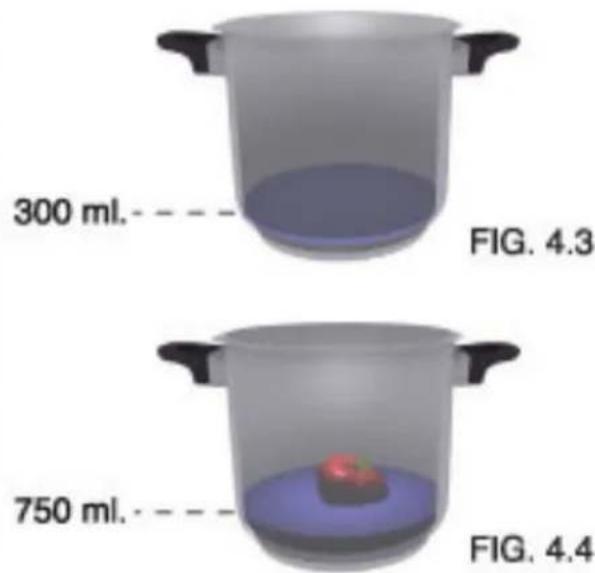
SIEMPRE agregue líquido a la olla a presión. Para cualquier tipo de cocción en la olla a presión, menos la cocción al vapor, siempre se necesita añadir un mínimo de 300 ml. de líquido (0.31 Qts), De esta forma evitaremos que los ingredientes se quemen o se adhieran a la olla. Utilizar menos cantidad de líquido puede dañar o sobrecalentar la olla a presión. (FIG. 4.3)
-
Cuando utilice su olla para cocinar al vapor, añada como mínimo tres cuartos (3/4) de litro de caldo o agua (0.79 Qts). Coloque los ingredientes en el cestillo opcional. (FIG. 4.4)
-
Tenga en cuenta que algunos alimentos como la cebada, las frutas y las pastas, producen espuma y, durante la cocción, podrían bloquear los sistemas de liberación de presión (válvulas giratoria y de seguridad), estos alimentos no deben cocinarse en una olla a presión.
- Para evitar daños en el acero inoxidable, procure añadir la sal cuando el líquido esté en ebullición para facilitar su disolución. Una vez terminada la cocción, no almacene la comida en la olla durante mucho tiempo, los ácidos y sales de los alimentos en contacto prolongado con el acero inoxidable pueden deteriorar la capa pasiva y producir picaduras o corrosión en el acero.
Llenado máximo

Llenado mínimo
10. CONTROL DE LAS VÁLVULAS
Las válvulas son dispositivos de seguridad. Antes de usar su olla compruebe siempre que las válvulas de seguridad no estén obstruidas ya que esto podría anular su función.
1. Chimenea (23):
Retire la tapa (1) y la válvula giratoria (22). Compruebe desde el interior de la tapa que la chimenea (23) esté completamente limpia. De lo contrario, limpiela con una varilla fina. (FIG. 5.1)
2. Válvula de seguridad (7):
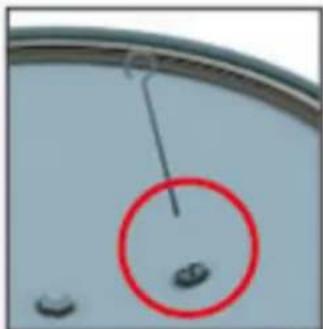
Compruebe que la válvula de seguridad (7) funciona correctamente presionando dicha válvula con una varilla fina desde la parte interna de la tapa (1). (Fig 5.2)
Para un correcto funcionamiento, debería deslizarse libremente de arriba abajo. Si observa que la válvula se bloquea, sáquela y lávela con agua tibia y jabón neutro. Si el problema persistiese, lleve su olla al Servicio Técnico MAGEFESA más cercano para su revisión antes de usarla de nuevo.
Si observase un mal funcionamiento de las válvulas o que éstas hayan dejado de funcionar, lleve su olla a un Servicio Técnico MAGEFESA, será necesario revisar ambos dispositivos de seguridad.

natural_image
Close-up of a metallic surface with a red circle highlighting a small dark spot, no text or symbols present.FIG.5.1

natural_image
Close-up of a metallic surface with a red circle highlighting a small dark spot, no text or symbols present.FIG.5.2
11. CIERRE DE LA OLLA A PRESIÓN
- Asegúrese de que la junta de silicona se halla perfectamente encajada en su lugar, dentro del anillo interior que bordea la tapa.
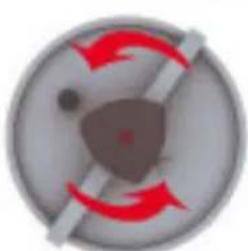
- Con el pomo (33) situado en su posición inferior (rotándolo en sentido contrario a las agujas del reloj) (FIG.6.1) coloque la tapa (1) sobre el cuerpo (11) (FIG.6.2) y asegúrese de que queda bien encajada deslizando los dedos alrededor de la misma.
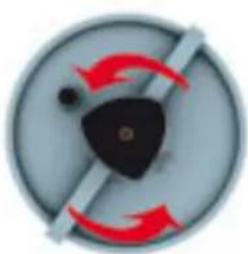
- Gire el porno (33) en el sentido de las agujas del reloj. (FIG. 6.3)
- Proceda al cierre definitivo girando el porno entre 1.1/2 y 2 vueltas hasta que la ballesta (35) se mantenga fija bajo los orejones (37) y la tapa quede completamente cerrada.
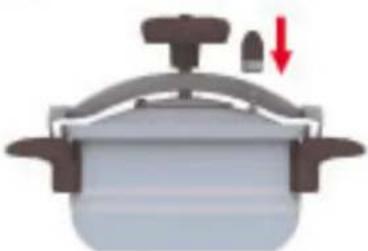
- Coloque la válvula giratoria (22) sobre la chimenea (23). (FIG. 6.4)
natural_image
Circular diagram with red curved arrows and a central shaded region, no text or symbols present.FIG.6.1

natural_image
Simple 3D diagram of a mechanical component with a red arrow indicating direction (no text or symbols)FIG.6.2

natural_image
Abstract circular diagram with red curved arrows and a central brown shape (no text or symbols)FIG.6.3
natural_image
Illustration of a cooking pot with a red arrow indicating downward motion (no text or symbols)FIG.6.4
12. COCINA BAJO PRESIÓN
- Coloque los ingredientes que vaya a utilizar dentro de la olla, ciérrela y coloque la válvula giratoria (22) correctamente sobre la chimenea (23). A continuación, ponga la olla a presión sobre la fuente de calor al máximo de potencia.
- Después de un tiempo, la presión acumulada en el interior de la olla comenzará a hacer girar la válvula giratoria (22) y la presión comenzará a ser expulsada. En ese momento deberá reducir la intensidad del calor, para poder así mantener una constante pero ligera liberación de presión.
- A partir de este momento deberán empezar a contarse los tiempos de cocción. (Ver tabla orientativa de tiempos de cocción)
- Durante la cocción es NORMAL observar pequeñas cantidades de vapor saliendo de la válvula de seguridad (7).
- Si utiliza una cocina de gas, ajuste la llama y coloque la olla a presión en el centro del quemador con el fin de evitar que la llama se extienda más allá de la base de la olla. De esta manera, ahorrará energía y prevendrá el deterioro de las asas laterales (9) y de la junta de silicona (8).
Tenga en cuenta lo siguiente:
- Nunca deje una olla vacía sobre una fuente de calor.
- Si notase algún problema durante la cocción, retire la olla de la fuente de calor y déjela enfriar completamente. (Ver Sección 15)
- Para evitar daños en su olla a presión, cocine con la cantidad mínima de agua o líquido recomendado. NO deje nunca la olla hirviendo en seco.
- Abra la olla a presión con precaución. Mantenga la cara y el cuerpo a cierta distancia ya que aún puede quedar vapor caliente de la cocción dentro de la olla.
- Por favor preste atención qué alimentos son adecuados para su olla a presión.
- Nunca utilice esta olla para freír con aceite bajo presión.

ATENCIÓN: NO UTILICE ESTA OLLA PARA FREÍR CON ACEITE BAJO PRESIÓN.
SIEMPRE UTILICE AL MENOS 300 ML (0,31 QTS) DE LÍQUIDO PARA LA COCCIÓN DE LOS ALIMENTOS.
ATENCIÓN: SI LA OLLA A PRESIÓN HA PERMANECIDO AL FUEGO VACÍA O EN SECO, RETÍRELA DE LA FUENTE DE CALOR Y LLÉVELA A UN CENTRO DE SERVICIO TÉCNICO AUTORIZADO PARA SU REVISIÓN ANTES DE UTILIZARLA DE NUEVO.
ATENCIÓN: ABRA SIEMPRE LA OLLA A PRESIÓN CON PRECAUCIÓN. MANTENGA LA CARA Y EL CUERPO A CIERTA DISTANCIA YA QUE AÚN PUEDE QUEDAR VAPOR CALIENTE DE LA COCCIÓN DENTRO DE LA OLLA.
ATENCIÓN: NUNCA COLOQUE LA OLLA A PRESIÓN DENTRO DE UN HORNO CALIENTE.
13. MÉTODOS DE LIBERACIÓN DE VAPOR
Una vez transcurrido el tiempo de cocción necesario, retire la olla del fuego. Utilice cualquiera de las modalidades de liberación de presión detalladas a continuación de acuerdo con las instrucciones de la receta que esté siguiendo.
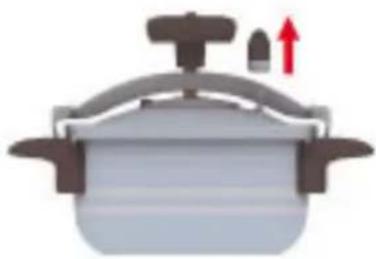
- Liberación natural de presión: Retire la olla de la fuente de calor y déjela enfriar. Dependiendo de la cantidad de alimentos y líquido que haya en el interior de la olla, este método puede variar entre 10 y 15 minutos. Una vez que la olla se haya enfriado, retire la válvula giratoria (22) para liberar la presión. (Fig. 8.1) Si todavía queda algo de presión en el interior de la olla, ésta será expulsada a través de la chimenea (23).
- Reducción rápida de presión: Con la olla en el fregadero, deje correr agua fría sobre la tapa. Una vez haya bajado la presión, retire la válvula giratoria (22) (Fig. 8.1) y espere a que el vapor se haya disipado completamente. Este método se utiliza cuando es necesario liberar la presión lo antes posible. Principalmente en la preparación de verduras, mariscos u otros alimentos delicados que se cocinan en exceso con facilidad.
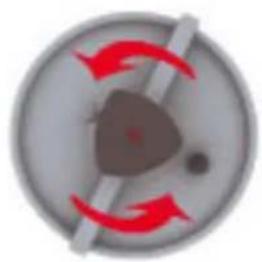
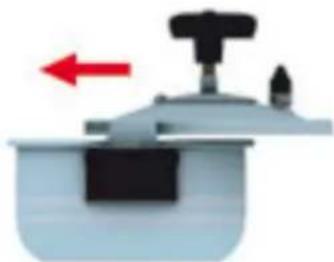
Una vez que la presión ha sido liberada, abra la olla girando el pomo (33) en sentido contrario a las agujas del reloj hasta que la ballesta (35) quede en la posición más baja que pueda llegar. (Fig. 8.2) Deslice la tapa horizontalmente hasta retirarla completamente. (Fig. 8.3) Tenga cuidado al abrir la tapa ya que aún puede salir vapor caliente del interior de la olla. Una vez que la presión ha sido liberada completamente, mueva la olla suavemente antes de abrir la tapa, especialmente tras la cocción de arroces, purés, alimentos con alto contenido en grasa o salsas. Esto evitará que dichos alimentos le salpiquen cuando abra la tapa.
Nunca fuerce la tapa para abrirla.

natural_image
Illustration of a cooking pot with a lid and side handles, accompanied by a small white object (no text or symbols)FIG.7
Magefesa
natural_image
Illustration of a cooking pot with a lid and red upward arrow indicating motion (no text or symbols)FIG.8.1
natural_image
Circular diagram with red curved arrows and a central triangle, no text or symbols presentFIG.8.2

natural_image
Simple diagram of a cooking pot with a lid and arrow indicating direction (no text or symbols)FIG.8.3
REDUCCIÓN DE LA PRESIÓN PARA ALIMENTOS ESPECÍFICOS:
- Alimentos que requieren poco tiempo de cocción: Utilice el método de liberación rápida de presión durante la preparación de arroces o verduras, ya que estos alimentos son propensos a cocerse en exceso.
- Legumbres secas y vegetales que requieren mucho tiempo de cocción, sopas, carnes preparadas con líquidos, patatas y cereales: Utilice el método de liberación de presión natural. No use agua para enfriar la olla. Alimentos como las patatas, podrían en consecuencia, deshacerse.
- Carnes, verduras, vegetales congelados, frutas frescas, alimentos secos (no incluyendo legumbres): Utilice el método de liberación de presión natural o de liberación rápida de presión.
- Pescados y Risotto: Utilice el método de liberación rápida de presión.
- Alimentos con alto contenido en grasa: Utilice el método de liberación de presión natural. Mueva suavemente la olla a presión antes de abrirla para evitar salpicaduras. Carnes con piel (por ejemplo, lengua de buey) se pueden hinchar cuando se cocinan bajo presión. Nunca perfore la carne mientras la piel está hinchada ya que esto podría ocasionarle lesiones por quemaduras.
14. INSTRUCCIONES DE LIMPIEZA Y MANTENIMIENTO
PARA CONSERVAR LA OLLA A PRESIÓN EN SU ESTADO ORIGINAL SIGA LAS INSTRUCCIONES QUE SE EXPONEN A CONTINUACIÓN . (FIG. 9.1 - 9.2 - 9.3)
Lave la olla con agua tibia y jabón neutro utilizando una esponja o estropajo de limpieza no abrasivo. Enjuáguela bien y séquela.
No coloque la olla a presión o cualquiera de sus componentes en el lavavajillas. La superficie de acero inoxidable puede dañarse y decolorarse tras varios lavados en agua caliente y la exposición a la sal.
POMO
Si usa la olla con frecuencia, le recomendamos que revise de vez en cuando el pomo de su olla por si la baquelita hubiese podido sufrir algún desgaste. Si observa alguna rotura o grieta será necesario sustituirlo.
JUNTA DE SILICONA
La junta está compuesta de una silicona de gran resistencia (superior a 500 veces de uso). Lávela con agua tibia y jabón cada vez que lave la tapa, sin sacarla de su ubicación.
Tras un largo periodo de uso deberá ser reemplazada por una nueva junta ORIGINAL MAGEFESA para prevenir cualquier tipo de escape y asegurarse de que la olla funciona correctamente. Para ello proceda de la siguiente manera.
- Retire la junta antigua y lave el anilo que bordea el interior de la tapa donde se sitúa la junta.
- Humedezca la nueva junta con agua tibia jabonosa.
- Colóquela en el anillo que bordea la tapa. Ayudándose con una cuchara, presione la junta hacia abajo para que quede bien fija en su lugar.

ATENCIÓN: LA JUNTA DE SILICONA SE CONSIDERA GASTADA CUANDO LA OLLA EMPIEZA A PERDER VAPOR Y NO CONSIGUE MANTENER LA PRESIÓN EN SU INTERIOR. LA JUNTA DE SILICONA DEBE SUSTITUIRSE APROXIMADAMENTE CADA DOS (2) AÑOS PARA ASEGURAR EL CORRECTO FUNCIONAMIENTO DE LA OLLA A PRESIÓN. ATENCIÓN: NO LAVE LA OLLA A PRESIÓN O CUALQUIERA DE SUS COMPONENTES EN EL LAVAVAJILLAS.
No quite las manchas o restos de comida con cuchillos o esponjas abrasivas. En su lugar, sumerja la olla a presión en agua caliente y, a continuación, utilice un jabón para vajillas común para eliminar suavemente las manchas con la ayuda de un cepillo, esponja o paño suaves.
No utilice agentes corrosivos como blanqueadores (ni en sus formas diluidas) para la limpieza. Para eliminar las manchas difíciles, utilice unas gotas de vinagre o jugo de limón.
No cierre la olla cuando la guarde tras cada uso. Coloque la tapa boca abajo sobre el cuerpo para airear la olla y evitar que se ejerza presión sobre la junta de silicona.
15. SERVICIO DE ASISTENCIA Y REPARACIÓN
Bajo ningún concepto modifique la olla a presión, particularmente los sistemas de seguridad. El uso de repuestos hechos por diferentes fabricantes puede afectar a la seguridad de su olla a presión. MAGEFESA no puede asegurar todos los accesorios disponibles en el mercado.
Sólo use recambios fabricados y distribuidos por MAGEFESA.
Antes de llamar o dirigirse al servicio de asistencia técnica o entrar en nuestra página web, por favor, tómese unos segundos para identificar el modelo de su olla y el elemento que usted necesite reemplazar. Coteje el recambio en el diagrama detallado incluido en el apartado 5.
Para las posibles reparaciones, recambios e información, por favor contacte con su proveedor o con el centro de servicio técnico MAGEFESA más cercano.
16. SOLUCIÓN DE PROBLEMAS DE LA OLLA A PRESIÓN
Antes de la utilización de la olla, es importante que lea atentamente este manual de instrucciones y se asegure que entiende cómo usarla. Si tiene alguna duda sobre su funcionamiento o sobre sus sistemas de seguridad, no la utilice y contacte con su vendedor o con MAGEFESA.
Para su referencia, aquí le mencionamos algunos consejos prácticos y problemas comunes que puede experimentar al usar su olla a presión:
CASO: LA OLLA NO MANTIENE LA PRESIÓN
| POSIBLES RAZONES:1. La tapa de la olla a presión no está bien cerrada.2. La junta de silicona está fuera de su lugar, sucia o desgastada.3. No se ha añadido o no queda suficiente líquido dentro de la olla. | SUGERENCIAS:1. Abra la olla y vuelva a colocar la tapa según las instrucciones proporcionadas en este manual, asegurándose de que la olla queda bien cerrada.2. Compruebe que la junta de silicona está limpia y situada en su lugar. Asegúrese de que no esté desgastada. Se recomienda sustituir la junta cada 2 años.3. Añada agua o cualquier otro líquido a la olla hasta alcanzar la cantidad mínima recomendada. |
CASO: ESCAPES DE VAPOR POR LA TAPA
| POSIBLES RAZONES:1. La olla de la tapa no está bien cerrada.2. La junta de silicona está fuera de su lugar, sucia o desgastada.3. Se ha llenado demasiado la olla a presión. | SUGERENCIAS:1. Abra la olla y vuelva a colocar la tapa, asegurándose que la olla queda bien cerrada. Sección 11.2. Compruebe que la junta de silicona está limpia, situada en su lugar y que no está desgastada. Para mejorar el rendimiento de sellado, frótela suavemente con aceite de cocina o humedézcala con agua. Se recomienda sustituir la junta cada 2 años.3. No llene la olla a presión más de dos tercios (2/3) de su capacidad. Para los alimentos con tendencia a generar espuma, llénela solamente por la mitad (1/2) de su capacidad. Sección 9. |
CASO: LA VÁLVULA GIRATORIA NO SE MUEVE
| POSIBLES RAZONES:1. No se ha añadido o no queda suficiente líquido dentro de la olla.2. La chimenea está sucia. | SUGERENCIAS:1. Añada a la olla líquido hasta alcanzar la cantidad mínima recomendada.2. Limpie la chimenea con una varilla fina. |
CASO: SE REQUIERE ESFUERZO PARA ABRIR O CERRAR LA TAPA
| POSIBLES RAZONES:1. Puede que aún permanezca presión dentro de la olla.2. La junta de silicona está fuera de lugar, sucia, o desgastada.3. La ballesta de la tapa no está correctamente colocada bajo los orejones. | SUGERENCIAS:1. Proceda con uno de los métodos de liberación de presión expuestos en la Sección 13.2. Compruebe que la junta de silicona está limpia y situada en su lugar. Asegúrese de que no esté desgastada. Se recomienda sustituir la junta cada 2 años.3. No fuerce la tapa para abrir o cerrar la olla. Si experimenta dificultad para fijar la tapa, ábrala rotando el porno en sentido contrario a las agujas del reloj y, a continuación, sigua las instrucciones expuestas en la Sección 11 para asegurarse de que la ballesta se encuentra perfectamente situada bajo los orejones laterales y la tapa queda bien fija. |
CASO: LA VÁLVULA EXPULSA VAPOR Y ÉSTE SE CONDENSA EN LA TAPA
| POSIBLES RAZONES:1. Mientras la olla está en funcionamiento, observará una ligera y constante salida de vapor por la válvula giratoria, así como unas gotas de vapor condensadas en la tapa. | SUGERENCIAS:1. Todo ello es parte del funcionamiento normal de la olla. |
17. TABLA ORIENTATIVA DE TIEMPOS DE COCCIÓN
El sistema a presión de esta olla reduce los tiempos de cocción necesarios respecto a otros sistemas, incluido el tradicional, con lo que ahorraremos en el consumo de energía. Al reducir los tiempos de cocción y la cantidad de agua, los ingredientes mantienen más nutrientes, vitaminas y minerales y conservan las texturas y colores naturales.
Esta olla alcanza una presión de 55 kPa (8 Psi).
Los tiempos deben empezar a contarse desde el momento en el que el vapor comience a salir por la válvula, momento en el que además reducimos la potencia o intensidad de calor. Dichos tiempos son orientativos y podrán variar según la frescura y calidad de los alimentos, el tipo de corte, el agua utilizada y en definitiva al gusto de cada uno.
Cantidad mínima de líquido para cocción a presión, 300 ml (10 oz / 0.31 Qts)
Cantidad mínima de líquido para cocción al vapor, 750 ml (25 oz / 0.79 Qts)
PLATO TIEMPO DE COCCIÓN (MIN) LÍQUIDO A AÑADIR
| VERDURAS | ||
| Acelgas | 3 | 300 ml / 10 oz |
| Alcachofas | 12 / 14 | Nivel medio |
| Apio | 4 | 300 ml / 10 oz |
| Apio troceado | 2 | 300 ml / 10 oz |
| Batata, camote | 8 / 10 | 300 ml / 10 oz |
| Brocoli | 2 / 4 | 300 ml / 10 oz |
| Calabaza troceada | 10 / 12 | Nivel medio |
| Calabacines | 4 / 6 | 300 ml / 10 oz |
| Cebolla | 6 / 8 | 300 ml / 10 oz |
| Coles de Bruselas | 4 / 6 | 300 ml / 10 oz |
| Chucrut, col fermentada en crudo | 20 / 25 | 300 ml / 10 oz |
| Coliflor | 4 / 6 | 300 ml / 10 oz |
| Colinabo en mitades | 6 | 300 ml / 10 oz |
| Colinabo laminado | 2 | 300 ml / 10 oz |
| Espárragos | 8 / 10 | Nivel medio |
| Espinacas frescas | 2 / 3 | 300 ml / 10 oz |
| Espinacas congeladas | 4 / 5 | 300 ml / 10 oz |
| Endivias enteras | 2 / 3 | 300 ml / 10 oz |
| Guisantes frescos | 3 / 5 | 300 ml / 10 oz |
| Hinojo | 4 / 6 | 300 ml / 10 oz |
| Judías verdes, vainas | 6 / 10 | 300 ml / 10 oz |
| Lombarda, repollo o col morada | 10 | Nivel medio |
| Mazorcas de maíz | 6 / 8 | Nivel medio |
| Menestra congelada | 8 / 10 | 300 ml / 10 oz |
| Nabo | 8 / 10 | 300 ml / 10 oz |
| Nabo troceado | 5 / 6 | 300 ml / 10 oz |
| Puerros | 4 / 5 | 300 ml / 10 oz |
| Puerro troceado | 2 | 300 ml / 10 oz |
* Al menos 300 ml / 10 oz
| PLATO | TIEMPO DE COCCIÓN (MN) | LÍQUIDO A AÑADIR |
| Okra | 4 / 6 | 300 ml / 10 oz |
| Pimientos morrones | 3 / 4 | 300 ml / 10 oz |
| Patatas enteras | 12 / 14 | Nivel medio |
| Patatas nuevas enteras | 8 / 10 | Nivel medio |
| Patatas troceadas en cubos | 4 / 6 | 300 ml / 10 oz |
| Patatas panadera | 2 / 4 | 300 ml / 10 oz |
| Remolacha entera | 25 / 30 | Nivel medio |
| Repollo blanco | 6 / 8 | 300 ml / 10 oz |
| Salsifi | 10 / 12 | Nivel medio |
| Tirabeques | 6 / 8 | 300 ml / 10 oz |
| Tomates enteros | 4 / 6 | 300 ml / 10 oz |
| Tomate troceado | 3 / 4 | 300 ml / 10 oz |
| Zanahorias enteras | 8 / 10 | Nivel medio |
| Zanahorias troceadas | 4 / 6 | 300 ml / 10 oz |
| ARROCES Y CEREALES | ||
| Arroz bahía, bomba, basmati, sénia, Jazm | 8 / 9 | Según receta, * |
| Arroz integral | 18 / 20 | Según receta, * |
| Arroz salvaje | 12 / 15 | Según receta, * |
| Mazorca de maíz | 6 / 8 | Nivel medio |
| Cous cous | 3 / 4 | Según receta, * |
| LEGUMBRES | ||
| Alubias blancas | 25 / 30 | Hasta cubrir |
| Alubias Verdinas | 20 / 25 | Hasta cubrir |
| Alubias pintas | 20 / 25 | Hasta cubrir |
| Habitas tiernas | 6 / 8 | Según receta, * |
| Lentejas | 10 / 12 | Hasta cubrir |
| Fabada | 25 / 30 | Hasta cubrir |
| Garbanzos | 40 / 45 | Hasta cubrir |
| Guandules | 18 / 20 | Según receta, * |
| Soja | 10 / 12 | Según receta, * |
| SOPAS, CALDOS Y PURÉS | ||
| Caldo de ave | 25 / 30 | Según receta, * |
| Caldo de carne | 40 / 45 | Según receta, * |
| Caldo de pescado | 12 / 15 | Según receta, * |
| Caldo de verduras | 12 / 15 | Según receta, * |
| Sopa de guisantes | 8 / 10 | Según receta, * |
| Sopa de verduras | 6 / 8 | Según receta, * |
| Sopa minestrone | 6 | Según receta, * |
| Sopa de rabo de buey | 30 / 35 | Según receta, * |
| Sopa de cebolla | 6 / 8 | Según receta, * |
| PESCADOS | ||
| Almejas | 3 / 4 | 300ml / 10 oz |
| Atún o bonito en rodajas | 4 / 5 | 300ml / 10 oz |
| Bacalao | 2 / 3 | 300ml / 10 oz |
Magefesa
| PLATO | TIEMPO DE COCCIÓN (MM) | LÍQUIDO A AÑADIR |
| Calamares | 8 / 10 | Según receta, * |
| Mejillones | 3 / 4 | 300ml / 10 oz |
| Merluza en rodajas | 3 | Según receta, * |
| Pescado entero, lomos | 6 | Según receta, * |
| Pescado entero, colas | 4 / 5 | Según receta, * |
| Pescado en porciones | 3 / 4 | Según receta, * |
| Pescado en filetes | 2 | Según receta, * |
| CARNES, AVES Y CAZA | ||
| Vaca o buey, asado | 40 / 45 | Según receta, * |
| Vaca o buey, carne picada | 8 / 10 | Según receta, * |
| Vaca o buey, estofado | 25 / 30 | Hasta cubrir |
| Vaca, lengua | 40 / 45 | Hasta cubrir |
| Ternera, asado | 20 / 28 | Según receta, * |
| Ternera, ossobuco o jarrete | 35 | Según receta, * |
| Ternera, estofado | 20 | Hasta cubrir |
| Ternera, lengua | 25 / 30 | Hasta cubrir |
| Ternera, callos | 30 / 35 | Hasta cubrir |
| Ternera, manos | 35 | Según receta, * |
| Cerdo, asado | 20 / 25 | Según receta, * |
| Cerdo, panceta o bacon | 18 / 20 | Según receta, * |
| Cerdo, costilla | 15 | Según receta, * |
| Cerdo, estofado | 20 | Hasta cubrir |
| Cerdo, codillo | 30 / 35 | Hasta cubrir |
| Cerdo, manitas | 30 | Según receta, * |
| Cordero, asado | 25 / 30 | Según receta, * |
| Cordero, estofado | 18 / 20 | Hasta cubrir |
| Cordero, chuletillas | 10 / 12 | Según receta, * |
| Cordero, manitas | 20 / 25 | Según receta, * |
| Pollo, asado, entero | 18 / 20 | Según receta, * |
| Pollo, estofado | 8 / 10 | Hasta cubrir |
| Gallina | 30 / 35 | Según receta, * |
| Faisán, estofado | 15 / 18 | Hasta cubrir |
| Pavo, estofado | 30 / 35 | Hasta cubrir |
| Conejo, estofado | 22 / 25 | Hasta cubrir |
| Liebre, estofado | 25 / 30 | Hasta cubrir |
| Venado, estofado | 30 | Hasta cubrir |
| FRUTAS Y POSTRES | ||
| Albaricoques, melocotones, ciruelas, cerezas | 2 / 3 | Según receta, * |
| Castañas | 10 / 12 | Según receta, * |
| Peras, manzanas | 4 / 6 | Según receta, * |
| Membrillo | 10 / 12 | Según receta, * |
| Compotas | 6 / 8 | Según receta, * |
| Flanes | 10 | Según receta |
* Al menos 300 ml / 10 oz
18. RECETAS
Los tiempos de cocción de las recetas que se muestran a continuación son orientativos y podrían variar según la calidad de alimento y la cantidad utilizada.
Visite nuestra página web (www.e-magefesa.com) donde encontrará más recetas.

40 MIN
INGREDIENTES
650 gr. huesos de ternera o vaca. 400 gr. carne, (despojos o recortes). 1 cebolla mediana. 2 zanahorias. 1 puerto. 1 rama de apio (opcional). 80 gr. de garbanzos. 3 l. agua.
CALDO DE CARNE
Limplamos y pelamos la cebolla, las zanahorias, el puerto y el apio. Lavamos la carne y los huesos bajo un chorro de agua fría para retirar restos de sangre. Ponemos todos los ingredientes en la olla Magefesa, a fuego suave y dejamos que comience el hervor. Retiramos la espuma e impurezas que suben a la superficie, cerramos la olla y subimos la potencia del calor al máximo. Cuando la válvula de trabajo nos indique la máxima presión, bajamos la potencia al mínimo y dejamos cocer durante 20 ó 25 min. Retiramos y dejamos liberar totalmente la presión antes de abrir la olla. Pasamos el caído por un colador fino y rectificamos de sal. Para elaborar este caldo usaremos huesos de rodilla y recortes de carne que tengamos que aprovechar. Este caído se utiliza para salsa de carne de color claro, sopas, arroces, guisos y estofados.

30 ^MIN
INGREDIENTES
800 gr. carcasas y huesos de ave, (pollo. gallina, pato, etc) 1 cebolla mediana. 1 puerto. 2 zanahorias. 2 tallos de apio (opcional). 80 gr. garbanzos. Agua.
CALDO DE AVE
Limpiamos y pelamos la cebolla, las zanahorías, el puerto y el apio. Lavamos los despojos de ave bajo un chorro de agua fría Ponemos todos los ingredientes en la olla, cubrimos con agua fría y esperamos que comience el hervor. Retiramos la espuma e impurezas que suben a la superficie, cerramos la olla. Con la potencia del fuego al máximo esperamos que la válvula de trabajo nos indique la máxima presión, bajamos la potencia al mínimo y dejamos cocer durante 10 ó 15 min. Transcurrido el tiempo retiramos la olla y dejamos liberar la presión del vapor antes de abrir. Pasamos el caldo por un colador fino, rectificamos de sal. Para elaborar este caldo usaremos carcasas, cuellos o espinazos de pollo, pato o de cualquier ave que tengamos que aprovechar. Se utiliza para saisas de ave, platos de verduras, arroces, sopas y cremas, etc. Para que nos quede un caldo limpio y transparente conviene que no hierva a borbolones y que quitemos bien la espuma que aparece en los primeros momentos de hervir. También es importante que los restos de ave que utilicemos estén bien limpios de sangre y vísceras para que no den color al caldo.
Magefesa

15 ^MIN
INGREDIENTES
650 gr. restos de pescado (espinas, pieles, cabezas).
1 cebolla mediana. 1 puerro. 2 zanahorias. 4 ramas de perejil. Agua.
CALDO DE PESCADO
Pelamos y troceamos las cebollas en cuartos, limpiamos el puerto y pelamos las zanahorias.
Lavamos el pescado bajo un chorro de agua fría.
Ponemos todos los ingredientes en la olla cubiertos con agua fría, calentamos a fuego medio.
Cuando rompa el hervor, retiramos la espuma e impurezas que suben a la superficie. Cerramos la olla.
Con la potencia del fuego al máximo esperamos que la válvula de trabajo nos indique la máxima presión, bajamos el calor al mínimo y dejamos cocer durante 7 min.
Retiramos la olla, esperamos que se libere totalmente la presión antes de abrir.
Pasamos el caldo por un colador fino, rectificamos de sal.
Cuando los caldos de pescado se pasan de tiempo de cocción pueden dar toques amargos y quedan turbios.
Este caldo se puede usar para salsas de pescado, arroces y guisos de pescado.
Es conveniente que el pescado sea de roca que siempre tiene un sabor más pronunciado
Normalmente no se agrega sal o se hace al final puesto que es un caldo base de otras elaboraciones.

30 MIN
INGREDIENTES
150 gr. alubias blancas. 600 gr. patatas.
1 manojo de grelos o nabizas, (hojas tiernas de los nabos).
125 gr. tocino salado. 125 gr. costilla de cardo fresca.
2 chorizos gallegos. 50 gr. unto o manteca de cerdo.
1 hueso de jamón. 1 hueso de rodilla.
CALDO GALLEGO
Ponemos a remojo las alubias durante 12 horas en agua fría.
Troceamos el tocino, la costilla y los chorizos. En una olla ponemos las alubias, los huesos, la costilla, los chorizos, el tocino y el unto o la manteca y cubrimos con agua. Ponemos a cocer a fuego medio, cuando comience a hervir retiramos la espuma e impurezas. Cerramos la olla, subimos la potencia del calor al máximo y esperamos que la válvula de trabajo nos indique la máxima presión. En ese momento bajamos la potencia al mínimo y dejamos cocer durante 10 min. Mientras, triscamos las patatas (triscar o cascar es comenzar cortando con el cuchillo y terminar rompiendo para que la patata suelte más fácilmente la fécula y ayude a espesar el caldo). Picamos los grelos y blanqueamos en agua hirviendo durante unos segundos, así evitaremos que nos aporten amargor al caldo. Dejamos liberar el vapor de la olla de forma natural, (ver instrucciones), abrimos e incorporamos las patatas y los grelos, volvemos a cerrar la olla y dejamos cocer unos 5 min. más a partir de la máxima presión.
Esperamos que se libere totalmente la presión, abrimos la cilla y retiramos los huesos.
Rectificamos el sazonamiento y servimos en caliente. La sal es conveniente añadiría al final pues tenemos varios ingredientes que nos la aportaran como el hueso de jamón, el tocino o el chorizo.

20 MIN
INGREDIENTES
400 gr. alubias pintas.
250 gr. chorizo.
1 morcilla de arroz.
1 cebolla.
1 piramiento verde, (entero sin semillas ni tallo).
1 pimiento rojo, (entero sin semillas ni tallo).
2 dnt. ajo.
1 cuch. de pimentón.
Sal.
30 ml. aceite de oliva virgen extra.
ALUBIAS PINTAS ESTOFADAS
Lavamos las alubias en abundante agua fría, escurrimos y volvemos a poner a remojo con agua fría durante 12 horas. Es importante cubrir bien de agua para que no se queden secas cuando la alubia absorba el agua.
En la olla, ponemos las alubias, la cebolla, los pimientos y el chorizo, calentamos a fuego medio. Cuando rompa el hervor agregamos un poco de agua fría de manera que cortemos el hervor, esta técnica se denomina asustar y lo hacemos para conseguir que las alubias queden finas y no pierdan la piel. Repetiremos tres veces.
Cerramos la olla, subimos la potencia del calor al máximo y esperamos que la válvula de trabajo nos indique la máxima presión. En ese momento bajamos la potencia al mínimo y dejamos cocer durante 12 ó 15 min. dependiendo de la calidad de nuestra legumbre. Transcurrido el tiempo retiramos la olla y dejamos que pierda totalmente la presión del vapor. Abrimos la olla, retiramos la cebolla, los pimientos y trituramos en una Llicadora Magefesa, reincorporamos el puré resultante a la olla.
Agregamos las morcillas de arroz y dejamos cocer unos 5 min. más a fuego lento y sin cerrar la olla.
Aparte, en una sartén Magefesa, calentamos el aceite de oliva, doramos los ajos y retiramos la sartén del fuego, incorporamos el pimentón que se cocinara con el calor del aceite. Añadir el refrito colado a las alubias. Rectificamos de sal.
Las alubias de color es mejor cocertas en el agua de remojo para que no queden descoloridas, por eso debemos lavartas bien con agua corriente antes de dejarlas a remojo. El tiempo de cocción dependerá de la calidad y frescura de la alubia.

10 MIN
INGREDIENTES
8 patatas medianas.
250 gr. chorizo fresco.
1 cebolla.
2 dnt. ajo.
1 pimiento rojo.
Aceite de oliva suave, 0,4°.
1 cuch. pimentón.
2 cuch. carne de
pimiento choricero.
Caldo de ave o carne.
Pimienta negra.
1 hoja de laurel.
Sal.
PATATAS A LA RIOJANA
Pelamos y picamos la cebolla en brunoise fina, el pimiento una vez lavado se pica del mismo tamaño.
Pelamos y chascamos las patatas (triscar o chascar es comenzar cortando con el cuchillo y terminar rompiendo para que la patata suelte más fácilmente la fécula y ayude a espesar el caldo).
Cortamos el chorizo en rodajas gruesas.
En la olla Magefesa calentamos un fondo de aceite de oliva, cuando tome calor añadimos la cebolla y el pimiento, pochamos a fuego suave durante unos minutos.
Añadimos el ajo y la hoja de laurel, continuamos pochando un par de minutos más. Incorporamos el chorizo troceado, rehogamos bien, retiramos la olla del fuego y espolvoreamos el pimentón y el pimiento choricero, removemos bien el conjunto. Volvemos la olla al calor, agregamos las patatas y rehogamos.
Cubrimos con el caído de ave o carne, cerramos la oila y esperamos que la válvula de trabajo nos indique la máxima presión. Dejamos cocer durante 4 ó 5 min.
Retiramos la olla y dejamos que se libere totalmente la presión del vapor, abrimos y rectificamos de sal y pimienta al gusto.
Dejamos reposar unos minutos antes de servir.
Mogefesa

45 MIN
INGREDIENTES
250 gr. garbanzos.
1 hueso de rodilla.
1 hueso de caña.
1 hueso de jamón.
150 gr. chorizo de cocido.
200 gr. carne de coja.
1/4 gallina o pollo.
100 gr. tocino entreverado.
1 morcilla de arroz y
1 morcilla de año.
2 patatas medianas.
2 zanahorías.
1 tallo de apio.
1/2 rapollo pequeño.
Fideos.
Sal.
COCIDO DE GARBANZOS MADRILEÑO
Ponemos los garbanzos a remojo la noche anterior o al menos durante ocho horas en agua caliente con sal.
Pelamos las patatas y las zanahorias.
En una Olla a Presión Súper Rápida Magefesa ponemos los huesos junto con la carne, la gallina o pollo, el chorizo y el tocino entreverado, cubrimos con agua y llevamos a ebullición. Limpiamos el caldo de espumas e impurezas, añadimos los garbanzos que previamente hemos colocado en una malla y cerramos la olla. Cuando la válvula de trabajo comience a girar, bajamos la potencia al mínimo y dejamos cocer unos 15 min.
Transcurrido el tiempo enfriamos la olla bajo un chorro de agua fría para liberar la presión rápidamente, abrimos la olla y agregamos las patatas, las zanahorias, el repollo y el apio. Volvemos a cerrar la olla y cuando alcance la presión nuevamente dejamos cocer otros 5 ó 6 min.
Retiramos del fuego y esperamos que se libere la presión para abrir la olla. Añadimos la morcilla y dejamos cocer con la olla destapada 5 min. rectificamos de sal.
Colamos el caldo y preparamos la sopa añadiendo los fideos. Retiramos las verduras y las trocearemos en una fuente junto con los garbanzos. Servimos las carnes en otra fuente aparte.
El cocido madrileño se sirve en tres vuelcos que se llaman, primero la sopa de fideos, segundo los garbanzos con verduras, y tercero las carnes troceadas.

20 MIN
INGREDIENTES
400 gr. lentejas.
2 perdices escabechadas,
(envasadas o
ver receta en la web*).
1 cebolla.
1 pimiento verde.
2 dnt ajo.
1 cuch. pimentón dulce.
Sal.
Pimienta negra.
30 ml. aceite de oliva
D.O. Bajo Aragón.
LENTEJAS ESTOFADAS CON PERDIZ ESCABECHADA
Ponemos a cocer las lentejas cubiertas de agua en la olla Magefesa junto con la cebolla, el pimiento verde, los dnt. de ajo, el pimentón y el aceite de oliva.
Cerramos la olla y dejamos a fuego fuerte hasta que la válvula de trabajo nos indique la máxima presión, bajamos la potencia la mínimo y mantenemos durante 10 ó 12 min.
Mientras preparamos las lentejas trinchamos las perdices en cuartos y dejamos atemperar.
Transcurrido el tiempo de cocción de las lentejas retiramos la olla, esperamos que se libere totalmente la presión y abrímos.
Retiramos la cebolla, el pimiento verde y los dint. de ajo, trituramos con la ayuda de una Licuadora Magefesa junto unos 100 ml. del escabeche de las perdices.
Incorporamos la salsa obtenida en la licuadora a las lentejas, dejamos dar un hervor suave y rectificamos de sal y pimienta.
Agregamos las perdices a la olla para que se templen y servimos repartiendo media perdiz por comensal.

10 ^MIN
INGREDIENTES
6 puertos medianos.
2 patatas medianas.
100 gr. mantequilla.
1/2 cebolla pequeña.
800 ml. caldo de ave.
400 ml. nata
liquida 18% M.G.
2 aguacates.
100 gr. harina de tempura.
Sal y pimienta blanca.
Aceite de oliva suave.
CREMA DE PUERROS Y AGUACATE CON TEMPURA
Pelamos las cebollas y retiramos las capas externas de los pueros, una vez limpios se pican en juliana. Pelamos y triscamos las patatas (triscar o chascar es comenzar cortando con el cuchillo y terminar rompiendo para que la patata suelte más fácilmente la fécula y ayude a espesar el caldo).
Fundimos la mantequilla mezclada con un poco de aceite de oliva en la olla a presión, pochamos la cebolla y el puerto a fuego moderado para que no tomen demasiado color.
Cuando el pochado comience a quedar transparente, añadimos las patatas, rehogamos un par de minutos y cubrimos con el caldo de ave.
Cerramos la olla, subimos la potencia del calor al máximo y esperamos que la válvula de trabajo nos indique la máxima presión. Bajamos la potencia al mínimo y dejamos cocer durante 5 min. Transcurrido el tiempo de cocción retiramos la olla, dejamos liberar totalmente la presión y abrímos.
Con la ayuda de una Licuadora Magefesa trituramos el guiso junto con la pulpa de un aguacate en crudo hasta que obtengamos una crema fina y homogénea.
Añadimos la nata y rectificamos de sal y pimienta blanca.
Cortamos el otro aguacate a la mitad, extraemos el hueso y cortamos cada mitad en laminas de 5 mm. de grosor, salpimentamos.
Preparamos la masa de tempura mezclando la harina con agua helada, hasta conseguir una masa de espesor medio.
En una sartén Magefesa, con abundante aceite de oliva callente, freímos el aguacate previamente impregnado de la masa de tempura.
Lo servíremos en plato hondo con el aguacate en tempura como guarnición.

20 ^MIN
INGREDIENTES
4 muslos de
pollo completos.
2 ceballas.
2 zanahorias.
2 dnt ajo.
1 pimiento verde.
1 pimiento rojo.
250 gr. hongos,
(setas boletus edulis).
Aceite de oliva
suave., 0,4°.
500 ml. caído de ave.
Sal y pimienta negra.
4 hojas de albahaca fresca.
Harina.
POLLO ESTOFADO CON HONGOS
Cortamos el pollo en cuartos y cada cuarto a la mitad, salpimentar al gusto y enharinamos las piezas.
Pelamos la cebolla, la zanahoria y los ajos, picamos todo en brunoise muy fina, los pimientos los cortamos en juliana.
Limpiamos los hongos y picamos en laminas gruesas.
En la olla Magefesa ponemos a caientar un fondo de aceite de oliva, cuando tome calor doramos las piezas de pollo previamente enharinadas, retiramos y reservamos.
Retiramos un poco de grasa si fuera necesario y agregamos las verduras picadas, dejamos pochar a fuego medio hasta que comiencen a tomar color. Reincorporamos el pollo y rehogamos en conjunto unos tres minutos.
Mojamos con el vino, dejamos evaporar el alcohol unos segundos y cubrimos con el caldo de ave. Cerramos la olla.
Cuando la válvula de trabajo nos indique la máxima presión, bajamos la potencia del calor al mínimo y dejamos cocer durante 12 min.
Mientras cuece el polio, salteamos las setas en una sartén Magefesa con un poco de aceite de oliva hasta que queden doradas.
Transcurrido el tiempo de cocción del pollo, retiramos la olla y dejamos que se libere totalmente la presión antes de abrir, comprobamos el punto de cocción y si está tierno, rectificamos de sal y pimienta, agregamos los hongos salteados, las hojas de albahaca picadas y retiramos del fuego.
Reposar 20 min. y servir caliente.

15 ^MIN
INGREDIENTES
4 peras de la variedad Conferencia. 600 ml. vino tinto. 200 gr. azúcar moreno. 1 naranja. 1 limón. 1 rama de canela. 6 hojas de menta. 200 gr. cobertura le chocolate negro 64%.
PERAS AL VINO TINTO CON CHOCOLATE FUNDIDO
En una olla Magefesa, vertemos el vino tinto, la rama de canela, el azúcar, las hojas de menta y las cortezas de naranja y de limón. Calentamos a fuego medio. Peíamos las peras conservando el tallo, incorporamos a la olla cuando el vino esté en ebullición. Cerramos la olla y esperamos que la válvula de trabajo comience a girar. Bajamos la potencia del fuego al mínimo necesario para que la pesa gire lentamente. Dejamos cocer unos 10 min. dependiendo del tamaño y maduración de la fruta. Fundimos la cobertura de chocolate al baño María o en el microondas y mantenemos caliente. Trascurrido el tiempo de cocción de las peras, dejamos liberar totalmente el vapor y abrimos la olla, retiramos las peras y si queremos podemos reducir el almíbar de vino para que espese hasta que obtengamos una salsa. Dejamos enfriar las peras cubiertas con el almíbar.
Servimos las peras acompañadas del chocolate fundido caliente.
Cuando cocinemos con vinos o licores la calidad de estos puede influir bastante en el resultado, por ejemplo si utilizamos un vino con crianza nos aportara más matices de sabor que si lo elaboramos con un vino de baja calidad que nos puede dar toques ácidos o amargos.

12 MIN
INGREDIENTES
1 lt. leche entera. 8 huevos. 250 gr. azúcar. 1 rama de canela. 1 limón. 75 gr. azúcar. Agua.
FLAN DE HUEVO CLÁSICO
En una sartén Magefesa verternos los 75 gr. de azúcar y un vaso pequeño de agua, ponemos a fuego medio y dejamos que el agua se evapore y el azúcar tome un color dorado. Retirar del fuego y con precaución verter en el molde del flan, repartir por la base y las paredes.
Cocer la leche junto con la canela y la cascara de limón en un cazo Magefesa hasta que aromaticemos bien la leche. Colar. Batir todos los ingredientes en una Licuadora Magefesa.
Verternos la mezcla en una flanera con tapa.
Introducimos la fianera tapada en la olla Magefesa, verternos agua hasta cubrir tres cuartas partes de la fianera.
Cerramos la olla y ponemos a fuego vivo hasta que la válvula de trabajo comience a girar. Bajamos la potencia al mínimo necesario para que la válvula gire lentamente, dejamos cocer durante 12 min.
Dejamos que se libere totalmente la presión del vapor antes de abrir la olla, retiramos el flan y dejamos que enfríe antes de desmoldar.
19. REPUESTOS - OLLA INOXTAR
Hemos seleccionado los repuestos más importantes de su olla a presión INOXTAR. Recuerde que siempre puede consultar nuestra webs: www.e-magefesa.com y www.magefesausa.com para más información.
| NOMBRE | NÚMERO REPUESTO | CÓDIDO REPUESTO | EAN 18 | UPC-A | |
 | - Aza Interel | 39 | INDUSTAR09REMEALINO |  |  |
 | - Vérvula Int segurinizal | 67 | STAR / INOXTAR09REMEV8STC |  |  |
 | - Pismo | 33 | INDUSTAR09REMEPOINO |  |  |
 | - Vélvula Inbetajo | 27 | INDUSTAR09REMEVTINO |  |  |
 | - Chirrevina | 33 | STAR / INOXTAR09REMECHSTC |  |  |
 | - Cony + Huestilo | 38 | STAR / INOXTAR09REMECDSTC |  |  |
 | - Junta de selicona | 30 | STAR 4 - 6 / INOXTAR 4 - 609REME22STCSTAR 6 - 10 / INOXTAR 8 - 1009REME24STCSTAR 12 - 14 / INOXTAR 12 - 1409REME26STC |    |    |
19. REPUESTOS - OLLA STAR
Hemos seleccionado los repuestos más importantes de su olla a presión STAR. Recuerde que siempre puede consultar nuestra webs: www.e-magefesa.com y www.magefesausa.com para más información.
| NOMBRE | NÚMERO REPUESTO | CÓDIGO REPUESTO | EAN 13 | UPC-A | |
 | - Aua latemal | 30 | STAR09REMECASTC |  |  |
 | - Vélincula de segurinado | 37 | STAR / INOSTAR09REMEVSSTC |  |  |
 | - Poirea | 38 | STAR09REMECPSTC |  |  |
 | - Valores fristemas | 39 | STAR09REMEVTSCT |  |  |
 | - Chammasca | 38 | STAR / INOSTAR09REMECHSTC |  |  |
 | - Come - Housaito | 38 | STAR / INOSTAR09REMECCOSTC |  |  |
 | - Juntá de adióvance | 39 | STAR 4 - 6 / INOSTAR 4 - 809REME22STCSTAR 8 - 10 / INOSTAR 8 - 1009REME24STCSTAR 12 - 14 / INOSTAR 12 - 1609REME26STC |   |   |
CONTENTS
IMSTARINOXTAR13_USAV1
PAGE
- INTRODUCTION.
- ADVANTAGES OF YOUR PRESSURE COOKER.
- ENVIROMENTAL SAFETY AND RECYCLING STANDARDS.
- IMPORTANT SAFETY INFORMATION.
- GENERAL PRODUCT DESCRIPTION.
- MAIN COMPONENTS AND SAFETY FEATURES.
- DIRECTIONS FOR PROPER USE.
- USING THE COOKER FOR THE FIRST TIME.
- FILLING THE PRESSURE COOKER.
- CHECKING THE VALVES.
- SECURING THE PRESSURE COOKER LID.
- COOKING UNDER PRESSURE.
- PRESSURE RELEASE METHODS.
- CLEANING AND CARE INSTRUCTIONS.
- TECHNICAL SUPPORT AND REPLACEMENT PARTS.
- PRACTICAL TIPS FOR PRESSURE COOKER USE.
- COOKING TIMES CHART.
- RECIPES.
- REPLACEMENT PARTS CHART.
1. INTRODUCTION
Thank you for choosing the Magefesa pressure cooker. We appreciate the confidence you have placed in our company, allowing us to play an important role in your home cooking needs.
The Magefesa pressure cooker, designed and manufactured under the highest quality and safety standards, will provide you and your family with healthy and flavorful meals for years to come.
2. ADVANTAGES OF YOUR PRESSURE COOKER
Cooking with a Magefesa pressure cooker will change the way you prepare your meals, allowing you to cook your favorite dishes in a fraction of the time traditional cookware do.
As foods are cooked in shorter time, their natural colors and flavors are preserved. While traditional cooking involves boiling in an open pot, pressure cooking retains all water-soluble vitamins and minerals since no steam is released. Less liquid is required when cooking with a pressure cooker, allowing you to savor the natural juices of foods.
The Magefesa pressure cooker is one the safest in the market with 3 different safety devices. The Swivel Valve (22), Safety Valve (7), and Clamp bar (35) form core pressure release systems, leaving no room for worries during performance.
We invite you to experience efficient food preparation, practical cooking and appealing dishes through the use of your Magefesa pressure cooker, right in the comfort of your own kitchen.
3. ENVIRONMENTAL SAFETY AND RECYCLING STANDARDS
Cookware, along with its accessories and packaging should be recycled in an environmentally friendly manner. Please comply with your local, regional or national regulations.
4. IMPORTANT SAFETY INFORMATION

ATTENTION: Read the instructions included in this manual prior to using your pressure cooker. Save purchase receipts and packaging materials for future reference.
SAFETY INSTRUCTIONS
- Read all the instructions carefully.
- Do not allow children near the area where the pressure cooker is being used.
- Do not place the pressure cooker in a heated oven.
- When under pressure, move the unit with extreme caution. Do not touch the hot surfaces. Use the handles. If necessary, wear oven gloves.
- Do not use the pressure cooker for other than its intended purpose.
- This appliance cooks under pressure. Improper use may result in scalding injury. Make sure the unit is properly closed before operating.
- Never force the pressure cooker open. Do not open the cooker until making sure the internal pressure has been released completely.
- Never use the cooker without water, as this would cause severe damage to the unit.
- Do not fill the pressure cooker more than two thirds (2/3) full. When cooking foods that expand during cooking such as rice, pulses or stewed fruit do not fill the unit over one half (1/2) full.
- Use the heat sources in accordance with their instructions for use.
- Be aware that certain foods, such as apple sauce, cranberries, pearl barley, oatmeal or any other cereals, split peas, noodles, macaroni, rhubarb, or spaghetti can foam, froth, and sputter, and clog the pressure release devices. These foods should NOT be cooked in the pressure cooker.
- When cooking meat with skin (i.e. tongue), that often swells at high temperatures, do not pierce the skin while swollen, as this may result in scalding injuries.
- When cooking thick foods gently shake the pressure cooker before opening the lid to avoid splashing.
- When regular operating pressure is reached, lower the heat to maintain the liquid inside the cooker and avoid evaporation. This will prevent the pressure cooker pot from boiling dry.
- Always check the pressure release devices for clogging before each use.
- Do not use this pressure cooker for pressure frying with oil.
- Do not handle the security systems beyond what is stipulated in the maintenance instructions specified in this manual.
- Only use genuine replacement parts in accordance with your pressure cooker model.
- Keep these instructions in a safe place. Additional copies of the instruction manual may be downloaded from the MAGEFESA website at www.magefesausa.com
5.1. GENERAL PRODUCT DESCRIPTION - STAR

PARTS OF THE PRESSURE COOKER
- Lid.
- Triangular knob.
- Swivel valve.
- Clamp bar.
- Knob safety bolt.
-
Safety valve.
-
Steam pipe.
- Silicone gasket.
- Side clamps.
- Helper handles.
- Body.
- Optional steamer basket.
5.1. GENERAL PRODUCT DESCRIPTION - INOXTAR

PARTS OF THE PRESSURE COOKER
- Lid.
- Knob.
- Swivel valve.
- Clamp bar.
- Knob safety bolt.
-
Safety valve.
-
Steam pipe.
- Silicone gasket.
- Side clamps.
- Helper handles.
- Body.
- Optional steamer basket.
6. MAIN COMPONENTS AND SAFETY FEATURES
SAFETY FEATURES
Your pressure cooker has been designed with three different security devices. Please, become familiar with these important safety features and the way they function prior to use.
- Swivel valve (22):
Maintains the operating pressure of the pressure cooker at all times, allowing the excess steam to exit.
- Safety valve (7):
Comes into action when excessive pressure is generated inside the pressure cooker and/or the steam pipe (23) is obstructed. Should this occur, remove the pressure cooker from the heat source and clean it with a thin rod.
- Clamp bar (35):
If both the above safety systems become obstructed, the clamp bar will allow the lid to open enough to release the accumulated pressure inside the cooker. Should this occur, take your pressure cooker to an Authorized Service Center for technical support. Do not use the unit until the problem has been rectified.
ADDITIONAL FEATURES
- The triple base of the pressure cooker has been specially designed for extra strength and even heat distribution.
- The base thickness of this pressure cooker is greater than in common units, providing extra heat absorption.
- No steam release is required. As a result, less water is used during cooking. The pressure cooker does not make noise or release food aromas. With the right amount of heat, the pressure cooker will work on its own.
YOUR PRESSURE COOKER IS MADE OF HIGH QUALITY HEAVY-GAUGE 18/10 STAINLESS STEEL WITH A THERMO-HEAT CONDUCTIVE BASE. YOUR PRESSURE COOKER IS SUITABLE FOR ALL COOKING SURFACES INCLUDING MODERN INDUCTION HOBS.
7. DIRECTIONS FOR PROPER USE
This product is intended for household use only. Do not use the pressure cooker for other than its intended purpose.
MAGEFESA pressure cookers are ideal to prepare foods that require longer cooking times such as soups, meats (stews and goulash), vegetables, potatoes, some cereals and desserts.
Depending on the food quantity and the overall size of the pressure cooker, it may be used for pressure canning.
This product cooks food under pressure. Caution should be taken when operating this pressure cooker to avoid scalding injury.
This pressure cooker is made of high quality stainless steel. However, material damage can result from mistreatment or improper use.
Please, follow the instructions provided in this manual closely.
8. USING THE COOKER FOR THE FIRST TIME
Prior to using the pressure cooker, wash the pot, lid and gasket with hot water and dish soap. In order to sterilize the cooker and get rid of any residue or dust particles we recommended boiling water in the pressure cooker pot, one-half (1/2) full, with the lid off.
Once the pressure cooker has been washed thoroughly, coat the inside of the pot with a few drops of cooking oil using a paper towel. When cooking on electric stoves, the diameter of the pressure cooker base should match that of the hotplate or ring. If you are using a gas stove, do not allow flames to exceed beyond the base of the pot. Should this occur, the surface will become discolored and the helper handles (9) will retain heat and become damaged.
9. FILLING THE PRESSURE COOKER
- Do not fill the pot more than two-thirds (2/3) of its capacity or exceed the recommended "MAX" fill level engraved in the inner side of you pressure cooker pot. This includes both the liquids and food contents added to the pressure cooker. (FIG. 4.1)
- When preparing foods that expand during the cooking process like rice, cereals or dried food, do not fill the pot over the recommended one-half (1/2) fill level engraved in the inner side of you pressure cooker pot. (FIG. 4.2)
If the unit is overfilled, safety features may become impaired, increasing the risk of scalding.
- ALWAYS add liquid to the pressure cooker pot. When using your pressure cooker to prepare foods, except for steaming, use at least 300 ml of liquid (0.31 Qts).
This way you will avoid dry cooking, preventing burnt and stuck on food. Remember that using less liquid than the recommended amount will result in damages to the pressure cooker due to overheating. (FIG. 4.3)
-
For steaming purposes, add at least three-fourths (3/4) liter of stock or water (0.79 Qts.). Place the ingredients in the optional steamer insert. (FIG. 4.4)
-
Note that certain foods such as barley, fruits and pasta produce foams that block the pressure release systems (swivel and security valves). These foods should not be cooked in a pressure cooker.
- To prevent damage to the stainless steel surface it is important to add the salt once the contents inside the cooker start boiling, as this will help it dissolve completely. Once cooking time has elapsed, avoid keeping your food inside the pressure cooker for too long, as the acidic elements and salt in food can cause corrosion and pitting when in contact with the stainless steel for prolonged periods of time.
Maximum fill level

Minimum fill level

10. CHECKING THE VALVES
Valves are safety features. Before you use your pressure cooker always check the valves for clogging, as this can impair their function.
1. Steam pipe (23):
Remove the lid (1) and the swivel valve (22). Check from the inside part of the lid that the steam pipe (23) is completely clean. Otherwise, clean it using a thin rod. (FIG. 5.1)
2. Safety valve (7):
Make sure the safety valve (7) functions properly by pressing it with a thin rod from inside the lid (1). (Fig 5.2)
If the valve is able to move up and down freely that means it is functioning correctly (FIG. 2). If the valve is blocked, dismantle and clean with warm water and neutral soap. If the problem continues, stop using and take to the nearest official MAGEFESA technical center before reusing.
If the valves malfunction or become inoperable, take the pressure cooker to an official MAGEFESA technical center. It will become necessary to check both of the above safety devices.

natural_image
Close-up of a surface with a red circle highlighting a small dark object, possibly a droplet or droplet (no text or symbols visible)FIG.5.1
natural_image
Close-up of a metallic surface with a red circle highlighting a small dark spot, no text or symbols present.FIG.5.2
11. SECURING THE PRESSURE COOKER LID
- Make sure the silicone gasket is properly fitted into the lid.
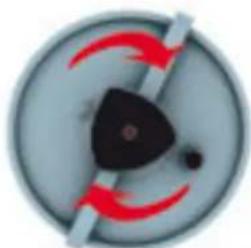
- With the tightening knob (33) turned to its lower position (rotating it counterclockwise) (FIG. 6.1), place the lid (1) onto the body (11) (FIG. 6.2) making sure it gets properly fitted by sliding the fingers around it.
- Rotate the tightening knob (33) clockwise. (FIG.6.3)
- Proceed to definitive closure by giving the tightening knob 1.1/2 to 2 turns until the clamp bar (35) stays tight under the side clamps (37) and the lid is well closed.
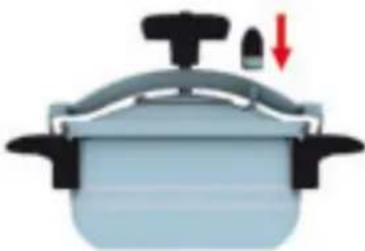
- Place the swivel valve (22) weight on the steam pipe (8). (FIG.6.4)
natural_image
Circular diagram with a black triangle and red curved arrows, no text or symbols present.FIG.6.1
natural_image
Simple diagram of a cooking pot with a red arrow indicating direction (no text or symbols)FIG.6.2
natural_image
Abstract circular diagram with red curved arrows and a central black triangular shape (no text or symbols)FIG.6.3
natural_image
Illustration of a cooking pot with a lid and handle, showing a red downward arrow indicating cooling (no text or symbols)FIG.6.4
12. COOKING UNDER PRESSURE
-
Place food ingredients inside the cooker, close and place the swivel valve (7) correctly onto the steam pipe (23). Place pressure cooker on the heat source, regulated to maximum.
-
After a while, the built-up pressure inside the cooker will make the swivel valve (22) rotate and you will observe the pressure releasing through it. At this point the heat intensity should be reduced, in order to maintain a light steady pressure release.
-
Cooking times should start to be counted at this point.
(Section 17: Cooking times chart)
-
While cooking it is NORMAL to observe small amounts of steam coming out of the safety valve (7).
-
If you use a gas burner make sure the flame is adjusted from the beginning and the pressure cooker is placed centrally on the burner, in order to avoid the flame extending beyond the base.
This way, we will be able to save energy and prevent deterioration of the helper handles (9) and silicone gasket (8).
Please note the following:
- Never leave an empty pressure cooker on a hot burner.
- Should you notice any problem during cooking, remove the pressure cooker from the heat source and allow it to cool down completely. (Section 15)
- To avoid damages to your pressure cooker, always cook with the minimum amount of water / liquid recommended in this manual. Do NOT allow your pressure cooker boiling dry.
- Open the pressure cooker with caution. Keep face and body at a distance as hot steam may still remain inside the pressure cooker.
- Please make sure the food you are preparing is suitable for pressure cooking.
- Do not use this pressure cooker for pressure frying with oil.

ATTENTION: DO NOT USE THIS PRESSURE COOKER FOR PRESSURE FRYING WITH OIL.
ALWAYS USE AT LEAST 300 ML (0.31 QTS) OF LIQUID WHEN COOKING IN YOUR PRESSURE COOKER.
ATTENTION: IF THE PRESSURE COOKER HAS BEEN HEATED WITHOUT ANY CONTENTS OR FOOD, SEEK ADVICE FROM THE NEAREST AUTHORIZED TECHNICIAN BEFORE USING IT AGAIN.
ATTENTION: ALWAYS OPEN THE PRESSURE COOKER WITH CAUTION. KEEP FACE AND BODY AT A DISTANCE AS HOT COOKING STEAM MAY REMAIN INSIDE THE UNIT.
ATTENTION: NEVER PLACE THE PRESSURE COOKER IN A HEATED OVEN.
13. PRESSURE RELEASE METHODS
When the required cooking time has elapsed remove the pressure cooker from the heat. Then proceed in either of the following manners as the recipe directs.
- Natural Pressure Release: Remove the pressure cooker from the heating element and allow it to cool. Depending on the amount of food and liquid in the pressure cooker this method may take around 10 to 15 minutes. Once cooled, remove the swivel valve (22) to release the pressure. (Fig. 8.1) If there is still some steam left inside the pressure cooker, it will be released through the steam pipe (8).
- Fast Pressure Reduction: Transfer the pressure cooker to the sink. Run cold water over the lid, remove the swivel valve (22) (Fig. 8.1) and wait for the steam to dissipate completely. This method is used to release pressure as quickly as possible. It is primarily used when preparing vegetables, seafood or other tender foods that overcook easily.
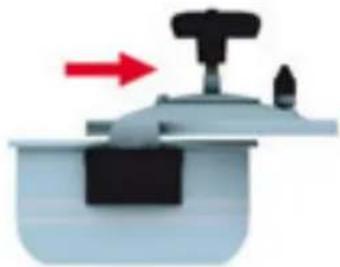
Once pressure has been released, open the cooker by rotating the tightening knob (33) anti clockwise, until the clamp bar (35) lowers as far as it can go. Slid the lid (1) horizontally to remove completely. (Fig. 8.2) Use caution when opening as hot cooking steam may be released. Once all the pressure inside the cooker has been released, gently shake the cooker before removing the lid, especially if cooking grains, purees, and foods with high-fat content or sauces. This will prevent food ejection. Do NOT force the lid open.

natural_image
Illustration of a cooking pot with a lid and black handles, accompanied by a small white object (no text or symbols)FIG.7


natural_image
Illustration of a cooking pot with a lid and valve, showing a red upward arrow (no text or symbols)FIG.8.1

natural_image
Circular diagram with a central black triangle and red curved arrows, no text or symbols present.FIG.8.2
natural_image
Diagram of a mechanical device with a red arrow indicating direction (no text or symbols)FIG.8.3
PRESSURE REDUCTION TIPS FOR SPECIFIC FOODS:
- Foods that require short cooking time:
Use the fast pressure release method when preparing rice or vegetables, since such foods can easily overcook. - Dried pulses and vegetables that require long cooking time, soups, meat stews, potatoes and cereals:
Use the natural pressure release method. Do not use water to cool the pot. Foods like potatoes may, as a result, fall apart. - Meats, vegetables, frozen vegetables, fresh Fruits, dried Foods (not including pulses): Use the natural pressure release or fast pressure release method.
- Fish and risotto:
Use the fast pressure release method. - Foods with a high fat content or purees:
Use the natural pressure release method. Gently shake the pressure cooker prior to opening to prevent splashing. Meats with skin (e.g. ox tongue) may swell when cooking under pressure. Do not pierce meat while the skin is swollen as this may result in scalding injury.
14. CLEANING AND CARE INSTRUCTIONS
TO MAINTAIN YOUR PRESSURE COOKER IN ITS ORIGINAL STATE FOLLOW THE INSTRUCTIONS SET OUT BELOW. (FIG. 9.1 - 9.2 - 9.3)
Wash in warm water using mild dish soap and a non-abrasive cleaning pad or sponge. Rinse thoroughly and dry.
Do NOT place the pressure cooker or any of its components in the dishwasher. The stainless steel surface may become damaged and discolored after several hot water washing cycles and exposure to salt.

natural_image
Illustration of a medical device with a circular dial and a small white object (no text or symbols)FIG.9.1

natural_image
Illustration of a cooking pot and a bottle (no text or symbols)FIG.9.2
natural_image
Illustration of a cooking pot with a wooden pestle (no text or symbols)FIG.9.3
LID
Do not place the pressure cooker lid or any of its components in a dishwasher as this may result in damages to the safety features.
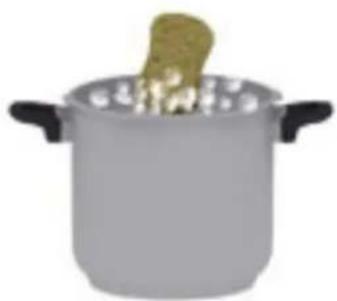
Clean the steam pipe with a thin rod, and the security valve, pressing it with the same rod from inside the lid.
Next, run a stream of tab water over the lid. Never attempt dismantling the swivel valve.
BODY
Wash your pressure cooker pot the same way would do with any other stainless steel cookware.
- The use of certain ingredients or food additives, and the exposure to water lime content may cause the appearance of bluish or yellowish stains in the bottom of the pressure cooker. To remove such stains or any other discoloration, add one-half (1/2) cup of lemon juice and 1 to 2 cups of water to the pressure cooker pot. Cook the liquid contents at high pressure for 15 minutes, and remove the pot from the heating element. Allow 10 to 15 minutes for the pressure cooker pot to cool completely. Once cooled, release the steam using the quick release method and wash the pressure cooker pot according to the instructions provided.
- Do NOT use corrosive detergents like bleach, or diluted solutions, to clean the pressure cooker pot.
!
ATTENTION: DO NOT USE CORROSIVE DETERGENTS LIKE BLEACH (NOT EVEN DILUTED IN WATER) OR ANY OTHER STRONGLY ACIDIC CLEANERS TO CLEAN THE PRESSURE COOKER POT.
KNOB
If you use your pressure cooker often, we recommend revising the tightening knob periodically to make sure the bakelite is not worn out. If you notice any cracks or chipping in it, it will become necessary to be replace it for a new one.
SILICONE GASKET
The gasket is made of highly resistant silicone (over 500 times of efficient operation). Wash the gasket with warm, soapy water every time you wash the lid, without removing it from its place. After a long period of use it must be replaced with a new ORIGINAL MAGEFESA silicone gasket to prevent any possible steam leak from the pressure cooker and to guarantee its correct functioning. Proceed in the following way:
- Remove the gasket and clean the ring around the edge of the lid where it sits.
- Moisten the new gasket with warm soapy water.
- Place the gasket back into the place. With the help of a spoon press it down until it is properly fitted into the ring around the edge of the lid.

ATTENTION: THE SILICONE GASKET IS CONSIDERED WORN OUT WHEN THE PRESSURE COOKER BEGINS TO LOSE STEAM AND DOES NOT MAINTAIN PRESSURE. THE SILICONE GASKET SHOULD BE REPLACED APROXIMATELY EVERY TWO (2) YEARS TO ENSURE PROPER FUNCTIONING OF THE PRESSURE COOKER.
ATTENTION: DO NOT CLEAN THE PRESSURE COOKER OR ITS PARTS IN A DISHWASHER.
Do not remove stains or baked-in marks with abrasive tools such as knives and emery cloths. Instead, soak the pressure cooker pot in hot water, and then apply detergent to gently remove stains using a soft brush, sponge, or cloth. Do not use corrosive agents like bleach (or diluted forms) for cleaning. Remove tough stains using drops of vinegar or lemon juice.
If it becomes difficult to close the pressure cooker lid, apply a light layer of cooking oil to the silicone gasket.
Do not lock the lid in place when storing the pressure cooker. Instead, place the lid facing upside-down in the pot, so stress is not placed on the silicone gasket.
15.TECHNICAL SUPPORT AND REPLACEMENT PARTS
Do not modify the pressure cooker, its parts, or its safety features in any way.
The use of replacement parts made by different manufacturers can affect the operating safety of your pressure cooker. MAGEFESA is not liable for the direct, indirect, special, incidental or consequential damages caused by the use of replacement parts from other manufacturers.
Use authentic replacement parts manufactured and distributed by MAGEFESA only.
When contacting our Customer Service Department through the contact section on our website, please have the information about your pressure cooker model and the replacement part you require at hand. You can check the pressure cooker components chart on section 5 if you need any help identifying your replacement part.
For technical support, replacement parts purchasing or any further information you may require, please contact your local retailer or an Authorized Magefesa Service Center in your area.
16. PRACTICAL TIPS FOR PRESSURE COOKER USE
Before you use your pressure cooker it's important you become familiar with the way your pressure cooker operates. Should you have any concerns about your pressure cooker or its safety features, please do not use it and contact your local retailer or MAGEFESA for assistance. Below you will find some practical tips and common solutions to minor problems you may experience when using your pressure cooker:
CASE: PRESSURE CAN NOT BE MAINTAINED
| POSSIBLE REASONS:1. The pressure cooker lid might not be well fitted onto the body.2. Silicone gasket is out of place, dirty, or worn out.3. Not enough liquid has been added, or remains inside the pressure cooker. | SUGGESTIONS:1. Reopen the pressure cooker and secure the lid according to the instructions provided, in this manual making sure it is properly closed.2. Check the silicone gasket is clean and properly fitted into place. Make sure it is not wornout. We recommended replacing the gasket every 2 years.3. Add water or any other liquid to cooker until the recommended minimum amount is reached. |
CASE: STEAM ESCAPING FROM THE LID
| POSSIBLE REASONS:1. The pressure cooker lid might not be well fitted onto the body.2. Silicone gasket is out of place, dirty, or worn.3. The pressure cooker is overfilled. | SUGGESTIONS:1. Reopen the pressure cooker, and secure the lid according to the instructions provided, ensuring the unit is properly closed. Section 11.2. Make sure the silicone gasket is clean, properly fitted into place and not worn out. To improve the silicone gasket's sealing performance, rub it gently with cooking oil or moisten with water. We recommend replacing the gasket every 2 years.3. Do NOT fill the pressure cooker more than two-thirds (2/3) full. For foods with a tendency to foam, only fill one-half (1/2) of the pressure cooker. Section 9. |
CASE: THE SWIVEL VALVE DOES NOT TURN
| POSSIBLE REASONS:1. Not enough liquid has been added, or remains inside the pressure cooker.2. The steam pipe is dirty. | SUGGESTIONS:1. Add water or any other liquid to cooker until the recommended minimum amount is reached.2. Clean the steam pipe with a thin rod. |
CASE: EFFORT IS REQUIRED TO OPEN OR CLOSE THE LID
| POSSIBLE REASONS:1. Pressure may remain inside the pressure cooker.2. Silicone gasket is out of place, dirty, or worn out.3. Pressure cooker clamp bar is not properly fitted under the side clamps. | SUGGESTIONS:1. Proceed with one of the pressure release methods found in Section 13.2. Make sure the silicone gasket is clean and fitted into place. Make sure it is not worn out. We recommend replacing the gasket every 2 years3. Do NOT force the lid when opening or closing. If you feel you need to apply pressure when closing the lid, open the lid by rotating the knob counterclockwise. Next, follow the instructions provided on Section 11 to make sure the clamp bar stays tight under the side clamps and the lid is properly closed. |
CASE: THE STEAM COMING OUT THE SWIVEL VALVE CONDENSATES ON THE LID
| POSSIBLE REASONS:1. While the pressure cooker is working you will observe light steady steam coming out the swivel valve, and drops of steam condensate on the lid. | SUGGESTIONS:1. This is considered as part of the normal operation of your pressure cooker. |
17. COOKING TIMES CHART
The cooking system of this pressure cooker reduces cooking times when compared to conventional cooking methods, helping you save energy. As both the amount of water used during cooking and cooking times are reduced, pressure cooking preserves a greater amount of the food's nutrients, vitamins and minerals, improving also its natural flavor and texture. The operating pressure of this pressure cooker is 8 psi (55 kPa)
Cooking times should be counted from the moment the steam starts coming out the swivel valve. At his point the heat should be reduced to a minimum to maintain the pressure inside the cooker. They should be taken as guidance, as they may vary according to food, cut, water used and personal taste of the user.
Minimum amount of liquid required for pressure cooking 0.31 Qts (300 ml / 10 oz)
Minimum amount of liquid required for steaming 0.79 Qts (750 ml / 25 oz)
| FOOD | COOKING TIME (MIN) | LIQUID ADDED |
| VEGETABLES | ||
| Chard | 3 | 300 ml / 10 oz |
| Artichokes | 12 / 14 | 1/2 level mark |
| Celery | 4 | 300 ml / 10 oz |
| Celery, chopped | 2 | 300 ml / 10 oz |
| Sweet potatoes | 8 / 10 | 300 ml / 10 oz |
| Broccoli | 2 / 4 | 300 ml / 10 oz |
| Pumpkin, chopped | 10 / 12 | 1/2 level mark |
| Zucchini | 4 / 6 | 300 ml / 10 oz |
| Onion | 6 / 8 | 300 ml / 10 oz |
| Brussels sprouts | 4 / 6 | 300 ml / 10 oz |
| Chucruit | 20 / 25 | 300 ml / 10 oz |
| Cauliflower | 4 / 6 | 300 ml / 10 oz |
| Turnip, halved | 6 | 300 ml / 10 oz |
| Turnip, sliced | 2 | 300 ml / 10 oz |
| Asparagus | 8 / 10 | 1/2 level mark |
| Spinach, fresh | 2 / 3 | 300 ml / 10 oz |
| Spinach, frozen | 4 / 5 | 300 ml / 10 oz |
| Endives, whole | 2 / 3 | 300 ml / 10 oz |
| Peas, fresh | 3 / 5 | 300 ml / 10 oz |
| Fennel | 4 / 6 | 300 ml / 10 oz |
| Green beans | 6 / 10 | 300 ml / 10 oz |
| Red cabbage | 10 | 1/2 level mark |
| Corn Cobs | 6 / 8 | 1/2 level mark |
| Mixed vegetables, chopped (frozen) | 8 / 10 | 300 ml / 10 oz |
| Turnip | 8 / 10 | 300 ml / 10 oz |
| Turnip, chopped | 5 / 6 | 300 ml / 10 oz |
| Leek | 4 / 5 | 300 ml / 10 oz |
| Leek, chopped | 2 | 300 ml / 10 oz |
* At least 300 ml (10 oz.)
Magefesa
| FOOD | COOKING TIME (MIN) | LIQUID ADDED |
| Okra | 4/6 | 300 ml / 10 oz |
| Red peppers | 3/4 | 300 ml / 10 oz |
| Potatoes, whole | 12/14 | 1/2 level mark |
| New potatoes, whole | 8/10 | 1/2 level mark |
| Potatoes, diced | 4/6 | 300 ml / 10 oz |
| Potatoes, sliced | 2/4 | 300 ml / 10 oz |
| Beetroot, whole | 25/30 | 1/2 level mark |
| White cabbage | 6/8 | 300 ml / 10 oz |
| Salsify | 10/12 | 1/2 level mark |
| Snow peas | 6/8 | 300 ml / 10 oz |
| Tomatoes, whole | 4/6 | 300 ml / 10 oz |
| Tomatoes, chopped | 3/4 | 300 ml / 10 oz |
| Carrots, whole | 8/10 | 1/2 level mark |
| Carrots, chopped | 4/6 | 300 ml / 10 oz |
| RICE AND CEREALS | ||
| Bahía, bomba, basmati, senia, jasmine rice | 8/9 | According to recipe, * |
| Brown rice | 18/20 | According to recipe, * |
| Wild rice | 12/15 | According to recipe, * |
| Corn Cobs | 6/8 | 1/2 level mark |
| Cous cous | 3/4 | According to recipe, * |
| PULSES | ||
| White beans | 25/30 | To cover up ingredients |
| Verdina beans | 20/25 | To cover up ingredients |
| Pinto beans | 20/25 | To cover up ingredients |
| Broad beans | 6/8 | According to recipe, * |
| Lentil | 10/12 | To cover up ingredients |
| Asturian white bean stew | 25/30 | To cover up ingredients |
| Chickpeas | 40/45 | To cover up ingredients |
| Pigeon beans | 18/20 | According to recipe, * |
| Soybean | 10/12 | According to recipe, * |
| SOUPS, STOCKS AND PUREES | ||
| Poultry stock | 25/30 | According to recipe, * |
| Beef stock | 40/45 | According to recipe, * |
| Fish stock | 12/15 | According to recipe, * |
| Vegetable stock | 12/15 | According to recipe, * |
| Pea soup | 8/10 | According to recipe, * |
| Vegetable soup | 6/8 | According to recipe, * |
| Minestrone soup | 6 | According to recipe, * |
| Oxtail soup | 30/35 | According to recipe, * |
| Onion soup | 6/8 | According to recipe, * |
| FISH | ||
| Clams | 3/4 | 300 ml / 10 oz |
| Tuna, sliced | 4/5 | 300 ml / 10 oz |
| Cod | 2/3 | 300 ml / 10 oz |
* At least 300 ml (10 oz.)
Magefesa
| FOOD | COOKING TIME (MN) | LIQUID ADDED |
| Squid | 8 / 10 | According to recipe, * |
| Mussels | 3 / 4 | 300 ml / 10 oz |
| Hake, sliced | 3 | According to recipe, * |
| Fish, loins | 6 | According to recipe, * |
| Fish, tails | 4 / 5 | According to recipe, * |
| Fish pieces | 3 / 4 | According to recipe, * |
| Fish fillets | 2 | According to recipe, * |
| MEAT, POULTRY AND GAME | ||
| Beef or ox, roast | 40 / 45 | According to recipe, * |
| Beef or ox, minced | 8 / 10 | According to recipe, * |
| Beef or ox, stew | 25 / 30 | To cover up ingredients |
| Beef, tongue | 40 / 45 | To cover up ingredients |
| Veal, roast | 20 / 28 | According to recipe, * |
| Veal, ossobuco or shank | 35 | According to recipe, * |
| Veal, stew | 20 | To cover up ingredients |
| Veal, tongue | 25 / 30 | To cover up ingredients |
| Veal, tripe | 30 / 35 | To cover up ingredients |
| Veal, feet | 35 | According to recipe, * |
| Pork, roast | 20 / 25 | According to recipe, * |
| Pork, bacon | 18 / 20 | According to recipe, * |
| Pork, ribs | 15 | According to recipe, * |
| Pork, stew | 20 | To cover up ingredients |
| Pork, knuckle | 30 / 35 | To cover up ingredients |
| Pork, feet | 30 | According to recipe, * |
| Lamb, roast | 25 / 30 | According to recipe, * |
| Lamb, stew | 18 / 20 | To cover up ingredients |
| Lamb, chops | 10 / 12 | According to recipe, * |
| Lamb, feet | 20 / 25 | According to recipe, * |
| Chicken (whole), roast | 18 / 20 | According to recipe, * |
| Chicken, stew | 8 / 10 | To cover up ingredients |
| Hen | 30 / 35 | According to recipe, * |
| Pheasant, stew | 15 / 18 | To cover up ingredients |
| Turkey, stew | 30 / 35 | To cover up ingredients |
| Rabbit, stew | 22 / 25 | To cover up ingredients |
| Hare, stew | 25 / 30 | To cover up ingredients |
| Venison, stew | 30 | To cover up ingredients |
| FRESH FRUIT AND DESSERTS | ||
| Apricots, peaches,plums, cherries | 2 / 3 | According to recipe, * |
| Chesnuts | 10 / 12 | According to recipe, * |
| Pears, apples | 4 / 6 | According to recipe, * |
| Quinces | 10 / 12 | According to recipe, * |
| Fruit compotes | 6 / 8 | According to recipe, * |
| Custard | 10 | According to recipe |
* At least 300 ml (10 oz.)
18. RECIPES
Cooking times for the following recipes are only indicative and may vary according to both the quality and quantity of the ingredients. Visit our website (www.magefesausa.com) for more tasty recipes.

35 ^MIN
INGREDIENTS
2 lbs poultry shells & bones
(chicken, hen, duck, etc)
1 medium onion.
1 look.
2 carrots.
2 celery stalks (optional).
2/3 cup chickpeas.
6 cups water.
POULTRY STOCK
Wash and peel the onion, carrots, leeks and celery. Cut the onion in half. Wash the poultry shells and bones under a stream of cold water.
Place all the ingredients into a fast Magefesa pressure cooker, cover with water and bring to a boil, uncovered.
Lower the heat, skim off any impurities with a spoon or ladle and close the cooker.
Bring the cooker to pressure and wait for the swivel valve to start rotating.
At this point lower the heat to a minimum so that the weight starts rotating slowly and steadily. Cook for 30 to 35 minutes.
Remove from heat and wait for the pressure to release completely before opening the cooker.
Pass through a fine sieve and season to taste.
To prepare the stock use carcass, necks or backbones of chicken, duck or any other bird.
Ideal as a base for many recipes such as poultry gravy, vegetable and rice dishes, soups, creams, etc.
To get a nice clear stock, reduce the heat at the very moment the stock breaks into a boil, then remove the thick foam of impurities that arise to the surface.
For a transparent stock it is also important poultry shells and bones are thoroughly rinsed to remove all blood and viscera.

15 ^MIN
INGREDIENTS
1 lb fish heads, bones
and skins
1 medium onion.
1 leek.
2 carrots.
4 parsley sprigs
Water.
FISH STOCK
Peel and chop onion into quarters. Wash leek and peel carrots.
Wash fish heads bones and skins under cold water.
Place ingredients in a fast Magefesa pressure cooker, cover with water and cook over medium heat.
Bring to a boil and spoon off any impurities that arise to the surface. Close the cooker.
Bring to high pressure and wait for the swivel valve to start rotating.
At this point lower the heat to a minimum so that the valve rotates slowly and evenly. Cook for 15 minutes.
Remove from heat and wait for the pressure to drop completely before opening the pot.
Pass stock through a fine sieve and season with salt to taste.

40
MIN
INGREDIENTS
1 lb chicken breast.
1 chicken backbone.
7 oz chickpeas.
1 white onion.
1 red onion.
2 garlic gloves.
2 ripe tomatoes.
2 chipotle chilies or
more to taste.
2 carrots.
7 oz green beans.
2 avocados.
7 oz Panela or
Oaxaca cheese.
2 limes.
Salt.
Pepper.
Epazote.
Mild olive oil.
TLALPEÑO SOUP
Place chickpeas to soak in warm water with salt for 12 hours.
Wash the chicken backbone to remove blood and fat.
Chop the red onion and green beans into julienne. Peel carrot and chop into cubes. Peel tomatoes and remove seeds, then cut into concasse.
To prepare the broth add chicken, onion, garlic, and a sprig of epazote to a fast Magefesa pressure cooker. Cover with water and bring to a boil.
Add chickpeas to the hot broth. Close the pot and wait for the swivel valve to start rotating.
Bring the cooker to pressure over high heat. At this point reduce heat to a minimum and cook for 35 to 40 minutes.
Remove from heat and wait for the pressure to release completely before opening the pressure cooker.
Remove chicken breast from the cooker. Reserve until is cool enough to handle.
Strain the broth and reserve chickpeas.
Heat a little olive oil in a fast Magefesa pressure cooker and sauté red onions and tomatoes in the oil. When onion is transparent and tomatoes have the texture of a puree, add chillies, carrots, green beans and chickpeas, then cover with the chicken broth and let boil over medium heat.
Once the chicken has cool down shred it with your hands. When vegetables are cooked, add the shredded chicken to the soup and season with salt and pepper.
When soup is ready, add the avocado and Oaxaca cheese, cut into cubes.
Serve soup with a few wedges of lime on the side so that your guests can season the soup to their own liking.
The Tlalpeño soup can be prepared using a wide range of vegetables such as beets, broccoli, cabbage, corn, etc.

25
MIN
INGREDIENTS
14 oz white or pinto beans.
1/4 cup brown sugar.
2 tablespoons molasses.
10 oz bacon.
1 onion.
1 carrot.
2 garlic cloves.
1/2 cup tomato sauce.
Mild olive oil, 0.4°.
1 tablespoon mustard.
3 cloves.
Salt.
Water.
BOSTON STYLE BEAN STEW
Soak beans in cold water overnight, or for 8 hours.
Chop onion, carrot and garlic into fine brunoise.
Heat a little olive oil in a fast Magefesa presue cooker and saute carrots, onions and garlic.
When vegetables are ready, add bacon cut into sticks or cubes and sauté until lightly browned. Add the tomato sauce, and cook over low heat for about 5 minutes.
Dissolve sugar and molasses in a little warm water, add to cooker with the vegetable sofrito and then incorporate the beans, previously soaked and drained.
Cover with cold water, then add the tablespoon of mustard and the cloves.
Close the cooker. Bring the cooker to high pressure and wait for the swivel valve to start rotating.
At this point lower the heat to a minimum so that the weight rotates slowly and evenly. Cook for 20-25 minutes.
One cooking time has elapsed, release pressure using the quick method (see instructions). Check the beans for doneness and the season to taste.
Serve hot.
If you want to give your beans a spicy twist, add a few chillies or cayenne pepper to the sauce.

15 MIN
INGREDIENTS
4 chicken legs
(leg and thigh).
2/3 lb potatoes.
1/2 lb ripe tomatoes.
1 medium onion.
1 red pepper.
1/4 lb corn.
1/4 lb white beans (cooked).
2 oz bacon.
2 cups chicken broth.
1 celery stalk.
2 bay leaves.
1 cayenne pepper.
Salt.
Black pepper.
2 tablespoons wine vinegar.
Mild olive oil.
BRUNSWICK CHICKEN STEW
Sliced each chicken leg into four parts.
Peel potatoes and chop into rough chucks.
Cut onion, celery and red pepper into fine brunoise. Chop bacon into pieces about the same size as vegetables and concasse tomatoes.
Heat a little mild olive oil in a fast Magefesa pressure cooker. Season chicken pieces and sauté until they turn a golden brown color. Remove from heat and set aside.
In the same oil sauté bacon pieces until browned and crispy. Remove from heat and set aside.
Cook onion and pepper in the fat released when browning bacon and chicken pieces. Halfway into the process add celery and cayenne pepper.
When vegetables are ready, add tomato concasse and cook for a few minutes. Return chicken and bacon to cooker, cover with the chicken broth and simmer for a few minutes.
Add potatoes, close the cooker and bring to pressure over high heat until the swivel valve begins to rotate.
Reduce heat to a minimum so that the weight rotates slowly and evenly. Cook for 12 to 15 minutes.
Allow pressure to release completely before opening the cooker. Add the corn and beans. Season with salt and pepper to taste, add the two tablespoons of vinegar and let stand for about 30 minutes before serving.

10 MIN
INGREDIENTS
4 salmon fillets.
1 medium onion.
1 garlic clove.
2/3 cup dry white wine.
A few sprigs of dill.
Coarse salt.
White pepper.
Fish stock.
POACHED SALMON IN WHITE WINE
Use a pair of kitchen tongs to remove bones from salmon fillets. Season to taste. Cut onion into rings and laminate garlic. Place in a fast Magefesa pressure cooker along with the sprig of dill.
Place a steamer basket (available with some Magefesa pressure cooker models) inside a fast Magefesa pressure cookers. Place salmon fillets in the basket, then add white wine and fish stock making sure liquid doesn't rise above 3/4 of the steamer basket.
Close the pressure cooker and bring to high pressure until the swivel valve begins to rotate.
Reduce heat to a minimum so that the weight rotates slowly and steadily. Cook for 6 minutes. Allow pressure to release completely before opening the pressure cooker.
Salmon can be prepared in many different ways: steamed, boiled, grilled, braised, baked, marinated, smoked, and even raw.
The key to a great salmon dish is to pay close attention to the point of doneness. It is very important not to overcook it so that we can keep the juiciness and texture salmon is known for.
Magefesa

25 ^MIN
INGREDIENTS
1-1/2 lb Certified Angus Beef.
7 oz pinto beans.
2 jalapeño peppers.
2 onions.
3 celery stalks.
2 ripe tomatoes.
3 garlic cloves.
1 green pepper.
Mild olive oil.
Salt.
Black pepper.
Cayenne pepper.
Chopped fresh cilantro.
Oregano, thyme.
SOUTHWESTERN ANGUS BEEF STEW
Soak beans in cold water overnight, or at least 8 hours.
Drain beans and place in a fast Magefesa pressure cooker. Cover with cold water and season with a little salt.
Close the pressure cooker and bring to high pressure, until the swivel valve begins to rotate. At this point lower the heat to a minimum to maintain pressure inside the cooker. Cook for 25 minutes.
Remove cooker from heat and wait for the pressure to release completely before opening. Reserve beans in a bowl.
Chop onion, bell pepper, celery and garlic into fine brunoise. Peel tomatoes and chop into cubes. Cut meat into approx. 1-inch cubes.
Heat a little olive oil in the cooker. When hot enough, cook meat cubes slowly until sealed and browned, remove.
In the same oil, cook onion and pepper for 3 to 4 minutes.
Add celery and garlic, and continue cooking until vegetables are tender.
Add meat, season with salt and pepper to taste, and then add oregano and a tablespoon of cayenne pepper.
Cover with water or meat stock. Close the pot and heat over high heat until the pressure valve begins to turn.
Reduce heat to a minimum so that the weight rotates slowly and steadily.
Cook for 25-30 minutes. Remove from heat and wait for the pressure to release completely before opening.
Add the beans, sliced jalapenos and corn kernels (optional). Bring to a boil to allow flavors mingle and let rest for a few minutes before serving.

10 ^MIN
INGREDIENTS
1 lb small potatoes.
2 garlic cloves.
Salt.
Black pepper.
Parsley.
Rosemary or thyme.
Butter.
Mild olive oil.
Water.
HERB-ROASTED POTATOES
Process butter at room temperature, along with a little salt and parsley in a Magefesa blender. Keep in the refrigerator.
Wash potatoes under running cold water, scrubbing thoroughly to remove dirt. Drain. Heat a little mild olive oil in a fast Magefesa pressure cooker.
Add garlic cloves, unpeeled, crushing them slightly with the side of your chef's knife.
When garlic begins to take on some color, add potatoes and cook, stirring occasionally, so that they brown evenly.
Add thyme or oregano to taste. Pour broth or water, using the minimum amount recommended in the instruction manual of your pressure cooker.
Close the cooker and bring to high pressure until the swivel valve begins to rotate.
Reduce heat to a minimum so the weight turns uniform and slowly release steam.
Cook for about 10 minutes.
Once time has elapsed, remove the cooker from the heat and let pressure release completely before opening.
Drain cooking liquid.
Place drained potatoes in a Magefesa wok or pan, add the butter cut into cubes and season with coarse salt and black pepper to taste. Sauté for 3 to 4 minutes.
Serve hot. Use to accompany your meat, fish or poultry dishes.

25 ^MIN
INGREDIENTS
2 lb venison.
2 onions.
2 carrots.
1 celery stalk.
2 garlic cloves.
1 ripe tomato.
1-1/4 cup red wine
Dark beef broth.
Salt, black pepper,
thyme, bay leaves, basil.
1 tablespoon
cayenne pepper.
Parsley.
Cornstarch.
Mild olive oil.
BRAISED VENISON
Slice meat into approx. 1-inch cubes. Season to taste.
Chop onion, carrot, celery, and garlic into fine brunoise. Grate tomatoes, discarding the skin.
Heat a little olive oil in a fast Magefesa pressure cooker over medium heat. When hot enough add meat and cook, stirring occasionally, until sealed and golden brown. Remove from heat and reserve.
In the same oil cook onion for 3 to 4 minutes. Add carrots, garlic and celery and continue cooking until vegetables are soft and onion is transparent.
Add grated tomato, herbs and spices, and fry altogether for 5 minutes
Pour in red wine and cook until alcohol evaporates, then cover with the broth.
Close the cooker and bring to high pressure until the swivel valve a show begins to rotate. Reduce heat to a minimum so that the valve rotates slowly and evenly. Cooking for 20 to 25 minutes, depending on the quality and tenderness of the meat.
When time has elapsed, remove from heat and wait for the pressure to release completely before opening the pressure cooker.
Check meat for doneness and season with salt and pepper to taste.
Thicken the sauce with a spoonful of cornstarch dissolved in a little cold water. Let stand for about 30 min. before serving.
Sprinkle with finely chopped parsley and serve with roasted or boiled potatoes, white rice, steamed vegetables etc.

10 ^MIN
INGREDIENTS
6 medium leeks.
2 medium potatoes.
1/2 cup butter.
1/2 small onion.
3-1/2 cups poultry stock.
1-2/3 cups 18%
reduced fat cream.
2 avocados.
1 cup tempura flour.
Salt and white pepper.
Mild olive oil.
AVOCADO AND LEEK CREAM WITH TEMPURA
Peel onion. Remove outer layers of leeks and wash under cold water. Chop onion and leeks into fine Julienne.
Cut potatoes into rough chunks. This will help them release the starch, giving the soup a thicker texture.
Melt butter mixed with a little olive oil in a fast Magefesa pressure cooker and sauté onions and leeks over medium-low heat. This way they will brown just lightly. When vegetables are ready, add chopped potatoes, cook for a couple of minutes and cover with the poultry stock.
Close the cooker and bring to pressure over high heat. Wait for the swivel valve to start rotating. At this point lower the heat to a minimum so that the weight rotates slowly and evenly. Cook for 8 to 10 minutes.
Once time has elapsed wait for the pressure to release completely before opening the cooker. Pour in pot ingredients with the pulp of one avocado inside a Magefesa blender and process until you get you get a homogeneous silky cream.
Add cream and season with salt and white pepper to taste.
Cut the other avocados in half, remove the pit and cut each half in 1/4 thick slices.
Season with salt and pepper.
Prepare the tempura dough by mixing the flour with ice water, until we get a medium-thickness dough. Impregnate avocado with the tempura mixture and fry in abundant hot oil in a nonstick Magefesa pan.
Serve cream in a soup bowl and garnish with the avocado tempura.
Magefesa

15 ^MIN
INGREDIENTS
2 cups whole milk.
8 oz dulce de leche
1/3 cup sugar.
4 eggs.
1/2 vanilla pod.
For the caramel:
1/4 cup sugar.
1/2 glass of water.
DULCE DE LECHE FLAN
To prepare the caramel, add sugar and water to a nonstick aluminum Magefesa frypan. Cook over medium heat until water evaporates and sugar turns a golden brown color. Remove from heat and pour carefully into a lidded container making sure the walls are also covered with the caramel. Cut vanilla pod lengthwise, scrape seeds with a knife and place in a Magefesa pan together with the milk. Bring to a boil and then remove from heat. Let infuse for 8 to 10 minutes.
Remove vanilla pod, mix milk with condensed milk, sugar and the eggs making sure milk temperature doesn't set the egg yolks.
Pour mixture into the container with the caramel and close with the airtight lid. Introduce flan container into a fast Magefesa pressure cooker. Pour water to cover three-quarters of the pan.
Close the cooker and bring to high pressure until the valve begins to rotate. Reduce heat to a minimum so that the valve starts rotating slowly and evenly. Cook for 12 to 15 minutes.
Let pressure release completely before opening the pressure cooker. Remove the container and let cool in the fridge before unmolding.
If we don't have a steamer basket we can place a thin cloth at the bottom of the cooker to avoid the flan container being in direct contact with the base of the cooker during cooking.
The flan can be flavored with other ingredients such as cinnamon, cardamom, clove, star anise, citrus fruits rind etc.

12 ^MIN
INGREDIENTS
4 conference pears.
2-1/2 cups red wine.
1 cup brown sugar.
1 orange.
1 lemon.
1 cinnamon stick.
6 mint leaves.
7 oz. 64% dark
chocolate frosting.
PEARS IN RED WINE WITH HOT CHOCOLATE DIPPING SAUCE
Place the red wine, along with the cinnamon stick, sugar, mint leaves, orange and lemon rinds in a fast Magefesa pressure cooker. Cook over medium heat. Peel the pears, keeping the stem on. Add to cooker once wine breaks into a boil. Cover with lid, bring to high pressure and wait for the swivel valve to start rotating. At this point lower the heat to a minimum so that the weight rotates slowly and evenly. Cook for 10 to 12 minutes, depending on the size and ripeness of the fruit.
Melt chocolate in a double boiler or a microwave and keep hot.
Once the cooking time for the pears has elapsed, let pressure release completely. Open the cooker and remove the pears. Reduce wine mixture into a thicker sauce. Pour sauce over the pears and let cool before serving. Serve along with hot chocolate dipping sauce.
Bear in mind that the quality of wine or liqueurs used in a recipe will influence the results achieved. While Crianza wines will bring well-balanced flavors to food, lower quality wines may infuse ingredients with acidic or bitter notes. If melting the chocolate in the microwave we recommend proceeding slowly, melting it over medium heat in short periods of time, so it doesn't get burnt. Heat for a few seconds, remove from the microwave, stir a little, then repeat the process until the chocolate is completely melted.
19. REPLACEMENT PARTS CHART - STAR
The following chart contains the most important replacement parts for your pressure cooker. Please, do not hesitate to visit our website (www.magefesausa.com) if you require further information.
| SPARE PART NAME | SPARE PART NUMBER | SPARE PART CODE | EAN 13 | UPC-A | |
 | - Helper handle | 36 | STAR09REMECASTC |  |  |
 | - S reliability series | 37 | STAR / INOXTAR09REMEVISSTC |  |  |
 | - Knobs | 38 | STAR09REMECPSTC |  |  |
 | - Working wire | 39 | STAR09REMEVTSCT |  |  |
 | - Steam pipe | 40 | STAR / INOXTAR09REMECHSTC |  |  |
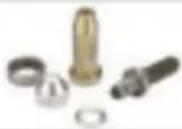 | - Knobs safety dept. | 41 | STAR / INOXTAR09REMECOSTC |  |  |
 | - Silicose gas jet | 42 | STAR 4 - 5 / INOXTAR 4 - 809REME22STCSTAR 8 - 10 / INOXTAR 8 - 1009REMECAISTCSTAR 12 - 14 / INOXTAR 12 - 1409REME26STC |   |   |
19. REPLACEMENT PARTS CHART - INOXTAR
The following chart contains the most important replacement parts for your pressure cooker. Please, do not hesitate to visit our website (www.magefesausa.com) if you require further information.
| SPARE PART NAME | SPARE PART NUMBER | SPARE PART CODE | EAN 13 | LPC-A | |
 | - Neniger handle | 09 | INOXTAR09REMEALINO |  |  |
 | - Battery valve | 07 | STAR / INOXTAR09REMEVSSTC |  |  |
 | - Kinab | 03 | INOXTAR09REMEPOINO |  |  |
 | - Working valve | 02 | INOXTAR09REMEVITNO |  |  |
 | - Blower pipe | 03 | STAR / INOXTAR09REMECHSTC |  |  |
 | - Kinab setting bolt | 06 | STAR / INOXTAR09REMECOSTC |  |  |
 | - Silkwire pellet | 09 | STAR 4 - 8 / INOXTAR 4 - 609REME22STCSTAR 8 - 10 / INOXTAR 8 - 1009REME24STCSTAR 12 - 14 / INOXTAR 12 - 1409REME26STC |    |    |


www.magefesausa.com
Magefesa®

natural_image
Red wireframe illustration of a cooking pot with lid and handles (no text or symbols)
- Magefesa®
- Instructivo y garantía
- Instruction Manual & Warranty
- CONTENIDO
- IMSTARINOXTAR13\_AMEV1
- PÁGINA
- INTRODUCCIÓN
- VENTAJAS DE LA OLLA A PRESIÓN
- SEGURIDAD AMBIENTAL Y RECICLAJE
- IMPORTANTES MEDIDAS DE SEGURIDAD
- INSTRUCCIONES DE SEGURIDAD
- DESCRIPCIÓN DE LAS PARTES DE LA OLLA STAR
- PARTES DE LA OLLA A PRESIÓN
- DESCRIPCIÓN DE LAS PARTES DE LA OLLA INOXTAR
- COMPONENTES Y DISPOSITIVOS DE SEGURIDAD
- SISTEMAS DE SEGURIDAD
- CARACTERÍSTICAS ADICIONALES
- INSTRUCCIONES PARA EL CORRECTO USO DE LA OLLA
- PRIMER USO DE LA OLLA
- NIVEL DE LLENADO DE LA OLLA A PRESIÓN
- CONTROL DE LAS VÁLVULAS
- Chimenea (23):
- Válvula de seguridad (7):
- CIERRE DE LA OLLA A PRESIÓN
- COCINA BAJO PRESIÓN
- Tenga en cuenta lo siguiente:
- MÉTODOS DE LIBERACIÓN DE VAPOR
- REDUCCIÓN DE LA PRESIÓN PARA ALIMENTOS ESPECÍFICOS:
- INSTRUCCIONES DE LIMPIEZA Y MANTENIMIENTO
- PARA CONSERVAR LA OLLA A PRESIÓN EN SU ESTADO ORIGINAL SIGA LAS INSTRUCCIONES QUE SE EXPONEN A CONTINUACIÓN . (FIG. 9.1 - 9.2 - 9.3)
- POMO
- JUNTA DE SILICONA
- SERVICIO DE ASISTENCIA Y REPARACIÓN
- SOLUCIÓN DE PROBLEMAS DE LA OLLA A PRESIÓN
- TABLA ORIENTATIVA DE TIEMPOS DE COCCIÓN
- RECETAS
- CALDO DE CARNE
- CALDO DE AVE
- Magefesa
- MIN
- CALDO DE PESCADO
- MIN
- CALDO GALLEGO
- MIN
- INGREDIENTES
- ALUBIAS PINTAS ESTOFADAS
- MIN
- PATATAS A LA RIOJANA
- Mogefesa
- MIN
- COCIDO DE GARBANZOS MADRILEÑO
- LENTEJAS ESTOFADAS CON PERDIZ ESCABECHADA
- MIN
- CREMA DE PUERROS Y AGUACATE CON TEMPURA
- MIN
- POLLO ESTOFADO CON HONGOS
- PERAS AL VINO TINTO CON CHOCOLATE FUNDIDO
- MIN
- FLAN DE HUEVO CLÁSICO
- REPUESTOS - OLLA INOXTAR
- REPUESTOS - OLLA STAR
- CONTENTS
- PAGE
- INTRODUCTION
- ADVANTAGES OF YOUR PRESSURE COOKER
- ENVIRONMENTAL SAFETY AND RECYCLING STANDARDS
- IMPORTANT SAFETY INFORMATION
- SAFETY INSTRUCTIONS
- GENERAL PRODUCT DESCRIPTION - STAR
- PARTS OF THE PRESSURE COOKER
- GENERAL PRODUCT DESCRIPTION - INOXTAR
- MAIN COMPONENTS AND SAFETY FEATURES
- SAFETY FEATURES
- ADDITIONAL FEATURES
- DIRECTIONS FOR PROPER USE
- USING THE COOKER FOR THE FIRST TIME
- FILLING THE PRESSURE COOKER
- CHECKING THE VALVES
- Steam pipe (23):
- Safety valve (7):
- SECURING THE PRESSURE COOKER LID
- COOKING UNDER PRESSURE
- Please note the following:
- PRESSURE RELEASE METHODS
- PRESSURE REDUCTION TIPS FOR SPECIFIC FOODS:
- CLEANING AND CARE INSTRUCTIONS
- TO MAINTAIN YOUR PRESSURE COOKER IN ITS ORIGINAL STATE FOLLOW THE INSTRUCTIONS SET OUT BELOW. (FIG. 9.1 - 9.2 - 9.3)
- LID
- BODY
- KNOB
- SILICONE GASKET
- 15.TECHNICAL SUPPORT AND REPLACEMENT PARTS
- PRACTICAL TIPS FOR PRESSURE COOKER USE
- COOKING TIMES CHART
- RECIPES
- MIN
- INGREDIENTS
- POULTRY STOCK
- FISH STOCK
- 40
- TLALPEÑO SOUP
- 25
- BOSTON STYLE BEAN STEW
- MIN
- BRUNSWICK CHICKEN STEW
- POACHED SALMON IN WHITE WINE
- MIN
- SOUTHWESTERN ANGUS BEEF STEW
- HERB-ROASTED POTATOES
- BRAISED VENISON
- AVOCADO AND LEEK CREAM WITH TEMPURA
- DULCE DE LECHE FLAN
- MIN
- PEARS IN RED WINE WITH HOT CHOCOLATE DIPPING SAUCE
- REPLACEMENT PARTS CHART - STAR
- REPLACEMENT PARTS CHART - INOXTAR
Marque : Magefesa
Modèle : Inoxtar 10 L
Catégorie : Casserole