
A2FE635CRJ 3DFRIDGE - Réfrigérateur HAIER - Notice d'utilisation et mode d'emploi gratuit
Retrouvez gratuitement la notice de l'appareil A2FE635CRJ 3DFRIDGE HAIER au format PDF.

| Type de produit | Réfrigérateur-congélateur bas |
| Couleur | Rouge |
| Classe énergétique | A+ |
| Consommation annuelle | 348 kWh/an |
| Capacité totale nette | 347 litres |
| Capacité réfrigérateur | 248 litres |
| Capacité congélateur | 99 litres |
| Système de froid | Total No Frost (bi-zone) |
| Classe climatique | SN-T (10°C - 43°C) |
| Niveau sonore | 42 dB(A) |
| Hauteur | 190 cm |
| Largeur | 59,5 cm |
| Profondeur | 67,2 cm |
| Poids net | 90 kg |
| Puissance de congélation | 12 kg/24 h |
| Autonomie coupure de courant | 13 h |
| Réfrigérant | R600a |
| Alimentation | 220-240 V / 50 Hz |
| Puissance électrique | 120 W |
| Commande | Electronique, affichage LED |
FOIRE AUX QUESTIONS - A2FE635CRJ 3DFRIDGE HAIER
Questions des utilisateurs sur A2FE635CRJ 3DFRIDGE HAIER
0 question sur cet appareil. Repondez a celles que vous connaissez ou posez la votre.
Poser une nouvelle question sur cet appareil
Téléchargez la notice de votre Réfrigérateur au format PDF gratuitement ! Retrouvez votre notice A2FE635CRJ 3DFRIDGE - HAIER et reprennez votre appareil électronique en main. Sur cette page sont publiés tous les documents nécessaires à l'utilisation de votre appareil A2FE635CRJ 3DFRIDGE de la marque HAIER.
MODE D'EMPLOI A2FE635CRJ 3DFRIDGE HAIER
Haier
Manuel d'utilisation du réfrigérateur
C2FE636CBJ C2FE736CBJ A2FE635CBJ A2FE735CBJ C2FE836CBJ C2FE636CCJ C2FE736CCJ A2FE635CCJ A2FE735CCJ C2FE836CCJ C2FE636COJ C2FE736COJ A2FE635COJ A2FE735COJ C2FE836COJ C2FE636CRJ C2FE736CRJ A2FE635CRJ A2FE735CRJ C2FE836CRJ C2FE636CSJ C2FE736CSJ A2FE635CSJ A2FE735CSJ C2FE836CXJ C2FE636CTJ C2FE736CTJ A2FE635CTJ A2FE735CTJ C2FE836CTJ C2FE636CWJ C2FE736CWJ A2FE735CWJ C2FE836CWJ
C2FE736CXJ A2FE735CXJ
Bienvenue !
Merci d'avoir acheté un produit Haier
Veuillez lire attentivement ces instructions avant d'utiliser cet appareil. Les instructions contiennent des informations importantes qui vous aideront à tirer le meilleur parti de l'appareil et à garantir une installation, une utilisation et un entretien sûrs et corrects. Conservez ce manuel dans un endroit pratique afin de pouvoir vous y référer à tout moment pour une utilisation sûre et correcte de l'appareil. Si vous vendez l'appareil, le donnez ou le laissez derrière vous lors d'un déménagement, assurez-vous de transmettre également ce manuel afin que le nouveau propriétaire puisse se familiariser avec l'appareil et les consignes de sécurité.
Accessoires
Vérifiez les accessoires et la documentation conformément à cette liste :
1x Manuel d'utilisation
1x Carte de garantie
1x Étiquette énergétique
1x Cache de charnière de porte
Index
| Cautions | 1 |
| Before first use | 1 |
| Functions | 5 |
| Maintenance | 7 |
| Trouble-shooting | 8 |
| After-sales service | 9 |
Élimination
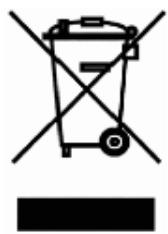
Ce symbole sur le réfrigérateur et les accessoires signifie que le produit est conforme à la directive européenne 2002/96/CE concernant les déchets d'équipements électriques et électroniques. Ces appareils ne doivent pas être considérés comme des déchets ménagers : les consommateurs sont tenus de rapporter les appareils en fin de vie aux points de collecte prévus à cet effet ou au point de vente. Les détails à ce sujet sont définis par les lois nationales de chaque État. Éliminez les matériaux d'emballage conformément aux normes de l'UE concernant la protection de l'environnement et de la santé.
Précautions
Cet appareil a été conçu exclusivement pour un usage domestique en intérieur sec. Toute autre utilisation est inappropriée et peut entraîner des blessures, la responsabilité du fabricant étant alors dégagée.
Avant la première utilisation de l'appareil
- Assurez-vous que la fiche n'est pas coincée sous le réfrigérateur. Veillez à ce que la fiche ne soit pas endommagée ; si c'est le cas, coupez l'alimentation électrique, débranchez-la soigneusement et consultez un service après-vente agréé pour son remplacement.
- Veillez à ne pas écraser ou endommager le cordon d'alimentation lorsque vous éloignez le réfrigérateur du mur.
- Tenez la fiche, et non le câble, pour débrancher le réfrigérateur (fig. 1).
- Assurez-vous qu'aucun gaz ou autre gaz inflammable ne fuit à proximité du réfrigérateur. Si cela se produit, fermez la vanne du gaz qui fuit, ouvrez les portes et les fenêtres, mais ne branchez ni ne débranchez pas les cordons d'alimentation du réfrigérateur ou de tout autre appareil.
- Débranchez le réfrigérateur pour le nettoyage, l'entretien ou le remplacement de l'ampoule.
- Ouvrez les portes par la poignée ; faites attention à l'espace entre les portes qui peut être très étroit, afin d'éviter de vous coincer les doigts.
- Lors du débranchement du réfrigérateur, attendez au moins 5 minutes avant de le redémarrer, car des démarrages fréquents peuvent endommager le compresseur.
- Laissez les ouvertures de ventilation libres de toute obstruction.
- Lors de la mise au rebut du réfrigérateur, pour éviter tout risque d'enfermement accidentel d'enfants, retirez les portes, les joints de porte et les étagères et placez-les dans un endroit approprié.
- Le réfrigérateur doit être placé dans un endroit bien ventilé, non loin d'une source d'eau potable.
- Laissez un espace d'au moins 20 cm au-dessus et 10 cm autour de chaque côté du réfrigérateur.
- L'appareil doit être positionné de manière à ce que la prise reste accessible.
Choses à ne pas faire
- Le réfrigérateur fonctionne avec une alimentation électrique de 220-240 V AC/50 Hz. Brancher le réfrigérateur sur une tension incorrecte peut provoquer un défaut de démarrage, endommager le thermostat ou le compresseur, ou entraîner un bruit anormal lors du fonctionnement du compresseur. Dans ce cas, un régulateur automatique doit être installé.
- Une prise dédiée avec mise à la terre fiable doit être fournie pour le réfrigérateur. Le câble d'alimentation du réfrigérateur est équipé d'une fiche à 3 fils (mise à la terre) qui s'adapte à une prise standard à 3 trous (mise à la terre). Ne coupez jamais et ne retirez jamais la troisième broche (mise à la terre). Après l'installation du réfrigérateur, la prise doit être accessible.
- Ne stockez jamais de matériaux inflammables, explosifs ou corrosifs dans le réfrigérateur.
- Ne stockez pas de médicaments, de bactéries ou d'agents chimiques dans le réfrigérateur. Ce réfrigérateur est un appareil ménager. Il n'est pas recommandé d'y placer des matériaux nécessitant une température stricte.
- Ne stockez pas et n'utilisez pas d'essence ou d'autres matériaux inflammables à proximité du réfrigérateur pour éviter un incendie.
- Ne placez pas d'objets instables (objets lourds, récipients remplis de liquides) sur le dessus du réfrigérateur, pour éviter des blessures causées par une chute ou un choc électrique dû au contact avec l'eau (fig. 2).
- Ne vous suspendez pas à la porte ou aux clayettes de la porte. La porte pourrait glisser de sa charnière, la clayette pourrait être arrachée, ou le réfrigérateur pourrait basculer. Ne marchez pas sur la porte du compartiment de congélation, les étagères ou l'armoire lors du remplissage ou du retrait des aliments et des boissons.
- Ne touchez pas la surface intérieure du compartiment de congélation pendant son fonctionnement, surtout avec les mains mouillées, car vos mains pourraient geler sur la surface.
- Pour garantir l'isolation électrique du réfrigérateur, ne le pulvérisez pas et ne le rincez pas à l'eau lors du nettoyage, et ne le placez pas dans un endroit humide ou susceptible d'être éclaboussé d'eau. Nettoyez et séchez les éclaboussures et les taches avec un chiffon doux et propre.
- Le démontage et la modification du réfrigérateur doivent être autorisés. Tout mouvement brusque ou brutal du réfrigérateur peut endommager les tuyaux de refroidissement. Des pertes matérielles ou des blessures peuvent en résulter. La réparation du réfrigérateur doit être effectuée par un personnel professionnel.
- Ne stockez jamais de bières ou de boissons en bouteille dans le congélateur, car elles éclateraient pendant la congélation.
- Ne placez pas le réfrigérateur en plein soleil ou dans un endroit exposé à la chaleur provenant de cuisinières, de radiateurs ou d'autres appareils.
- Ne laissez pas les portes du réfrigérateur ouvertes sans la présence d'un adulte, et ne laissez pas les enfants entrer dans le réfrigérateur.
- Ne laissez pas les nourrissons ou les enfants grimper dans le tiroir du congélateur.
- N'utilisez pas d'appareils électriques à l'intérieur du réfrigérateur.
- N'endommagez pas le circuit de réfrigération.
- N'utilisez pas de sèche-cheveux pour sécher l'intérieur du réfrigérateur. Ne placez pas de bougies allumées dans le réfrigérateur pour éliminer les odeurs.
- Ne vaporisez pas de substances volatiles telles que des insecticides sur toute surface de l'appareil.
- N'ouvrez ou ne fermez les portes du réfrigérateur que lorsqu'aucun enfant ne se trouve dans la zone de mouvement des portes.
- Cet appareil n'est pas destiné à être utilisé par des personnes (y compris les enfants) ayant des capacités physiques, sensorielles ou mentales réduites, ou manquant d'expérience et de connaissances, à moins qu'elles ne soient supervisées ou instruites sur l'utilisation de l'appareil par une personne responsable de leur sécurité.
- Ne stockez pas trop d'aliments dans le compartiment de stockage du congélateur pour éviter un temps de fonctionnement prolongé du compresseur ou la chute d'aliments. Il est recommandé de ne pas dépasser la ligne de charge des tiroirs. Le poids total des aliments ne doit pas dépasser 30 kg. Pour éviter que les aliments ne tombent au sol, ne tirez pas trop fort ou en biais sur le tiroir du congélateur.
- N'utilisez pas de dispositifs mécaniques ou d'autres moyens pour accélérer le processus de dégivrage, autres que ceux recommandés par le fabricant.
- En cas de problème avec l'éclairage du réfrigérateur, veuillez contacter notre service clientèle pour le traitement. Les utilisateurs finaux ne peuvent pas le remplacer eux-mêmes.
Conseils de stockage du réfrigérateur (fig. 3)
- Les aliments chauds doivent être refroidis à température ambiante avant d'être placés dans le réfrigérateur.
- Lavez ou nettoyez les aliments et séchez les gouttes d'eau avant de les placer dans le réfrigérateur.
- Les aliments doivent être correctement scellés avant le stockage. Cela empêchera l'évaporation de l'humidité des aliments et évitera qu'ils ne se gâtent.
- Stockage trié des aliments. Les aliments à stocker doivent être triés selon leur catégorie. Les aliments consommés quotidiennement doivent être placés à l'avant des étagères. Cela peut éviter des retards inutiles lors de l'ouverture de la porte ainsi que l'expiration de la période de stockage parce que vous avez oublié de les manger.
- Ne stockez pas des quantités excessives d'aliments. Les aliments doivent être stockés en laissant des espaces entre eux. Cela permet à l'air froid de circuler facilement et donc d'obtenir de meilleurs résultats de stockage.
- Ne placez pas les aliments trop près des parois internes. Ne stockez pas des aliments à haute teneur en humidité en contact avec les parois internes. Sinon, les aliments peuvent geler contre les parois. Placez les aliments un peu loin des parois internes.
- Évitez que les aliments (en particulier les aliments gras) touchent directement la paroi interne, car certaines huiles peuvent endommager la paroi interne. Il est donc préférable de nettoyer toute contamination grasse dès qu'elle est trouvée.
- Pour le navet, le radis et autres légumes similaires, coupez leurs feuilles avant le stockage afin d'empêcher l'absorption des nutriments par les feuilles.
- Décongelez les aliments surgelés dans le compartiment de stockage du réfrigérateur. De cette façon, vous pouvez utiliser les aliments surgelés pour diminuer la température du compartiment et économiser de l'énergie.
- Certains légumes, par exemple l'oignon, l'ail, le gingembre, la châtaigne d'eau et autres aliments prismatiques, peuvent être stockés pendant de longues périodes à température ambiante. Il n'est pas nécessaire de les stocker dans le réfrigérateur.
- Le métabolisme de la courgette, du melon, de la papaye, de la banane et de l'ananas peut être accéléré par les températures froides, il n'est donc pas approprié de les stocker dans le compartiment de stockage du réfrigérateur. Mais stocker des fruits verts dans le réfrigérateur pendant certaines périodes peut favoriser leur maturation.
- Les aliments coupés en petites portions gèleront plus rapidement et seront plus faciles à décongeler et à cuire. Le poids recommandé pour chaque portion est inférieur à 2,5 kg.
- Il est préférable d'emballer les aliments avant de les mettre dans le congélateur. L'extérieur de l'emballage doit être sec pour éviter que les sacs ne collent ensemble. Les matériaux d'emballage doivent être sans odeur, hermétiques, non toxiques et non nocifs.
- Afin d'éviter l'expiration de la période de stockage, veuillez noter la date de congélation, la durée limite et le nom de l'aliment sur l'emballage selon les périodes de stockage des différents aliments.
- Ne sortez du congélateur que la quantité d'aliments requise. Les aliments décongelés ne peuvent pas être recongelés à moins d'être d'abord cuits ; sinon, ils pourraient être moins comestibles.
- Ne chargez pas de quantités excessives d'aliments frais dans le congélateur. Il est préférable de se référer à la capacité de refroidissement du réfrigérateur.
Conseils d'économie d'énergie
Installez l'appareil dans une pièce fraîche et sèche, avec une ventilation adéquate. Ne bloquez jamais les évents ou les grilles de l'appareil. Laissez les aliments chauds refroidir avant de les placer dans l'appareil. Mettez les aliments surgelés dans le réfrigérateur pour les décongeler. Vous pouvez ensuite utiliser les basses températures des produits surgelés pour refroidir les aliments dans le réfrigérateur. Ne laissez pas la porte de l'appareil ouverte trop longtemps lors de l'insertion ou du retrait des aliments. Plus le temps d'ouverture est court, moins il se formera de glace dans le congélateur. Nettoyez régulièrement l'arrière du réfrigérateur. La poussière augmente la consommation d'énergie. Ne réglez pas la température plus bas que nécessaire. Assurez une évacuation d'air suffisante à la base du réfrigérateur et contre le mur arrière.
- Ne couvrez pas les ouvertures d'aération.
- Laissez un espace à droite, à gauche, à l'arrière et en haut lors de l'installation. Cela contribuera à réduire la consommation d'énergie.
Connexion de la prise 13 A
- Si votre réfrigérateur est connecté au secteur à l'aide d'une prise à 3 broches de 13 ampères, la tension nominale est de 220-240 volts et il doit être protégé par un fusible de 3 ampères dans la prise.
- Si le fusible doit être remplacé pour une raison quelconque, il doit être remplacé par un fusible de 3 ampères fabriqué et approuvé selon la norme BS1362.
- Si la prise secteur ne convient pas à la prise de courant de votre maison ou si elle est retirée pour toute autre raison, la prise coupée doit avoir son fusible retiré et être éliminée en toute sécurité pour prévenir tout risque de choc électrique. Il y a un danger de choc électrique si la prise coupée est insérée dans une prise de courant de 13 ampères.
- En cas de dysfonctionnement, la prise doit être remplacée. Cette opération ne doit être effectuée que par du personnel qualifié.
Comment câbler une prise britannique de 13 ampères (pour personnel qualifié uniquement)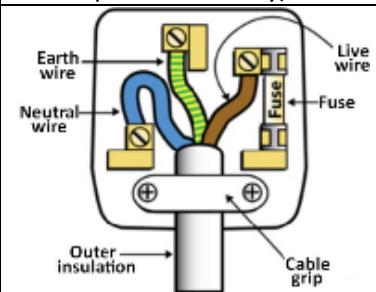
Important
Les couleurs des fils sont codées conformément au code suivant :
Vert et jaune = Terre
Bleu = Neutre
Brun = Phase
Appareils à double isolation
Si les couleurs ne correspondent pas aux marquages identifiant les bornes de votre prise, procédez comme suit :
- Le fil vert et jaune doit être connecté à la borne de la prise qui est marquée de la lettre E ou du symbole de terre 1/± ou de couleur verte et jaune.
- Le fil bleu doit être connecté à la borne marquée N ou de couleur bleue ou noire.
- Le fil brun doit être connecté à la borne marquée L ou de couleur brune ou rouge.
Environnement d'installation
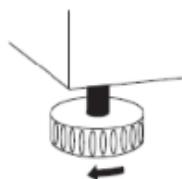
- Mise à niveau du meuble. Le réfrigérateur doit être placé sur une surface plane et solide. Si le réfrigérateur est placé sur une surface inégale, des matériaux plats, solides et résistants au feu doivent être utilisés. N'utilisez jamais le matériau d'emballage en mousse comme socle. Si le réfrigérateur est légèrement instable, vous pouvez allonger ou raccourcir les pieds réglables du réfrigérateur en les tournant dans le sens horaire ou antihoraire.
- Ne placez jamais le réfrigérateur dans un endroit humide ou où il pourrait être éclaboussé d'eau.
- Le réfrigérateur avec raccordement à l'eau doit être placé dans un endroit bien ventilé, non loin d'une source d'eau potable. Un espace d'au moins 20 cm et 10 cm doit être maintenu au-dessus et autour du réfrigérateur.
- Gardez les ouvertures de ventilation, dans l'enceinte de l'appareil ou dans la structure intégrée, dégagées de toute obstruction.
Préparation avant utilisation
- Retirez toutes les pièces d'emballage : retirez la base en mousse et le ruban adhésif fixant les accessoires.
- Vérifiez les articles contenus dans la boîte d'emballage par rapport à la liste de colisage. Veuillez vous renseigner auprès du magasin d'achat en cas de divergence dans les 5 jours suivant l'achat.
- Déplacez le réfrigérateur à un endroit approprié : voir la section « Environnement d'installation ».
- Nettoyez l'intérieur et l'extérieur du réfrigérateur avec de l'eau avant d'y placer des aliments.
- Mise en attente : après avoir mis le réfrigérateur de niveau et l'avoir nettoyé, laissez-le reposer au moins 6 heures avant de le mettre en marche afin de garantir un fonctionnement normal.
- Branchement à l'alimentation électrique : lorsque le réfrigérateur est branché, la température du réfrigérateur et celle du congélateur sont automatiquement réglées respectivement à 5 °C et -18 °C. Le compartiment My Zone est en mode « réfrigération ».
- Modes de fonctionnement du réfrigérateur (mode de réglage manuel) : vous pouvez régler la température en appuyant sur la touche de réglage de température (voir la section « Description des fonctions » de ce manuel).
- Chargez le réfrigérateur avec des aliments après qu'il a fonctionné pendant une courte période et que l'intérieur est suffisamment froid.
Fonctions
Panneau de commande
- Réglage de la température de conservation du réfrigérateur
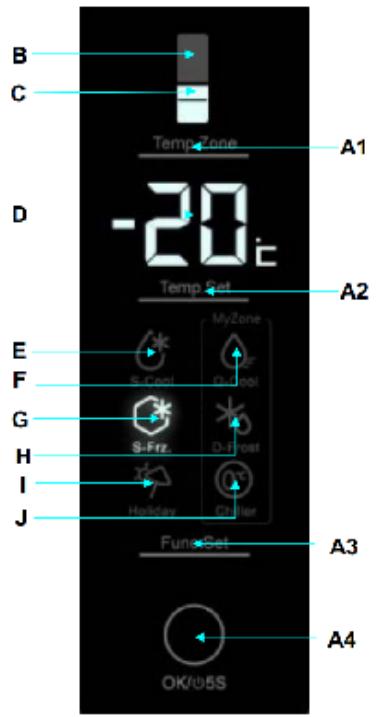
Appuyez sur la touche A1 à plusieurs reprises jusqu'à ce que l'indicateur B s'allume ; appuyez sur A2 pour régler la température du réfrigérateur. Les indicateurs correspondants B et D commencent à clignoter simultanément. La température augmente de 1 °C à chaque pression ; la séquence de réglage du réfrigérateur est « 2 » - « 3 » - « 4 » - « 5 » - « 6 » - « 7 » - « 8 » - « 2 ». La plage de température du réfrigérateur va d'une valeur minimale de 2 °C à une valeur maximale de 8 °C. Arrêtez d'appuyer sur A2 pour confirmer la température réglée.
- Réglage de la température de conservation du congélateur
Appuyez sur la touche A1 à plusieurs reprises jusqu'à ce que l'indicateur C s'allume ; appuyez sur A2 pour régler la température du congélateur. Les indicateurs correspondants C et D commencent à clignoter simultanément. La température diminue de 1 °C à chaque pression ; la séquence de réglage du congélateur est « -16 » - « -17 » - « -18 » - « -19 » - « -20 » - « -21 » - « -22 » - « -23 » - « -24 » - « -16 ». La plage de température du congélateur va d'une valeur minimale de -24 °C à une valeur maximale de -16 °C. Arrêtez d'appuyer sur A2 pour confirmer la température réglée.
Super froid
Appuyez sur la touche A3 à plusieurs reprises jusqu'à ce que l'indicateur E commence à clignoter ; appuyez sur A4 pour confirmer l'activation de la fonction Super Froid. Cette fonction peut être désactivée manuellement en répétant la procédure d'activation. Cette fonction sera automatiquement désactivée lorsque la température descendra en dessous du niveau minimum. Dans ce mode, la fonction Super Froid sera désactivée par l'opération de réglage du réfrigérateur.
Super congélation
Appuyez sur la touche A3 à plusieurs reprises jusqu'à ce que l'indicateur G commence à clignoter ; appuyez sur A4 pour confirmer l'activation de la fonction Super Congélation. Cette fonction peut être désactivée manuellement en répétant la procédure d'activation. Cette fonction sera automatiquement désactivée après 56 heures. Si vous allez congeler de grandes quantités d'aliments dans le compartiment congélateur,
Veuillez activer la fonction Super Freeze 24 heures avant de placer les aliments dans le compartiment congélateur.
Dans ce mode, la fonction Super Freeze sera désactivée par le réglage de la température du congélateur.
- Fonction Vacances
Appuyez sur la touche A3 à plusieurs reprises jusqu'à ce que les indicateurs I commencent à clignoter ; appuyez sur A4 pour confirmer l'activation de la fonction Vacances. Cette fonction peut être désactivée manuellement en répétant la procédure d'activation. En mode Vacances, le compartiment réfrigérateur fonctionne automatiquement à une température de 17 °C. Dans ce mode, la fonction Vacances sera désactivée par le réglage de la température du réfrigérateur.
Fonction My Zone Q-cool
Appuyez sur la touche A3 à plusieurs reprises jusqu'à ce que les indicateurs F commencent à clignoter ; appuyez sur A4 pour confirmer l'activation de la fonction My Zone Q-cool. Cette fonction peut être désactivée automatiquement en choisissant les autres fonctions du compartiment My Zone.
- Fonction My Zone D-Frost
Appuyez sur la touche A3 à plusieurs reprises jusqu'à ce que les indicateurs H commencent à clignoter ; appuyez sur A4 pour confirmer l'activation de la fonction My Zone D-Frost. Cette fonction peut être désactivée automatiquement en choisissant les autres fonctions du compartiment My Zone.
Fonction My Zone Chiller
Appuyez sur la touche A3 à plusieurs reprises jusqu'à ce que les indicateurs J commencent à clignoter ; appuyez sur A4 pour confirmer l'activation de la fonction My Zone Chiller. Cette fonction peut être désactivée automatiquement en choisissant les autres fonctions du compartiment My Zone.
Remarque : La température du compartiment peut être réduite en utilisant la fonction Q-Cool ou augmentée en utilisant la fonction D-Frost. Parmi les trois fonctions du compartiment My Zone, l'une d'elles doit être activée.
- Contrôle de l'affichage
L'écran s'éteint automatiquement 30 secondes après la fin d'une opération. Il s'allume en ouvrant la porte ou en appuyant sur une touche. (L'alarme n'allume pas l'écran).
- Alarme d'ouverture de porte
Lorsque la porte du réfrigérateur est ouverte, l'éclairage intérieur et le panneau de commande s'allument. Après 3 minutes, l'alarme d'ouverture de porte retentit. L'alarme peut être désactivée en fermant la porte ou en touchant le panneau de commande. Si la porte du réfrigérateur reste ouverte plus de 7 minutes, l'éclairage intérieur et l'éclairage du panneau de commande s'éteignent automatiquement.
Mise en marche/arrêt du réfrigérateur
Lorsque le réfrigérateur fonctionne, si vous appuyez sur la touche A4 pendant 5 secondes, l'ensemble du réfrigérateur s'éteindra. Le buzzer commencera à biper après avoir appuyé sur la touche A4 pendant 5 secondes. Le réfrigérateur entier s'arrêtera de fonctionner après le bip. Lorsque le réfrigérateur est éteint, si vous appuyez sur la touche A4 pendant 5 secondes, les voyants correspondants s'allument et le réfrigérateur commence à fonctionner. Remarque : Le réfrigérateur doit être vidé avant d'utiliser cette fonction ; cette opération n'équivaut pas à couper l'alimentation électrique.
À propos du compartiment de stockage du réfrigérateur
Veuillez placer les aliments à conserver pour une courte période ou pour une consommation quotidienne dans le compartiment de stockage du réfrigérateur. Bien que la température moyenne dans la plupart des zones du compartiment de stockage du réfrigérateur puisse être réglée entre 0 °C et 10 °C, une conservation prolongée des aliments n'est pas recommandée. Le compartiment de stockage du réfrigérateur ne doit être utilisé que pour un stockage à court terme.
Réglage de la hauteur de l'étagère
L'étagère peut être déplacée pour s'adapter à la taille ou à la hauteur des aliments. Pour ajuster la hauteur d'une étagère, retirez-la d'abord de cette manière : soulevez son bord avant puis tirez-la vers l'extérieur. Pour installer l'étagère, placez les ergots des deux côtés de l'étagère sur les nervures de support et poussez-la jusqu'à la position la plus reculée.
Bac à fruits et légumes
Le réfrigérateur est équipé d'un bac à légumes. Vous pouvez ajuster l'humidité à l'intérieur en fonction des propriétés des aliments. Tourner le bouton de contrôle d'humidité vers la droite permet au bac de maintenir une humidité plus élevée, adaptée aux concombres, raisins, groseilles à maquereau chinoises, kakis, etc. Tourner le bouton de contrôle d'humidité vers la gauche permet au bac de maintenir une humidité plus faible, adaptée aux fraises, oranges, haricots, ail, pastèques, prunes, tomates, etc.
Compartiment My Zone
Fonction Q-Cool : sous cette fonction, le compartiment My Zone peut refroidir rapidement 1/5 des boissons en conserve en 60 minutes. Cette fonction peut être désactivée en choisissant manuellement les autres fonctions du compartiment My Zone. Assurez-vous de retirer les bouteilles de boissons avant que la fonction Q-Cool ne soit désactivée, sinon les bouteilles risquent de geler.
Fonction D-Frost : sous cette fonction, le compartiment My Zone peut décongeler les aliments surgelés. Il n'y aura pas de liquide sur la surface des aliments après décongélation. Les aliments seront partiellement congelés, ce qui est pratique pour la découpe et la cuisson. Cette fonction peut être désactivée en choisissant les autres fonctions du compartiment My Zone. Le temps de décongélation estimé est indiqué dans le tableau à droite ; le temps de décongélation n'est qu'indicatif, différentes tailles et épaisseurs de viande et de poisson peuvent nécessiter des temps de décongélation différents.
| Weight | Defrost time |
| 500g | 7 hours |
| 1000g | 8 hours |
| 1500g | 10 hours |
Fonction Chiller : sous cette fonction, le compartiment My Zone fonctionne à une température d'environ 0 °C ; elle peut légèrement varier en fonction de la température ambiante ou du mode de fonctionnement du réfrigérateur. Il convient de conserver le poisson frais, la viande et les aliments cuits pendant 1 à 2 jours.
Démontage du protège-bouteilles
Pour retirer un protège-bouteille, soulevez les protège-bouteilles dans le sens indiqué, puis saisissez les deux côtés et tirez-les vers l'extérieur dans le sens indiqué.
Après le nettoyage, installez-le en effectuant l'opération dans le sens inverse.
Utilisation de la clayette rabattable
La figure 4A montre l'état déplié de la clayette rabattable, sur laquelle vous pouvez poser des récipients alimentaires bas. La figure 4B montre l'état replié de la clayette rabattable, sur laquelle vous pouvez poser des récipients alimentaires hauts. Pour replier la clayette de l'état 4A à l'état 4B, poussez simplement la structure « a » vers le haut, puis poussez la structure « b » vers l'intérieur dans le sens de la flèche indiquée sur la figure. Pour déplier la clayette de l'état 4B à l'état 4A, poussez la structure « a » vers le haut, puis tirez la structure « b » dans le sens de la flèche indiquée sur la figure.
Utilisation du porte-bouteilles de vin en fil métallique
La figure 5A montre l'état replié du porte-bouteilles de vin en fil métallique. Dans cet état, un grand espace peut être dégagé. La figure 5B montre l'état déplié du porte-bouteilles de vin en fil métallique. Dans cet état, il peut contenir divers vins. Pour le déplier de l'état 5A à l'état 5B, tirez simplement le fil vers le bas. Pour le replier de l'état 5B à l'état 5A, poussez simplement le fil vers le haut. Avertissement : assurez-vous de maintenir les deux extrémités d'une clayette au même niveau. Sinon, elle pourrait tomber ou les aliments posés dessus pourraient tomber.
Stockage recommandé pour divers aliments (fig. 6)
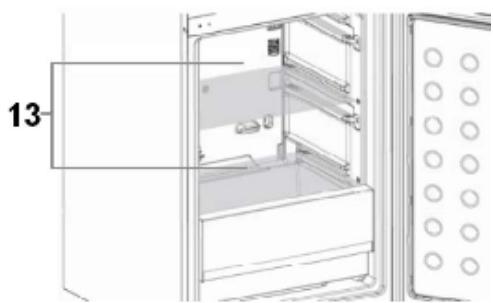
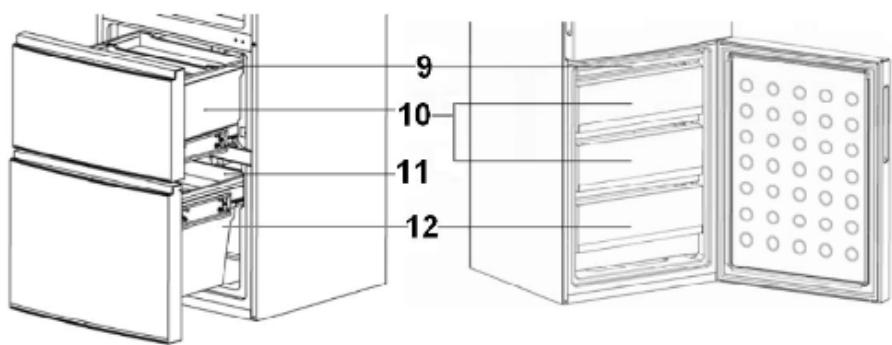
Comme l'air froid circule à l'intérieur du réfrigérateur, il existe une différence de température dans le compartiment de stockage du réfrigérateur. Différents aliments doivent être placés dans différentes zones en fonction de leurs propriétés (tableau à droite). Les gros articles de nourriture congelée peuvent être stockés après avoir retiré les tiroirs et les plateaux internes du compartiment congélateur (position 13).
| 1 | Eggs, butter, cheese, etc. |
| 2 | Butter, makeup, etc. |
| 3 | Drinks, canned food and etc. |
| 4 | Beverages, canned food and etc. |
| 5 | Wine, champagne, etc. |
| 6 | Milk, cheese, etc. |
| 7 | Fruits, vegetables, etc. |
| 8 | Cooked meat, fresh fish and meat, etc. |
| 9 | Small items of frozen food or packed food |
| 10 | Frozen food, ice cream, etc. |
| 11 | Small size of frozen food or packed food |
| 12 | Frozen food, ice cream, etc. |
Lampe dans le compartiment de stockage du réfrigérateur
Paramètres de la lampe : 12V-5W (A2FE735 /C2FE836 ), 12V-2W (C2FE636 /A2FE635 /C2FE736*).
La lampe utilise une LED comme source de lumière, offrant une faible consommation d'énergie et une longue durée de vie. En cas d'anomalie, veuillez contacter le service après-vente.
Volume de stockage supplémentaire
Pour une utilisation efficace de l'énergie, à l'exception du panier situé en position la plus basse dans le réfrigérateur ou le congélateur, les autres paniers peuvent être retirés pour stocker de grandes quantités d'aliments. Ne bloquez pas l'évent à l'intérieur du congélateur et laissez une distance libre de 15 mm, et ne placez pas d'aliments sur le capteur du congélateur et laissez une distance libre de 15 mm.
Entretien
- Dégivrage du congélateur
Le congélateur se dégivre automatiquement. Aucune opération manuelle n'est nécessaire.
- Nettoyage
Le réfrigérateur doit être nettoyé régulièrement pour éviter les mauvaises odeurs des aliments stockés. Pour des raisons de sécurité, débranchez le cordon d'alimentation avant de nettoyer le réfrigérateur. Nettoyez le réfrigérateur avec un chiffon doux ou une éponge imbibée d'eau tiède (un détergent doux peut être ajouté). Séchez les gouttelettes d'eau sur les surfaces du réfrigérateur avec un chiffon doux et sec. Gardez toujours les joints propres.
Avertissements :
- Le réfrigérateur est très lourd. Lorsque vous le déplacez pour le nettoyage ou des réparations, veillez à ne pas endommager le sol. Maintenez le réfrigérateur en position verticale pendant le déplacement. Ne déplacez pas le réfrigérateur en le balançant pour éviter d'endommager le sol.
- Ne pulvérisez pas ou ne rincez pas le réfrigérateur avec de l'eau pour éviter d'affecter ses propriétés d'isolation électrique.
- Ne nettoyez pas avec une brosse dure, une brosse métallique, de la poudre détergente, de l'essence, de l'acétate d'amyle, de l'acétone ou des solutions organiques similaires, des solutions acides ou alcalines. Veuillez nettoyer avec un détergent spécial pour réfrigérateur ou de l'eau tiède et un détergent doux pour éviter tout dommage.
- Ne touchez pas les pièces métalliques froides avec les mains mouillées ; sinon votre peau pourrait coller aux pièces métalliques froides.
- Lors du nettoyage, ne nettoyez pas les étagères en verre froides avec de l'eau tiède. Sinon, le verre pourrait se briser en raison d'un changement soudain de température et provoquer des blessures ou des pertes matérielles.
- Mesures en cas de coupure de courant
Même en été, les aliments peuvent être conservés dans le réfrigérateur pendant quelques heures après une coupure de courant. En cas de coupure de courant, veuillez appeler la compagnie d'électricité pour connaître la durée de l'interruption. Ne mettez pas d'aliments supplémentaires
dans le réfrigérateur pendant une coupure de courant et essayez d'ouvrir la porte le moins possible. Si une coupure de courant est annoncée à l'avance et que la durée dépasse 24 heures, faites de la glace et placez-la dans un récipient en haut du compartiment de stockage du réfrigérateur. Avertissement : Comme la température du réfrigérateur augmentera pendant une coupure de courant ou d'autres pannes, la durée de conservation et la qualité comestible des aliments seront réduites.
- Arrêt de l'utilisation
Si le réfrigérateur n'est pas utilisé pendant une période prolongée, débranchez le cordon d'alimentation, coupez la source d'eau et nettoyez-le avec la méthode décrite ci-dessus. Laissez la porte du réfrigérateur ouverte pour éviter que les aliments restants dans le compartiment ne produisent de mauvaises odeurs. Pour garantir la durée de vie du réfrigérateur, il est recommandé de ne pas l'éteindre sauf en cas de nécessité.
- Avant de partir en vacances
Si vous partez en vacances prolongées, veuillez débrancher l'alimentation électrique et couper l'arrivée d'eau. Retirez les aliments ; attendez que le givre fonde. Ensuite, nettoyez et séchez l'intérieur, et laissez la porte ouverte pour éviter que les aliments restants dans le compartiment ne produisent de mauvaises odeurs. Si la température ambiante risque de descendre en dessous de 0 °C, veuillez demander à un technicien qualifié de vidanger l'eau du système d'alimentation en eau. Sinon, des dégâts matériels importants peuvent être causés par un débordement d'eau si le tuyau ou le raccord se brise.
- Déplacement du réfrigérateur
Débranchez le réfrigérateur et retirez tous les aliments qu'il contient. Fixez les clayettes et le bac à légumes du compartiment réfrigérateur, ainsi que les clayettes et autres pièces mobiles du congélateur, avec du ruban adhésif. Fermez la porte et fixez-la avec du ruban adhésif. Ne penchez pas le réfrigérateur de plus de 45 degrés (angle par rapport à la verticale) pour éviter d'endommager le système de réfrigération. Ne déplacez pas le réfrigérateur par sa poignée pour éviter tout dommage matériel ou blessure.
Ne placez jamais le réfrigérateur à l'horizontale
Dépannage
Avant d'appeler le service après-vente, lisez d'abord le tableau de dépannage suivant. Cela peut vous faire gagner du temps et de l'argent. Le tableau contient les problèmes courants, à l'exception de ceux causés par des défauts de fabrication ou de matériau du réfrigérateur.
| Problem | Cause | Solution |
| Refrigerator malfunction | ||
| The refrigerator runs frequently or runs for too long periods | 1. The indoor or outdoor temperature is too high2. The refrigerator has been powered off for a period of time3. The door is opened too frequently or for long periods4. The door of the fridge/freezer storage compartment is not tightly closed5. The temperature setting for the freezer storage compartment is too low6. The door gasket of the fridge/freezer storage compartment is dirty, worn, cracked or mismatched7. The condenser is dirty | 1. In this case, it is normal for the refrigerator to run longer2. Normally, it takes 8 to 12 hours for the refrigerator to totally cool down3. Warm air enters the refrigerator and causes it to start frequently. Please do not open the door too frequently4. Ensure the refrigerator is located on a level ground and there is no food or container jarring the door. See "door/drawer opening/closing" in section "Problem"5. Set the temperature higher until a satisfactory refrigerator temperature is obtained. It takes 24 hours for the refrigerator temperature to become stable6. Clean or replace the door gasket. A leakage gap of door gasket can cause a longer running time of the refrigerator in order to maintain desired temperature7. Clean the condenser (call the service) |
| The compressor does not work | 1. The refrigerator is in the defrosting cycle 2. The refrigerator is not plugged into a power outlet 3. The refrigerator is turned OFF | 1. This is normal for an automatic defrosting refrigerator 2. Verify the plug is plugged in the socket firmly 3. Press the “Power” button for 3 seconds or more to restart the refrigerator or turn the knob from OFF to temperature selection position |
| Too high temperature | ||
| Too high temperature in the fridge/freezer storage compartment | 1. The door is opened too frequently or for too long each time 2. Temperature is set too high. 3. The door is not closed tightly. 4. The condenser is dirty | 1. Warm air will enter the refrigerator whenever the door is opened. Try to open the door as less frequently as possible 2. Reset the temperature 3. See “Door/drawer opening/closing in section “Problem” 4. Call the service to clean the condenser |
| The temperature in the freezer is too high while the temperature in the fridge storage compartment is OK | The freezer temperature is set too high | Set the freezer temperature lower. It takes 24 hours for the temperature of the refrigerator to become stable |
| Water/moisture/frost on outside surface of the refrigerator | ||
| Moisture accumulates on the refrigerator's outside surface or between two doors | 1. Too damp climate. 2. The refrigerator door is not closed tightly. This causes condensation of the cold air in the refrigerator and the warm air outside it | 1. This is normal in damp climate. The moisture will decrease when the humidity drops. 2. See “Door/drawer opening/closing” in section “Problem” |
| Bad odours in the refrigerator | ||
| The inside of the refrigerator is dirty | 1. The inside of the refrigerator needs cleaning 2. Food of strong odour is stored in the refrigerator | 1. Clean the internal of the refrigerator 2. Wrap the food tightly |
| If you hear… | ||
| Beeps | 1. The fridge storage compartment door is open 2. The temperature in the freezer is too high | 1. Close the door or silence the alarm manually 2. The alarm is normal when it is first started due to relatively higher temperature. You can silence the alarm manually |
| Abnormal sound | 1. The refrigerator is not located on a level place 2. The refrigerator touches some object around it | 1. Adjust the feet to level the refrigerator 2. Remove objects too close |
| Slight sound similar to that of flowing water | This is the sound of the refrigerating system | Normal |
| Heating of cabinet | The anti-condensation system is working | This prevents condensation and is normal |
Service après-vente
Si, après avoir vérifié la section de dépannage, le problème n'est pas résolu, veuillez consulter la carte de garantie incluse dans le produit et appeler le centre d'assistance, en précisant les données de la plaque d'identification et de numéro de série : cette plaque se trouve à l'intérieur du compartiment réfrigérateur.
Remarque : la plaque d'identification et de numéro de série fournit des informations importantes sur l'appareil et ne doit en aucun cas être modifiée ou retirée.
Informations utiles
Haier UK
Haier Europe Trading S.r.l. - Succursale britannique
Westgate House, Westgate, Ealing, Londres W5 1YY
Fiche produit
(selon UE 1060/2010)
| Model | C2FE636* | C2FE736* | C2FE836* | A2FE635* | A2FE735* |
| Trade mark | Haier | Haier | Haier | Haier | Haier |
| Model | C2FE636* | C2FE736* | C2FE836* | A2FE635* | A2FE735* |
| Appliance category | Refrigerator / freezer | Refrigerator / freezer | Refrigerator / freezer | Refrigerator / freezer | Refrigerator / freezer |
| Energy efficiency class | A+ | A++ | A+++ | A+ | A++ |
| Energy consumption (kWh/year)1) | 353 | 276 | 185 | 348 | 274 |
| Net fridge storage volume (l) | 248 | 248 | 248 | 248 | 248 |
| Net freezer storage volume (l) | 104 | 104 | 104 | 99 | 99 |
| The design temperature of "other compartments" >14°C | No | No | No | No | No |
| No-frost | Yes | Yes | Yes | Yes | Yes |
| Temperature rise time (h) | 13h | 13h | 16h | 13h | 13h |
| Freezing capacity (kg/24h) | 12 | 12 | 10 | 12 | 12 |
| Climate class | SN-T | SN-T | SN-T | SN-T | SN-T |
| Noise level (dB) | 42 | 40 | 40 | 40 | 40 |
| Built-in / Freestanding | Freestanding | Freestanding | Freestanding | Freestanding | Freestanding |
1) D'après les résultats des tests standard sur 24 heures. La consommation d'énergie réelle dépendra de l'utilisation de l'appareil et de son emplacement.
Fig.1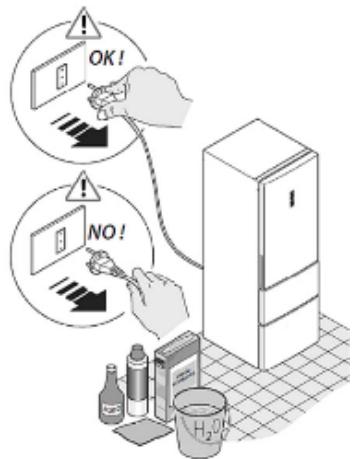
Fig.2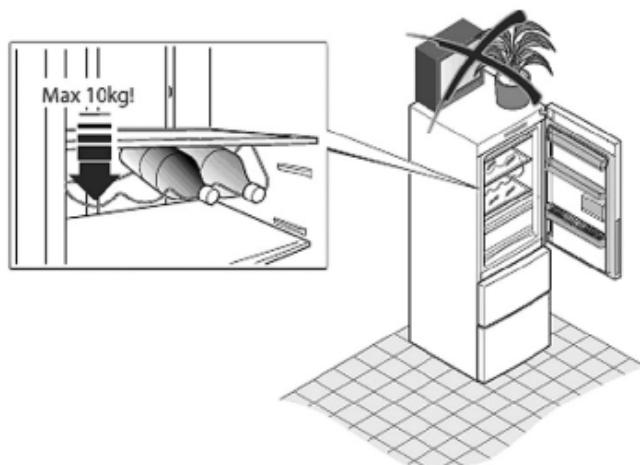
Fig.3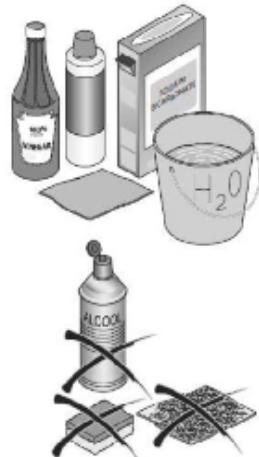
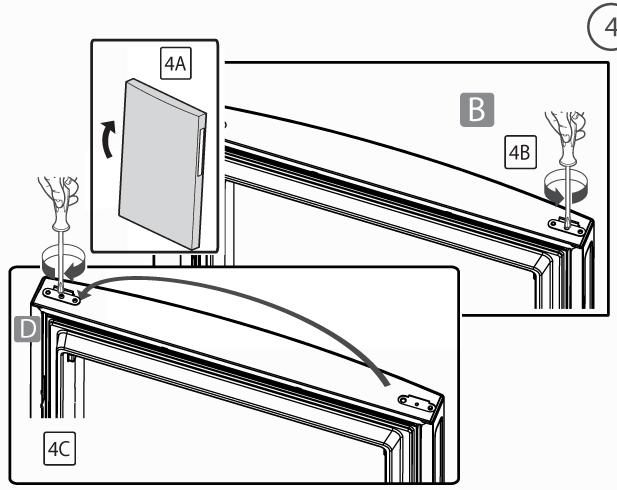
Fig.4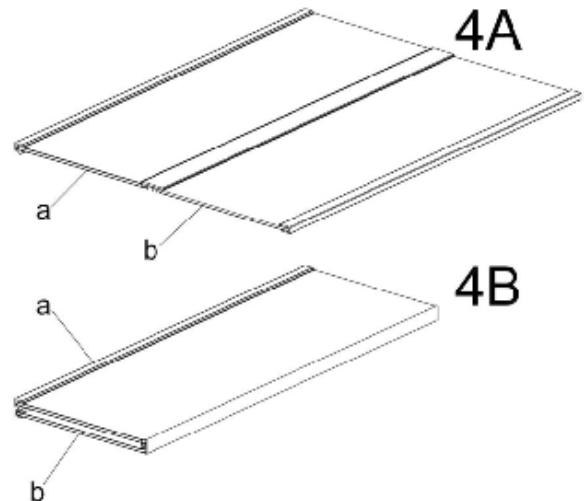
Fig.5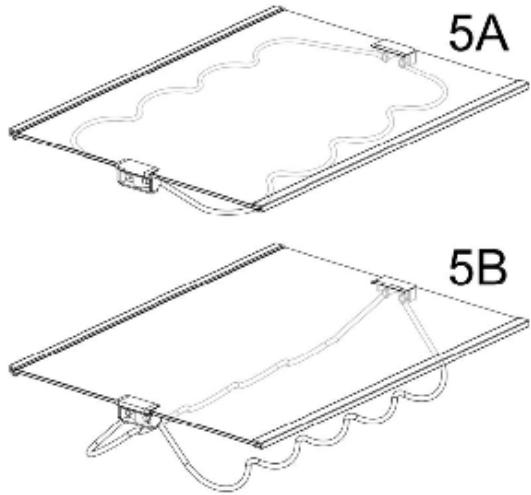
Fig.6 - Rangement recommandé pour divers aliments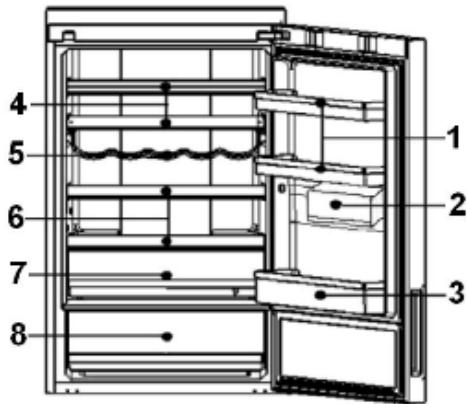
Description du réfrigérateur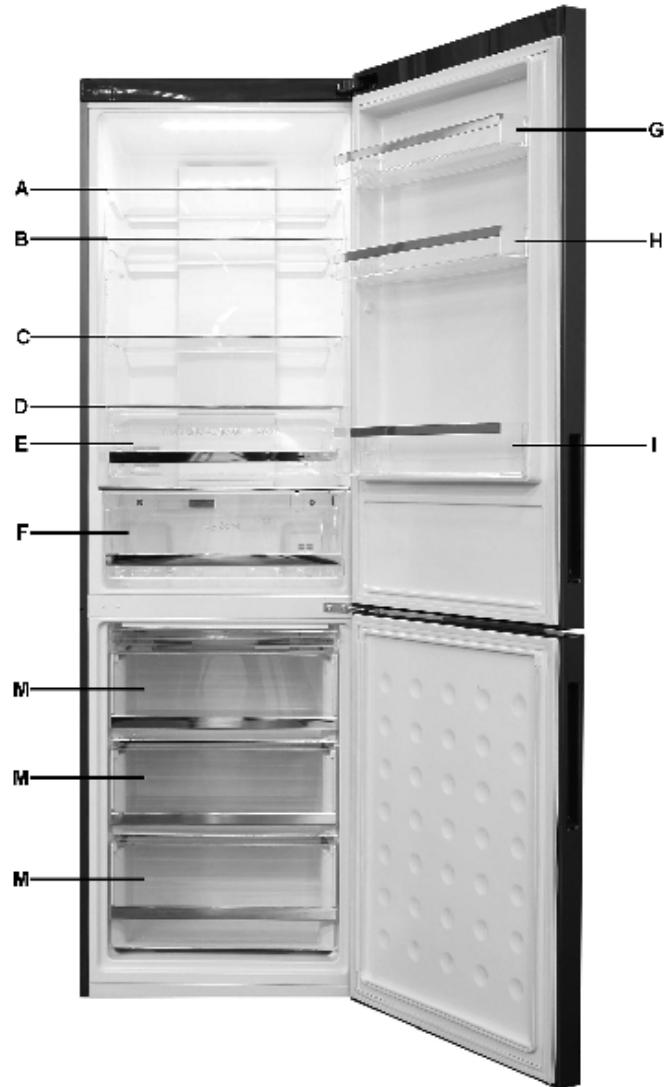
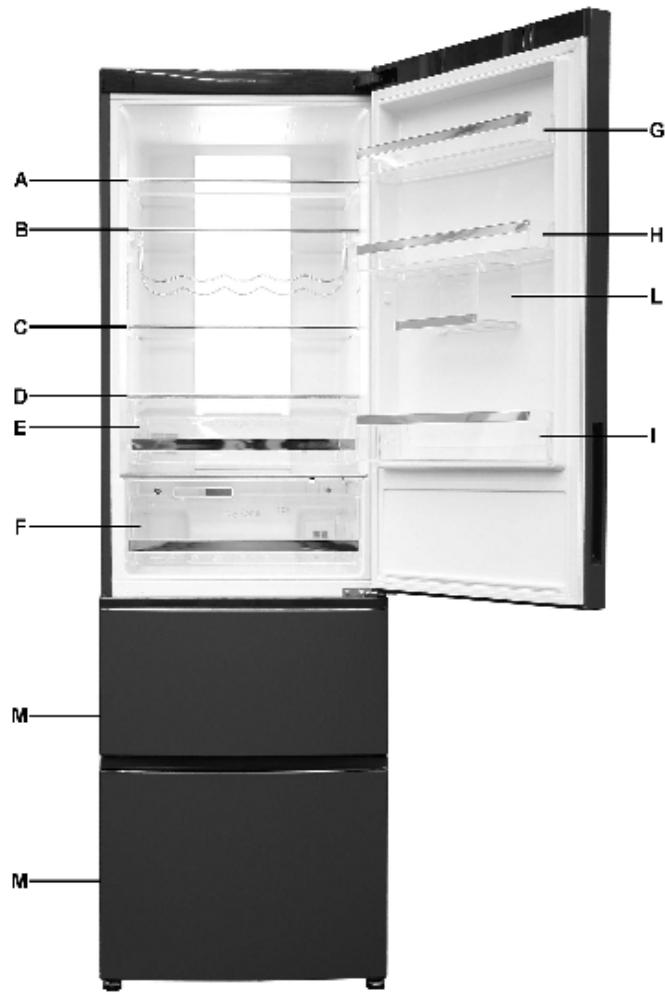
| Pos. | C2FE636* | C2FE736* | C2FE836* | A2FE635* | A2FE735* |
| A | Glass shelf | Glass shelf | Foldaway shelf | Glass shelf | Foldaway shelf |
| B | Glass shelf | Glass shelf | Bottle rack | Glass shelf | Bottle rack |
| C | Glass shelf | ||||
| D | Fresh keeping box glass cover | ||||
| E | Fruits and vegetables zone | ||||
| F | My Zone | ||||
| G | Upper balcony | ||||
| H | Middle balcony | ||||
| I | Bottom bottle rack | ||||
| L | / | / | Butter box | / | Butter box |
| M | Freezer drawers | ||||
1
②
③
5
6
⑦
12
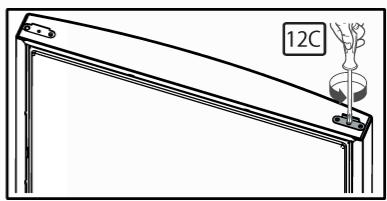
13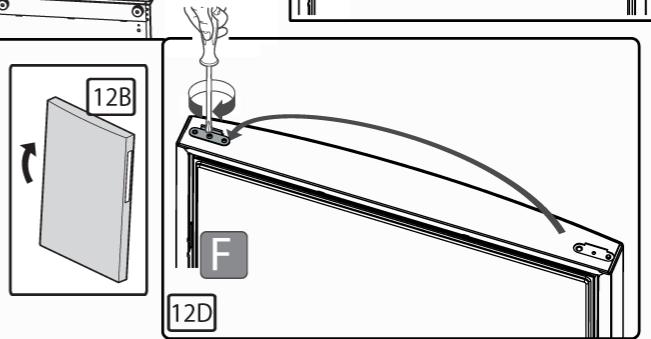
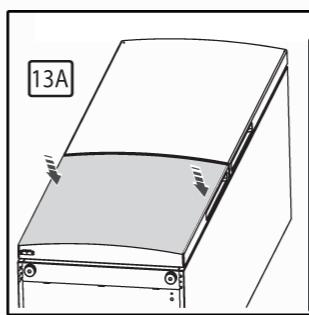
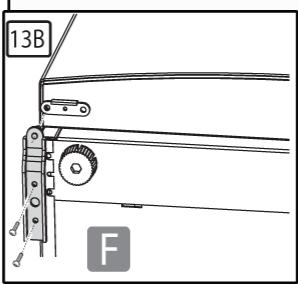
- HAIER
- BIENVENUE
- MERCI D'AVOIR ACHETÉ UN PRODUIT HAIER
- ACCESSOIRES
- INDEX
- ÉLIMINATION
- PRÉCAUTIONS
- AVANT LA PREMIÈRE UTILISATION DE L'APPAREIL
- CHOSES À NE PAS FAIRE
- CONSEILS DE STOCKAGE DU RÉFRIGÉRATEUR (FIG. 3)
- CONSEILS D'ÉCONOMIE D'ÉNERGIE
- CONNEXION DE LA PRISE 13 A
- IMPORTANT
- APPAREILS À DOUBLE ISOLATION
- ENVIRONNEMENT D'INSTALLATION
- PRÉPARATION AVANT UTILISATION
- FONCTIONS
- PANNEAU DE COMMANDE
- RÉGLAGE DE LA TEMPÉRATURE DE CONSERVATION DU RÉFRIGÉRATEUR
- RÉGLAGE DE LA TEMPÉRATURE DE CONSERVATION DU CONGÉLATEUR
- SUPER FROID
- SUPER CONGÉLATION
- FONCTION VACANCES
- FONCTION MY ZONE Q-COOL
- FONCTION MY ZONE D-FROST
- FONCTION MY ZONE CHILLER
- CONTRÔLE DE L'AFFICHAGE
- ALARME D'OUVERTURE DE PORTE
- MISE EN MARCHE/ARRÊT DU RÉFRIGÉRATEUR
- À PROPOS DU COMPARTIMENT DE STOCKAGE DU RÉFRIGÉRATEUR
- RÉGLAGE DE LA HAUTEUR DE L'ÉTAGÈRE
- BAC À FRUITS ET LÉGUMES
- COMPARTIMENT MY ZONE
- DÉMONTAGE DU PROTÈGE-BOUTEILLES
- UTILISATION DE LA CLAYETTE RABATTABLE
- STOCKAGE RECOMMANDÉ POUR DIVERS ALIMENTS (FIG. 6)
- LAMPE DANS LE COMPARTIMENT DE STOCKAGE DU RÉFRIGÉRATEUR
- VOLUME DE STOCKAGE SUPPLÉMENTAIRE
- ENTRETIEN
- DÉGIVRAGE DU CONGÉLATEUR
- NETTOYAGE
- AVERTISSEMENTS
- MESURES EN CAS DE COUPURE DE COURANT
- ARRÊT DE L'UTILISATION
- AVANT DE PARTIR EN VACANCES
- DÉPLACEMENT DU RÉFRIGÉRATEUR
- DÉPANNAGE
- SERVICE APRÈS-VENTE
- INFORMATIONS UTILES
- HAIER UK
- FICHE PRODUIT
Marque : HAIER
Modèle : A2FE635CRJ 3DFRIDGE
Catégorie : Réfrigérateur