
FR832 - Refrigerator CURTIS - Free user manual and instructions
Find the device manual for free FR832 CURTIS in PDF.


| Product Type | Free-standing Refrigerator |
| Brand | Curtis |
| Model | FR832 |
| Total Net Capacity | 140 L |
| Refrigerator Capacity | 100 L |
| Freezer Capacity | 40 L |
| Energy Class | A+ |
| Annual Energy Consumption | 150 kWh |
| Noise Level | 39 dB |
| Dimensions (H x W x D) | 85 x 55 x 60 cm |
| Weight | 30 kg |
| Power Supply | 220-240 V, 50 Hz |
| Climate Class | SN-ST |
| Cooling System | Static (Manual Defrost) |
| Lighting | LED Interior Light |
| Temperature Control | Mechanical Thermostat |
| Reversible Door | Yes |
| Adjustable Shelves | 3 Glass Shelves |
| Freezer Drawers | 1 Drawer |
| Maintenance | Clean condenser annually; defrost freezer regularly |
| Refrigerant | R600a (Isobutane) |
| Standards | CE, UKCA |
| Spare Parts Availability | Thermostat, door gasket, shelves available from manufacturer |
Frequently Asked Questions - FR832 CURTIS
User questions about FR832 CURTIS
0 question about this device. Answer the ones you know or ask your own.
Ask a new question about this device
Download the instructions for your Refrigerator in PDF format for free! Find your manual FR832 - CURTIS and take your electronic device back in hand. On this page are published all the documents necessary for the use of your device. FR832 by CURTIS.
USER MANUAL FR832 CURTIS
Operating Instructions

Please Read OPERATING Instructions Carefully for Correct Operation

Identification of Parts and Their Correct Method of Operation
1 Top Plate
Neither unstable objects nor hot ones are to be laid on it.
2 Freezer Chamber
A chamber for freezing food or storing frozen food and making a small quantity of ice, ice cream. Don't put glass-bottled or canned fluid into the chamber lest the cans or bottles split by expanding when the fluid is cooling.
3 Ice Tray
A tray for making cubic ice. You can take cubic ice after filling the tray with cool bed water to its 4/5 volume, putting it into the freezer chamber and nestling closely to its bottom if you want to make cubic ice quickly, you must set the knob of the tampera ture regulator to strongly refrigerating point. taking out the cubic ice from the tray, you could only wrench it, not bend it so as not to break it off.
4 Cold-storing Chamber
A chamber for cold storing food and beverage. At its bottom, there is a drawer for storing fresh vegetable and fruit.
[5] Temperature Regulator
A regulator for regulating the temperature of the refrigerator. From position "1" to position "7", refrigeration becomes stronger. Position "1" is weak refrigeration while position "7" is strong. The compressor will not operate in position "0".
6 Shelf
A shelf for one to adjust its height at will, on which it is convenient to place a variety of objects. On the shelf, one can not put objects too heavy so as not to bend it.
7Feet of Fridge
The feet whose height can be adjusted to suit rough floor.

Correctly Positioning
For the purpose of safety, reliance, low power consumption and durability to your fridge, be sure to pay close attention to the followings.
Well Ventilating
There is need of good ventilation around the fridge for easy dissipation of heat, high efficiency of refrigeration and low power consumption. For this purpose, sufficient clear space should be needed around the fridge. Its back is at least 100mm away from the wall. Its sides at least have a space of 200mm separately and the height from over its top is not less than 300mm. A clear space should be left to open its doors to 160°
Power Line Cord
The cord should be neither lengthened nor folded into coil during operation. Moreover, it is forbidden that the cord is kept close onto the compressor at the back of the fridge, the surface temperature of which is quite high when operating. Touching with it may melt the insulation and cause electrical leakage.

Power Supply
The fridge is only applied with power supply of single phase alternating current of 220-240V\~. 50Hz. If fluctuation of voltage in the district of user is so large that the voltage exceeds the above scope, for safety sake, be sure to apply A.C. Automatic voltage regulator of more than 350W to the fridge. The fridge must employ a special power socket instead of common one with other electric appliances.
Its plug must match the socket with ground wire.


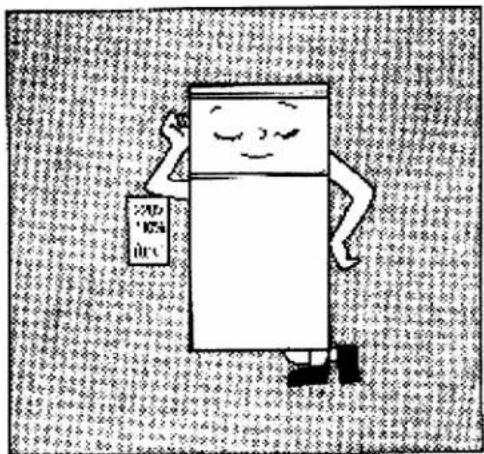
Protection from Moisture
Avoiding placing the fridge in a place where heavy moisture is present so as to minimise possibility of rusty for its metal parts. Still more, the fridge is forbidden to be directly sprayed by water, otherwise, it would cause poor insulation and current leakage may occur.

Fixing Stably
Floor on which fridge will be placed must be flat and solid. It should not be laid on any soft material such as foam plastic, etc. If the fridge is not on the same level, adjust the screws suitably. The fridge should not be placed near anything which may echo.
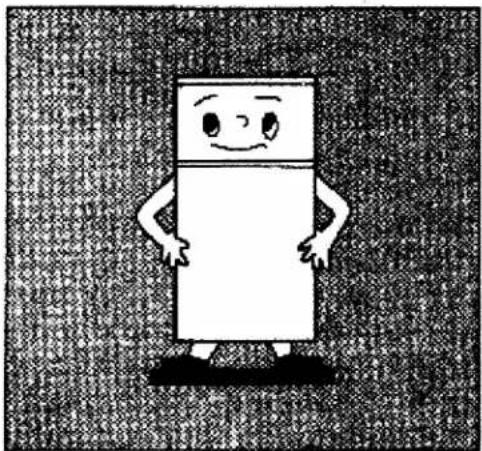
Protection from Heat
The fridge should be far away from any heat source or direct sunshine.

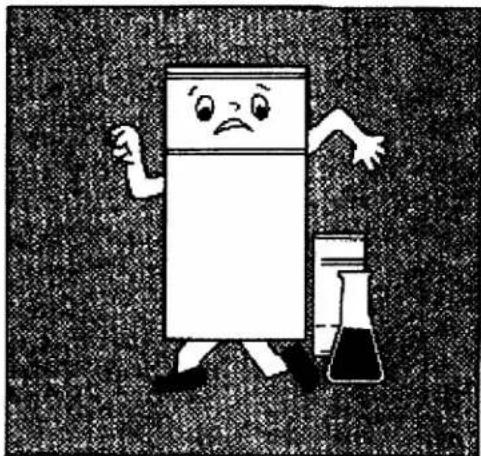
Keep Away from Danger
It is inadvisable that the fridge is placed near any volatilizables or combustibles such as gas, petrol, alcohol, lacquer and banana oil, etc. The above-mentioned objects can not be stored in the refrigerator.
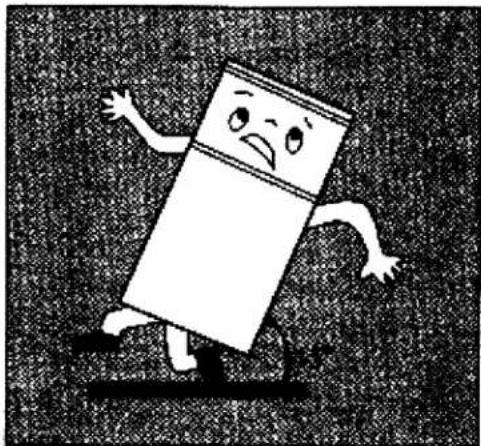
Moving
When fixed or moved, the fridge can not be set horizontally or declined to less than 45° or upside-down.

Beginning of Operation
After the fridge has been placed in position, wait for 5 minutes before electricity is supplied. Don't store anything until the temperature Inside the fridge becomes low enough.
Cautions

Power Failure
After electricity failure, wait for more than 5 minutes before you turn on your refrigerator again or you will damage the compressor, if you get a notice about power failure beforehand, you should set the knob of the temperature regulator to strongly refrigerating point (position "7") 2-3 hours before the power is cut. Make as much cubic ice as possible and put it into the cold-storage chamber. You should decrease the times of opening doors in order to keep the temperature inside the fridge rising slowly.
If the power failure is quite long, check whether there is any water of dissolving frost or remainder of ice at the bottom of freezer chamber before you re-operate your fridge. If any, be sure to remove them off, otherwise, the storage and the ice would stick together by freezing.
Storing-in and Taking-out Food
It is not advisable to load the fridge too full or too compact lest it would hold up free circulation of the air inside the fridge and waste energy.
It is recommendable that the food is wrapped in preservative paper before you put it into the fridge so as to prevent it from being dried up and inter-filtration of tastes among different kinds of food.
It is also recommendable that washable food is washed clean and wiped dry before being stored. Some kinds of food, such as pumpkin, radish, onion, banana, tinned food, etc. need not be stored in the fridge. You should shut the door immediately after you put in or take out food. Otherwise, the temperature inside the fridge would go up and this would increase the consumption of power energy.
Gas Leakage
When gas leakage happens, do not touch the fridge until the valve of gas is turned off and the air in the room is exchanged. If you pull out the plug of power source or turn the knob of the temperature regulator immediately, sparks may occur. So, be sure not to touch the fridge under these circumstances.

Defrosting
Why Defrosting
Water contained in food or getting into air inside the fridge by opening doors may form a layer of frost inside. It will weaken the refrigeration when the frost is thick. While it is more than 10mm thick, you should defrost.
Defrosting in Cold-storing Chamber
It is automatically controlled by switching the temperature regulator on or off so that there is no need of operation of defrosting. Water from defrosting will be drained into an evaporating water-container through a drain pipe at the lowerback of the fridge and evaporates automatically.

Defrosting In Freezer Chamber
Defrosting in freezer chamber is operated manually. Before defrosting, takes the food out; the ice tray and the shelf out or put into the cold-storing chamber temporarily, then set the knob of the temperature regulator to Position "0" (where the compressor will stop working) and leave the door open until ice and frost dissolve thoroughly and depo-site at the bottom of the freezer chamber. Wipe off the water with soft cloth. In the case of speeding up the defrosting, you may put a bowl of warm water (about 50°C) into the
freezer chamber, and scrape away the ice and frost with a defrosting spatula. After doing so, be sure to set the knob of the temperature regulator to original position.
It's not advisable to heat the freezer chamber directly with hot water or hair dryer while frosting to prevent deformation of the inner
It's also not advisable to scrape off ice and frost or separate food from the containers which have been concealed together with the food with sharp tools or wooden bars, so as not to damage the inner casing or the surface of the evaporator.
Cleaning and Maintaining
The fridge should be cleaned and maintained once every two months. Before doing so, you must pull out the plug of power source from the socket.
Cleaning Method
Wipe the Inner and outer surface of the fridge and its accessories with a wet cloth. If they are too dirty, scrub them with neutral detergent, then clean them with water and, them with clean cloth. After this, a small quantity of glass wax is recommended to polish the refrigerator surface with a flannelette.
Cautions
For cleaning, dont use hot water, diluent, petrol, alcohol, kerosene, washing powder, cleanser, alkaline detergent, acid, chemical cloth, etc, so as not to damage the lacquer coat and plastics. It is prohibited that the fridge is directly sprayed with water. Otherwise, it would cause rust or weaken the insulation.
Be careful to upkeep the sealing rubber bars of the doors. They should always be clean.
If the plastic parts in the fridge remain contaminated for a long time by oil (animal or vegetable), they will be easily aged and possibly cracked.
Not Operating Temporarily
If you do not use the fridge for sometime, you should pull out the plug of power source, then take the food out, clean the chambers, put it in a dry place, and leave the doors open slightly.
Diagnosis and Removal of Troubles
[Non-Text]
Please Diagnose Troubles Correctly
The Following Phenomena Are Not Troubles
When the compressor is operating, the normal temperature on its surface reaches 80-90°C.
There are heat pipes storing inside the fridge to prevent "sweating" on its outer casing which becomes a little warm. There is a condensor, which is used to dissipate heat, storing inside both of the inner-storing side plates, so they are slightly warm too.
In a short period after the starting and stopping of the compressor, a "ping-peng" sound may be heard. This is because the evaporator in the cold-storing chamber is defrosting and water on the surface of the evaporator is being condensed.
Sometimes there would be sounds of running or boiling water. This results from the flowing of cooling of liquid by cooling equipment.
When the ambient relative humidity is quite high, condensation would take place on the surface of the fridge. This is a natural phenomenon. Please wipe it off with a dry cloth or move the fridge at the place where there is good ventilation.
Not Refrigerating at all
is the power line cord out of the plug socket?
Has the power circuit at your house fused? Is there any trouble or wrong connection with the circuit?
Is voltage correct (it should be 198-242V)
Has the knob of the temperature regulator set at position "0"?
Poor Refrigeration
- Is the knob of the temperature regulator set properly?
- Is food in the fridge piled too thick?
- Is there any hot food in the fridge?
- Were the doors opened too frequent) or were they not shut properly?
- Is the fridge in a suitable place?
Loud Noise
- Is the floor solid or flat enough?
- Is the fridge seated stably?
Does the fridge keep touch with other objects or walls?
Frozen Food at Cold-storing
Chamber
- Is the knob of the temperature regulator set properly or was it set to position "7" for a long time?
Is there rich-watered food in the inside of the shelf? - Is the ambient temperature too low (less than 10°C )?
Never Stopping Working
- Is the knob of the temperature regular set to strongly refrigerating points (positive 6-7)?
- Is there too much food put into the fridge at one batch or is there any hot food in it? If so, the compressor will not return to normal starting or stopping time until it operates for several hours.
· Have the doors been opened too frequently or not shut closely? Is the ambient temperature too high?
After checking, If troubles still remain, it is not advisable to dismantle any part of the fridge by yourself and it should be overhauled according to the instructions stipulated in the guarantee card.

- OPERATING INSTRUCTIONS
- PLEASE READ OPERATING INSTRUCTIONS CAREFULLY FOR CORRECT OPERATION
- 1 TOP PLATE
- 2 FREEZER CHAMBER
- 3 ICE TRAY
- 4 COLD-STORING CHAMBER
- [5] TEMPERATURE REGULATOR
- 6 SHELF
- 7FEET OF FRIDGE
- CORRECTLY POSITIONING
- WELL VENTILATING
- POWER LINE CORD
- POWER SUPPLY
- PROTECTION FROM MOISTURE
- FIXING STABLY
- PROTECTION FROM HEAT
- KEEP AWAY FROM DANGER
- MOVING
- BEGINNING OF OPERATION
- CAUTIONS
- POWER FAILURE
- STORING-IN AND TAKING-OUT FOOD
- GAS LEAKAGE
- DEFROSTING
- WHY DEFROSTING
- DEFROSTING IN COLD-STORING CHAMBER
- DEFROSTING IN FREEZER CHAMBER
- CLEANING AND MAINTAINING
- CLEANING METHOD
- NOT OPERATING TEMPORARILY
- DIAGNOSIS AND REMOVAL OF TROUBLES
- PLEASE DIAGNOSE TROUBLES CORRECTLY
- THE FOLLOWING PHENOMENA ARE NOT TROUBLES
- NOT REFRIGERATING AT ALL
- POOR REFRIGERATION
- LOUD NOISE
- FROZEN FOOD AT COLD-STORING
- CHAMBER
- NEVER STOPPING WORKING
Brand : CURTIS
Model : FR832
Category : Refrigerator