
NBA 161 FNF - Refrigerator INDESIT - Free user manual and instructions
Find the device manual for free NBA 161 FNF INDESIT in PDF.


| Product Type | Freestanding Refrigerator-Freezer |
| Brand | Indesit |
| Model | NBA 161 FNF |
| Total Capacity | Approx. 250 L |
| Refrigerator Capacity | Approx. 180 L |
| Freezer Capacity | Approx. 70 L |
| Energy Class | A+ |
| Annual Energy Consumption | Approx. 250 kWh |
| Climate Class | N-ST |
| Noise Level | Approx. 40 dB(A) |
| Dimensions (H x W x D) | 180 x 60 x 65 cm |
| Weight | Approx. 60 kg |
| Power Supply | 220-240 V, 50 Hz |
| Defrost System | Manual Defrost (Freezer), Auto Defrost (Fridge) |
| Shelves | Adjustable Glass Shelves |
| Vegetable Drawer | Yes, Humidity Controlled |
| Bottle Storage | Yes, Door Bins |
| Ice Cube Tray | Included |
| Door Reversibility | Yes |
| Cooling Technology | Static Cooling |
| Temperature Control | Mechanical Thermostat |
| Interior Light | LED |
| Refrigerant | R600a |
| Spare Parts Available | Shelves, Door Gasket, Thermostat |
| Repairability Index | 7.5/10 |
Frequently Asked Questions - NBA 161 FNF INDESIT
User questions about NBA 161 FNF INDESIT
0 question about this device. Answer the ones you know or ask your own.
Ask a new question about this device
Download the instructions for your Refrigerator in PDF format for free! Find your manual NBA 161 FNF - INDESIT and take your electronic device back in hand. On this page are published all the documents necessary for the use of your device. NBA 161 FNF by INDESIT.
USER MANUAL NBA 161 FNF INDESIT
Operating Instructions
Safety – a good habit to get into, 10
Installation and setting up, 11 Positioning and connection
Description of the appliance, 4 Overall view Communal
Using the refrigerator to its full potential, 12
Using the freezer to its full potential, 13
Energy saving tips, 14
Troubleshooting, 14
Maintenance and care, 15 Defrosting the appliance Cleaning the appliance Repeating the light bulb
Assistance, 9
KZ
КАЗАКША
This appliance complies with the following
Community Directives:
- 73/25/EEC of 19.02.73 (Low Voltage) end subsequent improvements
Subsequent amendments, 88/336/EEC of D3.05.89/Electromagnetic
Compatibility) and subsequent amendments:
2002/96/EC (WEEE)
H2K DI YOLM-HAC IN180-74

m = 311
3
4
Description of the appliance
When this green indicator light is on, it indicates that the appliance is connected to the electricity network.
• THERMOSTAT KNOB
This knob allows you to adjust the freezer temperature to different position:
- warmest
- coldest;
S - Super Mode.
We recommend, however, a medium position.
Before calling for Service center:
— check if the malfunction can be solved on your own (see Troubleshooting);
- if after all the checks, the appliance still does not operate or the problem persist, call the nearest Service centre.
Communicating:
- appliance model
— serial number (this information can be found on the data plate located on the bottom left side of the refrigerator
compartment; type of modify
-type of transformation.
2
3
4
Safety – a good habit to get into
GB
ATTENTION
I Before placing your new appliance into operation please read these operating instructions carefully. They contain important information for safe use, for installation and for care of the appliance.
I Please keep these operating instructions for future reference. Pass them on to possible new owners of the appliance.
-
This appliance is designed to be used indoors and under no circumstances should it be installed outside even if protected by a roof. Leaving the appliance exposed to the rain and whether is exceedingly dangerous.
-
The appliance should be used only by adults and exclusively for storing foodstuffs in compliance with the instructions provided in this manual. Under no circumstances should children be allowed to operate, or tamper with, this product.
-
The appliance is not intended for use by people (including children) with low physical, sensory or mental abilities or if they don't have life experience or knowledge unless they are kept under control or have been instructed by the person responsible for their safety how to use the appliance. Children should be controlled to avoid playing with the appliance.
-
It is highly recommended that you do not operate this appliance by connecting it to the power supply with extensions or multiple socket plugs. If the refrigerator has been installed between two cabinets, make sure that the supply cord is not dangerously crimped or trapped beneath a heavy object.
-
Never pull the cable or the appliance to remove the plug from the socket; this is exceedingly dangerous.
-
Do not touch the internal cooling elements, especially if your hands are wet, since you could burn or hurt yourself.
-
Before doing any desiring, declared the appliance from the electricity (by pulling out the plug or turning off the general switch in your home); it is not sufficient to place the temperature regulation knob «0» to cut off the power.
-
Before disposing of your old appliance, remember to break or remove the lock as a safety measure to protect children who might lock themselves inside the appliance when playing. In addition, if the appliance is a new one with a lock, keep the key out of the reach of small children.
-
If your appliance is not operating properly, read the chapter entitled, «Trouble Shooting», which might help you to resolve the problem, before calling an after-sales service center. Do not attempt to repair the appliance by tampering with the internal components.
-
If the power supply cord must be replaced, please contact one of our Customer Service Centers. In some cases, the connections are made using special terminals and in others a special tool must be used to access the connections.
-
Do not use electric appliances inside the compartment for food storage, if these are not those recommended by the manufacturer.
-
At the end of the functional life of your appliance containing cyclopentane gas in the insulation foam latter should made safe before being sent to the dump. For this operation, please contact your dealer or the Local Organization in charge of waste disposal.
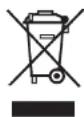
The European Directive 2002/96/EC on Waste Electrical and Electronic Equipment (WEEE), requires that old household electrical appliances must not be disposed of in the normal assorted municipal waste stream. Old appliances must be collected separately in order to optimize the recovery and recycling of the materials they contain and reduce the impact on human health and the environment. The crossed-out wheeled bits symbol on the basis of the kinds you of your obligation, that where you dispose of the appliance it must be separately collected. Consumers should contact their local authority or retailer for information concerning the correct disposal of their old appliance.
CAUTION!
There is small quantity of refrigerant (R600a) in the refrigerator, it is isobutane natural gas which doesn't cause damage to environment, but is flammable. It's necessary to transport and install the refrigerator with care so that not to damage any refrigerant circuit parts. Nevertheless if the refrigerant circuit has been damaged please avoid any types of open flame or potential inflammation sources and air the room carefully.
To avoid formation of flammable mix of gas and air in case of refrigerant leakage, the size of the room where the refrigerator is should correspond to the quantity of the refrigerator used in the refrigerator. The room volume should be 1m^3 for each 8g of R600s refrigerant in the appliance. The quantity of the refrigerant contained in your particular refrigerator is specified on the ratings label inside the refrigerator.
Never plug in the refrigerator having signs of damage. If you have any doubts of the appliance operable condition, please apply to the authorized service center. CAU TION! Don't use any electric devices inside the refrigerator.
CAUTION! Don't block up vent holes that are located in the appliance body or in the build-in construction.
CAUTION! Avoid damaging of the refrigerant circuit. CAUTION! Don't use mechanical devices or other means to speed up defrosting process except those that are recommended by the manufacturer.
Maintenance and care

indesit
Defrosting
WARNING: do not damage the refrigeration circuit. Do not use mechanical devices or other tools to speed up the defrosting process, unless they have been recommended by the manufacturer.
How to Defrost the Freezer and Refrigerator Compartment
This appliance defrosts automatically and the water is drained to the back towards the drain pipe installed for this purpose. Here, the heat produced by the compressor will make it evaporate.
Cleaning and maintenance
Always unplug the appliance from the mains before cleaning.
- Your appliance is manufactured with hygienic odourless materials. To preserve these characteristics, always use sealed containers for strong smelling foods to avoid the formation of odours that are difficult to remove.
- Use only a water and bicarbonate solution: Clean the internal and exterior of your appliance with a sponge soaked with a warm water and sodium bicarbonate solution, which is also a good disinfectant. If you do not have any sodium bicarbonate at home, use neutral detergent. - If some foodstuff containing oil or butter (mayonnaise, vegetable oil, animal fat, etc.) enters onto the refrigerator gasket or plastic inner lining, remove the impurity immediately with a neutral detergent.
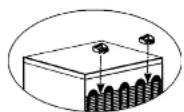
Rear stoppers
(installation by owner)
- What not to use: Do not use abrasive detergents, bleach or detergents containing ammonia. Never use solvent-based products.
- Dishwashable: All the removable parts can be cleaned by soaking in hot soapy water or detergent. If you own a dishwasher, you may wash these parts in the dishwasher.
Remember to dry thoroughly before replacing them. - What about the back panel? Dust may deposit on the back panel and affect the proper running of the appliance. To remove dust, vacuum away the dust very carefully using the appropriate vacuum cleaner accessory.
- Discontinued use of the appliance: If the appliance is not in use for any length of time, remember to clean the interior and dry thoroughly, leaving the doors open to prevent the formation of bad odours and mould.
- This special sound when the thermoregulator and compressor are turned on is a normal state, which appears during the working process of the appliance's electric installation.
- Replacing the lamp. The lamp for lighting the interior of the appliance is located at the back of the lamp box. Unscrew the burnt lamp and replace it with another lamp of no more than 15 Watt.
Energy saving tips Troubleshooting
GB
Install it well
This means that the appliance should be installed away from heat sources or direct sunlight in a well-ventilated room.
Correct temperature settings
Set the refrigerator or freezer temperature knob to one of the medium settings. Very low temperatures will not only consume a great deal of energy but will neither improve or lengthen the storage life of the food. Excessively low temperature may in fact spoil vegetables, cold meals and cheese.
Do not overfill
Remember that proper storage of food requires good air circulation. Overfilling your appliance will prevent this circulation and overwork the compressor.
Shut the doors
Open your appliance only when strictly necessary; remember that every time you open the door most of the cold air will be lost. The motor will have to run, and consume energy, to restore the correct temperature.
Keep the gaskets clean and soft so that they fit closely against the door to ensure that no cold air is lost.
Never store hot foods
A container of hot food in the refrigerator will increase the temperature significantly; allow food to cool to room temperature before storing.
If the appliance does not work, before calling for Service center (see Service certificate), check for a solution from the following list.
Green LED does not light up
Have you checked whether: The main switch for the power supply to the apartment or home has been turned off; The plug is properly inserted in the outlet; The outlet is adequate; try inserting the plug into another outlet in the room.
The refrigerator and the freezer do not cool properly
Have you checked whether: The doors do not close well or the seals are faulty. The doors are left open too long; The thermostat knob is not on the proper setting; The refrigerator or freezer is overfilled.
The food in the refrigerator becomes too cold
Have you checked whether: The thermostat knob is on the proper setting; The food is in contact with the back wall – which is the coldest part.
The motor runs continuously
Have you checked whether The doors are not closed well or have remained open too long; The ambient temperature is too high; The thermostat knob is not on the proper setting.
The appliance makes too much noise
The gas refrigerant produces a slight noise even when the compressor is not running (this is not a defect). Have you checked whether: The refrigerator is level. The appliance was installed between cabinets or objects that vibrate and make noise.
There is water on the bottom of the refrigerator
Have you checked whether: The hole for draining the water from the frost is clogged (see fig. 1). If after all the checks, the appliance still does not operate or the problem persists, call the nearest Service Centre and inform them of: the type of problem, the abbreviation of the model name (Mod.) and the relative numbers (S' N) written on the rating plate located at the bottom left next to the vegetable crisper (see examples in the figures below).
Never call on unauthorized technicians and always refuse spare parts, which are not originals.
Installation and Setting up

indesit
Proper installation of the appliance is essential to ensure the best and most efficient performance of your appliance.
Ventilation
The compressor and condenser generate heat and, therefore, need to be ventilated property. Rooms with less than perfect ventilation are not very suited for installation of the appliance. Therefore, it should be installed in a room with an opening (window or French window) that provides the appropriate amount of air recirculation. It is also important that the room should not be too humid. During installation, make sure not to cover or obstruct the grates that allow proper ventilation of the appliance. For proper ventilation of the appliance, you must leave:
- a space of at least 10 cm between the top part and any cabinets above it; - a space of at least 5 cm between the sides of the appliance and any adjacent cabinets/walls.
Away from Heat
Avoid positioning the appliance in a place where it is directly exposed to sunlight or near an oven, cook top or the like.
Levelling
The floor should be perfectly levelled; if not, you can adjust the feet at the front of the appliance.
Before placing foodstuffs in the refrigerator or freezer, clean the interior well with warm water and baking soda.
After having plugged the appliance in, make sure that pilot lamp is light. Set thermostat knob onto a medium position and can place food in the fridge after only a few hours. When the freezer has reached the optimum temperature, you can place frozen food in the freezer.
Earthing
Before making the electrical connection, check that the voltage shown on the data plate, that you will find on the bottom left hand side of the appliance next to the crisper, corresponds to that of your mains and that the socket is earthen in conformity with all current electrical regulations. If the system is not earthen, the manufacturer declines all liability for consequent damages or losses. Do not use adapters or multiple sockets.
Check the power load
The electrical socket must support the maximum power load of the appliance shown on the data plate (on the bottom left hand side of the appliance next to the crisper).
Before plugging the appliance to the mains
Set the appliance upright and wait at least 3 hours before plugging the appliance into the mains to ensure proper performance.
This appliance complies with the following
Community Directives:
- 73/23/EEG of 19.02.73 (Low Voltage) and
subsequent amendments;
- 69/336/EEC of 03.05.89 (Electromagnetic
Compatibility) and subsequent amendments;
- 2002/98/EC (WEEE).
Using the refrigerator to its full potential
GB
The Full No Frost system circulates cold air continuously to collect humidity and prevent ice and frost formation. The system maintains an optimal humidity level in the compartment, preserving the original quality of the food, preventing the food from sticking together and making defrosting a thing of the past. Do not block the aeration cells by placing food or containers in direct contact with the refrigerating back panel.
Please follow our instructions carefully on maximum storage time: any food, even the freshest, will not remain edible for any extended amount of time.
- Do not place liquids in containers without covering them because this will lead to an increase in the level of moisture within the refrigerator, causing the formation of frost.
Storing food in the Refrigerator Compartment
| Food Arrangement inside the refrigerator | |
| Fresh fish and meat Above the fruit and vegetable bins | |
| Fresh cheese Above the fruit and vegetable bins | |
| Cooked food On any shelf | |
| Salami, bread loaf, chocolate On any shelf | |
| Fruit and vegetables | In the fruit and vegetable bins |
| Eggs | On the shelf provided |
| Butter and margarine | On the shelf provided |
| Bottles, drinks, milk | On the shelf provided |
- Remember to cool hot food before storing otherwise the temperature inside the appliance will increase, causing the compressor to work harder and use more energy. - Contrary to popular belief, cooked foods are not stored any longer than raw food.
- The refrigerator compartment is equipped with convenient, removable shelves which can be adjusted for height using the shelf guides. This allows you to place even large containers and foodsuffs in the refrigerator - Be careful not to place containers (plastic or glass), food or other objects in direct contact with the cooling area of the back wall of the refrigerator. This could harm the food, increase energy consumption and facilitate the formation of condensate (on food, containers, etc.).
Using the freezer to its full potential

indesit
For the preparation of food to be frozen, please consult a specialized manual.
- Don't open the freezing compartment door in case of power failure or unintentional defrosting when the refrigerator is switched off. It will help to keep low temperatures in the freezing compartment for a longer time. - Use foodstuffs which are partly defrosted to cook a dish by thermal treatment.
- When freezing fresh foods, remember that they should not touch other previously frozen or deep frozen foods. Place the food that you wish to freeze in the top compartment where the temperature will fall below -18^ , which is ideal for freezing food properly. Remember that proper conservation depends on the speed of freezing.
– During the freezing process, avoid opening the door of the freezer.
- Freeze only the quantities (in kg) shown on the data plate situated inside the refrigerator compartment.
- For the best conservation and defrosting, remember to freeze small portions; this will ensure rapid and uniform freezing. Mark package with a description of the contents and the date it was frozen. In the case of power failure or breakdown, do not open the freezer door. This will help maintain the temperature inside the freezer ensuring that foods are conserved for at least 17 hours.
- Do not store full bottles in the freezer since they could explode when they freeze. (Remember that liquids increase in volume when frozen.)
- If the room temperature remains below 14^ for an extended period of time the freezer will not reach the temperatures required for storage, and storage life will be shorter. In this case, frozen foodstuffs should be used within a relatively short period of time.
In order to freeze and then thaw foods optimally, it is recommended that you divide food into small portions so that they freeze quickly and uniformly. The packages should be clearly marked with the content and the date they were frozen.
Super Mode: this mode assures continuous compressor operation up to achievement of low temperatures, necessary for quick food freezing. After food freezing, the appliance should be switched over to a normal operation mode.
In order to frost some quantity of fresh produce/food (no more than half of the maximum pointed out on the doorplate/ name board inside your refrigerator), put the produce in the evaporator/freezing section ( ^ ) and switch on mode of operation «Super» for 24 hours. In order to frost maximum (for your refrigerator) quantity of fresh produce you should switch on mode of operation «Super» 24 hours before produce laying. Put the produce in the evaporator/freezing section ( ^ ) and switch off mode of operation «Super» in 24 hours.
- Operating Instructions
- Troubleshooting, 14
- KZ
- Description of the appliance
- 2
- 3
- 4
- Safety – a good habit to get into
- GB
- ATTENTION
- CAUTION!
- Maintenance and care
- Defrosting
- How to Defrost the Freezer and Refrigerator Compartment
- Cleaning and maintenance
- Energy saving tips Troubleshooting
- Install it well
- Correct temperature settings
- Do not overfill
- Shut the doors
- Never store hot foods
- Green LED does not light up
- The refrigerator and the freezer do not cool properly
- The food in the refrigerator becomes too cold
- The motor runs continuously
- The appliance makes too much noise
- There is water on the bottom of the refrigerator
- Installation and Setting up
- Ventilation
- Away from Heat
- Levelling
- Earthing
- Check the power load
- Before plugging the appliance to the mains
- Using the refrigerator to its full potential
- Using the freezer to its full potential
Brand : INDESIT
Model : NBA 161 FNF
Category : Refrigerator