
GE-CL 18 Li - Leaf blower EINHELL - Free user manual and instructions
Find the device manual for free GE-CL 18 Li EINHELL in PDF.
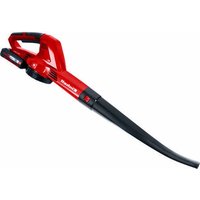


| Product Type | Cordless Leaf Blower |
| Brand | Einhell |
| Model | GE-CL 18 Li |
| Power Source | 18 V Li-Ion (Power X-Change system) |
| Battery System | Einhell Power X-Change, compatible with all 18 V batteries |
| Battery Included | No, sold separately |
| Charger Included | No, sold separately |
| Max Air Speed | 200 km/h |
| Max Air Volume | 500 m³/h |
| Sound Pressure Level | 94 dB(A) |
| Vibration Level | 2.5 m/s² |
| Weight (without battery) | 1.8 kg |
| Dimensions (L x W x H) | 800 x 200 x 300 mm |
| Variable Speed Trigger | Yes, electronic speed control |
| Soft Grip Handle | Yes, ergonomic design |
| Maintenance | Clean air vents regularly; store in dry place |
| Safety Features | Wear ear and eye protection; keep away from children |
| Spare Parts Available | Battery, charger, blower tube, nozzle |
| Repairability | Spare parts available; service through authorized dealers |
| Warranty | 2 years (standard Einhell warranty) |
| Usage | Blowing leaves, grass clippings, and light debris |
Frequently Asked Questions - GE-CL 18 Li EINHELL
User questions about GE-CL 18 Li EINHELL
0 question about this device. Answer the ones you know or ask your own.
Ask a new question about this device
Download the instructions for your Leaf blower in PDF format for free! Find your manual GE-CL 18 Li - EINHELL and take your electronic device back in hand. On this page are published all the documents necessary for the use of your device. GE-CL 18 Li by EINHELL.
USER MANUAL GE-CL 18 Li EINHELL
GB Safety instructions Cordless Leaf Blower
7
GB
General safety instructions for electric tools

Caution!
Read all safety regulations and instructions.
Any errors made in following the safety regulations and instructions may result in an electric shock, fire and/or serious injury.
Keep all safety regulations and instructions in a safe place for future use.
The term “electric tool” used in the safety instructions refers to electric tools operated from the mains power supply (with a power cable) and to battery operated electric tools (without a power cable).
1. Workplace safety
a) Keep your work area clean and well illuminated. Untidy or unlit work areas can result in accidents. b) Do not operate the electric tool in an environment where there is a risk of explosions and where there are flammable liquids, gases or dust. Electric tools produce sparks which could set the dust or vapours alight. c) Keep the electric tool out of the reach of children and other persons. If there is a distraction, you may lose control of the appliance.
2. Electrical safety
a) The connector plug from this electric tool must fit into the socket. The plug should never be altered in any way. Never use adapter plugs together with earthed electric tools. Unaltered plugs and correct sockets reduce the risk of an electric shock. b) Avoid bodily contact with earthed surfaces such as pipes, heating, ovens and fridges. The risk of electric shock is increased if your body is earthed. c) Keep the tool out of the rain and away from moisture. The ingress of water into an electric tool increases the risk of an electric shock. d) Do not use the cable to carry the electric tool, to hang it up or to pull it out of the socket. Keep the cable away from heat, oil, sharp edges and moving parts of the appliance. Damaged or entangled cables increase the risk of an electric shock. e) If you are working outdoors with an electric tool, only use extension cables which
are designed specifically for this purpose. Using specially designed outdoor extension cables, the risk of electric shock is reduced.
f) If operation of the electric tool in a damp environment cannot be avoided, use a residual current device (RCD) protected supply. The use of an RCD reduces the risk of electric shock.
3. Safety of persons
a) Be careful, watch what you are doing and use an electric tool sensibly. Do not use the tool if you are tired or under the influence of drugs, alcohol or medication. A moment of inattention when using the electric tool can result in serious injuries. b) Wear personal protection equipment and always wear safety goggles. Wearing personal protection (such as dust masks, non-slip safety shoes, safety helmet or ear protection, depending upon the type and use of the electric tool) reduces the risk of injury. c) Make sure that the appliance cannot start up accidentally. Ensure that the electric tool is switched off before you connect it to the power supply and/or insert the battery, or pick up or carry the tool. If your finger is on the switch whilst carrying the electric tool or if you connect the appliance to the mains when it is switched on, this can lead to accidents. d) Remove keys and wrenches before switching on the electric tool. A tool or key which comes into contact with rotating parts of the appliance can lead to injuries. e) Avoid abnormal working postures. Make sure you stand squarely and keep your balance at all times. In this way, you can control the electric tool better in unexpected circumstances. f) Wear suitable work clothes. Do not wear loose clothing or jewellery. Keep hair, clothes and gloves away from moving parts. Loose clothing, jewellery or long hair can get trapped in moving parts. g) If vacuuming devices and draining devices can be fitted, make sure that these are correctly attached and correctly used. The use of a dust extraction system can reduce the danger posed by dust.
- Usage and treatment of the electric tool a) Do not overload the appliance. Use the correct tool for your work. You will be able to work better and more safely within the given performance boundaries. b) Do not use an electric tool with a defective switch. An electric tool that cannot be switched on or off is dangerous and must be repaired. c) Pull the plug out of the socket and/or remove the battery before making any adjustments to the appliance, changing accessories or putting the appliance down. This safety measure prevents starting the electric tool unintentionally. d) Keep unused electric tools out of the reach of children. Do not allow people who are not familiar with the appliance or who have not read these instructions to use the appliance. Electric tools are dangerous if they are used by inexperienced people. e) Clean your electric tool carefully. Check whether moving parts are functioning properly and not jamming, whether parts are broken or damaged enough that the functioning of this electric tool is affected. Have damaged parts repaired before using the appliance. Many accidents are caused by badly maintained electric tools. f) Keep your cutting tools sharp and clean. Carefully maintained cutting tools with sharp cutting edges will jam less and are easier to control. g) Make sure to use electric tools, accessories, attachments, etc. in accordance with these instructions. Take the conditions in your work area and the job in hand into account. Using electric tools for any purpose other than the one for which they are intended can lead to dangerous situations.
- Using and handling the cordless tool a) Only charge the batteries in chargers that are recommended by the manufacturer. A charger that is designed for a certain type of battery may pose a fire risk if it is used with other types of battery. b) Use only the correct batteries in the electric tools. The use of other batteries may result in injuries and a fire risk.
c) Keep unused batteries away from paper clips, coins, keys, nails, screws and other metallic objects that could cause a short circuit between the contacts. A short circuit between the battery contacts may cause burns or a fire. d) In case of incorrect use, fluid may escape from the battery. Avoid contact with it. If you touch it by accident, rinse the affected area with water. If you get the fluid in your eyes, also seek medical advice. Leaking battery fluid can cause skin irritation or burns.
6. Service
a) Have your electric tool repaired only by trained personnel using only genuine spare parts. This will ensure that your electric tool remains safe to use.
Additional safety instructions
We pay a great deal of attention to the design of every battery pack to ensure that we supply you with batteries which feature maximum power density, durability and safety. The battery cells have a wide range of safety devices. Each individual cell is initially formatted and its electrical characteristic curves are recorded. These data are then used exclusively to be able to assemble the best possible battery packs. Despite all the safety precautions, caution must always be exercised when handling batteries. The following points must be obeyed at all times to ensure safe use.
Safe use can only be guaranteed if undamaged cells are used. Incorrect handling can cause cell damage.
Important: Analyses confirm that incorrect use and poor care are the main causes of the damage caused by high performance batteries.
Information about the battery
- The battery pack supplied with your cordless tool is not charged. The battery pack has to be charged before you use the tool for the first time.
- For optimum battery performance avoid low discharge cycles. Charge the battery pack frequently.
- Store the battery pack in a cool place, ideally at 15°C and charged to at least 40%.
- Lithium-ion batteries are subject to a natural ageing process. The battery pack must be replaced at the latest when its capacity falls to just 80% of its capacity when new. Weakened cells in an aged battery pack are no longer capable of meeting the high power requirements and therefore pose a safety risk.
- Do not throw battery packs into an open fire. There is a risk of explosion!
- Do not ignite the battery pack or expose it to fire.
- Do not exhaustively discharge batteries. Exhaustive discharge will damage the battery cells. The most common cause of exhaustive discharge is lengthy storage or non-use of partly discharged batteries. Stop working as soon as the performance of the battery falls noticeably or the electronic protection system triggers. Place the battery pack in storage only after it has been fully charged.
- Protect batteries and the tool from overloads. Overloads will quickly result in overheating and cell damage inside the battery housing without this overheating actually being apparent externally.
- Avoid damage and shocks. Replace batteries which have been dropped from a height of more than one meter or which have been exposed to violent shocks without delay, even if the housing of the battery pack appears to be undamaged. The battery cells inside the battery may have suffered serious damage. In this respect, please also read the waste disposal information.
- If the battery pack suffers overloading and overheating, the integrated protective cut-off will switch off the equipment for safety reasons. Important. Do not press the ON/OFF switch any more if the protective cut-off has actuated. This may damage the battery pack.
- Use only original battery packs. The use of other batteries may result in injuries, explosion and a fire risk.
Information on chargers and the charging process
- Please check the data marked on the rating plate of the battery charger. Be sure to connect the battery charger to a power supply with the voltage marked on the rating plate. Never connect it to a different mains voltage.
- Protect the battery charger and its cable from damage and sharp edges. Have damaged cables repaired without delay by a qualified electrician.
- Keep the battery charger, batteries and the cordless tool out of children's reach.
- Do not use damaged battery chargers.
- Do not use the supplied battery charger to charge other cordless tools.
- In heavy use the battery pack will become warm. Allow the battery pack to cool to room temperature before commencing with the charging.
- Do not over-charge batteries. Do not exceed the maximum charging times. These charging times only apply to discharged batteries. Frequent insertion of a charged or partly charged battery pack will result in over-charging and cell damage. Do not leave batteries in the charger for days on end.
- Never use or charge batteries if you suspect that the last time they were charged was more than 12 months previously. There is a high probability that the battery pack has already suffered dangerous damage (exhaustive discharge).
- Charging batteries at a temperature below 10°C will cause chemical damage to the cell and may cause a fire.
- Do not use batteries which have heated during the charging process, as the battery cells may have suffered dangerous damage.
- Do not use batteries which have suffered curvature or deformation during the charging process or which show other non-typical symptoms (gassing, hissing, cracking,...)
- Never fully discharge the battery pack (recommended depth of discharge max. 80%). A complete discharge of the battery pack will lead to premature ageing of the battery cells.
- Never charge the batteries unsupervised.
Protection from environmental influences
- Wear suitable work clothes. Wear safety goggles.
- Protect your cordless tool and the battery charger from moisture and rain. Moisture and rain can cause dangerous cell damage.
- Do not use the cordless tool or the battery charger near vapors and flammable liquids.
- Use the battery charger and cordless tools only in dry conditions and an ambient temperature of 10-40°C.
- Do not keep the battery charger in places where the temperature is liable to reach over 40°C. In particular, do not leave the battery charger in a car that is parked in the sunshine.
- Protect batteries from overheating. Overloads, over-charging and exposure to direct sunlight will result in overheating and cell damage. Never charge or work with batteries which have been overheated – replace them immediately if possible.
- Storage of batteries, battery chargers and cordless tools. Store the charger and your cordless tool only in dry places with an ambient temperature of 10-40°C. Store your lithium-ion battery pack in a cool, dry place at a temperature of 10-20°C. Protect them from humidity and direct sunlight. Only place fully charged batteries in storage (charged at least 40%).
- Prevent the lithium-ion battery pack from freezing. Battery packs which were stored below 0°C for more than 60 minutes must be disposed of.
- When handling batteries beware of electrostatic charge: Electrostatic discharges cause damage of the electronic protection system and the battery cells. Avoid electrostatic charging and never touch the battery poles.
![graph TD A["Warning"] --> B["Environment"] B --> C["ISC"] style A fill:#f9f,stroke:#333 style B fill:#ccf,stroke:#333 style C fill:#cfc,stroke:#333 note1["INTERNATIONAL SERVICE CENTER GmbH"] -.-> B](/content/2026/05/994479/images/36deefc89a6f01afed8bc6312f3a1e9a5889727ffd04ca214972846413bc505f.jpg)
Rechargeable batteries and cordless electric machines and tools contain materials that are potentially harmful to the environment. Never place any cordless electric machines or tools in your household refuse. When cordless electric machines or tools become defective or worn, remove the rechargeable batteries and return them to iSC GmbH (address: Eschenstrasse 6, D-94405, Germany). If the rechargeable batteries cannot be removed, return the complete cordless machine or tool.
You can then be sure that the equipment will be correctly disposed of by the manufacturer.
When shipping or disposing of batteries and cordless tools, always ensure that they are packed individually in plastic bags to prevent short circuits and fires.
Do not lose these safety instructions
Additional safety instructions
• Always walk. Never run. • Always keep the ventilation opening clean. - Never direct the blow hole at persons or animals.
- The machine may only be used at reasonable times of the day, i.e. not in the early morning or late evening when it will be a nuisance to other people. The times specified by local authorities must be observed.
- Remove all foreign objects with a rake and brush before starting any blowing work.
- Where conditions are dusty, dampen the surface a little or use a sprinkler attachment.
- Use the full-length blower nozzle extension so that the air current can work near to the ground.
- Watch out for children, pets, open windows etc. and blow the foreign objects safely away from them.
- Warning: This machine is not designed for use by children.
- Warning: Risk of injury from rotating parts.
- Warning: Never use this equipment near open windows.


- GB
- GENERAL SAFETY INSTRUCTIONS FOR ELECTRIC TOOLS
- CAUTION
- WORKPLACE SAFETY
- ELECTRICAL SAFETY
- SAFETY OF PERSONS
- SERVICE
- ADDITIONAL SAFETY INSTRUCTIONS
- INFORMATION ABOUT THE BATTERY
- INFORMATION ON CHARGERS AND THE CHARGING PROCESS
- PROTECTION FROM ENVIRONMENTAL INFLUENCES
- WHEN SHIPPING OR DISPOSING OF BATTERIES AND CORDLESS TOOLS, ALWAYS ENSURE THAT THEY ARE PACKED INDIVIDUALLY IN PLASTIC BAGS TO PREVENT SHORT CIRCUITS AND FIRES
- DO NOT LOSE THESE SAFETY INSTRUCTIONS
Brand : EINHELL
Model : GE-CL 18 Li
Category : Leaf blower