CLBL2406-1 - Leaf blower McGregor - Free user manual and instructions
Find the device manual for free CLBL2406-1 McGregor in PDF.


| Product Type | Cordless Leaf Blower |
| Model | CLBL2406-1 |
| Voltage | 24V |
| Max Air Volume | 2.8 m³/min |
| Max Air Speed | 53 m/s |
| Weight (without battery) | 1.13 kg |
| Battery Type | Lithium-Ion |
| Battery Voltage | 24V |
| Battery Capacity | 2.0 Ah |
| Number of Batteries Included | 1 |
| Charger Input | 100-240V AC, 50-60 Hz, 0.32A |
| Charger Output | 24V, 500 mA |
| Charging Time | Approx. 4-6 hours |
| Sound Pressure Level | 74 dB(A) (K=3 dB(A)) |
| Sound Power Level | 96 dB(A) |
| Vibration Level | ≤ 2.5 m/s² |
| Included Accessories | Blower tube, hanger, charger |
| Assembly Required | Yes (slide nozzle onto outlet) |
| Storage Option | Wall mountable via hanger |
| Maintenance | Clean air vents; wipe with damp cloth; store battery fully charged |
| Safety Equipment Recommended | Eye and ear protection |
| Warranty Period | 2 years |
Frequently Asked Questions - CLBL2406-1 McGregor
User questions about CLBL2406-1 McGregor
0 question about this device. Answer the ones you know or ask your own.
Ask a new question about this device
Download the instructions for your Leaf blower in PDF format for free! Find your manual CLBL2406-1 - McGregor and take your electronic device back in hand. On this page are published all the documents necessary for the use of your device. CLBL2406-1 by McGregor.
USER MANUAL CLBL2406-1 McGregor
natural_image
Green portable hairdryer with a handle and label 'McGregor' on the blade (no additional text or symbols visible)McGregor 24V Cordless Blower
7593431 (Model: CLBL240 6-1)
Important - Please read these
instructions fully before starting assembly
These instructions contain important information that will help you get the best from your blower, ensuring it is assembled correctly and safely. If you need help or have damaged or missing parts, call the Customer Helpline on 0 345 60 5 20 63
AFTER SALES SUPPORT
0 345 60 5 20 63
Contents
Safety Information....3
Warning Symbols....3
General Safety 4
Frequent Maintenance....11
Battery Safety....12
Service 14
In the Box....15
Parts....15
Assemble 16
Step 1 Blower Tube Assembly....16
Prepare....17
Step 1 Check the Battery Pack Capacity....17
Step 2 Charging the Battery ....17
Step 3 Battery Assembly....18
Operate....19
Step 1 On/Off Operation....19
Step 2 Use Blower 19
Maintenance 20
Storage....20
Cleaning 20
Battery Maintenance 20
Charger Maintenance 21
Technical Data 22
Technical Data Table 22
Disposal and Recycling....22
Troubleshooting....23
General Troubleshooting....23
Getting Help 23
Guarantee 24

Safety Information
Important - Please read these instructions fully before starting assembly
Warning Symbols
Some of the following symbols may be used on this product. Please study them and learn their meaning. Proper interpretation of these symbols will allow you to operate the product better and safer.

Warning!
Carefully read these operating instructions.

Danger due to materials blown out of machine! Remove persons in the vicinity from the danger area.
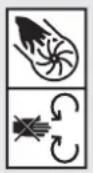
Keep hands away.

Remove the battery prior to servicing the appliance.

Do not use the device without the blower tube.

Do not expose the blower to moisture.

Wear eye and ear protection.


Do not dispose of batteries in household waste, fire or water.

Do not subject the battery to strong sunlight over long periods and do not leave it on a heater (max. 60°C).

Noise level specification Lwa in dB.

Warning!
Never allow children, persons with reduced physical, sensory or mental capabilities or lack of experience and knowledge or people unfamiliar with these instructions to use the machine, local regulations may restrict the age of the operator.
Read and understand all instructions before using this product. Failure to follow all instructions listed below may result in electric shock, fire, and/or serious personal injury.
- Know your blower. Read operator's manual carefully. Learn its applications and limitations, as well as the specific potential hazards related to this blower. Following this rule will reduce the risk of electric shock, fire, or serious injury.
- Do not leave blower unattended or running when turned on.
- Do not allow to be used as a toy. Close attention is necessary when used by or near children.
- Use only accessories that are recommended by the manufacturer for your model. Accessories that may be suitable for one blower may create a risk of injury when used on another blower.
- Do not handle battery or blower with wet hands.
- Do not put any object into openings. Do not use with any opening blocked; keep free of dust, lint, hair, and anything that may reduce air flow.
- Keep hair, loose clothing, fingers, and all parts of body away from openings and moving parts.
- Turn off all controls before removing battery.
Important - Please read these instructions fully before starting assembly
General Safety (continued)
- Use Right Appliance - Do not use appliance for any job except that for which it is intended.
- Don’t Force Appliance - It will do the job better and with less likelihood of a risk of injury at the rate for which it was designed.
- Use extra care when cleaning on stairs.
- Do not operate blowers in explosive atmospheres, such as in the presence of flammable liquids, gases, or dust. Blowers create sparks which may ignite the dust or fumes.
- Keep away from children.
- Before using the charger, read all the instructions and cautionary markings on the charger and battery pack.
- Do not attempt to charge battery packs other than supplied. The charger and battery pack supplied with it are specifically designed to work together.
- Only charge the battery pack in indoor environment.
- Do not charge non-rechargeable batteries.
- Avoid exposing the charger unit to moist and/or wet conditions at the risk of electric shock.
- Ensure ventilation ports on charger are not obstructed when in use.
- Do not use the charger if it has been subjected to a heavy knock, dropped or otherwise damaged in any way. Have the charger checked and repaired by an authorised service centre.
- Do not disassemble the charger. Incorrect re-assembly may result in the risk of fire, electric shock or electrocution.

Safety Information
Important - Please read these instructions fully before starting assembly
General Safety (continued)
- Disconnect the charger from the power supply before attempting to clean it to reduce the risk of an electric shock. Removing the battery pack alone does not reduce the risk.
- Stay alert, watch what you are doing and use common sense when operating a blower. Do not use blower while tired, upset, or under the influence of drugs, alcohol, or medication. A moment of inattention while operating blowers may result in serious personal injury.
- Do not wear loose clothing or jewelry. They can be caught in moving parts. Use of rubber gloves and substantial footwear is recommended when working outdoors. Wear protective hair covering to contain long hair.
- Secure long hair above shoulder level to prevent entanglement in moving parts.
- Avoid accidental starting. Be sure switch is in the locked or off position before inserting battery pack.
- Use safety equipment. Always wear eye protection. Dusk mask, non-skid safety shoes, hard hat, or hearing protection must be used for appropriate conditions.
- Do not use on a ladder, rooftop, tree, or other unstable support. Stable footing on a solid surface enables better control of the blower in unexpected situations.
- Do not use blower if switch does not turn it on or off. A blower that cannot be controlled with the switch is dangerous and must be repaired.
- For household use only.
- Remove or disconnect battery before servicing, cleaning or removing material from the gardening
appliance. Such preventive safety measures reduce the risk of starting the blower accidentally.
- Exercise care in handling batteries in order not to short the battery with conducting materials such as rings, bracelets, and keys. The battery or conductor may overheat and cause burns.
- Check for misalignment or binding of moving parts, breakage of parts, and any other condition that may affect the blower's operation. If damaged, have the blower serviced before using. Many accidents are caused by poorly maintained blowers.
- Keep the blower and its handle dry, clean and free from oil and grease. Always use a clean cloth when cleaning. Never use brake fluids, gasoline, petroleum-based products, or any strong solvents to clean your blower. Following this rule will reduce the risk of loss of control and deterioration of the enclosure plastic.
• Always wear eye protection when operating this equipment. - Battery blowers do not have to be plugged into an electrical outlet; therefore, they are always in operation condition. Beware of possible hazards when not using your battery powered blower or when changing accessories. Following this rule will reduce the risk of electric shock, fire, or serious personal injury.
- Do not place battery powered blowers or their batteries near fire or heat. Do not dispose of the battery in a fire. The cell may explode. Check with local codes for possible special disposal instructions.
- Do not open or mutilate the battery. Released electrolyte is corrosive and may cause damage to the eyes or skin. It may be toxic if swallowed.
Important - Please read these instructions fully before starting assembly
General Safety (continued)
- Do not crush, drop or damage the battery pack. Do not use a battery pack or charger that has been dropped or received a sharp blow. A damaged battery is subject to explosion. Properly dispose of a dropped or damaged battery immediately.
- Do not operate the equipment while barefoot or when wearing sandals or similar lightweight footwear. Wear protective footwear that will protect your feet and improve footing on slippery surfaces.
- Batteries can explode in the presence of a source of ignition, such as a pilot light. To reduce the risk of serious personal injury, never use any cordless product in the presence of open flame. An exploded battery can propel debris and chemicals. If exposed, flush with water immediately.
- Don't Overreach - Keep proper footing and balance at all times. Overreaching can result in loss of balance.
- Check the work area before each use. Remove all objects such as rocks, broken glass, nails, wire, or string which can be thrown or become entangled in the machine.
- Check Damaged Parts - Before further use of the appliance, a guard or other part that is damaged should be carefully checked to determine that it will operate properly and perform its intended function. Check for alignment of moving parts, binding of moving parts, breakage of parts, mounting, and any other condition that may affect its operation. A guard or other part that is damaged should be properly repaired or replaced by an authorized service center unless indicated elsewhere in this manual.
- Do not point the blower nozzle in the direction of people or pets.
Important - Please read these instructions fully before starting assembly
General Safety (continued)
- Never run the unit without the proper equipment attached. Always ensure the blower tubes are installed.
- Store appliances in a dry and safe environment and avoid exposure to direct sunlight.
- Under extreme usage or temperature conditions, battery leakage may occur. If liquid comes in contact with your skin, wash immediately with soap and water. If liquid gets into your eyes, flush them with clean water for at least 10 minutes, then seek immediate medical attention.
- Do not incinerate this blower even if it is severely damaged. The battery can explode in a fire.
- Blower service must be performed only by qualified repair personnel. Service or maintenance performed by unqualified personnel may result in a risk of injury.
- When servicing a blower, use only identical replacement parts. Following instructions in the MAINTENANCE section of this manual. Use of unauthorized parts or failure to follow maintenance instructions may create a risk of shock or injury.
- Never use any blower near fire or hot ashes. Use near fires or ashes can spread fires and result in serious injury and/or property damage.
- Never use blower to spread chemicals, fertilizers, or any other toxic substances. Spreading these substances could result in serious injury to the operator or bystanders.
- Never place blower on any surface, except a hard, clean surface when motor is running. Gravel, sand, and other debris can be picked up by the air inlet and thrown at the operator or bystanders, causing possible

Safety Information
Important - Please read these instructions fully before starting assembly
General Safety (continued)
serious injuries.
Child safety
Tragic accidents can occur if the operator is not aware of the presence of children.
- Keep children out of the working area and under the watchful care of a responsible adult.
- Do not allow children to operate this blower.
- Stay alert, and turn the blower off if a child or any other person enters the working area.
- Look behind and down for small children before and while working backwards.

Warning!
Some dust created by power sanding, sawing, grinding, drilling, and other construction activities contains chemicals known to cause cancer, birth defects or other reproductive harm. Some examples of these chemicals are:
- Lead from lead-based paints
- Crystalline silica from bricks and cement and other masonry products
- Arsenic and chromium from chemically treated lumber.
- Your risk of exposure to these chemicals varies depending on how often you do this type of work. To reduce your exposure to these chemicals, work in a well-ventilated area, and work with approved safety equipment, such as dust masks that are specially designed to filter out microscopic particles.
The following signal words and meanings are intended to explain the levels of risk associated with this product.
| Symbol Signal Meaning | ||
 | DANGER | Indicates an imminently hazardous situation, which, if not avoided, will result in death or serious injury. |
 | WARNING | Indicates a potentially hazardous situation, which, if not avoided, could result in death or serious injury. |
 | CAUTION | Indicates a potentially hazardous situation, which, if not avoided, may result in minor or moderate injury. |
| CAUTION | (Without Safety Alert Symbol) Indicates a situation that may result in property damage. | |

Warning!
To avoid serious personal injury, do not attempt to use this product until you have read this owner's manual thoroughly and understand it completely. If you do not understand the warnings and instructions in this owner's manual, do not use this product. Call the helpline for assistance.

Warning!

The operation of any power tool can result in foreign objects being thrown into your eyes, which can result in severe eye damage. Before beginning power tool operation, always wear safety goggles or safety glasses with side shields and, when needed, a full face shield.
- Do not dismantle, open or shred battery packs.
- Do not expose battery packs to heat or fire. Avoid storage in direct sunlight.
- Do not short-circuit a battery pack. Do not store battery

Safety Information
Important - Please read these instructions fully before starting assembly
Battery Safety
packs.
- Retain the original product literature for future reference.
- Use only the battery pack in the application for which it was intended.
- When possible, remove the battery pack from the equipment when not in use.
- Dispose of properly.
- Do not attempt to charge the battery pack with any other charger than the one supplied. The charger and battery pack supplied with it are specifically designed to work together.
- Charge and store the battery pack in an ambient temperature of 18 - 24°C (65 - 75°F) to ensure the longest battery life and best performance. Do not charge or store the battery pack in temperatures below 0°C (32 °F) and above 45°C (113 °F). in a box or drawer where they may be liable to short-circuiting.
- Do not remove battery packs from its original packaging until required for use.
- Do not subject battery packs to mechanical shock.
- In the event of a cell leaking, do not allow the liquid to come in contact with the skin or eyes. If contact has been made, wash the affected area with copious amounts of water and seek medical advice.
- Do not use any charger other than that specifically provided for use with the equipment.
- Observe the plus (+) and minus (-) marks on the battery pack and equipment and ensure correct use.
- Do not use any battery pack which is not designed for
use with the equipment.
- Do not mix battery packs of different manufacture, capacity, size or type within a device.
- Keep battery packs out of the reach of children. Seek medical advice immediately if a battery pack has been swallowed.
• Always purchase the correct battery pack for the equipment. - Keep battery packs clean and dry.
- Wipe battery pack terminals with a clean dry cloth if they become dirty.
- Rechargeable battery packs need to be charged before use. Always use the correct charger and refer to the manufacturer's instructions or equipment manual for proper charging instructions.
- Do not leave a battery pack on prolonged charge when not in use.
• After extended periods of storage, it may be necessary to charge and discharge the battery pack several times to obtain maximum performance. - Battery packs give their best performance when they are operated at normal room temperature (20 °C ± 5 °C).
- Never attempt to open the battery pack for any reason. If the housing of the battery pack breaks open or cracks, immediately discontinue its use and do not recharge it.
- Do not pierce the battery with nails, strike the battery with a hammer, step on the battery or otherwise subject

Important - Please read these instructions fully before starting assembly
Battery Safety(continued)
it to strong impacts or shocks.
- Protect the battery pack against heat. Do not place the battery in direct sunlight or use or store the battery inside cars in hot weather. Doing so may cause the battery to generate heat, explode or ignite.
- Never try to charge a battery pack that is cracked or damaged in any other way. There is a danger of electric shock or electrocution.
Service
Have your tool repaired by an authorized service agent. This tool is manufactured in accordance with the relevant safety regulations. To avoid danger, electrical appliances must only be repaired by qualified technicians. Call our customer helpline at 0345 605 2063 for advice.
In the Box
Parts
1 Handle
3 Blower Tube
5 24V, 2.0 Ah Lithium-Ion Battery
2 Power Switch
4 Hanger
6 Charger
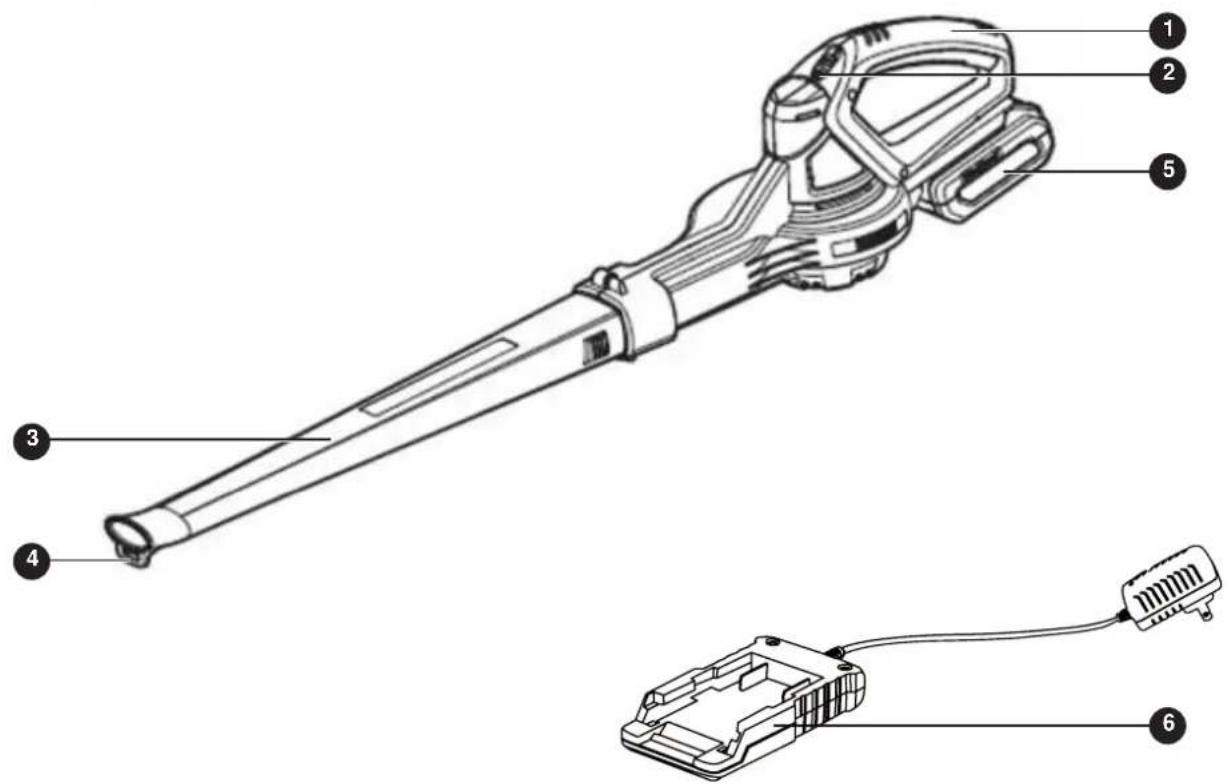
Preparing to assemble the blower
- Remove all parts of the cordless blower from the box and carefully remove all packaging.
Take care not to lose any instructions which may be affixed to the parts. These provide important information which will be required while attached the blower.
- Keep all packaging until the blower is fully assembled and has been operated successfully.
- Always recycle the packaging in accordance with local recycling schemes.
Assemble
Step 1 Blower Tube Assembly

Slide the nozzle over the blower outlet opening until the latch on the blower is inserted into the opening on the nozzle and snaps into place.
Prepare
Step 1 Check the Battery Pack Capacity
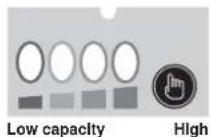
Battery LED indicators
Check the battery pack capacity pressing the button.
| LEDs on battery(Continuous lighting) | Battery Capacity |
| 4 LEDs (inc 2 green) | Fully charged |
| 3 LEDs (inc 1 green) | ≥ 50% |
| 2 LEDs (orange & green) | ≥ 25% |
| 1 LEDs (red only) | ≤ 25% Recharge required |

Step 2 Charging the Battery
natural_image
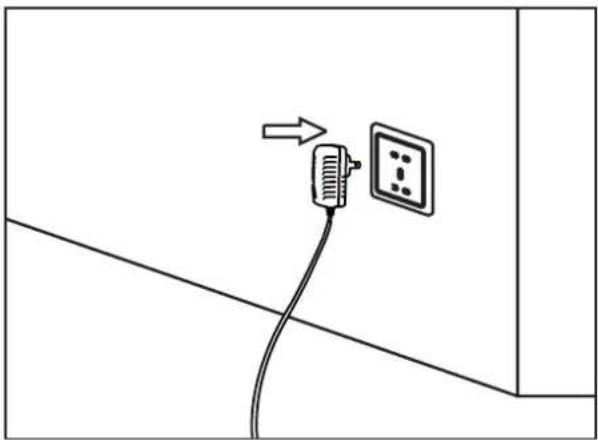
Simple line drawing of a wall-mounted electrical outlet connected to a cable, with an arrow indicating direction (no text or symbols)- Connect the cord of charger to a suitable socket.
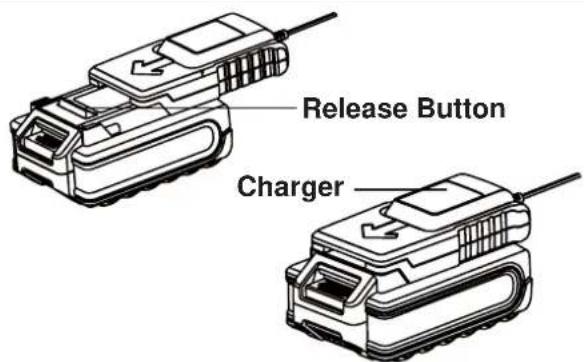

Indicator lights
- Align the battery pack to the slots on the charger and side it until it locks in place.
- Allow sufficient charging time(3-5 hours), charger indicator turn green then disconnect the charger from the power supply.
Prepare
Step 2 Charging the Battery(continued)

natural_image
Diagram showing two electronic components with a cable inserted, one being transferred to the other (no text or symbols present)- Press the release button on the battery pack and remove battery from Charger.
Step 3 Battery Assembly

Push the battery pack into the handle until the latch into place.
Operate
Step 1 On/Off Operation

To start the blower, place the power switch in the ON (I) position. To stop the blower, place the power switch in the OFF (O) position.
Step 2 Use Blower
natural_image
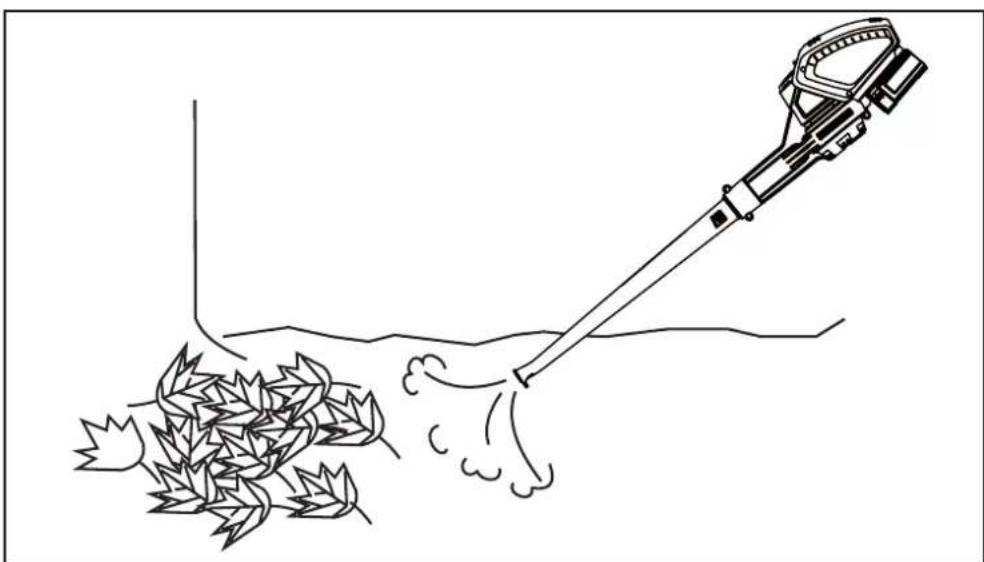
Line drawing of a manual tool spraying water onto a surface with leafy plants (no text or symbols)Blow debris or grass clippings off of driveways, sidewalks, patios, parks, parking lots, etc. Gather grass clippings, straw, or leaves into piles. Remove debris from corners, around joints, and between bricks.
Maintenance
Storage

natural_image
Line drawing of a hanging mechanical device inside a 3D cube (no text or symbols)The product is possible to hang on the wall to store, by making use of the front hanger.
Cleaning
- Remove the battery pack.
- Brush or blow dust and debris out of the air vents using compressed air or a vacuum. Keep the air vents free of obstructions, sawdust, and wood chips. Do not spray, wash, or immerse the air vents in water.
- Wipe off the housing and the plastic components using a moist, soft cloth. Do not use strong solvents or detergents on the plastic housing or plastic components. Certain household cleaners may cause damage, and may cause a shock hazard.
Battery Maintenance
- Store the battery pack fully charged.
- Recharge the battery pack whenever there is a noticeable reduction in the performance. Do not allow the battery pack to become completely discharged.
- Do not recharge a battery pack that is already fully charged. Overcharging shortens battery life.
- Once the battery pack is fully charged, remove the battery from the charger and disconnect the charger from the outlet.
- Do not store the battery pack on the tool or in the charger.
- Recharge the battery at a temperature between 5^ and 50^ . If the battery pack is hot, allow it to cool down before recharging.
Maintenance
Charger Maintenance
- Keep the charger clean and clear of debris. Do not allow foreign material into the recessed cavity or on the contacts. Wipe with a dry cloth. Do not use solvents, water, or place in wet conditions.
• Always unplug the charger when there is no battery pack in it. - Give the batteries a full charge before placing in storage. Do not recharge a fully charged battery pack. Overcharging shortens the battery life.
- Recharge the battery pack whenever there is a noticeable reduction in the performance. Never let the batteries become completely discharged.
- Keep the charger stored in normal room temperature. Do not store it in excessive heat. Do not store in direct sunlight.
- Disconnect the charger from the AC power outlet when not in use and once battery has reached a full charge.
Technical Data
Technical Data Table
| Model CLBL2406-1 | |
| Voltage 24V | --- |
| Max air volume 2.8 m | ^3 /min |
| Max air speed 53 m/s | |
| Weight 1.13kg without battery |
| Charger | |
| Model no. HYCH0132400500B | |
| Charger input 100-240VAC 50-60Hz 0.32A | |
| Charger output 24V 500 mA | --- |
| Permitted charging temperature range (for charger) | -5°C~50°C |
| Weight of charger 0.65kg | |
| Charging time Approx. 4-6h | |
| Emission sound pressure Level LpA 74 dB(A) K=3 dB(A) | |
| Sound Power Level | 96 dB(A) |
| Vibration | ≤ 2.5 m/s ^2 |
| Insulation protection of Charger | □ II |
| Battery pack | |
| Battery model | 24LB2004 |
| Rated Voltage of battery | 24V --- |
| Battery type | Lithium-Ion |
| Capacity of battery | 2.0Ah |
| Part number | |
| 231010101 | Battery pack |
| 231007009 | Charger |
Disposal and Recycling

Recycle unwanted materials instead of disposing of them as waste. All tools, hoses and packaging should be sorted, taken to the local recycling centre and disposed of in an environmentally safe way.
Recycle rather than dispose of unwanted material in landfill whenever possible. The machine must be delivered in rigid packaging to avoid damage during transportation. The packaging and the machine itself are manufactured from recyclable materials and should be disposed of accordingly.
Only dispose of electrical/electronic/battery terms in separate collection schemes, which cater for the recovery and recycling of materials contained within. Your cooperation is vital to ensure the success of these schemes and for the protection of the environment.
Recycle packaging where facilities exist.
This symbol is known as the Crossed out Wheelie Bin Symbol. When this symbols is marked on a product or battery, it means that it should not be disposed of with your general household waste. Some chemicals contained within electrical/electronic products or batteries can be harmful to health.
Troubleshooting
General Troubleshooting

Warning!
Only perform the steps described within these instructions!
All further inspection, maintenance and repair work must be performed by an authorised service center or a similarly qualified specialist if you cannot solve the problem yourself!
Always turn off the machine and remove the plug before making any adjustment.
| Problem Possible Cause Solution | ||
| Motor fails to start when power switch is turned on. | Battery is not secure. To secure the battery pack, make sure the latches on the top of the battery pack snap into place. | |
| Battery is not charged. Charge the battery pack according to the instructions included with your model. | ||
| Unit will not start. Defective power switch. If within warranty period return product to retailer of purchase. | ||
| Unit will not blow. Blocked tube. Clear the blockage. | ||
Getting Help
Customer Helpline 0345 605 2063
Guarantee
Dear Customer,
In the unlikely event that your device develops a fault, please contact our Customer service department on the telephone number shown below.
- These guarantee terms cover additional guarantee rights and do not affect your statutory warranty rights. Claims must be accompanied by proof of purchase. This must be in the form of a sales receipt or bank statement and must show that the product has been purchased within 2 years prior to the claim, from the retailer that it was originally sold to.
- Our guarantee covers problems caused by material or manufacturing defects, and will result in the repair of these defects or replacement of the device with a like for like or similar article. Please note that our devices have not been designed for use in commercial, trade or industrial applications. Consequently, the guarantee is invalidated if the equipment is used in commercial, trade or industrial applications or for other equivalent activities.
- The following are also excluded from our guarantee:
A. Faults due to accidents, customer misuse or unauthorized repairs
B. Failure due to lack of routine maintenance.
C. Failure as a result of not using the equipment in accordance with the manual and safety instructions
- The guarantee is valid for a period of 2 years starting from the purchase date of the device. Guarantee claims should be submitted before the end of the guarantee period within two weeks of the defect being noticed. No guarantee claims will be accepted after the end of the guarantee period. The original guarantee period remains applicable to the device even if repairs are carried out or parts are replaced. In such cases, the work performed or parts fitted will not result in an extension of the guarantee period, and no new guarantee will become active for the work performed or parts fitted. The also applies when an on-site service is used.

- McGregor 24V Cordless Blower
- Contents
- Safety Information....3
- In the Box....15
- Assemble 16
- Prepare....17
- Operate....19
- Maintenance 20
- Technical Data 22
- Troubleshooting....23
- Guarantee 24
- Safety Information
- Warning!
- Important - Please read these instructions fully before starting assembly
- General Safety (continued)
- Child safety
- packs.
- Battery Safety(continued)
- Service
- In the Box
- Parts
- Preparing to assemble the blower
- Assemble
- Step 1 Blower Tube Assembly
- Prepare
- Step 1 Check the Battery Pack Capacity
- Battery LED indicators
- Step 2 Charging the Battery
- Operate
- Step 1 On/Off Operation
- Step 2 Use Blower
- Maintenance
- Storage
- Cleaning
- Battery Maintenance
- Charger Maintenance
- Technical Data
- Technical Data Table
- Disposal and Recycling
- Troubleshooting
- General Troubleshooting
- Getting Help
- Guarantee
Brand : McGregor
Model : CLBL2406-1
Category : Leaf blower