KC3475 - Refrigerator Kunft - Free user manual and instructions
Find the device manual for free KC3475 Kunft in PDF.


| Product Type | Refrigerator with Freezer |
| Brand | Kunft |
| Model | KC3475 |
| Power Supply | 220-240 V ~ 50 Hz |
| Climate Class | T (16 °C – 43 °C) |
| Cooling Technology | No-Frost |
| Temperature Control | Mechanical Thermostat (Settings 1-6) |
| Defrosting | Automatic (No-Frost) |
| Interior Lighting | 15 W Bulb (Replaceable) |
| Fridge Shelves | Adjustable Glass Shelves |
| Freezer Shelves | Glass Shelves |
| Crisper Drawers | Yes (2 Crispers) |
| Door Compartments | Bottle Holder, Egg Holder |
| Ice Making | Ice Box |
| Leveling Feet | Adjustable Front Legs |
| Power Cord | Grounded Plug, 16 A Fuse |
| Cleaning | Bicarbonate of Soda Solution, Condenser Cleaning Twice a Year |
| Warranty | 2 Years (Manufacturing Defects) |
| Environmental | Recyclable Materials, WEEE Compliance |
Frequently Asked Questions - KC3475 Kunft
User questions about KC3475 Kunft
0 question about this device. Answer the ones you know or ask your own.
Ask a new question about this device
Download the instructions for your Refrigerator in PDF format for free! Find your manual KC3475 - Kunft and take your electronic device back in hand. On this page are published all the documents necessary for the use of your device. KC3475 by Kunft.
USER MANUAL KC3475 Kunft
Thank you for purchasing this product.
The quality of this appliance has been certified by several laboratory tests. This instructions manual is provided to simplify the use of the appliance as well as to guarantee a safe use.
Please read carefully the instructions and safety measures described in this manual.
We sincerely hope you will be satisfied when using your new appliance.
INDEX
1. Safety Instructions 4
1.1. Power Supply 5
1.2. Power Cord and Other Cables 5
1.3. Humidity and Water 5
1.4. Cleaning 5
1.5. General Precautions 5
2. Operating Instructions 6
2.1. Product Description 11
2.2. Using the Product 12
2.3. Maintenance 18
2.4. Troubleshooting 19
3. Post-Sale Service 22
4. Environmental Protection 23
kunft.
1. SAFETY INSTRUCTIONS
 | WARNING |  |
| RISK OF ELECTRIC SHOCKDO NOT OPEN | ||
| Warning: to avoid the risk of electric shock, do not remove the cover. The interior does not contain any parts that can be repaired by the user. Ask for assistance from qualified personnel. | ||
Important Warnings
Before using your appliance read these instructions manual carefully and keep it in a safe place as you may need to consult it in the future.
Before turning on your appliance, and to ensure a safe and correct operation, do not use if:
- It has fallen to the ground;
- You notice any evidence of damage;
- Any anomaly occurs during its operation.
To avoid hazards or deterioration of your appliance through incorrect use it is advisable to read these instructions thoroughly.
Your appliance may not be used for other purposes than the ones intended and solely for household use. Any damage resulting from using the appliance outside this scope, any incorrect use, as well as any manual modifications to the product will not be covered and automatically voids the warranty.
Assistance
In case of malfunction, take your appliance to a qualified technician for assistance.
This appliance can be used by children from the age of 8 and by people with reduced physical, sensorial or mental capabilities and/or lack of experience and knowledge if they have been given instructions on using the appliance safely and if they understand the hazards involved. Children
may not play with the appliance. Cleaning and maintenance must not be carried out by children without supervision.
These instructions are also available at www.suporteworten.pt
1.1. Power Supply
Make sure the main voltage is compatible with the appliance's. If this is not the case, please consult the Customer Support Service.
1.2. Power Cord and Other Cables
Do not tangle the cord or pull it to disconnect the appliance. Also, keep the cord away from warm surfaces.
Never use the appliance if it has a damaged cable or socket.
Take it to the Technical Support Service for replacement.
1.3. Humidity and Water
Do not use your appliance in humid places. Do not allow the appliance to become wet under any circumstances as this may be dangerous. TO AVOID FIRE HAZARD OR ELECTRIC SHOCK DO NOT EXPOSE YOUR APPLIANCE TO HUMIDITY OR WATER. Furthermore, do not place your appliance under water (e.g. for cleaning).
1.4. Cleaning
Before cleaning, be sure to switch off the appliance and remove the plug from the main power supply. Always allow the unit to cool down before cleaning.
To clean the exterior of the product use a dry soft cloth only.
1.5. General Precautions
- Please follow the instructions in the user manual which help to properly install and operate this product and enjoy its advanced features. Please keep the instructions for future reference.
- Read all instructions before using the product.
- Maintenance and service operations are only to be carried out by authorized professionals.
- Any damage caused by manual modifications to the product is not covered by the warranty.
- If this product is used for other purposes than the ones originally intended, or if it is not correctly connected, the product may become damaged and the warranty will be voided.
kunft.
2. OPERATING INSTRUCTIONS
BEFORE USING THE APPLIANCE
General warnings
WARNING: Keep ventilation openings, in the appliance enclosure or in the built-in structure, clear of obstruction.
WARNING: Do not use mechanical devices or other means to accelerate the defrosting process, other than those recommended by the manufacturer.
WARNING: Do not use electrical appliances inside the food storage compartments of the appliance, unless they are of the type recommended by the manufacturer.
WARNING: Do not damage the refrigerant circuit.
WARNING: In order to avoid any hazards resulting from the instability of the appliance, it must be fixed in accordance with the following instructions:
- If your appliance uses R600a as a refrigerant (this information will be provided on the label of the cooler) you should take care during transportation and installation to prevent the cooler elements from being damaged. R600a is an environmentally friendly and natural gas, but it is explosive. In the event of a leak due to damage of the cooler elements, move your fridge away from open flames or heat sources
and ventilate the room where the appliance is located for a few minutes.
- While carrying and positioning the fridge, do not damage the cooler gas circuit.
- Do not store explosive substances such as aerosol cans with a flammable propellant in this appliance.
- This appliance is intended to be used in household and domestic applications such as:
staff kitchen areas in shops, offices and other working environments.
farm houses and by clients in hotels, motels and other residential type environments.
bed and breakfast type environments;
catering and similar non-retail applications.
- If the socket does not match the refrigerator plug, it must be replaced by the manufacturer, a service agent or similarly qualified persons in order to avoid a hazard.
- A specially grounded plug has been connected to the power cable of your refrigerator. This plug should be used with a specially grounded socket of 16 amperes. If there is no such socket in your house, please have one installed by an authorised electrician.
- This appliance can be used by children aged from 8 years and above and persons with reduced physical, sensory or mental capabilities or
kunft.
lack of experience and knowledge if they have been given supervision or instruction concerning use of the appliance in a safe way and understand the hazards involved. Children shall not play with the appliance. Cleaning and user maintenance shall not be made by children without supervision.
- If the supply cord is damaged, it must be replaced by the manufacturer, an authorised service agent or similar qualified persons, in order to avoid a hazard.
- This appliance is not intended for use at altitudes exceeding 2000 m.
Old and out-of-order fridges or freezers
- If your old fridge has a lock, break or remove the lock before discarding it, because children may get trapped inside it and may cause an accident.
- Old fridges and freezers may contain isolation material and refrigerant with CFC or HFC. Therefore, take care not to harm environment when you are discarding your old fridges.
Please ask your municipal authority about the disposal of the WEEE reuse, recycle and recovery purposes.
Notes:
- Please read the instruction manual carefully before installing and using your appliance. We are not responsible for the damage occurred due to misuse.
- Follow all instructions on your appliance and instruction manual, and keep this manual in a safe place to resolve the problems that may occur in the future.
- This appliance is produced to be used in homes and it can only be used in domestic environments and for the specified purposes. It is not suitable for commercial or common use. Such use will cause the guarantee of the appliance to be cancelled and our company will not be responsi-
ble for losses incurred.
- This appliance is produced to be used in houses and it is only suitable for cooling / storing food. It is not suitable for commercial or common use and/or for storing substances except for food. Our company is not responsible for losses to be incurred in the contrary case.
Safety warnings
- Do not connect your Fridge Freezer to the mains electricity supply using an extension lead.
- Do not plug in damaged, torn or old plugs.
- Do not pull, bend or damage the cord.
- This appliance is designed for use by adults, do not allow children to play with the appliance or let them hang off the door.
- Never touch the power cord/plug with wet hands as this could cause a short circuit or electric shock.
- Do not place glass bottles or beverage cans in the ice-making compartment as they can burst as the contents freeze.
- Do not place explosive or flammable material in your fridge. Place drinks with high alcohol content vertically in the fridge compartment and make sure that their tops are tightly closed.
- When removing ice from the ice-making compartment, do not touch it. Ice may cause frost burns and/or cuts.
- Do not touch frozen goods with wet hands. Do not eat ice-cream or ice cubes immediately after you have taken them out of the ice-making compartment.
- Do not re-freeze frozen goods after they have melted. This may cause health issues such as food poisoning.
- Do not cover the body or top of fridge with lace. This affects the performance of your fridge.
- Secure any accessories in the fridge during transportation to prevent damage to the accessories.
Installing and operating your fridge
Before using your fridge, you should pay attention to the following points:
- The operating voltage for your fridge is 220-240 V at 50Hz.
- The mains cord of your fridge is fitted with a grounded plug. This plug should be used with a grounded receptacle that has a 16 ampere fuse minimum. If you don't have a receptacle which conforms to this, contact a qualified electrician.
kunft.
- We do not accept responsibility for any damages that occur due to ungrounded usage.
- Place your fridge where it will not be exposed to direct sunlight.
- Your appliance should be at least 50 cm away from stoves, gas ovens and heater cores, and at least 5 cm away from electrical ovens.
- Your fridge should never be used outdoors or exposed to rain.
- When your fridge is placed next to a deep freezer, there should be at least 2 cm between them to prevent humidity forming on the outer surface.
- Do not place anything on your fridge, and install your fridge in a suitable place so that at least 15 cm of free space is available above it.
- Use the adjustable front legs to make sure your appliance is level and stable. You can adjust the legs by turning them in either direction. This should be done before placing food in the fridge.
- Before using your fridge, wipe all parts with a solution of warm water and a teaspoon of sodium bicarbonate, then rinse with clean water and dry.
Place all parts in the fridge after cleaning.
- Install the plastic distance guide (the part with black vanes at the rear) by turning it 90° (as shown in the figure) to prevent the condenser from touching the wall.
- The refrigerator should be placed against a wall with a free space not exceeding 75 mm.
Before Using your Fridge
When using your fridge for the first time, or after transportation, keep it in an upright position for at least 3 hours before plugging into the mains. This allows efficient operation and prevents damage to the compressor.
Your fridge may have a smell when it is operated for the first time. This is normal and the smell will fade away when your fridge starts to cool.
TRANSPORTATION AND CHANGING OF INSTALLATION POSITION
Transportation and Changing of Installation Position
- The original packages and foamed polystyrene (PS) can be retained if required.
- During transportation, the appliance should be secured with a wide string or a strong rope. The instructions written on the corrugated box must be followed while transporting.
- Before transporting or changing the installation position, all the moving objects (ie,shelves,crisper...) should be taken out or fixed with bands in order to prevent them from getting damaged.
Carry your fridge in the upright position.
Repositioning the door
- It is not possible to change the opening direction of your refrigerator door, if the door handle on your refrigerator is installed from the front surface of the door.
- It is possible to change the opening direction of the door on models without any handles.
- If the door opening direction of your refrigerator may be changed, you should contact the nearest Authorised Service Agent to have the opening direction changed.
2.1. Product Description
THE PARTS OF THE APPLIANCE AND THE COMPARTMENTS

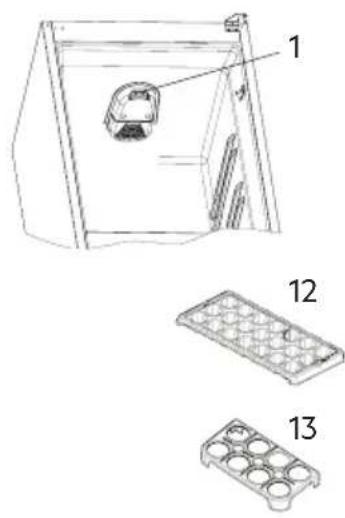
This presentation is only for information about the parts of the appliance.
Parts may vary according to the appliance model.
A) Fridge compartment
B) Freezer compartment
1) Thermostat
2) Fridge shelves
kunft.
3) Crisper cover
4) Crispers
5) Middle baskets
6) Lower basket
7) Kick plate
8) Leveling feet
9) Freezer glass shelves
10) Bottle holder
11) Upper shelf
12) Ice box
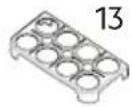
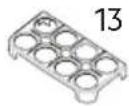
13) Egg holder
2.2. Using the Product
Information on No-Frost technology
No-frost refrigerators differ from other static refrigerators in their operating principle.
In normal fridges, the humidity entering the fridge due to opening the door and the humidity inherent in the food causes freezing in the freezer department. To defrost the frost and ice in the freezer compartment, you are periodically required to turn off the fridge, place the food that needs to be kept frozen in a separately cooled container and remove the ice gathered in the freezer department.
The situation is completely different in no-frost fridges. Dry and cold air is blown into the fridge and freezer compartments homogeneously and evenly from several points via a blower fan. Cold air dispersed homogeneously and evenly between the shelves cools all of your food equally and uniformly, thus preventing humidity and freezing.
Therefore your no-frost fridge allows you ease of use, in addition to its huge capacity and stylish appearance.
Temperature Settings
Cooling compartment
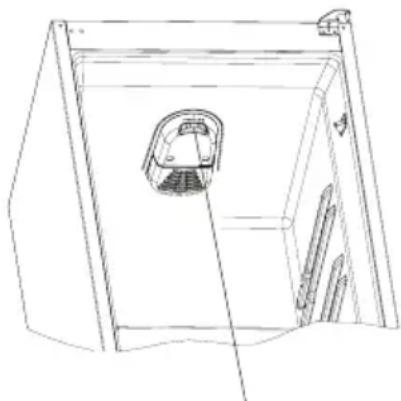
The thermostat ensures that the temperature settings in the cooling and freezing compartments of your refrigerator are controlled automatically. It may be used to set to any value ranging from 1 to 6. As you turn the thermostat setting knob from 1 to
natural_image
Line drawing of a mechanical component inside a structural frame (no text or symbols)Thermostat knob
6, the amount of cooling increases.
Cooling compartment thermostat knob:
5 - 6: For more cooling.
3 - 5: For normal use.
1 - 3: For less cooling.
Warnings about Temperature Adjustments
- It is not recommended that you operate your fridge in environments colder than 10^ C in terms of its efficiency.
- The thermostat should be set according to the frequency of door openings and the quantity of food kept inside the fridge.
- When you first switch on the appliance, you should ideally try to run it without any food in for 24 hours and not open the door. If you need to use it straight away, try not to put a large quantity of food inside.
- A 5 minute delay function is included to prevent damage to the compressor of your fridge, when you unplug it and then plug it in again to operate it, or when an energy breakdown occurs. Your fridge will start to operate normally after 5 minutes.
- Your fridge is designed to operate in the ambient temperature intervals stated in the standards, according to the climate class stated in the information label. It is not recommended that your fridge is operated in the environments which are out of the stated temperature intervals. This will reduce the cooling efficiency of the fridge.
- This appliance is designed for use at an ambient temperature within the 16°C -43°C range.
| Climate Class Ambient | |
| T 16 to 43 °C | |
| ST 16 to 38 °C | |
| N 16 to 32 °C | |
| SN 10 to 32 °C |
Cooling Compartment
To prevent humidification and odor formation, the food should be placed in the refrigerator in closed or covered containers.
- Hot foods and drinks should be cooled to room temperatures before being placed in the refrigerator.
- Please do not prop packaged food and containers against the lamp or cover of the cooling compartment.
- Fruits and vegetables may be placed directly in the vegetable holder without being wrapped separately.
kunft.
- Some recommendations have been specified below for the placement and storage of your food in the cooling compartment.
| Food | Maximum Storing time | Where to place in the fridge department |
| Vegetables and fruits | 1 week Vegetable bin | |
| Meat and fish 2 - 3 days | Wrapped in plastic foil or bags or in a meat container (on the glass shelf) | |
| Fresh cheese 3 - 4 days In the special door shelf | ||
| Butter and margarine | 1 week In the special door shelf | |
| Bottled products milk and yoghurt | Until the expiry date recommended by the producer | In the special door shelf |
| Eggs 1 month In the egg shelf | ||
| Cooked food All shelves | ||
NOTE: Potatoes, onions and garlic should not be stored in the refrigerator. Meat should never be refrozen after it is thawed if it has not been cooked before refreezing.
PLACING FOODS
The Deep Freeze Compartment
- Use the deep freeze compartment of your refrigerator for storing the frozen food for a long time and for producing ice.
- To get maximum capacity for freezer compartment, please just use glass shelves for upper and middle section. For bottom section, please use lower basket.
- Place the food you would like to freeze initially in the upper shelf of the deep freeze section in such a way that it shall not exceed the declared freezing capacity of your refrigerator. You may place your food next to the other frozen foods after they are frozen (for at least 24 hours).
- It is recommended to keep thermostat set at level 5.
- It is recommended that the food which is being newly frozen be kept separate from the already frozen food.
- Foods should be frozen in single portion sized containers.
- Do not refreeze the frozen food once it is thawed. It may pose a danger
to your health as it might cause problems like food poisoning.
- Do not place hot meals in your deep freeze until they cool down. You could cause the other food frozen beforehand in the deep freeze compartment to become spoiled.
- As you buy frozen food, make sure it was frozen under appropriate conditions and that the packaging is not torn.
- While storing frozen food, the storage conditions on the package should certainly be observed. If there are no instructions, the food has to be consumed in the shortest possible period of time.
- Frozen food has to be transported before it thaws and it should be placed in the fast freezing shelf as soon as possible. Please do not use the door shelves for fast freezing purposes.
- If the frozen food package has been humidified and it has a foul odor, the food might have previously been stored under unsuitable conditions and become spoiled. Please do not buy such food!
- The storage durations of frozen food change depending on the environmental temperatures, the frequent opening and closing of the doors, thermostat settings, food types, and the period of time that elapsed from when the food was acquired to the time it entered the freezer. Always abide by the instructions on the package and never exceed the storage duration.
| Meat and fish Preparation | Maximum Storing time (month) | |
| Steak Wrapping in a foil 6 - 8 | ||
| Lamb meat Wrapping in a foil 6 - 8 | ||
| Veal roast Wrapping in a foil 6 - 8 | ||
| Veal cubes In small pieces 6 - 8 | ||
| Lamb cubes In pieces 4 - 8 | ||
| Minced meat | In packages without using spices | 1 - 3 |
| Giblets (pieces) | In pieces | 1 - 3 |
| Bologna sausage/salami | Should be packaged even if it has membrane | |
| Chicken and turkey | Wrapping in a foil 4 - 6 | |
| Goose and Duck | Wrapping in a foil 4 - 6 | |
| Deer, Rabbit, Wild Boar | In 2.5 kg portions and as fillets | 6 - 8 |
kunft.
| Meat and fish Preparation | Maximum Storing time (month) | |
| Freshwater fishes(Salmon, Carp,Crane, Siluroidea) | After cleaning the bowels and scales of the fish, wash and dry it; and if necessary, cut off the tail and head. | 2 |
| Lean fish; bass,turbot, flounder | 4 | |
| Fatty fishes (Tunny,Mackarel, bluefish, anchovy) | 2 - 4 | |
| Shellfish Cleaned and | in bags 4 - 6 | |
| Caviar | In its package, aluminium or plastic container | 2 - 3 |
| Snails | In salty water, aluminum or plastic container | 3 |
Note: Frozen foods, when thawed, should be cooked just like fresh foods. If they are not cooked after being thawed they must NEVER be re-frozen.
| Vegetables and Fruits | Preparation Maximum Storing | time (months) |
| String beans and beans | Wash and cut into small pieces and boil in water | 10 - 13 |
| Beans Hull and wash and boil in water 12 | ||
| Cabbage Cleaned and boil in water 6 - 8 | ||
| Carrot Clean and cut to slices and boil in water | 12 | |
| Pepper Cut the stem, cut into two pieces, remove the core and boil in water | 8 - 10 | |
| Spinach Washed and boil in water 6 - 9 | ||
| Cauliflower Take the leaves apart, cut the heart into pieces, and leave it in water with a little lemon juice for a while | 10 - 12 | |
| Eggplant | Cut to pieces of 2cm after washing | 10 - 12 |
| Corn | Clean and pack with its stem or as sweet corn | 12 |
| Apple and pear | Peel and slice | 8 - 10 |
| Apricot and Peach Cut | Cut into two pieces and remove the stone | 4 - 6 |
| Strawberry and Blackberry | Wash and hull 8 - 12 | |
| Cooked fruits Adding | 10 % of sugar in the container | 12 |
| Plum, cherry, sourberry | Wash and hull the stems 8 - 12 |
| Dairy Products Preparation | Maximum Storing time (months) | Storing Conditions | |
| Packet (Homogenize) Milk | In its own packet | 2-3 | Pure Milk - In its own packet |
| Cheese-excluding white cheese | In slices 6-8 | Original package may be used for short storing period. It should be wrapped in foil for longer periods. | |
| Butter, margarine | In its package 6 | ||
| Maximum Storing time (months) | Thawing time in room temperature (hours) | Thawing time in oven (minutes) | |
| Bread 4 - 6 2 - 3 | 4-5 (220-225°C) | ||
| Biscuits | 3 - 6 | 1 - 1,5 | 5-8 (190-200°C) |
| Pastry | 1 - 3 2 - 3 | 5-10 (200-225°C) | |
| Pie | 1 - 1,5 | 3 - 4 | 5-8 (190-200 °C) |
| Phyllo dough | 2 - 3 | 1 - 1,5 | 5-8 (190-200 °C) |
| Pizza | 2 - 3 | 2 - 4 | 15-20 (200 °C) |
The taste of some spices found in cooked dishes (anise, basilica, water-cress, vinegar, assorted spices, ginger, garlic, onion, mustard, thyme, marjoram, black pepper, etc.) changes and they assume a strong taste when they are stored for a long period. Therefore, the frozen food should be added little amount of spices or the desired spice should be added after the food has been thawed.
The storage period of food is dependent on the oil used. The suitable oils are margarine, calf fat, olive oil and butter and the unsuitable oils are pea-
kunft.
nut oil and pig fat.
The food in liquid form should be frozen in plastic cups and the other food should be frozen in plastic folios or bags.
2.3. Maintenance
CLEANING AND MAINTENANCE
- Disconnect the unit from the power supply before cleaning.
- Do not clean the appliance by pouring water.
- Make sure that no water enters the lamp housing and other electrical components.
- The refrigerator should be cleaned periodically using a solution of bicarbonate of soda and lukewarm water.
- Clean the accessories separately with soap and water. Do not clean them in the dishwasher.
- Do not use abrasive products, detergents or soaps. After washing, rinse with clean water and dry carefully. When you have finished cleaning, reconnect the plug to the mains supply with dry hands.
- Clean the condenser with a broom at least twice a year. This will help you to save on energy costs and increase productivity.
THE POWER SUPPLY MUST BE DISCONNECTED.
Defrosting
- Your refrigerator performs automatic defrosting. The water formed as a result of defrosting passes through the water collection spout, flows into the vaporisation container behind your refrigerator and evaporates there.
- Make sure you have disconnected the plug of your refrigerator before cleaning the vaporisation container.
- Remove the vaporisation container from its position by removing the screws as indicated. Clean it with soapy water at specific time

natural_image
Technical line drawing of a mechanical cooling unit with coiled insulation and mounting base (no text or symbols)intervals. This will prevent odours from forming.
Replacing the Bulb
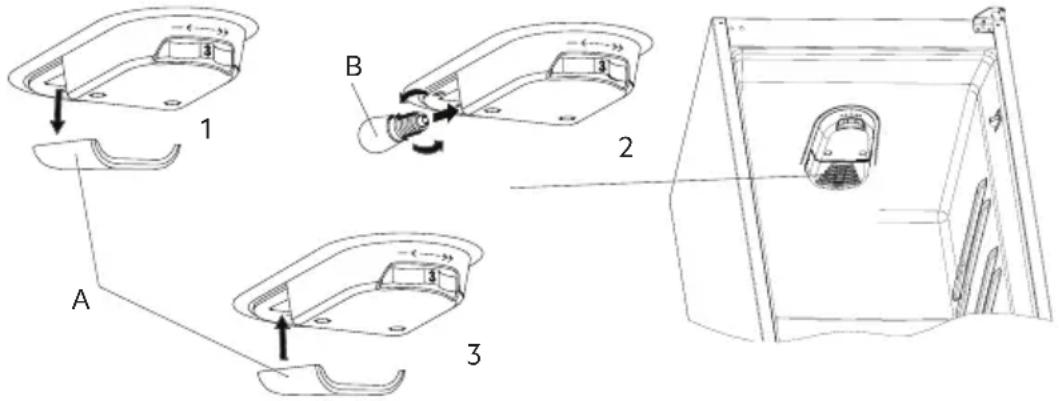
To replace the bulb in the freezer and fridge compartments;
1 - Unplug your fridge.
2 - Using a screwdriver, carefully remove the light cover from the top panel. (A)
3 - Replace with a 15 watt bulb. (B)
4 - Reinstall the light cover. (A)
5 - Wait for 5 minutes before re-plugging the fridge in and restore the thermostat to its original position.
Replacing LED Lighting
If your refrigerator has LED lighting contact the help desk as this should be changed by authorized personnel only.
2.4. Troubleshooting
BEFORE CALLING SERVICE
If your refrigerator is not working:
• Is there an electrical failure?
- Has the plug been correctly connected to the socket?
- Has there been a blow-out in the fuse or breaker of the electrical circuit to which the plug has been connected?
- Are there any faults with the socket? For this purpose, try the plug of your refrigerator by connecting it to a socket which you are sure is working.
If your refrigerator does not get cold enough:
- Is the thermostat set in the coldest position?
- Are the doors of your refrigerator opened very frequently and do they remain open for long periods of time?
- Do the doors of your refrigerator fully closed and are the door gaskets sealing correctly?
- Are any containers or dishes placed in your refrigerator contacting the back wall in such a way that they are obstructing the air circulation?
- Is your refrigerator over-filled? - Is there enough space between your refrigerator and the back and side walls?
kunft.
If the food in the Cooling/Freezing compartment is colder than necessary:
- Has a suitable temperature setting be made? (Are the thermostat knobs in the position "5"?)
- Is there too much newly placed food in the deep freeze compartment?
If there is, the compressor shall operate longer for freezing it; hence it may also possibly be cooling the food in the cooling compartment more than necessary.
If your refrigerator is operating noisily:
The compressor shall from time to time energize to ensure that the adjusted coolness level remain fixed. The noises that may be heard from the refrigerator at that time are normal as required by function.
Once the required coolness level has been achieved, the noises should automatically diminish.
If there is still noise:
- Has your refrigerator been leveled? Have the feet been adjusted and set?
• Is there anything behind your refrigerator? - Are the shelves or the plates on the shelves of your fridge vibrating? If so, then rearrange the shelves and/or plates.
- Are the goods placed in your fridge vibrating? Secure them or rearrange on the shelf.
Crackling (Ice Cracking) Noise:
- It is heard during the automatic defrosting process as the ice which has formed on the cooling coil melts and falls into the drain trough.
- Once the device has been cooled or heated (the expansions and contractions of the actual product material).
Short Cracking Noise: It is heard when the thermostat turns the compressor on and off.
Compressor Noise:
- It is a normal engine noise. This noise indicates that the compressor is operating normally.
- As the compressor is being energized, it might run a bit more noisily for a short period of time.
Bubbling and gurgling sound: This noise is emitted as the coolant fluid flows through the pipes within the system.
Water flowing sound: This is the normal sound of water flowing into the drain trough during the defrosting process.
Air blowing sound: It is the normal fan sound. This sound may be heard due to air circulation in No Frost refrigerators when the system is operating normally.
If the edges of the refrigerator cabinet contacted by the door seal are hot:
- Especially in summer months (in hot weather), there might be warming of the surfaces contacted by the seal on the refrigerator. This is normal.
If there is moisture on the inner parts of your refrigerator:
- Has the food been properly packaged and sealed? Have the containers been well dried before they were put into the refrigerator?
- Are the doors of the refrigerator opened very frequently? Once the door is opened, the humidity found in the air in the room enters the refrigerator. Especially if the humidity levels in the room are very high. The more frequently the door is opened, the faster will be the humidification.
- It is normal to have water drops formed on the back wall following the automatic defrosting process (In Static Models).
If the doors are not being properly closed:
- Are food packages preventing the doors from being closed?
- Have the door compartments, shelves and drawers properly placed?
- Are the door seals defective or torn?
- Is your refrigerator standing on level ground?
IMPORTANT NOTES:
- In case of a sudden power loss or disconnecting and reconnecting of the plug to the electrical socket, the compressor protective thermal element will be opened as the pressure of the gas in the cooling system of your refrigerator has not yet been balanced. 4 or 5 minutes later, your refrigerator will start to operate; this is normal.
- If you won't be using your refrigerator for a long time (such as on summer holidays), please disconnect the plug from the socket. Clean your refrigerator as per Part 4 of this document and leave the door open to prevent any humidification or odor formation.
- If the problem persists after you have followed all the instructions above, please consult to the nearest Authorized Service.
- The appliance you have purchased is designed for home type use and can be used only at home and for the stated purposes. It is not suitable for commercial or common use. If the consumer use the appliance in a way that does not comply with these features, we emphasize that the
kunft.
producer and the dealer shall not be responsible for any repair and failure within the guarantee period.
- The lifetime of your appliance stated and declared by the Department of the Industry (the period for retaining parts required for the proper functioning of the appliance) is 10 years.
Tips For Saving Energy
- Install the appliance in a cool, well ventilated room, but not in direct sunlight and not near a heat source (radiator, cooker.. etc). Otherwise use an insulating plate.
- Allow warm food and drinks to cool down outside the appliance.
- When thawing frozen food, place it in the refrigerator compartment. The low temperature of the frozen food will help to cool the refrigerator compartment when it is thawing. This will help to save energy. If the frozen food is put out, it results in a waste of energy.
- Cover drinks or other liquids when placing them in the appliance. Otherwise humidity increases in the appliance. Therefore, the working time gets longer. Also covering drinks and other liquids helps to preserve smell and taste.
- Try to avoid keeping the doors open for long periods or opening the doors too frequently as warm air will enter the cabinet and cause the compressor to switch on unnecessarily often.
- Keep the covers of the different temperature compartments (crisper, chiller ...etc) closed
- Door gasket must be clean and pliable. Replace gaskets if worn.
3. POST-SALE SERVICE
KUNFT has designed this appliance in order to guarantee maximum reliability. However, if a problem occurs do not attempt to open the appliance - there is a risk of electrical shock. If you are not able to solve the problem, please contact the Costumer Support Service of any Worten, Modelo or Continente store in order to be assisted. Worten Equipamentos para o Lar provides a 2-year warranty for manufacturing defects from the date of purchase of the appliance.
WARNING: Any attempt to repair the appliance without contacting the manufacturer or seller will void the warranty.
All users must be familiar with these instructions. Knowing what could go wrong can help prevent problems from occurring.
4. ENVIRONMENTAL PROTECTION
In order to protect the environment we strive to reduce the volume of packaging used, limiting it to three easily sorted materials: cardboard, paper and plastic. The appliance is manufactured using recyclable materials after disassembled by a specialized company. Please comply with local regulations concerning the recycling of all materials.

natural_image
Symbol of a trash bin crossed with a diagonal line and a circular element, above a solid black rectangle (no text or numbers present)natural_image
Technical line drawing of a mechanical component with a labeled part (1), no visible text or symbols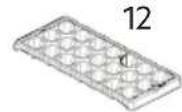
natural_image
Line drawing of a mechanical component or housing with internal components and a central component (no text or symbols)Botón de termostato
Botón termostato del compartimento refrigerador
natural_image
Technical line drawing of a mechanical or electrical enclosure with cooling fins and mounting base (no text or symbols)Sustituir las luces LED
natural_image
Symbol of a trash bin crossed with no text or numbers, representing waste sorting or recycling (no text present)| NOTAS |

Caro(a) cliente,
natural_image
Line drawing of a mechanical device with a labeled component (no text or symbols present)
natural_image
Line drawing of a mechanical device inside a container or enclosure, with no visible text or symbols.Botão do Termostato
natural_image
Technical line drawing of a refrigerated industrial machine with cooling fins and mounting base (no text or symbols)natural_image
Symbol of a recycling bin with crossed lines and a horizontal bar below (no text or numbers present)| NOTAS |
PT
kunft.

- INDEX
- Safety Instructions 4
- Operating Instructions 6
- kunft.
- SAFETY INSTRUCTIONS
- Important Warnings
- Assistance
- Power Supply
- Power Cord and Other Cables
- Humidity and Water
- Cleaning
- General Precautions
- OPERATING INSTRUCTIONS
- General warnings
- Old and out-of-order fridges or freezers
- Notes:
- Safety warnings
- Installing and operating your fridge
- Before Using your Fridge
- TRANSPORTATION AND CHANGING OF INSTALLATION POSITION
- Carry your fridge in the upright position.
- Repositioning the door
- Product Description
- THE PARTS OF THE APPLIANCE AND THE COMPARTMENTS
- Using the Product
- Information on No-Frost technology
- Temperature Settings
- Cooling compartment
- Cooling compartment thermostat knob:
- Warnings about Temperature Adjustments
- PLACING FOODS
- The Deep Freeze Compartment
- Maintenance
- CLEANING AND MAINTENANCE
- THE POWER SUPPLY MUST BE DISCONNECTED.
- Defrosting
- Replacing the Bulb
- Replacing LED Lighting
- Troubleshooting
- BEFORE CALLING SERVICE
- If your refrigerator is not working:
- If your refrigerator does not get cold enough:
- If the food in the Cooling/Freezing compartment is colder than necessary:
- If your refrigerator is operating noisily:
- If there is still noise:
- Crackling (Ice Cracking) Noise:
- Compressor Noise:
- If the edges of the refrigerator cabinet contacted by the door seal are hot:
- If there is moisture on the inner parts of your refrigerator:
- If the doors are not being properly closed:
- IMPORTANT NOTES:
- Tips For Saving Energy
- POST-SALE SERVICE
- ENVIRONMENTAL PROTECTION
- Botón termostato del compartimento refrigerador
- Sustituir las luces LED
Brand : Kunft
Model : KC3475
Category : Refrigerator