THAR (2009) - Automotive Mahindra - Free user manual and instructions
Find the device manual for free THAR (2009) Mahindra in PDF.


| Product Type | Off-road SUV |
| Model Year | 2009 |
| Engine Displacement | 2.6 L (diesel) |
| Power Output | 105 hp (78 kW) |
| Transmission | 5-speed manual |
| Drivetrain | 4-wheel drive (4x4) with low range |
| Seating Capacity | 5 passengers |
| Fuel Type | Diesel |
| Fuel Tank Capacity | 60 L |
| Dimensions (L x W x H) | 4200 mm x 1800 mm x 1900 mm |
| Wheelbase | 2700 mm |
| Curb Weight | 1800 kg |
| Maximum Towing Capacity | 1500 kg (braked) |
| Tire Size | 235/75 R16 |
| Braking System | Front disc, rear drum (ABS optional) |
| Steering | Power-assisted recirculating ball |
| Suspension | Front: leaf springs; Rear: leaf springs |
| Fuel Consumption (combined) | 10.5 L/100 km |
| Oil Capacity (engine) | 6.5 L (including filter) |
| Recommended Engine Oil | SAE 15W-40, API CI-4 or higher |
| Maintenance Interval | Every 10,000 km or 6 months |
| Spare Part Availability | Through Mahindra dealerships and authorized service centers |
Frequently Asked Questions - THAR (2009) Mahindra
User questions about THAR (2009) Mahindra
0 question about this device. Answer the ones you know or ask your own.
Ask a new question about this device
Download the instructions for your Automotive in PDF format for free! Find your manual THAR (2009) - Mahindra and take your electronic device back in hand. On this page are published all the documents necessary for the use of your device. THAR (2009) by Mahindra.
USER MANUAL THAR (2009) Mahindra
Thank you for buying a MAHINDRA vehicle. We trust it meets your expectations & will provide you with years of enjoyable motoring. This OWNER'S MANUAL has been prepared for the reference of the Owner & it is hoped that this will enable him to acquire working knowledge of MAHINDRA THAR
Contents include vehicle specifications, driving notes & maintenance schedule.
Owners are advised to get all the repairs & maintenance work, done by our Authorised Dealers. They are also advised to use genuine Mahindra Parts manufactured to original specifications.
Every reasonable effort has been made to ensure that this booklet is accurate / up to date. The procedures, specifications, dimensions referred to are subject to change in accordance with the Company's policy of constant product improvements.
Please contact nearest Authorized Service Dealer, for periodical vehicle maintenance & repairs.
Contents
Information to owner
• Manufacturer's Warranty
- Scope of Warranty
• Engine & Vehicle Specifications
Identification of Serial Numbers
- Chassis
- Engine
- Vehicle
Instrument Panel & Controls
Guidelines on Driving
- Hints to Driver
- Safety First
- Gear Changing
- Driving Techniques in 4-Wheel Drive
Guidelines on Emission
Mahindra THAR
Do's & Don'ts
Maintenance Procedure
- Vehicle Maintenance when Out of Use
- Engine
- Clutch
- Steering System
- Tyres
• Electrical Equipments
Service Data
• Recommended lubricants
- Bulb Specification
- Maintenance Schedule
Manufacturer's Warranty
MAHINDRA & MAHINDRA LTD, INTERNATIONAL OPERATIONS, MAHINDRA TOWRES, 2ND FLOOR, AUTOMOTIVE SECTOR, WORLI, MUMBAI 400089, INDIA
warrants to retail purchaser of the Motor Vehicle branded as 'MahindraTHAR' (hereinafter referred to as 'vehicle') to be free from defects in material and workmanship under normal use as instructed in the Owner's Manual & Service, under the warranty, Company's Authorised dealer will repair or replace any part thereof, including all equipments or trade limited to trade accessories (except those governed by special warranty policy stipulated by respective manufacturers, like tyres and batteries etc.) originally supplied by us subject to all other terms and conditions specified herein below found to be defective in materials or workmanship in Company / Dealer opinion within 2 years or before such vehicle has been driven 50,000 kms. from the date of delivery of the Vehicle to the retail customer (the Original Purchaser), whichever occurs earlier.
For the purpose of this warranty, the term 'Product' means and includes only new vehicles manufactured by the company and / or sold by the Company's Authorised Dealers.
This warranty is limited to the delivery to the purchaser, at the Authorised Dealer's workshop or at any other place at the discretion of the company, of the part or parts whether new or repaired, in exchange for those acknowledged by the Dealer to be defective and endorsed by the company to that effect. The parts so repaired or replaced shall also be warranted for quality and workmanship but such warranty shall be co-terminus with this warranty.
Manufacturer's Warranty
This warranty shall not apply to and Company shall in no way be liable for any vehicle which shall have been repaired outside and Authorised Company's Service Station or which has been altered or modified or built upon in any way or which has been subjected to misuse, negligence or accident.
This Warranty is in lieu of all other Warranties express or implied, and no person, agent or representative of the Company is authorised to give any other warranties on the Company's behalf or to assume for it any other liability in connection, with the vehicle.
The Company's responsibility is limited to the terms of this Warranty and it shall not be answerable for personal injuries or consequential or resulting liability, damage or loss arising from any defects.
The Company's Liability under this Warranty is dependent upon the strict observance by the Purchaser, of the following provisions :
Mahindra THAR
a) The purchaser shall take Pre-Delivery Inspection,
b) All the paid services are mandatory to be carried out as per the stipulated maintenance period Kilometers / month in service till the full completion of the warranty period at any of Mahindra authorised service outlets to avail the warranty benefits.
c) Repairs or replacements will be performed by the Authorised Dealer of the Company, subject to the reporting of the vehicle to the nearest Authorised Dealer's workshop.
d) We further reserve the right, at anytime or times, without notice, or revise, modify, discontinue or change any of the models of our vehicles or any party thereof and neither company nor the seller with incur any liability or obligations to the purchaser by reasons or any revisions, modifications, discontinuation or changes.
Manufacturer's Warranty
e) The Purchaser shall at all times in the operation of vehicle use only those brands of lubricating oils, lubricants or fuel, as recommended by the Company,
f) The judgement of the Company or its Auhtoirsed Dealers in all cases of claims shall be final and conclusive and the purchaser agrees to accept its decision on all questions as to defects and to the exchange of part of parts. The replaced parts shall be the property of the Company.
g) Claims arising from this Warranty will be recognised only if they are ascertained / confirmed by the Authorised Dealer and notified to the Company without delay, after the defect has been ascertained.
Warranty is applicable in case :
a) Repairs are required because of the following reasons.
i) The Vehicle is not operated / used as per the recommendation in the Owner's Manual or;
ii) The Vehicle is subjected to accidents, or theft or fire;
iii) The Vehicle is subjected to abnormal use such as racing, rallying or participation in any other sports competitions.
iv) Any modification are carried out.
b) Appearance Items :
Any slight imperfections in paint, chrome and trim and other decorative parts, deterioration of exterior item, trim and other decorative part due to normal exposure or use is not covered under the terms of Warranty.
Manufacturer's Warranty
c) Door and windshield glass breakage and fused bulbs are not covered under Warranty.
d) Normal Maintenance Service Replacement Items : Filters, Brake or clutch innings, wiper blades, Belts, Cables, Spring Bushings, U-Joints Cross, Water Pump Kits, Tie Rod Ends, Bell-crank Kit, Hoses, Kits and Bulbs, Spark plugs, Condenser. Please note that this list is neither exclusive nor exhaustive and the decision of the Company shall be final in this regard.
e) Property Items:
The following are propriety items and warranty is provided by the respective Manufacturers under their warranty terms. Any complaint on the following items, are to be referred to the respective manufacturers of these items / or their authorised local agents for warranty claim / repairs / replacements. In case of difficulty Company's dealer will assist purchaser to conclude the complaint satisfactorily. Their decision will be final on warranty.
Mahindra THAR
- Tyres
- Fuel Injection Pump
- Battery
f) Company makes on Warranty nor assume any liability in respect of any defect in metal or other material in any part, device of trade accessories which would not have been discovered by ordinary factory inspection.
g) Repairs required due to following reasons :
i) Due to unauthorised modifications of the vehicle which in any way affects the stability or reliability of the components of the basic vehicle.
ii) Continued usage in spite of awareness of defects of the components of the basic vehicle.
iii) Excess / heavy load beyond the carrying capacity of the vehicle affecting the basic structure of the Vehicle.
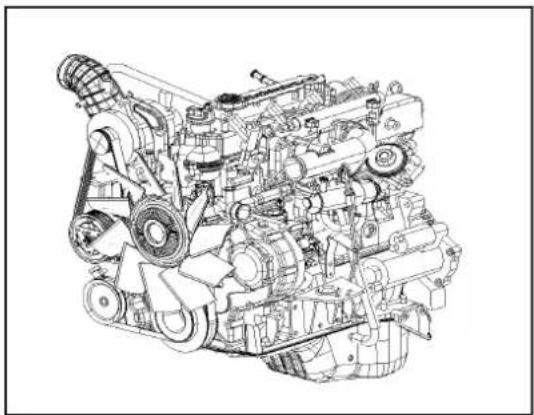
Engine Specification
natural_image
Technical line drawing of an internal combustion engine (no text or labels)NEF CRDE 2.49L ENGINE
Cylinder block - Cast Iron
Cylinder Liner - Wet replaceable
Crank Shaft - Forged Steel, 5 Bearing journal
Connecting rods - Forged Steel
Main bearings - Aluminium tin Si
Pistons - Aluminium
Cylinder Head - Cast Iron
Cam shaft - Chilled casting, 3 Bearing
Turbo Charger - Model K03-2070, Make: TEL
Valves - Overhead, Rocker Arm operated
Timing - Electronic control
Lubrication - Pressure lubrication
Cooling - By water
Bore - 94 mm
Stroke - 90 mm
Cubic capacity ( cc ) - 2498
Compression ratio - 17.8:1
Operating cycle - 4 stroke ( order 1-3-4-2 )
Cylinders - In line arrangement
Max Power - 79KW± 2 % @ 3800 RPM
Max Torque - 247Nm ± 4 %@ 1800-2200 RPM
Weight of the engine - 287 ±2 Kg with flywheel
(8)Mahindra THAR
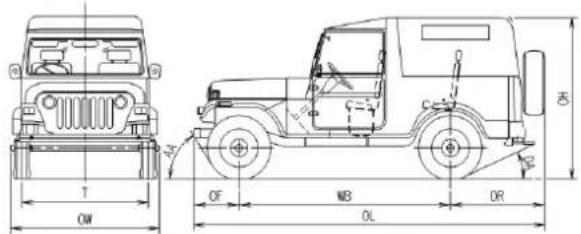
Vehicle Specification Bolero THAR
Dimensions :
text_image
T OW DF MB OL DR C 5Dimensions mm
| Wheel base (WB) 2426 | |
| Overall length (OL) 3920 | |
| Overall Height (OH) 1928 | |
| Tread - Front (T) 1445 | |
| Tread - Rear (R) 1336 | |
| Ground Clearance (G) 200 | |
| Overhang Front (OF) 580 | |
| Overhang Rear (OR) 930 | |
| Approach Angle (AA) 46 | ^0 |
| Departure Angle (DA) 30 | ^0 |
| Overall Width (OW) 1765 |
Note : Specification subject to change without prior notice.
WEIGHTS
| Kerb weight ( Kg ) | 1750 |
| GVW ( Kg ) | 2200 |
| Front Axle Capacity ( Kg ) | 1100 |
| Rear Axle capacity ( Kg ) | 1700 |
| Seating Capacity ( Nos )(Including driver) | 1+1 |
| Towing Capacity( Kg ) | 750 |
DRIVE LINE
| ITEM | |
| Transmission NGT 530R,V4 GEAR RATIO | |
| 1st 3.78 : 1 | |
| 2nd 2.09 : 1 | |
| 3rd 1.38 : 1 | |
| 4th 1.00 : 1 | |
| 5th 0.79 : 1 | |
| Reverse 3.52 : 1 | |
| Transfer Gear ratio : High | 1 : 1 |
| Low | 2.48 : 1 |
| Axle ratio | 4.30 : 1 |
Mahindra THAR
Model Features Table
| DESCRIPTION MAHINDRA BOLERO THAR | |
| ENGINE NEF CRDe 2.49 Litres | |
| TRANSMISSION NGT 530R | |
| AXLE RATIO 4.3 : 1 | |
| STEERING POWER STEERING | |
| AIR CONDITIONING SYSTEM HEATER | |
| TRANSFER CASE FOR 4WD MANUAL SHIFT ( STANDARD ) | |
(10)Mahindra THAR
Identification of Serial Numbers
text_image
MA-24kbr-4556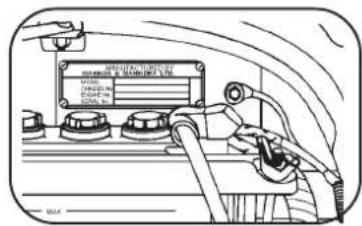
text_image
Technical diagram showing a mechanical assembly with labeled components and motion lines, likely illustrating a vehicle or industrial control system.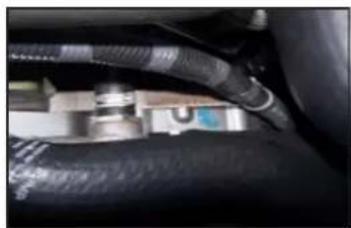
natural_image
Close-up of a car's dashboard and engine compartment showing hoses and structural components (no visible text or symbols)Mahindra THAR
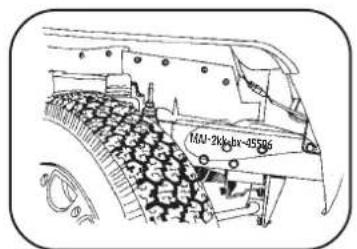
• Chassis Number / VIN Number
The Vehicle chassis number is stamped on the right side chassis member below the front fender. It is also stamped on the Name, Number & instruction plate located on the right side of the engine compartment for LHD vehicle & on left side of the engine compartment for RHD vehicle.
• Vehicle Serial Number
The vehicle serial number is stamped on the name, number & instruction plate fixed on the right side of the engine compartment for LHD vehicle & on left side of the engine compartment for RHD vehicle.
• Engine Serial Number
This number is punched on cylinder block on front pad (Near water pump).
Instruments
text_image
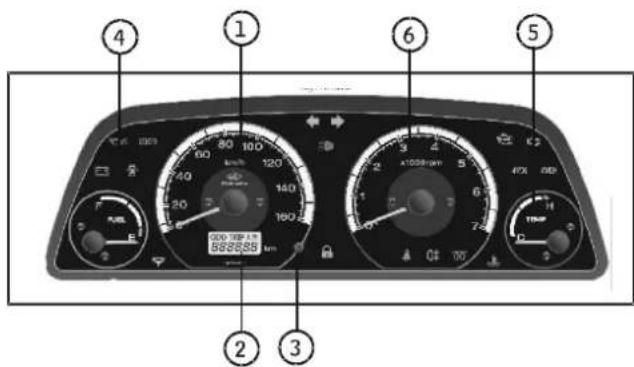
① ② ③ ④ ⑤ ⑥ A1000rpm 500 120 80 100 140 160 180 20 22 24 26 30 32 34 36 38 40 42 44 46 48 50 52 54 56 58 60 62 64 66 68 70 72 74 76 78 80 82 84 86 88 90 92 94 96 98 100INSTRUMENTSINSTRUMENTS
- Speedometer
- Odometer
3 . Tripmeter/reset knob
4 . Fuel Gauge
5 . Temperature Gauge - Tachometer
(12) Mahindra THAR
INSTRUMENTS INSTRUMENTS CLUSTER IN CLUSTER
1. Speedometer Speedometer
This indicates the speed at which the vehicle is driven in km/hr.
2. OdometerOdometer
The covered odometer by the indicates vehicle. cumulative kilometers
9. Tripmeter & Reset knobTripmeter & Reset knob
The tripmeter indicates the distance travelled during a particular trip or period. Press the reset knob to return the tripmeter indication to zero.
4. Fuel GaugeFuel Gauge
Indicates the approximate level of fuel in the tank. It indicates at E-Empty; 1/2 - Half, F - Full.
5. Temperature Gauge Temperature Gauge
It indicates the operating temperature of the engine in ^ C so that you may guard against overheating.
6. TachometerTachometer
It indicates the engine speed in thousands of revolutions per minute.
Note : Do not over rev the engine. Operating the engine at high RPM may cause severe engine damage.
Instruments
flowchart
graph TD
    A["ODO 1000"] --> B["TRIP A 1002"]
    B --> C["TRIP B 2100"]
    C --> D["Hand gesture"]
    D --> E["Hand gesture"]
    E --> F["Hand gesture"]
    F --> G["Hand gesture"]
    G --> H["Hand gesture"]
    H --> I["Hand gesture"]
    I --> J["Hand gesture"]
    J --> K["Hand gesture"]
    K --> L["Hand gesture"]
    L --> M["Hand gesture"]
    M --> N["Hand gesture"]
    N --> O["Hand gesture"]
    O --> P["Hand gesture"]
    P --> Q["Hand gesture"]
    Q --> R["Hand gesture"]
    R --> S["Hand gesture"]
    S --> T["Hand gesture"]
    T --> U["Hand gesture"]
    U --> V["Hand gesture"]
    V --> W["Hand gesture"]
    W --> X["Hand gesture"]
    X --> Y["Hand gesture"]
text_image
2 100 TRIP BTRP A About 3 secondsMahindra THAR
1. Odometer/Trlp meter selector knobOdometer/Trlp meter
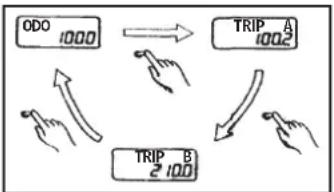
The speedometer indicates vehicle speed in km/h. The odometer records the total distance the vehicle has been driven. The trip meter can be used to measure the distance travelled on short trips or between fuel stops.
When the ignition switch is turned to 'ON' the display shows the odometer or trip meter. The display shows three types of indication; odometer, trip meter A and trip meter B.
Push the selector knob quickly to switch the indication among the three. You can use the two trip meters (A and B) independently.
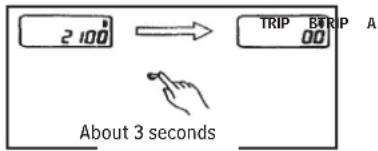
Push the selector knob for a little while (about 3 seconds) to reset the trip meter to zero.
(13)
Indications of Warning Lamps
1
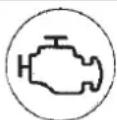
Check Engine Malfunction
2

Rear Fog Indicator
3

High Beam
4

Battery Charging Warning Light
- Check Engine Malfunction MIL : WhatchedeElagipelitMalfunction MIL : and glows continuously indicates Engine Fault (other than EMS). Arrange for checking at the nearest Mahindra Authorised Dealer immediately.
- Rear Fog Indicator : 2TheRelamFogIndicatorwhen the rear fog lamps are ON.
- Headlight High Beam Indication: 3IsHeadlightHighBeam Indication: headlights high beam is ON or when headlight flash-to-pass is used.
- Battery Charging Warning Light: 4. Battery Charging Warning Light:
switch is in the IGN position. Goes OFF as soon as the engine starts. If the light remains ON even after the engine has started, it indicates that the battery is not being charged or malfunction of alternator. In this case, park the vehicle safely at road side and check the drive belt for looseness / breakage. If drive belt is okay, switch off all unnecessary electrical equipment and contact a Mahindra Authorised Dealer immediately.
Note : Note :
Do not continue driving if the engine drive belt is broken or loose. This will cause engine overheat & poor braking.
Indications of Warning Lamps
5

Low Engine Oil Pressure Warning Light
6

Mahindra THAR
5. Low Engine Oil Pressure Warning Light: Light Engine Oil Pressure Warn
ignition switch is in the IGN position, Goes OFF as soon as the engine starts. If the light remains ON even after the engine has started, or comes ON while driving, stop immediately, and check the engine oil level. If low, add engine oil to the MAX level and check the light again. If still ON contact Mahindra Authorised Dealer Immediately.
Note : Note :
Do not run the engine with low engine oil pressure warning light ON. Otherwise it may damage the engine.
- Parking Brake ON & Low Brake Fluid Warning Lamp: T Parking Brake Of (P) parking light and, the low brake fluid warning (I) light, are illuminated as long as the parking brake is applied. If light (I) does not go off after releasing the parking brake, there may be problem with the vehicle braking system.
Warning : Warning :
Do not drive the vehicle if the (1) light is illuminated even after releasing the hand brake or if it illuminates while driving. Add brake fluid to bring the level up to the 'MAX' mark. If the problem still persists, avoid driving and have Mahindra Authorised Dealer check/correct the braking system as soon as possible.
Indications of Warning Lamps
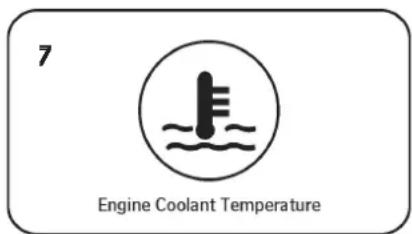
text_image
7 Engine Coolant Temperature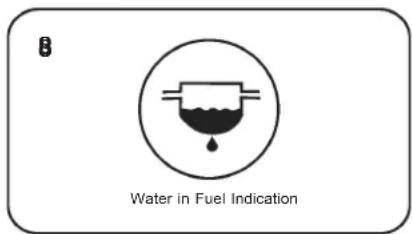
text_image
Water in Fuel Indication7. Engine Coolant Temperature Gauge : 7nd Engines to Coolant Temperature
temperature of the engine's coolant. At normal operating temperature 6 bars will be showing in LCD bar graph. High temperature LED will glow when the temperature reaches 110^ along with 7 bars blinking with buzzer. In such a condition, switch off the AC and observe. If still the problem persists, pull over the Vehicle, switch OFF ignition and contact the nearest Mahindra Authorized Dealer.
CAUTION : CAUTION :
Do not continue driving with an overheated engine. It may cause damage to the engine.
- Water in Fuel Indication: On water fuel Indication Fuel Filter reaches the maximum permissible limit, the indicator gives warning to remove water and clean the fuel filter. (Instruction for how to drain the water is given in the Self Maintenance Section (Page no.41) or contact a Mahindra Authorised Dealer.)
CAUTION : CAUTION :
Continued driving with water accumulation in the fuel filter will cause damage to the fuel pump/other fuel system components.
Instruments (With Digital Cluster)
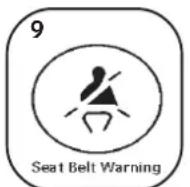

text_image
10 CHECK ECU Malfunction Indicator
text_image
11 Left Turn Indicator Right Turn I Indicator
Mahindra THAR
- Seat Belt Warning: 9, Salt Belt Warning; fasten seat belts & it will light up when the driver has not worn the seat belt with the ignition key is IGN position/when vehicle is in motion. The lamp will remain illuminated until the seat belt is fastened properly.
- Check EMS (Engine Management System) Warning Lamp10. (C): As soon as the ignition key is switched ON, the lamp lights up and goes OFF in few seconds indicating normal status. The lamp will blink / glow continuously indicating the presence of fault in EMS. The vehicle needs attention by Mahindra Authorised Dealer immediately.
- Turn Indicator : 1Flasher Indicator indicator lamps are operated or hazard switch is turned on. A sudden increase in the rate of flashing may indicate failure of one or more of the indicator bulbs.
- Glow Plug Indicator : 12hGlo'0Plugladesat that pre - heating is on. It goes out when the glow plug is warm. Do not crank the engine when the glow plug is 'ON', to avoid excessive load on battery and ensure effective starting.
Controls
1 &
Heater
Switch
Blower
Switch
3
text_image
Diagram showing a hand holding a tool with sun, battery, and HD labels on its bodySteering Lock
Heater Controls : Heater Controls :
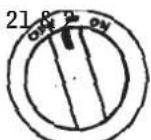
1. Heater Switch :
The knob is turned clockwise, the heater comes 'ON'.
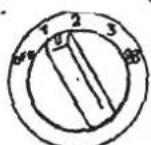
2. Blower Switch :
Air flow can be controlled in three stages - low, medium, high.
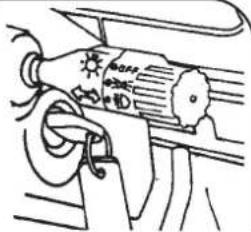
3. Lock & Unlock the Steering Wheel :
To lock :
Remove the key at the 'Lock' position. Turn the steering wheel until it is locked.
To unlock :
Turn the key to the "ACC" position while moving the steering wheel slightly.
Controls
text_image
LeverMahindra THAR
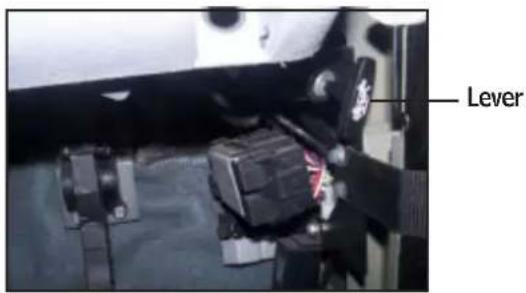
Bonnet locking / unlocking :Bonnet locking / unlocking
To Open :
Pull the release lever located below the instrument panel on right side for RHD vehicle and on left side for LHD vehicle. Then pull open the lever below the bonnet and open the bonnet.
To Close :
Just drop the bonnet gently and press it, if required.
Opening and Closing the Bonnet :
- Ensure that the vehicle is in neutral gear and set the parking brake. Pull the bonnet release lever to position B from A and release which is located under extreme LH /RH corners ( LH for LHD models & RH for RHD models ) of the instrument panel. This will release the bonnet lock and bonnet will pop up slightly.
- Stand in front of the vehicle, lift the additional lock lever located under the bonnet centre with a finger and lift the bonnet up.
Caution :
Make sure that the bonnet is fully closed and locked before driving.
Controls
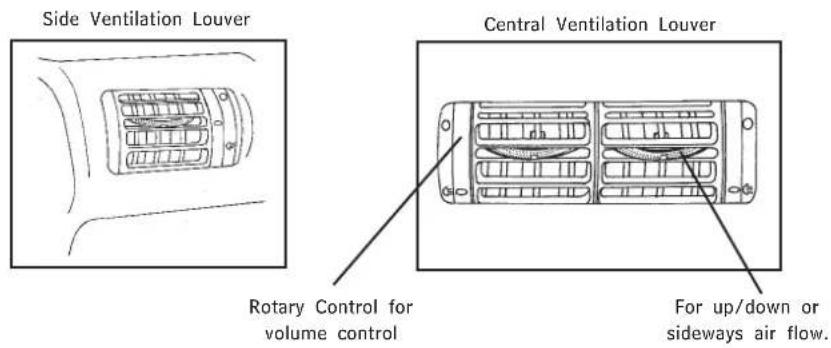
Air Ventillation Louvers
- Centre & side vents
The airflow volume can be adjusted with the rotary controls at the sides.
The air vanes can be adjusted horizontally & vertically by swivelling the vents up / down or sideways.
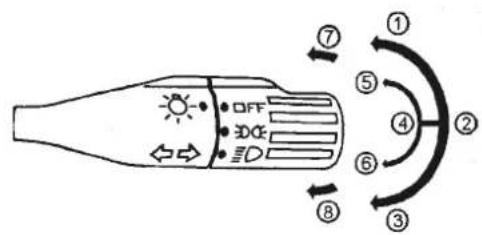
Steering Column Controls - Combination Switch
text_image
OFF DOCE DO ⑦ ⑤ ④ ② ⑥ ③ ⑧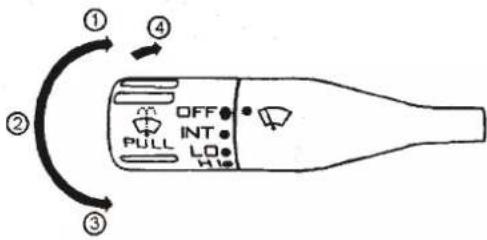
text_image
① ② ③ OFF INT LO H PULLMahindra THAR
RIGHT LEVER - LIGHTS
- All lights 'OFF'
- Front parking, Rear tail lights & Instrument lights 'ON'
- Also headlights 'ON'
- Lever down position - High beam 5. Lever up position 1 - Low beam
- Lever up position 2 - Intermittent pass
- Lever turned left - Left indicator
- Lever turned right - Right indicator
LEFT LEVER - WIPER
OFF - Off
- Intermittent Operation
- Slow speed - Low
- High speed - High
- Windshield washer operation Hazard Warning Switch
It is provided on the combination switch. When this switch is ON, all Turn signal lights will flash simultaneously to warn other road users about the hazardous condition of the vehicle.
Other Features
natural_image
Simple line drawing of a mechanical component with no text or symbols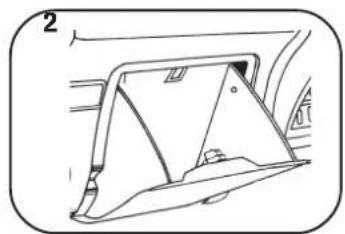
natural_image
Technical line drawing of a mechanical component or bracket (no text or symbols)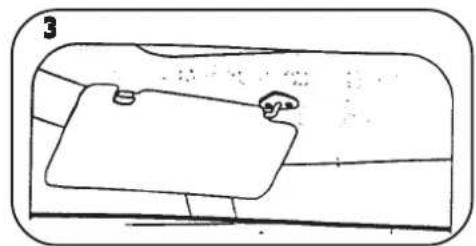
natural_image
Simple line drawing of a car interior with a rectangular frame and a hand holding a paper (no text or symbols)(22)
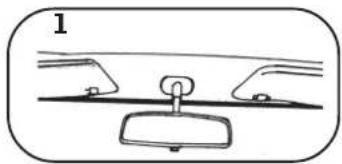
- Internal Rear View mirror : Adjust the rear view mirror, in the day position, by slightly turning or twisting it until you see the road behind clearly through the rear glass.
- Caution: Do not adjust the mirror while the vehicle is moving. If doing so may cause the driver to mishandle the vehicle and may result in loss of vehicle control.
-
Glove Box : Glove box is provided in instrument panel. It can be kept unlocked condition & can be opened by pressing the side knobs provided on lock.
-
Sun-visors: Sun-visors protect the eyes from bright light. They can be lowered, released from the retention clips and swivelled sideways towards the door.
- Smoking in the Vehicle: Avoid smoking inside the vehicle. Smoking in the vehicle spoils the ambience and the interiors of the vehicle.
- Do not toss a cigarette out of the window. It may land on somebody or may result in a fire hazard. Ashtrays have been provided both in the front and the back for disposing ash and cigarette butts.
- Take care not to drop the cigarette on the seats. It may burn holes in the upholstery.
Mahindra THAR
Guidelines on Driving
Take the following friendly notes as a guideline for driving & enjoy the journey. Every normal precautions should be observed during driving the vehicle.
Hints to driver
- Ensure oil, collant, fuel, fluid levels and carry out other daily checks (e.g. tyre pressures, bulbs)
- Make sure that hand brake lever is moved to OFF position before moving.
- After completing the "running - in" (approx. 1000 kms), operate in uniform speed as much as possible for getting improved fuel KMPL & to prevent potential failures.
- From time to time keep an eye on the gauges. If any abnormality is noticed, stop the vehicle for safety & check.
- Frequent eye on the dash board is essential to monitor the functioning of various systems.
- While parking in down gradient, engage the gear shift lever in reverse position with hand brake on.
-
Do not add cold water to the hot engine (leads to crack in engine components).
-
Be aware of the maintenance needs of the vehicle.
- Do not operate starter for more than 15 seconds at a time (give some time lapse before trying again).
- Filling the diesel tank at the end of each day will reduce water condensation in the tank.
- Avoid clutch pedal ride as it leads, to premature wear of clutch plates & consequently clutch slips.
- While washing, ensure water does not enter in to air cleaner or electrical parts.
- Familiarise with the hand tools.
- Familiarise with legal requirements governing the use of your vehicle.
Guidelines on Driving
Starting & stopping engine
Starting the Engine
- Apply the parking brake fully.
- Insert the key into the ignition switch and turn it into the IGN position.
- If the vehicle is equipped with glow plug, wait for preheat glow plug light in the instrument cluster to go OFF, during cold start. The engine may be started without waiting for preheat if the engine is warm.
Ensure the gear lever is in neutral position.
Crank the engine by turning the key to START position till the engine starts. If the engine does not start in the first attempt, wait for few seconds and try again.
- Let the engine run for at least 10 second before releasing the parking brake.
- Start driving
Warning : Release the key immediately after the engine starts; otherwise this may cause serious damage to the starter assembly.
Warning : Your vehicle is equipped with a turbo-charger. Idle the engine for a minute after starting and before
Mahindra THAR
stopping. Not doing so may lead to premature failure of the turbo-charger bearing.
Starting in Cold Weather or at High Altitudes
To start the engine in cold conditions
- Turn off all accessories to reduce drain on the battery
- Push the accelerator pedal halfway to the floor and hold it there while starting the engine
- Do not crank the engine for more than 10 seconds at a time. When the engine starts, release the accelerator pedal gradually as the engine speeds up and smoothes out
- If the engine still fails to start, push the accelerator to the floor and hold it there while you crank the engine. Do this for not more than 10 seconds at a time.
If you haven't driven the vehicle for several days, or if the climate is cold, warm up the engine by idling it for a few minutes before driving.
Stopping the Engine
Bring the vehicle to a stop and allow the engine to idle. Turn the key to OFF position.
Caution
Abruptly stopping the engine after a long journey may damage the engine. Idle the engine for some time before switching it OFF.
(24)
Guidelines on Driving
Instructions for Driving in the Running :
You can assure that your vehicle's reliability and performance by paying extra attention to how you drive during the first 1,000 km. (600 miles).
Follow these instructions during this period.
- After starting the engine, do not rev it up; Warm up gradually at idling speed.
- Do not drive over 60 km./hr.
- Avoid sudden acceleration and full throttle
- Do not drive for a long time at a single speed; Either increase or decrease the speed at intervals.
- Do not drive slowly with the transmission in high gear
- Avoid hard braking; New brakes need to be broken-in by moderate use for the first 300 km. (200 miles)
These recommendations should be followed when the engine is overhauled or when the brake pads / linings are replaced.
1,000 km.
Gear Shifting
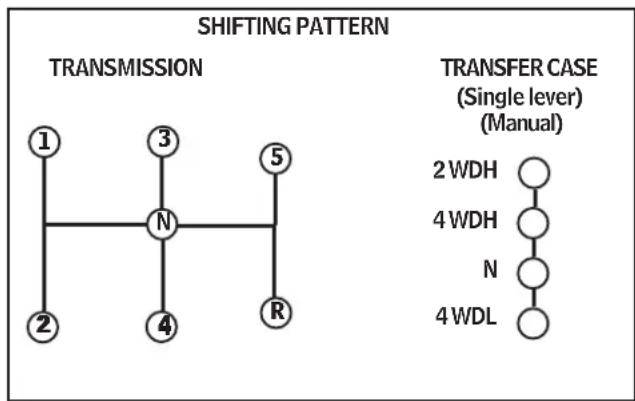
- Vehicle is fitted with 5 speed synchromesh gear box
& standard transfer case (in case of 4WD) - On these vehicle, the gear positions are marked on the gear lever knob.
5 Speed Transmission with Transfer Case
It gives a choice of 15 forward & 3 reverse power combinations with the addition of standard transfer case.
NOTE :
5 Speed transmission & Transfer case require separate lubrication for each unit as they have no cross over oil passage. At each Transmission service check, the filler plugs of transmission & transfer case should be removed & the lubricant refilled to level if necessary.
flowchart
graph TD
    A["1"] --> B["N"]
    C["2"] --> B
    D["3"] --> B
    E["4"] --> B
    F["5"] --> B
    B --> G["R"]
    style A fill:#fff,stroke:#000
    style C fill:#fff,stroke:#000
    style D fill:#fff,stroke:#000
    style E fill:#fff,stroke:#000
    style F fill:#fff,stroke:#000
    style B fill:#fff,stroke:#000
    style G fill:#fff,stroke:#000
    style H fill:#fff,stroke:#000
    style I fill:#fff,stroke:#000
    subgraph SHIFTING PATTERN
        J["TRANSMISSION"]
        K["TRANSFER CASE (Single lever) (Manual)"]
    end
Mahindra THAR
Gear Shifting - 4 WD
Mud, Snow & Sand
Shift to 4WDH range first gear when traversing without load. Do not shift into any lower gear than is necessary to maintain headway. Tyre pressure may be reduced by about 0.7 kg/cm2 (10 psi), if additional floatation is required.
Up hill
Shift to 4WDL range, second gear. Drop down to first gear only when the steepness of the ascent requires the lower gear to maintain headway.
Note
Over-reving the engine will cause the wheels to start spinning & traction will be lost.
Getting over the Hump
If the wheels start to slip with only a few feet of the ascent remaining, headway may be maintained by swinging the front wheels sharply left & right. This will provide a fresh 'bite' into the surface & will usually result in enough traction to complete the climb.
Stall
If the vehicle stalls or loses headway when climbing a steephill, make a fast shift to reverse or first gear. Do not depress the clutch. Engine compression will hold the vehicle on the hill. Do not try to back down with the clutch released Mahindra THAR
& only the brakes holding the vehicle. By shifting to reverse, it is possible to start the engine without depressing clutch. Let the vehicle move backward with the starter. When engine starts, control the downward speed with the accelerator.
Down hill
Shift to 4WD range, first gear. Do not use clutch & brakes. Now the vehicle can proceed safely down a grade slowly with all 4 wheels turning against engine compression.
Caution
- As soon as the vehicle finishes, its traversing through the hubs in sand, mud or water, clean the brake drums from foreign abrasive materials sticking to it to avoid the wearing of brake linings.
- When negotiating across slopes or hill, choose as mild an angle as possible (keep moving & make turns quickly). Do not travel diagonally across a hill unless absolutely necessary.
- For normal driving on hard surfaced roads, 4WD should not be used.
- To relieve the build up of torsional stresses, due to prolonged use of 4WD on hard surface roads, simply drive the vehicle in reverse for several feet or drive off hard surface momentary to allow tyres to slip.
Driving Tips
natural_image
Simple weather icon showing a cloud with raindrops falling (no text or symbols)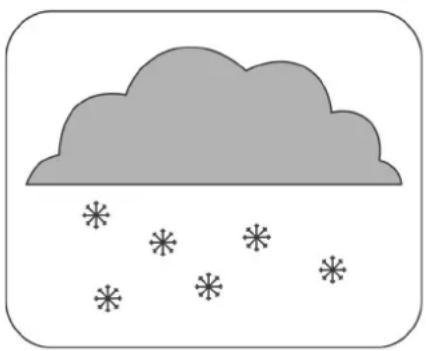
natural_image
Weather cloud illustration with snowfall symbols below (no text or labels)Mahindra THAR
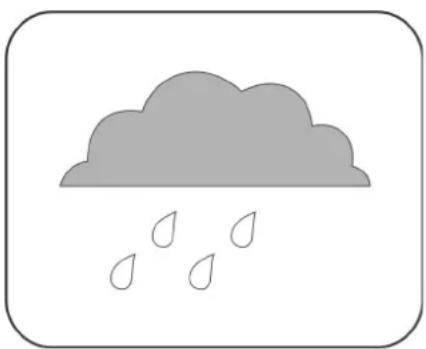
Driving in Wet Weather / Snowy Conditions
Wet weather or snow can be dangerous for driving. The following tips tell you how to avoid accidents in such conditions :
- Drive slowly : Low driving speed increases the surface of tyre tread in contact with the road and provides better traction.
- Maintain safe distances from other vehicles: Wet weather results in longer stopping (about four times that of normal stopping distance). So, it make sense to keep a good distance from other vehicles, people and objects on you path.
- Maintain tyres : Tyres do not provide adequate traction once the tread wears below two thirds of the tread depth. Check tyres regularly and replace them at appropriate intervals.. Maintain the recommended tyre pressure in the tyres at all times.
- While braking, accelerating or turning, avoid jerky and abrupt movements
Apply smooth, even pressure on all controls. Abrupt steering wheel movements or sudden, hard application of brakes can cause loss of control.
Driving Tips
natural_image
Weather icon showing a cloud with a lightning bolt below it, enclosed in a rounded rectangle (no text or symbols)
natural_image
Simple line drawing of a sunny landscape with sun, clouds, and a triangular roof (no text or symbols)Mahindra THAR
- Exercise extra caution while driving in rain after a long dry spell. After months of dry weather, the first rains bring grime to the surface of the roads, making it slippery.
- While driving on wet surfaces, downshift carefully. If the traction is low it can lock up the drive wheels for a moment and cause a skid.
Driving in Low Visibility
Being able to see clearly in all directions and being visible to other drivers is important in all weather conditions. This is more difficult in bad weather conditions. To be seen more clearly during daylight hours, turn the headlights ON. Inspect the windshield wipers and washers regularly. Keep the windshield washer reservoir full. If the windshield wiper blades start to streak the windshield or leave parts unwiped, replace them. Use the defroster to avoid fogging or windshield on the inside.
Shifting Driving ModesShifting Driving Modes
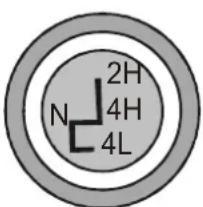
Manual Shifting of Driving Modes ( In vehicles with Manual 4WD Shift Lever)
| TO SHIFT TRANSFERTO | SHISHIFRANSFREEDURE FOR ELECTRIC T / F CASE WITH AUTO LOCK - FREE - RUNNING HUBS |
| From 2H to 4H or | 1 Drive in a straight line up to maximum speed of 30 km / hr1 Do not depress the clutch pedal1 Shift the lever quickly and smoothly to position 4H |
| From 4H to 4L orFrom 4L to 4H orFrom 2H to 4L orFrom 4L to 4H | 1 Stop the vehicle1 Depress the clutch pedal and shift the lever to the desired mode |
text_image
2H 4H 4L NCaution : Caution :
Never shift lever to 4WD position if wheels are slipping. Stop the slipping or spinning before selecting the 2wd modes.
Note : Note :
Driving the vehicle in 4WD Low / High mode on dry, hard surface may cause damage to the driveline, may cause excessive tyre wear / unnecessary noise and / or poor fuel economy, hence not recommended.
Shifting Driving ModesShifting Driving Modes
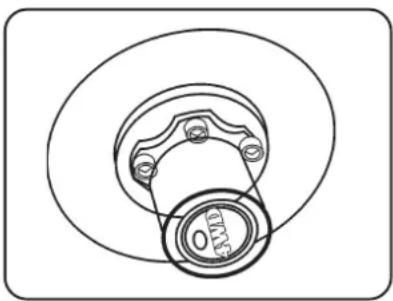
natural_image
Technical line drawing of a mechanical component with concentric rings and a central circular feature (no text or symbols)Wheel Locking Hubs (Only for 4WD vehicles) Wheel Locking Hubs (Only for Automatic Locking Hubs Automatic Locking Hubs
Note : Note :
When you shift to 4WD mode, an audible 'Click' will indicate that automatic locking hubs are engaged and therefore power is being transmitted to the front wheels. While changing back to the 2WD mode, the hubs need to be released.
To Release the locking hubs To Release the locking hubs
■ Shift from 4WD to 2WD
■ Reverse the vehicle in a straight line for about a meter
An auidble 'Click' will indicate that the hubs have been released
■ Unlocking is necessarily required to be done to isolate front axle & transfer case from transmission & from front wheels
CautionCaution
If auto - lock hubs make a clattering noise when driving in 2H mode, stop and move the vehicle about 2 to 3 meters in backward direction.
Note : Note :
When engaging & disengaging, the auto-lock hubs will make a clicking noise. It is normal.
(31)Mahin
Shifting Driving ModesShifting Driving Modes
natural_image
Empty rounded rectangle outline with no text, numbers, or symbols inside4L - (ALWD, low mode) Four wheels are driven. Use while climbing or descending steep hills, or during hard driving in sand, mud or deep snow. The '4L' position provides maximum traction. Avoid excessive speed when driving in '4L' mode.
N- (Only for manual shift transfer case models) No wheels are driven. Always keep the transfer lever out of the 'N' position. Shift the lever quickly and smoothly when moving across the 'N' position with the vehicle stopped.
Transfer Case Shifting Guidelines for 4WD (4-Wheel Transfer Case Shifting Guidelines for 4WD (4-Wheel Drive) Models. Drive) Models. Need not to stop the vehicle / depress the clutch pedal, when shifting between 2H to 4H and 4H to 2H.
2H - (2WD) in this mode only rear wheels are driven. Use when driving under conditions same as standard 2WD vehicles.
4H - (MWD, high mode) Four wheels are driven. Use when driving on roads where it is difficult to drive in 2H position (i.e. driving at normal speeds on snow covered, icy, wet, muddy or sandy road surfaces). Avoid excessive speeds, as it will cause loss of traction.
Caution : Caution :
1 Driving the vehicle in 4WD Low / High mode on dry, hard surface may cause damage to the driveline, excessive tyre, poor fuel economy & unnecessary noise, hence not recommended.
1 Never select the 4WD mode if wheels are slipping. Stop the slipping or spinning before selecting the 4WD modes.
Seat Belt
To fit the belt
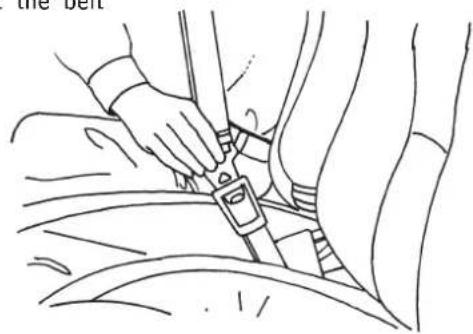
natural_image
Line drawing of a person adjusting a seatbelt, showing hands and seatbelt (no text or symbols)To unbuckle the belt
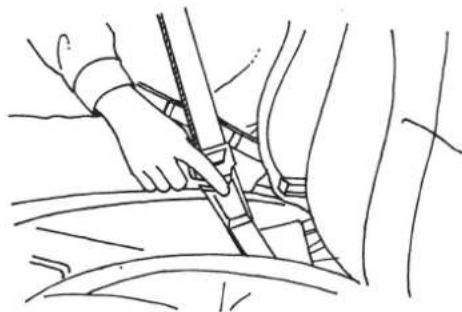
natural_image
Line drawing of a person using a tool on a curved surface (no text or symbols)Mahindra THAR
The belt allows considerable freedom of body movement to driver or passenger whilst the vehicle is going at a constant speed & in a straight line. The belt will get locked, if there is any rapid change in direction or speed.
Seat Belt Fitting
In order to fit the belt draw the tongue & webbing across the body from the outboard shoulder to the inboard hip, where the buckle is located. Push the tongue into the buckle slot until a firm click is heard. Check the buckle for security by tugging sharply on the webbing. To unbuckle, simply press the release button on the buckle.
The retractor mechanism ensures that the correct tension & slack in the webbing is preserved. Slack belt webbing vastly increase the chances of injury during an accident.
Care must be taken to avoid the use of polishes, acids, oils & chemicals on webbing & if contaminated or damaged or after a severe vehicle impact, seat belts must be renewed. For cleaning, soap & water can be used.
Emission Control - Precautions
As the owner of the vehicle you are responsible for maintaining the vehicle in good condition & low emissions from the vehicle.
Here are few tips for lower emissions from your vehicle
- Maintain the recommended tyre pressure. Get the tyre pressure checked periodically.
- Clean/replace the air filter at regular intervals.
- Clean the fuel injector nozzles at recommended intervals.
- Change the engine oil/oil filters at recommended intervals.
- In case your vehicle is emitting excess smoke (Blue/white / black smoke) get your vehicle checked at authorized service station.
-
Allow your engine to warm up after a cold start.
-
Drive the vehicle in correct gears. Avoid sudden accelerations & decelerations.
- Stop the engine if the engine has to idle for longer duration.
- Avoid clutch riding & check the clutch play.
- Get your vehicle emission checked periodically.
- Do not use adulterated fuel.
- Use genuine parts & recommended oils & lubes.
- Check/adjust the belt tension periodically.
- Get the tappet clearances checked as recommended (as indicated in maintenance schedule)
- Do not tamper with the FIP Settings & idling rpm.
These tips would not only reduce your vehicle emissions but also gives you better performance.
Diesel Catalytic Converter
A catalytic converter is an exhaust gas after-treatment device fitted in the exhaust system of your vehicle to reduce pollution. It converts harmful unburned hydrocarbons and carbon monoxide into harmless carbon dioxide and water vapor.
Care & Maintenance to minimize the possibility of the damage to catalytic converter
- Maintain the engine in the proper operating conditions, as per owner's manual.
- Consult a M & M Authorised Dealer at the earliest in the event of irregular engine running following a cold start, misfiring, a significant loss of vehicle derivability or other unusual malfunctions which may indicate a fault in the ignition system.
- If necessary, drive the vehicle to the nearest outlet for a short time at low engine speed.
Caution
- Avoid use of high sulphur diesel. Use only diesel with sulphur content below 500 ppm.
- Avoid frequent cold starts.
- Avoid starting the engine by pushing or towing the vehicle, or by coasting down a hill.
- Do not switch off the engine or interrupt the ignition when the gearbox is engaged and the vehicle is in motion.
- Do not idle the vehicle for prolonged periods if idling seems rough or any other malfunctions.
- Do not run out the fuel tank totally.
- Do not switch off and on ignition while the vehicle coasts down.
- Do not park or operate the vehicle near combustible materials like dry grass & leaves. This may lead to fire hazards.
- Avoid driving on water flooded roads
- Do not operate the engine in confined areas like garages.
- Check for exhaust system leaks and any damages:
- Each time the vehicle is raised for an oil change.
- Whenever a change is noticed in the noise of the exhaust system.
- Whenever the tail pipe end of the exhaust system is found rusty.
Do's & Dont 's
Do's
- Use recommended lubricants only. Replace oil in engine, gear box, rear axle, steering box, master cylinder & oil bath air cleaner periodically as per schedule.
- Use only genuine oil filter & fuel filter elements.
- In order to obtain trouble free & enhanced engine life, clean air filter element regularly. Replace filter element when service indicator shows red band even after cleaning the filter element.
- Ensure periodic servicing as per maintenance schedule.
- Insist on use of genuine Mahindra spare parts for all replacement.
- Allow the starter pinion to come rest before again attempting to start the engine in order to avoid pinion & flywheel ring gear damage.
- Replace thermostat in the event of failure & ensure fitment of pressurized radiator cap to get better engine life.
- Maintain correct tyre pressures as specified in chart. Before moving the vehicle release the parking brake.
-
Maintain electrolyte level in the battery (using distilled water). Keep battery terminals clean & cable joints tight. Apply Vaseline petroleum jelly on terminals.
-
Disconnect alternator/battery electrical connection while carrying out welding work on the vehicle. Observe correct polarity when connecting battery terminals.
Dont's
- Do not run the vehicle with leaky air pipes, fuel pipes & water hoses.
- Do not run the vehicle without a battery in its electrical circuit as the life of alternator will be reduced.
- Do not open degassing tank cap when engine is hot. Never add cold water when engine is hot as this may lead to cylinder head/block crack.
- Do not keep the engine running when the pointer of the temperature guage is in red zone.
- Do not use clutch pedal as a foot rest. It will cause premature wear of clutch plate, release bearing, clutch finger & also clutch, which results in less KMPL.
- Number of passengers carried should be within approved seating capacity.
- Do not race or rev the engine especially when starting, This is destructive to engine & will not heat the engine quickly.
Maintenance Procedure
Vehicle maintenance when out of use
Engine - Start & run the Engine a few minutes once in a week. Drive the vehicle a little forward & backward once a fortnight.
Cooling system - Add coolant and water in the ratio indicated in section 'Radiator'.
Electrical - Disconnect the terminals of the battery & store it separately. Smear petroleum jelly on the terminals & recharge once in a month.
Clutch - Press the clutch pedal to the floor board in fully depressed position.
Brakes - Operate the brake pedal a few times once a week. Check & top-up brake fluid in master cylinder once in a month.
Tyres - Maintain the normal tyre pressure & check it once in a week. Support the vehicle so that load on the tyres is relieved & correct the tyre pressure before the vehicle stands on the wheel.
Body - Coat rust-proof to all bright metal. Cover up with upholstery.
Engine
Topping up the Engine Oil
The engine oil level should be maintained at little below high mark on the dipstick & must never be allowed to fall below the low. While checking the oil level, park the vehicle on a level ground with the engine shut down. Withdraw the dipstick from its holder, clean & refit. Withdraw again & note the level. Top-up as required with the clean correct grade of engine oil. Always drain & fill the oil when engine is warm.
Note - Start the engine, run at a fast idling speed for about a minute. Stop the engine & after allowing some time oil level to stabilize, recheck again & top-up if necessary.
- Do not mix different brands or grades of oil.
- Lubricating oil filter should be replaced at every oil change.
Use oil grade as per lubrication chart for ambient up to -5^ C. At lower temperature, use oil of lower viscosity grade.
Air Filter, Radiator & Fuel Injection System
natural_image
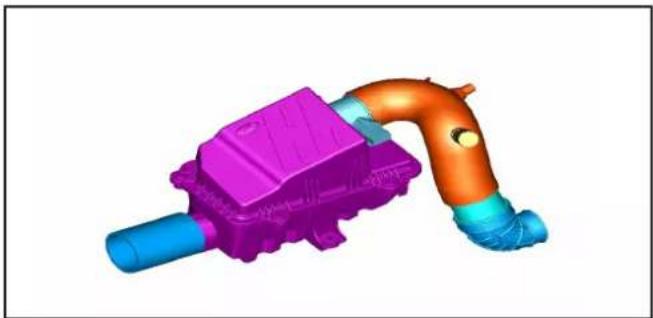
3D rendered mechanical component with colored sections (no text or symbols visible)The air filter is located on the Right Hand (RH) side of the engine compartment. A dry type air filter is used. Air filter service indicator (SI) is fitted on the hose between the air filter and engine. This service indicator has to be checked at every 5000 km. to confirm that red band does not appear on service indicator. Whenever red band appears, it means that the air filter element is choked up and needs servicing. Clogged air filter leads to higher intake resistance and can reduce the driveability of the vehicle.
Servicing Instructions :
- It is advised to service air filter through Mahindra Dealer/Service Centre.
- Periodically clean the air filter element : Every 10,000 kms. (or 6 months) on paved road. OR Every 5,000 kms. (or 3 months) on dusty road. OR When service indicator shows red band.
- Replace element: When service indicator shows red band even after cleaning the filter element. OR Every 40,000 kms. (or 2 years) OR If holes or tears are found in the element.
Caution :
Do not operate the vehicle without air filter element.
Air Filter, Radiator & Fuel Injection System
Radiator
- Use always clean water.
- Flush the radiator once in a year.
- Never pour cold water into warm engine.
- Keep the radiator area free of insects & other things that restrict air circulation.
Note :
The cooling system should be filled with Blend of clean water with Ethylene Glycol based coolant. The coolant also provides anticorrosion protection if concentration 15% and above.
The recommended coolants are : BASF Glycentine or Total Finolf - Glacelf Supra at a ratio of water : coolant of 70:30, 50:50, 30:70. For ambient temperature upto -10^ , -11^ to -20^ , -20^ to -35^ respectively. Use of alcohol as an anti-freeze is not recommended. Use the anti-freeze when the operating temperature falls below 0^ .
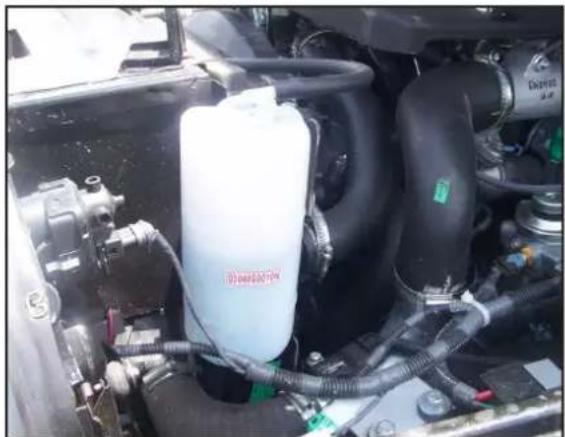
Recovery Tank :
natural_image
Engine bay with white plastic tank and black engine components (no visible text or symbols)Caution :
Never remove the Radiator Tank cap, when the engine is hot. (If applicable)
Air Filter, Radiator & Fuel Injection System
Fuel Injection System : Fuel Injection System :
Fuel Injection Pump (FIP) is of a rotary type.
Make : Bosch
- FIP is made out of finely machined, close tolerance components, & is lubricated by the diesel fuel used in the engine & not by a separate oil reservoir. It is therefore of utmost importance that water & dirt be kept out of the FIP.
- FIP requires neither maintenance nor lubrication check the tightness of the piping to avoid any air intake which would cause excess consumption.
- It is recommended that FIP & injector should always be given to the authorised dealer for service.
- Check the FIP when frequent starting difficulties are encountered & noise or black smoke is coming from the exhaust.
Caution
- Since the fuel is the lubricant do not crank the engine for extended periods with fuel lines disconnected or empty fuel tank.
Fuel Filter : Fuel Filter :
Draining water from fuel filter-
The fuel filter warning light on indicates that the water from the fuel filter to be removed immediately.
- Place a small open container / tray under the drain plug cum sensor to collect the water.
- Turn the drain plug cum sensor about 2 to 2.5 turns in the anti clockwise direction.
- Operate the priming pump until fuel begins to flow clean and clear.
- After draining, retighten the drain plug cum sensor. Do not use any tool. Use the priming pump to inspect for leaks.
Air Filter, Radiator & Fuel Injection System
Fuel Tank
- Clean the tank at regular intervals once in a year.
- Ensure that no foreign matter or water enters during filling the fuel tank.
- Ensure that breather system is not clogged.
Tips for Improving Fuel Efficiency
- Maintain correct tyre pressure; Under-inflated tyres result in increased running resistance, leading to higher fuel consumption.
- Maintain proper front-wheel alignment; Improper front-wheel alignment causes tyres to wear out faster and exerts more load on the engine, leading to higher fuel consumption.
- Avoid driving with excess weight; Excess weight increases load on the engine, leading to higher fuel consumption
- Avoid excessive engine idling; It is advisable to switch the engine OFF during prolonged waits at traffic signals, railway crossings etc.
-
Avoid fast start and unnecessary stops; Avoid sudden acceleration or deceleration
-
Maintain a clean air-cleaner; Clogged air-cleaner decreases the amount of air supplied to the engine, resulting in incomplete combustion and thus, wastage of fuel.
- Anticipate traffic conditions; Avoid traffic congestions whenever and wherever possible. This would lead to considerable fuel savings.
- Follow proper driving practices; Do not rest your foot on the clutch or brake pedals unnecessarily; It doesn't allow transmission of full engine power to the wheels and causes premature wear and results in poor fuel economy.
- Follow the recommended maintenance schedule; Get your vehicle checked and maintained periodically by the Mahindra Authorised Dealer.
- Use the air-conditioner only when necessary.
- Use only recommended grade fuel
- Use only recommended grade oil
- Use only recommended coolant
Steering System
- Avoid looseness in the steering system. Adjust various connections including the front wheel bearings.
- Check the wheel alignment by the use of wheel alignment device (available in most equipped shops).
- Correct Toe-in for front wheels (for 4WD)- 8' to 12' per wheel. Maintain correct alignment.
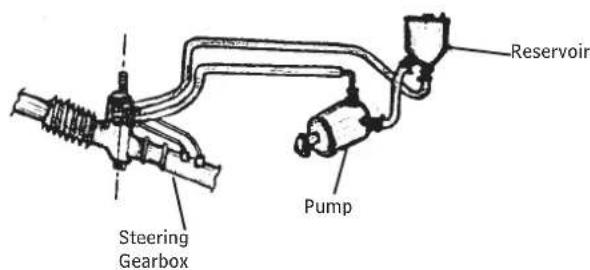
Power steering system
Power steering with universal joint, reduces effort during steering vehicle.
text_image
Steering Gearbox Pump Reservoir(42)
The procedure for filling oil in reservoir is as follows :
- Fill the reservoir nearly full. Crank the engine for 10 seconds without, if possible allowing it to start.
- Check for any leakage in the system.
- Start the engine & steer the vehicle from full left to full right turn (3-4 times). Add fluid if necessary to maintain the level up to the filter top. Check & refill reservoir up to H mark on dipstick.
- System is self bleeded & does not require any bleeding operation.
- Now the system is ready for driving.
Mahindra THAR
Routine Maintenance
- Always use recommended oil from closed container. Any dirty oil poured in the system will result in damage to pump/gear.
- Do not start the engine without oil in the Power steering system. This will result in serious damage to the pump.
- Regularly check fluid & fluid level in the power steering reservoir.
- Remove cause of steering column misalignment.
- Investigate & correct any external leaks, no matter how minor.
- Do not attempt to weld any broken steering gear component. Use genuine component of steering only.
- Keep the tyres inflated to correct pressure.
Tyres
- Inflate the tyres as per chart.
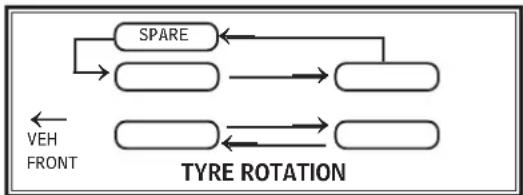
- For getting a good tyre mileage, it is suggested to rotate the tyres for every 10000 Kms. Check the tyre for alignment.
| FRONT REAR (LADEN/UNLADEN) | TYRE SIZE (LADEN/UNLADEN) | |
| 2.4 Kg./cm ^2 | 2.4 Kg./cm ^2 | P235 70R 16 Radial Tyre |
flowchart
graph TD
    A["SPARE"] --> B["TOLE"]
    C["TOLE"] --> D["TOLE"]
    E["TOLE"] --> F["TOLE"]
    G["VEH FRONT"] --> A
    G --> C
    H["TYRE ROTATION"] --> A
    H --> C
    H --> D
Wheel Bearing
- Use always recommended wheel bearing grease.
- Lubricate the rear wheel bearings sparingly.
- Don't mix lithium base grease with sodium base grease as it is harmful to oil seals.
Recommended Lubrication Chart
API CH4
80W 90
Mahindra THAR
Maintenance Schedule
Mahindra THAR
(45)
Maintenance Schedule
Maintenance Schedule
Mahindra THAR
Maintenance Schedule
Maintenance Schedule
Mahindra THAR
(49)
Record of Services Performed
| Recommended Odometer Repair Services at KM Date Reading KM | Servicing dealer's Order No. Signature with stamp | |||
| PDI | ||||
| 5000 | ||||
| 10000 | ||||
| 20000 | ||||
| 30000 | ||||
| 40000 | ||||
| 50000 | ||||
Record of Services Performed
| Recommended Odometer Repair Services at KM Date Reading KM | Servicing dealer's Order No. Signature with stamp | |||
| 60000 | ||||
| 70000 | ||||
| 80000 | ||||
| 90000 | ||||
| 100000 | ||||
Spare Wheel Mounting
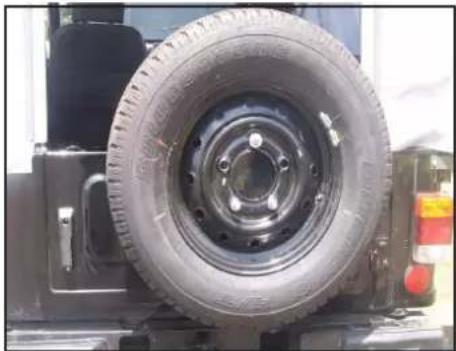
SPARE WHEEL MOUNTING :
It is provided on the tail gate.
Tighten the spare wheel hanger as shown in the figure. To loosen, rotate in the opposite direction & remove the wheel from the hanger bracket.
natural_image
Close-up of a vehicle tire mounted on a vehicle (no visible text or symbols)Jack Position
text_image
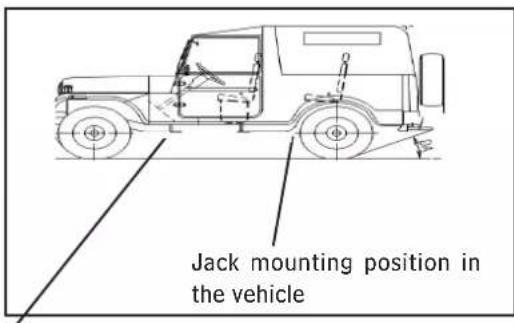
Jack mounting position in the vehicle- Jacking position for front wheels
- Jacking position for rear wheels is below rear axle
- Jack is kept in tool box below the front LH Seat.
Mahindra THAR
Safety
Drinking and Driving : Don't go together
Driving, anytime, anywhere, under the influence of alcohol or drugs is dangerous to you, to your family, the passengers and to everyone else on the road. Alcohol or drugs reduce your awareness and lead to accidents.
Driving Long Distances
When you are driving over long distances, follow these tips so that you have a safe journey :
- Never drive more than 150 kms at a time. Switch drivers even if you are not tired.
- Lack of sleep or fatigue may impact your ability to drive safely
- Exercise your eyes by shifting the focus of your eyes to different parts of the road.
- Use stimulating beverages such as coffee or tea.
- Relax and stay calm.
Use of Seat Belts
- In the interest of safety to the driver and passengers of all four wheelers, wearing of seat belts at all times during the driving is essential.
-
Using a hand phone while driving constitutes nuisance or danger to the public and hence must be avoided.
-
Do not remove the filler cap from the radiator/degassing tank.
- Keep engine and surrounding area clean and free from fuel and oil leakages to avoid possible fire risk.
- Play some additional support with the jack for adequate strength.
- Park the vehicle on a level and hard ground when lifting vehicle.
- Ensure stopper is used to arrest the movement of the vehicle.
- Slow down the vehicle during taking a turn and shifting the gears.
- Always keep the wind screen clean in order to have a clear visibility.
- Avoid applying brakes violently in slippery roads.
- When the brakes are wet apply brakes slightly in a slow speed till brake performance becomes normal.