
UN49K5300AG - TV SAMSUNG - Free user manual and instructions
Find the device manual for free UN49K5300AG SAMSUNG in PDF.


User questions about UN49K5300AG SAMSUNG
0 question about this device. Answer the ones you know or ask your own.
Ask a new question about this device
Download the instructions for your TV in PDF format for free! Find your manual UN49K5300AG - SAMSUNG and take your electronic device back in hand. On this page are published all the documents necessary for the use of your device. UN49K5300AG by SAMSUNG.
USER MANUAL UN49K5300AG SAMSUNG
Thank you for purchasing this Samsung product.
To receive more complete service, please register your product at
www.samsung.com/register
Model____ Serial No.____
Contents
Quick Guides
Using Smart Hub
1 Using Smart Hub
Connections
Connecting an Antenna
Connecting to the Internet
2 Connecting Internet network
Troubleshooting Internet Connectivity Issues
4 Troubleshooting wired Internet connectivity issues
5 Troubleshooting wireless Internet connectivity issues
Connecting Video Devices
6 Connecting with an HDMI cable
6 Connecting with a component cable (Only the models with COMPONENT IN / AV IN)
7 Connecting with a composite cable (only the models with COMPONENT IN / AV IN port)
Audio Input and Output Connections
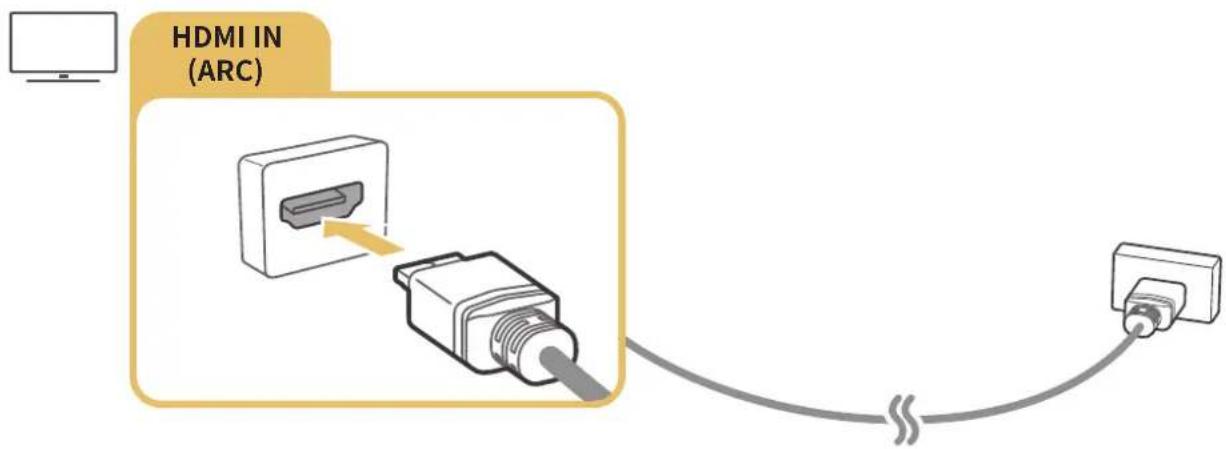
8 Connecting with an HDMI (ARC) cable
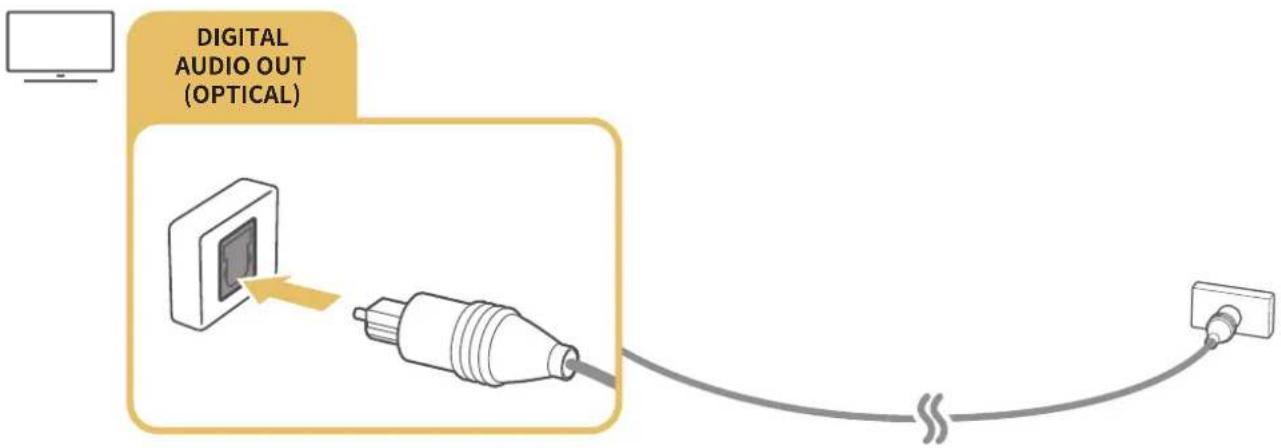
8 Connecting with a digital audio (optical) cable
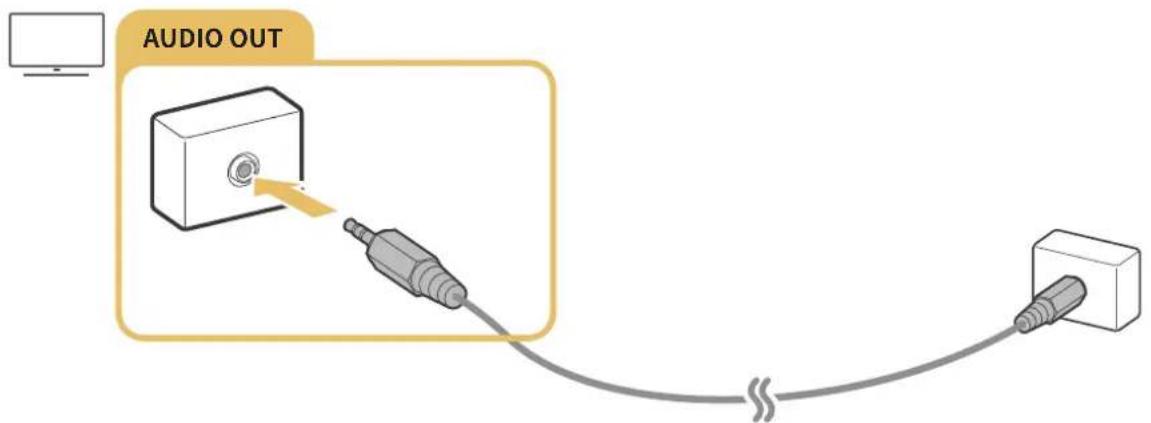
8 Connecting with a stereo audio cable
9 Connecting through wireless network
9 Connecting Bluetooth Devices
Connecting a Computer
10 Connecting through the HDMI port — Screen sharing
10 Connecting through the Smart View app — Content sharing
Connecting a Mobile Device
11 Using Smart View (Screen Mirroring) or contents sharing
11 Connecting mobile devices without a wireless router (Wi-Fi Direct)
11 Connecting a mobile device via Smart View App
Switching between external devices connected to the TV
12 Changing the input signal
12 Editing external devices
12 Using additional functions
Connection Notes
13 Connection notes for HDMI
14 Connection notes for audio devices
14 Connection notes for computers
14 Connection notes for mobile devices
Remote Control and Peripherals
About the Samsung Smart Remote
Controlling the TV with a Keyboard or Gamepad
17 Connecting a USB keyboard
17 Connecting a Bluetooth keyboard and gamepad
17 Using the keyboard
Entering Text using the On-Screen QWERTY Keyboard
18 Using additional functions
Smart Features
Smart Hub
20 Displaying Home Screen
21 Launching Smart Hub automatically
21 Launching the last used app automatically
21 Testing Smart Hub connections
21 Resetting Smart Hub
Using a Samsung account
22 Creating a Samsung account
23 Signing in to a Samsung account
Using the GAMES Service
25 Installing and running a game
25 Managing purchased or installed games
26 Rating games
Using the APPS Service
27 Installing and running an app
28 Managing purchased or installed apps
29 Rating apps
Using the e-Manual
30 Launching the e-Manual
30 Using the buttons in the e-Manual
Playing pictures/video/music
32 Playing media content
32 Functions on the media content list screen
TV Viewing
Viewing Digital Broadcast Information at a Glance
33 Using the guide
34 Changing the broadcast signal
34 Checking digital channel signal info and strength
Recording Programs
34 Recording programs
35 Managing the schedule recording list
35 Viewing recorded programs
Setting Up a Schedule Viewing
36 Setting up a schedule viewing for a channel
36 Editing a schedule viewing
Using Timeshift
Using the Channel List
Editing channels
39 Re-registering and deleting a channel
40 Editing registered channels
40 Using Program Rating Lock
Creating a Personal Favorites List
41 Registering channels as favorites
41 Viewing and selecting channels on Favorites lists only
Editing a Favorites List
42 Removing channels from a favorites list
42 Rearranging a favorites list
42 Renaming a favorites list
Making Sports Programs More Realistic with Soccer Mode
43 Extracting highlights automatically
44 Viewing a game recorded in soccer mode
TV-Viewing Support Functions
44 Scanning for available channels
44 Selecting the broadcasting audio option
44 Configuring advanced broadcasting settings
45 Scanning all digital channels
45 Selecting the broadcast audio language
45 Fine-tuning analog broadcasts
45 Choosing an appropriate video input color
Picture and Sound
Adjusting the Picture Quality
46 Choosing a picture mode
46 Configuring advanced picture settings
Picture Support Functions
48 Viewing a picture-in-picture (PIP)
48 Changing the picture size
Adjusting the Sound Quality
49 Choosing a sound mode
49 Configuring advanced sound settings
Using the Sound Support Functions
50 Selecting speakers
51 Listening to the TV through Bluetooth devices
52 Listening to the TV through a Multiroom speaker
System and Support
Setting the Time and Using the Timer
53 Setting the current time
54 Using the timers
Using the Screen Burn Protection and Energy Saving Functions
55 Preventing screen burn
55 Reducing the energy consumption of the TV
Using Anynet+ (HDMI-CEC)
56 Connecting an external device through Anynet+ and using their menus
Updating the TV's Software
57 Updating the TV's software to the latest version
57 Updating the TV automatically
Protecting the TV from Hacking and Malicious Code
58 Checking the TV and connected storage for malicious code
58 Scanning viruses in real time
58 Checking a scanned list
Using Other Functions
59 Running the accessibility functions
59 Enabling voice guides for the visually impaired
59 Showing Subtitle
60 Subtitle Options
60 Showing captions
61 Adjusting the menu transparency
61 White text on black background (high contrast)
61 Enlarging the font (for the visually impaired)
61 Learning about the remote control (for the visually impaired)
62 Listening to the TV through Bluetooth devices (for the hearing impaired)
62 Configuring advanced system settings
64 Enabling game mode
64 Restoring the TV to the factory settings
Running Data Service Automatically
Troubleshooting
Getting Support
65 Getting support through Remote Management
66 Finding the contact information for service
66 Requesting service
Diagnosing the TV operation
There Is a Problem with the Picture
66 Testing the picture
I Can't Hear the Sound Clearly
68 Testing the sound
There Is a Problem with the Broadcast
My Computer Won't Connect
The TV Won't Connect to the Internet
Data Service
The Schedule Recording/Timeshift Function Isn't Working
Anynet+ (HDMI-CEC) Isn't Working
I Have Trouble Launching/Using Apps
My File Won't Play
I Want to Reset the TV
Other Issues
Precautions and Notes
Before Using the Recording and Timeshift Functions
76 Before using the recording and schedule recording functions
77 Before using the timeshift function
Supported broadcasting audio options
Read Before Using Apps
Read Before Using the Web Browser
Read Before Playing Photo, Video, or Music Files
80 Limitations on use of photo, video, and music files
81 Supported external subtitles
81 Supported internal subtitles
82 Supported image formats and resolutions
82 Supported music formats and codecs
83 Supported video codecs
Read After Installing the TV
85 Picture sizes and input signals
86 Installing an anti-theft lock
86 Read before setting up a wireless Internet connection
Read Before Connecting a Computer (Supported Resolutions)
87 IBM
87 MAC
88 VESA DMT
Supported Resolutions for Video Signals
89 CEA-861
89 CEA-861 (DVI)
Read Before Using Bluetooth Devices
90 Restrictions on using Bluetooth
Buttons and Functions
91 Buttons and functions available while playing multimedia content
93 Buttons and functions available while using soccer mode
93 Buttons and functions available while recording a program or Timeshift
License
Using Smart Hub
Connect to Smart Hub for apps, games, movies, and more.
Using Smart Hub
Enjoy the multiple functions provided by Smart Hub simultaneously on a single screen.
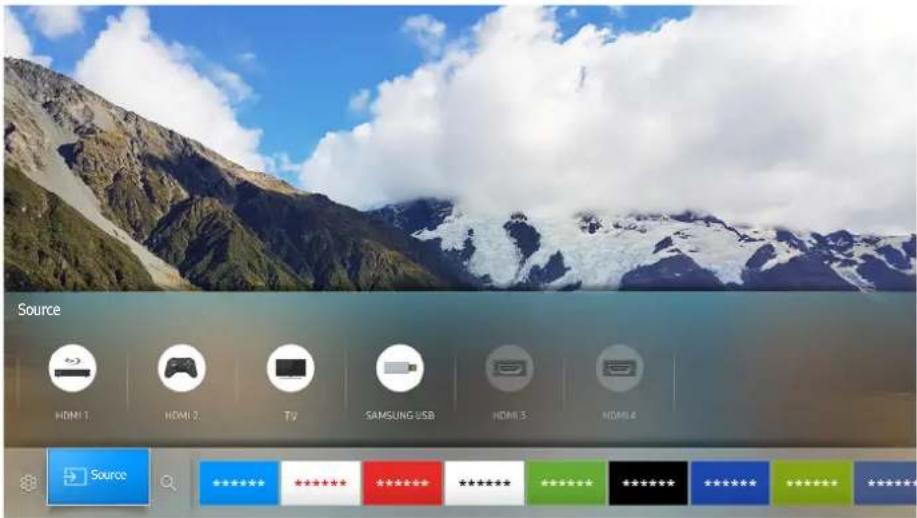
When you press the 🔒 button on your remote control, you can use the following functions and features.
- Settings
When the focus is moved, a quick settings appears on the top of the menu. You can quickly set frequently used functions.
- Source
You can select an external device connected to the TV.
For more information, refer to "Switching between external devices connected to the TV."
- Search
You can search data for channels, programs, movie titles, and apps from Smart Hub.
The image may differ with the model and geographical area.
For more information, refer to "Smart Hub."
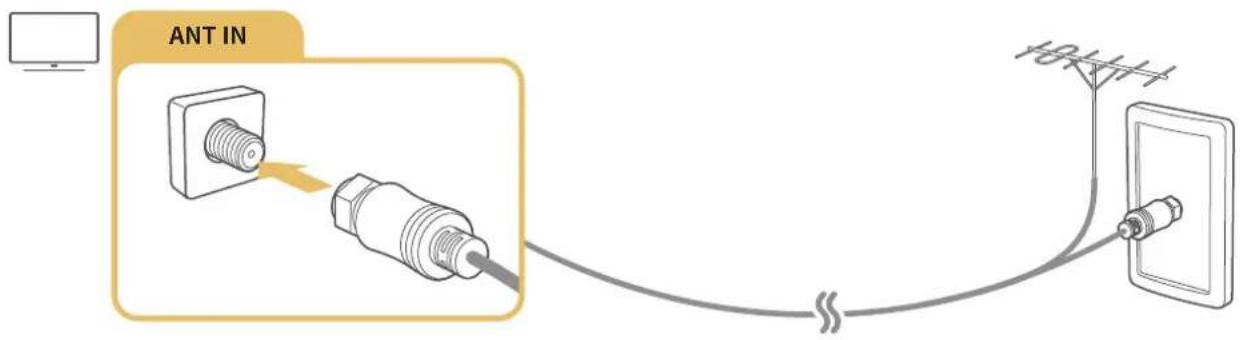
Connecting an Antenna
Can connect the antenna cable to your TV.
An antenna connection is not necessary if you connect a cable or satellite box.
Connecting to the Internet
Can get access to the Internet through your TV.
Connecting Internet network
Settings > Network > Open Network Settings Try Now
Connect to an available network.
Establishing a wired Internet connection
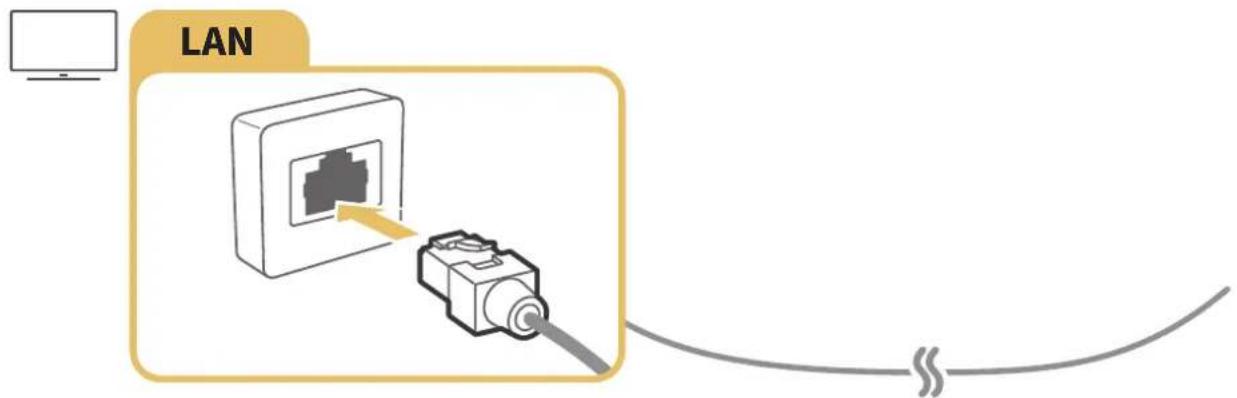
Use a CAT 7 (*STP type) cable for the connection.
* Shielded Twist Pair
The TV will not be able to connect to the Internet if the network speed is below 10 Mbps.
If the LAN cable is connected, accessing the Internet is automatically enabled.
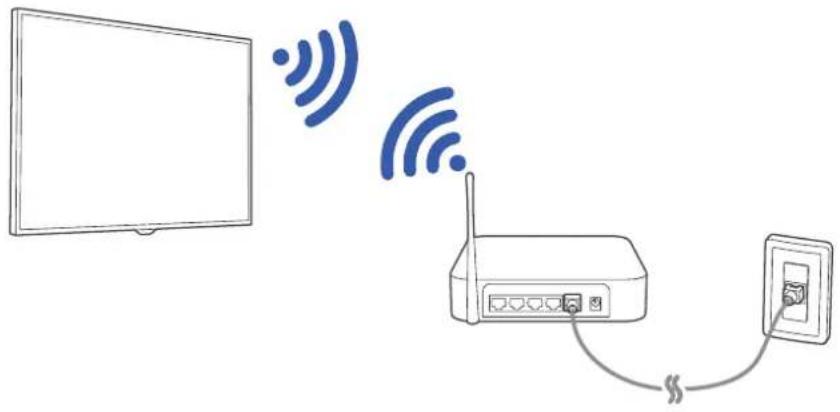
Establishing a wireless Internet connection
Settings > Network > Open Network Settings > Wireless
Make sure that you have the wireless router's SSID (name) and password settings before attempting to connect.
natural_image
Simple line drawing of a monitor connected to a wireless router and a wall socket (no text or symbols)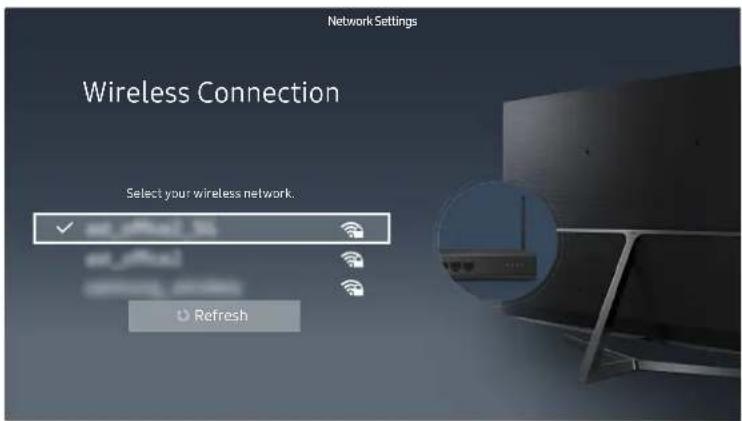
The image may differ with the model and geographical area.
If there is no wireless router found, select Add Network at the bottom of the list and enter the network name (SSID).
If a wireless router has a WPS or PBC button, select Use WPS at the bottom of the list and click the button. Then the TV is automatically connected.
Checking the Internet connection status
Settings > Network > Network Status Try Now
View the current network and Internet status.
Changing the name of the TV on a network
Settings > Network > Device Name Try Now
You can change the name of the TV on the network. Select User Input at the bottom of the list and change the name.
Troubleshooting Internet Connectivity Issues
If the Internet is not accessed, find solutions.
After referencing the following content, troubleshoot the wired Internet connection issue. If the problem persists, contact your Internet Service Provider.
Troubleshooting wired Internet connectivity issues Try Now
No network cable found
Make sure that the network cable is plugged in. If it is connected, make sure that the router is turned on. If it is on, try turning it off and on again.
IP auto setting failed
- Configure the settings in IP Settings.
- Make sure that the DHCP server is enabled on the router, and then reset the router.
Unable to connect to the network
- Check all IP Settings.
- After checking the DHCP server status (must be active) on the router, remove the LAN cable and connect it again.
Connected to a local network, but not to the Internet
- Make sure that the Internet LAN cable is connected to the router's external LAN port.
- Check the DNS values in IP Settings.
Network setup is complete, but unable to connect to the Internet
If the problem persists, contact your Internet Service Provider.
Troubleshooting wireless Internet connectivity issues
After referencing the following content, troubleshoot the wireless Internet connection issue. If the problem persists, contact your Internet Service Provider.
Wireless network connection failed
If a selected wireless router is not found, go to Open Network Settings and select the correct router.
Unable to connect to a wireless router
- Check if the router is turned on. If it is, turn it off and on again.
- Enter the correct password if required.
IP auto setting failed
- Configure the settings in IP Settings.
- Make sure that the DHCP server is enabled on the router. Then, unplug the router and plug it back in.
- Enter the correct password if required.
Unable to connect to the network
- Check all IP Settings.
- Enter the correct password if required.
Connected to a local network, but not to the Internet
- Make sure that the Internet LAN cable is connected to the router's external LAN port.
- Check the DNS values in IP Settings.
Network setup is complete, but unable to connect to the Internet
If the problem persists, contact your Internet Service Provider.
Connecting Video Devices
Make proper video connection between your TV and the other external device.
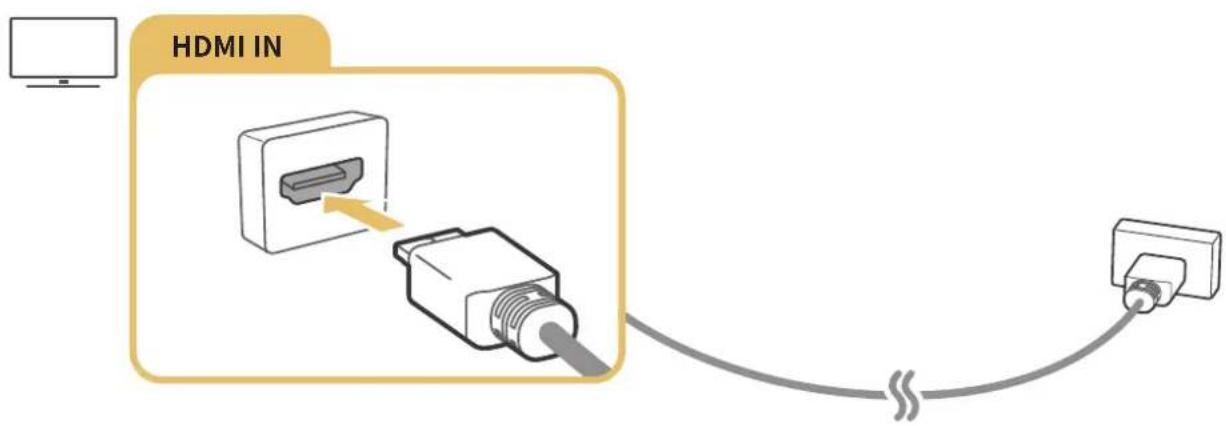
Connecting with an HDMI cable
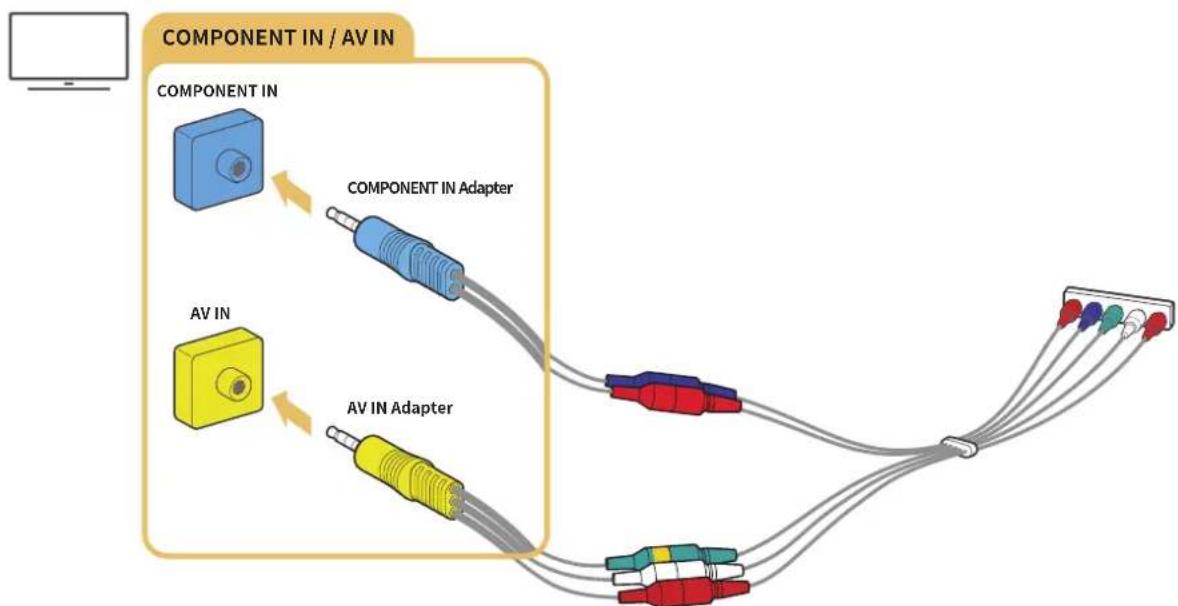
Connecting with a component cable (Only the models with COMPONENT IN / AV IN)
After referencing the figure below, connect the Component IN on the TV to the Component OUT of the external device by using the provided adapter and component cable. Make sure to connect the same color connectors together. (blue to blue, yellow to yellow)
flowchart
graph TD
    A["COMPONENT IN"] --> B["COMPONENT IN Adapter"]
    C["AV IN"] --> D["AV IN Adapter"]
    style A fill:#FFD700,stroke:#333
    style C fill:#FFD700,stroke:#333
    style B fill:#FF6347,stroke:#333
    style D fill:#FF6347,stroke:#333
To use component equipment, connect both a component cable (blue) and an AV cable (yellow).
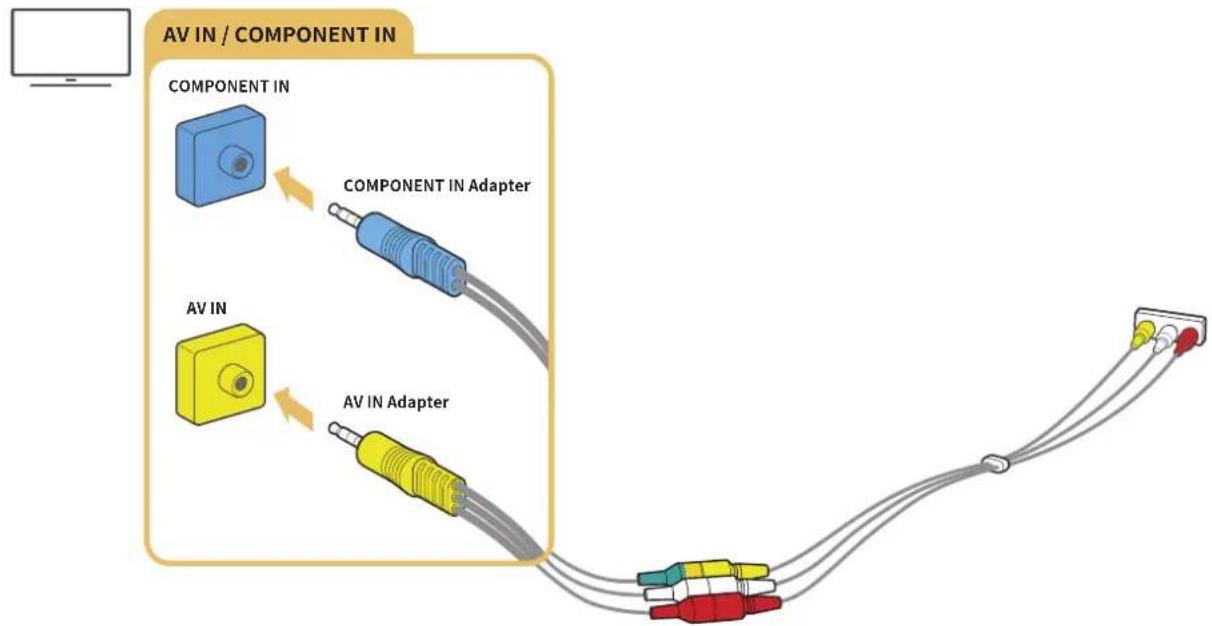
Connecting with a composite cable (only the models with COMPONENT IN / AV IN port)
After referencing the figure below, connect the AV IN on the TV to the AV OUT of the external device by using the provided adapter and composite cable. When connecting the cables, be sure to match the colors between the cables and ports.
flowchart
graph TD
    A["AV IN / COMPONENT IN"] --> B["COMPONENT IN"]
    A --> C["AV IN"]
    A --> D["COMPONENT IN Adapter"]
    A --> E["AV IN Adapter"]
    B --> F["Coiled with colored connectors"]
If you want to use AV (composite) equipment, remove the component adapter.
Audio Input and Output Connections
Make proper audio connection between your TV and an external device.
Connecting with an HDMI (ARC) cable
Connecting with a digital audio (optical) cable
Connecting with a stereo audio cable
This function is only available on certain models in specific geographical areas.
Connecting through wireless network
natural_image
Modern flat-screen TV set with mountain landscape and two black speakers on the side (no text or symbols visible)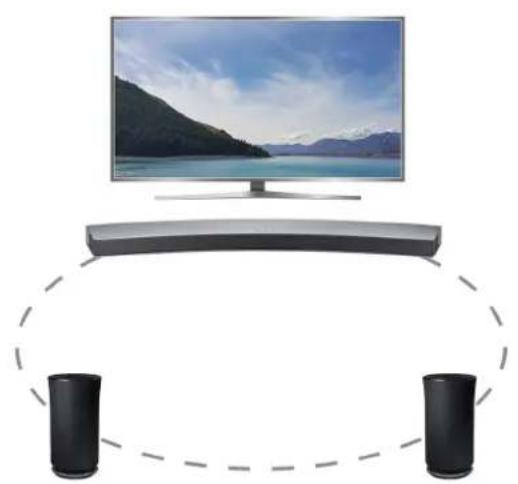
natural_image
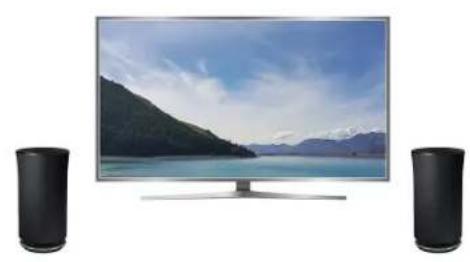
Illustration of a flat-screen TV set with two black cups, connected by a dashed line to a curved monitor (no text or symbols)You can connect the TV to a Samsung wireless audio device through wireless network. At this time, two devices must be connected on the same network. For more information, refer to Wireless Speaker Manager (☐ > Settings > Sound > Expert Settings > Wireless Speaker Manager).
Connecting Bluetooth Devices
You can connect the TV or audio devices via Bluetooth. For more information, refer to the Connection Guide (n > → Source > Connection Guide).
This function is not available on certain models in specific geographical areas.
Connecting a Computer
Use the TV as a computer monitor or connect the TV to a computer via your network and access the computer's content.
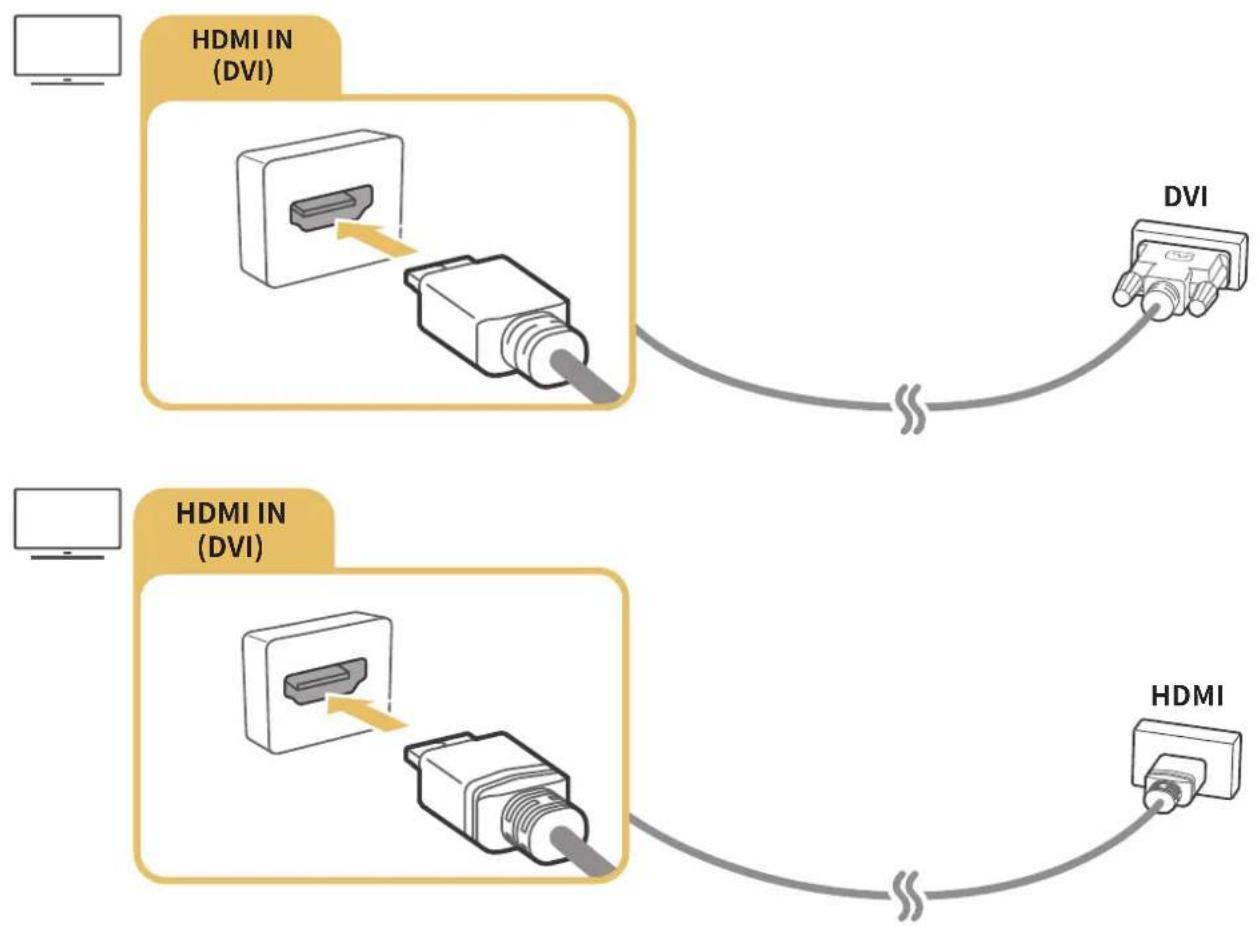
Connecting through the HDMI port — Screen sharing
flowchart
graph TD
    A["Computer"] --> B["HDMI IN (DVI)"]
    B --> C["USB Cable"]
    C --> D["DVI"]
    D --> E["Device 1"]
    F["Computer"] --> G["HDMI IN (DVI)"]
    G --> H["USB Cable"]
    H --> I["DVI"]
    I --> J["Device 2"]
When you connect the PC, set the port to PC. For more information about the port settings, refer to "Editing external devices."
Connecting through the Smart View app — Content sharing
When the TV is connected through the Smart View program on your PC, you can easily play content for photos, videos, and audios through the TV. For more information, refer to the Connection Guide (☑ > ☑ Source >Connection Guide).
Connecting a Mobile Device
View a mobile device's screen by connecting the mobile device to your TV or network.
Using Smart View (Screen Mirroring) or contents sharing
You can play media content on the TV's screen saved on your mobile device by connecting with mirroring function, and contents sharing.
- Launch the Smart View (Screen Mirroring) function on your mobile device. The mobile device searches for available devices to connect to.
- Select the TV from the list. Then the TV is connected to the mobile device.
If the TV system is not searched from your mobile device, turn the TV and the mobile device off and then on and try again.
If the network encounters a communication problem while using the mirroring function, the TV and a Bluetooth device can be disconnected.
If there are multiple TVs, you can easily select any of different TV names in 📄 > Settings > Network > Device Name.
Connecting mobile devices without a wireless router (Wi-Fi Direct)
Settings > Network > Expert Settings > Wi-Fi Direct
To use Wi-Fi Direct, the Wi-Fi Direct function in the mobile device must be active.
Connecting a mobile device via Smart View App
When you install Smart View App from Google Play Store, Samsung Apps, and App Store, you can play the mobile device's multimedia content on the TV, or control the TV using the mobile device.
To use the Smart View function, the mobile device must support a mirroring function such as AllShare Cast or Smart View. To check whether your mobile device supports the mirroring function, please visit the mobile device manufacturer's website.
Switching between external devices connected to the TV
Watch TV and the content of an external device by switching.
Changing the input signal

Source
If you select any of the connected external devices from the screen, you can see the screen of the selected device.
When a USB device is connected to the USB port, a pop-up message appears for easy switch to the media content list on the device.
Editing external devices
You can change the port name for a connected external device or add it to Home Screen.
- Move the focus to a connected external device.
- Press the up directional button. Then the following functions can be used. (Note that available functions may differ with the port type.)
- Edit: Can change the port name of an external device to an actual usage for easy identification.
- Add to Home: Can add the port of an external device in Home Screen for quick switching.
Using additional functions
You can use the following functions in the Source screen.
• Guide to device connection(Connection Guide)
Connection Notes
When connecting an external device, note the following:
The number of connectors and their names and locations may differ with the model.
Refer to the external device's operating manual when connecting it to the TV. The number of external device connectors and their names and locations may differ with the manufacturer.
Connection notes for HDMI
• The following types of HDMI cables are recommended:
-
High-Speed HDMI Cable
– High-Speed HDMI Cable with Ethernet -
Use an HDMI cable with a thickness of 17 mm or less.
• Using a non-certified HDMI cable may result in a blank screen or a connection error. - Some HDMI cables and devices may not be compatible with the TV due to different HDMI specifications.
- This TV does not support HDMI Ethernet Channel. Ethernet is a Local Area Network (LAN) built with coaxial cables standardized by the IEEE.
- Use a cable shorter than 3 m to get the best UHD viewing quality.
- Many computer graphics adaptors do not have HDMI ports, but have DVI ports instead. When the PC that does not support HDMI video out, connect your PC with the HDMI-DVI cable.
For more information, refer to "Connecting a Computer."
Connection notes for audio devices
- For better audio quality, it is a good idea to use an AV receiver.
- Connecting a device using an optical cable does not automatically turn off the TV speakers. To turn off the TV speakers, set Select Speaker (☑ > ⚙️ Settings > Sound > Select Speaker) to Audio Out/Optical.
- An unusual noise coming from a connected audio device while you are using it may indicate a problem with the audio device itself. If this occurs, ask for assistance from the audio device's manufacturer.
• Digital audio is only available with 5.1-channel broadcasts.
Connection notes for computers
- For the resolutions supported by the TV, refer to "Read Before Connecting a Computer (Supported Resolutions)."
- As long as file sharing is activated, unauthorized access may occur. When you do not need to access data, disable file sharing.
- Your PC and Smart TV must be connected to each other on the same network.
- When sharing content with other network-based devices such as those in an IP (Internet Protocol) storage system, sharing may not be supported due to the network's configuration, quality, or functionality, for example, if the network has an NAS (Network-Attached Storage) device.
Connection notes for mobile devices
- To use the Smart View function, the mobile device must support a mirroring function such as AllShare Cast or Smart View. To check whether your mobile device supports the mirroring function, please visit the mobile device manufacturer's website.
- To use Wi-Fi Direct, the mobile device must support the Wi-Fi Direct function. Please check if your mobile device supports Wi-Fi Direct.
- The mobile device and your Smart TV must be connected to each other on the same network.
- The video or audio may stop intermittently, depending on network conditions.
- When sharing content with other network-based devices such as those in an IP (Internet Protocol) storage system, sharing may not be supported due to the network's configuration, quality, or functionality, for example, if the network has an NAS (Network-Attached Storage) device.
About the Samsung Smart Remote
This function may differ with the model or geographical region.
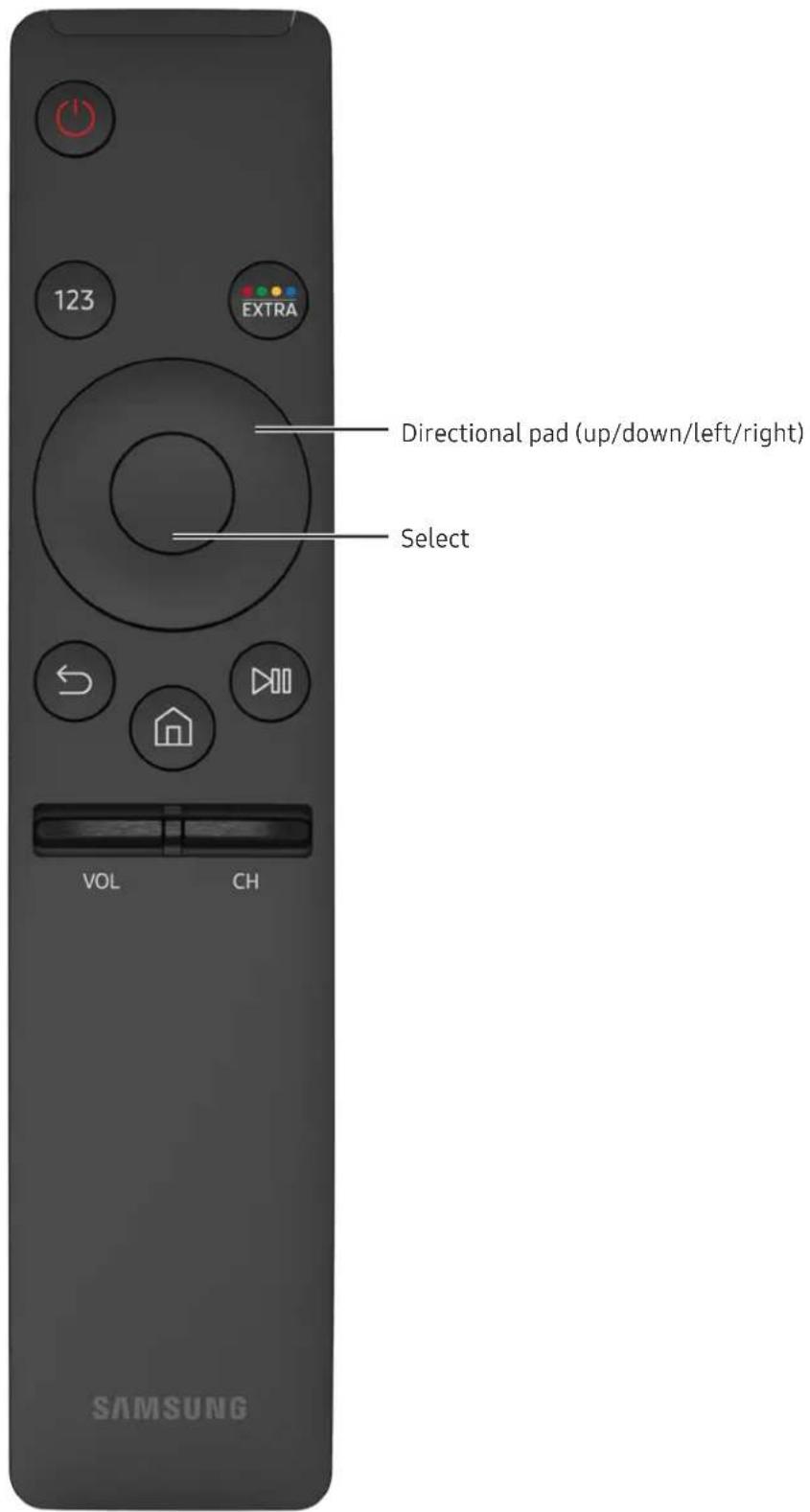
| Button Description | |
| 123 (Number pad) | When pressed, a number strip appears on the screen. Select numbers and then selectDoneto enter a numeric value. Use to change the channel, enter a PIN, enter a ZIP code, etc.If theColor Buttonappears with a number strip on the screen, select theColor Buttonand then select a specific color by using the directional pad (up/down/ left/right). Use this to access additional options that are specific according to the feature in use. |
| ●●● / EXTRA (Color/ EXTRA) | Use these colored buttons to access additional options specific to the feature in use. / While watching content, press to display extra information from the content provider. |
| Directional pad (up/ down/left/right) | Moves the focus and changes the values seen on the TV's menu. |
| Select | Selects or runs a focused item. When pressed while you are watching content, detailed program information appears. |
| ⇐ (Return) | Press to return to the previous menu. When pressed for 1 second or more, the running function is terminated. When pressed while you are watching a program, the previous channel appears. |
| ⇐ (Smart Hub) Press to return to the Home Screen. | |
| ▷(Play/pause) | When pressed, the playback controls appear. Using these controls, you can control the media content that is playing. |
| VOL (Volume) | Move the button up or down to adjust the volume. To mute the sound, press the button. When pressed for 1 second or more, theAccessibility Shortcutsappears. |
| CH (Channel) | Move the button up or down to change the channel. To see theGuidescreen, press the button. |
K5300 series models does not support the Samsung Smart Remote.
The images, buttons, and functions of the Samsung Smart Remote may differ with the model.
It does not support the functions for Voice Interaction, pairing, and Universal Remote Control.
Controlling the TV with a Keyboard or Gamepad
Connecting a keyboard or gamepad makes it easier to control the TV.
Connecting a USB keyboard
Plug the keyboard cable into the USB port.
Connecting a Bluetooth keyboard and gamepad
Settings > System > Input Device Manager > Add Bluetooth Keyboard & Gamepad
This function is not available on certain models in specific geographical areas.
If your device was not detected, position the keyboard close to the TV, and then select Refresh. The TV scans for available devices again.
Using the keyboard
| Keyboard Remote control functions | |
| Directional keys Moves the focus | |
| Windows key Displays the TV settings | |
| Enter key Selects or runs a focused item | |
| ESC key Returns to the previous screen | |
| F1 / F2 / F3 / F4 key Color buttons — / / / [IMAGE] [IMAGE] [IMAGE] | |
| F5 key Launches the Home Screen | |
| F6 key Displays the source screen | |
| F7 key Launches the Channel List | |
| F8 key Mutes the sound | |
| F9 / F10 key | Adjusts the volume |
| F11 / F12 key | Changes the channel |
Setting up the keyboard
In ⓤ > ⚙️ Settings > System > Input Device Manager, the following functions can be set.
- Keyboard Language
- Keyboard Type
• Input Language Shortcut
Entering Text using the On-Screen QWERTY Keyboard
Use the QWERTY keyboard to enter text on your TV.
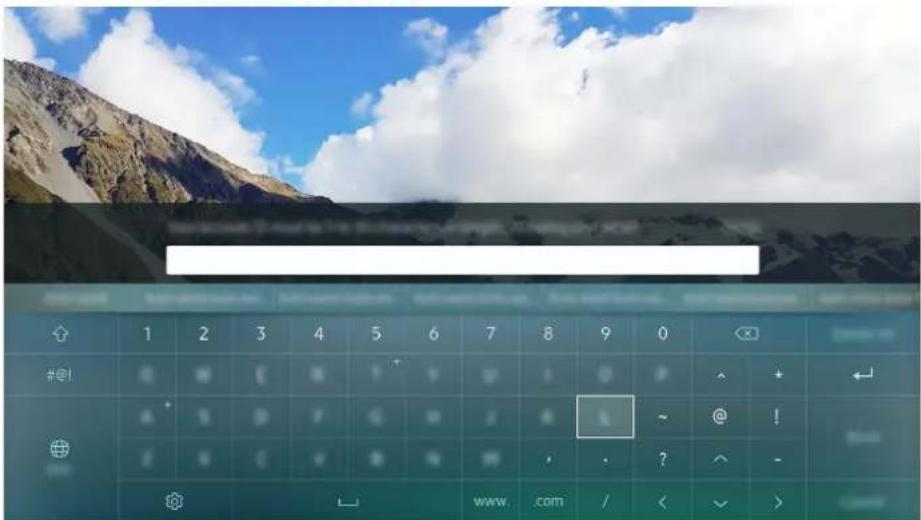
The image may differ with the model and geographical area.
Using additional functions
Select 📂 on the QWERTY keyboard screen. The following options are available:
• Recommended text
- Reset recommended text data
• Predict Next Character (when using direction buttons)
- Language
This function is not available on certain models in specific geographical areas.
Smart Hub
View description on basic functions of Smart Hub.
Press the button.
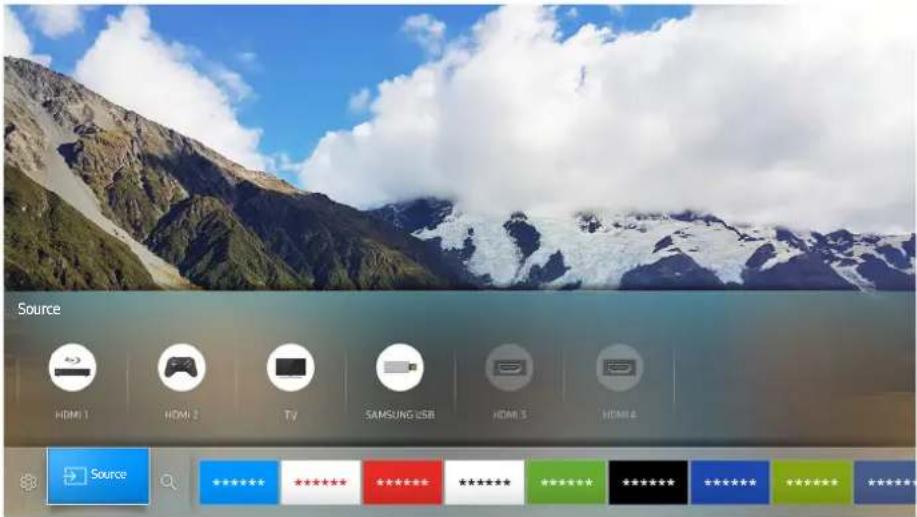
The image may differ with the model and geographical area.
After pressing the 🔒 button on your remote control, you can surf the web and download apps with Smart Hub.
Some of the Smart Hub services are paid services. To use a paid service, you must have an account with the service provider or a Samsung account. For more information, refer to "Using a Samsung account."
To use Smart Hub, the TV must be connected to the Internet.
Some Smart Hub features may not be available depending on the service provider, language, or region.
Smart Hub service outages can be caused by disruptions in your Internet service.
You can view the entire text of the Terms & Policy document by navigating to ⓗ > Settings > Support > Terms & Policy. If you want to stop using Smart Hub, you can cancel the agreement. Try Now
Displaying Home Screen
In Home Screen, you can easily run the apps that have been used previously or frequently. The apps can also be moved or deleted in the screen.
When you press the ⓗ button on your remote control, you can use the following functions and features.
- Settings
When the focus is moved to Settings, a quick settings appears at the top of the menu. You can quickly set the frequently used functions.
- Picture Mode
You can select the picture mode that provides the best viewing experience. - Select Speaker
You can select which speakers the TV uses for audio output.
- Sound Mode
You can select a sound mode to optimize your listening experience.
- PIP
While using a connected external device, you can watch a TV broadcast in a small picture-in-picture (PIP) window.
This function is not available on certain models in specific geographical areas.
- Network
You can view the current network and Internet status.
- Sleep Timer
You can automatically shut off the TV after a pre-set period of time.
- More ...
Displays TV settings.
This function is not available on certain models in specific geographical areas.
- Source
You can select an external device connected to the TV.
For more information about connecting external devices, refer to "Switching between external devices connected to the TV."
- Search
You can search the apps or games in Smart Hub services.
Removing an item in Home Screen
To remove an item in Home Screen, move the focus to item you want to remove, and press the down directional button, and then select Remove.
Moving an item in Home Screen
To move an item in Home Screen, move the focus to item you want to specify a new position, and press the down directional button, and then select Move.
Launching Smart Hub automatically
Settings > System > Expert Settings > Autorun Smart Hub
When you set Autorun Smart Hub to On, you can display Home Screen automatically.
Launching the last used app automatically
Settings > System > Expert Settings > Autorun Last App
If Autorun Last App is set to On, the last used app is automatically run when you turn on the TV.
Testing Smart Hub connections
Settings > Support > Self Diagnosis > Start Smart Hub Connection Test
Resetting Smart Hub
Settings > Support > Self Diagnosis > Reset Smart Hub
Using a Samsung account
Create and manage your own Samsung account.
Creating a Samsung account
Settings > System > Samsung Account > Create Account
Some of the Smart Hub services are paid services. To use a paid service, you must have an account with the service provider or a Samsung account.
You can view the entire text of the Terms & Policy in ➕ > Settings > System > Samsung Account > Samsung account Terms & Conditions, Privacy Policy after logging in with a Samsung account.
You can also create a Samsung account at http://content.samsung.com. Once you have an account, you can use the same ID on both the TV and the Samsung website.
If you want to review the Terms and Conditions, select View Details.
If you want your account to be protected, select Profile image selection and password entry (High security) in the field below the password field.
If you want the TV to log you in to your account automatically when you turn the TV on, click Sign me in automatically.
Creating a Samsung account using a Facebook account
Settings > System > Samsung Account > Create with Facebook
Signing in to a Samsung account
Settings > System > Samsung Account > Sign In
Changing and adding information to a Samsung account
Settings > System > Samsung Account > Edit Profile
To change the account information, you must be logged in to your Samsung account.
Managing payment information saved on the TV
Settings > System > Samsung Account > Payment info
To managing the payment information, you must be logged in to your Samsung account.
Deleting a Samsung account from the TV
Settings > System > Samsung Account > Remove Account
To remove the account information, you must be logged in to your Samsung account.
Using the GAMES Service
Enjoy games provided with Smart Hub.

>GAMES
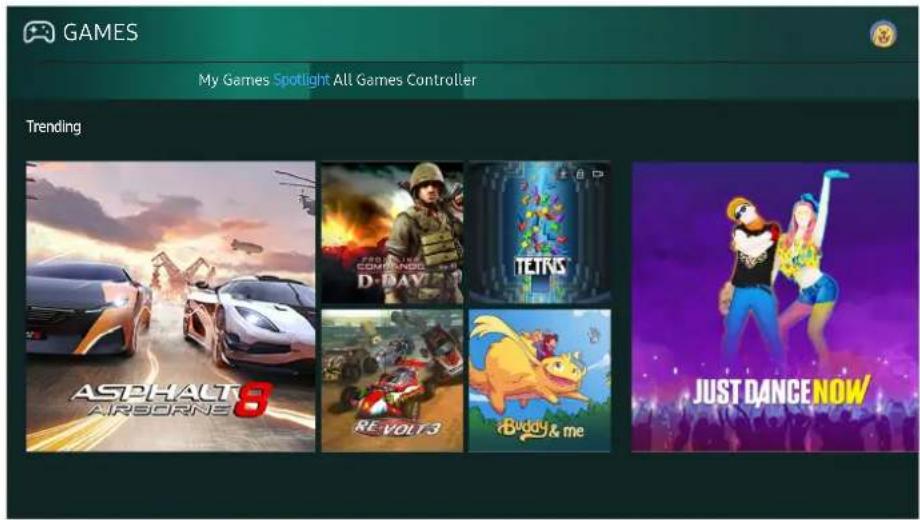
The image may differ with the model and geographical area.
You can install or run games. The installed games are stored in My Games.
This function is not available on certain models in specific geographical areas.
Installing and running a game
Installing games
- Move to the desired game to install and then press the Select button. The detailed information screen appears.
- Select Install. If the installation is complete, you can directly run it.
You can see the installed games in My Games screen.
To get the information about the game controllers that are compatible with the downloaded game, select GAMES ✗Controller.
When the TV's internal memory is insufficient, you can install a game on a USB device.
You can play a game installed on a USB device only when the USB device is connected to the TV. If the USB device is disconnected during game playing, the game is terminated.
You cannot play a game installed on a USB device on a PC or another TV.
Running an installed game
To run a game, select GAMES > My Games.
Managing purchased or installed games
On My Games screen, move the focus to the desired game and then press and hold the Select button. Also, select My Games > Options to manage installed games.
Adding to Home Screen
- Select My Games > Options > Add to Home.
- Select a game to add in Home Screen. The selected game is added in Home Screen.
Removing a game
- Select My Games > Options > Delete.
- Select a game to delete.
- Select Delete. Then the selected game is deleted.
Updating a game
- Select My Games > Options > Update.
- Select a game to update.
- Press the Select button. Then the game is updated.
It can be selected only when there are games to update.
Locking or Unlocking a game
- Select My Games > Options > Lock/Unlock. The check boxes appear for individual games.
- Select a game to lock or unlock. To lock a game, check on it. To unlock the game, release the check.
- Select Done. Then the selected game is locked or unlocked.
Automatically updating games
The installed games can be automatically updated. If you do not want automatic update, set My Games >Options >Auto Update to Off.
Only while the TV is connected to the Internet, automatic update is enabled.
Rating games
You can rate each game in the detailed information screen.
This feature is only available when the game is installed on your TV.
Using the APPS Service
Download and run various apps from Smart Hub.

>APPS
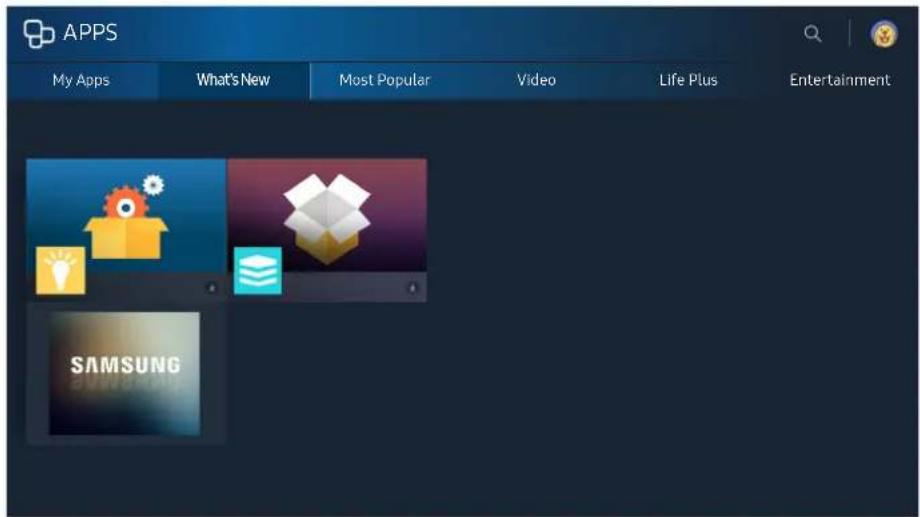
The image may differ with the model and geographical area.
You can enjoy a wide range of content including news, sports, weather and games by installing the corresponding apps on your TV.
To use this feature, the TV must be connected to the Internet.
When Smart Hub is launched for the first time, the default apps are automatically installed. The default apps may differ with the geographical area.
Installing and running an app
Installing an app
- Move to the desired app to install and then press the Select button. The detailed information screen appears.
- Select Install. If the installation is complete, you can directly run it.
You can view installed apps on the My Apps screen.
When the TV's internal memory is insufficient, you can install an app on a USB device.
You can run an app installed on a USB device only when the USB device is connected to the TV. If the USB device is disconnected while an app is running, the app is terminated.
You cannot run an app installed on the USB device on a PC or another TV.
Launching an app
You can run the selected app on My Apps screen. The icons below appear within the selected app's icon and indicate the following:
• : The app is installed on a USB device.
• : The app has a password.
• ↓: The app is installed.
• ↑ : The app is required to update.
• : The app supports Smart View.
Managing purchased or installed apps
On My Apps screen, move the focus to the desired app and then press and hold the Select button. Also, select My Apps > Options to manage installed apps.
Adding to Home Screen
- Select My Apps > Options > Add to Home.
- Select an app to add. The selected app is added in Home Screen.
Moving apps
- Select My Apps > Options > Move.
- Select an app to move.
- Move the app to the desired direction.
- Press the Select button.
- Select Done. Then the movement is finished.
This function is not available on certain models in specific geographical areas.
Removing an app
- Select My Apps > Options > Delete.
- Select an app to delete.
- Select Delete. Then the selected app is deleted.
Ensure that the related app data is also removed when you remove an app.
Updating apps
- Select My Apps > Options > Update.
- Select an app to update.
- Press the Select button. Then the app is updated.
This function is only available when My Apps contains an app that needs updating.
Locking and unlocking apps
- Select My Apps > Options > Lock/Unlock.
- Select an app to lock or unlock.
- Select Done. Then the selected game is locked or unlocked.
Automatically updating apps
The installed apps can be automatically updated. If you do not want automatic update, set My Apps >Options >Auto Update Off.
Rating apps
You can rate each app in the detailed information screen.
Using the e-Manual
Read the manual embedded on your TV.
Launching the e-Manual
Settings > Support > Open e-Manual
You can view the embedded e-manual that contains information about your TV's key features.
Alternatively, you can download a copy of the e-Manual from Samsung's website.
Words in blue (e.g., Picture Mode) indicate a menu item.
Using the buttons in the e-Manual
Search
A-Z (Index)
(Recently Viewed Topics)
(Try Now): Allows you to access the corresponding menu item and try out the feature right away.
(Link): Allows you to access the corresponding reference page.
Some menu screens cannot be accessed from the e-Manual.
Surf the Internet on your TV.
WEB BROWSER
If you select ➕ WEB BROWSER, you can see the recently viewed web sites or featured recommendations. By selecting a desired web site, you can directly get access to it.
You can use the WEB BROWSER more easily after connecting a keyboard and mouse.
You can scroll web pages with the Directional pad.
The Web page page may differ from that on a PC.
Playing pictures/video/music
Play media content stored on your TV, USB device, smartphone, camera, PC, etc.
> Source
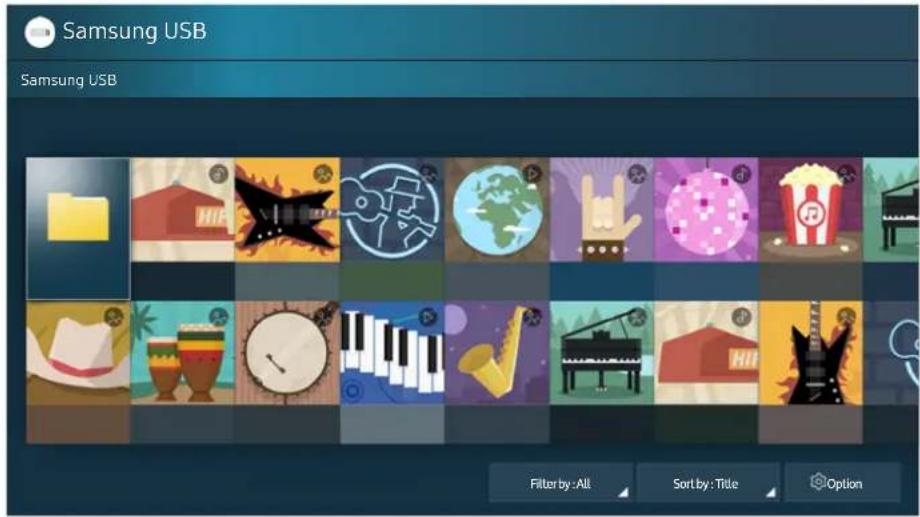
The image may differ with the model and geographical area.
You can play media content saved on storage devices, such as USB devices, mobile devices, and cameras, on the TV. Try Now
You cannot play media content if the content or the storage device is not supported by the TV. For more information, refer to "Read Before Playing Photo, Video, or Music Files."
To connect the TV to a computer, refer to "Connecting a Computer."
Backup important files before connecting a USB device. Samsung is not responsible for damaged or lost files.
To connect the TV to a mobile device, refer to "Connecting a Mobile Device."
Playing media content
- Select a device with media content in ➕ ➔ Source. Then the media content list in the device appears.
- Select a media content item from the list. Then the content is played.
For more information about buttons, refer to "Buttons and functions available while playing multimedia content."
The content may not be played depending on the encoding method or file format. Furthermore, several functions may be restricted.
When a USB device is connected to the USB port, a pop-up message appears for easy switch to the media content list on the device.
Functions on the media content list screen
You can use the following functions on the media content list screen of a storage device.
- Filter By
Filters the media content to display the type of media you want.
- Sort By
Sorts the content list.
- Options
Deletes or plays the selected media content from the media content list.
You can delete only the recorded content. To delete content, change the Filter By option to Recorded.
Viewing Digital Broadcast Information at a Glance
See overview of each digital channel's program lineup.
Using the guide

Live TV
Guide
Try Now
You can see the daily program schedules for each broadcaster through the Guide, in which the program information can be seen and you can watch or schedule recording.
In the Guide, you can see only the TV program schedule after the current time.
This function is only available on certain models in specific geographical areas.
The Guide also appears when you press the CH button while watching TV.
The information in the Guide is for digital channels only. Analog channels are not supported.
To view the Guide, you must first set the TV's clock ( Ⓞ > Settings > System > Time > Clock).
After moving to a desired program, press and hold the Select button on the remote control. A pop-up window listing the following functions appears.
- Schedule Viewing
After selecting Schedule Viewing, you can schedule viewing for a broadcast scheduled program.
For more information about watching or Schedule Viewing, refer to "Setting Up a Schedule Viewing."
- Schedule Recording
After selecting Schedule Recording, you can schedule recording for a broadcast scheduled program.
• Detailed information
After selecting View details, you can see the detailed information on the selected program. The information may differ with the broadcast signal. If the information is not provided with the program, nothing appears.
• Displaying Record & Schedule Manager
After selecting Schedule Manager, you can see the Recording & Schedule Manager screen.
- Recording
After selecting Record, you can record the current broadcasting program.

For more information on Schedule Recording, refer to "Recording Programs."
Changing the broadcast signal
Live TV Channel List
After pressing the right directional button on your remote control, select Antenna to choose Air or Cable.
You do not need to use this function if your TV is connected to a cable or satellite box.
Checking digital channel signal info and strength
Settings > Support > Self Diagnosis > Signal Information
This function is only available in specific geographical areas.
If your TV is attached to a separate, over-the-air antenna, you can use the signal strength information to adjust the antenna for increased signal strength and improved HD channel reception.
Recording Programs
Record a current or upcoming program using a USB device instead of a video recorder.
The ☐ appears next to the recording scheduled programs and channels.
Read all precautions before using the recording feature. Refer to "Before Using the Recording and Timeshift Functions" for more information.
You can record only the programs that have been received through the antenna.
Recording programs
Using the instant and schedule recording options from the guide screen
Select a live program from the Guide and then press and hold the Select button. You can select Record to start recording. In addition, select a broadcast scheduled program and then press and hold the Select button. you can select Schedule Recording to schedule its recording.
Using the instant and schedule recording options on the program info window
Press the Select button while watching to display the program info window. When you press and hold the Select button in the program info window and then select Record, you can record the program. Use the left or right directional button to select a broadcast scheduled program. Then press and hold the Select button. By selecting Timeshift, you can Schedule Recording the program.
Using schedule recording to record on a specified date and time
Live TV > Schedule Manager or Recordings > Scheduled > Schedule Recording
Managing the schedule recording list
Live TV > Schedule Manager or Recordings > Scheduled > Edit
Canceling a schedule recording
Live TV > Schedule Manager or Recordings > Scheduled > Remove
Viewing recorded programs
Live TV > Recordings > Scheduled
Select a file to watch (recorded one) from the list. Then the file is played back.
Buttons that appear may differ depending on the file being played.
For more information about buttons, refer to "Buttons and functions available while recording a program or Timeshift."
Highlight Player is only available if you have saved highlights of a program that was recorded in Soccer Mode.
Setting Up a Schedule Viewing
Configure the TV to show a specific channel or program at a specific time and date.
The appears next to programs that have been configured for a schedule viewing.
To set up a schedule viewing, you must first set the TV's clock ( Ⓞ > ⚙ Settings > System > Time > Clock).
Setting up a schedule viewing for a channel
Setting up a schedule viewing for a digital channel
• The Guide screen
On the Guide screen, select a program you would like to view, and then press and hold the Select button. You can select Schedule Viewing on the pop-up menu that appears.
• The Program Info window
Press the Select button while watching TV. Then the Program Info window appears. Select a broadcast scheduled program by using the left or right directional buttons and then press and hold the Select button. You can schedule watching the program by selecting Schedule Viewing.
Setting up a schedule viewing an analog channel
Live TV > Schedule Manager or Recordings > Scheduled > Schedule Viewing
Editing a schedule viewing
Live TV > Schedule Manager or Recordings > Scheduled > Edit
You can set up a maximum total of 30 Schedule Viewing and Schedule Recording entries.
Canceling a schedule viewing
Live TV > Schedule Manager or Recordings > Scheduled > Remove
Using Timeshift
Play, pause, or rewind live TV.
You can pause and rewind live TV by using Timeshift. Activating this function disables the Broadcasting function. Try Now
To use Timeshift, the USB device must have been connected for recording.
Read all precautions before using the Timeshift function. For more information, refer to "Before Using the Recording and Timeshift Functions."
To activate the Timeshift function while watching TV, press and hold the Select button, and then select on the Program Info window.
For more information about buttons, refer to "Buttons and functions available while recording a program or Timeshift."
Using the Channel List
Change the channel or check programs on other digital channels.
Live TV Channel List
By using the Channel List, you can change the channel or check programs on other digital channels while watching TV.
The All Channels screen contains the following icons:
• ♥ : A favorite channel
• : A locked channel
• : Channel that is being watched
When you display Channel List screen first time, all of scanned channels in All Channels.
Also, you can select Edit to display Edit Channel screen.
If you press the right directional button on Channel List screen, you can use the following functions:
- All Channels
Displays the channels that have been automatically searched.
- Favorites
Displays favorites list 1 to 5.
Category
Displays the channels of a selected category in the list.

This function is only available in specific geographical areas.
- Air or Cable
Allows you to select Air or Cable as the DTV mode. Air is suitable for homes equipped with separate, over-the-air antennas. Cable is suitable for homes that subscribe to a local cable-service or satellite-service provider. You do not need to use this function if your TV is connected to a cable or satellite box.
Editing channels
Eidt the channels stored on your TV.
Live TV Channel List Right directional button Edit
The Edit Channel screen icons indicate the following:
• ♥ : A favorite channel
• 🔒 : A locked channel
Re-registering and deleting a channel
Removing registered channels
To remove a channel, select it, and then select Delete. To remove all channels, select Select All > Delete.
Adding back removed channels
You can add back removed channels from the Edit Channel list only. Removed channels are displayed in gray in the All Channels list. To display the Edit Channel list, select Live TV > Channel List > All Channels > Edit. Then, to add back a removed channel, select it, and then select Restore. To add back all removed channels, select Select All > Restore.
Editing registered channels
You can access the following options by selecting All Channels > Edit:
This option is only available on certain models in specific geographical areas.
The available options may differ with the broadcast signal.
- Lock/unlock channels
If you want to set the password, set > Settings > Broadcasting > Channel Lock to On.
- Rename channels
Using Program Rating Lock
Settings > Broadcasting > Program Rating Lock
This function is useful for controlling what children watch on TV. Program Rating Lock does not block programs originating from external sources, such as Blu-ray players, DVD players, or USB files.
Every time you access Program Rating Lock, you must enter the security PIN. You must also enter this PIN to watch a blocked program. The default PIN is 0000. To change the PIN, go to 📤 > Settings > System > Expert Settings > Change PIN.
This function is only available in specific geographical areas.
Program Rating Lock may not be supported depending on your input signal.
Creating a Personal Favorites List
Designate frequently watched channels as favorite channels.
Favorite channels are highlighted in the Edit Channel and channel list screens with the ♥ symbol.
Registering channels as favorites
Live TV Channel List
- Press the right directional button on your remote control.
- Select Favorites.
- Select a desired one of five favorites lists.
- Move to Edit Favorites.
- Select a channel to add in the favorites list.
- Select ▷ then the selected channel is registered in the favorites list.
Viewing and selecting channels on Favorites lists only
Live TV Channel List
- Press the right directional button on your remote control.
- Select Favorites.
- Select the desired list among five favorites lists on the screen. Then the channels in the selected favorites list appear.
Only if the favorites list has been registered, the channels of the list can be displayed.
Editing a Favorites List
Edit a favorites channel list.
Live TV Channel List
After pressing the right directional button on your remote control, select Favorites > Favorites 1-Favorites 5 > Edit. Edit Favorites screen appears.
Removing channels from a favorites list
Select channels in favorite list, and then select button.
Rearranging a favorites list
Select the channels, and then select Change Order. The Change Order highlight appears. Press the up/down arrow buttons to indicate the new location for the channels. Press the Select button to set the channels into their new location.
Renaming a favorites list
Select favorite list you want to rename, and then select Rename Favorites. Enter a new name using the on-screen keyboard that appears, and then select Done.
Making Sports Programs More Realistic with Soccer Mode
Make sporting events appear and sound more realistic as if you are actually there.
Settings > Picture > Special Viewing Mode > Soccer Mode Try Now
You can use Soccer Mode to get optimal picture and sound settings for soccer events, making them appear and sound as if you are there. In addition, if a recording device is connected to the TV when you are using Soccer Mode, you can view highlights extracted from the recorded sporting event automatically or manually.
The actual name may differ with the geographical area.
Enabling Soccer Mode changes Picture Mode to Stadium and Sound Mode to Stadium, and disables some Picture and Sound menus.
Extracting highlights automatically
Settings > Picture > Special Viewing Mode > Soccer Mode > Auto Highlights
However, Auto Highlights is not available:
- When you are switching the input signal
- When you are viewing the content saved on a USB storage device
- When the Smart View function is running
- When you are viewing highlights of the current soccer game in the UHD resolution by using the Highlight Player function
• While watching an analog program
The performance of Auto Highlights depends on the characteristics of the transmitted signal.
It is advisable to use Auto Highlights only while watching a soccer game. If you use this function for other sporting events, it may display irrelevant picture frames.
Viewing a game recorded in soccer mode
You can view a recorded game saved on a USB storage device.
For more information about the functions, refer to "Buttons and functions available while using soccer mode."
For more information about the functions, refer to "Buttons and functions available while recording a program or Timeshift."
This function is not available on certain models in specific geographical areas.
For more information, refer to "Viewing recorded programs."
TV-Viewing Support Functions
Use the functions that are supported from digital or analog channels.
Scanning for available channels
Settings > Broadcasting > Auto Program or Auto Tuning
This function is only available on certain models in specific geographical areas.
The actual name may differ with specific geographical area.
Automatically scans and indexes all channels received through the TV's antenna input connector.
Do not use this function if your TV is connected to a cable or satellite box.
If the TV has saved channels, Auto Program or Auto Tuning deletes the existing list, and then saves the newly scanned channels.
Selecting the broadcasting audio option
Settings > Broadcasting > Dual Sound
Set audio options for stereo or bilingual broadcasts. For more information, refer to "Supported broadcasting audio options".
This function is only available on certain models in specific geographical areas.
Configuring advanced broadcasting settings
Settings > Broadcasting > Expert Settings Try Now
Scanning all digital channels
Settings > Broadcasting > Expert Settings > Digital Manual Tuning
This function is only available on certain models in specific geographical areas.
Selecting the broadcast audio language
Settings > Broadcasting > Expert Settings > Audio Options
This is the language you will hear while watching TV if the language is included in the broadcast signal. Audio Options functions differently for analog and digital channels.
Listening to Multi-Track Sound
Settings > Broadcasting > Expert Settings > Audio Options > Multi-Track Sound
Selecting a Language
Settings > Broadcasting > Expert Settings > Audio Options > Audio Language
The available language may differ with the broadcast.
Selecting a Audio Format
Settings > Broadcasting > Expert Settings > Audio Options > Audio Format
This function is only available in specific geographical areas.
Fine-tuning analog broadcasts
Settings > Broadcasting > Expert Settings > Fine Tune
This function is only available for analog broadcasts.
Choosing an appropriate video input color
Settings > Broadcasting > Expert Settings > Color System
This function is only available for analog broadcasts.
Adjusting the Picture Quality
Change the Picture Mode and adjust Expert Settings.
Choosing a picture mode
Settings > Picture > Picture Mode Try Now
You can select the Picture Mode that provides the best viewing experience.
- Dynamic
Makes the picture brighter and clearer in bright viewing environments. - Standard
Is the default mode suitable for general viewing environments.
Natural
Reduces eye strain for comfortable viewing experience. - Movie
Is suitable for watching TV or movies in a dark place.
Configuring advanced picture settings
Settings > Picture > Expert Settings Try Now
Configure the screen settings to your taste by using the following functions:
- Backlight
- Brightness
- Contrast
- Sharpness
• Color - Tint (G/R)
- Apply Picture Settings
- Digital Clean View
Auto Visualization is only available for analog broadcasts.
- Analog Clean View
This function is only available on certain models in specific geographical areas.
This function is only supported for analog broadcasts.
• LED Clear Motion
This function is only available on certain models in specific geographical areas.
- Film Mode
This function is only available when the input signal is TV, AV, Component (480i, 1080i), or HDMI (1080i).
• HDMI Black Level
This function is only available when the input signal, connected to the TV via an HDMI connector, is set to RGB444.
• Dynamic Contrast
- Color Tone
Cool and Standard are only available when Picture Mode is set to Dynamic.
Color Tone is only available when the TV is connected to a computer via an HDMI-to-DVI cable.
- White Balance
- Gamma
- RGB Only Mode
- Color Space
- Reset Picture
Picture Support Functions
Configure the picture settings for your TV.
Viewing a picture-in-picture (PIP)
Settings > Picture > PIP Try Now
While viewing video from an external device such as a Blu-ray player on the main screen, you can watch a TV broadcast in a picture-in-picture (PIP) window.
This function is not available on certain models in specific geographical areas.
PIP cannot be used while Smart Hub.
Playing a game or using the karaoke function on the main screen can result in lower PIP picture quality.
The PIP function is only available under the following conditions: 1) The main screen's source is a Component or HDMI connection. 2) The input resolution is less than FHD (Full HD).
The PIP window supports digital channels only and does not support UHD channels.
Changing the picture size
Settings > Picture > Picture Size Try Now
You can change the size of the picture displayed on the TV screen.
• 16:9 Standard
- Custom
4:3
Do not watch your TV in 4:3 mode for extended periods of time. This action can cause the black bars, which appear at the top, bottom, left, and right sides of the screen in 4:3 mode, to "burn in" and appear as temporary or permanent after images on the screen. Damage to the screen caused by screen "burn in" is not covered by your Warranty.
Supported picture sizes differ with the input signal. For more information about supported picture sizes, refer to "Picture sizes and input signals."
Fitting the picture to the screen
Settings > Picture > Picture Size > Fit to Screen
The availability of this function depends on the Picture Size.
Adjusting the picture size and/or position
Settings > Picture > Picture Size > Zoom/Position
The availability of this function depends on the Picture Size.
Adjusting the Sound Quality
Change the Sound Mode and adjust Expert Settings.
Choosing a sound mode
Settings > Sound > Sound Mode Try Now
You can select a sound mode to optimize your listening experience.
Configuring advanced sound settings
Settings > Sound > Expert Settings Try Now
You can personalize the sound quality, by adjusting the following settings.
Balance
- Equalizer
• TV Installation Type
- Sound Mirroring
This function is dependent on the specific model.
• Wireless Speaker Manager
For more information, refer to "Listening to the TV through Bluetooth devices."
• HDMI Audio Format
- Audio Format
DTV Audio Level
This function is only available in specific geographical areas.
- Audio Delay
This function is only available on certain models in specific geographical areas.
- Auto Volume
- Sound Feedback
- Reset Sound
Standard audio signals are sampled at 48 kHz while HD audio signals are sampled at 96 kHz.
Some S/PDIF receivers may not be compatible with HD audio format.
The HD audio signals available on the TV are not available on external audio players connected via HDMI, Bluetooth, or Wi-Fi networks.
If you want to use the volume control of a connected source device to control the sound, deactivate Auto Volume. When you use Auto Volume with a source device, the device's volume control may not function properly.
Using the Sound Support Functions
Configure the sound settings for your TV.
Selecting speakers
Settings > Sound > Select Speaker Try Now
You can select which speakers the TV uses for audio output.
When Select Speaker is set so that sound comes from external speakers only, the Volume and Mute buttons and some Sound functions are disabled.
Listening to the TV through Bluetooth devices
Settings > Sound > Expert Settings > Wireless Speaker Manager > Bluetooth Audio Devices
You can connect Bluetooth audio devices to the TV. They must be paired using the TV's Bluetooth function. For more information on pairing, refer to the Bluetooth audio device's operating manual.
This function is not available on certain models in specific geographical areas.
If the TV fails to find a Bluetooth audio device, place the device closer to the TV, and then select Refresh.
When you turn on a paired Bluetooth audio device, the TV detects it automatically, and then displays a pop-up window. Use this pop-up window to activate/deactivate the Bluetooth audio device.
The sound quality may be affected by the condition of your wireless network.
To connect a Samsung audio device that supports TV SoundConnect to the TV, change the mode on the Samsung audio device to TV SoundConnect.
The devices connected by the TV SoundConnect function can be controlled in Bluetooth Audio Devices.
Before using a Bluetooth audio device, refer to "Read Before Using Bluetooth Devices."
Listening to the TV through a Multiroom speaker
This function is not available on certain models in specific geographical areas.
Creating surround effect through Multiroom speaker
Settings > Sound > Expert Settings > Wireless Speaker Manager > Multiroom Link Type
When a multiroom speaker is used, an optimal sound can be output by creating surround effect. You can select any of the configurations with and without sound bar.
Configuring the surround effect settings through Multiroom speaker
Settings > Sound > Expert Settings > Wireless Speaker Manager > Multiroom Link Settings
You can hear the TV sound after configuration of the surround effect through Multiroom speaker.
This function is not available on certain models in specific geographical areas.
The Multiroom Link function is only available when at least one Samsung Multiroom Link compatible speaker is connected to the TV.
The Multiroom Link function is deactivated when you activate Smart View (Screen Mirroring).
The audio from the secondary device(s) may lag behind the audio and video of the main device that is playing the source content.
For more information, refer to the Multiroom Link manual on the Samsung web site. (www.samsung.com)
Setting the Time and Using the Timer
Set the current time and use the timer function.
Setting the current time
Settings > System > Time Try Now
You can set the Clock manually or automatically. Once the Clock is set, you can view the current time on the TV anytime.
The clock must be reset every time the power is disconnected.
Setting the clock using digital broadcast info
Settings > System > Time > Clock > Clock Mode > Auto
This function works only when the TV's antenna jack is connected to either an antenna or a cable output and is receiving digital broadcasts.
Depending on the broadcast signal, the displayed time may differ.
The accuracy of the time information received may differ with the channel and signal.
Changing the current time
Settings > System > Time > Clock > Time Offset
Time Offset adjusts the time through a network connection. This function is only available if Clock Mode is set to Auto and the TV is connected to the Internet though a local area network.
Time Offset adjusts the time if the TV fails to receive time information through normal digital broadcast signals.
Setting the clock manually
Settings > System > Time > Clock > Clock Mode > Manual > Clock Set
Setting the clock automatically
Settings > System > Time > Clock > Time Zone
This function is only available when the Clock Mode is set to Auto.
This function is only available on certain models in specific geographical areas.
Using the timers
Using the sleep timer
Settings > System > Time > Sleep Timer
You can use this function to automatically shut off the TV after a pre-set period of time. You can set the timer in 30 minute increments, for up to 3 hours.
Turning on the TV using the on timer
Settings > System > Time > On Timer
When you set Source to USB, Music or Photo options are available. However, there are some requirements, as listed below:
- If the folder that you choose has sub-folders, you can select a sub-folder in the same fashion.
- This function does not work properly if the selected USB device does not contain media files or a folder has not been specified.
- The slideshow will not start if there is only one image file on the USB device.
- Folders with long names cannot be selected.
• Make sure to use different folder names for multiple USB devices. - Use a USB memory stick or multi-card reader. On Timer may not work with certain battery-powered USB devices, MP3 players, or PMPs because the TV may take too long to recognize the device.
Turning off the TV using the off timer
Settings > System > Time > Off Timer
Using the Screen Burn Protection and Energy Saving Functions
Protect the screen from screen burn-in and reduce the TV's energy consumption.
Preventing screen burn
Settings > System > Expert Settings > Auto Protection Time
Still images can leave burned-in after-images if left on the screen for a long period of time. Select a time setting from the list. If a still image is shown on the screen for longer than the time that you selected, the TV automatically activates the Screen Burn Protection function.
Reducing the energy consumption of the TV
Settings > System > Eco Solution Try Now
You can adjust the brightness level of the TV and prevent overheating to reduce overall power consumption.
- Eco Sensor Try Now
Automatically adjusts the brightness level of the TV, according to the ambient light level, to reduce power consumption. If the Eco Sensor has adjusted the screen's brightness level, you can select Min. Backlight to manually adjust the minimum screen brightness.
• Energy Saving Mode Try Now
Allows you to select a brightness setting from the list to reduce the TV's power consumption.
• Motion Lighting Try Now
Adjusts the brightness in response to on-screen movements to reduce power consumption.
• Auto Power Off Try Now
Automatically turns off the TV to prevent overheating if there is no operation for the specified time (any of 4, 6, and 8 hours).
Using Anynet+ (HDMI-CEC)
Control the external devices connected via Anynet+ (HDMI-CEC) with the remote control.
You can use the TV's remote control to control external devices that are connected to the TV by an HDMI cable and that support Anynet+ (HDMI-CEC). Note that you can only set up and operate Anynet+ (HDMI-CEC) with the remote control.
Connecting an external device through Anynet+ and using their menus
Settings > System > Expert Settings > Anynet+ (HDMI-CEC)
- Set Anynet+ (HDMI-CEC) to On.
- Connect an HDMI-CEC-compliant device to the TV.
- Turn on the connected external device. Then the device is automatically connected to the TV. After connection is finished, you can use the menus of the connected device by using your remote control.
Read before connecting an Anynet+ (HDMI-CEC)
Anynet+ cannot be used to control external devices that do not support HDMI-CEC.
Anynet+ (HDMI-CEC)-enabled devices must be connected to the TV with an HDMI cable. Note that some HDMI cables may not support Anynet+ (HDMI-CEC).
The TV remote control may not work under certain circumstances. If this occurs, set up the device as a Anynet+ (HDMI-CEC)-enabled device again.
Anynet+ (HDMI-CEC) works only with external devices that support HDMI-CEC and only when those devices are either in standby mode or turned on.
Anynet+ (HDMI-CEC) can control up to 12 compliant external devices (up to 3 of the same type) except for home theaters. Anynet+ (HDMI-CEC) can control only one home theater system.
To listen to 5.1-channel audio from an external device, connect the device to the TV via an HDMI cable and connect a 5.1 home theater system directly to the external device's digital audio output connector.
If an external device has been set by both Anynet+ and a universal remote control, the device can be controlled only with the universal remote control.
Updating the TV's Software
View your TV's software version and update it if necessary.
Settings > Support > Software Update Try Now
Updating the TV's software to the latest version
Settings > Support > Software Update > Update now
This function requires an Internet connection.
Save the update package in the USB device's top-level folder. Otherwise, the TV will not be able to locate the update package.
DO NOT turn off the TV's power until the update is complete. The TV will turn off and on automatically after completing the software update. Video and audio settings may be reset to their defaults after a software update.
Updating through the Internet
Settings > Support > Software Update > Update now
This function requires an Internet connection.
Updating through the USB device
Settings > Support > Software Update > Update now
After downloading the update file from the website and storing it on a USB device, connect the USB device to the TV for update.
Save the update package in the USB device's top-level folder. Otherwise, the TV will not be able to locate the update package.
Updating the TV automatically
Settings > Support > Software Update > Auto Update
This function may take a longer time if another network function is running concurrently.
This function requires an Internet connection.
If you agree to the Smart Hub terms and conditions, Auto Update is set to On automatically. If you do not want the TV's software to update itself automatically, set Auto Update to Off.
Protecting the TV from Hacking and Malicious Code
Protect your TV from hacking attempts and malicious code.
Settings > System > Expert Settings > Smart Security
You can use Smart Security to protect the TV from hacking and malicious code when it is connected to the Internet.
Checking the TV and connected storage for malicious code
Settings > System > Expert Settings > Smart Security > Scan
If malicious code is found, the results of the scan will appear on the screen. This result window displays all malicious code found. You can quarantine (isolate) the code that prevents it from executing.
- Select all the malicious code to quarantine.
- Select Isolate. The selected malicious code is relocated to the Isolated List.
The Isolated List displays all quarantined malicious codes.
Scanning viruses in real time
Settings > System > Expert Settings > Smart Security > Real-Time Monitoring
Checking a scanned list
Settings > System > Expert Settings > Smart Security > Monitoring Results
Using Other Functions
View other setup functions.
Running the accessibility functions
Settings > System > Accessibility Try Now
This function is not available on certain models in specific geographical areas.
Enabling voice guides for the visually impaired
Settings > System > Accessibility > Voice Guide Try Now
You can activate voice guides that describe the menu options aloud to aid the visually impaired. To activate this function, set Voice Guide to On. With Voice Guide on, the TV provides voice guides for channel change, volume adjust, information on current and upcoming programs, schedule viewing, other TV functions, and various content on Web Browser, in Search.
The Voice Guide is provided in the language that is specified on the Language screen. However, some languages are not supported by Voice Guide even though they are listed in the Language screen. English is always supported.
This function is not available on certain models in specific geographical areas.
Changing the volume, speed, and pitch of the Voice Guide
You can configure the volume, speed, pitch and level of the Voice Guide.
Showing Subtitle
Settings > System > Accessibility > Subtitle Try Now
Subtitles will be displayed when you choose a broadcast that supports subtitles.
Switches subtitles On or Off.
This function is only available for digital channels.
This function is only available in specific geographical areas.
DVD subtitles are only available if the DVD player is connected to an external input connector.
The TV cannot control or modify DVD or Blu-ray subtitles. To control DVD or Blu-ray subtitles, use the sub-title feature of the DVD or Blu-ray player and the player's remote control.
- Subtitle Mode
- Subtitle Language
Subtitle Options
Settings > System > Accessibility > Subtitle Mode
This function is only available for digital channels.
- Primary Subtitle
Set the primary subtitle language.
• Secondary Subtitle
Set the secondary subtitle language.
Showing captions
Settings > System > Accessibility > Caption > Caption
Set Caption to On. Then you can watch the program with the caption displayed.
This function is only available on certain models in specific geographical areas.
Captions are not displayed by programs that do not support captions.
The TV cannot control or modify DVD or Blu-ray subtitles. To control DVD or Blu-ray subtitles, use the sub-title feature of the DVD or Blu-ray player and the player's remote control.
Selecting the caption language
Settings > System > Accessibility > Caption > Caption Mode
- Default / CC1 \~ CC4 / Text1 \~ Text4
(Analog channels only) Operates in either analog TV channel mode or when a signal is supplied from an external device to the TV. (Depending on the broadcast signal, the analog caption function may or may not work with digital channels.)
Adjusting the menu transparency
Settings > System > Accessibility > Settings Menu Transparency Try Now
You can adjust the menu's transparency.
Setting High Contrast (n > Settings > System > Accessibility > High Contrast) to On automatically switches the menu display mode to opaque. You cannot manually change the Settings Menu Transparency settings.
White text on black background (high contrast)
Settings > System > Accessibility > High Contrast Try Now
You can change major service screens to white text on a black background or change the transparent TV menus to opaque so that text can be more easily read. To activate this function, set High Contrast to On.
Enlarging the font (for the visually impaired)
Settings > System > Accessibility > Enlarge Try Now
You can enlarge the size of the font on the screen. To activate, set Enlarge to On.
Learning about the remote control (for the visually impaired)
Settings > System > Accessibility > Learn Remote Control Try Now
This function helps individuals with a visual impairment to learn the positions of the buttons on the remote control. When this function is activated, you can press a button on the remote control and the TV will tell you its name. To return to the previous screen, press the button twice. To exit, press and hold the button.
This function is not available on certain models in specific geographical areas.
Listening to the TV through Bluetooth devices (for the hearing impaired)
Settings > System > Accessibility > Multi-output Audio Try Now
You can turn on both the TV speaker and Bluetooth devices at the same time. When this function is active, you can set the volume of the Bluetooth devices higher than the volume of the TV speaker.
This function is not available on certain models in specific geographical areas.
When you connect the Bluetooth devices to the TV, the Multi-output Audio is activated. For more information about connecting Bluetooth devices to the TV, refer to "Listening to the TV through Bluetooth devices."
Configuring advanced system settings
Settings > System > Expert Settings Try Now
Changing the menu language
Settings > System > Expert Settings > Language
Setting up a password
Settings > System > Expert Settings > Change PIN
The PIN input window appears. Enter a PIN. Enter it again to confirm it. The default PIN is 0000.
If you forget your PIN, you can reset it with your remote control. With the TV turned on, press the following buttons on the remote control in the order shown to reset the PIN to 0000: VOL → Volume Up → ↻ → Volume Down → ↻ → Volume Up → ↻. On the standard remote control: ↻ → (+) (Volume Up) → RETURN → (−) (Volume Down) → RETURN → (+) (Volume Up) → RETURN.
Registering the TV as a DivX-certified device (watching for pay DivX movies)
Settings > System > Expert Settings > DivX® Video On Demand
Digital Rights Management (DRM) functions as a technical security mechanism to protect the content provider's copyright.
You can watch recorded movies or free DivX movies without registration.
Visit the DivX website (http://www.divx.com) and log in to your user account before registering the TV as a DivX-certified device. If you do not have an account, create one.
Checking Notifications
Settings > System > Expert Settings > View Notifications
You can view the list of event messages generated by the TV. View Notifications appear on the screen when events such as an update release for an app or Samsung Account login/logout occurs.
To delete all notifications, select Delete All.
To check the SMART TV's service notifications in a WEB BROWSER, select Service Notice.
Locking/Unlocking the TV Controller or Control Stick
Settings > System > Expert Settings > TV Controller Lock or Control Stick Lock
The actual name of this function may differ depending on the model.
Enabling the AV Color System
Settings > System > Expert Settings > AV Color System
Normally the TV can receive image and sound with good quality when in the mode Auto. This mode detects the signal color system automatically. In case of some signal reception with color unsatisfactory, select the AV Color System mode to PAL-M, PAL-N or NTSC.
Available only in AV mode.
Using the TV as a display model (for retail stores)
Settings > System > Expert Settings > Usage Mode
For all other uses, select Home Mode.
With Retail Mode, some functions are disabled, and the TV automatically resets itself after a preset amount of time.
Enabling game mode
Settings > Picture > Special Viewing Mode > Game Mode Try Now
The game mode is not available for normal TV viewing.
The screen may shake somewhat.
When Game Mode is enabled, Picture Mode and Sound Mode are switched to Game automatically.
To use a different external device, first disconnect the game console and disable Game Mode.
Restoring the TV to the factory settings
Settings > Support > Self Diagnosis > Reset
For more information on Setup, refer to the user manual that came with the TV.
Running Data Service Automatically
Allows the user to use information (text, still images, graphics, documents, software, etc.) transmitted via broadcast media.
Settings > Broadcasting > Expert Settings > Auto Run Data Service
You can set whether or not to automatically run data service. If the channel you are currently watching provides data service, you can enjoy a variety of data services by selecting the red color button.
This function is only available on certain models in specific geographical areas.
This function is not available when any other secondary function is under way.
Provided data service information may vary depending on the broadcast.
Changing the channel with the numeric keys while using data service may not be available, depending on the service.
If Auto Run Data Service is On, the loading screen is displayed and the function is not available temporarily.
Getting Support
Get help directly from Samsung if you have a problem with your TV.
Getting support through Remote Management
Settings > Support > Remote Management Try Now
You can use this feature to let Samsung Electronics diagnose your TV remotely when you need assistance with your TV. Set it to On. You will need to read and agree to the service agreement before using this feature.
This function requires an Internet connection.
What is Remote Support?
Samsung Remote Support service offers you one-on-one support with a Samsung Technician who can remotely:
- Diagnose your TV
- Adjust the TV settings for you
• Perform a factory reset your TV
• Install recommended firmware updates
How does Remote Support Work?
You can easily have a Samsung Tech service your TV remotely:
- Call the Samsung Contact Center and ask for remote support.
- Open the menu on your TV and go to the Support section.
- Select Remote Management, then read and agree to the service agreements. When the PIN screen appears, provide the PIN number to the agent.
- The agent will then access your TV.
Finding the contact information for service
Settings > Support > Contact Samsung Try Now
You can view the address of the Samsung website, the call center phone number, your TV's model number, your TV's software version, the Smart Hub info, and other information you may need to get service support from a Samsung call agent or the Samsung website.
You can also find information by reading the QR code of the product.
Requesting service
Settings > Support > Request Support Try Now
This function is not available in specific geographical areas.
You can request a service when you encounter a problem with the TV. Select the item matching the problem that you encountered, and then select Request Now or Schedule Appointment > Send. Your service request will be registered.
You should agree to the terms and conditions for the service request.
Diagnosing the TV operation
You can see the output status for video and audio data. In addition, you can configure the settings for broadcasting signal strength and Smart Hub & TV factory resets.
Settings > Support > Self Diagnosis Try Now
You can check whether the display and sound of the TV are normally output. In addition, you can configure the settings for Smart Hub and TV factory reset.
There Is a Problem with the Picture
When the TV has trouble with the picture, these steps may help resolve the problem.
Testing the picture
Settings > Support > Self Diagnosis > Start Picture Test
Before you review the list of problems and solutions below, use Start Picture Test to determine if the problem is caused by the TV. The Start Picture Test displays a high definition picture you can examine for flaws or faults.
| The problem Try this! | |
| Flickering and Dimming | If your Samsung Television is flickering or dimming sporadically, you may need to disable some of the energy efficiency features. DisableEnergy Saving Mode(Ⓧ>Settings > System > Eco Solution > Energy Saving Mode) or Eco Sensor (Ⓧ>Settings > System > Eco Solution > Eco Sensor) or Motion Lighting (Ⓧ>Settings > System > Eco Solution > Motion Lighting). |
| Component Connections/Screen Color | If the color on your Samsung television screen is not correct or the black and white colors are off, runStart Picture Test(Ⓧ> ⚙Settings >Support >Self Diagnosis > Start Picture Test).If the test results indicate that the problem is not caused by the TV, do the following:Confirm that the video input connectors are connected to the correct external device video output connectors.Check the other connections as well. If the TV is connected to an external device via a component cable, confirm that the Pb, Pr, and Y jacks are plugged into their proper connectors. |
| Screen Brightness | If the colors on your Samsung TV are correct but just a little too dark or bright, try adjusting the following settings first.SelectⓍ> ⚙Settings >Picture >Expert Settings menu and adjust theBacklight, Contrast, Brightness, Sharpness, Color, and Tint (G/R) settings. |
| Unwanted Powering Off | If your Samsung TV appears to turn off by itself, try disabling some of the TV's energy efficiency functions. See ifSleep Timer(Ⓧ> ⚙Settings >System >Time >Sleep Timer) has been enabled. TheSleep Timer automatically turns the TV off after a specified period of time. If the Sleep Timer has not been enabled, see ifAuto Power Off(Ⓧ> ⚙Settings >System >Eco Solution >Auto Power Off) has been enabled and disable them. |
| Problems Powering On | If you are having problems powering on your Samsung television, there are a number of things to check before calling the service department. Confirm that the TV's power cord is connected correctly at both ends and that the remote control is operating normally. Make sure that the antenna cable or cable TV cable is firmly connected. If you have a cable or satellite box, confirm that it is plugged in and turned on. |
| Unable to find a Channel | If your TV is not connected to a cable or satellite box, runAuto Program or Auto Tuning(Ⓧ> ⚙Settings >Broadcasting >Auto Program or Auto Tuning). |
| The TV image does not look as good as it did in the store. | Store displays are all tuned to digital, HD (high definition) channels.If you have an analog cable or satellite box, upgrade to a digital cable or satellite box. Use HDMI or Component cables to deliver HD (high definition) picture quality.Many HD channels are upscaled from SD (Standard Definition) content. Look for a channel that is broadcasting HD content.Cable or satellite box Subscribers: Try HD channels from the channel lineup.Air/Cable Antenna Connection: Try HD channels after running theAuto Program or Auto Tuningfunction.Adjust the cable or satellite box's video output resolution to 1080i or 720p. |
| The picture is distorted. | The compression of video content may cause picture distortions, especially in fast moving pictures from sports programs and action movies.If the signal reception is weak or poor, screen distortion may be accompanied but it is not a malfunction.Mobile phones used close to the TV (within 1 m) may cause noise in analog and digital channels. |
| The color is wrong or missing. | If you're using a Component connection, make sure that the Component cables are connected to the correct jacks. Incorrect or loose connections may cause color problems or a blank screen. |
| The color is poor or the picture is not bright enough. | Go to thePicturemenu and then adjust thePicture Mode,Brightness,Sharpness,and Colorsettings.See ifEnergy Saving Mode(Ⓧ> ⚙Settings > System > Eco Solution > Energy Saving Mode)has been enabled.Try resetting the picture.(Ⓧ> ⚙Settings > Picture > Expert Settings > Reset Picture) |
| There is a dotted line on the edge of the screen. | ChangePicture Sizeto 16:9 Standard. |
| The picture is black and white. | If you use AV equipment, connect a Composite adapter (Yellow). Then, remove the Component adapter (Blue). |
If the test picture does not appear or there is noise or distortion, the TV may have a problem. Contact Samsung's Call Center for assistance.
If the test picture is displayed properly, there may be a problem with an external device. Please check the connections.
If the problem persists, check the signal strength or refer to the external device's user manual.
I Can't Hear the Sound Clearly
When the TV has difficulties with sound, these steps may help resolve the problem.
Testing the sound
Settings > Support > Self Diagnosis > Start Sound Test
If the TV plays the Start Sound Test melody without distortion, there may be a problem with an external device or the broadcast signal's strength.
| The problem Try this! | |
| There is no sound or the sound is too low at maximum volume. | Check the volume control of the device (cable or satellite box, DVD, Blu-ray, etc.) connected to your TV. |
| The picture is good but there is no sound. | Set > Settings > Sound > Select Speaker to TV Speaker.If you are using an external device, check the device’s audio output option. (For example, you may need to change your cable box’s audio option to HDMI if the box connected to your TV is using an HDMI cable.)To listen to computer sound, connect an external speaker to the computer’s audio output connector.If your TV has a headphone jack, make sure there is nothing plugged into it.Reboot the connected device by disconnecting and then reconnecting the device’s power cable. |
| The speakers are making an odd sound. | Make sure that the audio cable is connected to the correct audio output connector on the external device.For antenna or cable connections, check the signal information. A low signal level may cause sound distortions.Run Start Sound Test ( ⓗ > ⚙ Settings > Support > Self Diagnosis > Start Sound Test). |
There Is a Problem with the Broadcast
When the TV has difficulties receiving broadcasts, these steps may help resolve the problem.
| The problem Try this! | |
| “Weak or No Signal”displayed in TV mode/cannot find channel. | Select ➕ ➔Source to confirm that the correct input source has been selected.If the TV is not connected to a cable or satellite box, runAuto ProgramorAuto Tuningto search for channels ( ➕ ➕ Settings > Broadcasting > Auto Programor Auto Tuning). |
| The TV is not receiving all channels. | Confirm that the coaxial cable is securely connected to the TV.Run Start Setup ( ➕ ➕ Settings > System > Start Setup) or Auto Programor Auto Tuning ( ➕ ➕ Settings > Broadcasting > Auto Programor Auto Tuning). |
| There are no captions with digital channels. | Go to Caption ( ➕ ➕ Settings > System > Accessibility > Caption) and change theCaption Mode.Some channels may not have caption data.➤ The actual name may differ with the geographical area. (SubtitleorCaption) |
| The picture is distorted. | The compression of the video content may cause picture distortions. This is especially true with fast moving pictures from sports programs and action movies.A weak signal can cause picture distortions. This is not a problem with the TV. |
| The picture quality is low. Select high definition (HD) channels or programs. | |
My Computer Won't Connect
When the TV has difficulties connecting to a PC, these steps may help resolve the problem.
| The problem Try this! | |
| The "Mode Not Supported" message appears. | Set your PC's output resolution so it matches a resolution supported by the TV. |
| The video is OK but there is no audio. | If you are using an HDMI connection, check the audio output setting on your PC.If you are using an HDMI-to-DVI cable, a separate audio cable is required. |
The TV Won't Connect to the Internet
When the TV has difficulties connecting to the Internet, these steps may help resolve the problem.
| The problem Try this! | |
| The TV cannot connect to your network or apps (for Internet compatible models only). | Make sure the TV has a network connection ( ⓗ > ⚙ Settings > Network > Network Status).Contact your Internet service provider. |
| The wireless network connection failed. | Confirm your wireless modem/router is on and connected to the Internet. |
| The wireless network signal is too weak. | Position your wireless router, modem router, or access point in a central location. Avoid putting it in a corner.Use a wireless repeater to get an instant boost in your wireless signal strength. Place the repeater halfway between your wireless router and your TV.The most common wireless technology, 802.11g (wireless-G), operates at a frequency of 2.4 GHz. This frequency is widely used by many cordless phones, microwave ovens, baby monitors, garage doors, and other wireless devices. Reduce interference by not using or turning off wireless devices that use the 2.4 GHz frequency. Instead, use devices that communicate via the 5.0 GHz frequency. |
| The software update over the Internet has failed. | Check the network connection status ( ⓗ > ⚙ Settings > Network > Network Status).If the TV is not connected to a network, connect to a network.The upgrade stops if you already have the latest software version. |
Data Service
When the TV has difficulties using Data Service, these steps may help resolve the problem.
| There is something wrong with the TV. | Try this! |
| Why am I getting on-screen messages when I haven't selected the Data Service option? | If Auto Run Data Service is set to On, messages will automatically appear on the screen when you watch a broadcast that supports the Data Service. If the broadcast doesn't support the Data Service, no messages will appear on the screen.If you do not wish to receive Data Service messages, disable Auto Run Data Service. |
| How do I hide Data Service messages? | Press the button to hide the messages. If you do not wish to receive Data Service messages, disable Auto Run Data Service. |
| How do I use the Data Service? | Enabling the Auto Run Data Service option automatically displays messages on the screen whenever you watch a broadcast that supports the Data Service. You can press the corresponding buttons shown on the screen to access additional features and functions offered by that broadcast. |
| What is an interactive service and how does it work? | Interactive services include viewer surveys, quizzes, ticket requests, product purchases, and other interactions between the viewer and the TV station.Generally, you will need to set up an account with the broadcaster and log in to the account in order to enjoy the interactive services they offer. Note that interactive services are only available when your TV is connected to the Internet. In addition, T-Commerce requires that you have a certificate.Copy your certificate from the computer to a USB device and connect that device to the TV. (Interactive services are not being offered yet. The actual service launch date varies depending on the broadcaster.) |
| A message displays "Receiving" but no change happens. | This indicates an error has occurred while receiving data. An execution error message will also appear on the screen. If this happens, try again. |
| Nothing is displayed on the screen after the Data Service is launched. | The Data Service may be initializing or the signal may have been severed by the broadcaster. |
| What is Blur Reduction? | The Data Service can cause the same screen to appear and create a blur. Blur Reduction prevents this blurring effect. If you see a message saying that the Data Service is about to terminate because of Auto Protection Time, press any button. This will keep the Data Service running. |
The Schedule Recording/Timeshift Function Isn't Working
When Timeshift or Schedule recording aren't working, these steps may help resolve the problem.
| The problem Try this! | |
| Schedule Recording cannot be used. | Check if there is a USB device connected to the TV.Recording will automatically stop if the signal becomes too weak. The Timeshift function will not work if there isn't enough storage space on the USB device. |
Anynet+ (HDMI-CEC) Isn't Working
When Anynet+ (HDMI-CEC) isn't working, these steps may help resolve the problem.
| The problem Try this! | |
| Anynet+ does not work. | Confirm that the device is an Anynet+ device. The Anynet+ system supports Anynet+ devices only.Check if the power cord of the Anynet+ device is properly connected.Check the cable connections of the Anynet+ device.Go to Anynet+ (HDMI-CEC) (💡> ⚙️Settings > System > Expert Settings > Anynet+ (HDMI-CEC)) and see if Anynet+ (HDMI-CEC) has been set to On.Check whether the TV remote control is in TV mode.Check whether the remote control is Anynet+ compatible.Anynet+ may not function when some other functions are active, including Channel Search, Smart Hub, Initial Setup, etc.If you have disconnected and then reconnected the HDMI cable, scan for devices again or turn your TV off and on. |
| I want to start Anynet+. | Check if the Anynet+ device is properly connected to the TV, and then select the Anynet+ (HDMI-CEC) (💡> ⚙️Settings > System > Expert Settings > Anynet+ (HDMI-CEC)) menu to see if Anynet+ (HDMI-CEC) is set to On. |
| I want to exit Anynet+. | Set Anynet+ (HDMI-CEC) (💡> ⚙️Settings > System > Expert Settings > Anynet+ (HDMI-CEC)) to Off. |
| The message "Connecting to Anynet+ device..." or "Disconnecting from Anynet+ device" appears on the screen. | You cannot use the remote control when the TV is configuring Anynet+ or switching to a viewing mode. Use the remote control after the TV has completed the Anynet+ configuration or has switched to a viewing mode. |
| The Anynet+ device won't play. | You cannot use the play function when Start Setup is in progress. |
| The connected device is not displayed. | Check whether the device supports Anynet+.Check whether the HDMI cable is properly connected.Go to Anynet+ (HDMI-CEC) (💡> ⚙️Settings > System > Expert Settings > Anynet+ (HDMI-CEC)) and see if Anynet+ (HDMI-CEC) has been set to On.Scan for Anynet+ devices again.Anynet+ devices must be connected to the TV using an HDMI cable. Make sure the device is connected to your TV with an HDMI cable. Some HDMI cables may not support Anynet+.If the connection is terminated because there has been a power failure or the HDMI cable has been disconnected, please scan for the device again. |
| The TV audio is not being played through the receiver. | Connect an optical cable to the TV and the receiver.ARC enables the TV to output digital sound via the HDMI (ARC) port.However, ARC is only available when the TV is connected to an audio receiver that supports ARC. |
I Have Trouble Launching/Using Apps
When apps aren't working, these steps may help resolve the problem.
| The problem Try this! | |
| I launched an app, but it's in English. How can I change the language? | Languages supported by the app may be different from the user interface language. The ability to change the language depends on the service provider. |
| My application is not working. | Check with the service provider.Refer to the Help section on the application service provider's website. |
My File Won't Play
When files aren't playing, this may help resolve the problem.
| The problem Try this! | |
| Some files can't be played. | This problem may occur with high-bitrate files. Most files can be played back, but you might experience problems with high-bitrate files. |
I Want to Reset the TV
Initialize the settings to factory defaults.
| Reset Path Description | ||
| Reset Settings |  | ResetsPicture, Sound, Broadcasting, and all other settings, except for the network settings, to the default settings. |
| Reset Smart Hub |  | Resets all Smart Hub settings to their factory defaults and deletes all information related to Samsung accounts, linked service accounts, Smart Hub service agreements, and Smart Hub applications. |
Other Issues
Use these procedures to resolve other issues that may occur.
| The problem Try this! | |
| The TV is hot. | Watching TV for an extended period of time causes the panel to generate heat. The heat from the panel is dissipated through internal vents running along the top of the TV. The bottom, however, may feel hot to the touch after extended use. Children watching TV need constant adult supervision to prevent them from touching the TV. This heat, however, is not a defect and does not affect the TV's functionality. |
| The picture won't display in full screen. | HD channels will have black bars on either side of the screen when displaying upscaled SD (4:3) content.Black bars will appear at the top and bottom of the screen when you watch movies that have aspect ratios different from your TV.Adjust the picture size options on your external device or set the TV to full screen. |
| The "Mode Not Supported" message appears. | The output resolution of the attached device is not supported by the TV. Check the TV's supported resolutions and adjust the external device's output resolution accordingly. |
| The Captions item in the TV is grayed out. | When an external device is connected with an HDMI or Component cable, the Caption is unavailable. Adjust the caption setting on the external device.The actual name may differ with the geographical area. (Subtitle or Caption) |
| The TV smells of plastic. This smell is normal and will dissipate over time. | |
| The Signal Information under Self Diagnosis isn't activated. | Verify that the current channel is a digital channel.The Signal Information is only available for digital channels. |
| The TV is tilted to the side. | Remove the base stand from the TV and reassemble it. |
| The stand is wobbly or crooked. | Make sure the indicator arrows on the stand and stand holder are properly aligned. |
| The remote control, and/ or voice does not work. | The TV ships with protective stickers covering some of the sensors. Make sure all of the stickers have been removed. |
| The Broadcasting has been deactivated. | Broadcasting is only available when the Source is set to TV.The Broadcasting cannot be accessed while you watch TV using a cable or satellite box.The Broadcasting cannot be accessed while a recording is in progress or the Timeshift function is running. |
| The settings are lost after 5 minutes or every time the TV is turned off. | If the Usage Mode is set to Retail Mode, the TV's audio and video settings are automatically reset every 5 minutes.Change the Usage Mode ( Ⓜ > ⚙ Settings > System > Expert Settings > Usage Mode) to Home Mode. |
| There is an intermittent loss of audio or video. | Check the cable connections and reconnect them.Loss of audio or video can be caused by using overly rigid or thick cables.Make sure the cables are flexible enough for long term use. If you are mounting the TV to a wall, we recommend using cables with 90-degree connectors. |
| There are small particles on the TV's bezel. | This is part of the product's design and is not a defect. |
| The PIP is not available. | PIP is available only when an external device is connected with an HDMI or Component cable. Note that the function is unavailable when the Smart Hub is active or the Soccer Mode is On. |
| A POP (TV's internal banner ad) appears on the screen. | Change the Usage Mode ( Ⓜ > ⚙ Settings > System > Expert Settings > Usage Mode) to Home Mode. |
| The TV is making a popping noise. | The expansion and contraction of the TV's outer casing may cause a popping noise. This does not indicate a product malfunction. The TV is safe to use. |
| The TV is making a humming noise. | Your TV utilizes high-speed switching circuits and high levels of electrical current. Depending on the TV's brightness level, the TV may seem slightly noisier than a conventional TV.Your TV has undergone strict quality control procedures that meet our demanding performance and reliability requirements.Some noise coming from the TV is considered normal and is not an acceptable cause for an exchange or refund. |
Before Using the Recording and Timeshift Functions
Read these instructions before using Recording and Timeshift.
Before using the recording and schedule recording functions
- To set up a Schedule Recording, you must first set the TV's clock. Set the Clock (☐ > ⚙ Settings > System > Time (Clock)).
- You can set up a maximum total of 30 Schedule Viewing and Schedule Recording entries.
- Recordings are DRM-protected and therefore cannot be played back on a computer or on a different TV. In addition, these files cannot be played back on your TV if its video circuit has been replaced.
- A USB hard drive with a speed of 5,400rpm or above is recommended. However, RAID-type USB hard drives are not supported.
• USB memory sticks are not supported. - The total recording capacity may differ with the amount of available hard drive space and the recording quality level.
- Schedule Recording requires at least 100MB of free space on the USB storage device. Recording will stop if the available storage space falls below 50MB while recording is in progress.
- If the available storage space falls below 500MB while both the Schedule Recording and Timeshift functions are in progress, only the recording will stop.
• The maximum recording time is 720 minutes.
• Videos are played according to the TV settings. - If the input signal is changed while recording is in progress, the screen will go blank until the change is made. In this case, recording will resume, but ●will not be available.
- When using the Record or Schedule Recording function, the actual recording may start a second or two later than the specified time.
- If the Schedule Recording function is operating while a recording is being made on an HDMI-CEC external device, the priority is given to the Schedule Recording.
- Connecting a recording device to the TV automatically deletes abnormally saved recording files.
- If the Off Timer or Auto Power Off has been set, the TV will override these settings, continue to record, and turn off after the recording has ended.
Before using the timeshift function
- A USB hard drive with a speed of 5,400 rpm or above is recommended. However, RAID-type USB hard drives are not supported.
• USB memory sticks or flash drives are not supported. - The total recording capacity may differ with the amount of available hard drive space and the recording quality level.
- If the available storage space falls below 500MB while both the Schedule Recording and Timeshift functions are in progress, only the recording will stop.
- The maximum amount of time available for the Timeshift function is 90 minutes.
- The Timeshift function is not available for locked channels.
• Time-shifted videos are played according to the TV settings. - The Timeshift function may be terminated automatically once it reaches its maximum capacity.
- The Timeshift function requires at least 1.5GB of free space available on the USB storage device.
Supported broadcasting audio options
| Audio Type Dual Sound Default | |||
| A2 Stereo | Mono Mono Automatic change | ||
| Stereo | Stereo, Mono | Automatic change | |
| Dual Dual I, Dual II Dual I | |||
| NICAM Stereo | Mono Mono A2 Stereo | ||
| Stereo | Mono, Stereo | A2 Stereo | |
| Dual Mono, Dual I, Dual II Dual I | |||
This function is only available on certain models in specific geographical areas.
If the Stereo signal is too weak and an automatic switching occurs, select Mono.
Available only for the stereo signals.
Available only when the input source is set to TV.
Read Before Using Apps
Read this information before using Apps.
- Due to the product characteristics featured on Samsung Smart Hub, as well as limitations in available content, certain features, applications, and services may not be available on all devices or in all territories. Some Smart Hub features may also require additional peripheral devices or membership fees. Visit http://www.samsung.com for more information on specific device information and content availability. Services and content availability are subject to change without prior notice.
- Samsung Electronics takes no legal responsibility whatsoever for any interruption of app services caused by the service provider for any reason.
- Application services may be provided in English only and available content may differ with the geographical area.
- For more information about applications, visit the applicable service provider's website.
- An unstable Internet connection may cause delays or interruptions. In addition, applications may terminate automatically depending on the network environment. If this occurs, check your Internet connection and try again.
• Application services and updates may become unavailable. - Application content is subject to change by the service provider without prior notice.
- Specific services may differ with the version of the application installed on the TV.
- An application's functionality may change in future versions of the application. If this occurs, run the application's tutorial or visit the service provider's website.
• Depending on the service provider's policies, certain applications may not support multitasking.
Read Before Using the Web Browser
Read this information before using the WEB BROWSER.
- The WEB BROWSER is not compatible with Java applications.
- You can download the supported types of files, such as videos, mp3 files, and images, but you cannot download files that are not supported by the TV. If you attempt to download an unsupported file, you will receive an error message instead.
- The web browser may not be able to access certain websites.
• The TV does not support playback of flash videos.
• E-commerce for online purchases is not supported. - With websites that have scrollable windows, scrolling a window can result in corrupted characters.
• ActiveX is not supported. - Certain options are not accessible in Link Browsing mode. (Switch to Pointer Browsing to activate those options.)
- Only a limited number of fonts are supported. Certain symbols and characters may not be displayed properly.
- The response to remote commands and the resulting on-screen display may be delayed while a web page is loading.
- Loading a web page may be delayed or suspended completely with certain operating systems.
• The copy and paste operations are not supported. - When composing an email or a simple message, certain functions such as the font size and color selection may not be available.
- There is a limit to the number of bookmarks and the size of the log file that can be saved.
- The number of windows that can be opened concurrently differs with the search conditions and the TV model.
- The web browsing speed will differ with the network environment.
- Embedded videos in a web page cannot be played at the same time while the PIP (picture-in-picture) function is operating.
- If the Clock (☑ > ⚙️ Settings > System > Time > Clock) has not been set, the browsing history will not be saved.
• The browsing history is saved from latest to oldest, with the oldest entries being overwritten first.
- Depending on the types of video/audio codecs supported, it might not be possible to play certain video and audio files while playing HTML5 Video/Audio.
- Video sources from PC-optimized streaming service providers may not play properly on our proprietary WEB BROWSER.
Read Before Playing Photo, Video, or Music Files
Read this information before playing media content.
Limitations on use of photo, video, and music files Try Now
- The TV supports MSC (Mass Storage Class) USB devices only. MSC is a class designation for mass storage devices. Types of MSC devices include external hard drives, flash card readers, and digital cameras. (USB hubs are not supported.) These kinds of devices must be connected directly to the USB port written in USB. The TV may not be able to recognize a USB device or read the files on the device if it is connected with a USB extension cable. Do not disconnect USB devices while they are transferring files.
- When connecting an external hard drive, use the USB (HDD) port. We recommend that you use an external hard drive with its own power adapter.
- Certain digital cameras and audio devices may not be compatible with the TV.
- If there are multiple USB devices connected to the TV, the TV might not be able to recognize some or all the devices. USB devices that use high-power input should be connect to the USB [5V, 1A] port.
• The TV supports the FAT, exFAT, and NTFS file systems. - After sorting files in the Folder view mode, the TV can display up to 1000 files per folder. If the USB device contains more than 8,000 files and folders, however, some files and folders might not be accessible.
- The PTP (Picture Transfer Protocol) connection mode is available only for digital cameras. If you connect a smartphone or tablet to the TV using PTP mode, the TV will not recognize it.
- Certain files, depending on how they are encoded, may not play on the TV.
• Certain files are not supported on all models.
Supported external subtitles
| Name Format | |
| MPEG-4 Timed text .ttxt | |
| SAMI .smi | |
| SubRip .srt | |
| SubViewer .sub | |
| Micro DVD .sub or .txt | |
| SubStation Alpha .ssa | |
| Advanced SubStation Alpha .ass | |
| Powerdivx .psb | |
| SMPTE-TT Text .xml |
Supported internal subtitles
| Name Container | |
| Xsub AVI | |
| SubStation Alpha MKV | |
| Advanced SubStation Alpha | MKV |
| SubRip | MKV |
| VobSub | MKV |
| MPEG-4 Timed text | MP4 |
| TTML in smooth streaming | MP4 |
| SMPTE-TT Text | MP4 |
| SMPTE-TT PNG | MP4 |
Supported image formats and resolutions
| File extension Format Resolution | ||
| *.jpg | JPEG 15360 x 8640 | |
| *.jpeg | ||
| *.png PNG 4096 x 4096 | ||
| *.bmp BMP 4096 x 4096 | ||
| *.mpo MPO 15360 x 8640 | ||
Supported music formats and codecs
| File extension Format Codec Note | |||
| *.mp3 MPEG MPEG1 Audio Layer 3 | |||
| *.m4a*.mpa*.aac | MPEG4 AAC | ||
| *.flac | FLAC | FLAC | Supports up to 2 channels |
| *.ogg | OGG | Vorbis | Supports up to 2 channels |
| *.wma WMA | WMA | Supports up to 10 Pro 5.1 channels.WMA lossless audio is not supported.Supports up to the M2 profile. | |
| *.wav | wav | wav | |
| *.mid*.midi | midi | midi | Supports type 0 and type 1.Seek is not supported.Supports USB device only. |
| *.ape | ape | ape | |
| *.aif*.aiff | AIFF | AIFF | |
| *.m4a ALAC | ALAC | ||
Supported video codecs
Certain files, depending on how they are encoded, may not play on the TV.
Certain files are not supported on all models.
| File format | Container Video codecs Resolution | Frame rate (fps) | Bitrate (Mbps) | Audio codecs | ||
| *.avi*.mkv*.asf*.wmv*.mp4*.mov*.3gp*.vro*.mpg*.mpeg*.ts*.tp*.trp*.mov*.flv*.vob*.svi*.m2ts*.mts*.divx | AVIMKVASFMP43GPMOVFLVVROVOBPSSTSVAF | H.264 BP/MP/HP | 60 | Dolby DigitalLPCMADPCM(IMA, MS)AACHE-AACWMADolby Digital PlusMPEG(MP3)DTS(Core, LBR)G.711(A-Law, μ-Law) | ||
| HEVC(H.265 - Main Profile only) | ||||||
| Motion JPEG 30 | ||||||
| MVC | 60 | |||||
| DivX 3.11 / 4 / 5 / 6 | ||||||
| MPEG4 SP/ASP | ||||||
| Window Media Video v9 (VC1) | ||||||
| MPEG2 1920 x 1080 20 | ||||||
| MPEG1 | ||||||
| Microsoft MPEG-4 v1, v2, v3 | 30 | |||||
| Window Media Video v7 (WMV1), v8 (WMV2) | ||||||
| H.263 Sorrenson | ||||||
| VP6 | ||||||
| *.webm WebM VP8 60 Vorbis | RealAudio 6 | |||||
| *.rmvb RMVB RV8/9/10 (RV30/40) | ||||||
Other restrictions
- Codecs may not function properly if there is a problem with the content.
• Video content does not play or does not play correctly if there is an error in the content or container. - Sound or video may not work if they have standard bit rates/frame rates above the TV's compatibility ratings.
- If the Index Table is has an error, the Seek (Jump) function will not work.
- When playing video over a network connection, the video may not play smoothly because of data transmission speeds.
- Some USB/digital camera devices may not be compatible with the TV.
• HEVC codec is only available in MKV / MP4 / TS containers.
Video decoders
• H.264 is supported up to Level 4.1. (does not support FMO/ASO/RS)
• VC1 AP L4 is not supported.
- All video codecs excluding WMV v7, v8, MSMPEG4 v3, MVC, and VP6:
Below 1280x720: 60 frame max
Above 1280x720: 30 frame max
• GMC 2 or above is not supported.
• Supports SVAF Top/Bottom, Side by Side, and Left/Right view sequence type (2ES) only.
• Supports BD MVC specs only.
Audio decoders
- Supports WMA 10 Pro up to 5.1 channels. Supports up to the M2 profile. WMA lossless audio is not supported.
• QCELP and AMR NB/WB are not supported.
• Vorbis is supported for up to 5.1 channels.
• Dolby Digital Plus is supported for up to 5.1 channels. - The DTS LBR codec is only available for MKV / MP4 /TS containers.
- The supported sample rates are 8, 11.025, 12, 16, 22.05, 24, 32, 44.1, and 48 KHz, and differ with the codec.
Read After Installing the TV
Read this information after installing the TV.
Picture sizes and input signals
The Picture Size setting is applied to the current source. The applied Picture Size will remain in effect whenever you select that source unless you change it.
| Input signal Picture size | |
| Component | 16:9 Standard, Custom, 4:3 |
| Component (720p, 1080i, 1080p) | 16:9 Standard, Custom, 4:3 |
| Digital channel (720p, 1080i, 1080p) | 16:9 Standard, Custom, 4:3 |
| HDMI (720p, 1080i, 1080p) | 16:9 Standard, Custom, 4:3 |
| USB (720p, 1080i, 1080p) | 16:9 Standard, Custom, 4:3 |
Auto may not work properly depending on the input signals.
Installing an anti-theft lock
An anti-theft lock is a physical device that can be used to protect the TV against theft. Look for the lock slot on the back of the TV. The slot has aicon next to it. To use the lock, wrap the lock cable around an object that is too heavy to carry and then thread it through the TV's lock slot. The lock is sold separately. The method of using an anti-theft lock may differ for each TV model. Refer to the lock's user manual for more information.
This function is not available on certain models in specific geographical areas.
Read before setting up a wireless Internet connection
Precautions for wireless Internet
- This TV supports the IEEE 802.11 a /b /g /n /ac communication protocols. Samsung recommends using IEEE 802.11n. Video files stored on a device connected to the TV via a Home Network may not play back smoothly.
IEEE 802.11 ac communication protocol is not available on certain models.
- To use wireless Internet, the TV must be connected to a wireless router or modem. If the wireless router supports DHCP, the TV can use a DHCP or static IP address to connect to the wireless network.
- Select a channel that is not currently in use for the wireless router. If the channel set for the wireless router is currently being used by another device, the result is usually interference and/or a communications failure.
- Most wireless networks have an optional security system. To enable a wireless network's security system, you need to create a password using characters and numbers. This password is then needed to connect to a security-enabled AP.
Wireless security protocols
The TV only supports the following wireless network security protocols. The TV cannot connect to non-certified wireless routers.
- Authentication Modes: WEP, WPAPSK, WPA2PSK
– Encryption Types: WEP, TKIP, AES
In compliance with the newest Wi-Fi certification specifications, Samsung TVs do not support WEP or TKIP security encryption in networks running in the 802.11n mode. If the wireless router supports WPS (Wi-Fi Protected Setup), you can connect the TV to your network using PBC (Push Button Configuration) or a PIN (Personal Identification Number). WPS automatically configures the SSID and WPA key settings.
Read Before Connecting a Computer (Supported Resolutions)
Check the supported resolution for PC input signals.
When you connect your TV to a computer, set the computer's video card to one of the standard resolutions listed in the tables below or on the next page. The TV will automatically adjust to the resolution you choose. Note that the optimal and recommended resolution is 1920 x 1080 at 60 Hz. Choosing a resolution not included in the tables can result in a blank screen or just the power indicator turning on. Refer to the user manual of your graphics card for compatible resolutions.
IBM
| Resolution(Dots x lines) | Display format | Horizontal frequency(KHz) | Vertical frequency(Hz) | Clock frequency(MHz) | Polarity(horizontal / vertical) |
| 720 x 400 70 Hz | 31.469 70.087 28.322 | - / + |
MAC
| Resolution(Dots x lines) | Display format | Horizontal frequency(KHz) | Vertical frequency(Hz) | Clock frequency(MHz) | Polarity(horizontal / vertical) |
| 640 x 480 67 Hz | 35.000 66.667 30.240 | - / - | |||
| 832 x 624 75 Hz | 49.726 74.551 57.284 | - / - | |||
| 1152 x 870 | 75 Hz | 68.681 | 75.062 | 100.000 | - / - |
VESA DMT
| Resolution(Dots x lines) | Display format | Horizontal frequency(KHz) | Vertical frequency(Hz) | Clock frequency(MHz) | Polarity(horizontal / vertical) |
| 640 x 480 60 Hz | 31.469 59.940 25.175 | - / - | |||
| 640 x 480 72 Hz | 37.861 72.809 31.500 | - / - | |||
| 640 x 480 75 Hz | 37.500 75.000 31.500 | - / - | |||
| 800 x 600 | 60 Hz | 37.879 | 60.317 | 40.000 | + / + |
| 800 x 600 | 72 Hz 48.077 | 72.188 50.000 | + / + | ||
| 800 x 600 | 75 Hz 46.875 | 75.000 | 49.500 + / + | ||
| 1024 x 768 | 60 Hz | 48.363 | 60.004 | 65.000 | - / - |
| 1024 x 768 | 70 Hz | 56.476 | 70.069 | 75.000 | - / - |
| 1024 x 768 75 Hz | 60.023 75.029 | 78.750 | + / + | ||
| 1152 x 864 75 Hz | 67.500 75.000 108.000 + / + | ||||
| 1280 x 720 | 60 Hz | 45.000 | 60.000 | 74.250 | + / + |
| 1280 x 800 | 60 Hz | 49.702 | 59.810 | 83.500 | - / + |
| 1280 x 1024 | 60 Hz | 63.981 | 60.020 | 108.000 | + / + |
| 1280 x 1024 | 75 Hz | 79.976 | 75.025 | 135.000 | + / + |
| 1366 x 768 | 60 Hz | 47.712 | 59.790 | 85.500 | + / + |
| 1440 x 900 | 60 Hz | 55.935 | 59.887 | 106.500 | - / + |
| 1600 x 900RB | 60 Hz | 60.000 | 60.000 | 108.000 | + / + |
| 1680 x 1050 | 60 Hz | 65.290 | 59.954 | 146.250 | - / + |
| 1920 x 1080 | 60 Hz | 67.500 | 60.000 | 148.500 | + / + |
Supported Resolutions for Video Signals
Check the supported resolution for video signals.
CEA-861
| Resolution(Dots x lines) | Display format | Horizontal frequency(KHz) | Vertical frequency(Hz) | Clock frequency(MHz) | Polarity(horizontal / vertical) |
| 720 (1440) x 480i 60 | Hz 15.734 59.940 27.000 - / - | ||||
| 720 (1440) x 576i 50 | Hz 15.625 50.000 27.000 - / - | ||||
| 720 x 480 60 Hz | 31.469 59.940 27.000 - / - | ||||
| 720 x 576 50 Hz | 31.250 50.000 27.000 - / - | ||||
| 1280 x 720 60 Hz | 45.000 60.000 74.250 + / + | ||||
| 1280 x 720 50 Hz | 37.500 50.000 74.250 + / + | ||||
| 1920 x 1080i | 60 Hz 33.750 | 60.000 74.250 + / + | |||
| 1920 x 1080i | 50 Hz | 28.125 | 50.000 | 74.250 | + / + |
| 1920 x 1080 | 60 Hz | 67.500 | 60.000 | 148.500 | + / + |
| 1920 x 1080 | 50 Hz | 56.250 | 50.000 | 148.500 | + / + |
| 1920 x 1080 | 30 Hz 33.750 | 30.000 74.250 + / + | |||
| 1920 x 1080 | 25 Hz 28.125 | 25.000 74.250 + / + | |||
| 1920 x 1080 | 24 Hz | 27.000 | 24.000 | 74.250 | + / + |
CEA-861 (DVI)
| Resolution(Dots x lines) | Display format | Horizontal frequency(KHz) | Vertical frequency(Hz) | Clock frequency(MHz) | Polarity(horizontal / vertical) |
| 720 x 480 | 60 Hz | 31.469 | 59.940 | 27.000 | - / - |
| 720 x 576 50 Hz | 31.250 | 50.000 27.000 | - / - | ||
| 1280 x 720 | 60 Hz 45.000 | 60.000 74.250 | + / + | ||
| 1280 x 720 | 50 Hz | 37.500 | 50.000 | 74.250 | + / + |
| 1920 x 1080 | 60 Hz | 67.500 | 60.000 | 148.500 | + / + |
| 1920 x 1080 | 50 Hz | 56.250 | 50.000 | 148.500 | + / + |
Read Before Using Bluetooth Devices
Read this information before using a Bluetooth device.
This function is not available on certain models in specific geographical areas.
Restrictions on using Bluetooth
- You can't use Bluetooth devices and the Surround feature simultaneously.
- Compatibility issues may occur, depending on the Bluetooth device. (A Mobile exclusive headphone may not be available, depending on the environment.)
- Lip-sync errors may occur.
-
The TV and Bluetooth device may disconnect, depending on the distance between them.
• A Bluetooth device may hum or malfunction: -
When a part of your body is in contact with the receiving/transmitting system of the Bluetooth device or the TV.
- When the device is subject to electrical variation from obstructions caused by a wall, corner, or office partitioning.
- When the device is exposed to electrical interference from same frequency-band devices including medical equipment, microwave ovens, and wireless LANs.
- If the problem persists, try connecting the device using the digital optical port or the HDMI (ARC) port.
- Only one Bluetooth device can be connected. However, in case of the Bluetooth gamepad, you can connect them up to 2.
Buttons and Functions
Use convenience features or check available buttons and their descriptions for use while in playing media content.
Buttons and functions available while playing multimedia content
Press the Select button while playing any video, photo or recorded content. Then the following buttons appear.
The provided buttons or functions may differ with the media content type.
- Pause / Play or Start
Pauses or plays multimedia content. You can use the following functions when the video is paused.
With the video paused, the TV does not play audio.
- Slow Rewind or Slow Forward: Allows you to play the video slowly (1/8, 1/4, 1/2) backward or forward by selecting the ◀ or ▶ button. To increase the rewind or forward speed in slow mode up to 3 times, select the button repeatedly. To return to normal speed, select the ▶ button or press the ▶ button.
- Previous / Next
Views the previous or the next multimedia content.
- Rewind / Fast Forward
Rewinds or fast forwards the multimedia content. To increase the rewind or fast forward speed up to 3 times faster than normal, select the button repeatedly. To return to normal speed, select the button or press the button.
- Repeat
Plays the current multimedia content repeatedly or all multimedia content files in the same folder repeatedly.
- Shuffle
Plays the content files in random order.
Picture Off
Plays the music files only with the screen off.
- Rotate left / Rotate right
Rotates the photo left or right direction.
- Zoom
Zooms in by up to a factor of 4.
- Screen Fit
Fits the photo to the screen.
- Background Music
Pauses playing the background music while the TV is displaying photos.
- Options
The available options may differ with the model and content.
| Function Description | |
| Slideshow Speed Sets the slideshow speed. | |
| Slideshow Effect Applies transition effects to the slide show. | |
| Background Music | Plays background music while the TV displays photos.The music files must be saved in the same USB device as the photo files.To pause the background music, selectBackground Musicon playback screen. |
| Information Displays detailed information about the current multimedia content. | |
| Subtitles | Controls video subtitles.Subtitles:Turns the subtitles on or off.Language:Sets the caption language.Sync:Adjusts the synchronization when the video and the subtitles are not synchronized.Reset Sync:Resets the subtitle synchronization adjustment to 0.Size:Changes the font size of the subtitles.Encoding:Displays a list of encoding languages. Allows you to change the encoding language when subtitles are displayed incorrectly.Edge Type:Adjusts a position of texts and subtitles edge.Edge Color:Changes a color of subtitles edge. |
| Rotate Rotates the video. | |
| Audio Language This function is only available if the video supports multi-track sound. | |
Buttons and functions available while using soccer mode
If you press the Select button, the following buttons appear.
- Zoom
Pauses the current screen and zooms in any part of the screen by using 4 directional buttons.
This function is not available when you browse the multimedia content saved on a USB storage device or PIP is active.
This function is not available when Data Service is active.
- Record
This function is only available if the TV supports the recording function.
- Timeshift
You can pause and rewind live TV.
For more information about Timeshift, refer to "Using Timeshift."
This function is only available if the TV supports the recording function.
Buttons and functions available while recording a program or Timeshift
The available buttons and functions may differ with the functions.
If you press the Select button, the following buttons appear.
- REC Time
- Record
Starts instant recording of the current program.
You can pause and rewind live TV.
- Timeshift
- Stop Recording, Stop Timeshift / Go to Live TV
- Manual Highlight
Saves a video from 10 seconds before you press the button to 10 seconds after.
You can set the TV to automatically save highlights without user intervention. Select > Settings
Picture > Special Viewing Mode > Soccer Mode, and then set Auto Highlights to On. For more information about Auto Highlights, refer to "Extracting highlights automatically."
This function is only available while recording a program.
- Highlights Player
Displays the Highlights Player screen and plays the highlights saved in the recorded file automatically or manually. Highlights Player is not available when:
- You are switching the input signal
This function is only available while recording a program.
This button is active only while you are watching a timeshift video.
- Dual Play
Allows you to watch a current program in a PIP window while watching a recorded program. To exit PIP mode, select again. Dual Play is not available when:
- You are switching the input signal
- You are viewing a soccer game in the UHD resolution
This function is only available while you are watching a recorded program.
When you are viewing highlights of the current soccer game.
• Watch Live TV at the same time
Allows you to watch a current program in a PIP window while watching a recorded program. To exit PIP mode, press the button again. Watch Live TV at the same time is not available when:
- You are switching the input signal
- You are viewing a soccer game in the UHD resolution
This function is only available while you are watching a recorded program.
Using the buttons on the remote control while recording a program or Timeshift
- Pause / Play
You can use the following functions when the video is paused. With the video paused, the TV does not play audio.
- Slow Motion: Plays the video in half speed by pressing the ➤ button in pause mode.
- Rewind / Fast forward
This function is not available while you are watching a program that is currently being broadcast.
License
Check the license information and trademarks applied in your TV.
DIVX HD
DivX Certified® to play DivX® video up to HD 1080p, including premium content.
DivX®, DivX Certified® and associated logos are trademarks of DivX, LLC and are used under license.
This DivX Certified® device has passed rigorous testing to ensure it plays DivX® video.
To play purchased DivX movies, first register your device at vod.divx.com. Find your registration code in the DivX VOD section of your device setup menu.
Covered by one or more of the following U.S. patents:
7,295,673; 7,460,668; 7,515,710; 8,656,183; 8,731,369; RE45,052.
This device supports DivX Plus Streaming® for enjoying HD movies and TV shows with advanced features (multi-language subtitles, multiple audio tracks, chapters, smooth FF/RW, etc.) streamed to your device.


Premium Sound | 5.1
For DTS patents, see http://patents.dts.com. Manufactured under license from DTS, Inc. DTS, the Symbol, DTS in combination with the Symbol, DTS Premium Sound|5.1, DTS Digital Surround, DTS Express, and DTS Neo2:5 are registered trademarks or trademarks of DTS, Inc. in the United States and/or other countries.
© DTS, Inc. All Rights Reserved.
DOLBY AUDIO™
Manufactured under license from Dolby Laboratories.
Dolby, Dolby Audio and the double-D symbol are trademarks of Dolby Laboratories.
HDMI
The terms HDMI and HDMI High-Definition Multimedia Interface, and the HDMI Logo are trademarks or registered trademarks of HDMI Licensing LLC in the United States and other countries.
Open Source License Notice
Open Source used in this product can be found on the following webpage. (http://opensource.samsung.com) Open Source License Notice is written only English.