BC 189 - Uncategorized CEEM - Free user manual and instructions
Find the device manual for free BC 189 CEEM in PDF.


| Product Type | Beverage Cooler |
| Brand | CEEM |
| Model | BC 189 |
| Capacity | 115 cans (355ml standard) |
| Temperature Control | Adjustable thermostat knob (1-6, OFF) |
| Recommended Setting | Mid-range |
| Interior Light | Yes, with switch |
| Shelves | Multiple adjustable shelves |
| Door Type | Glass door, reversible swing |
| Levelling Feet | Yes |
| Refrigerant | Flammable (R600a or similar) |
| Insulation Material | Cyclopentane foaming (flammable) |
| Climate Class | Not specified; intended for household use |
| Spare Parts Availability | Thermostats, sensors, PCBs, light sources, handles, hinges, trays, baskets, door gaskets (7-10 years) |
| Safety Features | Child lock, entrapment prevention, flammable material warnings |
| Energy Saving Tips | Provided in manual (e.g., avoid direct sunlight, minimize door opening) |
| Cleaning | Regular interior/exterior cleaning with soft cloth and mild detergent |
| Defrost | Manual defrost required (recommended by manufacturer) |
| Installation | Free-standing, well-ventilated, level floor |
| Power Cord | Non-detachable, must be replaced by qualified personnel if damaged |
Frequently Asked Questions - BC 189 CEEM
User questions about BC 189 CEEM
0 question about this device. Answer the ones you know or ask your own.
Ask a new question about this device
Download the instructions for your Uncategorized in PDF format for free! Find your manual BC 189 - CEEM and take your electronic device back in hand. On this page are published all the documents necessary for the use of your device. BC 189 by CEEM.
USER MANUAL BC 189 CEEM
natural_image
Line drawing of a rectangular refrigerator with a side panel and mounting feet (no text or symbols)
natural_image
Simple line drawing of a plug with a cable, no text or symbols present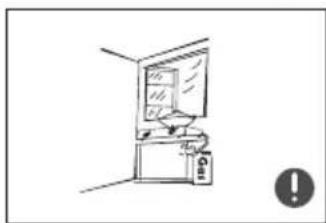
natural_image
Simple line drawing of a room interior with a monitor and cabinet, no text or symbols present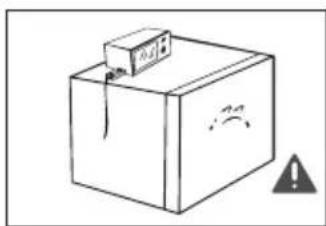
natural_image
Simple line drawing of a cardboard box with a warning symbol (no text or labels)natural_image
Simple line drawing of a box with a hand holding a starburst and a warning symbol (no text or labels)natural_image
Illustration of a child climbing inside a cube with a falling object, accompanied by warning symbols (no text or labels)natural_image
Cartoon character with a sad expression, surrounded by blocks and an exclamation mark (no text or symbols)natural_image
Simple line drawing of a person lifting a large cardboard box next to a cube (no text or symbols)natural_image
Simple line drawing of a cube next to a door with windows (no text or symbols)natural_image
Cartoon illustration of a sad cube with a frowning face, sun, and an exclamation mark (no text or symbols)natural_image
Simple line drawing of a cube with a smiley face and a small plug, no text or symbols present.natural_image
Technical line drawing of a multi-tiered rack-mounted device with circular components (no text or symbols)natural_image
Technical line drawing of a multi-level rack or storage unit with multiple compartments and control panels (no text or symbols)natural_image
Diagram of a multi-tiered rack-mounted device with circular components, no text or symbols presentnatural_image
Isometric line drawing of stacked cylindrical objects with a base (no text or symbols)natural_image
Isometric line drawing of a rectangular appliance with a lid and side panel, showing internal components and an upward arrow (no text or symbols)natural_image
Simple line drawing of a table with a tray, support structure, and a hanging object (no text or symbols)natural_image
Illustration of various household items including a glass, beer, and a kettle (no text or symbols)4 Problemebehebung
natural_image
Symbol of a trash bin with crossed lines and a solid black rectangle below (no text or labels)natural_image
Simple line drawing of a trash bin with no text or symbols2 Proper use of beverage cooler
3 Maintenance of beverage cooler
Thank you for buying this beverage cooler. To ensure that you get the best results from your new beverage cooler, please take time to read through the simple instructions in this booklet. Please ensure that the packing material is disposed of in accordance with the current environmental requirements. When disposing of any beverage cooler equipment please contact your local waste disposal department for advice on safe disposal. This appliance must be only used for its intended purpose.
1 Safety warnings
1.1 Warning
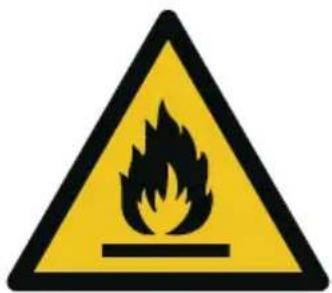
WARNING: risk of fire / flammable materials
THIS appliance is intended to be used in household and similar applications such as staff kitchen areas in shops, offices and other working environments; farm houses and by clients in hotels, motels and other residential type environments; bed and breakfast type environments; catering and similar non-retail applications.
THIS appliance is not intended for use by persons (including children) with reduced physical, sensory or mental capabilities, or lack of experience and knowledge, unless they have been given supervision or instruction concerning use of the appliance by a person responsible for their safety.
CHILDREN should be supervised to ensure that they do not play with the appliance.
IF the supply cord is damaged, it must be replaced by the manufacturer, its service agent or similarly qualified persons in order to avoid a hazard.
DO not store explosive substances such as aerosol cans with a flammable propellant in this appliance.
THE appliance has to be unplugged after use and before carrying out user maintenance on the appliance.
WARNING: Keep ventilation openings, in the appliance enclosure or in the built-in structure, clear of obstruction.
WARNING: Do not use mechanical devices or other means to accelerate the defrosting process, other than those recommended by the manufacturer.
WARNING: Do not damage the refrigerant circuit.
WARNING: Do not use electrical appliances inside the food storage compartments of the appliance, unless they are of the type recommended by the manufacturer.
WARNING: Please abandon the refrigerator according to local regulators for it use flammable blowing gas and refrigerant.
WARNING: When positioning the appliance, ensure the supply cord is not trapped or damaged.
WARNING: Do not locate multiple portable socket-outlets or portable power supplies at the rear of the appliance.
DO not use extension cords or ungrounded (two prong) adapters.
DANGER: Risk of child entrapment. Before you throw away your old refrigerator or freezer:
-Take off the doors
-Leave the shelves in place so that children may not easily climb inside.
THE refrigerator must be disconnected from the source of electrical supply before attempting the installation of accessory.
REFRIGERANT and cyclopentane foaming material used for the appliance are flammable. Therefore, when the appliance is scrapped, it shall be kept away from any fire source and be recovered by a special recovering company with corresponding qualification other than be disposed by combustion, so as to prevent damage to the environment or any other harm.
THE necessity that, for doors or lids fitted with locks and keys, the keys be kept out of the reach of children and not in the vicinity of the refrigerating appliance, in order to prevent children from being locked inside.
FOR EU standard: This appliance can be used by children aged from 8 years and above and persons with reduce physical sensory or mental capabilities or lack of experience and knowledge if they have been given supervision or instruction concerning use of the appliance in a safe way and understand the hazards involved. Children shall not play with the appliance. Cleaning and user maintenance shall not be made by children without supervision. Children aged from 3 to 8 years are allowed to load and unload refrigerating appliances.
FOR a freestanding appliance: this refrigerating appliance is not intended to be used as a built-in appliance.
FOR wine storage appliances: this appliance is intended to be used exclusively for the storage of wine.
ANY replacement or maintenance of the LED lamps is intended to be made by the manufacturer, its service agent or similar qualified person.
WARNING: To avoid a hazard due to instability of the appliance, it must be fixed in accordance with the instructions.
WARNING: Connect to potable water supply only. (Suitable for ice making machine)
TO Prevent A Child From Being Entrapped, Keep Out Of Reach Of Children And Not In The Vicinity Of Freezer (Or Refrigerator).” (Suitable for products with locks)
1.2 Meaning of safety warning symbols

Prohibition symbols
The symbols indicate prohibited matters, and those behaviors are forbidden. Non-compliance with the instructions may result in product damages or endanger the personal safety of users.

Warning symbols
The symbols indicate matters that must be followed, and those behaviors must be strictly executed in line with the operation requirements. Non-compliance with the instructions may result in product damages or endanger the personal safety of users.
Note symbols
The symbols indicate matters to pay attention to, and these behaviors shall be specially noted. Due precautions are needed or minor or moderate injuries or damages of the product will be caused.
This manual contains lots of important safety information which shall be observed by the users.
1.3 Electricity related warnings
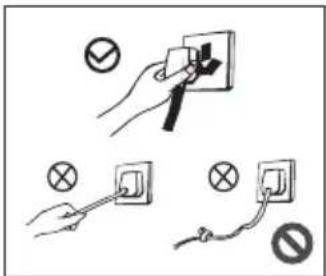
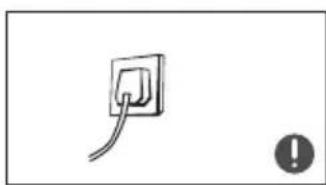
- Do not pull the power cord when pulling the power plug of the beverage cooler. Please firmly grasp the plug and pull out it from the socket directly.
- Do not damage the power cord under any condition so as to ensure safety use, do not use when the power cord is damaged or the plug is worn.
- Worn or damaged power cord shall be replaced in manufacturer-authorized maintenance stations.
natural_image
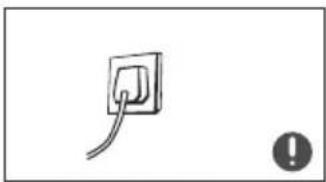
Simple line drawing of a plug with a cable, no text or symbols present- The power cord should be firmly contacted with the socket or else fires might be caused. Please ensure that the grounding electrode of the power socket is equipped with a reliable grounding line.
natural_image
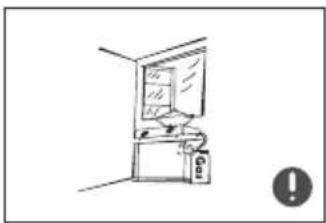
Simple line drawing of a room interior with a monitor and cabinet, no text or symbols present- Please turn off the valve of the leaking gas and then open the doors and windows in case of leakage of gas and other flammable gases. Do not unplug the cooler and other electrical appliances considering that spark may cause a fire.
natural_image
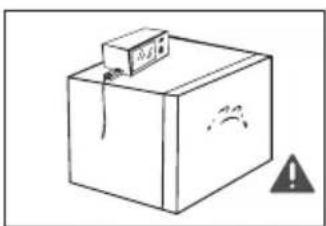
Simple line drawing of a cardboard box with a warning symbol (no text or labels)- To ensure safety, it is not recommended that to place socket, regulators, rice cookers, microwave ovens and other appliances at the top of the beverage cooler, those recommended by the manufacturer are not included. Do not use electrical appliances in the food pantry.
1.4 Related warnings for use
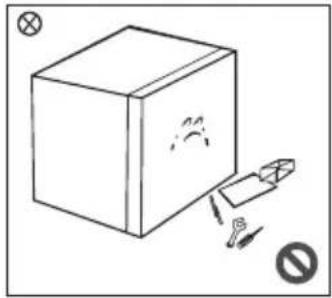
- Do not arbitrarily disassemble or reconstruct the beverage cooler, nor damage the refrigerant circuit; maintenance of the appliance must be conducted by a specialist.
- Damaged power cord must be replaced by the manufacturer, its maintenance department or related professionals in order to avoid danger.
natural_image
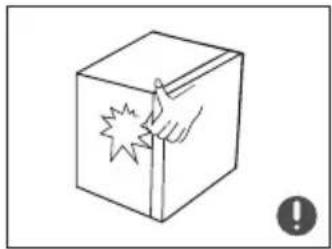
Simple line drawing of a box with a starburst and a hand holding a pen, no text or symbols present.- The gaps between cooler door and cooler body are small, be noted not to put your hand in these areas to prevent from squeezing the finger. Please be gentle when close or open the cooler door to avoid falling articles.
natural_image
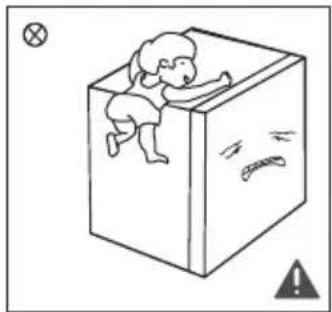
Illustration of a child climbing inside a cube with a warning symbol (no text or labels)- Do not give package and other components to children to play. The bending board and plastic film may lead to suffocation! Do not allow children to enter or climb the cooler to prevent that children are sealed in the cooler or children are injured by the falling cooler.
- Do not spray or wash the cooler; do not put the cooler in moist places easy to be splashed with water so as not to affect the electrical insulation properties of the cooler.
- Do not use cooler body, cooler door, etc. as pedal or support.
natural_image
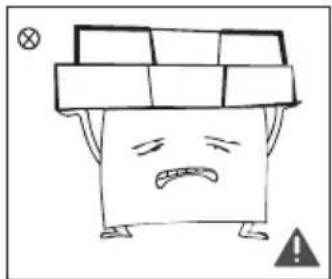
Cartoon illustration of a sad, anthropomorphic character with a grid on top and arms, accompanied by a warning symbol (no text or labels)- Do not place heavy objects on the top of the cooler considering that objects may fall when open or close the door, and accidental injuries might be caused.
1.5 Warnings related to placing items
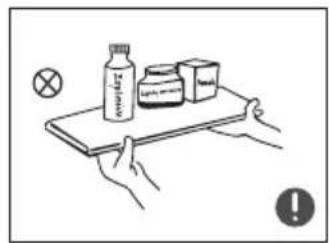
- Do not put flammable, explosive, volatile and highly corrosive items in the cooler to prevent damages to the product or fire accidents.
- Do not place flammable items near the cooler to avoid fires.
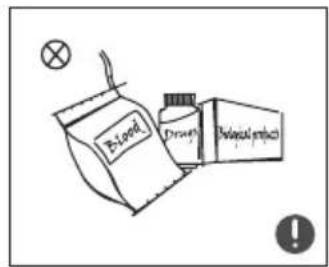
- This product is for household refrigeration appliances, mainly used in the storage of beverage, not for other purposes, such as storage of blood, drugs and biological products.
1.6 Warnings for energy
1) Beverage cooler might not operate consistently when sited for an extended period of time below the cold end of the range of temperatures for which the cooler appliance is designed.
2) The need to not exceed the storage time(s) recommended by the beverage manufacturers for any kind of beverage.
3) The precautions necessary to prevent an undue rise in the temperature of the beverage while defrosting the beverage cooler.
4) The fact that a rise in temperature of the beverage during manual defrosting, maintenance or cleaning could shorten the storage life.
5) The necessity that, for doors or lids fitted with locks and keys, the keys be kept out of the reach of children and not in the vicinity of the cooler appliance, in order to prevent children from being locking inside.
1.7 Warnings related to disposal

Refrigerant and cyclopentane foaming material used for the beverage cooler are flammable. Therefore, when the beverage cooler is scrapped, it shall be kept away from any fire source and be recovered by a special recovering company with corresponding qualification other than be disposed by combustion, so as to prevent damage to the environment or any other harm.

When the beverage cooler is abandoned, please remove the door of the beverage cooler, when removing the door body, pay attention to prevent pinching hands, and remove the door seal and shelves, put the door and shelves in a suitable position, so that children will not enter to play and have an accident.
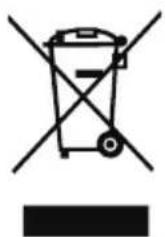
Correct Disposal of this product
This marking indicates that this product should not be disposed with other household wastes. To prevent possible harm to the environment or human health from uncontrolled waste disposal, recycle it responsibly to promote the sustainable reuse of material resources. To return your used device, please use the return and collection systems or contact the retailer where the product was purchased. They can take this product for environmental safe recycling.
2 Proper use of beverage cooler
2.1 Names of components
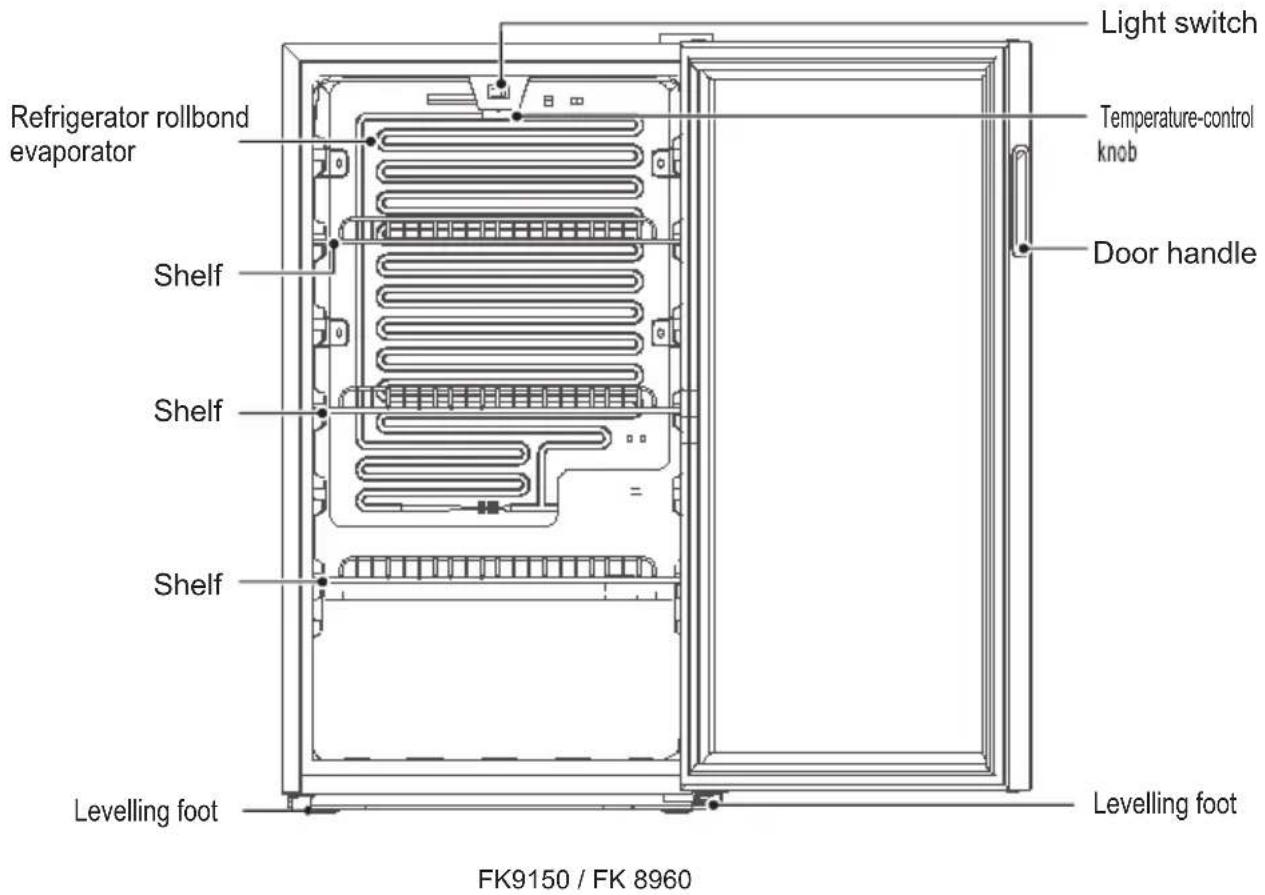
( The picture above is only for reference. The actual configuration will depend on the physical product or statement by the distributor )
2.2 Temperature Control
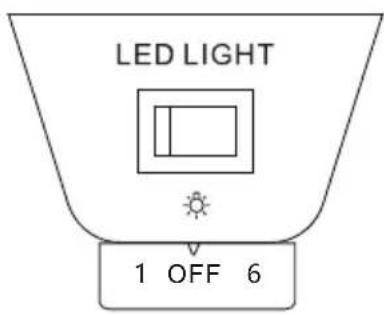
- The temperature inside the cooler is adjusted beverage by the temperature control knob. "1, 2, 3, 4, 5, 6, OFF" on the knob does not represent a specific temperature value. The smaller the number, the higher the temperature inside the beverage cooler; the higher the number, the lower the temperature inside the beverage cooler. "OFF" indicates that the compressor has stopped working. The lamp can be adjusted by a light switch.
- Recommended gear: "Mid-range"
This figure applies to FK9150 / FK 8960
(The picture above is only for reference. The actual configuration will depend on the physical product or statement by the distributor)
2.3 Placement
natural_image
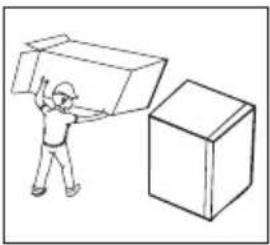
Illustration of a person lifting a large cardboard box next to a cube (no text or symbols)● Before using the cooler, remove all packaging materials including bottom cushions and foam pads and tapes inside the cooler, tear off the protective film on the door and the cooler body.
natural_image
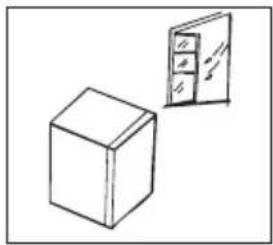
Simple line drawing of a 3D cube next to an open door with drawers (no text or symbols)● The cooler is placed in a well-ventilated indoor place; the ground shall be flat, and sturdy (rotate left or right to adjust the wheel for levelling if unstable).
natural_image
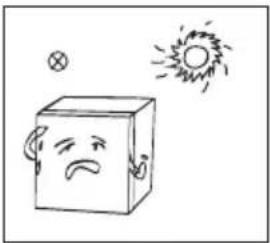
Cartoon illustration of a sad cube with a frowning face, sun, and an exclamation mark (no text or symbols)- Avoid direct sunlight and heat sources such as stove, heating radiator, etc. If the cooler has to be put next to heat source, a suitable insulation board shall be applied or keep the cooler away from heat source.
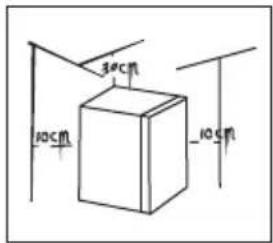
● The top space of the cooler shall be greater than 30cm, and the distances from bothsides and backside shall be more than 10cm to facilitate heat dissipation.
2.4 Start to use
natural_image
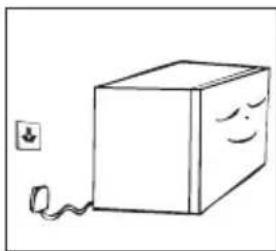
Simple line drawing of a smiling cube with a small plug attached to its side (no text or symbols)● After transportation, please let the cooler stay for more than 2 hours before turning on the power, otherwise it will lead to a decrease in cooling capacity or a damage to the cooler. The cooler shall stay for half an hour before connecting power when it is firstly started. Clean up the inner chamber before put into use for first time.
- Please pull out plug in case of power failure or cleaning. Do not connect the cooler to power supply within five minutes to prevent damages to the compressor due to successive starts.
- In the process of compressor work, water droplets or frost will be formed on the back wall of the refrigerated compartment, which is a normal phenomenon. After a period of time, the frost will melt into water and flow into the water tray to evaporate away.
- Do not connect cooler to electronic energy saving plug and converter that can convert DC into AC (E.g.: solar energy system, ship grid).
2.5 Recommended layout for beverage can in the cabinet
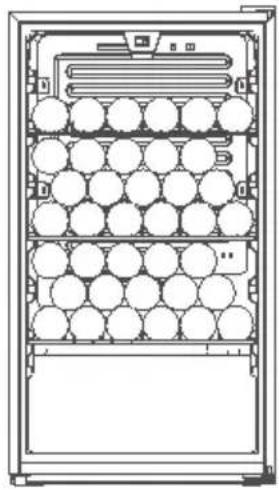
Do not let the beverage can tough the back side of cooler in order to maintain good air circulation in the cabinet. The capacity of beverage can storage is calculated based on the standard size can 355ml(outline size 65mm^*125mm,12oz) , oversized beverage can may impact on the number of can storage in the cabinet.
natural_image
Technical line drawing of a multi-tiered storage unit with circular components and heat exchangers (no text or symbols)Inner row
Top shelf-6 cans
Second shelf-16 cans
Third shelf-16 cans
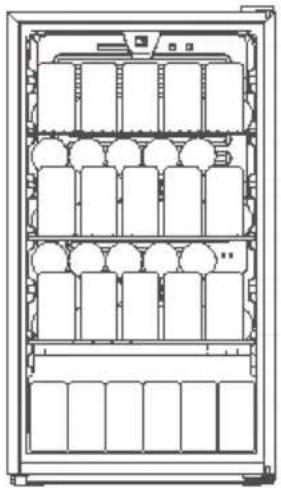
natural_image
Technical line drawing of a multi-level rack or storage unit with multiple compartments and control panels (no text or symbols)Middle row
Top shelf-5 cans
Second shelf-5 cans
Third shelf-5 cans
Base-6 cans
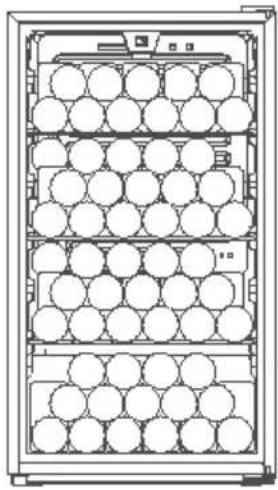
natural_image
Technical line drawing of a multi-tiered storage unit with circular compartments (no text or symbols)Outer row
Top shelf-11 cans
Second shelf-15 cans
Third shelf-15 cans
Base-15 cans
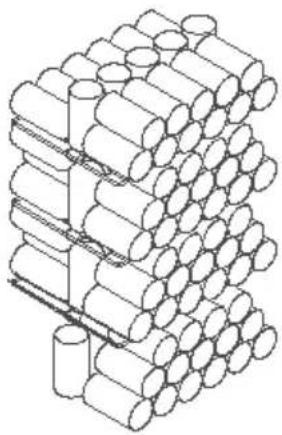
natural_image
Isometric line drawing of stacked cylindrical objects with no text or symbolsTotal beverage
can storage-115cans
2.6 Usage of temperature zones inside the beverage cooler
Due to different temperature zones generated due to air circulation in the cooler, the upper area's temperature is higher than the low area.
2.7 Energy saving tips
●The Cooler shall be placed in room dry and ventilated. The cooler cannot be put under direct sunlight or next to heat source (such as radiator, stove, etc.), and a suitable insulation board shall be applied if necessary.
●Try to shorten opening time of cooler's door.
● Put beverage into cooler after it has cooled down.
2.8 Reversing the door swing
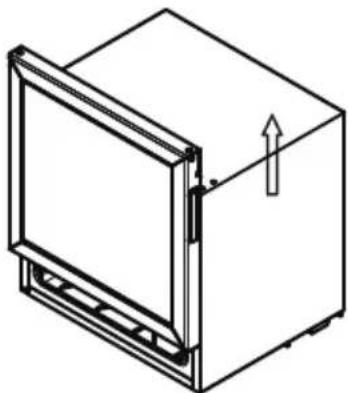
- Change the installation location of the upper hinge⑤ of the beverage cabinet, then the opening direction of the door could be changed at will. Please follow the following instructions for the change of the opening direction of the beverage cabinet's door (for instance: from right-handed door to left-handed door): close the glass door of the beverage cabinet, use a blade to remove the axle sleeve① and rivet② carefully, loose the mounting cover③ of the door hinge and three positioning bolts④ and remove the upper hinge⑤ and axle sleeve⑥.
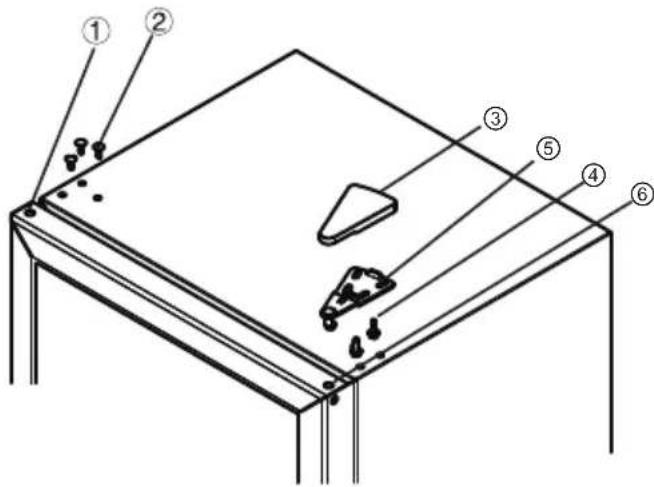
- Open the door of the beverage cabinet and detach the glass door of which with tremendous care.
natural_image
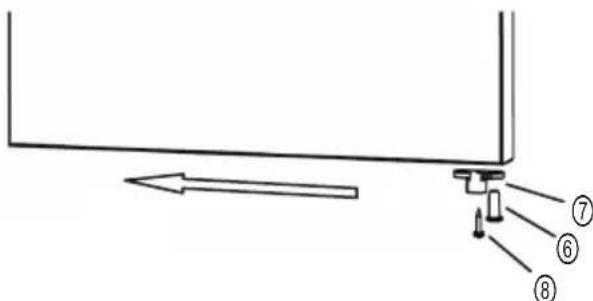
Isometric line drawing of a refrigerator with an open lid and side panel, showing airflow direction (no text or symbols)- Dismantle the door axle sleeve⑥at lower part of the glass door, door stopper block screws⑧and door stopper⑦, and fix them to left side.
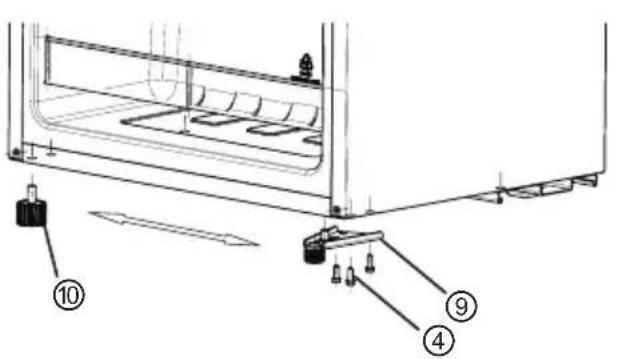
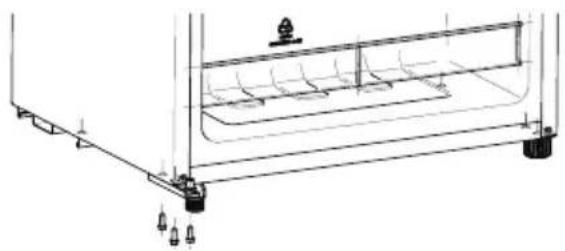
- Dismantle the levelling foot⑩, positioning bolts ④ and lower hinge⑨, then exchange the parts of right and left sides and later use the reverse method to install the levelling foot and positioning bolts.
natural_image
Technical line drawing of a mechanical assembly with mounting feet and structural supports (no text or symbols)- Put the aforesaid glass door on the lower hinge, install the door axle sleeve⑥ back and fix the upper hinge⑤. Align the door with the cabinet and check the tightness of gasket, and then install all the ornaments①②.
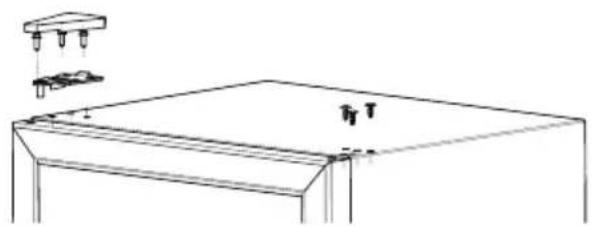
natural_image
Simple line drawing of a table with a support structure and a small object above it (no text or symbols)( The picture above is only for reference. The actual configuration will depend on the physical product or statement by the distributor )
3 Maintenance of beverage cooler
3.1 Disconnect the beverage cooler
Unplug power plug to disconnect the beverage cooler.
3.2 Stop using the beverage cooler
If the beverage cooler left unused for a long time, please:
- Unplug the beverage cooler;
- Clean the beverage cooler;
- Keep the beverage cooler door open.
3.3 Clean the beverage cooler
●Dusts behind the beverage cooler and on the ground shall be timely to improve the cooling effect and energy saving.
- Check the door gasket regularly to make sure there are no debris. Clean the door gasket with a soft cloth dampened with soapy water cleaned or diluted detergent.
●The interior of the beverage cooler should be cleaned regularly to avoid odor.
- Please turn off the power before cleaning interior, remove all foods, drinks, shelves, etc.
- Use a soft cloth or sponge to clean the inside of the beverage cooler, with two tablespoons of baking soda and a quart of warm water. Then rinse with water and wipe clean. After cleaning, open the door and let it dry naturally before turning on the power.
- For areas that are difficult to clean in the beverage cooler (such as narrow sandwiches, gaps or corners), it is recommended to wipe them regularly with a soft rag, soft brush, etc. and when necessary, combined with some auxiliary tools (such as thin sticks) to ensure no contaminants or bacterial accumulation in these areas.
- Do not use soaps, detergents, spray cleaners, etc. to clean the inside of your beverage cooler as these may create odors or contamination.
- Clean the shelves with a soft cloth dampened with soapy water or diluted detergent. Then rinse with water and dry with a soft cloth or dry naturally.
- Wipe the outer surface of the beverage cooler with a soft cloth dampened with soapy water, detergent, etc., and then wipe dry. Do not rub or scratch the surface of the glass door to prevent the door from being broken or scratched.
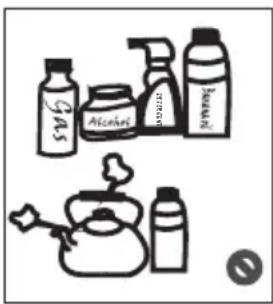
- Do not use hard brushes, clean steel balls, wire brushes, abrasives(such as toothpastes), organic solvents (such as alcohol, acetone, banana oil, etc.), boiling water, acid or alkaline items, which may damage the beverage cooler surface and interior. Boiling water and organic solvents such as benzene may deform or damage plastic parts.
- Do not rinse directly with water or other liquids during cleaning to avoid short circuits or affect electrical insulation after immersion.
Notice :
Do not use detergent and solvent with sand or acid.
natural_image
Illustration of various household items including a glass, alcohol spray bottle, and cooking pot (no text or symbols)4 Trouble shooting
| Not work | Whether the cooler is plugged and connected to power;Low voltage;Whether temperature control knob is in the work area;Failure power or tripping circuit. |
| Long-term operation of compressor | It is normal that cooler operates for longer time in summer when the ambient temperature is higher;Do not put too much beverage s in the cooler at one time;Frequent opening of cooler door. |
| Light not work | Whether the cooler is connected to power, whether the indicator light is damaged. |
| Loud noises | Whether the floor is flat, whether the placement of cooler is stable;Whether the cooler accessories are properly placed. |
| Over heat on sidewallSurface condensation | The cooler enclosure may emit heat during running specially in summer, this is caused by the radiation of the condenser, and it is a normal phenomenon.Condensation: condensation phenomenon will be detected on the exterior surface and door seals of the cooler when the ambient humidity is high, this is a normal phenomenon, and after wiping with towel, turns up the set temperature of the appliance properly. |
| Airflow soundBuzzClatter | Refrigerants circulating in the refrigerant lines will produce eruption of sound and grunts which is normal does not affect the cooling effect.Buzz will be generated by running compressor specially when starting up or shutting down.The solenoid valve or electric switch valve will clatter which is a normal phenomenon and does not affect the operation. |
Table 1 Climate classes
| Class Symbol | Ambient temperature range °C | |
| Extended temperate | SN | + 10 to + 32 |
| Temperate | N | + 16 to + 32 |
| Subtropical | ST | + 16 to + 38 |
| Tropical | T | + 16 to + 43 |
Extended temperate: 'this refrigerating appliance is intended to be used at ambient temperatures ranging from 10 °C to 32 °C';
temperate: 'this refrigerating appliance is intended to be used at ambient temperatures ranging from 16 °C to 32 °C';
Subtropical: 'this refrigerating appliance is intended to be used at ambient temperatures ranging from 16 °C to 38 °C';
Tropical: 'this refrigerating appliance is intended to be used at ambient temperatures ranging from 16 °C to 43 °C';
If the wine cooler operates outside the climate class(ambient temperature range)for which it is rated then it may not be able to maintain satisfactory ieternal temperatures.
Special for new European standard
- The ordered parts in the following table can be acquired from channel _.
| Ordered Part | Provided by | Minimum Time Required for Provision |
| thermostats | Professional maintenance personnel | At least 7 years after the last model is launched on the market |
| temperature sensors | Professional maintenance personnel | At least 7 years after the last model is launched on the market |
| printed circuit boards | Professional maintenance personnel | At least 7 years after the last model is launched on the market |
| light sources | Professional maintenance personnel | At least 7 years after the last model is launched on the market |
| door handles | Professional repairers and final users | At least 7 years after the last model is launched on the market |
| door hinges | Professional repairers and final users | At least 7 years after the last model is launched on the market |
| trays | Professional repairers and final users | At least 7 years after the last model is launched on the market |
| baskets | Professional repairers and final users | At least 7 years after the last model is launched on the market |
| door gaskets | Professional repairers and final users | At least 10 years after the last model is launched on the market |
- The shortest period for providing after-sales spare parts is 15 working days.
- The model information and model identification in the product database can be obtained by scanning the web link on the QR code (if any) on the product energy efficiency label.
- Problemebehebung
- Proper use of beverage cooler
- Maintenance of beverage cooler
- Safety warnings
- Warning
- WARNING: risk of fire / flammable materials
- Meaning of safety warning symbols
- Electricity related warnings
- Related warnings for use
- Warnings related to placing items
- Warnings for energy
- Warnings related to disposal
- Names of components
- Temperature Control
- Placement
- Start to use
- Recommended layout for beverage can in the cabinet
- Usage of temperature zones inside the beverage cooler
- Energy saving tips
- Reversing the door swing
- Disconnect the beverage cooler
- Stop using the beverage cooler
- Clean the beverage cooler
- Trouble shooting
- Special for new European standard
Brand : CEEM
Model : BC 189
Category : Uncategorized