
MM820CTB-PM - Microwave PRIVILEG - Free user manual and instructions
Find the device manual for free MM820CTB-PM PRIVILEG in PDF.


| Brand | Privileg |
| Model | MM820CTB-PM |
| Product Type | Solo Microwave |
| Color Variants | White (150472), Silver (148438), Black (64111926) |
| Dimensions (H x W x D) | 258 x 439 x 330 mm |
| Weight | Approx. 11 kg |
| Cooking Chamber Volume | Approx. 20 L |
| Turntable Diameter | Approx. 255 mm |
| Power Output (Microwave) | 800 W max |
| Power Levels | Variable (140 - 800 W) |
| Frequency | 2450 MHz |
| Power Consumption | 1270 W |
| Supply Voltage | 230 V ~ 50 Hz |
| Fuse Rating | Min. 16 A |
| Control Type | Two mechanical dials (power level and cooking time) |
| Maximum Cooking Time | 35 minutes |
| Defrost Function | Yes, at 250 W power level |
| Interior Light | Yes, automatic on when door open or operating |
| Door Opening | Pull handle, safety interlock |
| Turntable | Glass turntable, max load 4 kg |
| Safety Features | Child safety (supervision required), door seal monitoring, microwave radiation protection |
| Installation Type | Freestanding (not for built-in) |
| Minimum Clearances | Top: 30 cm, Rear: 0 cm, Sides: 20 cm each, Height from floor: 85 cm |
| Cleaning | Soft damp cloth, mild detergent; turntable dishwasher safe |
| Repair and Spare Parts | Service via manufacturer or authorized technicians; use original parts |
Frequently Asked Questions - MM820CTB-PM PRIVILEG
User questions about MM820CTB-PM PRIVILEG
0 question about this device. Answer the ones you know or ask your own.
Ask a new question about this device
Download the instructions for your Microwave in PDF format for free! Find your manual MM820CTB-PM - PRIVILEG and take your electronic device back in hand. On this page are published all the documents necessary for the use of your device. MM820CTB-PM by PRIVILEG.
USER MANUAL MM820CTB-PM PRIVILEG
natural_image
Line drawing of a microwave oven with control knobs and a screen (no text or symbols on the device itself)Gebrauchsanleitung
Mikrowelle
Inhaltsverzeichnis
natural_image
Two glassware illustrations: a spoon inside and a cross crossed, both without any text or symbols.
HINWEIS
natural_image
Line drawing of a microwave oven with control knobs and three separate kitchen appliances below (no text or symbols)Lieferumfang
natural_image
Simple diagram of concentric circular layers with a labeled point (3), no text or symbols present.natural_image
Line drawing of a microwave oven with control knobs and a screen (no text or symbols on the device itself)User manual
Microwave
Table of contents
Read the important safety instructions carefully and keep these for future use. Please read
through the safety instructions and user manual carefully before using the appliance. This is the only way you can use all the functions safely and reliably.
Be sure to also observe the national regulations in your country, which are valid in addition to the regulations specified in this user manual.
Keep all safety notices and instructions for future reference. Pass all safety notices and instructions on to the subsequent user of the product.

You can find more information on the start-up from page EN-21.
Explanation of terms and symbols,
definitions EN-3
Explanation of terms ..... EN-3
Explanation of symbols ..... EN-3
Definitions EN-3
Safety EN-4
Intended use EN-4
Safety notices ...... EN-4
Appliance components and operating
elements....EN-11
Information about microwaves ..... EN-12
Applications....EN-12
Suitable dishware ..... EN-13
Size and form....EN-13
Operation EN-14
Cooking chamber light . . . . . . . . . . . . EN-14
Opening the cooking chamber door . . . EN-15
Setting the power level ..... EN-15
Setting the cooking time ..... EN-15
Starting the cooking process ..... EN-15
Aborting the cooking process ..... EN-15
Defrosting EN-15
Practical tips ..... EN-16
The correct cooking temperature ..... EN-16
The correct quantity of food ..... EN-16
Order of dishes EN-16
Piercing and scoring ..... EN-16
Stir and turn....EN-17
Care and maintenance ..... EN-18
Delivery....EN-20
Package contents ..... EN-20
Check the delivery ..... EN-20
Packaging tips....EN-20
Start-up....EN-21
Moving and unpacking ..... EN-21
Choosing the correct set-up location . . . EN-21
Cleaning before use....EN-22
The turntable ..... EN-22
Electrical connections EN-22
First-time use ....EN-22
Troubleshooting table ..... EN-23
Waste prevention, free return
and disposal....EN-25
Waste prevention ..... EN-25
Free return of old electrical appliances . EN-25
Disposal....EN-25
Packaging EN-26
Service EN-27
General customer service ..... EN-27
Spare parts EN-27
Technical specifications ..... EN-28
Explanation of terms and symbols, definitions
Explanation of terms
The following terms can be found in this user manual.

WARNING
This term indicates a hazard with a medium level of risk which, if not avoided, could result in death or serious injury.

CAUTION
This term indicates a hazard with a low level of risk which, if not avoided, could result in minor or moderate injury.

NOTICE
This term warns against possible damage to property.
Explanation of symbols
The following symbols can be found in this user manual.

This symbol refers to useful additional information.

Hot surface
Definitions
“Microwave mode”: food is only heated by microwaves.
“Microwave-combi mode” means that food is heated by microwaves as well as heat, like a typical oven. The same risks and safety precautions apply as for microwave mode.
“Oven mode” means that food is heated by convection/hot air, grills or top/bottom heat.
Safety
Intended use
The appliance is designed for reheating and cooking, defrosting and grilling of food.
The appliance is designed for use in private households and is not designed for commercial use or multiple use (e.g.: use by several parties in a block of flats).
It is not suitable for use outdoors or on non-stationary sites (e.g. ships).
The appliance is not designed for installation in built-in furniture units.
The interior light must only be used to illuminate the interior of the appliance. It is not suitable for lighting a room.
The appliance is not suitable
– for heating a room.
– for drying or storing food, clothes or other items.
– for heating up hot water bottles, slippers, sponges, moist cleaning cloths or similar items.
Persons who are unable to operate the appliance safely due to their physical, sensory or mental abilities or lack of knowledge must be supervised during use.
Do not make any technical changes to the appliance.
If the supply cord is damaged, it must be replaced by the manufacturer, its service agent or similarly qualified persons in order to avoid a hazard
Use the appliance exclusively as described in this user manual. Any other use is deemed improper and may result in damage to property or even personal injury. The manufacturer accepts no liability for damage caused by improper use.
Safety notices
In this chapter you will find general safety instructions which you must always observe for your own protection and that of third parties. Please also observe the warning notices in the individual chapters on operation, setup etc.
Risks to children and certain groups of individuals

WARNING
Risk of suffocation for children!
Children can become entangled in the packaging fi lm or swallow small parts and suffocate.
■ Do not allow children to play with the packaging fi lm.
■ Prevent children from pulling small parts from the appliance or taking them out of the accessory bag and putting them in their mouths.
Risk of burns for children!
The door glass can become very hot during operation and lead to burns.
- Keep children away from the door glass!
The appliance and its accessible parts become hot during use. Care should be taken to avoid touching heating elements.
■ Children less than 8 years of age must be kept away unless continuously supervised.

CAUTION
Risk of injury!
Children and specific groups of people are at an increased risk of injury when handling the device.
This appliance can be used by children aged from 8 years and above and persons with reduced physical, sensory or mental capabilities or lack of experience and knowledge if they have been given supervision or instruction concerning use of the appliance in a safe way and understand the hazards involved.
■ Children shall not play with the appliance.
■ Cleaning and user maintenance shall not be made by children without supervision..
Risks in handling household electrical appliances

WARNING!
Risk of electric shock!
Touching live parts may result in severe injury or death.
■ Only use the appliance indoors. Do not use in wet rooms or in the rain.
■ Do not operate or continue to operate the appliance if
- it exhibits visible damage, e.g. the connector cable is defective, the control panel is cracked or the door function is impaired.
– it starts smoking or there is a smell of burning.
– it makes unfamiliar noises.
In such cases, you should pull the mains plug out of the socket or switch off/unscrew the fuse, keep the door
closed and have the appliance repaired (see chapter "Service").
■ If the supply cord is damaged, it must be replaced by the manufacturer, its service agent or similarly qualified persons in order to avoid a hazard.
- Check the appliance regularly for damage.
■ The appliance corresponds to protection class I and may only be connected to a plug with a protective conductor that has been properly installed. Ensure that the voltage is correct when connecting it. More detailed information about this can be found on the nameplate.
■ Since all poles of the appliance cannot be disconnected from the mains via an accessible disconnecting device, an all-pole disconnecting device in accordance with overvoltage category III must be connected within the house installation with at least 3 mm contact clearance; consult a qualified professional if necessary (see the chapter on “Service”).
■ We recommend using a pulse-sensitive fault current switch (residual current operated circuit-breaker).
■ The appliance must only be connected to the mains after completion of all installation and assembly work.
- Keep the appliance, the mains plug and the mains cord away from open flames and hot surfaces. The insulation of the mains cord could melt.
■ Do not kink or pinch the mains cord or lay it over sharp edges.
■ Never pull the mains plug out of the socket by the mains cord; always hold the mains plug itself.
■ Never touch the mains plug with wet hands.
■ Never immerse the mains cord or plug in water or any other liquids.
In the event of a fault, as well as before cleaning or maintenance, disconnect the mains plug from the socket and/or switch off or unscrew the fuse.
■ Do not put any objects in or through the housing openings and also make sure that children cannot insert any objects through them.
- A steam cleaner is not to be used for cleaning.
■ This appliance contains electrical and mechanical parts which are essential for protection against potential sources of danger. Only parts corresponding to the original appliance specifications may be used for repairs.
■ Investigations and repairs to the appliance may only be carried out by authorised specialists, such as our Service department.
■ Unauthorised repairs to the appliance can cause property damage and personal injury, and invalidate liability and warranty claims. Never try to repair a defective or suspected defective appliance yourself.

CAUTION!
Fire hazard!
Improper handling of the appliance can lead to fire.
■ Connect the appliance only to a properly installed and earthed electric socket. Do not connect to a multi-socket extension cable or a multi-socket plug.
■ Do not operate the appliance with an external timer or a separate remote control system.

NOTICE
Improper handling of the appliance may result in damage or explosions.
■ If a trolley is used to move the appliance, the appliance must be lifted as shown on the packaging.
■ Do not use the appliance door handle to lift the entire oven! The handle is not designed to carry the whole weight of the appliance.
■ Do not use sharp objects to unpack the appliance.
When cleaning, please note:
- Never use soap or any harsh, granular, soda-based, acid-based, solvent-based or abrasive cleaners. All-purpose cleaners with a neutral pH are recommended.
- The door seals can be damaged by unsuitable cleaning agents. Use care products only on the outer surfaces.
– Use only soft cloths for cleaning.
- Ensure that water does not enter the ventilation slits or come into contact with the electrical components.
■ The lighting in the appliance is exclusively for lighting the cooking chamber. It is not suitable for lighting a room.
Risks when handling heat-generating appliances

CAUTION
Risk of burns!
During use the appliance becomes hot. Care should be taken to avoid touching heating elements inside the oven.
■ Children less than 8 years of age shall be kept away unless continuously supervised.
■ Do not touch the parts of the housing!
■ Do not touch hot parts. Always protect hands with oven gloves or pot holders when working on the hot appliance. Only use dry oven gloves or potholders. Wet textiles are better heat conductors and can cause steam burns.
Fire hazard!
Improper handling of the appliance may result in fire and damage to property.
■ To ensure sufficient air circulation, it is imperative that the instructions in the “Start-up” chapter are followed.
■ Do not cover the appliance with blankets, cloths or similar, as these objects may become hot and catch fire.
■ When heating food in plastic or paper containers, keep an eye on the oven due to the possibility of ignition.
■ The microwave oven is intended for heating food and beverages. Drying of food or clothing and heating of warming pads, slippers, sponges, damp cloth and similar may lead to risk of injury, ignition, or fi re.
■ Do not place any objects in the cooking chamber (recipe book, oven gloves etc.). Accidentally switching on
the appliance can cause damage or even ignition. Do not use the cooking chamber for storage purposes.
■ Never heat fl ammable objects or dishes containing alcohol.
■ Never deep-fry or heat oil! The oil temperature cannot be monitored.
If smoke is emitted, switch off or unplug the appliance and keep the door closed in order to stifl e any fl a-mes.
If a fire starts, keep the cooking chamber door closed, immediately pull the plug out of the socket or switch off the automatic circuit breakers and/or unscrew the fuses.
■ Never extinguish burning oil or fat with water. To extinguish the fi re, use a suitable fi re extinguisher with the designation “F” or a fi re blanket.
■ Once the fire has been extinguished, have the appliance checked by our Service department.
■ When installing or setting up the appliance, follow the specified minimum distances for ventilation.
■ Do not put the appliance in a cupboard.
■ Never remove the cover that is fastened inside the cooking chamber! It serves to protect the magnetron, which emits the microwaves.
Opening the door of the appliance creates a draught. Baking paper could touch the heating elements and catch fi re.
■ Never place loose baking paper on the accessories. Always secure baking paper with a piece of dishware or a baking dish.
■ Only line the required area with baking paper. Baking paper must not protrude over the accessory edges.
General risks when cooking food
Health hazard!
Improper use of this appliance can lead to damage to health.
■ Clean the appliance regularly and remove any traces of food leftovers immediately.
■ Particularly with poultry and dishes containing fresh egg, and when warming up meals, ensure that the food is fully cooked through to kill off all pathogens (e.g. salmonella).
Acrylamide may be carcinogenic. Acrylamide is produced when starch is exposed to excessive heat, e.g. in potatoes (fries, chips), biscuits, toast, bread etc.
- Keep cooking times as short as possible.
■ Only brown the food slightly, do not allow it to brown too much. - Cut larger-sized fries and then bake at maximum of 180 °C.
Defrosting meat, poultry or fish in the oven can cause dangerous microorganisms (e.g. salmonella) to multiply rapidly. This increases the risk of food poisoning.
■ Do not defrost meat, poultry and fi sh in the oven.
■ Only use the defrosting function to defrost vegetables, pre-cooked food, etc.
■ Take the frozen food out of the freezer ahead of time and let it defrost
in the refrigerator. The fluid from the frozen food must be able to properly drain, otherwise harmful microorganisms can form.
The water that melts during defrosting can contain harmful bacteria, especially with meat and poultry.
Do not defrost meat, poultry and fish in oven mode, only in microwave mode.
■ Avoid any physical contact.
■ Pour defrost water away. Do not use it for any other purpose.
■ Thoroughly clean the crockery you have used.
Risks in microwave and microwave-combi mode

WARNING
Microwave hazard!
The cover in the cooking chamber serves to protect the magnetron, which emits the microwaves.
■ Never remove the cover inside the cooking chamber!
A door that fails to close adequately can cause microwave radiation to escape. Under such circumstances, the device may not be used.
■ If the door or door seals are damaged, the oven must not be operated until it has been repaired by a competent person.
■ It is hazardous for anyone other than a competent person to carry out any service or repair operation that involves the removal of a cover which gives protection against exposure to microwave energy.
■ Pay particular attention to the cleanliness of the door seals and door seal faces along with all adjacent parts.
Danger of explosion!
Improper handling of the appliance may result in damage or explosions.
■ Only use utensils that are suitable for use in microwave ovens. Containers that become hotter than the food inside them are not suitable for microwave cooking. Do not use such containers.
■ Metallic containers for food and beverages are not allowed during microwave cooking. Metal in the cooking chamber may cause sparks during operation! This can damage the viewing window or the entire appliance! Do not use metal pots, metal pans and metal lids or dishware with metal parts such as gold edges under any circumstances.
■ Do not use any aluminium foil, due to the fact that this can also cause sparks when coming into contact with the cooking chamber walls.
■ Never place a mixture of water and oil or fat into the appliance. This can explode.
■ Liquids and other foods must not be heated in sealed containers since they are liable to explode
■ Eggs in their shell and whole hard-boiled eggs should not be heated in microwave ovens since they may explode, even after microwave heating has ended. Prick holes in tomatoes, sausages, aubergines or similar food with a closed skin before cooking to prevent bursting.
CAUTION
Risk of scalding!
Microwave heating of beverages can result in delayed and eruptive boiling, therefore care must be taken when handling the container. The liquid then reaches boiling temperature without any outward visible sign of boiling. Even a small vibration can cause the liquid to squirt out suddenly, e.g. when being taken out of the appliance.
■ To avoid a boiling delay, place a plastic or glass spoon in the container. The spoon must always maintain a minimum distance of 2 cm from the inner walls.
■ Do not use tall, thin containers with a narrow top section.
■ Please ensure you stir the food before eating and after half the cooking time has elapsed.
■ Please wait a short moment after heating up; carefully tip the dish and stir before removing the container from the cooking chamber.
Risk of burns!
Improper handling of the appliance can lead to burns. Accessible parts, accessories and dishes become very hot during operation.
■ Do not touch the parts of the housing!
■ Food is sometimes heated unevenly. The containers should not get as hot as the food inside. Please therefore ensure to check the temperature of any food thoroughly and carefully, especially for children.
■ Before heating up baby food, please remove the screw cap and suction teat from the feed bottle.
■ The contents of feeding bottles and baby food jars shall be stirred or shaken and the temperature checked before consumption, in order to avoid burns.
■ Set the power level and time exactly in accordance with the packaging instructions.
Risk of injury!
■ The appliance is heavy and bulky. Seek the help of another person during transport and setup.
■ Do not use the door and door handle as a step or for lifting.
! NOTICE
Risk of damage to property! Improper handling of the appliance can lead to property damage.
■ The appliance must never be operated without the turntable or foods/liquids.
■ Always place cooking containers on the turntable. This prevents liquid from seeping into the appliance if it should boil over.
■ Care should be taken not to displace the turntable when removing containers from the appliance.
■ Do not exceed a weight of 4 kg on the turntable. Risk of breakage!
■ Do not place the hot turntable on a cold surface such as, for example, a work surface made of granite or tile. Otherwise, the turntable could shatter. Always place on top of a suitable mat.
■ Only heat plastic containers from the freezer for as long as is needed until the food can be decanted into another container.
■ Do not use any damaged containers! They can break and the leaked contents could damage the inside of the appliance.
If accessories such as the turntable are not completely inside the cooking chamber, the viewing window may become scratched when closing the appliance door. For this reason, always push accessories all the way into the cooking chamber.
■ The oven should be cleaned regularly and any food deposits removed.
■ Failure to maintain the oven in a clean condition could lead to deterioration of the surface that could adversely affect the life of the appliance and possibly result in a hazardous situation.
Appliance components and operating elements
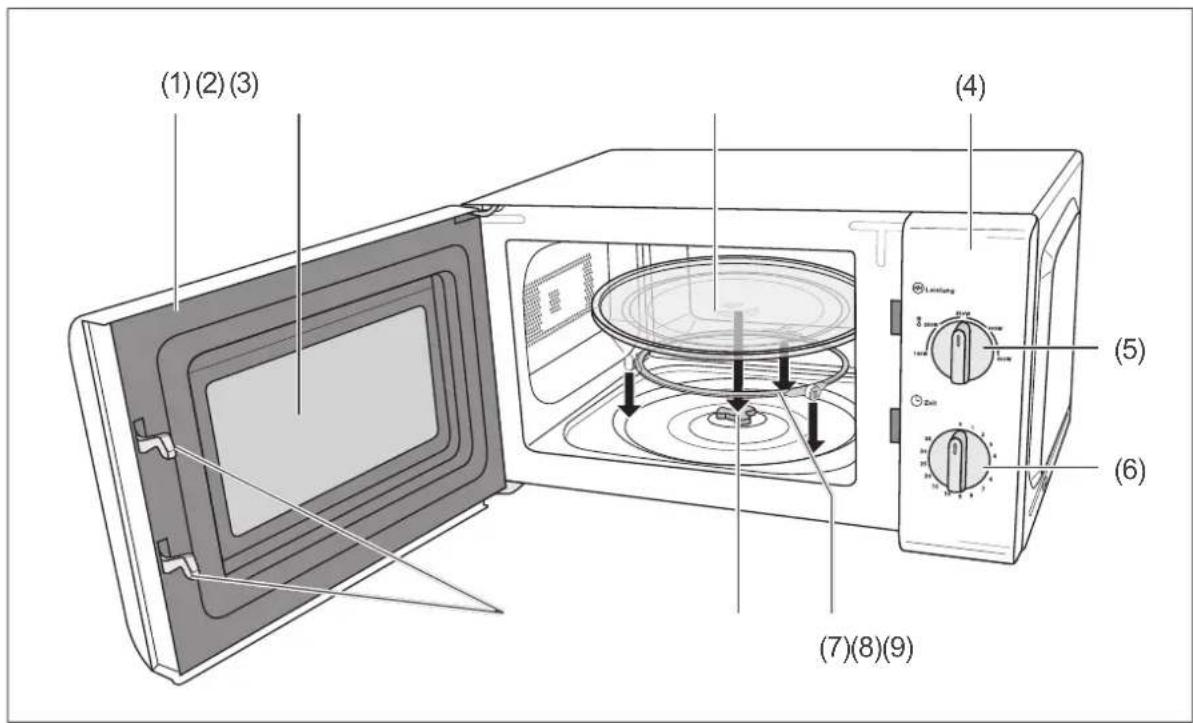
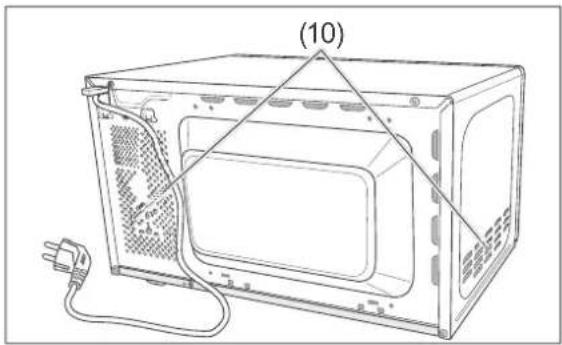
(1) Cooking chamber door
(2) Viewing panel
(3) Turntable
(4) Control panel
(5) Power level control dial
(6) Cooking time control dial
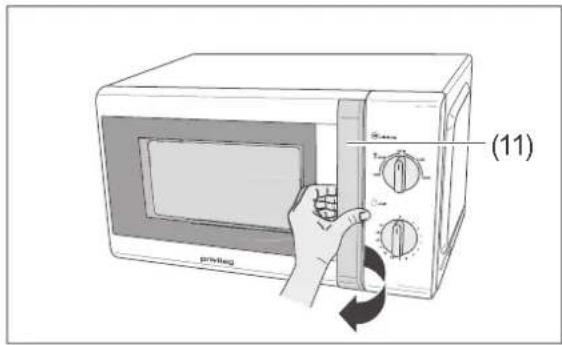
(7) Roller ring
(8) Turntable drive
(9) Door-locking mechanism
(10) Ventilation slits
(11) Door handle
Information about microwaves
What are microwaves?
Microwaves are electromagnetic waves. As with radio and TV, microwaves are also invisible and intangible.
Microwaves
– are reflected by all metals,
– can penetrate glass, porcelain, plastic and paper,
– are absorbed by foodstuffs.
What effect do microwaves have on foodstuffs?
- The microwaves penetrate foodstuffs to a depth of approximately 3 cm.
- The water, fat and sugar molecules are heated up (dishes with a high water content are heated up most quickly).
- This heat then slowly penetrates the entire dish and leads to the dish being defrosted, heated and cooked.
- Due to the fact that the individual elements of the dish are heated unevenly, it is important to stir or turn the dish over to ensure that it is cooked through evenly.
- The cooking compartment and the air in this compartment are not heated. The food container is primarily heated by the hot food itself.
- When heating liquids, a so-called "boiling delay" can occur. The liquid then reaches boiling temperature without any outward visible sign of boiling. Even a small vibration may cause the liquid to suddenly spray out, for example when removing it from the microwave oven.
- Every dish requires a certain amount of energy for cooking or defrosting – a good rule of thumb is “high-power, low time” or “low power, high time”.
How does a microwave oven work?
- A microwave generator, the so-called magnetron, generates the microwaves and disperses them into the cooking chamber.
- The cooking chamber walls and inner screen reflect microwaves, preventing them from being emitted out of the cooking chamber.
– The turntable ensures that the microwaves are distributed evenly to the food. - The microwave's power can be set to various levels.
- The appliance switches off
- after the selected time has elapsed,
- when opening the cooking chamber door (1).
Applications
The appliance is ideally suited to defrosting smaller portions as well as the preparation of:
– Stews, soups, sauces
- Meat without crusts
- Steamed fish
- Vegetables
- Side dishes (rice, boiled potatoes, some pasta)
- Hot drinks
Suitable dishware

WARNING
Danger of explosion!
Improper handling of the appliance may result in damage or explosions.
■ Only use utensils that are suitable for use in microwave ovens. Containers that become hotter than the food inside them are not suitable for microwave cooking. Do not use such containers.
■ Metallic containers for food and beverages are not allowed during microwave cooking. Metal in the cooking chamber may cause sparks during operation! This can damage the viewing window or the entire appliance! Do not use metal pots, metal pans and metal lids or dishware with metal parts such as gold edges under any circumstances.
■ Do not use any aluminium foil, due to the fact that this can also cause sparks when coming into contact with the cooking chamber walls.

NOTICE
Risk of damage to property!
Improper handling of the appliance can lead to property damage.
■ When in grill or combi mode, do not use any porcelain, ceramic or plastic containers or fi lm wrap that cannot withstand high temperatures!
■ Do not use baking paper or similar!
- Use only microwave-suitable crockery. This includes:
– fire-resistant glass, ceramic, porcelain
– fire and frost resistant glass ceramics
– High heat resistant and microwaveable plastic (e.g. oven bag)
In order to find out whether the crockery is microwaveable, you can conduct the following test:
- Put the empty container in the cooking chamber.
Leistung
L Zeit
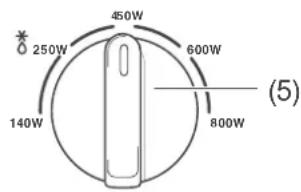
- Adjust the power level to the highest level with the power level control dial (5).
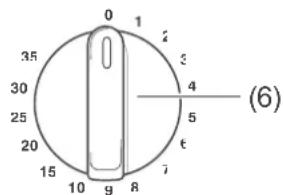
- Turn the cooking time control dial (6) to "10 min".
- Close the cooking chamber door (1). The appliance starts.
Size and form
- Flat, wide containers are more suitable than tall, narrow ones. "Flat" dishes can cook through more evenly.
– Round or oval shaped containers are more suitable than square or rectangular containers. There is a risk of localised overheating in the corners.
Operation

WARNING
Microwave hazard!
The cover in the cooking chamber serves to protect the magnetron, which emits the microwaves.
■ Never remove the cover inside the cooking chamber!
A door that fails to close adequately can cause microwave radiation to escape. Under such circumstances, the device may not be used.
■ If the door or door seals are damaged, the oven must not be operated until it has been repaired by a competent person.
■ It is hazardous for anyone other than a competent person to carry out any service or repair operation that involves the removal of a cover which gives protection against exposure to microwave energy.
■ Pay particular attention to the cleanliness of the door seals and door seal faces along with all adjacent parts.
Fire hazard!
Improper handling of the appliance can lead to fire and damage to property.
■ Do not operate the appliance with an external timer or a separate remote control system.
■ If smoke is emitted, switch off or unplug the appliance and keep the door closed in order to stifl e any fl a-mes.
If a fire starts, keep the cooking chamber door closed, immediately pull the plug out of the socket or switch off the automatic circuit breakers and/or unscrew the fuses.

CAUTION
Risk of scalding!
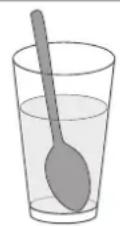
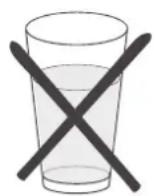
Microwave heating of beverages can result in delayed and eruptive boiling, therefore care must be taken when handling the container. This may cause hot liquid to suddenly spray out, for example when removing it from the microwave.
■ In order to avoid a boiling delay, place a spoon in the container.
■ Make sure that the spoon is always at least 2 cm away from the interior walls of the microwave.

NOTICE
Risk of damage to property!
Improper handling of the appliance may cause it to become damaged.
■ Never operate the appliance without the turntable and never without foods/liquids!
Cooking chamber light
The cooking chamber light switches on automatically when
– the appliance is in operation;
– the cooking chamber door (1) is open.
Opening the cooking chamber door
If the cooking chamber door (1) is opened during operation, the cooking process will be interrupted (see „Aborting the cooking process“ on page EN-15).
Setting the power level
You can variably adjust the power level of the appliance.
- Adjust the power level to the required level with the power level control dial (5).
Setting the cooking time
To set the cooking time,
- turn the cooking time control dial (6) to the desired cooking time.

The maximum cooking time is 35 minutes.
Starting the cooking process
To start the cooking process,
- close the cooking chamber door (1).

If you have already closed the coo-king chamber door (1), the cooking process starts automatically as soon as you set a cooking time.
Aborting the cooking process
! NOTICE
Risk of damage to property!
Improper handling of the appliance can lead to property damage.
■ The appliance must never be operated without the turntable or foods!
There are two ways to abort the cooking process:
- open the cooking chamber door (1) or
- turn the cooking time control dial (6) to "0".

A signal tone will sound at the end of a cooking process.
Once you have aborted a cooking process, always return the cooking time control dial (6) to "0", otherwise the cooking process will resume as soon as you close the cooking chamber door (1) again.
Defrosting
-
Turn the power level control dial (5) to ✦ 250 W.
-
Set the desired cooking time with the cooking time control dial (6).

The defrosting time depends on the weight of the food to be defrosted.
Practical tips
The correct cooking temperature
Given that microwaves react with varying intensity to water, fat and sugar, the cooking time depends significantly on the composition of the dish.
- Dishes with a high fat or sugar content (doughnuts, puddings, fruitcakes) cook through more quickly and reach higher temperatures faster than other dishes. Make absolutely sure to follow recommended cooking times to avoid burning the food and damaging the appliance.
– Dishes that have a high water content (fish, vegetables, sauces) cook faster than “dry” dishes. - “Dry” dishes (rice, grain products, dried beans) cook very slowly. Please add a little water to these before cooking.
The correct quantity of food
The larger the quantity to be prepared, the longer the cooking time. If, for example, a potato takes 4 minutes, then two potatoes will take 7 minutes.
Rule of thumb: Twice the quantity requires approximately twice the amount of time.
- Small food items cook more quickly than large food items. And food items of equal size cook through more evenly than food items of different sizes. If possible, cut all food into pieces of roughly the same size. Remember to do this when freezing!
- When defrosting, size and form play a key role. Small, flat food portions defrost faster and more evenly than larger, thicker food portions. During the defrosting process, separate portions that have already begun to thaw, as exposed pieces defrost faster.
Order of dishes
In order to achieve an even cooking result, the correct arrangement of the food must be observed:
- Arrange food with several equally sized pieces (potatoes, meatballs, hamburgers) in a circle in the container and leave the middle empty.
- For pieces of different sizes, place the small or thin pieces in the middle, as these pieces will be the last to cook.
- For irregularly shaped pieces (e.g. fish) place the thin or flatter end towards the middle.
– Lay thin slices of meat on top of each other or criss-cross them. - Place thicker slices and pieces of meat (joints, sausages etc.) close together.
- Heat meat juices and sauces in a separate container; only fill this 23 full!
Piercing and scoring
Excess pressure can be caused in many dishes when heating them through. It is therefore recommended to pierce or score certain dishes, in order to prevent them from bursting.
- Do not cook shellfish and eggs with shells in the microwave - except in special containers that are available to purchase.
- Pierce food with peels or skins (potatoes, tomatoes, sausages, aubergines, egg yolks) to prevent it from bursting open.
– Score the skin of whole fish to prevent it from tearing open.
Stir and turn

CAUTION
Risk of burns!
Improper handling of the appliance can lead to burns. Accessible parts, accessories and dishes become very hot during operation.
■ Do not touch the parts of the housing!
■ Food is sometimes heated unevenly. The containers should not get as hot as the food inside. Please therefore ensure to check the temperature of any food thoroughly and carefully, especially for children.
■ Before heating up baby food, please remove the screw cap and suction teat from the feed bottle.
■ The contents of feeding bottles and baby food jars shall be stirred or shaken and the temperature checked before consumption, in order to avoid burns.
- Baby food in particular must be stirred carefully to avoid burns. It is essential to check the temperature by tasting the food.
- With poultry and dishes containing fresh egg, and when warming up meals, make absolutely sure that the food is fully cooked through to kill off all pathogens (such as salmonella).
- Stirring and turning the food after half the cooking time is particularly important because the food in the microwave oven is not heated up evenly.
Care and maintenance

WARNING
Health hazard!
Improper use of this appliance can lead to damage to health.
■ Clean the appliance regularly and remove any traces of food leftovers immediately.
■ Cleaning and user maintenance shall not be made by children without supervision.

CAUTION
Risk of burns!
The appliance and its accessible parts become hot during use. Care should be taken to avoid touching heating elements.
■ Children less than 8 years of age shall be kept away unless continuously supervised.
■ Do not touch the parts of the housing!
■ Do not touch hot parts. Always protect hands with oven gloves or pot holders when working on the hot appliance. Only use dry oven gloves or potholders. Wet textiles are better heat conductors and can cause steam burns.
■ Allow the appliance to cool completely before cleaning.
Risk of electric shock!
Touching live parts may result in severe injury or death.
■ Isolate the fuse and pull out the mains plug before cleaning. Take hold of the mains plug itself, do not pull on the mains cord.
■ Make sure that no cleaning water or other liquids penetrate into the ven-
tilation slots and into the electrical parts.
■ A steam cleaner is not to be used for cleaning. Steam can get into live components through cracks.

NOTICE
Risk of damage to property!
The surfaces and door seals can get damaged by improper handling.
■ Never use harsh, soda, acid, solvent or abrasive cleaners. All-purpose cleaners with a neutral pH are recommended.
■ Use care products only on the outer surfaces.
- The door seals are sensitive to oil and grease – making the rubber porous and brittle.
■ Only use soft cloths.
Cleaning the appliance
If possible, clean the appliance after each use before any dirt can dry on.
- The turntable (3) can be washed in the dishwasher.
- Clean the appliance with a soft, damp cloth, especially the cooking chamber floor and door seal faces. Use warm water and a normal all-purpose cleaner or washing-up liquid and a soft sponge or cloth.
- Loosen stubborn dirt with undiluted all-purpose cleaner.
- Wipe off all surfaces with a soft, dry cloth after cleaning.
- Leave the cooking chamber door (1) open to allow the cooking chamber to dry out completely.
Inspecting the appliance

WARNING
Microwave hazard!
A door that fails to close adequately can cause microwave radiation to escape. Under such circumstances, the device may not be used.
■ If the door or door seals are damaged, the oven must not be operated until it has been repaired by a competent person.
■ It is hazardous for anyone other than a competent person to carry out any service or repair operation that involves the removal of a cover which gives protection against exposure to microwave energy.
■ Pay particular attention to the cleanliness of the door seals and door seal faces along with all adjacent parts.
- For your own safety, check regularly that the appliance is intact:
- Are the mains cable and plug undamaged?
- Are the unit housing and the viewing screen undamaged?
– Is the turntable undamaged?
– Are the door seal faces clean? - Can the door hinges move freely?
- Are both hooks on the door lock undamaged?
- Does the door close properly? Or is it warped?
– A defective cooking chamber light may be repaired only by an authorised professional.

The bulb is not located under the cover that is fastened inside the cooking chamber. Never unscrew or damage this cover. It serves to protect the magnetron, which emits the microwaves.
Delivery
natural_image
Line drawing of a microwave oven with control knobs and three separate kitchen utensils (no text or symbols)Package contents
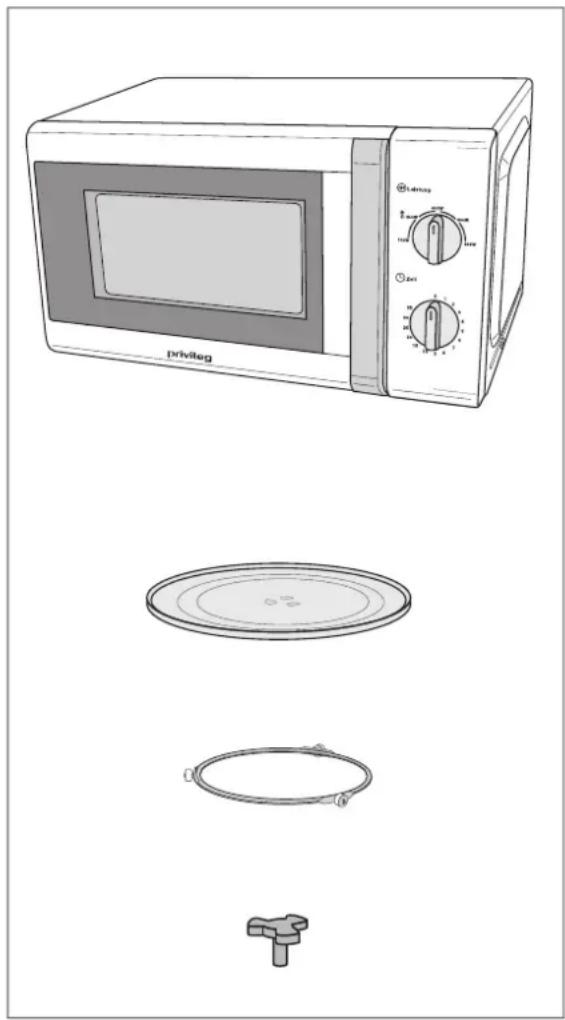
- Microwave
- Turntable
- Rollering
- Turntable drive
-User manual
Check the delivery
- Move the appliance to a suitable place and unpack it (see „Start-up“ on page EN-21).
- Check that the delivery is complete.
- Check whether the appliance was damaged during transit.
- If the delivery is incomplete or the appliance has been damaged during transit, please contact our service department (see „Service“ on page EN-27).

WARNING!
Risk of electric shock!
Touching live parts may result in severe injury or death.
■ Never use a damaged appliance.
Packaging tips

If you have sufficient space, we recommend keeping the packaging, at least during the warranty period. If the appliance needs to be sent out
for repairs, only the original packaging will provide sufficient protection.
If you would like to dispose of the packaging, please dispose of it in an environmentally friendly way.
Start-up
Moving and unpacking

WARNING
Microwave hazard!
The cover in the cooking chamber serves to protect the magnetron, which emits the microwaves.
■ Never remove the cover inside the cooking chamber!
- Carefully unpack the appliance and remove all packaging, plastic moulding, adhesive strips and foam padding from the inside, outside and back of the appliance.
Choosing the correct set-up location

WARNING
Fire hazard!
Improper handling of the appliance may result in damage or may cause a fire. Heat trapped inside the appliance may shorten its service life.
■ Ensure suffi cient ventilation. Do not cover the vents, for example with oven mitts or cookery books.
■ When setting up the appliance, ensure that the minimum safety distances are maintained which are specified in the user manual.
■ Do not put the appliance in a cupboard.

NOTICE
Improper handling of the appliance may result in damage.
■ Do not use sharp objects to unpack the appliance.
■ Do not use the door or door handle for lifting.
Safety distances:
set-up height, measured from the ground, at least 85 cm from above 30 cm from the rear 0 cm from the left 20 cm from the right 20 cm
The appliance should be positioned near a wall, but not directly next to a refrigerator or deep freezer. The heat emitted from the microwave would cause the refrigerator or freezer to consume more energy unnecessarily.
There must be a minimum spacing of 2 m from radio devices and televisions, to ensure that the reception is not distorted.
Cleaning before use
The appliance must be cleaned before first use, for example to ensure that packaging remnants will not negatively affect the taste of food (see „Care and maintenance“ on page EN-18).
The turntable
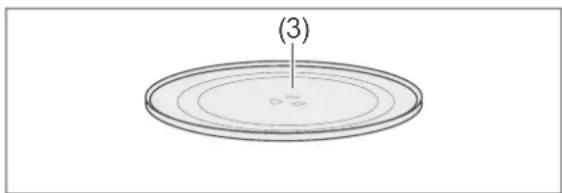
Use the turntable (3) every time you operate the appliance.
natural_image
Simple diagram of concentric circular layers with a labeled point (3), no text or symbols present.-
The turntable rotates during operation to ensure uniform heating.
– The turntable can hold up to max. 4 kg. -
If necessary, place the turntable drive (8) in the central recess.
- Place the turntable (3) on the cooking chamber floor and turn it until its centre clicks into place on the turntable drive (8).
- Always place cooking containers on the turntable (3). This prevents liquid from seeping into the appliance if it should boil over.
Electrical connections
- Please check whether the device's supply voltage is compatible with the supply voltage used in your house (please see the type plate).
- Please ensure you only connect the device to a professionally installed protective contact socket with sufficient fuse protection (see „Technical specifications“ on page EN-28).
- The plug socket must be located away from the reverse side of the appliance, otherwise the plug will be in contact with the back plate.
- Do not use any multiplugs, extension cables, timer switches or remote control systems.
First-time use
A slight odour may be produced during first use. This is non-toxic and disappears after a short moment.
- Allow the appliance to run for 10 minutes on the highest setting (see „Starting the cooking process“ on page EN-15).
Troubleshooting table
Malfunctions can occur in all electrical appliances. This does not necessarily mean there is a defect in the appliance. For this reason, please check the tables to see if you can correct the malfunction.

WARNING
Risk of electric shock in case of improper repair!
Never try to repair a defective or suspected defective appliance yourself. You can put your own and future users' lives in danger. Only authorised specialists are allowed to carry out this repair work.
| Problem Possible | cause Solutions, tips | |
| Device will not start. | No electricity to socket. Check by connecting another appliance. | |
| Mains plug is loose. Check the tightness of the mains plug. | ||
| Cooking chamber door does not close properly. | Foreign bodies on the door seal faces. | Clean the door seal faces thoroughly. |
| Cooking chamber door is warped or door latch is defective. | Have the cooking chamber door repaired. Do not use the device! | |
| Cooking chamber lighting does not work. | Lamp defective. | Contact our service team (see „Service“ on page EN-27). |
| The turntable does not turn or does not turn properly. | The turntable is not correctly positioned on the drive motor. | Position the turntable correctly. |
| The cooking chamber floor is dirty. | Clean the cooking chamber floor thoroughly. | |
| Scratching, grinding sounds in the cooking chamber. | Turntable does not rotate properly. | Position the turntable correctly. |
| The food dish is either too large or is positioned incorrectly. | The container may not protrude over the edge of the turntable. | |
| Exploding, popping sounds in the cooking chamber. | The dish is being cooked and/or defrosted with too much power, and will burst open. | Cancel the setting and reselect a lower power level. |
| Other noises or flashes of light in the cooking chamber. | Sparks – metal objects in the cooking chamber. | Switch off the appliance immediately and then remove any metallic objects. |
| The dish is cooked unevenly. | The dish was not sufficiently rotated or stirred. | Stir or rotate the food dish, and allow it to heat up a little more. |
| Food is not heated properly. | The power level or cooking duration is set too low. | Keep warming up the food for a short while in the microwave. |
| The dish was very cold when being placed inside. | ||
| The container gets hotter than the food. | Unsuitable container used. Use a suitable container. | |
| The device emits odours. | The heating elements are being used for the first time. | This is normal. See the “First-time use” section. |
| The cooking chamber door or viewing window fogs up. | Moisture is escaping from the food. | This is normal. Wipe up the moisture after operation. |
Waste prevention, free return and disposal
Waste prevention
According to the provisions of Directive 2008/98/EC, waste prevention measures always take priority over waste management.
For electrical and electronic devices, waste prevention measures include extending the lifespan of defective devices through repair and reselling used working appliances instead of disposing of them.
Please help us reduce waste and contact our customer service if your product is faulty.
More information can be found in the brochure "Waste Prevention Programme – of the German Government with the Involvement of the Federal States".
Free return of old electrical appliances
Upon purchasing a new electrical appliance of the same type with essentially the same function, consumers may return an old electrical appliance to a distributor obliged to take back old appliances, at no extra cost for the consumers. This option also exists for deliveries made to a private household. For distance selling, the option of having old electrical equipment collected for free applies only in the case of purchase of new electrical equipment with heat exchangers (e.g. refrigerators, dehumidifiers), screens and display devices with a screen surface > 100 cm ^2 , and large devices with at least one of its external dimensions measuring more than 50 cm.
In addition, consumers may return up to three old electrical appliances of the same type to a distributor's collection point for free, without having to purchase a new electrical appliance. In this case, however, the old appliances' external dimensions may not exceed 25 cm.
Disposal
Disposing of old electrical devices in an environmentally friendly manner
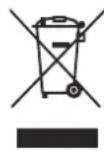
Electrical appliances contain harmful substances as well as valuable resources.
Every consumer is therefore required by law to dispose of old electri-
cal appliances at an authorised collection or return point. They will thus be made available for environmentally-sound, resource-saving recycling.
You can dispose of old electrical appliances free of charge at your local recycling centre.
Please contact your dealer directly for more information about this topic.
Don't forget to erase data!
If necessary, each consumer is responsible for erasing personal data from electrical and electronic equipment.
Batteries and rechargeable batteries, lamps and bulbs
If necessary, old single-use and rechargeable batteries that are not encased by an old electrical appliance, as well as lamps/bulbs that can be removed from an old electrical appliance without being destroyed, must be removed and disposed of separately before you return the appliance.
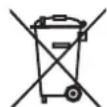
This symbol means that batteries and rechargeable batteries must not be disposed of with other household waste.
Consumers are required by law to bring all batteries and rechargeable batteries, regardless of whether they contain harmful substances*) or not, to a collection point operated by
their communal authority or borough or to a retailer, so that they can be disposed of in an environmentally friendly manner and so that valuable resources (e.g. cobalt, nickel or copper) can be recovered.
Batteries and rechargeable batteries can be returned free of charge.
Some of the possible contents (e.g. mercury, cadmium and lead) are toxic and, if improperly disposed of, can have adverse effects on the environment. Heavy metals, for instance, can have detrimental health effects on humans, animals and plants and accumulate in the environment and food chain, and then enter the body indirectly through the consumption of food.
There is a high risk of fire with old lithium batteries. Special care must therefore be taken to properly dispose of old lithium batteries and rechargeable batteries. Improper disposal can also lead to internal and external short circuits due to thermal effects (heat) or mechanical damage. A short circuit can lead to a fire or an explosion and have serious consequences for people and the environment. It is therefore important to tape off the poles of lithium batteries and rechargeable batteries before disposing of them to prevent an external short circuit.
Before disposing of the appliance, batteries and rechargeable batteries which are not permanently built into the appliance must be removed and disposed of separately.
Please only dispose of batteries and rechargeable batteries in a discharged state!
If possible, use rechargeable batteries in place of disposable batteries.
*) labelled with:
Cd = Cadmium
Hg = Mercury
Pb = Lead
Packaging

Our packaging is made of environmentally friendly, recyclable materials:
– Outer packaging made of cardboard
- Moulded parts made of foamed, CFC-free polystyrene (PS)
– Films and bags made of polyethylene (PE)
– Tension bands made of polypropylene (PP)
- Saving energy also protects against excessive global warming. Your new appliance uses little energy due to its environmentally friendly insulation and technology.

If you have sufficient space, we recommend keeping the packaging, at least during the warranty period. If the appliance needs to be sent out for repairs, only the original packaging will provide sufficient protection. If you would like to dispose of the packaging, please dispose of it in an environmentally friendly way.
Service
Please note!
You are responsible for the condition of the appliance and its proper use in the household.
Damage resulting from non-compliance with this manual cannot be recognised.
In order for us to help you quickly, please tell us:
| Name of appliance Colour Order number. | ||
| privileg Microwave MM820CTB-PM | White 150 472 | |
| Silver 148 438 | ||
| Black64111926 |
General customer service
Please contact your mail order company's product advice centre if you have questions, complaints or accessory orders.
Spare parts
Customers in Germany
Please contact the company Hermes Fulfilment GmbH:
Phone: (057 32) 99 66 00
Monday–Thursday 8 a.m.–3 p.m., Friday 8 a.m.–2 p.m.
Customers in Austria
Please contact your mail order company's customer service centre or product advice centre.
Technical specifications
| Brand privileg | |
| Name of appliance Microwave | |
| Model MM820CTB-PM | |
| Order no. | 150 472 (White)148 438 (Silver)64111926 (Black) |
| Microwave oven power output max. 800 W | |
| Nominal frequency: 2,450 MHz | |
| Microwave oven power levels variable (140 - 800 W) | |
| Built-in appliance | no |
| Fuse | min. 16 A |
| Max. power consumption | 1270 W |
| Supply voltage / frequency | 230 V~ / 50 Hz |
| Cooking chamber volume, litres | approx. 20 |
| Turntable diameter, mm | approx. 255 |
| Appliance size (height × width × depth), mm | 258 × 439 × 330 |
| Empty weight, kg | approx. 11 |
This microwave corresponds to the device category:
Group 2, Class B.
- Group 2: Generates high-frequency electromagnetic radiation that is suitable for the treatment of food.
- Class B: May be operated in the living area and directly from the normal mains at a voltage of up to 230 volts (low voltage network).
- Gebrauchsanleitung
- Mikrowelle
- Inhaltsverzeichnis
- HINWEIS
- Lieferumfang
- Table of contents
- Explanation of terms and symbols, definitions
- Explanation of terms
- WARNING
- CAUTION
- NOTICE
- Explanation of symbols
- Definitions
- Safety
- Intended use
- Safety notices
- Risks to children and certain groups of individuals
- Risk of injury!
- Risks in handling household electrical appliances
- WARNING!
- Risk of electric shock!
- CAUTION!
- Fire hazard!
- When cleaning, please note:
- Risks when handling heat-generating appliances
- Risk of burns!
- General risks when cooking food
- Health hazard!
- Risks in microwave and microwave-combi mode
- Microwave hazard!
- Danger of explosion!
- Risk of scalding!
- ! NOTICE
- Appliance components and operating elements
- Information about microwaves
- What are microwaves?
- Microwaves
- What effect do microwaves have on foodstuffs?
- How does a microwave oven work?
- Applications
- Suitable dishware
- Size and form
- Operation
- Cooking chamber light
- Opening the cooking chamber door
- Setting the power level
- Setting the cooking time
- Starting the cooking process
- Aborting the cooking process
- Defrosting
- Practical tips
- The correct cooking temperature
- The correct quantity of food
- Order of dishes
- Piercing and scoring
- Stir and turn
- Care and maintenance
- Risk of damage to property!
- Cleaning the appliance
- Inspecting the appliance
- Delivery
- Package contents
- Check the delivery
- Packaging tips
- Start-up
- Moving and unpacking
- Choosing the correct set-up location
- Cleaning before use
- The turntable
- Electrical connections
- First-time use
- Troubleshooting table
- Waste prevention, free return and disposal
- Waste prevention
- Free return of old electrical appliances
- Disposal
- Disposing of old electrical devices in an environmentally friendly manner
- Don't forget to erase data!
- Batteries and rechargeable batteries, lamps and bulbs
- Packaging
- Service
- General customer service
- Spare parts
- Customers in Germany
- Customers in Austria
- Group 2, Class B.
Brand : PRIVILEG
Model : MM820CTB-PM
Category : Microwave