
Ci-Li 20VHT - Hedge Trimmer FLYMO - Free user manual and instructions
Find the device manual for free Ci-Li 20VHT FLYMO in PDF.


| Product Type | Hedge Trimmer |
| Brand | Flymo |
| Model | Ci-Li 20VHT |
| Motor Type | Brushed |
| Voltage | 20 V DC |
| Power | 270 W |
| Blade Length | 40.6 cm (16 in) |
| Blade Speed | 1200 - 1350 min⁻¹ |
| Cutting Capacity | 12.7 mm (0.5 in) |
| Weight (with battery) | 2.92 kg (6.43 lb) |
| Weight (without battery) | 2.53 kg (5.58 lb) |
| Sound Power Level (guaranteed) | 98 dB(A) |
| Sound Pressure Level at Operator | 85.8 dB(A) |
| Vibration Level (front handle) | 1.8 m/s² |
| Vibration Level (rear handle) | 1.1 m/s² |
| Battery Type | Lithium-Ion (20 V, Flymo original) |
| Charger Input | 120 V AC, 50-60 Hz |
| Charging Time | 4 hours or less (full charge) |
| Battery Capacity Indicator | 3 LEDs: 80-100%, 60-79%, 30-59%, <30% |
| Safety Features | Trigger lockout, assist handle lockout, blade cover, hand guard |
| Recommended Lubrication | Non-toxic, corrosion-preventive oil for blades |
Frequently Asked Questions - Ci-Li 20VHT FLYMO
User questions about Ci-Li 20VHT FLYMO
0 question about this device. Answer the ones you know or ask your own.
Ask a new question about this device
Download the instructions for your Hedge Trimmer in PDF format for free! Find your manual Ci-Li 20VHT - FLYMO and take your electronic device back in hand. On this page are published all the documents necessary for the use of your device. Ci-Li 20VHT by FLYMO.
USER MANUAL Ci-Li 20VHT FLYMO
natural_image
Technical line drawing of a mechanical tool with a long-handled edge and meshed head (no text or symbols)EN Operator's manual 4
IMPORTANT INFORMATION IMPORTANT Read before use & retain for futur& réreferenc
natural_image
Simple line drawing of a telephone handset, computer mouse, and phone (no text or symbols)IMPORTANT Please register your
product warranty on line.
To register your warranty and for all your parts requirements please visit
www.flymo.com
For all other enquiries
0344 844 4558 UK 1800 882 350 ROI
customer.services@husqvarna.co.uk
1 2 3 4 5 6 7 |  |  |  | 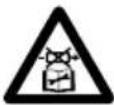 |  | 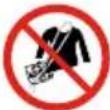 |
8 9 10 11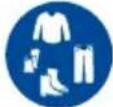 | 12 13 | 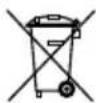 | 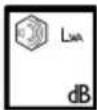 |  | 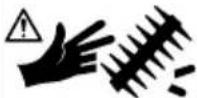 |
natural_image
Diagram showing a hand inserting a device into a battery pack (no text or symbols present)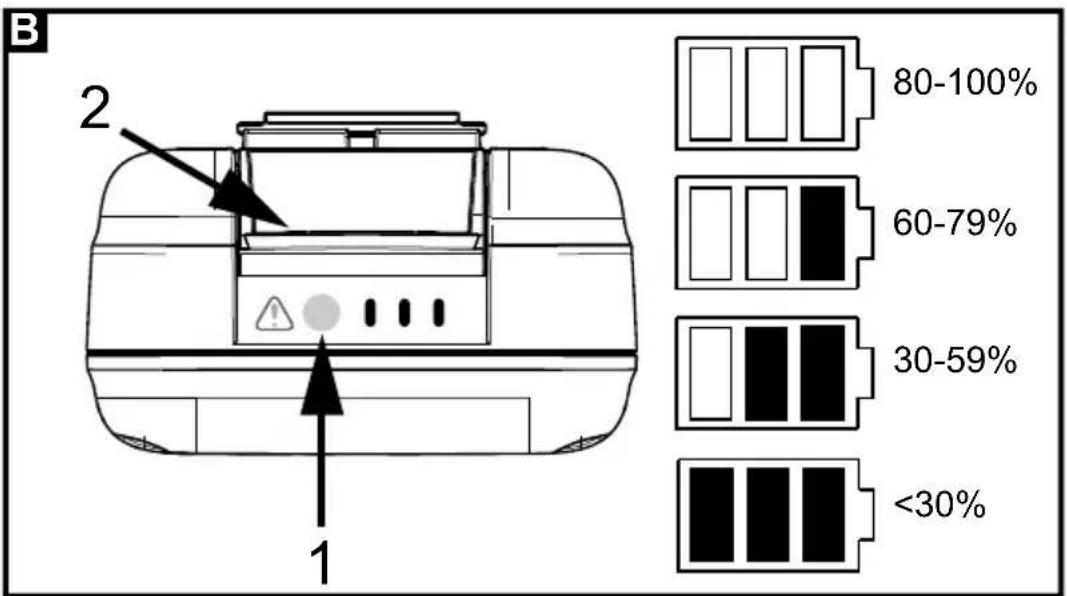
natural_image
Diagram of two battery charging devices connected by a cable, showing internal structure and wiring (no text or symbols)IDENTIFICATION OF SYMBOLS
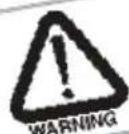
- WARNING! This power tool can be dangerous! Careless or incorrect use can result in serious or fatal injury to the operator or others. (Picture 1)
- Please read the operator's manual carefully and make sure you understand the instructions before using the product. (Picture 2)
• Always wear approved eye protection. (Picture 3) - Wear hearing protection that provides adequate noise reduction. (Picture 4)
- Remove the battery pack before you do maintenance. (Picture 5)
- Do not expose to rain. (Picture 6)
- Do not wear jewelry, loose clothing, or clothing with loosely hanging straps, ties, tassels, etc. They can be
caught in moving parts. (Picture 7)
• Always wear heavy, long pants, long sleeves, boots, and gloves. (Picture 8)
- Secure hair above shoulder length. (Picture 9)
- The product or packaging cannot be handled as domestic waste. The product and packaging must be submitted to an appropriate recycling station for the recovery of electrical and electronic equipment. (Picture 10)
- Guaranteed sound power level. (Picture 11)
• The product agrees with the applicable EC directives. (Picture 12)
- DANGER – KEEP HANDS AWAY FROM BLADE. (Picture 13)
KNOW YOUR PRODUCT
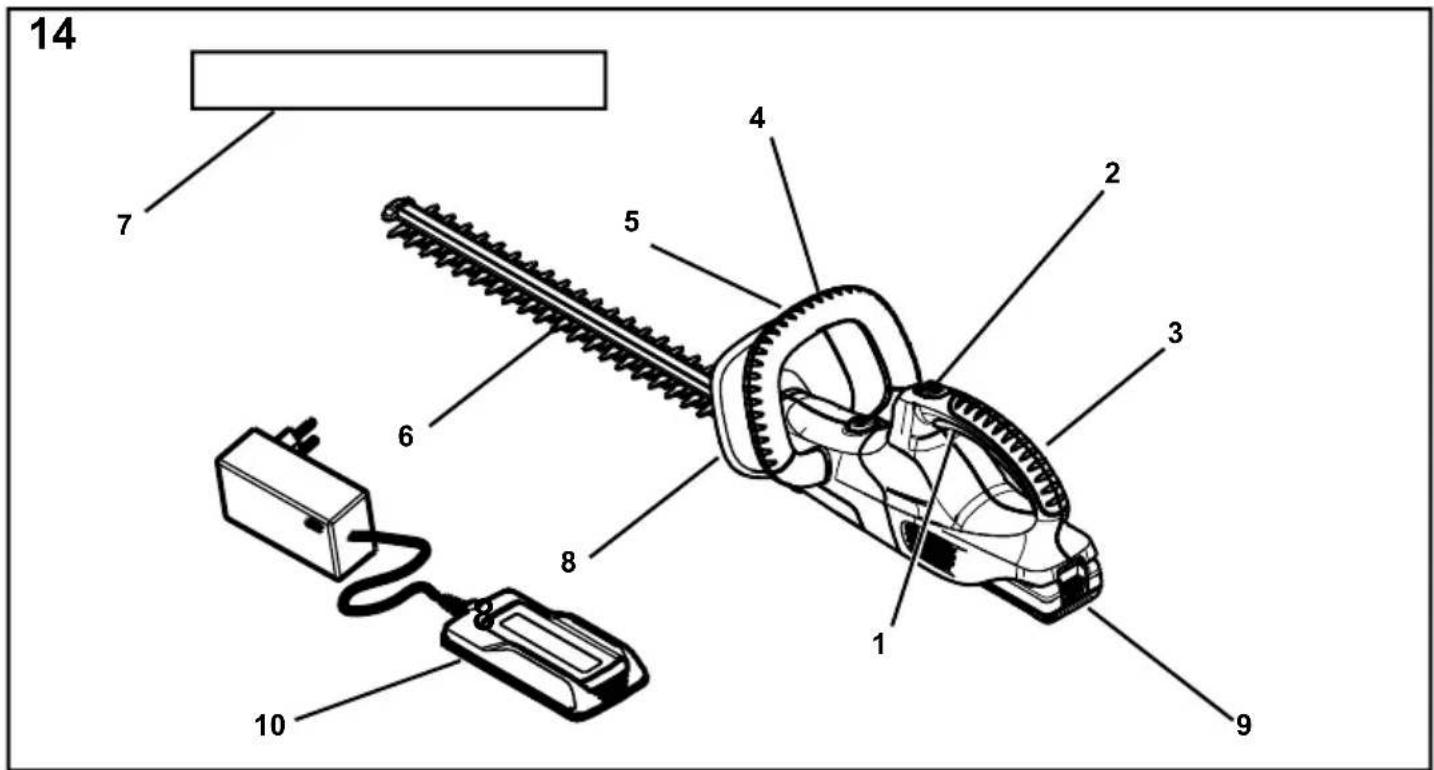
See Picture 14
| 1. Trigger | 6. Blade |
| 2. Trigger Lockout | 7. Blade cover |
| 3. Main handle | 8. Hand guard |
| 4. Assist handle | 9. Battery pack |
| 5. Assist handle lockout | 10. Charger |
SAFETY
IMPORTANT • READ CAREFULLY BEFORE USE • KEEP FOR FUTURE REFERENCE
GENERAL POWER TOOL SAFETY WARNINGS
⚠ WARNING Read all safety warnings and all instructions. Failure to follow the warnings and instructions may result in electric shock, fire and/or serious injury.
Save all warnings and instructions for future reference.
The term “power tool” in the warnings refers to your mains-operated (corded) power tool or battery-operated (cordless) power tool.
Work area safety
- Keep work area clean and well lit. Cluttered or dark areas invite accidents.
- Do not operate power tools in explosive atmospheres, such as in the presence of fl ammable liquids, gases or dust. Power tools create sparks which may ignite the dust or fumes.
- Keep children and bystanders away while operating a power tool. Distractions can cause you to lose control.
Electrical safety
- Power tool plugs must match the outlet. Never modify the plug in any way. Do not use any adapter plugs with earthed (grounded) power tools. Unmodified plugs and matching outlets will reduce risk of electric shock.
- Avoid body contact with grounded surfaces such as pipes, radiators, ranges and refrigerators. There is an increased risk of electric shock if your body is earthed or grounded.
- Do not expose power tools to rain or wet conditions. Water entering a power tool will increase the risk of electric shock.
- Do not abuse the cord. Never use the cord for carrying, pulling or unplugging the power tool. Keep cord away from heat, oil, sharp edges or
moving parts. Damaged or entangled cords increase the risk of electric shock.
- When operating a power tool outdoors, use an extension cord suitable for outdoor use. Use of a cord suitable for outdoor use reduces the risk of electric shock.
- If operating a power tool in a damp location is unavoidable, use a ground fault circuit interrupter (GFCI) protected supply. Use of an GFCI reduces the risk of electric shock.
Personal safety
- Stay alert, watch what you are doing and use common sense when operating a power tool. Do not use a power tool while you are tired or under the influence of drugs, alcohol or medication. A moment of inattention while operating power tools may result in serious personal injury.
- Use personal protective equipment. Always wear eye protection. Protective equipment such as dust mask, nonskid safety shoes, hard hat, or hearing protection used for appropriate conditions will reduce personal injuries.
- Prevent unintentional starting. Ensure the switch is in the off-position before connecting power source and/or battery pack, picking up or carrying the tool. Carrying power tools with your finger on the switch or energising power tools that have the switch on invites accidents.
- Remove any adjusting key or wrench before turning the power tool on. A wrench or a key left attached to a rotating part of the power tool may result in personal injury.
- Do not overreach. Keep proper footing and balance at all times. This enables better control of the power tool in unexpected situations.
- Dress properly. Do not wear loose clothing or jewellery. Keep your hair, clothing and gloves away from moving parts. Loose clothes, jewellery or
long hair can be caught in moving parts.
- If devices are provided for the connection of dust extraction and collection facilities, ensure these are connected and properly used. Use of dust collection can reduce dust-related hazards.
Power tool use and care
- Do not force the power tool. Use the correct power tool for your application. The correct power tool will do the job better and safer at the rate for which it was designed.
- Do not use the power tool if the switch does not turn it on and off. Any power tool that cannot be controlled with the switch is dangerous and must be repaired.
- Disconnect the plug from the power source and/or the battery pack from the power tool before making any adjustments, changing accessories, or storing power tools. Such preventive safety measures reduce the risk of starting the power tool accidentally.
- Store idle power tools out of the reach of children and do not allow persons unfamiliar with the power tool or these instructions to operate the power tool. Power tools are dangerous in the hands of untrained users.
- Maintain power tools. Check for misalignment or binding of moving parts, breakage of parts and any other condition that may affect the power tools operation. If damaged, have the power tool repaired before use. Many accidents are caused by poorly maintained power tools.
- Keep cutting tools sharp and clean. Properly maintained cutting tools with sharp cutting edges are less likely to bind and are easier to control.
- Use the power tool, accessories and tool bits etc., in accordance with these instructions and in the manner intended for the particular type of power tool, taking into account the working conditions and the work to be performed. Use of the power tool for operations different from those intended could result in a hazardous situation.
Battery tool use and care
- Recharge only with the charger specified by the manufacturer. A charger that is suitable for one type of battery pack may create a risk of fire when used with another battery pack.
- Use power tools only with specifi cally designated battery packs. Use of any other battery packs may create a risk of injury and fire.
- When battery pack is not in use, keep it away from other metal objects, like paper clips, coins, keys, nails, screws or other small metal objects, that can make a connection from one terminal to another. Shorting the battery terminals together may cause burns or a fire.
- Under abusive conditions, liquid may be ejected from the battery; avoid contact. If contact accidentally occurs, flush with water. If liquid contacts eyes, additionally seek medical help. Liquid ejected from the battery may cause irritation or burns.
Service
- Have your power tool serviced by a qualified repair person using only identical replacement parts. This will ensure that the safety of the power tool is maintained.
HEDGE TRIMMER SAFETY WARNINGS
⚠️ DANGER: KEEP HANDS AWAY FROM BLADE
- Use both hands when operating the hedge trimmer. Using one hand could cause loss of control and result in serious personal injury.
- Keep all parts of the body away from the cutter blade. Do not remove cut material or hold material to be cut when blades are moving. Make sure the switch is off when clearing jammed material. Blades coast after turn off. A moment of inattention while operating the hedge trimmer may result in serious personal injury.
- Carry the hedge trimmer by the handle with the cutter blade stopped. When transporting or storing the hedge trimmer always fit the cutting device cover. Proper handling of the hedge trimmer will reduce possible personal injury from the cutter blades.
- Hold the power tool by insulated gripping surfaces only, because the cutter blade may contact hidden wiring. Cutter blades contacting a "live" wire may make exposed metal parts of the power tool "live" and could give the operator an electric shock.
- Keep cable away from cutting area. During operation the cable may be hidden in shrubs and can be accidentally cut by the blade.
SAFETY INSTRUCTIONS FOR OPERATION
- Make sure the product is fully assembled before you use it.
- The product can cause objects to eject, which can cause damage to the eyes. Always use an approved eye protection when you operate the product.
- Be careful, a child can come near the product without your knowledge during operation.
- Do not operate the product if there are persons in the work area. Stop the product if a person goes into the work area.
- Make sure that you are always in control of the product.
- Do not use the product if you cannot receive aid if an accident occurs. Always make sure others know when you use the product before you start operation.
- Do not turn with the product before you make sure that no persons or animals are in the safety area.
- Remove all unwanted materials from the work area before you start.
- Do not use the product in bad weather, such as fog, rain, strong winds, risk of lightning or other conditions. Dangerous conditions, such as slippery surfaces, can occur because of bad weather.
- Make sure that you can move freely and work in a stable position.
- Make sure that you cannot fall when you use the product. Do not tilt when you operate the product.
- Stop the motor before you move the product.
- Do not put down the product with the motor on.
ADDITIONAL SAFETY INSTRUCTIONS
- Use the product correctly. Injury or death is a possible result of incorrect use. Only use the product for the tasks found in this manual. Do not use the product for other tasks.
- Obey the instructions in this manual. Obey the safety symbols and the safety instructions. If the operator does not obey the instructions and the symbols, injury, damage or death is a possible result.
-
Do not discard this manual. Use the instructions to assemble, to operate and to keep your product in good condition. Use the instructions for correct installation of attachments and accessories. Only use approved attachments and accessories.
-
Do not use a damaged product. Obey the maintenance schedule. Only do the maintenance work that you find an instruction about in this manual. An approved service center must do all other maintenance work.
- This manual cannot include all situations that can occur when you use the product. Be careful and use your common sense. Do not operate the product or do maintenance to the product if you are not sure about the situation. Speak to a product expert, your dealer, service agent or approved service center for information.
- Remove the battery pack before you assemble the product, put the product into storage or do maintenance.
- Do not use the product if it is changed from its initial specification. Do not change a part of the product without approval from the manufacturer. Only use parts that are approved by the manufacturer. Injury or death is a possible result of incorrect maintenance.
- This product makes an electromagnetic fi eld. The electromagnetic fi eld can cause damage to medical implants. Speak to your physician and medical implant manufacturer before you operate the product.
- Do not let a child operate the product. Do not let a person, without knowledge of the instructions operate the product.
- Make sure that you always monitor a person, with decreased physical capacity or mental capacity, that uses the product. A responsible adult must be there at all times.
- Lock the product in an area that children and not approved persons cannot access.
- The product can eject objects and cause injuries.
- Obey the safety instructions to decrease the risk of injury or death.
- Do not go away from the product when the motor is on.
- The operator of the product is responsible if an accident occurs.
- Make sure that parts are not damaged before you use the product.
- Make sure that you are at a minimum 15 m (50 ft) away from other persons or animals before you use the product. Make sure that a person in adjacent area knows that you will use the product.
- Refer to national or local laws. They can prevent or decrease the operation of the product in some conditions.
VIBRATION EXPOSURE
Exposure to vibrations through prolonged use of power tools could cause blood vessel or nerve damage in the fingers, hands, and joints of people prone to circulation disorders or abnormal swelling. Prolonged use in cold weather has been linked to blood vessel damage in otherwise healthy people. If symptoms occur such as numbness, pain, loss of strength, change in skin color or texture, or loss of feeling in the fingers, hands, or joints, discontinue the use of this power tool and seek medical attention. An anti-vibration system does not guarantee the avoidance of these problems. Users who operate power tools on a continual and regular basis must closely monitor their physical condition and the condition of the power tool.
PERSONAL PROTECTIVE EQUIPMENT
-
Always use correct personal protective equipment when you operate the product. The personal protective equipment does not erase the risk of injury. The personal protective equipment decreases the grade of injury if an accident occurs.
• Always use an approved eye protection while you operate the product. -
Do not operate the product with bare feet or with open shoes. Always use heavy-duty slip-resistant boots.
- Use heavy, long pants.
- If it is necessary, use approved protective gloves.
- Use a helmet if it is possible that objects fall on your head.
- Always use approved ear protection while you operate the product. Noise for a long period can cause noise-induced hearing loss.
- Make sure that you have a first aid kit near.
PROTECTIVE DEVICES ON THE PRODUCT
Trigger lockout
The trigger lockout locks the trigger. Push the trigger lockout to release the trigger. When you release the handle, the trigger lockout and the trigger go back to their initial positions.
- Push the trigger lockout and make sure that it goes back to its initial position when you release it.
- Push the trigger and make sure that it goes back to its initial position when you release it.
BATTERY SAFETY
- Only use battery packs from the manufacturer and only charge them in a battery charger from the manufacturer.
- The rechargeable battery packs are only used as a power supply for related cordless products. To prevent injury, the battery pack must not be used as a power source for other devices.
- Do not disassemble, open or shred battery pack.
- Do not keep battery packs in open sunlight or heat. Keep battery packs away from fire.
- Regularly examine the battery pack charger and the battery pack for damage. Damaged or changed battery packs can cause a fi re, explosion or risk of injury. Do not repair or open damaged battery packs.
- Do not use a battery pack or product that is defective, changed or damaged.
- Do not change or repair products or the battery pack. Only let your approved dealer do repairs.
- Do not short circuit a cell or battery pack. Do not save battery packs in a box or drawer where they can be short circuited by other metal objects.
- Do not remove a battery pack from its initial package until necessary for operation.
- Do not mechanically shock battery packs.
- If there is a battery leak, do not let the liquid touch the skin or eyes. If you have touched the liquid, clean the area with a large quantity of water and get medical aid.
- Do not use a battery charger other than what is specified for operation with the battery pack.
- Look at the plus (+) and minus (-) marks on the battery pack and product to make sure of correct operation.
- Do not use a battery pack not made for operation with the product.
- Do not mix battery packs of a different voltage or manufacturer in a device.
- Keep battery packs away from children.
- Always purchase the correct battery packs for the product.
- Keep batteries clean and dry.
- Clean the battery pack terminals with a clean dry cloth if they become dirty.
-
Secondary battery packs must be charged before use. Always use the correct battery charger and refer to the manual for correct charging instructions.
-
Do not keep a battery pack on continuous charge when not in operation.
- Save the manual to refer to it in the future.
- Only use the battery pack for its necessary operation.
- Remove the battery pack from the product when not in operation.
- Keep the battery pack away from paper clips, keys, nails, screws, or other small metal objects while in operation. This can make a connection between terminals. Shorting the battery pack terminals together can cause burns or a fire.
CHARGER USE AND CARE
- Before using the charger, read all instructions and cautionary markings for the charger, battery pack, and the product using the battery pack.
- Do not allow any liquid to get inside charger.
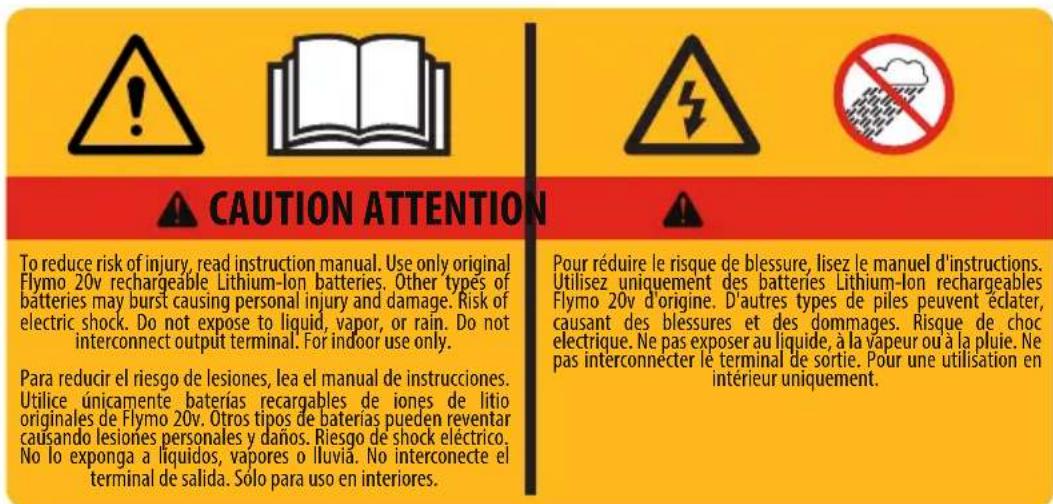
- To reduce the risk of injury, charge only designated batteries. The charger and battery pack are specifically designed to work together. Other types of batteries may burst, causing personal injury and damage.
- Under certain conditions, with the charger plugged in to the power supply, the charger can be shorted by foreign material. Foreign materials of a conductive nature such as, but not limited to, steel wool, aluminum foil, or any buildup of metallic particles should be kept away from charger cavities.
• Always unplug the charger from the power supply when there is no battery pack in the cavity.
- The charger is not intended for any uses other than charging the designated rechargeable batteries. Any other uses may result in risk of fire, electric shock or electrocution.
- Do not expose the charger to rain or snow.
- Pull by the plug rather than the cord when disconnecting the charger. This will reduce the risk of damage to the electric plug and cord.
- Make sure that the cord is located so that it will not be stepped on, tripped over, or otherwise subjected to damage or stress.
- Do not operate the charger with a damaged cord or plug. Have them replaced immediately.
- Do not operate the charger if it has received
a sharp blow, has been dropped, or has been damaged in any other way. Take it to an authorized service center.
- Do not disassemble the charger. Take it to an authorized service center when service or repair is required. Incorrect reassembly may result in a risk of electric shock, electrocution or fire.
- Disconnect the charger from the outlet before attempting any cleaning. This will reduce the risk of electric shock. Removing the battery pack will not reduce the risk.
- Do not attempt to connect 2 chargers together.
- The charger is designed to operate on standard household electrical power (120 Volts). Do not attempt to use it on any other voltage.
Electrical outlets
⚠ WARNING: Do not touch the terminals of the plug when installing or removing the plug from the outlet.
Before plugging in the charger, make sure that the outlet voltage supplied is within the voltage marked on the charger's data plate.
Extension cords
Do not use an extension cord unless it is absolutely necessary. Use of improper extension cord could result in risk of fi re, electric shock, or electrocution.
⚠ WARNING: Do not touch the terminals of the plug when installing or removing the plug from the extension cord.
When using an extension cord, be sure to use one heavy enough to carry the current that your power tool will draw. An undersized extension cord will cause a drop in line voltage resulting in loss of power and overheating.
MAINTENANCE AND STORAGE
- Remove the battery before carrying out maintenance or cleaning work.
- Use only the manufacturer's recommended replacement parts and accessories.
- Inspect and maintain the product regularly. Have the product repaired only by an authorized repairer.
- When not in use, store the product out of the reach of children.
ASSEMBLY
⚠ WARNING! Do not install the battery pack until the power tool is completely assembled.
ASSEMBLING THE ATTACHMENT
Insert the attachment into the powerhead until it clicks into position. Make sure the attachment release button passes completely through the hole.
NOTE: To remove the attachment, press down firmly on the attachment release button while pulling the attachment out of the powerhead.
OPERATION
BEFORE STARTING
- Make sure you have the proper personal protective equipment.
- Inspect the cleanliness of the power tool. Make sure the handles are dry, clean, and free of oil and grease.
- Inspect for correct alignment of moving parts.
- Inspect for broken or damaged parts. Do not use the power tool if any damage affects safety or operation. Have damage repaired by an authorized service center.
- Lubricate the cutting blades.
• Install the battery pack
INSTALLING THE BATTERY PACK
NOTE: The battery pack is not shipped fully charged. It is recommended that the battery pack be fully charged before initial use. With regular use, the battery pack will take 4 hours or less to fully charge. It is recommended that the battery pack be charged every 3 months when the tool is not in use. The battery pack's run time will improve after the third or fourth charge.
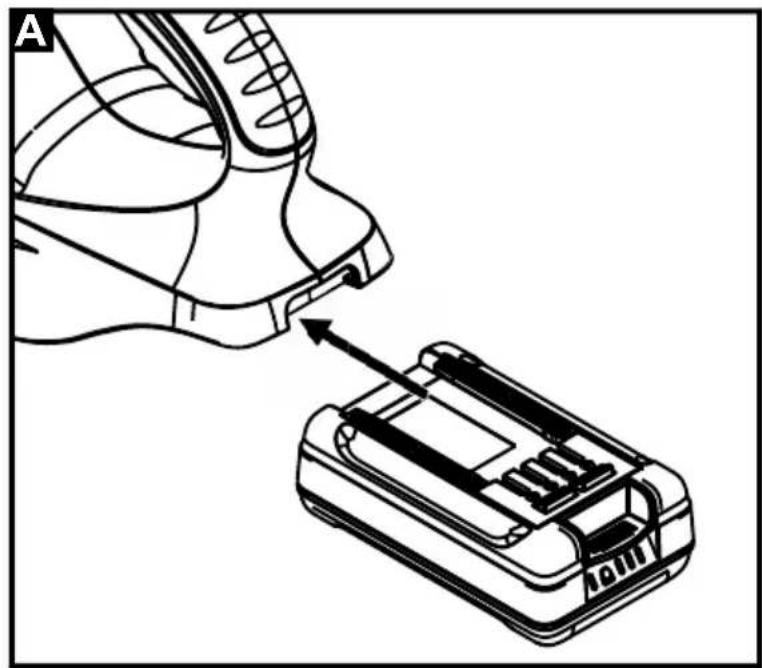
- Align the tongue of the battery pack with the cavity in the powerhead.
-
Grasp the rear handle firmly.
-
Push the battery pack into the powerhead until it locks. The latch button will click when locked into place.
NOTE: Do not use force when inserting the battery pack. It should slide into place and click.
STARTING AND STOPPING THE TOOL
Remove the blade cover.
For added safety, there is a lockout in the assist handle. When operating, hold the hedge trimmer with both hands, one hand to press the trigger lockout and squeeze the trigger, and the other hand to squeeze the assit handle lockout.
Release the trigger lockout and continue to squeeze the trigger and assist handle lockout for extended operation. To turn off the tool, release the trigger and trigger lockout. The lockout and trigger must both return to their original positions.
TRIMMING
-
Inspect area to be cut before each use - remove objects which can be thrown or become entangled in the cutting blades.
-
Always keep the hedge trimmer in front of your body. Hold handle firmly with both hands and stand in a secure and stable position.
- Allow the cutting blades to reach full speed before entering the material to be cut.
- Always work going away from people and solid objects such as walls, large stones, trees, vehicles etc.
- If blade stalls, immediately stop the hedge trimmer. Disconnect the battery and clear jammed debris from the cutting blades. Inspect blades and repair or replace as needed.
Top Cutting
Use a wide sweeping motion. A slight downward tilt of the cutting blades in the direction of motion gives the best cutting results.
Side Cutting
When trimming the sides of the hedge, begin at the bottom and cut upwards, tapering the hedge inward at the top. This shape will expose more of the hedge, resulting in more uniformed growth.
MAINTENANCE
⚠ WARNING: Remove the battery before performing maintenance. Severe injury or death could occur from electrical shock or body contact with moving parts.
CHECKING THE BATTERY PACK CAPACITY (B1)
Press the battery power level indicator button. The lights will illuminate according to the battery's current power level.
| Lights Battery Pack Power Level | |
| 3 Green Lights 80 | -100% |
| 2 Green Lights 60 | -79% |
| 1 Green Light 30 | -59% |
| No lights Below 30 | %. Charge immediately. |
REMOVING THE BATTERY PACK (B2)
- Press in and hold the battery pack release button.
- Grasp the rear handle and pull the battery pack out of the powerhead.
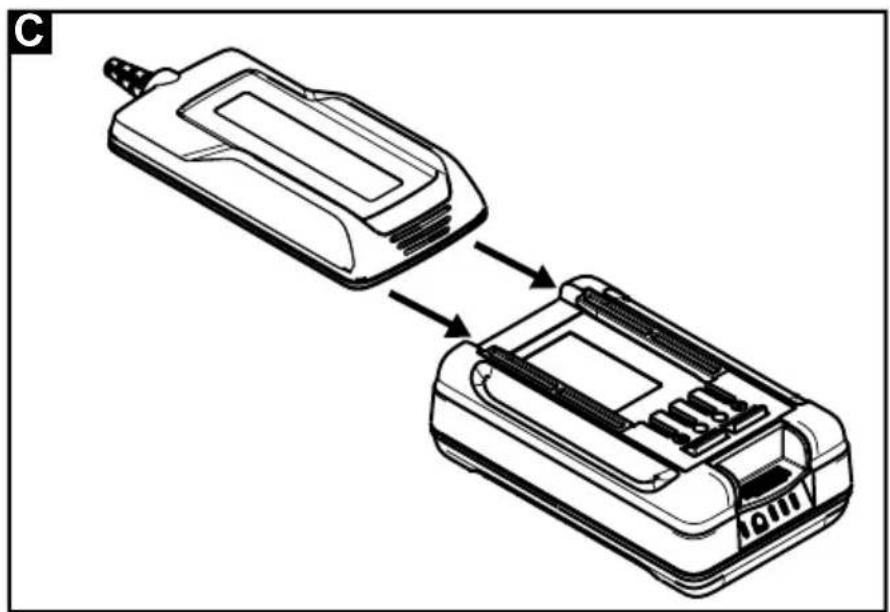
CHARGING THE BATTERY PACK (C)
⚠ WARNING: Do not use the charger in direct sunlight. Recharge at temperatures between 0°C and 40°C (32°F and 104°F).
⚠ WARNING: If the battery pack is hot, allow it to cool down before recharging.
-
Plug the charger into an AC power outlet.
-
Slide the charger over the battery pack terminals. Make sure the charger and battery pack are fully connected.
When the battery pack is charging, the LED will blink. When the battery pack is fully charged, the LED will stop blinking but will remain illuminated.
Once the charging light turns green, remove the battery pack from the charger and disconnect the charger from the outlet.
After charging, the battery pack may be stored on the charger, as long as the charger is not plugged in.
Store the battery pack fully charged.
LUBRICATING THE CUTTING BLADE
For easier operation and longer life, lubricate the cutter blades before and after every use. Apply the oil so that it runs between the two blades. Lubricants should be a non-toxic, non-hazardous, corrosion preventive lubricant specifically for lubricating moving metal parts.
STORING THE POWER TOOL
- Remove the battery pack.
- Remove debris with a soft brush or dry cloth. Never clean with water, cleaning fluids, or solvents.
- Use a soft brush to remove debris from the air vents.
- Inspect the tool carefully. If the tool is damaged in any way, contact an authorized service center. Never use a damaged tool.
- Lubricate the cutting blade.
- Put the blade cover on the blade.
- Store in a cool, dry place and out of reach of children.
STORING THE CHARGER
- Remove debris with a soft brush or dry cloth. Never clean with water, cleaning fluids, or solvents.
- Unplug the charger when there is no battery pack in it.
- Store the charger at normal room temperature. Do not store it in excessive heat.
TROUBLESHOOTING

WARNING: Always stop the power tool and disconnect the power cord before performing any of the recommended remedies below.
| Trouble Cause Remedy | ||
| The motor fails to start when the trigger is squeezed. | 1. Battery pack is not secure.2. Battery pack is not charged. | 1. Make sure the battery pack is fully secured in the power tool.2. Charge the battery pack. |
| The power tool will not start. 1. Attachment not correctly assembled in the powerhead.2. Battery pack is not secure.3. Battery pack is not charged.4. Defective power switch. | 1. Assemble the attachment correctly in the powerhead.2. Make sure the battery pack is fully secured in the power tool.3. Charge the battery pack.4. Call an authorized service center | |
| Cutting blade stops under load Cutting too fast Cut at a slower pace. | ||
| Fails to stop when one switch lever is released. | Internal wiring defective Call an authorized service center | |
| Poor cut quality 1. Debris caught in blades2. Damaged blades | 1. Clear debris from blades2. Call an authorized service center | |
TECHNICAL DATA
| unit C-Li 20VHT | ||
| Motor specifi cations | ||
| Motor type Brushed | ||
| Motor voltage V (DC) 20 | ||
| Motor power | W | 270 |
| Noise and vibration data | ||
| Equivalent vibration level (ahv, eq) front handle. See Note 1. | m/s^2 | 1.8 |
| Equivalent vibration level (ahv, eq) rear handle. See Note 1. | m/s^2 | 1.1 |
| Sound power level, guaranteed (LWA). See Note 2. | dB(A) | 98 |
| Sound power level, measured. See Note 2. | dB(A) | 95.3 |
| Sound pressure level at operator's ear. See Note 3. | dB(A) | 85.8 |
| Blade specifi cations | ||
| Blade speed | min^1 | 1200-1350 |
| Blade length | cm (in) | 40.6 (16) |
| Cutting capacity | mm (in) | 12.7 (0.5) |
| Product mass | ||
| Weight (without battery pack) | kg (lb) | 2.53 (5.58) |
| Weight (with battery pack) | kg (lb) | 2.92 (6.43) |
Note 1: Reported data for equivalent vibration level has a typical statistical dispersion (standard deviation) of 1.5 m/s^2 .
Note 2: Noise emissions in the environment measured as sound power (LWA) in conformity with EC directive 2000/14/EC. Reported sound power level for the machine has been measured with the original cutting attachment that gives the highest level. The difference between guaranteed and measured sound power is that the guaranteed sound power also includes dispersion in the measurement result and the variations between different machines of the same model according to Directive 2000/14/EC.
Note 3: Reported data for equivalent sound pressure level for the machine has a typical statistical dispersion (standard deviation) of 3 dB(A).
Environmental protection
- Waste electrical products should not be disposed of with household waste.
- Please recycle where facilities exist.
- Check with your local authority or retailer for recycling advice.

The following toxic and corrosive materials are in the battery pack: Lithium-Ion
WARNING: All toxic materials must be disposed of in a specified manner to prevent contamination of the environment. Before disposing of damaged or worn out lithium-ion battery packs, contact your local waste disposal agency, environmental authority, or retailer for information and specific instructions. Take the batteries to a local recycling and/or disposal center, certified for lithium-ion disposal.
PARTS & ACCESSORIES
| Description Part number | |
| Powerhead 967925200 | |
| Battery pack only 967913201 | |
| Charger only 967913362 (EU), 967913301 (UK) | |
CONTENTS OF THE EC DECLARATION OF CONFORMITY
We, Husqvarna AB, SE 561 82 Huskvarna, SWEDEN, declare under our sole responsibility that the represented product:
| Description Hedge Trimmer | |
| Brand Flymo | |
| Platform / Type / Model Platform | IT20BFY, representing model C-Li 20VHT |
| Batch | Serial number dating 2018 and onwards |
complies fully with the following EU directives and regulations:
| Directive/Regulation | Description |
| 2006/42/EC | “relating to machinery” |
| 2014/30/EU | “relating to electromagnetic compatibility” |
| 2000/14/EC | “relating to outdoor noise” |
| 2011/65/EU | “relating to hazardous substances” |
Harmonized standards and/or technical specifications applied are as follows: 60745-1:2006, EN 60335-1:2012+A13:2017, 60745-2-15:2006+A1:2009, EN 62233:2008, EN 55014-1:2017, EN 55014-2:2015
In accordance with directive 2000/14/EC, Annex V, the declared sound values are stated in the technical data section of this manual and in the signed EC Declaration of Conformity.
Intertek has carried out a voluntary examination on behalf of Husqvarna AB, providing a Certificate of conformity to EC Council directive 2006/42/EC for machinery.
The certificate, as provided on the signed EC Declaration of Conformity, is applicable to all manufacturing locations and Countries of Origin, as stated on the product.
The supplied hedge trimmer conforms to the example that underwent examination.
On behalf of Husqvarna AB, SE 561 82 Huskvarna, SWEDEN, 2018-05-10
John Thompson, Product and Marketing Director Responsible for technical documentation
GARDENA Manufacturing
GmbH
Central Service
(C1428ARP) Buenos Aires
Phone: (+54) 11 5194 5000
info.gardena@
ar.husqvarna.com
Armenia
Garden Land Ltd.
61 Tigran Mets
0005 Yerevan
Australia
Husqvama Australia Pty. Ltd.
Locked Bag 5
Central Coast BC
NSW 2252
Phone: (+61) (0) 2 4352 7400
customer.service@
husqvarna.com.au
GARDENA Belgium NV/SA
Brampton, Ontario L6T 4X3
Phone: (+1) 905 792 93 30
info@gardenacanada.com
Chile
Maquinarias Agroforestales
Ltda. (Maga Ltda.)
Santiago, Chile
Avda. Chesterton
# 8355 comuna Las Condes
Phone: (+56) 2 202 4417
Dalton@maga.cl
Zipcode: 7560330
Temuco, Chile
Avda. Valparaíso # 01466
Phone: (+56) 45 222 126
Zipcode: 4780441
China
Husqvarna (China) Machinery
Manufacturing Co., Ltd.
No. 1355, Jia Xin Rd.,
Ma Lu Zhen, Jia Ding Dist.,
Shanghai
201801
Phone: (+86) 21 59159629
Domestic Sales
www.gardena.com.cn
Colombia
Husqvama Colombia S.A.
Calle 18 No. 68 D-31, zona
Industrial de Montevideo
Bogotá, Cundinamarca
Tel. 571 2922700 ext. 105
jairo.salazar@
husqvarna.com.co
Costa Rica
Compania Exim
Euroiberoamericana S.A.
Los Colegios, Moravia,
Consumer Outdoor Products
Consumer Outdoor Products
Consumer Outdoor Products
Lautatarhankatu 8 B / PL 3
00581 HELSINKI
info@gardena.fi
France
Husqvama France
Aycliffe Industrial Park
Newton Aycliffe
County Durham
DL5 6UP
info.gardena@
husqvama.co.uk
Greece
Π.ΠΑΠΑΔΟΠΟΥΛΟΣ ΑΕΒΕ
Λεωφ. Αθηνών 92
Αθήνα
T.K.104 42
Ελλάδα
Tnλ. (+30) 210 5193100
info@papadopoulos.com.gr
Hungary
Aycliffe Industrial Park
Newton Aycliffe
County Durham
DL5 6UP
info.gardena@
husqvama.co.uk
Italy
23868 VALMADRERA (LC)
Phone: (+39) 0341.203.111
info@gardenaitalia.it
Japan
KAKUICHI Co. Ltd.
Sumitomo Realty &
Development Kojimachi
BLDG., 8F
5 -1 Nibanncyo
Chiyoda-ku
Tokyo 102-0084
Phone: (+81) 33 264 4721
m_ishihara@kaku-ichi.co.jp
Kazakhstan
LAMED Ltd.
155/1, Tazhibayevoi Str.
050060 Almaty
IP Schmidt
Abayavenue 3B
110 005 Kostanay
Korea
Kyung Jin Trading CO.,LTD.
107-4, SunDuk Bld.,
YangJae-dong,
Seocho-gu,
Seoul, (zipcode: 137-891)
Phone: (+82) (0)2 574-6300
Kyrgyzstan
Alye Maki
av. Moladaya Guardir J 3
720014
Bishkek
Latvia
Husqvama Latvija
Consumer Outdoor Products
Bākūžu iela 6
LV-1024 Rīga
info@husqvama.lv
Lithuania
UAB Husqvama Lietuva
Consumer Outdoor Products
Ateities pl. 77C
LT-52104 Kaunas
centras@husqvarna.lt
Luxembourg
Magasins Jules Neuberg
Husqvama New Zealand Ltd.
PO Box 76-437
Manukau City 2241
Phone: (+64) (0) 9 9202410
support.nz@husqvama.co.nz
Norway
Flymo®
www.flymo.com
Original instructions
- IDENTIFICATION OF SYMBOLS
- KNOW YOUR PRODUCT
- SAFETY
- IMPORTANT • READ CAREFULLY BEFORE USE • KEEP FOR FUTURE REFERENCE
- GENERAL POWER TOOL SAFETY WARNINGS
- Save all warnings and instructions for future reference.
- Work area safety
- Electrical safety
- Personal safety
- Power tool use and care
- Battery tool use and care
- Service
- HEDGE TRIMMER SAFETY WARNINGS
- ⚠️ DANGER: KEEP HANDS AWAY FROM BLADE
- SAFETY INSTRUCTIONS FOR OPERATION
- ADDITIONAL SAFETY INSTRUCTIONS
- VIBRATION EXPOSURE
- PERSONAL PROTECTIVE EQUIPMENT
- PROTECTIVE DEVICES ON THE PRODUCT
- Trigger lockout
- BATTERY SAFETY
- CHARGER USE AND CARE
- Electrical outlets
- Extension cords
- MAINTENANCE AND STORAGE
- ASSEMBLY
- ASSEMBLING THE ATTACHMENT
- OPERATION
- BEFORE STARTING
- INSTALLING THE BATTERY PACK
- NOTE: Do not use force when inserting the battery pack. It should slide into place and click.
- STARTING AND STOPPING THE TOOL
- TRIMMING
- Top Cutting
- Side Cutting
- MAINTENANCE
- CHECKING THE BATTERY PACK CAPACITY (B1)
- REMOVING THE BATTERY PACK (B2)
- CHARGING THE BATTERY PACK (C)
- LUBRICATING THE CUTTING BLADE
- STORING THE POWER TOOL
- STORING THE CHARGER
- TROUBLESHOOTING
- Environmental protection
- The following toxic and corrosive materials are in the battery pack: Lithium-Ion
- CONTENTS OF THE EC DECLARATION OF CONFORMITY
- Flymo®
Brand : FLYMO
Model : Ci-Li 20VHT
Category : Hedge Trimmer