
DV-C600 - Blu-ray player ONKYO - Free user manual and instructions
Find the device manual for free DV-C600 ONKYO in PDF.


| Product Type | DVD Changer (plays DVD, VCD, Audio CD) |
| Model | ONKYO DV-C600 |
| Disc Capacity | 6 discs (carousel) |
| Dimensions (W x H x D) | 435 x 121 x 433 mm |
| Weight | 7.0 kg |
| Power Supply | AC 120 V, 60 Hz (voltage selector for worldwide models) |
| Power Consumption | 19 W |
| Signal System | NTSC |
| Video Outputs | Composite, S-Video, Component (Y, Cb, Cr) – gold-plated |
| Audio Outputs | Analog stereo (RCA), Digital coaxial, Digital optical |
| Audio Decoding | Dolby Digital, DTS, MPEG1/2, PCM |
| Video D/A Conversion | 10-bit, 27 MHz |
| Playback Features | Fast forward/reverse, slow motion, frame advance, zoom, A-B repeat, title/chapter/track search, memory programming, random play |
| Remote Control | 54-key, full-function, with batteries (AA x 2) |
| Supplied Accessories | Remote control, batteries, S-video cable, audio cable, remote control cable, warranty card |
| Front Panel | Brushed aluminum, large fluorescent display, disc tray with individual LEDs |
| Care Instructions | Clean with soft cloth; use mild detergent if needed; avoid thinners, alcohol, or abrasive materials |
| Safety Notices | Class 1 laser product; do not open; refer servicing to qualified personnel; avoid moisture |
| Region Code | 1 (for DVD video) |
| Chassis | Anti-resonant, heavy-gauge, reinforced steel with large anti-resonant feet |
| Repairability | No user-serviceable parts; refer all servicing to qualified service personnel |
Frequently Asked Questions - DV-C600 ONKYO
User questions about DV-C600 ONKYO
0 question about this device. Answer the ones you know or ask your own.
Ask a new question about this device
Download the instructions for your Blu-ray player in PDF format for free! Find your manual DV-C600 - ONKYO and take your electronic device back in hand. On this page are published all the documents necessary for the use of your device. DV-C600 by ONKYO.
USER MANUAL DV-C600 ONKYO
Thank you for purchasing the ONKYO DVD Changer.
Please read this manual thoroughly before making connections and turning on the power.
Following the instructions in this manual will enable you to obtain optimum performance and listening enjoyment from your new DVD Changer.
Please retain this manual for future reference.



Contents
Before Using Your DVD Changer 2
Getting Started
6
Connections
10
Basic Playback
14
Advanced Playback
20
Function Setup
32
Others
40
WARNING:
TO REDUCE THE RISK OF FIRE OR ELECTRIC SHOCK, DO NOT EXPOSE THIS APPLIANCE TO RAIN OR MOISTURE.
CAUTION:
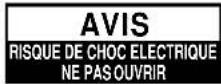
TO REDUCE THE RISK OF ELECTRIC SHOCK, DO NOT REMOVE COVER (OR BACK). NO USER-SERVICEABLE PARTS INSIDE. REFER SERVICING TO QUALIFIED SERVICE PERSONNEL.
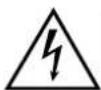
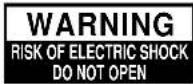


The lightning flash with arrowhead symbol, within an equilateral triangle, is intended to alert the user to the presence of uninsulated "dangerous voltage" within the product's enclosure that may be of sufficient magnitude to constitute a risk of electric shock to persons.

The exclamation point within an equilateral triangle is intended to alert the user to the presence of important operating and maintenance (servicing) instructions in the literature accompanying the appliance.
Important Safeguards
-
Read Instructions - All the safety and operating instructions should be read before the appliance is operated.
-
Retain Instructions - The safety and operating instructions should be retained for future reference.
-
Heed Warnings - All warnings on the appliance and in the operating instructions should be adhered to.
-
Follow Instructions - All operating and use instructions should be followed.
-
Water and Moisture - The appliance should not be used near water - for example, near a bathtub, washbowl, kitchen sink, laundry tub, in a wet basement, or near a swimming pool, and the like.
-
Carts and Stands - The appliance should be used only with a cart or stand that is recommended by the manufacturer.
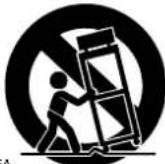
PORTABLE CART WARNING
6A. An appliance and cart combination should be moved with care. Quick stops, excessive force, and uneven surfaces may cause the appliance and cart combination to overturn.
-
Wall or Ceiling Mounting - The appliance should be mounted to a wall or ceiling only as recommended by the manufacturer.
-
Ventilation - The appliance should be situated so that its location or position does not interfere with its proper ventilation. For example, the appliance should not be situated on a bed, sofa, rug, or similar surface that may block the ventilation openings; or if placed in a built-in installation, such as a bookcase or cabinet that may impede the flow of air through the ventilation openings, there should be free space of at least 5 cm (2 in.) and an opening behind the appliance.
-
Heat - The appliance should be situated away from heat sources such as radiators, heat registers, stoves, or other appliances (including amplifiers) that produce heat.
-
Power Sources - The appliance should be connected to a power supply only of the type described in the operating instructions or as marked on the appliance.
-
Polarization - If the appliance is provided with a polarized plug having one blade wider than the other, please read the following information:
The polarization of the plug is a safety feature. The polarized plug will only fit the outlet one way. If the plug does not fit fully into the outlet, try reversing it. If there is still trouble, the user should seek the services of a qualified electrician. Under no circumstances should the user attempt to defeat the polarization of the plug.
-
Power-Cord Protection - Power-supply cords should be routed so that they are not likely to be walked on or pinched by items placed upon or against them, especially near plugs, convenience receptacles, and the point where they exit from the appliance.
-
Cleaning - The appliance should be cleaned only as recommended by the manufacturer.
-
Nonuse Periods - The power cord of the appliance should be unplugged from the outlet when left unused for a long period of time.
-
Object and Liquid Entry - Care should be taken so that objects do not fall and liquids are not spilled into the enclosure through openings.
-
Damage Requiring Service - The appliance should be serviced by qualified service personnel when:
A. The power-supply cord or the plug has been damaged; or
B. Objects have fallen, or liquid has been spilled into the appliance; or
C. The appliance has been exposed to rain; or
D. The appliance does not appear to operate normally or exhibits a marked change in performance; or
E. The appliance has been dropped, or the enclosure damaged.
- Servicing - The user should not attempt to service the appliance beyond that described in the operating instructions. All other servicing should be referred to qualified service personnel.
DANGER:
INVISIBLE LASER RADIATION WHEN OPEN AND INTERLOCK FAILED OR DEFEATED. AVOID DIRECT EXPOSURE TO BEAM.
CAUTION:
THIS PRODUCT UTILIZES A LASER. USE OF CONTROLS OR ADJUSTMENTS OR PERFORMANCE OF PROCEDURES OTHER THAN THOSE SPECIFIED HEREIN MAY RESULT IN HAZARDOUS RADIATION EXPOSURE.
For European model
This unit contains a semiconductor laser system and is classified as a "CLASS 1 LASER PRODUCT." So, to use this model properly, read this Instruction Manual carefully. In case of any trouble, please contact the store where you purchased the unit. To prevent being exposed to the laser beam, do not try to open the enclosure.
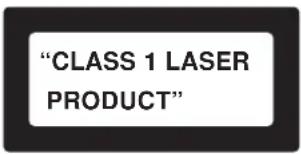
This label on the rear panel states that:
- This unit is a CLASS 1 LASER PRODUCT and employs a laser inside the cabinet.
- To prevent the laser from being exposed, do not remove the cover. Refer servicing to qualified personnel.
For U.S. model
The laser is covered by a housing which prevents exposure during operation or maintenance. However, this product is classified as a Laser Product by CDRH (Center for Devices and Radiological Health) which is a department of the Food and Drug Administration.
According to their regulations 21 CFR section 1002.30, all manufactures who sell Laser Products must maintain records of written communications between the manufacturer, dealers and customers concerning radiation safety. If you have any complaints about instructions or explanations affecting the use of this product, please feel free to write to the address on the back page of this manual. When you write us, please include the model number and serial number of your unit.
In compliance with Federal Regulations, the certification, identification and the period of manufacture are indicated on the rear panel.
FCC INFORMATION FOR USER
CAUTION:
The user changes or modifications not expressly approved by the party responsible for compliance could void the user's authority to operate the equipment.
NOTE:
This equipment has been tested and found to comply with the limits for a Class B digital device, pursuant to Part 15 of the FCC Rules. These limits are designed to provide reasonable protection against harmful interference in a residential installation. This equipment generates, uses and can radiate radio frequency energy and, if not installed and used in accordance with the instructions, may cause harmful interference to radio communications. However, there is no guarantee that interference will not occur in a particular installation. If this equipment does cause harmful interference to radio or television reception, which can be determined by turning the equipment off and on, the user is encouraged to try to correct the interference by one or more of the following measures:
- Reorient or relocate the receiving antenna.
- Increase the separation between the equipment and receiver.
- Connect the equipment into an outlet on a circuit different from that to which the receiver is connected.
- Consult the dealer or an experienced radio/TV technician for help.
For Canadian model
CAUTION: THIS DIGITAL APPARATUS DOES NOT EXCEED THE CLASS B LIMITS FOR RADIO NOISE EMISSION FROM DIGITAL APPARATUS SET OUT IN THE RADIO INTERFERENCE REGULATIONS OF THE CANADIAN DEPARTMENT OF COMMUNICATIONS.
For models having a power cord with a polarized plug:
CAUTION: TO PREVENT ELECTRIC SHOCK, MATCH WIDE BLADE OF PLUG TO WIDE SLOT, FULLY INSERT.
You can find the serial number on the rear panel of this unit. In case of warranty claim, please report this number.
2. Recording Copyright
Recording of copyrighted material for other than personal use is illegal without permission of the copyright holder.
3.Power
WARNING
BEFORE PLUGGING IN THE UNIT FOR THE FIRST TIME, READ THE FOLLOWING SECTION CAREFULLY.
The voltage of the available power supply differs according to country or region. Be sure that the power supply voltage of the area where this unit will be used meets the required voltage (e.g., AC 230 V, 50 Hz or AC 120 V, 60 Hz) written on the rear panel.
Worldwide models are equipped with a voltage selector to conform to local power supplies. Be sure to set this switch to match the voltage of the power supply in your area before plugging in the unit.
4.Do not touch this unit with wet hands
Do not handle this unit or power cord when your hands are wet or damp. If water or any other liquid enters the case, take this unit to an authorized service center for inspection.
5. Location of this unit
- Place this unit in a well-ventilated location.
Take special care to provide plenty of ventilation on all sides of this unit especially when it is placed in an audio rack. If ventilation is blocked, this unit may overheat and malfunction.
- Do not expose this unit to direct sunlight or heating units as this unit's internal temperature may rise and shorten the life of the pickup.
- Avoid damp and dusty places and places directly affected by vibrations from the speakers. In particular, avoid placing the unit one or above one of the speakers.
- Be sure this unit is placed in a horizontal position. Never place it on its side or on a slanted surface as it may malfunction.
- When you place this DVD Changer near a TV, radio, or VCR, the playback picture may become poor and the sound may be distorted. In this case, place the DVD Changer away from the TV, radio, or VCR.
6.Care
From time to time you should wipe the front and rear panels and the cabinet with a soft cloth. For heavier dirt, dampen a soft cloth in a weak solution of mild detergent and water, wring it out dry, and wipe off the dirt. Following this, dry immediately with a clean cloth. Do not use rough material, thinners, alcohol or other chemical solvents or cloths since these could damage the finish or remove the panel lettering.
7. Notes on Handling
- When shipping the DVD Changer, use the original shipping carton and packing materials. For maximum protection, repack the unit as it was originally packed at the factory.
- Do not use volatile liquids, such as insect spray, near the DVD Changer. Do not leave rubber or plastic products in contact with the DVD Changer for a long time. They will leave marks on the finish.
- The top and rear panels of the DVD Changer may become warm after a long period of use. This is not a malfunction.
- When the DVD Changer is not in use, be sure to remove the disc and turn off the power.
- If you do not use the DVD Changer for a long period, the unit may not function properly in the future. Turn on and use the DVD Changer occasionally.
8.To Obtain a Clear Picture
The DVD Changer is a high technology, precision device. If the optical pick-up lens and disc drive parts are dirty or worn down, the picture quality becomes poor. To obtain a clear picture, we recommend regular inspection and maintenance (cleaning or parts replacement) every 1,000 hours of use depending on the operating environment. For details, contact your nearest dealer.
9. Notes on Moisture Condensation
Moisture condensation damages the DVD Changer.
Please read the following carefully.
Moisture condensation occurs, for example, when you pour a cold drink into a glass on a warm day. Drops of water form on the outside of the glass. In the same way, moisture may condense on the optical pick-up lens inside this unit, one of the most crucial internal parts of the DVD Changer.
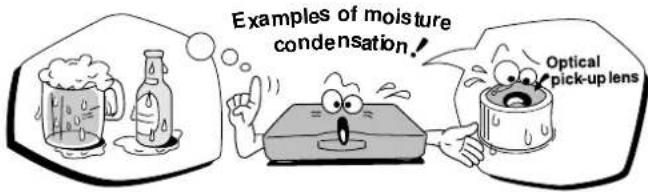
- Moisture condensation occurs in the following cases.
- When you bring the DVD Changer directly from a cold place to a warm place.
- When you use the DVD Changer in a room where you just turned on the heater, or a place where the cold wind from the air conditioner directly hits the unit.
- In summer, when you use the DVD Changer in a hot and humid place just after you move the unit from an air conditioned room.
- When you use the DVD Changer in a humid place.
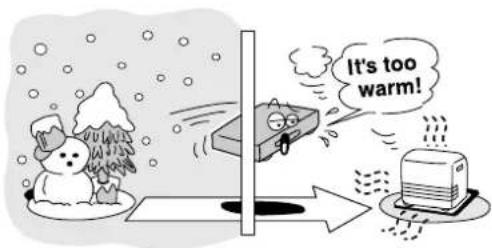
- Do not use the DVD Changer when moisture condensation may occur.
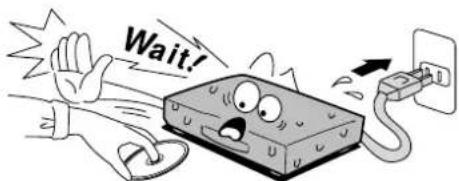
If you use the DVD Changer in such a situation, it may damage discs and internal parts. Remove the disc, connect the power cord of the DVD Changer to the wall outlet, turn on the DVD Changer, and leave it for two or three hours. After a few hours, the DVD Changer will have warmed up and evaporated any moisture. Keep the DVD Changer connected to the wall outlet and moisture condensation will seldom occur.
Important Safeguards/Precautions/Table of Contents 2–5
Getting Started
Features......6
Supplied Accessories 7
Preparing the Remote Controller 8
Installing the remote controller batteries .... 8
Using the remote controller 8
Notes on the Discs You Can Use with this Unit ...... 9
Discs You can Use 9
Handling Discs 9
Cleaning Discs 9
Storing Discs 9
About Region Numbers 9
About VIDEO CDs 9
Notes on Copyright....9
Connections
Connecting the DV-C600 to a TV 10
Connecting the DV-C600 to a TV 10
Connecting to an Audio System and TV with
COMPONENT VIDEO Inputs 11
Other Audio Playback Options 12
Connecting to an Amplifier Equipped with a Dolby Digital Decoder 12
Connecting to an Amplifier Equipped
with Dolby Pro Logic Surround 12
Connecting to an Amplifier Equipped
with a DTS Decoder 13
Connecting to an Amplifier Equipped
with a Digital Audio Input 13
Basic Playback
Playing back Discs 14
Basic Playback 14
Direct Playback, Stop and Pause 16
Fast Reverse and Fast Forward Playback .... 16
Slow-Motion Playback 17
Resuming Playback From the Desired Location ..... 17
Locating Titles, Chapters, or Tracks.... 18
Locating a Title Using the Title Menu 18
Title Selection with the Numeric Buttons 18
Selecting Chapters or Tracks 19
Selecting a Precise Scene or Audio Passage.... 20
Entering the Time Location.... 20
Advanced Playback
Repeat Functions 21
Repeating a Title or Chapter/Track.... 21
Repeating a Given Scene or Passage 21
Setting the Desired Playback Order 22
Programming Memory Sequences 22
Additional Playback Functions 24
Next Selection: Preparing the next Audio Track ..... 24
Using the DVD Changer as CD player 25
Random Playback 26
DVD Video Disc Functions 27
Zooming in.... 27
Changing the Camera Angle 27
Audio Playback Settings.... 28
Using the Subtitle Feature 30
Using The On-Screen Display Functions 31
Requesting Basic Information 31
More Specific Information: Remaining Time
and Setting Status 31
Function Setup
Advanced Settings.... 32
Setting Procedure.... 32
LANGUAGE Functions 34
PICTURE Settings.... 35
AUDIO Settings 36
DISPLAY Settings.... 37
OPERATION Settings.... 37
Table of Languages 39
Table of Languages and Their Abbreviations ..... 39
Others
Troubleshooting 40
Symptoms and Corrections 40
Identification of Controls 41
Front Panel 41
Rear Panel 41
DVD Display 42
Remote Controller 43
Specifications.... 44
DVD Changer/Outputs 44
Features
■ Highlights that Set the DV-C600
• Dolby ^® Digital Audio Output
• 6-Disc playback (instead of the usual five)
• DTS ®** Compatibility
• Video CD playback
• Gold-plated component-video output (usually found only on high-end players, and not always gold-plated)
- Full 96-kHz/24-bit resolution with 96-kHz/24-bit discs (some players don't play these discs, and some play them by downsampling the signal to a lower 48-kHz sampling rate, or reducing the resolution to 20 bits or less, or both)
- Direct digital path for signal purity
• Enhanced black-level setting (another uncommon feature)
- Next Selection (an Onkyo exclusive feature)
- Aluminum front panel (distinguishes the DV-C600 from mass-market models)
■ Video Features
- DTS® Compatibility means the DV-C600 can pass a DTS-encoded digital signal from discs with DTS soundtracks to an external processor or receiver with a DTS decoder
- Advanced 10-Bit 27 MHz Video D/A Conversion for four times the accuracy of conventional 8-bit, 13.5 MHz systems
• Gold-Plated Component-Video Output to realize the full potential of DVDs - 3-Mode Picture Magnification enables you to "zoom" in and enlarge in three steps 25 selected areas of the picture
- Enhanced Black-Level Control lets you set the reference black threshold cutoff-especially useful for picture calibration on TVs
• Passes PLUGE Signals to make it easier for you to set the brightness of your monitor when using DVD test discs
• Video CD Playback for enjoying the wide selection of inexpensive Video-CD software, which has the same high audio quality as MiniDiscs, and picture quality comparable to VHS video cassettes
• High Resolution Onscreen Display - S-Video Output
• Full-Time Active Video Outputs to make using the DVD changer with both the main home-theater television and the display in the bedroom much easier
• 4-Mode Search (title, DVD chapter, CD track, and time)
• Still Frame to view single frames - Frame Advance
- Slow Motion for DVD playback without sound at 1/2, 1/4, or 1/8th the normal speed
- Fast Forward/Reverse (x2, x8, x30)
- Last Memory Play function for both DVDs and CDs-resumes play from where last stopped, even if the power was turned off
- 6-Mode Repeat allows you to repeat titles, chapters, tracks, all tracks, memory, and a user-selected A-B section on DVDs and CDs
• Programmed Memory Playback -
Random Playback
-
Multi-Aspect Ratio
• 8-Language Soundtrack Capability
• 32 Subtitle Languages - Multi-Camera Angle
• Parental Viewing Control - Screen Saver
■ Audio Features
• Audiophile-Class Audio Performance
- Direct Digital Path
• Full 96-kHz/24-Bit Audio Resolution
• Digital Audio Output (coaxial)
• Optical Digital Audio Output
• 1 Pair of Analog Outputs (RCA)
■ Other Features You'll Enjoy
- 5-Disc Exchange
• CD Mode (DVD Skip) Control - Next Selection
- Direct Disc Access
- Separate LEDs for Each Disc (1 to 6)
• Dual-Focus Optical Pickup
• Dynamic Range Control
• Large, Bright, 14-Segment Fluorescent Display
• 2-Mode Display Dimmer (normal, dim)
• Anti-Resonant, Heavy-Gauge, Reinforced-Steel Chassis
• Large Anti-Resonant Feet
• Heavy-Duty Power Cord - Brushed Aluminum Front Panel
• 54-Key Full-Function Remote Control
* Manufactured under license from Dolby Laboratories. "Dolby" and the double-D symbol #e trademarks of Dolby Laboratories. Confidential Unpublished Works. ©1992-1997 Dolby Laboratories, Inc. All rights reserved.
** "DTS" and "DTS Digital Surround" are trademarks of Digital Theater Systems, Inc.
About This Manual
This manual explains the basic procedures for operating your DVD Changer. Some DVD video discs do not support the full potential of the DVD technology. Your DVD Changer may therefore not respond to all operating commands. Refer to instruction notes on discs.
A “∅” mark may appear on the TV screen during operation. It means that the operation is not permitted by the DVD Changer or the disc.
Supplied Accessories
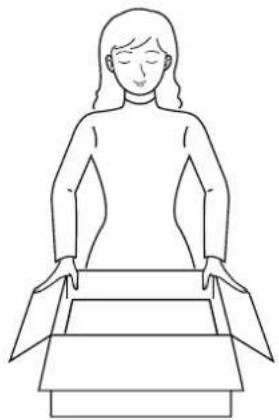
After unpacking, check whether the box contains all items listed below. If anything is missing, contact the ONKYO dealer where you bought the DVD Changer. The number of accessories is indicated in brackets.
natural_image
Line drawing of a person standing with hands on hips, holding a rectangular object (no text or symbols)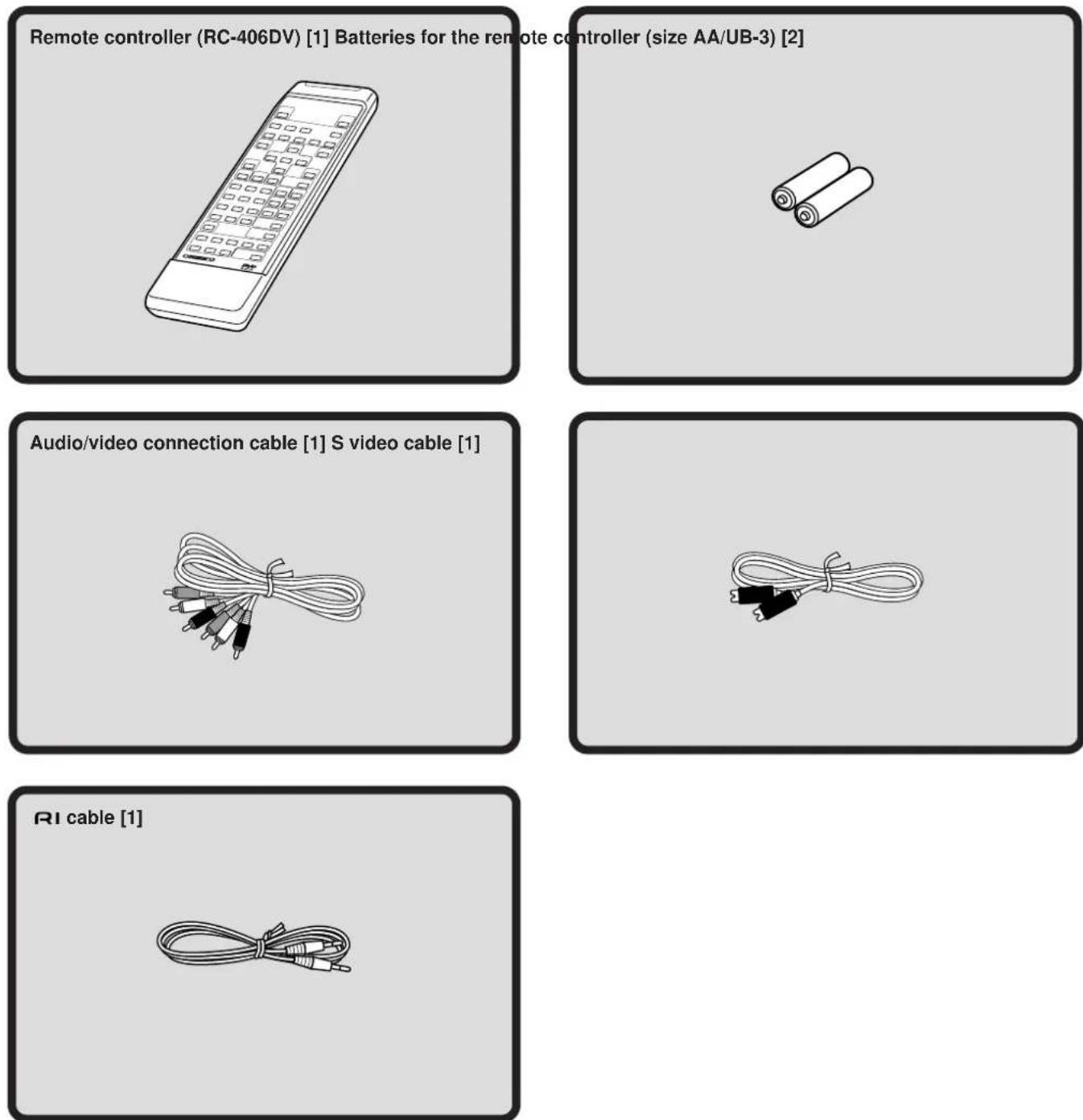
Preparing the Remote Controller
1
2
natural_image
Technical diagram showing a mechanical assembly with two cylindrical components and a base plate (no text or symbols)3
natural_image
Pure technical diagram of a mechanical component with directional arrows indicating motion (no text or symbols)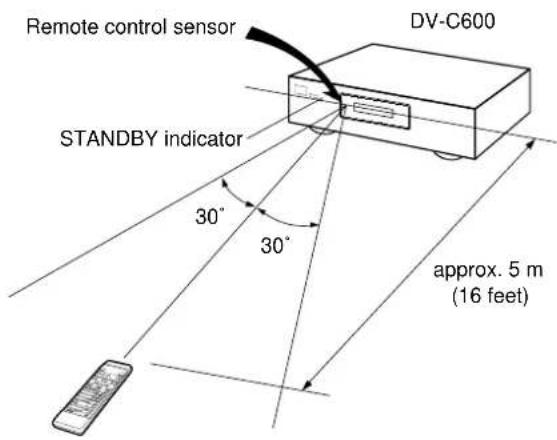
Installing the remote controller batteries
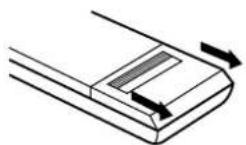
Remove the battery compartment cover by pressing and sliding it away from the remote controller unit.
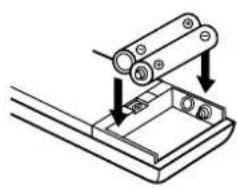
② Insert two AA (R6- or UM-3)-size batteries into the battery compartment. Carefully follow the polarity diagram (positive (+) and negative (−) symbols) inside the battery compartment.
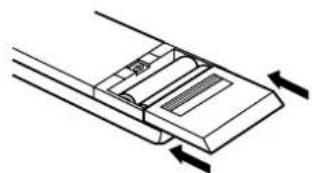
③ After batteries are installed and seated correctly, replace the compartment cover.
Notes:
- Do not mix new batteries with old batteries or different kinds of batteries.
- To avoid corrosion, remove the batteries if the remote controller is not to be used for a long time.
- Remove dead batteries immediately to avoid damage from corrosion. If the remote controller doesn't operate smoothly, replace both the batteries at the same time.
- The life of the batteries supplied is about six months but this will vary depending on usage.
Using the remote controller
Point the remote controller toward the remote control sensor.
Notes:
- Place the unit away from strong light such as direct sunlight or inverted fluorescent light which can prevent proper operation of the remote controller.
- Using another remote controller of the same type in the same room or using the unit near equipment which uses infrared rays may cause operational interference.
- Do not put any object such as a book on the remote controller. The buttons of the remote controller may be pressed by mistake and drain the batteries.
- Make sure the audio rack doors do not have colored glass. Placing the unit behind such doors may prevent proper remote controller operation.
- If there is any obstacle between the remote controller and the remote control sensor, the remote controller will not operate.
In this section, you will learn which discs can be used with your DV-C600, and how to handle, clean, and store them.
Discs You can Use
Your DVD Changer can play back the following discs:
| Disc mark | Contents | Disc size | Maximum playback time | |
| DVD videos |  | Audio + Video (moving pictures) | 12 cm | Approx. 4 hours (single sided disc) |
| Approx. 8 hours (double-sided disc) | ||||
| 8 cm | Approx. 80 minutes (single-sided disc) | |||
| Approx. 160 minutes (double-sided disc) | ||||
| VIDEO CDs |  | Audio + Video (moving pictures) | 12 cm | Approx. 74 minutes |
| 8 cm | Approx. 20 minutes | |||
| Audio CDs |  | Audio | 12 cm | Approx. 74 minutes |
| 8 cm (CD single) | Approx. 20 minutes |
- You cannot play back discs other than those listed above.
- You cannot play back discs such as CD-R, CD-RW, CD-ROM, DVD-RAM, DVD-RW, etc., even though they may be labelled with one of the above logos.
- This DVD Changer uses the NTSC color system, and cannot play back DVD videos recorded in any other color system (PAL, SECAM, etc.).
- Avoid using heart-shaped or octagonal discs. Playing irregularly shaped discs may damage the DVD Changer's internal mechanism.

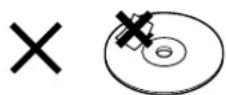
- Do not use discs that contain adhesive tape or a disc label (on rental discs). Otherwise, you may not be able to eject the discs, or the DVD Changer may become inoperative.
Handling Discs
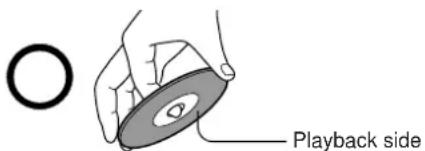
- Never touch the playback side (the "blank" side) of the disc.
- Never attach paper or tape to discs.
Cleaning Discs
- Fingerprints and dust on the disc cause a deterioration of the picture and sound quality. Wipe the disc from the center outwards with a soft cloth. Always keep the discs clean.
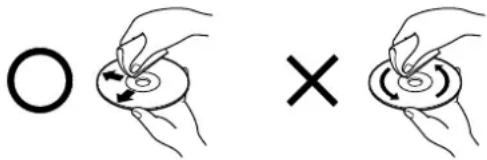
- Stubborn dust or dirt can be removed by wiping the disc lightly with a slightly moistened soft cloth and finishing with a dry cloth.
- Never use solvents such as thinner, benzine, commercially available cleaners, or antistatic spray for vinyl LPs. They may damage the disc.
Storing Discs
- Do not store discs in places subject to direct sunlight or near heat sources.
- Do not store discs in places subject to moisture and dust, such as in a bathroom or near a humidifier.
- Store discs vertically in their case. Stacking or placing objects on unprotected discs may cause warping and scratches.
About Region Numbers

The region number of this DVD Changer is "1". This number refers to the coding format of the discs that can be played back and is only important for DVD video discs. If the region number of the DVD video disc you are trying to play back is different from "1", that is, if the disc neither contains the nor the symbol, the DV-C600 cannot play it back. (In this case, your DVD Changer displays a warning message.)
About VIDEO CDs
Your DVD Changer can play back version 1.1 and 2.0 Video CDs. Version 2.0 discs support PBC functionality. (PBC is the abbreviation of Playback Control.)
- VIDEO CDs not equipped with PBC functionality (Version 1.1) Sound and pictures are played back in the same way as an audio CD.
- VIDEO CDs equipped with PBC functionality (Version 2.0) In addition to the functions available for version 1.1 Video CDs, you can use interactive software and search functions. These are accessible via a menu displayed on the TV screen (Menu Playback). However, not all functions described in this Instruction Manual are supported by all Video CDs.
Notes on Copyright
It is forbidden by law to copy, broadcast, show, broadcast on cable, play in public, and rent copyrighted material without permission. DVD video discs are copy protected, and any copy made from these discs will be distorted.
This product incorporates copyright protection technology that is protected by method claims of certain U.S. patents and other intellectual property rights owned by Macrovision Corporation and other rights owners. Use of this copyright protection technology must be authorized by Macrovision Corporation, and is intended for home and other limited viewing uses, unless otherwise authorized by Macrovision Corporation. Reverse engineering or disassembly is prohibited.
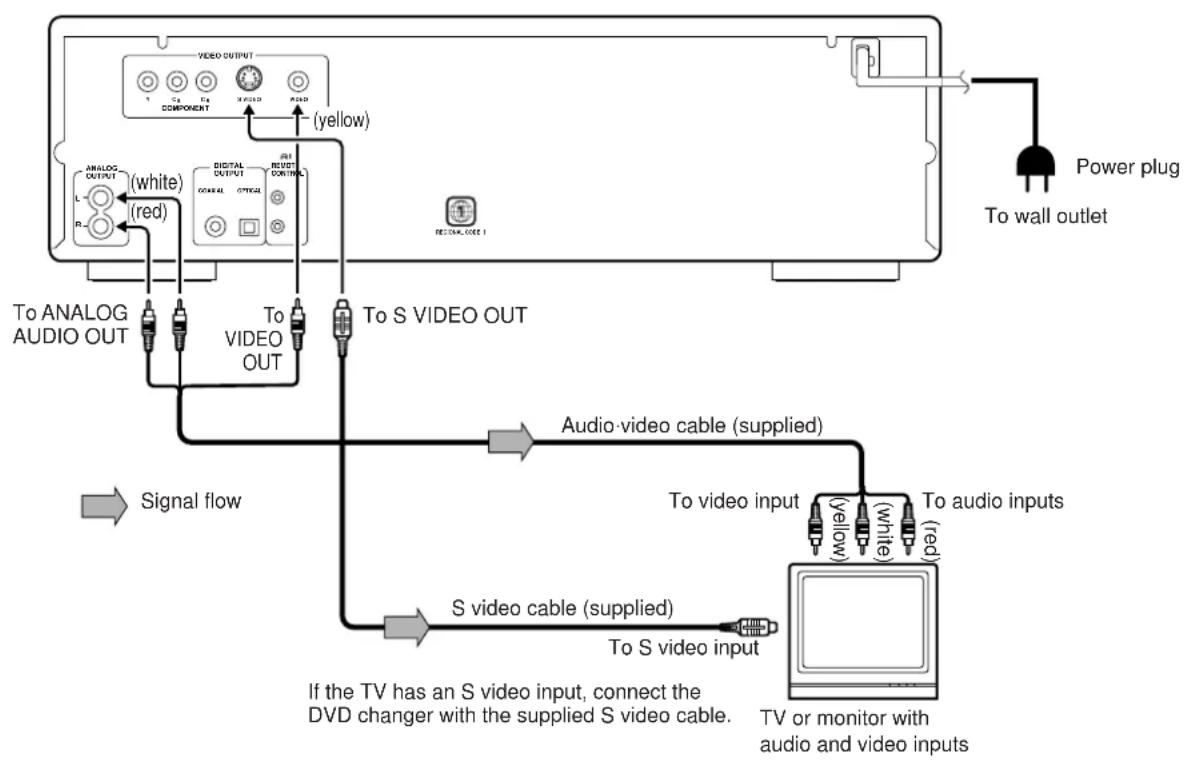
Here is how to connect your DVD Changer to your TV set. In this case, both the video and audio signals will be played back by your TV set.
Connecting the DV-C600 to a TV
- Switch off the DVD Changer and the TV set.
- Connect the DV-C600 to your TV set as shown in the illustration.
flowchart
graph TD
    A["Analog OUTPUT"] -->|To Analog Audio OUT| B["Signal flow"]
    C["Video OUTPUT"] -->|To Analog to Digital Output| D["Signal flow"]
    E["Digital Output"] -->|To Video OUT| F["Signal flow"]
    G["Video Output"] -->|To S Video OUT| H["Signal flow"]
    I["Power plug"] --> J["To wall outlet"]
    K["S video cable (supplied)"] --> L["To video input"]
    M["To audio inputs"] --> N["To video input"]
    O["TV or monitor with audio and video inputs"] --> P["Output"]
    Q["If the TV has an S video input, connect the DVD changer with the supplied S video cable."] --> R["Output"]
■ Selecting the audio outputs
Your DV-C600 provides several options for audio playback: you can use the analog or one of the digital audio outputs. If the audio is to be played back by your TV set, connect the ANALOG OUTPUTs to the audio inputs of your TV set and activate them (“Analog 2ch”). See “Audio Settings” on page 36 for details.
Notes:
- See also the instruction manual of the connected TV on how to select the signals transmitted by the DVD Changer.
- Before connecting the DVD Changer to your TV, be sure to turn off the power to and unplug both units from the wall outlet.
- If your TV set has one audio input (monaural), connect a Y cable adapter to the DV-C600's ANALOG OUTPUTs, and the other end of the adapter to the TV's audio input.
- Be sure to establish a direct video connection between the DV-C600 and your TV set. Do not route the video signal through your VCR or other video component. Otherwise the picture may be distorted due to the DVD disc's copy protection.
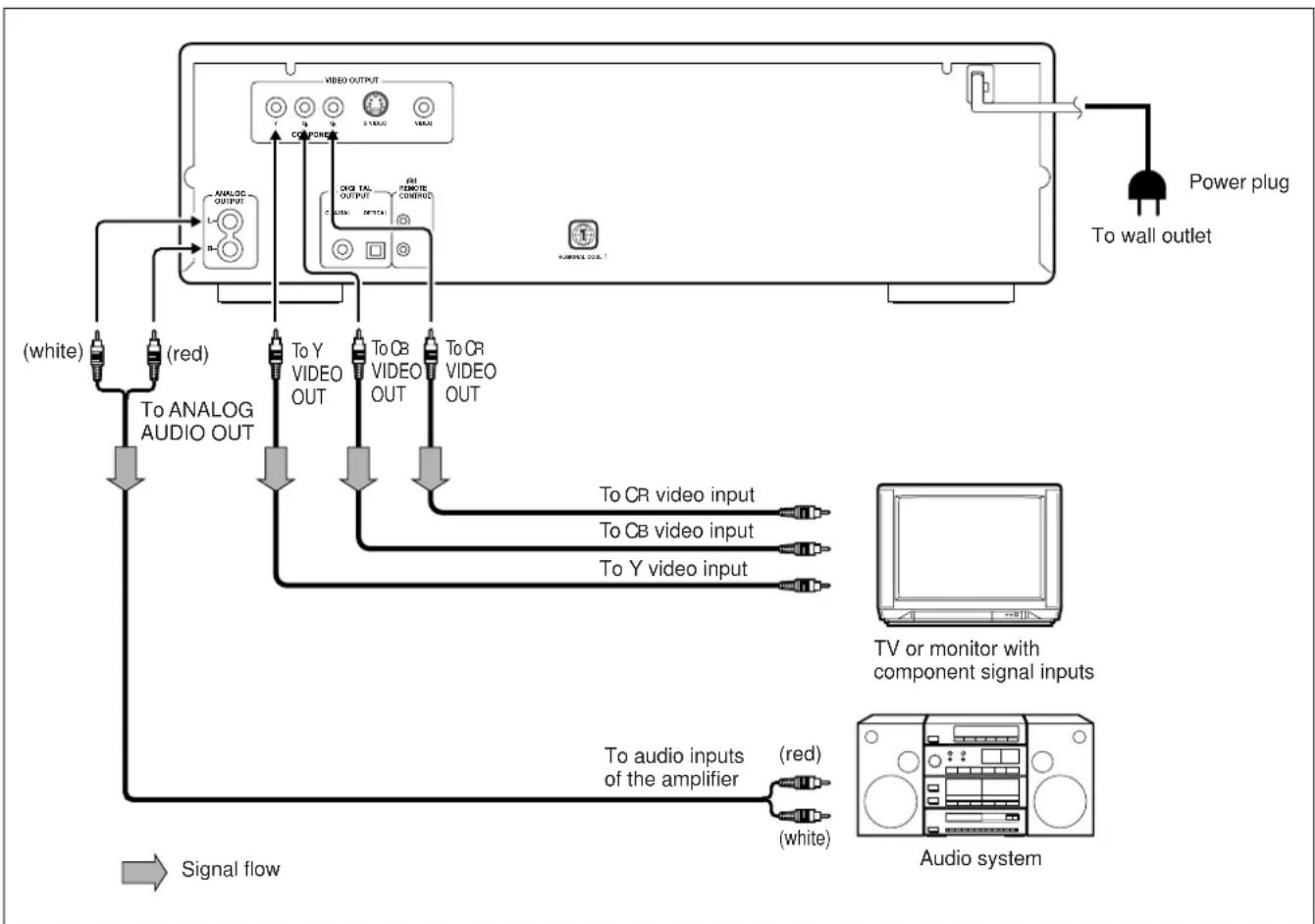
Connecting to an Audio System and TV with COMPONENT VIDEO Inputs
- It is also possible to “split” the audio and video signals by sending the video signal to your TV set and the audio signal to an amplifier. Doing so has the advantage that you can:
- Listen to the sound of audio CDs and DVD video discs in stereo (via the amplifier) or in Dolby Digital, Dolby Pro Logic Surround or DTS (see pages 12, 13);
- Enjoy a better picture quality of DVD video discs on a TV equipped with Component Video inputs than would be possible via an S-video connection.
Notes
• See also the manuals of your audio amplifier and TV set for establishing the correct connections and making the required settings.
- Before connecting the DVD Changer to other equipment, be sure to turn off the power and unplug all components from the wall outlet.
- This DVD Changer outputs a very dynamic audio signal. Be sure to set the amplifier's volume to a moderate listening level to avoid damaging your speakers due to sudden volume surges.
- Switch off the amplifier or select another input source before connecting or disconnecting the DVD Changer's power cord. If you leave the amplifier power on, the speakers may be damaged.
Your DV-C600 provides several options for audio playback: you can use the analog or one of the digital audio outputs. If your amplifier only provides analog inputs, use the DV-C600's ANALOG OUTPUTs and select them via the on-screen menu ("Analog 2ch"). See "Audio Settings" on page 36 for details.
flowchart
graph TD
    A["Power plug"] --> B["To wall outlet"]
    B --> C["TV or monitor with component signal inputs"]
    C --> D["Audio system"]
    D --> E["To audio inputs of the amplifier"]
    E --> F["To Y video input"]
    E --> G["To CB video input"]
    E --> H["To Y VIDEO OUT"]
    H --> I["To Y VIDEO OUT"]
    I --> J["To CR VIDEO OUT"]
    J --> K["To CR video input"]
    K --> L["Video output"]
    style A fill:#f9f,stroke:#333
    style B fill:#ccf,stroke:#333
    style C fill:#cfc,stroke:#333
    style D fill:#fcc,stroke:#333
    style E fill:#cff,stroke:#333
    style F fill:#ffc,stroke:#333
    style G fill:#ffc,stroke:#333
    style H fill:#ffc,stroke:#333
    style I fill:#ffc,stroke:#333
    style J fill:#ffc,stroke:#333
    style K fill:#ffc,stroke:#333
    style L fill:#ffc,stroke:#333
    style_M["Signal flow"] --> N["(white)"]
    M --> O["(red)"]
    O --> P["To ANALOG AUDIO OUT"]
    P --> Q["ANDLIC OUTPUT"]
    Q --> R["VIDEO OUTPUT"]
    R --> S["COMPONE"]
    S --> T["DIAT TAL OUTPUT"]
    T --> U["DIAT REMOTE CONTROL"]
    U --> V["KAMKINA OUT"]
■ COMPONENT VIDEO OUT (COLOR DIFFERENCE):
Some TVs or monitors are equipped with Color Difference inputs. Connecting the DV-C600 to these inputs allows you to enjoy a better picture quality. Be sure to match the DV-C600's VIDEO OUTPUTs with the Component Video inputs of your TV or monitor (see the illustration).
Actual labels for the Color Difference inputs may vary depending on the TV manufacturer (e.g. Y, B-Y, R-Y, etc.).
On some TVs or monitors, the color levels of the picture may be reduced slightly, or the tint may change. In such cases, adjust the TV or monitor for optimum performance.
Note:
- If you place the DVD Changer near a tuner or radio, the radio reception might be distorted due to interference. In this case, locate the DV-C600 away from the tuner or radio.
Other Audio Playback Options
■ You can enjoy high-quality surround audio playback by connecting the DV-C600 to an amplifier equipped with a Dolby Digital, Dolby Pro Logic Surround, or DTS decoder. Furthermore you can transfer the signal of audio CDs to your amplifier in the digital domain if it is fitted with a digital input. See pages 10 and 11 for the video hookup of the DV-C600 to your TV set.
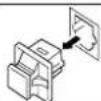
When using an optical digital cable, remove the cap from the DIGITAL OUTPUT OPTICAL connector and firmly fit the cable's jack into the connector. When not using this connector, keep it capped to protect it from dust intrusion.
Notes:
- Before connecting the DVD Changer to other equipment, be sure to turn off the power and unplug all components from the wall outlet.
- This DVD Changer outputs a very dynamic audio signal. Be sure to set the amplifier's volume to a moderate listening level to avoid damaging your speakers due to sudden volume surges.
- Switch off the amplifier or select another input source before connecting or disconnecting the DVD Changer's power cord. If you leave the amplifier power on, the speakers may be damaged.
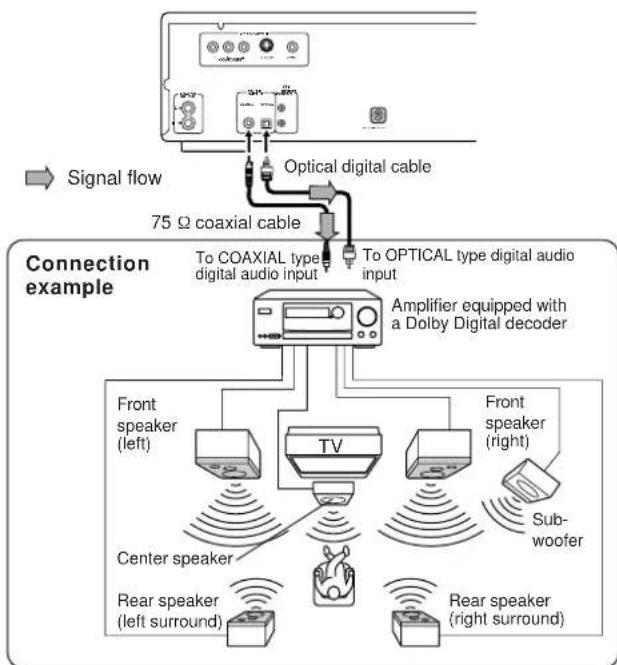
Connecting to an Amplifier Equipped with a Dolby Digital Decoder
flowchart
graph TD
    A["Signal flow"] --> B["Optical digital cable"]
    B --> C["75 Ω coaxial cable"]
    C --> D["To COAXIAL type digital audio input"]
    C --> E["To OPTICAL type digital audio input"]
    D --> F["Amplifier equipped with a Dolby Digital decoder"]
    E --> F
    F --> G["Front speaker (left)"]
    F --> H["TV"]
    F --> I["Center speaker"]
    F --> J["Rear speaker (left surround)"]
    F --> K["Rear speaker (right surround)"]
    G --> L["Front speaker (right)"]
    H --> M["Subwoofer"]
    I --> N["Left"]
    J --> O["Left"]
    K --> P["Left"]
Playback of Dolby Digital-encoded discs requires that you establish a digital connection with the amplifier. The selection of the DV-C600's DIGITAL OUTPUT depends on the type of digital input provided on your amplifier. Use either the DIGITAL OUTPUT COAXIAL or OPTICAL connector. See the amplifier's manual for details.
Dolby Digital
Dolby Digital is a surround sound technology used in movie theaters that is now also available on equipment for a home environment. You can play back motion picture and live-concert DVD video discs of this sound format by connecting the DVD Changer to a 6-channel amplifier equipped with a Dolby Digital decoder or Dolby Digital processor. If your amplifier (or separate decoder) supports Dolby Pro Logic Surround, you can even play back Dolby Pro Logic-encoded DVD movies with full 5.1-channel Dolby Digital soundtracks, as well as titles with the Dolby Surround mark.
- This functionality is only available when using DVD video discs with Dolby Digital encoding.
• Make the following settings:
| Setting Select: | Page | |
| Audio Out Select Bitstream 36 | ||
| Recording system 29 | ||
- Select the Dolby Digital or Dolby Pro Logic Surround mode on your amplifier.
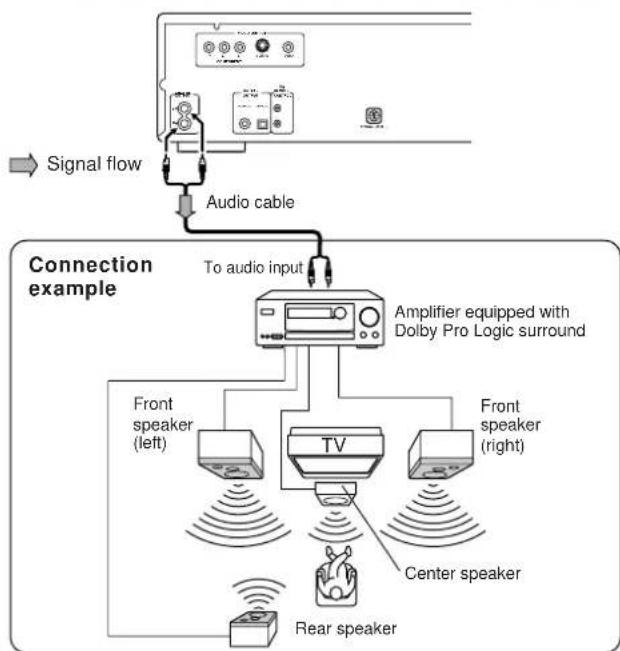
Connecting to an Amplifier Equipped with Dolby Pro Logic Surround
flowchart
graph TD
    A["Signal flow"] --> B["Audio cable"]
    B --> C["To audio input"]
    C --> D["Amplifier equipped with Dolby Pro Logic surround"]
    D --> E["Front speaker (left)"]
    D --> F["Front speaker (right)"]
    D --> G["Center speaker"]
    D --> H["Rear speaker"]
    E --> I["TV"]
    F --> I
    G --> I
    H --> I
Your DV-C600 also supports Dolby Pro Logic Surround. This effect can be obtained in one of two ways: via a digital or an analog connection with an amplifier that supports Dolby Pro Logic Surround (see below).
Dolby Pro Logic Surround
Playback of Dolby Pro Logic Surround-encoded DVD video discs requires that you connect the DV-C600 to an amplifier with right and left front speakers, a center speaker, and one or two rear speakers.
Feel free to use one or two rear speakers. Be aware, though, that the output sound of the rear channel will be monaural even if you connect two rear speakers.
- If your amplifier is fitted with a digital input:
See the connection for Dolby Digital playback above and make the suggested settings. See also the amplifier's manual for how to select its Dolby Pro Logic Surround mode.
- If your amplifier has no digital input:
Connect the DV-C600's ANALOG OUTPUTs as shown in the illustration to the left, and make the following setting:
| Setting Select: | Page | |
| Audio Out Select Analog 2ch 36 | ||
- Select the Dolby Pro Logic Surround mode on your amplifier.
Note:
- Do not forget to select the DVD Changer's AUDIO OUTPUTs ("Analog 2ch"). See "Audio Settings" on page 36 for details.
Warnings
- If you connect to the digital input of an amplifier that does not have a Dolby Digital decoder or DTS decoder, set the DV-C600's "Audio Out Select" function to "PCM." Any other setting may damage your ears or speakers when using high volume levels.
- During playback of DTS-encoded audio CDs, excessive noise may be output from the ANALOG OUTPUTs. To avoid possible damage to your audio system, we recommend you either break the connection between the DVD Changer's ANALOG OUTPUTs and the amplifier, or to only start playback of your DV-C600 after selecting the appropriate digital input source on your amplifier.
- DTS Digital Surround™ playback is only available if you connect an external 5.1-channel DTS Digital Surround™ decoder to a DIGITAL OUTPUT jack of the DVD Changer.
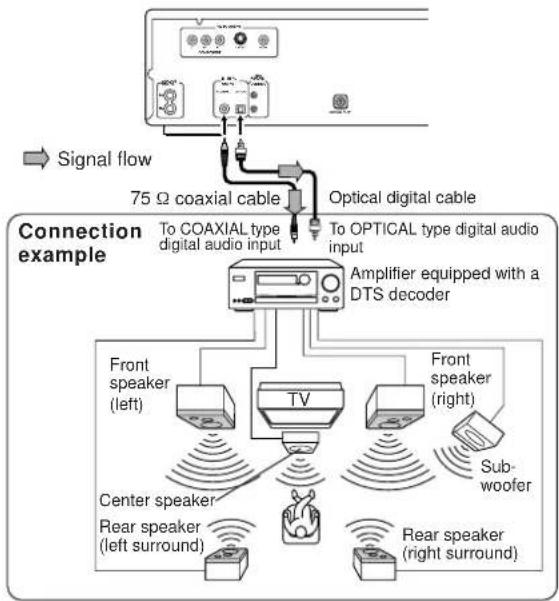
Connecting to an Amplifier Equipped with a DTS Decoder
Playback of DTS-encoded discs requires that you establish a digital connection with the amplifier. The selection of the DV-C600's DIGITAL OUTPUT depends on the type of digital input provided on your amplifier. Use either the DIGITAL OUTPUT COAXIAL or OPTICAL connector. See the amplifier's manual for details.
flowchart
graph TD
    A["Signal flow"] --> B["75 Ω coaxial cable"]
    B --> C["Optical digital cable"]
    C --> D["To COAXIAL type digital audio input"]
    C --> E["To OPTICAL type digital audio input"]
    D --> F["Amplifier equipped with a DTS decoder"]
    E --> F
    F --> G["Front speaker (left)"]
    F --> H["TV"]
    F --> I["Front speaker (right)"]
    G --> J["Center speaker"]
    H --> K["Rear speaker (left surround)"]
    I --> L["Rear speaker (right surround)"]
    J --> M["Subwoofer"]
    K --> N["Subwoofer"]
Digital Theater System (DTS)
DTS is a high-quality surround technology used in movie theaters that is also available for home use on DVD video discs or audio CDs. If you have a DTS decoder or processor, you can obtain the full benefit or 5.1-channel DTS encoded sound tracks.
- DTS functionality is only available when using DVD video discs or audio CDs with DTS encoding.
• Make the following settings:
| Setting Select: | Page | |
| Audio Out Select Bitstream 36 | ||
| Recording system DTS | 29 | |
- Select the DTS mode on your amplifier.
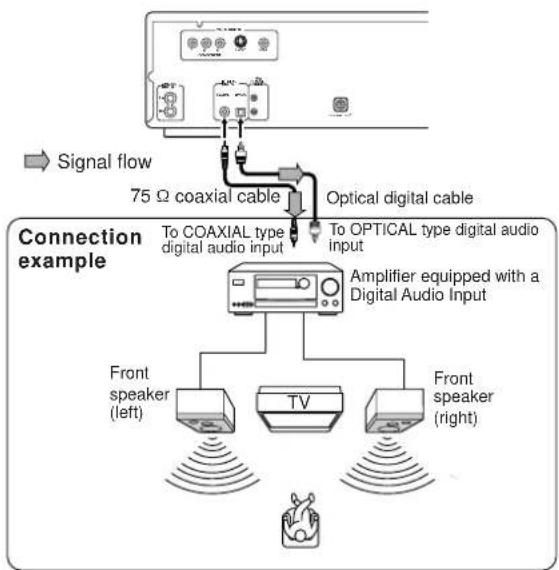
Digital Stereo Audio Playback
The DV-C600 also allows you to output a stereo audio signal in the digital domain. The selection of the DV-C600's DIGITAL OUTPUT depends on the type of digital input provided on your amplifier. Use either the DIGITAL OUTPUT COAXIAL or OPTICAL connector. See the amplifier's manual for details.
Connecting to an Amplifier Equipped with a Digital Audio Input
flowchart
graph TD
    A["Signal flow"] --> B["75 Ω coaxial cable"]
    B --> C["Optical digital cable"]
    C --> D["To COAXIAL type digital audio input"]
    C --> E["To OPTICAL type digital audio input"]
    D --> F["Front speaker (left)"]
    D --> G["Front speaker (right)"]
    E --> H["Amplifier equipped with a Digital Audio Input"]
    F --> I["TV"]
    G --> J["Heart Symbol"]
PCM
If your amplifier provides a digital audio input, you can establish a digital connection between the DV-C600 and the amplifier. Choose this type of connection if your amplifier is equipped with a better D/A converter than your DV-C600, or if you also own a dedicated D/A converter.
• Make the following setting:
| Setting Select: | Page | |
| Audio Out Select PCM | 36 |
Notes:
- NEVER connect a DIGITAL OUTPUT jack of the DVD Changer to the AC-3 RF input of a Dolby Digital Receiver. AC-3 RF inputs use a different encoding format that is not supported by the DV-C600's DIGITAL OUTPUTs.
- The amplifier's coaxial digital input may be labelled "DIGITAL" rather than "COAXIAL". See its manual for details.
natural_image
Illustration of a car on a monitor connected to an electronic CD/DVD (no text or symbols present)This section shows you the basics on how to playback a disc. Most steps in this manual need to be performed using the supplied remote controller. The relative buttons are usually indicated at the beginning of a section.
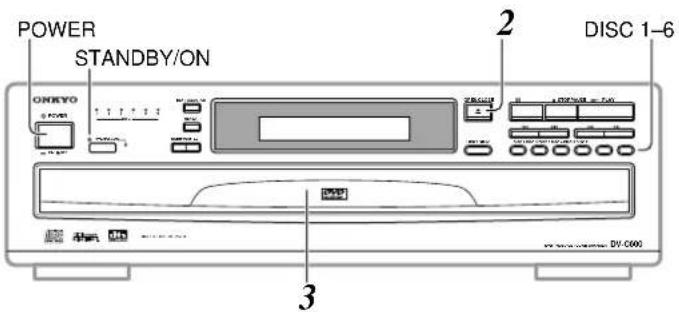
Basic Playback
■ Preparations
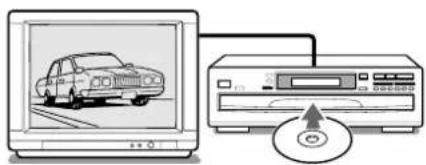
- To view a video disc, switch on your TV set and select the video input the DV-C600 is connected to. See also pages 10, 11 for how to connect the DVD Changer to your TV set.
- If you are also using an amplifier for separate audio playback (see pages 11, 12, 13), switch on the amplifier and select the input the DV-C600 is connected to.
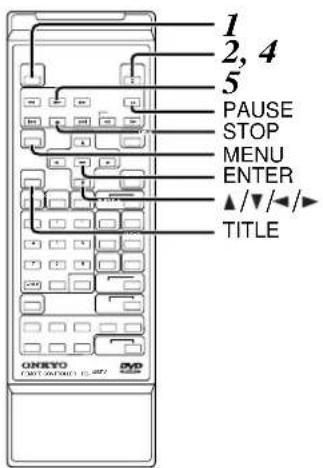
1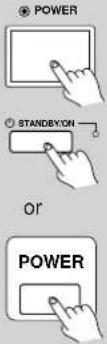 | Connecting to a Wall Outlet and Powering On.1 Plug the power cord into a suitable wall outlet.2 Press the POWER button on the main unit to switch it to Standby mode.The STANDBY/ON indicator on the main unit lights.3 Press the STANDBY/ON button on the main unit, or the POWER button on the supplied remote controller to switch on the DVD Changer.The display lights up, and the STANDBY indicator goes dark. | |
2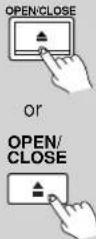 | Press the ▲OPEN/CLOSE button.The disc drawer opens. | Note:The disc drawer can also be opened when the DVD Changer is switched off. |
| 3 | Place a disc in the front disc tray (DISC 1).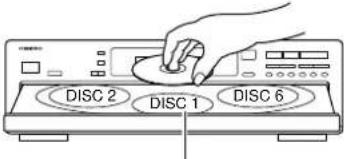 Be sure to insert the disc with the playback side down.■ Placing discs in the remaining disc trays.DISC SKIPRepeatedly press the DISC SKIP button on the main unit to rotate the disc drawer counter-clockwise, and place a disc in each desired tray (1-6). Be sure to insert the disc with the playback side down.■ Placing discs in the remaining disc trays.DISC SKIPRepeatedly press the DISC SKIP button on the main unit to rotate the disc drawer counter-clockwise, and place a disc in each desired tray (1-6). | Notes:The DV-C600 supports two disc sizes.To avoid damaging your discs or causing malfunction, be sure to insert the discs in the correct guide.Only use DVD video discs or audio CDs.Other data carriers may damage your DVD Changer and/or amplifier/TV set.Tips:The corresponding disc tray indicator lights up when the unit detects the disc. |
| 4OPEN/CLOSE | Press the ▲OPEN/CLOSE button again.The disc drawer closes.Press one of the DISC 1-6 buttons to select the desired disc on the tray for playback. | Note:Alternatively, press one of the DISC 1-6 buttons to close the disc drawer and play the selected disc automatically. |
■ To obtain a higher picture quality
Occasionally, some picture distortion not usually visible during a normal telecast may appear on the TV screen during playback of a DVD video disc. This is due to the fact that DVD videos provide a higher resolution and therefore also more data to process. While the amount of noise depends on the TV you connect the DVD Changer to, reducing the sharpness setting on your TV when viewing DVD video discs may alleviate the problem.
■ About the DVD VCD CD symbols
The DVD VCD CD icons on the heading bars below show the discs that support the function described in the section in question.
DVD : This function is available for playback of DVD video discs.
VCD : This function is available for playback of VIDEO CDs.
CD : This function is available for playback of audio CDs.
DVD VCD CD
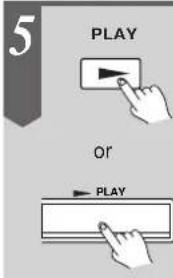
Press the ▶PLAY button.
The DVD Changer starts playback.
If you have inserted a DVD video disc with a title menu or a Video CD with PBC (Playback Control) functionality, a menu screen may appear. See "Direct Playback via the On-Screen Menu" on page 16.
To start playback of a PBC-equipped VIDEO CD from the menu screen, set "PBC" to "ON" via the on-screen menu function. See page 38.
Notes:
- For PBC (Playback Control) of VIDEO CDs, see "About VIDEO CDs" on page 9.
- Depending on the DVD video disc you are using, you may need to press the TITLE or MENU button to display the menu screen.
■ Inserting other discs
- Stop playback of the DVD Changer.
- Press the ▲ OPEN/CLOSE button to open the disc drawer.
- Press the DISC SKIP button on the main unit repeatedly until the disc you wish to replace can be accessed.
Note:
You need to stop playback before being able to insert one or several new discs.
4. Remove the disc you wish to replace, and insert another disc.
5. Press the ▲ OPEN/CLOSE button again to close the disc drawer.
Note:
You can also press the ▶ PLAY button to automatically close the drawer and start playback of the disc that is currently up front. To start playback of another disc than the one in the front tray, you first need to close the disc drawer.
■ Selecting the desired disc for playback
Press one of the DISC1-6 buttons on the main unit or on the remote controller. The DV-C600 starts playing the first title of the selected disc. There is no need to press the ▶ PLAY button.
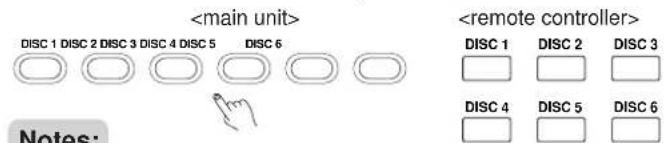
Notes:
- If you select the desired disc using one of the DISC1–6 buttons while the DVD Changer is playing back a title of another disc, playback starts with the first title of the newly selected disc.
- You can also press the DISC SKIP button to jump to the disc in the next tray (or from tray #6 to tray #1 if the disc in tray #6 is currently being played back). In that case playback will start with the first title of the disc in the newly selected tray.
- If you select the desired disc by pressing the DISC SKIP button while the DVD Changer is stopped, press the ▶ PLAY button to start playback of the first title of the selected disc.
■ The FIRST SETUP screen
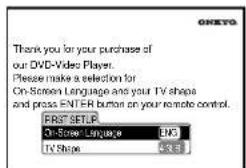
The FIRST SETUP screen is only displayed the very first time you switch on your DV-C600. This page allows you to set the two single most important parameters. Note that you can change these settings any time by selecting the appropriate on-screen menu function. See also page 34, 35.
- Check the video connection of the DVD Changer to your TV set (see page 10 and following) and switch on your TV.
- Switch on the DVD Changer. The following menu screen page is displayed:
- Press the remote controller's ▲ or ▼ button to select "On-Screen Language" and press the ENTER button.
You can select one of the following languages: ENG (English), FRE (French), or SPA (Spanish). That language will be used on all on-screen menu pages and for subtitling. See page 35.
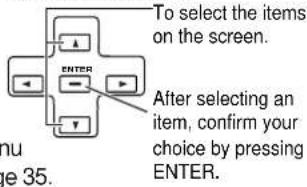
- Select the desired language using the ▲ or ▼ button and confirm by pressing ENTER.
Note:
If you agree with the currently selected language, just press ENTER without changing the setting.
- Press the ▼ button to select the "TV Shape" function. This function allows you to specify the picture size of your TV. See 35 for details.
- Use the ▲ and ▼ buttons to specify the screen size and confirm by pressing ENTER.
- Press the SETUP button to store your settings. The settings are stored and you are returned to the FIRST SETUP screen page. As stated above, you can also change these settings at a later stage. See page 32.
Playing back Discs (continued)


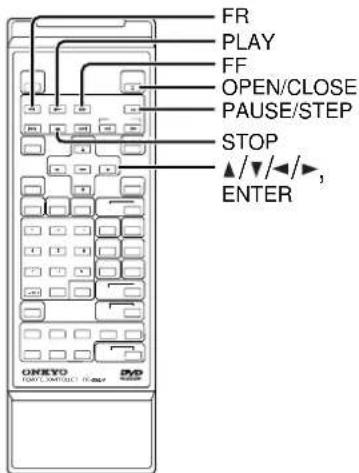
You can play back discs at various speeds, and resume playback in various ways. Use the remote controller for the following functions.
DVD VCD CD
DVD VCD CD
Direct Playback, Stop and Pause
■ Direct Playback via the On-Screen Menu
- Switch on your TV set.
- Select the desired title using the ▲ / ▼ / ◀ or the number buttons.
- Press the ENTER button.
The DVD Changer starts playing back the selected title.
- If you do not need the menu functionality of PBC-encoded Video CDs, set the "PBC" function to "Off". See page 38.
■ Pausing Playback: Still mode
- To pause playback, press the IPAUSE/STEP button.
• The sound is muted during still mode. - Press the ▶ PLAY button to resume playback.
Note:
The DV-C600 also provides a function for optimum display of still pictures (only available for DVD video discs). See "Pause/Still" on page 37.
■ Stopping Playback
Press the ■STOP button.
If you do not wish to resume playback from this position, see "Resuming Playback from the Beginning of the Current Title" on page 17.
■ Removing a Disc
- Stop playback.
- Press the ▲ OPEN/CLOSE button.
- Wait until the disc drawer has opened completely, then remove the disc.
Notes:
- Do not move the DV-C600 during playback or subject it to strong vibrations to avoid damaging the discs.
- Use the ⬆OPEN/CLOSE button on the remote controller or DVD player to open and close the disc drawer. Do not obstruct the disc drawer while it is moving. Doing so may cause the DVD Changer to malfunction.
- Do not push up the disc drawer or put objects other than discs on it. Doing so may cause the DVD Changer to malfunction.
- In many instances, a menu screen will appear after playback of a movie is completed. Prolonged display of such a menu may damage your television set, permanently etching that image onto the screen. To avoid this, press the STOP button on your remote controller once playback of the movie is finished.
- If you pause a picture and leave it still for a long time, the screen saver of the DV-C600 is automatically activated (provided the "Screen Saver" function is set to "On", see page 37). To deactivate the screen saver and resume playback, press the ▶PLAY button.
Fast Reverse and Fast Forward Playback
Press the FR (fast reverse) or FF (fast forward) button during playback.
• DVD video discs
The playback speed changes to twice the normal speed in the selected direction.
Press the button again to further increase the fast forward or reverse speed.
FR: press this button to quickly return to an earlier position.
FF: press this button to advance to a position behind the current position.
TV screen
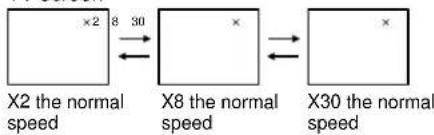
flowchart
graph LR
    A["X2 the normal speed"] --> B["X8 the normal speed"]
    B --> C["X30 the normal speed"]
    A <--> B
    C <--> B
• VIDEO CDs/Audio CDs
For Video and Audio CDs, there are two fast forward and reverse speeds.
TV screen
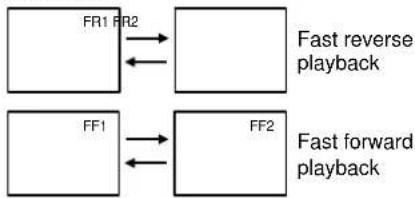
flowchart
graph LR
    A["FR1 FR2"] --> B["Fast reverse playback"]
    C["FF1"] --> D["Fast forward playback"]
■ Resuming Normal Playback after Fast Forwarding/Reversing
After locating the desired position, press the ▶ PLAY button to resume normal playback.
- The DVD Changer does not play back sound or subtitles during fast reverse or forward scans of DVD video discs. The sound of audio CDs, however, is played back at the selected scrolling speed.
- The x2, x8 and x30 speeds are only approximate values. They may vary slightly from disc to disc.
DVD VCD
DVD VCD CD
Slow-Motion Playback
DVD video discs can be played back in slow motion. This is done by reducing the playback speed.
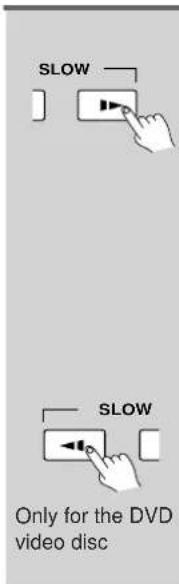
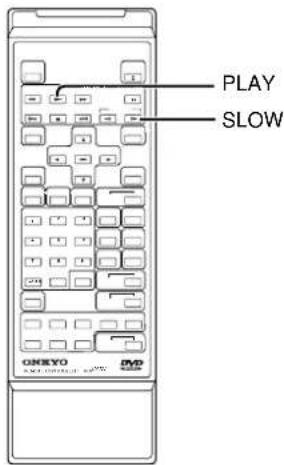
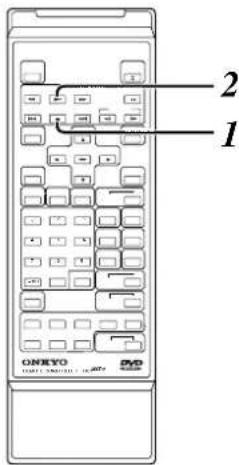
Press the ◀ or ▶ SLOW button during playback.
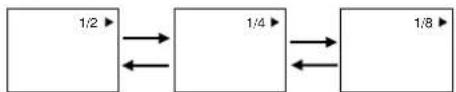
By pressing either button repeatedly, you can cycle through the three available playback speeds.
TV screen
flowchart
graph LR
    A["1/2"] --> B["1/4"]
    B --> C["1/8"]
    B <--> A
    B <--> C
1/2 the normal speed
1/4 the normal speed
1/8 the normal speed
TV screen
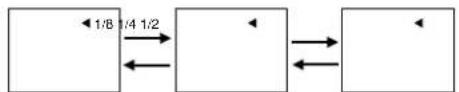
flowchart
graph LR
    A["1/8"] --> B["1/4 1/2"]
    B --> C[" "]
    C --> D[" "]
1/8 the normal speed
1/4 the normal speed
1/2 the normal speed
■ Resuming Normal Playback
PLAY

Press the ▶ PLAY button to resume normal playback.
■ Using Frame Step
PAUSE/STEP

While playback is paused, you can step forward one frame at a time by pressing the Ⅱ PAUSE/STEP button.
Resuming Playback From the Desired Location
After stopping playback, you can either resume from the location where it was stopped, or from the beginning of the current title.
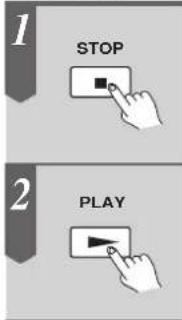
Press the ■ STOP button at the location where you want to halt playback.
The DVD Changer memorizes this location.
Press the ▶ PLAY button.
The DVD Changer resumes playback from the location where playback was stopped.
■ Resuming Playback from the Beginning of the Current Title
If you do not wish to resume playback from the position where it was stopped, proceed as follows. In this case, playback will be started from the beginning of the last title you played back, or from the beginning of the disc.
1. Stop playback by pressing the ■ STOP button twice.
The second press of the ■ STOP button will clear the DVD Changer's location memory.
2. Press the ▶ PLAY button.
The location where playback is started depends on the type of disc you are using:
DVD video disc: Playback starts from the beginning of the current title.
Video CDs/audio CDs: Playback starts from the beginning of the disc.
- To quickly resume playback from the beginning of a DVD video disc, open and close the disc drawer by pressing the ▲ OPEN/CLOSE button, then press the ▶ PLAY button.
Notes:
- The DVD Changer's location memory is also cleared when you:
—unplug the DVD Changer from the wall outlet after stopping playback.
-open the disc drawer.
-adjust/change the Parental Lock function (see page 37) or select another disc menu language (see page 34). - Depending on the disc, playback may not be resumed at the exact location where it was stopped.
- Other settings you change via the on-screen menu while a location is memorized may be available only after the memory is cleared.
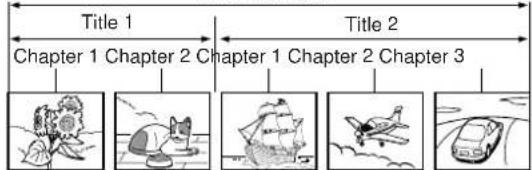
DVD video disc
VIDEO CD/ Audio CD
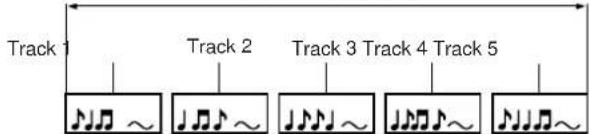
Normally, DVD video discs are divided into "titles", while the titles are themselves sub-divided into "chapters". VIDEO CDs and audio CDs are divided into "tracks". You can quickly locate any specific title, chapter, or track.
DVD
Locating a Title Using the Title Menu
If the DVD video disc you are playing back contains a title menu, you can locate any specific title you wish to play back.
DVD
Title Selection with the Numeric Buttons
If the selected DVD video disc contains Title numbers, you can select the desired title by entering its number.
| 1 TITLE | Press the TITLE button. A Title menu like the following appears: |
| 2 TITLE 3 TITLE 4 | |
| 2 ENTER | Use the ▼▼/▲buttons to select the title you want to watch. If the titles in the Title menu are assigned a number, you can directly select the desired title using the numeric buttons on the remote controller. |
| 3 ENTER | Press the ENTER button. The DVD Changer starts playback from Chapter 1 of the selected title. |
Notes:
- The above instructions correspond to the basic procedure. Please note that the exact steps may depend on the contents of the selected DVD video disc. If different instructions appear on the TV screen, follow those instructions.
- If you display the Title menu during playback and press the TITLE button again without selecting a title, the DVD Changer resumes playback from the point where you first pressed the TITLE button.
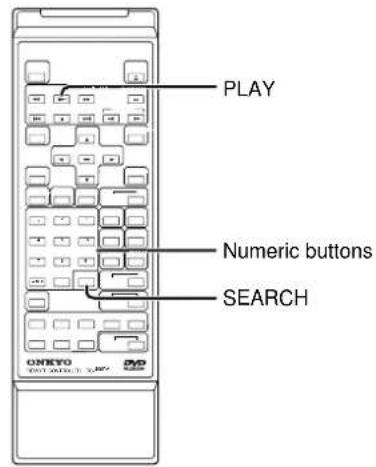
![1 SEARCH Press the SEARCH button. Check whether the Title number is highlighted. If it is not, press ▲ to select it. Example: Title: 1 Chapter: 1 2 1 2 3 3 5 6 7 8 9 +10 0 Press the numeric button of the Title you wish to select. To select two-digit Titles, press the +10 button followed by a numeric button. Here are two examples: To select Title 2, press [2]. 2 Title: 2 Chapter: 1 To select Title 12, press [+10] once (for "10"), then [2]. 1 → 2 Title: 1 Chapter: 1 3 Press the ▶PLAY button. The DVD Changer starts playback from Chapter 1 of the selected title. You can also select another Chapter before starting playback. See page 17.](/content/2026/05/815335/images/41f1709b84a7645d93b389cafc0141ff2a70111d538f74d5f92c83b0138bfbb7.jpg)
Notes:
- Press the CLEAR button if you do not wish to start playback from the Title number you have just entered (before pressing the ▶ PLAY button). Pressing CLEAR several times will reset both the Title and Chapter numbers. (SEARCH also allows you to directly select the desired Chapter, see next page.)
• See pages 32, 34 for how to select the languages for the on-screen menu displays.
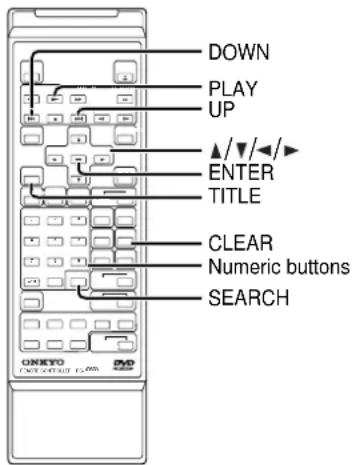
DVD VCD CD
Selecting Chapters or Tracks
■ Direct Selection using the Numeric Buttons
The DV-C600 also allows you to directly select a Chapter of a Title (DVD video discs) or a Track (Video or audio CD).
Note:
Steps 1 and 2 are only necessary for DVD video discs. Start with step 3 if you want to select a Track of a Video or audio CD.
| 1 | SEARCH | Press the SEARCH button. In the case of a DVD video disc, the following is displayed: Title: 1 Chapter: 1 |
| 2 | Press the button to select the numeric field next to the Chapter entry: Title: 1 Chapter: 1 | |
| 3 | 1 2 3 4 5 6 7 8 9 +10 0 | Press the numeric button of the Chapter (or Track) you want to play back. To select two-digit numbers, press the +10 button followed by a numeric button. To select Title 25, press [+10] twice (for "20") then [5]. (DVD video disc) (Video/ Audio CD) 2 → 5 +10 → +10 → 5 Title: 1 Chapter: 25 Track: 25 |
■ Selecting Titles and Chapters Simultaneously
As stated above, it is also possible to specify the desired Chapter number after selecting a Title (see the previous page) before starting playback. To select Chapter 25 of Title 2, for example, here is what you need to do.
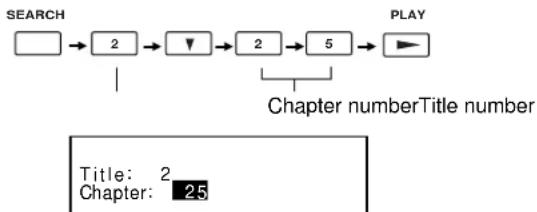
flowchart
graph LR
    A["SEARCH"] --> B["2"]
    B --> C["▼"]
    C --> D["2"]
    D --> E["5"]
    E --> F["PLAY"]
    G["Chapter number"] --> H["Title: 2"]
    G --> I["Chapter: 25"]
Note:
- Press the CLEAR button if you do not wish to start playback from the Chapter number you have just entered (before pressing the ▶ PLAY button). Pressing CLEAR several times will reset both the Title and Chapter numbers.
■ Selecting the Next/Previous Chapter or Track
Another way to select Chapters (DVD video discs) or Tracks (Video/audio CDs) is by using the UP and DOWN buttons:
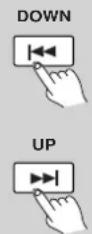
Use the DOWN for UP button to select the desired Chapter or Track.
Playback starts automatically, so you do not need to press the ▶ PLAY button.
◀◀: The DOWN ◀◀button has two functions. If you press it once, the DVD Changer returns to the beginning of the currently selected Chapter or Track. Press it twice to return to the beginning of the preceding Chapter or Track.
▶▶I: Press UP ▶▶to jump to the beginning of the next Chapter or Track.
Notes:
- Some Titles don't contain Chapter numbers. In that case, the DOWN ◀◀ and UP ▶▶I buttons do not work.
- If "Title Stop" is set to "Off" (see page 38), the DOWN ▲ and UP ▶▶ I buttons also allow you to jump from the last (or first) Chapter of a given Title to the first Chapter of the next (or previous) Title. That is, if you press DOWN ▶◀◀ after returning to Chapter 1 of the current Title, the DVD Changer jumps to the first Chapter of the previous Title. Pressing UP ▶ after selecting the last Chapter of the current Title takes you to Chapter 1 of the following Title. If "Title Stop" is set to "On", the DOWN ▶◀◀ and UP ▶▶▶ I buttons only allow you to cycle through the Chapters of the currently selected Title.
Selecting a Precise Scene or Audio Passage

flowchart
graph LR
    A["Car"] --> B["Cityscape"]
    B --> C["Mountain"]
    C --> D["..."]
It is also possible to directly select a given location and to start playback from there. This may come in handy when you want to view a given scene (DVD video discs/Video CDs) or listen to a specific passage (audio CD) within the currently selected Title or Track.
DVD VCD CD
Entering the Time Location
Here is how to enter the time location of the scene or passage you wish to play back:
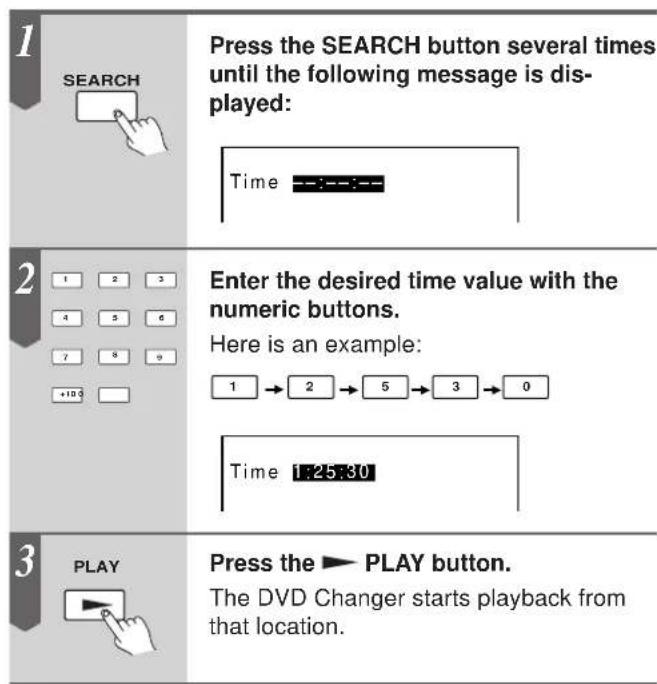
Notes:
• Some discs may not respond to this procedure.
- In some cases, there may be a slight shift between the time value you enter and the location where playback starts.
- This method of selecting the desired location is only available within the current Title (DVD video discs) or track (Video/audio CDs).
Repeat Functions
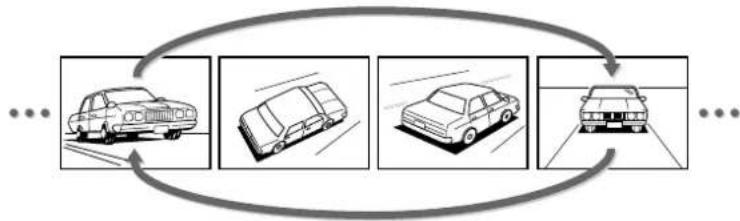
Your DVD Changer allows you to repeat a given Title, Chapter/track or disc indefinitely. It is also possible to repeat a given scene or audio passage (A–B Repeat).
DVD VCD CD
DVD VCD CD
Repeating a Title or Chapter/Track
Here is what you need to do in order to program a playback loop of the selected Title, Chapter/track, or disc:
Repeating a Given Scene or Passage
| 1 | Select the disc that contains the material to be repeated (or that you want to playback repeatedly in its entirety).See “Selecting the desired disc for playback” on page 15. | |
| 2 | Select the Title or Chapter/track you want to repeat.See “Locating Titles, Chapters, or Tracks” on page 18 and following. | |
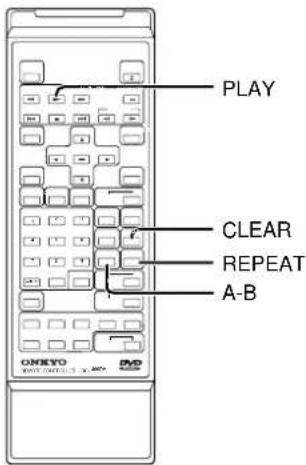
| 3 | REPEAT | Press the REPEAT button to select the desired Repeat function.Pressing this button repeatedly cycles you through the available options. These options depend on the currently selected disc:DVD video discs:Chapter RepeatRepeats the same chapter.Title RepeatRepeats the same title.Disc RepeatRepeats the same disc.All RepeatRepeats all discs.Repeat OffResumes normal playback. |
| Video CDs/audio CDsTrack RepeatRepeats the same track.RepeatDiscAll RepeatRepeats the same disc.Repeats all discs.Repeat OffResumes normal playback. | ||
| 4 | CLEAR | To cancel the Repeat function at any time, press the CLEAR button. |
| 1 | Select the disc that contains the material to be repeated (or that you want to playback repeatedly in its entirety).See “Selecting the desired disc for playback” on page 15. |
| 2 | Select the Title or Chapter/track you want to repeat.See “Locating Titles, Chapters, or Tracks” on page 18 and following. |
| 1 | Select the disc that contains the material to be repeated (or that you want to playback repeatedly in its entirety).See “Selecting the desired disc for playback” on page 15. |
| 2 | Select the Title or Chapter/track you want to repeat.See “Locating Titles, Chapters, or Tracks” on page 18 and following. |
| 1 | Select the disc that contains the material to be repeated (or that you want to playback repeatedly in its entirety).See “Selecting the desired disc for playback” on page 15. |
| 2 | Select the Title or Chapter/track you want to repeat.See “Locating Titles, Chapters, or Tracks” on page 18 and following. |
| 1 | Select the disc that contains the material to be repeated (or that you want to playback repeatedly in its entirety).See “Selecting the desired disc for playback” on page 15. |
| 2 | Select the Title or Chapter/track you want to repeat.See “Locating Titles, Chapters, or Tracks” on page 18 and following. |
| 1 | Select the disc that contains the material to be repeated (or that you want to playback repeatedly in its entirety).See “Selecting the desired disc for playback” on page 15. |
| 2 | Select the Title or Chapter/track you want to repeat.See “Locating Titles, Chapters, or Tracks” on page 18 and following. |
| 2 | Select the Title or Chapter/track you want to repeat.See "Locating Titles, Chapters, or Tracks" on page 18 and following. |
| 1 | Select the disc that contains the material to be repeated (or that you want to playback repeatedly in its entirety).See “Selecting the desired disc for playback” on page 15. |
| 2 | Select the Title or Chapter/track you want to repeat.See “Locating Titles, Chapters, or Tracks” on page 18 and following. |
| 1 | Select the disc that contains the material to be repeated (or that you want to playback repeatedly in its entirety).See “Selecting the desired disc for playback” on page 15. |
| 2 | Select the Title or Chapter/track you want to repeat.See “Locating Titles, Chapters, or Tracks” on page 18 and following. |
| 1 | Select the disc that contains the material to be repeated (or that you want to playback repeatedly in its entirety).See “Selecting the desired disc for playback” on page 15. |
| 2 | Select the Title or Chapter/track you want to repeat.See “Locating Titles, Chapters, or Tracks” on page 18 and following. |
| 1 | Start playback of the desired Chapter or Track (see page 19 and following for how to select it). | |
| 2 | A-B | Press the A–B button at the beginning of the scene or passage you wish to repeat (this position is called “A”).A– |
| 3 | A-B | Press A–B again at the end of the excerpt to be repeated (to store point “B”).A–BThe DVD Changer automatically returns to point “A” and starts repeating the selected excerpt. |
| 4 | CLEAR | To cancel the Repeat function at any time, press the CLEAR button. |
| 1 | Start playback of the desired Chapter or Track (see page 19 and following for how to select it). | |
| 2 | A-B | Press the A–B button at the beginning of the scene or passage you wish to repeat (this position is called “A”).A– |
| 3 | A-B | Press A–B again at the end of the excerpt to be repeated (to store point “B”).A–BThe DVD Changer automatically returns to point “A” and starts repeating the selected excerpt. |
| 4 | CLEAR | To cancel the Repeat function at any time, press the CLEAR button. |
| 1 | Start playback of the desired Chapter or Track (see page 19 and following for how to select it). | |
| 2 | A-B | Press the A–B button at the beginning of the scene or passage you wish to repeat (this position is called “A”).A– |
| 3 | A-B | Press A–B again at the end of the excerpt to be repeated (to store point “B”).A–BThe DVD Changer automatically returns to point “A” and starts repeating the selected excerpt. |
| 4 | CLEAR | To cancel the Repeat function at any time, press the CLEAR button. |
| 1 | Start playback of the desired Chapter or Track (see page 19 and following for how to select it). | |
| 2 | A-B | Press the A–B button at the beginning of the scene or passage you wish to repeat (this position is called “A”).A– |
| 3 | A-B | Press A–B again at the end of the excerpt to be repeated (to store point “B”).A–BThe DVD Changer automatically returns to point “A” and starts repeating the selected excerpt. |
| 4 | CLEAR | To cancel the Repeat function at any time, press the CLEAR button. |
| 1 | Start playback of the desired Chapter or Track (see page 19 and following for how to select it). | |
| 2 | A-B | Press the A–B button at the beginning of the scene or passage you wish to repeat (this position is called “A”).A– |
| 3 | A-B | Press A–B again at the end of the excerpt to be repeated (to store point “B”).A–BThe DVD Changer automatically returns to point “A” and starts repeating the selected excerpt. |
| 4 | CLEAR | To cancel the Repeat function at any time, press the CLEAR button. |
| 1 | Start playback of the desired Chapter or Track (see page 19 and following for how to select it). | |
| 2 | A-B | Press the A-B button at the beginning of the scene or passage you wish to repeat (this position is called “A”).A- |
| 3 | A-B | Press A-B again at the end of the excerpt to be repeated (to store point “B”).A-BThe DVD Changer automatically returns to point “A” and starts repeating the selected excerpt. |
| 4 | CLEAR | To cancel the Repeat function at any time, press the CLEAR button. |
| 1 | Start playback of the desired Chapter or Track (see page 19 and following for how to select it). | |
| 2 | A-B | Press the A-B button at the beginning of the scene or passage you wish to repeat (this position is called “A”).A- |
| 3 | A-B | Press A-B again at the end of the excerpt to be repeated (to store point “B”).A-BThe DVD Changer automatically returns to point “A” and starts repeating the selected excerpt. |
| 4 | CLEAR | To cancel the Repeat function at any time, press the CLEAR button. |
| 1 | Start playback of the desired Chapter or Track (see page 19 and following for how to select it). | |
| 2 | A-B | Press the A-B button at the beginning of the scene or passage you wish to repeat (this position is called “A”).A- |
| 3 | A-B | Press A-B again at the end of the excerpt to be repeated (to store point “B”).A-BThe DVD Changer automatically returns to point “A” and starts repeating the selected excerpt. |
| 4 | CLEAR | To cancel the Repeat function at any time, press the CLEAR button. |
| 1 | Start playback of the desired Chapter or Track (see page 19 and following for how to select it). | |
| 2 | A-B | Press the A-B button at the beginning of the scene or passage you wish to repeat (this position is called “A”).A- |
| 3 | A-B | Press A-B again at the end of the excerpt to be repeated (to store point “B”).A-BThe DVD Changer automatically returns to point “A” and starts repeating the selected excerpt. |
| 4 | CLEAR | To cancel the Repeat function at any time, press the CLEAR button. |
| 1 | Start playback of the desired Chapter or Track (see page 19 and following for how to select it). | |
| 2 | A-B | Press the A-B button at the beginning of the scene or passage you wish to repeat (this position is called “A”).A- |
| 3 | A-B | Press A-B again at the end of the excerpt to be repeated (to store point “B”).A-BThe DVD Changer automatically returns to point “A” and starts repeating the selected excerpt. |
| 4 | CLEAR | To cancel the Repeat function at any time, press the CLEAR button. |
| 1 | Start playback of the desired Chapter or Track (see page 19 and following for how to select it). | |
| 2 | A-B | Press the A-B button at the beginning of the scene or passage you wish to repeat (this position is called “A”).A- |
| 3 | A-B | Press A-B again at the end of the excerpt to be repeated (to store point “B”).A-BThe DVD Changer automatically returns to point “A” and starts repeating the selected excerpt. |
| 4 | CLEAR | To cancel the Repeat function at any time, press the CLEAR button. |
| 1 | Start playback of the desired Chapter or Track (see page 19 and following for how to select it). | |
| 2 | A-B | Press the A-B button at the beginning of the scene or passage you wish to repeat (this position is called “A”).A- |
| 3 | A-B | Press A-B again at the end of the excerpt to be repeated (to store point “B”).A-BThe DVD Changer automatically returns to point “A” and starts repeating the selected excerpt. |
| 4 | CLEAR | To cancel the Repeat function at any time, press the CLEAR button. |
| 1 | Start playback of the desired Chapter or Track (see page 19 and following for how to select it). | |
| 2 | A-B | Press the A-B button at the beginning of the scene or passage you wish to repeat (this position is called “A”).A- |
| 3 | A-B | Press A-B again at the end of the excerpt to be repeated (to store point “B”).A-BThe DVD Changer automatically returns to point “A” and starts repeating the selected excerpt. |
| 4 | CLEAR | To cancel the Repeat function at any time, press the CLEAR button. |
| 1 | Start playback of the desired Chapter or Track (see page 19 and following for how to select it). | |
| 2 | A-B | Press the A-B button at the beginning of the scene or passage you wish to repeat (this position is called “A”).A- |
| 3 | A-B | Press A-B again at the end of the excerpt to be repeated (to store point “B”).A-BThe DVD Changer automatically returns to point “A” and starts repeating the selected excerpt. |
| 4 | CLEAR | To cancel the Repeat function at any time, press the CLEAR button. |
| 1 | Start playback of the desired Chapter or Track (see page 19 and following for how to select it). | |
| 2 | A-B | Press the A-B button at the beginning of the scene or passage you wish to repeat (this position is called “A”).A- |
| 3 | A-B | Press A-B again at the end of the excerpt to be repeated (to store point “B”).A-BThe DVD Changer automatically returns to point “A” and starts repeating the selected excerpt. |
| 4 | CLEAR | To cancel the Repeat function at any time, press the CLEAR button. |
| 1 | Start playback of the desired Chapter or Track (see page 19 and following for how to select it). | |
| 2 | A-B | Press the A-B button at the beginning of the scene or passage you wish to repeat (this position is called “A”).A- |
| 3 | A-B | Press A-B again at the end of the excerpt to be repeated (to store point “B”).A-BThe DVD Changer automatically returns to point “A” and starts repeating the selected excerpt. |
| 4 | CLEAR | To cancel the Repeat function at any time, press the CLEAR button. |
| 1 | Start playback of the desired Chapter or Track (see page 19 and following for how to select it). | |
| 2 | A-B | Press the A-B button at the beginning of the scene or passage you wish to repeat (this position is called “A”).A- |
| 3 | A-B | Press A-B again at the end of the excerpt to be repeated (to store point “B”).A-BThe DVD Changer automatically returns to point “A” and starts repeating the selected excerpt. |
| 4 | CLEAR | To cancel the Repeat function at any time, press the CLEAR button. |
| 1 | Start playback of the desired Chapter or Track (see page 19 and following for how to select it). | |
| 2 | A-B | Press the A-B button at the beginning of the scene or passage you wish to repeat (this position is called “A”).A- |
| 3 | A-B | Press A-B again at the end of the excerpt to be repeated (to store point “B”).A-BThe DVD Changer automatically returns to point “A” and starts repeating the selected excerpt. |
| 4 | CLEAR | To cancel the Repeat function at any time, press the CLEAR button. |
| 1 | Start playback of the desired Chapter or Track (see page 19 and following for how to select it). | |
| 2 | A-B | Press the A-B button at the beginning of the scene or passage you wish to repeat (this position is called “A”).A- |
| 3 | A-B | Press A-B again at the end of the excerpt to be repeated (to store point “B”).A-BThe DVD Changer automatically returns to point “A” and starts repeating the selected excerpt. |
| 4 | CLEAR | To cancel the Repeat function at any time, press the CLEAR button. |
| 1 | Start playback of the desired Chapter or Track (see page 19 and following for how to select it). | |
| 2 | A-B | Press the A-B button at the beginning of the scene or passage you wish to repeat (this position is called “A”).A- |
| 3 | A-B | Press A-B again at the end of the excerpt to be repeated (to store point “B”).A-BThe DVD Changer automatically returns to point “A” and starts repeating the selected excerpt. |
| 4 | CLEAR | To cancel the Repeat function at any time, press the CLEAR button. |
| 1 | Start playback of the desired Chapter or Track (see page 19 and following for how to select it). | |
| 2 | A-B | Press the A-B button at the beginning of the scene or passage you wish to repeat (this position is called “A”).A- |
| 3 | A-B | Press A-B again at the end of the excerpt to be repeated (to store point “B”).A-BThe DVD Changer automatically returns to point “A” and starts repeating the selected excerpt. |
| 4 | CLEAR | To cancel the Repeat function at any time, press the CLEAR button. |
| 1 | Start playback of the desired Chapter or Track (see page 19 and following for how to select it). | |
| 2 | A-B | Press the A-B button at the beginning of the scene or passage you wish to repeat (this position is called “A”).A- |
| 3 | A-B | Press A-B again at the end of the excerpt to be repeated (to store point “B”).A-BThe DVD Changer automatically returns to point “A” and starts repeating the selected excerpt. |
| 4 | CLEAR | To cancel the Repeat function at any time, press the CLEAR button. |
| 1 | Start playback of the desired Chapter or Track (see page 19 and following for how to select it). | |
| 2 | A-B | Press the A-B button at the beginning of the scene or passage you wish to repeat (this position is called “A”).A- |
| 3 | A-B | Press A-B again at the end of the excerpt to be repeated (to store point “B”).A-BThe DVD Changer automatically returns to point “A” and starts repeating the selected excerpt. |
| 4 | CLEAR | To cancel the Repeat function at any time, press the CLEAR button. |
| 1 | Start playback of the desired Chapter or Track (see page 19 and following for how to select it). | |
| 2 | A-B | Press the A-B button at the beginning of the scene or passage you wish to repeat (this position is called “A”).A- |
| 3 | A-B | Press A-B again at the end of the excerpt to be repeated (to store point “B”).A-BThe DVD Changer automatically returns to point “A” and starts repeating the selected excerpt. |
| 4 | CLEAR | To cancel the Repeat function at any time, press the CLEAR button. |
| 1 | Start playback of the desired Chapter or Track (see page 19 and following for how to select it). | |
| 2 | A-B | Press the A-B button at the beginning of the scene or passage you wish to repeat (this position is called “A”).A- |
| 3 | A-B | Press A-B again at the end of the excerpt to be repeated (to store point “B”).A-BThe DVD Changer automatically returns to point “A” and starts repeating the selected excerpt. |
| 4 | CLEAR | To cancel the Repeat function at any time, press the CLEAR button. |
| 1 | Start playback of the desired Chapter or Track (see page 19 and following for how to select it). | |
| 2 | A-B | Press the A-B button at the beginning of the scene or passage you wish to repeat (this position is called “A”).A- |
| 3 | A-B | Press A-B again at the end of the excerpt to be repeated (to store point “B”).A-BThe DVD Changer automatically returns to point “A” and starts repeating the selected excerpt. |
| 4 | CLEAR | To cancel the Repeat function at any time, press the CLEAR button. |
| 1 | Start playback of the desired Chapter or Track (see page 19 and following for how to select it). | |
| 2 | A-B | Press the A-B button at the beginning of the scene or passage you wish to repeat (this position is called “A”).A- |
| 3 | A-B | Press A-B again at the end of the excerpt to be repeated (to store point “B”).A-BThe DVD Changer automatically returns to point “A” and starts repeating the selected excerpt. |
| 4 | CLEAR | To cancel the Repeat function at any time, press the CLEAR button. |
| 1 | Start playback of the desired Chapter or Track (see page 19 and following for how to select it). | |
| 2 | A-B | Press the A-B button at the beginning of the scene or passage you wish to repeat (this position is called “A”).A- |
| 3 | A-B | Press A-B again at the end of the excerpt to be repeated (to store point “B”).A-BThe DVD Changer automatically returns to point “A” and starts repeating the selected excerpt. |
| 4 | CLEAR | To cancel the Repeat function at any time, press the CLEAR button. |
Setting the Desired Playback Order

flowchart
graph LR
    A["Title : 2\nChapter : 25"] --> B["Title : 2\nChapter : 12"]
    B --> C["Title : 1\nChapter : 1"]
    C --> D["..."]
Your DV-C600 comes with a special 28-step memory that allows you to program the order in which the Titles and Chapters/tracks are to be played back. Such “sequences” can include material from several discs.
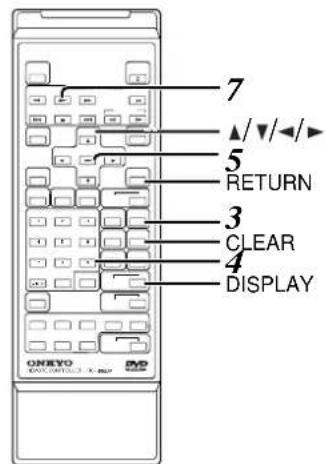
DVD VCD CD
Programming Memory Sequences
The DV-C600's Memory function allows you to program the order in which the material on one or several discs should be played back.
Note:
If you only want to select the next track for playback, using the Next Selection function is a lot faster. See page 24.
| 1 | Insert the disc(s) you need for programming the desired sequence. | |
| 2 | Switch on your TV set. | |
| 3 |  | Stop playback if it is still running, and press the MEMORY button.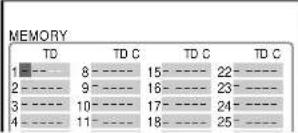 cThe letters on this menu page have the following meaning:D: Disc number, T: Title (or Track) number,C: Chapter number. cThe letters on this menu page have the following meaning:D: Disc number, T: Title (or Track) number,C: Chapter number. |
| 4 | Use the numeric buttons on the remote controller to enter the numbers you wish to include in your Memory sequence.Use the ◀/▶buttons to move the cursor to the “D”, “T”, or “C” column, depending on whether you want to enter a disc, Title (or Track), or Chapter number. | |
| 5 | ENTER | Confirm your selection by pressing the ENTER.The DV-C600 now jumps to the next Memory step. |
| 6 | Program the remaining steps. | |
| 7 | PLAY | Press the ▶PLAY button to start playback of your memory sequence. |
■ Programming the D, T and C entries
Here are a few hints that explain the programming system and help you save time:
Note:
For Video and audio CDs, you can only program the disc ("D") and Track numbers. Track numbers are assigned to the "T" entry. The "C" entry only applies to DVD video discs.
Only specify what you does need to change:
Disc number: if a subsequent entry refers to the previously selected disc number, you do not need to enter it again for the new step. (Do not change the “—” setting for “D”.)
Title number (DVD video discs only): if a subsequent step refers to another Chapter of the previously selected Title, only entering the Chapter number is enough. (Do not change the “—” setting for the “D” and “T” entries.)
Chapter number (DVD video discs only): if you want the DV-C600 to play back all Chapters of the selected Title, leave the "C" entry blank.
Here are a few programming examples:
Chapters 25 and 12 of Title # 2 on disc #3 (two steps):
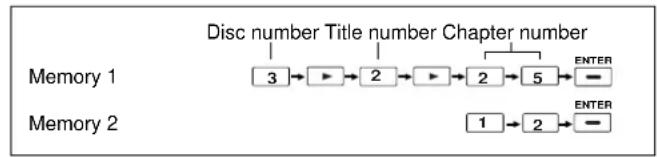
flowchart
graph LR
    A["3"] --> B["▶"] --> C["2"] --> D["▶"] --> E["2"] --> F["5"] --> G["ENTER"]
    H["1"] --> I["2"] --> J["ENTER"]
All chapters of Title #1 on disc #1:

flowchart
graph LR
    A["Memory 3"] --> B["Disc number"]
    B --> C["Title number"]
    C --> D["1"]
    D --> E["1"]
    E --> F["1"]
    F --> G["ENTER"]
Chapter 2 of Title #4 on disc #1:

flowchart
graph LR
    A["←"] --> B["4"]
    B --> C["→"]
    C --> D["2"]
    D --> E["ENTER"]
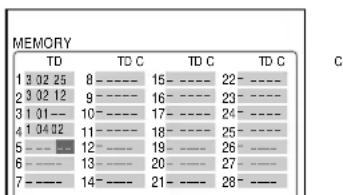
"Copy" the settings of the previous memory:
Doing so allows you to use the settings of the previous memory as a starting point and only change one entry. Example: if memory 1 refers to disc 3/Title 2/Chapter 25, while memory 2 needs to refer to disc 1/Title 2/Chapter 12, you can "copy" memory 1 to memory 2 and modify the "C" (chapter) entry:
- Program the memory to be copied (example: memory 1), and press the ENTER button. The DVD Changer advances to memory 2.
- Use the numeric buttons to enter the chapter number 12 on the black cursor on the "C" entry, then press the ENTER button, "D" and "T" on the memory 1 are copied to memory 2.
■ Other Memory Functions
Leaving the MEMORY display page
To leave the MEMORY display page, press the RETURN or MEMORY button.
Correcting an entry of a previously programmed step:
a) Use the ▲ / ▼buttons to move the cursor to the corresponding memory number.
b) Select the entry (D, T or C) you wish to change with the ▶ / ▶ buttons.
c) Enter the correct value using the numeric buttons.
Erasing a step
a) Stop playback.
b) If the Memory sequence is not currently displayed, press the MEMORY button to select it.
c) Select the step you wish to erase with the ▲ / ▼buttons.
d) Press the CLEAR button to erase the selected step.
Erasing the entire Memory sequence
To erase all steps, either switch the DVD Changer off and back on again, or open and close the disc tray.
Programming the next step during playback
If you press the MEMORY button during playback, a menu page is displayed where you can program a new step.
Programming several new steps during playback
a) Press the MEMORY button followed by the DISPLAY button.
The Memory menu appears on the TV screen.
b) Continue with step 3 on page 22.
Notes:
- Some discs do not allow Memory playback.
- The Repeat function (see page 21) is also available during playback of your Memory sequence. Press the REPEAT button to activate it for the current step of your Memory sequence.
- You can only program Title (or Track) and Chapter numbers that exist on the selected disc.
- For Video and audio CDs, the "T" entry allows you to select the track, while the "C" entry is not used.
- The Memory function is also available during playback.
CD
Next Selection: Preparing the next Audio Track
During playback of an audio CD, you can already prepare the next track that will be played as soon as the current one is finished. The difference with direct selection of a track or disc is that playback of the prepared track starts only after the current track is finished (i.e. not right away).
| 1 | During playback of an audio CD, press the NEXT SELECTION button on the DV-C600 or the remote controller to activate this function.NEXT indicator flashesCurrent disc numberThe NEXT indicator flashes and the disc number disappears on the display. | Note:This function is only available for audio CDs (when the CD indicator lights). |
| 2 | Use the DISC1 - 6 buttons (or DISC + and DISC -) to select the disc that contains the next track you want to listen to.The number of the selected disc flashes on the display.If you want to play back all tracks of the selected disc, skip to step 4 without selecting a track.AL: means that all tracks will be played back.Tip:You can also use the DISC SKIP button on the DV-C600 to select the next disc. | Note:You need to press one of these buttons within 8 seconds after pressing NEXT SELECTION. Otherwise, the Next Selection function will be cancelled. In that case, start again with step 1. |
| 3 | Select the track using the numeric buttons.The number of the selected track flashes on the display.In that case, the display looks as follows: | |
| 4 | Press the NEXT SELECTION button to confirm your selection. The disc number and track number light up continuously. After a few moments, the disc and track numbers of the currently playing track reappear.You can check the next selection by pressing the NEXT SELECTION button.As soon as the current track is finished, the DVD Changer will play back the prepared track (or disc if you selected “AL”).Tip:NEXT SELECTION is also available during Memory playback (see page 22) and Random playback (see page 25). Using Next Selection, will cancel the Memory or Random playback function, however. | Notes:Directly selecting another disc or track with the DISC SKIP button, DISC +/-, DOWN |◄◄ /UP ►►| or the numeric buttons after preparing a track with NEXT SELECTION cancels the Next Selection function.You can only prepare one track with Next Selection. See “Programming Memory Sequences” on page 22 for how to prepare a series of tracks. Preparing yet another track before the previously entered Next Selection command has been executed overrides your first setting, so that only the second Next Selection is carried out.If you stop playback by pressing the STOP■ button, the Next Selection function is cancelled. |
■ Cancelling the Next Selection function
If you decide not to take advantage of the Next Selection function after all, proceed as follows:
- Press the NEXT SELECTION button. The disc and song numbers flash on the display.
- Press the CLEAR button.
- Press the NEXT SELECTION button again. The NEXT indicator goes dark and the function is cancelled.
CD
Using the DVD Changer as CD player
Since your DV-C600 allows you to insert up to six discs in any combination (DVD video discs, Video CDs, audio CDs), there may be times when you only want to listen to music and avoid having to press the DISC SKIP or DISC+ and DISC- buttons several times to skip to the next audio CD. In that case, proceed as follows:
1 | Press the CD MODE button while the DV-C600 is stopped or playing back a CD.The RPT message appears on the display and the REPEAT indicator lights to signal that all audio CDs will be repeated in sequence.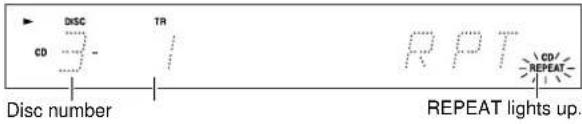 Track number Track number | Note:The CD MODE button does not work while the DV-C600 is playing back a disc other than an audio CD. You first need to press the STOP button. Next, press the CD MODE button to enter CD Mode. The DVD Changer starts playing back the audio CD in the holder with the lowest number. |
 | Press the CD MODE button again to cancel CD Mode.The RPT message disappears and the REPEAT indicator goes dark again to signal that the DVD Changer has returned to normal playback mode. |
Note:
Another way of selecting only audio tracks is to take advantage of the DV-C600's Memory function. See "Programming Memory Sequences" on page 22 for details.
Additional Playback Functions (continued)
Random Playback
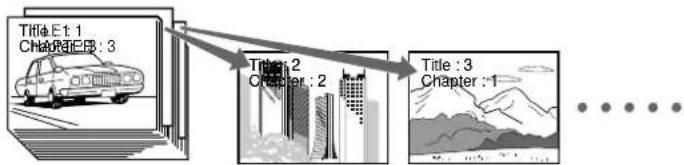
flowchart
graph TD
    A["Title: E 1\nChapter: E 3"] --> B["Chapter 2\nChapter: 2"]
    B --> C["Chapter 3\nChapter: 1"]
The DV-C600's Random playback functions allow you to select a mode where the DV-C600 decides which Title or Chapter/track to play next. A similar function is available on most CD players. There are two Random functions: one for DVDs only, and another that is available for both DVDs and Video/audio CDs:
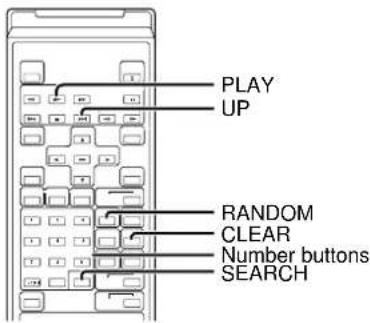
Title Random DVD
For DVD video discs, you can decide to have the DV-C600 select the Titles in a random (unpredictable) order:
| 1 | Stop playback and select the DVD video disc whose titles you wish to watch in random order.See “Selecting the desired disc for playback” on page 15 for details. | ||
| 2 |  | Press the RANDOM button to select “Title Random”.Pressing this button repeatedly will cycle through the following options:Note:If you press the RANDOM button during playback, the DV-C600 automatically starts random playback after finishing the current title. | 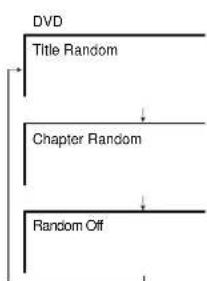 |
| 3 |  | Press the ▶ PLAY button within 5 seconds after pressing the RANDOM button.The DVD Changer starts random play-back. | |
| 4 |  | Press CLEAR to resume normal playback. | |
Notes:
- Some discs may not permit random playback.
- You cannot use this Random function in conjunction with Memory playback (see page 22).
- Select "Random Off" if you do not need the Random function after all.
Playing Chapters or Tracks in Random Order DVD VCD CD
This Random function allows you to activate random playback of the Chapters within the currently selected title (DVD video discs) or of the tracks on a Video or audio CD.
| 1 | Stop playback and select the disc whose titles you wish to watch/listen to in random order.See “Selecting the desired disc for playback” on page 15 for details. | |
| 2 |  | Press the SEARCH button and use the numeric buttons on the remote controller to select the Title.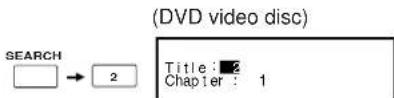 Note:This is only possible for DVD video discs.Skip to step 2 for Video/audio CDs. Note:This is only possible for DVD video discs.Skip to step 2 for Video/audio CDs. |
| [V | KTTG] | Press the RANDOM button to select “Chapter Random” (DVD) or “Track Random” (Video/audio CD).If you press the RANDOM button during playback, the DV-C600 automatically starts random playback after finishing the current Chapter or track. 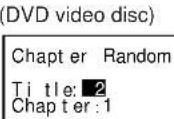 |
| [3' |  | Press the ▶ PLAY button within 5 seconds after pressing the RANDOM button.The DVD Changer starts random playback. |
 | Press CLEAR to resume normal playback. |
Notes:
• Some discs may not permit random playback.
- You cannot use this Random function in conjunction with Memory play-back (see page 22).
- You can press the UP ▶ button during Random playback to jump to the next Chapter or track and continue Random playback from there.
- Select "Random Off" if you do not need the Random function after all.
DVD
Zooming in
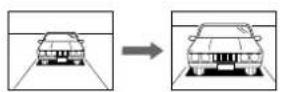
The Zoom function allows you to magnify a portion of a picture. Feel free to select the area to be magnified.
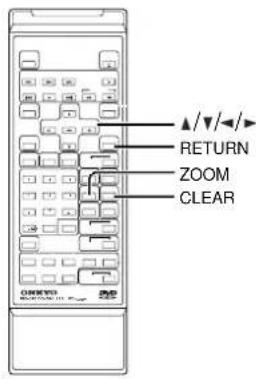
Changing the Camera Angle
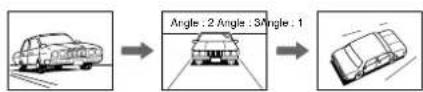
One of the new features of the DVD carrier is that some discs contain scenes shot from different angles. The following function allows you to select the desired angle.
DVD
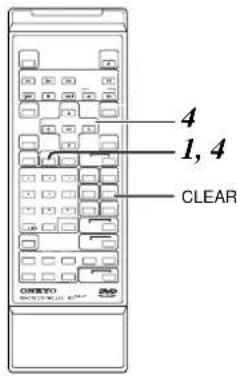
Press the ZOOM button during normal or slow (see page 17) playback or while playback is paused ("still", see page 16).
There are three Zoom levels. Press this button repeatedly to select the desired level.
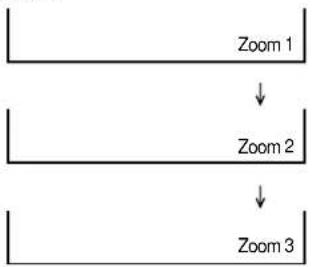
flowchart
graph TD
    A[" "] --> B["Zoom 1"]
    B --> C[" "]
    C --> D["Zoom 2"]
    D --> E[" "]
    E --> F["Zoom 3"]
Press the RETURN button to progressively zoom out again (return to the preceding Zoom level).
Use the ▲ /◀buttons to shift the zoom point.
When the zoom point reaches an edge of the picture, the color of the "Zoom" message changes.
Pressing the CLEAR button restores the zoom point to the center of the picture.
To defeat the Zoom function, press the ZOOM button repeatedly until the "Zoom" message disappears.
Notes:
- Some DVD Video discs do not support the Zoom function.
- For certain scenes, the Zoom function is not available.
- The Zoom function does not apply to subtitles or menu screens included on DVD video discs.
- During zoom playback, the ▲/▼/▲buttons are not available for selecting option of a DVD's menu function (they are used to shift the zoom point). If you want to use the menu screens, cancel zoom playback (see above).
- The magnification level varies depending on the picture size you select (see page 32, 35).
Set the "On-Screen Displays" function to "On" if you want the angle icon (☐) as well as series of other icons to be displayed on screen. See pages 32, 37 for details.
If you do not need these on-screen messages, set the above function to "Off".
2 Start playback and look out for the multiangle icon (☐).
If this icon appears on the display (and on screen)...
3 ...press the ANGLE button.
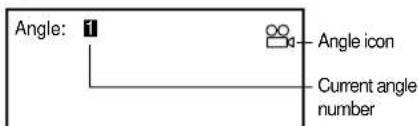
4 Select the desired Angle by repeatedly pressing ANGLE.
You can also use the ▲ and ▼buttons to advance to the next or return to the previous angle. ANGLE only allows you to cycle in one direction.

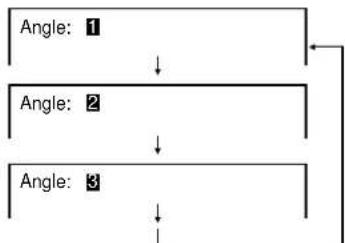
flowchart
graph TD
    A["Angle: 1"] --> B["Angle: 2"]
    B --> C["Angle: 3"]
    C --> D["End"]
Use the numeric buttons to directly select the desired angle.
5 Press the CLEAR button to switch off the angle number.
Notes:
- You can also change the camera angle in pause ("still") mode (see page 16). In that case, the camera angle changes to the new setting when you resume playback.
- If you pause a picture immediately after changing the camera angle, the resumed playback picture may no longer use the new camera angle.
Audio Playback Settings
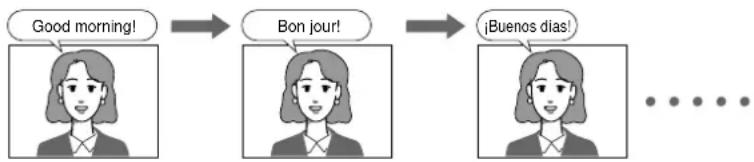
flowchart
graph LR
    A["Good morning!"] --> B["Bon jour!"]
    B --> C["¡Buenos días!"]
Your DV-C600 allows you to select the following audio-related settings. The number of options depends on the DVD video disc you are playing back. It is not possible to select an option for which there is no data on the DVD. Language: A DVD video disc may contain several language versions of a movie. Select the preferred language.
Recording system: Select the recording system that best matches the input capabilities of your amplifier or receiver. For example, there is little point in selecting "☐☐ 6CH" if your amplifier does not support Dolby Digital 5.1. Depending on the selected recording system, the DV-C600 automatically converts the audio data to an acceptable format for your amplifier.
The DV-C600 accepts the Dolby Digital, DTS, and PCM recording systems. Other systems cannot be played back. See also the conversion table below for details about the available options. Dolby Digital 5.1 Channel is displayed as “☐☐ 6CH.”
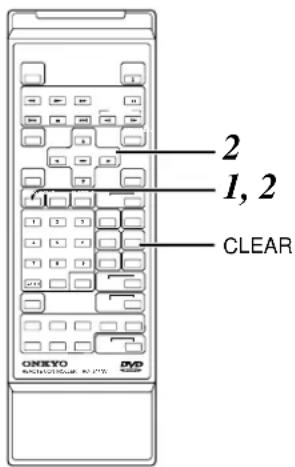
| 1 | AUDIO | Press the AUDIO button during play-back of a DVD video disc. The current Audio settings are displayed for about 3 seconds. Audio: ENG PCM 2CH Recording system Language Position number Audio channel |
| See page 39 for a list of abbreviations of the available languages and their meaning. | ||
| 2 | AUDIO | Press the AUDIO or ▲button while the above Audio page is still displayed (i.e. within 3 seconds). Pressing one of these buttons cycles through the available options. AUD I O: ENG PCM 2CH ↓ AUD I O: RE 6CH ↓ AUD I O: SPA PCM 2CH ↓ Use the ▼button to cycle in the opposite direction. |
Selecting Sound Channels of Video CDs
A Video CD may have left and right sound channels with different information (sound track on one channel, dialogues on the other; or one language on one channel, and another on the second channel, etc.). You can select the desired channel:
During playback, press AUDIO repeatedly to select the sound channel.
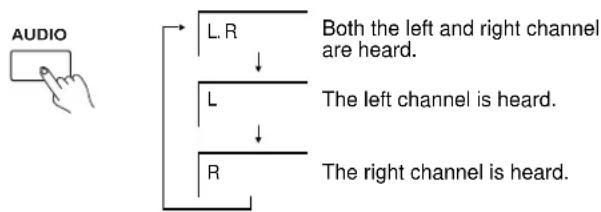
Notes:
- Some discs allow you to change Audio settings only via the disc menu. In that case, press the MENU button and choose the desired language.
- The Audio settings are not saved internally. When you switch off the DVD Changer or open the disc tray, the DV-C600 returns to the default setting. See page 34.
- When you select an option that is not available on the selected DVD video disc, the DV-C600 ignores your setting and goes on using the previously selected language, etc.
Recording Systems and Automatic Conversions
Here are all the Recording systems formats the DV-C600 supports as well as the conversions that will be carried according to the Recording system you select (see page 28).
Output sound conversion table (sampling frequency/quantization bit)
| Discs Sound recording system | Audio settings on the setting screen (page 32, 36) | |||||||
| Bitstream Analog 2ch | Stereo Output PCM | |||||||
| DIGITAL ANA OUTPUT jack OUT | LOG DIGITAL ANA OUTPUT jacks OUT | ALOG DIGITAL ANA OUTPUT jack OUTPUT | ALOG jacks OUTPUT jack | OUTPUT jacks | ||||
| DVD video discs | Dolby Digital Bitstream 48 kHz/16 bit Bitstream 48 kHz/16 bit 48 kHz/16 bit 48 kHz/16 bit 48 kHz/16 bit 48 kHz/16 bit 48 kHz/16 bit 48 kHz/16 bit 48 kHz/16 bit 48 kHz/16 bit 48 kHz/16 bit 48 kHz/16 bit 48 kHz/16 bit 48 kHz/16 bit 48kHz/16 bit 48 kHz/16 bit 48 kHz/16 bit 48 kHz/16 bit 48 kHz/16 bit 48 kHz/16 bit 48 kHz/16 bit 48 kHz/16 bit 48 kHz/16 bit 48 kHz/16 bit 48 kHz/16 bit 48 kHz/16 bit 48 kHz/16 bits | |||||||
| Linear PCM | 48 kHz/16 bit 48 kHz/16 bit 48 kHz/16 bit 48 kHz/16 bit 48 kHz/16 bit 48 kHz/16 bit 48 kHz/16 bit 48 kHz/16 bit 48 kHz/16 bit 48 kHz/16 bit 48 kHz/16 bit 48 kHz/16 bit 48 kHz /16 bit 48 kHz/16 bit 48 kHz/16 bit 48 kHz/16 bit 48 kHz/16 bit 48 kHz/16 bit 48 kHz/16 bit 48 kHz/16 bit 48 kHz/16 bit 48 kHz/16 bit 48 kHz/16 bit 48 kHz/16 bit 48 kHz/16 bit | am 48 kHz/16 bit 48 kHz/16 bit 48 kHz/16 bit 48 kHz/16 bit 48 kHz/16 bit 48 kHz/16 bit 48 kHz/16 bit 48 kHz/16 bit 48 kHz/16 bit 48 kHz/16 bit 48 kHz/16 bit 48 kHz/16 bit 48 kWh/16 bit 48 kHz/16 bit 48 kHz/16 bit 48 kHz/16 bit 48 kHz/16 bit 48 kHz/16 bit 48 kHz/16 bit 48 kHz/16 bit 48 kHz/16 bit 48 kHz/16 bit 48 kHz/16 bit 48 kHz/16 bit 48 kHz/16bit | - | - | - | - | - | |
| 48 kHz/20 bit 48 kHz/16 bit 48 kHz/16 bit 48 kHz/16 bit 48 kHz/16 bit 48 kHz/16 bit 48 kHz/16 bit 48 kHz/16 bit 48 kHz/16 bit 48 kHz/16 bit 48 kHz/16 bit 48 kHz/16 bit 48 kHz/16 bit 49 kHz/16 bit 48 kHz/16 bit 48 kHz/16 bit 48 kHz/16 bit 48 kHz/16 bit 48 kHz/16 bit 48 kHz/16 bit 48 kHz/16 bit 48 kHz/16 bit 48 kHz/16 bit 48 kHz/16 bit 48 kHz/16 bit 48 kHz/15 bit 48 kHz/16 bit 48 kHz/16 bit 48 kHz/16 bit 48 kHz/16 bit 48 kHz/16 bit 48 kHz/16 bit 48 kHz/16 bit 48 kHz/16 bit 48 kHz/16 bit 48 kHz/16 bit 48 kHz/16 bit 48 kHz/16 bit 47 kHz/16 bit 48 kHz/16 bit 48 kHz/16 bit 48 kHz/16 bit 48 kHz/16 bit 48 kHz/16 bit 48 kHz/16 bit 48 kHz/16 bit 48 kHz/16 bit 48 kHz/16 bit 48 kHz/16 bit 48 kHz/16 bit 48 kHz/17 bit 48 kHz/16 bit 48 kHz/16 bit 48 kHz/16 bit 48 kHz/16 bit 48 kHz/16 bit 48 kHz/16 bit 48 kHz/16 bit 48 kHz/16 bit 48 kHz/16 bit 48 kHz/16 bit 48 kHz/16 bit 48 kHz/16 bit 46 kHz/16 bit 48 kHz/16 bit 48 kHz/16 bit 48 kHz/16 bit 48 kHz/16 bit 48 kHz/16 bit 48 kHz/16 bit 48 kHz/16 bit 48 kHz/16 bit 48 kHz/16 bit 48 kHz/16 bit 48 kHz/16 bit 48 kHz/18 bit 48 kHz/16 bit 48 kHz/16 bit 48 kHz/16 bit 48 kHz/16 bit 48 kHz/16 bit 48 kHz/16 bit 48 kHz/16 bit 48 kHz/16 bit 48 kHz/16 bit 48 kHz/16 bit 48 kHz/16 bit 48 kHz/16 bit 45 kHz/16 bit 48 kHz/16 bit 48 kHz/16 bit 48 kHz/16 bit 48 kHz/16 bit 48 kHz/16 bit 48 kHz/16 bit 48 kHz/16 bit 48 kHz/16 bit 48 kHz/16 bit 48 kHz/16 bit 48 kHz/16 bit 48 kHz/13 bit 48 kHz/16 bit 48 kHz/16 bit 48 kHz/16 bit 48 kHz/16 bit 48 kHz/16 bit 48 kHz/16 bit 48 kHz/16 bit 48 kHz/16 bit 48 kHz/16 bit 48 kHz/16 bit 48 kHz/16 bit 48 kHz/16 bit 42 kHz/16 bit 48 kHz/16 bit 48 kHz/16 bit 48 kHz/16 bit 48 kHz/16 bit 48 kHz/16 bit 48 kHz/16 bit 48 kHz/16 bit 48 kHz/16 bit 48 kHz/16 bit 48 kHz/16 bit 48 kHz/16 bit 48 kHz/12 bit 48 kHz/16 bit 48 kHz/16 bit 48 kHz/16 bit 48 kHz/16 bit 48 kHz/16 bit 48 kHz/16 bit 48 kHz/16 bit 48 kHz/16 bit 48 kHz/16 bit 48 kHz/16 bit 48 kHz/16 bit 48 kHz/16 bit 40 kHz/16 bit 48 kHz/16 bit 48 kHz/16 bit 48 kHz/16 bit 48 kHz/16 bit 48 kHz/16 bit 48 kHz/16 bit 48 kHz/16 bit 48 kHz/16 bit 48 kHz/16 bit 48 kHz/16 bit 48 kHz/16 bit 48 kHz/10 bit 48 kHz/16 bit 48 kHz/16 bit 48 kHz/16 bit 48 kHz/16 bit 48 kHz/16 bit 48 kHz/16 bit 48 kHz/16 bit 48 kHz/16 bit 48 kHz/16 bit 48 kHz/16 bit 48 kHz/16 bit 48 kHz/16 bit 50 kHz/16 bit 48 kHz/16 bit 48 kHz/16 bit 48 kHz/16 bit 48 kHz/16 bit 48 kHz/16 bit 48 kHz/16 bit 48 kHz/16 bit 48 kHz/16 bit 48 kHz/16 bit 48 kHz/16 bit 48 kHz/16 bit 48 kHz/20 bit 48 kHz/16 bit 48 kHz/16 bit 48 kHz/16 bit 48 kHz/16 bit 48 kHz/16 bit 48 kHz/16 bit 48 kHz/16 bit 48 kHz/16 bit 48 kHz/16 bit 48 kHz/16 bit 48 kHz/16 bit 48 kHz /16 bit 49 kHz/16 bit 48 kHz/16 bit 48 kHz/16 bit 48 kHz/16 bit 48 kHz/16 bit 48 kHz/16 bit 48 kHz/16 bit 48 kHz/16 bit 48 kHz/16 bit 48 kHz/16 bit 48 kHz/16 bit 48 kHz/16 bit | - | - | - | - | - | - | ||
| DTS | Bitstream | - | Bitstream | - | - | - | ||
| MPEG 2 | Bitstream(7.1ch) | - | Bitstream(2ch) | 48kHz/16bit | 48kHz/16bit | 48kHz/16bit | ||
| VIDEO CDs | MPEG1 | 44.1 kHz/16 bit | 44.1 kHz/16 bit | 44.1 kHz/16 bit | 44.1 kHz/16 bit | 44.1 kHz/16 bit | 44.1 kHz/16 bit | |
| Audio CDs | Linear PCM 44.1 kHz/16 bit | 44.1 kHz/16 bit | 44.1 kHz/16 bit | 44.1 kHz/16 bit | 44.1 kHz/16 bit | 44.1 kHz/16 bit | 44.1 kHz/16 bit | |
| DTS | Bitstream | (Noise) | Bitstream | (Noise) | Bitstream | (Noise) | ||
Using the Subtitle Feature
DVD

Some DVD video discs also contain subtitles – sometimes even in several languages. Here is how to display them and select the language (if several languages are available).
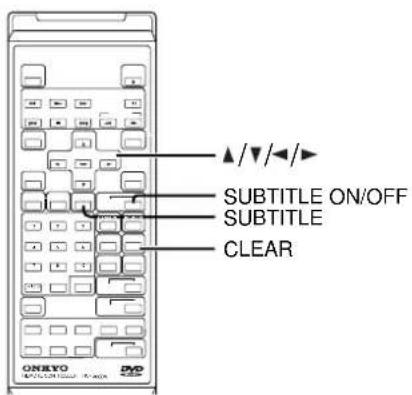
Selecting the Subtitle Language
1
SUBTITLE
Press the SUBTITLE button during playback.
The current subtitle setting is displayed for about three seconds.
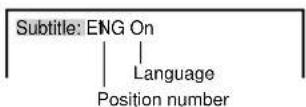
Refer to the list of languages and their abbreviations. See page 39.
2
SUBTITLE

Press the SUBTITLE or ▲button during the above page is displayed.
Repeatedly press the SUBTITLE or ▲ button to cycle through the options. You can only select a subtitle language for which there are data on the selected DVD video disc.
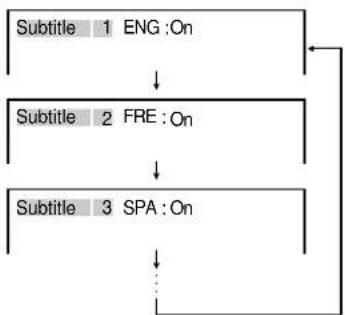
flowchart
graph TD
    A["Subtitle 1 ENG :On"] --> B["Subtitle 2 FRE :On"]
    B --> C["Subtitle 3 SPA :On"]
    C --> D["..."]
You can also use ▼ button to cycle through the options in the opposite direction.
3
CLEAR
Press the CLEAR button to hide the above indication.
Turning Subtitles On or Off
1
Press the SUBTITLE ON/OFF button during playback.
The current subtitle setting is displayed for about three seconds.
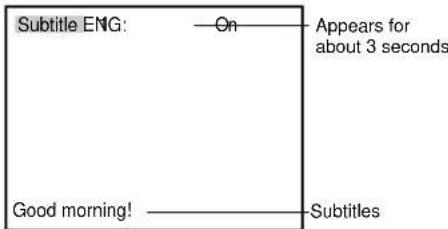
The subtitles are displayed at the bottom of the screen.
2
Press the SUBTITLE ON/OFF button again to turn the subtitles off.
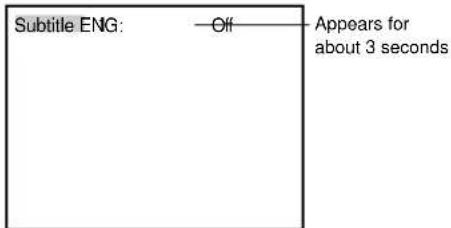
The subtitles disappear.
Notes:
- Some DVD video discs are set to display subtitles automatically. In that case, you cannot switch off the subtitle function.
- For certain scenes, the subtitle function takes a little longer to become effective (due to heavy data processing). Switching on subtitles may thus not always have an immediate effect.
- Some DVD video discs also allow you to select the language and status of the subtitles via the disc menu.
• See page 39 for a list of abbreviations of the available languages and their meaning. - The Subtitle settings are not saved internally. When you switch off the DVD Changer or open the disc tray, the DV-C600 returns to the default settings. See page 34.
- When you select an option that is not available on the selected DVD video disc, the DV-C600 ignores your setting and goes on using the previously selected language, etc.
Using The On-Screen Display Functions
Information about a disc and its operational status can be monitored on your TV screen. If you want to take advantage of this feature for audio CDs, please remember to connect the DV-C600 to your TV set (see pages 10 and 11) and to switch it on.
Please note that the information provided on screen is only for reference purposes and cannot be changed.
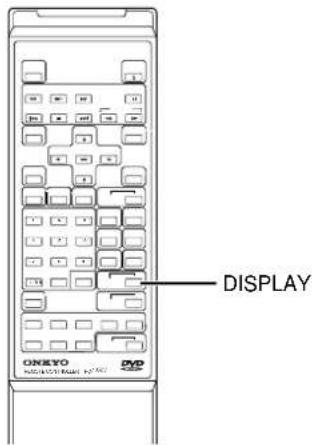
DVD VCD CD
DVD VCD CD
Requesting Basic Information
This operation allows you to view the current title number, track number, and total playing time of the disc on the TV screen.
Stop playback and press the DISPLAY button.
Each time you press the DISPLAY button, the on-screen display changes as follows:
DVD video disc
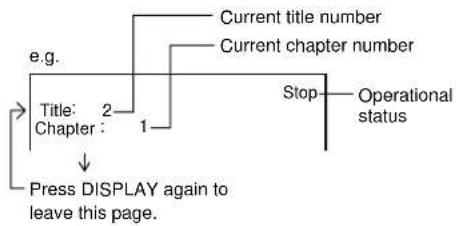
flowchart
graph TD
    A["Current title number"] --> B["Current chapter number"]
    B --> C["Operational status"]
    D["Press DISPLAY again to leave this page."] --> E["Chapter 2"]
    E --> F["Chapter 1"]
    F --> G["Stop"]
    style A fill:#f9f,stroke:#333
    style B fill:#f9f,stroke:#333
    style C fill:#f9f,stroke:#333
    style D fill:#f9f,stroke:#333
    style E fill:#f9f,stroke:#333
    style F fill:#f9f,stroke:#333
    style G fill:#f9f,stroke:#333
VIDEO CD/Audio CD
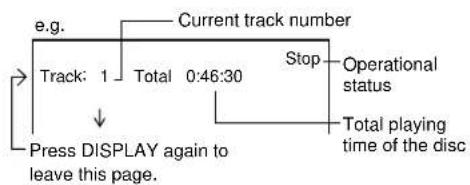
flowchart
graph TD
    A["Track: 1"] --> B["Press DISPLAY again to leave this page."]
    B --> C["Current track number"]
    C --> D["0:46:30"]
    D --> E["Operational status"]
    E --> F["Stop"]
    F --> G["Total playing time of the disc"]
More Specific Information: Remaining Time and Setting Status
You can also view the elapsed time, remaining time, and setting status of the disc on the TV screen. Though the operation is almost exactly the same as for requesting general information, please note that you need to start playback before being able to access this information.
DVD video disc
Press the DISPLAY button during playback.
Each time you press the DISPLAY button, the on-screen display changes as follows.
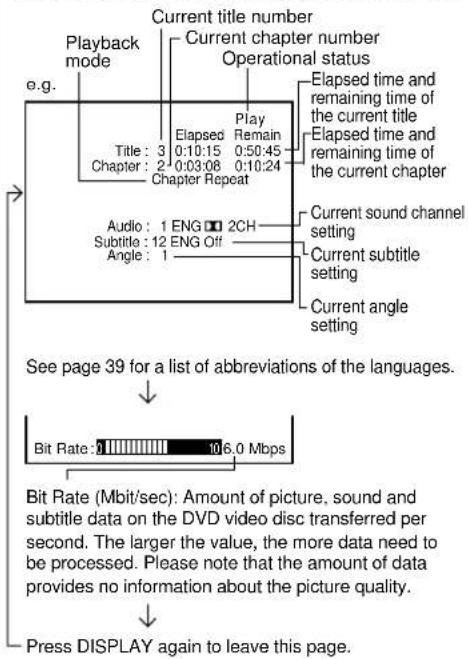
VIDEO CD/Audio CD
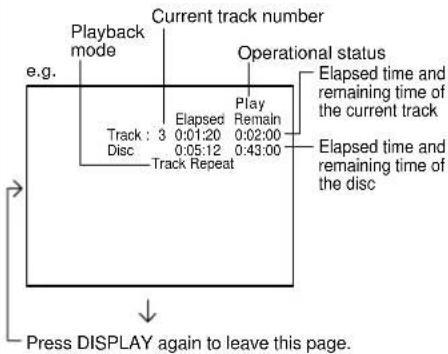
flowchart
graph TD
    A["Playback mode"] --> B["Current track number"]
    B --> C["Operational status"]
    C --> D["Elapsed time and remaining time of the current track"]
    D --> E["Elapsed time and remaining time of the disc"]
    F["Track : 3 Disc"] --> G["Elapsed 0:01:20 0:05:12"]
    G --> H["Play Remain 0:02:00 0:43:00"]
    H --> I["Track Repeat"]
    I --> J["Press DISPLAY again to leave this page."]
Advanced Settings


The DV-C600 contains a lot more functions than have been covered so far. Most of these functions can only be accessed via the on-screen menu. Please note that not all available functions apply to all disc types supported by the DV-C600. Setting the language, for instance, has no effect for audio CDs.
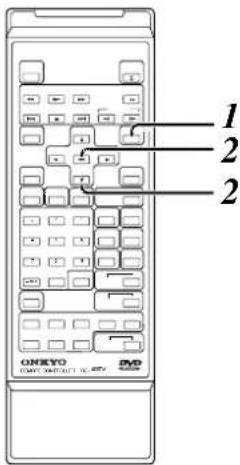
DVD VCD CD
Setting Procedure
| 1 | Switch on your TV set. | |
| 2 |  | Stop playback and press the SETUP button.The following on-screen menu appears: 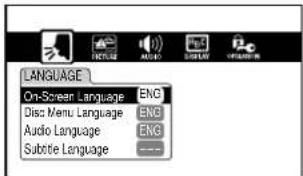 |
| 3 | Use the ◀/▶ buttons to select the menu heading (icon) that provides access to the desired function. See the next page for an overview of the available functions. Here is what the icons stand for: | |
 | ||
 | Language-related settings. | |
 | Picture-related settings. | |
 | Audio output settings. | |
 | Settings related to the on-screen menu function. | |
 | General utility settings. |
| 3 | 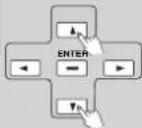 | Use the ▲ / ▼ buttons to choose a function below the selected icon, and confirm by pressing the ENTER button. |
 | ||
| 4 | 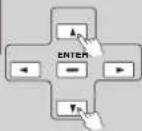 | Enter the desired value with the ▲ / ▼ buttons and confirm by pressing the ENTER button.For the OPERATION function, you will also need the ◀ / ▶ buttons. The exact procedure will be explained in that section. |
 | ||
| 5 | Repeat steps 4 and 5 to change other settings. | |
| 6 | SETUPRETURN | Press the SETUP button to switch off the on-screen menu.Press the RETURN button to return to the previous display. |
| 5 | Repeat steps 4 and 5 to change other settings. | |
| 6 | SETUPRETURN | Press the SETUP button to switch off the on-screen menu.Press the RETURN button to return to the previous display. |
Notes:
- Though the SETUP button may also work during normal playback, certain functions may not be accessible. In that case, a warning message is displayed. Stop playback and press SETUP again to be able to select the desired function.
Setting Details Page
| On-Screen Language Allows you to select the language of the on-screen displays. | 34 |
| Disc Menu Language Allows you to select the language to be used by the disc menus (menus included on the discs you are playing back). | 34 |
| Audio Language Allows you to select the sound track language. | 34 |
| Subtitle Language Allows you to select the subtitle language. | 34 |

| TV Shape Allows you to adapt the picture size to the aspect ratio of your TV. | 35 |
| Black Level Allows you to set the “blackness” of the screen. | 35 |
| Audio Out Select Allows you to select the audio outputs (digital or analog) and/or the output format of the digital audio data. | 36 |
| Dynamic Range Control Allows you to reduce the dynamic range of the audio data (i.e. to reduce the difference between loud and soft sounds). | 36 |
| Karaoke Vocal Allows you to switch on or mute the vocal track of a DVD Karaoke disc. | 36 |
| Extended Audio Features Allows you to activate or mute the Extended Audio track for visually impaired persons. | 36 |
| On-Screen Displays Allows you to decide against having the operation status icons displayed on the TV screen. | 37 | |||
| OSD Background Color | DVD | VCD | CD | Allows you to select the background color for on-screen displays. |
| Extended Subtitle Features | DVD | Allows you to activate or switch off special subtitles for hearing-impaired persons. | ||
| Screen Saver | DVD | VCD | Allows you to switch on or off the screen saver function. | |
| Pause/Still | DVD | Allows you to select the resolution of still pictures. (Field/Frame) | 37 |
| Parental Lock | DVD | Allows you to set on or switch off the Parental Lock function. | 37 |
| Title Stop Allows you to switch on or off a feature that automatically stops playback after a Title is finished. | 38 | ||
| PBC | VCD | To select to playback a PBC- controllable video CD. | 38 |

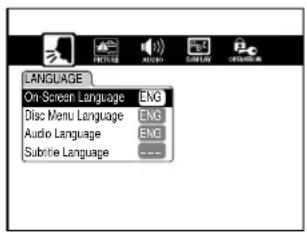
LANGUAGE Functions
On-Screen Language


This function allows you to select the language for the on-screen displays.
- English
- French
- Spanish
Disc Menu Language

This function allows you to select the language used by the disc menus. Note that you can only select a language supported by the DVD video disc in question.
- English
- French
- Spanish
- Others : To select another language than the above, proceed as follows:
a) Press the ENTER button.
b) See the list on page 39 for the abbreviation of the desired language.
c) Enter the first character of the abbreviation with the ▲ /▼ buttons (see the Code field).
d) Move the cursor to the second position and use ▲ /▼ for entering the second character of the abbreviation.
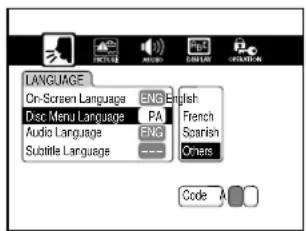
Some DVD video discs may not include the desired language. In that case, the DVD Changer automatically switches to the disc's default disc menu language.
Audio Language DVD
If the DVD video disc you are playing back contains multilingual soundtracks, Audio Language allows you to select the desired language.
- English
- French
- Spanish
- Others: To select another language than the above, see steps (a) – (e) under "Disc Menu Language".
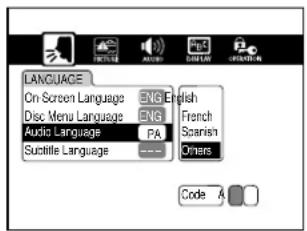
Note:
Some DVD video discs could be played back in a different language than the one you selected. This is usually due to the fact that the disc contains a preset language selection.

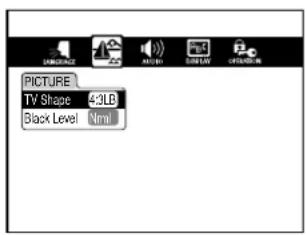
PICTURE Settings
Subtitle Language

Use this function to select the subtitle language, or to switch the subtitles off altogether.
- English
- French
- Spanish
- No Subtitle (subtitles are switched off)
- Others: To select another language than the above, see steps (a) – (e) under "Disc Menu Language".
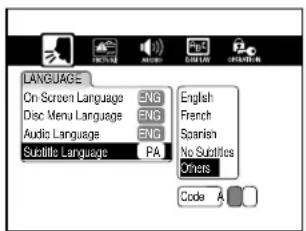
Notes:
- If DVD video disc contains a preset subtitle language setting, your selection is ignored.
- Some DVD video discs allow you to change the subtitle language only via the disc menu. If so, press the MENU button and choose the desired subtitle language from the disc menu.
TV Shape

This is where you can specify the shape of your TV screen. This is important for determining whether you would like to see the whole picture, or a slightly bigger version.
4:3 Letterbox:
Select this setting if you own a standard 4:3 TV set and want to see the whole picture. In that case, masking bars are inserted above and below the picture.
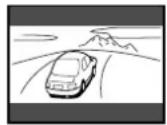
4:3 Normal:
Select this setting for a standard 4:3 TV set if you want the picture to fill the entire screen. In that case, the left and right borders may fall outside the screen's scope.
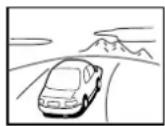
16:9 Widescreen:
Select this setting for a 16:9 wide-screen TV.
Notes:
- The picture size is preset on the DVD video disc. Therefore, the playback picture may not conform to the picture size you select.
- When you play DVD video discs that only contain 4:3 picture size information, any other TV Shape setting you may select is ignored.
- If you select "16:9 Widescreen" while your TV set is equipped with a 4:3 screen, the picture will be horizontally distorted (compressed) during playback. Always set the TV Shape function according to the TV set your are using.
Black Level


This function allows you to optimize the black picture content (true black instead of dark gray), and hence the video quality.
Enhanced: Enhanced black level. (0 IRE)
Normal: Standard black level. (7.5 IRE)
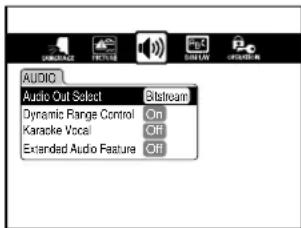
AUDIO Settings
Audio Out Select


This function allows you to select the outputs and format for audio playback. Always select the setting that best matches your amplifier's capabilities and input connectors. The "Bitstream" and "PCM" options refer to the DV-C600's digital outputs. See also "Other Audio Playback Options" on page 12.
Bitstream: Select this option if your amplifier is equipped with a digital input (optical or coaxial) and a Dolby Digital, DTS, MPEG1, or MPEG2 decoder. The DV-C600 outputs digital audio information in the Bitstream format when you play back a DVD video disc with Dolby Digital, DTS, MPEG1, or MPEG2 encoding.
Analog2Ch: Select this option if the DV-C600 is connected to the audio inputs of your TV set, or an analog input pair of your external amplifier. Note that even this analog connection may allow you to take advantage of the amplifier's Dolby Pro Logic processor.
PCM: Select this option if the DV-C600 is connected to a digital input of your amplifier and if you would like the sound to be played back in stereo (e.g. for audio CDs). If you select "PCM", the audio data of DVD video discs with Dolby Digital, MPEG1, or MPEG2 encoding is automatically converted to 2-channel PCM, so that you lose the surround information. See also the table on page 29.
Dynamic Range Control

Dynamic Range Control allows you to “compress” the dynamic range of a DVD’s sound track, so that you can lower the volume without losing extremely soft signals. This is especially useful when you are watching a movie late at night.
Off: The full dynamic range is maintained.
On: Low-level signals are slightly boosted so as to remain audible at a low volume setting.
Notes:
- This function is only available during playback of Dolby Digital-encoded DVD video discs.
- The degree of dynamic range reduction may differ depending on the DVD video disc.
Karaoke Vocal

DVD Karaoke discs sometimes also contain a vocal track you probably don't need for Karaoke applications. That is why the DV-C600 allows you to switch the lead vocal off.
Off: The lead vocal track is muted.
On: If available on the selected DVD Karaoke disc, the lead vocal track is output.
Notes:
- The Karaoke Vocal feature is only available during playback of Dolby Digital-encoded (multi-channel) DVD Karaoke discs.
- For optimum Karaoke enjoyment, be sure to use appropriate audio equipment, such as an external amplifier.
Extended Audio Feature

Some DVD video discs contain a special track that describes the on-screen actions for visually impaired persons. Your DV-C600 is set to automatically output this track if available. If this is not necessary, switch this function off.
Off: The Extended Audio Feature track is muted.
On: The Extended Audio Feature is active.
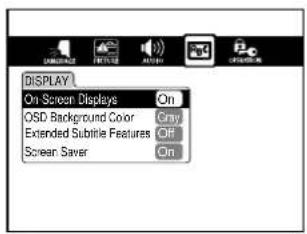
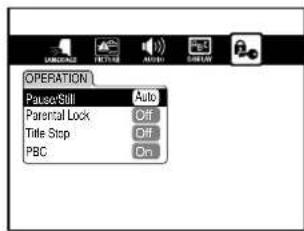
DISPLAY Settings
On-Screen Displays

This function allows you to activate or suppress the display of on-screen icons that inform you about the operational status.
Off: Operational icons or messages (e.g. "Play", "∞") are not displayed.
On: Operational icons or messages (e.g. "Play", "∞") are displayed on-screen.
OSD Background Color

This function allows you to select the background color for the on-screen menu.
Blue: Blue background.
Gray: Gray background.
Extended Subtitle Features DVD
Some DVD video discs contain special subtitles, an enhancement of closed captioning for hearing-impaired persons. The DVD Changer automatically displays these special subtitles.
Off: The special subtitles are not displayed.
On: The special subtitles are displayed.
Screen Saver DVD
The screen saver function protects your TV screen from burn-in of images that are displayed for too long. If you also work with a computer, you probably know how it works. The screen saver is especially useful if you often use the Pause ("still") function and tend to forget to switch it off. See page 16.
Off: The screen saver will not blank out the screen after the delay time has elapsed.
On: The screen saver will come on whenever necessary.
OPERATION Settings
Pause/Still

This function allows you to obtain an even better quality for still pictures. Such pictures are displayed when you pause playback of a DVD video disc. See also page 16.
Auto: For normal use. The image quality should be sufficient for most applications.
Frame: Still pictures are clearer thanks to a higher resolution.
Parental Lock

DVD video discs equipped with the Parental Lock function allow you to decide what exactly can be viewed on your DV-C600, which is especially useful if you have children. For example: you could select a level where violent scenes unsuitable for children are skipped and replaced with more suitable scenes, or prevent playback of a disc altogether.
Whether the Parental Lock function actually works depends on the DVD video disc in question, because it needs to contain the software capable of responding to this function. Parental Lock is secured by means of a 4-digit code to avoid that your children bypass this function.
Ask your dealer or rental service for details about the Parental Lock support of a given DVD video disc. Also note that the meaning of the Parental Lock levels depends on the country whose rating standards are used by the DVD video disc.
Off: The Parental Lock feature is not active. To select the "Off" setting, perform steps 1 and 2 below.
On: Switching on Parental Lock involves specifying the highest level that can be viewed. You cannot just switch this function on without selecting a level. Careful: if you only carry out steps 1 and 2, Parental Lock will be switched off. Be sure to perform steps 1 – 4 below.
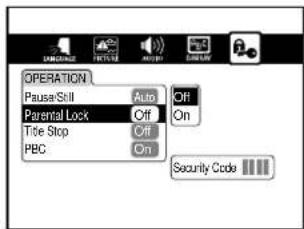
1. Press the ENTER button.
- Enter the 4-digit code via the numeric buttons on the remote controller, and press the ENTER button.
If you entered the wrong code, press the CLEAR button before pressing ENTER, and enter your 4-digit code again.
OPERATION Settings (continued)
3. Press the ◀ / ▶buttons to select the country whose standards were used to rate the DVD video disc.
See the information supplied with the DVD for details.
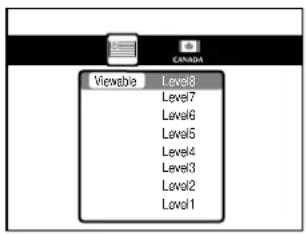
4. Press the ▲▼buttons to select the Parental Lock level, then press the ENTER button.
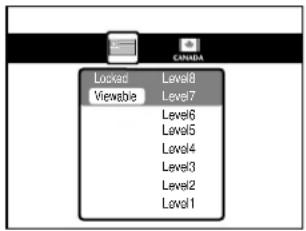
It is now impossible to play back DVD video discs rated higher than the selected level. For example, when you select level 7 ("Viewable"), discs rated higher than level 7 are locked out ("Locked") and cannot be played back.
The Parental Lock level is equivalent to the following USA movie ratings:
Level 7: NC-17
Level 6: R
Level 4: PG 13
Level 3: PG
Level 1: G
The parental lock levels for “Canada” are included for future use. Since they are different from the US ratings, carefully check what they correspond to before buying new DVD video discs with the Canadian Parental Lock system as they become available.
■ Changing the Parental Lock level
Perform steps 2 - 4 above.
■ Changing the 4-digit Code
a) After selecting a level or "Off," press the STOP button four times, followed by the ENTER button.

The current 4-digit code is cleared.
b) Press the numeric buttons to enter a new 4-digit security code.
c) Press the ENTER button.
Be sure to either memorize this code or to write down and store it in a safe place.
Title Stop DVD
This function allows you to specify what happens when the DV-C600 reaches the end of a DVD Title.
Off: The DV-C600 continues after playback of a Title is completed. Selecting this option also changes the behavior of the DOWN ◀◀ and UP ▶buttons. See "Selecting the Next/Previous Chapter or Track" on page 19.
On: The DV-C600 stops after playback of a title is completed.
PBC (Playback Control) VCD
Off: The menu screen of the selected Video CD (if available) is not displayed.
On: The menu screen of a Video CD with PBC functionality is displayed on screen.
Table of Languages and Their Abbreviations
| Abbreviation of the LanguageLanguage | Language | Abbreviation of the LanguageLanguage | Language | Language | Language |
| — No alternate languageCHI (ZH) ChineseDUT (NL) DutchENG (EN) EnglishFRE (FR) FrenchGER (DE) GermanITA (IT) ItalianJPN (JA) JapaneseKOR (KO) KoreanMAY (MS) MalaySPA (ES) SpanishAA AfarAB AbkhazianAF AfrikaansAM AmharicAR ArabicAS AssameseAY AymaraAZ AzerbaijanBA BashkirBE BelorussianBG BulgarianBH BihariBI BislamaBN Bengali,BanglaBO TibetanBR BretonCA CatalanCO CorsicanCS CzechCY WelshDA DanishDZ BhutaniEL Greek | languageChineseEnglishGermanItalianJapaneseKoreanMalaySpanishAA AfarAB AkshazianAF AfrikaansAM AmharicAR ArabicAS AssameseAY AymaraAZ AzerbaijanBA BashkirBE BelorussianBG BulgarianBH BihariBI BislamaBN Bengali,BanglaBO TibetanBR BretonCA CatalanCO CorsicanCS CzechCY WelshDA DanishDZ BhutaniEL Greek | EO EsperantoET EstonianEU BasqueFA PersianFI FinnishFJ FijiFO FaroeseFY FrisianGA IrishGD Scottish GaelicGL GalicianGN GuaraniGU GujaratiHA HausaHI HindiHR CroatianHU HungarianHY ArmenianIA InterlinguaIE InterlingueIK InupiakIN IndonesianIS IcelandicIW HebrewJI YiddishJW JavaneseKA GeorgianKK KazakhKL GreenlandicKM CambodianKN KannadaKS KashmiriKU KurdishKY KirghizLA Latin | LN LingalaLO LaotianLT LithuanianLV Latvian,LettishMG MalagasyMI MaoriMK MacedonianML MalayalamMN MongolianMO MoldavianMR MarathiMT MalteseMY BurmeseNA NauruNE NepaliNO NorwegianOC OccitanOM (Afan) OromoOR OriyaPA PanjabiPL PolishPS Pashto,PushtoPT PortugueseQU QuechuaRM Rhaeto-RomanceRN KirundiRO RomanianRU RussianRW KinyarwandaSA SanskritSD SindhiSG SangoSH Serbo-CroatianSI SinghaleseSK Slovak | SL SlovenianSM SamoanSN ShonaSO SomaliSQ AlbanianSR SerbianSS SiswatiST SesothoSU SudaneseSV SwedishSW SwahiliTA TamilTE TeluguTG TajikTH ThaiTI TigrinyaTK TurkmenTL TagalogTN SetswanaTO TonganTR TurkishTS TsongaTT TatarTW TwiUK UkrainianUR UrduUZ UzbekVI VietnameseVO VolapükWO WolofXH XhosaYO YorubaZU Zulu |
If your DV-C600 does not seem to work as expected, check the following table for the possible cause before contacting your ONKYO dealer or service.
Symptoms and Corrections
| Symptom | Cause | Correction | Page |
| No power. | The power plug is disconnected. | Insert the power plug firmly. | 10, 11 |
| No picture. | The TV is not set to receive DVD signal output. | Select the appropriate video input mode on the TV so that the DV-C600's picture appears on the TV screen. | 14 |
| The video cable is not securely connected. | Connect the video cable into the jacks securely. | 10-13 | |
| No sound. | The DV-C600 has not been selected as input source on the amplifier or receiver. | Select the input source on the amplifier or receiver that corresponds to the input(s) the DV-C600 is connected to. | 14 |
| The audio cables are not securely connected. | Connect the audio cable securely. | 10-13 | |
| The device you connected the DV-C600's audio outputs to is switched off. | Switch on the amplifier or receiver. | - | |
| The output sound type setting is not correct. | Select the appropriate audio settings. | 29,3236 | |
| The picture occasionally distorts. | The disc is dirty. | Eject the disc and clean it. | 9 |
| The Fast Forward or Fast Reverse function is active. | Sometimes a small amount of picture distortion may be noticeable. This is not a malfunction. | - | |
| Unstable brightness or picture noise. | This is caused by the copy protection signal. | Connect the DV-C600 directly to the TV. Never route its picture signal via a VCR or other video device ("daisy chain"). | 10 |
| The DV-C600 won't start playback. | No disc is inserted. | Insert a disc. (Check whether the "DVD", "VCD" or "CD" indicator lights.) | 42 |
| The inserted disc cannot be read. | Insert a playable disc. (Check the disc type and color system.) | 9 | |
| The disc is placed upside down. | Insert the disc with the playback side down. | 14 | |
| The disc is not placed within the guide. | Place the disc correctly inside the guide. | 14 | |
| The disc is dirty. | Clean the disc. | 9 | |
| The Parental Lock function is on. | Cancel the Parental Lock function or select another Parental Lock level. | 32,37 | |
| You hear a voice that describes the action. | The DVD video disc contains an Extended Audio Feature track that is being played back. | Switch off the Extended Audio Feature. | 36 |
| The buttons do not work. | Power supply fluctuations or other abnormalities such as static electricity may interrupt correct operation. | Turn the power on or off with the POWER button. Or disconnect the power plug and insert it into the wall outlet again. | - |
| The remote controller does not work properly. | The remote controller is not pointed at the remote sensor of the DVD Changer. | Point the remote controller at the remote sensor of the DVD Changer. | 8 |
| The remote controller is too far from the DVD Changer. | Operate the remote controller within about 5 m. | 8 | |
| The batteries in the remote controller are exhausted. | Replace the batteries with new ones. | 8 |
This unit contains a sensitive microcomputer that, under certain circumstances, might fail to operate due to excessive noise interference. In such case, disconnect the power cord from the wall outlet, wait five seconds and connect the power cord again.
See the pages in [ ] for details.
Front Panel
![NEXT SELECTION button [24] REPEAT button [21] DIMMER button [42] Disc tray indicators [14] POWER button [14] STANDBY/ON button [14] STANDBY/ON indicator [14] UP/Down buttons [19] OPEN/CLOSE button [14] DISPLAY button [31] DISC SKIP button [14, 24] DVD display [42] UP/Down buttons [16] PAUSE button [16] STOP button [16] PLAY button [15-20, 22, 26] FR/FF buttons [16] DISC1-6 buttons [14, 15] DV-C600 ONKYO OPEN/CLOSE DISC SKIP STANDBY/ON DV-C600 Disc tray [14]](/content/2026/05/815335/images/e785b7776cfed04b1f3969a283fe19c49f2bc6b35cb99b95762f00bd410b67c1.jpg)
Rear Panel
![COMPONENT VIDEO OUT jacks Y•Cb•Cr [11] S VIDEO OUT jack [10] VIDEO OUT jack [10] POWER cord ANALOG OUTPUT L/R jacks R VIDEO OUTPUT DUALD OPTICAL RII REMOTE CONTROL CONTROL RII REMOTE CONTROL jacks [41] DIGITAL OPTICAL AUDIO OUT terminal [12, 13] DIGITAL COAXIAL AUDIO OUT jack [12, 13] ANALOG OUTPUT (L/R) jacks [10, 11, 12] Power plug](/content/2026/05/815335/images/6f04a1ecab95ec096da146aadabd205722a3f0e7cfd17084c8a8748bb2ed6ea4.jpg)
Connections for System Remote Controller (R1)
If you own several RI-compatible ONKYO devices, be sure to connect their Racks to one another. This will allow you to use the remote controller of the main component (e.g. the amplifier) to control the entire system.
- To use this DVD Changer with an amplifier (or receiver), cassette tape deck, and tuner with the RI symbol, insert the remote controller cable plugs into the RI REMOTE CONTROLLER jacks.
- As the connection order of the R#is is unimportant, you could also connect one of the DV-C600's REMOTE CONTROLLER jacks to the tuner, the cassette tape deck, amplifier/receiver, or the compact disc player.
- When using the remote controller of an RI-equipped ONKYO amplifier (or receiver) to operate the entire bus, the remote controller must be pointed at the sensor of the amplifier (or receiver).
Notes:
- The upper and lower REMOTE CONTROLLER jacks have the same function.
- Remote controller operation is not possible when only the remote controller cable is connected — the audio jacks must also be connected.
- One RI remote controller cable equipped with a 1/8" (3.5mm) diameter miniature two-conductor phone plug is included with the DV-C600 and with every ONKYO tuner, compact disc player or cassette tape deck with the R symbol.
DVD Display
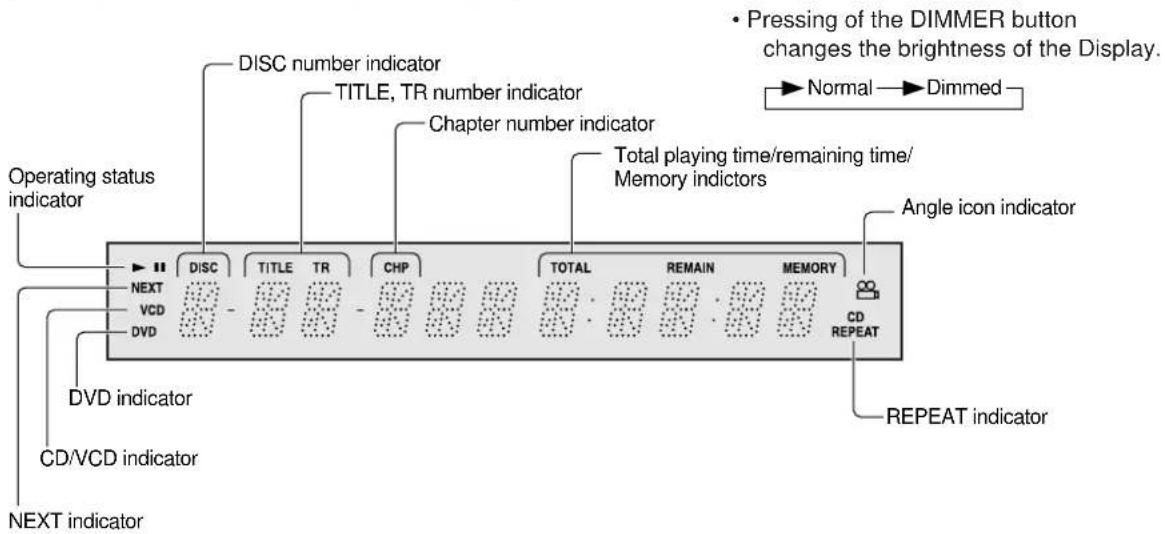
■ The indicators vary depending on the kinds of discs you play.
■ DVD Video disc
- When closing the disc tray: Example
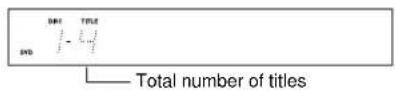
• During playback: Example
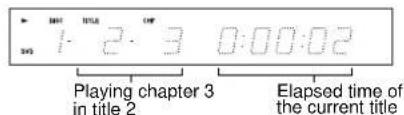
Some DVD video discs may not display the chapter numbers or elapsed time.
■ VIDEO CD
- When closing the disc tray: Example
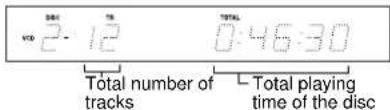
• During playback: Example
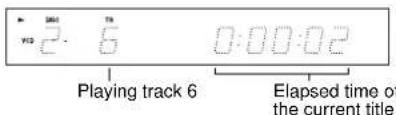
Some VIDEO CDs may not display the track numbers or elapsed time.
■ Audio CD
- When closing the disc tray: Example
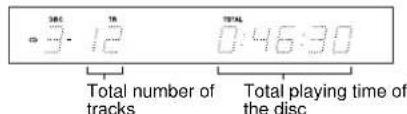
• During playback: Example
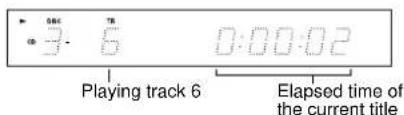
Most steps in this manual need to be performed using the supplied remote controller. That is why the functions of the remote controller's buttons are explained in the relative chapters and sections. See the pages in [ ] for details.
Remote Controller
![STOP button [16, 17, 38] PLAY button [15-20,22,26] POWER button [14] FR button [16] DOWN button [19] MENU button* [15] ▲/▼/►buttons [15-16,18, 22-23, 27-28, 30, 32, 34-38] ENTER button [18, 22, 32, 38] TITLE button [18] AUDIO button [28] ANGLE button [27] SUBTITLE button [30] Numeric buttons [18, 22, 24] SEARCH button [18-20, 26] CD MODE button [25] DISC number buttons [14-15, 24] UP button [19] FF button [16] OPEN/CLOSE button [14] OPEN/CLOSE button [14] PAUSE/STEP button [16] SLOW button [17] SETUPMEN SETUP button [32] RETURN button [27, 32] SUBTITLE ON/OFF button [30] RANDOM MEMORY ZOOM CLEAR A-B REPEAT DISPLAY CD MODE DIMMER DISC 1 DISC 2 DISC 3 - DISC + DISC 4 DISC 5 DISC 6 NEXT SELECTION NEXT SELECTION button [24] ONKYO REMOTE CONTROLLER RC-406DV DVD * MENU button](/content/2026/05/815335/images/cae370250f0ff455eb9a33cae67ce6fa262ed93e502c4c4cc665900365e0a4ef.jpg)
* MENU button
Use the MENU button to display the menu screen of the currently selected DVD video disc. See "Locating a Title Using the Title Menu" on page 18 for details.
DVD Changer/Outputs
DVD Changer
| Power supply AC 120 V, 60 Hz | |
| Power consumption 19 W | |
| Weight 7.0 kg | |
| External dimensions 435 X 121 X 433 mm (W/H/D) | |
| Signal system Standard NTSC | |
| Laser Semiconductor laser, wavelength 650 nm | |
| Frequency range (digital audio) DVD linear sound : 48 kHz sampling 4 Hz to 22 kHz96 kHz sampling 4 Hz to 44 kHzAudio CD : 4 Hz to 20 kHz | |
| Signal-to-noise ratio (digital audio) More than 96 dB (EIAJ) | |
| Audio dynamic range (digital audio) More than 90 dB (EIAJ) | |
| Harmonic distortion (digital audio) Less than 0.01 % | |
| Wow and flutter | Below measurable level (less than ±0.001 % (W.PEAK)) (EIAJ) |
| Operating conditions Temperature: 5°C to 35°C (41 to 95 degrees), Operation status: Horizontal | |
Outputs
| Video output | 1.0 V (p-p), 75 Ω, negative sync., pin jack X 1 |
| S video output | (Y) 1.0 V (p-p), 75 Ω, negative sync., Mini DIN 4-pin X 1(C) 0.286 V (p-p), 75 Ω |
| Component Video output | (Y) 1.0 V (p-p), 75 Ω, negative sync., pin jack X 1(Cb)/(Cr) 0.7 V (p-p), 75 Ω |
| Digital Audio output (optical) | Optical connector X 1 |
| Digital Audio output (coaxial) | 0.5 V (p-p), 75 Ω, pin jack X 1 |
| Audio output (analog audio) | 2.0 V (rms), 470 Ω, pin jack (L, R) X 1 |
- Design and specifications are subject to change without notice.
ONKYO CORPORATION
Sales & Product Planning Div.: 2-1, Nisshin-cho, Neyagawa-shi, OSAKA 572-8540, JAPAN
Tel: 072-831-8111 Fax: 072-833-5222 http://www.onkyo-intl.com
18 Park Way, Upper Saddle River, N.J. 07458, U.S.A.
Tel: 201-785-2600 Fax: 201-785-2650 http://www.onkyousa.com
ONKYO EUROPE ELECTRONICS GmbH
Liegnitzerstrasse 6, 82194 Groebenzell, GERMANY
Tel: +49-8142-4401-0 Fax: +49-8142-4401-555 http://www.onkyo.net
ONKYO CHINA LIMITED
Units 2102-2107, Metroplaza Tower I, 223 Hing Fong Road, Kwai Chung,
N.T., HONG KONG Tel: 852-2429-3118 Fax: 852-2428-9039 http://www.onkyochina.com

HOMEPAGE
- Contents
- WARNING:
- CAUTION:
- Important Safeguards
- DANGER:
- For European model
- For U.S. model
- NOTE:
- For Canadian model
- Recording Copyright
- 3.Power
- 4.Do not touch this unit with wet hands
- Location of this unit
- 6.Care
- Notes on Handling
- 8.To Obtain a Clear Picture
- Notes on Moisture Condensation
- Getting Started
- Connections
- Basic Playback
- Advanced Playback
- Function Setup
- Others
- Features
- ■ Highlights that Set the DV-C600
- ■ Video Features
- ■ Audio Features
- ■ Other Features You'll Enjoy
- About This Manual
- Supplied Accessories
- Preparing the Remote Controller
- Installing the remote controller batteries
- Notes:
- Using the remote controller
- Discs You can Use
- Handling Discs
- Cleaning Discs
- Storing Discs
- About Region Numbers
- About VIDEO CDs
- Notes on Copyright
- Connecting the DV-C600 to a TV
- ■ Selecting the audio outputs
- Connecting to an Audio System and TV with COMPONENT VIDEO Inputs
- Notes
- ■ COMPONENT VIDEO OUT (COLOR DIFFERENCE):
- Other Audio Playback Options
- Connecting to an Amplifier Equipped with a Dolby Digital Decoder
- Dolby Digital
- Connecting to an Amplifier Equipped with Dolby Pro Logic Surround
- Dolby Pro Logic Surround
- - If your amplifier is fitted with a digital input:
- - If your amplifier has no digital input:
- Warnings
- Connecting to an Amplifier Equipped with a DTS Decoder
- Digital Theater System (DTS)
- Digital Stereo Audio Playback
- Connecting to an Amplifier Equipped with a Digital Audio Input
- PCM
- ■ Preparations
- ■ To obtain a higher picture quality
- ■ About the DVD VCD CD symbols
- Press the ▶PLAY button.
- ■ Inserting other discs
- ■ Selecting the desired disc for playback
- ■ The FIRST SETUP screen
- Playing back Discs (continued)
- Direct Playback, Stop and Pause
- ■ Direct Playback via the On-Screen Menu
- ■ Pausing Playback: Still mode
- ■ Stopping Playback
- ■ Removing a Disc
- Fast Reverse and Fast Forward Playback
- ■ Resuming Normal Playback after Fast Forwarding/Reversing
- Slow-Motion Playback
- ■ Resuming Normal Playback
- ■ Using Frame Step
- Resuming Playback From the Desired Location
- ■ Resuming Playback from the Beginning of the Current Title
- Stop playback by pressing the ■ STOP button twice.
- Press the ▶ PLAY button.
- Locating a Title Using the Title Menu
- Title Selection with the Numeric Buttons
- Selecting Chapters or Tracks
- ■ Direct Selection using the Numeric Buttons
- ■ Selecting Titles and Chapters Simultaneously
- ■ Selecting the Next/Previous Chapter or Track
- Selecting a Precise Scene or Audio Passage
- Entering the Time Location
- Repeat Functions
- Repeating a Title or Chapter/Track
- Repeating a Given Scene or Passage
- Setting the Desired Playback Order
- Programming Memory Sequences
- ■ Programming the D, T and C entries
- Only specify what you does need to change:
- ■ Other Memory Functions
- Leaving the MEMORY display page
- Correcting an entry of a previously programmed step:
- Erasing a step
- Erasing the entire Memory sequence
- Programming the next step during playback
- Programming several new steps during playback
- Next Selection: Preparing the next Audio Track
- ■ Cancelling the Next Selection function
- Using the DVD Changer as CD player
- Additional Playback Functions (continued)
- Random Playback
- Title Random DVD
- Playing Chapters or Tracks in Random Order DVD VCD CD
- Zooming in
- Changing the Camera Angle
- Audio Playback Settings
- Selecting Sound Channels of Video CDs
- Recording Systems and Automatic Conversions
- Using the Subtitle Feature
- Selecting the Subtitle Language
- 1
- Press the SUBTITLE button during playback.
- 2
- Press the SUBTITLE or ▲button during the above page is displayed.
- 3
- Turning Subtitles On or Off
- Press the SUBTITLE ON/OFF button during playback.
- Press the SUBTITLE ON/OFF button again to turn the subtitles off.
- Using The On-Screen Display Functions
- Requesting Basic Information
- Stop playback and press the DISPLAY button.
- More Specific Information: Remaining Time and Setting Status
- Press the DISPLAY button during playback.
- Advanced Settings
- Setting Procedure
- LANGUAGE Functions
- On-Screen Language
- Disc Menu Language
- Audio Language DVD
- PICTURE Settings
- Subtitle Language
- TV Shape
- 4:3 Letterbox:
- 4:3 Normal:
- 16:9 Widescreen:
- Black Level
- AUDIO Settings
- Audio Out Select
- Dynamic Range Control
- Karaoke Vocal
- Extended Audio Feature
- DISPLAY Settings
- On-Screen Displays
- OSD Background Color
- Extended Subtitle Features DVD
- Screen Saver DVD
- OPERATION Settings
- Pause/Still
- Parental Lock
- Press the ENTER button.
- OPERATION Settings (continued)
- Press the ◀ / ▶buttons to select the country whose standards were used to rate the DVD video disc.
- Press the ▲▼buttons to select the Parental Lock level, then press the ENTER button.
- ■ Changing the Parental Lock level
- ■ Changing the 4-digit Code
- Title Stop DVD
- PBC (Playback Control) VCD
- Front Panel
- Rear Panel
- Connections for System Remote Controller (R1)
- DVD Display
- ■ DVD Video disc
- ■ VIDEO CD
- ■ Audio CD
- Remote Controller
- DVD Changer/Outputs
- ONKYO CORPORATION
- ONKYO EUROPE ELECTRONICS GmbH
- ONKYO CHINA LIMITED
Brand : ONKYO
Model : DV-C600
Category : Blu-ray player