
EB6013A - Egg cooker Hanseatic - Free user manual and instructions
Find the device manual for free EB6013A Hanseatic in PDF.


| Product Type | Egg Cooker |
| Brand | Hanseatic |
| Model | EB6013A |
| Capacity | Up to 6 chicken eggs |
| Power Consumption | 365–435 W |
| Supply Voltage | 220–240 V~, 50/60 Hz |
| Protection Class | I (earthed plug) |
| Cord Length | 100 cm |
| Weight (without water) | 0.64 kg |
| Material | Plastic, metal heating element |
| Adjustment Dial | Yes, for on/off and keep warm |
| Hardness Settings | Soft, medium, hard (via water volume) |
| Egg Piercer | Yes, integrated in measuring cup |
| Keep Warm Function | Yes, approx. 20 minutes |
| Automatic Shut-off | Yes, when water evaporates |
| Measuring Cup | With scale for soft/medium/hard |
| Lid | Removable with handle |
| Egg Tray | Removable, holds up to 6 eggs |
| Cooking Pan | Integrated with motor unit |
| Safety Features | Overheat protection, cool-touch handle, anti-slip feet |
| Cleaning | Hand wash lid, tray, measuring cup; wipe housing; not dishwasher safe |
| Limescale Removal | Use vinegar solution in cooking pan |
| Storage | Dry, frost-free place |
Frequently Asked Questions - EB6013A Hanseatic
User questions about EB6013A Hanseatic
0 question about this device. Answer the ones you know or ask your own.
Ask a new question about this device
Download the instructions for your Egg cooker in PDF format for free! Find your manual EB6013A - Hanseatic and take your electronic device back in hand. On this page are published all the documents necessary for the use of your device. EB6013A by Hanseatic.
USER MANUAL EB6013A Hanseatic
natural_image
Illustration of a modern electric toaster with a dome-shaped lid and internal cavities, connected to a plug (no text or symbols)Gebrauchsanleitung
Anleitung/Version:
196275 DE 20240222
natural_image
Diagram of an electrical connector with a plug inserted into a housing (no text or symbols)natural_image
Illustration of a kitchen appliance with a circular dial and handle, labeled (5), showing no text or symbols beyond the label.natural_image
Illustration of a modern electric toaster with a dome-shaped lid and internal cavities, connected to an electrical plug (no text or symbols)User manual
Manual/version:
196275 EN 20240222
Article no.: 17005526
Reproduction, even of excerpts, is not permitted!
Egg boiler
Table of contents
Explanation of
terms/symbols ..... EN-3
Explanation of terms .... EN-3
Explanation of symbols . . EN-3
Safety EN-4
Intended use ..... EN-4
Safety notices ..... EN-4
Delivery EN-10
Package contents /
appliance parts /
controls EN-10
Checking the delivery . . EN-10
Getting started ..... EN-11
Requirement ..... EN-11
Cleaning before use .... EN-11
Setting up the egg boiler EN-11
Use..... EN-12
Requirements ..... EN-12
The right hardness .... EN-12
Preparing eggs ..... EN-12
Boiling eggs. . . . . . . . EN-13
Keeping the eggs warm EN-14
Removing the eggs . . . . EN-14
Cleaning and maintenance EN-15
Cleaning the parts..... EN-15
Storage..... EN-16
Removing limescale
deposits from the cooking
pan. EN-16
Troubleshooting table.... EN-17
Service ..... EN-18
Waste prevention, free return and
disposal ...... EN-19
Technical specifications .. EN-23

Please read through the safety instructions and user man-
ual carefully before using the appliance. This is the only way you can use all the functions reliably and reliably. Be absolutely sure to also observe the national regulations in your country, which are also valid in addition to the regulations specified in this user manual.
Keep all safety notices and instructions for future reference.
Pass all safety notices and instructions on to the subsequent user of the appliance.
Explanation of terms/symbols
Explanation of terms
The following symbols can be found in this user manual.

WARNING
This symbol indicates a hazard with a medium level of risk which, if not avoided, could result in death or serious injury.

CAUTION
This symbol indicates a hazard with a low level of risk which, if not avoided, could result in minor or moderate injury.

NOTICE
This symbol warns against possible damage to property.
Explanation of symbols
The following symbols can be found in this user manual and/or on the appliance.

This symbol refers to useful additional information.
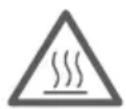
Hot surface
Safety
Intended use
This egg boiler is designed exclusively for cooking ordinary household quantities of chicken eggs. It allows you to simultaneously boil up to six chicken eggs to the same hardness.
The appliance is designed for use in private households and is not designed for commercial use or multiple use (e.g. use by several parties in a block of flats).
Only use the egg boiler indoors. Never operate it in damp environments or in the rain.
Use the appliance exclusively as described in this user manual. Any other use is deemed improper and may result in damage to property or even personal injury. The manufacturer accepts no liability for damage caused by improper use.
Safety notices
In this chapter you will find general safety notices which you must always observe for your own protection and that of third parties. Please also observe the warning notices in the individual chapters on operation, cleaning, etc.

WARNING
Risks in handling household electrical appliances
Risk of electric shock!
■ Faulty electrical installation or excessive mains voltage may result in an electric shock.
■ Only connect the egg boiler if the mains voltage at the socket corresponds to what is indicated on the name-plate.
■ Only plug the egg boiler into an easily accessible socket so that you can quickly disconnect it from
the mains in the event of a fault.
■ Do not operate the egg boiler if it is visibly damaged or if the mains cord/plug is defective.
■ If the mains cord of the egg boiler is damaged, it must be replaced by the manufacturer, their customer service team or a person with similar qualifications so as to avoid risks (see Seite EN-18).
■ Do not open the housing; have repairs performed by a qualified professional instead. Contact a specialist workshop for this. Liability and warranty claims will be rejected in the event of repairs performed by the user, improper connection or incorrect operation.
■ Only parts corresponding to the original appliance specifications may be used for repairs. This egg boiler contains electrical and mechanical parts which are essential for protection against potential sources of danger.
■ Do not immerse the egg boiler, mains cord or mains plug in water or other liquids.
■ Never touch the mains plug with wet hands.
■ Never pull the mains plug out of the socket by the mains cord; always hold the mains plug itself.
■ Never use the mains cord as a carrying handle.
- Keep the egg boiler, mains plug and mains cord away from open flames and hot surfaces.
■ Lay the mains cord so that it does not pose a tripping hazard.
■ Do not kink the mains cord or lay it over sharp edges.
■ Only use the egg boiler indoors and never operate it in damp environments or in the rain.
■ Never store the egg boiler where it can fall into a bathtub or sink.
■ Never touch an electrical appliance if it has fallen into water. In such a case, immediately unplug the mains plug from the socket.
■ Make sure that children do not insert any objects into the egg boiler.
■ Always switch the egg boiler off and pull the mains plug out of the socket when you are not using the egg boiler, when you intend to clean it, or in the event of a fault.
■ The egg boiler must always be disconnected from the mains before assembly or disassembly.
■ The appliance corresponds to protection class I and may only be connected to a properly earthed socket.
■ Do not simultaneously connect any other high-load electrical appliances to the same circuit.
■ Do not use extension cords or sockets that do not have sufficient capacitance.
■ The dial does not disconnect the appliance from the mains. Ensure you plug the appliance into an easily accessible socket so that it can be quickly disconnected it from the mains in the event of a fault.
Risk of fire!
Improper handling of the appliance may result in fire and damage to property.
■ Connection to a timer or separate remote control system for the purposes of remotely monitoring and controlling it is not permitted.
Risks to children
Risk of suffocation!
Children can become entangled in the packaging film and suffocate.
■ Do not allow children to play with the packaging film.
■ Do not allow children to play with the egg boiler or its accessories. The protective cap for the egg piercer on the bottom of the measuring cup poses a choking hazard.

CAUTION
Risks for certain groups of people
■ Danger to children and persons with reduced physical, sensory or mental capacities (e.g. people with partial disabilities, older persons with impaired physical and mental capacities) or who lack experience and knowledge (e.g. older children).
■ This egg boiler may be used by children aged eight
years and over, as well as by persons with impaired physical, sensory or mental capacities or those lacking experience and knowledge, if they are supervised or have been instructed in how to safely use the egg boiler and understand the risks associated with operating it.
■ Children must not play with the egg boiler.
■ Cleaning and user maintenance may not be performed by children without supervision.
- Keep children under eight years of age away from the egg boiler and connection cable.
■ Do not leave the egg boiler unattended while in operation.
Risks when handling heat-generating appliances
Risk of scalding!
■ Hot steam is emitted from the egg boiler during use. Parts of the egg boiler become hot.
■ Hot steam is emitted from the steam vents! Make sure that any flammable objects (e.g. curtains and drapes) are kept at a safe distance. Avoid contact with the hot steam.
■ Do not let bare fingers come into contact with the hot parts of the egg boiler during operation. Always use heat-insulated oven gloves or oven mitts when touching the egg boiler.
■ Please keep in mind that hot steam can continue to escape from the egg boiler after it is turned off, and that individual parts may still be hot. Always let the egg boiler cool down completely before you clean it or put it away.
! NOTICE
Risk of damage!
Improper handling of the egg boiler may cause it to become damaged.
■ Place the egg boiler on an easily accessible, level, dry, heat-resistant and sufficiently stable work surface. Do not place the egg boiler on the edge of the work surface.
■ Avoid heat build-up by not placing the egg boiler directly up against a wall, under cupboards, etc. The steam that is emitted could damage furniture.
■ Never place the egg boiler on or near hot surfaces (hotplates, etc.).
■ Ensure that the mains cord does not come into contact with hot parts.
■ Never expose the egg boiler to high temperatures (heat-ers, etc.) or to the elements (rain, etc.).
■ Never pour liquid into the egg boiler housing.
■ Never clean the egg boiler by immersing it in water or
using a steam cleaner. This could damage the egg boiler.
■ Do not put the egg boiler in the dishwasher under any circumstances. This would destroy it.
■ Stop using the egg boiler if its plastic parts are cracked, chipped or deformed. Only use appropriate original spare parts to replace damaged parts.
■ There are rubber feet on the bottom of the egg boiler. Since furniture or floor surfaces are made of various materials and are treated with a wide range of care products, it is possible that some of these substances may contain ingredients which will attack and soften the rubber feet. If necessary, place a non-slip mat under the egg boiler.
Delivery
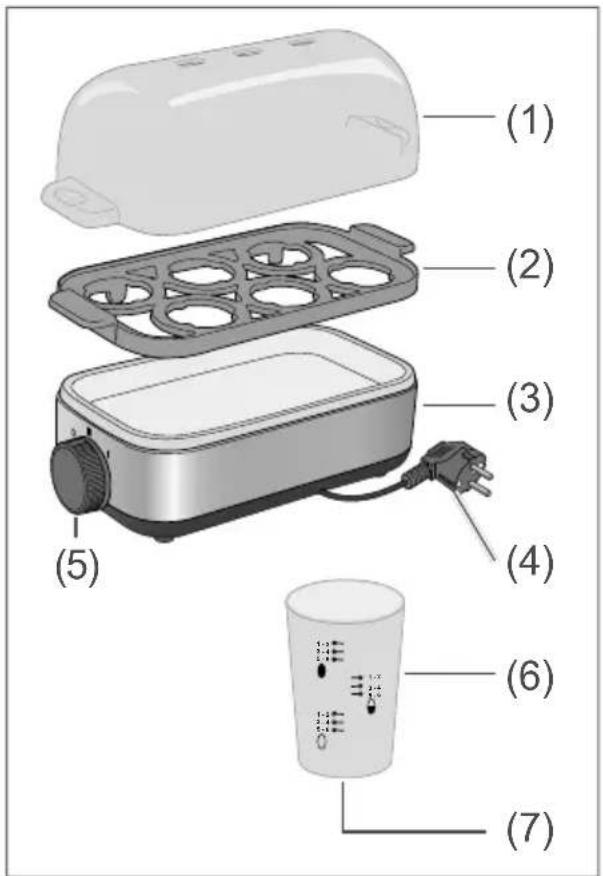
Package contents / appliance parts / controls
(1) Lid
(2) Egg tray
(3) Cooking pan, motor unit
(4) Mains cord with mains plug
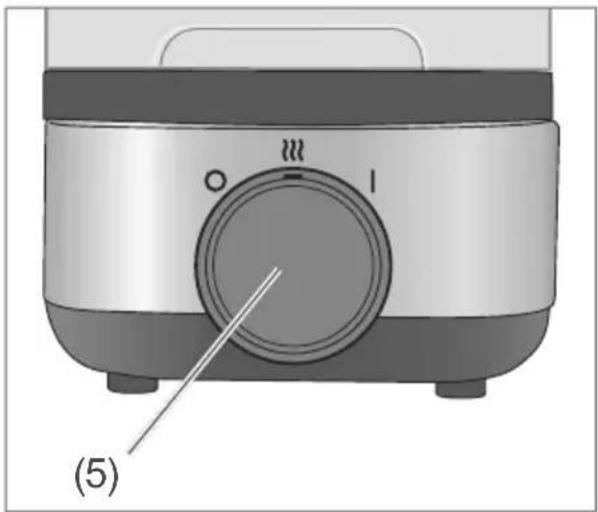
(5) Adjustment dial
(6) Measuring cup with egg piercer
(7) Protective cap for egg piercer (not shown)
- User manual
Checking the delivery
NOTICE
Risk of damage!
Improper handling of the appliance may result in damage.
■ Do not use sharp objects to unpack the appliance.
- Unpack the appliance.
- Check the package contents.
- If the delivery is incomplete or the appliance has been damaged during transit, please contact our service department (see Seite EN-18).
! WARNING!
Risk of electric shock!
Touching live parts may result in severe injury or death.
■ Never use a damaged appliance.
Getting started
Requirement
To get started safely, it is essential that you have read the ‘Safety’ chapter and understood all the safety notices.
Cleaning before use
- Remove the packaging material and any protective film.
- Before using it for the first time, clean all parts of the egg boiler as described in the ‘Cleaning and maintenance’ chapter.
Setting up the egg boiler
- Place the egg boiler on a level and stable surface. This surface should be easy to clean, well lit and easily accessible.
- Unwind the mains cord underneath.
- Insert the mains plug into an earthed socket.
Use
Requirements
For safe use, it is essential that:
- You have read the ‘Safety’ chapter and understood all of the safety notices.
– The egg boiler is prepared as described in the ‘Getting started’ chapter.
The right hardness
This egg boiler allows you to cook up to six chicken eggs. How long the eggs cook for and their hardness depends on the volume of water added. To help you add the right volume of water, the measuring cup (6) has a scale for soft, medium or hard-boiled eggs.
As a general rule: The less water you add, the shorter the cooking time and the softer the egg(s). Once the water has evaporated, a sound will signal that the eggs are done.
- Fill the measuring cup (6) with the correct volume of cold water.
Preparing eggs

CAUTION
Risk of injury!
There is a sharp egg piercer on the bottom of the measuring cup.
■ Take care when piercing eggs. Put the protective cap back over the egg piercer immediately after piercing.
- Place the egg tray (2) in the cooking pan (3).
- Pour the contents of the measuring cup (6) into the cooking pan (3).
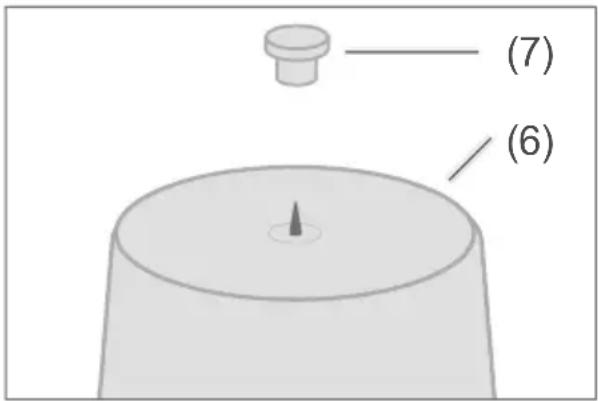
- Remove the protective cap (7) from the egg piercer on the measuring cup (6).
-
Use the egg piercer to pierce a hole in the shell at the flatter end of each egg so that they do not crack while cooking.
-
Place the eggs in the egg tray with the hole facing upwards.
- Put the protective cap (7) back over the egg piercer.
- Place the lid (1) on the egg boiler.
Boiling eggs

WARNING
Risk of electric shock! Faulty electrical installation or excessive mains voltage may result in an electric shock.
■ Only plug the egg boiler into an easily accessible socket so that you can quickly disconnect it from the mains in the event of a fault.

NOTICE
Risk of damage!
Improper handling of the egg boiler may cause it to become damaged.
■ Only operate the egg boiler when there is water in the cooking pan. The egg boiler could be damaged.
■ Only operate the egg boiler with the accessories included in the package contents.
natural_image
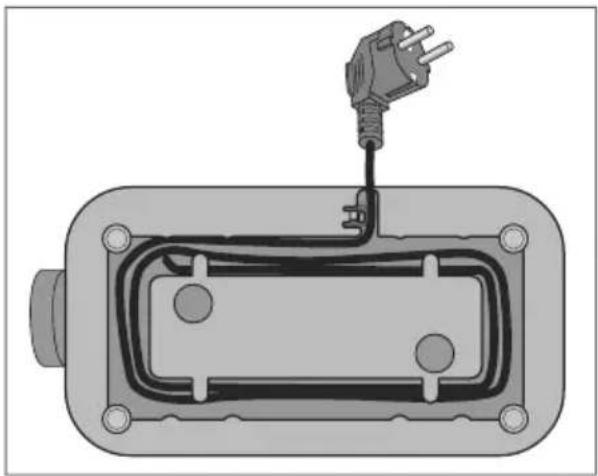
Diagram of an electrical connector with a plug inserted into a housing (no text or symbols)- Unwind the mains cord underneath.
- Insert the mains plug into an earthed socket.
natural_image
Illustration of a kitchen appliance with a circular dial and handle, labeled (5), showing no text or symbols beyond the label.- Turn the adjustment dial (5) to the 'I' position. The cooking process will start. A constant sound will signal when the hardness level has been reached. The water will have mostly evaporated. You can now keep the eggs warm or remove them.
Keeping the eggs warm
You can keep the eggs warm for approx. 20 minutes:
- Turn the adjustment dial (5) to the 'position.
- Continue with the section ‘re-moving the eggs’.
Removing the eggs

WARNING
Risk of scalding and burns! The egg boiler becomes hot during operation! Hot steam is also emitted from the lid opening.
■ Only touch the egg boiler and its parts with oven gloves or similar.
■ Protect yourself from the hot steam.
- Take hold of the lid (1) by the handle and remove it so that you do not come into contact with hot steam.
- Using the handle, hold the egg tray (2) under cold running water to shock the eggs.
-
To switch the egg boiler off, set the adjustment dial (5) to the 'O' position.
-
Pull the mains plug out of the socket.
- Wind up the mains cord underneath.

If you
– do not shock the eggs, they will continue to harden. The shell will then be difficult to remove from the egg.
– use the egg boiler to cook eggs several times in succession, always let it cool down for a few minutes between the individual cooking processes.
Cleaning and maintenance

WARNING
Risk of burns!
The egg boiler becomes hot during operation!
■ Always pull out the mains plug and let the egg boiler and all individual parts cool down completely each time before cleaning.

CAUTION
Risk of injury!
The egg piercer on the bottom of the measuring cup is sharp.
■ Take care when cleaning the measuring cup. It could cause you injury.

NOTICE
Risk of short circuit!
A short circuit may by caused by water getting into the housing.
■ Never immerse the egg boiler in water or other liquids.
■ Make sure that no water or other liquids get into the housing.
Risk of damage!
Improper handling of the egg boiler may cause it to become damaged.
■ Do not use any harsh cleaners, brushes with metal or nylon bristles, or sharp or metallic cleaning utensils such as knives, hard scrapers and the like. These could damage the surfaces.
■ Do not put the egg boiler in the dishwasher under any circumstances. This would destroy it.
Cleaning the parts
Clean the various parts of the egg boiler as follows:
- Clean the cooking pan (3) with mild detergent and a soft sponge. While doing so, make sure that no water gets inside the egg boiler.
- Wipe off the outside of the egg boiler housing with a soft, damp cloth.
- Clean the lid (1), the egg tray (2) and the measuring cup (6) in warm dishwater.
Removing limescale deposits from the cooking pan
-
Pour a full measuring cup of water mixed with a teaspoon of vinegar into the cooking pan (3).
-
Leave the mixture to work for approx. 30 minutes.
- Pour the vinegar solution away.
- Thoroughly rinse out the cooking pan and wipe it dry.
Storage
– All parts must be completely dry before being stored.
– Always store the egg boiler in a dry place.
- Protect the egg boiler from direct sunlight.
- Store the egg boiler in a secure, frost-free place that is out of reach of children.
Troubleshooting table
Malfunctions can occur in all electrical appliances. This does not necessarily mean there is a defect in the appliance. For this reason, please check the tables to see if you can correct the malfunction.

WARNING
Risk of electric shock in case of improper repair!
Never try to repair a defective or suspected defective appliance yourself. You can put your own and future users' lives in danger. Only authorised specialists are allowed to carry out this repair work.
| Problem Possible cause | Solutions, tips | |
| The egg boiler does not work. | Adjustment dial is set to ‘O’. | Switch the appliance on. |
| Mains plug is loose. | Check that the mains plug is firmly inserted into the socket. | |
| The socket is defective. | Test the appliance with another socket. | |
| Check the fuses. | ||
| The eggs are too hard or too soft. | The wrong measuring cup scale was used. | Use the correct scale on the measuring cup. |
| The eggs have cracked. | The eggs were not pierced before boiling. | Pierce the eggs before boiling. |
| The eggs are difficult to shell. | The eggs were not shocked for long enough under cold running water after cooking. | Shock the eggs for ample time under cold running water after cooking. |
Service
Please note!
You are responsible for the condition of the appliance and its proper use in the household.
Damage resulting from non-compliance with this user manual cannot be recognised.
In order for us to help you quickly, please tell us:
| Name of appliance Article number | |
| Hanseatic Egg boiler EB6013A 17005526 |
General customer service
Please contact your mail order company's product advice centre if you have questions, complaints or accessory orders.
Spare parts
Customers in Germany
Please contact the company Hermes Fulfilment GmbH:
Phone: +49 (0)57 32 99 66 00
Monday–Thursday 8 a.m.–3 p.m., Friday 8 a.m.–2 p.m.
Customers in Austria
Please contact your mail order company's customer service centre or product advice centre.
Waste prevention, free return and disposal
Waste prevention
According to the provisions of Directive 2008/98/EC, waste prevention measures always take priority over waste management.
For electrical and electronic devices, waste prevention measures include extending the lifespan of defective devices through repair and reselling used working appliances instead of disposing of them.
Please help us reduce waste and contact our customer service if your product is faulty.
More information can be found in the brochure ‘Waste Prevention Programme - of the German Government with the Involvement of the Federal Länder’.
Free return of old electrical appliances
Upon purchasing a new electrical appliance of the same type with essentially the same function, consumers may return an old electrical appliance to a distributor obliged to take back old appliances, at no extra cost for the consumers. This option also exists for deliveries made to a private household. For distance selling, the option of having old electrical equipment collected for free applies only in the case of purchase of new electrical equipment with heat exchangers (e.g. refrigerators, dehumidifiers), screens and display devices with a screen surface > 100 cm ^2 , and large devices with at least one of its external dimensions measuring more than 50 cm.
In addition, consumers may return up to three old electrical appliances of the same type to a distributor's collection point for free, without having to purchase a new electrical appliance. In this case, however, the old appliances' external dimensions may not exceed 25 cm.
Disposal
Disposing of old electrical devices in an environmentally-friendly manner
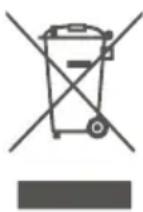
Electrical appliances contain harmful substances as well as valuable resources.
Every consumer is therefore required by law to dispose of old electrical appliances at an authorised collection or return point. They will thus be made available for environmentally-sound, resource-saving recycling.
You can dispose of old electrical appliances free of charge at your local recycling centre.
Please contact your dealer directly for more information about this topic.
Don't forget to erase data!
If necessary, each consumer is responsible for erasing personal data from electrical and electronic equipment.
Batteries and rechargeable batteries, lamps and bulbs
If necessary, old single-use and rechargeable batteries that are not encased by an old electrical appliance, as well as lamps/bulbs that can be removed from an old electrical appliance without being destroyed, must be removed and disposed of separately before you return the appliance.
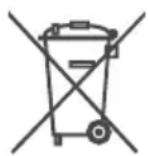
This symbol means that single-use and rechargeable batteries may not be disposed of with other household waste.
Consumers are required by law to bring all single-use and rechargeable batteries, regardless of whether they contain harmful substances*) or not, to a collection point operated by their communal authority or borough or to a retailer so that they can be disposed of in an environmentally friendly manner and so that valuable resources (e.g. cobalt, nickel or copper) can be recovered.
Batteries and rechargeable batteries can be returned free of charge.
Some of the possible contents (e.g. mercury, cadmium and lead)
are toxic and, if improperly disposed of, can have adverse effects on the environment. Heavy metals, for instance, can have detrimental health effects on humans, animals and plants and accumulate in the environment and food chain, and then enter the body indirectly through the consumption of food.
There is a high risk of fire with old lithium batteries. Special care must therefore be taken to properly dispose of old lithium batteries and rechargeable batteries. Improper disposal can also lead to internal and external short circuits because of thermal effects (heat) or mechanical damage. A short circuit can lead to a fire or an explosion and have serious consequences for people and the environment. It is therefore important to tape off the terminals of lithium batteries and rechargeable batteries before disposing of them to prevent an external short circuit.
Single-use and rechargeable batteries that are not built into the device should be removed before disposal and then disposed of separately.
Please only dispose of single-use and rechargeable batteries in a discharged state!
If possible, use rechargeable batteries in place of disposable batteries.
*) labelled with:
$$ \mathrm{Cd} = \text {Cadmium} $$
$$ \mathrm{Hg} = \text { Mercury } $$
$$ \mathrm{Pb} = \text { Lead } $$
Packaging

Our packaging is made of environmentally friendly, recyclable mate-
rials:
– Outer packaging made of cardboard
- Moulded parts made of foamed, CFC-free polystyrene (PS)
– Films and bags made of poly-ethylene (PE)
– Tension bands made of polypropylene (PP)
- Saving energy also protects against excessive global warming. Your new appliance uses little energy due to its environmentally friendly insulation and technology.

If you have sufficient space, we recommend retaining the packaging, at least during the warranty period. If the appliance needs to be sent out for repairs, only the original packaging will provide sufficient protection.
If you would like to dispose of the packaging, please dispose of it in an environmentally friendly way.
Technical specifications
| Brand hanseatic | |
| Name of appliance Egg boiler | |
| Model EB6013A | |
| Output in W 365–435 | |
| Supply voltage 220–240 V~, 50/60 Hz | |
| Protection class I | |
| Cord length in cm 100 | |
| Weight (without water) in kg 0.64 | |
| Article number 17005526 |
- Gebrauchsanleitung
- Table of contents
- Explanation of terms/symbols
- Explanation of terms
- WARNING
- CAUTION
- NOTICE
- Explanation of symbols
- Safety
- Intended use
- Safety notices
- Risks in handling household electrical appliances
- Risk of fire!
- Risks to children
- Risks for certain groups of people
- Risks when handling heat-generating appliances
- Risk of scalding!
- ! NOTICE
- Risk of damage!
- Delivery
- Package contents / appliance parts / controls
- Checking the delivery
- ! WARNING!
- Getting started
- Requirement
- Cleaning before use
- Setting up the egg boiler
- Use
- Requirements
- The right hardness
- Preparing eggs
- Boiling eggs
- Keeping the eggs warm
- Removing the eggs
- If you
- Cleaning and maintenance
- Cleaning the parts
- Removing limescale deposits from the cooking pan
- Storage
- Troubleshooting table
- Service
- General customer service
- Spare parts
- Customers in Germany
- Customers in Austria
- Waste prevention, free return and disposal
- Waste prevention
- Free return of old electrical appliances
- Disposal
- Disposing of old electrical devices in an environmentally-friendly manner
- Don't forget to erase data!
- Batteries and rechargeable batteries, lamps and bulbs
- Packaging
- Technical specifications
Brand : Hanseatic
Model : EB6013A
Category : Egg cooker