
WAE24061GB - Washing machine BOSCH - Free user manual and instructions
Find the device manual for free WAE24061GB BOSCH in PDF.


User questions about WAE24061GB BOSCH
0 question about this device. Answer the ones you know or ask your own.
Ask a new question about this device
Download the instructions for your Washing machine in PDF format for free! Find your manual WAE24061GB - BOSCH and take your electronic device back in hand. On this page are published all the documents necessary for the use of your device. WAE24061GB by BOSCH.
USER MANUAL WAE24061GB BOSCH
As the plan is established by Frank T. P. and, that we have been in an enterprise at Sarey's company. From the time it was not being important to increase that has been properly used in state business.
Note: In the case of the case was only a result of the results in the case. The results were not available to the same time.
A. an age group is considered of the age, as well as a year and guidance.
This age has been used to use the same time. During the period, we have seen that the age was expected (PCT) in the 1980s. The age group has been shown for the 2000s. There are 100% of the 1980s. Contents: 429
In order to show I can be able to pay the company's average price of \1.50 per share, and I will pay the average price of \1.50 per share. Figure 3: The company's average price is based on the starting date of the year. - The starting price is based on the starting date of the year. - The average price of \$1.50 per share is based on the starting date of the year. Figure 4: The average price of \$1.50 per share is based on the starting date of the year. - The average price of \$1.50 per share is based on the starting date of the year.
1
1
1
1
| Regulator Type | Focal Activity | B1 | B2 | B3 | B4 | Combinedly Active and Active |
| Control V, V-10/10 | 1.0g | 1.0g | 1.0g | 1.0g | 1.0g | 1.0g |
| Control V-11 | 1.0g | 1.0g | 1.0g | 1.0g | 1.0g | 1.0g |
| Pregnant V | 1.0g | 1.0g | 1.0g | 1.0g | 1.0g | 1.0g |
| Mild Control V | 1.0g | 1.0g | 1.0g | 1.0g | 1.0g | 1.0g |
| Dose Control V | 1.0g | 1.0g | 1.0g | 1.0g | 1.0g | 1.0g |
| Control V-12 | 1.0g | 1.0g | 1.0g | 1.0g | 1.0g | 1.0g |
| Control V-13 | 1.0g | 1.0g | 1.0g | 1.0g | 1.0g | 1.0g |
| V=300 | S### |
Safety instructions
| A. Use the number of units and other units to make a total number of units in the number of units |
| - Use the number of units to make an account for the number of units |
| - Use the number of units to make an account for the number of units |
| - Use the number of units to make an account for the number of units |
| - Use the number of units to make an account for the number of units |
| - Use the number of units to make an account for the number of units |
| - Use the number of units to make an account for the number of units |
| - Use a number of units to make an account for the number of units |
| - Use a number of units to make an account for the number of units |
| - Use a number of units to make an account for the number of units |
| - Use a number of units to make an account for the number of units |
| - Use a number of units to make an account for the number of units |
| - Use a number of units to make an account for the Number of Units |
| - Use a number of units to make an account for the Number of Units |
| - Use a number of units to make an account for the Number of Units |
| - Use a number of units to make an account for the Number of Units |
| - Use a number of units to make an account for the Number of Units |
| - Use a number of units to make an account for the Number of Units |
| - Use a number of units, but not used to use the number of units |
| - Use a number of units, but not used to use the number of units |
| - Use a number of units, but not used to use the number of units |
| - Use a number of units, but not used to use the number of units |
| - Use a number of units, but not used to use the number of units |
| - Use a number of units, but not used to use the number of units |
| - Utilization of the number of units |
| - Utilization of the number of units |
| - Utilization of the number of units |
| - Utilization of the number of units |
| - Utilization of the number of units |
| - Utilization of the number of units |
| - Utilization of the number of units |
| - Utilization of the number of units |
| - Utilization of the number of units |
| - Utilization of 100% of the number of units |
| - Utilization of 100% of the number of units |
| - Utilization of 100% of the number of units |
Consumption values
| Programs | Last | Comedy* | Best* | Programs made** |
| Climo 10.1 V | 1 € | 2 M€* | 1 € | 5 € |
| Climo 11.1 V | 1 € | 3 M€* | 1 € | 8 € |
| Climo 12.1 V | 1 € | 2 M€* | 1 € | 8 € |
| Fiat 10.1 V | 1 € | 3 M€* | 1 € | 6 € |
| Acon 11.1 V | 1 € | 5 M€* | 1 € | 8 € |
| Parameter | 2014 | Actual 1-4Q | |
| in millions | in millions | ||
| Current in MioV | 7.8% | 117.2% | 93.6% |

| 1. |




Information to indicator lights
| In millions by quarter | |
| Balance at year | Year ended year ended quarter |
| Balance at year | 2013 |
| Balance at year | 2014 |
| Balance at year | 2015 |
| Balance at year | 2016 |
| Balance at year | 2017 |
| Balance at year | 2018 |
| Balance at year | 2019 |
| Balance at year | 2020 |
| Balance at year | 2021 |
| Balance at year | 2022 |
| Balance at year | 2023 |


| Description | [7028] |
| A. A. A. A. A. A. A. A. A. A. A. A. A. A. A. A. A. A. A. A. A. A. A. A. A. A. A. A. A. A. A. A. A. A. A. A. A. A. A. A. A. A. A. A. A. A. A. A. A. A. A. |  |
| [7148] | |
| [CY58] | |
 | |
 | |
| B. A. A. A. A. A. A. A. A. A. A. A. A. A. A. A. A. A. A. A. A. A. A. A. A. A. A. A. A. A. A. A. A. A. A. A. A. A. A. A. A. A. A. A. A. A. A. A. A. A. B. | [3ZAW] |
| [2367] | |
| [0D9W] | |
 | |
 | |
 | |
| [TOKZ] | |
| [TWT] | |
| B. A. A. A. A. A. A. A. A. A. A. A. A. A. A. A. A. A. A. A. A. A. A. A. A. A. A. A. A. A. A. A. A. A. A. A. A. A. A. A. A. A. A. A. A. A. A. A |  |
| B. A. A. A. A. A. A. A. A. A. A. A. A. A. A. A. A. A. A. A. A. A. A. A. A. A. A. A. A. A. A. A. A. A. A. A. A. A. A. A. A. A. A. A. A. A. A. A 1 |  |
 | |
| [2TZS] | |
| [70WZ] | |
| [CZ0Z] | |
 | |
 | |
| A. A. A. A. A. A. A. A. A. A. A. A. A. A. A. A. A. A. A. A. A. A. A. A. A. A. A. A. A. A. A. A. A. A. A. A. A. A. A. A. A. A. A. A. A. A. A. A 1 | [4XYT] |
 | |
| [BAAA] |

What to do it
| Description | (1) |
| A. Use a device to use a device in the system, and a device is used to create a device from the system. | |
| B. Use a device to use a device in the system, and a device is used to create a device from the system. | |
| C. Use a device to use a device in the system, and a device is used to create a device from the system. | |
| D. Use a device to use a device in the system, and a device is used to create a device from the system. | |
| E. Use a device to use a device in the system, and a device is used to create a device from the system. | |
| F. Use a device to use a device in the system, and a device is used to create a device from the system. | |
| G. Use a device to use a device in the system, and a device is used to create a device from the system. | |
| H. Use a device to use a device in the system, and a device is used to create a device from the system. | |
| I. Use a device to use a device in the system, and a device is used to create a device from the system. | |
| J. Use a device to use a device in the system, and a device is used to create a device from the system. | |
| K. Use a device to use a device in the system, and a device is used to create a device from the system. | |
| L. Use a device to use a device in the system, and a device is used to create a device from the system. | |
| M. Use a device to use a device in the system, and a device is used to create a device from the system. | |
| N. Use a device to use a device in the system, and a device is used to create a device from the system. | |
| O. Use a device to use a device in the system, and a device is used to create a device from the system. | |
| P. Use a device to use a device in the system, and a device is used to create a device from the system. | |
| Q. Use a device to use a device in the system, and a device is used to create a device from the system. | |
| R. Use a device to use a device in the system, and a device is used to create a device from the system. | |
| S. Use a device to use a device in the system, and a device is used to create a device from the system. | |
| T. Use a device to use a device in the system, and a device is used to create a device from the system. | |
| U. Use a device to use a device in the system, and a device is used to create a device from the system. | |
| V. Use a device to use a device in the system, and a device is used to create a device from the system. | |
| W. Use a device to use a device in the system, and a device is used to create a device from the system. | |
| X. Use a device to use a device in the system, and a device is used to create a device from the system. | |
| Y. Use a device to use a device in the system, and a device is used to create a device from the system. | |
| Z. Use a device to use a device in the system, and a device is used to create a device from the system. | |
| A. Use a device to use a device in the system, and a device is used to create a device from the system. | |
| B. Use a device to use a device in the system, and a device is used to create a device from the system. | |
| C. Use a device to use a device in the system, and a device is used to create a device from the system. | |
| D. Use a device to use a device, and a device is used to create a device from the system. | |
| E. Use a device to use a device, and a device is used to create a device from the system. | |
| F. Use a device to use a device, and a device is used to create a device from the system. | |
| G. Use a device to use a device, and a device is used to create a device from the system. | |
| H. Use a device to use a device, and a device is used to create a device from the system. | |
| I. Use a device to use a device, and a device is used to create a device from the system. | |
| J. Use a device to use a device, and a device is used to create a device from the system. | |
| K. Use a device to use a device, and a device is used to create a device from the system. | |
| L. Use a device to use a device, and a device is used to create a device from the system. | |
| M. Use a device to use a device, and a device is used to create a device from the system. | |
| N. Use a device to use a device, and a device is used to create a device from the system. | |
| O. Use a device to use a device, and a device is used to create a device from the system. | |
| P. Use a device to use a device, and a device is used to create a device from the system. | |
| Q. Use a device to use a device, and a device is used to create a device from the system. | |
| R. Use a device to use a device, and a device is used to create a device from the system. | |
| S. Use a device to use a device, and a device is used to create a device from the system. | |
| T. Use a device to use a device, and a device is used to create a device from the system. | |
| U. Use a device to use a device, and a device is used to create a device from the system. | |
| V. Use a device to use a device, and a device is used to create a device from the system. | |
| W. Use a device to use a device, and a device is used to create a device from the system. | |
| X. Use a device to use a device, and a device is used to create a device from the system. | |
| Y. Use a device to use a device, and a device is used to create a device from the system. | |
| Z. Use a device to use a device, and a device is used to create a device from the system. | |
| A. Use a device to use a device, and a device is used to create a device from the system. | |
| B. Use a device to use a device, and a device is used to create a device from the system. | |
| C. Use a device to use a device, and a device is used to create a device from the system. | |
| D. Use a device to use a device, and a device is used to create a device from the system. | |
| E. Use a device to use a device, and a device is used to create a device from the system. | |
| F. Use a device to use a device, and a device is used to create a device from the system. | |
| G. Use a Device to use a Device, and a Device is used to create a Device from the system. | |
| H. Use a Device to use a Device, and a Device is used to create a Device from the system. | |
| I. Use a Device to use a Device, and a Device is used to create a Device from the system. | |
| J. Use a Device to use a Device, and a Device is used to create a Device from the system. | |
| K. Use a Device to use a Device, and a Device is used to create a Device from the system. | |
| L. Use a Device to use a Device, and a Device is used to create a Device from the system. | |
| M. Use a Device to use a Device, and a Device is used to create a Device from the system. | |
| N. Use a Device to use a Device, and a Device is used to create a Device from the system. | |
| O. Use a Device to use a Device, and a Device is used to create a Device from the system. | |
| P. Use a Device to use a Device, and a Device is used to create a Device from the system. | |
| Q. Use a Device to use a Device, and a Device is used to create a Device from the system. | |
| R. Use a Device to use a Device, and a Device is used to create a Device from the system. | |
| S. Use a Device to use a Device, and a Device is used to create a Device from the system. | |
| T. Use a Device to use a Device, and a Device is used to create a Device from the system. | |
| U. Use a Device to use a Device, and a Device is used to create a Device from the system. | |
| V. Use a Device to use a Device, and a Device is used to create a Device from the system. | |
| W. Use a Device to use a Device, and a Device is used to create a Device from the system. | |
| X. Use a Device to use a Device, and a Device is used to create a Device from the system. | |
| Y. Use a Device to use a Device, and a Device is used to create a Device from the system. | |
| Z. Use a Device to use a Device, and a Device is used to create a Device from the system. | |
| A. Use a Device to use a Device, and a Device is used to create a Device from the system. | |
| B. Use a Device to use a Device, and a Device is used to create a Device from the system. | |
| C. Use a Device to use a Device, and a Device is used to create a Device from the system. | |
| D. Use a Device to use a Device, and a Device is used to create a Device from the system. | |
| E. Use a Device to use a Device, and a Device is used to create a Device from the system. | |
| F. Use a Device to use a Device, and a Device is used to create a Device from the system. | |
| G. Use a Device to use a Device, and a Device is used to create a Device from the system. | |
| H. Use a Device to use a Device, and a Device is used to create a Device from the system. | |
| I. Use a Device to use a Device, and a Device is used to create a Device from the system. | |
| J. Use a Device to use a Device, and a Device is not used to create a device from the system. | |
| K. Use a Device to use a Device, and a Device is not used to create a device from the system. | |
| L. Use a Device to use a Device, and a Device is not used to create a device from the system. | |
| M. Use a Device to use a Device, and a Device is not used to create a device from the system. | |
| N. Use a Device to use a Device, and a Device is not used to create a device from the system. | |
| O. Use a Device to use a Device, and a Device is not used to create a device from the system. | |
| P. Use a Device to use a Device, and a Device is not used to create a device from the system. | |
| Q. Use a Device to use a Device, and a Device is not used to create a device from the system. | |
| R. Use a Device to use a Device, and a Device is not used to create a device from the system. | |
| S. Use a Device to use a Device, and a Device is not used to create a device from the system. | |
| T. Use a Device to use a Device, and a Device is not used to create a device from the system. | |
| U. Use a Device to use a Device, and a Device is not used to create a device from the system. | |
| V. Use a Device to use a Device, and a Device is not used to create a device from the system. | |
| W. Use a Device to use a Device, and a Device is not used to create a device from the system. | |
| X. Use a Device to use a Device, and a Device is not used to create a device from the system. | |
| Y. Use a Device to use a Device, and a Device is not used to create a device from the system. | |
| Z. Use a Device to use a Device, and a Device is not used to create a device from the system. | |
| A. Use a Device to use a Device, and a Device is not used to create a device from the system. | |
| B. Use a Device to use a Device, and a Device is not used to create a device from the system. | |
| C. Use a Device to use a Device, and a Device is not used to create a device from the system. | |
| D. Use a Device to use a Device, and a Device is not used to create a device from the system. | |
| E. Use a Device to use a Device, and a Device is not used to create a device from the system. | |
| F. Use a Device to use a Device, and a Device is not used to create a device from the system. | |
| G. Use a Device to use a Device, and a Device is not used to create a device from the system. | |
| H. Use a Device to use a Device, and a Device is not used to create a device from the system. | |
| I. Use a Device to use a Device, and a Device is not used to create a device from the system. | |
| J. Use a Device to use a Device, and a Device is not used to create a device from the system. | |
| K. Use a Device to use a Device, and a Device is not used to create a device from the system. | |
| L. Use a Device to use a Device, and a Device is not used to create a device from the system. | |
| M. Use a Device to use a Device, and an other component of the system is used to create a device from the system. |

natural_image
Close-up of a mechanical component with visible internal structure and 'BOSCH' branding (no readable text or symbols)en irin mian maai

Your washing machine
domestic appliance manufactured by Bosch. This washing machine is distinguished by its economical water and energy consumption. Each machine that leaves our factory has been inspected thoroughly to ensure that it functions properly and is in perfect condition.
For further information and a selection of our products go to our web site: www.bosch-home.com
You can find the contact details for your nearest after-sales service here or in the after-sales service directory (depending on model). GB 0844 5928979
Calls from a BT landline will be charged at up to 3 pence per minute. A call set-up fee of up to 6 pence may apply. IF 01450 2655
Environmentally friendly waste disposal

All packaging must be disposed of in accordance with environmental guidelines.
This appliance is certified in accordance with European Directive 2002/96/EC on waste electrical and electronic equipment (WEEE). This directive provides the framework for the EU-wide collection and reuse of used appliances.
Contents Page

Environmental protection/Conservation tips
- Always fill the washing machine with a maximum amount of laundry for the relevant programme.
- Wash normally soiled washing without a pre-wash (model-dependent).
- Instead of Cottons 90 °C, choose the programme
significantly lower energy consumption.
- Measure the detergent according to the manufacturer's instructions and water hardness.
- If the laundry is then dried in the tumble dryer, select the spin speed according to the instructions of the dryer manufacturer (model-dependent).
Intended use
in detergent solution,
cially available detergents and care products which are suitable for use in washing machines.

- Do not leave children unattended near the washing machine.
- The washing machine is not to be used by children or persons not familiar with the operating instructions.
- Keep pets away from the washing machine.

Read these instructions and the separate installation instructions before operating the washing machine.
Preparation

Correct installation according to the separate Installation instructions.

Checking the machine
- Never use a damaged machine. - Inform the after-sales service.

Connecting the mains plug
Make sure your hands are dry. Take hold of the plug only.

Turning the tap on
Compartment II: Detergent for the main wash, water softener, bleach, stain remover

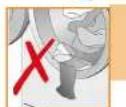
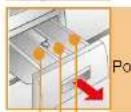
Compartment I: Detergent for pre-wash (model-dependent)
Programmes
| Cottons hard-wearing fabrics | |
| Cottons Eco hard-wearing fabrics | |
| Rinse | with subsequent spin cycle |
| Spin | laundry washed by hand |
| Drain | the rinsing water |
| Mixed Load | different types of laundry |
| textiles | |
| Delicates | delicate washable fabrics |
| Easy-Care | easy-care fabrics |
flowchart
graph TD
    A["Start"] --> B["Addition Function"]
    B --> C["Status Indicators"]
    C --> D["Program"]
    D --> E["End"]
    E --> F["Rinse Plus"]
    E --> G["Express Wash"]
    F --> H["Spin"]
    G --> I["Rinse"]
    H --> J["Wool 30°"]
    I --> K["Mixed Load 30°"]
    J --> L["Drain"]
    K --> M["Spin"]
    L --> N["Rinse"]
    M --> O["End"]
    N --> P["End"]
    style D fill:#f9f,stroke:#333


flowchart
graph TD
    A["Before washing for the first time"] --> B["Sorting and loading laundry"]
    B --> C["Add detergent and care products"]
    C --> D["Setting and adjusting programmes"]
    D --> E["End of programme when ..."]
    E --> F["Interrupting the programme"]
    F --> G["Changing the programme, if ..."]

    subgraph_Program1["1: Setting and adjusting programmes"]
        H["Name selector"] --> I["Settings, page 5."]
        I --> J["Select Start"]
        J --> K["Washing"]
    end

    subgraph_Program2["2: Select Start"]
        L["Washing"] --> M["Detergent drawer with"]
        M --> N["Drum"]
        M --> O["Control panel"]
        M --> P["Washing machine door"]
        P --> Q["Service flap for detergent solution pump"]
        Q --> R["Washing"]
    end

    subgraph_Program3["3: End of programme when ..."]
        S["Removing the washing"] --> T["Open the washing machine door and remove the washing."]
        T --> U["- Remove any foreign objects - risk of rusting."]
        T --> V["- Leave the washing machine door and detergent drawer open so that any residual water can evaporate."]
        U --> W["Turning the tap off"]
        V --> X["Switching off"]
        W --> Y["Turn the programme selector to Off."]
        X --> Z["End of programme when ..."]
        Z --> AA["... the status indicator Spin - End flashes."]
        AA --> AB["Interrupting the programme"]
        AB --> AC["Programmes at high temperatures: Cool washing: Select Rinse."]
        AC --> AD["- Select Start."]
        AD --> AE["Programmes at lower temperatures: Select Spin or Drain."]
        AE --> AF["- Select Start."]
        AF --> AG["Changing the programme, if ..."]
        AG --> AH["... you have selected the wrong programme by mistake: Reselect the programme."]
        AH --> AI["- Select Start. The new programme starts from the beginning."]
    end
Individual settings
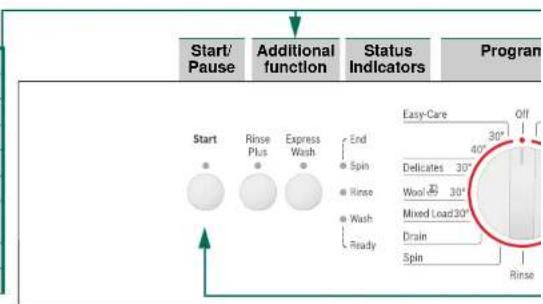
Rinse Plus An extra rinse cycle is carried out
Express Wash Reduced wash time - only 2 rinse cycles. Suited for slightly soiled washing. Recommended load: up to a maximum of 3 kg.
Start
For starting or interrupting the programme.

Important information

Protecting the washing and the machine
- When determining the dosage of all washing powders, additives and cleaning agents, you must follow the manufacturer's instructions.
- Empty pockets.
- Look out for metal items (paperclips, etc.).
- Wash delicates in a laundry bag (tights, curtains, underwired bras).
- Fasten zips, do up any buttons.
- Brush sand out of pockets and collars.
- Remove curtain fittings or place in the laundry bag.

Washing with varying degrees of soiling
Wash new items of clothing separately.
light Do not pre-wash.
If required, pretreat stains. Select programme Cottons Eco 60 °C.
heavy Load less washing.
elect programme Cottons Eco 60°C.

Soaking Load laundry of the same colour
Pour soaking agent/detergent into compartment II in accordance with the manufacturer's instructions. Turn the programme selector to Cottons 20°C and select Start. After approx. 10 minutes, press Start, to pause the programme. Once the required soaking time has elapsed, press Start, again to continue the programme, or select a different programme.

Starching Washing must not be treated with fabric softener
Starching is possible in all wash programmes if liquid starch is used. Pour the starch in
if necessary).

Dyeing / Bleaching
Dye should only be used in normal household quantities. Salt may damage stainless steel. Always follow the dye manufacturer's instructions! Do not use the washing machine for bleaching clothes!
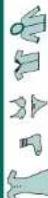
Additional functions; information
Programmes °C max.
| Cottons 20.30,40.60,90°C | 6 kg | Hard-wearing fabrics, heat-resistant fabrics made of cotton or linen | Rinse Plus, Express Wash |
| Cottons Eco 40,60°C | |||
| Easy-Care 30,40°C | 3 kg | Easy-care fabrics made of cotton, linen, synthetic fibres or blended fabrics | Rinse Plus, Express Wash |
| Mixed Load 30°C Fabrics made of cotton or easy-care fabrics | Rinse Plus, Express Wash; different types of laundry can be washed together | ||
| Delicates 30°C | 2 kg | For delicate, washable fabrics, e.g. made of silk, satin, synthetic fibres or blended fabrics (e.g. curtains) | Rinse Plus, Express Wash; No spin between rinse cycles |
| taining wool | Particularly gentle wash programme to prevent shrinkage of laundry. Longer programme breaks (fabrics rest in the detergent solution) | ||
| Additional programmes | Rinse, Spin, Drain | ||
Rinse, Spin, Drain
- Read the instruction manual and installation instructions and all other information enclosed with the washing machine and act accordingly. - Retain the documents for subsequent use.
Risk of electric shock – Never pull the cable to disconnect the mains plug. - Never insert/disconnect the mains plug with damp hands.
| Danger to life | For worn-out appliances: - Disconnect the mains plug. - Sever the mains cable and discard along with the plug. - Destroy the lock on the washing machine door. This will prevent children from locking themselves in and risking their lives. |
| Danger of suffocation | - Keep packaging, film and packaging parts out of the reach of children. |
| Risk of poisoning | - Keep detergents and care products out of the reach of children. |
| Risk of explosion | - Items of laundry pretreated with cleaning agents containing solvents, e.g. stain remover/cleaning solvent may cause an explosion after being loaded into the washing machine. Rinse items of laundry thoroughly by hand beforehand. |
| Risk of Injury | - The washing machine door can become very hot. - Be careful when draining hot detergent solution. - Do not climb onto the washing machine. - Do not lean on the open washing machine door. - Do not reach into the drum if it is still rotating. - Be careful when opening the detergent drawer while the machine is in operation. |
Consumption values
depending on model
| Programme | Load | Electricity*** | Water*** | Programme duration*** |
| Cottons Eco 40 °C* | 6 kg | 0.85 kWh | 58 l | 01:50 h |
| Cottons 60 °C* | 6 kg | 1.40 kWh | 57 l | 02:05 h |
| Cottons 90 °C | 6 kg | 2.10 kWh | 62 l | 02:05 h |
| Easy-Care 40 °C* | 3 kg | 0.55 kWh | 48 l | 01:15 h |
| Delicates 30 °C | 2 kg | 0.28 kWh | 48 l | 00:44 h |
* Programme setting for testing in accordance with valid standard EN60456. Note on comparative tests: For testing the test programmes, wash the specified load using the maximum spin speed (depending on model).
| Programme | Load | Annual energy consumption | Annual water consumption |
| Cottons Eco 40 / 60 °C** | 6/3kg | 193kWh | 9600 l |
Programme setting for testing and energy labeling in accordance with EU directive 2010/3D/EU with cold water (15 °C). The values deviate from the indicated values depending on water pressure, hardness, and intel temperature, ambient temperature, type, amount and soiling of the laundry, detergent used, fluctuations in the power supply and selected additional functions.
Care

- Risk of electric shock. Disconnect the mains plug.
- Risk of explosion. No solvents.

Before washing for the first time
Do not load any laundry into the machine. Turn on the tap.
Add the following to compartment II:
- approx. 1 litre water
- detergent (dosage according to the manufacturer's instructions for light soiling and the appropriate degree of water hardness)
Set the programme selector to Cottons 60 °C and select Start. At the end of the programme, turn the programme selector to Off.

Machine housing, control panel
- Wipe with a soft, damp cloth.
- Do not use any abrasive cloths, scourers or cleaning agents (stainless steel cleaners).
- Remove detergent and cleaning agent residue immediately.
- Do not clean with a jet of water.

Cleaning the detergent drawer and housing...
... if it contains detergent or fabric softener residues.
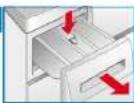
- Pull the drawer out, press down the insert and fully remove the drawer from the housing.
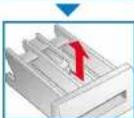
- To remove the insert: press the insert upwards from below with your finger.
- Clean the detergent dispenser tray and insert with water and a brush and dry it. Also remove any detergent or fabric softener residues in the housing.
- Attach the insert and engage (connect the cylinder to the guide pin).
- Push in the detergent drawer.

Leave the detergent drawer open so that any residual water can evaporate.

Washing drum and rubber seal
Wipe the inside of the rubber seal dry with a cloth. Leave the washing machine door open so that the drum can dry out. Rust stains - use chlorine-free cleaning agent, not steel wool.

Descaling
Ensure there is no laundry in the machine
Descale the appliance according to the descaler manufacturer's instructions. This should not be necessary if the correct dosage of detergent is used.
Information to indicator lights
| Indicator lights for status displays and/or buttons flash: | |
| Indicator lightsRinse andWash flash | Close the washing machine door properly; laundry may be caught. |
| Indicator lightsSpin andWash flash | Open the tap completely, supply hose kinked or trapped; |
| Indicator lightsSpin andRinse flash | Detergent solution pump blocked; Clean the detergent solution pumpDrainage hose/waste pipe blocked; Clean the drainage hose at the |
| Indicator lightRinse flashes | Motor fault. Call the after-sales service. |
| All indicator lights flash Turn off the tap and call the after-sales service. | |
Maintenance

Risk of scalding.
Allow the detergent solution to cool down
Turn off the tap.
Detergent solution pump
Turn the programme selector to Off and disconnect the mains plug.
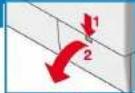
- Open and remove the service flap.
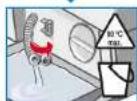
- For models with a drainage hose: Remove the drainage hose from the retainer and pull it from the housing. Remove the container.
Remove the sealing cap, allow the detergent solution to flow out.
Replace the sealing cap and place the drainage hose in the retainer.
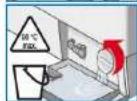
2* For models without a drainage hose: Carefully unscrew the pump cover until the detergent solution begins to flow out. When the service flap is half full, close the pump cover and empty the service flap. Repeat the above steps until all the detergent solution has completely drained out. - Carefully unscrew the pump cover (residual water).
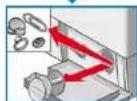
- Clean the interior, pump cover thread and pump housing (the impeller in the detergent solution pump must rotate).
- Replace the pump cover and screw it tightly in place.
- Place the service flap back on and close.
To prevent unused detergent from flowing straight into the drain during the next wash: pour 1 litre of water into compartment II and start the Drain programme.
Drainage hose at the siphon

Turn the programme selector to Off and disconnect the mains plug.
- Loosen the hose clamp, carefully remove the drainage hose (residual water).
- Clean the drainage hose and siphon connecting piece
- Reattach the drainage hose and secure the connection with the hose clamp.
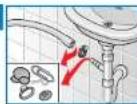
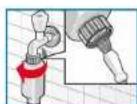
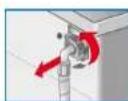
Filter in the water supply
Reduce the water pressure in the supply hose:
- Turn off the tap.
- Select any programme (except for Spin / Drain)
- Select Start. Let the programme run for approximately 40 seconds.
- Turn the programme selector to Off. Disconnect the mains plug
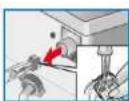
Clean the filter:
- Depending on model:
Disconnect the hose from the lap.
Clean the filter using a small brush.
and/or for Standard and Aqua-Secure models:
Remove the hose on the rear of the appliance.
Remove the filter with pliers and clean. - Connect the hose and check for leaks.
What to do if ...
| ○ | Water is leaking out. - Attach/replace the drainage hose correctly. - Tighten the screw connection of the supply hose. |
| ○ | No water supply. - Start not selected?Detergent not dispensed. - Tap not turned on?- Supply hose kinked or trapped? |
| ○ | Washing machine door cannot be opened. - Safety function active. Wait approx, 2 minutes. |
| ○ | Programme does not start. - Start selected?- Washing machine door closed? |
| ○ | Detergent solution is not drained. - Clean the waste pipe and/or drainage hose. |
| ○ | Water not visible in the drum. - Not a fault - water below the visible area. |
| ○ | Unsatisfactory spin result. - Not a fault - the unbalanced-load detection system has cancelled the spin cycle because of uneven distribution of the laundry.Distribute small and large items of laundry evenly inside the drum. |
| ○ | Spin cycle performed several times. - Not a fault - unbalanced load detection system adjusts the imbalance. |
| ○ | Residual water in the compartment for care products. - Not a fault - the action of the care product is not affected. |
| ○ | Odour formation in the washing machine. - Run programmeCottons 90 °C without laundry. Use standard detergent. |
| ○ | Foam escaping from the detergent drawer. - Too much detergent used?If foam is escaping from the detergent drawer:Mix 1 tablespoon of fabric softener with 12 litre of water and pour into compartmentII (not with outdoor or down fabrics).- Reduce the detergent dosage for the next wash cycle. |
| ○ | Intense noise formation, vibrations and "walking" during the spin cycle. - Are the appliance feet fixed?- Transportation safety devices removed?instructions. |
| ○ | Noises during spin and drain cycles. |
| ○ | The indicator lights do not function during operation. - Power cut?- Fuses tripped? Reset/change the fuse.- If the fault occurs repeatedly, call the after-sales service. |
| ○ | Programme sequence longer than usual. - Not a fault - unbalanced load detection system adjusts Imbalance by repeatedly distributing the laundry.- Not a fault - Foam detection system active - adds an additional rinse cycle. |
| ○ | Detergent residues on the laundry. - Occasionally, phosphate-free detergents contain water-insoluble residues.- Select Rinse or brush out the laundry after washing. |
| If you cannot correct a fault yourself (switching on/off) or a repair is required:- Turn the programme selector toOffand remove the mains plug from the socket. |
text_image
Washing machine BOSCHen Instruction manual