
TK-7189 - Talkie Walkie KENWOOD - Free user manual and instructions
Find the device manual for free TK-7189 KENWOOD in PDF.


| Product Type | VHF FM Transceiver (Mobile Radio) |
| Model | TK-7189 |
| Frequency Band | VHF (136-174 MHz, programmable) |
| Number of Channels | Up to 512 channels (max 128 zones, 250 channels/zone) |
| Power Supply | 12 V DC (negative ground) |
| Dimensions (Approx.) | 160 x 50 x 140 mm (6.3 x 2.0 x 5.5 in) |
| Weight (Approx.) | 1.2 kg (2.6 lb) |
| Display | 12-character alphanumeric LCD with icons |
| Keypad | Front panel DTMF keypad (TK-7189 specific) |
| Signaling | QT/DQT, 5-tone, FleetSync, DTMF |
| Scan | Conventional, Priority, Single/Multi Scan |
| Emergency Function | Programmable emergency key with auto transmit |
| Safety | RF safety warnings, explosive atmosphere precautions |
| Supplied Accessories | DC power cable, mounting bracket, screw set, instruction manual |
| Optional Accessories | VGS-1 voice guide/storage, KAP-2 horn alert/PA, external speaker, GPS unit |
| Power Output | 25 W (VHF, typical) |
| Operating Temperature | -20°C to +60°C (-4°F to 140°F) |
| Warranty | Refer to dealer; standard Kenwood warranty applies |
Frequently Asked Questions - TK-7189 KENWOOD
User questions about TK-7189 KENWOOD
0 question about this device. Answer the ones you know or ask your own.
Ask a new question about this device
Download the instructions for your Talkie Walkie in PDF format for free! Find your manual TK-7189 - KENWOOD and take your electronic device back in hand. On this page are published all the documents necessary for the use of your device. TK-7189 by KENWOOD.
USER MANUAL TK-7189 KENWOOD
TRANSCEPTOR FM VHF/ TRANSCEPTOR FM UHF
We are grateful you chose KENWOOD for your personal mobile applications. We believe this easy-to-use transceiver will provide dependable communications to keep personnel operating at peak efficiency.
KENWOOD transceivers incorporate the latest in advanced technology. As a result, we feel strongly that you will be pleased with the quality and features of this product.
MODELS COVERED BY THIS MANUAL
The models listed below are covered by this manual:
• TK-7180: VHF FM Transceiver
• TK-7189: VHF FM Transceiver (with front panel keypad)
• TK-8180: UHF FM Transceiver
• TK-8189: UHF FM Transceiver (with front panel keypad)
NOTICES TO THE USER
◆ Government law prohibits the operation of unlicensed transmitters within the territories under government control.
◆Illegal operation is punishable by fine and/or imprisonment.
◆Refer service to qualified technicians only.
SAFETY: It is important that the operator is aware of, and understands, hazards common to the operation of any transceiver.

WARNING
◆EXPLOSIVE ATMOSPHERES (GASES, DUST, FUMES, etc.)
Turn OFF your transceiver while taking on fuel or while parked in gasoline service stations. Do not carry spare fuel containers in the trunk of your vehicle if your transceiver is mounted in the trunk area.
◆INJURY FROM RADIO FREQUENCY TRANSMISSIONS
Do not operate your transceiver when somebody is either touching the antenna or standing within 2 to 3 feet (60 to 90 cm) of it, to avoid the possibility of radio frequency burns or related physical injury.
◆DYNAMITE BLASTING CAPS
Operating the transceiver within 500 feet (150 m) of dynamite blasting caps may cause them to explode. Turn OFF your transceiver when in an area where blasting is in progress, or where "TURN OFF TWO-WAY RADIO" signs have been posted. If you are transporting blasting caps in your vehicle, make sure they are carried in a closed metal box with a padded interior. Do not transmit while the caps are being placed into or removed from the container.
PRECAUTIONS
Observe the following precautions to prevent fire, personal injury, and transceiver damage.
- Do not attempt to configure the transceiver while driving; it is too dangerous.
- Do not disassemble or modify the transceiver for any reason.
- Do not expose the transceiver to long periods of direct sunlight, nor place it near heating appliances.
- Do not place the transceiver in excessively dusty, humid, or wet areas, nor on unstable surfaces.
- If an abnormal odor or smoke is detected coming from the transceiver, switch the transceiver power off immediately, and contact your KENWOOD dealer.
- Use of the transceiver while you are driving may be against traffic laws. Please check and observe the vehicle regulations in your area.
- Do not use options not specified by KENWOOD.

CAUTION
The transceiver operates in 12 V negative ground systems only! Check the battery polarity and voltage of the vehicle before installing the transceiver.
◆ Use only the supplied DC power cable or a KENWOOD optional DC power cable.
◆Do not cut and/or remove the fuse holder on the DC power cable.

WARNING
For passenger safety, install the transceiver securely using the supplied mounting bracket and screw set so the transceiver will not break loose in the event of a collision.
CONTENTS
UNPACKING AND CHECKING EQUIPMENT .... 1
SUPPLIED ACCESSORIES .... 1
PREPARATION 2
TOOLS REQUIRED 2
PROGRAMMABLE FUNCTIONS .... 7
BASIC OPERATIONS 8
OVERVIEW 8
SWITCHING POWER ON/OFF 8
ADJUSTING THE VOLUME 8
SELECTING A ZONE AND CHANNEL 9
TRANSMITTING 9
RECEIVING 9
CONVENTIONAL SCAN 10
ADD TO SCAN/ DELETE FROM SCAN 10
SCAN REVERT 11
PRIORITY SCAN 11
QUIET TALK (QT)/ DIGITAL QUIET TALK (DQT) 12
OPERATOR SELECTABLE TONE (OST) 12
5-TONE SIGNALING 13
MAKING A SELCALL (SELECTIVE CALL) 13
TRANSMITTING A STATUS MESSAGE 13
RECEIVING SELCALLS AND STATUS MESSAGES 14
REVIEWING MESSAGES IN THE QUEUE MEMORY 14
FleetSync: ALPHANUMERIC 2-WAY PAGING FUNCTION...... 15
SELCALL (SELECTIVE CALLING) 15
STATUS MESSAGE 16
SHORT MESSAGES .... 17
LONG MESSAGES.... 17
GPS REPORT 17
DTMF (DUAL TONE MULTIE FREQUENCY) CALLS 18
MANUAL DIALING 18
AUTODIAL 18
REDIAL 18
CONNECT/ DISCONNECT IDs 19
DTMF SIGNALING 19
STUN 19
EMERGENCY CALLS 20
PUBLIC ADDRESS (PA) 23
BACKGROUND OPERATIONS 24
TIME-OUT TIMER (TOT) 24
BUSY CHANNEL LOCKOUT (BCL) 24
SIGNAL STRENGTH INDICATOR 24
BEGINNING/ END OF TRANSMIT SIGNAL 24
VGS-1 OPTIONAL VOICE GUIDE & STORAGE UNIT ...... 25
VOICE RECORDER 25
VOICE GUIDE 26
UNPACKING AND CHECKING EQUIPMENT
Note: The following unpacking instructions are for use by your KENWOOD dealer, an authorized KENWOOD service facility, or the factory.
Carefully unpack the transceiver. We recommend that you identify the items listed in the following table before discarding the packing material. If any items are missing or have been damaged during shipment, file a claim with the carrier immediately.
SUPPLIED ACCESSORIES
| metl rebmuNtraP ytitnauQ | ||
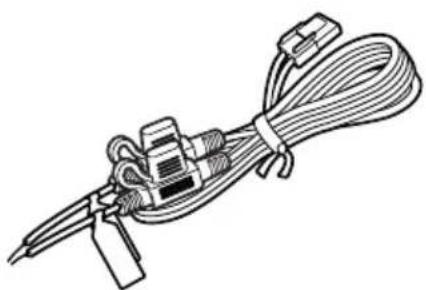
| DC power cable• Fuse (15 A) | E30-7523-XX | 1 |
| F52-0024-XX | 2 | |
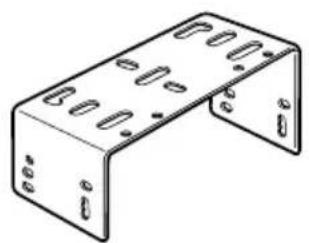
| Mounting bracket | J29-0662-XX | 1 |
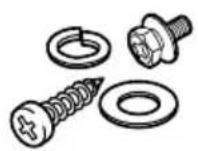
| wesc• Self-tapping screw (4 pieces)• Hex-headed screw with washer (4 pieces)• Spring washer (4 pieces) )sece@psawtalF• | XX03029N1 | |
| Instruction manual | B62-1767-XX | 1 |
natural_image
Line drawing of a cable with connectors and a tag, no text or symbols presentDC power cable (with fuses)
natural_image
Technical line drawing of a U-shaped metal bracket with multiple notches (no text or symbols)Mounting bracket Screw set
PREPARATION

WARNING
Various electronic equipment in your vehicle may malfunction if they are not properly protected from the radio frequency energy which is present while transmitting. Electronic fuel injection, anti-skid braking, and cruise control systems are typical examples of equipment that may malfunction. If your vehicle contains such equipment, consult the dealer for the make of vehicle and enlist his/her aid in determining if they will perform normally while transmitting.
Note: The following preparation instructions are for use by your KENWOOD dealer, an authorized KENWOOD service facility, or the factory.
TOOLS REQUIRED
Note: Before installing the transceiver, always check how far the mounting screws will extend below the mounting surface. When drilling mounting holes, be careful not to damage vehicle wiring or parts.
The following tools are required for installing the transceiver:
• 1/14 inch (6 mm) or larger electric drill
- 5/32 inch (4.2 mm) drill bit for the self-tapping screws
- Circle cutters
The transceiver operates in 12 V negative ground systems only! Check the battery polarity and voltage of the vehicle before installing the transceiver.
◆ Use only the supplied DC power cable or a KENWOOD optional DC power cable.
◆ Do not cut and/or remove the fuse holder on the DC power cable.
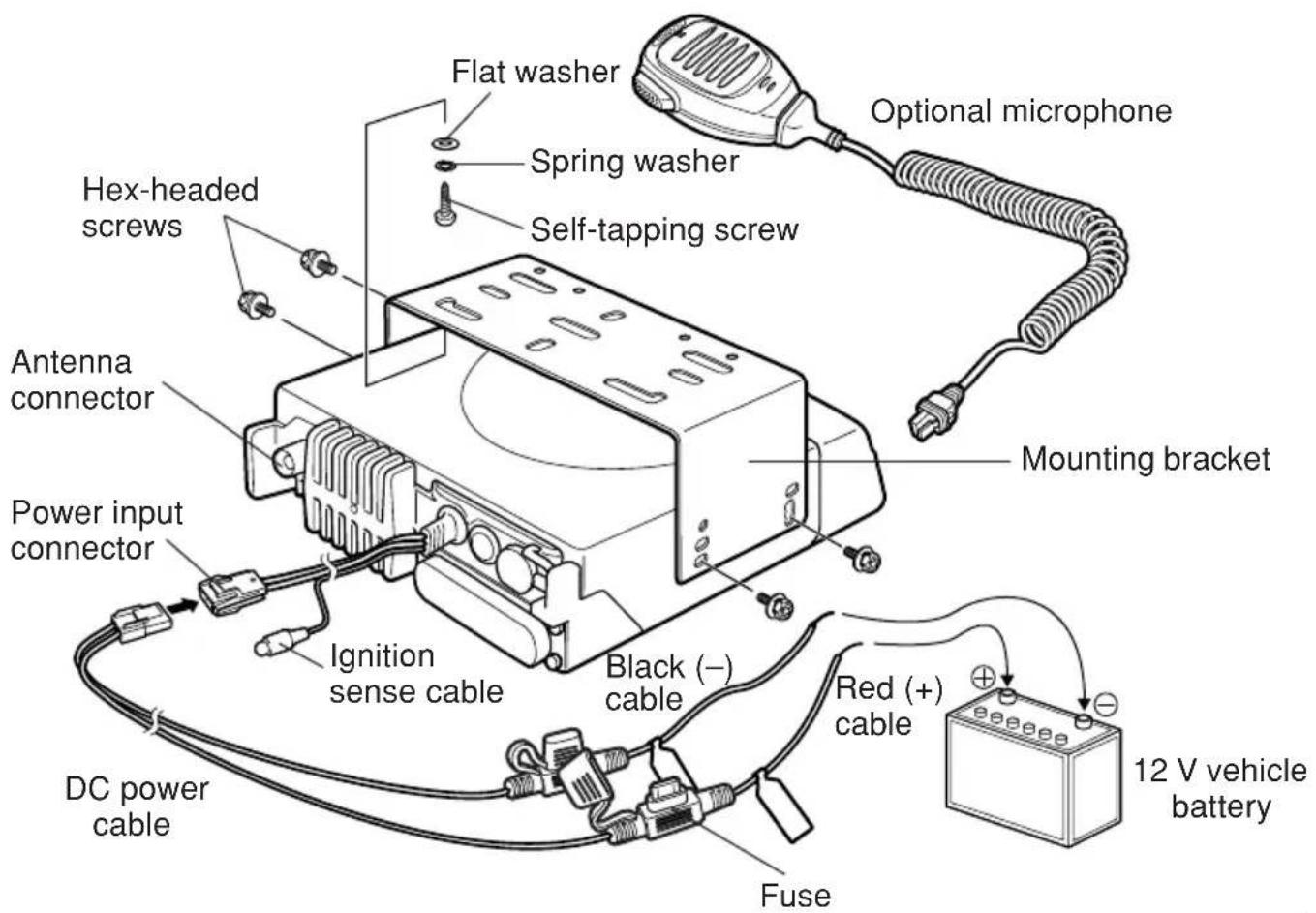
1 Check for an existing hole, conveniently located in the firewall, where the power cable can be passed through. If no hole exists, use a circle cutter to drill the firewall, then install a rubber grommet.
2 Run the two power cable leads through the firewall and into the engine compartment, from the passenger compartment.
3 Connect the red lead to the positive (+) battery terminal and the black lead to the negative (−) battery terminal.
- Locate the fuse as close to the battery as possible.
4 Coil and secure the surplus cable with a retaining band.
- Be sure to leave enough slack in the cables so the transceiver can be removed for servicing while keeping the power applied.
INSTALLING THE TRANSCEIVER

WARNING
For passenger safety, install the transceiver securely using the supplied mounting bracket and screw set so the transceiver will not break loose in the event of a collision.
1 Mark the position of the holes in the dash by using the mounting bracket as a template. Drill the holes, then attach the mounting bracket using the supplied self-tapping screws.
- Be sure to mount the transceiver in a location where the controls are within easy reach of the user and where there is sufficient space at the rear of the transceiver for cable connections.
2 Connect the antenna and the supplied power cable to the transceiver.
3 Slide the transceiver into the mounting bracket and secure it using the supplied hex-headed screws.
4 Mount a microphone hanger in a location where it will be within easy reach of the user.
- The optional microphone and microphone cable should be mounted in a place where they will not interfere with the safe operation of the vehicle.

CAUTION
When replacing the fuse in the DC power cable, be sure to replace it with a fuse of the same value. Never replace a fuse with a fuse that has a higher value.
GETTING ACQUAINTED
FRONT PANEL
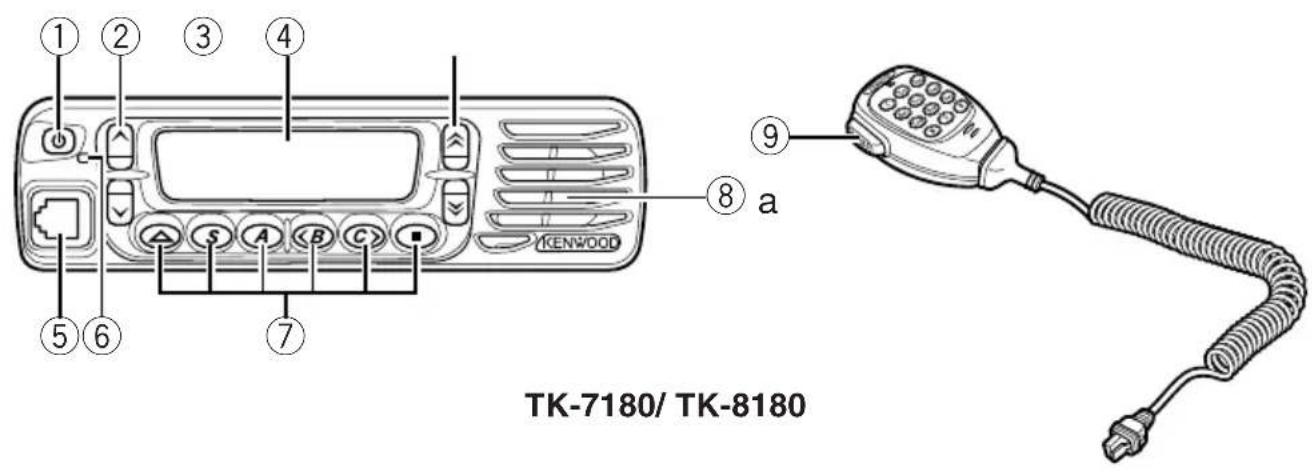
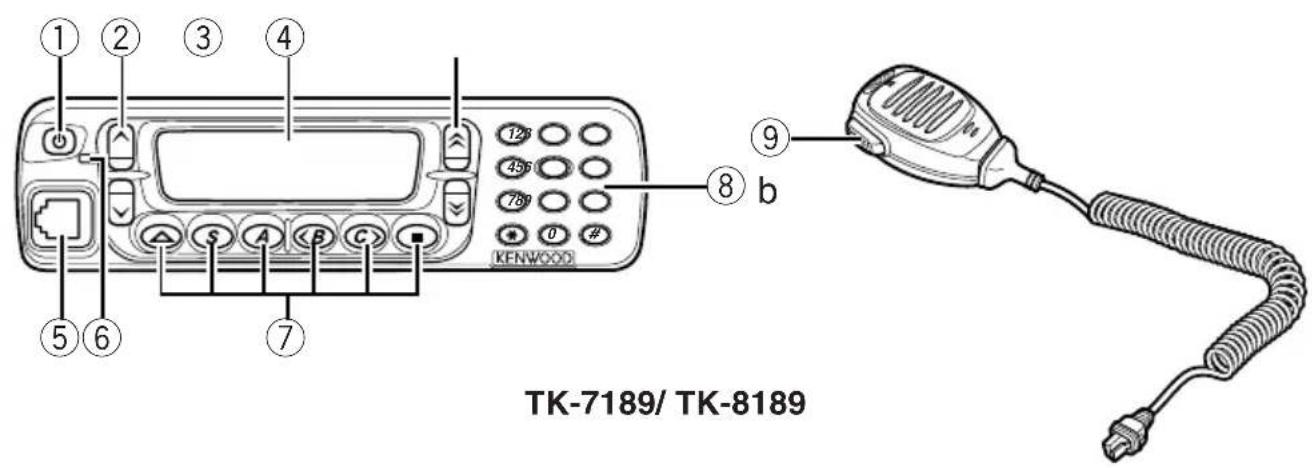
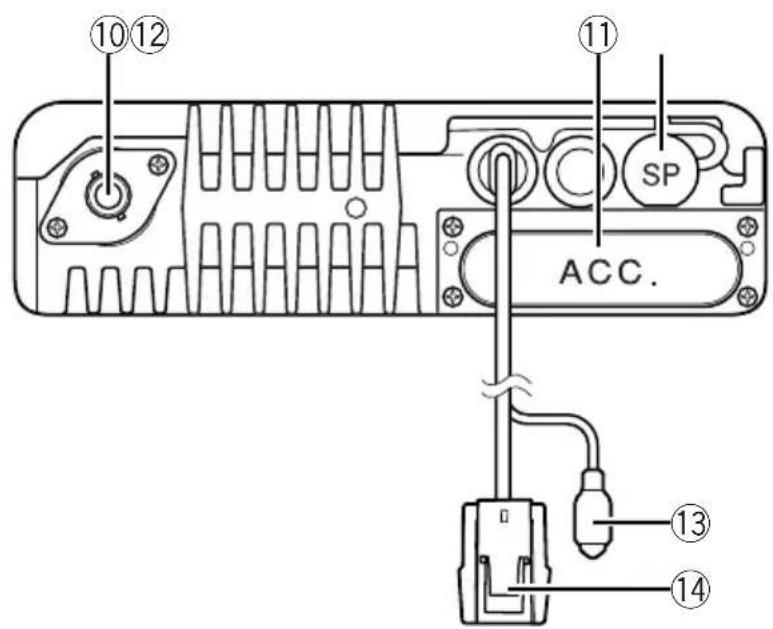
REAR PANEL
① ⏻ (Power) switch
Press to switch the transceiver ON. Press again to switch the transceiver OFF.
② /^ keys
Press to activate their programmable functions {page 7}.
③Display
Refer to page 6.
④ /▲ keys
Press to activate their programmable functions {page 7}.
⑤Microphone jack
Insert the microphone plug into this jack.
⑥Transmit/ Busy/ Call indicator
Lights red while transmitting, green while receiving, and orange while receiving a call using optional signaling.
⑦ △, S, A,
Press to activate their programmable functions {page 7}.
⑧
a) Speaker (TK-7180/ TK-8180)
Internal speaker.
b) DTMF Keypad (TK-7189/ TK-8189)
Press the keys on the keypad to make DTMF calls {page 18} or to activate their programmable functions {page 7}.
⑨PTT (Push-to-Talk) switch
Press and hold this switch, then speak into the optional microphone to call a station.
⑩Antenna connector
Attach the vehicle antenna to this connector {page 3}.
⑪ACC. (accessory) connector
Connect external KENWOOD accessories to this connector.
⑫SP (speaker) jack
Connect an external speaker to this jack.
⑬Ignition sense line
Connect the vehicle ignition sensor to this line.
⑭Power input connector
Attach the supplied DC power cable to this connector {page 3}.
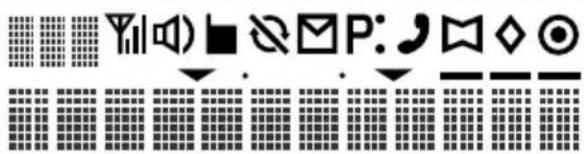
| rotacidnl noitpircseD | |
| Displays the zone and channel numbers. Your dealer can program zone and channel names with up to 12 characters, in place of numbers. Also displays received 5-tone and FleetSync .segae | |
| Displays the zone and channel numbers. Also displays list numbers for Operator Selectable Tones. | |
| Displays the strength of received signals. An antenna and all 3 strength bars represents strong signals while the antenna by itself (no strength bars) represents weak signals. | |
| Appears when Monitor or Squelch Off is activated. | |
| Appears when the Talk Around function has been activated. | |
| Appears when you are using Scan mode or when the selected zone is a Voting or Free Channel Call zone. | |
| Flashes when you receive a message. Lights when a message is stored in the queue memory. | |
| P: | Appears when the selected channel is programmed as priority.Prepresents Priority Channel 1,P.represents Priority Channel 2, andP:represents Priority Channels 1 and 2. |
| This icon is not used on this transceiver. | |
| Appears when the Horn Alert function is activated. | |
| Appears when the Scrambler function is activated. | |
| Appears when the Public Address function is activated. | |
| Appears when the selected zone is added to the scanning cœeuqes | |
| Appears when the Auto Recording function on the VGS-1 option is activated. | |
| Appears when an Auto Reply Message on the VGS-1 option is detavica | |
| Appears when the selected channel is added to the scanning cœeuqes | |
| Appears when the AUX A function has been activated. | |
| Appears when the AUX B function has been activated. | |
| Appears when the OST function has been activated. | |
PROGRAMMABLE FUNCTIONS
The , , , , , S, A,
• Auto Reply Message 1,2
- Autodial
- Autodial Programming
• AUX A
• AUX B
- Call 1 \~ Call 6
- CH/GID Down
• CH/GID Down (Continuous)
- CH/GID Recall
- CH/GID Up
• CH/GID Up (Continuous)
- Channel Entry
- Clock
- Digit 1x Down ^3
- Digit 10x Down ^3
- Digit 1x Up ^3
- Digit 10x Up ^3
- Direct CH/GID 1 \~ 5
- Direct CH/GID 1 \~ 5 Select
- Display Character
- Emergency ^4
- Fixed Volume
- Function
- Home CH/GID
• Home CH/GID Select
- Horn Alert
- LCD Brightness
- Lone Worker
- Monitor
- Monitor Momentary
- None
- OST
- Playback ^2
- Priority Channel Select
- Public Address
- Queue
- Receive Entry ^3
- Scan
- Scan Delete/Add
- Scrambler
- Scrambler Code
- Selcall
- Selcall + Status
- Send the GPS data ^1
- Squelch Level
- Squelch Off
- Squelch Off Momentary
- Status
- T alk Around
- T ransceiver Password
- T ransfer ^3
- V oice Memo ^2
- Volume Down
- Volume Up
• V olume Up (Continuous) - Zone Delete/Add
- Zone Down
- Zone Down (Continuous)
- Zone Up
- Zone Up (Continuous)
• V olume Down (Continuous)
1 "Auto Reply Message" and "Send the GPS data" can be used only for FleetSync.
^2 “Auto Reply Message”, “Playback”, and “Voice Memo” can be programmed only when the optional VGS-1 board has been installed.
^3 “Digit 1x Down”, “Digit 10x Down”, “Digit 1x Up”, “Digit 10x Up”, “Receive Entry”, and “Transfer” can be programmed only for 5-tone calls.
4 "Emergency" can be programmed only on the ▲key.
BASIC OPERATIONS
OVERVIEW
Your dealer can program your transceiver with Conventional, Voting, Voting with Signaling, and Free Channel Call zones. The transceiver can handle up to 128 zones with up to 250 channels in each zone and a total combined maximum of 512 channels. Zones, channels, and their functions are programmed by your dealer.
SWITCHING POWER ON/OFF
Press the switch to switch the transceiver ON.
• A beep sounds and the display momentarily lights up.
- If the Transceiver Password function is programmed, “PASSWORD” appears on the display. You must enter the password to unlock the transceiver. Refer to “Transceiver Password”, below.
Press the switch again to switch the transceiver OFF.
■ TRANSCEIVER PASSWORD
To enter the password:
1 Press the and keys to select a digit.
2 Press the C> key to accept the entered digit and move to the next digit.
- Press the A key to delete an incorrect character. Press and hold the A key to delete all entered characters.
- Repeat steps 1 and 2 to enter the entire password.
3 Press the S key to confirm the password.
- If you enter an incorrect password, an error tone sounds and the transceiver remains locked.
To enter the password using a DTMF keypad:
1 Press the DTMF keys corresponding to the password digits.
- Press the DTMF # key to delete an incorrect character. Press and hold the DTMF # key to delete all entered characters.
2 Press the DTMF key to confirm the password.
- If you enter an incorrect password, an error tone sounds and the transceiver remains locked.
ADJUSTING THE VOLUME
Press the key programmed as Volume Up to increase the volume and Volume Down to decrease the volume.
SELECTING A ZONE AND CHANNEL
Select the desired zone using the keys programmed as Zone Up and Zone Down.
Select the desired channel using the keys programmed as CH/GID (Channel/Group ID) Up and CH/GID (Channel/Group ID) Down.
Names can be programmed for zones and channels with up to 12 characters each. However, to fit on the display, names will be abbreviated. Your dealer can set the zone name to a length of 0 to 12 digits. Channel names will shorten appropriately, to fit in the 12-digit display.
For example, if the channel name is “-CHANNEL1-” and the zone name is “KENWOOD”, and your dealer sets the zone name to 3-digits, the following display will appear:
KEN-CHANNEL1
TRANSMITTING
1 Select the desired zone and channel using the Zone and CH/GID keys.
- In Voting, Voting with Signaling, and Free Channel Call zones, the channel is selected automatically.
2 In Conventional zones, press the key programmed as Monitor or Squelch Off to check whether or not the channel is free.
- If the channel is busy, wait until it becomes free.
3 Press microphone PTT switch and speak into the microphone. Release the PTT switch to receive.
- For best sound quality at the receiving station, hold the microphone approximately 1.5 inches (3 \~ 4 cm) from your mouth.
- In Voting and Voting with Signaling zones, the transceiver will search for the closest repeater and transmit using that repeater's frequency.
- In Free Channel Call zones, the transceiver will search for a free channel and will begin transmitting on that channel.
RECEIVING
1 Select the desired zone and channel using the Zone and CH/GID keys.
• Alternatively, in Conventional zones, you can activate the Scan function if desired.
- In Voting and Voting with Signaling zones, the transceiver will automatically search for the strongest signal and receive on that frequency.
- In Free Channel Call zones, the transceiver will automatically search for any signal and will receive on that channel.
2 When you hear a caller's voice, readjust the volume as necessary.
CONVENTIONAL SCAN
If the Scan function is programmed, Conventional zones or channels can be scanned by pressing the key programmed as Scan. Scan can be used as either Single Scan or Multi Scan.
- Single Scan monitors only the channels of the currently selected zone, which have been added to the scanning sequence. If set up to scan Priority channels, the Priority channels will be scanned even if they are not within the currently selected zone.
- Multi Scan monitors all channels of every zone, which have been added to the scanning sequence.
To activate Scan, press the key programmed as Scan.
- The icon and “SCAN” or the revert zone and channel number appear on the display.
- The zone add indicator ( ) will appear on the display when the selected zone is added to the scan sequence. The channel add indicator ( ) will appear on the display when the selected channel is added to the scan sequence.
- When a call is received, scanning stops and the zone and channel digits appear. Press the microphone PTT switch and speak into the microphone to respond to the call. The transceiver will continue scanning after a predetermined time delay if the PTT switch is released and no further signal is received.
To stop scanning, press the Scan key again.
ADD TO SCAN/ DELETE FROM SCAN
Press the key programmed as Scan Delete/Add to add or remove each channel to or from the scan sequence.
- The channel add indicator ( ) will appear on the display when the selected channel is added to the scan sequence.
Press the key programmed as Zone Delete/Add to add or remove each zone to or from the scan sequence.
- The zone add indicator ( ) will appear on the display when the selected zone is added to the scan sequence.
SCAN REVERT
You can select Revert zones and channels using the Zone and CH/GID keys.
Eight types of Scan Reverts which can be programmed by your dealer are available.
- Last Called Revert: The last zone/ channel received is assigned as the new revert zone and channel.
- Last Used Revert: The last zone/ channel responded to is assigned as the new revert zone and channel.
- Selected: The last zone/ channel selected is assigned as the new revert zone and channel.
- Selected + Talkback: If the zone/ channel has been changed during Scan, the newly selected zone/ channel is assigned as the new revert zone and channel. The transceiver “talks back” on the current receive channel.
- Priority 1: If your dealer has programmed a Priority 1 channel, this channel is the revert zone and channel.
- Priority 1 + Talkback: If your dealer has programmed a Priority 1 channel, this channel is the revert zone and channel. The transceiver “talks back” on the current receive channel.
- Priority 2: If your dealer has programmed a Priority 2 channel, this channel is the revert zone and channel.
- Priority 2 + Talkback: If your dealer has programmed a Priority 2 channel, this channel is the revert zone and channel. The transceiver “talks back” on the current receive channel.
PRIORITY SCAN
A Priority channel must be programmed in order for Priority Scan to function.
The transceiver will automatically change to the Priority channel when a signal is received on it, even if a signal is being received on a normal channel.
• The indicator represents the Priority 1 channel.
• The P. indicator represents the Priority 2 channel.
• The P: indicator represents both the Priority 1 and Priority 2 channel.
QUIET TALK (QT)/ DIGITAL QUIET TALK (DQT)
Your dealer may have programmed QT or DQT signaling on your transceiver channels. A QT tone/ DQT code is a sub-audible tone/code which allows you to ignore (not hear) calls from other parties who are using the same channel.
When a channel is set up with a QT tone or DQT code, squelch will open only when a call containing a matching tone or code is received. Likewise, signals that you transmit will be heard only by parties whose QT/ DQT signaling matches your transceiver.
If a call containing a different tone or code is made on the same channel you are using, squelch will not open and you will not hear the call. Although it may seem like you have your own private channel while using QT/ DQT, other parties can still hear your calls if they set up their transceiver with the same tone or code.
OPERATOR SELECTABLE TONE (OST)
You can change the preset encode and decode tones for the selected channel. Your dealer can program up to 40 tones on your transceiver.
To turn OST on or off, press the key programmed as OST.
- The OST indicator ( ) appears on the display when this function is activated.
To change the preset encode/decode tones:
1 Press and hold the key programmed as OST.
- The duration for holding the OST key is programmed by your dealer.
- The OST number and name appear on the display.
2 Press the keys or enter the list number directly using a DTMF keypad to select your desired encode/decode pair.
- If programmed by your dealer, you can also use the and keys.
3 Press the S or DTMF * key to accept the new setting and return to normal operation.
5-tone Signaling is enabled or disabled by your dealer. This function opens the squelch only when the transceiver receives the 5 tones programmed in your transceiver. Transceivers that do not transmit the correct tones will not be heard.
Note: Your transceiver functions include either 5-tone Signaling or FleetSync {page 15}, but not both.
MAKING A SELCALL (SELECTIVE CALLING)
A Selcall is a voice call to a particular station. To make a Selcall:
1 Select your desired zone and channel.
2 Press the key programmed as Selcall or Selcall + Status to enter Selcall Mode.
3 Press the keys to select the ID of the station you want to call.
- If programmed by your dealer, you can also use the and keys.
- Alternatively, you can enter a station ID using a DTMF keypad.
- If Manual Input Mode is enabled, you can enter digits by using a DTMF keypad or by selecting digits with the and keys. To enter manual input mode, first press and hold the S or DTMF key. When using the and keys, cycle through the digits to select a digit. The cursor can be shifted to the left or right by pressing the key. Repeat this process until the entire ID is entered.
4 Press the key programmed as Call 1 to Call 6 to begin your call.
TRANSMITTING A STATUS MESSAGE
Status messages can contain up to 16 alphanumeric characters. To transmit a Status message:
1 Select your desired zone and channel.
2 Press the key programmed as Status to enter Status Mode or Selcall + Status to enter Selcall Mode.
- When using the Status key to enter Status Mode, the station ID is fixed and cannot be selected. Skip to step 5 to continue.
3 In Selcall Mode, press the keys to select the ID of the station you want to call.
- If programmed by your dealer, you can also use the and keys.
- Alternatively, you can enter a station ID using a DTMF keypad.
- If Manual Input Mode is enabled, you can enter digits by using an optional DTMF keypad or by selecting digits with the and keys. To enter manual input mode, first press and hold the S or DTMF key. When using the and keys, cycle through the digits to select a digit. The cursor can be shifted to the left or right by pressing the <B or C> key. Repeat this process until the entire ID is entered.
4 Press the S or DTMF * key to enter Status Mode.
5 Press the keys to select the status ID you want to transmit.
- If programmed by your dealer, you can also use the and keys.
- Alternatively, you can enter a station ID using a DTMF keypad.
- If Manual Input Mode is enabled, you can enter digits by using an optional DTMF keypad or by selecting digits with the and keys. To enter manual input mode, first press and hold the S or DTMF key. When using the and keys, cycle through the digits to select a digit. The cursor can be shifted to the left or right by pressing the <B or C> key. Repeat this process until the entire ID is entered.
6 Press the Call 1 to Call 6 key to initiate the Status call.
RECEIVING SELCALLS AND STATUS MESSAGES
When you receive a signal containing the correct tones, squelch opens and you will hear the call.
• The LED indicator flashes orange.
• To mute the speaker after squelch opens, press the key programmed as Monitor.
- Y our dealer can program the Monitor function to close again after a specific time period elapses.
- If Transpond for 5-tone Signaling is programmed, an acknowledgement signal is returned to the calling station.
- If Call Alert for 5-tone Signaling is programmed, an alert tone will sound when the correct tones are received.
- Y our dealer can program the transceiver to display the received Selcall/Status.
To respond to the call, press the microphone PTT switch and speak into the microphone.
REVIEWING MESSAGES IN THE QUEUE MEMORY
A maximum of 15 received messages can be stored in the Queue memory of your transceiver. Saved messages can be viewed after reception. When the Queue memory is full, the oldest message will be erased when a new message is received.
Then ☑con lights when a message is stored in the Queue memory.
1 Press the key programmed as Queue to enter Queue Mode.
2 Press the keys to select the desired message.
- If programmed by your dealer, you can also use the and keys.
- Press and hold the S or DTMF * key to toggle between the called ID/ status ID, the channel name, and the time of the received message.
3 Press the S or DTMF * key to return to Normal Operation Mode.
- To delete the selected message, press the A or DTMF # key. To confirm the deletion, press the S or DTMF * key.
- To delete all messages, press and hold the A or DTMF # key for 1 second. To confirm the deletion, press the S or DTMF Key.
FleetSync is an Alphanumeric 2-way Paging Function, and is a protocol owned by KENWOOD Corporation. FleetSync enables a variety of paging functions on your transceiver, some of which depend on dealer programming.
Note: Your transceiver functions include either Fleetsync or 5-tone Signaling {page 13}, but not both.
SELCALL (SELECTIVE CALLING)
A Selcall is a voice call to a particular station or to a group of stations.
TRANSMITTING
1 Select your desired zone and channel.
2 Press the key programmed as Selcall or Selcall + Status to enter Selcall Mode.
3 Press the keys to select the ID of the station you want to call.
- If programmed by your dealer, you can also use the and keys.
- Alternatively, you can enter a station ID using a DTMF keypad.
- If Manual Input Mode is enabled, you can enter digits by using a DTMF keypad or by selecting digits with the and keys. To enter manual input mode, first press and hold the S or DTMF key. When using the and keys, cycle through the digits to select a digit, then press the C> key to accept the digit and shift the cursor to the right. Repeat this process until the entire ID is entered.
4 Press the microphone PTT switch and begin your conversation.
- Alternatively, you can press the ■ key to page the selected station, rather than making a voice call.
RECEIVING
An alert tone will sound, the transceiver will automatically enter Selcall Mode, and the calling station's ID will appear when a Selcall is received.
To respond to the call, press the microphone PTT switch and speak into the microphone.
■ IDENTIFICATION CODES
An ID code is a combination of a 3-digit Fleet number and a 4-digit ID number. Each transceiver must have its own Fleet and ID number.
- Enter a Fleet number (100 \~ 349) to make a group call.
- Enter an ID number (1000 \~ 4999) to make an individual call in your fleet.
- Enter a Fleet number make a call to all units in the selected fleet (Interfleet call).
- Select "ALL" Fleet and enter an ID number to make a call to the selected ID in all fleets (Supervisor call).
- Select "ALL" Fleet and "ALL" ID to make a call to all units (Broadcast call).
Note: The ID range may be limited by programming.
STATUS MESSAGE
You can send and receive 2-digit Status messages which may be decided in your talk group. Messages can contain up to 16 alphanumeric characters. Status messages range from 10 to 99 (80 \~ 99 are reserved for special messages).
A maximum of 15 received messages can be stored in the Queue memory of your transceiver. These saved messages can be reviewed after reception. Depending on your dealer settings, when the Queue memory is full, either the oldest message will be erased when a new message is received or the new message will not be stored in the Queue memory. The ☑icon lights when a message is stored in the Queue memory.
TRANSMITTING
1 Select your desired zone and channel.
2 Press the key programmed as Status to enter Status Mode or Selcall + Status to enter Selcall Mode.
- When using the Status key to enter Status Mode, the station ID is fixed and cannot be selected. Skip to step 5 to continue.
3 In Selcall Mode, press the keys to select the ID of the station you want to call.
- If programmed by your dealer, you can also use the and keys.
- Alternatively, you can enter a station ID using a DTMF keypad.
- If Manual Input Mode is enabled, you can enter digits by using a DTMF keypad or by selecting digits with the and keys. To enter manual input mode, first press and hold the S or DTMF key. When using the and keys, cycle through the digits to select a digit, then press the C> key to accept the digit and shift the cursor to the right. Repeat this process until the entire ID is entered.
4 Press the S or DTMF * key to enter Status Mode.
5 Press the keys to select the status ID you want to transmit.
- If programmed by your dealer, you can also use the and keys.
- Alternatively, you can enter a station ID using a DTMF keypad.
- If Manual Input Mode is enabled, you can enter digits by using a DTMF keypad or by selecting digits with the and keys. To enter manual input mode, first press and hold the S or DTMF * key. When using the and keys, cycle through the digits to select a digit, then press the C> key to accept the digit and shift the cursor to the right. Repeat this process until the entire ID is entered.
6 Press the microphone PTT switch or ■ key to initiate the Status call.
- “COMPLETED” displayed when the call has been successfully transmitted.
RECEIVING
The ☑icon will flash and a calling ID or text message will appear when a Status call is received.
Press any key to return to Normal Operation Mode.
■ REVIEWING MESSAGES IN THE QUEUE MEMORY
1 Press the key programmed as Queue to enter Queue Mode.
- The last received message is displayed with the message number.
2 Press the keys to select the desired message.
- If programmed by your dealer, you can also use the and keys.
- Press and hold the S or DTMF * key to toggle between the message/ call ID, the channel name, and the time of the received message.
3 Press the S or DTMF * key to return to Normal Operation Mode.
- To delete the selected message, press the A or DTMF # key. To confirm the deletion, press the S or DTMF * key.
- To delete all messages, press and hold the A or DTMF # key for 1 second. To confirm the deletion, press the S or DTMF key.
SHORT MESSAGES
To send a short message, you must connect the transceiver to a PC. Ask your dealer for details.
- Short messages can contain a maximum of 48 characters.
- Received short messages are displayed the same as Status messages and are stored in the same Queue memory. A combined maximum of 15 Status calls and short messages can be stored in the Queue memory.
LONG MESSAGES
To send and receive long messages, you must connect the transceiver to a PC. Ask your dealer for details.
- Long messages can contain a maximum of 4096 characters.
GPS REPORT
To send your location data, you must first install a GPS unit (NMEA-0183 format) onto the transceiver. Press the key programmed as Send the GPS data to transmit your location data. Ask your dealer for details.
DTMF (DUAL TONE MULTI FREQUENCY) CALLS
MANUAL DIALING
TK-7180/ TK8180 Models: To make a DTMF call using manual dialing, you must use an optional microphone with a DTMF keypad.
■ METHOD 1
Press and hold the microphone PTT switch, then enter the desired digits using a DTMF keypad.
- If you release the PTT switch, transmit mode will end even if the complete number has not been sent.
- If your dealer has activated the Keypad Auto PTT function, you need not press the PTT switch while entering digits. The DTMF code will be sent automatically when you press a key.
■ METHOD 2
Enter the desired digits using a DTMF keypad (maximum of 30 digits). After entering the complete number, press the microphone PTT switch.
- The DTMF code is transmitted after pressing the PTT switch.
Note: Switching OFF the transceiver power clears the number.
AUTODIAL
Autodial allows you to store and quickly recall 32 names (up to 12 characters per name) and DTMF numbers (up to 16 digits per number).
REDIAL
TK-7180/ TK-8180 Models: To redial a number, you must use an optional microphone with a DTMF keypad.
1 To redial the last called number, press the key programmed as Autodial.
- The first entry in the Autodial list appears on the display.
2 Press the DTMF * key followed by the DTMF 0 key to display the last called number.
3 Press the microphone PTT switch to make the call.
Note: Switching OFF the transceiver power clears the redial memory.
TK-7180/ TK-8180 Models: To transmit connect/ disconnect IDs, you must use an optional microphone with a DTMF keypad.
1 Press the key programmed as Autodial.
- The first entry in the Autodial list appears on the display.
2 Connect ID: Press the DTMF key two times.
Disconnect ID: Press the DTMF * key followed by the DTMF # key.
3 Press the microphone PTT switch to make the call.
DTMF SIGNALING
DTMF Signaling is either enabled or disabled by your dealer. This function opens the squelch only when the transceiver receives the DTMF code programmed in your transceiver. Each transceiver is normally programmed with a unique code. You will not hear calls from transceivers that are not programmed with a matching code.
When you receive a signal containing the correct tones, squelch opens and you will hear the call.
• The LED indicator flashes orange.
• To mute the speaker after squelch opens, press the key programmed as Monitor.
- Y our dealer can program the squelch to close again after a specific time period elapses.
- If Transpond for DTMF Signaling is programmed, an acknowledgment signal is returned to the calling station.
- If Tone Alert for DTMF Signaling is programmed, an alert tone will sound when the correct tones are received.
STUN
This function is used when a transceiver is stolen or lost. When the transceiver receives a call containing a stun code, either transmit mode will be disabled or both receive mode and transmit mode will be disabled. Stun is cancelled when the transceiver receives a call with a revive code.
EMERGENCY CALLS
If your transceiver has been programmed with the Emergency function, you can make emergency calls.
Note: Only the key can be programmed with the Emergency function.
1 Press and hold the key programmed as Emergency.
- Depending on the delay time programmed into your transceiver, the length of time you must hold the Emergency key will vary.
- When the transceiver enters Emergency mode, the transceiver will change to the Emergency channel and begin transmitting based on how the transceiver is set up by your dealer. Transmit periods are also set by your dealer.
2 To exit Emergency mode, press and hold the Emergency key again.
- If the Emergency mode completes the preset number of cycles, Emergency mode will automatically end and the transceiver will return to the channel that was in use before Emergency mode was entered.
Note:
- Your dealer can set a beginning of transmit and end of transmit tone for the transceiver.
- Your dealer can set the transceiver to emit tones and received signals as normal or mute the speaker during Emergency operation.
ADVANCED OPERATIONS
TALK AROUND
You may occasionally experience an interruption in service (due to a power failure, etc.). During such an occurrence, you can continue communication by using the Talk Around feature. Talk Around allows you to communicate directly with other transceivers, without the use of a repeater. However, if the station you want to contact is too far away, or there are geographical obstacles in the way, you may not be able to contact the station.
Toggle Talk Around ON and OFF by pressing the key programmed as Talk Around.
- The on appears on the display while Talk Around is active.
- When using Talk Around, the receive frequency is used for both transmitting and recieving, and the decode signaling is used for both encoding and decoding.
You can use the key programmed as Monitor/ Squelch Off to listen to weak signals that you cannot hear during normal operation and to adjust the volume when no signals are present on your selected channel.
- The icon appears on the display while Monitor/ Squelch Off is activated.
Your dealer can program a key with one of 4 functions:
- Monitor: Momentarily press to deactivate QT, DQT, DTMF, 5-tone, or FleetSync Signaling. Press the key again to return to normal operation.
- Monitor Momentary: Press and hold to deactivate QT, DQT, DTMF, 5-tone, or FleetSync Signaling. Release the key to return to normal operation.
- Squelch Off: Momentarily press to hear background noise. Press the key again to return to normal operation.
- Squelch Off Momentary: Press and hold to hear background noise. Release the key to return to normal operation.
■ SQUELCH LEVEL
To adjust the squelch level:
1 Press the key programmed as Squelch Level.
2 Press the key to increase the squelch level (tighten).
- If programmed by your dealer, you can also use the and keys.
3 Press the S or DTMF * key to store the new setting and exit the squelch level adjustment.
SCRAMBLER
Although the scrambler function does not offer complete privacy with your calls, it does prevent others from easily listening in on your calls. When activated, the transceiver distorts your voice so that anybody listening to your conversation will be unable to clearly hear what you are saying.
In order for members of your own group to clearly hear your call while you are using the scrambler, all other members must also activate the scrambler functions on their transceivers. This distorts everybody's voice while transmitting and corrects the voice message on your own transceiver when you receive the call.
To activate the scrambler, press the key programmed as Scrambler.
- The icon appears on the display while the scrambler is active.
To deactivate the scrambler, press the Scrambler key again.
Note: There are 2 options for using the scrambler. Your dealer can activate or deactivate the built-in scrambler function of the transceiver, or they can add a more secure optional scrambler board to your transceiver. Ask your dealer for details.
CLOCK
If activated by your dealer, your transceiver can track the time and date with its built-in clock. The time will display momentarily when the transceiver power is turned ON. Additionally, you can view the clock any time by pressing the key programmed as Clock.
Note: Removing the transceiver power for extended periods will cause the clock time to clear.
■ CLOCK SETUP
To set the year, month, day, and time:
1 With the transceiver power OFF, press and hold the C> key while turning the transceiver power ON.
• The current year setting appears.
2 Press the and keys to select the year, then press the S key to cycle to the month setting.
- Repeat this step, to cycle through the day, hour, and minute settings.
3 Press the S key again, to return to the year setting.
- A triple beep will sound, indicating that your selections have been set into the transceiver memory.
4 Turn the transceiver power OFF and then back ON to return to Normal Operation Mode.
LCD BRIGHTNESS
The LCD backlight can be turned off or set to low or high levels. To cycle through the brightness settings, press the key programmed as LCD Brightness.
- Each press of LCD Brightness cycles the brightness level from high to low to off and then back to high.
HORN ALERT
To use the Horn Alert function, your dealer must install an optional KAP-2 unit. When a call is received that has a correct DTMF, 5-tone, or FleetSync signal, Horn Alert causes the vehicle horn or some other external alert to sound. This function notifies you of a received call when you are out of your vehicle.
Toggle Horn Alert ON and OFF by pressing the key programmed as Horn Alert.
- The icon appears on the display while Horn Alert is active.
PUBLIC ADDRESS (PA)
To use the Public Address system, your dealer must install an optional KAP-2 unit and an external speaker. This function causes all audio input via the microphone to be amplified and output from the external speaker.
To use the PA system:
1 Press the key programmed as Public Address.
- The icon appears on the display while the PA system is active.
2 Press the microphone PTT switch, then speak into the microphone.
- Use the Volume Up and Volume Down keys to adjust the audio output from the external speaker.
3 Press the Public Address key again to return to Normal Operation Mode.
The purpose of the Time-out Timer is to prevent any caller from using a channel for an extended period of time.
If you continuously transmit for a period of time that exceeds the programmed time set by your dealer (default is 1 minute), the transceiver will stop transmitting and an alert tone will sound. To stop the tone, release the microphone PTT switch.
Your dealer can program the TOT time in the range of 15 seconds to 20 minutes.
BUSY CHANNEL LOCKOUT (BCL)
When activated, BCL prevents you from interfering with other parties who may be using the same channel that you selected. Pressing the microphone PTT switch while the channel is in use will cause your transceiver to emit an alert tone and transmission will be inhibited (you cannot transmit). Release the PTT switch to stop the tone and return to receive mode.
If activated, you can override this function. To override BCL, press the microphone PTT switch again immediately after releasing it (within half a second).
Note: Ask your dealer for an explanation on how BCL functions when using QT, DQT, DTMF, 5-tone, or FleetSync signaling.
SIGNAL STRENGTH INDICATOR
The signal strength indicator displays the strength of received calls:
Strong signal
Medium signal
Weak signal
Very weak signal
BEGINNING/ END OF TRANSMIT SIGNAL
The Beginning of Transmit and End of Transmit identification signals are used to access and release some repeaters.
If Beginning of Transmit is set, the ID signal is transmitted when you press the microphone PTT switch.
If End of Transmit is set, the ID signal is transmitted when you release the microphone PTT switch.
If both are set, the ID signal is transmitted when you press and release the microphone PTT switch.
VGS-1 OPTIONAL VOICE GUIDE & STORAGE UNIT
When using the optional VGS-1 voice guide & storage unit, you gain access to the voice recorder and voice announcement functions. Ask your dealer for details.
VOICE RECORDER
The voice recorder function allows you to record your conversations and create voice memos and automated message responses.
■ AUTO RECORDING
If activated, the auto recording function will continuously record all transmitted and received signals. The recording storage area retains 30 seconds of recording, so all transmitted and received signals are simultaneously recorded and erased, leaving only the last 30 seconds of recording in memory.
- The auto recording indicator ( ) appears when this function is activated.
■ VOICE MEMOS
To record a voice memo, for later playback:
1 Press the key programmed as Voice Memo.
- The duration of recording memory will appear on the display and begin counting down.
2 Speak into the microphone to record your voice memo.
3 Press the ■, S, or DTMF * key to end the recording at any time and store it into the transceiver memory.
- If the memory becomes full, recording will stop automatically and store the voice memo to memory.
- "WRITING" appears on the display while the recording is being stored to memory.
■ AUTO REPLY MESSAGE
You can set the transceiver to automatically respond to Individual Calls (while using FleetSync):
1 Press the key programmed as Auto Reply Message to enter Auto Reply Message mode.
- The Auto Reply Message indicator ( ) appears on the display.
2 When you receive an Individual Call, Auto Reply will begin after waiting for 3 seconds, the transceiver will send an automatic response to the caller, and "GROPPERS on the display.
- If you are available to receive the call, press any key to disable the auto response.
- If memory is available on your transceiver for recording, “I am not available. Leave your Message.” will be sent to the caller. The caller can then leave a recorded message on your transceiver which you can later recall and listen to. When a message is stored on your transceiver, “Miss Rood” appears on the display.
- If no memory is available on your transceiver for recording, "I am not available." will be sent to the caller and "MEMPERIT\$ on the display.
■ PLAYBACK
To play back a recorded conversation, memo, or message:
1 Press the key programmed as Playback to enter Playback mode.
- If the last action on your transceiver was to auto record your conversation, "STORE?" will appear on the display, otherwise a recording channel with the time of the recording will appear. To store the conversation record in the next available recording channel, press the ■ key. To clear the conversation, press the A or DTMF # key. To skip to the stored recording channels, press the S or DTMF * key. To skip back 5 seconds, press the key.
2 Press the and keys to select the channel which you want to play back.
- “RH” represents automated reply messages.
- "AR" represents conversation records.
• "V" represents voice memos.
3 The transceiver will announce the channel, then the recording will automatically play back.
- When the entire recording has been played, “” (End of Message) is displayed.
- To delete the selected recording, press the A or DTMF # key. To clear all the recorded data, press and hold the A or DTMF # key. A confirmation message will appear on the display. Press the S or DTMF * key to delete the recording(s) or the A or DTMF # key to cancel.
VOICE GUIDE
When changing the zone, channel, or operation mode, an audio voice will announce the new zone, channel, or mode, after it has been selected. (Voice Annunciation can be activated or deactivated by your dealer.)