
48295 - Bread maker MORPHY RICHARDS - Free user manual and instructions
Find the device manual for free 48295 MORPHY RICHARDS in PDF.


| Product Type | Bread Maker |
| Brand | Morphy Richards |
| Model | 48295 |
| Dimensions (H x W x D) | Approx. 30 x 25 x 35 cm |
| Weight | Approx. 5 kg |
| Power | 600 W |
| Voltage | 220-240 V, 50/60 Hz |
| Capacity | Up to 1 kg loaf |
| Programs | 12 pre-set programs including basic, whole wheat, gluten-free, dough, jam, and cake |
| Crust Control | Light, medium, dark |
| Timer | Up to 13 hours delay start |
| Keep Warm | Yes, up to 1 hour |
| Display | LCD with backlight |
| Non-stick Pan | Yes, removable |
| Viewing Window | Yes |
| Cooling Fan | Yes |
| Power Cord Length | Approx. 0.9 m |
| Cleaning | Wipe exterior with damp cloth; wash removable pan and kneading blade in warm soapy water |
| Safety Features | Automatic shut-off, overheat protection |
| Spare Parts Availability | Replacement pans and blades available from Morphy Richards |
Frequently Asked Questions - 48295 MORPHY RICHARDS
User questions about 48295 MORPHY RICHARDS
0 question about this device. Answer the ones you know or ask your own.
Ask a new question about this device
Download the instructions for your Bread maker in PDF format for free! Find your manual 48295 - MORPHY RICHARDS and take your electronic device back in hand. On this page are published all the documents necessary for the use of your device. 48295 by MORPHY RICHARDS.
USER MANUAL 48295 MORPHY RICHARDS
Please read and keep these instructions

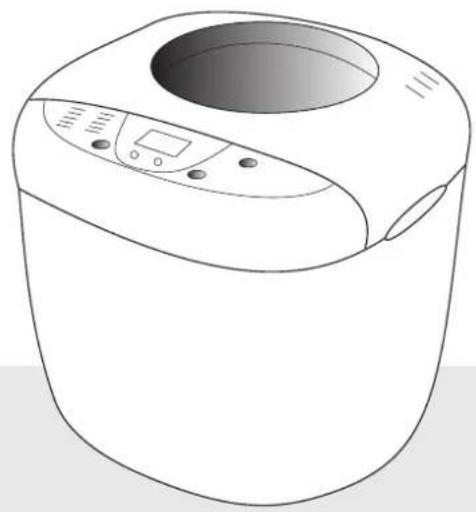
natural_image
Line drawing of a standard beige bread maker with control panel and side buttons (no text or symbols)getting the best from your new breadmaker...
Accurate measuring is essential
It is essential to measure ingredient quantities carefully, even slight changes may effect loaf quality, use the measuring spoon's and cup provided.
Yeast content
If loaf rises too high and then collapses ensure the ingredients were measured accurately. If problem persists, reduce yeast by a quarter of a teaspoon.

C €
The use of any electrical appliance requires the following of basic common sense safety rules.
Primarily there is danger of personal injury and secondly the danger of damage to property and the appliance. These are indicated in the text by the following two conventions:
WARNING: Danger of personal injury
IMPORTANT: Damage to the appliance
In addition we offer the following essential safety advice.
Location
- Always locate your appliance away from the edge of a worktop.
- Ensure that the appliance is used on a firm, flat surface.
- Do not use outdoors.
Mains lead
- The mains lead should reach from the socket to the base unit without straining the connections.
- Do not let the mains lead hang over the edge of a worktop where a child could reach it.
- Do not let the lead run across an open space e.g. between a low socket and table.
- Do not let the lead run across a cooker or toaster or other hot area which might damage the cable.
Your safety
- WARNING: Do not touch hot surfaces. Use oven mitts or oven gloves when removing the hot bread pan. Do not cover the steam vent openings under any circumstances.
- WARNING: Avoid contact with moving parts.
- To protect against electrical shock, do not immerse cord or plug in water or other liquid.
- Extreme caution must be observed when moving an appliance with hot contents.
- Do not use breadmaker for storage purposes nor insert any utensils, as they may create a fire or electric shock hazard.
- Do not use the appliance with wet or moist hands.
Children
Never allow a child to operate this appliance. Children are vulnerable in the kitchen particularly when unsupervised and if appliances are being used or cooking is being carried out.
Teach children to be aware of dangers in the kitchen, warn them of the dangers of reaching up to areas where they cannot see properly or should not be reaching.
Other safety considerations
- If the mains lead of this appliance is damaged do not use it. The lead may only be replaced by Belling Ltd or an agent of the company, since special purpose tools are required. Telephone our helpline for advice.
- The use of accessory attachments not recommended by the manufacturer may cause damage to the breadmaker.
- Do not place the appliance on or near heat sources such as gas or electric stove ovens, or burners.
- To avoid damaging the appliance, do not place the baking pan or any object on top of the unit.
- Do not clean with scouring pads. Do not wash the baking pan, kneading blade measuring cup or spoon in a dishwasher.
- Keep the appliance and the cable away from heat, direct sunlight, moisture and sharp edges.
- The baking pan must be in place prior to switching on the appliance.
- Always remove the plug from the socket whenever the machine is not in use, when attaching accessory parts, cleaning the machine or whenever a disturbance occurs. Pull on the plug, not the cable.
Contents
Operating instructions
Important safety instructions 2
Introduction 4
Before first use 4
Electrical requirements 4
About this breadmaker 4
About the recipes 4
Components 5
Control panels buttons, display and functions 6
Program descriptions 7
Using your breadmaker 8
Using the timer 9
Beeper 9
Power interruption 9
Slicing and storing bread 9
Care and cleaning 10
Storing the unit 10
Know your ingredients 11
Measuring ingredients 12
Ingredient temperatures 13
Creating your own yeast breads 13
Special glazes for yeast breads 13
Other tips 13
Recipes
Basic breads
| Basic white bread | 14 |
| Softgrain bread | 14 |
| Brown loaf | 14 |
| Italian herb bread | 14 |
| Cheese & onion bread | 14 |
| Raisin bread | 14 |
| Sun-dried tomato loaf 14 | |
| Malt loaf | 15 |
| Olive bread | 15 |
| Pizza loaf | 15 |
| Cheddar pepper bread | 15 |
| Peanut butter bread | 15 |
| Nut and honey bread | 15 |
| Orange bread 15 |
Wholewheat breads
| Wholewheat bread | 15 |
| Granary loaf | 16 |
French bread
| French bread | 16 |
Rapide
| Basic white bread | 16 |
| Soft grain bread | 16 |
Sweet
| Mixed fruit loaf | 16 |
| Chocolate bread | 16 |
Cakes
| Madeira cake | 17 |
| Mixed fruit cake | 17 |
| Banana and nut loaf 17 | |
| Parkin | 17 |
Pasta
| Pasta | 17 |
Dough recipes
| White bread rolls | 18 |
| Wholewheat bread rolls | 18 |
| Hot cross buns 18 | |
| Pizza base | 18 |
| Russian Kulich | 18 |
| Raspberry braid | 19 |
Gluten free recipes
| Gluten free loaf 20 | |
| Gluten free madeira cake | 20 |
Further information
| Baking cycle times | 21 |
| Need help? (questions and answers) | 22-23 |
| Troubleshooting | 24-25 |
Introduction
The smell of homemade bread wafting around the home is one of those great smells. Bread, fresh out of the oven, with melting butter is a memorable taste sensation. The Belling automatic breadmaker can create that experience every morning.
There's very little effort on the part of the baker, because the breadmaker is a sophisticated appliance with a computer memory that does all the work for you. It's as simple as one-two-three.
1 Put in the ingredients.
2 Select program from the menus and press start.
3 Wait for your bread.
But don't stop at baking bread in this appliance. Besides being able to do all kinds of speciality breads, including wholewheat, you can also prepare doughs for bread rolls, pizza, cake and jam. Everything is easy and tastes homemade - because it is.
Before first use
Before first use, please take a few minutes to read this instruction book and to find a place to keep it handy for reference. Pay particular attention to the safety instructions.
1 Carefully unpack the breadmaker and remove all packaging materials.
2 Remove any dust that may have accumulated during packing.
3 Wipe the baking pan, kneading blade and outside surface of the breadmaker with a clean, damp cloth. The bread pan is non-stick coated. Do not use scouring pads or any abrasives on any part of the breadmaker.
4 For first time use oil, butter or margarine to grease the bread pan and bake empty for about 10 minutes (select the Extrabake program).
5 Allow to cool and clean once more.
6 Place the kneading blade on the axle in the baking pan.
In manufacture it is necessary to lightly grease some parts of the appliance. This may result in the unit emitting some vapour when first used, this is normal.
Electrical requirements
Check that the voltage on the rating plate of your appliance corresponds with your house electricity supply which must be A.C. (Alternating Current).
If the socket outlets in your home are not suitable for the plug supplied with this appliance, the plug should be removed and the appropriate one fitted.
Note: The plug removed from the mains lead, if
severed, must be destroyed as a plug with bared flexible cord is hazardous if engaged into a live socket outlet.
WARNING: THIS APPLIANCE MUST BE EARTHED.
Should the fuse in the 13 amp plug require changing a 13 amp BS1362 fuse must be fitted.
About this breadmaker
• It makes a 680g (1.5lb)
(approx weight - depends on recipe).
About the recipes
The recipes in this booklet have been thoroughly tested to ensure best results. Recipes have been created by home economists specifically for this machine and may not produce acceptable results in other similar machines.
• Always add ingredients in the order they are listed in the recipe.
- Accurate measuring of ingredients is vital. Do not use larger amounts. Use the measuring cup and spoons provided.
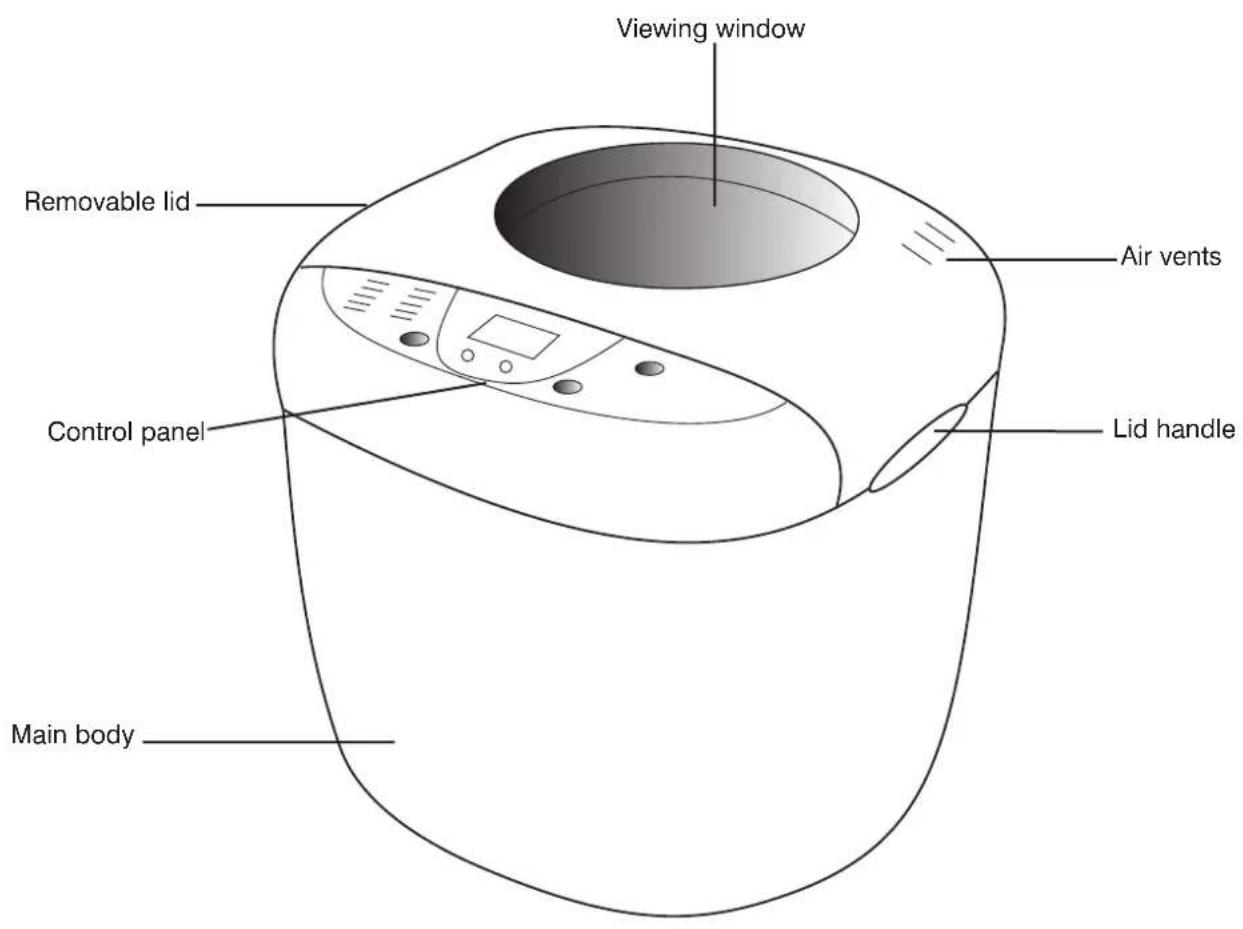
Display window
Shows crust colour selected
Shows the program number
Shows time left before completion
(3:20, for example, is 3 hours and 20
minutes; 0:20 is 20 minutes)
Shows temperature warning - see
'Troubleshooting'
Start
Press to start for approx 1 second, a beep sounds and the colon (:) flashes and the program starts.
Stop
Press to stop for approx 2 seconds, a beep sounds to confirm and the colon (:) stops flashing.
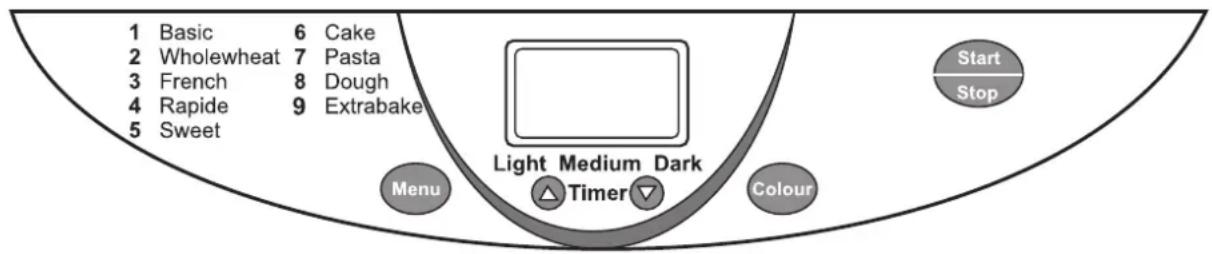
Menu button
For choosing the bread making program from the list 1 to 9
Timer delay buttons
Use to delay the start of bread making (all programs except Fastbake and pasta)
Colour button
For selecting crust colour from light, medium or dark (certain programs only)
Note:
- When selecting the Menu, the display will show a 'P' alongside the menu number, this 'P' refers to medium crust colour.
- Pressing the colour button will change this to 'H' referring to dark crust, pressing once more will show 'L' referring to light crust.
- The crust colour is also indicated by an arrow on the display. Waiting a few seconds will then show the time period for that particular menu.
When first switching on the breadmaker the display '1P' this is Basic setting 1. This is in the Menu setting mode.
If the display shows 0:00, press the Start / Stop button to activate the Menu setting mode. You can then select the menu desired.
1 Basic white (2:50)
For white and brown bread. Also for flavoured breads with added herbs and raisin.
2 Wholewheat (4:30)
For the baking of bread containing significant amounts of wholewheat. This setting has longer preheat time to allow the grain to soak up the water and expand. The kneading blade does not turn during this 30 minute rest period. It is not advised to use the delay timer as this can produce poor results. It has been found that some wholemeal flours perform better on the basic menu setting.
3 French (3:40)
For the baking of light weight bread such as french bread which has a crisper crust and light texture.
4 Rapide (1:58)
For white bread that is required in a shorter time. Bread baked on this setting is usually smaller with a dense texture.
5 Sweet (3:25)
For the baking of sweet type bread which gives a crisper crust than on basic setting. The crisper crust is produced by the sugar 'burning'.
6 Cake (1:40)
This setting will mix ingredients and then bake for a preset time. It is required to mix two groups of ingredients in bowls before adding to the breadmaker (see cake recipes).
7 Pasta (0:13)
The pasta setting is a 13 minute knead which can be used for general mixing of other flour based recipes. Do not exceed 3 cups of dry mix.
8 Dough (1:30)
This setting only makes the dough and will not bake the final bread. Remove the dough and shape it to make bread rolls, pizza, etc. Any dough can be prepared on this setting. Do not exceed 1kg (2lb) of combined ingredients.
9 Extra bake (0:10)
This setting is bake only and can be used to increase the baking time on selected settings. This is especially useful to help 'set' jams and marmalade. When started the default time is 10 mins (0:10) minimum and counts down in 10 minute intervals. You will have to manually switch this off by pressing the stop button, when you have completed the Extrabake process. It is advised that you check the condition of the bread or jam after 10 minutes and at 10 minute intervals.
Pressing ▲increases the time in increments of 10 minutes.
When selecting Extrabake straight after another program, if the message E:01 is displayed, open the lid, remove the pan and allow to cool for 10 minutes. When cool, replace the baking pan and its contents, set program and press start.
Times indicated are for loaf size option, crust colour selection will vary these times. See cycle chart page 21.
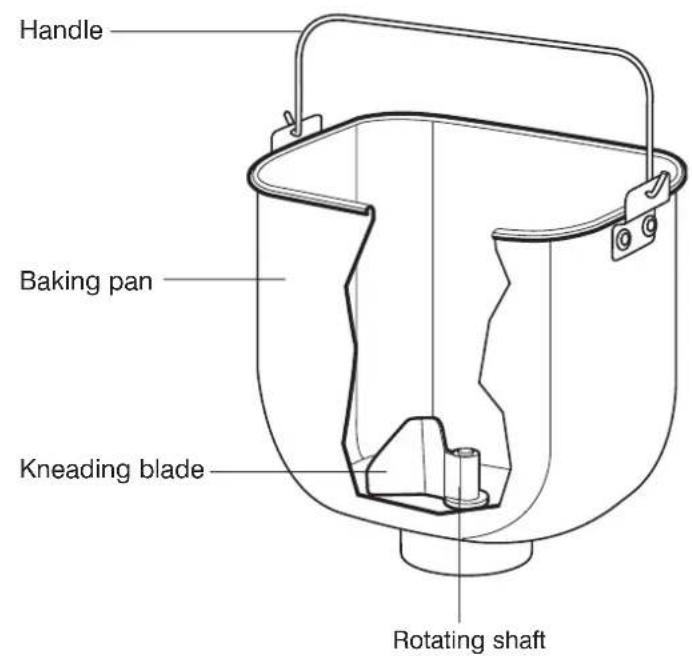
1 Take out the pan
Open the lid and remove the pan by lifting the handle, and lifting out. Place on the work surface. It is important that the pan is filled with ingredients outside the machine so that any accidental spillage is not ignited by the heating elements.
2 Attach the blade
Attach the kneading blade to the shaft by pushing on.
3 Measure ingredients
Measure the ingredients required and add them all into the pan in the order listed. See later section 'Measuring your ingredients').
- When adding the yeast to the baking pan, take care that the yeast does not come into contact with the water or any other liquid, as it will start to activate immediately.
- Use tepid water 21 - 28^ C .
4 Put pan back in
Place the baking pan back in the breadmaker, Press until it locks into place. Close the lid.
5 Plug in
Plug into the power supply. The breadmaker will automatically be set to basic bread menu and normal time.
- Everytime you press a button you will hear a beep to confirm.
6 Select program
Choose the desired setting from the list by pressing the Menu button.
7 Select colour
Choose desired crust colour by pressing Colour button.
8 Select the delay time
If you wish the bread to be ready later, set the time delay now, as described in next section.
9 Start
Press the Start Stop button to start the machine. The remaining time will count down in one minute increments.
10 Progress
The breadmaker will automatically proceed through the programmed stages as shown in the ‘Baking cycle times’ section.
- It is possible that steam will escape through the vents during baking, this is normal.
11 Finish
When the program is completed and the bread is baked the display shows the default program time and the beeper will sound.
12 Keep warm
The keep warm function will circulate hot air for a further 60 minutes on most settings (see ‘Baking cycle times’ section). For best results, remove the baking pan and loaf within this period or when the initial program is completed. Beeps will be heard when the keep warm period is finished.
13 Remove the food
Press Stop. Open the lid.
WARNING: Use oven gloves when removing the baking pan (taking care as it is very hot).
14 Turn out the bread
Allow the bread to cool in the pan for 15 minutes, then turn the pan upside down and tap the bread from the pan onto a rack to cool. If the blade sticks in the pan, fill the pan with warm water to prevent the blade from sticking to the shaft.
- The kneading blade will stay in the loaf. Wait until the loaf is cool and then remove the blade with a wooden or plastic utensil to avoid damage to the non-stick surface.
15 Always unplug the appliance after use. - Do not open the lid whilst the breadmaker is operating as this will affect the quality of the bread, especially its ability to rise properly.
Room temperature note
The breadmaker will work well in a wide range of temperatures, but there could be a difference in loaf size between a very warm room and a very cold room. We recommend the room temperature should be between 15^ C and 34^ C.
Using the timer
Use the timer when you want the bread ready later, or in the morning. A maximum of 12 hours can be set. Check if function is available by consulting ‘Baking cycle times’ section. Do not use this function with recipes that use perishable ingredients such as eggs, fresh milk, sour cream, or cheese.
1 Decide when you want the bread to be ready and calculate the difference in time between now and then. For example, if you want a loaf at 8am, and it is now 8.30pm, the difference is 1112 hours.
2 Enter this time by pressing 'Time ▼' and 'Time ▲' buttons. Arrows will move time up or down in 10 minute increments. After you have pressed Start, the colon (:) will flash.
- If you have selected the wrong time press stop for 2 seconds. The timer will go back to the program time, repeat step 1 and 2.
3 The timer delay is up to a maximum of 12 hours. This is when the bread will be ready to remove from the machine, see page 8 item 14 'Remove the food'.
Beeper
The beeper sounds:
- when pressing any button;
- when the program finishes;
- when keep warm finishes.
- when you have to add fruit and nuts see baking cycle times (page 21) for displayed times.
Power interruption
1 After a brief power supply failure 7 minutes MAX.
- When the power is reconnected the breadmaker will continue the set programme automatically.
- if it has gone beyond this time and the bread maker has defaulted back to the start time, you must either:
i) If the program has not reached rise1 select the program required and press start.
ii) If the program has passed rise 1, the ingredients will have to be discarded and you must start again with fresh ingredients.
Slicing and storing bread
For best results place bread on a wire rack and allow to cool for 20-40 minutes before slicing.
Use an electric knife or a sharp knife with a serrated blade for even slices.
Store unused bread tightly covered in a plastic bag at room temperature for up to three days. If weather is hot and humid, store in the refrigerator overnight.
For longer storage (up to one month), place bread in a tightly covered container in the freezer.
If you store the bread in the refrigerator, leave it out to bring it to room temperature before serving.
Since homemade bread has no preservatives it tends to dry out and become stale faster than commercially made bread, after 4 to 5 days.
Leftover slightly hardened bread may be cut into 1.3 cm (half inch) or 2.5cm (1 inch) cubes and used in favourite recipes to make croutons, bread pudding, or stuffing.
1 Caution: To prevent electrical shock, unplug the unit before cleaning.
2 Wait until the breadmaker has cooled.
- IMPORTANT: Do not immerse or splash either the body or lid in any liquid as this may cause damage and/or electric shock.
3 Exterior: Wipe the lid and outer body of the unit with a damp cloth or slightly dampened sponge.
4 Brown staining of the lids inner surface and vents may be seen. This is vapour residue from the ingredients carried up in the escaping steam during baking. This has no detrimental affect to the material of the breadmaker or quality of the baked loaf. Simply wipe this away with a hot soapy cloth or sponge after every use or when it appears.
5 Interior: Use a damp cloth or sponge to wipe the interior of the breadmaker.
6 Slide the lid out of the location groove on one side and then lift upwards to remove. Wipe the interior surface with a damp cloth or sponge.
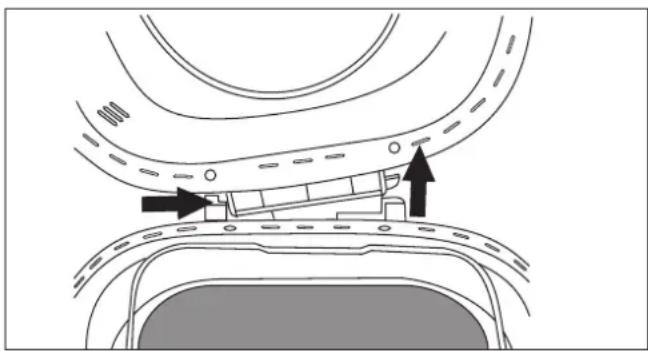
natural_image
Diagram of a car intake structure showing intake, intake arrow, and intake portion (no text or labels)7 Reverse procedure to put lid back into position.
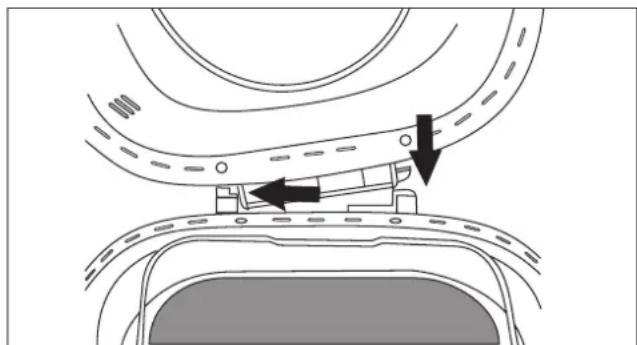
natural_image
Diagram of a car's rearview ramp mechanism with directional arrows indicating motion (no text or labels)8 Baking pan: Clean the baking pan with warm water, soap is not necessary. Avoid scratching the non-stick surface. Dry it thoroughly before placing it back in the baking chamber.
- Do not wash the baking pan, measuring cup, spoon or kneading blades in the dishwasher.
- Do not soak the baking pan for long periods as this could interfere with the working of the drive shaft.
- If the paddle becomes stuck in the bread pan, pour hot water over it and allow to soak for 30 minutes. This will enable you to remove the paddle more easily.
- Be sure the appliance is completely cooled before storing away.
Do not use any of these when cleaning
- Paint thinner
- Benzine
- Steel wool pads
- Polishing powder
- Chemical dustcloth
Special care for the non-stick finish
Avoid damaging the coating. Do not use metal utensils such as metal spatulas, knives or forks.
The coating may change colour after long use, this is only caused by heat and moisture and will not affect the performance of the unit or quality of your bread.
The hole in the centre of the kneading blade should be cleaned, then add a drop of cooking oil and replace it on the spindle in the baking pan. This will prevent sticking of the blade.
- Keep all air vents and openings clear of dust.
Storing the unit
Be sure to dry all parts before storing including wiping any moisture from the viewing window. Close the lid and do not store anything on top of the lid.
Understanding baking
It is often said that cooking is an art relying on the creativity of the chef while baking bread is much more of a science. This means that the process of combining flour, water and yeast results in a reaction that produces bread. You have to remember that when the ingredients combine with each other they produce a specific result. Read the following information carefully to gain a better understanding of the importance each ingredient plays in the breadmaking process.
Important note on flours
Flours, while visibly similar, can be very different by virtue of how they were grown, milled, stored, etc. You may find that you will have to experiment with different brands of flour to help you make that perfect loaf. Storage is also very important, as all flours should be kept in an airtight container.
All purpose flour/plain flour
All purpose Flour is a blend of refined hard and soft wheat flours especially suitable for making cake. This type of flour should be used for recipes in the cake/quick bread section.
Strong white flour/bread flour
Bread flour is a high gluten/protein flour that has been treated with conditioners that give dough a greater suitability for kneading. Bread Flour typically has a higher gluten concentration than All purpose flour; however, depending on different milling practices, this may vary. Strong plain flour or bread flour are recommended for use with this breadmaker.
Whole wheat flour/wholemeal flour
Whole wheat flour/wholemeal flour is milled from the entire wheat kernel which contains the bran and germ and makes it heavier and richer in nutrients than white flour. Breads made with this flour are usually smaller and heavier than white loaves. To overcome this whole wheat flour/wholemeal flour can be mixed with Bread flour or strong plain flour to produce a high light textured bread.
Self-raising flour
Self-raising Flour contains unnecessary leavening ingredients that will interfere with bread and cake making. It is not recommended for use.
Bran
Bran (unprocessed) & Wheat Germ are the coarse outer portions of the wheat or rye grains separated from flour by sifting or bolting. They are often added in small quantities to bread for nutritional enrichment, heartiness and flavour. They are also used to enhance the texture of bread.
Oatmeal
Oatmeal comes from rolled or steel-cut oats. They are used primarily to enhance flavour and texture.
Other ingredients
Yeasts (active dry yeast)
Yeast through a fermentation process produces gas (carbon dioxide) necessary to make the bread rise. Yeast must be able to feed on sugar and flour carbohydrates in order to produce this gas. Fast action granular yeast is used in all recipes that call for yeast. There are basically three different types of yeast available, fresh, traditional dry active and fast action. It is recommended that fast action type yeast be used. This type of yeast comes in sachets and are labelled fast action, easy bake or easyblend. Fresh or compressed cake yeast is not recommended as they will produce poor results. Store yeast according to manufacturers instructions. Ensure your yeast is fresh by checking its expiration date. Once a package of yeast is opened it is important that the remaining contents be immediately resealed and refrigerated as soon as possible for future use. Often bread or dough, which fails to rise, is due to stale yeast being used. The following test can be used to determine whether your yeast is stale and inactive:
1 Place half a cup of lukewarm water into a small bowl or cup.
2 Stir 1 tsp. of sugar into the water then sprinkle 2 tsp. of yeast over the surface.
3 Place bowl or cup in a warm area and allow to sit for 10 minutes undisturbed.
4 The mixture should foam and produce a strong yeast aroma. If this does not occur, discard mixture and start again with another packet of dried yeast.
Sugar
Sugar is important for the colour and flavour of breads. It is also food for the yeast as it is part of the fermentation process. Artificial sweeteners cannot be used as a substitute for sugar as the yeast will not react properly with them.
Salt
Salt is necessary to balance the flavour of breads and cakes, as well as for the crust colour that develops during baking. Salt also limits the growth of yeast so the amounts shown in the recipes should not be increased. For dietary reasons it may be reduced, however, your baking may suffer.
Liquids/milk
Liquids such as milk or a combination of powdered milk and water, can be used when making bread. Milk will improve flavour, provide a velvety texture and soften the crust, while water alone will produce a crispier crust. Some liquids call for juice (orange, apple, etc) to be added as a flavour enhancer. Note: For most recipes we suggest the use of dry skimmed milk.
Eggs
Eggs add richness and a velvety texture to bread doughs and cakes.
Sunflower oil
‘Shortens’ or tenderises the texture of yeast breads. Butter or margarine can be used as a substitute. If butter or margarine is used direct from the refrigerator it should be softened for easier blending during the mixing cycle.
Baking powder
Baking powder is a raising agent used in cakes. This type of raising agent does not require rising time before baking as the chemical reaction works when liquid ingredients are added.
Bicarbonate of soda
Bicarbonate of soda is another raising agent not to be confused or substituted for baking powder. It also does not require rising time before baking as the chemical reaction works during the baking process.
Vitamin C - Ascorbic acid
Ascorbic acid helps improve the volume of the loaf. Vitamin C powder or tablets should be used. You can also use the orange flavour vitamin C supplement tablet. These are usually marked in mg (milligrams) strength. If they are 200mg tablets, use 1/2 tablet for 100mg dose. The tablet must be crushed between 2 spoons to create a powder. If using powder refer to the packet instructions but a 1/4 of a teaspoon is usually recommended.
Measuring ingredients
The key and most important step when using your breadmaker is measuring your ingredients precisely and accurately. It is extremely important to measure each liquid and dry ingredient properly or it could result in a poor or unacceptable baking result. The ingredients must also be added into the baking pan in the order in which they are given in each recipe. Liquid and dry measurements are done somewhat differently and are as follows:
Liquid measurements
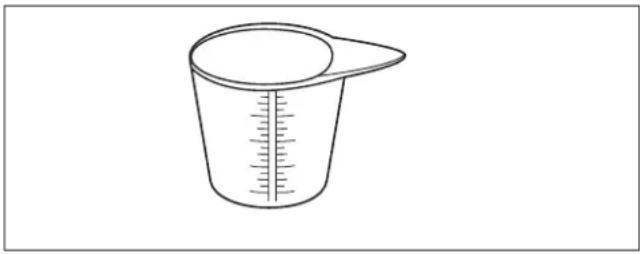
Use the cup provided. When reading amounts, the measuring cup must be placed on a horizontal flat surface and viewed at eye level (not on an angle). The liquid level line must be aligned to the mark of
measurement. A ‘guesstimate’ is not good enough as it could throw out the critical balance of the recipe.
Dry measurements
Dry measurements (especially flours) must be done using the measuring cup provided. The measuring cup is based on the American standard 8 fluid oz cup -
natural_image
Line drawing of a measuring cup with a lid, showing measurement markings (no text or symbols)(British cup is 10 fluid oz.) Dry measuring must be done by gently spooning ingredients into the measuring cup to the indicated line. Scooping or tapping a measuring cup will pack the ingredients and you will end up with more than is required. This extra amount could affect the balance of the recipe. Do not sift the flour, unless stated.
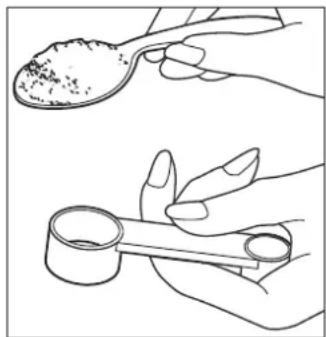
When measuring small amounts of dry or liquid ingredients (ie yeast, sugar, salt, powdered milk, honey) the measuring spoons provided must be used. Measurements must be level, not heaped as this small difference could throw out the critical balance of the recipe.
natural_image
Line drawings of two hands holding different types of food: a spoon and a measuring cup (no text or symbols)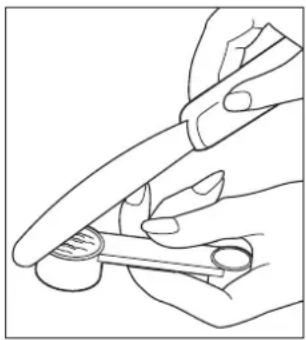
natural_image
Line drawing of hands using a tool to cut or apply a small object (no text or symbols present)DO NOT USE NORMAL KITCHEN TEASPOONS OR TABLESPOONS.
Hints on measuring ingredients
- The cup is marked in various ‘volume measurement’ scales. The recipes in this book use the ‘cup’ volume which is based on the ‘American cup of 8floz and is conveniently marked in 1_/16 divisions.
- If you prefer to use weight (gms) as a measurement fill and weigh the required number of cups and record this conversion.
ie) 2 cups = xx gms 3 cups = xxx gms
You must use a good quality set of accurate scales, we prefer to use the 'cup' measure for consistency and accuracy.
- There are 2 spoons provided to cover all combinations of quantities in the recipes.
Tablespoon tbsp, teaspoon and 12 teaspoon (marked with line) and a 14 tsp.
1 tsp = 5 millilitres
1 tbsp = 3 tsp = 15 millilitres
Hint measure dry ingredients first with the tablespoon, then wet (oil) last.
Your breadmaker produces delicious baked goods with ease. This machine requires only that you carefully follow the recipe instructions. In basic cooking, normally ‘a pinch of this and a dash of that’ is fine, but not for breadmakers. Using an automatic breadmaker requires you accurately measure each ingredient for best results.
Ingredient temperatures
All ingredients, including the machine and pan, and especially liquids (water or milk), should be warmed to room temperature 21^ C ( 70^ F). If ingredients are too cold, below 10^ C ( 50^ F), they will not activate the yeast. Extremely hot liquids, above 40^ C ( 104^ F), may kill the yeast.
Creating your own yeast bread
With the breadmaker, even the most inexperienced baker can achieve the satisfying experience of baking a loaf of bread. All of the mystery and hard work is gone. Inside this talented machine with an electronic brain, the dough is mixed, kneaded, proofed and baked without you being present. The automatic breadmaker can also just prepare the dough, and when it's ready, you shape, allow to rise and bake in a conventional oven. The recipes on the following pages are 'tailored' for this breadmaker. Each recipe features ingredients that best compliment a particular loaf of bread, and each was tested in our machines. It is extremely important not to exceed the amounts of flour specified in each of the recipes or else it could result in unsatisfactory baking performance. When creating your own yeast bread recipes or baking an old favourite, use the recipes in this cookbook as a guide for converting portions from your recipe to your breadmaker. Do not exceed 4 cups of flour and 1/2 cup fruit and nut.
Special glazes for yeast breads
Give your just baked bread a professional finish. Select one of the following special glazes to enhance your bread.
Egg glaze
Beat 1 large egg and 1 tablespoon of water together, brush generously. Note: apply only to doughs before baking.
Melted butter crust
Brush melted butter over just baked bread for a softer, tender crust.
Milk glaze
For a softer, shiny crust, brush just baked bread with milk or cream.
Sweet icing glaze
Mix 1 cup sifted icing sugar with 1 to 2 tablespoons of milk to make a glaze consistency and drizzle over raisin bread or sweet breads.
Poppy/Sesame/Caraway seed/Oatmeal
Sprinkle your choice of these seeds generously over just glazed bread.
Other tips
- Place all recipe ingredients into the baking pan so that yeast is not touching any liquid.
- After completing the process of making dough in your breadmaker, typically when letting dough rise outside the breadmaker, allow 30 minutes or until dough doubles in size. Dough should be lightly greased and covered with grease proof paper and a dry towel. It should be placed in a warm area free from drafts.
- Humidity can cause problems, therefore humidity and high altitudes require adjustments. For high humidity, add an extra tablespoon of flour if consistency is not right. For high altitudes, decrease yeast amount by approximately 1/4 teaspoon, and decrease sugar and/or water or milk slightly.
- The DOUGH setting is great for mixing, kneading and proofing (allowing dough to rise). Use the automatic breadmaker to prepare this dough.
- When recipes call for a 'lightly floured surface,' use about 1 to 2 tablespoons of flour on the surface. You may want to lightly flour your fingers or rolling pin for easy dough manipulation.
- When you let dough ‘rest’ and ‘rise’ according to a recipe, place it in a warm, draught-free area. If the dough does not double in size, it may not produce a good texture.
- If the dough you are rolling shrinks back, let it rest covered for a few minutes before rolling again.
- Dough may be wrapped in plastic and stored in a freezer for later use. Bring the dough to room temperature before using.
- After 5 minutes of kneading, open the lid and check the dough consistency. The dough should form a soft, smooth ball. If too dry, add liquid. If too wet, add flour ( 1_1/2 to 1 tablespoon at a time).
- When using honey, malt extract, golden syrup or treacle, coat the spoon or cup with oil first, this will prevent these ingredients from sticking, to the spoon or cup.
All of the following recipes use this same general method:
1 Measure ingredients into baking pan.
2 Use tepid water 21-28°C.
3 Insert baking pan securely into unit, close lid.
4 Select appropriate bread setting.
5 Push start button.
6 When bread is done, remove pan from unit using oven mitts.
7 Remove bread from baking pan, (and kneading blade from bread if necessary).
8 Allow to cool before slicing.
This method is modified by notes, if applicable, at the end of each recipe.
These recipes have been developed using Allinson flours and Easybake Allinson yeast.
1 Recipes for basic breads
Basic white bread
| 1^1/2 lb | |
| Water 1 | ^1/8 cup |
| Skimmed milk powder 2 | ^1/2 tbsp |
| Sugar 2 tbsp | |
| Salt 1 | ^1/4 tsp |
| Sunflower oil 2 | ^1/2 tbsp |
| Strong white bread flour 3 cups | |
| Fast action yeast | ^3/4 tsp |
| Use setting 1 Basic | |
Softgrain bread
| 1^1/2 lb | |
| Water 1 | ^1/_8 cup |
| Skimmed milk powder 2 | ^1/_2 tbsp |
| Sugar 2 tbsp | |
| Salt 1 | ^1/_4 tsp |
| Sunflower oil 2 | ^1/_2 tbsp |
| Strong white softgrain bread flour 3 cups | |
| Fast action yeast | ^3/_4 tsp |
| Use setting 1 Basic | |
Brown loaf
| 1^1/2 lb | |
| Water 1 cup | |
| Skimmed milk powder 2 tbsp | |
| Demerara Sugar 2 | ^1/2 tbsp |
| Salt 1 | ^1/2 tsp |
| Sunflower oil 2 tbsp | |
| Strong brown bread flour | 3 cups |
| Fast action yeast | 1 tsp |
| Use setting 1 Basic | |
Italian herb bread
| 1^1/_2 lb | |
| Water 1 | ^1/_8 cup |
| Skimmed milk powder 2 | ^1/_2 tbsp |
| Sugar 2 tbsp | |
| Salt 1 | ^1/_2 tsp |
| Sunflower oil 2 | ^1/_2 tbsp |
| Strong white bread flour | 3 cups |
| Dried marjoram | 1^1/_2 tsp |
| Dried basil | 1^1/_2 tsp |
| Dried thyme | 1^1/_2 tsp |
| Fast action yeast | 1 tsp |
| Use setting 1 Basic | |
Cheese & onion bread
| 1^1/2 lb | |
| Water 1 cup | |
| Skimmed milk powder 2 tbsp | |
| Sugar 2 tbsp | |
| Salt 1 tsp | |
| Dried onion granules or flakes | 2^1/2 tbsp |
| Mature grated cheddar cheese | 1^1/2 cup |
| Strong white bread flour | 3 cups |
| Fast action yeast | 1 tsp |
| Use setting 1 Basic | |
| ! Do not use onion salt | |
Raisin bread
| 1^1/2 lb | |
| Water 1 | ^1/8 cup |
| Skimmed milk powder 2 | ^1/2 tbsp |
| Castor sugar | ^1/4 cup |
| Salt 1 | ^1/4 tsp |
| Cinnamon | ^3/4 tsp |
| Sunflower oil 2 | ^1/2 tbsp |
| Strong white bread flour | 3 cups |
| Fast action yeast | 1 tsp |
| Raisins* | ^5/8 cup |
| Use setting 1 Basic | |
*add raisins when the beep sounds - Refer to baking cycle times.
Sun-dried tomato loaf
| 1^1/2 lb | |
| Water 1 cup | |
| Salt * | 1^1/4 tsp |
| Sugar 2 tbsp | |
| Dried mixed herbs | 1^1/2 tsp |
| Olive oil | 2 tbsp |
| Sunflower oil 2 | ^1/2 tbsp |
| Strong white bread flour | 3 cups |
| Fast action yeast | 1 tsp |
| Sun-dried tomatoes | ^3/8 cup |
| Use setting 1 Basic | |
* Salt could be omitted as sun dried tomatoes are high in salt.
Malt loaf
| 1^1/2 lb | |
| Water | ^7/8 cup |
| Salt 1 tsp | |
| Sunflower oil 2 tbsp | |
| Black treacle | ^1/4 cup |
| Malt extract | ^1/4 cup |
| Plain flour 2 | ^1/2 cup |
| Fast action yeast 1 tsp | |
| Sultanas* | ^1/4 cup |
| Use setting 1 Basic |
*add sultanas when beep sounds - Refer to baking cycle times.
Note : When measuring black treacle and malt extract smear cup in oil first to ease pouring out.
Olive bread
| 1^1/2 lb | |
| Water 1 cup | |
| Skimmed milk powder 2 | ^1/2 tbsp |
| Salt 1 | ^1/4 tsp |
| Sugar 2 tbsp | |
| Dried mixed herbs 1 | ^1/2 tsp |
| Sunflower oil 2 | ^1/2 tbsp |
| Strong white bread flour 2 | ^1/2 cups |
| Strong wholemeal flour | ^1/2 cup |
| Fast acting yeast 1 tsp | |
| Chopped olives* | ^1/2 cup |
| Use setting 1 Basic | |
*add olives when beep sounds - Refer to baking cycle times.
Pizza loaf
| 1^1/2 lb | |
| Water 1 | ^1/4 cup |
| Skimmed milk powder 1 | ^1/2 tbsp |
| Sugar 1 tbsp | |
| Salt 1 tsp | |
| Dried oregano 2 tsp | |
| Sunflower oil 1 tbsp | |
| Strong brown flour 2 cups | |
| Strong white flour 1 cup | |
| Fast action yeast 1 tsp | |
| Pepperoni 75g | |
| Stuffed olives* | ^1/2 cup |
| Use setting 1 Basic |
*add olives when beep sounds - Refer to baking cycle times.
Peanut butter bread
| 1^1/2 lb | |
| Water 1 | ^1/8 cups |
| Brown sugar | ^1/4 cup |
| Salt 1 tsp | |
| Peanut butter | ^1/2 cup |
| Strong white flour 3 | ^1/4 cup |
| Fast acting yeast 1 tsp | |
| Use setting 1 Basic |
Cheddar pepper bread
| 1^1/2 lb | |
| Water 1 cup | |
| Skimmed milk powder 2 tbsp | |
| Worcester sauce 2 tsp | |
| Salt 1 | ^1/2 tsp |
| Sugar 2 tbsp | |
| Black pepper | ^1/4 tsp |
| Dry mustard | 1 tsp |
| Mature cheddar | ^1/4 cup |
| Strong white flour 3 cups | |
| Fast action yeast 1 tsp | |
| Use setting 1 Basic | |
Nut and honey bread
| 1^1/2 lb | |
| Water 1 cup | |
| Salt 1 | ^1/2 tsp |
| Olive oil | 2 tbsp |
| Honey | 2 tbsp |
| Sunflower seeds* | ^1/4 cup |
| Chopped walnuts* | ^1/4 cup |
| Strong white bread flour 3 cups | |
| Fast action yeast 1 tsp | |
| Use setting 1 Basic | |
*add seeds and walnuts when the beep sounds
- Refer to baking cycle times.
Orange bread
| 1^1/2 lb | |
| Freshly squeezed orange juice | 1^1/4 cup (3 medium) |
| Sugar 2 tbsp | |
| Salt 1 tsp | |
| Sunflower oil 1 tbsp | |
| Strong white flour 3 | ^1/4 cups |
| Sunflower seeds (optional) | 2 tbsp |
| Orange rind (grated) | From all oranges used |
| Fast action yeast 1 tsp | |
| Use setting 1 Basic |
2 Recipes for wholewheat bread
Wholewheat bread
| 1^1/2 lb | |
| Water 1 | ^1/8 cup |
| Skimmed milk powder 1 | ^1/2 tbsp |
| Brown sugar | 3 tbsp |
| Salt 1 | ^1/4 tsp |
| Sunflower oil 2 tbsp | |
| Strong wholemeal bread flour | 3 cups |
| Fast action yeast 1 | ^1/2 tsp |
| Vitamin C tablet (crushed) | 1x100mg |
| Use setting * | 2 Wholewheat |
*Some wholemeal flours do not require the longer rest period and will be more suitable using the 1 basic setting.
** Substitute 1 cup strong white bread flour for a lighter texture
Granary loaf
| 1^1/2 lb | |
| Water 1 | ^1/_8 cup |
| Skimmed milk powder 2 tbsp | |
| Soft brown sugar 2 | ^1/_2 tbsp |
| Salt 1 | ^1/_4 tsp |
| Sunflower oil 2 tbsp | |
| Granary malted brown bread flour** 3 cups | |
| Fast action yeast 1 | ^1/_2 tsp |
| Vitamin C tablet* 1 x 100mg | |
| Use setting* 2 Wholewheat | |
*Optional: By adding a vitamin C tablet, the rise of the bread can be improved. Crush tablet between 2 teaspoons and add.
*Some wholemeal flours do not require the longer rest period and will be more suitable using the 1 basic setting.
** Substitute 1 cup strong white bread flour for a lighter texture
3 Recipes for french bread
French bread
| 1^1/2 lb | |
| Water 1 cup | |
| Skimmed milk powder 2 tbsp | |
| Sugar 1 tbsp | |
| Salt 1 tsp | |
| Sunflower oil 1 tbsp | |
| Strong white bread flour 3 cups | |
| Fast action yeast 1 tsp | |
| Use setting | 3 French |
4 Rapide
Basic white bread
| 1^1/2 lb | |
| Water 1 | ^1/8 cup |
| Skimmed milk powder 2 | ^1/2 tbsp |
| Sugar 2 tbsp | |
| Salt 1 | ^1/4 tsp |
| Sunflower oil 2 | ^1/2 tbsp |
| Strong white bread flour 3 cups | |
| Fast action yeast 1 | ^1/2 tsp |
| Use setting | 4 Rapide |
Softgrain bread
| 1^1/2 lb | |
| Water 1 | ^1/_8 cup |
| Skimmed milk powder 2 | ^1/_2 tbsp |
| Sugar | 2 tbsp |
| Salt 1 | ^1/_4 tsp |
| Sunflower oil 3 tbsp | |
| Strong white softgrain bread flour | 3 cups |
| Fast action yeast 2 tsp | |
| Use setting | 4 Rapide |
5 Sweet
Mixed fruit loaf
| 1^1/2 lb | |
| Water | 1^1/8 cups |
| Skimmed milk powder | 2^1/2 tbsp |
| Castor sugar | ^1/_4 cup |
| Salt | 1^1/4 tsp |
| Sunflower oil | 2^1/2 tbsp |
| Strong white bread flour | 3 cups |
| Nutmeg | ^3/_4 tsp |
| Fast action yeast | 1 tsp |
| Dried mixed fruit* | ^1/2 cup |
| Use setting | 5 Sweet |
*add mixed fruit when the beep sounds
- Refer to baking cycle times.
Chocolate bread
| 1^1/2 lb | |
| Water 1 cups | |
| Egg (beaten) 1 medium | |
| Skimmed milk powder 1 tbsp | |
| Castor sugar | ^1/2 cup |
| Salt | ^1/2 tsp |
| Walnuts (chopped) * optional | ^1/4 cups |
| Sunflower oil 1 tbsp | |
| Strong white bread flour | 2^1/8 cups |
| Cocoa powder | ^1/2 cup |
| Fast action yeast | ^1/2 tsp |
| Use setting | 5 Sweet |
*add walnuts when the beep sounds
6 Recipes for cakes
Important
The cakes produced in this breadmaker will not rise to fill the pan completely, they will be approximately 55mm (2") tall. The standard cake is a Madeira type which is moist, rich and dense in texture. Adjustments to the recipe may be required for personal taste - less butter and sugar to reduce the richness, less water and/or eggs to reduce moisture.
Variations
Cherries - ^1/2 cup cherries halved (wash thoroughly to remove the excess syrup) and allow them to drain and dry on absorbent paper; or mixed fruit - ^1/2 cup or chocolate chips - ^1/_4 cup Add any of these variations into the breadpan last, on top of the other ingredients.
Use the 1.5lb setting for all cakes
| Madeira cake | |
| Ingredients group 1 | |
| Butter (softened) | ^1/_2 cup |
| Vanilla essence | ^1/_4 tsp |
| Eggs (beaten) 3 medium | |
| Lemon juice 2 tbsp | |
| Ingredients group 2 | |
| Plain flour 1 | ^5/_8 cup |
| Baking powder 2 tsp | |
| Castor sugar | ^3/_4 cup |
| Use setting 6 Cake | |
Method
1 Mix group 1 together in a separate bowl.
2 Sieve group 2 together in a second bowl.
3 Combine groups 1 and 2 together until mixed.
4 Pour mixture into breadpan.
Mixed fruit cake
| Ingredient group 1 | |
| Butter (softened) | ^1/_2 cup |
| Water | ^1/_4 cup |
| Beaten eggs 2 medium | |
| Lemon juice 2 tsp | |
| Dried mixed fruit 1 cup | |
| Ingredient group 2 | |
| Plain flour 2 cups | |
| Baking powder 1 | ^1/_2 tsp |
| Brown sugar | ^1/_2 cup |
| Ground cinnamon | ^1/_2 tsp |
| Ground nutmeg | ^1/_2 tsp |
| Use setting 6 Cake | |
Method
Follow method given for standard cake mix.
Banana and nut loaf
| Ingredient group 1 | |
| Sun flower oil 2 tbsp | |
| Skimmed milk powder 1 tbsp | |
| Mashed banana 2 medium | |
| Beaten egg 1 medium | |
| Chopped walnut | ^1/_2 cup |
| Lemon juice 1 tsp | |
| Water 1 tbsp | |
| Ingredient group 2 | |
| Plain flour 1 | ^1/_2 cups |
| Bicarbonate of Soda | ^1/_2 tsp |
| Baking powder | ^1/_4 tsp |
| Granulated sugar | ^1/_2 cup |
| Salt | ^1/_4 tsp |
| Use setting 6 Cake | |
Method
Follow method given for standard cake mix.
Parkin
| Water | ^5/_8 cup |
| Skimmed milk powder 2 tbsp | |
| Butter (softened) 3 | ^1/_2 tbsp |
| Black treacle 4 tbsp | |
| Golden syrup 4 tbsp | |
| Self raising flour 1 | ^1/_2 cups |
| Salt | ^1/_2 tsp |
| Ground ginger | ^1/_2 tsp |
| Quaker oats | ^3/_4 cup |
| Egg beaten 1 | |
| Use setting 6 Cake |
7 Pasta
Pasta
| Eggs | 4 medium |
| Pasta flour | 2 cups |
| Use setting | 7 Pasta |
Method A
1 When the cycle is complete turn dough onto a lightly floured surface.
2 Using a hand cranked pasta machine or rolling pin, roll dough out to the desired thickness.
3 Cut into the desired width, 3mm ( ^1/_2 " strips for narrow width).
4 Cook in boiling water for approximately 3 minutes.
Method B
If using a pasta machine follow the instructions provided.
When the pasta flour and eggs are mixing, a glue like mix is initially produced this can sometimes stick to the corners of the baking pan. If this happens wait until the cycle has ended, using a wooden spatula pull in the unmixed flour into the centre of the pan. Reclose the lid and select menu 7 and press to repeat the cycle.
8 Recipes for dough
White bread rolls
| Water 1 | ^1/_4 cups |
| Skimmed milk powder 1 tbsp | |
| Sugar 2 tbsp | |
| Salt 1 | ^1/_2 tsp |
| Sunflower oil 2 tbsp | |
| Strong white bread flour 3 | ^1/_4 cups |
| Fast action yeast 1 | ^1/_4 tsp |
| Use setting 8 Dough |
Method
1 Knead and shape the dough into 6 rolls
2 Place on a greased baking tray
3 Brush lightly with melted butter
4 Cover for 20-25 minutes
5 Allow to rise until they are double in size and glaze
6 Bake for approx 15-20 minutes at 190^ C, 375^ F gas mark 5.
Wholewheat bread rolls
| Water 1 | ^1/_4 cups |
| Skimmed milk powder 2 tbsp | |
| Brown sugar 1 tbsp | |
| Salt 1 | ^1/_2 tsp |
| Sunflower oil 2 tbsp | |
| Honey 2 tbsp | |
| Strong wholewheat bread flour 3 | ^1/_4 cups |
| Fast action yeast 1 | ^1/_4 tsp |
| Use setting 8 Dough |
Method
Follow method given for white rolls.
Hot cross buns
| Water 1 cup | |
| Butter (softened) | ^1/_4 cup |
| Sugar | ^1/_4 cup |
| Egg (beaten) 1 | |
| Salt 1 tsp | |
| Strong white bread flour 3 | ^3/_4 cups |
| Fast action yeast 2 tsp | |
| Cinnamon 1 tsp | |
| Nutmeg | ^1/_4 tsp |
| Raisins 1 cup | |
| Use setting 8 Dough | |
Method
1 Divide into 8-12 pieces. Shape and flatten slightly.
2 Slash top of bun to form a cross.
3 Glaze with egg and milk (but not the cross).
4 Cover and allow to rise for 30 minutes.
5 Bake in oven 375°F (190°C) gas mark 5 for 16-18 minutes.
Pizza base
| Water 1 cup | |
| Sugar 2 tbsp | |
| Salt 1 tsp | |
| Sunflower oil 1 tbsp | |
| Strong white bread flour 2 | ^3/_4 cups |
| Fast action yeast | ^3/_4 tsp |
| Use setting 8 Dough | |
Method
1 Pre-heat oven.
2 Shape into a flat round shape (12") 30cm. Place on a greased baking tray. Brush lightly with oil.
3 Cover for 15 minutes and allow to rise.
4 Add your desired topping.
5 Bake at approx 200°C until golden brown.
! This is for a deep pan 12" size.
For a thin and crispy, divide into 2 for 2 x 12" pans.
Russian Kulich
| Water 1 cup | |
| Beaten egg | 1 med |
| Skimmed milk powder 3 tbsp | |
| Butter (softened) | ^1/_4 cup |
| Flaked almonds | 2 tbsp |
| Salt 1 | ^1/_2 tsp |
| Raisins | ^1/_4 cup |
| Mixed fruit | ^1/_3 cup |
| Strong white flour | 3^1/_4 cup |
| Fast action yeast 1 | ^1/_4 tsp |
| Use setting 8 Dough | |
Method
Makes 2 large baps
1 Add ingredients in order as listed.
2 Select dough setting and push start button.
3 When the dough is ready, remove dough from pan and turn dough out onto a lightly floured surface.
4 Divide into 2 equal pieces.
5 Shape and flatten slightly.
6 Place on a well greased baking tray.
7 Brush lightly with melted butter.
8 Let stand, covered for 20-25 minutes or until double in size.
9 Bake at 190^ C ( 375^ F) gas mark 5 for 15-20 minutes.
Raspberry braid
| Water 1 cup | |
| Beaten egg 1 med | |
| Butter (softened) 2 tbsp | |
| Castor sugar | ^1/_4 cup |
| Salt | ^3/_4 tsp |
| Strong white bread flour 3 | ^3/_4 cup |
| Fast action yeast 1 | ^1/_2 tsp |
| Use setting 8 Dough | |
Method
Makes 2 braids.
1 Measure ingredients into a baking pan.
2 Insert baking pan securely into baking unit, close lid.
3 Select dough setting.
4 Push start button.
5 When dough is ready remove dough from pan and on a lightly floured surface divide dough into half.
6 Roll each half into a 36 x 20 cm (14 x 18 inch) rectangle.
7 Spread ^3/_8 cup raspberry jam lengthways down centre third of each rectangle.
8 Make diagonal cuts from the outer edges 2.5cm (1inch) apart and 7.5cm (3 inches) long.
9 Fold alternate strips of dough over filling.
10Place on a greased baking sheets.
11Brush with melted butter.
12Let rise 30 minutes (until well risen).
13Brush with an egg yolk and 1 tbsp water mixture.
14Combine until crumbly:
2 tbsp soft butter
2 tbsp brown sugar
^1/_4 ground almonds
1/8 cup flour
1 tsp nutmeg
15Sprinkle half over each dough.
16Bake at 175^ C ( 350^ F) gas mark 4 for 35-35 minutes.
Bread mixes
Follow the information for bread mixes on the bread mix packet.
There are two types of bread mixes currently available.
1 Just add water
These mixes are complete and they have all the necessary ingredients provided, even the yeast. You only add water.
IMPORTANT: Follow the packet instructions as some mixes contain more than the normal amount of yeast, which could over rise in the pan. Use 2 cups of mix maximum.
These mixes are more prone to over rising and collapsing when the weather is hot and humid. Since these mixes are complete we cannot advise how to adjust, as with our own recipes. Bake in the coolest part of the day, use water between 21°-28°C. Using the rapide setting will lessen the chance of bread sinking.
Use the 'basic white setting'. For a quicker but shorter loaf 'rapide setting' may be used.
2 Just add flour and water
These mixes have the necessary ingredients in separate sachets. Just add water and flour. Remember strong white bread flour is required. A packet of this mix will produce a 500g loaf just over 1^1/2 lb.
Gluten free recipes
Gluten free breads are yeast leavened breads, where Gluten a protein part of the wheat (also found in Oats, Barley and Rye) is removed.
People who cannot tolerate Gluten in their diet (known as Coeliacs) can obtain this flour on prescription. It is found in most high street chemists and health food stores, it is expensive!
Belling has developed these recipes using one particular brand ‘Nutricia Glutafin’ Gluten free white flour mix and fibre mix. Other brands have not been tested therefore Belling cannot list these brands. Contact the Belling Helpline (0870 060 2609) for further recipes when available.
The bread is excellent on the day it is made, but with all Gluten free breads when one day old or more it will need ‘refreshing’. 2 slices placed in a microwave for 10-15 seconds will usually do this. Any remaining fresh bread can be frozen for storage. To store Gluten free bread (or any bread) slice the bread, re-assemble the slices back together, wrap the assembled loaf in aluminium foil and place it in a plastic bag. Store in the freezer until required. The slices will ‘snap’ apart when required and quickly thaw, use the microwave if required.
Gluten free white bread
| Water 1 | ^5/_8 cups |
| Skimmed milk powder 4 tbsp | |
| Granulated sugar 3 tbsp | |
| Salt 2 tsp | |
| Sunflower oil 4 tbsp | |
| *Nutricia glutafin gluten free fibre mix 1 packet | |
| Dry yeast (supplied with flour) 1 tsp | |
| Use setting 1 basic 1.5lb |
*The loaf is nearly 2lb in weight.
Madeira cake
Ingredients group 1
| Butter (melted) | ^3/_4 cup |
| Vanilla essence | ^1/_2 tsp |
| Eggs (beaten) 3 medium | |
| Lemon juice 2 tsp | |
| Water | ^1/_4 cup |
| Ingredients group 2 | |
| Nutricia glutafin gluten free (white mix) 1 | ^5/_8 cup |
| Baking powder 2 tsp | |
| Caster sugar | ^1/_2 cup |
| Use setting 6 Cake 1.5lb | |
Method
1 Mix group 1 together in a separate bowl.
2 Sieve group 2 together in a second bowl.
3 Combine groups 1 and 2 together until mixed.
4 Pour mixture into breadpan.
Operation sequence and cycle times
MENU SETTING TOTAL MAXIMUM REST KNEAD KNEAD RISE KNEAD RISE KNEAD RISE BAKE FRUIT KEEP
| TIME | DELAY | 1 | 2 | 1 | 3 | 2 | 4 | 3 | & NUT | WARM | |||
| BASIC LIGHT 1.5lb | 02:38 | 11:48 | 0 | 3 | 31 | 26 | 10s | 55 | 0 | 0 | 43 | 02:09 | 60 |
| BASIC MEDIUM 1.5lb | 02:50 | 12:00 | 55 | 02:19 | |||||||||
| BASIC DARK 1.5lb | 03:05 | 12:15 | 70 | 02:34 | |||||||||
| WHOLE WHEAT LIGHT 1.5lb | 04:23 | 11:53 | 30 | 3 | 25 | 80 | 10s | 31 | 10s | 46 | 48 | 03:29 | 60 |
| WHOLE WHEAT MEDIUM 1.5lb | 04:30 | 12:00 | 55 | 03:35 | |||||||||
| WHOLE WHEAT DARK 1.5lb | 04:39 | 12:09 | 64 | 03:45 | |||||||||
| FRENCH LIGHT 1.5lb | 03:34 | 11:54 | 0 | 3 | 30 | 32 | 10s | 30 | 10s | 55 | 64 | 02:58 | 60 |
| FRENCH MEDIUM 1.5lb | 03:40 | 12:00 | 70 | 03:11 | |||||||||
| FRENCH DARK 1.5lb | 03:44 | 12:04 | 74 | 03:17 | |||||||||
| RAPID LIGHT 1.5lb | 01:57 | 11:57 | 0 | 3 | 20 | 17 | 10s | 8 | 10s | 30 | 39 | 01:39 | 60 |
| RAPID MEDIUM 1.5lb | 01:58 | 11:58 | 40 | 01:41 | |||||||||
| RAPID DARK 1.5lb | 02:02 | 12:02 | 44 | 01:43 | |||||||||
| SWEET LIGHT 1.5lb | 03:21 | 12:01 | 0 | 3 | 31 | 31 | 10s | 30 | 10s | 50 | 56 | 02:53 | 60 |
| SWEET MEDIUM 1.5lb | 03:25 | 12:05 | 56 | 02:56 | |||||||||
| SWEET DARK 1.5lb | 03:29 | 12:09 | 64 | 03:00 | |||||||||
| CAKE LIGHT 1.5lb | 01:34 | 11:54 | 64 | - | 22 | ||||||||
| CAKE MEDIUM 1.5lb | 01:40 | 12:00 | 70 | - | |||||||||
| CAKE DARK 1.5lb | 01:44 | 12:04 | 74 | - | |||||||||
| PASTA | 00:13 | - | 0 | 3 | 5 | 1 | 0 | 0 | 4 | 0 | - | - | - |
| DOUGH | 01:30 | 12:00 | 0 | 3 | 27 | 60 | - | - | - | - | - | - | - |
| EXTRA BAKE | 00:10 | 01:00 | - | - | - | - | - | - | - | - | 60 | - | - |
Extra Bake: press “” ▲ / ▼” to increase or decrease bake time, default is 0:10 10 minutes.
Keep warm: time for Jam and Cake is included in total time.
Rest period to allow wholewheat type flour to soak up water and expand.
Note: not all menue options listed are covered with a recipe.
Fruit, nuts : this is the displayed time shown when you should add the fruit, nuts, seeds etc. You will hear a beep.
Times are in minutes unless otherwise stated s = seconds, xx:xx = hours and minutes are displayed times, which is time remaining.
Error messages: EEE the temperature sensor is disconnected, contact Belling helpline."
E01 the baking temperature is higher that 56 deg C, allow breadmaker to cool, see trouble shooting."
E00 baking temperature is lower than -20 deg C, allow the breadmaker to warm up.
HHH the temperature sensor is at fault, contact Belling helpline."
Questions about general performance and operation
Question 1
What should I do when the kneading blade comes out with the bread?
Remove carefully when cold slicing the bread. Since the blade can be disconnected from the pan, it is not a malfunction if it comes out in your bread.
Question 2
Why does my bread sometimes have some flour on the side crust?
In some cases, the flour mix may remain on the corners of the baking pan. When this happens, it usually can be eaten or simply trim off that portion of the outer crust with a sharp knife.
During the first 15 minutes of the kneading cycle, any flour stuck to the corners of the breadpan can be dislodged and put back into the dough mix. Use the handle of a wooden spatula, be careful not to touch the kneading blade when turning.
Question 3
Why isn't the dough mixing? I can hear the motor running.
The Kneading Blade or baking pan may not be inserted properly. Make sure the pan is facing the right way and that it has ‘clicked’ and seated into the bottom of the breadmaker.
Question 4
How long does it take to make bread?
Timings for each setting are outlined earlier.
Question 5
Why can't I use the timer when baking with fresh milk?
The milk will spoil if left sitting in the machine too long. Fresh ingredients such as eggs and milk should never be used with the delayed timer feature.
Question 6
Why do I have to add the ingredients in a certain order?
This allows the breadmaker to mix the ingredients in the most efficient manner possible. It also serves to keep the yeast from combining with the liquid before the dough is started to mix, which is essential on the time delay.
Question 7
When setting the timer for morning, why does the machine make sounds late at night?
The machine must start operation when the time delay reaches the start time of the program so that the bread will be ready. These sounds are made by the motor when kneading the dough. It is a normal operation, not a malfunction.
Question 8
The kneading blade is stuck in the bread pan. After baking how do I get it out?
The kneading blade may ‘stick’ in place after baking. Running warm or hot water over the blade should loosen it enough to be removed. If still stuck, soak in hot water for about 30 minutes.
Question 9
Can I wash the baking pan in the dishwasher?
No. The baking pan and kneading blade must be washed by hand.
Question 10
What will happen if I leave the finished bread in the baking pan?
Whilst still in the breadmaker for the first hour after baking is complete the bread 'keeps warm' to prevent it becoming 'soggy'.
Leaving the bread in the breadmaker after the keep warm period may result in a ‘soggy’ loaf of bread as excess steam (moisture) would not be able to escape. Remove and allow to cool on a wire rack after baking to prevent this.
Question 11
Why did the dough only partially mix? Why didn't it mix completely?
The dough may be too heavy or dry. Also, the kneading blade or baking pan may not be inserted properly. Ingredients may have been added in the wrong order.
Question 12
Why didn't the bread rise?
The yeast could be bad, past it's sell by date or possibly no yeast was added at all. Also, if the mixing was not complete, rising problems could develop.
Question 13
Why can't the delayed finish be set for more than 12 hours? What is the minimum time a cycle may be delayed?
The maximum length of delay is 12 hours including the total cycle time. For example, Setting 1 (basic medium) has a cycle time of 2:50. This start is delayed by a maximum of 9:10. The minimum length of delay for each setting is 10 minutes. The delay clock increases and decreases in increments of 10 minutes.
Questions about ingredients and recipes
Question 14
Why is my breadmaker making a loud noise?
The pan may not be correctly located, press it until it locks into place.
Question 15
How come my bread comes out too moist? What can I do?
Humidity may affect the dough. Add an extra tablespoon of flour. Also, high altitude may have the same effect. Decrease the amount of yeast by 14 teaspoon and decrease the sugar and/or water/milk slightly.
Question 16
Why do I get air bubbles at the top of the bread?
This can be caused by using too much yeast.
Decrease the yeast by 14 tsp.
Question 17
Why does my bread rise and then collapse or crater?
The bread may be rising too much. To reduce the rate of rising, reduce the amount of yeast and/or increase the amount of salt.
Question 18
Can I use my favourite bread recipes (traditional yeast bread) in my bread machine?
Yes, but you will need to experiment to get the right proportion of ingredients. Become familiar with the unit and make several loaves of bread before you begin experimenting. Never exceed a total amount of 4^1/_2 cups dry ingredients (that includes the total amount of flour, oats, oatmeal, bran, fruit and nuts etc). Use the recipes in this book to help determine the ratio of dry ingredients to liquid and amounts of yeast, sugar, salt, and oil/butter/margarine to use. We advise creating your own bread recipes using the 1basic white menu setting, then progress to the others, using the Baking cycle times chart as a guide.
Question 19
Is it important for ingredients and baking pan to be at room temperature before adding them to the baking pan?
Yes, even when the delay timer is being used. (Water must be between 21^ C and 28^ C).
Question 20
Why do the loaves vary in height and weight? The whole wheat/wholewheat breads are always shorter. Am I doing something wrong?
No, it is normal for Whole Wheat and Wholemeal breads to be shorter and denser than Basic or French breads. Whole Wheat and Wholemeal flour are heavier than white bread flour, therefore they don't rise as much during the bread making process. This is also true for bread containing fruit, nuts, oats and bran.
Question 21
Can I premix the yeast with water?
No, the yeast must be kept dry and put into the baking pan last, above the flour. this is especially important when the delay timer is being used.
Question 22
Why is there a large hole in the base of the bread?
This hole has been created by the kneading blade. Sometimes this hole is larger than normal. This is because the dough has rested to the side of the blade after the second kneading cycle - normal with bread makers. You could position the dough evenly in the base of the pan, but only do this after the last knead 4, see cycle times. Use the handle of a wooden spoon to reposition the dough back into the centre if required.
Possible cause Solution
Bread sinks in the centre
| Too much liquid or liquid too warm Measure ingredients accurately. Use liquids at temperatures between 21°C and 28°C |
| Salt was not added, causing bread to Measure ingredients accurately over rise and collapse |
| Too much yeast was added Measure ingredients accurately, if problem persists, reduce yeast by 14 teaspoon |
| High humidity and hot ambient temperatures Bake during the coolest part of the day, can cause bread to over rise and collapse Try reducing the yeast by 14 teaspoon or use liquids direct from the refrigerator.Do not use the timer function |
| High altitudes can cause the bread to over rise Try reducing the yeast by 14 teaspoon and then collapse during baking |
| Lid is open during baking Do not open the lid during baking |
Bread did not rise enough
| Not enough yeast was added Measure ingredients accurately | |
| Yeast is outdated or inactive Never use outdated yeast. Store in a cool, dark place | |
| Too little sugar was added Measure ingredients accurately | |
| Too much salt was added, reducing the Measure ingredients accuratelyaction of the yeast | |
| Water was too hot and killed the yeast | Use liquids at temperatures between 21°C and 28°C |
| Yeast has been activated before program has started Take care that yeast does not come in contact withliquid before program has started | |
Bread rises too much
| High humidity and hot ambient temperatures can cause bread to over rise | Bake during the coolest part of the day. Try reducing the yeast by 1/4 teaspoon or use liquids directly from the refrigerator. Do not use the Timer function |
| Too much yeast | Measure ingredients accurately |
| Too much liquid | Measure ingredients accurately |
| Hot liquids accelerated the yeast action | Use liquids at temperatures between 21°C and 28°C |
| Too much flour or not enough salt | Measure ingredients accurately |
Bread dry with dense texture
| Not enough liquid added | Measure ingredients accurately |
| Flour may be passed use by date, or be dry causing wet/dry imbalance | Try increasing liquid by 1 tablespoon at a time |
Bread under baked with soggy centre
| Too much liquid from fresh or canned fruit Always drain liquids well as specified in the recipe.Water may have to be reduced slightly |
| Large amounts of rich ingredients like nuts, butter, Measure ingredients accurately. Never exceed the dried fruits, syrups and grains will make dough heavy. stated amounts in the recipeThis will slow down the rising and prevent the bread from baking through |
Bread over browned
| Too much sugar Measure ingredients accurately |
| Crust colour set too high Set crust colour to light |
Bread has large holes in texture
| Water was too hot and killed the yeast | Use liquids at temperatures between 21°C and 28°C |
| Too much liquid Measure ingredients accurately | |
| Too much yeast Measure ingredients accurately | |
| High humidity and hot ambient temperatures Bake during the coolest part of the day. Try reducing and increase yeast activity the yeast by 1/4 teaspoon or use liquids direct fromthe refrigerator. Do not use the Timer function | |
Bread surface is sticky
| Bread was left in the machine too long and Whenever possible, remove bread from the baking condensation collected on the baking pan pan and cool on a wire rack before keep warm period ends |
| The wet/dry balance of the ingredients may Measure ingredients accurately be incorrect |
E:01 message on display
| Temperature in breadmaker is too high Press the Stop button. Remove the baking pan, leave lid open and allow to cool. When cool, put the baking pan back in, set program and start the program again. |
H:HH or E:EE message on display
| The temperature sensor is disconnected or at fault Refer to Belling helpline. |
Difficult to remove from the pan
| The bread is sticking to the pan | The surface of the pan needs to be oiled before everyday use. Wash the pan in hot soapy water and thoroughly dry. Liberally coat the inner surface of the pan with oil, butter or margarine. Follow the guide on page 8, ‘Using your breadmaker’. When the bread pan is removed from the machine after the baking program allow the bread to cool in the pan for 15 minutes before turning out onto a rack. Only slice the bread when fully cooled after 20-40 minutes. |
- It is important to retain the retailers receipt as proof of purchase. Staple your receipt to this back cover for future reference.
Please quote the following information if the product develops a fault. These numbers can be found on the base/or rear of the product.
Model no. Serial no.
All Belling Products are individually tested before leaving the factory. In the unlikely event of any appliance proving to be faulty within 28 days of purchase it should be returned to the place of purchase for it to be replaced.
If the fault develops after 28 days and within 24 months of original purchase, you should contact the helpline number quoting model number and serial number on the product, or write to Belling at the address shown. You will be asked to return the product (in secure, adequate packaging) along with a copy of proof of purchase. Subject to the exclusions set out below (1-5), the faulty appliance will then be repaired or replaced and dispatched usually within seven working days of receipt.
If for any reason this item is replaced during the two-year guarantee period, the guarantee on the new item will be calculated from original purchase date. Therefore it is vital to retain your original receipt or invoice to indicate the date of initial purchase.
Helpline
If you have any difficulty with your appliance, do not hesitate to call us. We're more likely able to help than the store from where you bought it.
Please have the following information ready to enable our staff to deal with your query quickly:
• Name of the product;
- Model number as shown on the underside of the appliance or rating plate.
- Serial number
Belling products are intended for household use only
Belling has a policy of continuous improvement in product quality and design. The Company, therefore, reserves the right to change the specification of its models at any time.
To qualify for the two-year guarantee the appliance must have been used according to the manufacturers instructions. For example kettles should have been regularly descaled.
Belling shall not be liable to replace or repair the goods under the terms of the Guarantee where:
1 The fault has been caused or is attributable to accidental use, mis-use, negligent use or used contrary to the manufacturers recommendations or where the fault has been caused by power surges or damage caused in transit.
2 The appliance has been used on a voltage supply other than that stamped on the products.
3 Repairs have been attempted by persons other than our service staff (or authorised dealer).
4 Where the appliance has been used for hire purposes or non-domestic use.
5 Belling are not liable to carry out any type of servicing work, under the guarantee.
This guarantee does not confer any rights other than those expressly set out above and does not cover any claims for consequential loss or damage.
This guarantee is offered as an additional benefit and does not affect your statutory rights as a consumer.
- This guarantee is valid in the UK and Ireland only.


The After Sales Division,
Belling Ltd, Mexborough,
South Yorkshire, England, S64 8AJ
Helpline (office hours)
UK 0870 060 2609
Republic of Ireland 1800 409119
- getting the best from your new breadmaker...
- Accurate measuring is essential
- Yeast content
- WARNING: Danger of personal injury
- Location
- Mains lead
- Your safety
- Children
- Other safety considerations
- Contents
- Operating instructions
- Recipes
- Further information
- Introduction
- Before first use
- Electrical requirements
- About this breadmaker
- About the recipes
- Display window
- Start
- Stop
- Menu button
- Timer delay buttons
- Colour button
- Note:
- Basic white (2:50)
- Wholewheat (4:30)
- French (3:40)
- Rapide (1:58)
- Sweet (3:25)
- Cake (1:40)
- Pasta (0:13)
- Dough (1:30)
- Extra bake (0:10)
- Take out the pan
- Attach the blade
- Measure ingredients
- Put pan back in
- Plug in
- Select program
- Select colour
- Select the delay time
- Start
- Progress
- Finish
- Keep warm
- Remove the food
- Turn out the bread
- Room temperature note
- Using the timer
- Beeper
- Power interruption
- Slicing and storing bread
- Do not use any of these when cleaning
- Special care for the non-stick finish
- Storing the unit
- Understanding baking
- Important note on flours
- All purpose flour/plain flour
- Strong white flour/bread flour
- Whole wheat flour/wholemeal flour
- Self-raising flour
- Bran
- Oatmeal
- Other ingredients
- Yeasts (active dry yeast)
- Sugar
- Salt
- Liquids/milk
- Eggs
- Sunflower oil
- Baking powder
- Bicarbonate of soda
- Vitamin C - Ascorbic acid
- Measuring ingredients
- Liquid measurements
- Dry measurements
- Hints on measuring ingredients
- Ingredient temperatures
- Creating your own yeast bread
- Special glazes for yeast breads
- Egg glaze
- Melted butter crust
- Milk glaze
- Sweet icing glaze
- Poppy/Sesame/Caraway seed/Oatmeal
- Other tips
- Recipes for basic breads
- Recipes for wholewheat bread
- Recipes for cakes
- Important
- Variations
- Method
- Pasta
- Method A
- Method B
- Recipes for dough
- Bread mixes
- Follow the information for bread mixes on the bread mix packet.
- Just add water
- Just add flour and water
- Gluten free recipes
- Questions about general performance and operation
- Question 1
- Question 2
- Question 3
- Question 4
- Question 5
- Question 6
- Question 7
- Question 8
- Question 9
- Question 10
- Question 11
- Question 12
- Question 13
- Questions about ingredients and recipes
- Question 14
- Question 15
- Question 16
- Question 17
- Question 18
- Question 19
- Question 20
- Question 21
- Question 22
- Possible cause Solution
- Helpline
Brand : MORPHY RICHARDS
Model : 48295
Category : Bread maker