WM105M - Washing machine White Knight - Free user manual and instructions
Find the device manual for free WM105M White Knight in PDF.


| Product Type | Front-Loading Washing Machine |
| Brand | White Knight |
| Model | WM105M |
| Capacity | 5.0 kg |
| Dimensions (H x W x D) | 85 cm x 60 cm x 55 cm |
| Weight | 65 kg |
| Power Supply | 220-240 V / 50 Hz |
| Power Consumption | 2000 W |
| Energy Class | A+ |
| Spin Speed | 1000 rpm |
| Wash Programs | Cotton, Synthetics, Delicates, Wool, Quick Wash, Rinse & Spin |
| Water Consumption | 45 L per cycle |
| Noise Level (Wash/Spin) | 58 dB / 75 dB |
| Temperature Selection | Cold, 30°C, 40°C, 60°C, 90°C |
| Delay Start | Up to 24 hours |
| Child Lock | Yes |
| Drum Material | Stainless Steel |
| Cleaning and Maintenance | Clean detergent drawer and filter regularly; run cleaning cycle monthly |
| Safety Features | Overflow protection, unbalanced load detection, thermal fuse |
| Spare Parts Availability | Door seal, drum bearings, pump filter, inlet hoses, control board |
| Reparability | Modular design; user-replaceable parts: hoses, filter, door seal; professional repair for electronics |
Frequently Asked Questions - WM105M White Knight
User questions about WM105M White Knight
0 question about this device. Answer the ones you know or ask your own.
Ask a new question about this device
Download the instructions for your Washing machine in PDF format for free! Find your manual WM105M - White Knight and take your electronic device back in hand. On this page are published all the documents necessary for the use of your device. WM105M by White Knight.
USER MANUAL WM105M White Knight
Washing Machine Instruction Manual
WM105M
WM126M
natural_image
Simple line drawing of a washing machine with no text or symbolsPlease read this instruction manual carefully before you use this product
Notes
This instruction manual includes important information regarding the installation, operation and maintenance of this machine. Please read this manual carefully to ensure the proper operation of this washing machine and extend its working life. Any warranty shall not apply if problems or losses have arisen from the user's failure to observe the warnings mentioned in the installation and operation instructions. Please keep all documents in a safe place for future reference. If you have any doubt, please contact the nearest authorised service centre or dealer.
■ Environmental Protection
- If you plan to dispose of this machine, please comply with the local waste disposal regulations. Cut off the power cord so that it can not be reused. Remove the door so that children or animals can not be trapped in the machine.
- Do not use excessive detergent.
- Decontaminant and bleach should only be used to pre-treat stains on clothes when absolutely necessary.
- Contents
Safety Precautions 3
Overview of the Washing Machine....5
Installation Instructions....6
Operating Instructions....9
Checklist and Preparation before Washing Clothes....10
View of the Control Panel....13
Program Selection....14
Table of Washing Programs....16
Maintenance....17
Troubleshooting....20
Appendix....22
Technical Specification....23
Safety Precautions
■ Before Operating this Machine
-Packaging materials may be dangerous to children. Please keep all packaging materials (plastic bags, foams, etc) away from children.
-Washing machines should not be installed in very wet rooms or rooms that contain explosive or caustic gases.
-Ensure that the water and electrical devices are connected by a qualified technician in accordance with the manufacturer's instructions and local safety regulations.
-Before operating this machine, all packaging and transport bolts must be removed.
Otherwise, the washing machine may be seriously damaged whilst washing the clothes (refer to page 6 "Removing the Transport Bolts").
-Before washing clothes for the first time, the washing machine must be operated for one cycle without any clothes in the drum (refer to page 14 "Washing Clothes for the First Time").
-This washing machine is for indoor use only.
Safety Warnings
-Remove the plug from the socket before cleaning or maintenance.
-Make sure that all pockets are emptied.
-Sharp and rigid items such as coins, brooches, nails, screws or stones, etc, may cause serious damage to the machine.
-Remove the plug and turn off the water supply after use.
-Please check whether the water in the drum has been drained before opening the door.
Please do not open the door if there is any water visible.
-Pets and children may climb into the machine. Check the drum before every operation.
-The glass door may be very hot during operation. Keep children and pets away from the machine during operation.
-This machine is not intended for use by persons (including children) with reduced physical, sensory or mental capabilities, or lack of experience or knowledge, unless they have been given supervision or instruction concerning use of the machine by a person responsible for their safety. Children should be supervised to ensure that they do not play with the machine.
- Do not try to repair the machine yourself. The machine may be damaged or more troublesome repair work may be caused and even dangerous operation may take place if it is repaired by any inexperienced or unqualified staff.
-If the plug (power cord) is damaged, it should only be replaced by the manufacturer or their service agent.
-Ensure that the supply voltage and frequency are identical to those of the washing machine.
-Do not use any socket with a rated current less than that of the washing machine.
-Do not remove the plug with wet hands.
Safety Precautions
-To ensure your safety the plug must be inserted into an earthed 13A UK socket.
Check carefully that the socket is properly and reliably earthed.
-This machine must only be repaired by an authorised service agent and only authentic parts used.
-Notes on disposal:

This symbol on the product indicates that it must not be discarded as general household waste. Instead it should be handed over to the applicable collection point for the recycling of electrical and electronic equipment. Disposal must be carried out in accordance with local environmental regulations for waste disposal.
■ Care when Washing Clothes
-This machine should be connected to the mains cold water supply.
-Your washing machine is only for home use and is designed for textiles suitable for machine washing.
-Flammable, explosive or toxic solvents are forbidden. Gasoline and alcohol, etc, should not be used as detergents. Please only use detergents that are suitable for automatic washing machines.
-It is forbidden to wash carpets.
-Be careful of scalding when the washing machine drains hot water.
- Never refill the water by hand during the wash cycle.
-After the program has finished, please wait for 2 minutes before opening the door.
-Please remember to disconnect the water and electricity when not using the washing machine.
■ Protecting the Machine
-Do not climb up or sit on the top cover of the machine.
-Do not lean against the machine door.
-Please do not close the door with excessive force. Check that there is not excessive laundry in the drum.
■ Care during Machine Handling
The transport bolts must be reinstalled to the machine by a suitable person.
-The accumulated water should be drained from the machine.
-Handle the machine carefully. Never hold protruding parts of the machine whilst lifting.
The machine door should not be used as a handle during conveyance.
Overview of Washing Machine
natural_image
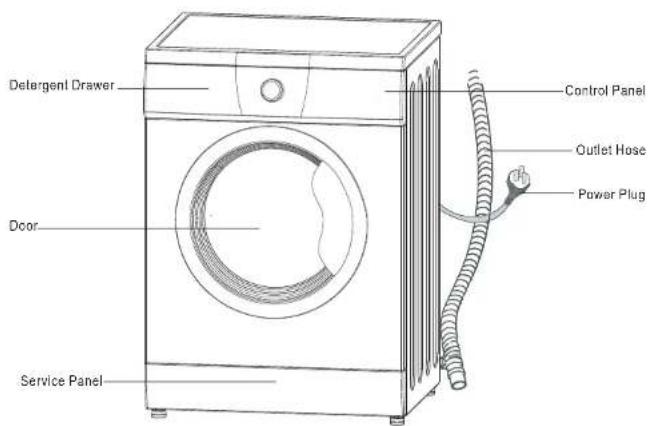
Illustration of a washing machine drawer with handle and control knob (no text or symbols)Detergent Drawer

Transport Hole Plug

Inlet Pipe C

Outlet Hose Support
Installation Instructions
■ Unpacking the Washing Machine
Unpack the washing machine and check that there is no transport damage. Ensure that all the items (as shown on page 5) are included in the enclosed bag. If there is any damage to the washing machine during transportation or any items are missing, please contact your retailer immediately.
■ Disposal of the Packaging Materials
The packaging materials of this machine may be dangerous to children. Please dispose of them properly in accordance with the local regulations. Please do not throw the packaging materials away with general household waste.
■ Removing the Transport Bolts
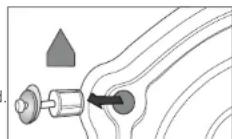
Before using the washing machine the transport bolts must be removed from the rear of the machine. Please take the following steps to remove the bolts: 1. Loosen all 4 bolts with a spanner and remove them 2. Stop the holes with the transport hole plugs provide 3. Keep the transport bolts for future use.
■ Selecting the Location
The washing machine must be installed in a location with the following characteristics: -Rigid, dry and level surface (if not level please refer to the following section "Adjusting the Feet") -Avoid direct sunlight -Room temperature above 0°C -Away from sources of heat Ensure that the washing machine is not standing on the power cord. Do not install the washing machine on a carpeted floor.
■ Adjusting the Feet
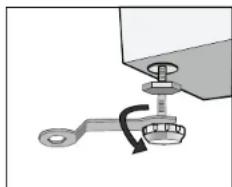
- When positioning the washing machine please check that all the feet are fully screwed into the cabinet. If not, please turn them to their original positions and tighten the nuts with a spanner.
- After positioning the washing machine, press all four corners on the top of the washing machine in sequence. If the washing machine is not stable when being pressed this foot should be adjusted.
natural_image
Mechanical assembly diagram showing a lever mechanism with a curved arrow indicating rotation (no text or symbols)Installation Instructions
- Loosen the lock nut with a spanner and turn the foot by hand until it contacts the floor. Hold the foot with one hand and fasten the nut against the cabinet with a spanner.
- Press the four top corners again to check that the feet have been adjusted properly. If the machine is still unstable repeat steps 2 and 3.
- Put a solid cylinder (e.g. pop can) on the top cover of the washing machine in the left, right, front and back positions. If it rolls then the machine is not level. The rolling direction is the direction of the ground surface. The two legs in this direction need to be raised at the same time until the washing machine is level. Once the machine is level ensure that all the nuts are locked tight.
Inlet Pipe Connection
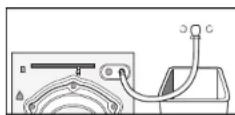
Connect the inlet pipe as indicated in the figure. This machine only has a cold water inlet. The water inlet pipe should be connected to a 34 " threaded water tap
■ Installing the Inlet Pipe
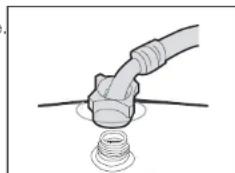
- Connect the end of the pipe, with an elbow, to the water inlet valve on the rear of the machine. Tighten the nut clockwise.
- Connect the other end of the inlet pipe to the water tap. Turn on the tap and ensure that there is no water leakage.
natural_image
Diagram of a hand connecting a pipe to a spring (no text or symbols)■ Installing the Outlet Hose
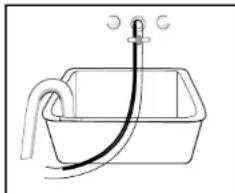
There are three possible ways to connect the outlet hose to a suitable drain. 1. Position the outlet hose into a sink.
natural_image
Simple line drawing of a bathtub with a tube inserted into the cup and two circular feet above (no text or symbols)Installation Instructions
- Connect the outlet hose to the drain pipe of the sink, using a suitable adapter.
- Connect the outlet hose directly into a separate drain pipe.
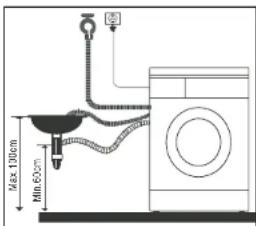
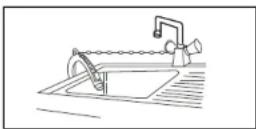
When installing the outlet hose ensure it is properly secured, so that there is no risk of water leaking and damaging the floor.
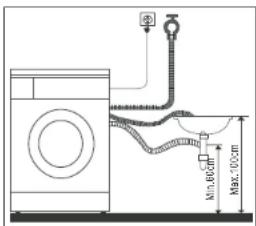
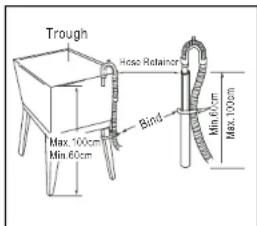
The outlet hose should not be positioned at a height beyond 100cm . Ensure that the end of the outlet hose is not immersed in water; otherwise it could siphon water back into the machine. If the outlet hose is too long, do not force it back into the washing machine as this could cause abnormal noises.
Note: The outlet hose of this appliance must only be connected to a "dirty water" drain. Water must not be discharged into a "fresh water" drain.
■ Electrical Connection
-The appliance takes 10A when using its heating function.
Please ensure that the socket and wiring in your home is suitable for this current.
-Ensure that the socket is correctly installed and properly earthed.
-Ensure that the voltage at the socket is the same as that on the machine rating label.
-The plug must match the socket
Installation Instructions
-Do not use a multi-way adapter or extension cord with the appliance.
-Do not connect or remove the plug with wet hands.
-Hold the plug firmly when removing it; do not pull the power cord.
-If the power cord is damaged it must be replaced by the manufacturer's service agent or a suitably qualified person.

WARNING: This machine must be earthed.
Operating Instructions
■ Checklist and Preparation before Washing Clothes
Please read this operation method carefully to avoid any problems with the washing machine or the risk of damaging clothes.
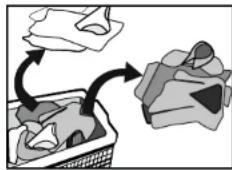
Since new coloured clothes may shed dye on the first wash, please wash them separately.
Never wash white and coloured clothes together
For stains on sleeves, collars and pockets use liquid detergent and gently wash the area with a soft brush, before washing in the machine.
Always read the labels on temperature-sensitive clothes, otherwise the wash cycle may cause colour change or dis
Note: Never store clothes that require washing in the drum for long periods of time, otherwise mould spots could occur. Only load the washing machine just prior to starting the wash cycle.
Clothes may change colour or get distorted if they are not washed according to the stated washing temperatures.
Clothes that are not suitable for machine washing.
- Any clothes that may get distorted if they are immersed in water.
- Ties, waistcoats, western-style clothes, outer garments, etc, may have obvious shrinkage if immersed in water.
- Wrinkle-style clothes, embossed clothes, resin clothes, etc, may get distorted when immersed in water.
- Clothes with decoration, long dresses and traditional clothes, etc, are prone to colour fading.
natural_image
Illustration of a bag being inserted into a basket, with an arrow indicating the process (no text or symbols present)Operating Instructions
- Please do not wash clothes that do not have a material label indicating the washing requirements.
- Never wash clothes stained with chemicals such as gasoline, petroleum, benzene, paint thinner or alcohol.
Cautions with regard to Detergents
"Low bubble" detergent or washing powder or washing powder suitable for automatic washing machines should be selected according to the fibre type (cotton, synthetic fibre, soft products and wool products), colours, washing temperatures, degree of soiling and type of soiling. Otherwise excessive bubbles may be generated and overflow out of the detergent drawer. Bleach is an alkali and can damage clothes, so it is recommended to use this as little as possible. Powder detergents can easily leave residues in the clothes, which can generate an odour. Hence, ensure that clothes are sufficiently rinsed. If too much detergent is used or the water temperature is too low, then the detergent may not dissolve completely. It will remain in the clothes, pipes and the washing machine and will pollute the clothes. The amount of detergent to be used will depend on the weight of the clothes, the degree of soiling and the hardness of the water. Consult your water supplier to confirm the water hardness.
Note: Keep detergents and additives in a safe and dry place, out of reach of children.
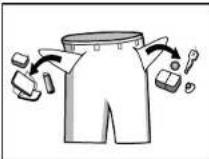
Please take all items out of pockets
Please check the pockets of the clothes to be washed. Remove any rigid items such as decorations and coins; otherwise the washing machine may be damaged.
For the clothes to be washed, they are classified according to the following characteristics:
Fibre: The symbols on clothes care labels classify them as cotton, blended fibre, synthetic fibre, silk, wool and artificial fibre. Colour: White and colourful colours should be identified. All new colourful articles should be washed separately. Size: Articles of different sizes should be washed together to increase the washing effects.
Operating Instructions
Sensitivity: Soft articles should be washed separately. For new pure wool textiles, curtains and silks, the wool program should be selected. Check the labels in all washing articles.
The clothes should be sorted before being put into the washing machine. Remove the hooks from curtains before washing. For clothes with large buttons or embroidery, turn the article inside out before washing. Zips should be zipped closed and buttons and hooks fixed together. Any loose bands or ribbons should be bound together.

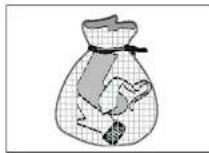
It is suggested that bras are put into a pillowcase, with the zip or buttons sealed, to prevent the steel wire from popping out of the bra, into the drum and damaging the machine.
Delicate items such as lace curtains, small articles (tights, handkerchiefs, ties, etc) should be put into a string bag for washing.
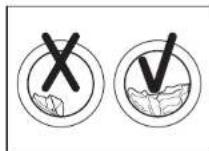
When washing single big and heavy articles such as Turkish towels, jeans, padded jackets, etc, there is a risk that the drum will be out of balance. It is therefore recommended that one or two other items are added to the wash to smooth out the spin cycle.
Clean away dust, stains and pet hairs from the clothes.
The clothes may be damaged and the washing effect reduced if excessive dirt is not removed from the clothes before washing.
Protecting baby skin
Baby clothes, baby towels and napkins should be washed separately. If they are washed together will adult clothes they may be infected. Rinsing times should be increased to ensure thorough rinsing and cleaning without detergent residues.
Easily stained items
It is recommended that easily stained items such as white socks, collars and sleeves, etc, are hand washed before putting them in the washing machine. Please use powder or liquid detergents as soap residues can remain in the gaps of clothes.
Operating Instructions
Confirm the washing capacity of your machine.
Do not overload the drum; otherwise the washing performance will be reduced.
The maximum load size is shown below.
| Fibre Type | Maximum Loading Capacity | |
| 5.0kg | 6.0kg | |
| Cotton | 5.0kg | 6.0kg |
| Synthetic | 2.5kg | 3.0kg |
| Wool | 1.5kg | 1.5kg |
Water-proof materials
Items made from water-proof material, such a ski suits, are not suitable for washing in this machine. Items made from fibre that does not easily absorb water, such as water-proof cushions and clothes, are not suitable for machine washing. There is a risk that the machine will vibrate during the rinse and spin cycles.
Operating Instructions
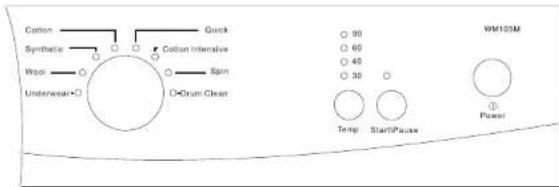
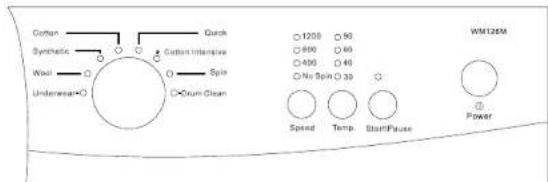
■ View of Control Panel
WM105M
WM126M
Program Selector Switch
There are 8 different programs that can be selected with the rotary selector switch:
Underwear: with the corresponding temperature selections: cold, 30, 40, 60, 90°C
Wool: cold, 30, 40°C
Synthetics: cold, 30, 40, 60°C
Cotton: cold, 30, 40, 60, 90°C
Quick: cold, 30, 40°C
Cotton Intensive: cold, 30, 40, 60, 90°C
Spin
Drum Clean: 90°C
■ Temperature Selector
Depending on the program selected, the temperature selector can be used to select the
required temperature from the options; cold, 30, 40, 60 or 90°C.
If no temperature indicator lamp is lit, this means that cold water temperature has been selected.
■ Washing Clothes for the First Time
Before using the washing machine for the first time, it must be operated for one complete cycle of the "Drum Clean" program without any clothes in the drum.
Putting Detergent into the Washing Machine
I: Pre-wash detergent or powder
II: Main-wash detergent or powder, bleaching products. ✿: Washing additive, such as fabric softener or conditioner.
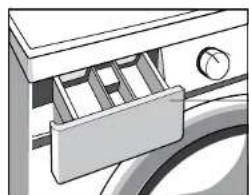
■ Put detergent into washing machine.
- Pull out the drawer.
- Put pre-detergent into compartment I (when necessary)
- Put detergent into compartment II
- Put softener into compartment (when necessary)
- Push the drawer fully in.
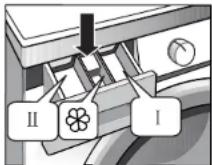
If thick detergent is being used it is recommended that it is diluted with water before it is poured into the detergent drawer. If the detergent drawer becomes blocked there is a risk that water will overflow when the machine is filling with water.
■ Starting up the Washing Machine
Plug in the machine and switch on the power. Check that the water inlet pipe is connected properly. Fully open the water tap. Load the clothes into the drum.
Add the required detergent and fabric conditioner to the detergent drawer.
Press the "Power" button. Select the required program, temperature setting and spin speed (if available). Press the "Start/Pause" button.
■ Program Selection
The wash program that is required depends on the fabric type, load size and how soiled the clothes are. The temperature setting should be selected as indicated below:
| 90°C | Seriously soiled white cotton (e.g. Table clothes, towels, bed sheets) |
| 60°C | Moderately soiled coloured cotton or synthetic articles (eg. Shirts, pyjamas)Slightly soiled white cotton |
| 40°C,30°C Cold water | Normally soiled articles (including synthetic and wool) |
Note: The actual water temperature may differ from the declared cycle temperature.
Operating Instructions Operating Instructions
The higher the spin speed selected, the less water should remain in the clothes.
Note: To protect delicate textiles a lower spin speed should be selected.
The main washing program required will depend on the type of clothes to be washed. The programs can be selected as follows:
- Underwear
This program is suitable for washing underwear and will rinse the clothes more thoroughly.
-Wool
This program is suitable for washing wool textiles that are labelled with "Machine Wash".
Ensure that the temperature selected corresponds with that on the label and that an appropriate detergent is used.
- Synthetic
This program is suitable for washing delicate items. The cycle time is shorter than the cotton program and the washing agitation is quite gentle. This program is recommended for items such as shirts, curtains and laced textiles. If washing knitted textiles please reduce the amount of detergent used as the loose string construction easily creates bubbles.
- Cotton
This program is suitable for daily washable clothes. The washing period is quite long and incorporates quite strong agitation. This program is suitable for washing cotton articles such as bed sheets, quilt covers, pillowcases, dressing gowns, etc.
-Quick
This program is suitable for washing a few items, which are not very dirty.
-Cotton Intensive
The program provides a more intensive wash cycle and consequently the cycle time is increased. This program is recommended for washing baby clothes and clothes that will be worn by people with skin allergies.
- Spin
This program provides a spin cycle. Any soapy or rinse water will be drained before spinning.
- Drum Clean
This is a special 90°C program used to clean the drum and pipes of the washing machine. Clothes must not be put in the drum when this program is selected. Bleaching agent may be used with this program.
Note: The default program is the 40^ C Cotton Intensive program. This program is suitable for normally soiled cotton laundry and is the most efficient program in terms of combined energy and water consumption.
- Buzzer Selection
The buzzer function on the washing machine can be turned on or off as required.
To de-activate the buzzer function, start the machine and then press the "Temp." button for 3 seconds.
The buzzer will then sound to indicate that the function has been turned off.
The buzzer will remain turned off until the function is reset.
To restore the buzzer function, press the "Temp." button again for 3 seconds.
Operating Instructions
■ Table of Washing Programs
| Procedure Description | Load(kg) | Detergent Box | Default Temp. (°C) | Default Time (Min) | Default Speed(rpm) | |||||
| 5.0 | 6.0 | Compa-mentil | Compa-mentil | ⊗ | 5.0/6.0kg | 5.0 | 6.0 | 1000 | 1200 | |
| Quick | 1.5 | 1.5 | ● | ○ | Cold | 15 | 15 | 1000 | 1200 | |
| Cotton Intensive | 5.0 | 6.0 | ● | ○ | 40 | 140 | 160 | 1000 | 1200 | |
| Spin | 5.0 | 6.0 | × | × | NA | 15 | 15 | 1000 | 1200 | |
| Drum Clean | 0 | 0 | × | × | 90 | 90 | 75 | 500 | 400 | |
| Cotton | 5.0 | 6.0 | ● | ○ | 60 | 130 | 120 | 1000 | 1200 | |
| Synthetic | 2.5 | 3.0 | ● | ○ | 40 | 105 | 100 | 700 | 800 | |
| Wool | 1.5 | 1.5 | ● | ○ | 40 | 85 | 80 | 500 | 400 | |
| Underwear | 5.0 | 6.0 | ● | ○ | 40 | 108 | 110 | 1000 | 1200 | |
The energy class is A+
The energy test program: Cotton Intensive 60°C/40°C;
Half load for 5.0kg/6.0kg machine: 2.5kg/3.0kg
The "Cotton Intensive 60°C/40°C" are the standard washing programs to which the information on the energy label and product fiche relates. These programs are suitable to clean normally soiled cotton laundry. They are the most efficient programs in terms of combined energy and water consumption.
required
○ optional
× not necessary
Note: The above parameters are for reference only. The cycle time will depend on the temperature selected and the load
Note: If the mains supply should go off during a wash cycle the machine will stop, but when the mains supply comes back on the program will continue. Pressing the "Power" button will not cancel the current program. To select a different program, press the "Start/Pause" button, select the required program and then press the "Start/Pause" button again.
If the machine is left powered up it will consume 1.25W for 40 minutes. The machine will then revert to the 'off-mode' and will consume 0.39W until the power is switched off.
Note: At the end of the cycle the door will remain locked for up to 2 minutes. Do not try to force the door open.
Maintenance
Before commencing any cleaning or maintenance, please remove the plug and turn off the water supply.
WARNING
-Solvents must not be used as they could damage the washing machine or toxic/explosive gases could be generated.
-Do not use detergents containing PCMX to clean the washing machine.
■ Cleaning and Maintenance of the Washing Machine Cabinet
Proper maintenance of the washing machine can extend its working life.
The surface can be cleaned with diluted, non-abrasive, neutral detergent,
when necessary. If there is any water overflow, use a dry cloth to wipe it off.
Note: Formic acid and its diluted solvents or equivalent should not be used.
■ Cleaning inside the Drum
Any rust left inside the drum by metal articles must be removed immediately with
chlorine-free detergent
Never use steel wool.
■ De-frosting a Frozen Washing Machine
When the temperature drops below zero and your washing machine freezes up, you may:
-
Disconnect the power from the machine.
-
Wash the tap with warm water to loosen the inlet pipe.
3.Disconnect the inlet pipe and immerse it in warm water.
-
Pour warm water into the drum and wait for 10 minutes
-
Reconnect the inlet pipe and check that there are no water leaks.
Note: When the washing machine is reused, ensure that the ambient temperature is above 0°C.
■ Preventing the Machine from Freezing Up
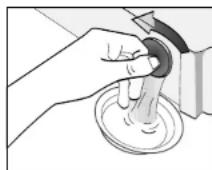
If your washing machine is located in a room where it may freeze up, please thoroughly drain the water from the inlet pipe and the outlet drain hose.
To remove the water from the drain pump, carefully remove the pump cover as shown and collect the water in a tray.
WARNING
To prevent scalding, allow any water in the machine to cool down before removing the pump cover.
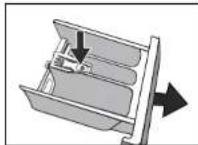
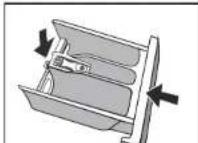
■ Cleaning the Detergent Drawer
Gently pull the detergent drawer forwards and then:
-
Press down the arrow located on the conditioner compartment cover and remove the drawer from the appliance.
-
Lift the clip up and remove the conditioner compartment cover.
-
Thoroughly wash all the compartments and grooves with warm water.
-
Replace the conditioner compartment cover.
5.Slide the detergent drawer back into the appliance.
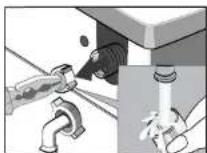
■ Cleaning the Water Inlet Filters
The water inlet filters should be cleaned if there is not any or insufficient water entering the machine when the water tap is open.
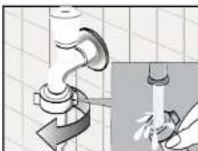
Cleaning the Tap Filter:
-
Close the water tap.
-
Select a wash program.
-
Press the "Start/Pause" button and allow the machine to run for about 40 seconds.
-
Remove the inlet pipe from the tap.
5.Clean the filter, in the end of the inlet pipe, with water.
6.Reconnect the inlet pipe.
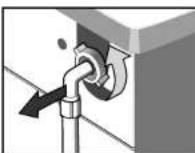
Cleaning the appliance inlet filter:
-
Remove the inlet pipe from the rear of the appliance.
-
Pull out the filter from the appliance inlet, with a pair of long nosed pliers.
3.Clean the filter and replace it into the inlet.
4.Reconnect the inlet pipe.
5.Open the water tap and check that there is no water leakage. 6.Close the water tap.
Note: The tap filter should be cleaned first.

MaintenanceMaintenance
WARNING
Remove the plug before accessing the drain pump.
The water in the pump may be hot, allow the machine to cool before removing the pump cover.
■ Cleaning the Drain Pump Filter
The drain pump filter prevents foreign objects from entering the drain pump.
The filter should be cleaned periodically to ensure the normal operation of the appliance.
If heavily soiled items are washed regularly then the filter will need cleaning more often.
The pump filter should be inspected if the machine does not empty and/or spin.
If the machine makes an unusual noise whilst draining, there may be foreign objects in the pump. To remove the objects:
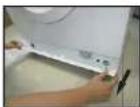
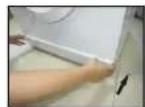
Open the service panel
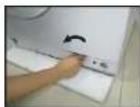
Unscrew the pump cover Closcles stev pump paneler
-
Disconnect the appliance.
-
If necessary, wait until the water has cooled down.
3.Open the Service Panel
- Place a shallow container under the outlet.
5.Slowly turn the Pump Cover anti-clockwise. Collect the water that is released.
-
When no more water comes out, remove the Pump Cover.
-
Remove any objects from the pump and check that the impeller rotates.
-
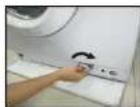
Replace the Pump Cover and fully tighten it clockwise.
9.Close the Service Panel.
WARNING
When the appliance is in use and depending on the program selected,
there could be hot water in the pump. Never remove the Pump Cover during a wash cycle, always wait until the appliance has finished the cycle and is empty.
When replacing the Pump Cover ensure that it is securely tightened to prevent any leaks.
Troubleshooting Remove the problems
| Troubles | Reason | Solution |
| Washing machine cannot start up | Check if the door is closed tightly.Check if power plug is inserted well.Check if water supply tap is opened.Check if button "Start/Pouse" is pressed.Check if button "Power" is pressed. | |
| Door cannot be opened | Machine's safety protection design is working. | Disconnect the power. |
| Heating fault | NTC is damaged and heating pipe is aging. | Can normally wash the clothes.Only cannot wash with heating.Contact the service promptly centre |
| Water leakage | The connection between inlet pipe or outlet hose and tap or washing machine is not tight.Drain pipe in the room is blocked | Check and fasten water pipes.Clean up outlet hose and ask a specialized person to repair it when necessary. |
| Water is overlowed from the bottom of the machine | The inlet pipe is not connected firmly.Cutlet hose has water leakage. | Fix the inlet pipe.Replace the drain hose. |
| Indicator or display does not light. | Power is disconnected.PC board has problems.Harness has connection problem. | Check if the power is shut down and power plug is connected correctly.If not, please call up service line. |
| Detergent residues in the box | Washing powder is dampened and .coagulated | Clean and wipe the box.Use liquid detergents or the detergents special for drum. |
| Washing effects are not good | The clothes are too dirty.Insufficient detergent quantity. | Select a proper program.Add the proper detergent quantity according to the instructions in detergent package. |
| Abnormal noise Great vibration | Check if the fixing (bolts) has been removed.If cabinet is installed on the solid and level floor.Check if there are any metal articles inside.See page 6. |
| Status of Corresponding Indicators | Description | Reason | Solution | |||
| Temp 30 | Temp 50 | Temp 40 | Temp 30 | |||
| Off | Off | Off | Flash | Door lock problem | Door is not closed properly. | Restart after the door is closed |
| Please call up service line if there are still troubles. | ||||||
| Off | Flash | Off | Off | Water injecting problem when washing (water injecting time exceeds 5 minutes) | Tap is not opened or water flows too slowly.Inlet valve filter is blocked.Inlet pipe is twisted.If water is not supplied | Open the tap or wait till the water supply becomes normal.Check inlet valve filterStraighten the water pipeCheck the other laps in the room. |
| Please call up service line if there are still troubles. | ||||||
| Off | Off | Flash | Flash | Drain problem while washing (drain time exceeds 8 minutes) | Outlet hose is blocked or twistedDrain pump is blocked | Wash and straighten outlet hose.Wash drain pump filter |
| Please call up service line if there are still troubles. | ||||||
| Please call up the service line if there is any other problem. | ||||||
Appendix
Care Label
| Graphic Symbol Illustration | Graphic Symbol Illustration | ||
| Hand Wash | No Machine Wash | ||
| Washing (Including Machine Wash and Hard Wash) | Do not Wash | ||
| Dry Clean | Do not Dry Clean | ||
| Warmly Dry Clean | Do not Wring | ||
| Bleach | No Bleach | ||
| Tumble dry | Do not Tumble Dry | ||
| Iron | Do not Iron | ||
| Steam Iron | Iron with Cloth | ||
| Medium Temperature and Max. Temperature 150°C | Dry after Wash | ||
| Line Dry | Line Dry in Shade | ||

LECTRICAL WARNING
To avoid fire, electrical shock and other accidents, please remember the following:
-The appliance should only be used with the voltage indicated on the rating label.
Contact your electricity supplier if in doubt.
-When the heating function is operating the machine will draw 10A.
Please ensure that the power supply is suitable for this load.
-Ensure that the power cord is not damaged or trapped by the appliance.
-Ensure that the socket is accessible. Switch off the appliance when not in use.
-Do not use an adapter or extension cable.
-Do not remove the plug with wet hands.
-The plug should be inserted into its own 13A socket.
-Ensure that the socket is reliably earthed.
Technical Specification
| Parameter | ||
| WM105M | WM126M | |
| Power Supply | 220-240V~150/60Hz | 220-240V~150/60Hz |
| Dimension(W D H)* * | 595 470 850* * | 595 495 855* * |
| Weight | 50kg | 56kg |
| Maximum Power | 2100W | 2150W |
| Washing Capacity | 5.0kg | 6.0kg |
| Rated Current | 10A | 10A |
| Standard Water Pressure | 0.05MPa-1MPa | 0.05MPa-1MPa |
- Notes
- ■ Environmental Protection
- - Contents
- Safety Precautions
- ■ Before Operating this Machine
- Safety Warnings
- ■ Care when Washing Clothes
- ■ Protecting the Machine
- ■ Care during Machine Handling
- Installation Instructions
- ■ Unpacking the Washing Machine
- ■ Disposal of the Packaging Materials
- ■ Removing the Transport Bolts
- ■ Selecting the Location
- ■ Adjusting the Feet
- Inlet Pipe Connection
- ■ Installing the Inlet Pipe
- ■ Installing the Outlet Hose
- ■ Electrical Connection
- Operating Instructions
- ■ Checklist and Preparation before Washing Clothes
- Clothes that are not suitable for machine washing.
- Cautions with regard to Detergents
- Please take all items out of pockets
- For the clothes to be washed, they are classified according to the following characteristics:
- Clean away dust, stains and pet hairs from the clothes.
- Protecting baby skin
- Easily stained items
- Water-proof materials
- ■ Washing Clothes for the First Time
- Putting Detergent into the Washing Machine
- ■ Put detergent into washing machine.
- ■ Starting up the Washing Machine
- ■ Program Selection
- Operating Instructions Operating Instructions
- - Underwear
- -Wool
- - Synthetic
- - Cotton
- -Quick
- -Cotton Intensive
- - Spin
- - Drum Clean
- - Buzzer Selection
- Maintenance
- WARNING
- ■ Cleaning and Maintenance of the Washing Machine Cabinet
- ■ Cleaning inside the Drum
- ■ De-frosting a Frozen Washing Machine
- ■ Preventing the Machine from Freezing Up
- ■ Cleaning the Detergent Drawer
- ■ Cleaning the Water Inlet Filters
- MaintenanceMaintenance
- ■ Cleaning the Drain Pump Filter
- Appendix
- LECTRICAL WARNING
Brand : White Knight
Model : WM105M
Category : Washing machine