
Legendary Inventors - Board game Bombyx - Free user manual and instructions
Find the device manual for free Legendary Inventors Bombyx in PDF.


| Product Type | Board Game |
| Brand | Bombyx |
| Model | Legendary Inventors |
| Number of Players | 2-4 |
| Recommended Age | 14+ |
| Playing Time | 60-90 minutes |
| Box Dimensions (approx.) | 30 x 30 x 7 cm |
| Weight (approx.) | 1 kg |
| Power Source | None (manual) |
| Main Functions | Strategic resource management, invention acquisition, patenting, scoring via victory points |
| Core Mechanics | Worker placement, set collection, engine building |
| Components | 20 inventor tiles, 33 starting knowledge tokens, 36 invention cards, 52 reward tokens, 4 inventor teams with cubes, Leonardo da Vinci figurine, bag |
| Language | English (manual) |
| Maintenance & Cleaning | Store in a dry place; clean with a dry cloth |
| Safety Warnings | Choking hazard - small parts. Not for children under 3 years. |
| Spare Parts & Repairability | Not applicable; game components are not replaceable individually. |
| General Information | Game designer: Frédéric Henry. Illustrations: Gaël Lannurien. Three ages of play. |
Frequently Asked Questions - Legendary Inventors Bombyx
User questions about Legendary Inventors Bombyx
0 question about this device. Answer the ones you know or ask your own.
Ask a new question about this device
Download the instructions for your Board game in PDF format for free! Find your manual Legendary Inventors - Bombyx and take your electronic device back in hand. On this page are published all the documents necessary for the use of your device. Legendary Inventors by Bombyx.
USER MANUAL Legendary Inventors Bombyx
natural_image
Illustration of a wizard in a medieval room holding a glass with liquid, no text or symbols presentRULEBOOK
OBJECT OF THE GAME
During the course of the game, players will participate in the creation of inventions and acquire patents in order to earn victory points and become the greatest team of inventors the world has ever known.
text_image
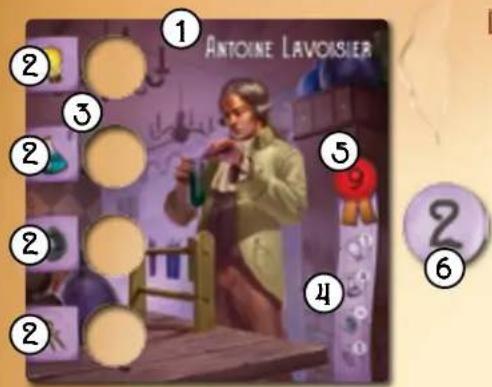
ANTOINE LAVOISIER ① ② ③ ② ② ④ ⑤ ② ⑥COMPONENTS
20 INVENTOR TILES AND 33 STARTING KNOWLEDGE TOKENS:
① Name of the inventor
② Inventor's Knowledge: physics, chemistry, mechanics, and mathematics
③ Inventor's starting knowledge
4 Progress target
⑤ Number of victory points earned for reaching the progress target
⑥ Starting knowledge tokens
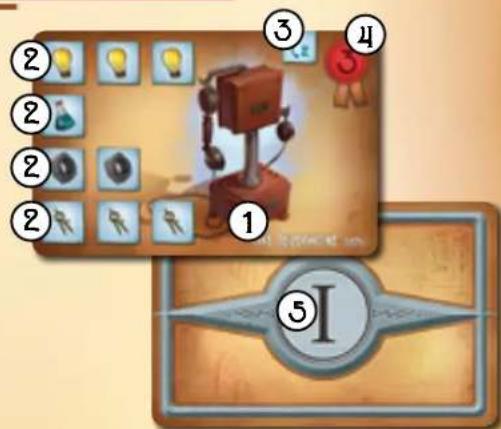
36 INVENTION CARDS:
① Name of the invention
② Knowledge required to complete the invention
③ Classification number: 0 for weaponry, 1 for transportation, 2 for communication, 3 for recreation, 4 for time, and 5 for energy
⑭ Number of victory points earned for acquiring the invention
⑤ Age of the invention (I, II or III)
text_image
Game interface screenshot showing numbered UI elements and a robot illustration with a 'I' badge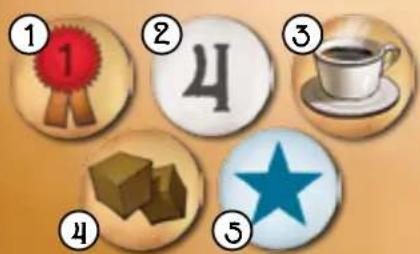
text_image
Circular icons with numbered labels and symbols, including a red ribbon, number 4, coffee cup, 3, 5, and 4 blocks.52 REWARD TOKENS:
① Victory Point token
② Progress token
③ Availability token
Note: All Reward tokens show a 1 on the back.
SETUP
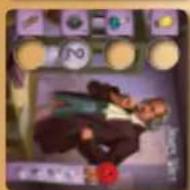
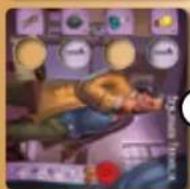
① Each player takes a team of four inventors of the same color, places it in front of them, and takes the corresponding cubes. The inventors are divided into teams representing which time period they lived in. The players place their starting knowledge tokens as indicated on each of their inventors' tiles.
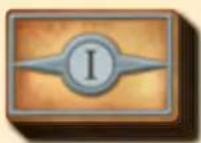
② Sort the invention cards by Age into three piles: I, II, or III; as listed on the cards' back.
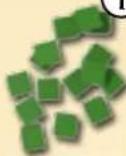
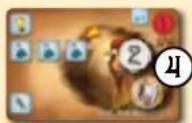
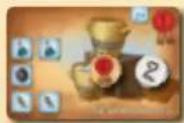
③ Place all reward tokens in the bag. Then, draw a number of cards from the Age I pile equal to the number of players + three, and place them in the center of the table.
4 Draw two reward tokens randomly from the bag and place them on each invention.
⑤ Make sure to flip the tokens so that they do not show the side with a 1 on it.
⑥ The players then decide collectively who will start. The first player places the figurine of Leonardo da Vinci in front of him. The game can now begin...

6
2
3
①






1
1



How to Earn Victory Points?
There are four ways for players to earn victory points that all depend on how the rewards are shared (see "Sharing the rewards").
☐ Acquire (or Patent) an invention: The number of victory points earned by the player who acquires an invention card is indicated on each invention. These victory points increase after the end of each Age, as inventions become more difficult to acquire:

text_image
I = 1 II 2 III 3Collect victory point tokens.

text_image
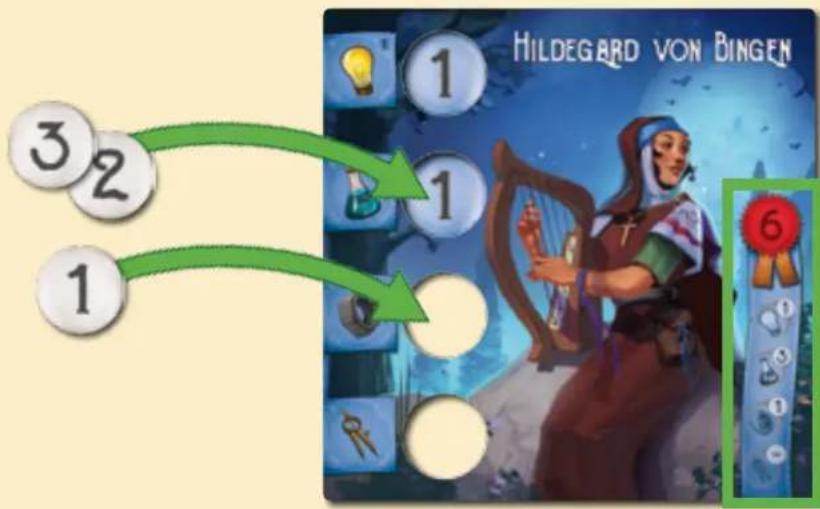
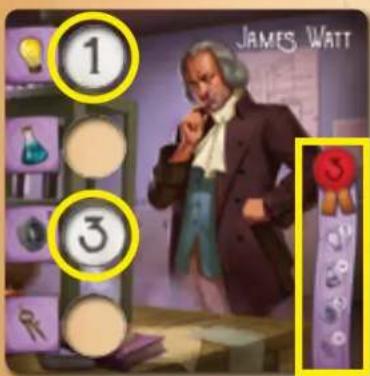
1 2 3☐ Improve your inventors: At any moment during the game, players can improve the knowledge levels of their inventors with any progress tokens they have previously collected. At the end of the game, if an inventor has reached or exceeded the progress target indicated in the lower-right corner of the inventor tile, the player earns the number of victory points indicated on the red ribbon.
text_image
HILDEGARD VON BINGEN ① ② ③ ④ ⑤ ⑥Note: Players can choose to improve their inventors without meeting these conditions. However, they will not earn the victory points tied to the completion of the progress target.
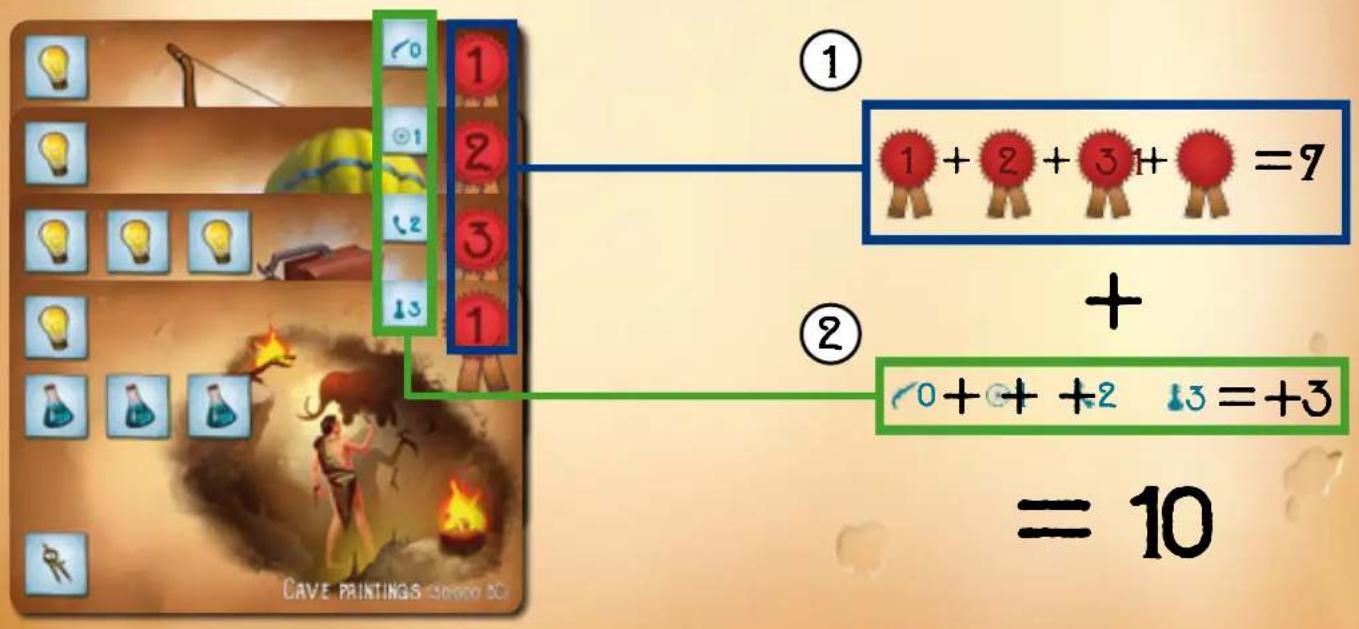
Form one or multiple runs of inventions: The blue number on the invention card is called the classification number. At the end of the game, the players earn a number of points equal to the highest classification number in each run of inventions they can form. In order to be scored, a run must start with a 0 and contain cards in sequential order.

text_image
3 +3 1+2 + = 9 + 0++ +2 3 = +3 = 12
natural_image
Illustration of a mythological figure in a cave with an elephant, fire, and birds (no text or symbols)PLAYING THE GAME
On his turn, a player must carry out one of the two following actions:
Send an inventor to work
OR
Refresh his inventors.
Send an inventor to work: The player chooses one of his available inventors (in an upright position) that he sends to work on one of the inventions. The player then places his cubes on any remaining empty spaces of the invention matching the type and current level of knowledge of the inventor. Finally, the player rotates the inventor card sideways to indicate that the inventor is busy.
During this action:
• As many cubes as possible must be placed. (If the player cannot place at least one cube, he cannot use this action.)
- All the cubes must be placed on the same invention.
- If an inventor provides more cubes than the invention requires, the surplus is not used and is returned to the player.
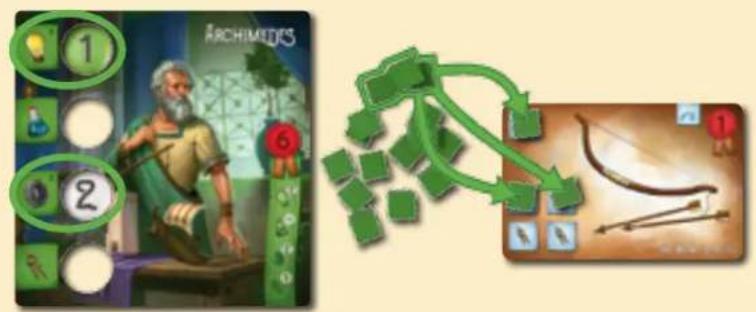
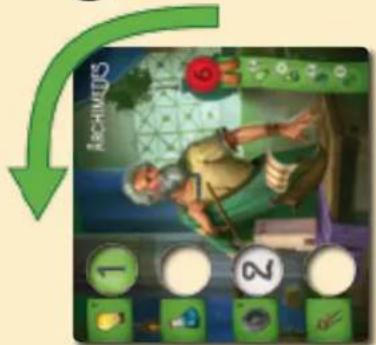
Example: It is Mark's turn and he has the Antiquity team (Hypatia, Archimedes, Aristoteles and Hyppokrates). He sends Archimedes to work on the bow. At the moment, Archimedes has a level 1 in physics and a level 2 in mechanics. Mark places one cube on physics and two cubes on mechanics. He then rotates Archimedes sideways. This inventor can no longer be used while he remains in this position.
1
text_image
1 2 ARCHIMEDS2
text_image
ArchivetsOR
Refresh his inventors: The player rotates all of his busy inventors back to their upright position to indicate that they are available. If the player does not have at least one busy inventor, he cannot use this action.
Example: Three of Mark's inventors are busy when his turn arrives. Rather than sending the fourth one to work, he decides to refresh all of his team. This way, he will be able to choose any one of his inventors during his next turn.


natural_image
Illustration of a bearded warrior holding a cape, standing on a campfire with flames and smoke in the background (no text or symbols)
COMPLETING AN INVENTION
An invention is considered to be completed when all of its spaces are full. The player who places a cube on the last empty space completes the invention, takes the Leonardo da Vinci figurine, and places it in front of him. Players now share the rewards.
SHARING THE REWARDS
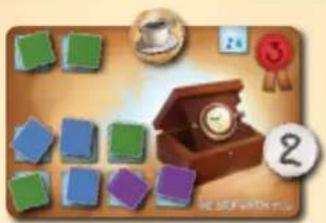
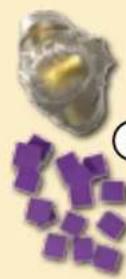
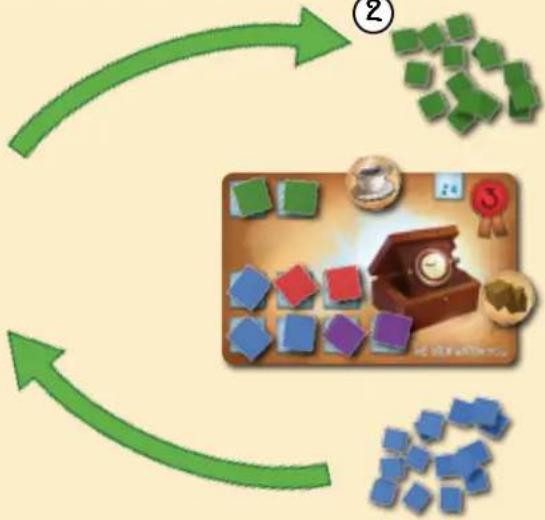
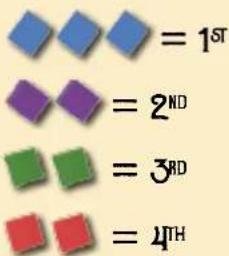
To be able to collect a reward, players must have placed at least one of their cubes on the completed invention. The participating players choose their reward in order of importance of their contribution: from the player who contributed the most (he or she placed the most cubes on the invention) to the player who contributed the least.
natural_image
Illustration of a gift box with colorful squares and a clock, no text or symbols present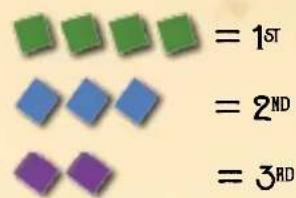
text_image
= 1ST = 2ND = 3RDIn case of a tie, the tied players collect their reward according to the following order:
① the player who has the Leonardo da Vinci figurine,
② the closest player to the figurine in a clockwise direction,
③ the next player, still in a clockwise direction from the figurine.
①
2
flowchart
graph TD
    A["Start"] --> B{Decision}
    B -->|Yes| C["Action 1"]
    B -->|No| D["Action 2"]
    C --> E["Game Box"]
    D --> E
    E --> F["End"]
text_image
= 1^ST = 2^ND = 3^RD = 4^TH3
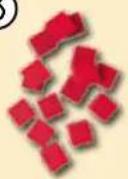
Each participating player can take only one reward: either the invention itself, or one of the two tokens on top of it. Only the three players who contributed the most are sharing the rewards. Players then place their rewards in front of them and any reward that has not been collected (if only one or two players have participated) is returned to the box, not to the bag.
Once players have finished sharing the rewards, each player gets his cubes back and the game is resumed with the player to the left of the Leonardo da Vinci figurine taking his turn.
Important: When the second to last invention on the table has been completed and players have finished sharing the rewards, the Age ends immediately. All cubes placed on the last invention are returned to their owners. The last invention and its two tokens are returned to the box and the game proceeds to Age II.
AGE II
natural_image
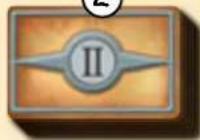
Decorative emblem with a central 'II' and symmetrical arrow-like design on an orange-brown background (no text or symbols)Draw a number of cards from the Age II pile equal to the number of players + three, and place them in the center of the table.
Draw two reward tokens randomly from the bag and place them on each invention. Make sure to flip the tokens so that they do not show with a 1 on it.
The game continues from where it was interrupted, without changes (the busy inventors remain turned sideways). The player to the left of the Leonardo da Vinci figurine takes his turn.
☐ Age II is played following similar rules to the previous Age.
AGE III
natural_image
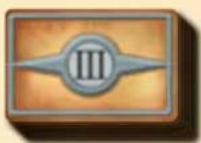
Illustration of a stylized emblem with the number III inside a circular frame, set against a textured golden background (no text or symbols beyond the numeral)Age III is played following similar rules to the previous two Ages, with the exception that the inventions are drawn from the Age III pile.
END OF GAME
After players have shared the rewards for the second to last invention in Age III, the game ends. Each player then counts up his victory points by adding:
① the points from the inventions he has acquired,
② the points earned from forming runs of inventions,
③ the points from the victory point tokens he has collected,
④ the points from his inventors who have reached their progress target.
The player who has earned the most victory points wins. In case of a tie, the victory goes to the player with the most inventions.
text_image
CAVE PRINTINGS ① ② ③ ④ ① + ② + ③ + = 9 ② + 0 + + + 2 + 3 = + 3 = 103

+ 3 = 5
4
text_image
1 3 JAMES WATT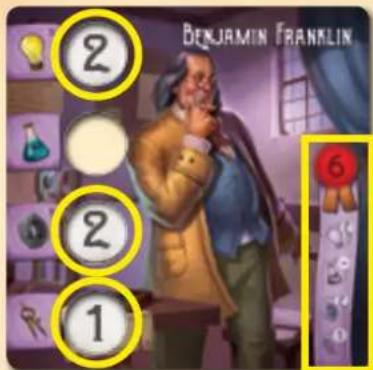
text_image
2 2 1 6 BENJARMIN FRANKLIN= 9
① + ② + ③ + ④ = 24
natural_image
Illustration of a figure reaching toward a domed building with flying birds, no text or symbols presentREWARD TOKENS
There are five types of reward tokens in the game.
X8X12 X6
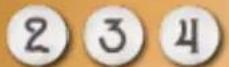
The progress tokens: they represent the knowledge levels with values of 1, 2, 3 and 4. At any moment in the game, each level can be placed on top of the level directly preceding it. For example, a 1 can be placed on an empty space, a 2 can cover a 1, and so on. Once placed on an inventor, progress tokens cannot be removed.

X4X4 X4
The victory point tokens: they are worth the number of victory points indicated on them.

X4
The availability tokens: they allow a player during his turn to refresh all his busy inventors (those rotated sideways) without it being considered an action. The player can then immediately send an inventor to work if he has not already played. These tokens are discarded after use.

X5
The additional knowledge tokens: they allow the player who is sending an inventor to work to place two additional cubes on the invention even if the inventor does not have that knowledge. These tokens are discarded after use.

X5
The classification number tokens: they can replace any missing value in a run (including a 0 or a value greater than 5).
IMPORTANT:
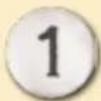
All reward tokens show a 1 on their flip side. Thus, they can be flipped over to be used as progress tokens with a value of 1.
☐ Reward tokens collected by a player can be kept to be used later in the game.
☐ Using a reward token never counts as an action.
CREDITS
Game designer Frédéric Henry
Illustrations: Gaël Lannurien
Translation: Rebecca Sevoz
Revision: Thomas Gallecier
Graphic design Loïg Hascoët
☐ Inventors biographies: Thomas Hervet, Laura Rouquié & Lénaïck Petitjean