
EFP 11980 WA+ - Freezer ECG - Free user manual and instructions
Find the device manual for free EFP 11980 WA+ ECG in PDF.


| Type | Chest Freezer |
| Model | EFP 11980 WA+ |
| Brand | ECG |
| Energy Efficiency Class | A+ |
| Annual Energy Consumption | 221 kWh |
| Total Usable Volume | 198 L |
| Freezer Volume | 198 L |
| Freezing Capacity | 9 kg/24h |
| Storage Time in Power Failure | 30 h |
| Climate Class | T/ST/SN/N |
| Noise Level | 42 dB |
| Dimensions (H × W × D) | 85 × 81.6 × 55 cm |
| Weight | 30 kg |
| Voltage | 220–240 V ~ 50 Hz |
| Refrigerant | R600a (isobutane) – flammable |
| Temperature Control | Rotary thermostat with SUPER (quick freeze) and COOLING positions |
| Power Indicator | Green LED "Power" |
| Defrosting | Manual – requires periodic defrosting |
| Cleaning | Mild detergent and water; do not use abrasive cleaners |
| Interior Light | Bulb, max 15 W |
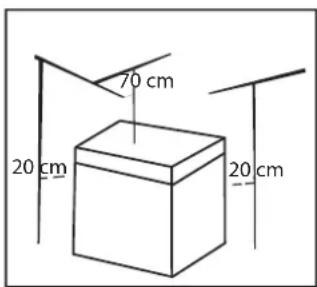
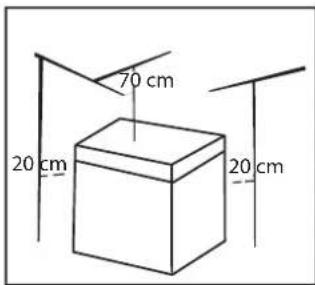
| Installation Clearance | 70 cm above, 20 cm at back and sides |
Frequently Asked Questions - EFP 11980 WA+ ECG
User questions about EFP 11980 WA+ ECG
0 question about this device. Answer the ones you know or ask your own.
Ask a new question about this device
Download the instructions for your Freezer in PDF format for free! Find your manual EFP 11980 WA+ - ECG and take your electronic device back in hand. On this page are published all the documents necessary for the use of your device. EFP 11980 WA+ by ECG.
USER MANUAL EFP 11980 WA+ ECG
VÝSTRAHA: NEBEZPEČÍ OHNĚ / HOŘLAVÉ MATERIÁLY
VÝSTRAHA: NEBEZPEČENSTVO OHŇA/HORĽAVÉ MATERIÁLY
SK
WARNUNG: BRANDGEFAHR / BRENNBARE STOFFE
Read carefully and keep for future use!
Warning: The safety measures and instructions contained in this manual do not include all conditions and potential situations. The user must be aware that common sense, caution, and care are factors that cannot be integrated into a product. These factors must be therefore secured by the user/users using and operating this device. We are not liable for any damages caused during shipping, by incorrect use, voltage fl ectuation or the modification or adjustment of any part of the appliance. To protect against the risk of fire or electric shock, basic precautions must be taken while using electrical appliances, including the following:
- Make sure the voltage in your outlet corresponds to the voltage provided on the appliance label and that the socket is correctly grounded. The outlet must be installed in accordance with applicable electrical codes according to EN.
- Do not operate the device if the cord is damaged. All repairs or adjustments including cord replacements must be carried out by a professional service centre! Do not remove the protective covers from the appliance; there is a risk of electric shock!
- The appliance must not come into direct contact with water or other liquids in order to prevent a potential electric shock. Do not immerse the cord or the plug in water!
- Do not use the appliance in places, where a gas leak or a contact with an explosive atmosphere could occur. Do not touch the cord or the device with wet hands. There is a risk of electric shock.
- The power cord must remain accessible once the device is installed. Do not shorten the cable or use adapters in electrical outlets. Do not allow the cord to touch hot surfaces or place the cord over sharp edges.
- Do not turn the appliance on or off by plugging or unplugging the power cord. Do not remove the power cord from the outlet
by yanking the cord. Unplug the power cord from the outlet by grasping the plug.
- Do not insert any objects into the device or place any objects on the device (e.g. vases, cups, etc.). Never cover the ventilation openings!
- Do not use in the appliance other electrical devices and refrigeration equipment.
- If this appliance is replacing an old product equipped with a lock, destroy the lock of the old appliance, so that children would not lock themselves in (e.g. during a play).
- Do not use mechanical devices or other artificial means to speed up defrosting. Do not use electrical appliances in the space designed to store foods. Protect the cooling circuit of the appliance against damage.
- Do not allow children to play with the appliance. Also, they may not sit on the shelves and hang on the door of the appliance.
- Do not use sharp metal objects to remove the ice from the refrigerator, because they may damage the refrigerating circuits and cause irreparable damage to the appliance. If necessary, use a plastic scraper.
- Do not store explosive substances in the appliance, e.g. sprays with propellant gas.
- Do not place containers with liquids (glass jars or tin cans) in the freezer. The container could burst.
- When you store bottles containing liquids with high content of alcohol, they must be properly closed and in vertical position.
- Do not expose the appliance to direct sunlight, do not use it outside and do not expose it to rain.
- Do not touch the cooling surfaces with wet hands. Risk of injury.
- Do not eat the ice removed from the freezer.
- This appliance is intended for household use and similar areas, such as:
- kitchenettes in shops, offices, and other workplaces
- appliances used in the agricultural industry
- by guests in hotels, motels, and other residential areas
- in bed and breakfast establishments
-
This appliance may be used by children under 8 years of age and older and persons with reduced physical, sensory or mental capabilities or lack of experience and knowledge if supervised or instructed to use the appliance in a safe manner and understand the potential hazards. Children may not play with the appliance. Cleaning and maintenance operations performed by the user shall not be carried out by children without supervision.
-
Children aged 3 to 8 years can insert and remove food from refrigerating appliances.
- Child supervision is essential to prevent them from playing with the appliance.
- The manufacturer is not liable for any damage caused by improper grounding/use.
To prevent food contamination, please follow these recommendations:
- Opening the door for a long time can cause a significant increase in the temperature inside the appliance.
- Regularly clean surfaces and accessible drainage systems that may come into contact with food.
- Clean water containers if not used for 48 h; flush the water system connected to the water supply if the water has not flowed for 5 days.
- Store raw meat and fish in the refrigerator in suitable containers so that they do not come into contact with or drip into other foodstuff s.
- Two-star freezing compartments are suitable for storing pre-frozen food, storing or making ice cream and making ice cubes.
- One-, two- and three-star compartments are not suitable for freezing fresh food.
- If the refrigerating appliance is left empty for a long time, turn it off, defrost, clean, dry and leave the door open to prevent mold formation inside the appliance.
RISK OF FIRE!
GB
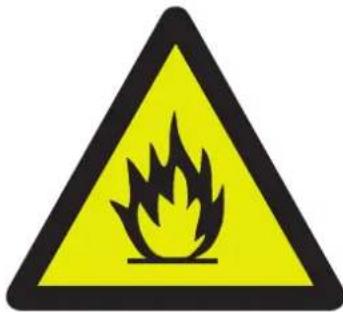
WARNING: RISK OF FIRE/FLAMMABLE MATERIALS
This appliance contains R600a (the coolant isobutane), natural gas which is very environmentally friendly but flammable. When transporting and installing the equipment it is necessary to make sure that no part of the cooling circuit is damaged. In the case of damage, reduce the flame and ventilate the premises where the appliance is located for a few minutes.
When replacing the interior lighting of the refrigerator, always unplug the refrigerator - otherwise there is a risk of electric shock. • If the replacement of the interior lighting is too complicated for you, contact your service representative. • If the products are equipped with LEDs, do not remove the lighting cover and LED yourself. – contact your service representatives.
REPLACING THE LED BULB: Do not remove the indicator cover or indicator yourself when the internal or external LEDs no longer operate. Contact the service representatives.
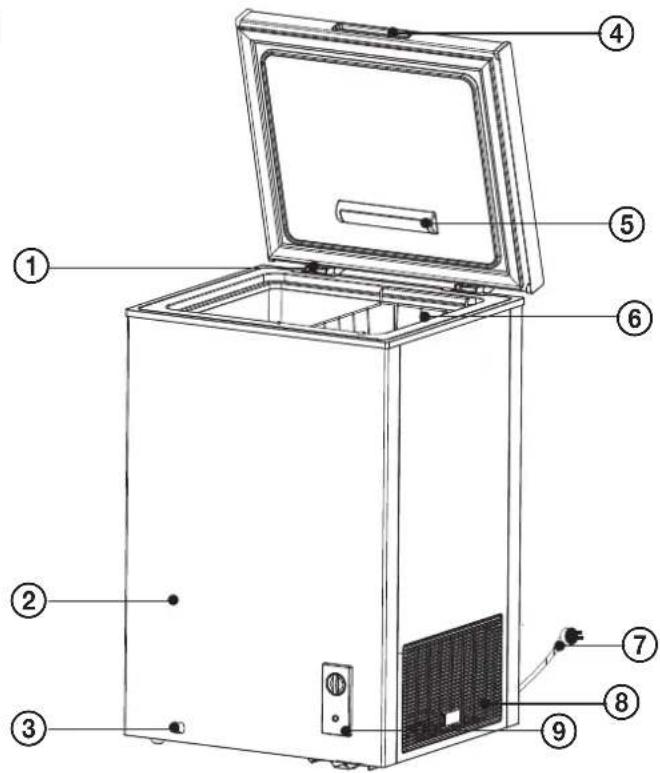
DESCRIPTION OF THE APPLIANCE
This description is only for information about the components of the appliance. Individual parts may differ according to the particular appliance model.
- Hinges
- Freezer shell
- Drain opening
- Handle
- Light (depending on model and version)
- Food basket
- Power cord
- Grill
- Temperature setting control panel
FREEZER INSTALLATION
Unpacking the freezer
- When transporting the appliance, do not tilt it more than 45^ and be careful to avoid opening the door.
- Remove from the freezer all the packing material, protective foils, tapes and labels (except the nameplate) before first use. You can easily remove the remnants of tapes and glue using a sponge and a small amount of detergent. Clean it after with warm water and dry it.
- Do not use any sharp objects, alcohol, flammable or abrasive cleaners, which could damage the surface finish of the appliance.
Location and space requirements
- Place the freezer in a well ventilated location on a level and firm floor.
- Place the freezer so that it is not exposed to direct sunlight and heat sources.
- Do not place the freezer in humid and wet areas to prevent corrosion and decline of insulation properties.
- The freezer should be installed at least 50 cm away from a stove, gas oven or heating furnace and at least 5 cm away from an electric oven.
- There should be at least 70 cm of space above the freezer, at the back and sides at least 20 cm to facilitate opening the door and heat dissipation.
- The ambient temperature influences the energy consumption and proper functioning. When placing the appliance, do not forget that it is advisable that the appliance operates in the temperature range specified for a given climate class, see the following table. You can find this information also on the rating plate of the appliance.
Warning: Prevent contact of the freezer with flammable materials and vapours, e.g. gasoline. Otherwise there is a risk of explosion, fi re, burns or other serious injury.
Installation and switching on the appliance
- Thoroughly clean the inside of the freezer with solution of water and detergent, and then wipe dry before first use.
- Before you first turn it on or after relocation leave the freezer stand for half an hour at rest before plugging it in. Otherwise, you could damage the compressor.
• Before plugging it in the outlet make sure that the voltage on the nameplate corresponds with the voltage in your outlet. - The outlet must be accessible after installing the appliance.
GB
- We recommend that freezer connects to a separate circuit, which does not power any other appliances. Use an electrical outlet, which cannot be accidentally disconnected by an e.g. switch.
- Do not use extension cables to connect the freezer.
- Before you put in fresh or frozen foods, the freezer should run first at least 2 to 3 hours, in summer months at least 4 hours due to higher ambient temperature.
- When you first turn the appliance on, it should run continuously for 24 hours before it reaches a sufficiently low temperature. Avoid frequent opening of door during that time and putting in large amount of foods.
- If the appliance is turned off or disconnected from the power supply you need to wait at least 5 minutes before restarting or plugging it in to prevent damage to the compressor.
Note: Disconnect the freezer from the power supply before any manipulation. After finishing the installation plug the freezer in the outlet and set the thermostat to the required value.
OPERATING INSTRUCTIONS
Control panel with the thermostat
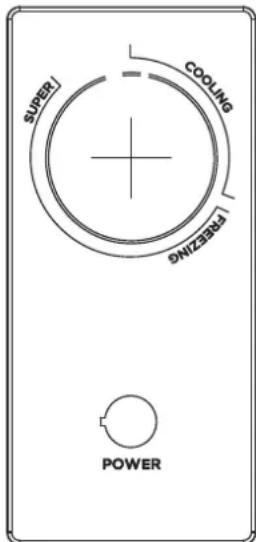
- After connecting the freezer to the power supply the green indicator "Power" (Power) lights up.
- Adjust the temperature inside the freezer using the rotary thermostat knob. Turn to the right to lower the freezer temperature.
- Setting the temperature to "COOLING" is used to cool and store frozen food. The setting range "FREEZING" to "SUPER" is used to freeze food.
- When the controller is set to the "SUPER" position, the quick freeze mode starts. The freezer compressor runs continuously at this setting.
Notes:
- The temperature in the freezer is affected by the ambient temperature, by the temperature of the freshly placed foods and the frequency of door opening. If necessary, adjust the thermostat.
Storing the foods in the freezer
- The freezer is intended for long-term storage or deep-frozen foods and making of ice cubes.
- When storing frozen food, follow the instructions on food packaging. If there are no instructions given, the food should not be stored for more than 3 months from date of purchase.
- When buying frozen food, make sure that it was frozen at sufficient temperature and that the packaging is not damaged.
- Frozen foods should be transported in a suitable packaging and placed in the freezer as soon as possible.
- If the frozen food packaging shows signs of moisture or swelling, the food was probably stored at improper temperatures and its quality is low.
- The storage life of frozen foods depends on the room temperature, thermostat setting, the frequency of door opening, type of food and the time needed to transport food from the store in the freezer. Never exceed the indicated maximum storage life.
Freezing fresh foods
- Make sure that the freezing procedure is carried out in the strictest hygienic conditions, since the freezing alone does not sterilize the food.
- Do not place hot or warm foods in the freezer.
- Do not place fresh food side by side with frozen food, it could lead to partial thawing of already frozen food.
- When freezing fresh food (meat, fish, minced meat), it is recommended to divide the foods into individual portions and freeze them separately.
-
Before storing food in the freezer, wrap it in plastic bags, aluminium foil or freezer bowls.
-
The maximum freezing capacity in kg in 24 hours at room temperature 25 °C is specified in the section „Technical specifications“ at the end of this manual. Never freeze more than the maximum allowable quantity of food.
- For optimal performance of the appliance and to achieve maximum freezing performance, set the thermostat control to the maximum 24 hours before placing fresh food inside.
• 24 hours with thermostat at maximum is usually sufficient time after placing fresh foods in the freezer. Afterwards return the thermostat setting to the required operating position.
Note: Never place beverages or foods in preserving jars in the freezer. For ensuring optimum performance, keep in the freezer enough space to allow air flow around individual packages.
CARE AND MAINTENANCE
GB
Cleaning the freezer
- Before cleaning the freezer, unplug the power cord from the outlet.
- Do not clean the freezer with running water. Use a sponge or cloth dipped in a mild solution of warm water and detergent. Do not use aggressive or abrasive cleaners.
- Use dry cloth to clean the thermostat and the electrical components.
- Wipe all surfaces carefully and dry them thoroughly.
- Do not use on plastic and rubber parts cleaning waxes, concentrated detergents, bleach or cleaners containing kerosene.
- Do not use for cleaning plastic parts paper cleaning wipes, window cleaners, scouring powders or flammable liquids that could scratch or otherwise damage the surface finish.
- Wash the accessories of the freezer separately in mild detergent solution. Do not wash in the dishwasher.
Defrosting
The freezer requires maximum defrosting.
- Unplug the freezer from the power supply and move all the foods to a cool place. The best time for defrosting is when the freezer is almost empty. The defrosting should be quick so that the temperature of the foods would not rise.
- Open the drain and discharge openings (and place water containers under the drain holes).
- Do not use metal or sharp objects or mechanical and other devices to speed up the defrosting process. When the ices soften, you can use a plastic ice scraper.
- The increase in temperature of frozen foods during defrosting of the freezer shortens their storage life.
• After defrosting wash and wipe dry the freezer with a sponge or dry tea towel. - Plug the appliance in the power supply and before you place in the foods let it run 2 to 3 hours at maximum.
- Before placing the foods back in the freezer check them carefully. You have to consume the partially defrosted foods within 24 hours or you have to cook them and freeze them again.
Power outage
In case of power failure the foods will stay frozen in the freezer for a number of hours. In case of power failure limit opening the door to a minimum and do not put in fresh (unfrozen) foods.
Long-term shutdown
If you do not intend to use the freezer for a longer period of time, proceed as follows:
- Pull the plug out of the outlet to disconnect the freezer from the power supply.
- Clean and dry the interior of the freezer as described in the section „Cleaning of the freezer“.
- Leave the freezer door open to prevent unpleasant odours forming in the unused freezer.
Power saving tips
- Place the appliance in a cool, well-ventilated location, away from direct sunlight and heat sources (radiators, cookers). If necessary use a suitable insulation board.
-
Place beverages in the freezer only after they cool down.
-
When putting in foods, limit the time you open the freezer door to a minimum.
- Keep the door seal clean. Replace a damaged door seal.
TROUBLESHOOTING
You can solve a number of common problems on your own. If the freezer is not working properly, check the following points before calling a service technician:
The freezer does not work
• The power cord is disconnected.
• The main house breaker is off.
- The thermostat is not set to the desired cooling temperature.
- The electrical outlet is not under voltage. Test the functionality of the outlet by plugging in another appliance.
Odour
- Put the aromatic foods in a well sealed container.
- Check, if some of the foods are not spoiled or mouldy.
- Clean regularly the interior of the freezer.
The compressor runs too long
- It is usual that in the summer month with high ambient temperatures the compressor runs for longer time.
- Do not place in the freezer a great quantity of fresh foods at once.
- Place in the freezer only cold foods.
- Opening the door too frequently.
• Strong layer of ice.
The light in the freezer does not work
• Make sure the power is on.
- Check, if the light is damaged. In case of damage contact your service representative.
Freezer door cannot be closed securely
- Food packaging is caught between the door and the seal of the freezer.
- Too many foods in the freezer.
- The freezer is tilted.
Noisy freezer
The circulation of the cooling medium makes some noise (gurgling sounds), even if the compressor is not running. This is entirely normal and does not present a problem. A clicking noise caused by the solenoid or electrical switch is normal and not a problem. In case of hearing other noises, check the following:
- Check if the freezer is in horizontal position.
- Check if it is not touching other devices or kitchen equipment.
- Check if the interior of the freezer does not vibrate.
Condensation and warm surface
- At higher humidity condensation of moisture can appear on the outer surfaces and door seal. It is not a malfunction, wipe off the moisture with dry cloth. Higher surface temperatures, especially in the summer months are caused by radiation of heat from the evaporator. This is not a malfunction.
Diffi culty in opening the door.
• After the food and compartment have cooled down, the pressure inside the freezer can get lower. This may cause the freezer door to be difficult to open. This is not a malfunction.
INFORMATION SHEET ACCORDING TO EU DIRECTIVE 1060/2010
| Trademark ECG ECG ECG | |||
| Model EFP 10990 WA+ EFP 11420 WA+ EFP 11980 WA+ | |||
| Appliance type 3 9 9 9 | |||
| Energy efficiency class A+ A+ A+ | |||
| Energy consumption in 365 days (kWh) 170 192 221 | |||
| Star designation of the freezing compartment | * * * * * * * * * * * * * * * * * * * * * * * * * * * * * * * * * * * * * * * * * * * * * * * * * * * * * * * * * * * * * * * * * * * * * * * * * * * * * * * * * * * * * * * * * * * * * * * * * * * * * | ||
| Total usable volume (l) | 99 | 142 198 | |
| of which the volume of the cooling section (l) | 0 0 0 | ||
| of which the volume of the freezing section (l) | 99 | 142 198 | |
| of which the "frost-free" refrigeration/freezing section (l/l) | 0/0 | 0/0 | 0/0 |
| Storage time when power off (hrs.) | 20 | 30 | 30 |
| Freezing capacity (kg/24 hrs.) | 4.5 6.5 9 | ||
| Climate class 2 | T/ST/SN/N | T/ST/SN/N | T/ST/SN/N |
| Noise level 4 dB (re 1 pW) | 42 | 42 | 42 |
| Bulb maximum power consumption (W) | 0 0 15 | ||
| Voltage | 220–240 V ~ 50 Hz | 220–240 V ~ 50 Hz | 220–240 V ~ 50 Hz |
| Dimensions cm (h × w × d) | 85 × 54.5 × 49.5 cm | 85 × 63.2 × 55 cm | 85 × 81.6 × 55 cm |
| Weight kg | 24 | 27 | 30 |
| Built-in appliance | NO | NO | NO |
- Energy consumption in kWh / year based on standard test results for 24 hours. The actual energy consumption depends on how the appliance is used and the location of the appliance.
- SN: ambient temperatures from +10 °C to +32 °C
ST: ambient temperatures from +18 °C to +38 °C
N: ambient temperatures from +16 °C to +32 °C
T: ambient temperatures from +18 °C to +38 °C
- 1 = Refrigerator without low temperature compartment
7 = Refrigerator/freezer with low temperature compartment * (* * *)
8 = Upright freezer
9 = chest freezer
10 = Refrigerator with compartment near 0^ C
- Noise level according to European standard EN 60704.
USE AND DISPOSAL OF WASTE
Wrapping paper and corrugated paperboard – deliver to scrapyard. Packing foil, PE bags, plastic elements – throw into plastic recycling containers.
DISPOSAL OF PRODUCTS AT THE END OF LIFETIME
Disposal of electric and electronic equipment (valid in EU member countries and other European countries with an implemented recycling system)
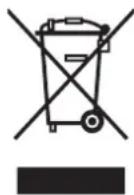
The represented symbol on the product or package means the product shall not be treated as domestic waste. Hand over the product to the specified location for recycling electric and electronic equipment. Prevent negative impacts on human health and the environment by properly recycling your product.
Recycling contributes to preserving natural resources. For more information on the recycling of this product, refer to your local authority, domestic waste processing organization or store, where you purchased the product.
08/05
This product complies with EU directive requirements on electromagnetic compatibility and electrical safety.

The instruction manual is available at website www.ecg-electro.eu.
Changes in text and technical parameters reserved.
Old refrigerators and freezers contain insulation gases and freezing media, which must be disposed off. Entrust the disposal to a competent local waste disposal service. In doubt contact your local authority or your vendor. Make sure that the pipes of the cooling unit, which will be removed by the appropriate waste disposal, service are not damaged.
www.ecg-electro.eu
CZ
K+B Progres, a.s.
U Expertu 91 tel.: +420 272 122 111
250 69 Kličany e-mail: ECG@kbexpert.cz
SK
Distribútor pre SR: K+B Progres, a. s., organizacná zložka Mlynské Nivy 71
821 05 Bratislava e-mail: ECG@kbexpert.cz
DE


- VÝSTRAHA: NEBEZPEČÍ OHNĚ / HOŘLAVÉ MATERIÁLY
- VÝSTRAHA: NEBEZPEČENSTVO OHŇA/HORĽAVÉ MATERIÁLY
- WARNUNG: BRANDGEFAHR / BRENNBARE STOFFE
- Read carefully and keep for future use!
- RISK OF FIRE!
- WARNING: RISK OF FIRE/FLAMMABLE MATERIALS
- DESCRIPTION OF THE APPLIANCE
- FREEZER INSTALLATION
- Unpacking the freezer
- Location and space requirements
- Installation and switching on the appliance
- OPERATING INSTRUCTIONS
- Control panel with the thermostat
- Notes:
- Storing the foods in the freezer
- Freezing fresh foods
- CARE AND MAINTENANCE
- Cleaning the freezer
- Defrosting
- Power outage
- Long-term shutdown
- Power saving tips
- TROUBLESHOOTING
- The freezer does not work
- Odour
- The compressor runs too long
- The light in the freezer does not work
- Freezer door cannot be closed securely
- Noisy freezer
- Condensation and warm surface
- Diffi culty in opening the door.
- USE AND DISPOSAL OF WASTE
- DISPOSAL OF PRODUCTS AT THE END OF LIFETIME
- www.ecg-electro.eu
- CZ
- SK
- DE
Brand : ECG
Model : EFP 11980 WA+
Category : Freezer