
Casiotone CT-S100 - MIDI Keyboard CASIO - Free user manual and instructions
Find the device manual for free Casiotone CT-S100 CASIO in PDF.


User questions about Casiotone CT-S100 CASIO
0 question about this device. Answer the ones you know or ask your own.
Ask a new question about this device
Download the instructions for your MIDI Keyboard in PDF format for free! Find your manual Casiotone CT-S100 - CASIO and take your electronic device back in hand. On this page are published all the documents necessary for the use of your device. Casiotone CT-S100 by CASIO.
USER MANUAL Casiotone CT-S100 CASIO
Preparing a Power Supply Turning Power On or Off Connecting Headphones (Sold Separately)



Selecting a Musical Instrument Tone

Changing the Pitch in Semitone Steps (TRANSPOSE)
Fine Tuning (Tuning) Enabling and Disabling Sustain (SUSTAIN)
Saving and Loading Instrument Settings (MY SETUP)

Playing a Built-in Song Playing with a Rhythm Backing

Configuring Function Settings
Included and Optional Accessories
Use only accessories that are specified for use with this Digital Keyboard.
Use of unauthorized accessories creates the risk of fire, electric shock, and personal injury.

NOTE
- You can get information about accessories that are sold separately for this product from the CASIO catalog available from your retailer, and from the CASIO website at the URL or QR code below. https://support.casio.com/global/en/emi/manual/CT-S100/
About Music Score data
You can download music score data as a PDF file from the CASIO website, which you can access using the URL or QR code below. You will then be able to view music scores on your smart device. You can jump from the PDF file table of contents directly to the music score you want, and you can print out scores as needed.
https://support.casio.com/global/en/emi/manual/CT-S100/
- Any reproduction of the contents of this manual, either in part or its entirety, is prohibited. Except for your own, personal use, any other use of the contents of this manual without the consent of CASIO is prohibited under copyright laws.
- IN NO EVENT SHALL CASIO BE LIABLE FOR ANY DAMAGES WHATSOEVER (INCLUDING, WITHOUT LIMITATION, DAMAGES FOR LOSS OF PROFITS, BUSINESS INTERRUPTION, LOSS OF INFORMATION) ARISING OUT OF THE USE OF OR INABILITY TO USE THIS MANUAL OR PRODUCT, EVEN IF CASIO HAS BEEN ADVISED OF THE POSSIBILITY OF SUCH DAMAGES.
- The contents of this manual are subject to change without notice.
- The actual appearance of the product may be different from that shown in the illustrations in this User's Guide.
- Company and product names used in this manual may be registered trademarks of others.
Contents
General Guide EN-3
Getting Ready to Play EN-4
Preparing a Power Supply .... EN-4
Preparing the Music Stand ..... E N - 5
Connecting Headphones (Sold Separately) ..... EN-5
Playing on the Keyboard EN-6
Turning Power On or Off. EN-6
Adjusting the Volume Level. . . . . . . . . . . . . . . . . . . . . . . . . . . . . E N - 7
Using the Metronome ..... EN-7
Listening to Demo Play ..... EN-8
Controlling the Sound of a Performance EN-9
Selecting a Musical Instrument Tone ..... EN-9
Enabling and Disabling Sustain (SUSTAIN) ..... EN-10
Adding Reverb to Notes (REVERB)....EN-10
Changing the Pitch in Semitone Steps (TRANSPOSE) ...... EN-10
Fine Tuning (Tuning).... EN-11
Saving and Loading Instrument Settings (MY SETUP) EN-11
Saving to MY SETUP .... EN-11
Recalling From MY SETUP..... EN-12
Playing a Built-in Song EN-12
Songs ...... EN-12
Selecting a Song to Play..... E N - 1 2
Practicing a Song Part .... EN-14
Sounding a Count in Time with a Song..... EN-14
Playing with a Rhythm Backing EN-15
Rhythm EN-15
Playing a Rhythm.... EN-15
Inserting a Fill-in Phrase ..... EN-16
Fingering a Chord to Play a Rhythm Accompaniment...... EN-17
Connecting with External Devices EN-19
Connecting to a computer and Using MIDI ..... EN-19
Connecting with Audio Equipment ..... EN-20
Configuring Function Settings EN-21
Configuring Settings ...... EN-21
Keyboard Keys Used for Configuring Settings . . . EN-22
Setting Item List EN-23
Reference EN-26
Troubleshooting....EN-26
Product Specifications .....EN-28
Tone List.....EN-30
Drum Assignment List.....EN-32
Song List.....EN-33
Rhythm List.....EN-34
Fingering Guide .....EN-35
Chord Example List ....EN-36
MIDI Implementation Chart
General Guide
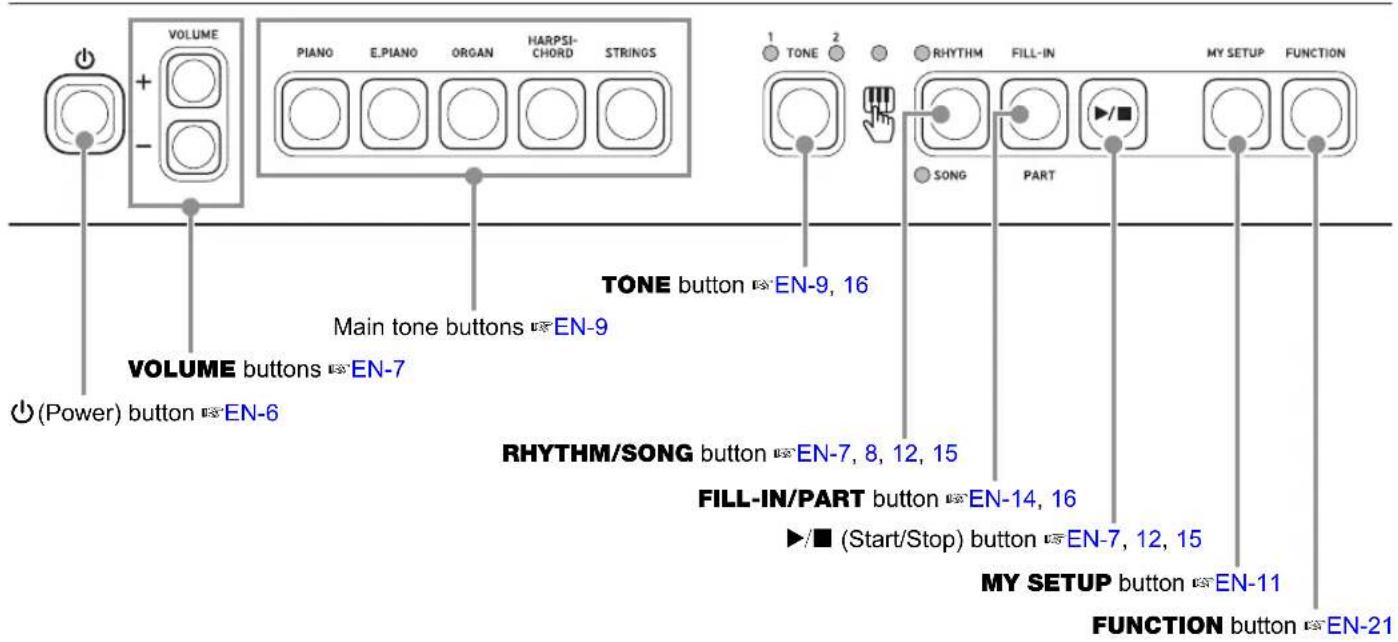
■Front Panel
■Back
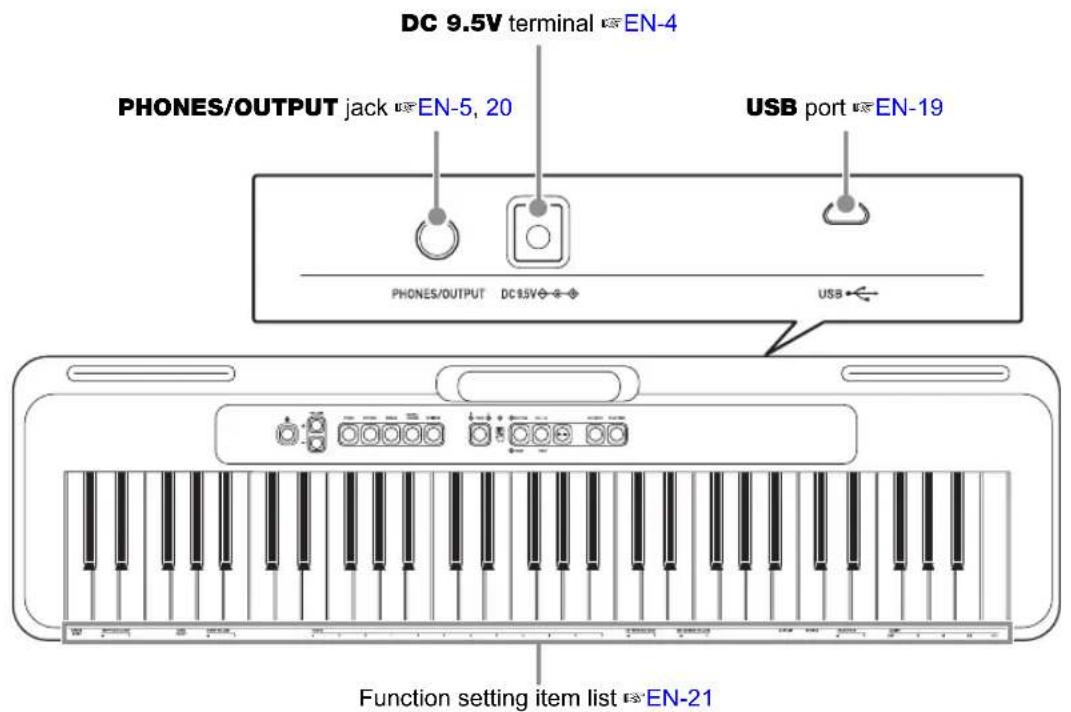
- The numbers to the right of the symbol are reference page numbers.
Getting Ready to Play
Preparing a Power Supply
Though either an AC adaptor or batteries can be used for power, use of AC adaptor power is normally recommended.
Using the AC Adaptor
Use only the AC adaptor (JEITA Standard with unified polarity plug) specified for this Digital Keyboard. Use of a different type of AC adaptor can cause malfunction.
AC Adaptor Type: AD-E95100L
Household power outlet

IMPORTANT!
- Be sure to turn off Digital Keyboard power before connecting or disconnecting the AC adaptor.
- The AC adaptor becomes warm to the touch after very long use. This is normal and does not indicate malfunction.
- To prevent breaking of the wire, take care to avoid putting any type of load on the power cord.
No twisting No pulling No wrapping
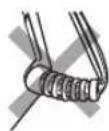
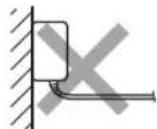
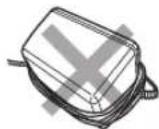
- Never insert metal, pencils, or any other objects into the DC 9.5V terminal. Doing so creates the risk of accident.
Using Batteries for Power

IMPORTANT!
- Be sure to turn off power before loading batteries.
- Use commercially available AA-size alkaline batteries or AA-size rechargeable nickel metal hydride batteries.
- Low battery power can cause abnormal operation. If this happens, replace batteries with new ones. If you are using rechargeable batteries, charge them.
■Batteries
Note the precautions below when using rechargeable batteries.
- Use Panasonic Group AA-size eneloop rechargeable batteries. Do not use any other type of batteries.
- Use only the specified charger to charge batteries.
- Rechargeable batteries must be removed from the product for charging.
- For information about using eneloop batteries or their specified charger, be sure to read the user documentation and precautions that come with each item, and use them only as directed.
Be sure to replace batteries at least once a year, even if there is no indication of low battery power. Dead rechargeable batteries (eneloop) in particular may deteriorate if they are left in the product. Remove rechargeable batteries from the product as soon as possible after they go dead.
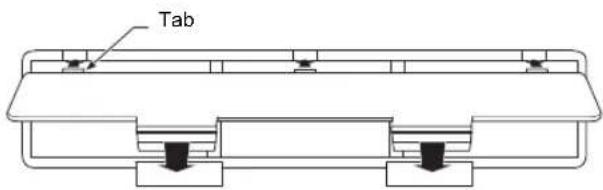
- Open the battery cover on the back of the Digital Keyboard.
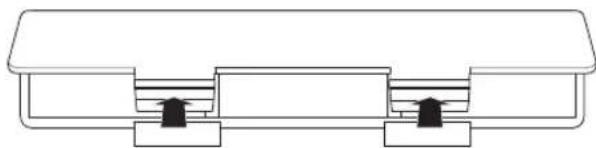
natural_image
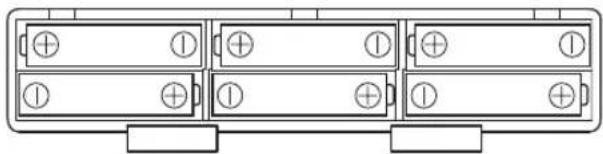
Pure technical line drawing of a mechanical component with no text or symbols- Load six AA-size batteries into the battery compartment.
Load batteries with their positive (+) and negative (−) ends facing correctly.
natural_image
Pure electrical circuit lines without any symbols- Insert the tabs of the battery cover into the holes, and close the cover.
- Configure the setting below to specify the type of batteries you loaded.
■Configuring the Battery Type Setting
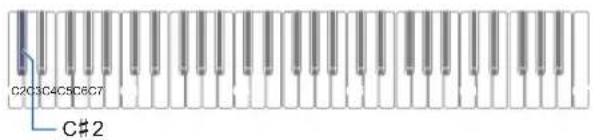
1. While holding down FUNCTION, press the C#2 keyboard key.
• Each press of the C#2 keyboard key sounds a tone that lets you know what setting (alkaline batteries or nickel metal hydride batteries) was selected. One tone: Alkaline batteries Two tones: Rechargeable nickel metal hydride batteries
- The keyboard input LED is lit while FUNCTION is depressed.
2. Release FUNCTION to exit the setting operation.
■Low Battery Indication
Flashing TONE LEDs indicate low battery power. When this happens, replace the batteries with new ones.

IMPORTANT!
- Continued use with low batteries may cause power to turn off suddenly. This can cause stored data to be corrupted or lost.
Preparing the Music Stand
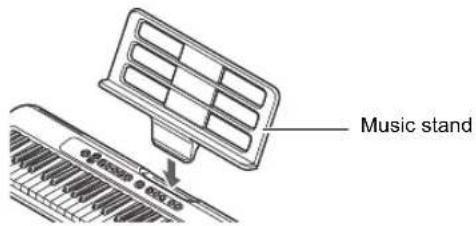
Insert the music stand into the handle of the Digital Keyboard.
Connecting Headphones (Sold Separately)
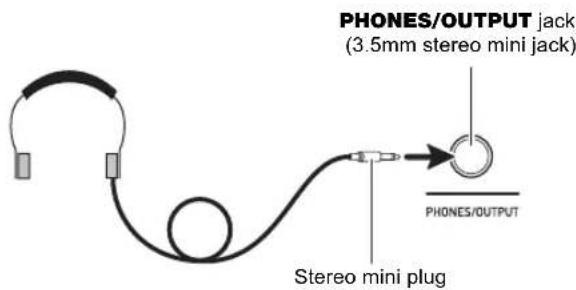
Plugging in headphones cuts off output from the built-in speakers, which means you can practice playing even late at night without disturbing others.
- Be sure to turn down the Digital Keyboard volume level before connecting headphones.

NOTE
- Headphones do not come with the Digital Keyboard. - Use separately sold or commercially available headphones.

IMPORTANT!
- Do not listen to output over headphones at very high volume levels for long periods. Doing so creates the risk of hearing damage. - If the plug of the headphones does not match the PHONES/OUTPUT jack, use a commercially available adapter plug. - If you are using headphones that require an adapter plug, make sure you do not leave the adapter plugged in when removing the headphones.
Playing on the Keyboard
Turning Power On or Off
1. Press ⏻ (Power).
This turns on power.
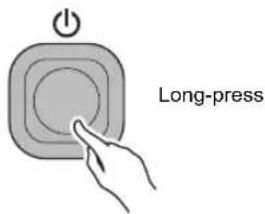
- To turn off power, long-press ⏻ (Power) until the LED goes out.
2. Play something on the keyboard.
IMPORTANT!
- Turning off power normally causes the tone and rhythm number and other settings to return to their initial defaults. However, the settings below are remembered.
- MIDI Out Channel
- MIDI Out Octave Shift
- MIDI Out Velocity
- Startup volume level
- MY SETUP Startup
- Auto Power Off
- Battery type
Auto Power Off
While Auto Power Off is enabled, Digital Keyboard power will turn off automatically after about 30 minutes of non-operation.
NOTE
• Auto Power Off is disabled while a song is playing.
■Disabling Auto Power Off
You can disable Auto Power Off to ensure that power does not turn off automatically during a concert, etc.
1. While holding down FUNCTION, press the Bb4 keyboard key.
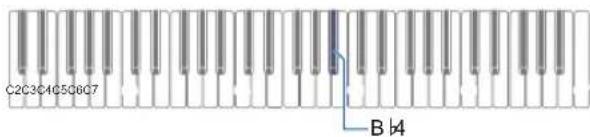
• Each press of the Bb4 keyboard key sounds a tone that lets you know what setting (on or off) was selected.
High tone: On (enabled)
Low tone: Off (disabled)
- The keyboard input LED is lit while FUNCTION is depressed.
2. After disabling Auto Power Off, release FUNCTION.
Adjusting the Volume Level
1. Use the VOLUME + and - buttons to adjust the volume level.
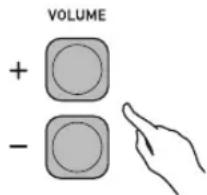
• The setting range is 0 to 10.
- Holding down either button scrolls the setting value.
Specifying the Power On Volume Level
You can use the procedure below to specify the volume level that is applied when the Digital Keyboard is turned on.
1. While holding down FUNCTION, press the C#4 or Eb4 keyboard key to adjust the volume level setting.
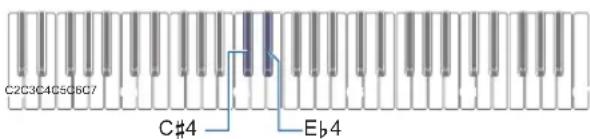
- You can change the volume value within a range of 1 to 10.
- Pressing the C#4 keyboard key lowers the volume level, while pressing Eb4 raises it.
- To return the setting to its initial default, press the C#4 and Eb4 keyboard keys at the same time.
- The keyboard input LED is lit while FUNCTION is depressed.
2. Release FUNCTION to exit the setting operation.
Using the Metronome
The metronome lets you play and practice along with a steady beat to help keep you on tempo. You can also set a tempo that is suitable for your practice.
Start/Stop
- Press RHYTHM/SONG a number of times until the LED goes out.
- Press ▶/■.
This starts the metronome.
- Press ▶/■ again to stop the metronome.
Changing the Metronome Tempo
Use the procedure below to change the tempo of the metronome.
- Start the metronome.
- While holding down FUNCTION, use the TEMPO keyboard keys to specify a tempo value.
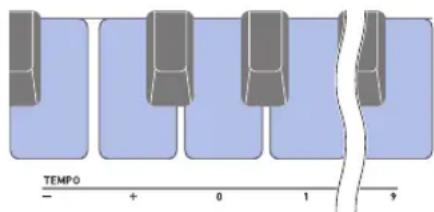
- You can specify a tempo value in the range of 20 to 255.
- Each press of the – or + keyboard key raises or lowers the tempo by 1. Holding down either button scrolls the setting value.
- You can also use the TEMPO value input keys (0 to 9) to enter a specific tempo value.
- Input three digits as the tempo value. Example: To set a tempo of 20, input “0→2→0”.
- To return the setting to its initial default, press the – and + keyboard keys at the same time.
- The keyboard input LED is lit while FUNCTION is depressed.
3. Release FUNCTION to exit the setting operation.
Specifying the Metronome Sound and Beats Per Measure
You can use the procedure below to configure a setting that sounds a chime on the first beat of each measure, and a click for the remaining beats.
• Available settings are Off, or a value of 1 to 16 beats.
-
Start the metronome.
-
While holding down FUNCTION, use the METRONOME BEAT – and + keyboard keys to change the beat.
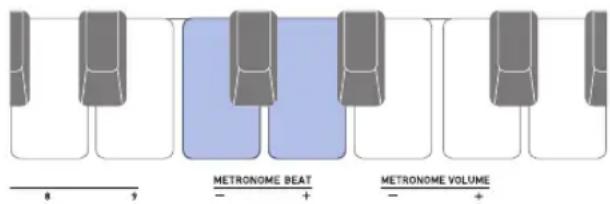
- Selecting Off (0) disables the chime. Use this setting when you want to practice without worrying about the first beat of each measure.
- To return the setting to its initial default, press the – and + keyboard keys at the same time.
-
The keyboard input LED is lit while FUNCTION is depressed.
-
Release FUNCTION to exit the setting operation.
Changing the Metronome Sound Volume Level
-
Start the metronome.
-
While holding down FUNCTION, use the METRONOME VOLUME – and + keyboard keys to change the volume level.
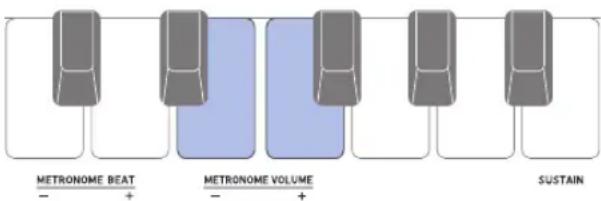
- You can specify a volume value from 0 to 10.
- To return the setting to its initial default, press the – and + keyboard keys at the same time.
-
The keyboard input LED is lit while FUNCTION is depressed.
-
Release FUNCTION to exit the setting operation.
Listening to Demo Play
You can use Demo Play to play built-in songs in sequence.
- While holding down FUNCTION, press the Bb6 keyboard key.
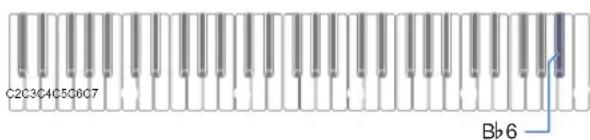
This starts song number "1".
• This causes the SONG LED to light.
- For information about how to change the demo song, see the "Selecting a Demo Song" (page EN-8).
- The keyboard input LED is lit while FUNCTION is depressed.
-
Release FUNCTION.
-
To exit Demo Play, hold down FUNCTION as you press the B♭6 keyboard key again, or press ▶/■.
Selecting a Demo Song
You can use the procedure below to change the song played by Demo Play.
- While holding down RHYTHM/SONG, press one of the keyboard keys.
This starts Demo Play of the song you selected.
- Each of the keyboard keys has a song assigned to it. For a list of song titles, see the "Song List" (page EN-33).
-
The keyboard input LED is lit while RHYTHM/SONG is depressed.
-
Release RHYTHM/SONG to exit the setting operation.
Controlling the Sound of a Performance
Selecting a Musical Instrument Tone
Your Digital Keyboard lets you select tones for a wide variety of musical instrument sounds, including violin, flute, orchestra, and more. Dedicated buttons give you instant access to the main tones (piano, organ, etc.) Even the same song sounds different when the instrument type is changed.
Selecting One of the Main Tones
1. Press one of the main tone buttons: PIANO, E.PIANO, ORGAN, HARPSICHORD, STRINGS.
• This causes the TONE 1 LED to light.
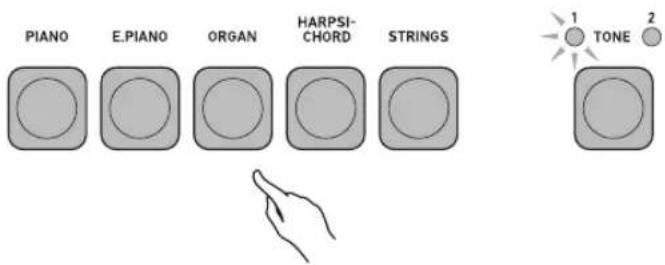
2. To toggle between tone variations, press TONE.
• Each press of TONE toggles between TONE 1 (TONE 1 LED lit, TONE 2 LED unlit) and TONE 2 (TONE 2 LED lit, TONE 1 LED unlit).
Selecting a Tone
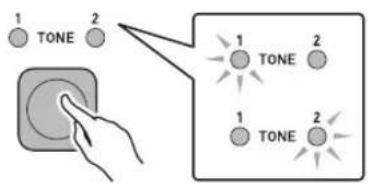
1. Press TONE to select the tone group you want.
• Each press of TONE toggles between Group 1 (TONE 1 LED lit, TONE 2 LED unlit) and Group 2 (TONE 2 LED lit, TONE 1 LED unlit).
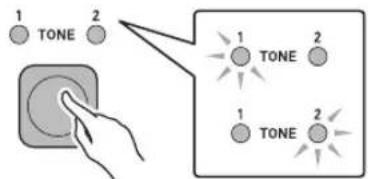
- When you select a group, keep TONE depressed as you continue with step 2, below.
2. While holding down TONE, press one of the keyboard keys.
This sounds the selected tone.
- Each of the keyboard keys has a tone assigned to it. For tone information, see the "Tone List" (page EN-30).
3. Release TONE to exit the setting operation.
NOTE
- Selecting a drum set tone causes various percussion instruments to be assigned to keyboard keys.
■Tone Groups
Tones are divided into two groups: Group 1 and Group 2. After selecting the group that includes the tone you want to use, use the keyboard keys to select the tone.
Enabling and Disabling Sustain (SUSTAIN)
While sustain is enabled, notes are sustained longer when keyboard keys are released.
1. While holding down FUNCTION, press the SUSTAIN keyboard key.
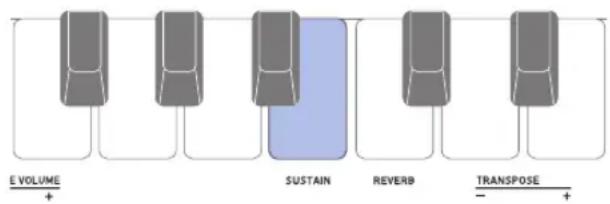
This turns on sustain.
• Each press of the SUSTAIN keyboard key sounds a tone that lets you know what setting (on or off) was selected.
High tone: On (enabled)
Low tone: Off (disabled)
- The keyboard input LED is lit while FUNCTION is depressed.
2. Release FUNCTION to exit the setting operation.
Adding Reverb to Notes (REVERB)
You can use the procedure below to add reverb to the notes you play.
1. While holding down FUNCTION, press the REVERB keyboard key to select a reverb type.
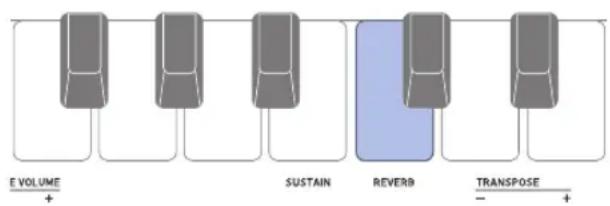
- You can specify a reverb value in the range of 1 to 4.
• Each press of the REVERB keyboard key sounds a tone that lets you know what setting was selected.
One low tone: Off (disabled)
One high tone: 1
Two high tones: 2
Three high tones: 3
Four high tones: 4
- The keyboard input LED is lit while FUNCTION is depressed.
2. Release FUNCTION to exit the setting operation.
Changing the Pitch in Semitone Steps (TRANSPOSE)
Transpose lets you raise or lower the overall pitch in semitone steps. You can use this feature to raise or lower the key to make it easier to play a piece written in a difficult key, or to adjust to a key that better matches a vocalist, another musical instrument, etc.
1. While holding down FUNCTION, use the TRANSPOSE keyboard keys to change the transpose setting.
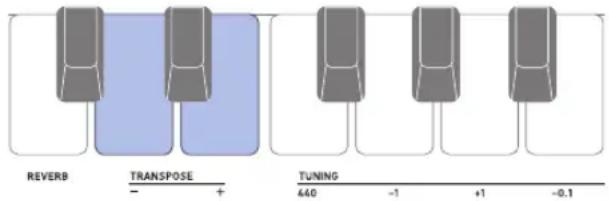
- The setting range is one octave up (+12 semitones) and down (-12 semitones).
- Pressing the – keyboard key lowers the pitch in semitone units, while pressing the + key raises the pitch in semitone units.
- To return the setting to its initial default, press the – and + keyboard keys at the same time.
- The keyboard input LED is lit while FUNCTION is depressed.
2. Release FUNCTION to exit the setting operation.
Fine Tuning (Tuning)
You can use the procedure below to adjust the overall pitch by changing the frequency of A4. (0.1Hz units)
1. While holding down FUNCTION, use the TUNING keyboard keys below to adjust tuning.
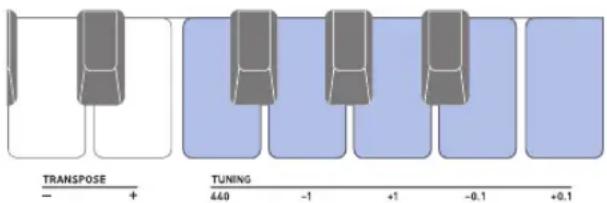
440: Sets the A4 frequency to 440.0 Hz.
-1: Lowers the A4 frequency 1.0Hz.
+1: Raises the A4 frequency 1.0Hz.
-0.1: Lowers the A4 frequency 0.1Hz.
+0.1: Raises the A4 frequency 0.1Hz.
- You can specify a frequency in the range of 415.5 to 465.9 Hz.
- The keyboard input LED is lit while FUNCTION is depressed.
2. Release FUNCTION to exit the setting operation.
Saving and Loading Instrument Settings (MY SETUP)
You can use MY SETUP to save the setup (tone, rhythm, and other settings) of the Digital Keyboard. You can recall a saved setup when you need it to perform a particular song, etc.
Saving to MY SETUP
1. Long-press MY SETUP.
Your setup is saved when you hear an operation complete tone.
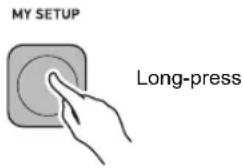
Savable Settings
You can use MY SETUP to save the items below.
• The function you are using (Tone, Rhythm, Song)
- Tempo
- Tone number
- Metronome beat
• Metronome volume level - Sustain
- Rhythm number
- Song number
- Practice part
- Count
- Transpose
- Reverb
- Pedal
- Chord fingering mode
• Rhythm volume level - Song volume level
- Tuning
Recalling From MY SETUP
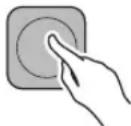
1. Press MY SETUP.
Your setup is saved when you hear an input tone.
MY SETUP
Enabling MY SETUP Power On
Use the procedure below to enable MY SETUP power on, which causes the MY SETUP settings to be applied whenever power is turned on.
1. While holding down FUNCTION, press the F#4 keyboard key to enable MY SETUP power on.
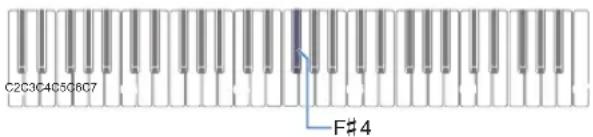
• Each press of the F#4 keyboard key sounds a tone that lets you know what setting (on or off) was selected.
High tone: On (enabled)
Low tone: Off (disabled)
- The keyboard input LED is lit while FUNCTION is depressed.
2. Release FUNCTION to exit the setting operation.
Playing a Built-in Song
Songs
With this Digital Keyboard, the term "song" is used to refer to a musical piece. You can listen to the built-in songs for your own enjoyment, or you can play along with them for practice.
Selecting a Song to Play
Starting or Stopping Song Play
1. Press RHYTHM/SONG a number of times until the SONG LED is lit.
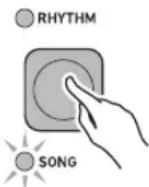
2. While holding down RHYTHM/SONG, press one of the keyboard keys.
This starts playback of the song you selected.
- Each keyboard key has a song assigned to it. For a list of songs, see the "Song List" (page EN-33).
- The keyboard input LED is lit while RHYTHM/SONG is depressed.
3. Release RHYTHM/SONG.
4. Press ▶/■ to stop the song.
5. To resume the previously playing song, press ▶/■ again.
NOTE
- Starting to use the Song Function while the metronome is sounding or a rhythm is playing will cause the ongoing operation to stop.
Changing a Song's Tempo (Speed) Adjusting the Song Volume Level
You can use the procedure below to change the tempo (speed) and slow down playback to practice difficult passages, etc.
- Select the song whose tempo you want to change with the Song Function.
- While holding down FUNCTION, use the TEMPO keyboard keys to specify a tempo value.
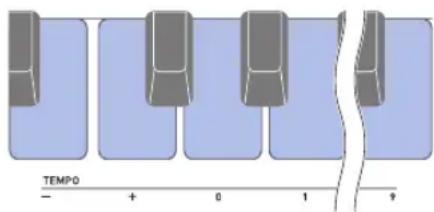
- You can specify a tempo value in the range of 20 to 255.
- Each press of the – or + keyboard key raises or lowers the tempo by 1. Holding down either button scrolls the setting value.
- You can also use the TEMPO value input keys (0 to 9) to enter a specific tempo value.
- Input three digits as the tempo value. Example: To set a tempo of 20, input “0→2→0”.
- To return to the recommended setting for the current song, press the – and + keyboard keys at the same time.
- Changing the song number returns the song to its recommended tempo.
-
The keyboard input LED is lit while FUNCTION is depressed.
-
Release FUNCTION to exit the setting operation.
Use the procedure below to adjust the balance between the volume levels of song play and what you play on the keyboard.
- While holding down FUNCTION, use the SONG VOLUME – and + keyboard keys to adjust the volume level.
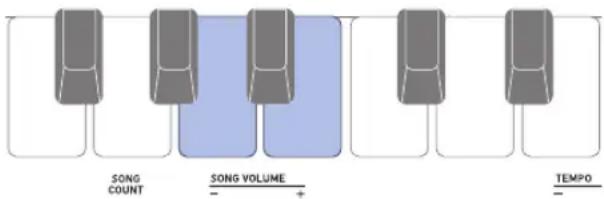
- You can change the volume value within a range of 1 to 10.
- To return the setting to its initial default, press the – and + keyboard keys at the same time.
-
The keyboard input LED is lit while FUNCTION is depressed.
-
Release FUNCTION to exit the setting operation.
Practicing a Song Part
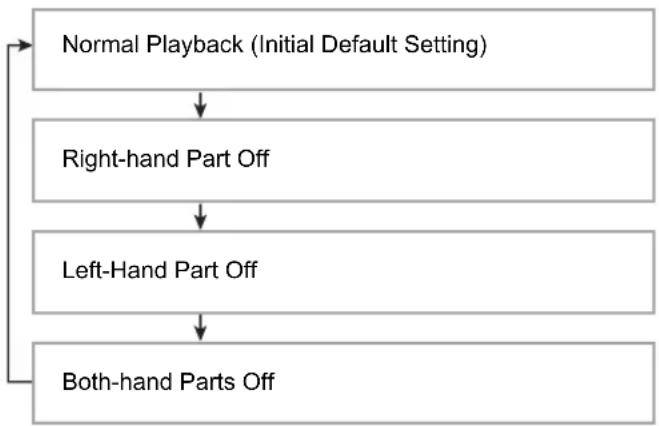
You can turn off the right-hand part or the left-hand part of a song you are playing and practice along with the remaining part. Use this when you feel that a song is initially too difficult for you to play with both hands at the same time.
1. While a song is playing or stopped, press FILL-IN/PART.
Each press of FILL-IN/PART cycles through the settings shown below.
flowchart
graph TD
    A["Normal Playback (Initial Default Setting)"] --> B["Right-hand Part Off"]
    B --> C["Left-Hand Part Off"]
    C --> D["Both-hand Parts Off"]
- A tone sounds to let you know which playback part is selected.
One low tone: Off (all parts sound)
One high tone: Right-hand part off
Two high tones: Left-hand part off
Three high tones: Both-hand parts off
Sounding a Count in Time with a Song
You can configure count settings to sound a count in time with a song and to sound a pre-count before a song starts.
Configuring Count Settings
1. While song play is stopped, hold down FUNCTION as you press the SONG COUNT keyboard key to specify a count setting.
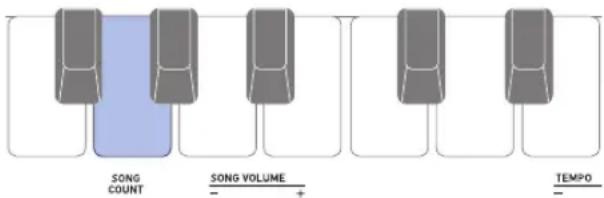
• Each press of the SONG COUNT keyboard key sounds a tone that lets you know what setting was selected.
One low tone: Off (disabled)
One high tone: Count
Two high tones: Pre-count
- The keyboard input LED is lit while FUNCTION is depressed.
2. Release FUNCTION.
3. Press ▶/■ to start playback.
- Playback starts in accordance with the count type you selected.
Count: A count sounds throughout song playback.
Pre-count: A count sound at the beginning of the song, before actual playback starts.
- To turn off a count, stop the song and repeat step 1 of this procedure until you hear one low tone.
Playing with a Rhythm Backing
You can use the procedures in this section to select the rhythm you want, and then automatically play accompaniments to suit it simply by playing chords with your left hand. It's like having a personal backup group along with you wherever you go.

NOTE
- Auto Accompaniments are made up of the parts (instruments) below.
– Rhythm (percussion)
– Bass (bass instruments)
– Harmony (other instruments)
You can have only the rhythm part play, or you can have all three parts play at the same time.
Rhythm
The rhythm part is the foundation of each Auto Accompaniment. Your Digital Keyboard comes with a variety of built-in rhythms, including 8-beat and waltz. Use the procedure below to play the basic rhythm part.
Playing a Rhythm
- Press RHYTHM/SONG a number of times until the RHYTHM LED is lit.
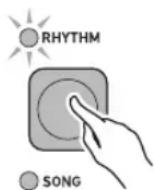
- While holding down RHYTHM/SONG, press one of the keyboard keys.
This starts playback of the rhythm you selected.
- Each of the keyboard keys has a rhythm assigned to it. For information about rhythms, see the "Rhythm List" (page EN-34).
-
The keyboard input LED is lit while RHYTHM/SONG is depressed.
-
Release RHYTHM/SONG.
- To stop playback, press ▶/■.
- To resume the previously playing rhythm, press ▶/■ again.
Changing the Tempo of a Rhythm
Use the procedure below to change tempo to a speed that suits you.
- Select the rhythm whose tempo you want to change with the Rhythm Function.
- While holding down FUNCTION, use the TEMPO keyboard keys to specify a tempo value.
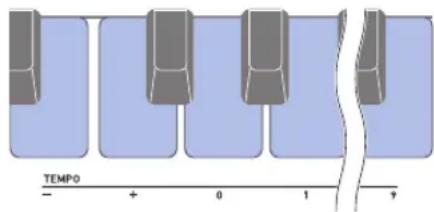
- You can specify a tempo value in the range of 20 to 255.
- Each press of the – or + keyboard key raises or lowers the tempo by 1. Holding down either button scrolls the setting value.
- You can also use the TEMPO value input keys (0 to 9) to enter a specific tempo value.
- Input three digits as the tempo value. Example: To set a tempo of 20, input “0→2→0”.
- To return to the recommended value, press the – and + keyboard keys at the same time.
-
The keyboard input LED is lit while FUNCTION is depressed.
-
Release FUNCTION to exit the setting operation.
Changing the Volume Level of a Rhythm
Use the procedure below to adjust the balance between the volume levels of keyboard play and the rhythm.
1. While holding down FUNCTION, use the RHYTHM VOLUME – and + keyboard keys to adjust the volume level.
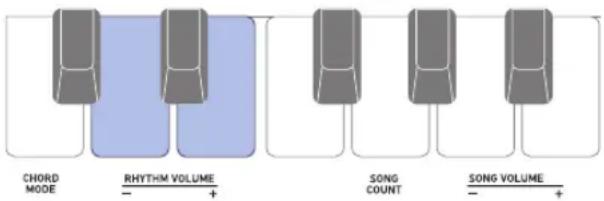
- You can change the volume value within a range of 1 to 10.
- To return the setting to its initial default, press the RHYTHM VOLUME – and + keyboard keys at the same time.
- The keyboard input LED is lit while FUNCTION is depressed.
2. Release FUNCTION to exit the setting operation.
Changing the Keyboard Tone While a Rhythm is Playing
1. While a rhythm is playing, use TONE to select the tone group you want.
• Each press of TONE toggles between Group 1 (TONE 1 LED lit, TONE 2 LED unlit) and Group 2 (TONE 2 LED lit, TONE 1 LED unlit).
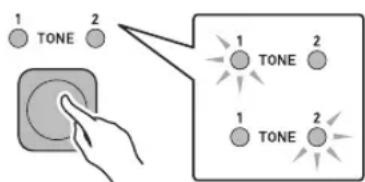
- When you select a group, keep TONE depressed as you continue with step 2, below.
2. While holding down TONE, press one of the keyboard keys.
This sounds the selected tone.
- Each of the keyboard keys has a tone assigned to it. For tone information, see the "Tone List" (page EN-30).
3. Release TONE to exit the setting operation.
Inserting a Fill-in Phrase
A "fill-in" is a short phrase played where you want to change the mood of a piece. A fill-in pattern can be used to create a link between two melodies or as an accent.
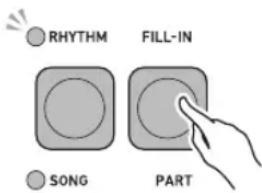
1. While a rhythm is playing, press FILL-IN/PART.
This inserts a fill-in phrase that plays to the end of the measure. The RHYTHM LED flashes while the fill-in phrase is sounding.
- To continue play of the fill-in phrase through the following measure, keep FILL-IN/PART depressed.
- If you press FILL-IN/PART while a rhythm is stopped, the fill-in phrase will be put into standby and played when the rhythm is started.
In this case, you can cancel fill-in phrase standby by pressing the FILL-IN/PART button again before starting the rhythm.
Fingering a Chord to Play a Rhythm Accompaniment
Playing a chord with your left hand automatically adds bass and harmony accompaniment parts to the currently selected rhythm. It is just like having your own personal back up group on call.
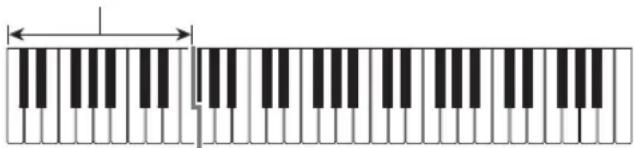
- Start the rhythm.
- Play something on the accompaniment keyboard.
This starts the accompaniment, sounding the bass, harmony, and other non-rhythm instruments.
Accompaniment keyboard
natural_image
Pure diagram of piano keys without any text, numbers, or symbolsNOTE
- Playing a chord while rhythm play is stopped will cause rhythm and accompaniment to start at the same time.
- Play other chords with your left hand as you play the melody with your right hand.
- To stop the rhythm, press ▶/■.
Selecting a Chord Fingering Mode
You can select from among the six chord fingering modes below.
• CASIO CHORD
• FINGERED 1
• FINGERED2
• FINGERED ON BASS
• FINGERED ASSIST
• FULL RANGE CHORD
- While holding down FUNCTION, use the CHORD MODE keyboard keys to specify a chord fingering mode.
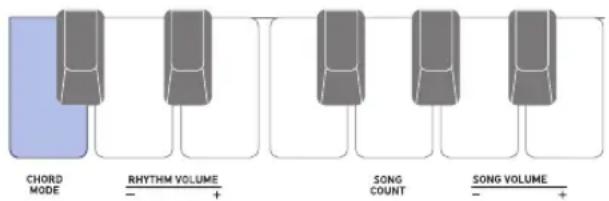
• Each press of the CHORD MODE keyboard key sounds a tone that lets you know what setting was selected.
One low tone: Off
One high tone: CASIO CHORD
Two high tones: FINGERED 1
Three high tones: FINGERED 2
Four high tones: FINGERED ON BASS
Five high tones: FINGERED ASSIST
Six high tones: FULL RANGE CHORD
- The keyboard input LED is lit while FUNCTION is depressed.
- Release FUNCTION to exit the setting operation.
■CASIO CHORD
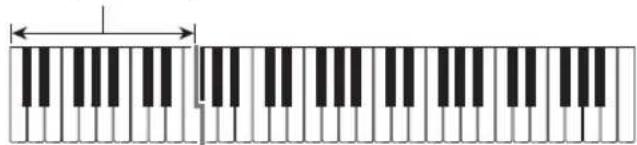
With CASIO CHORD, you can use simplified fingerings to play the four types of chords described below.
Accompaniment keyboard
natural_image
Pure diagram of piano keys without any text, numbers, or symbols| Chord Type Example | |
| Major ChordsLetters above the accompaniment keyboard indicate the name of the chord assigned to each key.Accompaniment keyboard keys marked with the same chord name play exactly the same chord. | C (C Major)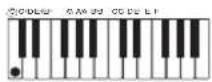 |
| Minor ChordsPress the key that corresponds to the major chord, while also pressing one other accompaniment area key to the right. | Cm (C Minor)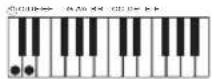 |
| Seventh ChordsPress the key that corresponds to the major chord, while also pressing two other accompaniment area keys to the right. | C7 (C Seventh)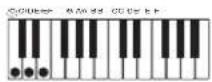 |
| Minor Seventh ChordsPress the key that corresponds to the major chord, while also pressing three other accompaniment area keys to the right. | Cm7(C Minor Seventh)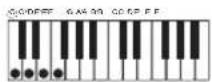 |
NOTE
- When playing a minor, seventh, or minor seventh chord on the accompaniment keyboard, it makes no difference whether the additional keys you press are black or white.
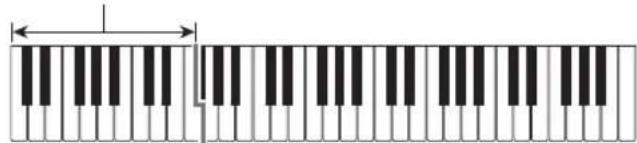
■FINGERED
With this chord fingering mode, you play chords on the accompaniment keyboard using their normal chord fingerings. Note that some chords can also be formed using abbreviated fingerings of one or two keys. For information about the types of chords you can finger and their fingerings, see the "Fingering Guide" (page EN-35).
Accompaniment keyboard
natural_image
Pure diagram of piano keys without any text, numbers, or symbols●FINGERED 1
Play the component notes of the chord on the keyboard.
●FINGERED 2
Unlike FINGERED 1, 6th input is not possible with this mode.
●FINGERED ON BASS
Play the component notes of the chord on the keyboard. This mode allows input of fraction chords with the lowest keyboard note as the base note.
●FINGERED ASSIST
In addition to FINGERED 1 input, you can also use the fingerings below to play the three chord types.
| Minor Chords (Cm) | One keyboard key for the base note and the nearest black key to the left. |
| Seventh Chords (C7) | One keyboard key for the base note and the nearest white key to the left. |
| Minor Seventh Chords (Cm7) | One keyboard key for the base note and the nearest black key and white key to the left. |
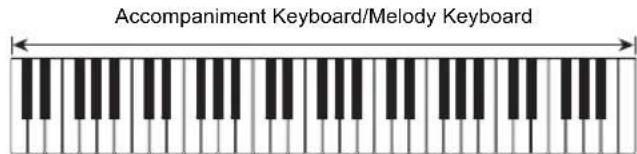
■FULL RANGE CHORD
With this chord fingering mode, you can use the full range of the keyboard to play chords and the melody.
Connecting with External Devices
Connecting to a computer and Using MIDI
You can connect the Digital Keyboard to a computer and exchange MIDI data between them. You can record Digital Keyboard play using computer music software, and use the Digital Keyboard to play data sent to it from the computer.
■Minimum Computer System Requirements
The following shows the minimum computer system requirements for sending and receiving MIDI data. Be sure to check your computer system setup before trying to install the driver.
●Supported Operating Systems
Windows 7*1
Windows 8.1*2
Windows 10*3
- Never connect the Digital Keyboard to a computer running an operating system that is not one of those above. Doing so can cause malfunction of the computer.

NOTE
- For the latest news about supported operating systems, visit the website at the URL or QR code below. https://support.casio.com/global/en/emi/manual/CT-S100/
■Connecting to a Computer

IMPORTANT!
- Incorrect connections can make data exchange impossible. Be sure to follow the steps of the procedure below.
1. Turn off the Digital Keyboard and then start up your computer.
- Do not start up the music software on your computer yet!
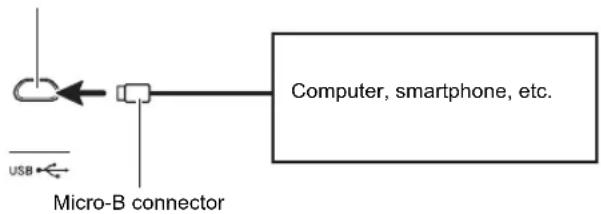
2. Use a commercially available USB cable to connect the Digital Keyboard to your computer.
- Use a USB 2.0 or 1.1 A-MicroB connector type USB cable that supports data communication.
Digital Keyboard USB port (Micro-B)
flowchart
graph LR
    A["Micro-B connector"] --> B["Computer, smartphone, etc."]
    A --> C["USB"]
3. Turn on the Digital Keyboard.
- If this is the first time you are connecting, the driver required to transfer data will automatically be installed on your computer.
4. Start up commercially available music software on your computer.
5. Use the settings of your computer's commercially available music software to select "CASIO USB-MIDI" as the MIDI device.
- For information about how to select the MIDI device, refer to the user documentation that comes with the music software you are using.

IMPORTANT!
- Be sure to turn on the Digital Keyboard before starting up your computer's music software.
- Data send/receive cannot be performed while a song is playing (page EN-12).

NOTE
- Once you are able to connect successfully, you can leave the USB cable connected when you turn off your computer and/or Digital Keyboard.
- For detailed specifications and connections that apply to MIDI data communication by this Digital Keyboard, see the latest support information provided on the website at the URL or QR code below. https://support.casio.com/global/en/emi/manual/CT-S100/
■Configuring MIDI Settings
For information about the MIDI settings below, refer to the "Setting Item List" (page EN-23).
- MIDI Out Channel
• MIDI Out Octave Shift - MIDI Out Velocity
- Local Control
Connecting with Audio Equipment
You can connect the Digital Keyboard to a commercially available stereo system or amplifier, or to a recording device.
You can also use the Digital Keyboard to sound output from a portable audio player or another device, and use that as backing for your keyboard play.
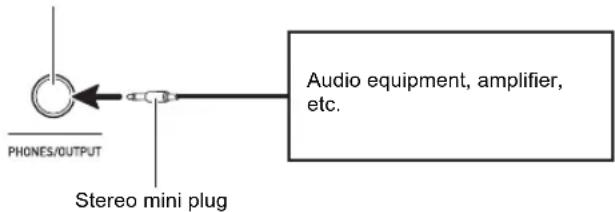
■Sounding Digital Keyboard Output on an External Device
Connection requires commercially available connecting cords, supplied by you.
- The connecting cord should have a stereo mini plug on one end and a plug that matches the configuration of the input jack of the external device on the other end.

IMPORTANT!
- Turn off the external device and the Digital Keyboard before connecting them. Before turning power on or off, turn down the volume level of the Digital Keyboard and external devices.
• After connecting, turn on the Digital Keyboard first and then the external device. - If Digital Keyboard notes are distorted when they are sounded on an external audio device, lower the Digital Keyboard's volume level.
Digital Keyboard PHONES/OUTPUT jack (3.5mm stereo mini jack)
flowchart
graph LR
    A["PRODUCE"] --> B["Stereo mini plug"]
    B --> C["Audio equipment, amplifier, etc."]
Configuring Function Settings
You can use FUNCTION in combination with keyboard keys to configure various settings.
Configuring Settings
- Find the item whose setting you want to change in the table under "Setting Item List" (pages EN-23 and 24) and note its details.
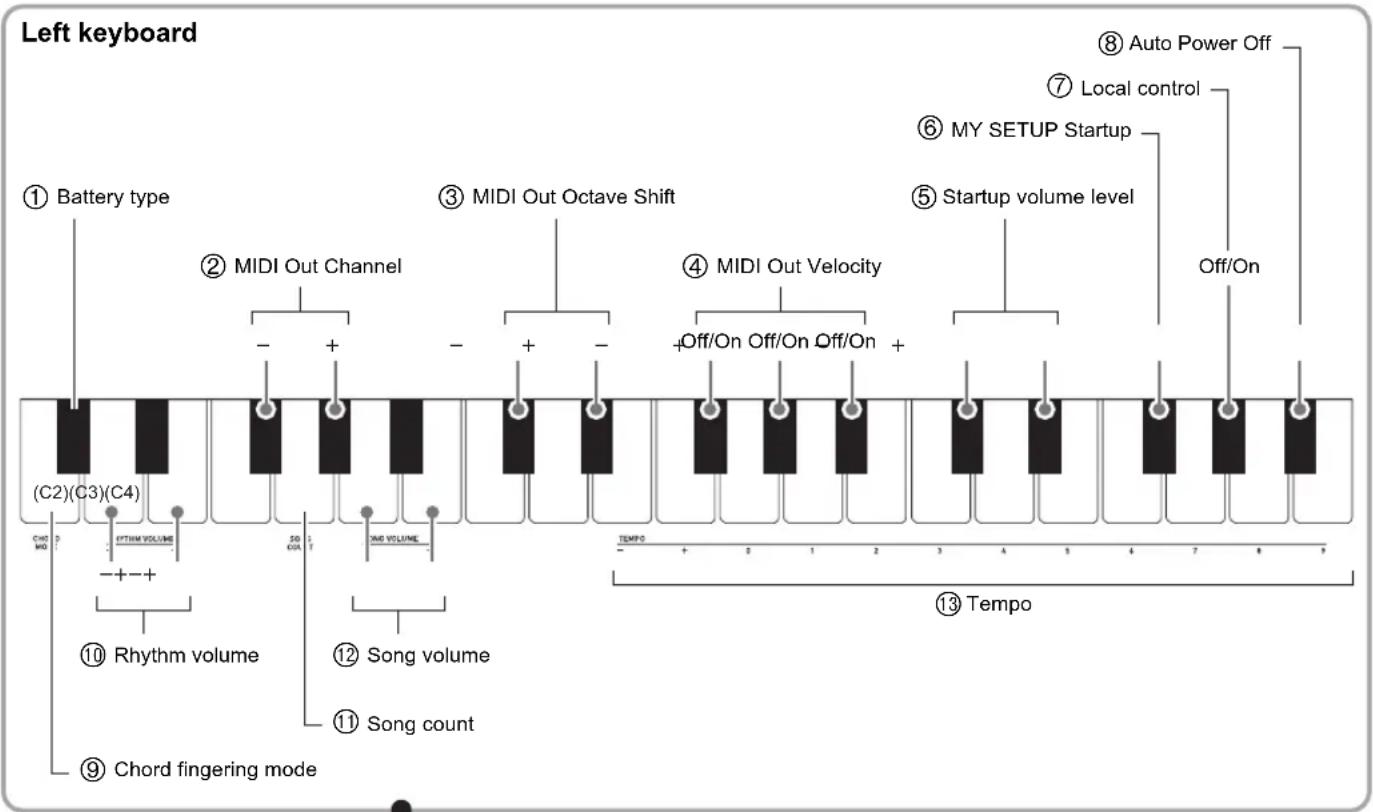
- Use the information under "Keyboard Keys Used for Configuring Settings" on page EN-22 to find the location of the keyboard keys for configuring the setting you want.
-
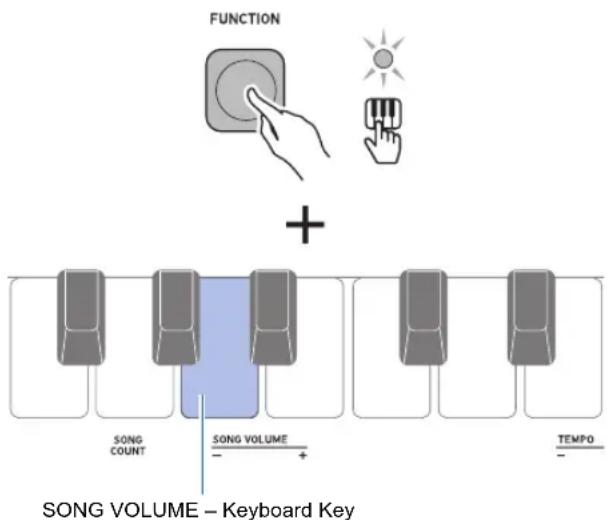
While holding down FUNCTION, use the keyboard key or keys you looked up in step 2 of this procedure to configure the setting you want.
-
The keyboard input LED is lit while FUNCTION is depressed.
- A tone will sound after the setting is configured.
Example: To lower the song volume by pressing the SONG VOLUME – keyboard key
- Release FUNCTION to exit the setting operation.

NOTE
- You can configure a setting to disable the tone that sounds in step 3 of this procedure.
For more information, see “⑮ Operation Tone” in the table under “Setting Item List” (pages EN-23 and 24).
Keyboard Keys Used for Configuring Settings
- The circled numbers (① through ②) correspond to the numbers in the table under “Setting Item List” (pages EN-23 and 24).
flowchart
graph TD
    A["① Battery type"] --> B["(C2)(C3)(C4)"]
    B --> C["② MIDI Out Channel"]
    C --> D["③ MIDI Out Octave Shift"]
    D --> E["④ MIDI Out Velocity"]
    E --> F["⑤ Startup volume level"]
    F --> G["⑥ MY SETUP Startup"]
    G --> H["⑦ Local control"]
    H --> I["⑧ Auto Power Off"]
    I --> J["Off/On"]
    J --> K["Tempo"]
    K --> L["⑬ Rhythm volume"]
    L --> M["⑭ Chord fingering mode"]
    M --> N["⑮ Song count"]
    N --> O["⑯ Song volume"]
    O --> P["Tempo"]
    style A fill:#f9f,stroke:#333
    style B fill:#ccf,stroke:#333
    style C fill:#cfc,stroke:#333
    style D fill:#fcc,stroke:#333
    style E fill:#cff,stroke:#333
    style F fill:#ffc,stroke:#333
    style G fill:#fcf,stroke:#333
    style H fill:#cfc,stroke:#333
    style I fill:#fcc,stroke:#333
    style J fill:#ffc,stroke:#333
    style K fill:#cfc,stroke:#333
    style L fill:#fcc,stroke:#333
    style M fill:#cfc,stroke:#333
    style N fill:#fcc,stroke:#333
    style O fill:#cfc,stroke:#333
    style P fill:#fcc,stroke:#333
Overall

Right keyboard
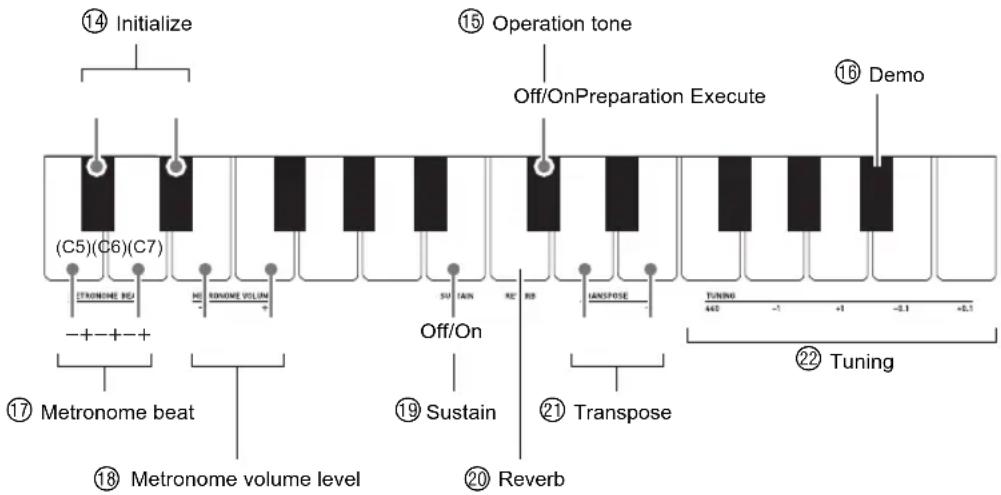
flowchart
graph TD
    A["⑭ Metronome beat"] --> B["(C5)(C6)(C7)"]
    B --> C["ETRONOME BE"]
    C --> D["RE"]
    D --> E["ROXONE VOLUME"]
    E --> F["+"]
    F --> G["Re"]
    G --> H["SUI TAIN"]
    H --> I["Off/On"]
    I --> J["RE"]
    J --> K["R8"]
    K --> L["TRANSPOSE"]
    L --> M["Transpose"]
    M --> N["21"]
    N --> O["20"]
    O --> P["Reverb"]
    P --> Q["②2 Tuning"]
    Q --> R["Tuning"]
    R --> S["440 -1 +1 -3.1 +3.1"]
    style A fill:#f9f,stroke:#333
    style B fill:#ccf,stroke:#333
    style C fill:#cfc,stroke:#333
    style D fill:#fcc,stroke:#333
    style E fill:#cff,stroke:#333
    style F fill:#ffc,stroke:#333
    style G fill:#cfc,stroke:#333
    style H fill:#fcc,stroke:#333
    style I fill:#cfc,stroke:#333
    style J fill:#fcc,stroke:#333
    style K fill:#cfc,stroke:#333
    style L fill:#fcc,stroke:#333
    style M fill:#cfc,stroke:#333
    style N fill:#fcc,stroke:#333
    style O fill:#cfc,stroke:#333
    style P fill:#fcc,stroke:#333
    style Q fill:#cfc,stroke:#333
    style R fill:#fcc,stroke:#333
    style S fill:#cfc,stroke:#333
    style T fill:#fcc,stroke:#333
    subgraph "Operation tone"
        U["Off/OnPreparation Execute"]
        V["Demo"]
    end
Setting Item List
| Item Setting | Options Description Remarks | ||
| 1 Battery type Alkaline, Nickel metal hydride | Specifies the type of batteries being used. | Each press of the keyboard key sounds a tone that lets you know what setting was selected.One tone: AlkalineTwo tones: Nickel metal hydride | |
| 2 MIDI Out Channel | 1 to 16 Specifies the channel to output MIDI messages. | To return the setting to its initial default, press – and + at the same time. | |
| 3 MIDI Out Octave shift | -3 to 0 to +3 Specifies, in octave units, the note message key number for MIDI Out. | To return the setting to its initial default, press – and + at the same time. | |
| 4 MIDI Out Velocity | Off, 1 to 127 Specifies the velocity of the note on message for MIDI Out. | ||
| 5 Startup volume level | 1 to 10 Specifies the power on volume level. | To return the setting to its initial default, press – and + at the same time. | |
| 6 MY SETUP Startup | Off, On Enables/disables configuration of MY SETUP settings when power is turned on. | ||
| 7 Local control Off, | On Mutes (Off)/unmutes (On) the Digital Keyboard sound output of your keyboard play. | ||
| 8 Auto Power Off | Off, On | Enables/disables Auto Power Off. | Each press of the keyboard key sounds a tone that lets you know what setting was selected.High tone: On (enabled)Low tone: Off (disabled) |
| 9 Chord fingering mode | Off,CASIO CHORD,FINGERED 1,FINGERED 2,FINGERED ON BASS,FINGERED ASSIST,FULL RANGE CHORD | Specifies the chord fingering mode. | Each press of the keyboard key sounds a tone that lets you know what setting was selected.One low tone: OffOne high tone: CASIO CHORDTwo high tones: FINGERED 1Three high tones: FINGERED 2Four high tones: FINGERED ON BASSFive high tones: FINGERED ASSISTSix high tones: FULL RANGE CHORD |
| 10 Rhythm volume | 0 to 10 | Adjusts the rhythm volume level. | To return the setting to its initial default, press – and + at the same time. |
| 11 Song count | Off, Count, Pre-count | Can be used to sound a count in time with song playback. | Each press of the keyboard key sounds a tone that lets you know what setting was selected.One low tone: Off (disabled)One high tone: CountTwo high tones: Pre-count |
| 12 Song volume | 0 to 10 | Adjusts the song volume level. | To return the setting to its initial default, press – and + at the same time. |
| 13 Tempo | 20 to 255 | Changes the tempo. | To return the setting to its initial default or recommended setting, press – and + at the same time. |
| 14 Initialize | Returns all settings to their factory defaults. | ||
| Item | Setting Options | Description | Remarks |
| 15 Operation tone Off, On When this setting is | disabled (Off),a tone does not sound when akeyboard key is pressed whileFUNCTIONis depressed. | ||
| 16 Demo Plays the Demo Song. | |||
| 17 Metronome beat | Off, 1 to 16 | Changes the metronome beat. | To return the setting to its initial default, press – and + at the same time. |
| 18 Metronome volume level | 0 to 10 Changes the metronome volume level. | Level. | To return the setting to its initial default, press – and + at the same time. |
| 19 Sustain Off, On W | When enabled, sustains notes to produce rich resonance. | • Each press of the keyboard key sounds a tone that lets you know what setting was selected.High tone: On (enabled)Low tone: Off (disabled) | |
| 20 Reverb Off, 1 to 4 | Specifies the type of reverb to be applied. | • Each press of the keyboard key sounds a tone that lets you know what setting was selected.One low tone: Off (disabled)One high tone: 1Two high tones: 2Three high tones: 3Four high tones: 4 | |
| 21 Transpose –12 to | 0 to +12 The transpose feature raises or lowers the overall pitch in semitone steps.You can use this feature to raise or lower the key to make it easier to play a piece written in a difficult key, or to adjust to a key that better matches a vocalist, another musical instrument, etc. | • To return the setting to its initial default, press – and + at the same time. | |
| 22 Tuning | 415.5Hz to 440.0Hz to 465.9Hz | Fine tunes the overall pitch by changing the frequency of A4 in 0.1Hz units. | |

IMPORTANT!
- Turning power off and back on again returns tone and other settings to their initial defaults (page EN-6).
-
The settings below are retained even when power is turned off.
-
MIDI Out Channel
- MIDI Out Octave Shift
- MIDI Out Velocity
- Startup volume level
- MY SETUP Startup
- Auto Power Off
- Battery type
Returning Settings to Their Initial Factory Defaults
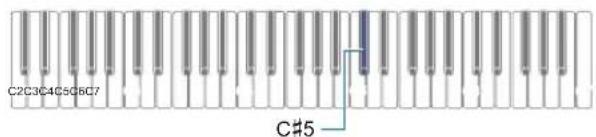
1. While holding down FUNCTION, press the C#5 keyboard key.
A tone will sound to indicate that initialization is about to be performed. Keep FUNCTION depressed at this time.
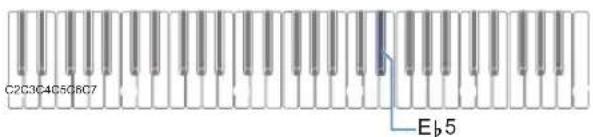
2. Keeping FUNCTION depressed, press the Eb5 keyboard key to start initialization.
A tone will sound when initialization is complete. The Digital Keyboard will be turned off and then back on again.
- The keyboard input LED is lit while FUNCTION is depressed.
3. Release FUNCTION to exit the operation.
Troubleshooting
| Symptom Required Action | |
| Included Accessories | |
| I can't find included items during unpacking. | Carefully check inside all of the packing materials. |
| Power Requirements | |
| Power does not turn on. | Check the AC adaptor or make sure that the batteries are facing correctly (page EN-4).Replace the batteries with new ones. Or use AC adaptor power (page EN-4). |
| The Digital Keyboard suddenly turns off after outputting a loud sound. | Replace the batteries with new ones. Or use AC adaptor power (page EN-4). |
| The Digital Keyboard suddenly powers down after about 30 minutes. | Disable Auto Power Off (page EN-6). |
| Sound | |
| Nothing happens when I press a keyboard key. | Adjust the volume level (page EN-7).Check if something is plugged into the PHONES/OUTPUT jack on the back of the Digital Keyboard.Try turning the Digital Keyboard off and then back on again (page EN-6) to initialize settings. |
| Nothing happens or notes do not play normally when I play on the accompaniment (left-side) keyboard. | Select "Off" for the Chord Mode setting (page EN-17) to disable chord input with the accompaniment keyboard. |
| Nothing happens when I start an Auto Accompaniment. | Check and adjust the rhythm volume level (page EN-16).Try turning the Digital Keyboard off and then back on again (page EN-6) to initialize settings. |
| Nothing happens when I start playing a song's Auto Accompaniment. | It takes a little time after you press the button until the song starts to play. Wait for the song to start.Check and adjust the song volume level (page EN-13).Try turning the Digital Keyboard off and then back on again (page EN-6) to initialize settings. |
| The metronome does not sound. | Check and adjust the metronome volume level (page EN-8).Try turning the Digital Keyboard off and then back on again (page EN-6) to initialize settings. |
| Notes keep sounding, without stopping. | Try turning the Digital Keyboard off and then back on again (page EN-6) to initialize settings.Replace the batteries with new ones. Or use AC adaptor power (page EN-4). |
| Some notes are cut off while they are playing. | Notes are cut off whenever the number of notes being sounded exceeds the maximum polyphony value of 32 (16 for some tones). This does not indicate malfunction. |
| The volume level or tone setting I configured has changed. | Adjust the volume level (page EN-7).Try turning the Digital Keyboard off and then back on again (page EN-6) to initialize settings.Replace the batteries with new ones. Or use AC adaptor power (page EN-4). |
| With certain volume levels and tones, the sound of notes played in one keyboard range will sound different from those played in another keyboard range. | This is due to system limitations and does not indicate malfunction. |
| With some tones, octaves do not change at the far ends of the keyboard. | This is due to system limitations and does not indicate malfunction. |
| Symptom Required Action | ||
| The pitch of the notes does not match other accompanying instruments or notes sound strange when played along with other instruments. | ·Check and adjust the transpose setting (page EN-10) and tuning setting (page EN-11).·Try turning the Digital Keyboard off and then back on again (page EN-6) to initialize settings. | |
| The reverb of notes seems to change suddenly. | ·Check and adjust the reverb setting (page EN-10).·Try turning the Digital Keyboard off and then back on again (page EN-6) to initialize settings. | |
| Connecting to a computer | ||
| I can't perform MIDI data transfers. | ·Check to make sure that the USB cable is connected to the Digital Keyboard and computer, and that the correct device is selected with your computer's music software (page EN-19).·Turn off the Digital Keyboard and then exit the music software on your computer. Next, turn the Digital Keyboard back on and then restart the music software on your computer. | |
Product Specifications
| Model CT-S100 | |
| Keyboard 61 keys | |
| Maximum Polyphony 32 notes | |
| Tones | |
| Preset Tones 122 preset tones, Main tone buttons | |
| Effects Reverb (4 types, Off) | |
| Metronome | |
| Beat Off, 1 to 16 beats | |
| Tempo 20 to 255 | |
| Song Bank | |
| Preset Songs 60 songs | |
| Part Off Left hand, right hand, both hands | |
| Auto Accompaniment | |
| Preset Rhythms 61 types, chord input mode switching | |
| Demo Play Looped play of all built-in Song Bank songs (60 songs) | |
| Function Volume Adjustment Metronome, Rhythm, Song | |
| Other Functions | |
| Transpose ±1 octave (-12 to 0 to +12 semitones) | |
| Tuning | A4 = 415.5 to 465.9 Hz (Initial Default: 440.0 Hz) |
| MIDI | 16 multi-timbre received, GM Level 1 standard |
| Jacks | |
| USB Port | Micro-B |
| PHONES/OUTPUT jack | Stereo mini jack (3.5mm) |
| AC adaptor terminal | 9.5V DC |
| Power Requirements | 2-Way Power |
| Batteries | 6 AA-size alkaline batteries or AA-size rechargeable nickel metal hydride batteries |
| Continuous operation | Approximately 16 hours (alkaline batteries), approximately 13 hours (rechargeable nickel metal hydride batteries)* |
| Actual battery life may be shorter depending on battery type, performance style, or operation environment. | |
| AC Adaptor | AD-E95100L (JEITA Standard, with unified polarity plug) |
| Auto Power Off | After approximately 30 minutes of non-operation, Can be disabled. |
| Speakers | 13cm × 6cm (oval) × 2 (Output: 2.0W + 2.0W) |
| Power Consumption | 9.5V --- 5.5W |
| Dimensions | 93.0 (W) × 25.6 (D) × 7.3 (H) cm (36 5/8 × 10 1/16 × 2 7/8 inch) |
| Weight Approximately 3.3kg (7.3 lbs) (Excluding batteries) | |
* Measured values while using eneloop batteries.
eneloop is a trademark of Panasonic Corporation.
- Specifications and designs are subject to change without notice.
AC Adaptor Handling Precautions
Model: AD-E95100L
- Read these instructions.
- Keep these instructions on hand.
- Heed all warnings.
-
Follow all instructions.
-
Do not use this product near water.
-
Clean only with a dry cloth.
-
Do not install near radiators, heat registers, stoves, or any other source of heat (including amplifiers).
-
Use only attachments and accessories specified by the manufacturer.
-
Refer all servicing to qualified service personnel. Servicing is required after any of the following occurs: when the product is damaged, when the power supply cord or plug is damaged, when liquid is spilled into the product, when a foreign object falls into the product, when the product is exposed to rain or moisture, when the product does not operate normally, when the product is dropped.
-
Do not allow the product to be exposed to dripping or splashing liquid. Do not place any object containing liquid on the product.
-
Do not allow the electrical load output to exceed the label rating.
-
Make sure the surrounding area is dry before plugging into a power source.
-
Make sure the product is oriented correctly.
-
Unplug the product during lightning storms or when you do not plan to use it for a long time.
-
Do not allow product ventilation openings to become blocked. Install the product in accordance with the manufacturer's instructions.
-
Take care the power cord is located where it will not be stepped upon or bent severely, particularly in locations close to plugs and convenience receptacles, and in locations where it exits from the product.
-
The AC adaptor should be plugged into a power outlet as close to the product as possible to allow immediate disconnection of the plug in case of emergency.
The symbol below is an alert indicating un-insulated hazardous voltage inside the product's enclosure, which may be sufficient to constitute the risk of electric shock to users.

The symbol below is an alert indicating the presence of important operating and maintenance (servicing) instructions in the documentation that accompanies the product.

Tone List
| Tone 1 | ||||
| No. *1 Tone Name | Program Change | Bank Select MSB | ||
| MAIN TONE 1 | ||||
| 1 C2 GRAND PIANO 000 000 | ||||
| 2 | C | #2 ELEC.PIANO 1 004 000 | ||
| 3 D2 DRAWBAR ORGAN 016 000 | ||||
| 4 | E | b2 H A R P S I | C H O R D | |
| 5 | E2 | STRINGS | 048 | 000 |
| PIANO/E.PIANO | ||||
| 6 | F2 | HONKY-TONK | 003 | 000 |
| 7 | F#2 | ELEC.GRAND PIANO | 002 | 000 |
| 8 | G2 | 60'S E.PIANO | 004 | 005 |
| 9 | Ab2 | CHORUS E.PIANO | 004 | 009 |
| 10 | A2 | SYNTH-STR.E.PIANO | 004 | 003 |
| 11 | Bb2 | SYNTH-VOICE & E.PIANO | 004 | 010 |
| 12 | B2 | CLAVI | 007 | 000 |
| CHROMATIC PERC. | ||||
| 13 | C3 | CELESTA | 008 | 000 |
| 14 | C#3 | GLOCKENSPIEL | 009 | 002 |
| 15 | D3 | MUSIC BOX | 010 | 000 |
| 16 | Eb3 | VIBRAPHONE | 011 | 000 |
| 17 | E3 | MARIMBA | 012 | 000 |
| 18 | F3 | TUBULAR BELL | 014 000 | |
| ORGAN | ||||
| 19 | F#3 | PERC.ORGAN | 017 | 000 |
| 20 | G3 | ROCK ORGAN | 018 | 000 |
| 21 | Ab3 | CHAPEL ORGAN | 019 | 008 |
| 22 | A3 | REED ORGAN | 020 | 000 |
| 23 | Bb3 | ACCORDION | 021 | 000 |
| 24 | B3 | HARMONICA | 022 | 000 |
| 25 | C4 BANDONEON | 023 000 | ||
| GUITAR | ||||
| 26 | C#4 NYLON STR.GUITAR 024 002 | |||
| 27 | D4 | STEEL STR.GUITAR | 025 | 002 |
| 28 | Eb4 | JAZZ GUITAR | 026 | 002 |
| 29 | E4 | CLEAN GUITAR | 027 | 002 |
| 30 | F4 | MUTE GUITAR 028 002 | ||
| 31 | F#4 | DISTORTION GUITAR | 030 | 002 |
| BASS | ||||
| 32 | G4 | ACOUSTIC BASS | 032 | 002 |
| 33 | Ab4 | FINGERED BASS | 033 | 002 |
| 34 | A4 | PICKED BASS | 034 | 002 |
| 35 | Bb4 | FRETLESS BASS | 035 | 002 |
| 36 | B4 | SAW SYNTH-BASS | 038 | 002 |
| 37 | C5 SQUARE SYNTH-BASS | 039 | 002 | |
| STR/ORCHESTRA | ||||
| 38 | C#5 | VIOLIN | 040 | 000 |
| 39 | D5 | VIOLA | 041 | 000 |
| 40 | Eb5 | CELLO | 042 | 002 |
| 41 | E5 | CONTRABASS | 043 | 002 |
| 42 | F5 | PIZZICATO STRINGS | 045 | 000 |
| 43 | F#5 | HARP | 046 | 000 |
| 44 | G5 TIMPANI | 047 | 000 | |
| ENSEMBLE | ||||
| 45 | Ab5 | SYNTH-STRINGS | 050 | 000 |
| 46 | A5 | CHOIR AAHS | 052 | 000 |
| 47 | Bb5 | SYNTH-VOICE | 054 | 000 |
| 48 | B5 | ORCHESTRA HIT | 055 | 000 |
| Tone 1 | ||||
| No. *1 Tone Name | Program Change | Bank Select MSB | ||
| BRASS | ||||
| 49 | C6 | TRUMPET | 056 | 000 |
| 50 | C#6 | TROMBONE | 057 | 002 |
| 51 | D6 | TUBA | 058 | 002 |
| 0 520 | €b6 | FORENCH BIORN | 060 | 000 |
| 53 | E6 | BRASS | 061 | 000 |
| 54 | F6 | SYNTH-BRASS | 062 | 000 |
| REED | ||||
| 55 | F#6 | SOPRANO SAX | 064 | 000 |
| 56 | G6 | ALTO SAX | 065 | 000 |
| 57 | Ab6 | TENOR SAX | 066 | 001 |
| 58 | A6 | BARITONE SAX | 067 | 002 |
| 59 | Bb6 | OBOE | 068 | 000 |
| 60 | B6 | CLARINET | 071 | 000 |
| PIPE | ||||
| 61 | C7 | PICCOLO | 072 | 002 |
*1 Keyboard Key Note Name
| Tone 2 | ||||
| No. | *1 Tone Name | Program Change | Bank Select MSB | |
| MAIN TONE 2 | ||||
| 62 C | 2 BRIGHT | PIANO 001 000 | ||
| 63 C | #2 ELEC | PIANO 2 005 000 | ||
| 64 D | 2 PIPE ORGAN 019 000 | |||
| 65 E | 2 HARP | SICHORD & STRINGS 006 001 | ||
| 66 | E2 | SLOW STRINGS | 049 | 000 |
| PIPE | ||||
| 67 | F2 | FLUTE | 073 | 000 |
| 68 F | #2 RECORDER | 074 000 | ||
| 69 | G2 | BOTTLE BLOW | 076 | 000 |
| 70 A | 2 WHISTLE | 078 000 | ||
| 71 | A2 | OCARINA | 079 | 000 |
| SYNTH-LEAD | ||||
| 72 | Bb2 | SQUARE LEAD | 080 | 000 |
| 73 B | 2 SAW LEAD | 081 000 | ||
| 74 | C3 | VOICE LEAD | 085 | 000 |
| 75 C | #3 FIFTH LEAD | 086 000 | ||
| 76 | D3 | BASS+LEAD | 087 | 000 |
| 77 E | 3 DANCE SQUARE LEAD | 080 048 | ||
| 78 E | 3 DANCE SYNC SQUARE LEAD 080 049 | |||
| 79 | F3 DANCE SAW LEAD | 081 048 | ||
| 80 | F#3 | DANCE SYNC SAW LEAD | 081 | 049 |
| 81 G | 3 DANCE SAW BASS | 087 048 | ||
| SYNTH-PAD | ||||
| 82 | Ab3 | FANTASY | 088 | 000 |
| 83 | A3 | WARM PAD | 089 | 000 |
| 84 | Bb3 | POLYSYNTH | 090 | 000 |
| 85 | B3 | SPACE CHOIR | 091 | 000 |
| 86 C | 4 METAL PAD | 093 000 | ||
| 87 | C#4 | HALO PAD | 094 | 000 |
| 88 D | 4 RAIN DROP | 096 000 | ||
| 89 | Eb4 | SOUND TRACK | 097 | 000 |
| 90 E | 4 CRYST AL | 098 000 | ||
| 91 | F4 | ATMOSPHERE | 099 | 000 |
| 92 | F#4 | BRIGHTNESS | 100 | 000 |
| 93 | G4 | SF | 103 | 000 |
| 94 | Ab4 | DANCE SAW PAD | 090 | 048 |
| 95 | A4 | DANCE SQUARE PAD | 090 | 049 |
| INDIAN | ||||
| 96 | Bb4 | SITAR 1 | 104 | 002 |
| 97 B | 4 SITAR 2 | 104 003 | ||
| 98 | C5 | TANPURA 1 | 104 | 032 |
| 99 | C#5 | TANPURA 2 | 104 | 033 |
| 100 | D5 | HARMONIUM 1 | 020 | 032 |
| 101 | Eb5 HARMONIUM 2 020 033 | |||
| 102 | E5 | SHANAI 1 | 111 | 002 |
| 103 | F5 SHANAI 2 | 111 003 | ||
| 104 | F#5 | SANTUR 1 | 015 | 003 |
| 105 | G5 SAN TUR 2 | 015 | 004 | |
| 106 | Ab5 | TABLA | 116 | 016 |
| ETHNIC | ||||
| 107 | A5 | BANJO | 105 | 000 |
| 108 | Bb5 | SHAMISEN | 106 | 000 |
| 109 | B5 | KOTO | 107 | 000 |
| 110 | C6 BAGP IPE | 109 000 | ||
| 111 | C#6 | FIDDLE | 110 | 000 |
| Tone 2 | ||||
| No. *1 Tone Name | Program Change | Bank Select MSB | ||
| VARIOUS | ||||
| 112 D6 TINKLE BELL 112 000 | ||||
| 113 Eb6 STEEL DRUMS 114 000 | ||||
| 114 | E6 | SYNTH-DRUM | 118 | 000 |
| 115 F6 STRIN GS PIANO 000 | 008 | |||
| 116 | F#6 | BASS/PIANO | 000 | 009 |
| 117 G6 SE 1 | 120 | 002 | ||
| 118 | Ab6 | SE 2 | 122 | 002 |
| DRUM SET | ||||
| 119 | A6 | STANDARD SET | 000 | 120 |
| 120 | Bb6 | DANCE SET | 029 | 120 |
| 121 B6 BRUS H SET 040 | 120 | |||
| 122 C7 INDIAN SET 049 | 120 | |||
*1 Keyboard Key Note Name
Drum Assignment List
| Key Note No. | DRUMS SET NAME | |||||
| STANDARD SET DANCE SET | INDIAN SETBRUSH SET | |||||
| C-1 | 0 | |||||
| 1 | ||||||
| D-1 | 2 | |||||
| 3 | ||||||
| E-1 | 4 | |||||
| 5 | ||||||
| F-1 | 6 | |||||
| 7 | ||||||
| G-1 | 8 | |||||
| 9 | ||||||
| A-1 | 10 | |||||
| 11 | ||||||
| B-1 | 12 | |||||
| 13 | ||||||
| D0 | 14 | |||||
| 15 | ||||||
| E0 | 16 | |||||
| 17 | ||||||
| F0 | 18 | |||||
| 19 | ||||||
| G0 | 20 | |||||
| 21 | ||||||
| A0 | 22 | |||||
| 23 | ||||||
| B0 | 24 | |||||
| 25 | ||||||
| C1 | 26 | |||||
| 27 | ||||||
| D1 | 28 | |||||
| 29 | ||||||
| F1 | 30 | |||||
| 31 | ||||||
| G1 | 32 | |||||
| 33 | ||||||
| A1 | 34 | |||||
| 35 | ||||||
| B1 | 36 | Standard Kick 1 | Synth Kick 1 | Brush Kick 1 | ← | |
| 37 | Slide Stick | ← | ← | ← | ||
| D2 | 38 | Standard Snare 1 | Synth Snare 1 | Brush Snare 1 | ← | |
| 39 | Standard Hand Clap | Synth Hand Clap | Brush Slap | ← | ||
| E2 | 40 | Standard Snaro 2 | Synth Snaro 2 | Brush Snaro 2 | ← | |
| F2 | 41 | Low Tom 2 | Synth Low Tom 2 | Brush Low Tom 2 | ← | |
| 42 | Closed Hi-Hat | ← | ← | ← | ||
| G2 | 43 | Low Tom 1 | Synth Low Tom 1 | Brush Low Tom 1 | ← | |
| 44 | Pedal Hi-Hat | ← | ← | ← | ||
| A2 | 45 | Mid Tom 2 | Synth Mid Tom 2 | Brush Mid Tom 2 | ← | |
| 46 | Open Hi-Hat | ← | ← | ← | ||
| B2 | 47 | Mid Tom 1 | Synth Mid Tom 1 | Brush Mid Tom 1 | ← | |
| C3 | 48 | High Tom 2 | Synth High Tom 2 | Brush High Tom 2 | ← | |
| 49 | Crash Cymbal 1 | ← | ← | ← | ||
| D3 | 50 | High Tom 1 | Synth High Tom 1 | Brush High Tom 1 | ← | |
| 51 | Ride Cymbal 1 | ← | ← | ← | ||
| E3 | 52 | Chinese Cymbal | ← | ← | ← | |
| F3 | 53 | Ride Bell | ← | ← | ← | |
| 54 | Tambourine | ← | ← | ← | ||
| G3 | 55 | Splash Cymbal | ← | ← | ← | |
| 56 | Cowed | ← | ← | ← | ||
| A3 | 57 | Crash Cymbal 2 | ← | ← | ← | |
| B3 | 58 | Vibradap | ← | ← | ← | |
| 59 | Ride Cymbal 2 | ← | ← | ← | ||
| C4 | 60 | High Bongo | ← | ← | ← | |
| 61 | Low Bongo | ← | ← | ← | ||
| D4 | 62 | Mute High Conga | ← | ← | ← | |
| 63 | Open High Conga | ← | ← | ← | ||
| E4 | 64 | Open Low Conga | ← | ← | ← | |
| F4 | 65 | High Tambaio | ← | ← | ← | |
| 66 | Low Timbole | ← | ← | ← | ||
| G4 | 67 | High Agogo | ← | ← | ← | |
| 68 | Low Agogo | ← | ← | ← | ||
| A4 | 69 | Cabasa | ← | ← | ← | |
| 70 | Maracas | ← | ← | ← | ||
| B4 | 71 | Short High Whistle | ← | ← | Table Go | |
| 72 | Long Low Whistle | ← | ← | Table Ka | ||
| C5 | 73 | Short Guiro | ← | ← | Table Ts | |
| 74 | Long Guiro | ← | ← | Table Na | ||
| D5 | 75 | Claves | ← | ← | Table Tun | |
| E5 | 76 | High Wood Block | ← | ← | ← | |
| F5 | 77 | Low Wood Block | ← | ← | ← | |
| 78 | Muto Cuica | ← | ← | ← | ||
| G5 | 79 | Open Cuica | ← | ← | ← | |
| 80 | Mute Triangio | ← | ← | ← | ||
| A5 | 81 | Open Triangle | ← | ← | ← | |
| 82 | Shaker | ← | ← | ← | ||
| B5 | 83 | Cheer Short | Dance Kick 1 | |||
| C6 | 84 | Cheer | Dance Kick 2 | |||
| 85 | Cheer Long | Dance Q | ||||
| D6 | 86 | Cheer Ficks Out | Dance Snare 1 | |||
| 87 | Explotion 1 | Dance Clap | ||||
| E6 | 88 | Explotion 2 | Dance Shaine 2 | |||
| F6 | 89 | Hip-Hop Close Hat | ||||
| 90 | Noise Rise | |||||
| G6 | 91 | |||||
| 92 | ||||||
| A6 | 93 | |||||
| 94 | ||||||
| B6 | 95 | |||||
| 96 | ||||||
| C7 | 97 | |||||
| 98 | ||||||
| D7 | 99 | |||||
| 100 | ||||||
| E7 | 101 | |||||
| 102 | ||||||
| F7 | 103 | |||||
| 104 | ||||||
| A7 | 105 | |||||
| 106 | ||||||
| B7 | 107 | |||||
| 108 | ||||||
| C8 | 109 | |||||
| 110 | ||||||
| D8 | 111 | |||||
| 112 | ||||||
| E8 | 113 | |||||
| 114 | ||||||
| F8 | 115 | |||||
| 116 | ||||||
| A8 | 117 | |||||
| 118 | ||||||
| B8 | 119 | |||||
| 120 | ||||||
| C9 | 121 | |||||
| 122 | ||||||
| D9 | 123 | |||||
| 124 | ||||||
| E9 | 125 | |||||
| 126 | ||||||
| F9 | 127 | |||||
- “←” indicates a key is assigned the same tones as it is for STANDARD SET.
Song List
| No. #1 Title | ||
| PIANO/CLASSICS | ||
| 1 C2 FÜR ELISE | ||
| 2 | C | #2 VALSE op.64 no.1 "PETIT CHIEN" |
| 3 D2 TURKISH MARCH (MOZART) | ||
| 4 | E | #2 TRÄUMEREI |
| 5 E2 ETUDE op.10 no.3 "CHANSON DE L'ADIEU" | ||
| 6 F2 LIEBESTRÄUME no.3 | ||
| 7 F#2 NOCT URNE op.9 no.2 (CHOPIN) | ||
| 8 G2 CANON (PACHELBEL) | ||
| 9 A#2 MARY HAD A LITTLE LAMB | ||
| 10 A2 LE CYGNE FROM "LE CARNAVAL DES ANIMAUX" | ||
| 11 B#2 AIR FROM "SUITE no.3" | ||
| 12 B2 SPRING FROM "THE FOUR SEASONS" | ||
| 13 C3 HUNGARIAN DANCES no.5 | ||
| 14 | C#3 MINUET IN G MAJOR | |
| 15 D3 GAVOTTE (GOSSEC) | ||
| 16 E#3 ARABESQUE (BURGMÜLLER) | ||
| 17 E3 DECK THE HALL | ||
| 18 F3 ODE TO JOY | ||
| 19 F#3 AVE MARIA (GOUNOD) | ||
| 20 G3 PRELUDE op.28 no.7 (CHOPIN) | ||
| 21 | Ab3 | GOING HOME FROM "FROM THE NEW WORLD" |
| 22 A3 SONATA op.27 no.2 "MOONLIGHT" 1st Mov. | ||
| 23 B#3 THE ENTERTAINER | ||
| 24 B3 FRÖHLICHER LANDMANN | ||
| 25 C4 LA CHEVALERESQUE | ||
| 26 | C#4 JESUS BLEIBET MEINE FREUDE | |
| 27 D4 MARCH FROM "THE NUTCRACKER" | ||
| 28 E#4 CHANSON DU TOREADOR FROM "CARMEN" | ||
| 29 E4 INVENTIONEN no.1 | ||
| 30 F4 PRAELUDIUM no.1 (J.S.BACH) | ||
| EVENT | |
| 31 F | #4 SILENT NIGHT |
| 32 G | 4 JINGLE BELLS |
| 33 A | b4 WE WISH YOU A MERRY CHRISTMAS |
| 34 A | 4 JOY TO THE WORLD |
| 35 B | b4 O CHRISTMAS TREE |
| WORLD | |
| 36 B4 WHEN THE SAINTS GO MARCHING IN | |
| 37 C5 GREENSLEEVES | |
| 38 | C#5 ANNIE LAURIE |
| 39 D5 AMAZING GRACE | |
| 40 E5 TWINKLE TWINKLE LITTLE STAR | |
| 41 E5 GRANDFATHER'S CLOCK | |
| 42 F5 ON TOP OF OLD SMOKEY | |
| 43 F#5 COME BIRDS | |
| 44 G5 DID YOU EVER SEE A LASSIE? | |
| 45 A5 DANNY BOY | |
| 46 A5 MY BONNIE | |
| 47 B5 HOME SWEET HOME | |
| 48 B5 AURA LEE | |
| 49 C6 ALOHA OE | |
| 50 | C#6 LONDON BRIDGE |
| 51 D6 UNDER THE SPREADING CHESTNUT TREE | |
| 52 E6 SIPPIN' CIDER THROUGH A STRAW | |
| 53 E6 BEAUTIFUL DREAMER | |
| 54 F6 MY DARLING CLEMENTINE | |
| 55 F#6 LITTLE BROWN JUG | |
| 56 G6 YANKEE DOODLE | |
| 57 A6 I'VE BEEN WORKING ON THE RAILROAD | |
| No. 11 Title |
| 58 A6 OH! SUSANNA |
| 59 B6 TURKEY IN THE STRAW |
| 60 B6 FURUSATO |
*1 Keyboard Key Note Name
Rhythm List
| No. 11 Rhythm name | ||
| 8 BEAT | ||
| 1 C2 STRAIGHT 8 BEAT | ||
| 2 | C | #2 8 B E A T |
| 16 BEAT | ||
| 3 D2 16 BEAT | ||
| 4 E2 16 BEAT SHUFFLE | ||
| BALLAD | ||
| 5 E2 16 BEAT BALLAD | ||
| 6 F2 POP BALLAD | ||
| 7 F2 6/8 BALLAD | ||
| DANCE | ||
| 8 G2 DISCO POP | ||
| 9 | A | >2 MODERN R&B |
| POPS | ||
| 10 A2 POP | ||
| 11 B2 POP ROCK | ||
| ROCK | ||
| 12 B2 STRAIGHT ROCK | ||
| 13 C3 SHUFFLE ROCK | ||
| 14 | C#3 | SLOW ROCK |
| 15 D3 ROCK | WALTZ | |
| JAZZ | ||
| 16 | Eb3 | BIG BAND |
| 17 E3 SLOW | SWING | |
| 18 F3 JAZZ | WALTZ | |
| 19 F#3 FOX | TROT | |
| EUROPEAN | ||
| 20 G3 POLKA | ||
| 21 Ab3 WALTZ 1 | ||
| 22 | A3 | VIENNESE WALTZ |
| 23 | Bb3 | TANGO |
| 24 B3 MARCH | ||
| LATIN | ||
| 25 C4 BOSSA NOVA | ||
| 26 C#4 SAMBA | ||
| 27 D4 MAMBO | ||
| 28 Eb4 SALSA | ||
| 29 E4 REGGAE | ||
| 30 F4 POP REGGAE | ||
| 31 F#4 SKA | ||
| 32 G4 CUMBIA | ||
| INDIAN | ||
| 33 Ab4 BHANGRA | ||
| 34 A4 DADRA | ||
| 35 Bb4 GARBA | ||
| 36 B4 KEHARWA | ||
| 37 C5 TEEN TAAL | ||
| 38 C#5 DANDIYA | ||
| 39 D5 BHAJAN | ||
| 40 Eb5 INDIAN POP 1 | ||
| 41 E5 INDIAN POP 2 | ||
| 42 F5 QAWWALI | ||
| 43 F#5 KERALA | ||
| 44 G5 RAJASTHANI | ||
No. *1 Rhythm name
| WORLD | |
| AMERICAN | |
| 45 Ab5 COUNTRY BALLAD | |
| 46 A5 BLUEGRASS | |
| 47 Bb5 DIXIE | |
| 48 B5 TEX-MEX | |
| 49 C6 FAST GOSPEL | |
| 50 C#6 HAWAIIAN | |
| EASTERN EUROPEAN | |
| 51 D6 RUSSIAN CHANSON | |
| ARABIC | |
| 52 Eb6 ADANI | |
| CHINESE | |
| 53 E6 JIANGNAN | |
| 54 F6 DONGBEIYANGGE | |
| 55 F#6 JINGJU | |
| 56 G6 HUANGMEIXI | |
| 57 Ab6 MIAOZU | |
| 58 A6 XINJIANG | |
| VARIOUS | |
| 59 Bb6 STRING QUARTET | |
| PIANO RHYTHMS | |
| 60 B6 ARPEGGIO | |
| 61 C7 WALTZ 2 | |
*1 Keyboard Key Note Name
Fingering Guide
■FINGERED 1, FINGERED 2 Chords
| C |  |
| Cm |  |
| Cdim |  |
| Caug *3 |  |
| C>5 |  |
| Csus4 *3 |  |
| Csus2 *3 |  |
| C7 |  |
| Cm7 *3 |  |
| CM7 |  |
| CmM7 |  |
| Cdim7 *3 |  |
| CdimM7 |  |
| C7<5 *3 |  |
| Cm7<5 *3 |  |
| CM7<5 |  |
| Caug7 |  |
| CaugM7 |  |
| C7sus4 |  |
| C6 *1 *3 |  |
| Cm6 *2 *3 |  |
| Cadd9 | |
| Cmadd9 | |
| C69 *3 | |
| Cm69 *3 |
*1 With FINGERED 2, interpreted as Am7.
*2 With FINGERED 2, interpreted as Am ^7 .
*3 Inverted form not supported in some cases.
*4 These fingerings are special fingerings for Digital Keyboard chord input, and so they are not suitable for normal keyboard play.
■FINGERED ON BASS, FULL RANGE CHORD
In addition to the chords that can be fingered with FINGERED 1 and FINGERED 2, the chords below also are recognized.
| ^\#C · · · ^\#C · · ^bC · · ^bC · ^\#mC · · |
| ^\#mC · · ^bmC · · ^amC · · ^\#dimC · |
| · ^\#dimC · · ^bdimC · · · 7C · ^b7C |
| 7C · 7C · ^bM7C · ^\#m7^b5C · 7C · 7C · ^aadd9C |
NOTE
- With FINGERED ON BASS, the lowest note fingered is interpreted as the base note. Inverted forms are not supported.
- With FULL RANGE CHORD, when the lowest note fingered is a certain distance from the neighboring note, the chord is interpreted as a fraction chord.
- Unlike FINGERED 1, 2, and FINGERED ON BASS, FULL RANGE CHORD requires pressing of at least three keys to form a chord.
Chord Example List
| *1*2 | C | C#/ (D^b) | D | (D#/ E^b) | E | F |
| M | 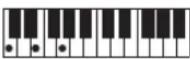 | 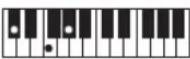 | 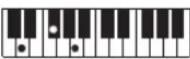 | 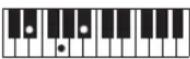 | 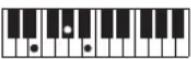 | 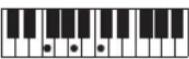 |
| m | 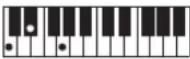 | 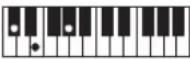 | 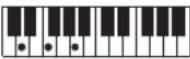 | 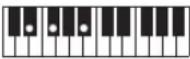 | 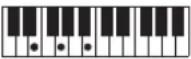 | 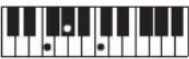 |
| dim | 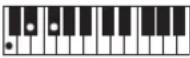 | 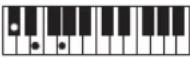 | 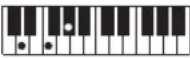 | 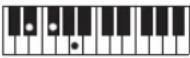 | 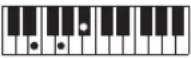 | 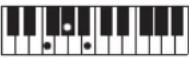 |
| aug | 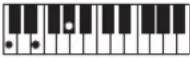 | 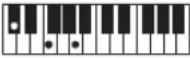 | 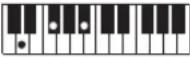 | 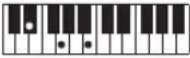 | 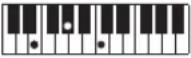 | 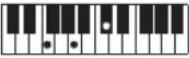 |
| sus4 | 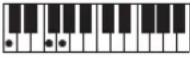 | 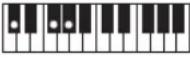 | 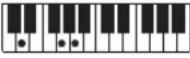 | 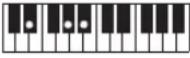 | 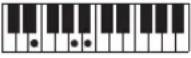 | 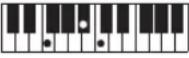 |
| sus2 | 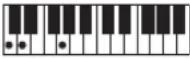 | 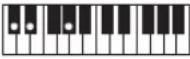 | 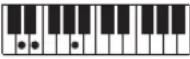 | 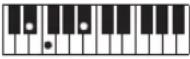 | 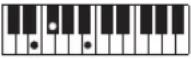 | 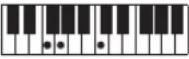 |
| 7 | 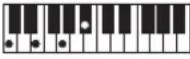 | 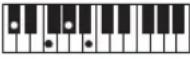 | 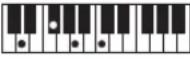 | 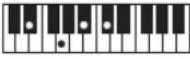 | 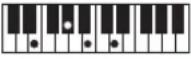 | 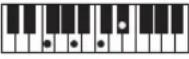 |
| m7 | 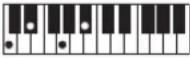 | 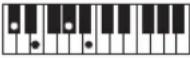 | 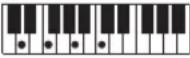 | 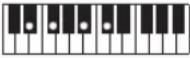 | 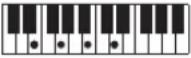 | 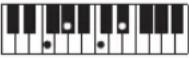 |
| M7 | 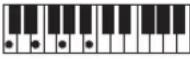 | 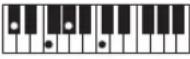 | 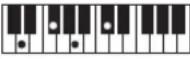 | 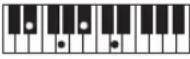 | 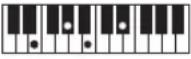 | 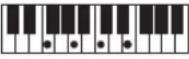 |
| m7^b5 | 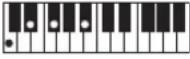 | 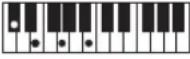 | 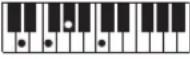 | 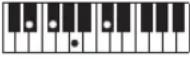 | 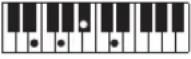 | 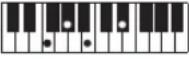 |
| 7^b5 | 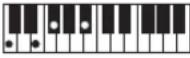 | 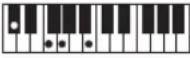 | 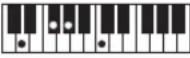 | 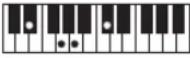 | 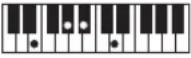 | 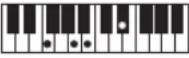 |
| 7sus4 | 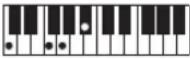 | 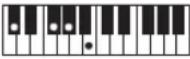 | 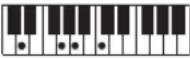 | 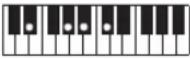 | 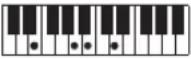 | 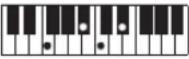 |
| add9 | 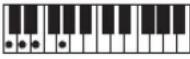 | 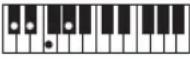 | 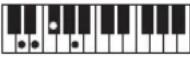 | 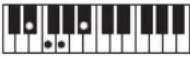 | 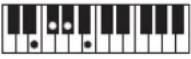 | 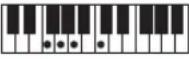 |
| madd9 | 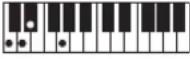 | 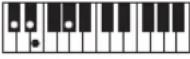 | 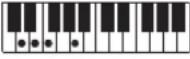 | 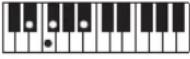 | 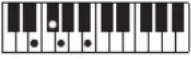 | 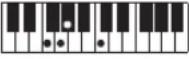 |
| mM7 | 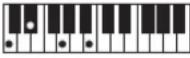 | 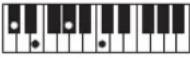 | 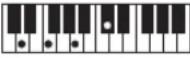 | 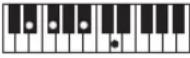 | 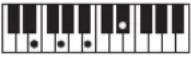 | 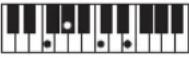 |
| dim7 | 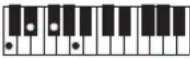 | 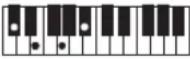 | 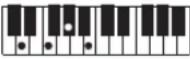 | 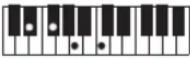 | 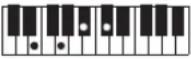 | 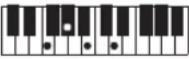 |
| 69 | 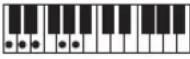 | 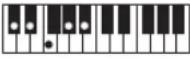 | 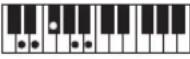 | 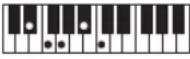 | 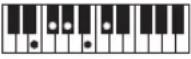 | 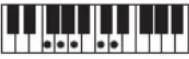 |
| 6 | 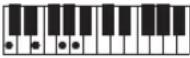 | 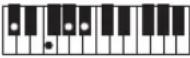 | 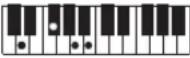 | 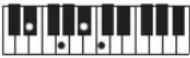 | 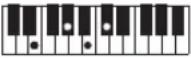 | 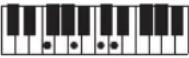 |
| m6 | 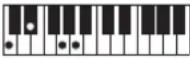 | 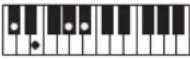 | 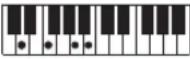 | 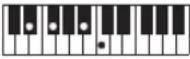 | 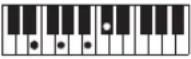 | 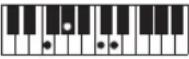 |
*1 Root *2 Chord Type
- Since the chord input range is limited, this model may not support some of the chords shown above.
| *1*2 | F#/( G^b ) | G | ( G^# )/ A^b | A | ( A^# )/ B^b | B |
| M |  | 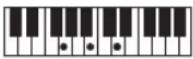 | 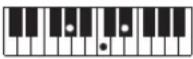 | 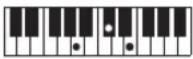 | 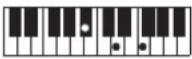 | 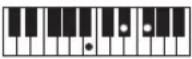 |
| m | 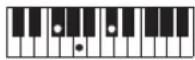 | 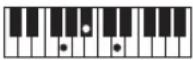 | 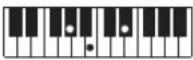 | 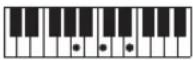 | 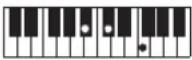 | 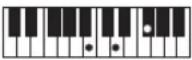 |
| dim | 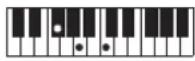 | 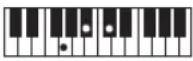 | 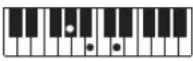 | 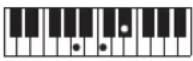 | 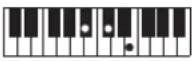 | 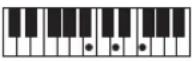 |
| aug | 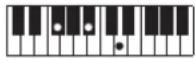 | 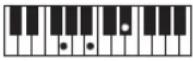 | 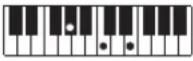 | 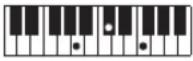 | 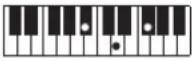 | 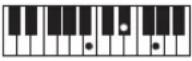 |
| sus4 | 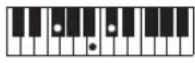 | 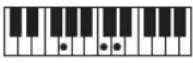 | 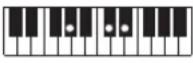 | 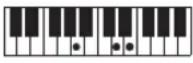 | 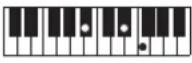 | 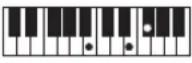 |
| sus2 | 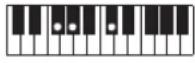 | 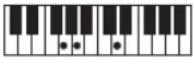 | 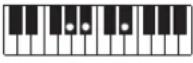 | 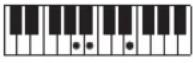 | 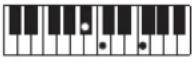 | 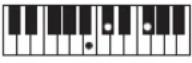 |
| 7 | 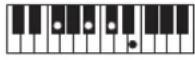 | 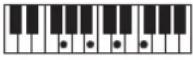 | 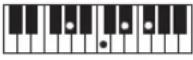 | 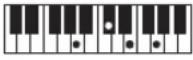 | 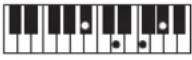 | 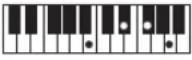 |
| m7 | 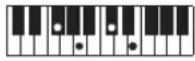 | 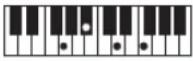 | 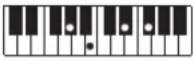 | 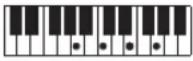 | 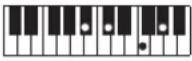 | 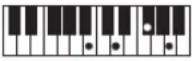 |
| M7 | 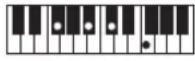 | 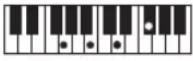 | 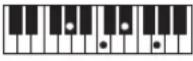 | 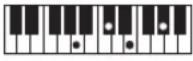 | 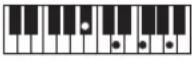 | 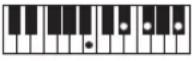 |
| m7^b5 | 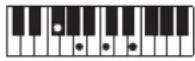 | 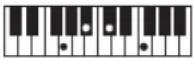 | 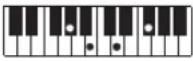 | 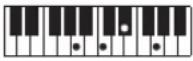 | 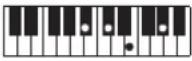 | 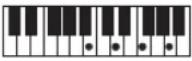 |
| 7^b5 | 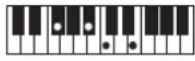 | 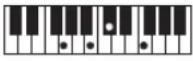 | 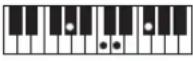 | 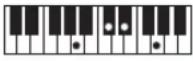 | 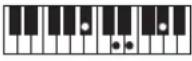 | 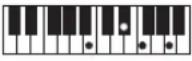 |
| 7sus4 | 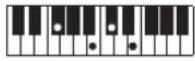 | 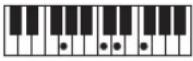 | 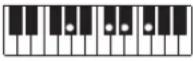 | 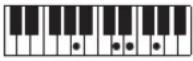 | 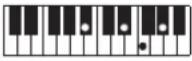 | 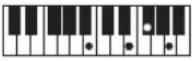 |
| add9 | 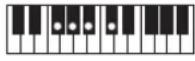 | 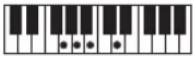 | 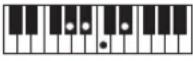 | 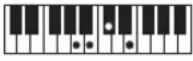 | 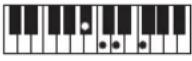 | 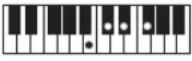 |
| madd9 | 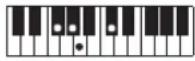 | 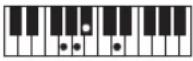 | 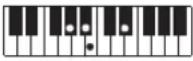 | 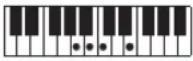 | 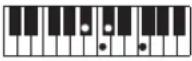 | 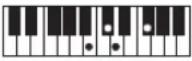 |
| mM7 | 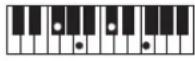 | 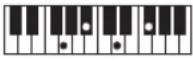 | 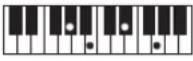 | 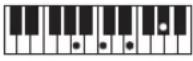 | 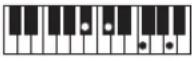 | 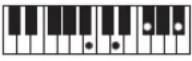 |
| dim7 | 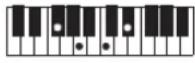 | 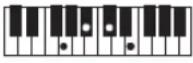 | 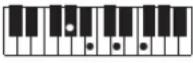 | 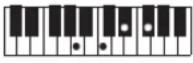 | 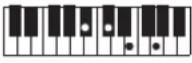 | 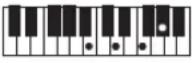 |
| 69 | 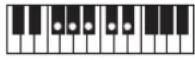 | 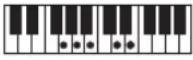 | 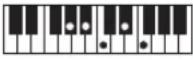 | 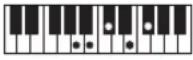 | 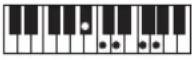 | 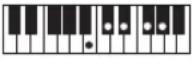 |
| 6 | 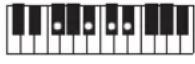 | 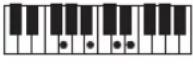 | 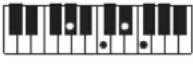 | 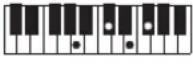 | 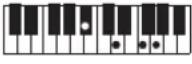 | 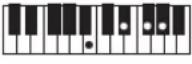 |
| m6 | 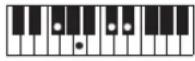 | 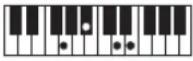 | 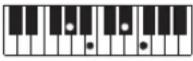 | 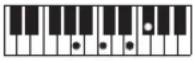 | 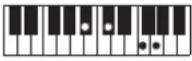 | 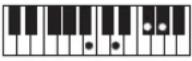 |
*1 Root *2 Chord Type
- Since the chord input range is limited, this model may not support some of the chords shown above.
Model: CT-S100 Version : 1.0
MIDI Implementation Chart
| Function Transmitted Recognized Remarks | ||||
| Basic Channel | Default Changed | 1 1 - 16 | 1 - 16 1 - 16 | |
| Mode | Default Messages Altered | Mode 3 X * * * * * * * | Mode 3 X * * * * * * * | |
| Note Number | True voice | 0 - 127 * * * * * * * | 0 - 127 0 - 127 *1 | |
| Velocity | Note ON Note OFF | O 9nH v = 1 - 127 X 8nH v = 64 | O 9nH v = 1 - 127 X 9nH v = 0, 8nH v =** | **: no relation |
| After Touch | Key's Ch's | X X | X O | |
| Pitch Bender | X | O | ||
| Control Change | 0 1 5 6, 38 7 10 11 64 65 6667 | O X X X X X X XX | O O O O *2 O O O O OO | Bank select Modulation Portamento Time Data entry LSB/MSB Volume Pan Expression Hold 1 Portamento Switch SostenutoSoft pedal |
| 71 | X | O | Filter resonance | |
| 72 | O | O | Release time | |
| 73 | X | O | Attack time | |
| 74 | X | O | Brightness | |
| 84 | X | O | Portamento Control | |
| 91 | X | O | Reverb send level | |
| 100, 101 | X | O *2 | RPN LSB/MSB | |
| Program Change | True # | O | O | |
| * * * * * * * | 0 - 127 | |||
| Exclusive | O *2 | O *2 | ||
| System Common | Song Pos | X | X | |
| Song Sel | X | X | ||
| Tune | X | X | ||
| System Real Time | Clock | X | X | |
| Commands | X | X | ||
| Aux Messages | All sound off | X | O | |
| Reset all controller | O | O | ||
| Local ON/OFF | X | X | ||
| All notes OFF | O | O | ||
| Active Sense | X | O | ||
| System Reset | X | X | ||
| Remarks | *1: Depends on tone.*2: For details about RPN and system exclusive messages, see MIDI Implementation athttps://support.casio.com/global/en/emi/manual/CT-S100/ | |||
O: Yes
X: No
Mode 2 : OMNI ON, MONO Mode 4 : OMNI OFF, MONO