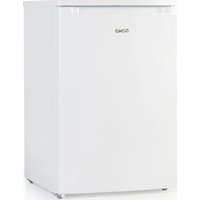
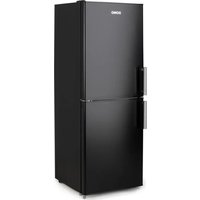
DO942F - Refrigerator DOMO - Free user manual and instructions
Find the device manual for free DO942F DOMO in PDF.


| Brand | Domo |
| Model | DO942F |
| Product Type | Refrigerator |
| Climate Class | 16 °C to 38 °C |
| Refrigerant | Isobutane (R600a) |
| Defrost | Automatic |
| Temperature Control | Rotary knob (OFF, 1 to 6) |
| Interior Light | 15 W bulb, E14 socket |
| Vegetable Crisper | 1 |
| Reversible Door | Yes |
| Adjustable Feet | Yes |
| Warranty | 2 years |
| Power Supply | 230 V ~ 50 Hz, grounding required |
| Energy Consumption | Not specified |
| Cleaning | Soft cloth, warm water and mild detergent |
| Available Accessories | Online at webshop.domo-elektro.be |
| Number of Shelves | 3 (shelves) + 1 vegetable crisper |
| Door Bins | 3 (including a bottle compartment) |
Frequently Asked Questions - DO942F DOMO
User questions about DO942F DOMO
0 question about this device. Answer the ones you know or ask your own.
Ask a new question about this device
Download the instructions for your Refrigerator in PDF format for free! Find your manual DO942F - DOMO and take your electronic device back in hand. On this page are published all the documents necessary for the use of your device. DO942F by DOMO.
USER MANUAL DO942F DOMO
natural_image
Interior view of a white refrigerator with open shelves holding various food items including tomatoes, vegetables, and beverages (no visible text or labels)GARANTIEVOORWAARDEN
CONDITIONS DE GARANTIE
This appliance has a two year warranty period. During this period the manufacturer is responsible for any failures which are the direct result of construction failure. When these failures occur the appliance will be repaired or replaced if necessary. The warranty will not be valid when the damage to the appliance is caused by wrong use, not following the instructions or repairs executed by a third party. The warranty will only be valid if the warranty application has been completed by the dealer at the time of purchase. All parts, which are subject to wear, are excluded from the warranty.
If your device breaks down within the 2-year warranty period, you can return the device together with your receipt to the shop where you purchased it.
CONDICIONES DE GARANTÍA
natural_image
Symbol of a trash bin with crossed lines indicating no waste or discharge, and a solid black rectangle below (no text or labels)RECYCLING INFORMATIONEN
natural_image
Recycling symbol with three chasing arrows forming a triangle (no text or labels)RECYCLING INFORMATION
This symbol on the product or on its packaging indicates that this product may not be treated as household waste. Instead it shall be brought to the applicable collection point for recycling of electrical and electronic equipment. By ensuring this product is disposed of correctly, you will help prevent potential negative consequences for the environment and human health, which could otherwise be caused by inappropriate waste handling of this product. For more detailed information about recycling of this product, please contact your local city office, your household waste disposal service or the shop where you purchased the product.
The packaging is recyclable. Please treat package ecologically
INFORMACE O RECYKLACI ODPADU
From now on, accessories and parts of Domo appliances can also be ordered online from the Domo webshop*:
http://webshop.domo-elektro.be
You can reach the webshop through the Domo website as well: www.domo-elektro.be. The accessories and parts can also still be obtained at the store where you bought the appliance.
CZ
* Only in Belgium, the Netherlands, Luxemburg, France and Germany.
If the power supply cord is damaged, it must be replaced by the manufacturer, its service agent or a similarly qualified person in order to avoid a hazard.
Vervanging gloeilamp
UW APPARAAT VERPLAATSEN
natural_image
Diagram showing a hand pressing down on a component inside a storage unit, with an inset magnified view highlighting the process (no text or symbols present)VAKANTIE
natural_image
Diagram of a device with an open lid and internal grid structure, showing upward arrows (no text or symbols)natural_image
Technical line drawing of a mechanical clamp or bracket assembly (no text or symbols)natural_image
Line drawing of a hand holding a small object near a vertical line (no text or symbols)natural_image
Technical line drawing of a mechanical assembly with no visible text or symbolsnatural_image
Line drawing of a hand holding a tool near a vertical rod (no text or symbols)natural_image
Simple line drawing of a mechanical tool or bracket with no text or symbolsnatural_image
Diagram showing a hand pressing down on a device panel with an inset magnified view of the handle (no text or symbols)VACANCES
natural_image
Diagram of a device with an open lid and internal compartments, showing upward arrows indicating movement or force (no text or symbols present)natural_image
Technical line drawing of a mechanical clamp or bracket assembly (no text or symbols)natural_image
Line drawing of a hand holding a small object near a vertical panel (no text or symbols)natural_image
Technical line drawing of a mechanical clamp or bracket assembly (no text or symbols)natural_image
Line drawing of a hand holding a tool against a vertical line (no text or symbols)natural_image
Simple line drawing of a tool with a handle and lever (no text or symbols)natural_image
Diagram showing a hand pressing down on a device panel with an inset magnified view of the handle (no text or symbols)URLAUB
natural_image
Diagram of a mechanical device with an open lid and internal components, showing upward arrows indicating motion (no text or symbols)natural_image
Technical line drawing of a mechanical clamp or bracket assembly (no text or symbols)natural_image
Line drawing of a hand holding a small object, partially visible through a corner detail (no text or symbols)natural_image
Technical line drawing of a mechanical assembly with mounting brackets and a screwdriver (no text or symbols)natural_image
Line drawing of a tool interacting with a vertical rod (no text or symbols)natural_image
Simple line drawing of a tool with a handle and bracket (no text or symbols)- This appliance must be grounded. In the event of an electrical short circuit, grounding reduces the risk of electrical shock by providing an escape wire for the electrical current
- Do not use an extension cord
- Use an exclusive wall outlet. Do not connect your refrigerator to extension cords or together with any other appliance in the same wall outlet. Do not splice the cord.
- An empty refrigerator is a very dangerous attraction to children. Remove either the gasket, latches, lids or doors from unused appliances, or take some other action that will guarantee it harmless.
- Do not damage the refrigerant circuit.
- If the supply cord is damaged, it must be replaced by the manufacturer or its service agent or a similarly qualified person in order to avoid a hazard.
- Risk of child entrapment. Before you throw away your old refrigerator or freezer.
• Take off the doors - Leave the shelves in place so that children may not easily climb inside.
This appliance can be used by children, starting from the age of 8 and up. And by persons with a physical or sensory limitation as well as, mentally limited persons or persons with a lack of experience and knowledge. On the condition that these persons have received the necessary instruction on how to use this appliance in a safe way and they must also know the dangers that can occur in using this appliance. Children cannot be allowed to play with the appliance.
Maintenance and cleaning of the appliance, cannot be done by children younger than 8 year old.
This appliance is suitable to be in an household environment and in similar surroundings such as :
- Kitchen for personnel of shops, offices or other similar professional surrounding.
- Farms
- Hotel or motel rooms and other surroundings with a residential character
- Guest rooms or similar
Attention : This appliance can not be used with external timer or separate remote control.
INSTALLATION
Remove the exterior and interior packing, wipe the outside thoroughly with a soft dry cloth and the inside with a wet, lukewarm cloth. Avoid placing the cabinet in a narrow recess or near any leave source, direct sunlight, or moisture. Let air circulate freely around the cabinet. Keep the rear of the refrigerator 127mm away from the wall.
Location
- Select a place with a strong, level floor.
- Allow 13 cm of space between the back of the refrigerator and any adjacent wall.
-
Avoid direct sunlight and heat. Direct sunlight may affect the acrylic coating. Heat sources nearby will cause higher electricity consumption.
-
Avoid very moist places. Too much moisture in the air will cause frost to from very quickly on the evaporator, and your refrigerator.
- Before connecting your refrigerator to the power supply, check that the voltage stated on the rating label of your appliance corresponds to the voltage in your home. A different voltage could damage the appliance.
- The appliance must be grounded. The manufacturer is not responsible for damages that may occur as a result of usage without grounding.
- For uneven surfaces, front feet can be aligned.
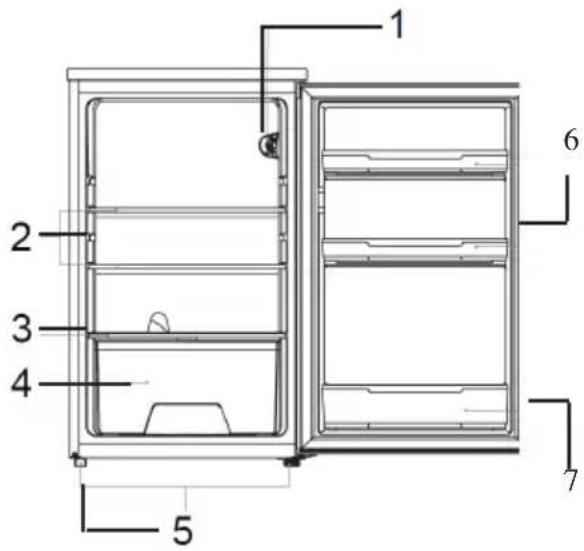
PARTS
- Temperature control knob with bulb assembly
- Shelves
- Cover for vegetable container
- Vegetable container
- Levelling feet
- Door shelves
- Door bottle shelf
CARE AND MAINTENANCE
Cleaning
Do not use abrasive cleaning agents or solvents.
- Set the temperature control knob to the OFF position and disconnect the mains plug from the mains socket.
- Take out the food and store in a cool location.
- Clean the appliance with a soft cloth, warm water and detergent.
- Wipe the door seal with clear water only and then wipe dry thoroughly.
- After cleaning reconnect and adjust the temperature control knob as desired.
- Put the food back into the appliance.
Bulb replacement
Beware: Unplug the appliance from the power supply before replacing the light bulb.
- Remove the bulb cover.
- Unscrew the old bulb and then screw a new 15W (E14 base) bulb.
- Replace the bulb cover.
AMBIENT TEMPERATURE
This appliance is designed to operate in ambient temperature between 16^ C and 38^ C. If these temperatures are exceeded, i.e. colder or warmer, the appliance will not operate correctly. If the ambient temperatures are exceeded for long periods, the temperature in the fridge will rise above 4^ C and food spoilage may occur.
BEFORE PLACING FOOD IN THE FRIDGE
- Remove all packaging.
- Allow the appliance to run empty for 2 – 3 hours so the compartment can cool to the appropriate temperature.
- Clean the inside of the appliance with warm water and a little liquid detergent to remove manufacturing and transportation dust.
TEMPERATURE CONTROL
The fridge is controlled with a temperature control knob located inside the appliance. Adjust the control knob as desired to suit your individual preference.
- OFF is off setting
• 1 is warmest setting
• 3 is normal setting - 6 is coldest setting
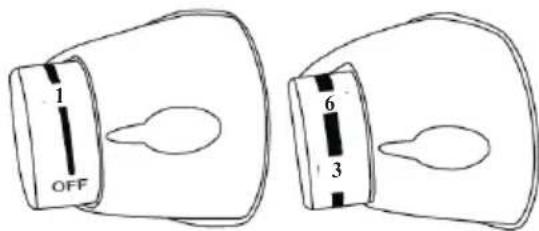
- In the OFF position the appliance does not operate (the cooling system is switched off), but power supply is not interrupted.
- The running time and temperature are affected by where the fridge is located, how often the door is opened and the temperature of the room the fridge is located in.
- When you use the appliance for the first time or after defrosting, adjust the control knob to the coldest setting for at least 2 hours before introducing food to be stored, and then readjust to the middle setting.
MOVING YOUR APPLIANCE
If the appliance is turned off for any reason, wait for 10 minutes before turning it back on. This will allow the refrigeration system pressures to equalise before restarting.
- Turn off the appliance and unplug it from the mains socket. Remove all food.
Also remove all mobile parts (shelves, accessories, etc.) or fix them into the fridge to avoid any shock. - Relocate and install. If the appliance has been left on its side for any length of time, leave it standing upright for at least 10 minutes before turning on.
Your appliance uses isobutane (R600a) as a refrigerant. Although R600a is an environmentally friendly and natural gas, it is explosive. Therefore you should be careful during shipment and installation to prevent your appliance's cooler elements from being damaged. In the event of a leak caused by damage to the cooler elements, move your fridge from open flame or heat sources and ventilate the room where the appliance is located for a few minutes.
STORING FOOD IN THE FRIDGE
The fridge helps to extend the storage times of fresh perishable foods.
Fresh food care for best results:
• Store foods that are very fresh and of good quality.
- Ensure that food is well wrapped or covered before it is stored. This will prevent food from dehydrating, deteriorating in colour or losing taste and will help maintain freshness. It will also prevent odour transfer.
• Make sure that strong smelling foods are wrapped or covered and stored away from foods such as butter, milk and cream which can be tainted by strong odours.
• Cool hot foods down before placing them in the fridge.
Dairy foods and eggs
- Most pre-packed dairy foods have a recommended ‘use by /best before/best by/’
date stamped on them. Store them in the fridge and use within the recommended time.
- Butter can become tainted by strong smelling foods so it is best stored in a sealed container.
- Eggs can be stored in the fridge.
Red meat
- Place fresh red meat on a plate and loosely cover with waxed paper, plastic wrap or foil.
- Store cooked and raw meat on separate plates. This will prevent any juice lost from the raw meat from contaminating the cooked product.
Poultry
- Fresh whole birds should be rinsed inside and out with cold running water, dried and placed on a plate. Cover loosely with plastic wrap or foil.
- Poultry pieces should also be stored this way. Whole poultry should never be stuffed until just before cooking, otherwise food poisoning may result.
- Cool and refrigerate cooked poultry quickly. Remove stuffing from poultry and store separately.
Fish and seafood
• Whole fish and fillets should be used on the day of purchase. Until required, refrigerate on a plate loosely covered with plastic wrap, waxed paper or foil.
- If storing overnight or longer, take particular care to select very fresh fish. Whole fish should be rinsed in cold water to remove loose scales and dirt and then patted dry with paper towels. Place whole fish or fillets in a sealed plastic bag.
- Keep shellfish chilled at all times. Use within 1 – 2 days.
Precooked foods and leftovers
- These should be stored in suitable covered containers so that the food will not dry out.
- Keep for only 1 – 2 days.
- Reheat leftovers only once and until steaming hot.
Vegetable and fresh fruit
- The vegetable container is the optimum storage location for fresh fruit and vegetables.
• Take care not to store the following at temperatures of less than 7^ C for long periods: Citrus fruit, melons, aubergines, pineapple, papaya, courgettes, passion fruit, cucumber, peppers, tomatoes. - Undesirable changes will occur at low temperatures such as softening of the flesh, browning and/or accelerated decaying.
- Do not refrigerate avocados (until they are ripe), bananas, mangoes.
DEFROSTING
The refrigerator defrosts fully automatically.
While the cooling is running, beads of condensation or hoarfrost form at the back of the refrigerator. This is normal. It is not necessary to wipe off the condensation or frost. The rear panel defrosts automatically. The condensation runs into the condensation channel and is conveyed to the cooling from where it evaporates.
Note: Keep the condensation channel and drainage hole clean, so that the condensation can run out.
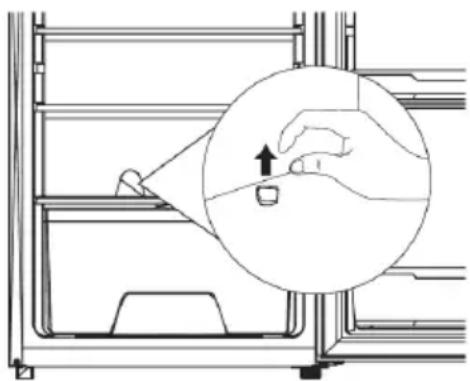
natural_image
Diagram showing a hand pressing down on a component inside a storage cabinet (no text or symbols present)VACATION TIME
For short vacation periods, leave the control knobs at their usual settings. During longer absences;
- remove all foods,
- disconnect from electrical outlet,
- clean the refrigerator thoroughly, including defrost pan,
- leave door open to avoid possible formations of condensate, mold or odors.
POWER FAILURE
Most power failures are corrected within an hour or two and will not affect your refrigerator temperatures. However, you should minimize the number of door openings while the power is off. During power failures of longer duration, take steps to protect your food by blacking dry ice on top of packages.
Move the appliance
Disconnected the power plug, Remove or securely fasten down all loose items inside the refrigerator, To avoid damaging the leveling legs, turn them all the way into the base.
SOME IMPORTANT RULES FOR THE CORRECT USE OF THE REFRIGERATOR
- Never place hot foods in the refrigerator,
- Beverages should be stored in sealed containers.
- Foods to be stored for a long time should be wrapped in cellophance or polyethylene, or kept in glass containers.
- Never place spoiled foods in the cabinet.
- Don't overload the cabinet.
- Don't open the door unless necessary.
- Caution: please keep the products away from the fire or similar glowing substance before you dispose the refrigerator.
- Caution: Not for outer camping use (ex. Tent)
- Caution: For indoor use only.
- Caution: The appliance can not be used in public transportation.
DOOR CONVERSION
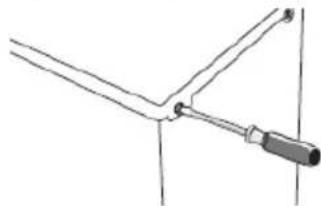
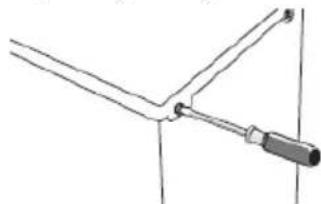
If you need to hinge your door on the opposite side it is recommended that you call your local authorised service agent to make this conversion or ask a technician. Before you reverse the door, you should ensure the appliance is unplugged and empty. It is recommended to use a crosshead screwdriver and a spanner (both not supplied).
- Remove the 2 screws on the back of the top cover.
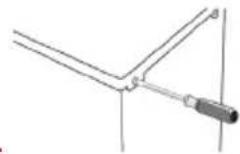
- Lift the top cover away from the fridge.

natural_image
Diagram of a cabinet with upward arrows indicating movement or force, no text or symbols present- Remove the three screws and then remove the top hinge that holds the door in place. Lift the door and place it on a padded surface to prevent it from being scratched.
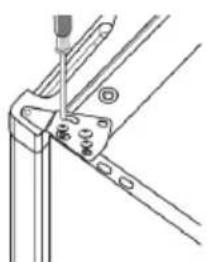
natural_image
Technical line drawing of a mechanical joint or bracket assembly (no text or symbols)- Remove the bottom screw, hinge bracket and adjustable foot from the bottom of the appliance.
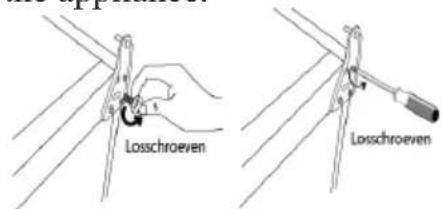
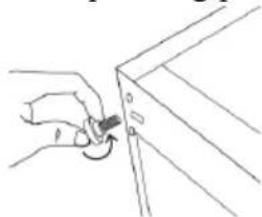
- Remove the adjustable foot from another side of the bottom and transfer it to the corresponding position on the opposite side of the bottom.
natural_image
Line drawing of a hand holding a small object with an arrow, next to a vertical line (no text or symbols)- Attach the screws, hinge bracket and adjustable foot to the opposite side of the bottom. Loosely secure.
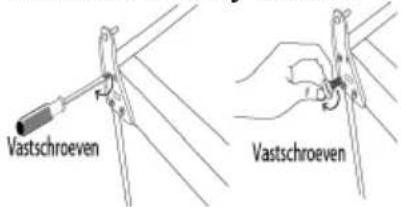
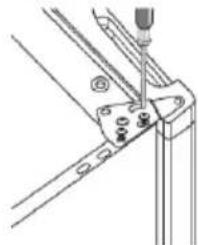
- Carefully set the door back into place. Ensure the door is aligned horizontally and vertically so that the seals are closed on all sides before finally tightening the top hinge. Insert the hinge back and screw it to the top of the appliance.
natural_image
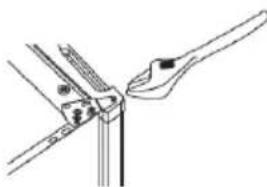
Technical line drawing of a mechanical assembly with a screwdriver inserted (no text or symbols)- Use a spanner to tighten it if necessary.
natural_image
Line drawing of a hand holding a tool against a vertical pole (no text or symbols)- Put the top cover back and fix it in place with the screws.
natural_image
Simple line drawing of a tool with a handle and lever (no text or symbols)- With the door closed, check that the door is aligned horizontally and vertically and that the seals are closed on all sides before finally tightening the bottom hinge. Readjust the levelling feet as required.
TROUBLE SHOOTING
Frequently, a problem is minor and a service call may not be necessary, use this trouble shooting guide for a possible solution.
1. Does not work
Check connection of power cord to power source.
Plug in unit
Use proper voltage.
2. Cools too frequently
Check temperature setting and adjust as needed.
Close door securely.
Be sure that food is cool before inserting.
Do not keep door open for too long and MINIMIZE door openings.
Do not place unit close to heat sources Or direct sunlight.
3. Intemal temperature Too cold
Check setting and adjust as needed.
4. Internal temperature Not cold enough
Check connection of power cord to Power source.
Plug in unit
Check setting and adjust as needed.
Close door securely.
Be sure that food is cool before inserting.
Do not keep door open for too long and MINMIZE, door openings.
Allow room for air to circulate around unit..
Use proper voltage.
Do not place unit close to heat sources or direct sunlight.
5. Freezer is not cold enough
Check setting and adjust as needed
Close door securely.
Be sure that food is cool before inserting.
Do not keep door open for too long.
Use proper voltage.
PRECAUCIONES IMPORTANTES
natural_image
Diagram showing a hand pressing down on a component inside a storage unit, with an inset magnified view highlighting the process (no text or symbols present)VACACIONES
natural_image
Simple line drawing of an open box with arrows indicating upward movement (no text or symbols)natural_image
Line drawing of a hand holding a small object with an arrow indicating rotation (no text or symbols)natural_image
Technical line drawing of a mechanical assembly with no visible text or symbolsnatural_image
Line drawing of a tool interacting with a vertical rod (no text or symbols)natural_image
Simple line drawing of a mechanical tool or bracket with a handle and vertical support (no text or symbols)natural_image
Diagram showing a hand pressing down on a component inside a storage unit (no text or symbols present)ZABEZPEČENÍ PŘI ODJEZDU NA DELŠÍ DOVOLENOU
natural_image
Line drawing of a hand holding a small object with an arrow indicating rotation (no text or symbols)natural_image
Technical line drawing of a mechanical assembly with a tool inserted, no visible text or symbolsnatural_image
Line drawing of a tool interacting with a vertical rod (no text or symbols)natural_image
Simple line drawing of a mechanical lever or support structure (no text or symbols)natural_image
Diagram showing a hand pressing down on a device panel with an inset magnified view of the handle (no text or symbols)ZABEZPEČENIE PRI ODCHODE NA DLHŠIU DOVOLENKU
natural_image
Technical line drawing of a mechanical assembly with mounting brackets and fasteners (no text or symbols)natural_image
Hand holding a small object with an arrow indicating rotation, next to a vertical line (no text or symbols)natural_image
Line drawing of a hand holding a tool near a vertical rod (no text or symbols)- Pant prekryte krytom a opät' ho priskrutkujte.
natural_image
Simple line drawing of a mechanical tool or bracket with no text or symbolsnatural_image
Two cylindrical milk glasses with clear stoppers, displayed on a plain white surface (no text or symbols visible)
natural_image
Three product photos: cardboard sheets, a clear glass coffee maker, and a white bowl (no text or symbols visible)of scan hier:
ou scannez ici:
oder hier scannen:
or scan here:

- GARANTIEVOORWAARDEN
- CONDITIONS DE GARANTIE
- CONDICIONES DE GARANTÍA
- RECYCLING INFORMATIONEN
- RECYCLING INFORMATION
- INFORMACE O RECYKLACI ODPADU
- CZ
- Vervanging gloeilamp
- UW APPARAAT VERPLAATSEN
- VAKANTIE
- VACANCES
- URLAUB
- INSTALLATION
- Location
- PARTS
- CARE AND MAINTENANCE
- Cleaning
- Bulb replacement
- AMBIENT TEMPERATURE
- BEFORE PLACING FOOD IN THE FRIDGE
- TEMPERATURE CONTROL
- MOVING YOUR APPLIANCE
- STORING FOOD IN THE FRIDGE
- Dairy foods and eggs
- Red meat
- Poultry
- Fish and seafood
- Precooked foods and leftovers
- Vegetable and fresh fruit
- DEFROSTING
- VACATION TIME
- POWER FAILURE
- Move the appliance
- SOME IMPORTANT RULES FOR THE CORRECT USE OF THE REFRIGERATOR
- DOOR CONVERSION
- TROUBLE SHOOTING
- Does not work
- Cools too frequently
- Intemal temperature Too cold
- Internal temperature Not cold enough
- Freezer is not cold enough
- PRECAUCIONES IMPORTANTES
- VACACIONES
- ZABEZPEČENÍ PŘI ODJEZDU NA DELŠÍ DOVOLENOU
- ZABEZPEČENIE PRI ODCHODE NA DLHŠIU DOVOLENKU
Brand : DOMO
Model : DO942F
Category : Refrigerator