
SM2016W - Microwave BRANDT - Free user manual and instructions
Find the device manual for free SM2016W BRANDT in PDF.
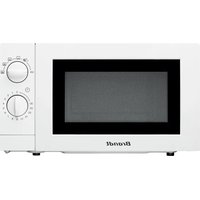


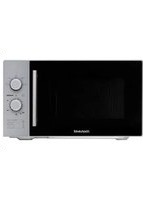
| Product type | Microwave oven |
| Brand | Brandt |
| Model | SM2016W |
| External dimensions (HxWxD) | 262 x 452 x 337 mm |
| Cavity dimensions (HxWxD) | 198 x 315 x 297 mm |
| Approximate volume | 20 L |
| Rated voltage | 230 V ~ 50 Hz |
| Input power | 1200 W |
| Microwave output power | 700 W |
| Turntable capacity | Glass plate Ø 245 mm (approx) |
| Control type | Mechanical (rotary knobs) |
| Cooking functions | Microwave only, 6 power levels (100%, 85%, 66%, 48%, 40%, 17%) |
| Timer | Up to 30 minutes, automatic shut-off |
| Allowed materials | Glass, ceramic, microwave-safe plastic, paper, plastic wrap |
| Prohibited materials | Metal, aluminum (except small sheets at 2.5 cm from walls), airtight containers |
| Safety | Door lock, stop on opening, high voltage protection |
| Maintenance and cleaning | Clean with damp soapy sponge, dishwasher-safe plate, do not use steam cleaner |
| Energy consumption | 1200 W (input), 700 W (output) |
| Net weight | Approximately 10.5 kg (according to manual: sertiL 02 éticapac... 10.5 kg) |
| Electrical connection | Standard plug, recommended 20 A thermal protection |
| Warranty and after-sales service | Brandt consumer service, genuine parts available |
Frequently Asked Questions - SM2016W BRANDT
User questions about SM2016W BRANDT
0 question about this device. Answer the ones you know or ask your own.
Ask a new question about this device
Download the instructions for your Microwave in PDF format for free! Find your manual SM2016W - BRANDT and take your electronic device back in hand. On this page are published all the documents necessary for the use of your device. SM2016W by BRANDT.
USER MANUAL SM2016W BRANDT
FR INSTRUCTION MANUAL EN
Dear Customer,
OU
Thank you for buying a BRANDT product and for your confidence in our company.
This product has been designed and manufactured for you considering your lifestyle and your requirements, so that it meets your expectations in the best way possible. We have invested it with our expertise, spirit of innovation and all the enthusiasm which has driven us for more than 60 years.
So that we are always able to satisfy your requirements as well as possible, our customer service is available, ready to listen and answer all your questions or suggestions.
You can also visit our website www.brandt.com where you will find our latest innovations as well as additional useful information.
BRANDT is happy to provide you with daily support and hopes you will fully enjoy your purchase.

Important: Before starting your machine, please read this guide for installation and use carefully in order to familiarise yourself with how it operates quickly.
TABLE OF CONTENTS
1) INFORMATION FOR THE USER....20
a) Safety recommendations....20 b) Technical data 24 c) Operating principle....24 d) Protecting the environment 25
2) INSTALLING YOUR APPLIANCE 26
a) Before hook-up....26 b) Before you call for service 27 c) Utensils 27
3) DESCRIPTION OF YOUR APPLIANCE 29
a) Main composing parts....29 b) Control panel 30 c) Installation of the turntable 30 d) Using your appliance 30
4) CARING FOR AND CLEANING YOUR APPLIANCE 31
5) TROUBLESHOOTING 32 6) CUSTOMER RELATIONS AND INTERVENTION 32
1) INFORMATION FOR THE USER

Keep this guide with your appliance. If the appliance is ever sold or transferred to another person, ensure that the new owner receives this user guide. Please familiarise yourself with these recommendations before installing and using your appliance. They have been written for your own safety as well as the safety of others.
a) Safety recommendations
IMPORTANT SAFETY INSTRUCTIONS, READ CAREFULLY AND KEEP FOR FUTURE USE.
General information
- Your appliance is designed for standard household use for cooking, reheating and defrosting foods and beverages. Use this appliance only for its intended uses as described in the manual. It shall be used only in covered, closed and warmed environment such as a kitchen or a room with the same specifications. The manufacturer declines any responsibility in the case of inappropriate use.
- Children should be supervised to ensure that they do not play with the appliance.
- Keep the appliance and its cord out of reach of children less than 8 years.
Installation:
INSTALL OR LOCATE THIS MICROWAVE OVEN ONLY IN ACCORDANCE WITH THE INSTALLATION INSTRUCTIONS PROVIDED. KEEP AT LEAST 20CM OF UNOBSTRUCTED
SPACE ABOVE THE APPLIANCE. SEE THE SECTION 'INSTALLING YOUR APPLIANCE'
- This appliance must not be placed in a cabinet.
- Do not obstruct any of the vents of your appliance.
- If this equipment is covered or touching flammable material, including curtains, drapes, or items with a similar nature, there is a risk of fire during use.
- Keep the cord away from heated surfaces, and do not cover any vents on the microwave oven.
- The appliance is not intended to be operated by means of an external timer or separate remote control system.
Use:
THE APPLIANCE AND ITS ACCESSIBLE PARTS BECOME HOT DURING USE. YOUNG CHILDREN SHOULD BE KEPT AWAY.

WARNING: LIQUIDS AND OTHER FOODS SHOULD NOT BE HEATED IN SEALED CONTAINERS BECAUSE THEY MAY EXPLODE.
This appliance can be used by children aged from 8 years and above and persons with reduced physical, sensory or mental capabilities or lack of experience and knowledge if they have been given supervision or instruction concerning use of the appliance in a safe way and understand the hazards involved.
- Do not place anything on the appliance during operation.
- Ensure that the cookware is suitable for use in a microwave oven. Always use oven mitts to remove dishes from the oven. Some dishes absorb the heat of foods and, therefore, are very hot.
- For the microwave and microwave + circular heating functions, the use of metallic cookware is not recommended.
Remove wire twist-ties and metal handles from paper or plastic containers/bags before placing them in the oven.
- To avoid damaging your appliance, never operate it while empty or without the turntable.
- In the case of small quantities (a sausage, a croissant, etc.) place a glass of water next to the food.
- Heating beverages in the microwave oven can cause sudden and/or delayed splattering of boiling liquid, so precautions must be taken when handling their containers.
- The contents of baby bottles and baby food jars should be shaken or stirred and their temperature checked before consumption to avoid burns. Never heat a baby bottle with the nipple on (risk of explosion).
- It is recommended that you avoid heating eggs in their shells and whole hard-boiled eggs in the microwave oven because they run the risk of explosion, even after cooking is complete.
- Do not use aluminium cooking foil to cover food. Do not cover part of the oven with aluminium foil.
- While heating food items in plastic or paper containers, monitor the microwave's contents for there is a risk of spontaneous combustion.
- If smoke is emitted, switch off or unplug the appliance and keep the door closed in order to stifle any flames.
- The cookware not recommended by the manufacturer may result in hazardous situations and injuries.
- Do not use the oven cavity for storage purposes. Do not store items, such as bread, cookies, etc. inside the oven.
Carrying and cleaning:
FAILURE TO MAINTAIN THE MICROWAVE OVEN IN A CLEAN CONDITION COULD LEAD TO DETERIORATION OF THE SURFACE THAT COULD ADVERSELY AFFECT THE LIFE OF THE APPLIANCE AND POSSIBLY RESULT IN A HAZARDOUS.
TURN THE OVEN OFF AND REMOVE THE POWER PLUG FROM THE WALL SOCKET BEFORE CLEANING.
THIS APPLIANCE GENERATES MICROWAVE ENERGY AND IS EQUIPPED WITH A HIGH VOLTAGE CIRCUIT, DO NOT REMOVE THE COVER.
IT IS HAZARDOUS FOR ANYONE OTHER THAN A COMPETENT PERSON TO REMOVE A COVER:

REMOVE THE PROTECTIVE COVER OF THE DEVICE MAY RESULT IN EXPOSURE TO MICROWAVE ENERGY.

REMOVE THE PROTECTIVE COVER OF THE DEVICE, EVEN IF IT IS DISCONNECTED, MAY CAUSE AN ELECTRIC SHOCK ON CONTACT WITH THE HIGH-VOLTAGE CIRCUIT.
- Cleaning and user maintenance shall not be made by children without supervision.
- This appliance should be cleaned regularly and any food deposits removed.
- Do not use harsh abrasive cleaners or sharp metal scrapers to clean the oven door glass since they can scratch the surface, which may result in shattering of the glass.
- The seal and frame of the door must be regularly examined to ensure that they have not deteriorated. If these areas are damaged, discontinue use of the appliance and have a specialised technician check it.
- When it becomes necessary to replace the
microwave oven light, please consult a dealer to have it replaced.
- When unplugging the power cord, do not pull on the cord itself but pull on the plug.
- If the supply cord is damaged, it must be replaced by the manufacturer, its service agent or similarly qualified persons in order to avoid a hazard.
Improper use:
THE MANUFACTURER ASSUMES NO LIABILITY FOR IMPROPER USE. USE THIS APPLIANCE ONLY FOR THE USES DESCRIBED IN THIS MANUAL. OBSERVE GENERAL INSTRUCTIONS AND SAFETY LISTED IN THIS CHAPTER.
- This microwave oven is not intended for drying food or clothes. Similarly, it is not intended for heating slippers, heating pads, sponges, damp cloth and other similar items. It is not intended either for sterilization. These uses can destroy your appliance and lead to a dangerous situation.
- This device is intended for home use in private homes. Its use in common areas such as local professionals or pause office or workshop, local camping, hotel, etc... does not respond to an intended use as defined by the manufacturer.
b) Technical data
| Model: SM2016W | |
| Power supply: 230V~50Hz | |
| Power consumption: 1200W | |
| Output: 700W | |
| External dimensions (HxWxD mm): 262x452x337 mm | |
| Cavity dimensions (HxWxD mm): 198x315x297 mm | |
| Microwave oven capacity: 20L | |
| Cooking uniformity: Turnable system | |
| Net weight: 10.5kg |
c) Operating principle
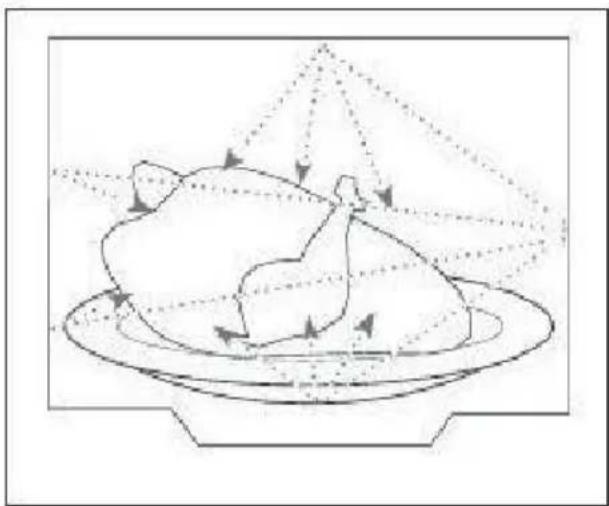
The micro-waves used for cooking are electro-magnetic waves. They are commonly found in our environment in the form of radio-electric waves, light or infrared rays.
Their frequency is in the 2450 MHz range.
Their behaviour:
• They are reflected by metals. • They travel through all other materials. • They are absorbed by water, fat and sugar molecules.
When food is exposed to microwaves, its molecules begin moving rapidly, which causes heating.
The penetration depth of waves into the food is approximately 2.5 cm; if the food is thicker, the core of the food will be cooked by conduction, as in traditional cooking.
d) Protecting the environment
It is valuable to note that the microwaves trigger within the food causes a simple phenomenon and that they are not thermal harmful to one's health.
This appliance's packing materials are recyclable. Recycle them and play a role in protecting the environment by disposing of them in municipal containers provided for this purpose.
Your appliance also contains various recyclable materials. Thus it is stamped with this logo to indicate to you that used appliances should not be mixed with other waste. The recycling of appliances organised by your manufacturer will take place under the best conditions, in compliance with European directive 2002/96/CE concerning electrical and electronic equipment waste. Consult your city hall or your retailer to find the drop-off points for used appliances that is nearest to your home. We thank you for your help in protecting the environment.
2) INSTALLING YOUR APPLIANCE
a) Before hook-up
• Make sure that all the packing materials are removed from the inside of the door.

- Ensure that your appliance has not suffered any damage during transport (deformed seal or door, etc...). If you see any kind of damage before doing anything else, contact your retailer.
- This microwave oven must be placed on a flat, stable surface to hold its weight and the heaviest food likely to be cooked in the oven.
- Do not place the microwave oven where heat, moisture, or high humidity are
generated, or near combustible materials.
- For correct operations, the microwave oven must have sufficient airflow. Allow 20cm of space above the oven, 10cm at back and 5cm at both sides. Do not cover or block any opening on the appliance. Do not remove feet.
- Do not operate the oven without glass tray, roller support, and shaft in their proper positions.
- Make sure that the power supply cord is undamaged and does not run under the oven or over any hot or sharp surface.
- The socket must be readily accessible so that it can be easily unplugged in an emergency.
- Do not use the oven outdoors.
Radio interference:
Operation of the microwave oven can cause interference to your radio, TV, or similar equipment. When there is interference, it may be reduced or eliminated by taking the following measures:
- Clean door and sealing surface of the oven. • Reorient the receiving antenna of radio or television.
- Relocate the microwave oven with respect to the receiver.
- Move the microwave oven away from the receiver.
- Plug the microwave oven into a different outlet so that microwave oven and receiver are on different branch circuits.
Electrical connection
Ensure that:
- The electrical installation has efficient voltage. • The electrical wires are in good condition.
- The diameter of the wires complies with the installation requirements.
- Your electrical installation is equipped with 20-ampere thermal-sensitive protection.
In case of doubt, consult your electrician installer.
The electrical connections are made before the appliance is installed in its housing.
Electrical safety must be provided by a correct build-in. During installations and maintenance operations, the appliance must be unplugged from the electrical grid.
The power plug or any other power cut device must stay immediately accessible for any emergency stop.
If the oven presents any anomaly, unplug the appliance or disconnect the connection to the sector.
If the plug cord is damaged, it must be replaced by the manufacturer, its after-sale service, or a similar qualified person to avoid any danger.
Warning: We cannot be held responsible for any accident resulting from an inexistent, defective or incorrect ground lead.
b) Before you call for service
If the oven fails to operate:
- Check to ensure that the oven is plugged in securely. If it is not, remove the plug from the outlet, wait 10 seconds, and plug it in again securely.
- Check for a blown circuit fuse or a tripped main circuit breaker. If these seem to be operating properly, test the outlet with another appliance.
- Check to ensure that the control panel is programmed correctly and the timer is set.
- Check to ensure that the door is securely closed engaging the door safety lock system. Otherwise, the microwave energy will not flow into the oven.
IF NONE OF THE ABOVE RECTIFIES THE SITUATION, THEN CONTACT A QUALIFIED TECHNICIAN. DO NOT TRY TO ADJUST OR REPAIR THE OVEN YOURSELF.
c) Utensils
The ideal utensil for a microwave is made of transparent material as it allows energy to pass through the container and heat the food.
Do not use recycled paper products when microwave cooking, as they may contain small metal fragments which may cause sparks and/or fires.
Round or oval dishes rather than square or oblong ones are recommended, as food in corners tends to overcook.
Narrow strips of aluminium foil may be used to prevent overcooking of exposed areas. But be careful and do not use too much and keep a distance of 1 inch (2.54 cm) between foil and cavity.
See the instructions on “Materials you can use in microwave oven or to be avoided in microwave oven”. There may be certain non-metallic utensils that are not safe to use for microwaving. If in doubt, you can test the utensil in question following the procedure below.
Materials you can use in microwave oven:
| Utensils Observations | |
| Aluminium foil | Shielding only. Small smooth pieces can be used to cover thin parts of meat or poultry to prevent overcooking. Arcing can occur if foil is too close to oven walls. The foils should be at least 1 inch (2,5cm) away from oven walls. |
| Browning dish | Follow manufacturer's instructions. The bottom of browning dish must be at least 3/16 inch (5mm) above the turntable. Incorrect usage may cause the turntable to break. |
| Dinnerware | Microwave-safe only. Follow manufacturer's instructions. Do not use cracked or chipped dishes. |
| Glass jars | Always remove lid. Use only to heat food until just warm. Most glass jars are not heat resistant and may break. |
| Glassware | Heat-resistant oven glassware only. Make sure there is no metallic trim. Do not use cracked or chipped dishes. |
| Oven cooking bags | Follow manufacturer's instructions. Do not close with metal tie. Make slits to allow steam to escape. |
| Paper plates and cups | Use for short-term cooking/warming only. Do not leave oven unattended while cooking. |
| Paper towels | Use to cover food for reheating and absorbing fat. Use with supervision for a short-term cooking only. |
| Parchment paper Use as a cover to prevent splattering or a wrap for steaming. | |
| Plastic | Microwave-safe only. Follow the manufacturer's instructions. Should be labelled "Microwave Safe". Some plastic containers soften, as the food inside gets hot. "Boiling bags" and tightly closed plastic bags should be slit, pierced or vented as directed by package. |
| Plastic wrap | Microwave-safe only. Use to cover food during cooking to retain moisture. Do not allow plastic wrap to touch food. |
| Wax paper Use as a cover to prevent splattering and retain moisture. | |
Materials to be avoided in microwave oven:
| Utensils | Observations |
| Aluminium tray May cause arcing. Transfer food into microwave-safe dish. | |
| Food carton with metal handle | May cause arcing. Transfer food into microwave-safe dish. |
| Metal or metal-trimmed utensils | Metal shields the food from microwave energy. Metal trim may cause arcing. |
| Metal twist ties May cause arcing and could cause a fire in the oven. | |
| Paper bags May cause a fire in the oven. | |
| Plastic foam Plastic foam may melt or contaminate the liquid inside when exposed to high temperature. | |
| Wood Wood will dry out when used in the microwave oven and may split or crack. | |
3) DESCRIPTION OF YOUR APPLIANCE
a) Main composing parts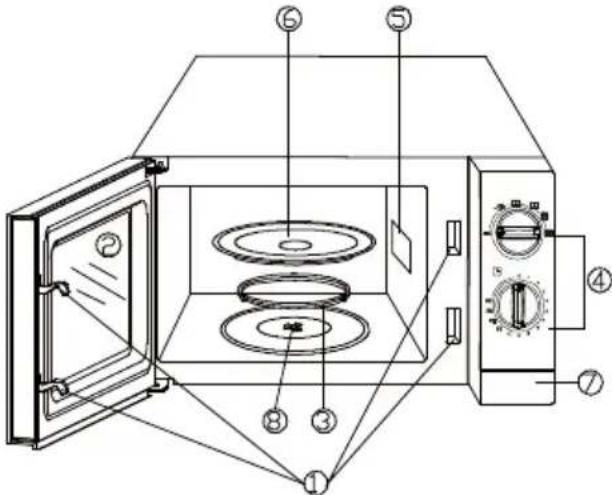
| 1. Door Safety Lock System 5. Wave Guide | |
| 2. Oven Window | 6. Glass tray |
| 3. Roller ring | 7. Door Release Button |
| 4. Control Panel | 8. Shaft |
b) Control panel
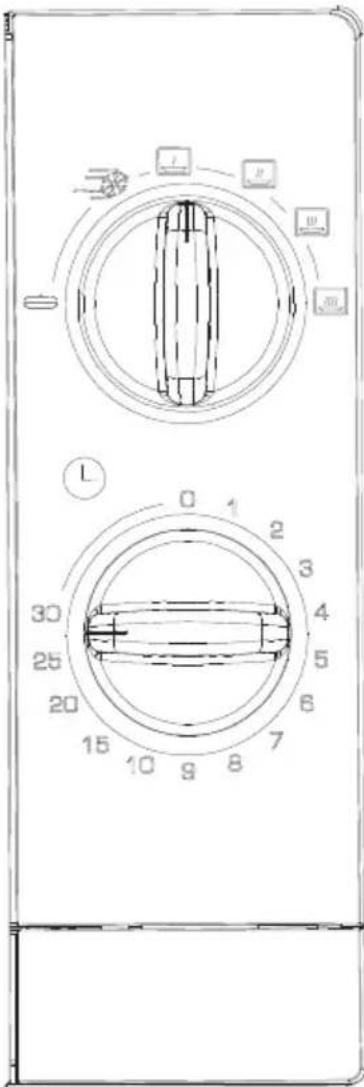
The control panel consists of two function operators. One is a timer knob, and another a power knob.
Power/ Action selector
Use this operator knob to choose a cooking power level. It is the first step to start a cooking session.
Time Knob
It offers visual timing settings at easy turn of your thumb to select a desired cooking time up to 30 minutes per cooking session.
Microwave Cooking
For pure microwave cooking, there are six power levels from which to choose one as best fit to do the job at hand.
Power level increases with the knob turning clockwise.
The power levels can be classified as the following:
| Power Output | Description | |
| 1 | 100% | HIGH |
| 2 | 85% | M.HIGH |
| 3 | 66% | MED |
| 4 | 48% | M.LOW |
| 5 | 40% | DEFROST |
| 6 | 17% | LOW |
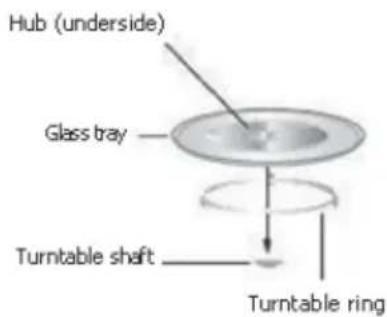
c) Installation of the turntable
a. Never place the glass tray upside down. The glass tray should never be restricted.
b. Both glass tray and turntable ring assembly must always be used during cooking.
c. If the glass cracks or breaks, contact your nearest authorized service center.
d) Using you appliance
To start a cooking session:
- Place food in oven and close the door.
- Turn Power Selector to select a power level.
- Use Timer knob to set a cooking time.
NOTE: As soon as the timer is turned, the oven starts cooking. When selecting time for less than 2 minutes, turn the timer past 2 minutes and then return to the correct time.
CAUTION: ALWAYS RETURN TIMER BACK TO ZERO POSITION if food is removed from oven before the set cooking time is complete or when oven is not in use. To stop oven during cooking process, push the door release button or open the door by the handle.
4) CARING FOR AND CLEANING YOUR APPLIANCE
It is recommended that you regularly clean your oven and remove any food build-up on the inside and outside of the appliance.
Turn off the oven and remove the power plug from the wall socket before cleaning.
Keep the inside of the oven clean. When food splatters or spilled liquids adhere to oven walls, wipe with a damp cloth. Mild detergent may be used if the oven gets very dirty. Avoid the use of spray and other harsh cleaners as they may stain, streak or dull the door surface.
The outside surfaces should be cleaned with a damp cloth. To prevent damage to the operating parts inside the oven, water should not be allowed to seep into the ventilation openings.
Wipe the door and window on both sides, the door seals and adjacent parts frequently with a damp cloth to remove any spills or spatters. If the door or door seals are damaged, the oven should not be used until it has been repaired by an authorised person. Do not use abrasive cleaner.
Do not allow the control panel to become wet. Clean with a soft, damp cloth. When cleaning the control panel, leave oven door open to prevent oven from accidentally turning on.
Do not clean the appliance with a steam cleaner. If steam accumulates inside or around the outside of the oven door, wipe with a soft cloth. This may occur when the microwave oven is operated under high humidity conditions.
It is occasionally necessary to remove the glass tray for cleaning. To do this, handle it by the access zones provided for this purpose. If you remove the turning gear, do not let water penetrate into the motor axle hole. Do not forget to return the turning gear, wheel guide and turntable. Wash the tray in warm sudsy water or in a dishwasher.
The turntable roller and oven floor should be cleaned regularly to avoid excessive noise.
Simply wipe the bottom surface of the oven with mild detergent. The roller ring may be washed in mild sudsy water or in the dishwasher. When removing the roller ring from the cavity floor for cleaning, be sure to replace it in the proper position.
In the event of odor or caked-on dirt, boil water with lemon juice and vinegar in a cup for 5 minutes and clean the insides with a bit of dishwashing liquid.
The oven should be cleaned regularly and any food deposits removed. Failure to maintain the oven in a clean condition could lead to deterioration of the surface that could adversely affect the lifespan of the appliance and possibly result in a hazardous situation.
Please do not dispose of the appliance in the domestic rubbish bin; it should be disposed of at the particular disposal center provided by the municipalities.
5) TROUBLESHOOTING
If you have doubts about the proper functioning of your appliance, this does not necessarily mean it is broken. In any event, check the following items:
| You observe that ... What should you do? | |
| The appliance does not start. | Check the electrical connection of your appliance. Ensure that your oven's door is fully closed. |
| The appliance is noisy. The turntable does not rotate properly | Clean the wheels and the rolling area under the turntable.Ensure that the wheels are properly positioned. |
| You see steam on the window. | Wipe the condensation away with a cloth. |
| Food is not heated during a microwave programme. | Ensure that the cookware is suitable for microwave ovens and that the power level is appropriate. |
| The appliance is creating sparks. | Thoroughly clean the appliance: remove grease, cooking particles, etc. Remove any metal items from the walls of the oven. Never use metal items with the grid. |
| The bulb doesn't work. Call the brand's authorized technician to replace the bulb. | |
Warning: Be careful, this appliance is equipped with a high tension circuit. Do not attempt any repairs inside the oven yourself.
6) CUSTOMER RELATIONS AND INTERVENTION
a) After-sales service
To find out more about all the brand's products: www.brandt.fr. You may write to us:
➢ or phone us, from Monday to Saturday, from 8:30 AM to 6 PM at:
0 892 02 88 01
Service 0.50 € / min
+ price of call
b) INTERVENTIONS
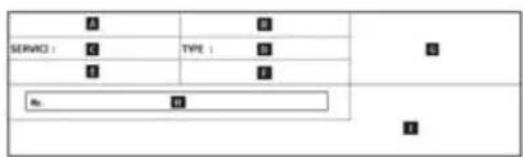
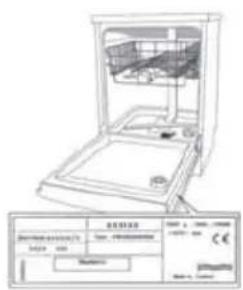
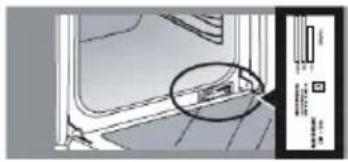
Any repairs that are made to your appliance must be handled by a qualified professional authorized to work on the brand. When you call, mention your appliance's "Service" reference, as well as its serial number "Nr". This information appears on the manufacturer's nameplate which can be found stuck behind the oven.
OU
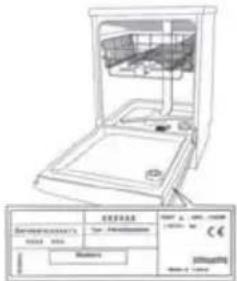
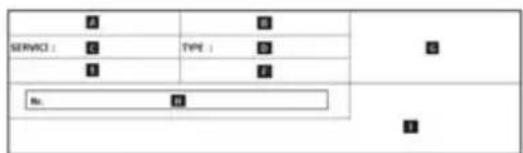
B : Commercial reference C : Service reference H : Serial Number
You may phone us, from Monday to Saturday, from 8 AM to 8 PM at:
09 69 39 25 25
During maintenance work, request the exclusive replacement parts.

certified original



- TABLE OF CONTENTS
- INFORMATION FOR THE USER
- INSTALLING YOUR APPLIANCE
- DESCRIPTION OF YOUR APPLIANCE
- CARING FOR AND CLEANING YOUR APPLIANCE
- SAFETY RECOMMENDATIONS
- GENERAL INFORMATION
- INSTALLATION
- SPACE ABOVE THE APPLIANCE. SEE THE SECTION 'INSTALLING YOUR APPLIANCE
- USE
- CARRYING AND CLEANING
- THE MANUFACTURER ASSUMES NO LIABILITY FOR IMPROPER USE. USE THIS APPLIANCE ONLY FOR THE USES DESCRIBED IN THIS MANUAL. OBSERVE GENERAL INSTRUCTIONS AND SAFETY LISTED IN THIS CHAPTER
- TECHNICAL DATA
- OPERATING PRINCIPLE
- PROTECTING THE ENVIRONMENT
- BEFORE HOOK-UP
- RADIO INTERFERENCE
- ELECTRICAL CONNECTION
- ENSURE THAT
- BEFORE YOU CALL FOR SERVICE
- UTENSILS
- CONTROL PANEL
- INSTALLATION OF THE TURNTABLE
- USING YOU APPLIANCE
- TROUBLESHOOTING
- CUSTOMER RELATIONS AND INTERVENTION
- INTERVENTIONS
Brand : BRANDT
Model : SM2016W
Category : Microwave