ManualGo.com
CCFE 155 - Fridge CANDY - Free user manual and instructions
Find the device manual for free CCFE 155 CANDY in PDF.



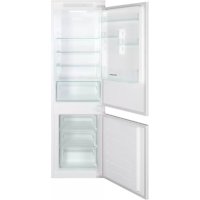
Download the instructions for your Fridge in PDF format for free! Find your manual CCFE 155 - CANDY and take your electronic device back in hand. On this page are published all the documents necessary for the use of your device. CCFE 155 by CANDY.
USER MANUAL CCFE 155 CANDY
DECLARATION OF CONFORMITY
The manufacturer of the product/s described herein, to which this description refers, declares on its sole responsibility that the product/s meet the relevant fundamental safety, health and protection requirements of the relevant EU guidelines and that the corresponding test reports are available for examination by the relevant authorities and can be requested from the seller of the appliance, especially with regard to CE Declaration of Conformity issued by the manufacturer or with the manufacturer‘s approval. Moreover, the manufacturer declares that the parts of the appliance described in this user manual, which come into contact with fresh food, do not contain any toxic substances.
English Instruction for use CHEST FREEZERS Contents
Page Electrical Safety Instruction..........................................................................................…...........…….……. 2 Installation....................................................................................................................…………………3 Rating plate..........................................................................................................……………………… 3 Connection to power supply ...................................................................................…………………… 3 Switching on / off and temperature selection.................................................................………………. 3 Indicator-lights..............................................................................................................……………….. 4 Warning buzzer……...........................................................................................……………………….. 4 Start-up............................................................................................................…………….…………... 4 Freezing/storage of fresh food...........................................................................……………………….. 4 Maximum stacking height..................................................................................……………………….. 5 10 Storage time......................................................................................................……………………….. 5 11 Precautions and advice.....................................................................................……………………….. 5 12 Cleaning and maintenance ...............................................................................……………………….. 5 13 Defrosting.........................................................................................................………………………… 5 14 Interior lighting..................................................................................................………………………… 6 15 Resolving faults on your own.............................................................................……………………….. 6 16 After-sales service ………………………………………………………………………………….………… 6 17 Guarantee …………………………………………………………………………………………………….. 6 18 Troubleshooting guide (what is when....).........................................................………...………………. 7 Storage Table...........................................................................................................………………….. 8 Components................................................................................................................………………… 9 Please read these instructions for use attentively to get a good and fast understanding of your new appliance. Underline any parts you consider particularly important for you. Look after this document so that you may consult it in future or pass it on to any future owners. You have purchased a good appliance which will serve you for many years if it is used and maintained correctly. The illustration (FIG.) are on the last pages of this user manual. Please, use the appliance only in a place with the appropriate ambient temperatures; otherwise the functioning of the appliance can be negatively influenced. See also "Climate classes" on page 3. Important! This appliance is designed for domestic use. If it is installed for professional or commercial use, the standards applicable to the respective trade must be observed. The appliance has been tested against leakage in compliance with the relevant legal safety standards . In case of excessive use of the appliance, e.g. by commercial use, the warranty on the compressor will be reduced by 50 %. Should you have bought your new fridge / freezer to replace an old appliance, please make sure that all existing latch- or bolt-locks on the old appliance are destroyed, before you dispose of it. This will ensure that a child cannot get trapped inside. Please have the old appliance ecologically disposed of by a company specialised in environmental protection, since the appliance may contain harmful components in the refrigerant and this must be removed with special equipment. Please check with your dealer or with your local authority. Make sure that the refrigerating system containing the refrigerant, especially the heat exchanger at the back of the appliance, is not damaged during transportation to the disposal or collection site, so that you can be sure that the refrigerant does not leak out. Details of the utilised refrigerant and insulation propellant are on the rating plate affixed to the appliance © 0512 fiCONS
FUSE REPLACEMENT If the fitted plug is not suitable for your socket outlet, then it should be cut off and disposed of in order to avoid a possible shock hazard should it be inserted into a 13A socket elsewhere. A suitable alternative plug should then be fitted to the cable. If the mains lead of this appliance is fitted with a BS 1363A 13 amp fused plug, to change a fuse in this type of plug use a A.S.T.A. approved fuse to BS 1362 type and proceed as follow:
Remove the fuse cover (A) Remove the fuse (B) Fit replacement fuse into plug Refit the fuse cover The wires in this mains lead are coloured in accordance with the following code: BLUE BROWN YELLOW & GREEN
BLUE N Connected to a typical 13 amp plug CABLE CLAMP
1. The YELLOW & GREEN wire must be
connected to the terminal in the plug which s marked with the letter E IMPORTANT: The fuse cover mast be refitted when changing a fuse and if the fuse cover is lost the plug must not be used until a correct replacement is fitted. Correct replacements are identified by the colour insert or the colour embossed in words on the base of the plug. Replacement fuse cover are available from your local electrical store. or by the Earth symbol or coloured green or yellow & green
2. The BLUE wire must be
connected to the terminal which is marked with the letter N or coloured black
3. The BROW wire mast be
connected to the terminal which is marked with the letter L or coloured red © 0512 fiCONS
English Omit any mechanical influence on the cooling system, especially on the condenser (p), as far as available. With some appliances the condenser is built into the external wall. Interventions on the cooling system must be carried out by professional and authorised personnel only. Directions for use In the following, you will find all the important information for the use of your appliance. The instructions for use apply to several models, which is why details of the information may differ according to the type of the appliance.
Installation (Choice of position for installation) IMPORTANT! Escaping refrigerant can injure your eyes. In the event of eye contact with the refrigerant, wash your eyes instantly under plenty of running water and call/consult an eye specialist immediately. Strictly avoid high ambient temperatures and direct sunlight. We advise you to place your appliance in a cool, well aired, dry room. Installation in the immediate vicinity of a heat source (heating, oven etc.) is highly inappropriate (increased compressor performance would be necessary and, as a result, power consumption would be considerably higher). KLIMATE CLASSES The appliance, according to its climate category, is meant for use at certain room temperatures. These temperatures should not be exceeded! The climate category for your particular appliance is marked on the rating plate. The categories are: If the installation near a heat source cannot be avoided, a suitable insulation plate must be fitted between the appliance and the heat source (do not use asbestos), or the following minimum distances must be observed:
- from gas or electric cooker
- from radiator or oven
- from a wall, piece of furniture or another appliance
Instruction for use CHEST FREEZERS name of climate category 3 cm 5 cm
2 cm Never obstruct the ventilation grid Larger chest freezers are equipped with a ventilation grille (k) located below on one side. These appliances can be placed directly against a wall or a piece of furniture but not with the side protected with the ventilation grille.
suitable room temperatures + 10° C to + 32°C + 16° C to + 32°C + 18° C to + 38° C + 18° C to + 43° C Rating plate The rating plate (with technical data) is located on the housing (D) at the rear of the appliance. Freezers without ventilation grid Leave sufficient space between the rear of the appliance and the wall to ensure that outward flow of warm air is able to escape. Take a note of the technical data Copy the technical data from the rating plate to here so that it is at any time readily available, without having to move the appliance The appliance must be placed horizontally and on a levelled base. Only this way can an impeded circuit of the refrigerant and optimum function be ensured. Model/Type …………….………………………… Gross capacity ……………………………….litres Net capacity ………………….……………litres Operating voltage ………………….……...…...V-50Hz Maximum absorbed power(W)..……………….Watt Safety (A) ……………….....………………......Amp Power consumption………………………….....kWh/24h Freezing capacity…………………………….....kg/24h IMPORTANT! Leave the appliance stand in the final position for at least 2 hours before switching it on, so that the refrigerant circuit stabilises and no operating problems occur.
Your appliance must be connected to a power socked with grounded connection, which is conform to the respective standards and has been installed by an authorised specialist. Before you connect the plug of the appliance with the power socket, make absolutely sure that the voltage (V) on the appliance’s data-plate corresponds with that of your mains. If the voltage differs, notify the after-sales-service or your dealer immediately, and do not on any account connect the appliance to the mains. The odour which is typical of all new appliances is easy to remove. Thoroughly clean the interior compartment with a mixture of lukewarm water and vinegar. Do not use washing liquids, sharp or granular cleaning implements, or any cleaning products containing soda. Before connecting the appliance, make sure that the inner area – especially the corners – is absolutely dry.
Switching on / off temperature selection (Thermostat) (l) The temperature control switches the appliance on and off and controls/sets the cooling temperature. Danger warning Depending on its composition, the refrigerant is easily inflammable. The refrigerant circuit is hermetically sealed and the density has been subject to repeated tests. An improper intervention can cause acute fire hazard. © 0512 fiCONS Connection to power supply To prevent temperature being accidentally modified, the control is intentionally resistant to turning. To vary the setting, we recommend to use a coin or screwdriver.
English Instruction for use CHEST FREEZERS To switch on: Turn the control (l) to the right adjust temperature to the level you require, between: Min. (slight cooling) and max. (lowest temperature) To switch off: Turn the control to the left
Fully unpack the appliance. Remove the polystyrene parts in the compressor chamber (if supplied). Remove documents and any accessories from the inside of the appliance. Clean the interior with a mixture of lukewarm water and vinegar, and dry thoroughly with a cloth. Close the appliance. Insert the plug in the socket Switch on the appliance by turning the temperature control (FIG.4) to the right (For the time being, turn the controller fully to the right to Max position). (green and red lights go on).
Temperature settings must be according to:
ambient temperature of the appliance quantity of stored foodstuff frequency of opening
We recommend a medium setting. You will soon learn which is the most suitable setting for your requirements.
If equipped with a FAST FREEZE SWITCH, turn it on (yellow light goes on too).
9. Do not open the appliance any more for about 4 hours
respectively as long as the red light is on, to allow the temperature in the inner compartment to drop to the necessary level.
10. You can now fill the appliance with any amount of
deep frozen food (purchased ready frozen goods). (Consult the following chapter “Maximum stacking height”).
11. Turn off the FAST FREEZE SWITCH again after 24
hours at the latest.
12. If you wish to freeze fresh, unfrozen food, go on to the
following chapter “Freezing/storage of fresh food”. If your appliance is equipped with indicator-lights, the following guide explains what is meant by each light up:
green = CONTROL The appliance is under current and operating The green control light must always be on when the appliance is connected to the mains and switched on. It is very important to pay attention to this, because in the event of a power failure, the red and yellow lights stop operating and do no longer provide a warning.
- red = ALARM Interior temperature too high Important! Do not store any bottles containing liquids. Liquid expands when frozen and the bottle can explode. Never keep containers with explosive substances (gas lighters, petrol, ether and the like) in the freezer compartment of the appliance. When storing ready frozen food, you must observe the manufacturer’s instructions on the food packaging. If the red indicator-light goes on, there may be several reasons for this, namely:
- First start-up of appliance
- Restart after defrosting
- Filling freezer with fresh food In these cases it is normal that the red indicator-light goes on. It goes off automatically when the interior temperature reaches approximately –18°C. Deep frozen ice-cream and ice lollies must be eaten only a few minutes after being taken from the appliance to avoid injury to lips and tongue (danger of skin detachment). For the same reason, avoid touching the inner walls with wet hands. We advise you to use defrosted or slightly frozen products within short time. As a rule, such products are not suitable for re-freezing. Switch on the FAST FREEZE SWITCH (if equipped with) (FIG.4). (switch off again not more than 24 hours later or when the red light has gone off). Reopen the appliance, if possible, only after the red light has gone off.
Consult the Troubleshooting guide “ what is when...”
yellow = FAST FREEZE SWITCH is on and the thermostat function is disabled. The compressor continues cooling until the FAST FREEZE switch is turned off again.
Pack fresh products in portions suitable for your household to prevent defrosting of quantities that are too large for consumption in one day in your household. Label the portions with at least the following information:
- Product name (e.g. beef fillet)
- Quantity (total of pieces)
- Freezing date Warning Buzzer (Acoustic alarm) If your appliance is supplied with a buzzer, it will sound when the red indicator-light goes on. The buzzer is silenced automatically when you turn on the FAST FREEZER SWITCH. © 0512 fiCONS Freezing / storage of fresh food Almost all fresh products are suitable for freezing and storage in the appliance. For the most common of these products, we provide a table with instructions on acceptable storage times and the most suitable packing material (see “storage table” at the back of this user manual). Label the fresh products clearly as they are not easy to identify when deep frozen in transparent freezer-bags. We advise you to use commercially available labels for frozen foods. If the red control light nevertheless stays on after 12 to 24 hours, there may be serious problems.
English Instruction for use CHEST FREEZERS
- Use by date (consumption date) (see “storage table”) Then continue as follows
After being defrosted, food must be consumed immediately but latest within the next 24 hours. a) We recommend you place fresh foods in the fast freezing compartment at the side (f) (not all models are equipped) or on the bottom of the freezer. This is the coldest part. Avoid to put fresh foods directly in contact with deep frozen food. Deep frozen food could defrost and may not outlast the foreseen storage time. b) Fill in within 24 hours, only the quantities of fresh food that are suitable for the freezing capacity of your appliance. See information on the rating plate (XX kg/24h). c) If available, switch on the FAST FREEZE SWITCH (FIG.4) (not absolutely necessary when filling in already frozen (e.g. deep-frozen food) items. d) After 24 hours, shift deep-frozen goods from the freezer bottom or the pre-freeze shelf to a hung basket so that the pre-freeze shelf or freezer bottom are available for freezing additional fresh foods. e) Turn off the FAST FREEZE SWITCH (yellow light goes off). f) Set the temperature control to one of the appliance’s relevant filling capacities (see “Maximum stacking height”). g) Keep the temperature in the storage shelf (d) under control, preferably by placing a thermometer with a scale range of up to –26°C.
Precautions and advice
- Whenever cleaning or defrosting, remove the power plug.
- After closing the freezer lid, do not open it immediately and do not force it open under any circumstances. Any vacuum remaining on the
- seal (b) is released after about 1 or 2 minutes, so that the lid can be opened normally once again.
- To prevent condensation and ice forming, allow cooked food to cool down to ambient temperature before closing the lid of the dish and before storage.
- Leave the freezer lid open as briefly as possible to avoid waste of energy and to prevent an excessive amount of ice forming in the appliance.
- ice forming in the appliance.
- If the red indicator-light goes on unexpectedly or stays on for a long period, do not open the lid on any account and take the appropriate measures immediately (see guide “what is when ....” at the back of the this user manual).
- Do not use a screwdriver or other metal objects to remove the layer of ice. The interior walls are very delicate and will not tolerate any sharp edges. Use only plastic or wooden scrapers. 12 Cleaning and maintenance For the upkeep of the external appearance of your appliance, now and again clean with furniture polish or other enamel protecting product (never, on any account, use it in the inside. Clean the seal (b) with warm water now and again without using any cleaning product. The storage temperature must always be at least -18°C. Refilling of fresh food (not frozen) Make sure that you refill fresh food, in quantities adequate to the freezing capacity (XXkg/24h) earliest 24 hours after the previous filling. (do not exceed maximum stacking height)
If your appliance has a condenser (p) in the rear inside, from time to time remove dirt and dust. Dust and dirt impede release of heat from the inner compartment and considerably increases consumption of energy. For best results, use a light brush or duster to remove dust from the condenser on the rear wall. Maximum stacking height To ensure correct storage of frozen food, never fill the storage compartment (d) up to the edge. Always allow space between the lid and the frozen foods. If you leave your appliance out of use for an extended period (e.g. when on holidays), leave it open to prevent odours building up inside. For appliances with locks: when the chest lid is open, always set the lock in “closed” position and keep the key well away from small children to prevent accidents. Note the stacking marks affixed by the manufacturer. (as far as available) Set the temperature control (l) strictly according to the filling capacity. When ice and frost layers form on the inner walls up to a certain thickness, they act as an insulation element and prevent the coldness being released from the inner walls. They must be removed from time to time. To save energy when operating in normal ambient temperature (+18 to + 22°C), we recommend the following settings for the temperature control: Capacity Stacking mark Full upper Half full medium 1/4 or less lower 10 Storage time To remove ice from the inner walls, use a plastic or wood scraper without sharp edges. Cover the frozen food with a cloth which aids to collect the scraped ice and enables a simple removal. Setting pos. 12,00 h
The storage time for purchased deep-frozen products varies and depends on the type of product and its packaging. Therefore, strictly observe the producer’s instructions on the packaging. For fresh food that you like to deep freeze, consult the storage table at the back of this user manual. © 0512 fiCONS Defrosting Under normal conditions (3 to 4 openings per day) the freezer must be defrosted once or twice a year (more often in other cases).
English Instruction for use CHEST FREEZERS
Repairs by the after-sales service, of faults that have occurred because of non-adherence to the information and advice given in this manual have to be charged to the customer and are not covered by your dealer’s guarantee. Provide a suitable non-metallic container (plastic container or wash-basket). Make absolutely sure that you remove the plug from the power socket. Dry your hands thoroughly to prevent skin damage by contact with ice (it is advisable to use gloves). Remove all frozen food from the freezer, roll it firmly in newspaper, put it into the container, place the container in a cool, dry room. Cover up the container all around with a thick blanket. Lift the separator (e) (not all models are equipped) upwards out of the guide-rail of the freezer. Use the divider (so far as provided) as a defrosting dish and push it on the side under the freezer – where the defrosting water drain-plug is located. Pull the plug (as far as provided) out of the freezer bottom. As previously described, scrape the thickest ice carefully from the freezer inside and put it into the kitchen sink. for defrosting. If necessary, speed up defrosting by placing a large pot of warm (not too hot) water on the freezer bottom. In freezers not provided with a drain-plug, continuously wipe up the water with a sponge. Thoroughly clean the inside. Rinse it with a mixture of warm water and vinegar, thereafter rinse with clear water. Wipe the freezer with an absorbent cloth thoroughly dry and allow to air for about 3 to 4 minutes. Replace the drain-plug (if provided) Empty the dry defrosting water dish (if provided) and slide it as separator into the guide rails of the freezer. Close the chest and plug it back into the socket. Set the temperature control (l) to maximum setting (green and red lamps go on) and switch on the FAST FREEZE SWITCH (FIG.4) (if provided) (the yellow lamp lights additionally). Now refill the frozen food – the oldest items at the top. Attention The compressor (also known as motor) must not operate continuously. It is controlled by the thermostat which you set with the temperature control (FIG.4). It switches on automatically when the set temperature in the storage compartment exceeds and switches off automatically when the correct temperature is reached again. Noise can be heard in every compressor – cooling system when the compressor is switched on. This noise is produced when the motor in the compressor operates and also by refrigerant flowing in the cooling system circuit. These noises are normal and do not indicate any functional trouble. In unheated rooms and in cold weather condition condensation can build up on the outer walls of the appliance. This does not mean trouble and disappears when the weather becomes warmer.
After-sales service Call the after-sales service only, if after analysis of possible trouble/fault factors you cannot find any cause for the defect or do not have the means to eliminate the trouble. Therefore first check under “What is when ....” Consult the enclosed guarantee card or the separately enclosed after-sales centres list, to see which company is responsible for servicing your appliance. If several aftersales centres are mentioned on the list, select the nearest one to you. If no after-sales service centres list is enclosed with your appliance, contact your dealer. To prevent frosted food from defrosting, carry out steps from 1 to 17 within max. two hours. In order to receive immediate help, make sure you have ready the following essential data to identify your appliance:
- Purchased from whom?
19. When the red lamp goes off, reset the temperature
control to a as per the filling capacity suitable storage temperature.
20. Switch off the FAST FREEZER SWITCH (if provided)
after about 8 to 12 hours or, latest after 24 hours (the yellow light goes off). 17 Guarantee 14 Interior light (not provided in all models) Please note the general guarantee terms and the guarantee period are stated in the attached guarantee card. If the appliance documentation does not include a guarantee card, please contact your dealer. A switch is built into appliances equipped with lighting. When the appliance is opened the light goes on automatically and switches off automatically when closed. The lamp is protected with a transparent cover. Strictly use 15 W max. replacement bulbs. © 0512 fiCONS Resolving faults on your own High quality manufacturing processes and use of latest cooling and freezing technology will principally ensure trouble-free function of your appliance. If you suspect any fault, before contacting the after-sales service directly or via your dealer, make sure you have observed all instructions and advice in this user manual. Never use electrical appliances to defrost the chest freezer, e.g. hair dryer, fan heater, or devices with a naked flame (e.g. candles). Plastic in the inner compartment can melt and escaping gas can be ignited by sparks or naked flames. Proceed as follows:
English Instruction for use CHEST FREEZERS
What is when............
No function (appliance not running) Attention! In the event of problems or of a power failure, the insulation of the appliance walls provides 10 to 12 hours storage time after the beginning of such failures. Considerably more time is available in specially insulated appliances. Ask your dealer what is the suitable “storage time after problems” for your appliance. If it takes longer to eliminate a problem, the frozen food in the appliance begins to defrost. Therefore, take prompt action to eliminate the problem and, if necessary, shift frozen food into another appliance (possibly neighbour).
Appliance not cooling sufficiently Freezing process too long Compressor operating too often Possible causes/Remedies:
- Did you have the appliance t stand for at least 2 hours before switching it on? (stabilise the refrigerant flowcircuit). See: “Start-up”. If not: unplug when the chest is closed, lift the chest for a brief moment and then put it back down to its original position. After 2 hours put the plug back in. Do not open the chest during this period and a further 12 hours afterwards, i.e. until the red light goes off.
- Is the plug in good condition and is it properly plugged into the socket?
- Is the socket under current? (if necessary, test by connecting a small appliance such as a hand-mixer, etc.).
- The lid of the appliance does not close properly. The seal does not firmly press. Test: place a piece of writing paper between the seal and the edge of the chest, and close the lid. It should be difficult to pull out the paper from any side. If you can pull out the paper without any resistance from one ore more sides, notify your after-sales service centre.
- Heavy ice formation on the inner walls. (see “cleaning and maintenance”)
- The appliance is exposed to direct sunlight or is installed near a heat source (oven, radiator, etc.) Protect the appliance against direct sunlight; check the distance to the heat source; place isolating (see “ Installation (Choice of position for installation”)
- The filling of food does not correspond with the excess freezing capacity of your appliance (see rating plate: XXkg/24h), or you did fill in too warm food (see: ” Refilling of fresh food” ). The manufacturer works constantly at the further development of all products. Please therefore bear this in mind as the form, set up and technology are subject to change, without prior notice. © 0512 fiCONS
STORAGE TABLE Fresh food
CHEST FREEZERS -18°C < approx. storage time in months 2-3
10-12 Suitable packaging Mincemeat > Polyethylene freezer bag
Sausages > Polyethylene freezer bag
Small fish > Polyethylene freezer bag
Ice cream > Plastic container
Cheese > Polyethylene freezer bag
Bread > Polyethylene freezer bag
Large fish > Polyethylene freezer bag
Mushrooms > Polyethylene freezer bag
Strawberries > Polyethylene freezer bag
Turkey > Aluminium foil
Cauliflower > Polyethylene freezer bag
Beans > Polyethylene freezer bag
Preserved fruit > Glass container
Ice lollies > Aluminium foil
d Storage compartment e Separator f Fast freeze compartment *
- depending on Model Control panel versions FIG. 4 Please underline the appropriate version for your appliance 1st VERSION with separate switch for FAST FREEZE function Min.
2nd VERSION with FAST FREEZE LIGHT SWITCH Min. FIG. 4b
If the indicator-lights on your appliance are laid out in a different way, the following always apply: green = appliance operating; red = ALARM; yellow = FAST FREEZE FUNCTION ON
- product (bijv. runderlappen)