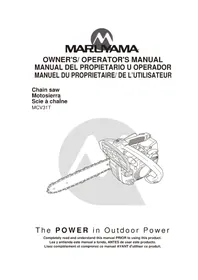
MCV31T - Saw Maruyama - Free user manual and instructions
Find the device manual for free MCV31T Maruyama in PDF.


| Product type | Chainsaw |
| Brand | Maruyama |
| Model | MCV31T |
| Dimensions (L x W x H) | 259 x 237 x 217 mm |
| Dry weight (without bar and chain) | 3.2 kg |
| Engine | Two-stroke single cylinder air-cooled |
| Displacement | 30.1 cm³ |
| Maximum power | 1.04 kW |
| Maximum recommended speed | 12,000 rpm |
| Recommended idling speed | 3,000 rpm |
| Fuel tank capacity | 240 cm³ |
| Chain oil tank capacity | 180 cm³ |
| Fuel/oil mixture ratio | 50:1 |
| Available guide bar | 10, 12 or 14 inches |
| Chain pitch | 9.53 mm (3/8 inch) |
| Chain gauge (drive link thickness) | 1.27 mm (0.050 inch) |
| Recommended chain type | Oregon 91PX |
| Chain brake | Yes, manual |
| Safety devices | Front hand guard, throttle interlock, chain catcher, chain brake, anti-vibration system, spark arrester, muffler |
| Spark plug | NGK BPM8Y, gap 0.6-0.7 mm |
| Maintenance interval (air filter) | Daily cleaning, replacement every 100 hours |
| Maintenance interval (spark plug) | Inspection every 25 hours, replacement every 100 hours |
| Warranty | 1 to 3 years depending on use, emissions warranty 2 years |
Frequently Asked Questions - MCV31T Maruyama
User questions about MCV31T Maruyama
0 question about this device. Answer the ones you know or ask your own.
Ask a new question about this device
Download the instructions for your Saw in PDF format for free! Find your manual MCV31T - Maruyama and take your electronic device back in hand. On this page are published all the documents necessary for the use of your device. MCV31T by Maruyama.
USER MANUAL MCV31T Maruyama
natural_image
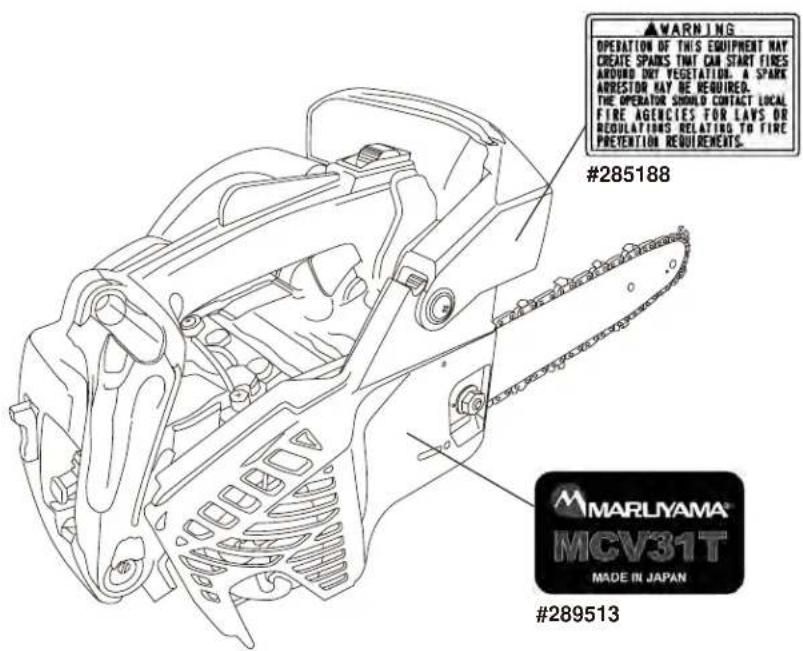
Line drawing of a chain-linking machine with visible teeth and chains (no text or symbols)The POWER in Outdoor Power
Completely read and understand this manual PRIOR to using this product. Lea y entienda este manual a fondo, ANTES de usar este producto. Lisez complètement et comprenez ce manuel AVANT d'utiliser ce produit.
MARUYAMA®
Limited Warranty Statement
All Maruyama commercial/ industrial products are warranted to the original purchaser to be free from defects in material and workmanship from the date of purchase for the time periods listed as follows:
Lifetime for inner drive shaft on trimmers and brush cutters and all ignition modules.
3 years for residential, non-institutional, non-income producing use.
1 year for industrial, commercial, institutional, rental and income producing use.
Maruyama AE series engines and Kawasaki TEX45/TEX54 are covered exclusively for one additional year of industrial, commercial, institutional, rental and income producing use (total of 2 years). All other engines refer to engine manufacturer's warranty statement.
Any part of a Maruyama product found to be defective within the applicable warranty period shall, at Maruyama's option, be repaired or replaced without charge. Warranty consideration is obtained by delivering any Maruyama product believed to be defective to an Authorized Maruyama Servicing Dealer within the applicable warranty period.
The purchaser shall not be charged for diagnostic labor that leads to the determination that a warranted part is defective, if the diagnostic work is performed at a Maruyama Dealer.
Any warranted part which is not scheduled for replacement as required maintenance, or which is scheduled only for regular inspection to the effect of "repair or replace as necessary" shall be warranted for the warranty period. Any warranted part, which is scheduled for replacement as, required maintenance shall be warranted for the period of time up to the first scheduled replacement point for that part. Maruyama Mfg. Co., Inc. is liable for damages to other engine components caused by the failure of a warranted part still under warranty.
The purchaser is responsible for the performance of the required maintenance, as defined by Maruyama Mfg. Co., Inc. in the Owner's/Operator's Manual.
EMISSION-RELATED PARTS WARRANTY: In addition to the above warranty coverage, Maruyama Mfg. Co., Inc. will repair or replace, free of charge, for the original purchaser and each subsequent purchaser any emission-related part or parts found to be defective in material and workmanship for two (2) years from original retail delivery date. Emission-related parts are the carburetor assembly, the ignition coil assembly, the ignition rotor, the spark plug, the catalytic converter and the fuel tank. Any replacement part that is equivalent in performance and durability may be used in non-warranty maintenance or repairs, and shall not reduce the warranty obligations of Maruyama Mfg. Co., Inc.
This warranty does not cover the following:
- Maintenance items (excluding defects in materials and workmanship) including hoses, spark plugs, starter rope, air and fuel filters, throttle cables and all pump attachments, etc.
- Extra expenses including shipping and handling, travel, payment for lost time or pay and for any inconvenience and storage.
- Alterations or modifications including aftermarket parts not authorized by Maruyama U.S., Inc.
- Wear, accident, abuse, neglect, misuse, negligence, improper fuels, lubricants, fuel mixtures (when applicable), or failure to operate or maintain the product in accordance with instructions approved by Maruyama.
Repair or replacement as provided under this warranty is the exclusive remedy of the consumer. Maruyama shall not be liable for any incidental or consequential damages for breach of any express or implied warranty on these products except to the extent prohibited by applicable law. Any implied warranty of merchantability or fitness for a particular purpose on these products is limited in duration to the warranty period as defined in the limited warranty statement. Maruyama reserves the rights to change or improve the design of the product without notice and does not assume obligation to update previously manufactured products.
This warranty provides you with specific legal rights, which may vary from state to state.
It is the Owner's and Dealer's responsibility to make sure the Warranty Registration Card is properly filled out and mailed to Maruyama U.S., Inc. Proof of purchase and registration will be required in order to obtain warranty service.
To locate an Authorized Maruyama Servicing Dealer nearest you, contact:.
Maruyama U.S., Inc.
4770 Mercantile Drive, suite 100,
Fort Worth, TX 76137 U.S.A.
(940) 383-7400
The engine exhaust from this product contains chemicals known to the State of California to cause cancer, birth defects or other reproductive harm.
MCV31T
FEDERAL EMISSION CONTROL WARRANTY STATEMENT YOUR WARRANTY RIGHTS AND OBLIGATIONS
The U.S. Environmental Protection Agency (EPA), and Maruyama Manufacturing Company, Inc. are pleased to explain the emission control system warranty on your small off-road engine. New 1997 and later model year small off-road engines must be designed, built and equipped, at the time of sale, to meet the U.S. EPA regulations for small off-road engines. The equipment engine must be free from defects in materials and workmanship which cause it to fail to conform with U.S. EPA standards for the first two years of engine use from the date of sale to the ultimate purchaser. Maruyama Manufacturing Company, Inc. must warrant the emission control system on your small off-road engine for the period of time listed above provided there has been no abuse, neglect or improper maintenance of your small off-road engine.
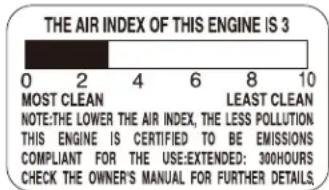
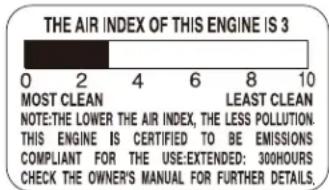
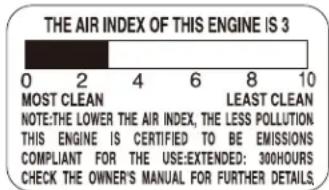
Emission durability of 300 hours.
Your emission control system may include parts such as the carburetor or fuel injection system, the ignition system, and catalytic converter. Also included may be hoses, belts, and connectors and other emission related assemblies.
Where a warrantable condition exists, Maruyama Manufacturing Company, Inc. will repair your small off-road engine at no cost to you, including diagnosis (if the diagnostic work is performed at an authorized dealer), parts, and labor.
MANUFACTURER'S WARRANTY COVERAGE:
The 1997 and later model year small off-road engines are warranted for two years. If any emission-related part on your engine is defective, the part will be repaired or replaced by Maruyama Manufacturing Company, Inc. free of charge.
OWNER'S WARRANTY RESPONSIBILITIES:
(a) As the small off-road engine owner, you are responsible for the performance of the required maintenance listed in your Owner's/Operator's Manual.
Maruyama Manufacturing Company, Inc. recommends that you retain all receipts covering maintenance on your small off-road engine, but Maruyama Manufacturing Company, Inc. cannot deny warranty solely for the lack of receipts or for your failure to ensure the performance of all scheduled maintenance. Any replacement part or service that is equivalent in performance and durability may be used in non-warranty maintenance or repairs, and shall not reduce the warranty obligations of the engine manufacturer.
(b) As the small off-road engine owner, you should be aware, however, that Maruyama Manufacturing Company may deny you warranty coverage if your small off-road engine or a part has failed due to abuse, neglect, improper maintenance or unapproved modifications.
(c) You are responsible for presenting your small off-road engine to a Maruyama Manufacturing Company, Inc. service center as soon as a problem exists. The warranty repairs should be completed in a reasonable amount of time, not to exceed 30 days.
If you have any questions regarding your warranty rights and responsibilities, you should contact Maruyama U.S., Inc. at 1-866-783-7400, or warranty@maruyama-us.com.
COVERAGE
Maruyama Manufacturing Company, Inc. warrants to the ultimate purchaser and each subsequent purchaser that your small off-road engine will be designed, built and equipped, at the time of sale, to meet all applicable regulations. Maruyama Manufacturing Company, Inc. also warrants to the initial purchaser and each subsequent purchaser that your small off-road engine is free from defects in materials and workmanship which cause the engine to fail to conform with applicable regulations for a period of two years.
The 1997 and later model years, EPA requires manufacturers to small off-road engines for two years. These warranty periods will begin on the date the small off-road engine is purchased by the initial purchaser. If any emission-related part on your engine is defective, the part will be replaced by Maruyama Manufacturing Company, Inc. at no cost to the owner.
Maruyama Manufacturing Company, Inc. shall remedy warranty defects at any authorized Maruyama Manufacturing Company, Inc. engine dealer or warranty station. Any authorized work done at an authorized dealer or warranty station shall be free of charge to the owner if such work determines that a warranted part is defective. Any manufacturer-approved or equivalent replacement part may be used for any warranty maintenance or repairs on emission-related parts, and must be provided free of charge to the owner if the part is still under warranty, Maruyama Manufacturing Company, Inc. is liable for damages to other engine components caused by the failure of a warranted part still under warranty.
EPA considers emission-related warranted parts to include all the parts listed below.
These warranted parts are: the carburetor assembly, the ignition coil assembly, the ignition rotor, the spark plug, the catalytic converter, and the fuel tank.
MAINTENANCE REQUIREMENTS
The owner is responsible for the performance of the required maintenance as defined by the Maruyama Manufacturing Company, Inc. in the Owner's/Operator's Manual.
LIMITATIONS
This Emission Control System Warranty shall not cover any of the following:
(a) repair or replacement required because of misuse or neglect, lack of required maintenance, repairs improperly performed or replacements not conforming to Maruyama Manufacturing Company, Inc. specifications that adversely affect performance and/or durability, and alterations or modifications not recommended or approved in writing by Maruyama Manufacturing Company, Inc., and
(b) replacement of parts and other services and adjustments necessary for required maintenance at and after the first scheduled replacement point.
CALIFORNIA EMISSION CONTROL WARRANTY STATEMENT YOUR WARRANTY RIGHTS AND OBLIGATIONS
The California Air Resources Board (CARB), and Maruyama Manufacturing Company, Inc. are pleased to explain the emission control system warranty on your 2013 small off-road engine. In California, new small off-road engines must be designed, built and equipped to meet the State's stringent anti-smog standards. Maruyama Manufacturing Company, Inc. must warrant the emission control system on your small off-road engine for the period of time listed above provided there has been no abuse, neglect or improper maintenance of your small off-road engine.
Your emission control system may include parts such as the carburetor or fuel injection system, the ignition system, fuel tank and catalytic converter. Also included may be hoses, belts, and connectors and other emission related assemblies.
Where a warrantable condition exists, Maruyama Manufacturing Company, Inc. will repair your small off-road engine at no cost to you, including diagnosis, parts, and labor.
MANUFACTURER'S WARRANTY COVERAGE:
The 1995 and later small off-road engines are warranted for two years. If any emission-related part on your engine is defective, the part will be repaired or replaced by Maruyama Manufacturing Company, Inc.
OWNER'S WARRANTY RESPONSIBILITIES:
(a) As the small off-road engine owner, you are responsible for the performance of the required maintenance listed in your Owner's/Operator's Manual.
Maruyama Manufacturing Company, Inc. recommends that you retain all receipts covering maintenance on your small off-road engine, but Maruyama Manufacturing Company, Inc. cannot deny warranty solely for the lack of receipts or for your failure to ensure the performance of all scheduled maintenance
(b) As the small off-road engine owner, you should be aware, however, that Maruyama Manufacturing Company may deny you warranty coverage if your small off-road engine or a part has failed due to abuse, neglect, improper maintenance or unapproved modifications.
(c) You are responsible for presenting your small off-road engine to a Maruyama Manufacturing Company, Inc. distribution center as soon as a problem exists. The warranty repairs should be completed in a reasonable amount of time, not to exceed 30 days.
If you have any questions regarding your warranty rights and responsibilities, you should contact Maruyama U.S., Inc. at 1-866-783-7400, or warranty@maruyama-us.com.
Emission System Parts
Exhaust Emission
Carburetor, Air Filter, Fuel Filter,
Muffler, Catalytic Converter
Ignition Coil / Magneto, Spark Plug
EGR Valve (piston)
Evaporative Emission Fuel Tank
TABLE OF CONTENTS
| Limited Warranty Statement ......1 | Before operation. ......22 |
| Federal Emission Control ......3 | Starting and stopping procedure ......25 |
| California Emission Control- ......5 | Oiler adjustment ......28 |
| Table of contents ......6 | Chain adjustment ......28 |
| Introduction ......6 | Chain brake ......29 |
| Safety precautions for chain saw users ......7 | Cutting instruction ......31 |
| Specifications ......9 | Saw chain maintenance ......35 |
| Product description ......10 | Regular maintenance ......37 |
| Marking......11 | Carburetor adjustment. ......42 |
| Symbol Explanation ......12 | Storage ......43 |
| Safety instructions ......13 | Troubleshooting ......44 |
| Assembly ......17 | Maintenance period ......45 |
| Assembly for e-JUST ......20 |
Introduction
Thank you for purchasing a Maruyama product.
Maruyama, it's distributors, and dealers want you to be completely satisfied with your new product. Please feel free to contact your local Authorized Service Dealer for help with service, genuine Maruyama parts, or other information you may require.
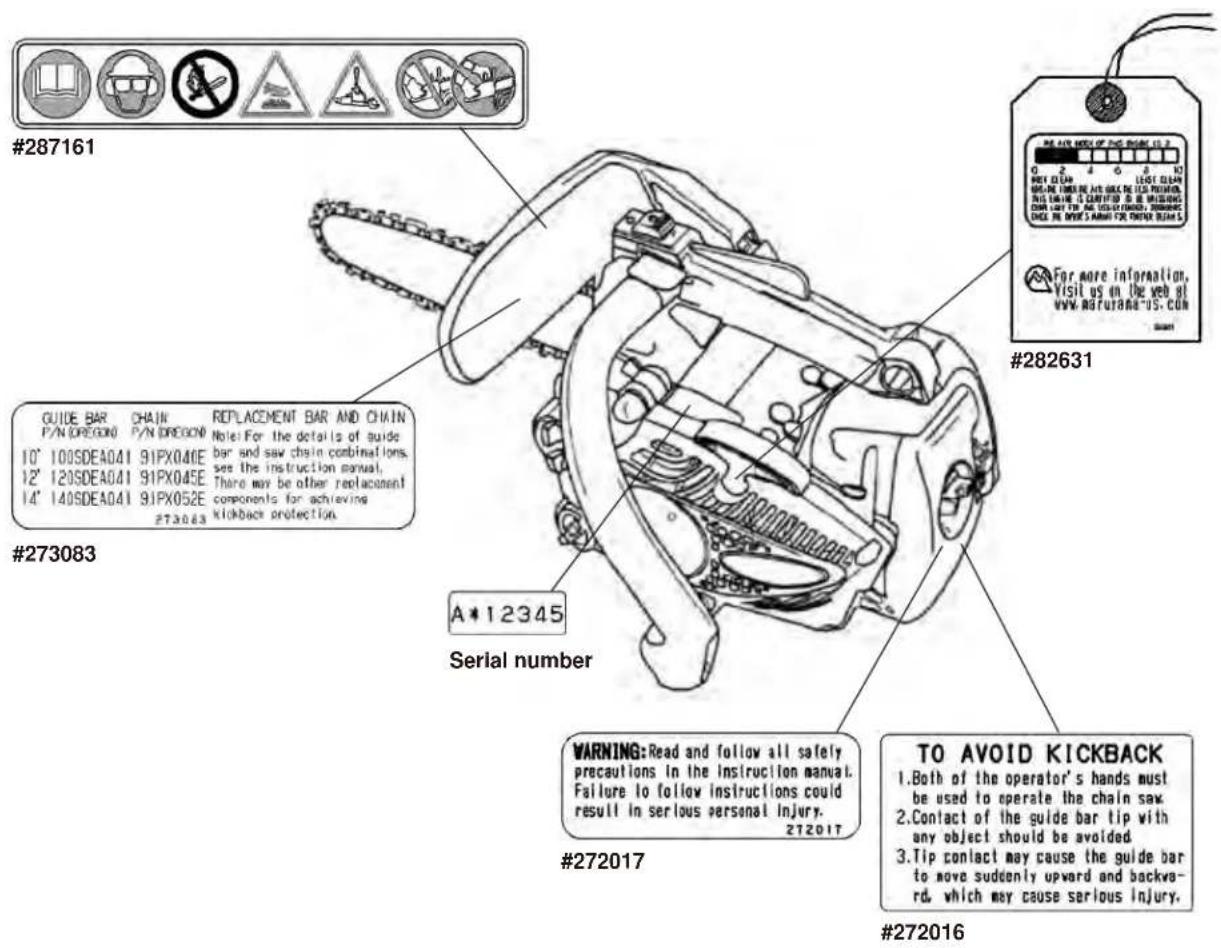
Whenever you contact your Authorized Service Dealer or the factory, always know the serial number of your product. This number will help the Service Dealer or Service Representative provide exact information about your specific product. You will find the model and serial number located in a unique place on the product (MARKING on page US-11).
For your convenience, write the product model name and serial number in the space to the light.
| Model Name |
| Serial No. |
Read this manual carefully to learn how to operate and maintain your product correctly. Reading this manual will help you and others avoid personal injury and damage to the product.
Although Maruyama designs, produces and markets safe, state-of-the-art products, you are responsible for using the product properly and safely. (You are also responsible for training persons who you allow to use the product about safe operation.)
WARNING
It is essential that any operator of this Chain Saw reads and understands the contents of this manual before using the Chain Saw.
For additional assistance, contact any local authorized MARUYAMA dealer.
SAFETY PRECAUTIONS FOR CHAIN SAW USERS
KICKBACK SAFETY PRECAUTIONS
WARNING
Kickback may occur when the nose or tip of the guide bar touches an object, or when the wood closes in and pinches the saw chain in the cut. Tip contact in some cases may cause a lightning-fast reverse reaction, kicking the guide bar up and back toward the operator. Pinching the saw chain along the top of the guide bar may push the guide bar rapidly back toward the operator. Either of these reactions may cause you to lose control of the saw, which could result in serious personal injury. Do not rely exclusively upon the safety devices built into your saw. As a chain saw user, you should take several steps to keep your cutting jobs free from accident or injury.
- With a basic understanding of kickback, you can reduce or eliminate the element of surprise. Sudden surprise contributes to accidents.
- Keep a good firm grip on the saw with both hands, the right hand on the rear handle and the left hand on the front handle, when the engine is running. Use a firm grip with thumbs and fingers encircling the chain saw handles. A firm grip will help you reduce kickback and maintain control of the saw. Don't let go.
- Make sure that the area in which you are cutting is free from obstructions. Do not let the nose of the guide bar contact a log, branch, or any other obstruction that could be hit while you are operating the saw.
- Cut at high engine speeds.
- Do not overreach or cut above shoulder height.
- Follow the manufacturer's sharpening and maintenance instructions for the saw chain.
- Only use replacement bars and chains specified by the manufacturer or the equivalent.
OTHER SAFETY PRECAUTIONS
- Do not operate a chain saw with one hand! Serious injury to the operator, helpers, bystanders, or any combination of these persons may result from one-handed operation. A chain saw is intended for two-handed use.
- Do not operate a chain saw when you are fatigue.
- Use safety footwear; snug-fitting clothing; protective gloves; and eye, hearing, and head protection devices.
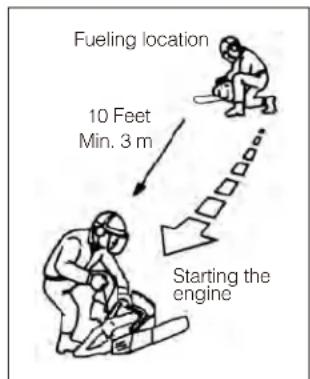
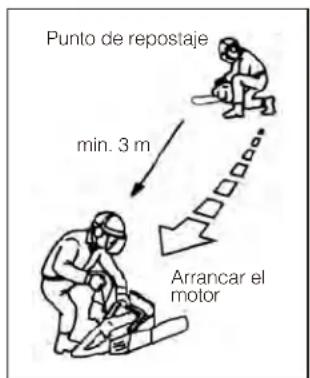
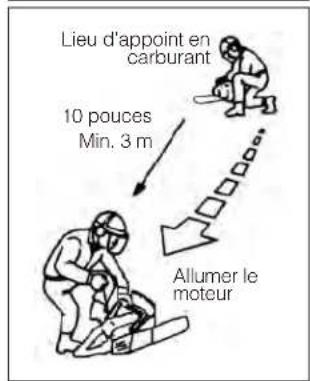
- Use caution when handling fuel. Move the chain saw at least 10 feet (3 m) from the fueling point before starting the engine.
- Do not allow other persons to be near the chain saw when starting or cutting with the chain saw. Keep bystanders and animals out of the work area.
- Do not start cutting until you have a clear work area, secure footing, and a planned retreat path from the falling tree.
- Keep all parts of your body away from the saw chain when the engine is running.
- Before you start the engine, make sure that the saw chain is not contacting anything.
- Carry the chain saw with the engine stopped, the guide bar and saw chain to the rear, and the muffler away from your body.
- Do not operate a chain saw that is damaged, improperly adjusted, or not completely and securely assembled. Be sure that the saw chain stops moving when the throttle control trigger is release.
- Shut off the engine before setting the chain saw down.
- Use extreme caution when cutting small-size brush and saplings because slender material may catch the saw chain and be whipped toward you or pull you off balance.
-
When cutting a limb that is under tension, be alert for springback so that you will not be struck when the tension in the wood fibers is released.
-
Keep the handles dry, clean, and free of oil or fuel mixture.
- Operate the chain saw only in well-ventilated areas.
- Do not operate a chain saw in a tree unless you have been specifically trained to do so.
- All chain saw service, other than the items listed in the Owner's/Operator's Manual maintenance instructions, should be performed by competent chain saw service personnel. (For example, if improper tools are used to remove the flywheel or if an improper tool is used to hold the flywheel in order to remove the clutch. Structural damage to the flywheel could occur and subsequently could cause the flywheel to burst.).
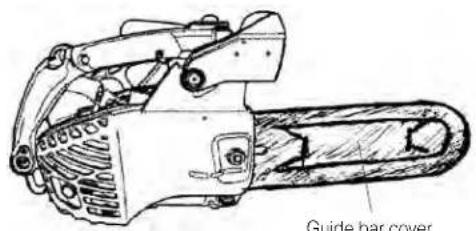
- When transporting your chain saw, use the appropriate guide-bar scabbard.
SPECIFICATIONS
| Models MCV31T | ||
| Length × Width × Height ※ | 259×237×217mm | |
| Dry Weight (empty tanks) ※ | 3.2kg | |
| Fuel Tank Capacity 240cm | 3 | |
| Tank Capacity for chain lubrication oil 180cm | 3 | |
| Engine | Type Air cooled 2-cycle single cylinder | |
| Engine Displacement 30.1cm | 3 | |
| Maximum engine power (kw) | 1.04 | |
| Carburetor Walbro Diaphragm type | ||
| Magneto Flywheel magneto, CDI system | ||
| Spark Plug:MakeTypeElectrode Gap | NGKBPM8Y0.6 - 0.7mm | |
| Starter Recoil starter | ||
| Power transmission Automatic centrifugal clutch | ||
| Recommended maximum speed with cutting attachment | 12000 r/min | |
| Recommended speed at idling 3000 r/min | ||
| Fuel Mixture 50:1 | ||
| Guide bar | 10 inches guide Bar12 inches guide Bar14 inches guide Bar | |
| Chain | Specified pitch 9.53mm, 3/8 inch | |
| Specified gauge (thickness of drive links) | 1.27 mm, 0.050 inch | |
| Type of chain | Oregon 91PX | |
| Lubrication | Adjustable automatic oil pump | |
| Drive Sprocket | number of teeth | 6 |
| Pitch | 9.53 mm, 3/8 inches | |
| Other devices | Front hand guard, Throttle trigger lockout, Chain catcher, Chain brake, Anti-vibration device, Spark arrester muffler | |
| Option | Spiked bumper | |
※ Without guide bar and saw chain
Emission durability of 300 hours.
You should only use the saw with the bar and chain combination we recommend in the chapter SAW CHAIN MAINTENANCE.
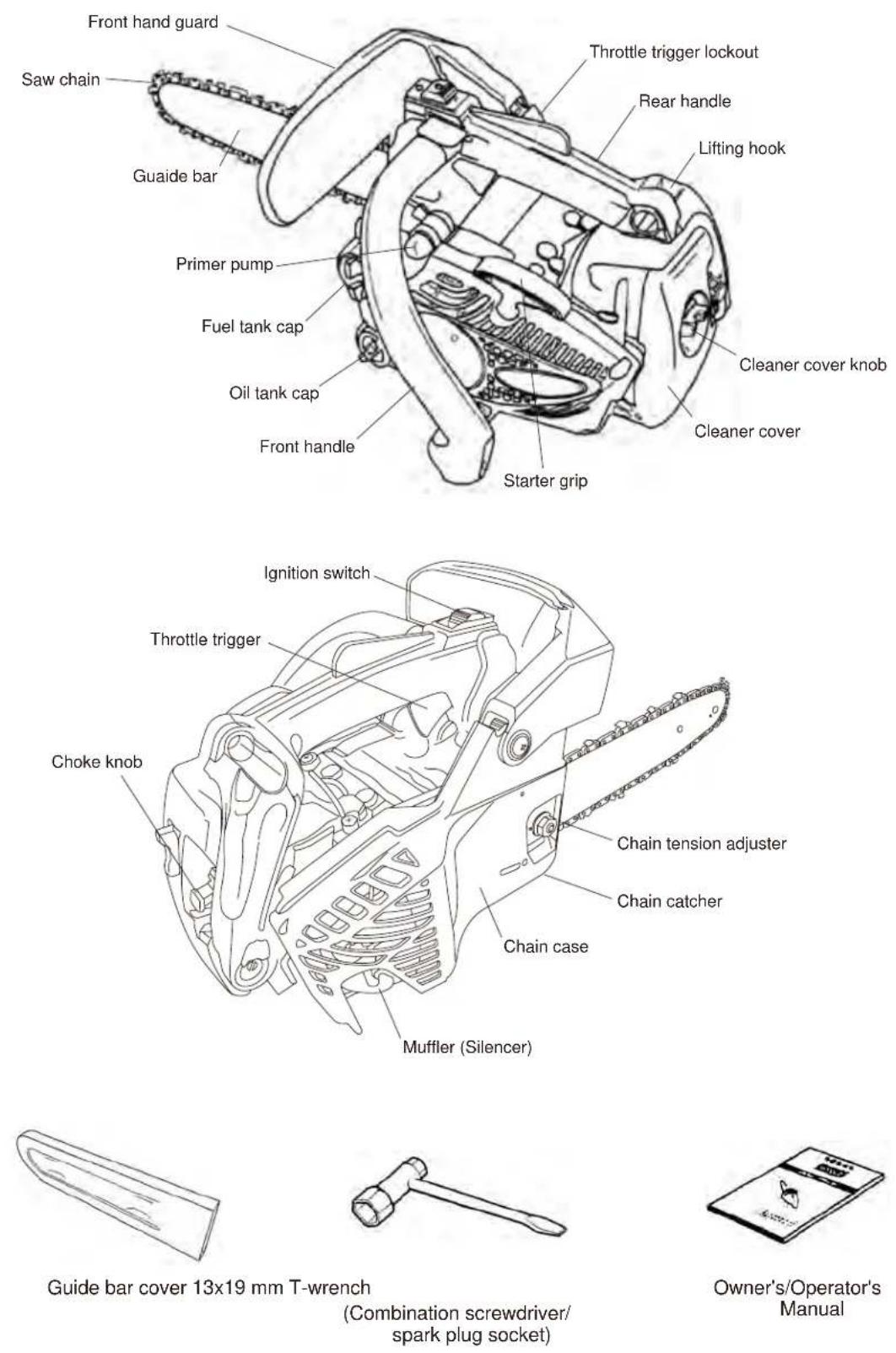
PRODUCT DESCRIPTION
MODEL:MCV31T
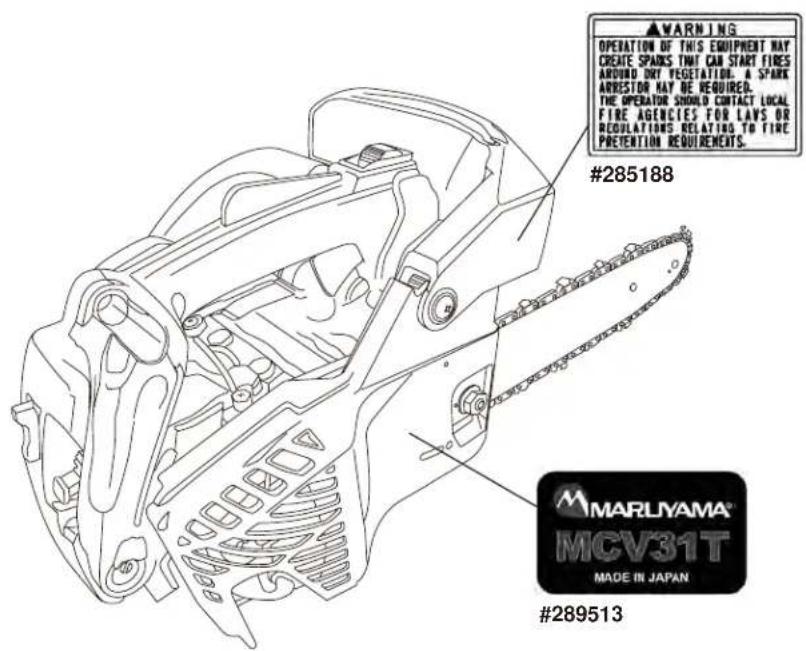
MARKING
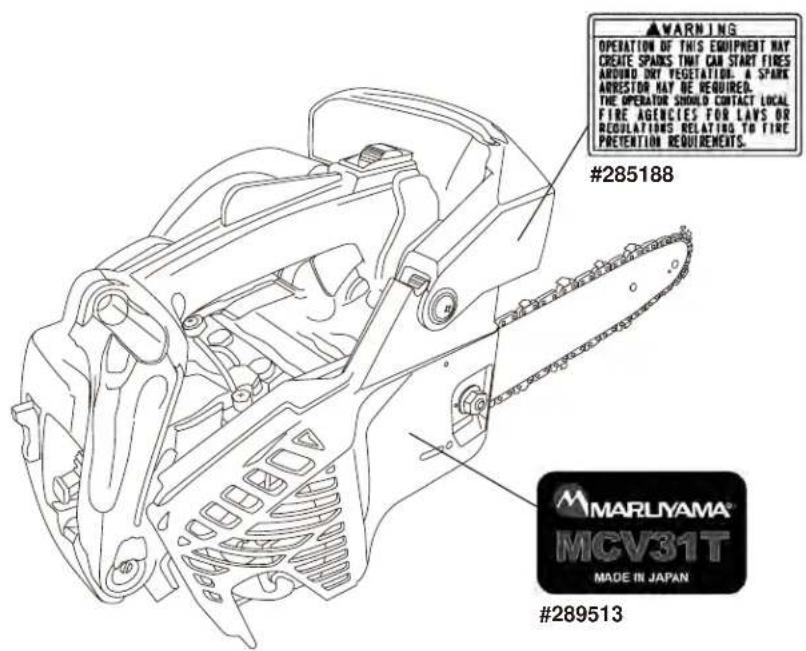
SYMBOL EXPLANATION
 | Read and understand this Manual before using this product. |  | Always use: A protective helmet. Ear protection. Protective glasses or visor. |
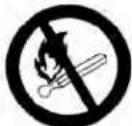 | Fire Danger: Gasoline is highly flammable. Never add fuel to the Chain Saw with a running or hot engine. Do not smoke or place any sources of heat in the vicinity of the fuel. |  | Hot Surface Warning: Contact may cause burns. During use and for some time after stopping the engine, the engine is very hot. Do not touch engine components such a cylinder, muffler and engine covers until the engine has cooled to ambient temperature. |
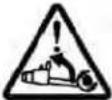 | Warning.Kickback may occur! |  | One handed operation of the chain saw can be dangerous. |
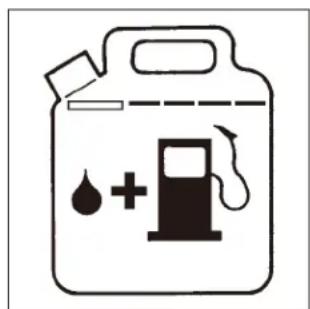
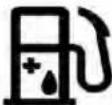 | Oil and petrol mixture |  | Chain oil fill |
| STOP | Engine stop |  | CHOKE -Pull choke knob to "COLD START" |
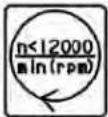 | Recommended maximum speed |  | Turning the screw in + direction (large arrow) will increase the amount of chain oil, or in the - direction (small arrow) will decrease it. |
| H | Carburetor adjustment High speed mixture | L | Carburetor adjustment Low speed mixture |
| T | Carburetor adjustment Idle speed |  | Primer pump |
 | Chain brake operation |

This symbol means whatever is show is prohibited.
SAFETY INSTRUCTIONS
The warning system in This manual identifies potential hazards and has special safety messages that help you and others avoid personal injury, even death.
ADANGER, WARNING and CAUTION are signal words to identify the level of hazard.
ADANGER: signals an extreme hazard that will cause serious injury or death if the recommended precautions are not followed.
⚠ WARNING: signals a hazard that may cause serious injury or death if the recommended precautions are not followed.
CAUTION: signals a hazard that may cause minor or moderate injury if the recommended precautions are not followed. Two other words are also used to highlight information. "Important" calls attention to special mechanical information and "Note" emphasizes general information worthy of special attention.
OPERATOR SAFETY
1 Read and understand this Manual before using this product. Be thoroughly familiar with the proper use of this product.
2 Never allow children to operate the Chain Saw. It is not a toy. Never allow adults to operate the unit without first reading the Owner's/Operator's Manual.
3 Always wear eye protection that complies with ANSI (American National Standards Institute) Z87.1.
4 Always wear eye protection, hearing protection and a face filter mask.
Making a selection of hearing protector, please select a high-frequency prevention type of hearing protector. Please consult about the selection of hearing protector at service shop in the detail.
natural_image
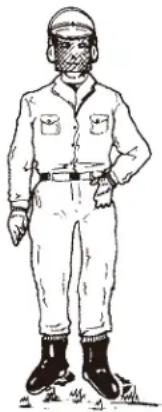
Line drawing of a person in uniform with hat and boots (no text or symbols)5 Always wear sturdy boots with nonslip soles.
6 Always wear a cap or hat. A safety hard hat is highly recommended when felling or working under trees.
7 Always wear heavy long pants, a long sleeved shirt, boots and gloves. Do not wear loose clothing, jewelry, short pants, sandals, or go barefoot. Secure hair so it is above shoulder length. Making a selection of protectors (protective clothing, gloves, foot protection, and etc.), please select durable light weight, and warm one to prevent fatigue. You may have seriously injured without proper protection.
8 Never operate this Chain Saw when you are tired, ill, under the influence of alcohol, drugs or medication.
9 Never start or run the engine inside a closed room or building. Breathing exhaust fumes can cause death.
10 Operate the chain saw only in well-ventilated areas.
Exhaust gas, oil mist or saw dusts are harmful to health.
11 Keep handles clean of oil, fuel and dirt.

natural_image
Abstract black-and-white graphic of a stylized human figure with patterned head and torso (no text or symbols)CHAIN SAW SAFETY
1 Make sure the Chain Saw is correctly assembled as instructed in the Assembly section of this manual.
2 Before each use, inspect the Chain Saw, replace damaged parts, and check for fuel leaks. Make sure all fasteners are in place and tightened securely.
3 Maintain the Chain Saw in accordance with the recommended maintenance intervals and procedures detailed in the "Saw chain Maintenance" and "Regular Maintenance".
4 Use the correct accessories. Never use replacement parts that are not approved by Maruyama.
5 Shut off the engine before performing maintenance or working on the machine.
6 If running problems or excessive vibration occur, stop immediately and inspect the unit for the cause. If servicing dealer for repair.
7 Never modify a chain saw in any way.
FUEL SAFETY
1 Gasoline is highly flammable and must be handled and stored carefully. Use a container approved for storing gasoline and/or fuel/oil mixture.
2 Mix and pour fuel outdoors and where there are no sparks or flames.
3 Do not smoke near fuel storage containers or the Chain Saw. Do not smoke while operating the Chain Saw.
4 Do not overfill the fuel tank. Stop filling 1/4-1/2inch (6mm-13mm) from the top of the tank.
5 Wipe up any spilled fuel before starting the engine.
6 Move the Chain Saw at least 10 feet (3m) away from the fueling location before starting the engine.
7 Do not remove the fuel tank cap while the engine is running or immediately after stopping the engine.
8 Allow the engine to cool before refueling.
9 Empty the fuel tank before storing the Chain Saw. Fuel should be emptied after each use as fuel remaining in the tank may leak during storage.
10 Store both fuel and the Chain Saw away from open flame, sparks and excessive heat. Make sure fuel vapors cannot reach sparks or open flames from heaters, furnaces, electric motors, etc.
natural_image
Illustration of a fuel can with icons for liquid, gas, and pump (no text or labels)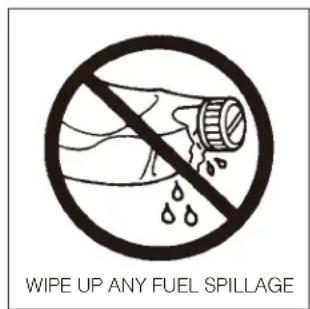
OPERATING SAFETY
1 THIS CHAIN SAW CAN CAUSE SERIOUS INJURIES. Read the instructions carefully. Be familiar with all controls and the proper use of the Chain saw.
2 Avoid using the Chain saw near rocks, gravel, stones and similar materials which can become dangerous projectiles.
3 Keep the area of operation clear of all persons, particularly small children and pets.
4 If you are approached while operating the Chain saw, stop the engine.
5 Never allow children to operate the Chain saw.
6 Use the Chain saw only in daylight or adequate artificial lighting.
7 Never operate the Chain saw without proper guards or other protective safety devices in place.
8 Do not put hands or feet near any moving parts. Keep clear of hot surfaces such as the muffler.
9 Maintain a firm footing while operating the Chain saw.
10 Use the right tool for the job. Do not use the Chain saw for any job that is not recommended.
11 Know how to stop the machine quickly in an emergency. For information on how to stop the engine refer to the "STARTING AND STOPPING PROCEDURES".
OTHER SAFETY PRECAUTIONS VIBRATION
Prolonged use of chain saw exposing the operator to vibrations may produce white finger disease (Raynaud's phenomenon). This conditions reduce the hand's ability to feel and regulate temperature, produce numbness and burning sensations and may cause never and circulation damage and tissue necrosis.
All factors which contribute to white finger disease are not known, but cold weather, rainy weather, smoking and diseases or physical conditions that affect blood vessels and blood circulation, as well as high vibration levels and long periods of exposure to vibration are mentioned as factors in the development of white finger disease. In order to reduce the risk of white finger disease, please following clause.
- Select the appropriate work equipment the least possible vibration.
- Use the appropriate for guide bar to operation.
- Making a selection of protectors (protective clothing, gloves, foot protection, and etc.), please select durable light weight, and warm one.
- Massage the palms and arms of one's hands, on one's break and after operation.
• Take frequent breaks.
IMPORTANT : Please be seen an academic doctor if you have dubitable symptom.
OTHER SAFETY PRECAUTIONS NOISE
- Chain saw noise may damage your hearing. Always wear hearing protection.
- Continual and regular users should have their hearing checked regularly.
- You may feel further fatigue under noisy condition compare to normal circumstances.
TRANSPORTATION
When transporting your chain saw, use the appropriate guide bar cover.
Carry the chain saw with the engine stopped.
ASSEMBLY
WARNING
POTENTIAL HAZARD
- Saw chain is sharp.
WHAT CAN HAPPEN
- Contact with the saw Chain can cause personal injury.
HOW TO AVOID THE HAZARD
- Wear gloves when you handle the saw chain.
• Always stop the engine before performing any of the following operations.
MOUNTING THE GUIDE BAR AND CHAIN
- Make sure the chain brake is released. Refer to "CHAIN BRAKE".
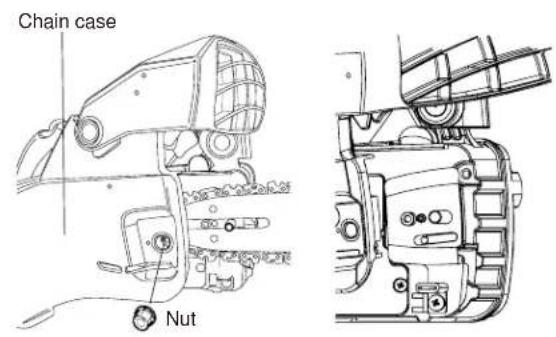
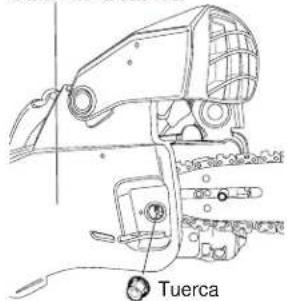
- Unscrew the guide bar retaining nut and remove the chain case.
- Attach the chain to the sprocket in the right direction first, then fit it in the bar groove of the guide bar.
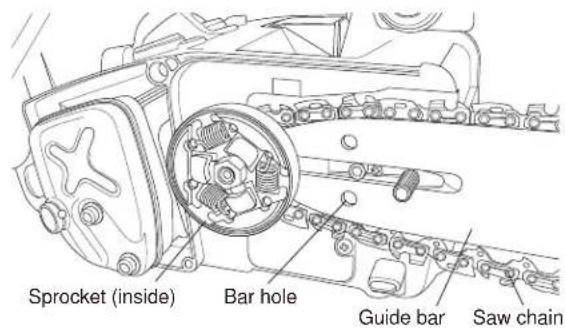
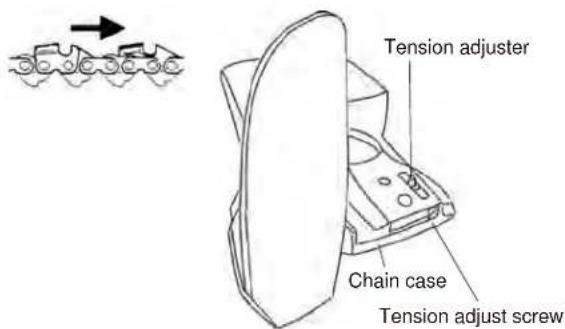
- Make sure the chain brake is released.
- Engage the rear part of the chain case with the hook on engine case, and fit the tension adjuster into the bar hole. Reinstall the chain case on the engine case and screw on the guide bar retaining nut only finger tight.
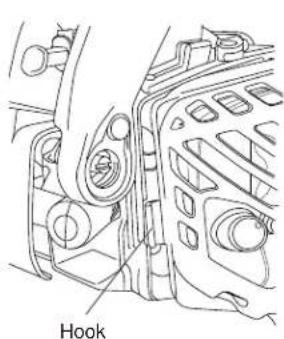
natural_image
Technical line drawing of a car interior showing dashboard and seat components (no text or symbols)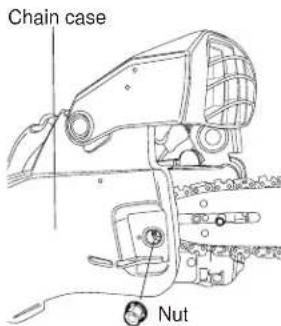
-
Turn the tension adjusting screw clockwise to increase tension.
-
While still holding the bar nose up, tighten down the nut firmly with using the supplied box spanner.
[Tightening torque]
1500 \~ 2000 N·cm (153 \~ 204kgf-cm)
When tightening with the supplied box spanner, hold the handle of the supplied box spanner and securely tighten the nut.
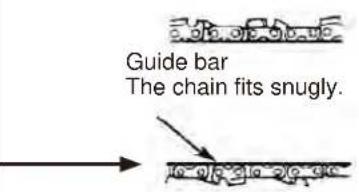
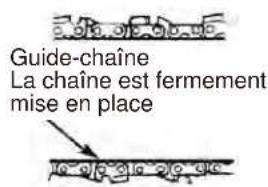
- Tension is correct when the chain fits snugly against the bar and can still be pulled along the bar by hand. If necessary, loosen the guide bar retaining nuts and readjust it.
natural_image
Illustration of hands operating a mechanical device with a ruler and gear mechanism (no text or symbols)
Guide bar
The chain fits snugly.
natural_image
Line drawing of a mechanical component with a rotating arrow indicating rotation (no text or symbols)INSTALLING THE SPIKED BUMPER (OPTION)
-
Make sure the chain brake is released. Refer to "CHAIN BRAKE".
-
Unscrew the nut and remove the chain case. Remove the saw chain and guide bar.
-
Remove the screw that attaches the guide plate. Remove the chain catcher and the guide plate.
-
Screw the spiked bumper onto the engine case with 2 screws and tighten to 300 \~ 400N·cm (31 \~ 41kgf·cm).
-
Attach the guide plate with the guide plate retaining screw (M3) and the chain catcher retaining screw (M5). [Tightening torque]
M3 : 80 \~ 120 N·cm (8.2 \~ 12.2kgf-cm)
M5 : 300 \~ 400N·cm (31 \~ 41kgf-cm)
- For mounting the guide bar and chain, refer to "MOUNTING THE GUIDE BAR AND CHAIN".
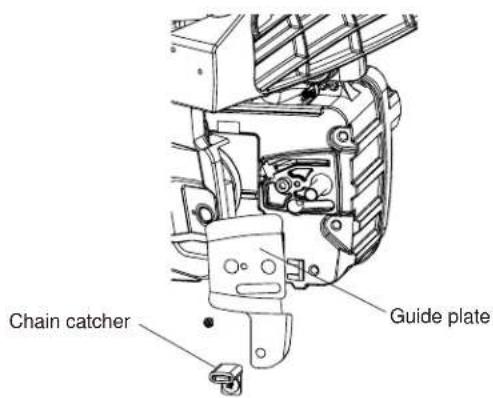
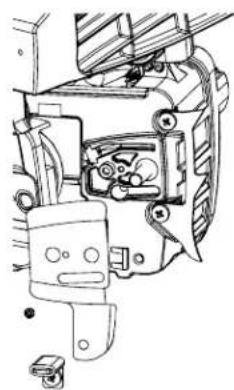
natural_image
Technical line drawing of a mechanical assembly with no visible text or symbols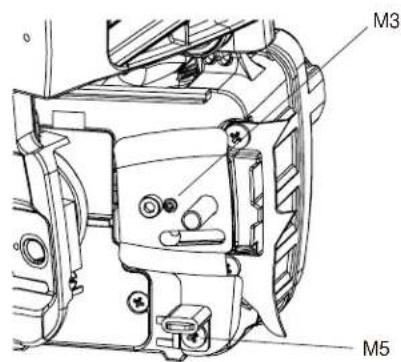
ASSEMBLY FORE-JUST
WARNING
POTENTIAL HAZARD
- Saw chain is sharp.
WHAT CAN HAPPEN
- Contact with the saw Chain can cause personal injury.
HOW TO AVOID THE HAZARD
- Wear gloves when you handle the saw chain.
• Always stop the engine before performing any of the following operations.
MOUNTING THE GUIDE BAR AND CHAIN
Chain tensioning mechanism interlocked with front hand guard (e-JUST).
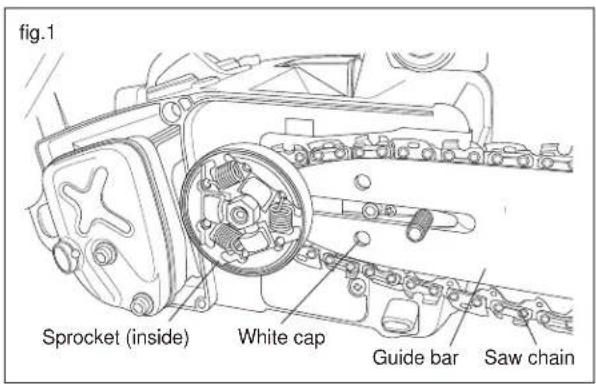
- Make sure the chain brake is released. Refer to "CHAIN BRAKE".
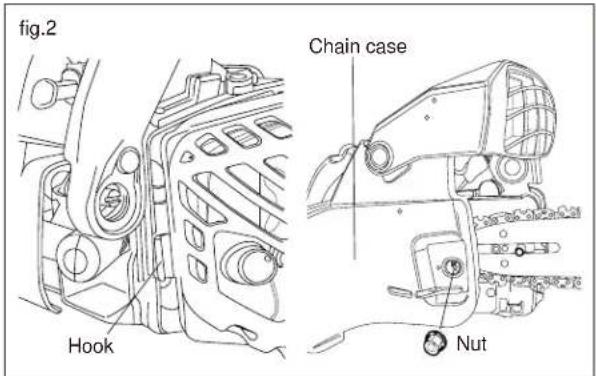
- Unscrew the guide bar retaining nut and remove the chain case. (refer to fig.2)
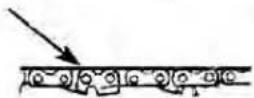
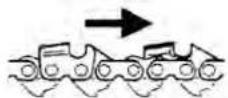
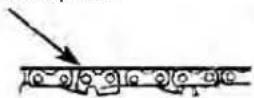
- Attach the chain to the sprocket in the right direction first, then fit it in the bar groove of the guide bar. Ensure that the white cap on the body fits into the bar hole provided for adjusting tension. (refer to fig.1)
Direction of saw chain
- Engage the rear part of the chain case with the hook on engine case, and fit the tension adjuster into the bar hole.
Reinstall the chain case on the engine case and Screw on the guide bar retaining nut only finger tight. (refer to fig.2)
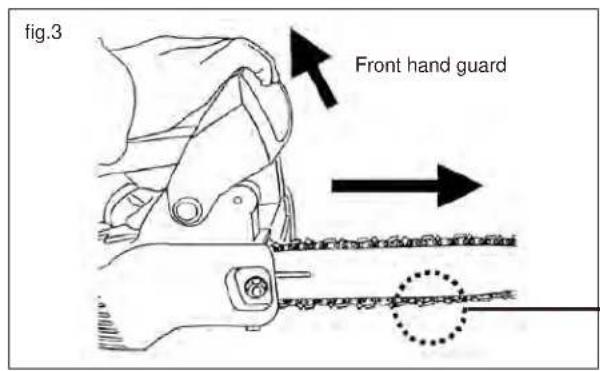
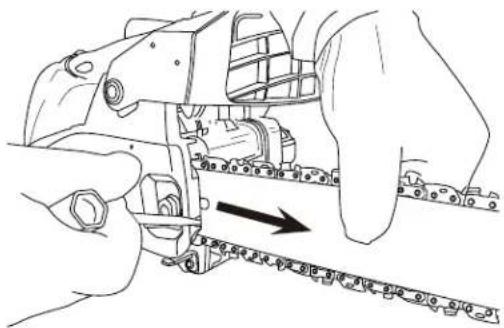
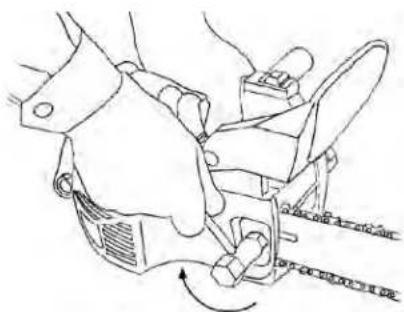
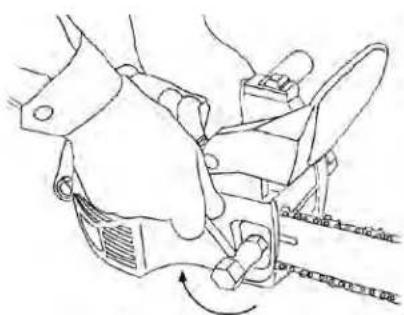
- Guide bar is moved forward and tension the chain along with pulling up the front hand guard. (refer to fig.3)
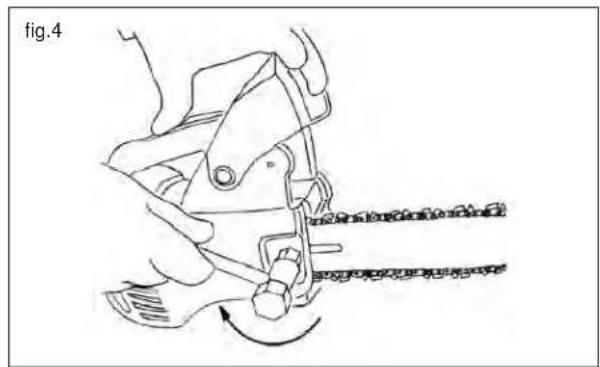
- Keeping the Front hand guard position, while still holding the bar nose up, tighten down the nut firmly with using the supplied box spanner. (refer to fig.4)
[Tightening torque]
1500 \~ 2000N·cm {153 \~ 204kgf-cm}
When tightening with the supplied box spanner, hold the handle of the supplied box spanner and securely tighten the nut (refer to fig.4).
Check chain tension frequently. If necessary, retention the chain according to the following adjustment procedure. Especially just after installing a new chain, retention more frequently.
New chains may stretch more during their initial use.
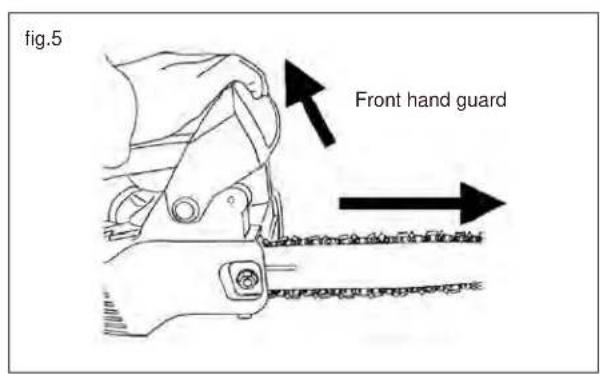
- Loosen the guide bar retaining nut with using the supplied box spanner.
Guide bar is moved forward and tension the chain along with pulling up the front hand guard. (refer to fig.5)
- While still holding the bar nose up, tighten down the nut firmly with using the supplied box spanner. (refer to fig.6)
[Tightening torque]
1500 \~ 2000N·cm {153 \~ 204kgf-cm}
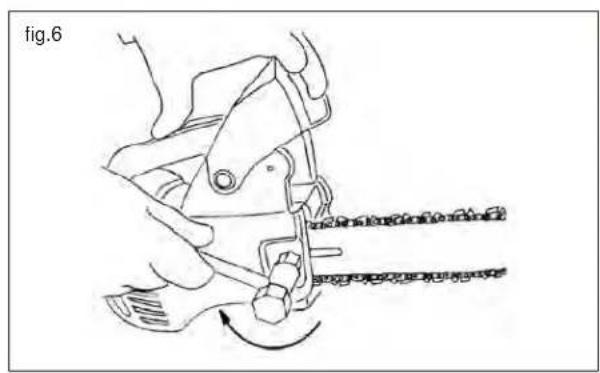
When tightening with the supplied box spanner, hold the handle of the supplied box spanner and securely tighten the nut.
- The tension of the chain is correct if the chain rests the bottom side of the guide bar and can still be easily turned by hand. If necessary, loosen the guide bar retaining nuts and readjust it.
BEFORE OPERATION
OIL AND FUEL
! DANGER
POTENTIAL HAZARD
- In certain conditions gasoline is extremely flammable and highly explosive.
WHAT CAN HAPPEN
- A fire or explosion from gasoline can burn you, others and cause property damage.
HOW TO AVOID THE HAZARD
- Use a funnel and fill the fuel tank outdoors, in an open area, when the engine is cold. Wipe up any gasoline that spills.
- Do not fill the fuel tank completely full. Add gasoline to the fuel tank until the level is 1/4" to 1/2" (6 mm to 13mm) below the bottom of the filler neck. This empty space in the tank allows gasoline to expand.
- Never smoke when handling gasoline, and stay away from an open flame or where gasoline fume may be ignited by a spark.
- Store gasoline in an approved container and keep it out of the reach of children.
- Never buy more than a 30-day supply of gasoline.
WARNING
POTENTIAL HAZARD
- Gasoline contains gasses that can build up pressure inside a fuel tank.
WHAT CAN HAPPEN
- Fuel can be sprayed on you when removing fuel tank cap.
HOW TO AVOID THE HAZARD
- Remove fuel tank cap slowly to avoid injury from fuel spray.
FUELING
A WARNING The following precautions will lessen the risk of fire.
- Do not smoke near fuel.
- Mix and pour fuel outdoors and where there are no sparks or flames.
- Always shut off the engine before refueling. Never remove the fuel tank cap while the engine is running or immediately after stopping the engine.
- Always open the fuel tank cap slowly to release any possible pressure inside the tank.
- Do not overfill the fuel tank. Stop filling 1/4-1/2inch (6mm-13mm) from the top of the tank.
- Tighten the tank fuel cap carefully but firmly after refilling.
- Wipe up any spilled fuel before starting the engine.
- Move the Chain saw at least 10 feet (3m) away from the fueling location and fuel storage container before starting the engine.
Recommended Oil Type
Only use a two-cycle engine oil formulated for use in high-performance, air-cooled two-cycle engines.
Maruyama brand 2-cycle oil is formulated for use in high-performance, air-cooled two-cycle engines.
IMPORTANT: Do not use National Marine Manufacturer's Association (NMMA) or BIA certified oils.
This type of 2-cycle engine oil does not have the proper additives for aircooled, 2-cycle engines and can cause engine damage.
Do not use automotive motor oil. This type of oil does not have the proper additives for aircooled, 2-cycle engines and can cause engine damage.
Recommended Fuel Type
Use clean, fresh lead-free gasoline, including oxygenated or reformulated gasoline, with an octane rating of 85 or higher. To ensure freshness, purchase only the quantity of gasoline that can be used in 30 days.
Use of lead-free gasoline results in fewer combustion chamber deposits and longer spark plug life.
Use of premium grade fuel is not necessary or recommended.
Use Of Fuel Additives
IMPORTANT: NEVER USE METHANOL, GASOLINE CONTAINING METHANOL, GASOHOL CONTAINING MORE THAN 10% ETHANOL, PREMIUM GASOLINE, OR WHITE GAS BECAUSE ENGINE FUEL SYSTEM DAMAGE COULD RESULT.
DO NOT USE FUEL ADDITIVES OTHER THAN THOSE MANUFACTURED FOR FUEL STABILIZATION DURING STORAGE SUCH AS MARUYAMA'S STABILIZER/ CONDITIONER OR A SIMILAR PRODUCT. MARUYAMA'S STABILIZER/CONDITIONER IS A PETROLEUM DISTILLATE BASED CONDITIONER/STABILIZER.
MARUYAMA DOES NOT RECOMMEND STABILIZERS WITH AN ALCOHOL BASE SUCH AS ETHANOL, METHANOL OR ISOPROPYL. ADDITIVES SHOULD NOT BE USED TO TRY TO ENHANCE THE POWER OR PERFORMANCE OF MACHINE.
Mixing Gasoline And Oil
IMPORTANT: The engine used on this Chain Saw is of a 2-cycle design. The internal moving parts of the engine, i.e., crankshaft bearings, piston pin bearings and piston to cylinder wall contact surfaces, require oil mixed with the gasoline for lubrication.
Failure to add oil to the gasoline or failure to mix oil with the gasoline at the appropriate ratio will cause major engine damage which will void your warranty.
For your fuel premix, only use a quality oil designed for 2-cycle air cooled engines.
Maruyama 50:1 2-cycle Oil is formulated to meet the requirements of high-performance, air-cooled two-cycle engines.
Fuel Mixture
The fuel: oil ratio is 50 parts gasoline to 1 part oil or 50:1.
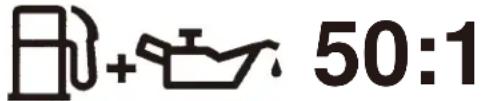
Note: Never use a mixing ratio less than 50:1 regardless of the oil package mixing instructions. Ratios less than 50:1, (for example, 60:1, 80:1, 100:1), reduce the amount of lubrication to the internal moving parts of the engine and can cause damage.
Fuel Mixture Chart
| Gasoline 50:1 2-cycle oil | |
| 1 gallon 2.6 oz. | |
| 2 gallons 5.1 oz. | |
| 5 gallons 12.8 oz. | |
| 1 litre 20ml | |
| 5 litre 100ml |
Mixing Instructions
IMPORTANT: Never mix gasoline and oil directly in the Chain Saw fuel tank.
- Always mix fuel and oil in a clean container approved for gasoline.
- Mark the container to identify it as fuel mix for the Chain Saw.
- Use regular unleaded gasoline and fill the container with half the required amount of gasoline.
- Pour the correct amount of oil into the container then add the remaining amount of gasoline.
- Close the container tightly and shake it momentarily to evenly mix the oil and the gasoline before filling the fuel tank on the Chain Saw.
- When refilling the Chain Saw fuel tank, clean around the fuel tank cap to prevent dirt and debris from entering the tank during cap removal.
- Always shake the premix fuel container momentarily before filling the fuel tank.
- Always use a spout or funnel when fueling to reduce fuel spillage.
- Fill the tank only to within 1/4-1/2 inch (6 mm-13 mm) from the top of the tank. Avoid filling to the top of the tank filler neck.
STARTING AND STOPPING PROCEDURE

WARNING
- Do not start engine before chain brake is activated.

CAUTION
- Do not increase engine speed with the chain brake engaged. This may cause excessive heat to covers or damage to the clutch.
BEFORE STARTING THE ENGINE
- Fill the fuel tank as instructed in the Before Operation section of this manual.
- Rest the chain saw on the ground.
- Make sure the area is clear of any broken glass, nails, wire, rocks or other debris.
- Keep all bystanders, children and animals away from the working area.
COLD STARTING PROCEDURE
-
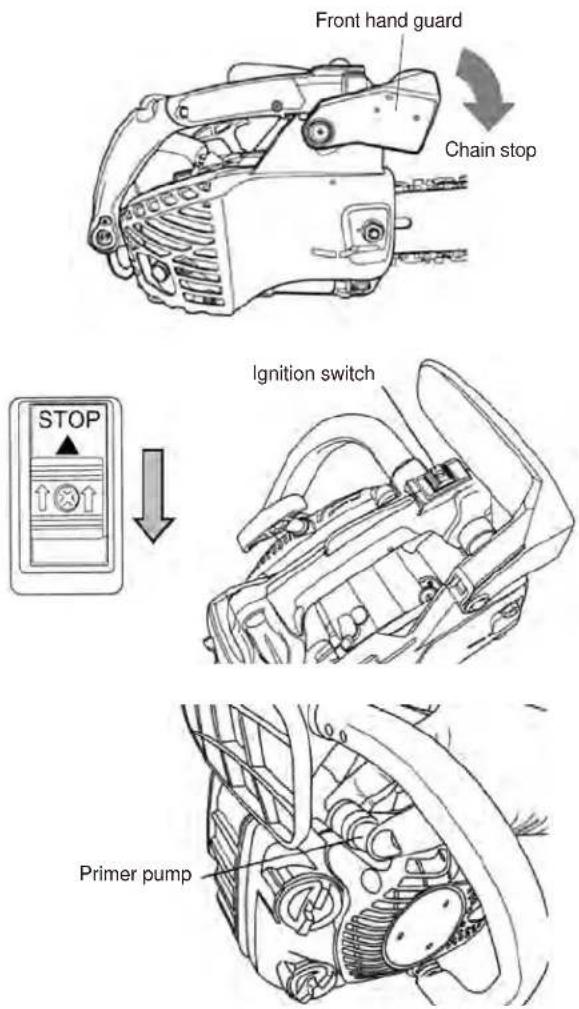
Lock the chain by pushing the hand guard forward. Always engage the chain brake before starting the chain saw.
-
Slide the ignition switch, which is Located on the front part of the rear handle, to the start position.
-
Push the primer pump until fuel enters into the primer pump (5 - 6 times).
-
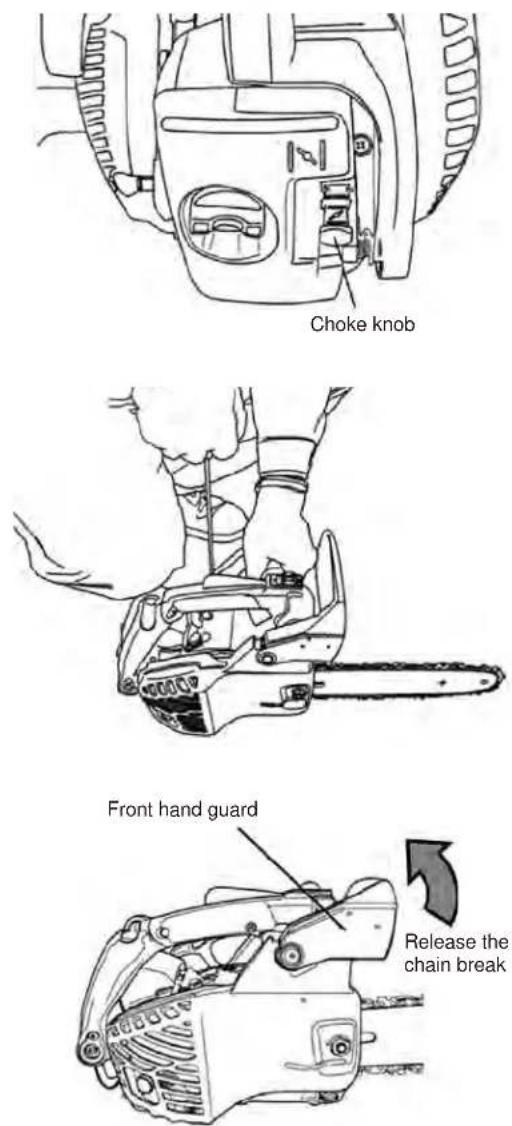
Pull the choke knob to the extended position. This makes the choke valve closed and sets the throttle trigger to the start position.
-
Place the chainsaw on the ground and hold the front handle firmly with your left hand. Kneel with your right knee on the flame and pull the starter grip with your right hand.
-
If the engine stalls after the first firing, push the chock knob back in and pull the starter grip again.
-
After the engine is started, immediately squeeze and release the throttle trigger to allow it to return to the idle position.
-
After the engine starts, pull the hand guard toward the handle to disengage the chain brake.
Do not increase engine speed with the chain brake engaged.
This may cause excessive heat to covers or damage to the clutch.
- If the engine stalls at low speed, refer to "CARBURETTOR ADJUSTMENT" in Regular maintenance.
HOT RESTART
To start the engine that is already warmed up (hot restart), or if the ambient temperature exceeds 20^ C:
-
Slide the ignition switch, which is located on the front part of the rear handle, to the Start position.
-
Push the primer pump until fuel enters into the primer pump (5 - 6 times).
Pushing the primer pump is not needed to restart warm engine with enough fuel in tank.
-
Pull the starter grip.
-
If the engine fails to start after three to four pulls, follow the instructions in the Cold Starting Procedure section above.
If the engine fails to start after you follow the above procedures, contact an authorized MARUYAMA dealer.
NOTE: 1. Don't pull the starter cord out completely.
- Don't release the starter cord from the fully extended position.
TO STOP THE ENGINE
-
Release the throttle trigger.
-
Slide the stop switch to the stop position.
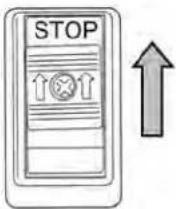
NOTE: In the case that engine does not stop at "STOP" position, pull the "CHOKE KNOB" to stop engine. Pay attention to the chain that starts to turn by pulling "CHIKE KNOB" during engine runs. Please check your chainsaw at authorized service dealer immediately.
OILER ADJUSTMENT
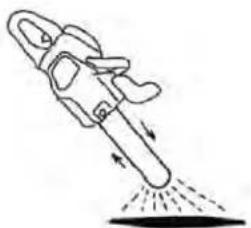
CHAIN LUBRICATION TEST
1 Hold the chain just above a dry surface
2 Open the throttle to half
3. Oil should be seen on the surface.
natural_image
Simple line drawing of a manual tool emitting powder from a surface (no text or symbols)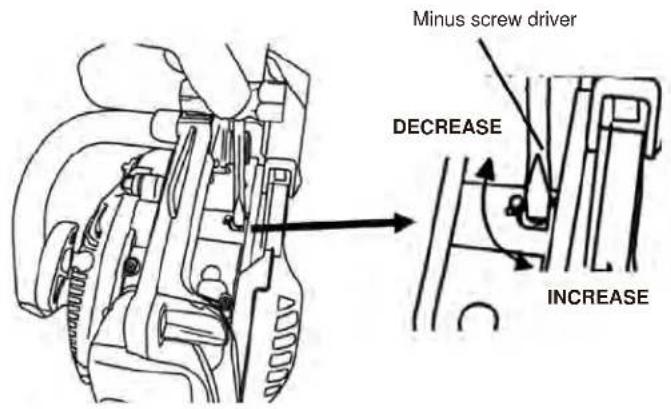
To increase the delivery volume, turn adjusting screw anticlockwise.
CHAIN ADJUSTMENT
If your Chain Saw has the e-just chain tensioning mechanism, refer to CHAIN ADJUSTNENT FOR e-JUST.
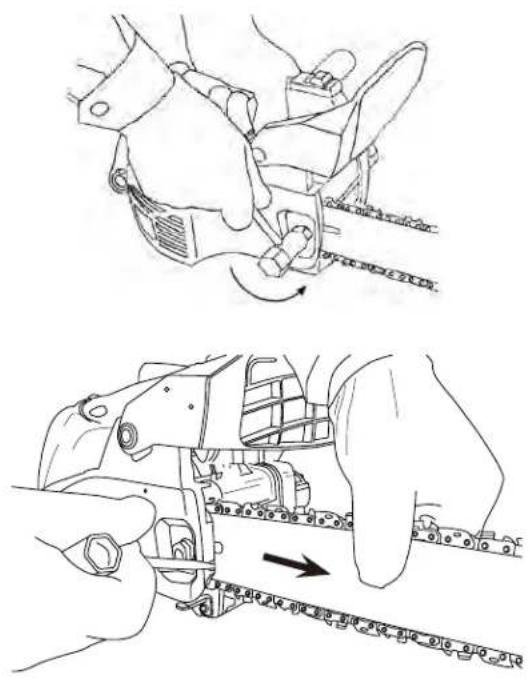
- Make sure the chain brake is released.
- Loosen the nut counterclockwise using the supplied box spanner, then tighten the nut only finger tight.
- Turn the tension adjusting screw clockwise to increase tension.
- While still holding the bar nose up, tighten down the nut firmly with using the supplied box spanner.
[Tightening torque]
1500 \~ 2000 N·cm (153 \~ 204kgf·cm)
When tightening with the supplied box spanner, hold the handle of the supplied box spanner and securely tighten the nut.
- Tension is correct when the chain fits snugly against the bar and can still be pulled along the bar by hand. If necessary, loosen the guide bar retaining nuts and readjust it.
natural_image
Technical illustration showing hands operating a mechanical device with a ruler, no text or symbols present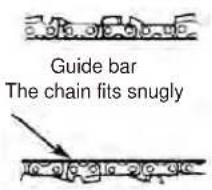
CHAIN BRAKE
CAUTION
- Check operation of chain brake before starting chainsaw. If the chain brake does not function properly, take the saw to your local Service Center.
-
If the brake is tripped by kick back reaction, the chain will stop. Immediately release the throttle to avoid possible damage to the engine or clutch. Do not attempt to operate the engine with the brake engaged.
-
Chain brake is the device to stop the rotation of the chain if activated in a kickback situation.
- When the front guard is pushed forward, chain brake instantly works to stop the chain.
- When the front guard is fully pulled toward the handle, brake is released.
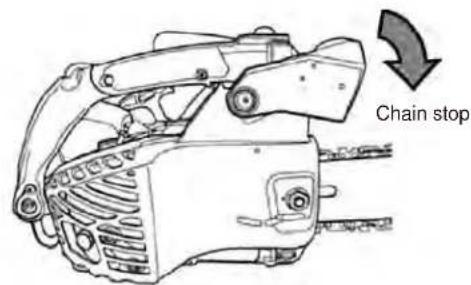
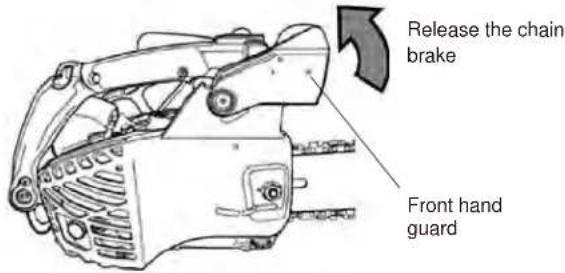
- Place the chain saw on the ground.
- Hold the handle with both hands and accelerate the engine to high speed by using the throttle trigger.
- Operate the chain brake by turning your left wrist against the front hand guard whilst gripping the front handle.
- The chain stop immediately.
- Release the throttle trigger.
- If the chain brake does not function properly, take the saw to your local Service Center.
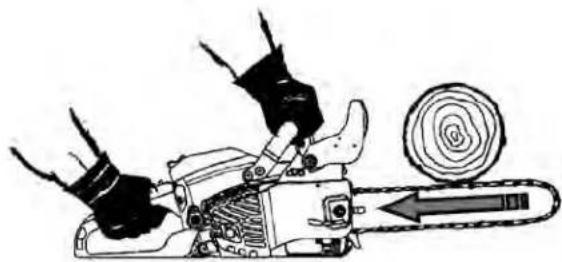
CHECKING THE NON-MANUAL CHAIN BRAKE
-
Stop the engine of the chain saw.
-
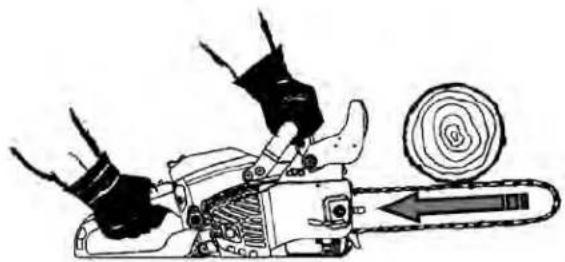
Operate the front and rear handles with hands, so that the chain saw may be placed at the height of about 0 \~ 15cm as shown in Fig.
-
Softly detach the left hand from the front handle, and touch the end of the guide bar against the log or the like placed below so that the machine receives an impact.
Do not let your hand off from the rear handle.
-
The brake should activate when the guide bar hits the log.
-
If the chain brake does not function properly, take the saw to your local Service Center.
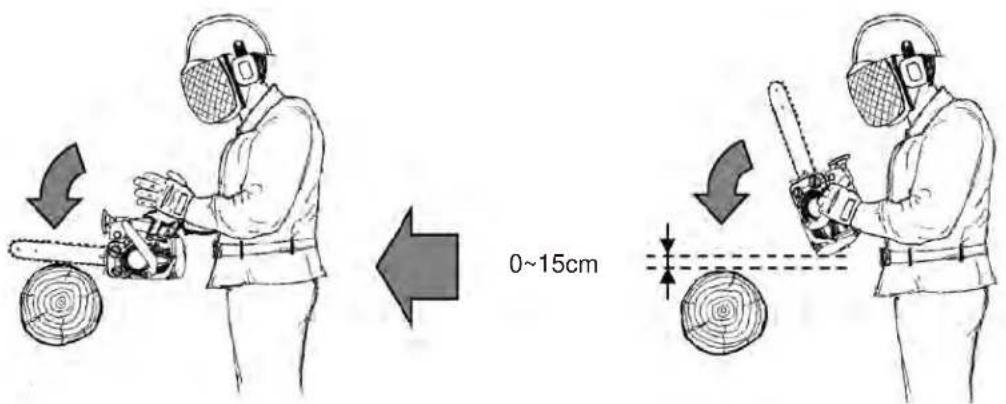
CUTTING INSTRUCTION
CAUTION
- Read the Safety instructions beginning on page 13 concerning proper use of the Chain saw.
• Always wear gloves and protective clothing when operating the Chain saw. - Felling a tree requires knowledge and experience, especially in a case of felling a large diameter tree or cutting on steep slopes or unstable ground. Please seek the advice of a real expert before attempting to fell a tree.
- Before attempting to fell a tree, cut some small logs or limbs to practice of the Chain saw operations.
- Apply only light pressure while running the engine at full throttle constantly.
- If the chain is properly sharpened, the cutting should be relatively effortless. Replace the chain or sharpen it.
- If the saw pinches during cutting operation, stop the engine and insert a wedge to remove it.
- Do not let any person use your saw unless he has read this manual and fully understands its instruction.
- Use chain saw only to cut wood or wood products.
HOLDING THE SAW
With both hands, keep a good, firm grip on the saw.
The right hand should be on the rear handle, and the left hand on the front handle.
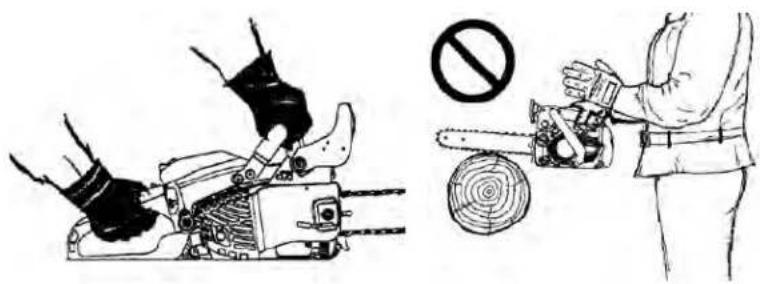
natural_image
Illustration showing a person using a chain mill machine and a person holding a saw with a prohibition symbol (no text or labels)APPROPRIATE USE OF SPIKED BUMPER
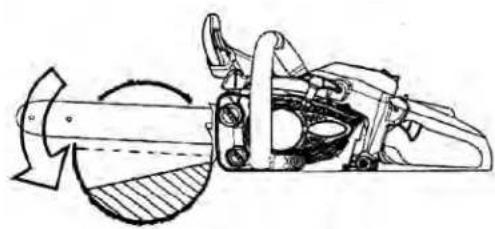
Engage the spiked bumper firmly in the wood and pivot the saw around this contact point.
natural_image
Technical line drawing of a mechanical tool with rotating blades and a meshed base (no text or symbols)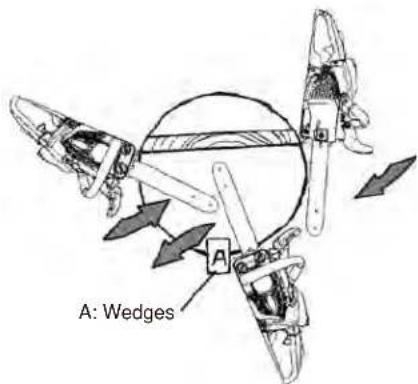
KICKBACK SAFETY PRECAUTION
KICKBACK PHENOMENON:
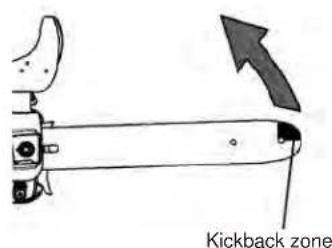
If the upper quadrant of the tip of the bar touches any object, the reaction of the chain may drive the saw rapidly straight back toward the operator. Do not cut limbs with the nose of the guide bar.
DANGER
POTENTIAL HAZARD
- Kickback may occur when the nose or tip of the guide bar touches an object.
WHAT CAN HAPPEN
- If the upper quadrant of the tip of the bar touches any object, the reaction of the chain may drive the saw rapidly straight back toward the operator.
HOW TO AVOID THE HAZARD
- Hold the chainsaw firmly with both hands.
- Begin cutting and continue at full throttle.
- Do not cut limbs with the nose of the guide bar.
- Do not overreach.
- Cut only one log at a time.
- Do not cut above chest height.
It is difficult to maintain control of saw above chest height. - Use extreme caution when reentering a previous cut.
- Cut with a correctly sharpened, properly tensioned chain at all times.
- Depth gauges are critical to safe chain operation.
- Use appropriate low kickback type of saw chain.
⚠ WARNING It is important to file the saw chain to the correct depth and angle. Improper lowering or sharpening of the depth gauges may increase the risk of kickback injury.
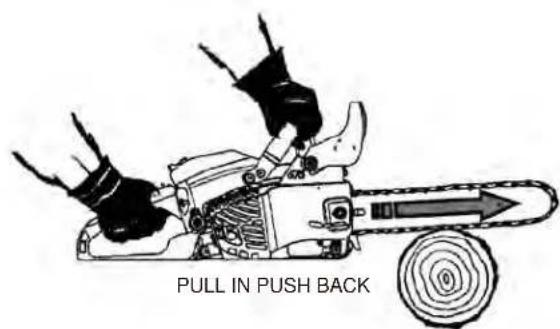
PULL-IN: Pull-in occurs when the chain on the bottom of the bar is suddenly stopped when it is pinched or caught in the wood.
The reaction of the chain pulls the saw forward.
Always cut with the spiked bumper in contact with the wood.
PUSH BACK: Pushback occurs when the chain on the top of the bar is suddenly stopped when it is pinched or caught in the wood.
The reaction of the chain drives the saw straight back toward the operator.
Watch the cut and the log for any movement that may pinch the chain.
natural_image
Illustration of a manual chain saw cutting through a gear with a circular cutter (no text or symbols)Bouncing: Bouncing occurs when the saw chain contact with wood.
The reaction of the saw is bouncing on the wood.
Hold the chain saw firmly with both hands, Apply only light pressure while running the engine at full throttle constantly.
! DANGER
- There are a number of factors that may affect the intended direction of fall and be alert for a change in direction while the tree is falling.
CAUTION
- If the saw begins to pinch during the backcut operation, insert a wedge to open the cut and remove it.
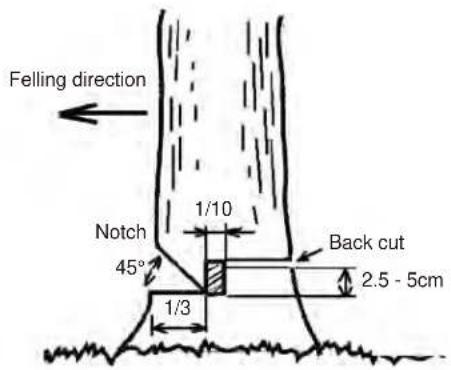
- Before felling a tree, consider carefully all conditions, including lean of tree, sloping ground, wind, wood structure which may affect the direction of fall. - Before cutting, clear the area around the tree. You will need good footing while working and select a path of retreat.
- Cut a notch on the side to which the tree is to fall.
- Cut to a depth of 1/3 of the trunk diameter.
- Remove resulting 45-degree piece.
- Cut horizontally on the side opposite the notch and at level about 5cm above the bottom of the notch. (Backcut)
- The remaining wood between the notch and backcut - will act as a hinge when the tree falls, guiding it in the desired direction.
- When the tree starts to fall, kill the engine, place the saw on the ground and make your retreat quickly.
FELL BIG TREE
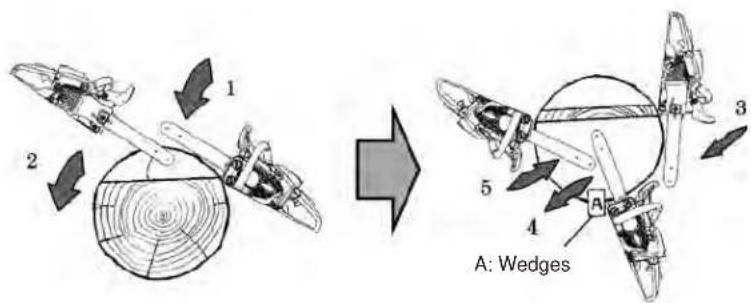
- To fell big trees with a diameter exceeding twice the bar length, start the notching cuts from one side and draw the saw through to the other side of the notch.
- Start the back cut on one side of the tree with the spiked bumper engaged, pivoting the saw through to from the desired hinge on that side.
- Then remove the saw for the second cut.
- Insert the saw in the first cut very carefully so as not to cause kickback.
- The final cut is made by drawing the saw forward in the cut to reach the hinge.
CAUTION
- Don't saw above chest height.
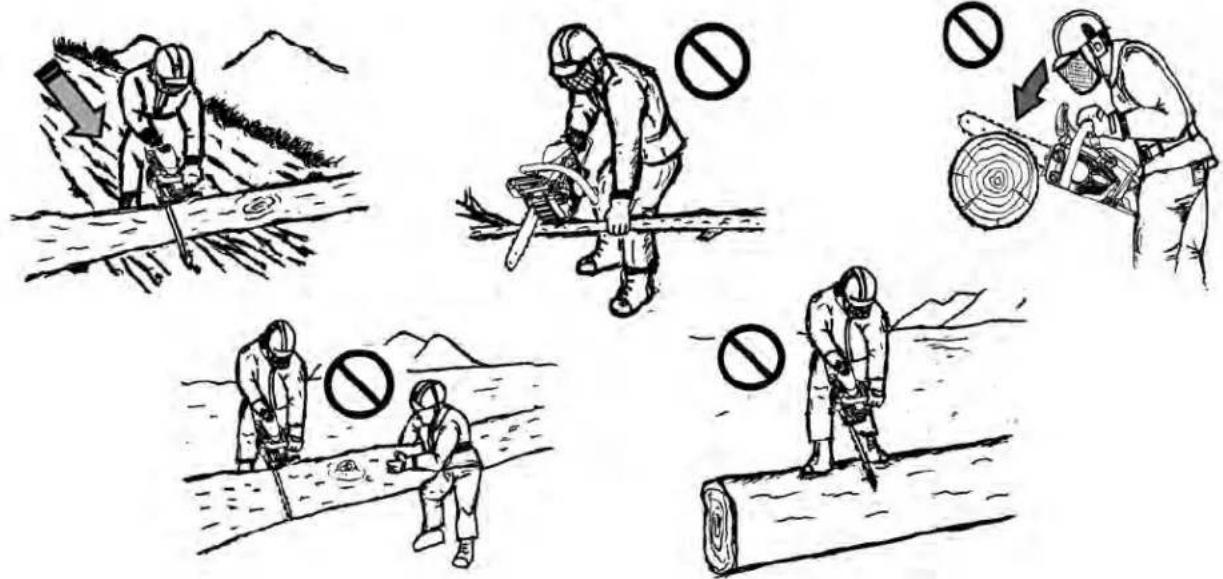
• Always use both hands. - Stay on the uphill side of logs.
- Don't let anyone hold wood for you to cut.
- Saw wrongly held too close to operator's body.
- Cutting while on a ladder is extremely dangerous because the ladder can slip and your control of the chain saw is limited.
- Never operate chain saw without rope-harness on climbing a tree.
WARNING
Do not put pressure on the saw when reaching the end of a cut. The pressure may cause the bar and rotating chain to pop out of the cut or kerf, go out of control and strike the operator or some other object. If the rotating chain strikes some other object, a reactive force may cause the moving chain to strike the operator.
• To make sure ground safety, doing work.
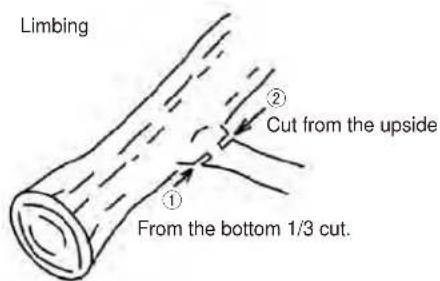
- When limbing, cut using a porting of the root of the guide bar. If the tip of the guide bar touches wood, the guide bar kicks back in an instant.
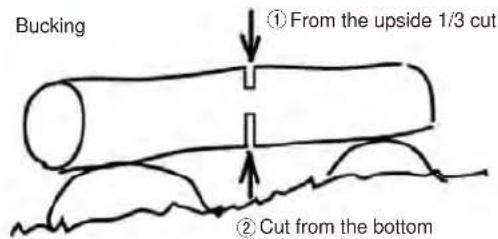
- Bucking is the sawing of a log or fallen tree into smaller pieces.
- When you cut, wood cutting order considering to open cut.
Following is a list of recommended cutting equipment for the Maruyama chain saw models MCV31T.
The combinations of power equipment, guide bar and saw chain have been tested and found to be in accordance with the kickback and vibration requirements of ANSI B175.1–2000.
The guide bar nose radius is determined by either the maximum number of teeth in the nose sprocket or the corresponding maximum nose radius of a solid bar.
The following list is Maruyama's recommendations. There may be other combinations available, which will also achieve kickback reduction.
As we are listing the maximum guide bar nose radius, you may use a guide bar with smaller nose radius than in our list. For guide bars of the same length, all sprocket-nose guide bars of the same pitch and having the same number of sprocket teeth may be considered to have equivalent kickback energy.
When replacing the saw chain, identify the type of chain with the drive links mark.
The following combinations may be used on MCV31T.
| LOW-KICKBAKCK SAW CHAIN | |||||
| Type of chain Chain P/N Drive link number Pitch Gauge Drive link mark | |||||
| Oregon 91PX | 91PX040E91PX045E91PX052E | 40 (10 inch bar)45 (12 inch bar)52 (14 inch bar) | 3/8 inch(9.53mm) | 0.050 inch(1.27mm) | 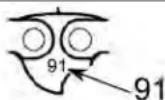 |
| LOW-KICKBAKCK GUIDE BAR | |||||
| Type of bar Bar | P/N Length Pitch | Thickness of drive links | Max. number of teeth in the nose sprocket | ||
| Oregon Double Guard | 100SDEA041120SDEA041140SDEA041 | 10 inch12 inch14 inch | 3/8 inch(9.53mm) | 0.050 inch(1.27mm) | 7 |
| Round file | 4.0mm(5/32inch) |
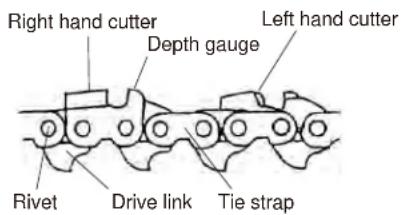
Low-kickback saw chain is chain that has met the kickback performance requirements of ANSI B 175.1 - 2000(current revision of standard) (American National Standard for Power Tools-Gasoline-Powered Chain Saws-Safety Requirements) when tested on the representative sample of chain saws below 3.8 c.i.d. specified in ANSI B 175.1- 2000(current revision of standard).
WARNING
- Switch off the engine before sharpening the saw chain.
• Always wear gloves when working on saw chain. - It is important to file the saw chain to the correct depth and angle. Improper lowering or sharpening of the depth gauges may increase the risk of kickback injury.
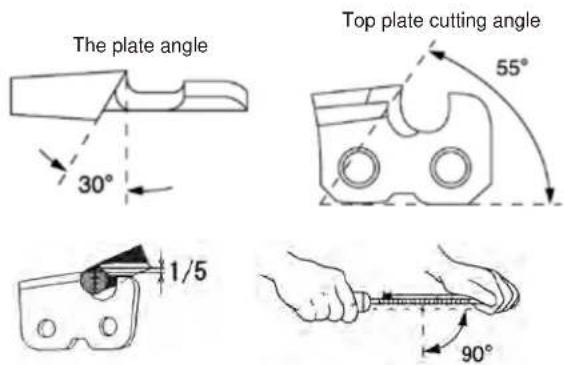
Sharpening
The saw chain should be sharpened once a day.
- Lock the chain.
- The saw chain have alternative left and right hand cutters. Always sharpen from the inside out.
- Keep the file to the angle lines of the top plate angle.
- Hold the file horizontally.
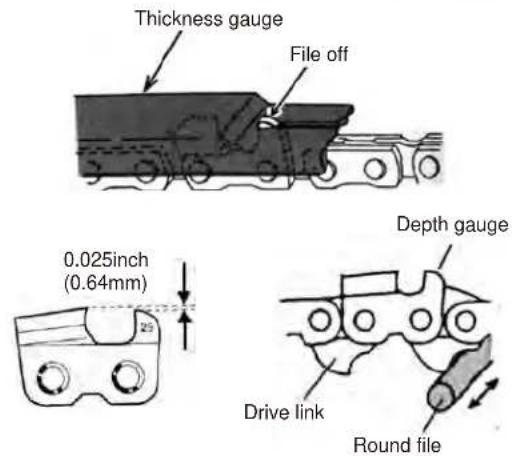
Depth gauge adjustment
The depth control determines the thickness of wood chip produced and must be maintained correctly throughout the chain life.
As the cutter length is reduced, the depth control height is altered and must be reduced.
- Position the depth gauge, and file off any of the depth control which protrudes.
- Round off the front of the depth control to allow smooth cutting.
- Keep the Lower edge of the drive link sharp. (Drive link serves to remove sawdust from the groove of the guide bar.)
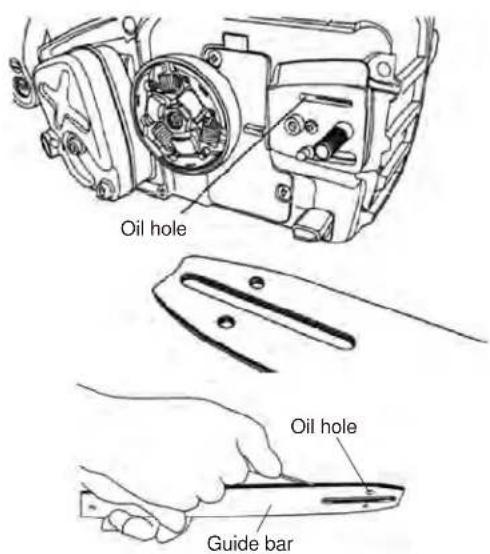
GUIDE BAR
- Clean before using.
Clean the groove of the guide bar with a small screw driver or a wire.
Clean oil holes with a wire. - Reverse guide bar periodically.
- Check sprocket and the clutch.
- Clean the bar mount area before installation of the guide bar.
NOTE: Use appropriate low kickback type of saw chain. When replacing guide bar or saw chain, ask any local authorized MARUYAMA dealer.
REGULAR MAINTENANCE
Maintenance, replacement or repair of emission control devices and systems may be performed by any repair establishment or individual; however, warranty repairs must be performed by a dealer or service center authorized by Maruyama Manufacturing Company, Inc. The use of parts that are not equivalent in performance and durability to authorized parts may impair the effectiveness of the emission control system and may have a bearing on the outcome of a warranty claim.
WARNING
- Switch off the engine before sharpening the saw chain.
• Always wear gloves when working on saw chain. - When replacing guide bar or saw chain, Use appropriate low kickback type.
- Never modify a chain saw in any way. Although certain unauthorized attachments are useable with the chain saw, their use may, in fact, be extremely dangerous.
AIR FILTER
Maintenance Interval
- The air filter should be cleaned daily, or more often when working in extremely dusty conditions.
- Replace after every 100 hours of operation.
Air Filter Cleaning
- Remove the Cleaner cover from the chain saw.
- Remove the element from the Cleaner cover.
- Brush off dust on the element or blow off dust with compressed air.
- Reassemble the element and Cleaner cover.

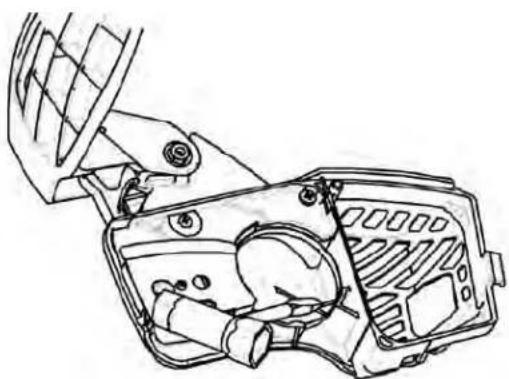
CHAIN CASE
Maintenance Interval
- The chain case should be cleaned daily, or more often when working in extremely dusty conditions.
- When chain brake does not function properly, should be cleaned.
- Clean the bar mount area before mounting of the chain case.
IMPORTANT: After clean, if the chain brake does not function properly, take the saw to your local Service Center.
natural_image
Technical line drawing of a mechanical component with internal parts and mounting holes (no text or symbols)SPARK PLUG
Maintenance Interval
- The spark plug should be removed from the engine and checked after each 25 hours of operation.
- Replace the spark plug after every 100 hours of operation.
Spark Plug Maintenance
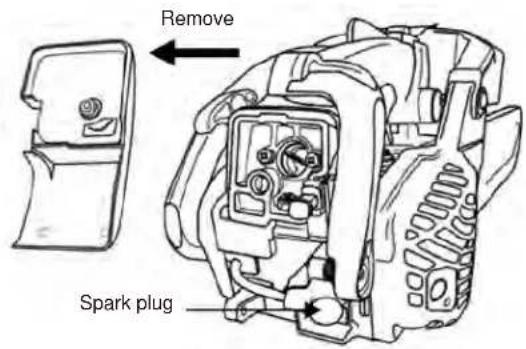
- With the engine at ambient (room) temperature, twists the high tension lead boot on the spark plug back and forth a couple of times to loosen the boot, and then pull the boot off of the spark plug.
- Remove the Cleaner cover from the chain saw.
- Remove the spark plug.
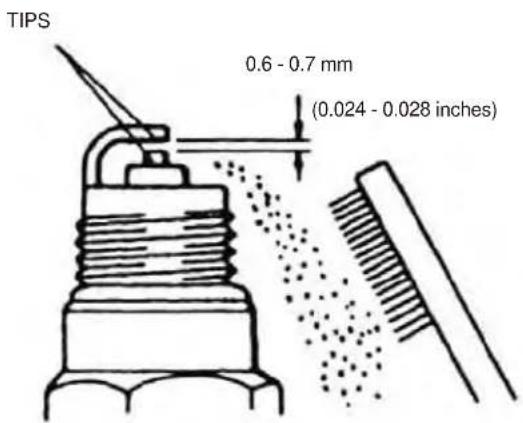
- Clean the electrodes with a stiff brush.
- Adjust the electrode air gap to 0.6-0.7 mm (0.024-0.028 in).
- Replace the spark plug if it is oil-fouled, damaged, or if the electrodes are worn down.
- Do not over tighten the spark plug when installing. The tightening torque is 10.7-16.6 N·m (95-148 in. lbs).
SPROCKET
Maintenance Interval
- The sprocket should be cleaned and inspected for damage after each 25 hours of operation, or when you install new chain.
SPROCKET CLEANING AND INSPECTED
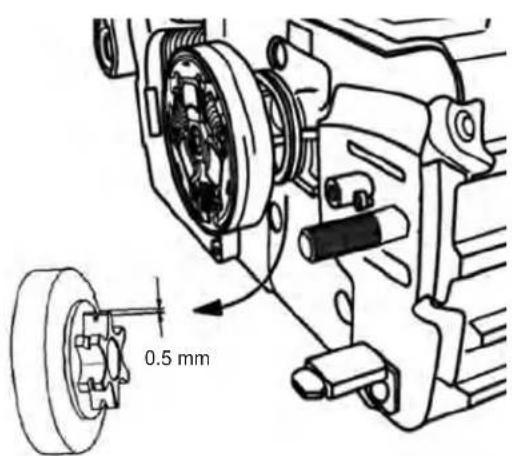
- The clutch should be cleaned and inspected for damage.
- The damaged sprocket will premature damage or wear of saw chain.
- When the sprocket has worn out 0.5mm or more, replace it.
| SPROCKET | PITCH TEETH | |
| 3/8 6 | ||
FUEL FILTER
Maintenance Interval
- The fuel filter should be cleaned and inspected for damage after each 25 hours of operation.
- The fuel filter should be replaced after every 100 hours of operation.
Fuel Filter Replacement
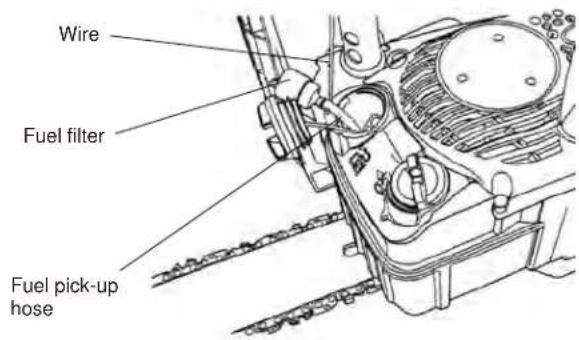
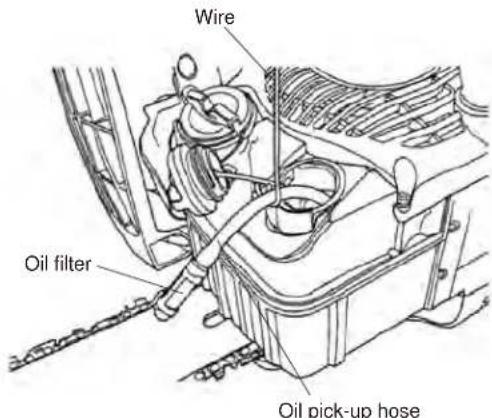
The fuel filter is attached to the end of the fuel pick-up hose inside the fuel tank.
To replace the fuel filter:
- Make sure the fuel tank is empty.
- Remove the fuel cap.
- Using a wire hook, gently pull the fuel filter out through the fuel filler opening.
-
Grasp the fuel hose next to the fuel filter fitting and remove the filter, but do not release the hose.
-
While still holding on to the fuel hose, attach the new fuel filter.
-
Drop the new fuel filter back into the guide bar side of the fuel tank.
-
Make sure that the fuel filter is not stuck in a corner of the tank, and that the fuel hose is not doubled over (kinked) before refueling.
OIL FILTER
Maintenance Interval
- The oil filter should be cleaned and inspected for damage after each 25 hours of operation.
Oil Filter Cleaning
The oil filter is attached to the end of the oil pick-up hose inside the oil tank.
To clean the oil filter:
- Make sure the oil tank is empty.
- Remove the oil cap.
- Using a wire hook, gently pull the oil filter out through the oil filler opening.
-
Grasp the oil hose next to the oil filter fitting and clean the oil filter.
-
Drop the oil filter back into the guide bar side of the oil tank.
-
Make sure that the oil filter is not stuck in a corner of the tank, and that the oil hose is not doubled over (kinked) before refueling.
ENGINE COOLING
Maintenance Interval
- The engine cooling should be cleaned after every 25 hours of operation, or once a week, whichever comes first.
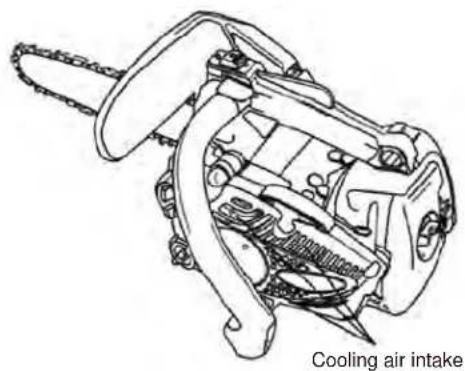
- Air must flow freely around and through the cylinder cooling fins to prevent engine overheating. Leaves, grass, dirt and debris buildup on the fins will increase the operating temperature of the engine, which can reduce engine performance and shorten engine life.
Cooling Fin Cleaning
Clean all dirt and debris from around the cooling air intake.
natural_image
Technical line drawing of a mechanical cooling air intake device (no text or symbols on the diagram itself)MUFFLER (SILENCER)
Maintenance Interval
The muffler should be inspected and cleaned after each 100 hours of use.
CAUTION
- Be careful not to allow any dirt or debris to fall into the exhaust port, as this can cause engine damage.
Muffler Maintenance
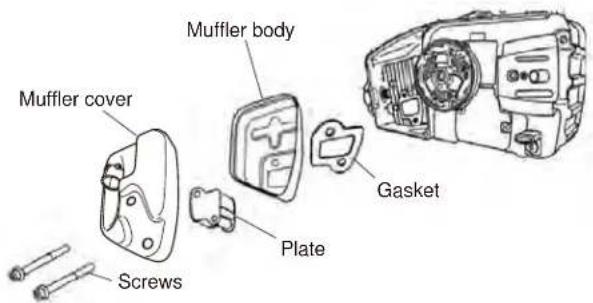
- With the engine at ambient (room) temperature, loosen the nut and remove the chain case.
- Remove the two screws, and remove the Muffler.
- Clean the muffler with a stiff brush.
- Reinstall the muffler, then reinstall and tighten the two screws.
- Reinstall the Chain case.

WARNING
POTENTIAL HAZARD
- Muffler surface becomes hot when Chain Saw is in operation and remains hot for some time after the engine is shut off.
WHAT CAN HAPPEN
- Contact with hot muffler surface could cause a burn.
HOW TO AVOID THE HAZARD
- Make sure the muffler is cool before inspecting and cleaning the spark arrester.
Maintenance Interval
- The spark arrester should be inspected and cleaned after every 25 hours of use.
- Replace the screen if it cannot be thoroughly cleaned, or if it is damaged.
Spark Arrester Maintenance
- With the engine at ambient (room) temperature.
- Remove the two screws retaining the muffler.
- Remove and clean the tail, gasket and spark arrester with a safety solvent and a stiff brush. If any part cannot be thoroughly cleaned, it must be replaced.
- Reinstall the spark arrester and muffler, then reinstall and tighten the two screws.

GENERAL CLEANING AND TIGHTENING

WARNING
POTENTIAL HAZARD
- When engine is running, attached tool and other parts are moving.
- Contact with moving tool or other moving parts could cause serious personal injury or death.
• Always turn off your Chain saw before you clean or perform any maintenance on it.
WHAT CAN HAPPEN
HOW TO AVOID THE HAZARD
The Maruyama Chain saw will provide maximum performance for many, many hours if it is maintained properly. Good maintenance includes regular checking of all fasteners for correct tightness, and cleaning the entire machine.
CARBURETOR ADJUSTMENT
WARNING
POTENTIAL HAZARD
- Engine must be running to make carburetor adjustments.
- When engine is running, saw chain are moving.
WHAT CAN HAPPEN
- Contact with moving parts could cause serious personal injury or death.
HOW TO AVOID THE HAZARD
- Keep hands, feet and clothing away from moving parts.
- Keep all bystanders and pets away from unit while making carburetor adjustments.
WARNING
- Idle speed adjustment should be checked each time the unit is operated.
- Wear the recommended personal protective equipment and observe all safety instructions.
Engine Idle Speed:
To adjust the engine idle speed, rotate the idle speed adjuster screw on the carburetor.
- Turn the idle speed adjuster screw in (clockwise) to increase the engine idle speed.
- Turn the idle speed adjuster screw out (counterclockwise) to decrease the engine idle speed.
Fuel mixtures adjust:
Do not adjust the carburetor unless necessary. To adjust the carburetor proceed as follows.
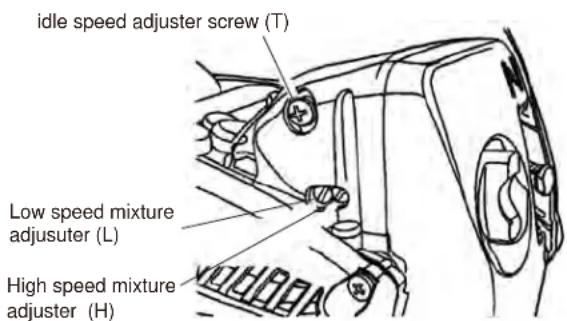
- Turn the low speed mixture adjuster (L) and high speed mixture adjuster (H) anticlockwise to stop.
- Start engine and allow it to run at idle until warm.
- Turn idle speed adjuster screw (T) anticlockwise until the saw chain stops moving.
- Accelerate to full throttle to check for smooth transition from idle to full throttle.
- Turn the low speed mixture adjuster (L) and high speed mixture adjuster (H) clockwise to adjust for smooth transition from idle to full throttle.
CAUTION
- When starting, idle speed adjuster (T) should be adjusted not to rotate the saw chain.
- If idle speed adjustment is necessary, and after adjustment the engine stalls, stop using the Chain saw immediately!
- Contact your local authorized Maruyama Dealer for assistance and servicing.
STORAGE
WARNING
POTENTIAL HAZARD
- Gasoline contains gasses that can build up pressure inside a fuel tank.
- fuel can be sprayed on you when removing fuel tank cap.
- Remove fuel tank cap slowly to avoid injury from fuel spray.
WHAT CAN HAPPEN
HOW TO AVOID THE HAZARD
WARNING
POTENTIAL HAZARD
- Saw chain is sharp.
WHAT CAN HAPPEN
- Contact with the saw Chain can cause personal injury.
HOW TO AVOID THE HAZARD
- Wear gloves when you handle the saw chain.
CAUTION
POTENTIAL HAZARD
- Oil may squirt out of the spark plug opening when you pull the starter grip.
- Oil can cause eye injuries.
- Protect your eyes and keep your face away from the spark plug opening.
WHAT CAN HAPPEN
HOW TO AVOID THE HAZARD
For long term storage of the chain saw:
- Empty the fuel tank into a suitable fuel storage container approved for gasoline.
- Pump the primer bulb on the carburetor until all fuel is discharged through the clear Primer pump.
- Run the engine to remove any fuel that may remain in the carburetor.
- Perform all regular maintenance procedures and any needed repairs.
- Remove the spark plug and squirt a very small amount of oil into the cylinder.
- Pull the starter grip once.
- Slowly pull the starter grip to bring the piston to the top of the cylinder (TDC).
- Reinstall the spark plug.
- Store the Chain saw in a dry place away from excessive heat, sparks or open flame.
- Always use a guide bar cover when carrying or storage a chain saw.
TROUBLESHOOTING
| Problema Cause Action | ||
| Engine Will Not Start | STOP switch to off positionElectrical problemEmpty fuel tankPrimer bulb wasn’t pushed enoughFuel filter cloggedFuel line cloggedCarburetorEngine flooded | Move switch to on positionAsk your MARUYAMA dealerFill fuel tankPress primer bulb until fuel flows Through fuel primer bulbClean or replaceCleanAsk your MARUYAMA dealerUse warm engine starting procedure |
| Engine lacks Power or Dropped down | Dirty air filterFuel filter cloggedFuel mixture is too richClogged exhaust portSpark plugCooling system plugged | Clean or replace air filterClean or replaceOpen choke, adjust carburetor, ask your MARUYAMA dealerClean exhaust portClean and adjust or replaceClean |
If further assistance is required, contact your local authorized Maruyama service dealer.
MAINTENANCE PERIOD
| Maintenance | Before use | Daily | Every Every | |||
| 25 hours | 50 hours | 100 hours | ||||
| Check and replenish fuel | ○ | |||||
| Check for fuel leakage | ○ | |||||
| ■ | Check and clean fuel filter | ○ | ||||
| Check and replenish oil | ○ | |||||
| ■ | Check and clean oil filter | ○ | ||||
| Check bolts, nuts and screws for tightness or missing | ○ | |||||
| Tighten bolts and nuts | ○ | |||||
| Check engine idle speed adjustment | ○ | |||||
| ■ | Clean air filter element | ○ | ||||
| ■ | Remove dust and dirt for cooling air intake | ○ | ||||
| Clean spark plug and adjust electrode gap | ○ | |||||
| ● | Remove carbon deposits in exhaust port | ○ | ||||
| ● | Remove carbon deposits on piston head and combustion chamber | ○ | ||||
| ● | Remove carbon deposits in transfer ports | ○ | ||||
| ● | Clean spark arrester | ○ | ||||
| Replace fuel filter | ○ | |||||
| Check chain brake | ○ | |||||
| Check sprocket | ○ | |||||
| Check and clean Guide bar | ○ | |||||
| Check antivibration device ( rubber, spring ) | ○ | |||||
| Check chain catcher | ○ | |||||
| Sharpening saw chain | ○ | |||||
| Replace fuel tube, fuel tank cap gasket It is recommended to replace every 3 years | ||||||
● :Service to be performed by an authorized Maruyama engine dealer.
■ :Service more frequently under dusty conditions.
NOTE:
The service intervals indicated are to be used as a guide.
Service to be performed more frequently as necessary depending on operating condition.
Use Maruyama standard 50:1 two-cycle engine oil.
MARUYAMA®
The engine exhaust from this product contains chemicals known to the State of California to cause cancer, birth defects or other reproductive harm.
MCV31T
natural_image
Simple line drawing of a curved, elongated object with internal markings (no text or symbols)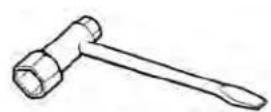
natural_image
Line drawing of a person in uniform with helmet and boots (no text or symbols)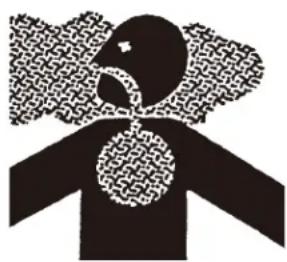
natural_image
Abstract black-and-white graphic of a stylized human figure with patterned head and torso (no text or symbols)natural_image
Illustration of a fuel can with icons for liquid, oil, and gas (no text or labels)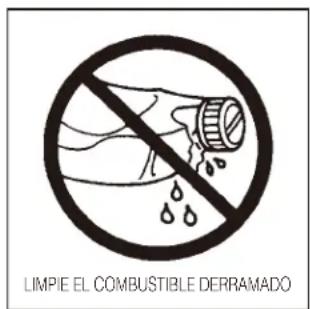
natural_image
Technical line drawing of a car interior panel with no visible text or symbolsCárter de la cadena
natural_image
Illustration of hands assembling a mechanical component with a ruler and arrow indicating measurement (no text or symbols present)
Espada
natural_image
Line drawing of a mechanical device with hands operating it, showing a rotating arm and adjustment knob (no text or symbols)natural_image
Technical line drawing of a mechanical device with no visible text or symbolsnatural_image
Technical line drawing of a mechanical assembly with no visible text or symbolsnatural_image
Technical line drawing of a mechanical linkage assembly (no text or symbols)natural_image
Mechanical assembly diagram showing a chain link mechanism with no visible text or symbolsnatural_image
Technical line drawing of a mechanical component with no visible text or symbolsnatural_image
Line drawing of a person using a mechanical tool to adjust or install a chain (no text or symbols present)natural_image
Illustration of a mechanical lever with motion arrows indicating motion (no text or symbols)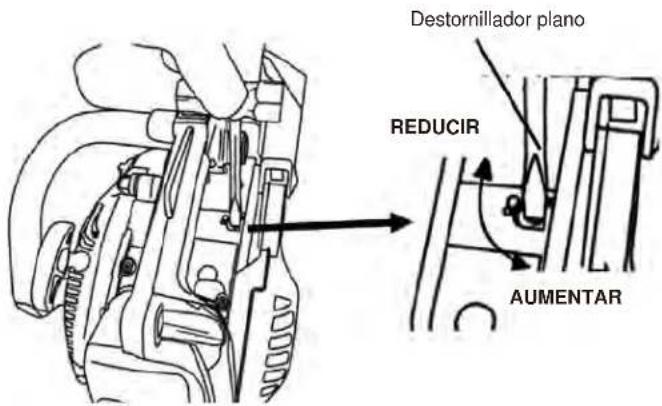
natural_image
Technical illustration showing hands operating a mechanical device with a close-up view of the internal components (no text or symbols present)
Espada
natural_image
Illustration of a robotic arm gripping a mechanical component (no text or symbols visible)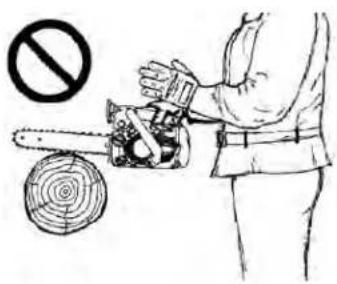
natural_image
Illustration of a person using a chainocorder to cut a tree stump with a no-smoking symbol (no text or labels)natural_image
Technical line drawing of a mechanical tool with a rotating blade and gear mechanism (no text or symbols)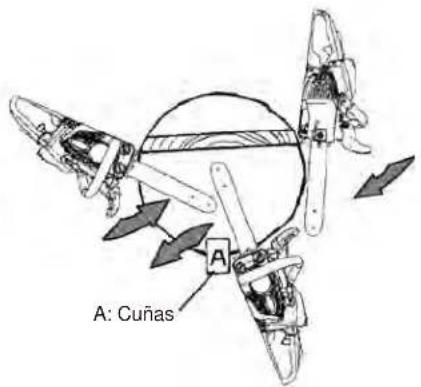
natural_image
Illustration of a manual chain saw cutting through a gear with a circular cutterhead (no text or symbols)MANTENIMIENTO DE LA CADENA
natural_image
Technical line drawing of a mechanical component with internal parts (no text or symbols)BUJÍA
CÓMO SOLUCIONAR PROBLEMAS
The engine exhaust from this product contains chemicals known to the State of California to cause cancer, birth defects or other reproductive harm.
MCV31T
DÉCLARATION DE GARANTIE DU CONTRÔLE DES ÉMISSIONS DE L'ÉTAT FÉDÉRAL. DROITS ET OBLIGATIONS DÉRIVÉS DE LA GARANTIE
EXPLICATION DES SYMBOLES
natural_image
Line drawing of a person in uniform with hat and boots (no text or symbols)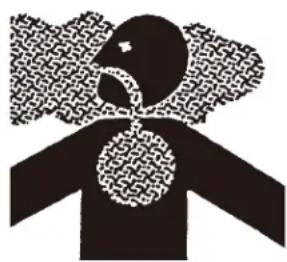
natural_image
Abstract black-and-white graphic of a stylized human figure with patterned head and torso (no text or symbols)natural_image
Illustration of a fuel can with icons for liquid, gas, and pump (no text or labels)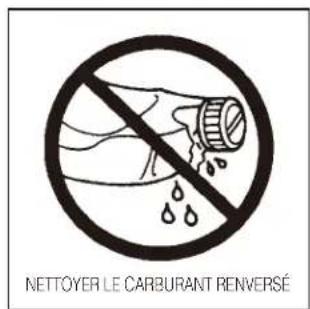
natural_image
Line drawing of a chain saw with protective gear (no text or symbols)MONTAGE
AVERTISSEMENT
RISQUE POTENTIEL
natural_image
Illustration of hands operating a mechanical device with a ruler and gear (no text or symbols visible)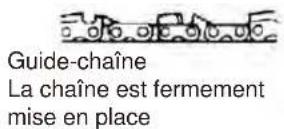
natural_image
Line drawing of a hand operating a mechanical device with a rotating arm (no text or symbols)INSTALLATION DE LA GRIFFE D'ABATTAGE (EN OPTION)
natural_image
Technical line drawing of a mechanical assembly with no visible text or symbols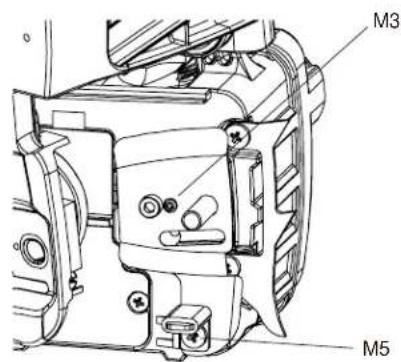
MONTAGE POUR e-JUST
AVERTISSEMENT
RISQUE POTENTIEL

natural_image
Line drawing of a person using a chain-linking tool to adjust or install a mechanical component (no text or symbols present)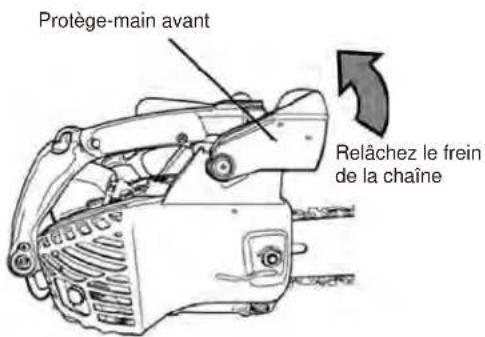
natural_image
Simple line drawing of a mechanical lever with motion arrows indicating motion (no text or symbols)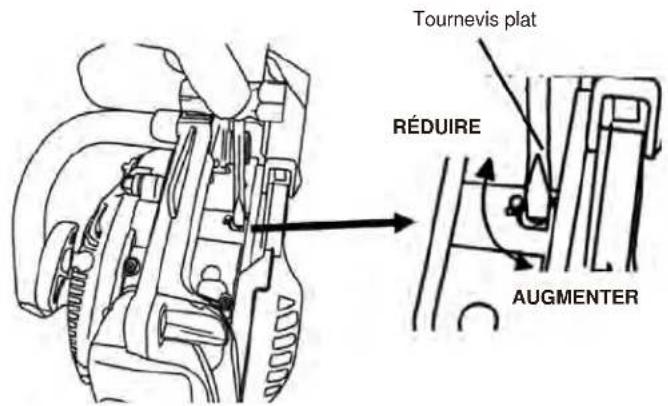
natural_image
Illustration showing a person using a chain mill machine to lift a tree, with a no-smoking symbol nearby (no text or labels present)UTILISATION CORRECTE DE LA GRIFFE D'ABBATAGE
natural_image
Technical line drawing of a mechanical tool with rotating blades and a central blade (no text or symbols)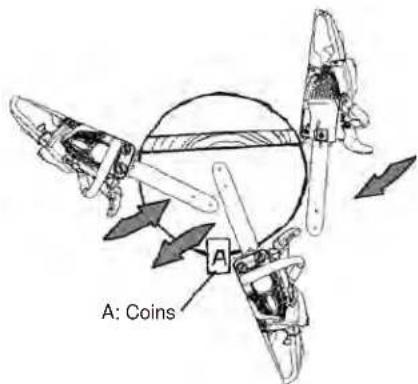
PRÉCAUTION DE SÉCURITÉ - REBOND
PHÉNOMÈNE DU REBOND:
natural_image
Line drawing of a mechanical chain saw with hands operating it (no text or symbols)TRACTION REFOULEME
natural_image
Illustration of a manual chain saw cutting a circular cutterhead (no text or symbols)MAINTENANCE DE LA CHAÎNE
natural_image
Technical line drawing of a mechanical component with internal parts (no text or symbols)BOUGIE
Intervalle de maintenance



- MARUYAMA®
- Limited Warranty Statement
- This warranty does not cover the following:
- FEDERAL EMISSION CONTROL WARRANTY STATEMENT YOUR WARRANTY RIGHTS AND OBLIGATIONS
- Emission durability of 300 hours.
- MANUFACTURER'S WARRANTY COVERAGE:
- OWNER'S WARRANTY RESPONSIBILITIES:
- COVERAGE
- MAINTENANCE REQUIREMENTS
- LIMITATIONS
- CALIFORNIA EMISSION CONTROL WARRANTY STATEMENT YOUR WARRANTY RIGHTS AND OBLIGATIONS
- Emission System Parts
- Introduction
- WARNING
- SAFETY PRECAUTIONS FOR CHAIN SAW USERS
- KICKBACK SAFETY PRECAUTIONS
- OTHER SAFETY PRECAUTIONS
- PRODUCT DESCRIPTION
- MODEL:MCV31T
- SYMBOL EXPLANATION
- SAFETY INSTRUCTIONS
- OPERATOR SAFETY
- CHAIN SAW SAFETY
- FUEL SAFETY
- OPERATING SAFETY
- OTHER SAFETY PRECAUTIONS VIBRATION
- OTHER SAFETY PRECAUTIONS NOISE
- TRANSPORTATION
- ASSEMBLY
- POTENTIAL HAZARD
- WHAT CAN HAPPEN
- HOW TO AVOID THE HAZARD
- MOUNTING THE GUIDE BAR AND CHAIN
- INSTALLING THE SPIKED BUMPER (OPTION)
- ASSEMBLY FORE-JUST
- BEFORE OPERATION
- OIL AND FUEL
- ! DANGER
- FUELING
- Recommended Oil Type
- Recommended Fuel Type
- Use Of Fuel Additives
- Mixing Gasoline And Oil
- Fuel Mixture
- Fuel Mixture Chart
- Mixing Instructions
- STARTING AND STOPPING PROCEDURE
- CAUTION
- BEFORE STARTING THE ENGINE
- COLD STARTING PROCEDURE
- HOT RESTART
- TO STOP THE ENGINE
- OILER ADJUSTMENT
- CHAIN LUBRICATION TEST
- CHAIN ADJUSTMENT
- CHAIN BRAKE
- CHECKING THE NON-MANUAL CHAIN BRAKE
- CUTTING INSTRUCTION
- HOLDING THE SAW
- APPROPRIATE USE OF SPIKED BUMPER
- KICKBACK SAFETY PRECAUTION
- KICKBACK PHENOMENON:
- DANGER
- FELL BIG TREE
- Sharpening
- Depth gauge adjustment
- GUIDE BAR
- REGULAR MAINTENANCE
- AIR FILTER
- Maintenance Interval
- Air Filter Cleaning
- CHAIN CASE
- SPARK PLUG
- Spark Plug Maintenance
- SPROCKET
- SPROCKET CLEANING AND INSPECTED
- FUEL FILTER
- Fuel Filter Replacement
- To replace the fuel filter:
- OIL FILTER
- Oil Filter Cleaning
- To clean the oil filter:
- ENGINE COOLING
- Cooling Fin Cleaning
- MUFFLER (SILENCER)
- Muffler Maintenance
- Spark Arrester Maintenance
- GENERAL CLEANING AND TIGHTENING
- CARBURETOR ADJUSTMENT
- Engine Idle Speed:
- Fuel mixtures adjust:
- STORAGE
- For long term storage of the chain saw:
- TROUBLESHOOTING
- NOTE:
- MANTENIMIENTO DE LA CADENA
- BUJÍA
- CÓMO SOLUCIONAR PROBLEMAS
- DÉCLARATION DE GARANTIE DU CONTRÔLE DES ÉMISSIONS DE L'ÉTAT FÉDÉRAL. DROITS ET OBLIGATIONS DÉRIVÉS DE LA GARANTIE
- EXPLICATION DES SYMBOLES
- MONTAGE
- AVERTISSEMENT
- RISQUE POTENTIEL
- INSTALLATION DE LA GRIFFE D'ABATTAGE (EN OPTION)
- MONTAGE POUR e-JUST
- UTILISATION CORRECTE DE LA GRIFFE D'ABBATAGE
- PRÉCAUTION DE SÉCURITÉ - REBOND
- PHÉNOMÈNE DU REBOND:
- MAINTENANCE DE LA CHAÎNE
- BOUGIE
- Intervalle de maintenance
Brand : Maruyama
Model : MCV31T
Category : Saw