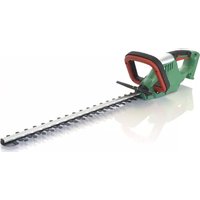
HS 530/25 - Hedge Trimmers Güde - Free user manual and instructions
Find the device manual for free HS 530/25 Güde in PDF.


| Product Type | Cordless Hedge Trimmer |
| Brand | Güde |
| Model | HS 530/25 |
| Rated Voltage | 25.2 V (Li-Ion) |
| Cutting Length | 530 mm |
| Max. Cutting Thickness | 20 mm |
| Weight (without battery) | 2.75 kg |
| Sound Pressure Level (LpA) | 79.8 dB(A) |
| Measured Sound Power Level (LWA) | 87.8 dB(A) |
| Guaranteed Sound Power Level (LWA) | 92 dB(A) |
| Vibration Emission Value (ah) | 2.38 m/s² (K=1.5 m/s²) |
| Battery Type | Lithium-Ion, 25.2 V |
| Charging Temperature Range | +10 °C to +40 °C |
| Battery Protection | Electronic Cell Protection against deep discharge |
| Intended Use | Trimming hedges and shrubs in private gardens |
| Authorized Users | Persons over 16 years of age (except for supervised training) |
| Required Protective Equipment | Safety glasses, gloves, hearing protection, non-slip shoes |
| Blade Maintenance | Clean after use, oil regularly, replace if dull or damaged |
| Warranty | 24 months for the end consumer |
| After-Sales Service | Spare parts and support at www.guede.com |
Frequently Asked Questions - HS 530/25 Güde
User questions about HS 530/25 Güde
0 question about this device. Answer the ones you know or ask your own.
Ask a new question about this device
Download the instructions for your Hedge Trimmers in PDF format for free! Find your manual HS 530/25 - Güde and take your electronic device back in hand. On this page are published all the documents necessary for the use of your device. HS 530/25 by Güde.
USER MANUAL HS 530/25 Güde
natural_image
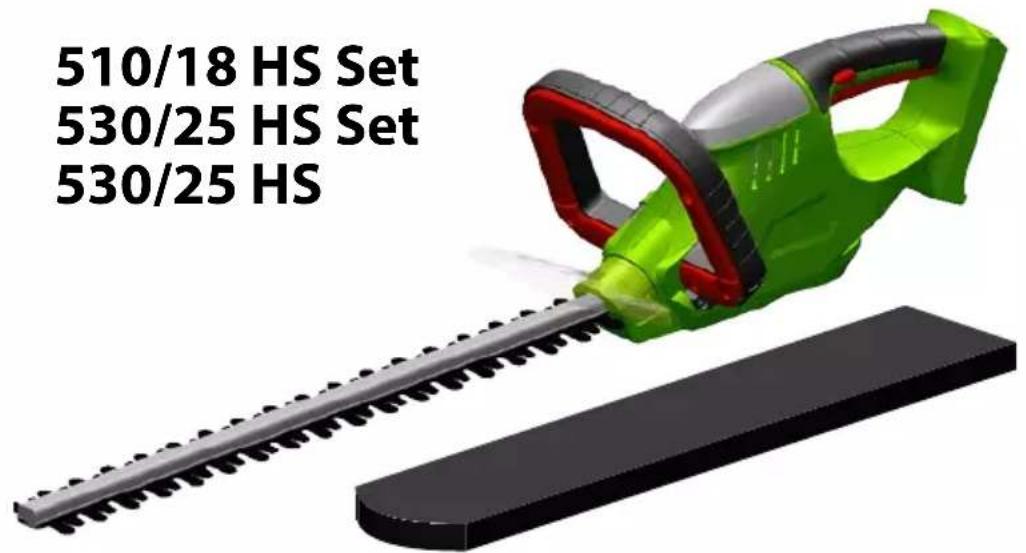
3D rendered image of two green and red hatched hair tools, one with black handle and green blade, the other with red handle and black handle (no text or symbols visible)510/18 HS Set
95783
530/25 HS
95635
530/25 HS Set
95637
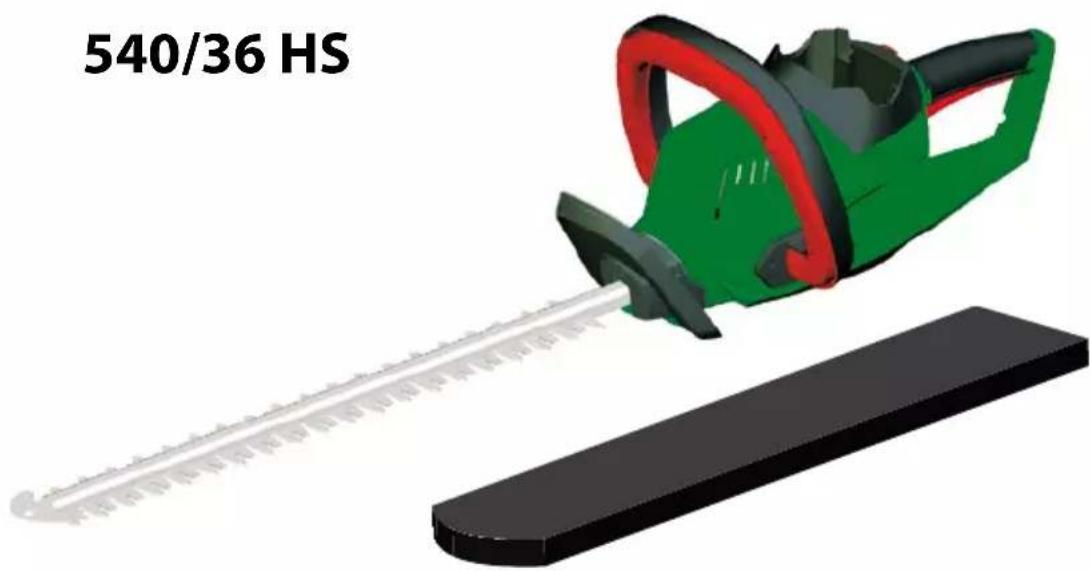
540/36 HS
95718
GÜDE GmbH & Co. KG
Birkichstrasse 6
74549 Wolpertshausen
Deutschland
CE


ENGLISH Please read the instructions carefully before starting the machine.
540/36 HS
| D | Akku | SLO | Akumulator |
| GB | Battery | HR | Akumulator |
| F | Batterie | BG | Акумулатор |
| I | Accumulatore | RO | Acumulator |
| NL | Accu | BIH | Aku-baterija |
| CZ | Akumulátor | ||
| SK | Akumulátor | ||
| H | Akkumulátor |
| D | Betrieb | SLO | Delovanje |
| GB | Operation | HR | Rad |
| F | Fonctionnement | BG | Pábota |
| I | Esercizio | RO | Functionare |
| NL | Gebruik | BIH | Rad |
| CZ | Provoz | ||
| SK | Prevádzka | ||
| H | Üzemeltetés |
| D | Arbeitsanweisungen | SLO | Napotki za delo |
| GB | Work instructions | HR | Radne upute |
| F | Instructions | BG | Инструкции за експлоатация |
| I | Istruzioni di lavoro | RO | Instrucțiuni de lucru |
| NL | Werkaanwijzing | BIH | Radna uputstva |
| CZ | Pracovní instrukce | ||
| SK | Pracovné instrukcie | ||
| H | Munkavégzési utasítások |
| D | Reinigung / Wartung | SLO | Čiščenje / Vzdrževanje |
| GB | Cleaning / Maintenance | HR | Čiščenje / Održavanje |
| F | Nettoyage / Entretien | BG | Чистене / Поддръжка |
| I | Pulizia / Manutenzione | RO | Curățare / Întreținere |
| NL | Schoonmaken / Onderhoud | BIH | Čiščenje / Održavanje |
| CZ | Čištění / Údržba | ||
| SK | Čistenie / Údrzba | ||
| H | Tisztítás / Karbantartás |
| 1 | D Akku | SLO Akumulator |
| GB Battery | HR Akumulator | |
| F Batterie | BG Акумулатор | |
| I Accumulatore | RO Acumulator | |
| NL Accu | BIH Aku-baterija | |
| CZ Akumulátor | ||
| SK Akumulátor | ||
| H Akkumulátor |
510/18 HS Set 530/25 HS (Set)
| 18 V | Gide | |
| 95790 1,5 Ah | 510/18 HS Set (95783) | |
| 25,2 V | Gude | |
| 95603 95536 | 2 Ah 3 Ah | 530/25 HS Set (95637) 530/25 HS (95635) |
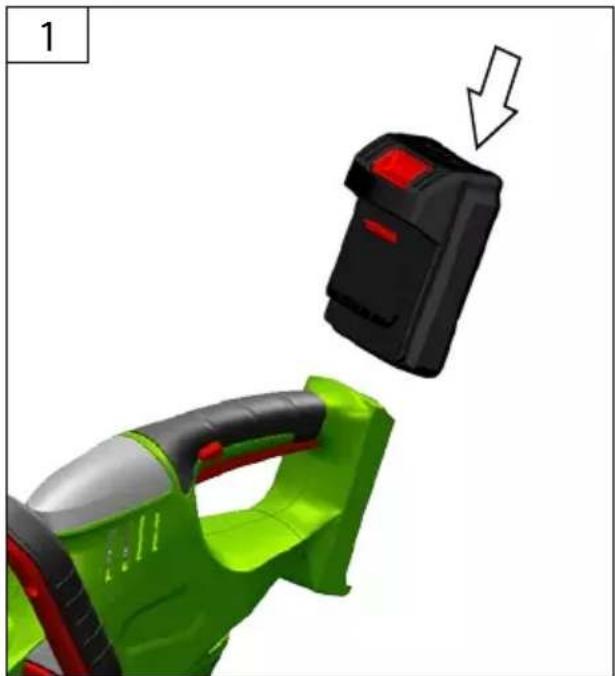
natural_image
Green hair clip holding a black device with red buttons, showing a drop (no text or symbols visible)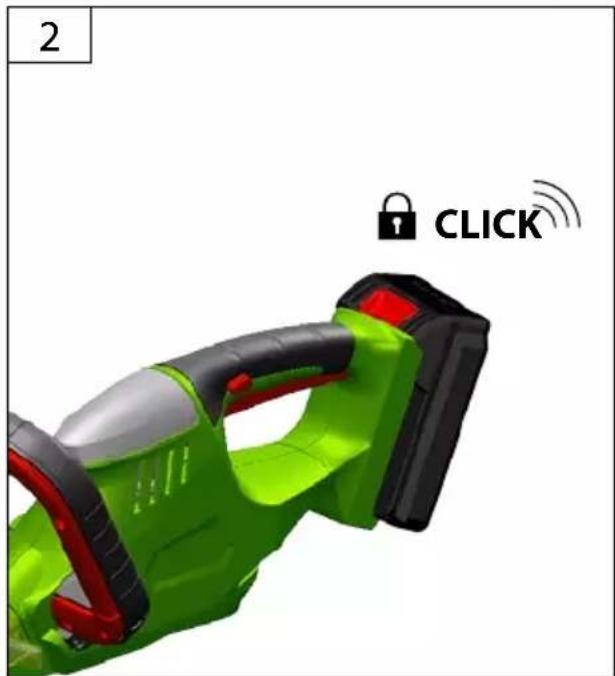
natural_image
3D rendered image of a green and black cleaning brush with a lock icon (no text or symbols)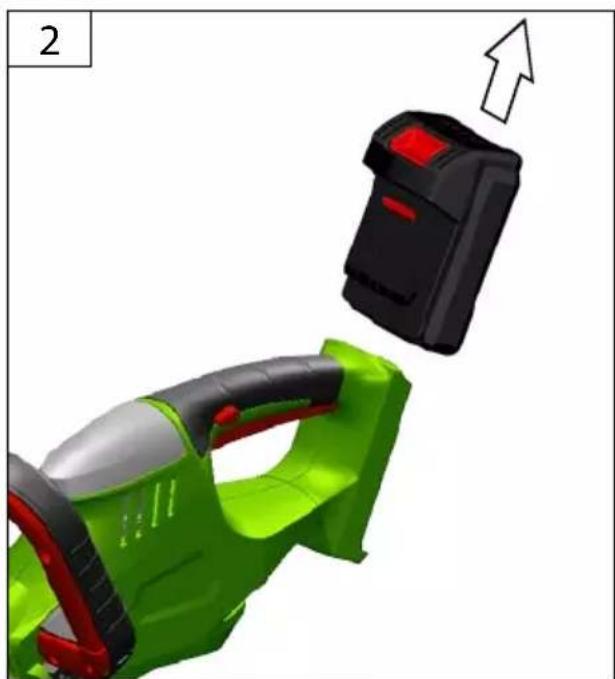
natural_image
Green hair clip holding a black plastic device with red handle, shown with an arrow indicating motion (no text or symbols)D Akku
GB Battery
F Batterie
Accumulatore
NL Accu
CZ Akumulátor
SK Akumulátor
H Akkumulátor
SLO Akumulator
HR Akumulator
BG Акумулатор
RO Acumulator
BIH Aku-baterija

540/36 HS
| 36 V | ||
| 95526 | 2,6 Ah | 540/36 HS(95718) |
| 95542 | 3,0 Ah | |
| 95543 | 4,0 Ah | |
natural_image
3D mechanical assembly diagram showing a red cylindrical component being inserted into a green and black housing (no text or symbols)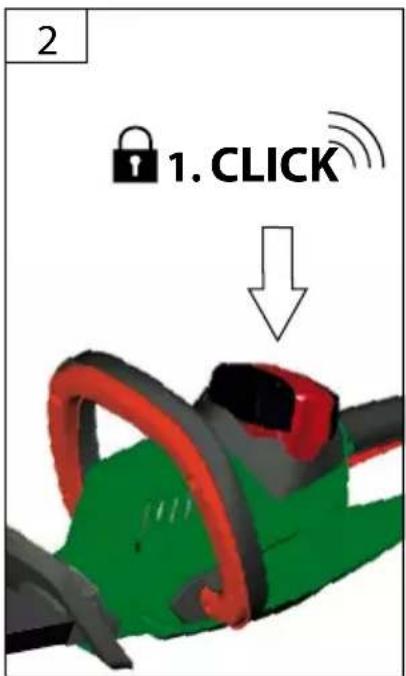
natural_image
3D mechanical assembly diagram showing a red and green component with an upward arrow indicating motion (no text or symbols) | D | Betrieb | SLO | Delovanje |
| GB | Operation | HR | Rad | |
| F | Fonctionnement | BG | Pabota | |
| I | Esercizio | RO | Functionare | |
| NL | Gebruik | BIH | Rad | |
| CZ | Provoz | |||
| SK | Prevádzka | |||
| H | Üzemeltetés |
510/18 HS Set
530/25 HS (Set)






START
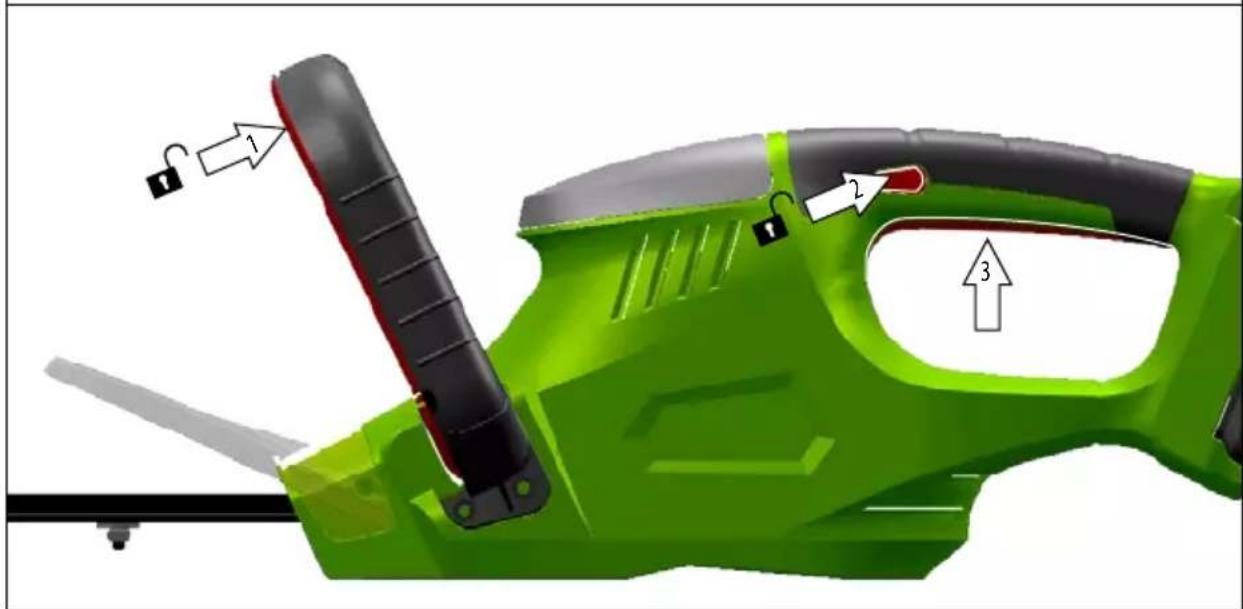
STOP

natural_image
Green electric scooter with black handle and red blade, showing blade and handle details (no text or symbols)| D | Betrieb | SLO | Delovanje | |
| GB | Operation | HR | Rad | |
| F | Fonctionnement | BG | Pa60ra | |
| I | Esercizio | RO | Funcționare |  |
| NL | Gebruik | BIH | Rad | |
| CZ | Provoz | |||
| SK | Prevádzka | |||
| H | Üzemeltetés |
540/36 HS






START
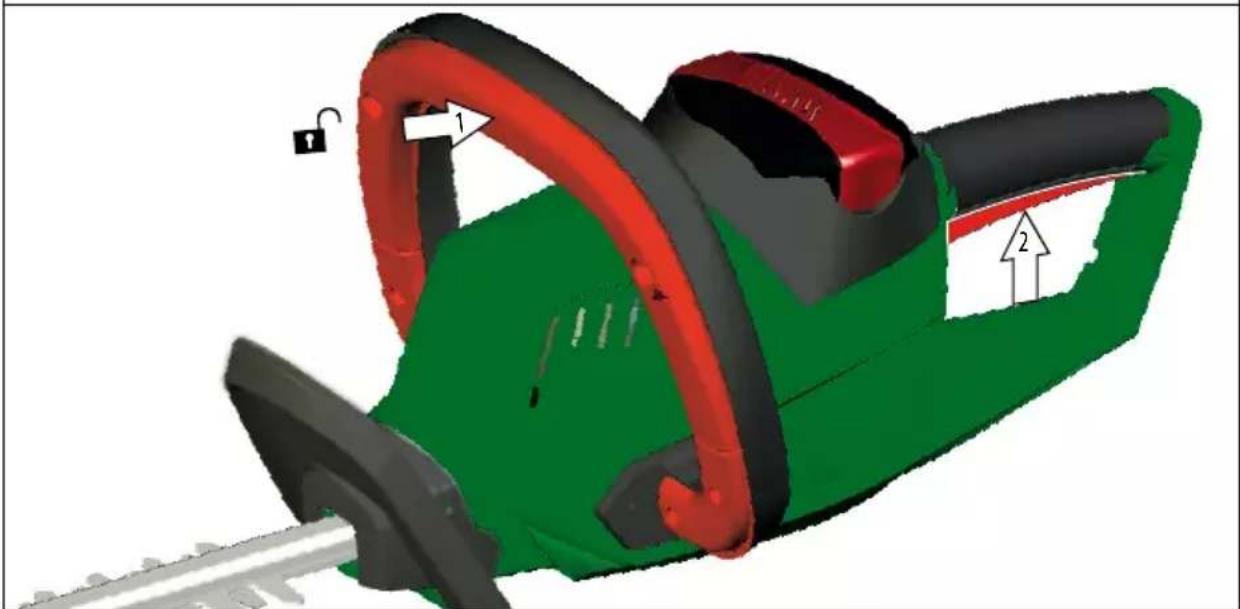
natural_image
3D rendering of a green and red hairpin with a lock icon, showing mechanical components without any text or symbols.STOP
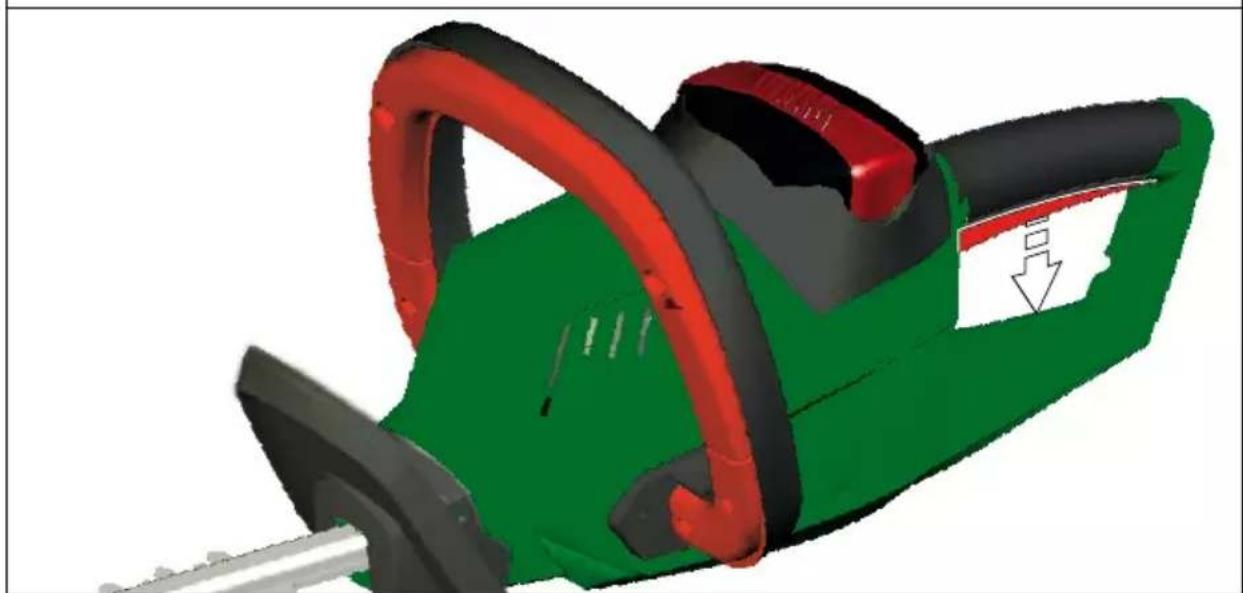
natural_image
3D rendered image of a green and red power tool with a downward arrow indicator (no text or symbols)
natural_image
Person using a tool to cut a green leafy material, with arrows indicating cutting direction (no text or symbols)
natural_image
Diagram of a hair shingle system with a red X mark and green diagonal blades, no text or symbols present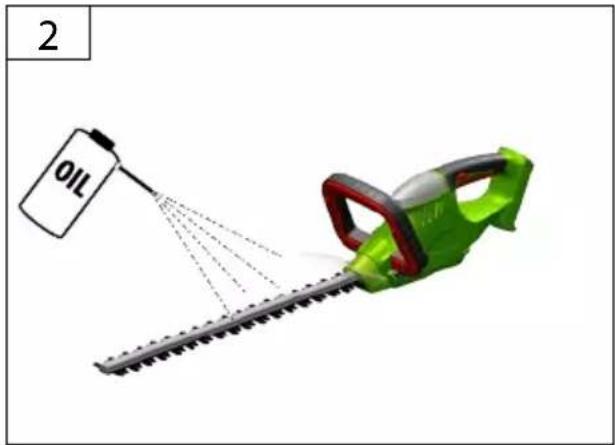
natural_image
3D rendered image of a green and black hair clip with red handle (no text or symbols)Technische Daten
WARNING: The vibration emission level will vary because of the ways in which a power tool can be used and may increase above the level given in this information sheet.
The vibration emission level may be used to compare one tool with another.
It may be used for a preliminary assessment of exposure.
An accurate estimate of the vibratory load should also take into account the times when the tool is shut down or when it is running but not actually in use. This may significantly reduce the vibratory load over the total working period.
Identify additional safety measures to protect the operator from the effects of vibration such as: maintain the tool and the accessories, keep the hands warm, organisation of work patterns.


Read and understand the operating instructions before using the appliance. Familiarise with the
control elements and how to use the appliance properly. Abide by all the safety measures stated in the service manual. Act responsibly toward third parties.
The operator is responsible for accidents or risks to third parties.
In case of any doubts about connection and operation refer please to our customer center
Specified Conditions Of Use
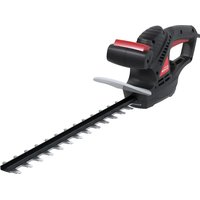
The hedge trimmer has been designed to cut hedges and brushes in private house gardens or hobby gardens.
Do not use this product in any other way as stated for normal use. Not observing general regulations in force and instructions from this manual does not make the manufacturer liable for damages.

WARNING! Danger of injury!
The hedge trimmer may not be used to cut grass, hard brushes and wood or to crush material for composting purposes.
Requirements for operating staff
The operating staff must carefully read the Operating Instructions before using the appliance.
This appliance has not been designed to be used by persons (including children) with reduced physical, sensory or mental capabilities or with a lack of knowledge or experience.
Qualification: Apart from the detailed instructions by a professional, no special qualification is necessary for appliance using.
Minimum age: Persons over 16 years of age can only work on the appliance. An exception includes youngsters trained in order to reach knowledge under supervision of the trainer during occupational education.
Training: Using the appliance only requires corresponding training by a professional or the Operating Instructions. No special training is necessary.
Residual risks
Even when the device is used properly and all safety regulations are complied with, there still may be some residual risks.
- Cutting injury
- Hearing damage
A longer stay in the immediate vicinity of the running unit may cause hearing damage. Wear ear protectors!
- Damage to health arising from vibrations to hand and arms if the device is used for a long time or if the device is not guided and evaluated properly.
Despite the observance of the operating instructions there still may be some hidden residual risks.
Emergency procedure
Conduct a first-aid procedure adequate to the injury and summon qualified medical attendance as quickly as possible. Protect the injured person from further harm and calm them down. For the sake of eventual accident, in accordance with DIN 13164, a workplace has to be fitted with a first-aid kit. It is essential to replace any used material in the first-aid kit immediately after it has been used. If you seek help, state the following pieces of information:
- Accident site
- Accident type
- Number of injured persons
- Injury type(s)
Symbols

WARNING/Caution!

Read the operating instructions to reduce the risk of injury.

Wear eye protective goggles!

Wear ear protectors!

Wear protective helmet!

Wear protective gloves!

Wear safety cut through resistant shoes with safety sole and steel toe!

Take the replaceable battery from the appliance before any extension, cleaning and servicing works.

Warning against cutting injuries

Protect against humidity. Never expose tool to rain.

CE marking
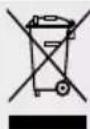
Any damaged or disposed electric or electronic devices must be delivered to appropriate collection centres.

Protect against humidity

This side up
Battery

Protect the battery against heat and fire.

Protect the battery against water and moisture.

Protect the battery against temperatures above 40°C.
Li-Ion
Do not throw the batteries in household waste.

Deliver the batteries to a collection centre of old batteries where they will be recycled in an environmentally friendly way.
General Power Tool Safety Warnings

WARNING
Read all safety warnings and all instructions. Failure to follow the warnings and instructions may result in electric shock, fire and/or serious injury.
Save all warnings and instructions for future reference.
The term „power tool“ in the warnings refers to your mains-operated (cordepower tool or battery-operated (cordless) power tool.
1) Work area safety
a) Keep work area clean and well lit. Cluttered or dark areas invite accidents.
b) Do not operate power tools in explosive atmospheres, such as in the presence of flammable liquids, gases or dust. Power tools create sparks which may ignite the dust or fumes.
c) Keep children and bystanders away while operating a power tool. Distractions can cause you to lose control.
2) Electrical safety
a) Power tool plugs must match the outlet. Never modify the plug in any way. Do not use any adapter plugs with earthed (groundepower tools. Unmodified plugs and matching outlets will reduce risk of electric shock.
b) Avoid body contact with earthed or grounded surfaces, such as pipes, radiators, ranges and refrigerators. There is an increased risk of electric shock if your body is earthed or grounded.
c) Do not expose power tools to rain or wet conditions. Water entering a power tool will increase the risk of electric shock.
d) Do not abuse the cord. Never use the cord for carrying, pulling or unplugging the power tool. Keep cord away from heat, oil, sharp edges or moving parts. Damaged or entangled cords increase the risk of electric shock.
e) When operating a power tool outdoors, use an extension cord suitable for outdoor use. Use of a cord suitable for outdoor use reduces the risk of electric shock.
f) If operating a power tool in a damp location is unavoidable, use a residual current device (RCprotected supply. Use of an RCD reduces the risk of electric shock.
3) Personal safety
c) Prevent unintentional starting. Ensure the switch is in the off-position before connecting to power source and/or battery pack, picking up or carrying the tool. Carrying power tools with your finger on the switch or energising power tools that have the switch on invites accidents.
d) Remove any adjusting key or wrench before turning the power tool on. A wrench or a key left attached to a rotating part of the power tool may result in personal injury.
e) Do not overreach. Keep proper footing and balance at all times. This enables better control of the power tool in unexpected situations.
f) Dress properly. Do not wear loose clothing or jewellery. Keep your hair, clothing and gloves away from moving parts. Loose clothes, jewellery or long hair can be caught in moving parts.
g) If devices are provided for the connection of dust extraction and collection facilities, ensure these are connected and properly used. Use of dust collection can reduce dust-related hazards.
4) Power tool use and care
a) Do not force the power tool. Use the correct power tool for your application. The correct power tool will do the job better and safer at the rate for which it was designed.
b) Do not use the power tool if the switch does not turn it on and off. Any power tool that cannot be controlled with the switch is dangerous and must be repaired.
c) Disconnect the plug from the power source and/or the battery pack from the power tool before making any adjustments, changing accessories, or storing power tools. Such preventive safety measures reduce the risk of starting the power tool accidentally.
d) Store idle power tools out of the reach of children and do not allow persons unfamiliar with the power tool or these instructions to operate the power tool. Power tools are dangerous in the hands of untrained users.
e) Treat electric tools carefully. Check whether the moving parts work perfectly and do not drag, whether not broken or damaged to such an
extent that functioning of electric tools could be affected. Have any damaged parts repaired before using the machine. Many accidents are caused by poorly maintained power tools.
f) Keep cutting tools sharp and clean. Properly maintained cutting tools with sharp cutting edges are less likely to bind and are easier to control.
g) Use the power tool, accessories and tool bits etc. in accordance with these instructions, taking into account the working conditions and the work to be performed. Use of the power tool for operations different from those intended could result in a hazardous situation.
5) Using and treatment of cordless tools.
a) Charge the batteries only in chargers recommended by the manufacturer. Risk of fire for a charger suitable only for a certain type of batteries or, as appropriate, accumulators, if used for other accumulators.
b) Use only such accumulators in this electric appliance that have been designed for this appliance. Use of other accumulators may lead to injuries and risk of fire.
c) Do not leave an accumulator not being used near office clips, coins, keys, nails, screws or other small metal items that could cause contact bridging. Short circuit between accumulator contacts may result in burns or fire.
d) Liquid may leak from an accumulator if used improperly. Prevent contact with such liquid. Rinse an affected body part with water in case of accidental contact. If liquid gets to your eye, seek medical advice. Liquid leaking from a battery may cause skin irritation or burns.
6) Service
a) Have your power tool serviced by a qualified repair person using only identical replacement parts. This will ensure that the safety of the power tool is maintained.
Safety instructions for HEDGE TRIMMER
Keep all parts of the body in safe distance from the knife. Do not try to remove the material being cut or hold material to be cut when the knife is running. Jammed cuttings to be removed only when the machine is off and the battery taken out. A moment of inattention when using the hedge trimmer may result in serious injuries.
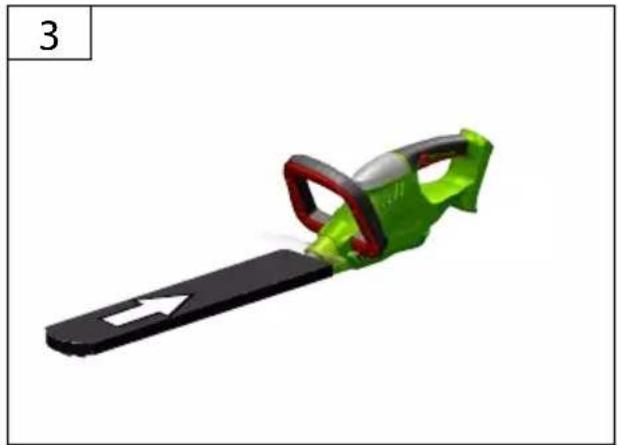
Carry the hedge trimmer by the handle when the knife is off. Fit the protective cover whenever the hedge trimmer is to be transported or stored.
Careful appliance handling reduces the risk of injury by knife.
Hold the power tools by the insulated handles as the cutting knife may come into contact with hidden cables/lines. Contact of the cutting knife with a live conductor may bring the metal parts of the appliance under voltage and cause electric shock.
Other safety instructions
Keep children and other persons including animals in a safe distance when using the appliance. Minimum safe distance is 5 m.
Wear suitable protective clothing such as sturdy shoes with non-slip sole, robust long trousers, gloves, safety glasses and hearing protection!
Do not wear loose clothing or jewels. Hear, clothing and gloves must be out of reach of moving parts as they could get caught by the rotating parts. Do not use the appliance when barefooted or in open sandals.
When being blocked, turn the appliance immediately off and remove the jammed item.
Before work, check the area for any hidden items such as wire fences.
When working, keep the appliance firmly with both hands and with a distance from your body.
Make sure the appliance is off before inserting a battery.
The ON/OFF switch and safety switch must not be locked.
Use only those batteries for the power tool that have been designed to be used for that tool. Use of other batteries may lead to injuries and a risk of fire.
Before using, check the tightness and proper seating of all screwed and socket joints and protective equipment and if all moving parts are moving smoothly.
⚠ It is strictly prohibited to demount, adjust and alienate the protective equipment on the machine or put other protective equipment on the machine.
Do not use the appliance if damaged or the safety equipment is defective. Replace any worn and damaged parts.
Do not use the device near flammable liquids or gases. Risk of fire and explosion in case of short circuit.
Vapours may leak out in case of unauthorised use or when using a damaged accumulator. Bring fresh air and seek medical advice if experiencing difficulties. Vapours may irritate the respiratory system.

Risk of fire! Risk of explosion!
Never use damaged, defective or deformed accumulators. Never open or damage the accumulator or let it fall on the ground.
Never charge the battery in an environment with acids and easily flammable materials.
Protect the battery against heat and fire.
Battery to be used at the ambient temperatures between 10irc C and +40irc C only.
Never put the battery on heaters and do not expose it to strong sunlight for a long time.
After being subject to heavy load, let the battery cool down first.
Short circuit - do not bridge the accumulator contacts with metal parts.
The accumulator must be packaged (plastic bag, box) or accumulator contacts must be sealed up for accumulator disposal, transport or storage.
Work instructions
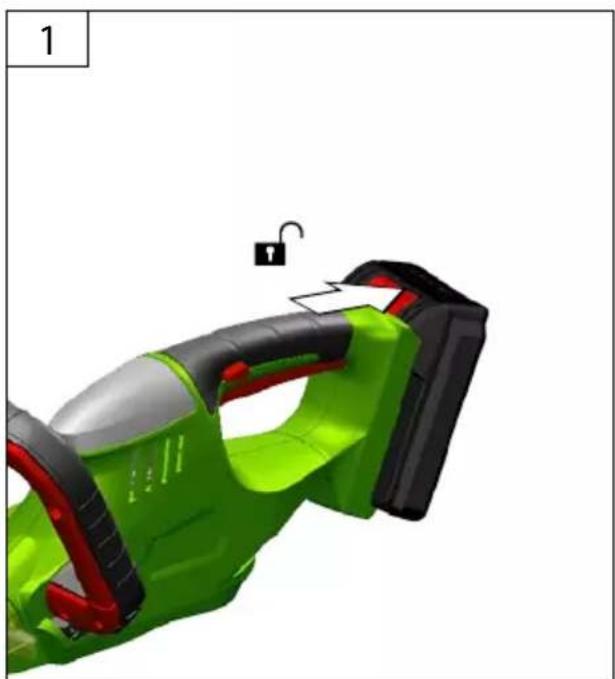
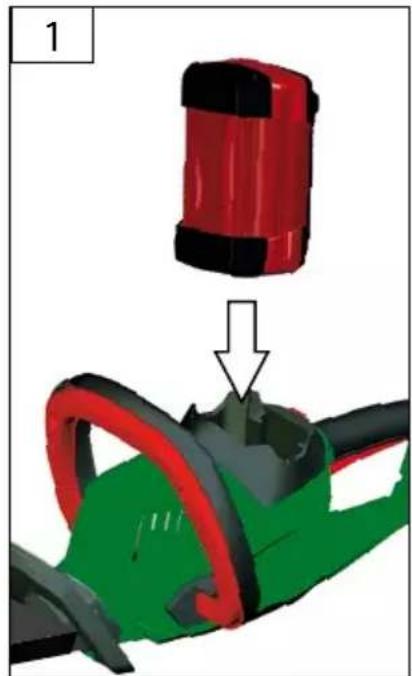
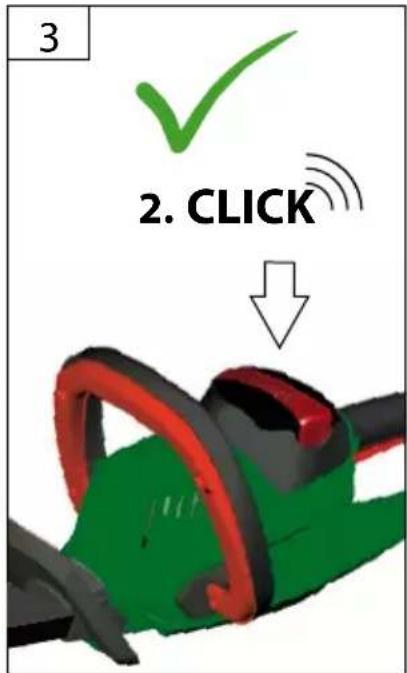
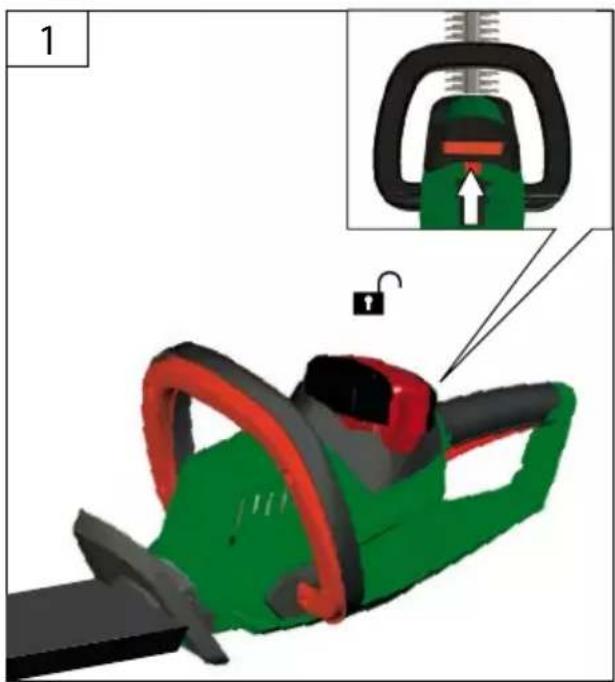
Accumulators are supplied partially charged and must therefore be fully charged before being used for the first time.
- Charge the accumulator when the appliance is running slowly or stops.
- A li-ion battery may be charged at any time without any shortening of its life. Charging process interruption will not damage the accumulator.
- A li-ion battery is protected by the Electronic Cell Protection against deep discharge.
- A significantly shorter operating time of a charged battery means the battery life is over and the battery must be replaced.
Original spare batteries to be used only.
Maintenance

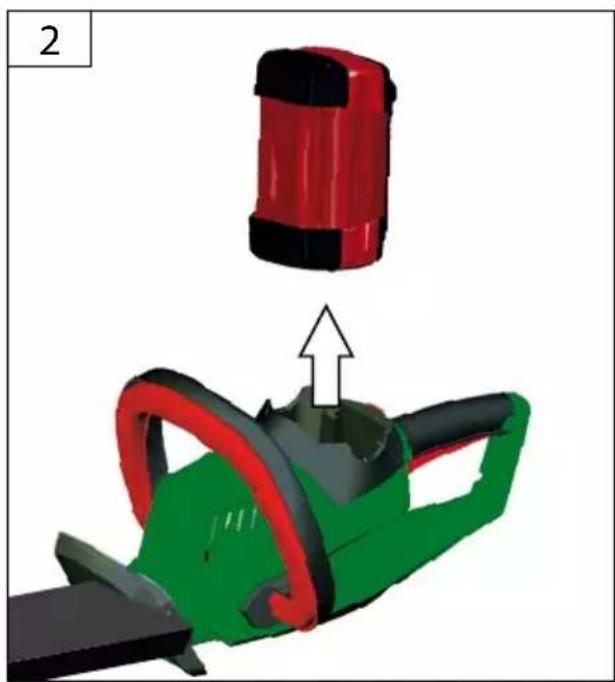
Take the replaceable battery from the appliance before any extension, cleaning and servicing works.
Repairs and works specified in these Instructions may only be performed by qualified authorised staff.
Use only original accessories and original spare parts.
Keep the device, in particular the air vents, clean at all times. Never spray water on the device body!
Never clean the machine and its components with solvents, flammable or toxic liquids. Us only a damp cloth making.
Apply environment-friendly oil to all moving parts.
After each use, clean the cutter bar carefully. Wipe it with a cloth immersed in oil or apply metal treatment spray on it.
Blunt, bent or damaged knives must be immediately replaced.
Only a regularly maintained and treated appliance can serve as a satisfactory aid. Insufficient maintenance and care can lead to unforeseen accidents and injuries.
If necessary, a list of spare parts can be found at www.guede.com.
Machine to be stored in a dry place.
Disposal
The disposal instructions are based on the icons placed on the appliance or its package.
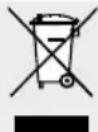
Any damaged or disposed devices must be delivered to appropriate collection centres.
Dispose of the batteries in an environmentally friendly manner.
Li-ion batteries are subject to the special disposal obligation. Have any defective batteries disposed of by a specialised shop. The battery must be taken out before the appliance is scrapped. Damaged batteries may harm the environment and your health if toxic vapours or liquids leak out of such batteries.
Therefore, never send a defective battery by post, etc. Please contact your local recycling centre.
Dispose of the batteries when discharged. We recommend applying an adhesive tape on the poles to protect them against short circuit. Never open the battery.
Transport packaging disposal
The packaging protects the machine against damage during transport. Packaging materials are usually chosen based on environment aspects and waste treatment principles and are therefore recyclable. Returning the packaging into material circulation saves raw materials and reduces waste production. Parts of packagings (e.g. foils, styropor®) can be dangerous for children.
Risk of suffocation!
Keep parts of the packagings out of reach of children and dispose them as soon as possible.
Guarantee
Warranty period of 12 months applies to commercial use and 24 months applies to private use and commences on the day of purchase of the device.
The guarantee solely covers inadequacies caused by material defect or manufacturing defect. Original payment voucher with the sales date needs to be submitted for any claim in the guarantee period.
The guarantee does not cover any unauthorised use such as appliance overloading, use of violence, damage as a result of any unauthorised interference or caused by foreign items. Failing to follow the operating and assembly instructions and common wear are also not included in the guarantee.
Important information for the customer
Please be sure to know that returning the product in or after the warranty period must be made in the original packaging.
Service
Do you have any technical questions? Any claim? Do you need any spare parts or operating instructions? We will quickly help you and without needles bureaucracy at our web pages at www.guede.com in the Servicing part. Please help us be able to help you. In order to identify your device in case of claim we need the serial No., product No. and year of production. All this data can be found on the type label. Please enter it here for future reference:
Serial No.:
Art. No:
Year of production:
Tel.: +49 (0) 79 04 / 700-360
Fax: +49 (0) 79 04 / 700-51999
E-Mail: support@ts.guede.com
WAARSCHUWING! Letselgevaar!
WAARSCHUWING/Opgelet!

Translation of the EC-Declaration of Conformity
We, hereby declare the conception and construction of the below mentioned appliances correspond - at the type of construction being launched - to appropriate basic safety and hygienic requirements of EC Directives.
In case of any change to the appliance not discussed with us the Declaration expires.
2006/95/EC 2004/108/50
2009/105/EC 1907/2006/EC
2011/65/EC ROHS 2009/42/EC
☐ 89/686/EEC (PPE) 1935/2004/EC
2006/42/EC
Annex IV
Notified Body: No:

Name:
Adress:
Type Ex. Cert.-No.:
□ 97/68/EC_
Emission No.:
2000/14/EC_2005/88/EC
2006/95/EC 2004/108/EC
2009/105/EC 1907/2006/EC
2011/65/EC ROHS 2009/142/EC
☐ 89/686/EEC (PPE) 1935/2004/EC
2006/42/EC
Annex IV
Notified Body: No: Name:
Name:
Adress:
Type Ex. Cert.-No.:
□ 97/68/EC
Emission No.:
2000/14/EC_2005/88/EC
2006/95/EC 2004/108/EC
2009/105/EC 1907/2006/EC
2011/65/EC ROHS 2009/142/EC
☐ 89/686/EEC (PPE) 1935/2004/EC
2006/42/EC
Annex IV
Notified Body: No: Name:
Name:
Adress:
Type Ex. Cert.-No.:
□ 97/68/EC
Emission No.:
2000/14/EC_2005/88/EC
2006/95/EC 2004/108/EC
2009/105/EC 1907/2006/EC
2011/65/EC ROHS 2009/142/EC
89/686/EEC (PPE) 1935/2004/EC
2006/42/EC
Annex IV
Notified Body: No:

Name:
Adress:
Type Ex. Cert.-No.:
97/68/EC
Emission No.:
2000/14/EC_2005/88/EC




- 540/36 HS
- Specified Conditions Of Use
- WARNING! Danger of injury!
- Requirements for operating staff
- Residual risks
- Emergency procedure
- Symbols
- Battery
- General Power Tool Safety Warnings
- WARNING
- Save all warnings and instructions for future reference.
- Safety instructions for HEDGE TRIMMER
- Other safety instructions
- Risk of fire! Risk of explosion!
- Work instructions
- Maintenance
- Disposal
- Dispose of the batteries in an environmentally friendly manner.
- Transport packaging disposal
- Risk of suffocation!
- Guarantee
- Important information for the customer
- Service
- WAARSCHUWING! Letselgevaar!
- Translation of the EC-Declaration of Conformity
Brand : Güde
Model : HS 530/25
Category : Hedge Trimmers